Loading summary
Transcript112 lines
- [00:06]
Interviewer
Hello.
- [00:06]
Matt Gibbard
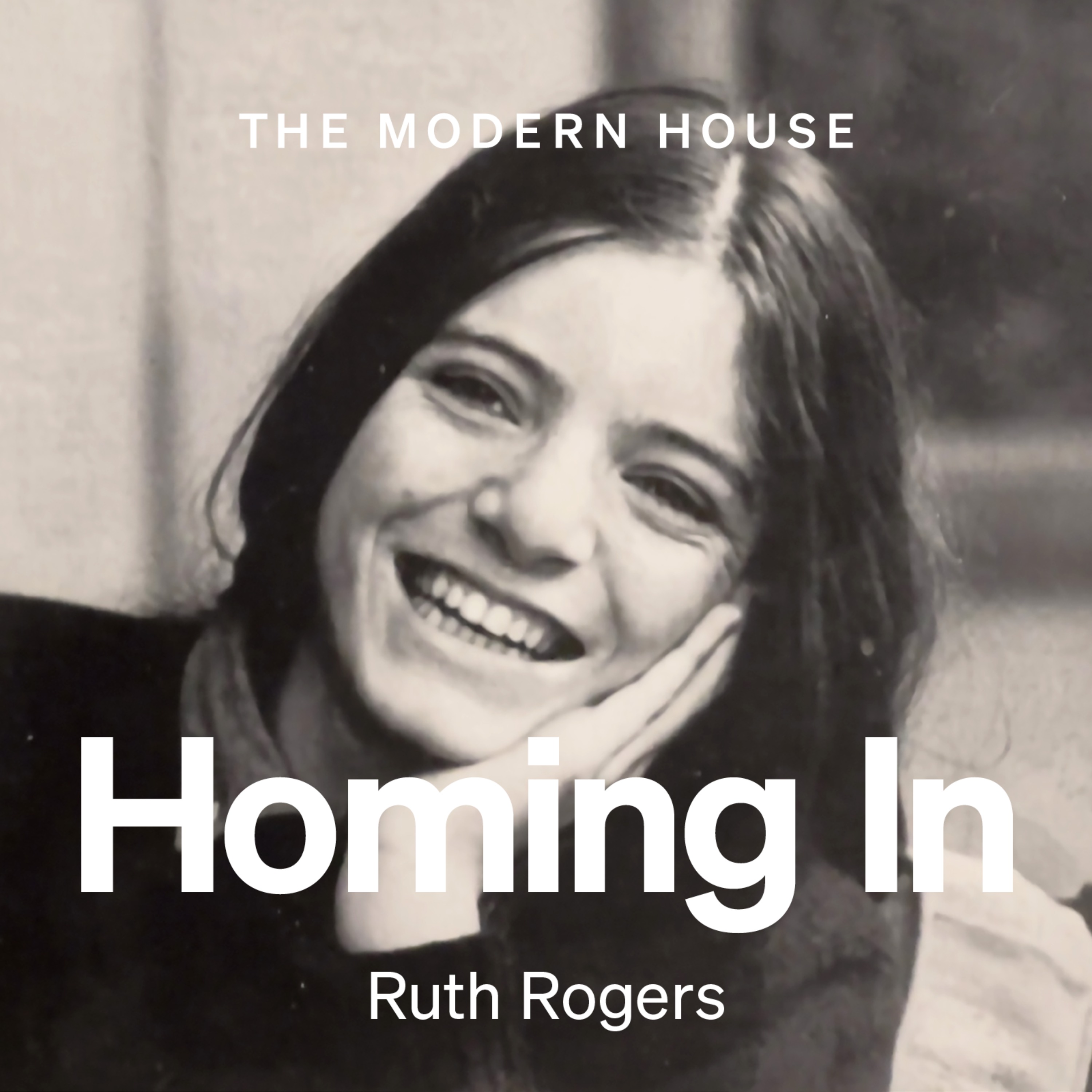
Welcome to the first episode of our new podcast, Homing In. I'm Matt Gibbard, co founder of the Modern House and Inigo and author of the book A Modern Way to Live. I've spent my career trying to understand the importance of home in people's lives, and that's really what this podcast is all about. In each episode, I ask the guests to discuss their life story through the lens of the places they've lived in. So we start off by chatting about their childhood home, and then we move on to their current living space. And finally, we discuss an aspirational home of the future, where they imagine themselves seeing out their days. The podcast has evolved very naturally from our previous iteration, the Modern House podcast, which we've been recording for three years or so now. For this new version, we didn't want to get too bogged down in the minutia design and architecture, and instead focus on the personal and psychological aspects of home. Coming up, we've got a legendary photographer, some entrepreneurs, magazine editors, fashion designers, curators, and so on. So please do follow the show and you'll be alerted as soon as they come out. Right, on to today.
- [01:17]
Ruth Rogers
I walk up the stairs every single night and I still probably feel, 40 years later, slightly gasp, that it's our house.
- [01:28]
Matt Gibbard
We've come to Chelsea to meet the legendary chef Ruth Rogers at her incredible house. It really is one of the great living spaces in London and I'm very, very pleased to come back again. Ruthie talks about growing up in the Borsch Belt near New York. There's a chance encounter with Bob Dylan in Woodstock when she was young, and the day that she met her husband, Richard Rogers in the late 1960s. Having personally co founded a business in an industry I knew absolutely nothing about, I can certainly relate to Ruthie's inspiring story of starting the River Cafe with no restaurant experience and basically making things up as she went along. She tells me about how the restaurant has become a home from home for her and why it's been a breeding ground for some of the world's most celebrated chefs. She talks about the influences behind her iconic home, from the Maison de Verre in Paris to the Italian piazzas of Pienza and Montepulciano, and how it's provided her with great comfort following Richard's death. We are in central London, so there's the odd bit of background noise when a lorry or a street cleaner goes past, but hopefully the intimacy of recording in Ruthie's home more than makes up for it. Thank you so much for listening and I really hope you enjoy it.
- [02:42]
Ruth Rogers
Okay. So I'm very happy to meet you and honour it.
- [02:45]
Interviewer
Thank you, Ruthie.
- [02:45]
Ruth Rogers
Likewise.
- [02:46]
Interviewer
It's so nice to take you right back to the beginning. Tell us about your house that you grew up in.
- [02:52]
Ruth Rogers
I was born 100 mil north of New York City in a town called Monticello, which was. What they called that area was the Borsch Belt because it was an area of hotels that mostly first generation Jewish immigrants. Probably my grandparents and their friends would leave New York and come to. My father was a doctor, my mother was a librarian. We lived in this very small town. I think probably when my father came back from the war, he went there because he had a friend there and thought he would stay a short time and ended up staying most of his life. But going back to the house, I know that our house was. It was pretty dire because we lived on a main road opposite a gas station, and on the right there was another gas station coming down a hill. And then there was a farm which belonged to a prison. And so we had a. A state penitentiary there. I don't think it was for very serious offenders, but it was a view again. We had a garage and a prison in the background. So it's not exactly the most aesthetic place to grow up. Except the front of the house was on a little hill. It kind of nestled into a hill. So you climbed the stairs and then you went into the back. And there was just a kind of mountainside of. Of wild woods that we had. So we always played in the woods. My father was a grew. Grew up on the Lower east side of New York. And I think always wanted to be either a professor of literature or an art dealer because he was really, really interested in contemporary art.
- [04:34]
Interviewer
Did you grow up with art round you then?
- [04:36]
Ruth Rogers
Yeah, I did. So he would go to New York and come back with a, you know, with a very limited budget, you know, piece of sculpture that he would put in the living room or he would buy a painting, buy an artist that he liked. And so we had, you know, not a lot of art, but it certainly was an important part of my life.
- [04:54]
Interviewer
And tell us about the house. What are your memories of it?
- [04:57]
Ruth Rogers
Well, I probably have, because I left there when I was 10. I probably have a romanticized vision of the house. I think I look at that house as being quite cozy. I had my own bedroom at the top of the stairs. My father, I think in the early years, had a doctor's office in the house. And then there was. I remember there was a dining room. And behind the dining room there was a kitchen. It wasn't an open kitchen, but it wasn't one of those far away kitchens that you sometimes see in houses. And then there was a living room extension they had added on when they bought the house, which had a big, big window and a fireplace. It's quite a simple house. And I think my parents built themselves a bedroom later. I think there's probably something that they added to all the time.
- [05:46]
Interviewer
And did you have siblings?
- [05:48]
Ruth Rogers
Yeah, I have an older brother and older sister. One is six years older. My sister Susan Elias, who's a painter, and my brother, Michael Elias, who is a writer, went to California. He's written various great screenplays. The Jerk and other movies.
- [06:05]
Interviewer
Oh, yeah, the Joke.
- [06:07]
Ruth Rogers
He's written lots of movies and so he lives there. They were six and eight years older. So by the time I was 10, they were going off to college.
- [06:13]
Interviewer
And how would you, if you look back on yourself, on young Ruthie, how would you describe yourself? What were you like?
- [06:19]
Ruth Rogers
I think I was quite attached to home still. I always love coming home. I think I've always liked home. So I think that it's kind of ironic that I left home for Europe when I was 19 and been here ever since. So I was a kid that then traveled.
- [06:35]
Interviewer
Yeah. And how did you get on in school?
- [06:39]
Ruth Rogers
I think I was good, you know, I think I was okay. I don't think I was top, top, top student because I was probably easily distracted and liked a lot of the other parts of school. I went for the first 10 years to a very tiny little public school and, you know, state school. And then when my parents moved to Woodstock, there was a concept of a central school. So we all were bused from different towns. I think my bus ride was almost 45. I was coming in from the east of the state. There'd be kids coming in from the west so I could have friends who were lived two hours away from me, you know, because we were all being busted. It was a big, huge public high school. And then I went to school in Colorado, so that changed everything.
- [07:23]
Interviewer
And you met Bob Dylan, didn't you? Famously, I did.
- [07:25]
Ruth Rogers
Woodstock started off, and that's why father was so happy to move there. When I was 12, we got a job, the hospital near Woodstock, and they were thrilled because it was a small town in upstate New York, but was very well known for being an artist colony, you know, so there was the Art Students League. There were studios, there were, you know, there were places where artists could paint, teach Live. And so it became a place where there were quite a lot of artists there, notably Carl Blanche, notably Milton Avery, Doris Lee and Philip Gustin, which was big effect on our life. And so it was very much an artist's place until in about 65, maybe, Albert Grossman bought a house there. And Albert Grossman was the producer, music producer of Joan Baez and Bob Dylan and the band. I think Peter Yarrow of Peter Paul Mary had already lived in Woodstock and we all knew that Bob Dylan was there. And one day my friend Libby Cheris and I went to do our homework in the Bear Cafe and a waiter came over with a note saying Bob Dylan no. In his own fanboy, he said, would you like to come and watch me and the band rehearse? And, you know, we had an exam the next day or something, so we just wrote back a little note saying no and then gave it away. So people often ask me if I have regrets. You know, I'm sure they mean the big ones, like should I have to studied something other than what I did, or should I have married a different person or had more children or less children? That's probably a regret that I didn't go listen to Bob Dylan.
- [09:08]
Interviewer
So you moved to London when you were 19?
- [09:10]
Ruth Rogers
Yeah, just for a short time. The idea was that I had finished my freshman year at a school called Bennington. You know, usually it's junior year abroad, but I let me take the fall term off. And so I came to London to stay with friends of my parents and lived in North London, and it was a very heady time politically, so I was very happy.
- [09:33]
Interviewer
In 1969, you met an architect called Richard. Tell us about that. How did you meet and what was that like?
- [09:39]
Ruth Rogers
Well, a friend of my father's, probably in the 50s, came to London, as so many writers did, and when I came to London to study, Howard Koch gave me a list of 10 people to call and I never did. And then one night I thought, well, I'm going to call these people. And I went to dinner there and another architect called Georgie Walton was there and she invited me to dinner at her house and Richard was there. And so that's when I met Richard Rogers. So that was. I think it was probably the. Maybe the spring of 68, late 67 and early 68.
- [10:16]
Interviewer
You ended up in Paris as well, didn't you? Because Richard won the competition to design the Pompidou center, which is pretty phenomenal because he was quite inexperienced at that point. What was that?
- [10:27]
Ruth Rogers
It was like winning the lottery so, you know, we knew that time I was working at Penguin Books. I did go to study graphic design, London College of Printing. And then when I finished, I started working in the art department of Penguin Books with David Pelham. And Richard was working at that time. He started with Renzo Piano, who he had just met, and Sue Rogers, and they were working on, you know, various factories and houses and schools in Britain and Italy. I think, over the engineers approached them to do this competition for which they would pay them, you know, £1,000 or something. And Richard wrote a memo for all the reasons he didn't want to do it. You know, they would never win. They would have to spend time. They got very little money. There was an open competition, so there were no names. There were a million, you know, and luckily, he was outvoted by John Young and Sue Rogers and Renzo. So they did the competition. And I remember them working, and I remember going to visit the site. I remember the feeling that, well, we'll just do this and we'll learn from this experience. And then, you know, I was sitting at my desk, Penguin, and I think. I think Renzo called me and said, sit in your chair. And then wanted to know where Richard was. And Richard was teaching, I think, in Brighton that day. And so there's a flurry of activity trying to get hold of him, to announce that actually they won. And after that, again, there was a feeling of literally winning the lottery. How do you win 681 entries? Their scheme was radical. You know, it had film on the outside at an open piazza. Always had the concept of not being a center of culture, but center for people. And so, you know, that changed everything because I kept my job at Penguin and Richard commuted the first year and a half because we never thought it would end. And the brilliance of Philip Johnson and the jury for us was that they didn't give a second prize because I think they thought they'll open this envelope. One, it won't be French. Two, it might be somebody. Three, it could be somebody inexperienced, and they'll give it to the second prize, you know, make a second prize and congratulate the winner and then give it to the second prize. So there was only one prize?
- [12:47]
Interviewer
Yeah. That's amazing, isn't it?
- [12:48]
Ruth Rogers
Yeah. Amazing courage. The courage of the French also. You have to say, have an international jewelry and then say, we'll go for this.
- [12:57]
Interviewer
Tell me about you, though, in Paris, did you start cooking at that point?
- [13:00]
Ruth Rogers
Yeah, I was in Paris, and as they done graphic design, they gave me some jobs to do, which was coloring in the, you know, the pipes of the building and, you know, helping with exhibitions and, you know, and it was just. It was just such an extraordinary experience for an American person at that. At that point, I was probably 21, you know, living in Paris, having an apartment. And also there was that traditional thing of in Italy where you always go home for lunch. So Richard and Renzo would work all day, morning, and then we'd all go home for lunch. And we became passionate about eating. And in restaurants and it was a time of nouvelle cuisine. It was. We lived over a market, and you go down on a Saturday morning and smell the chickens had just been roasted and the fruit that had left, you know, and because it was out of season, and the new fruit that came in because it was in season. So it was a very heady experience living in Paris. So.
- [13:53]
Interviewer
But you went down the Italian route in the end. So tell us about River Cafe and the genesis of that.
- [13:59]
Ruth Rogers
Well, when we came back to London, Richard Bolton bought Thames Wharf Studios with his partners Marco Goldschmidt and John Young. And they had this, you know, beautiful site on the river. They made a green space and they had, you know, other people working there in the fields of design and art, and so they wanted a place to eat. All sorts of applications came in for doing a restaurant there. And I remember I was skiing with Richard and I said, you know, the only thing worse than not doing a restaurant would be we need to have a bad one. These are not good ones. Maybe I'll do it. And I'd always been a home cook cooking it, as you say. I called Rose Gray and said, come and meet me. And we looked at this tiny, tiny, tiny. The size of this room. And so I think it was very. It started very domestic scale. We both cooked mostly domestically. The Italian was really to do with Richard's mother, woman, who was born in Trieste in northern Italy and then moved to Florence when she met Richard's father and lived in Florence. And Richard, in fact, was born in fl. Florence. And she was. You know, it's hard to imagine a young woman, probably again, her late 20s, early 30s, coming to London, you know, during the war and coming here and rationing and food shortages and used to say her father used to send her candied fruits from Florence. And. And then apparently she also. She's a very, very aesthetic woman. She's apparently put Richard in his pram and look for a view. That was always a really touching story that she looked for a view, because, of course, Florence is on a Hill. But. And so she was, you know, she had to learn to cook like so many people. If you don't have somebody to cook for, you can't afford to eat out. You learn to cook. And so she was a huge influence on all of us. She already been on me. Wendy Foster, I mentioned, was married to Norman, learned to cook from Dada. As a friend of Richard's. Georgie Walton learned to cook. You know, Sue Rogers learned to cook. We all learned to cook Italian food from Dada.
- [15:59]
Interviewer
Okay, interesting. I mean, as someone who started my own thing in my 20s and not really knowing what I was doing. What was that like for you?
- [16:08]
Ruth Rogers
I think two things. I think that Rose did have experience. Yeah, I had none. I'd worked as a waiter at a restaurant when I was 17 in the summer. The reals key to the success of what we did was that we were so small and so limited. And I believe restrictions kind of help you create rather than hinder it. We had the restriction of only being open at lunchtime, and then even only being open at lunchtime to the people who worked in those warehouses. They wouldn't let us open to the public. We really were able to grow with the restaurant. So the, you know, the first six months we were open only at lunchtime, and then we were allowed to be open on Saturday, then we were open to public, then we were open on Sundays, then we were open on nighttimes, you know, so this all became very, very gradual.
- [16:54]
Interviewer
Why were you allowed to open to the public? What changed?
- [16:56]
Ruth Rogers
We just went in for planning. You know, when they first were there was like, no, no, no, no, no. You have to remember this is Britain in the 80s. And Hammersmith, I mean, they had Duckens warehouses there pumping, you know, oil. Horrible smells. But the idea of an Italian restaurant, restaurant, I mean, it was more frightening. And I remember somebody when we went for planning, the planning officer said, don't say that it's Italian. Don't say people come from Los Angeles. Don't say you've been reviewed. Say that you can get there by bus. Say that you'll close early. Say that it was just a different time than now. London is, you know, everywhere there's a restaurant.
- [17:32]
Interviewer
Yeah. But what's very striking is that you have to make the pilgrimage to go there. Because it's a residential area, kind of a bit on its own island.
- [17:40]
Ruth Rogers
Well, we once had a woman who had eaten a meal in the River Cafe, and she wanted a taxi. You know, we said, we'll call you a taxi. Where are you going? And she said, London. Yeah. She really thought she was in another, you know, place. And I think but over the years it has become much more accessible. I know you had to drive and did, but there is. That whole area has become slightly more gentrified and Hammersmith has Disney there, so it's a. More. There used to be Harper Collins there, so. But we don't just get local people at all. Some people might come out once a month, once a year, once a, you know, week. Other people come. We have people come that we just know are going to come every Thursday night, every Sunday night. So I like to walk to a restaurant. You know, if I'm home, people ask me, where do you like to eat? I usually try and find someplace that actually walk to, from. From my home. But, you know, it's. It's nice that people that venture out.
- [18:34]
Interviewer
Yeah, I'll go a long way to.
- [18:35]
Matt Gibbard
Good, see.
- [18:36]
Ruth Rogers
Oh, good, good.
- [18:37]
Interviewer
I just want to ask you briefly about the design of the space. You talked about how you wanted people to be able to see all the way through the space.
- [18:44]
Ruth Rogers
Yes.
- [18:44]
Interviewer
With open kitchen at the back. Why did you want it to be like that?
- [18:48]
Ruth Rogers
I think we. When we first started it, Rose and I both had open kitchens in our houses, so that we worked on the idea that if you had an open kitchen and you were cooking, then it didn't become lonely or mystified that people who came in could help you and then sit down, the kids were doing their homework, could feel a carrot and then they'd go back to their homework that everybody helped, that it was, you know, it was visible. And so we wanted a visible kitchen. And the very early first one was really tiny. You actually, the telephone making reservations was in the kitchen. You walked in the door and you were in. Almost in the kitchen. That was in the very, very beginning. Everything we did then became more visible. We had a bar that we had. We didn't have. We did. The grill was open and doing the cold sessions on the bar. But then we had a wall, the wood oven went into, and then there was a kitchen behind. And then we had a fire in 2008 and we tore every wall down. And so now the theatricality of the restaurant is. And also people like to see what they're eating. You know, you have to be clean and you can't shout, you can't get annoyed. You can, but, you know. And also we don't. And I think it's good, you know, that we have doors going onto the river, so. And it can be pressurizing if you do feel Whatever. You can go and breathe and then come back. And I think that visibility of the space means that it's democratic. You can see the array of tables that you might want, even though you've been given one. You can say, well, actually, I'd rather sit over there and not have to think there's some special room in the back. Having said that, I like going to a restaurant where I can't see the kitchen too. Sometimes you want to just dress up and be quiet and sit in a place just, you know, just have a kind of formality and a spacing behind the tables. There's no one right way. This is the right way for us.
- [20:32]
Interviewer
Yeah. It's kind of free of hierarchy is what you're saying.
- [20:34]
Ruth Rogers
In a way, we try. Yeah. I've had people come in and say, you know, where's the best table in the house? And I go, well, you know, my husband likes to sit on that table by the wood oven. And Lucy and Freud like to sit as close as he could to the. To the door to leave. And somebody else wants to sit in the middle, and somebody else considers privacy being by the window, you know, so that. That's nice being able to say that.
- [20:58]
Interviewer
So you've got a kind of bright blue carpet. You've got the wood ovens painted shocking pink.
- [21:04]
Ruth Rogers
Yeah.
- [21:04]
Interviewer
There's track lighting.
- [21:06]
Matt Gibbard
It's very.
- [21:06]
Interviewer
It feels very sort of of. Of its era and yet timeless.
- [21:10]
Ruth Rogers
Oh, thank you. It's interesting because you saw the glass panes.
- [21:13]
Interviewer
Yeah.
- [21:14]
Ruth Rogers
Above the board wall that hide kind of very industrial windows. Nothing very beautiful. And a lot of the electrics, they reflect very, very beautifully. The food that's on the counter and kind of creates a glass wall. And one of them fell down in the summer. Really terrifying. And luckily nobody was hurt, and I was assured that wouldn't happen again. But it was so frightening that we took them all down, you know, and it was amazing how many people like the look, especially the young kids who worked with it, say, oh, but it looks kind of industrial look. It's really cool. You can see all those wires and the windows, and this is how ugly. So I sit there and give them a little lecture on architecture. You don't say, well, now, you know, if you have a quiet space here and you have the reflection, then you won't see that. You know, I wanted to say that it is beautiful, but why don't you. Maybe there are lots of them in, you know, Hackney or Vancouver or something. And then we put them back up. Finally they were made, and then all. Everybody, you know, you just see the reason. I mean, there's room for everyone and, you know, this. And I love going to an industrial loft or wherever it is and seeing the mechanics, but it does have that quietness, I think, of having that glass wall which focuses you to the wood oven.
- [22:28]
Interviewer
You had to. To evolve and move on after Rose passed away. What. What was that like? Deeper, personally? I mean, did you. Was there ever any question that you wouldn't carry it on?
- [22:39]
Ruth Rogers
We were, you know, this. This shocking death, the car crash death, and it's a death that you slightly eased into it. And so we had a lot of quite, you know, not a lot of time, but, you know, time to really think what would happen if Rose wasn't there. And it was unimaginable. And even talking to her, not about her own death, but about the restaurant, was that the greatest tribute to Rose would be to carry on. And I don't say that in a military, British way, you know, we must carry on. But there was. We worked 25 years to create the River Cafe and then to close it, and we didn't, you know, it would be a different restaurant, perhaps. You know, I often think, what would Rose have done? I often say that, what would Rose do? What would she have done? What she have said? How would she have approached this problem? And so that is great, you know, because I'm thinking about her, we're all talking about her. And the other day we did a newsletter for the Orange Marmalade and put a photograph of her. You know, people always told me that the restaurant world was so competitive and so kind of tough. And there were all these men chefs and they'd be, you know, these two women, how dare they open a restaurant? And they had no experience and all that. And I have to say that in my 35 years, I have really only experienced support and kindness from other chefs, other restaurateurs. And after Rose died, you know, I often tell the story that somehow I'd be there. It was really tough. It was terrifyingly tough and sad and emotional. And I'd be cooking and Jeremy King would be suddenly there. I thought, what's he doing, you know, in Hammersmith? And he said, oh, he just happened to be around the corner. And Nick Jones would call me up. Giorgio Locatelli would say, ruthie, I have a pasta cat guy here from Turin, and you should really see what he's doing. And I'm going to send him over. And I. I just feel now, looking back, I don't know whether they're all Talking to each other and saying, we better help Ruthie. But they did.
- [24:37]
Interviewer
That's lovely, isn't it?
- [24:38]
Ruth Rogers
I hope that I would do that for somebody else.
- [24:40]
Interviewer
Well, speaking of chefs, why has that restaurant been such a breeding ground for so many other talents, from Jamie Oliver to New family whitting school and everyone else?
- [24:51]
Ruth Rogers
Yeah, I'm not sure. I think that because we don't have that traditional hierarchy of sous chef. I don't even know the terms. You see all these words that you can have. Every cafe is a family restaurant. It's a cozy restaurant, but it's also very rigorous. So you have to teach people to be able to perform, to cook for people who are coming and spending quite a lot of money. So I think we did spend a lot of time teaching. I think that. Because when you come to work, you don't know whether you're going to make a risotto or you're going to make a sauce. So we don't do that thing of people and being on just one section. And so I think that gives you a sort of perhaps optimism about being able to do things and to have more control and to be trusted, which I think trust is very important. And so I think it also might just be an accident of nature that we had such great people like Jamie and Hugh. And now I'm going to name April Plumfield and Allegra McFady. And, I mean, as you say, we could just. And they're the chefs who came to work for us who didn't become superstars. You know, they're great chefs opening small restaurants. In Melbourne, there are people who are working up north. They're people. People who are teaching. And I think when somebody comes with that look in there and goes, ruthie, I need to talk to you. I go, oh, no. I know what you're going to say. You're going. And then you, you know, you say, as long as you keep cooking, that's what I hope you'll do. If cooking is. It's very intense, too. Which is why I also encourage people to not do apprenticeships, go to university, go to college, paint for a year, travel, whatever you want to do. But if you start working in that relentless way at age 17, by the time you're 30, you might be kind of tired.
- [26:40]
Interviewer
How do you choose who you're gonna hire?
- [26:44]
Ruth Rogers
We don't take necessarily only people who are, you know, proven to be great chefs and cooks. We have people who have been doctors or want to change their careers, from journalists to lawyers. And, you know, you have to really explain what it is to be a chef. You know, at least we, and say you will work in a good environment, you will be paid well, you will have holidays, you will not be allowed to work from 8 in the morning until midnight. And I think until our profession doesn't do that, then a, it puts off the best and the brightest, you know, from doing this and we're letting everything else down. So I think that it's our responsibility to make being a cook a proper job. And what do I look for? I look for, for curiosity, you know, have they read books by Marcella Hazan? Have they traveled? Many of them can't have traveled. So they don't. That's not a judgment. But have they expressed interest in, you know, olive oil and wine? Or have they, are they interested ingredients? You know, you talk and then, and then basically, you know, they come and everybody, basically we interview, comes and works in the kitchen for a week. And then it can be mutual. They may say, you know, this isn't for me, I need a more kind of hierarchical place. Or they may say, we may say you're not for us because we saw you get irritated at a later. You know, we look for the way that you relate to other people on teams, but it's rare. I mean, I'd say that most people we interviewed come and work and most people come and work stay.
- [28:20]
Interviewer
On the River Cafe. Finally. Is that a home of sorts for you as well?
- [28:25]
Ruth Rogers
Definitely, yeah, definitely. Especially since my husband died.
- [28:28]
Interviewer
Yeah.
- [28:29]
Ruth Rogers
And I just find that I gravitate to either being in my home or in my other home. You know, I once worked with a group that were working on domestic violence, you know, and you talk to women who experience domestic violence and it's that fear that you have when you put the key in the door. And I always want my home or my place of work to be a place where you put the key in the door and you feel safe. And I think that I feel very safe either here or, you know, in the River Cafe. Of course I feel safe with my children's homes, my friends homes, you know, the Tate Gallery. There are many places where you feel that way. But I think for me the River Cafe is hugely comforting as well as challenging.
- [29:16]
Interviewer
Yeah.
- [29:21]
Matt Gibbard
Just a quick aside. I wanted to tell you briefly about my day job. So I'm the co founder of a pair of design led estate agencies, one called the Modern House and the other called Inigo. The Modern House is dedicated to the best examples of modernist and contemporary architecture. And Inigo, on the Other hand represents pre modern housing. So everything from a Victorian workers contract cottage in town to a Georgian rectory in the country. The idea is that via those two platforms, we are able to provide a pre filtered selection of the most beautiful and well designed homes for sale in the UK at any1 time. Alongside the sales listings, there's all sorts of inspirational content as well. So there's house tours of amazing spaces, area guides, exhibition guides, cultural recommendations and things like that. So if you're looking to buy or sell a place, or you want some inspiration for your own home, do take a Look at our two websites, TheModernHouse.com and Inigo.com right back to the podcast.
- [30:20]
Interviewer
Well, let's move on then to the present. And your house here, I mean it's one of the great iconic modern houses that ironically isn't modern in terms of its original construction. But just tell us, what was it like when you acquired it and did you specifically want to be in this area? What were you looking for?
- [30:39]
Ruth Rogers
So just imagine that Richard and I came back from Paris in 1978 and we then had to kind of get back to living in Belsize Park. We had a very beautiful apartment, putting our children in school. He had looked for a new site for the office. And so when we were in Paris, we lived in the most beautiful square in the world, Place de Beauje. And that was almost an accident because we were looking for flats. And this is in the early 70s and I saw a ladder in the window and I went and asked the concierge. That's a kind of serendipitous story. The man who had it was selling it and he moved. There was very little money, but what it was, it was 300 square meters, very large on one floor with six windows facing south. And we just thought this is the way we wanted to live. Neither, both of us really sought light in everything we did. And so when we came back to London and started looking for a house or a place to move to, we wanted to find a place where we had space and light. And I always just say I wanted the room big enough for my little toddler to ride his bicycle in. You know that stairs were something you wanted to avoid. So we looked and we looked. And then I remember coming home with Richard and showing him this property, which was two houses. I think the first house, the one we're sitting here, Giddy and David Airlie, Lord Ogilvie, bought this one. And then over the years, as their family increased, they managed to buy the basement flat and then up they met, they got the top floor and then she described it to me as a kind of piece by piece. And then they ended up with two houses and five children and whatever. And, you know, it's very elegant house. So we came to look at it and the thing that really impressed Richard was the fact that it had facing south, it had four windows, it had, you know, view, it had light, it had quietness, which is on this side facing Burton Court. And then the craziness of even more so than the King's Road of kind of lively. And as we had. It's great to list a house, but we had the Preservation Society, whatever it was, come and look, and there was nothing left to preserve. There was no molding, there was no height, there was nothing really that told you about what it was like to live in, you know, late Georgian, early Victorian times, I suppose. So it gave the potential to really keep the exterior, but make a space that would be conducive to the kind of life we wanted and which is to be open, noisy, children's space, probably lack of privacy, whatever that we had. And so we, we bought it. Then the work began. And so we changed it all. We decided to. The garden was north facing and it was in the basement and there was no light. And so we made that the entrance. So you came through this very narrow almost what was a service door in the back. And then it explodes into this space which was a glass roof covering what was the garden. We had no trouble with planning the plan was the sense of humor, because he said, as long as you don't put pipes on the outside, you can do what you want. And that was after Pompadour, while Lloyd's was being built, you know, may have helped by Richard was building Lloyds. It may have helped that, I don't know. But they gave us permission. It took, I think, two and a half years to do. Somebody once asked my little son, Rue, how's your house going, you know, your new house? And he went slow. You know, we changed it. We did it. We, you know, took out Richard, took out all this ceiling and we did it together. And people always say, how is it working, you know, on a house? And I think working on a house is very optimistic because you're imagining yourself in the future, you're thinking where you'll be sleeping, where your kids will be eating. So it's fine.
- [34:49]
Interviewer
So was it an obvious move to you and Richard to take the floor out and make that double height living space?
- [34:54]
Ruth Rogers
Yeah, I was worried about it. I remember in the early days, dance, I was quite worried about a high volume, you know, and the proportions are actually quite beautiful. When. Whenever I used to. Bridget. Not very rarely, when I would. Bridget and I'd have an argument, I'd say, one day I'm going to just put that ceiling back you to come up from work. And that ceiling will be there. Yeah, but it is beautiful. I love the high ceiling. And it gave us the mezzanine, which, you know, we wanted to have. And I think, you know, he was. He was so influenced by the space and the time. He's influenced. He really loved the Shereau house. I don't know if you know it in Paris.
- [35:31]
Interviewer
I do. I've never been in the middle of the day.
- [35:33]
Ruth Rogers
Yeah. And the idea of a long, you know, a lot of wall, glass wall.
- [35:38]
Interviewer
And Richard always referred to it as a piazza, which I love.
- [35:42]
Ruth Rogers
Yeah, he did, yeah.
- [35:43]
Interviewer
What did he mean by that?
- [35:44]
Ruth Rogers
What he meant was that when you walk in, there's a kitchen, there's a. You walk into a space and you can't. Don't go down a hallway and sort of go through a door, it explodes. You see who's there, you see who's, you know, eating somebody's, as I say, maybe peeling a carrot or somebody's doing their homework. There's a kind of gathering. And Richard himself really liked to work with noise around him. I can't. But he was never happier than sitting up at his desk and having everything going on around him.
- [36:13]
Interviewer
So he worked on the Metzone.
- [36:14]
Ruth Rogers
Yeah, he did. And then I think it's also a beautiful place to be by yourself. You know, sometimes I wake up in the morning early, or I'd wake up and would you be down there? And there was a kind of. You never felt, you know, and rather like a piazza when you see it becoming a bit more alive. And Italian talents, which he was so kind of involved with, you know, Pienza, the square Pianza, the square in Siena, the square Montepulciano. The idea that people. And Pompidou, the idea that you actually could live in Paris, go to the square, not go in a building, and yet see people dancing or music or other people just having a sandwich is what places should be.
- [37:03]
Interviewer
I came here very briefly, actually, because we made a film about the house a few years ago.
- [37:07]
Ruth Rogers
Yes, I remember.
- [37:07]
Interviewer
Yeah. It was quite a sight, actually, you and Richard coming down that staircase. It's a very memorable thing. And there's real drama in that, isn't there?
- [37:15]
Ruth Rogers
Yes.
- [37:16]
Interviewer
Was that the idea?
- [37:17]
Ruth Rogers
I think the idea Was that. Yes. First of all, again, like everything that you understand how it works, you see the structure of the way that stair is put together. Richard always said there were more drawings done for that staircase than for the whole of Lloyd's. It was hugely complicated. Peter Rice, who was the engineer, Laurie Abbott, who really designed it with Richard, worked and worked and worked on that staircase. And the idea that it's also that it moves, doesn't it, when you walk on it? It moves. There's a kind of the way it holds your feet and you sort of feel that. I think these stairs are quite welcoming to you because you come into the entrance and you can. Again, you can see things. You can see down, you can see up. You see that beautiful gust in when you walk in and the anticipation. And I walk up the stairs every single night and I still, probably 40 years later, slightly gasp that it's our house now. It surprises me. I love it.
- [38:25]
Matt Gibbard
Well, you mentioned Philip Guston there.
- [38:27]
Interviewer
You've also got the Andy Warhols.
- [38:29]
Ruth Rogers
Yes.
- [38:29]
Interviewer
As well. How do they contribute to the whole thing? Could you imagine it without those?
- [38:33]
Ruth Rogers
Yeah, maybe I can imagine anything without anything. I think that Richard and I were given one by my father when we got married, which was amazing. He managed to get one off the set, and then when we had a bit of money later on, we managed to get two more, so we had three. And then amazingly, there was a whole set that came up, and this is probably 70s, you know, and he gave us this. You got to spy the set without those three. Yeah. And so we have the 10. We've had them on our walls in one form of another since probably 1973.
- [39:06]
Interviewer
How would you summarize the importance of your home and your life? Because you've been here for so long.
- [39:12]
Ruth Rogers
It's very important to me. I see. You know, if I had to sell it, it's life, you know, you do what you need to do, you know, so we don't. Don't worry about that. But I just can't imagine living anywhere else now. And I love the fact that it is as easy to be in this house with one person as is with 6 or 10 or 12. So we have. I've had many, many times recently where every bed is full. So I like the idea that a house is lived in. And it reminds me of Richard, you know, I think about Richard. Nine different places in the house and what we did and what he did. All very happy memories, you know, and. And also, you know, I was in this house when I was told A grandchild was coming. I was in this house when, you know, close friend died. We've had weddings, we've had. You know, it's. It's important.
- [40:08]
Interviewer
How does it feel without Richard here? Because, I mean, it's. That's. That's obviously a big change for you. Does it work as well for you on your own as it did?
- [40:18]
Ruth Rogers
Yeah, I feel the house is a great comfort to me because it so much reminds me of when Richard was here and when he died in this house, he died in my arms, in his bed. And so it's very important. And I think that change is important too. You know, we can all think this was what it was, this is how it is now, and maybe something else soon. I have no idea what change does. And I think it's a lived in, loved house full of happy memories and.
- [40:53]
Interviewer
Looking forward to the future. If you could sort of draw yourself or imagine yourself a different place that wasn't here. Oh, what ingredients might be in there?
- [41:03]
Ruth Rogers
What would be the important, as I said, light neighborhood. I like being able to. I wouldn't want to be in a penthouse on the top floor of an apartment building. I like being kind of near the street. Okay. I like being able to walk out of my front door and be. Buy a liter of milk or, you know, more and more frequently in the Kings Road, it's a pair of tights or a jacket or a dress or a blanket. There's so many clothes shops, but I love being able to have a coffee or meet a friend down the road or. Yeah. I love urban life. I really love urban life.
- [41:37]
Interviewer
So you wouldn't live in the countryside?
- [41:38]
Ruth Rogers
No, definitely no.
- [41:40]
Interviewer
Well, I'm intrigued as well by your own aesthetic, because Richard's aesthetic was so identifiable, particularly the colors. Yeah. How would you summarize your own aesthetic left to your own devices? What would something. What would a space look like?
- [41:54]
Ruth Rogers
I think Richard and I really agreed. Yeah, we kind of. I love color. You know, maybe not as traffic lighty as Richard. I used to say he dressed like a traffic light. You know, yellows and the reds and the greens. Clothes wise, I like simple. You know, I'm wearing a jean skirt and sweater, which I basically wear every day. But neither of us really like clutter. I like having my granddaughter's drawing next to my bed, and I like having another child's teapot that Abe made when he was young, you know, 14. And I've had that. So I like that. But I think we don't have a lot of stuff, you know, but what.
- [42:32]
Interviewer
Would be the most important possession to you?
- [42:36]
Ruth Rogers
I have quite a few. I have a box of pencils, colored pencils, that I'll show you, that Norman Foster did for Richard's 70th birthday, in which he wrote on each pencil something that they had done together or that Richard had done. It's really. I'd reach for that in a burning fire. I have a photograph of myself on a demonstration and, you know, Vietnam War that I'd quite like to take with me. And then, you know, I have people that have just been so kind in giving me their work. Matthew Donaldson gave me a photograph, and Jean Nouvelle did a beautiful poem about Richard when he died. And Renzo gave me a beautiful set of lights that I keep next to my bed. So I think it's. It's really. And all my children, I do have almost. I have a photograph of every one of them and their shelves. Just photographs of our family and children. So I think those kind of possessions are important.
- [43:30]
Interviewer
When you look back over your life, what do you think gives you the most pride?
- [43:36]
Ruth Rogers
Oh, my children, My children, all of them. You know, my children, my stepchildren, my grandchildren, I think they're amazing. I think they're so resilient and they're so creative and they are kind, and I don't. I couldn't take any credit for that at all. They came out, you know, gorgeous, interesting people. And then I think my children are awesome parents, and I'm excited about this generation. I think they're amazing.
- [44:12]
Interviewer
Ruthie, thank you so much. It's a very big thing to welcome someone into your home like this, so we really appreciate it.
- [44:20]
Ruth Rogers
Thank you. I'm such a fan of the work you do. It was just to open up Instagram or whatever you see when you see Modern House, you know that somebody's really thinking about architecture and living and aesthetics. What you're doing is kind of amazing and pushing forward an aesthetic and a philosophy that we need, and hopefully, you know, Britain is changing and taking modernism seriously.
- [44:51]
Matt Gibbard
Thank you very much for listening. To see some photographs of these spaces we've discussed in this episode, please head over to the Modern House website via the link in the show notes. Homing in is produced by. By Feast Collective and the Modern House with music by Father. Please do remember to follow the show and if you're able to leave us a quick review, that would, of course, be much appreciated. Thank you so much and see you next time.