
Podcast
HOPA Now
Hosted by Hematology/Oncology Pharmacy Association · EN
Welcome to HOPA Now, a podcast from the Hematology/Oncology Pharmacy Association. Join hosts Peter Stuessy, PharmD, BCOP and Matt Mueller as they interview guests in the Hem/Onc pharmacy world to provide insight into the topics that Hematology/Oncology pharmacists and cancer patients are talking about.
Interested in contributing to a future episode? Got a topic suggestion? We'd love to hear from you.
Email us at communications@hoparx.org
15episodes
Episodes
Newest firstAll episodes
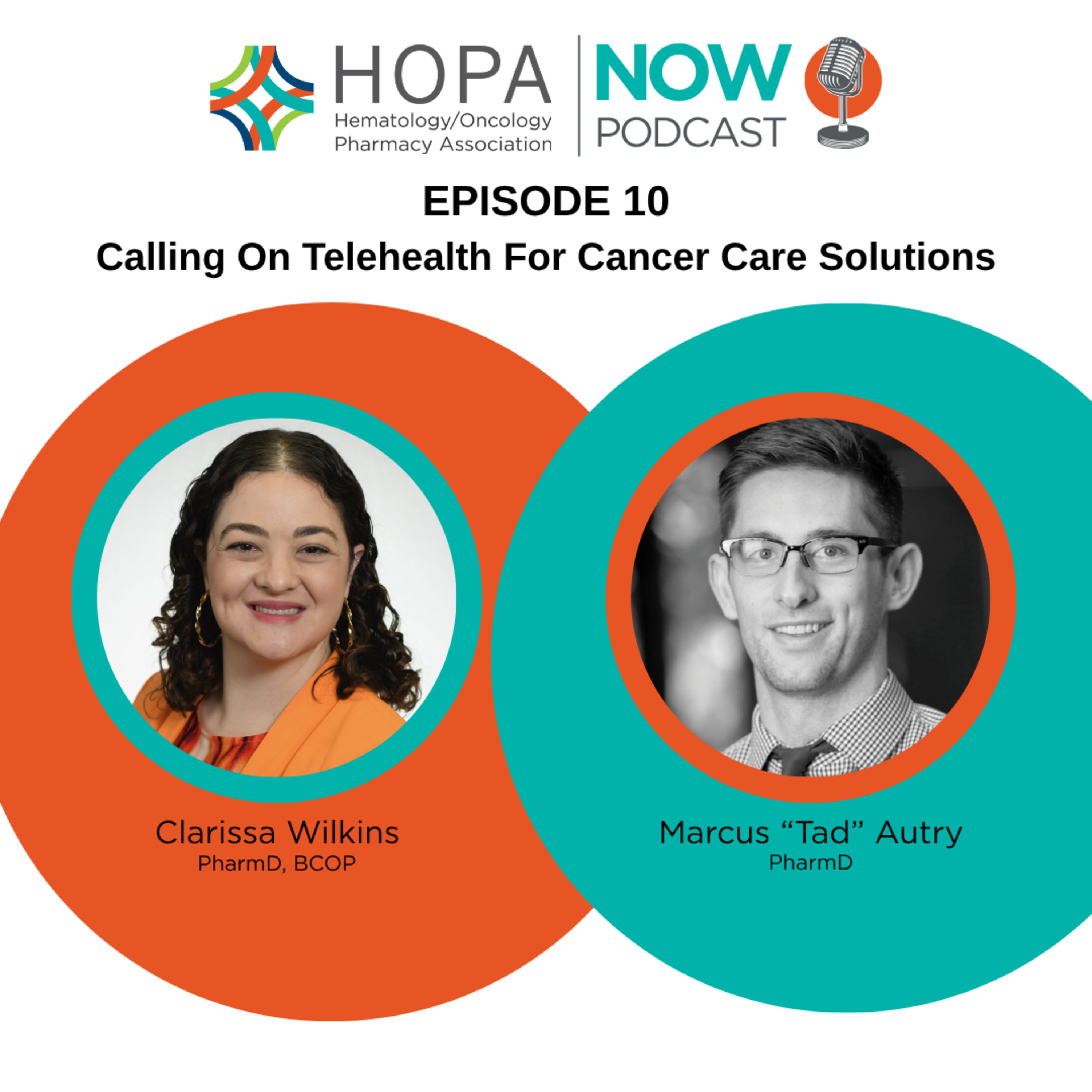
Calling On Telehealth for Cancer Care Solutions
Nov 1800:48:13Tap to summarizeTelehealth is not just on the rise – it's the new normal. And, in some cases, a vital lifeline for both isolated patients and overwhelmed, under-resourced institutions. Like every emerging healthcare trend, it has its ups and downs. But what are the nuances of delivering effective patient care through telehealth? What innovations are happening in this field that we can learn from? And what are the challenges facing this form of patient care? Matt and Peter head down south to talk to a pair of HOPA members with plenty of telehealth experience – Clarissa Wilkins, PharmD, BCOP, a clinical oncology pharmacist at Texas Oncology; and Marcus “Tad” Autry, PharmD, Regional Medical Science Liaison for BeOne Medicines in Norman, OK. Clarissa and Tad help bust myths, map out how to avoid feeling isolated, and explain the positive impact that telehealth can have, as well as offering tips and tricks to any pharmacists who are looking to enter telehealth or expand their knowledge in this area. The multi-organization collaboration on Patient Education Sheets can be accessed at https://patienteducationsheets.com/ The HHS’ Telehealth resources can be access at https://telehealth.hhs.gov/ Find out more about the American Telemedicine Association and its resources here: https://www.americantelemed.org/ Tad’s recommended article on providing more thoughtful patient care by Doug Flora, MD can be accessed here: https://douglasflora.substack.com/p/theyre-not-looking-for-ivermectintheyre Access HOPA’s resources on cultural competencies here: https://www.hoparx.org/about-us/access-representation-opportunity-at-hopa/aro-toolkit/dei-toolkit-patient-care-resources/#ruralurbancare Interested in contributing to a future episode? Got a topic suggestion? We'd love to hear from you. Email us at communications@hoparx.org
Transcribe →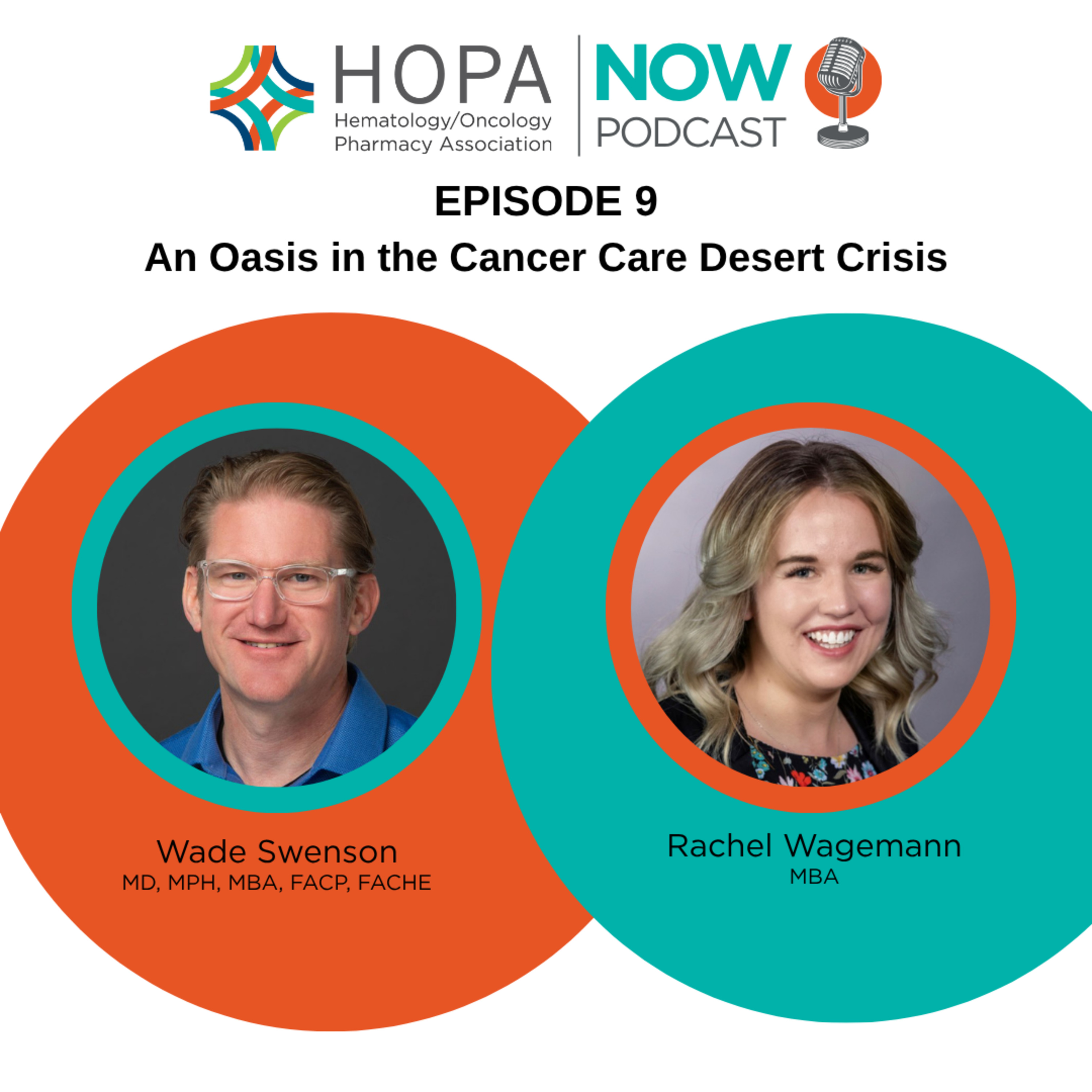
An Oasis in the Cancer Care Desert Crisis
Oct 2800:48:39Tap to summarizeCancer Care Deserts are becoming increasingly common across the United States. Vast areas of rural America in need of cancer care are underserved, under-resourced, and under strain. But sometimes the best and most creative solutions come under pressure. Join Matt and Peter Stuessy, PharmD, BCOP, to learn about the efforts being made to combat the growing crisis with guests Wade Swenson MD, MPH, MBA, FACP, FACHE, cofounder of the Rural Cancer Institute and the Rural Oncology Conference; and Rachel Wagemann, MBA, Vice President of Operations at Sanford Health in Sioux Falls, SD - the largest rural healthcare system in the country. Wade and Rachel share their experiences, the benefits of close-knit community support, and suggestions for what bigger urban institutions can learn from their rural counterparts, as well as advice for smaller cancer care institutions looking to replicate their successes. Find out more about the Rural Cancer Institute here: https://www.ruralcancer.org/ The 2nd Rural Oncology Conference takes place in April 2026 in Minneapolis – find out more here: https://www.ruraloncologyconference.org/ Interested in contributing to a future episode? Got a topic suggestion? We'd love to hear from you. Email us at communications@hoparx.org
Transcribe →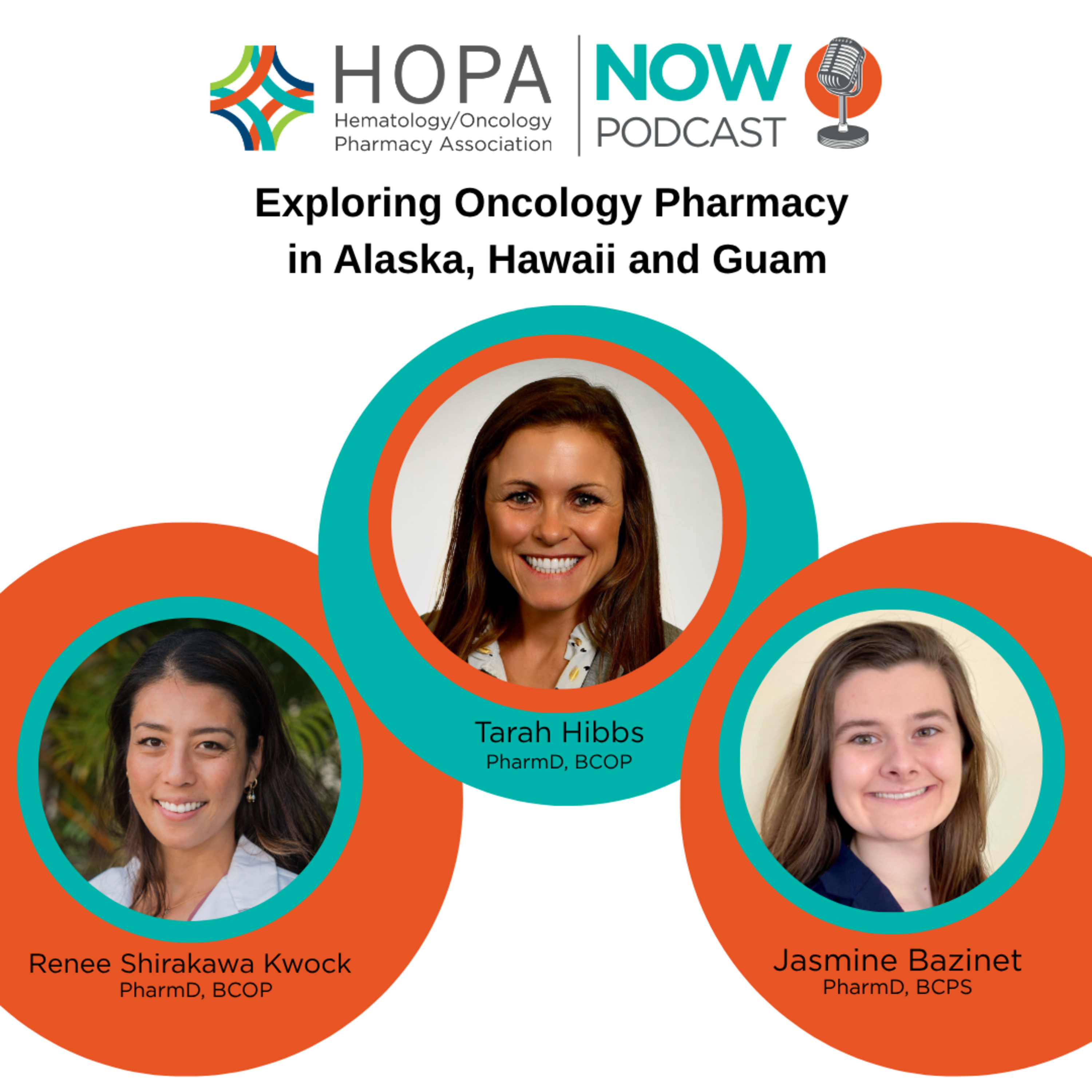
Exploring Oncology Pharmacy in Alaska, Hawaii and Guam
Oct 1400:39:24Tap to summarizeImagine if you had to contend with patients scheduling their treatments around Transpacific flights, "island time", and fishing season! What if everyday problems like drug shortages where even more challenging because you’re 6000 miles away from the mainland, or the only major cancer care center in your state?On this episode of HOPA Now, Matt takes on solo hosting duties, but he’s not alone. Joining him to discuss what it’s like working as an oncology pharmacists in some of the most remote corners of the United States, are HOPA members Tarah Hibbs from Anchorage, Alaska; Renee Shirakawa Kwock from Kailua, Hawaii; and Jasmine Bazinet from Guam City, Guam. If you’re a HOPA member, make sure to visit HOPA Central for all kinds of useful discussion, as recommended by our guests: https://central.hoparx.org/ Interested in contributing to a future episode? Got a topic suggestion? We'd love to hear from you. Email us at communications@hoparx.org
Transcribe →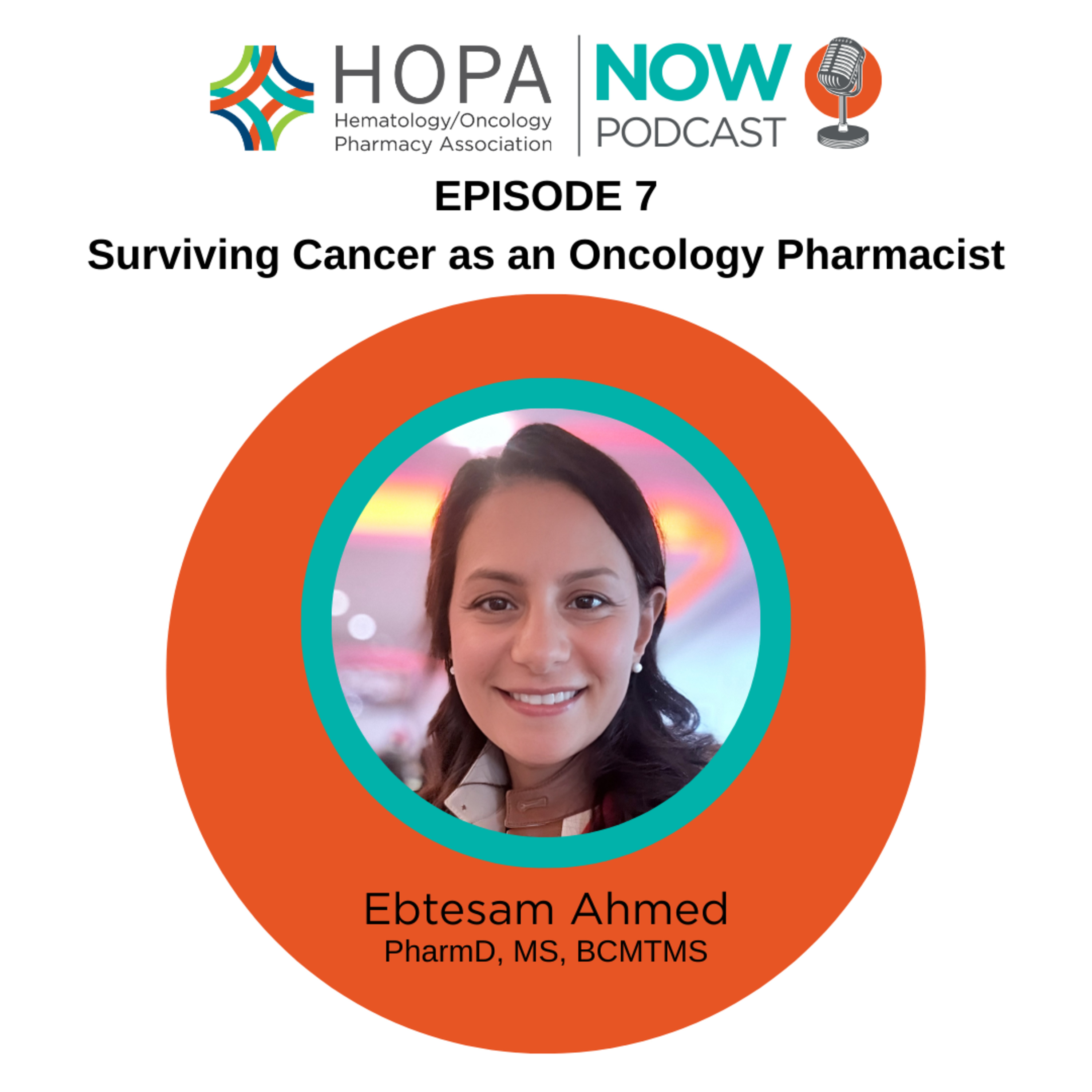
Surviving Cancer as an Oncology Pharmacist
Oct 100:48:00Tap to summarizeIt’s hard enough being an Oncology Pharmacist, but it’s even harder when you have cancer yourself. Matt is joined by Peter Stuessy, PharmD, BCOP for a very special conversation with Ebtesam “Sammi” Ahmed, PharmD, MS, BCMTMS – Oncology Pharmacist, triple cancer survivor, and Fulbright Specialist Grant recipient. Sammi discusses how the journey is far from over when you ring the bell, survivor guilt, lessons learned from experiencing palliative care on multiple continents and, crucially, where to find hope when faced with daunting odds. Sammi’s latest paper for the New England Journal of Medicine, about the silent opioid crisis, can be read here: https://catalyst.nejm.org/doi/full/10.1056/CAT.24.0380 You can find out more about Sammi’s recommended yoga course for cancer patients here: https://www.mskcc.org/departments/division-subspecialty-medicine/integrative-medicine/programs/yoga-patient Following our discussion with Sammi, she recommended this article on the work of Dr. Diane Meier: https://www.nytimes.com/2003/11/18/health/scientist-at-work-diane-meier-providing-care-when-the-cure-is-out-of-reach.html Interested in contributing to a future episode? Got a topic suggestion? We'd love to hear from you. Email us at communications@hoparx.org
Transcribe →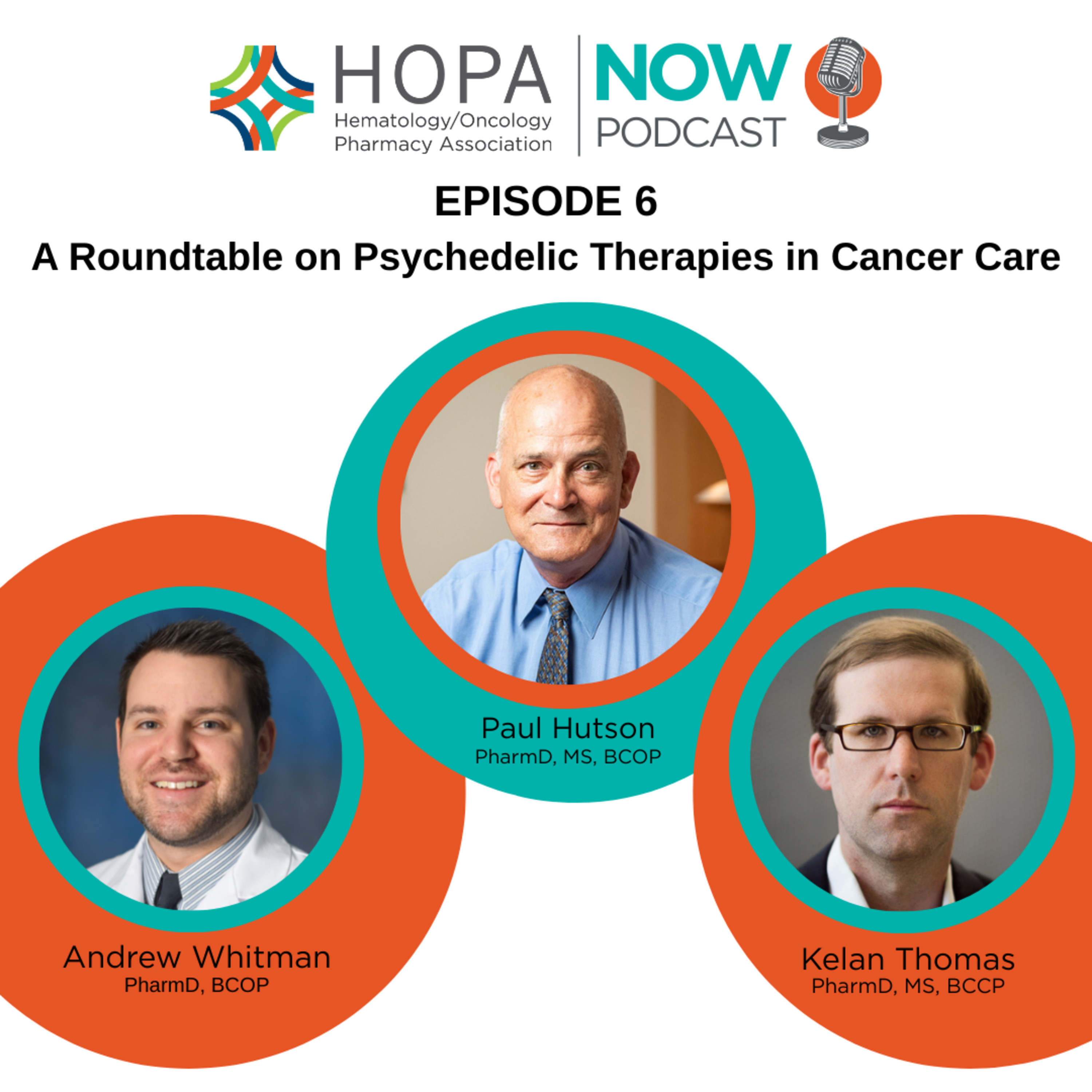
A Roundtable on Psychedelic Therapies in Cancer Care
Sep 1600:40:03Tap to summarizePsychedelic therapies remain controversial in some parts of the Hem/Onc Pharmacy space, but are beginning to enter the mainstream. It’s an area of cancer care that remains shrouded in misconception, but it might offer patients, caregivers and the bereaved exactly what they need if it is increasingly accepted and more effectively regulated on a wider scale. Ben and Matt are joined by a panel of experts to discuss the opportunities, risks, and challenges of psychedelic therapies in cancer care. Paul Hutson; Andrew Whitman, PharmD, BCOP; and Kelan Thomas share some fascinating insights into why microdosing is problematic; drug-drug interactions; potential therapy for those suffering from chronic grief; socioeconomic inequities in access and usage; as well as assessing portrayals in popular culture. Learn more about the Psychedelic Pharmacists Association, including how to become a member: https://psychedelicpharmacist.org/ Find out about any upcoming psychedelics clinical trials through the NIH’s website: https://clinicaltrials.gov/ Learn more about Oregon and Colorado’s Psilocybin practices, respectively, through their official state health authority websites: https://www.oregon.gov/oha/ph/preventionwellness/pages/oregon-psilocybin-services.aspx (Oregon) https://dpo.colorado.gov/NaturalMedicine (Colorado) Interested in contributing to a future episode? Got a topic suggestion? We'd love to hear from you. Email us at communications@hoparx.org
Transcribe →