
Podcast
Hospital and Internal Medicine Podcast
Hosted by Gil Porat, M.D., FACP, CPT · EN
Intended for the medical professional who enjoys learning for the sake of it. Dr. Porat is a practicing Colorado Hospitalist and Board Certified in Internal Medicine.
16episodes
Episodes
Newest firstAll episodes
Elevated Lactate vs Lactic Acidosis: Words That Change Care And Outcomes
Jun 1600:09:24Tap to summarizeThis episode clarifies the difference between an elevated lactate level (hyperlactatemia) and true lactic acidosis, which requires evidence of metabolic acidosis (low pH or low bicarbonate). It discusses common causes of raised lactate, why mislabeling affects treatment location and mortality risk, and how EHRs and coding practices can perpetuate the confusion. Listeners will learn when to document lactic acidosis versus elevated lactate, the clinical implications for resuscitation and disposition, and the importance of precise medical terminology. If you find elevated ascorbic acid (Vitamin C) in the blood, you don't diagnose the patient as having an ascorbic acidosis. Likewise, just because lactic acid is elevated in the blood does not mean it is an acidosis (though sometimes it can be - learn the difference).
Transcribe →When Stool Turns to Stone: Manually Disimpact Again or Buy Coca Cola? Fecalomas, Risks, and Treatments
May 2500:10:38Tap to summarizeFecalomas—rock‑hard impacted stool that cause obstruction, stercoral colitis, perforation, and even death—most often in immobile elderly patients or those on opioids. Standard treatments include aggressive bowel regimens, enemas, manual disimpaction, endoscopic fragmentation, and surgery. There are also case reports of using Coca‑Cola enemas to soften and reduce fecalomas when conventional measures failed.
Transcribe →Does Mouthwash Cause Oral Cancer? Does Mouthwash Eliminate The Benefits of Exercise?
May 1400:18:05Tap to summarizeThis episode examines the concerns about mouthwash and oral cancer. While ethanol can form the carcinogen acetaldehyde, how worried should we be? Strong antiseptic rinses can alter the oral microbiome and may reduce bacteria that help produce nitric oxide, with a small study showing a blunted post-exercise blood pressure drop; does that justify abandoning exercise or ignoring dental guidance?
Transcribe →Recent Hyponatremia Correction Rate Data Is Becoming Harder to Ignore
Apr 2000:10:08Tap to summarizeMultiple studies in multiple journals are going against the norms and previous guidelines. The times they are a changing.
Transcribe →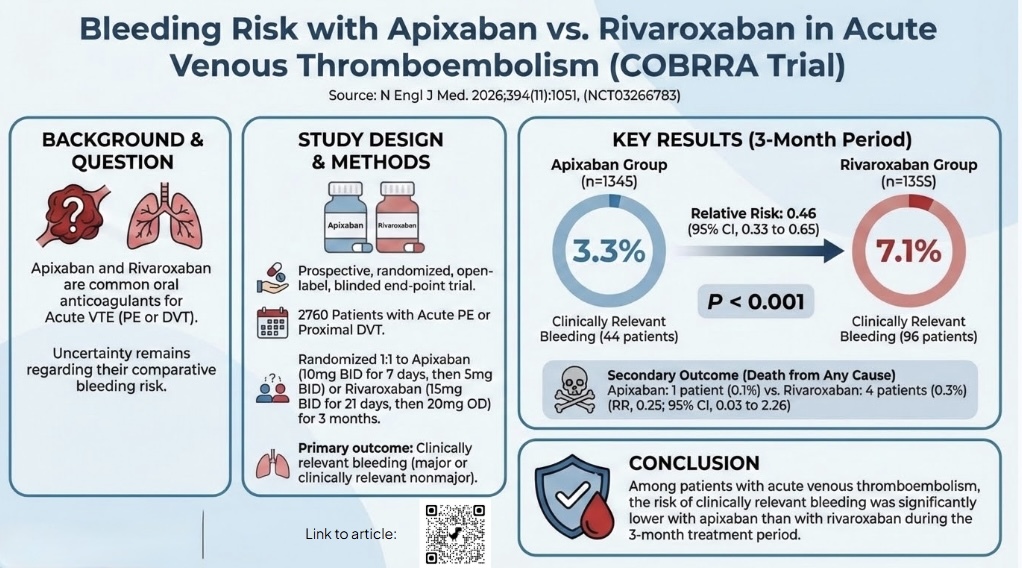
In the COBRRA Trial Apixaban Kicked The Asssssth of Rivaroxaban
Apr 1200:06:20Tap to summarizeFor acute treatment of Venous Thromboembolism the debate of which direct oral anticoagulant to use appears to now be settled.
Transcribe →Heart Failure with Preserved Ejection Fraction (Diastolic CHF) and SGLT-2 Inhibitor Therapy
Jan 27, 202200:11:32Tap to summarizeThe double-blind, randomized phase III EMPEROR-Preserved trial showed a benefit of the sodium-glucose cotransporter-2 (SGLT2) inhibitor empagliflozin in patients with heart failure with preserved ejection fraction (HFpEF). Now let us dig a bit more into those headlines.
Transcribe →Should You Postpone Interventions for INFECTED Necrotizing Pancreatitis?
Oct 18, 202100:10:18Tap to summarizeAn important recently published randomized control trial provides guidance on this controversy.
Transcribe →Spontaneous Bacterial Peritonitis - Unique Infections in Cirrhosis part 2
Jun 27, 202100:18:12Tap to summarizeNo description available
Transcribe →Unique Infectious Considerations in Cirrhosis - part 1
Jun 15, 202100:07:49Tap to summarizeNo description available
Transcribe →Diabetic Gastric Emptying Abnormalities (and sometimes normal) - Part 1
May 9, 202100:10:03Tap to summarizeAlmost nobody feels comfortable managing DELAYED gastric emptying (gastroparesis) and very few medical providers even think about RAPID gastric emptying in their diabetic patients. Even if you send these patients to GI specialists, your blood sugar co-management of these patients can be heavily impacted by these issues. Is delayed gastric emptying always a bad thing? When your patient has upper GI symptoms, how often is it a gastric emptying abnormality? Time for some answers.
Transcribe →