← How Is This Better?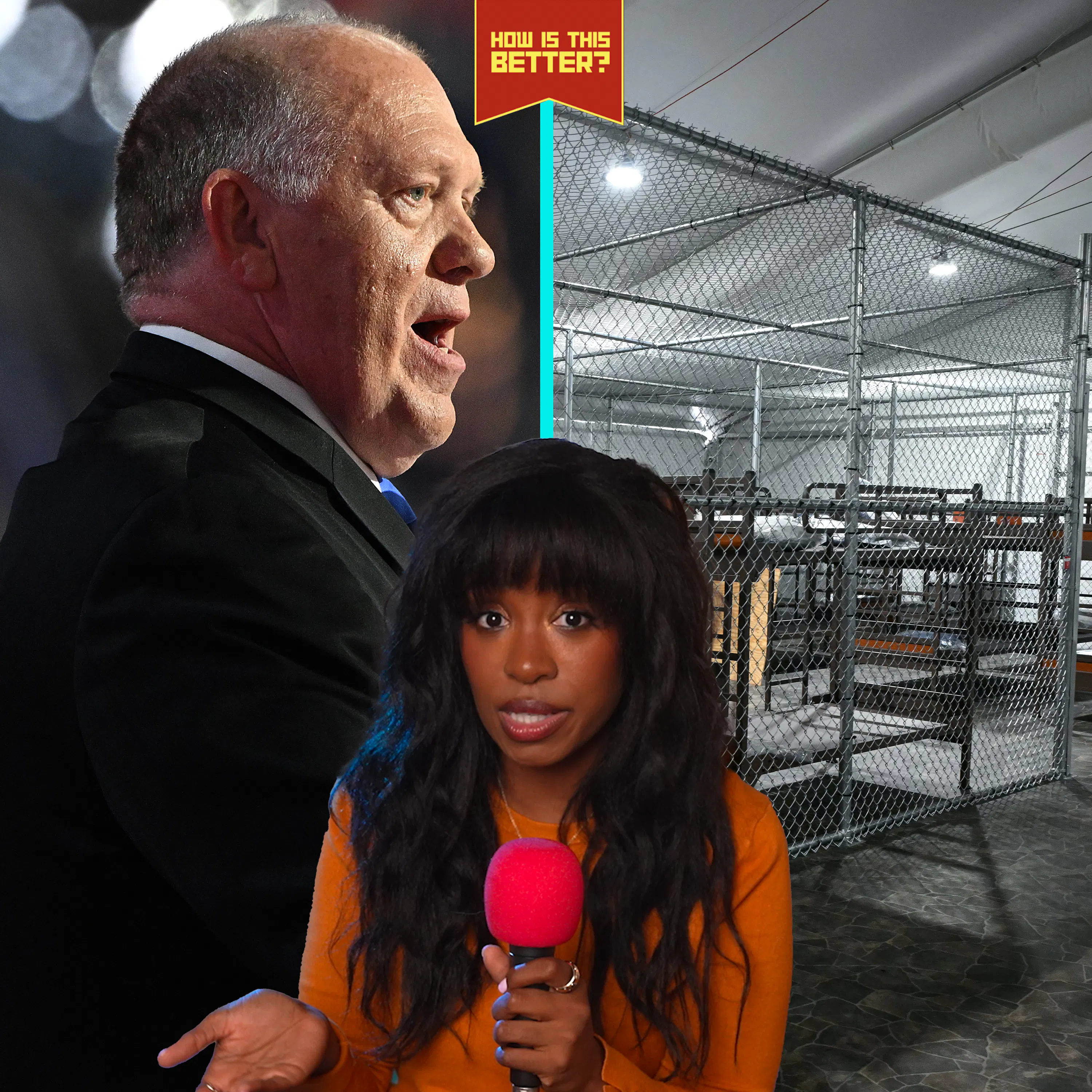
How Is This Better?
How to Fight Back Against Alligator Alcatraz and Inhumane Immigration Policy
00:26:42
Loading summary
Transcript55 lines
- [00:01]
Akilah Hughes
This episode is brought to you by LifeLock. Between two factor authentication, strong passwords and a VPN, you try to be in control of how your info is protected. But many other places also have it and they might not be as careful. That's why LifeLock monitors hundreds of millions of data points a second for threats. If your identity is stolen, they'll fix it, guaranteed or your money back. Save up to 40% your first year. Make visit lifelock.com podcast for 40% off terms apply.
- [00:30]
Justino Mora
I would say 80% of the worst case scenarios that I've thought about in the last 10 years have occurred. That's my fear, that we're going in this unstoppable train towards the worst possible scenarios that we can imagine.
- [00:47]
Unknown Activist
It starts quietly. A van idling too long outside your building. A neighbor disappears, a text thread goes dark. Then one morning the door gets kicked in and suddenly you're a suspect in your own neighborhood. Not because you did anything wrong, but because of who you are and where you were born, what papers you do or don't have. We are living in a country that's building modern day concentration camps, rebranding them as border control and a stand in for the justice system, weaponizing cruelty as political theater. And while everyone is busy splitting hairs over whether or not the President's cankols terminal ICE is raiding neighborhoods and rounding up families. So today we're asking if this is how we treat the people holding our country together, or any people at all for that matter, how is this better? This episode isn't about what might happen, it's about what is already happening. Mass deportations, family separations, the rollback of birthright citizenship, and all of it backed by a strategy called Project 2025, which is exactly what it sounds like. A blueprint for dismantling democracy and targeting marginalized communities under the guise of law and order. The policies and strategies to achieve them laid out in it are so sinister that Donald Trump had to lie to the American people on numerous occasions insisting that that it was not his plan.
- [02:19]
Unknown Political Figure
As you know, and as she knows better than anyone, I have nothing to do with Project 2025 that's out there. I haven't read it. I don't want to read it purposely. I'm not going to read it.
- [02:29]
Unknown Activist
But it was and is the only plan he's implementing currently. According to analysis from Hearst Television Data team, nearly 45% of the non tariff related executive actions from Trump so far align directly with the plans in Project 2025.
- [02:44]
Justino Mora
The Trump administration was very clear about their intentions from day one. In fact, like I would say from 2016, they were very clear under the first administration. They were just not effective at implementing their agenda back in 2016 through 2020.
- [02:59]
Unknown Activist
This is Justino Mora. He's an immigrants rights activist, software engineer, and a fellow USC MacArthur Foundation Civic Media fellow. I wanted to talk to him because he's been in this fight now for more than a decade.
- [03:11]
Justino Mora
I do have to say that personally, I think it took me a little bit by surprise how quickly they moved to this phase. I did think it was going to take them maybe about a year or so, or maybe about a year to two years to attack specifically US Citizenship. As far as the raids, as far as the attacks on undocumented individuals, I thought most likely they're going to have to deliver within the first 100 days, mostly because that's typically what every administration tries to do. Personally, it's tough because I have, you know, friends, family members who are undocumented, who have. Don't have a legal status, may have tps, daca, or legal permanent residence. And then also, I guess as a community organizer, someone that has been trying to, you know, raise the alarm for quite a while that this was a serious threat. It's tough because we were now saying, we told you so. There's so much we can do through social media, there's so much we can do through our own community efforts. But it feels reactive that we're just responding to the attacks and not strategizing any way that we can get ahead of whatever next attack might be coming, because they're adapting to whatever strategies we're implementing on a day to day basis.
- [04:31]
Unknown Commentator
What are the sort of main differences that you've noticed besides the speed with which they're implementing their plans?
- [04:36]
Justino Mora
I think it's the effectiveness that they're having and also this multiangle approach. They're using the most vulnerable populations in the United States as a testing ground to essentially try to destroy whatever democratic principles and constitutional rights that we have and attacking only black and brown immigrants. They know that perhaps the white population of the United States might not raise up and might not fight back as hard as they would if this was being done to white Americans. Of course, you know, there's a lot of incredible white allies that are fighting out on the streets that are getting involved, but I feel like from our point of view is they were going to attack black and brown communities first and foremost. They've had this plan for quite a while and they're now executing step by step and they're going after those constitutionally protected rights because they know that if they can get away with not obeying and specifically respecting those constitutional rights of American born citizens who are black, Latino, etc. They'll be able to build the legal framework and the narrative to go after anyone, it doesn't matter who it is, after anyone who dares to confront them and fight back.
- [05:59]
Unknown Activist
When we come back, we dive into Alligator, Alcatraz, racial profiling and the plan to de Brown America.
- [06:09]
Unknown Advertiser
This episode is brought to you by Vuori DJX here. Jumping in real quick to talk shorts, however you get after it, on a run at the gym, whatever. Viori's core shorts move with you with no restriction. Plus they're comfortable, stylish and lightweight enough to wear all day long. Even better, right now you can get 20% off your first order at viori.com djx that's V-U-O-R-I.com djx exclusions apply. Visit the website for full terms and conditions.
- [06:41]
If you used Babbel, you would Babbel's Conversation Based Techniques teaches you useful words and phrases to get you speaking quickly about the things you actually talk about in the real world. With lessons handcrafted by over 200 language experts and voiced by real native speakers, Babbel is like having a private tutor in your pocket. Start speaking with Babbel today. Get up to 55% off your Babbel subscription right now at Babbel.com Spotify spelled B A B-B-E-L.com Spotify rules and restrictions.
- [07:08]
Unknown Activist
May apply this time. The machinery is built, the levers are mapped, and the targets immigrants, black and brown citizens, and anyone who resists are already on the board. And with the border czar Tom Holman claiming essentially that racial profiling is a fine way to decide who is and isn't in the U.S. legally, people need.
- [07:28]
Unknown Political Figure
To understand ICE officers and border Patrol. They don't need probable calls to walk up somebody, briefly detain them and question them. They just got through their observation and you know, get our typical facts based on their location, the occupation, their physical.
- [07:43]
Unknown Activist
Appearance, and the court's suggestion that they don't do that actually being impossible to implement, things are looking pretty bleak.
- [07:51]
Unknown Commentator
It comes down to aesthetics actually. Right? It's like we gotta de brown the country and so however we can do that, that seems to be their plan. Yeah, but then there's also that sort of sticky point of like if he's just deciding who is and isn't a citizen, which is what he's doing now anyway. Right? Like, that's, that's what we're doing is sort of like testing ground, different communities being like, hey, do you guys care? Do you guys care if we just, you know, yank people off the street? I hate to, like, be gloom and doom, but, like, history has shown us where this goes. And so as someone who I think really likes this country and wants it to be better, like, what, what do you see happening in the future here?
- [08:27]
Justino Mora
I came to the US when I was 11 years old and I found a lot of opportunities here that I wasn't able to find back home. So for, for me to see these current developments taking place, there's this side of me that thinks, you know, I, I want to stay here and fight back. But then there's also the other side of me that tells me, do I really need to be here? This country is always, always promises the American dream and, you know, sold me this idea since I came to the US that if I did my best, that if I succeeded in school, that if I gave back to my community, doors would be open to me. And at least from my personal experience and that of other people, undocumented people, that I know that promise never fully materialized. And if it did, for some individuals, it came at a huge cost. So when I think about the future of this country, where things are heading, I always consider the worst possible scenario. And it might be my, I guess, you know, studying engineering, mathematics, and we're always.
- [09:26]
Unknown Commentator
You're gaming it out.
- [09:27]
Justino Mora
Yeah, so, yeah, exactly. I would say 80% of the worst case scenarios that I've thought about in the last 10 years have occurred. It's going to take people to, you know, just, I would say, wake up and just get involved. We do have the numbers. If we really wanted to, we could really shut down the economy. Like, we can implement huge labor strikes. We could come out in huge numbers, protest and fight back that way. I don't feel confident that we have the organizational structure, like membership for, you know, labor unions has been decreasing over the years. That's one, I guess, perfect example. That's one thing that also worries me, that now there's, of course, younger people that want to get involved, but also there's less structures for them to get involved in.
- [10:16]
Unknown Activist
And communities are being tested right now across the country. ICE raids are happening at immigration hearings, at schools, farms, home hotels, restaurants. Basically every public space has become a place to be targeted if law enforcement decides you look like you don't belong and people are being sent to Countries all over the world, whether they're from there or not. What's worse is Florida, under the cruel direction of failed presidential candidate and current governor Ron DeSantis, has a state sanctioned concentration camp that is making headlines and selling merch. Even as ethical, moral and civil safety questions persist.
- [10:53]
Justino Mora
We saw important conditions, a lot of crowding, 32 male individuals per cage. These people are being caged. Three toilets per area, and the drinking water, it comes from the toilet apparatus in the cell.
- [11:10]
Unknown Commentator
So I want to talk about this Alligator Alcatraz thing for a moment, because to me, it is just the epitome of what is wrong with this administration, with the people who support it. They're selling merch. People want to take photos. This is a concentration camp that was thrown together shoddily, that is already flooded. People who have been able to see it in our, our government who, you know, don't support Trump, have been very honest in saying, like, this is not humane. You know, there's a sign outside of the facility that calls it Alligator Alcatraz. Like it's an official naming convention.
- [11:43]
Justino Mora
Yeah.
- [11:44]
Unknown Commentator
Have you noticed that Americans have become more cruel in the past decade? Does this seem like something that could have been possible in 2016? I guess, like before the election, had he said, I want to make a place where I send all of the immigrants and then we can deport them to whatever country we want and we would have a large concentration of them that. That would have been supported. Or have we just lost our, like, empathy as a society?
- [12:10]
Justino Mora
I think we have lost our empathy as a society for many decades now, because at least when we analyze US Foreign policy, this is something that the US Government has done across the world. Perhaps we're losing empathy towards domestic individuals, domestic citizens, domestic people living in the United States. Alligator Alcatraz, definitely concentration camp.
- [12:32]
Unknown Commentator
Yeah.
- [12:33]
Justino Mora
And that's the way that I've seen, I guess, quote, unquote, these immigration centers. I've seen them as concentrations for a long time, mostly because I've met and talked to people who have been sexually abused in those places, both children and parents, people who have been tortured. Like at the Adelanto Detention center here in Southern California is a perfect example. I met undocumented immigrants who many, many years ago, they launched a hunger strike and many of them were tortured in there by the immigration officials. And I feel like the focus now, it's happening now because there's a Republican in office, when there's a Democrat in office, there's less emphasis. Emphasis. And let's focus on the human rights Violations happening in detention centers, and I would say in any prison in the United States. I guess I could make the argument that Alligator Alcatraz is sort of like a blueprint of what El Salvador did with the secots in, of course, in their country. And now they're trying to replicate something similar in Florida and perhaps in other parts of the country. So that worries me because of the fact that if I'm not mistaken, Alligator Alcatraz is like a state run concentration camp. And most of them are actually federally run. And Alligator Alcatraz isn't. It's like a state funded, led, constructed, maintained facility. And that raises the question, what can they get away with?
- [13:59]
Unknown Commentator
Right, like who's overseeing anything there.
- [14:02]
Justino Mora
Exactly. Yeah.
- [14:03]
Unknown Activist
Historically, barring one recent high profile case, federal custody at least came with a paper trail. Bad, but traceable. With state sanctioned facilities, you create an environment where people can be disappeared without record. And we saw this play out recently. In July 2025, the Miami Herald obtained and published the records of some 700 inmates at Alligator Alcatraz. Many families of those interned had no clue that's where their loved ones ended up. And it has to be reiterated, the crime most of these individuals are being accused of is a civil infraction. Being in the US without citizenship is less serious than, say, running a stop sign, driving under the influence, and domestic assault, crimes that US citizens are more than two times as likely to be convicted of. And that's according to the state of Texas, the only state that tracks immigration status by crime type. When we come back, we have to talk about white supremacy. Because for those with the eyes to see, the end game is incredibly apparent.
- [15:05]
Unknown Advertiser
Rated T for teen. Each year, thousands of adults lose their shred. It's an epidemic simply known as shred loss. But it doesn't have to be this way, because rekindling your shred is as easy as playing the new Tony hawk's Pro Skater 3 and 4. With new parks, cross platform multiplayer, and sick new game modes, we can put an end to shred loss everywhere. Hit the new Tony hawk's Pro Skater 3 and 4 and show the world that the shred's not dead. Get Tony hawk's Pro Skater 3 and 4 available now.
- [15:36]
Living with schizophrenia isn't easy, especially when you're not getting relief from some of your symptoms. It can be hard when you're still dealing with symptoms like hearing voices or seeing things that aren't there. And negative symptoms like feeling unmotivated or avoiding social situations. If this sounds familiar, it might be time to talk to your healthcare provider and explore a different kind of schizophrenia treatment. Discover your possibilities at treatingscz.
- [16:05]
Unknown Commentator
You think Stephen Miller is a white nationalist?
- [16:07]
Unknown Activist
A white supremacist, I would say, because I believe his ideology is one of domination and control over people of color.
- [16:13]
Unknown Advertiser
Who lives in your country determines what your country is. If you move the third world to the first world, eventually we become the third world.
- [16:22]
Unknown Activist
That guy who sort of looks like the creepy scientist who trapped Sally in Nightmare Before Christmas is Stephen Miller. A political advisor to Donald Trump. Breitbart, the rightist of the right wing media, called out his emails as being blatantly white supremacist. He said horrible things about basically everyone with a hint of melanin. And his small vision for this country is winning right now. The Supreme Court this year has paved the way to revoke Birthright citizenship, the 14th Amendment to the Constitution that was put in place to recognize the citizenship of freed, enslaved Africans. That means essentially that the government can decide who is and isn't a citizen at a moment's notice. I mean, just a couple of weeks ago, President Trump threatened Rosie o' Donnell's citizenship because he doesn't like her. My, how far we have fallen.
- [17:09]
Unknown Commentator
So what do you think his end game is? Is it just to make like a smaller, whiter nation that ultimately has less power in the world, to create such a divide that there's, like, you know, so few people who have things and so many people who have nothing, and it's just like everyone who has stuff is white. Like, what, what do you think their. Their plan is or what the actual end game is?
- [17:31]
Justino Mora
I think it's to advance white supremacy and acquire more power. So maybe a few other things. But I do think as a whole, just based on the people they have in their administration, the public statements that they have made, also the attacks on black and brown immigrant communities. I don't see rates happening in, you know, European undocumented communities.
- [17:55]
Unknown Commentator
Yeah, Russian. Yeah, there's plenty of Russian people who undocumented. There are plenty of people of every race who are here undocumented, and you don't see that in white neighborhoods.
- [18:04]
Justino Mora
So I think it's one pushing the white supremacist agenda and then also acquiring more power and whatever means they think it's necessary, either financial, you know, monetary, personal gain, military power. I feel like it's a combination of those things Relative to the first Trump administration. This time around, I do feel more concerned about my activism and how I advocate publicly. So that I do have to admit, and I feel like it's true, you know, for a lot of immigrant rights organizers. And I am concerned about the ramifications of being public online, but I guess I'm already public.
- [18:46]
Unknown Commentator
Yeah, that's a good point. They could just look at the history.
- [18:49]
Justino Mora
That you posted so that, that's one piece. The question is, if I were to do some sort of community organizing or build tools that were to become very effective at preventing ice rates, etc. Etc. You know, it would probably move me from the bottom of the target list, probably higher.
- [19:12]
Unknown Commentator
Yeah.
- [19:13]
Justino Mora
So that's the kind of stuff that it's in my mind. And also just thinking about the new build that has passed, I call it the big Ugly bill.
- [19:21]
Unknown Commentator
It is, it's really ugly. It's horrible.
- [19:24]
Justino Mora
Yeah. And the funding, historical funding that is going to go towards dhs, ICBP to implement their horrendous agenda and just thinking about the worst possible things that they can do without money, they're going to deploy not only against immigrants, they're going to deploy it against everyone.
- [19:42]
Unknown Commentator
Everybody?
- [19:43]
Justino Mora
Yeah, everybody. Like everybody who decides to speak up. It's going to become a target. Doesn't matter where they are, it doesn't matter what community they are. If they do decide to speak up, I feel my fear is they're going to deploy it against them.
- [19:57]
Unknown Activist
Okay, gang, take a knee. Things aren't looking so good for the old US of A. Right now. But I'm curious if there's anything that we can look to for hope right now.
- [20:06]
Justino Mora
One thing that is kind of like escaping also like the national media, national attention is this natural growth and birth of community defense groups around the country. People are coming together to form these community organizations and entities and to, to protect their own communities. They're going out and patrolling their own community. If they see ice, any ICE activity, they're publishing that information on their social media platforms. And that is super important. We're also seeing people in their own way, fighting back against fascism, trying to prevent these kidnappings. And I feel the media is not doing a good job at capturing and covering those community led efforts.
- [20:58]
Unknown Commentator
Right.
- [20:59]
Justino Mora
I'm wondering why, like, is it because it might show that if we do come together, that if we do form these groups outside the establishment, that we have more power than we imagine. We can build connections and bridges with other social issues. What's happening to immigrants is not only an immigration issue, but it's also a health care issue. It's also a, you know, income inequality issue. It's also a reproductive issue. You know, there's many undocumented women who are not able to access healthcare in many of these states because of their immigration status that they feel that they might get targeted. I feel like that's one thing that at least at the federal level, at the national level, the media is not doing a good job at covering it. Like, they're putting a lot of emphasis on, you know, the first reaction of people in L. A when these ICE raids started in early June. And they're not focusing on the other things, the other incredible things that are happening. Like people are also going out and trying to help their community members. If they need groceries, they're giving their neighbors, you know, rights to doctor's appointments or even to school. Like there is hope in fighting back if we come together, if we support and love each other and fight for each other's rights.
- [22:26]
Unknown Activist
You already know what I'm going to say, right? How is this better? It's not. Immigration is a difficult conversation globally at this point. And Justino is right. This isn't just a problem. During Republican administrations, the plans suggested historically haven't been adequate in addressing any side of the issue fair. But mass deportations with zero consideration for humanity, for kindness, for contribution, for families, is horrendous. There isn't a word bad enough for consciously creating concentration camps outside the bounds of the justice system. No charges brought in the year 2025. This is a dark moment in this country, reminiscent of Japanese internment, American slavery, Jim Crow and more. And so it's kind of our moment to step in, step up and elevate when we see pushback. I want more for this country, and I think you should, too. Thank you for listening to or watching. How is this better? Have you been enjoying the show? Great. Please leave A rating, preferably five stars, and review to let us know what you think. We'd love to hear from you and it's gonna help introduce our new show to more people, finally. Follow, subscribe, whatever they're calling it on your platform of choice or frankly, all the platforms, Apple, Spotify, Courier's, YouTube. That way you won't miss any new episodes. Thanks and we'll catch you next time. How Is this Better? Is written and hosted by me, Akilah Hughes. It's produced by Devin Maroney and edited by Shane Burkest. Courier's national managing director and executive producer is Kevin Dreyfus. RC Demezzo is their VP of Brand and Social, and Charlotte Robertson is the deputy director of Brand and Social. Tracy Kaplan is senior vice president of sales and distribution, and Marianne Kuga is director of marketing show artwork by Danielle Del Plato and original theme music is by Used people.
- [24:20]
Justino Mora
Sam.