Loading summary
Transcript49 lines
- [00:00]
Stinson Carter
Have you seen any dinosaurs? What kind of question is that?
- [00:05]
Narrator/Advertiser
On August 14th I think that our neighborhood has moved.
- [00:11]
Stinson Carter
We're in the past.
- [00:12]
Narrator/Trailer Voice
Summer ends on Oak street. Run from producer J.J. abrams, Anne Hathaway, Ewan McGregor. We're gonna survive the end of Oak Street. Directed by David Robert Mitchell. Rated PG13. May be inappropriate for children under 13. August the 14th it's getting harder and
- [00:31]
Akilah Hughes
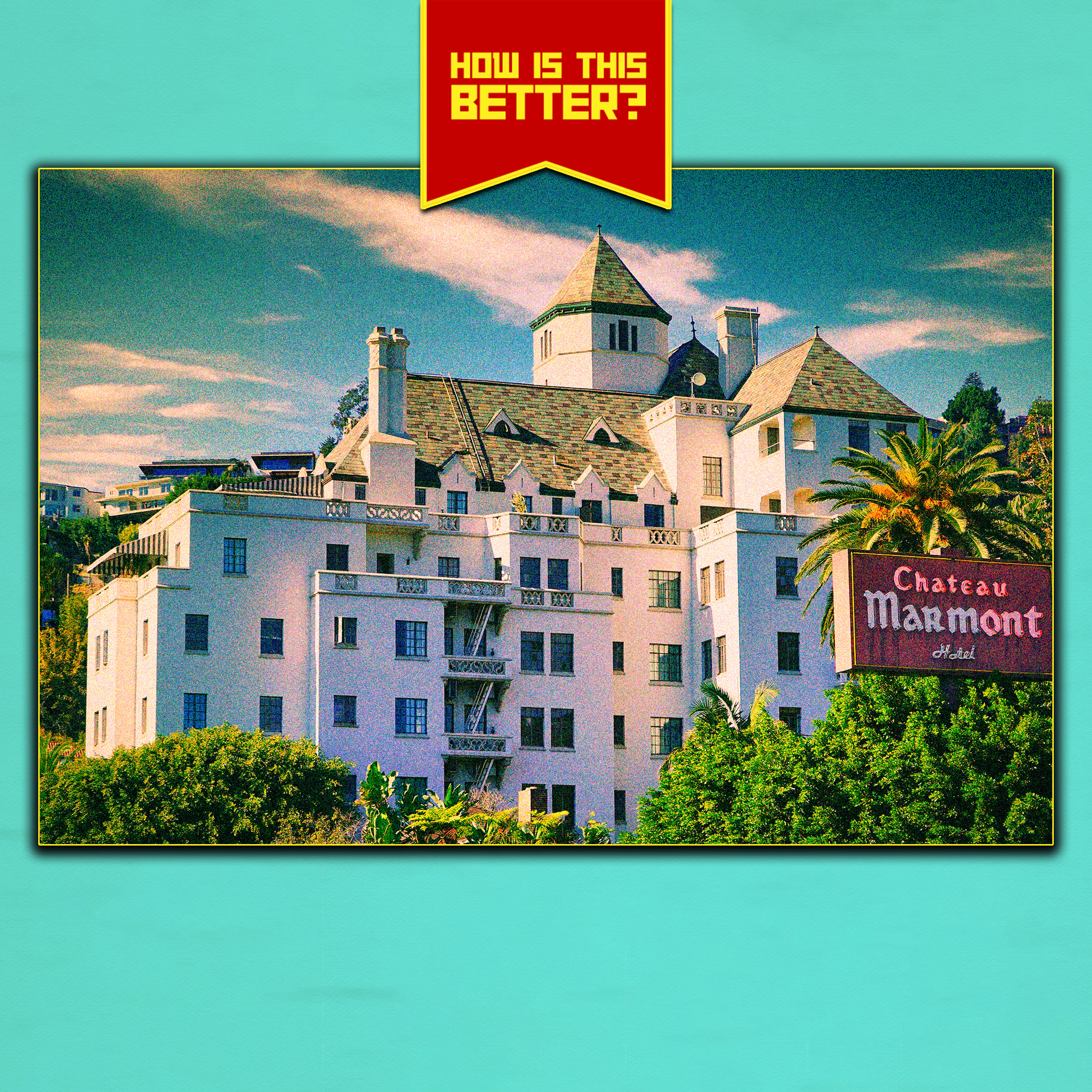
harder to the argument that Hollywood is dead. The Odyssey is on track to make a billion dollars. Brand New day will cross that this week. After just one week in theaters. There's a never ending flow of think pieces about obsession and backrooms, their young directors and the resurgence of the genre that can make new stars overnight. But zooming out for half a second, the first two films I mentioned have majorly overlapping cast, legacy talent, real stars. The latter two, while fascinating, aren't really enough to reflect a boon for the industry writ large. After all, there's an entire creative class that's been sidelined in Hollywood and their indie projects aren't getting funded. And so instead of arguing whether or not Hollywood is dead or alive, I want to take it back to the last era of old Hollywood when anything seemed possible and opportunity overflowed. I just got done rewatching Entourage. I watched it when it originally aired and as it was picked apart for its douchey overtones. But now it acts as a kind of perfect time capsule for Hollywood before the Internet, before streamers, before the most recent strikes and current consolidation. It's a fascinating watch and yes, still douchey. To understand if what we have in Hollywood now is in any way comparable to what came before. We have to revisit the 2000s and as always, ask how is this better? To help me really imagine a world where young people could chase their dreams in Hollywood, I reached out to Stinson Carter, a writer who recently penned an essay for Esquire about his time working at Hollywood it spot Chateau Marmont. Titled Bartending on the Edge of Fame, the article paints a really clear picture of what Hollywood really felt like when it was booming
- [02:26]
Stinson Carter
early on as a 24 year old going into the chateau feeling like I was totally on the outside of this world, that I had moved across the country. I graduated from college in New York and I moved out to LA to be part of the scene and I felt like I was on the outside looking in and there's no path there, there's no real road into Hollywood. And so there were these cool guys that lived in my apartment building the Villa Carlotta, which now is sort of a posh short term rental. That is, we all got evicted from it. But at the time in the early 2000s, the Villa Carlotta was the chels of Hollywood. You had people who were on their way up, you had people who were on their way down. But it was a complete creative melting pot. And I happened to meet someone who had 10 other people who wanted his apartment, but he had also gone to Vassar, where I went. And there's. It's a small school. And there was a little bit of a kind of kinship because we both shared an alma mater. And also, you know, that meant that we were also like hopelessly romantic, you know, sad, kind of indulgent people who were melancholy artists. And so we really connected. And he introduced me to the food and beverage manager at the chateau. And long story short, I was so tired of my life the way it was as a substitute teacher in 2002 in LA that I just said, I want to be into that world. That is the world I want to go into. So I begged for a job and said, give me any job, I will take it. And I just leapt into it. I mean, I had just gotten out of a breakup, I was out of money. It was just sort of like I threw myself to the chateau as it was. Like that was my new life, that was my new identity. That's where I got all my friends from, that's where I got all my experiences to write about from. And so the thing about those days is we were running this entire restaurant with two to three staff per night. And so if you think about the ratio of, you imagine going into the chateau Marmont circa 2002, there's three people who look like their waiters.
- [04:19]
Interviewer/Host
Yeah.
- [04:20]
Stinson Carter
There's no camera phones, there's no texting, there's no social media. So first of all, everything is happening in the room, like everything is all sort of there in the lobby and everyone has their guard down because there's no way that that's going to sort of get out into the outside world. And so because there were so few of us then and it was such a small scale operation, you really got to be the wish fulfillment level of being a fly on the wall when that ratio was still intact, of, you know, all the entire hotel being full to three people on the restaurant staff was mesmerizing. And to do it at 24, before social media was a level of wish fulfillment that I don't think I could really even describe to people who were that age now, because it's like Somehow it wasn't weird to, you know, hang out with Joan Baez and talk about Bob Dylan on her balcony or to, you know, every morning. Paul Rudd was there all the time because he was filming Friends. And, like, he would just invite me into, like, sit and chat in his room every morning when I'd bring him breakfast. And there was no real barrier between guest and staff, the way that they treated us. And as the years went on and as all of those three things I mentioned changing Hollywood, me and society itself, that barrier, that wall got bigger and bigger and bigger until it really felt a bit more like the sort of typical divide that you would get in any upstairs, downstairs world of a posh hotel, you know?
- [05:49]
Interviewer/Host
Wow.
- [05:49]
Akilah Hughes
And so, I mean, I'm curious, like,
- [05:51]
Interviewer/Host
before you start there, you know, you. You make this connection with a person
- [05:55]
Akilah Hughes
who also went to your school, they
- [05:56]
Interviewer/Host
worked there, or they just. They knew the person who was the head chef.
- [06:00]
Stinson Carter
Yeah. So there was the person who got me into the villa. Carlotta happened to be friends with a guy named Alan, who was the FNB manager of the chateau.
- [06:09]
Interviewer/Host
Got it.
- [06:10]
Stinson Carter
So I became friends with the person who gave me the apartment. And that led me to the friend who worked at the chateau. And I didn't know what it was, but I just. You know, when you're sort of trying to hustle in a town like that, you know when people say the name of a club or a hotel and they allow a certain pause after they say it, right? And everyone would say, like, oh, the Chateau Marmont. And I would be like, well, why are you saying it like that? Like, clearly, there's something that I need to dig into here, because I didn't know anything.
- [06:39]
Akilah Hughes
For the uninitiated, the Chateau Marmont looms large in Hollywood history. From golden age stars like Greta Garbo in the 1930s to John Belushi and Robin Williams in the 70s and 80s to Sofia Coppola and Lindsay Lohan in the 2000s. It is an iconic venue for stars of their day to hang out, party, live and die. Why do you think it shows up in so many songs anyway? Back to the Chateau.
- [07:05]
Stinson Carter
I mean, I felt like I was savvy coming out of liberal arts college in New York. I thought I was pretty hip, but I didn't have a clue about Hollywood, really. So I just. I noticed. Okay, well, they're saying this name of this hotel in a way that makes me think I should probably dig into that a little bit. And when I realized there was a lot more mystique there and that maybe it was sort of a way in a back door to this kind of crazy industry that I couldn't really figure out how to sort of, you know, find my way into. I had this identity of myself as this literary guy, and I was teaching. I remember one day trying to teach a lecture on Camus the Stranger to a English class at Hollywood High. And they looked at me like I had three heads, you know, And I was like, I had to sort of shift my identity because, frankly, I was kind of a typical, like, you know, east coast entitled person who thought like, my creative genius was going to somehow make me coast around among those, you know, west coast people. Whatever illusions or delusions that ran in that vein, like those were swiftly destroyed, you know, when I realized that here I am, you know, I am cleaning people's ashtrays at their tables.
- [08:13]
Akilah Hughes
Okay, so he wasn't exactly in Hollywood, but he was adjacent to the stars, to the vibes, and to the energy being produced. Back then. It was still the era and the industry where being seen at the right place at the right moment could change your entire life. And there was no better place to be seen than the Chateau Marmont. From that night on, I would work my way up from a lowly caterer to the hotel's most tenured bartender, despite having no previous bartending experience and never officially being hired. So what then did he observe about Hollywood from his post as hip bartender at Chateau Marmont? Let's find out after the break.
- [09:05]
Stinson Carter
Have you seen any dinosaurs? What kind of question is that?
- [09:10]
Narrator/Trailer Voice
On August 14, I think that our
- [09:13]
Narrator/Advertiser
neighborhood has moved or in the past.
- [09:17]
Narrator/Trailer Voice
Summer ends on Oak street run from producer J.J. abrams, Anne Hathaway, Ewan McGregor. We're gonna survive the end of Oak Street. Directed by David rober Mitchell Rating PG13 may be inappropriate for children under 13. August the fourteenth.
- [09:36]
Narrator/Advertiser
This episode is brought to you by Facebook. So you were scrolling on Marketplace, and there it was, the bike you'd been searching for. You sent a message, and it turned out the seller was super chatty, kind of funny, and an avid cyclist. The next thing you know, you're in a cycling crew. Well, a community cycling group. The thing about Facebook, you might find more than what you're looking for, from a browse to a bike ride this summer, Find more on Facebook.
- [10:08]
Akilah Hughes
Before we get to the brass tacks of where Hollywood is now, I think we all deserve a little story to illustrate the kinds of experiences he had
- [10:16]
Stinson Carter
at the chateau, the friendships that we made in the trenches there. It's different from the friendships that you make working in a kitchen where you're being destroyed by crazy, you know, crowds every night. Or like a mean chef. Yeah, it was a mixture of the slog, of the sort of brutal nights, of just getting through the night. Like, all the improvised solutions to problems that would pop up constantly. I think a lot of people in FNB all have that thing. But what it was paired with at the chateau, which made it so unique, was that you combine that sort of toil and that sort of close proximity. You're fighting together in a submarine kind of vibe. You combine that with the wish fulfillment of the fact that you're sweating it out and you feel like shit and you feel you're down on yourself because you're not in the room, you're down in the service station. But then you go upstairs to the penthouse to bring a bottle of wine, and suddenly it's like, I don't know, Johnny Depp's like, here, have a glass with me. You know what I mean? You never know when that night is gonna happen. And I think people ask me what was the craziest thing that happened? And I think everyone that worked there would. That in those days would agree that it wasn't necessarily about one crazy thing. It was about these moments, these just moments that could only happen there. And you never knew when they were going to turn up. But when they were magical, they were sort of like you pinched yourself and you thought, I am in this place on planet Earth right now in this unique spot at this time, and this will never happen again. Even if it's as simple as just having a conversation with Paul McCartney in the lobby after making him a margarita. You know, these little things, and you would bump into them, you know, being stuck on the elevator with Elton John. And I made some stupid, stupid joke about the Shining and tried to mimic the twin girls in the Shining to Elton John on the elevator. And he was totally unamused. But these little moments that you would have were really special.
- [12:05]
Akilah Hughes
In his essay, he told the story of an encounter with Robert De Niro. When I asked him to share it with me, he replied, well, I have
- [12:13]
Stinson Carter
to be careful with that because I don't want to.
- [12:17]
Interviewer/Host
Fair?
- [12:18]
Stinson Carter
Yeah. You talking to me?
- [12:21]
Akilah Hughes
Like I said, fair. But I'll tell you, basically, the Godfather, Deuce forced him to make a martini again, again, again and again, demanding perfection from a young bartender who had other guests waiting.
- [12:36]
Stinson Carter
I was used to being able to get by with banter and get by with speed and just kind of being back there and, you know, in those days, we were still. We didn't even measure our shots. We were doing like speed counts and stuff like that. And so at that point, we were actually. We had a service bar out of the kitchen. So I was a little bit bitter, general. And when asked to come out to the lobby to make the drink, I was, you know, we. I talk about how I changed over the course of the time. That was by the. At the point where I was getting a little bit more cynical about the job and I had been sort of stashed in the kitchen. So that dynamic of feeding on the energy of the crowd, when you're a service bartender, part of it is sort of like, okay, I don't have to deal with anyone and that's fine. And I like it this way. It was in that context where I'm kind of the slightly bitter bartender in a black shirt, not public facing at that moment in the kitchen with a little bar and get the request to go make the martini. And it was kind of insane. It was surreal, you know, having to remake the same martini over and over. Even the general manager came and apologized to me afterwards because he's like, look, that's sort of above and beyond what you should be asked to do here.
- [13:43]
Narrator/Advertiser
Yeah.
- [13:44]
Stinson Carter
But even at the time I thought, you know what? It's a story. I'm great. I will make his martini 10 times. And plus, one thing that I learned at the chateau was that I don't believe that anyone can survive fame intact. I mean, it changes everyone's personality.
- [13:59]
Interviewer/Host
Yeah.
- [14:00]
Stinson Carter
And I don't, I don't think anyone can necessarily be the same person that they are when they start out. And so I would say that I, over time, forgave more of that behavior in people than when I started out. It's like I was so quick to say, oh my gosh, they were rude. They weren't, you know, but over time, I thought I had a hierarchy which was older, like sort of musicians that had once been famous were my favorite people to interact with, period. Below that, actors who had once been famous and were still around, but not like necessarily in the height of fame. Below that was actors who were in their peak of fame. Below that were fashion people, and below that were art world people. And then maybe above even, even, you know, people like Hunter S. Thompson I would put in their own category. Even above or maybe at least alongside the kind of veteran musicians. Those were the people that I got the most excited about when I would see them. Did I. Did I avoid that question too much? You want Me to say more about it?
- [14:58]
Interviewer/Host
No, I mean, I think that, like, you know, you've said enough and we
- [15:01]
Akilah Hughes
can all agree, but it's not just fun celebrity stories. The era he was working in, sans cell phones and surveillance, led to all kinds of encounters that could only exist in an era with less self consciousness. I was curious if he had thought about what making it now versus back then might be like.
- [15:20]
Interviewer/Host
I mentioned in a comment on Esquire's Instagram that I'm rewatching Entourage and I so deeply mourn for this era that you were talking about. I think that show runs from like 2004 to 2011ish, which I think, like, you know, at the time people were like, this show, It's a bunch of douchebags, whatever. Like, there's the connotations for the show. I always loved it. But now it's sort of this, like, perfect capsule piece of like, an era of Hollywood where things felt really possible, where people were making deals in hotels and, you know, there were chance encounters at parties that led to projects that led to, like, iconic things. I mean, one of my favorite things to do with my boyfriend when we watch the show is like, they'll mention something and I'm like, that's a movie now. That's a TV show now. Clearly someone was watching this.
- [16:08]
Stinson Carter
Yeah.
- [16:08]
Akilah Hughes
And so, you know, I also mentioned,
- [16:11]
Interviewer/Host
like, we're living in an era where Hollywood feels kind of dead. Do you feel, and I know that you're not like, living in Hollywood in LA anymore and you don't work there anymore, but obviously comparing that era of Hollywood and what it felt like before social media and before the streamers and before this sort of contraction and before both of the big strikes, you know, how do you compare that to now? And would you say it feels dead in comparison?
- [16:36]
Stinson Carter
Well, I would say that again. I, you know, I am still. I was affected by a lot of those things as a screenwriter and as a Writers Guild member. And, you know, for me, working in the industry from a distance, I am not aware of the changes on the ground in Los Angeles, but I'm certainly aware of them in the industry itself, just through my agency and agents and managers and. And, you know, that team that is all still in LA for me.
- [17:04]
Interviewer/Host
Yeah.
- [17:04]
Stinson Carter
So I'm hearing a lot of that. And it. And it seems like one thing that is interesting for me is that there's a lot of hustle now that needs to happen and a lot of sort of smaller scale projects. And I feel like the Chateau was sort of an education in that, like being light on your feet, coming up with new ideas and new projects and trying to see if they can, you know, if you can run with them. So on one hand, I feel like the way that we acted back then, what we sacrificed for this potential lottery ticket of success was crazy. It doesn't make any sense. Like, what you would give up, the fact that you would, you know, put your life on hold for this, for this dream that you were really banking on, not just doing the work, which of course you had to do, but also just inserting yourself at great personal cost into the place where you felt like you could be recognized for what you were doing. And that sort of lottery ticket version of an escalation, escalator to fame is different now than it was then, I think. Different now it takes the form of the young director who goes and makes a horror film for $10,000 and becomes viral. And suddenly, so what that sort of big, exciting, explosive moment looks like now is not the same as it. As it looked then. And so I'm sure that the people now in that position make their sacrifices, but it's a very different sacrifice than I'm going to go and get beaten down by this kitchen in this, like, you know, crazy restaurant every single night because of what might happen on one of those nights.
- [18:32]
Interviewer/Host
Did you know people who. Or this might even be your own story, but, like, did you know people who did get sort of a break in that environment?
- [18:41]
Stinson Carter
Yeah, absolutely. I mean, I don't know if it was necessarily that environment that provided the break, but there were people who got massive breaks out of that. You know, one of my closest friends in the world, still a screenwriter, you know, went from bartending at the Chateau, driving a car missing a door, to writing huge Marvel movies, you know, and. And big success as a screenwriter, where he started at the Chateau and, you know, other friends who would go score the lead on a big TV series, you know, and so it definitely happened, I would say enough to. To keep that dream alive. But I think now looking back, the people who are sort of, for those that. That did not happen to the ones that just kept their heads down and kept working and kept finding ways to make it work, whether it was lever all your debt to shoot your movie or just finding some way to keep trying to tell stories, it's a different kind of success. But there. There are more of those stories than there were of the sort of kind of being plucked from obscurity and propped up on a pedestal of fame. I think that obviously relationships still matter. And I think that having relationships where that will allow you to get a certain story or a certain project into the right hands still matter. But there are more options now for making that happen, you know, because of all these sort of low cost of entry platforms that you can use to get your stuff out there, whether it's putting a short story on Reddit, whether it's putting a short, you know, teaser for a horror film on YouTube, there's all these opportunities where you can kind of do that from anywhere and you don't have to be there physically in this one part of West Hollywood where all these specific tribe of people all come and, you know, hang out and get drunk every night and, you know, get up to mischief. So it's like, on some level, I feel like maybe that's better, but I think on another level, it sure was cool.
- [20:44]
Akilah Hughes
So are the pathways to success in Hollywood really worse today? Stinson makes a really good point. You don't have to work at the Chateau Marmont now to gain entry into the club. The Internet, in its way, has very much democratized the avenues for success. Even if only 5% of the shows are even being made now. And like noted earlier, Zendaya, Tom Holland and Anne Hathaway are kind of personally carrying Hollywood on their backs at this point, using myself as a test case, it's still too hard to tell. I started my career on YouTube thinking it would be just a portfolio of my range and a springboard to a traditional Hollywood career. And that did work to an extent, certainly not to the monetary extent or opportunity extent of people like Curry Barker. But it got me in those rooms now, for myself and many millennials, the pipeline to Hollywood from the Internet feels more fraught than ever. And making it on your own is a lot harder than making it while funded. I agree relationships can make all of this easier, but there's no equivalent to development money or exhibition of your work. It's possible on the Internet, but as algorithmic platforms dictate more than they elevate art, it's just hard to see the opportunities as the same. So it's hard to know really if this is better or the natural trajectory of a system that got huge and then had to compete with something as unruly as the Internet, I think this might be the first time we've actually come to a draw. I want to thank Stinson Carter for being so generous with his time and writing that awesome piece for for Esquire. Like comment, subscribe and share this video with your friend. Who is feeling disillusioned with their Hollywood dream. We'll see you next week. How Is this Better? Is a production of Courier. It's written and hosted by me, Akilah Hughes. It is produced by Devin Maroney. Video editing is by Shane Verkus. The rest of the team at Courier includes Marianne Kuga, Sam Hollows, and Charlotte Robertson. Please subscribe to follow How Is this Better? On all the platforms, YouTube, Apple, podcasts, Spotify, etc. And tell someone about your favorite episodes. If you're interested in sponsoring episodes or giving us products to try and try to sell, reach out to advertiseurriornewsroom.com thanks for listening and until next time, see ya.
- [23:44]
Sponsor/Advertiser
Hey guys, Finding the perfect gift for the food lover in your life is easy thanks to Gold Belly. Gold Belly ships America's most iconic foods straight from world famous restaurants right to your door. So if you want to treat someone to Joe's Stone Crab from Miami, Franklin Barbecue from Texas, or desserts from famous foodies like Ina Garten or Martha Stewart, Gold Belly has you covered. Just go to goldbelly.com and for a limited time get 20% off your first order with promo Code Gift. That's Promo Code Gift.