Loading summary
Transcript220 lines
- [00:02]
Caroline
Welcome to how to Decorate from Ballard Designs, a weekly podcast all about the trials and triumphs of decorating and redecorating your home. I'm Caroline. I'm on the marketing team. And I'm Taryn and I'm a product designer.
- [00:13]
Liz
I'm Liz. I head up the creative team. We're your hosts.
- [00:16]
Caroline
Join the expert team at Ballard Designs for tips, tricks and tales from interior designers, stylists and other talents in the design world. Plus, we'll answer your decorating dilemmas at the end of each episode.
- [00:25]
Liz
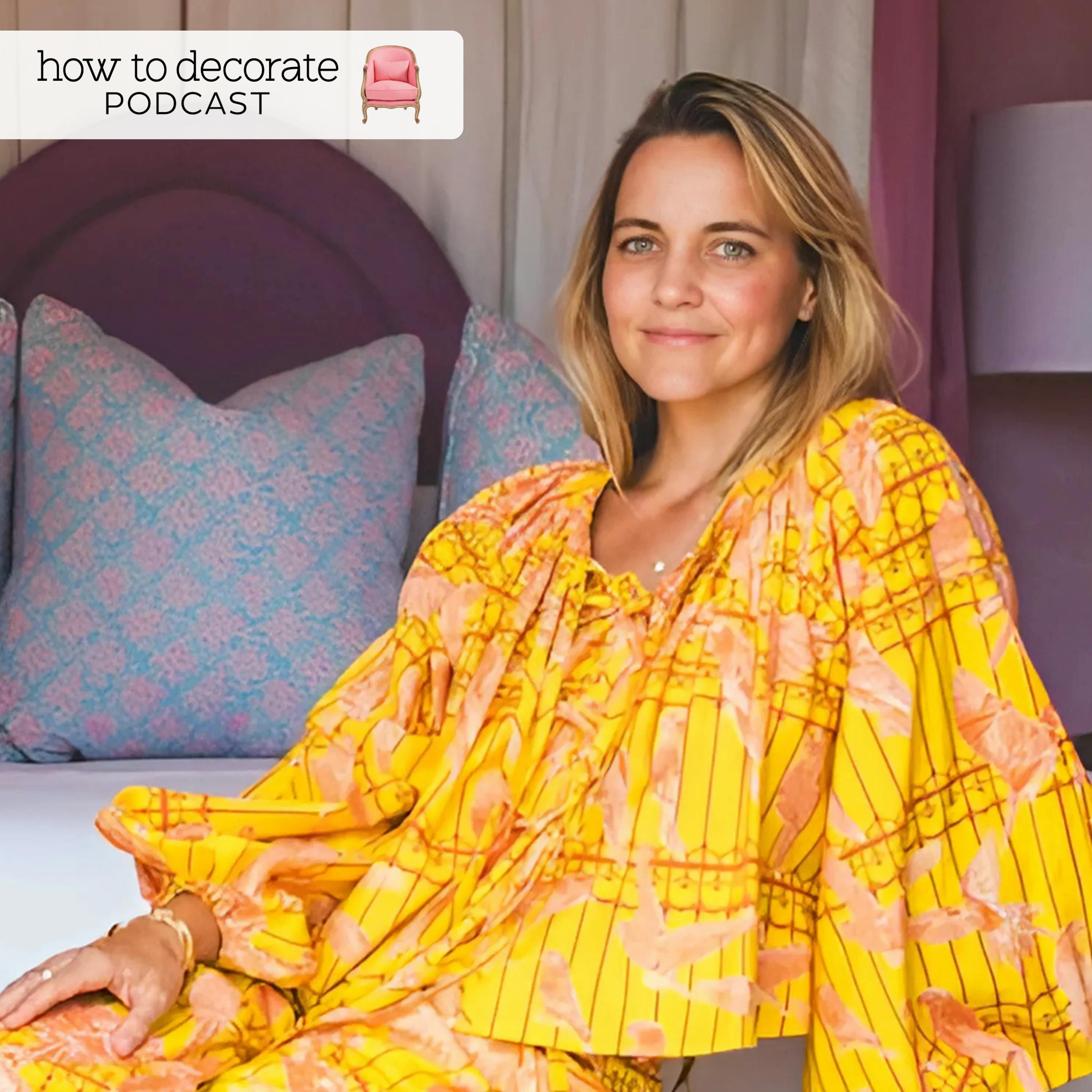
We love answering your questions, so don't forget to email us@podcastallardesigns.net now, on with the show today. We are so excited. Our guest today is Stephanie Mahaney. And after years of being lead designer at the legendary Campbell Interiors, Stephanie launched her own design business, Stephanie ray interiors, in 2014. And we're so excited to have her here. Her work is bright and bold and useful, and her firm specializes in large scale renovation projects. Thank you so much for being here, Stephanie.
- [01:04]
Stephanie Mahaney
Hi, guys. Thank you so much for having me.
- [01:07]
Liz
So Stephanie, your business is based in Jupiter, Florida, and also in Maine. Two totally different locations and two totally different vibes, but they're both coastal. So we thought that we would take some time today to talk about decorating with a lean towards coastal.
- [01:26]
Stephanie Mahaney
Yeah, sounds great.
- [01:28]
Liz
But before we get started on that, we would love to know more about you and your background and how you got into design.
- [01:35]
Stephanie Mahaney
Yeah, that's. Yeah, I think about this a lot actually, and always different things come to mind. But today I was thinking about it and as a child, my mom was a psych psychologist, totally unrelated to design, but we were always, she was always renovating houses and moving. So we had a family unit that stayed consistent, but our houses did not. So we had like 10 different homes within our tiny one square mile town in Bronxville, New York. So I remember just some of my core memories as a child are like looking at wood stains, picking out antiques, going to antique stores with my mom's decorator. I just, I loved it. And yeah, it sort of just became part of who I, who I am and, and led me to knowing I wanted to do something creative, not knowing exactly what that was. And I definitely tried out a lot of different things along the way. And then I landed at Campbell Interiors with an internship in my early 20s and that's kind of it.
- [02:39]
Liz
Oh, that's, that's so awesome how it all kind of locks together like that. Yeah, that's moving quite a bit.
- [02:46]
Caroline
Yeah, I was gonna say so. And this was all just based on. Your mom just loved the renovation process and, like.
- [02:52]
Stephanie Mahaney
Yeah. And they made money doing it, like, kind of unintentionally, but they did well.
- [02:57]
Caroline
They did well.
- [02:58]
Stephanie Mahaney
They would buy a house, and she. I mean, what a really funny story. This one house she really wanted. She had her eye on it, and it was on the golf course, and it was kind of in shambles. And it was this woman, Barbara Sage. I still remember her name. And she lived there. And my mom, she lived alone. My mom would bring her meatloaf. She'd knock on her door, and she'd just say, if you ever wanna sell your house, just call me. I live here. And eventually, Barbara called her, and she was downsizing, and she sold her this house. I remember it so well. And we lived through the whole renovation. I mean, we renovated the entire kitchen. Lived in the basement, you know, with one of those freezers that you open up and it's like snow, and you put the batteries in it, you know, I don't know. Does that sound right? But we have, like, a hot plate for us. Like, seven of us living all together in the house.
- [03:47]
Caroline
Oh, my gosh.
- [03:49]
Stephanie Mahaney
I know that just.
- [03:50]
Caroline
And moving seven of you that many times, too, is also. I hate moving, so I cannot even imagine. But again, if you're in love like.
- [04:00]
Stephanie Mahaney
That, I mean, I'm sure really funny. It makes you think about stuff, though. And we definitely, you know, got rid of stuff along the way.
- [04:12]
Caroline
I was gonna ask if you find yourself kind of minimalist from. Kind of. Not that your work is minimalist, but just saying, you know, from moving so often, if growing up, you really weren't deep in. My mom's kind of on the hoarding side, so I'm kind of, like, inspired by someone whose mom's like, all right, let's get rid of. We're moving on.
- [04:33]
Stephanie Mahaney
Yeah, I understand both sides of it because I look at things and I'm just like, this is so beautiful. I just want, like, all the teacups in the whole world. But at the same time, I move a lot, too. I find my moving a lot. So we're looking at. Through things, and if I'm packing, it's like, well, that's just not going to come with us. The storage unit is where it gets kind of. Kind of scary when you start putting stuff in storage units.
- [04:55]
Caroline
Yeah, I could see that being a tricky effect, too, of like, well, we have this space to put extra stuff versus just cutting it. Just being like, all right, this is time for someone else to love this. Let's move on.
- [05:08]
Stephanie Mahaney
Yeah. Yeah.
- [05:11]
Caroline
Okay. So you're in Florida now, officially?
- [05:14]
Stephanie Mahaney
I am. No, I'm in Maine.
- [05:15]
Caroline
Okay, you're in Maine at the moment?
- [05:18]
Stephanie Mahaney
Yes.
- [05:19]
Caroline
And all the kids are with you. Whole family unit is in Maine?
- [05:22]
Stephanie Mahaney
Yeah.
- [05:23]
Caroline
That's awesome.
- [05:23]
Stephanie Mahaney
Yeah, we're all in Maine.
- [05:25]
Caroline
Okay. So when did you move? When did this whole Maine and Florida. Because it seems like you were in Florida for a good chunk of your career, and then you moved to Maine.
- [05:33]
Stephanie Mahaney
Yes, we moved to Maine a year ago. We are still actively doing a lot of projects in Florida, and we travel there, like, I would say, either my husband or I travels there once a month.
- [05:44]
Caroline
Okay.
- [05:45]
Stephanie Mahaney
So either with or without the kids, Sort of just depending what the. What the trip needs. Um, yeah, so. So. But we do projects up here and projects down there.
- [05:55]
Liz
So with both of those being coastal and two totally different locations, what are some of the similarities and what are some of the differences that you're seeing?
- [06:03]
Stephanie Mahaney
I would say, I think. Well, I have a lot of experience in Florida, so for me designing, I wouldn't say that it's easy, but I. I have a really great grip on subs and different people down there and sort of how to pull it all together, whether someone's living there full time or seasonal here. If a house is truly just a seasonal summer house, that's one thing. But if the people either live in there all year round or if they come up, you know, maybe they come up for Christmas for thanksg pop in at different times of year. I really think you have to think about all four seasons. Different things are appealing at different times of year. And I like, for example, a blue and white room. While it's beautiful in the summertime, sometimes it gets a little cold when it's snow outside and it feels cold inside, if that makes sense.
- [06:59]
Caroline
So are you kind of saying, obviously, you could do a blue. Probably do a blue dining room in Florida, but in Maine, you kind of need to be like, well, it's gonna be white and outside and very cold feeling. So you will. You'll kind of explore more colors.
- [07:13]
Stephanie Mahaney
Definitely. I explore more colors and def. And explore more textures too. And even in the summertime, while it's warm and beautiful and green and bright and vibrant, I think it als. There's cold nights, especially up here in Maine, on. On the coast. So I think that's. That's significant.
- [07:34]
Caroline
No, that definitely makes more sense. I wanted to ask even how you felt, your style, your own personal style change with moving north?
- [07:41]
Stephanie Mahaney
Yeah, it changes. It's harder. It's more difficult to dress for the seasons, you know, as they change and you know, we're covered. I'm looking outside and we have like 12 inches of snow on the ground. And like, you know, last week it was raining. And so I think it's. And layering and I think that goes for personal, like wardrobe style, but also for design style. It's like blankets and pillows. And how are you living in the space, in the mud and the wetness and then in the summertime, how are you making it feel light and joyful and happy? And then how does it kind of contrast to that winter cozy, kind of more inward feeling?
- [08:22]
Liz
Yeah. That's so interesting because you've already got such a network in Florida and that vernacular in design on how to build these rooms with that style and function and weather in place. I'm wondering what is it in Maine that you have kind of been surprised that you're leaning towards?
- [08:45]
Stephanie Mahaney
I think I'm. I'm leaning towards like reds and purple and these different colors mixed with the blues and the whites and sort of. I like pattern in Florida too, and I like multicolor patterns. That's sort of where I start a scheme. But up here I'm finding that I like to mix it in with things that can be taken, put in and taken out. You know, it's like we may have a blue or a purple velvet pillow that we could use in the wintertime that we may just, you know, put away for the couple months in the summertime. I think things need to be more flexible and I think things need to kind of move in and out. I think that makes sense to me. It's sort of that old fashioned, you know, like the winter weight duvets and the summer weight duvets. These things are, they just move. In the springtime you reassess. In the fall you reassess. And, and I think thinking about that with the movable objects and design makes sense too. And I also think it makes, it freshens everything up and it, and it, and it prepares you for what's to come, which I think is really beautiful if there's that flexibility to work with. So I think, you know, zippers on your pillows so that you can just, you don't have to store the whole pillow. You can just zip off the COVID and switch it out. And they can still be custom. They don't need to be, you know, anything that isn't exactly perfect for the space.
- [10:08]
Liz
So do you find that you're starting projects differently in those two different Locations.
- [10:13]
Stephanie Mahaney
In terms of there are less people hiring interior decorators. That's what I found in Maine. So my husband, who's a builder, we're doing more development projects with architects and with real realtors. So I think what's going on up here is there's a huge shortage of houses, huge shortage of real estate. So people want to move to Maine, buy second homes in Maine and live on the coast, but they're finding that there's nothing available that's done, first of all. And second of all, if they do find something that needs a bit of work, a lot of the really good builders are two or three years out. So it seems like, ooh, that's too long. I want to live my life now. And three, I could handle maybe a year to 18 months, but three years is, is a really long time to wait. So, yeah, so that's what we found. We've talked to a lot of realtors and people and, and there's a huge demand, huge demand for real estate in Maine. It's just that, you know, the building process is a bit longer, so. So we're kind of leaning into that and leaning into development.
- [11:21]
Caroline
That's so fun. So you're kind of seeing this pivot kind of in your career, you would say, or.
- [11:25]
Stephanie Mahaney
Yeah, definitely. I think up here for sure. We're. We're looking at development projects anywhere from, you know, one home, three to $5 million range to 30 home developments in like western and coastal Maine.
- [11:41]
Caroline
Wow.
- [11:42]
Stephanie Mahaney
Yeah.
- [11:43]
Liz
Wow. That's so different. That's great.
- [11:45]
Stephanie Mahaney
So different. Yeah.
- [11:46]
Caroline
Yeah. Seeing as you're now living and breathing this. What if somebody is just starting? Do you have any good starting tips or tricks?
- [11:57]
Stephanie Mahaney
So just starting meaning they just bought the land. We're going. Okay.
- [12:02]
Caroline
Yes. They've picked property.
- [12:04]
Stephanie Mahaney
They picked a property. I think it's really important to a look at builders in the area and talk to them about architects. You can go either way. Find your designer in the area and find builders and architects from there, which I think is really nice because the designer. I might be biased, but in my opinion, you know, they'll find a really great team and they know who they like working with. Whereas a builder may not know a designer. A builder may. We'll know architects, but. But I think that designer piece sometimes comes in later. And I think if you're building this high end home and a sec. Especially a second home where you're not there, it's really important to have the team in place, the architect, the builder and the designer from the beginning. So that you don't run into issues. You know, say an architect puts two windows in a bedroom that are far enough apart for a queen bed, but you want a king bed. And then the designer comes and says, we have a king bed going in this room. We need to move the windows. You know, it's just kind of working backwards.
- [13:06]
Liz
So who runs point on this? So is it the designer that leads the project? Is it the architect? Is it the builder?
- [13:15]
Stephanie Mahaney
It is such a collaboration, and that's sort of where the art of it all comes in. Is it is. I would say in the beginning, it would be heavy on the architect and the designer working together. And then from there, you know, the builder will come in. But it really depends on the type of builder. Some builders like to be given plans and go from there. And some builders have really amazing ideas and have been doing it a really long time and are super incredible and really beneficial to have in. From the beginning.
- [13:47]
Caroline
I was going to ask the same question, Liz, because I was like, so who is kind of leading this?
- [13:54]
Stephanie Mahaney
And I think it's important from the beginning to know that it is a collaboration. It is about the project and it is about the client. You know, I think a lot of egos can get heavy involved, which is unnecessary. And at the end of the day, you're building a structure that fits the space. I think that's really important. What belongs on the piece of property? What makes sense there? And. And. And it's the client's home. It's where they're living and breathing and. And they're with their families. And. And all of that should come into play very. From the beginning.
- [14:31]
Caroline
Yeah.
- [14:32]
Liz
So what type of questions are you asking your clients that are coming to you with a. With a fresh new build?
- [14:39]
Stephanie Mahaney
Like they're just starting it. What kind of questions am I asking? I am asking who is living here? That's first. Do you have dogs? Do you have pets? How often are you here? Who are each of the bedrooms for? Do you like to entertain? Do you like to cook?
- [14:58]
Caroline
What.
- [14:59]
Stephanie Mahaney
You know, what kind of spaces do you not have in your current home? What really frustrates you about your current home? What's. What, what's really important to you? Um, you know, everybody's really different. Some people real. Their dogs are really important to them, and they want a space for their dog food and their dog bowls and. And all of that stuff. And. And I think that should be considered from the beginning.
- [15:23]
Liz
I love thinking about, like, what frustrates you about your current home, because we all have Those frustrations. But to kind of bring that to the table when you've got something that's starting from scratch is kind of exciting.
- [15:38]
Stephanie Mahaney
Yes.
- [15:38]
Liz
And you can fix those. Fix those issues or pinpoint those issues right off the bat. Yeah. And build. Build towards something better.
- [15:48]
Stephanie Mahaney
Yeah. It's like. And it seem. It may seem little to a client, like, really annoys me that when I get out of the shower, I'm freezing cold, you know, oh, well, maybe we could do heated floors or maybe, you know, who knows what it is? But it's these things that happen every single day that can be addressed.
- [16:08]
Liz
Yeah. And that feeling of, like, you know, well, if I. If something new, it's just gonna fix all of these problems. You kind of have to pinpoint what those problems.
- [16:17]
Stephanie Mahaney
Yes, yes. And you could go a long way with that.
- [16:20]
Liz
Yeah, yeah.
- [16:22]
Caroline
But. But you do need to do it at the beginning. Cause again, you can't have the floor already laid down and then say, actually, I remember now, I don't like being cold when I get out the shower.
- [16:32]
Stephanie Mahaney
I really hate that. Really bothers me.
- [16:34]
Liz
I feel like that should be a given. Because who likes to get out of the shower cold? Let's just. Let's just run some heated floors everywhere.
- [16:43]
Stephanie Mahaney
Yeah, let's just do it.
- [16:46]
Caroline
So what is the true. How do you see the role of the builder, seeing as you're somebody who works with the architect and the builder? Because, like, to your point, the heated floor part, is that a conversation you would have had with the whole team or with the architect or with you or the builder?
- [17:04]
Stephanie Mahaney
I think from the beginning, it's really, really important to kind of create a Venn diagram of who's responsible for what.
- [17:13]
Caroline
Okay.
- [17:14]
Stephanie Mahaney
Not meaning I can't discuss this with you, but it's really important for us and the client to know. You know, am I. I may be picking out my plumbing trims with you, but my builder is ordering it. Same goes for tile. Same goes for. For me. For me. If. If the built for our company, if the builder is installing it, he also purchases it, which for me makes sense because then they deal with the receiving the install. See, there's an issue with install, but I didn't hire the installer. The builder did. You know, who does that fall on? So I just say I just consult on that side of things. And I make that really clear from the beginning. And then it's not an issue because I understand it's part of their markup a lot of the time. And they go into their business planning thinking, oh, I'M gonna order the appliances and the plumb and all that stuff adds up.
- [18:11]
Caroline
Yeah. Okay.
- [18:12]
Stephanie Mahaney
And I think it could piss them off. And to be honest with you. And nobody wants the builder and the designer mad at each other.
- [18:19]
Caroline
No. Or the architect. Yeah.
- [18:22]
Stephanie Mahaney
Or the architect. Yes. Yes. So that's really what we do. And my husband, if he's not building the house that we're working on, he will sometimes act as an owner's rep, which may have like a bad connotation depending on one's. A builder's experience. But his goal is really to just be there for the client and if the client isn't available, to kind of be the, the, the words and feelings of the client in these meetings because they're not always available. Um, but they're. It's important that the client always has a voice.
- [18:56]
Liz
Yeah. That seems like such an important role to have. So that's.
- [19:00]
Stephanie Mahaney
Yes. Especially in these high end second or third homes that people are building. You know, these clients don't necessarily have time to be at every single meeting, but it's also really important that they don't get taken advantage of.
- [19:13]
Caroline
Yeah. And they can't be there again when you lay the tile wrong or you know, just say, hey, I wanted it laid, you know, in this other direction. So. Yeah.
- [19:23]
Stephanie Mahaney
And costs come in, you know. And I think for us it's just being transparent is the most important thing. And knowing from the beginning that we expect everybody to be transparent makes it so much easier.
- [19:34]
Liz
So what are some considerations, you know, if you do have a client that's building a second home and you know that this is going to be seasonal, what are some. I mean, you mentioned you wanted to build, you want to build for year round use, but what are you really kind of going into thinking about for something that's going to be a second home, a seasonal.
- [19:56]
Stephanie Mahaney
I think it's really important to bring in an element of fun. This is somewhere they're going for vacation. It's not somewhere where they're living. It's like when you walk into this space, how do you want to feel? Do you want to feel like you're on vacation? And if so, what can we kind of add and suggest to, to elevate that? You know, maybe a different type of shower configuration that you have at home. Something not as, you know, what's the word? I'm thinking of illogical. Maybe we want something a little bit illogical. Maybe you want a sauna, maybe you want a cold plunge, a wellness area. I think it's important for it to feel different and to feel like a place where you can, a client could find peace and, and have a different experience than they have at their, that their regular year round house.
- [20:47]
Liz
Yeah. That, that makes me think like, how are you using your year round house? And, and what. Yeah. And what do you want from something that you can have? Anything. That's.
- [20:58]
Stephanie Mahaney
Yeah.
- [20:59]
Liz
So exciting.
- [21:00]
Stephanie Mahaney
Yeah. And people don't always know all the options. It's like people are so busy all the time that I like to think that my husband and I kind of take a step back and think what's the purpose? What's the feeling that this client wants and what can we suggest that they don't have the time to think about?
- [21:23]
Caroline
Well, and that's what's great about. Again, a designer or builder or an architect is. It's definitely most people, they don't get to do this often. So again, if they do, they're missing all. Like you said, they might not know what the options are. So having them presented to them.
- [21:37]
Stephanie Mahaney
That's a good point. It's like for me, I do this all day, every day and for them it might be once or twice in a lifetime and it's for their children and their grandchildren and this is really, really important. Yeah.
- [21:52]
Liz
So what are some things that you're seeing out in the marketplace or in, in trends or. I hate to say the word trends because it's, it's. The spaces that you're building are really not trendy at all. They really do have a tradition and longevity to them. But I'm, but I'm wondering what are some of the things that you're seeing out there that are, that are exciting? Like a, like a plunge bath, I mean.
- [22:21]
Stephanie Mahaney
Oh yeah, yeah, lots of stuff. I see tons of rechargeable lighting. That's like sticks out to me as something I saw a lot of at high Point. I'm also seeing tons of small wallpaper companies. I'm looking back behind you. Is it a mural or a wallpaper? It's so beautiful. But I'm seeing lots of that, lots of more, More risks, more risky choices is what I'm seeing different. You know, upholstery companies having more options than just a hundred different neutrals to choose from. They have patterns and colors and, and welts and trims and I think that that's really exciting.
- [23:01]
Liz
So what type of risks are you excited about and gearing your moving your clients toward.
- [23:08]
Stephanie Mahaney
I would say something I, and I don't know if it's a risk, but I think something that's really important. And people a lot of times don't think about until the end is artwork. And I think it can feel risky. Right. Because artwork's expensive a lot of the time. Real artwork can be expensive. But I think that I'm really trying to push my clients towards real artwork because I don't want them to feel like they have to take their artwork off the walls in two or five years because it's trendy or because they don't love it anymore. I think there's an element to a handmade piece of art that. That lasts and. And feels a little scary and risky because it is expensive. But I think. I think that's what I'm really. I've been thinking about a lot.
- [23:55]
Liz
Yeah, that's really exciting because art can make a space so personal.
- [24:00]
Stephanie Mahaney
Yes.
- [24:02]
Caroline
Well. And I do think it's the last. Last thing in a lot of places. Like, it's the last piece you really thought about in a room when sometimes it can definitely be the first piece to design around.
- [24:14]
Stephanie Mahaney
Yeah. And I think. I think it's important to collect art. And it doesn't have to be every single piece of art. Obviously, that can be unattainable. But I think even just putting it in their brains throughout the process, so they're looking and aware. And I'll go on trips for quite. For or with clients to look at artwork. And for me, that's really important because that's something they look at every day. And it's something also that's reflecting who they are.
- [24:44]
Liz
So are you going to galleries? Are you working with art reps? Like, what is the advantage to both either finding individual artists?
- [24:55]
Stephanie Mahaney
I do it all. I work with galleries. I find individual artists. I go to different art shows. The art bath, and there's a show in Art Palm beach, which I couldn't make it, but one of my friends is. Works with a lot of art, and he was there. He had a booth there. And so he sends me his selections and things. So I'm like, constantly looking at and perusing different art all the time.
- [25:22]
Liz
Looping back a little bit to coastal.
- [25:24]
Stephanie Mahaney
Yes.
- [25:26]
Liz
Are you having your art lean Coastal because of the locations that you're building in?
- [25:36]
Stephanie Mahaney
You know, it's really funny. I was talking to Polly. He's like, I don't even know what his title is. He does all the new acquisitions for Hollis Taggart. And he's like, I put this. This show together for Art Palm Beach. And I was really thinking about you, and I was like, do I have, like, a Feeling about me when it comes to art. And it was all sort of like bright and. And I don't know, used. It was not neutral at all. And. And I'm thinking I. But I feel that way no matter where I am. That's just what I lean towards. I lean towards sort of bold artwork. I don't really lean towards artwork that feels like it's going away in the. Into the wall.
- [26:15]
Caroline
Yeah.
- [26:15]
Stephanie Mahaney
So I. And I don't. And I think it doesn't need to match the room at all. I think artwork should just. It could feel right in the space. But if you have like a room that is turquoise and purple and white, you know, you could have a yellow and orange piece of art and that would be. That would be okay and good. Yeah, that would be a really great thing.
- [26:38]
Caroline
I was going to say, just looking at your portfolio, I'd say most your rooms are, you know, bright. So it totally makes sense too, that you lean that way.
- [26:46]
Stephanie Mahaney
Yeah. Yeah.
- [26:49]
Caroline
Well, I think the reason we really wanted to focus some on the coastal kind of, you know, some tangible things is because so many of us have walked into a rental home and. Or someone's beach home and it's been just that level of cheese that like, no, you know, that really dates it and doesn't make it feel polished. So, of course your work is. Your work is gorgeous and doesn't scream flip flops, you know, beach this way sign. So we really want to try to get, like, help, you know, people just listening. How can we attain, like, a beautiful home that feels coastal without again, having to go to flip flop?
- [27:35]
Liz
We want to break the chains on the flip flops.
- [27:37]
Stephanie Mahaney
Yes. I think just don't get anything that says anything. Like artwork that says, like anything at all, really. We could just get rid of it. Unless it's like some of those really cool neon signs I'd be okay with depending on where it was and what it was saying. If that. If that. Right.
- [27:56]
Caroline
I really wanted one years ago, but I couldn't get over the glow it was going to have on the room that, like, I was worried the lighting would be so weird with it. That was like my biggest fear. Even though they look so cool.
- [28:08]
Stephanie Mahaney
Yeah. So my client had one in an install we recently did. But it's. So it's a bar that has retractable doors so we can close it and you don't get.
- [28:16]
Caroline
That's a good place.
- [28:18]
Stephanie Mahaney
If you're having a party. It just says bar and it's this plug in, you know, neon sign and it's like, I kind of love it. I'm like just this green neon sign. I'm digging it. But generally, I would say, you know, like the sign that says tiki bar or beach or any of that stuff. And you have to be very, very careful with the use of shells.
- [28:39]
Caroline
Okay. Yeah. How do we use shells? Yeah, because you. I mean, you have them in your work beautifully as art on the wall. And again, nothing silly. So how do we. How do we do shells?
- [28:49]
Stephanie Mahaney
Yeah, I would say, like, you know, if you're getting it from, like, a Marshalls or TJ Maxx, generally it's difficult to make it not feel like that, so. But that being said, you don't have to spend a lot of money necessarily. But I think if you're buying something handmade from Etsy with shelves, it may land a little bit different than if you're buying, like, one of 5 million from Marshalls.
- [29:16]
Caroline
Something that's produced versus it feels different.
- [29:20]
Stephanie Mahaney
And it feels kitschy. But I think there's, like, these beautiful sailors valentines, if you guys have ever heard of them. They're like the concept that sailors used to make these valentines for their people at home. And they're beautifully created and vintage. And those are shells, and they're shadow boxes with shells in them, and they're called Sailor Valentines. Those are really amazing. And definitely lean coastal, I think, no matter where you are on the east coast, at least. Yeah. I think collected shells are really beautiful things that you. You or your family has collected. Using those is. Is a beautiful way to do it. I think it's important to use natural materials. But you guys know, like, the difference between a piece of driftwood on a coffee table that actually wasn't found at the beach?
- [30:09]
Caroline
Yeah.
- [30:09]
Stephanie Mahaney
You're like, this is natural, but it's not really natural. It's like fake natural. I think that can really go in a direction quickly. But using natural wood floors, like natural teak frames, that kind of thing, that. That leans more towards classic and has longevity to it.
- [30:29]
Caroline
No, I mean, that. I think that makes sense because it's almost like sea glass too found. It's so special and, you know, a treasure. But rolled in a. In where they roll it and then just produce pieces of glass, you're like, well, that doesn't feel the exact same.
- [30:44]
Stephanie Mahaney
No, it doesn't.
- [30:45]
Liz
It does.
- [30:45]
Stephanie Mahaney
It has, like, a vibration to it if you found it and if it's special to you.
- [30:48]
Caroline
Yeah. Well, how about color? Because I think color is so significant to you. But again, your places all still feel so fresh and in place. You know, they, even though you're on the coast, you have incorporated such beautiful kind of pastels. So I just want to talk more about color near the beach.
- [31:09]
Stephanie Mahaney
Yeah, I think you can. I don't, I generally lean, and I learned this at Campbell, for sure, lean away from muddy colors in the paint chips and on the fabrics. I just don't love muddy colors, grays, that kind of thing. I, I, I like mixing colors and mixing patterns. I think it's really important, first of all, that the colors work well together in a scheme. They don't necessarily have to be the same color on every fabric, but they just have to be cohesive and work well together. And I think it's really, really important when you're using color and pattern that you use the scales correctly. So you have a large scale, maybe a dip, maybe a solid with a trim. That kind of thing is really important to think about when decorating with color, I think.
- [32:02]
Caroline
Okay.
- [32:02]
Liz
Yeah. Those kind of balances with pattern and scale and texture are so important.
- [32:09]
Stephanie Mahaney
Yes.
- [32:10]
Liz
But they're also really difficult to get right.
- [32:13]
Stephanie Mahaney
They're difficult to get right. Yeah. And I know, and not everybody in the world can, like, get samples of everything and look at it in a large scale. And if you get a sample, it's this big, and you have no, there's no concept of scale. Yeah. So that's something that's just so important. And I, and I lay things out and I look at them a million times, and I move them around and does this scale, you know, and it for a big scale. If you have really big scale pattern, maybe you don't use it just on a pillow because you're losing it and you won't see it and you won't get the concept of it. Maybe use it on a headboard, or if you're not cost conscious, you could use it on curtains.
- [32:50]
Caroline
But, yeah, yeah.
- [32:52]
Stephanie Mahaney
Thinking about all of that stuff.
- [32:54]
Liz
Yeah, that's great to think about. Like, where the focal, focal point is, because on a headboard, you want your eye to go straight to the bed. That's the hero of the room, right?
- [33:04]
Stephanie Mahaney
Yeah, yeah, yeah.
- [33:05]
Liz
So using a big, a big scale pattern there would make a lot of.
- [33:09]
Stephanie Mahaney
Sense, and it's cost effective because you don't need that much fabric to make a headboard, whereas curtains, you need a ton of fabric. So that's something I actually learned from a designer in Palm beach, actually from my, from my curtain maker, my workroom, who he's retired since then, but I was really lucky to have worked with Paul Maybaum down in Palm beach for a while. And you know how curtains are usually white on the back? A lot of the projects that I worked on with Kemble, and on my own, I use a. A pinstripe instead of a solid, and it just elevates the curtains enough. Either way, you're buying the fabric.
- [33:53]
Caroline
Yeah.
- [33:53]
Stephanie Mahaney
And there are lots of companies that make really inexpensive, well priced, tiny, tiny stripes. So we could use a blue and white. We could use a neutral and white. But just something so that this is what you see when you. When you drive up to the house. And instead of just seeing a white curtain closed, you see these stripes.
- [34:13]
Liz
That's such a nice little detail.
- [34:15]
Stephanie Mahaney
Yeah.
- [34:15]
Liz
Kind of like flashing open a fancy blazer that, you know, has like a great pattern inside.
- [34:21]
Stephanie Mahaney
Yeah.
- [34:21]
Liz
Is it. Is it a heavy.
- [34:25]
Stephanie Mahaney
No. Linen.
- [34:26]
Liz
Okay.
- [34:27]
Stephanie Mahaney
Yeah.
- [34:28]
Liz
So it's not going to bleed through if the sun's coming through?
- [34:31]
Stephanie Mahaney
No, no. And usually there's a liner in between the two. Yeah. So depending on who's making the curtains. Because everybody makes them different. And I think that's what I learned. That's another thing I learned at Kemball is like, who's. It really, really matters who's making these things and what is going into it. So I've spent a lot of time in workrooms at those, you know, 50 foot long tables with. They lay out the entire curtain. And you see, you know, there's your fabric that you see, and then there's the inner lining, which is like more of a. It's almost like a fleece. I wouldn't say it's a fleece, but it's like a. It's like a thicker fabric that has a softness to it. It can. It can. It depends what, you know, what you're doing in the space. And then you could do that backing that, that striped fabric in the back.
- [35:19]
Liz
That's really interesting because I would think that that would really help the drapes hang and. And really help with the weight of the. Of the Draper panels.
- [35:29]
Stephanie Mahaney
Yeah.
- [35:29]
Liz
But it would also help with, like, sound absorption.
- [35:33]
Stephanie Mahaney
Definitely.
- [35:33]
Liz
Especially if it's a large space and. Oh, yeah. And heat retention and. And air.
- [35:39]
Stephanie Mahaney
Right. But a lot of companies don't even know a lot of drapery company. It's not. That's like a lost art. Right. You know, the people who are doing it know how to do it, and it doesn't matter in every single space, but certain spaces require this.
- [35:53]
Liz
Okay. So that's definitely a. Worth the investment. Look into it. Put your money there. Are there any. Are there any things on the flip side that feel like they are places where you can get a lot of bang for your buck?
- [36:08]
Stephanie Mahaney
I think depending on the room, you can get a lot of bang for your buck. With rugs. If you're using them all the time. Yes. Invest in it in main spaces, but I don't think you need to invest in, you know, $30,000 rugs in every room. You can get like this Rush house. I don't know if you guys know, like the seagrass woven hand handwoven rugs. Those are so great and they don't cost that much money. And I have one in my mudroom and it looks brand new even through all the mud and the snow and. And they're really great for high traffic areas that even they're great for underneath a rug. Say you have a room that's 20 by 16 and it's massive and you want a nice rug in the middle, but you also don't want the rug to feel like a postage stamp and be too small. You could do something like that, like a sisal or a Rush House type of rug that fits the space and then do a layer on top.
- [37:03]
Liz
Yeah. Those are so great for defining spaces, too.
- [37:06]
Stephanie Mahaney
Yeah.
- [37:07]
Liz
Especially in an open concept area.
- [37:09]
Caroline
100%. And getting that natural element. Again, talking about bringing texture into a space, it really does help to have that natural material.
- [37:17]
Stephanie Mahaney
Yeah.
- [37:19]
Caroline
And especially going back to your coastal thing.
- [37:21]
Stephanie Mahaney
Yeah, it's easy to use and I think that's like. Yeah, you could use that anywhere.
- [37:27]
Caroline
Yeah, it's not even. I was gonna say you could be in again, Kansas and use. Right. It's not necessarily just Florida or anything coastal.
- [37:37]
Stephanie Mahaney
Yeah.
- [37:37]
Caroline
Okay. I wanted to talk next just about your. Because currently on your website, you're working on a barn in Maine. And I wanted to know more about that project. How is. How's it going? What. What started it and all the, all the fun details.
- [37:55]
Stephanie Mahaney
Yeah, sort of what started is. Is this. There's this compound movement. I feel like in Maine, these people want, you know, compounds for their family to come to. I think a lot of the. The wealth in the country, after all the different podcasts I've listened to, seem to be in this baby boomer generation and like people in their 60s and they have children and they have grandchildren and they want everybody to be able to come and enjoy their spaces. And with homes getting more and more expensive, I think the younger generation isn't necessarily buying their own homes. So it's nice for these, this generation of people to Be able to have their family but not be on top of each other. Because that's suffocating.
- [38:37]
Caroline
Yeah.
- [38:37]
Stephanie Mahaney
And not. And everyone doesn't want that. It's like, yeah, you want your grandchildren around, but you don't want to clean up yogurt on the wall. So I think that's where this started was let's build a space that's great for grandchildren and is on the property. It's a large piece of property, but isn't in the main house. So, yeah, it's almost done. We're photographing it in March, and we're kind of doing the finishing touches now. And it's really cool. It's sort of a. It's 7,000 square feet. Half of it is an indoor outdoor space, and it could be a pickleball court, but it also has a huge, massive fireplace that can be really cozy and we can bring indoor outdoor furniture into. And at the far end of that space is a gym space.
- [39:26]
Caroline
Okay.
- [39:26]
Stephanie Mahaney
So in the summertime, it's kind of like working out outside, but if it's raining, you can do it. Not really usable in the winter, unless it could host a wedding, an event, something like that. Very cool. And then you walk up the stairs and you walk through a door, and it's. It's now an all seasons space. So you have a kitchen. You have a downstairs sort of family room, game room type of thing with two bedrooms, a bunk room, and a queen room. And then you go back upstairs up some more stairs, and you're in this. A frame bedroom that. That is all glass on one side of the A frame. And you're like in the trees, in the forest.
- [40:09]
Caroline
Yeah. You have a few pictures of that, and it looks like that's a beautiful space.
- [40:15]
Stephanie Mahaney
It's so cool. It's so cool. And I think it's flexible in that. You know, it can be. That part of it can be used all for all seasons, but the main part of it is really for the summertime.
- [40:28]
Caroline
Okay. Yeah. How did you decorate the room? That was pretty much windows and you wanted to look outside. How did you kind of take a stab at that?
- [40:38]
Stephanie Mahaney
I think I talked to the architect. The architect and I had sort of like a working session. They're at Lake Flato out of. Out of Texas. And. And I was like, what's the original intent of this space and how do you envision it? And. And I just really wanted his insight into it. Um, and it. And it really resonated with where I was going with it. I added a little bit of pattern on the chairs and the rug opposite the bed. But the bed I made, the issue I was having was it's an A frame, so the. The ceiling comes all the way down to the floor.
- [41:12]
Caroline
Yeah.
- [41:12]
Stephanie Mahaney
So wherever the bed, I didn't want the bed to feel like it was floating and didn't have anywhere to be. So I made the headboard the height 4.4ft, and it's 4ft off where the floor meets the ceiling. And I made it long so that it didn't feel like there's a big, empty shadow space behind the bed, even though there is. Um, and it's super simple. I. I made it green because I didn't want it to take away from the outside at all. It's a solid fabric. And. And I. Same with the side. The side tables, I made them black and heavy, and I really just wanted the. I wanted people to look outside when they're in the space to not be distracted by any of the furniture.
- [42:00]
Caroline
Did that theme, I assume, go through the whole. The whole space? Probably.
- [42:04]
Stephanie Mahaney
Yeah. Yeah. I took a few more chances downstairs with color and stuff because it is a basement with window wells, so there's light coming into the bedrooms. But that main family room game room downstairs, if the doors are closed, no natural light.
- [42:21]
Caroline
Okay.
- [42:21]
Stephanie Mahaney
So. So I kind of thought, it's a dark room. I'm not gonna try to make it light. My motto is sort of like, I like to take it, Take a message from. From the light in the space. If it's a dark room, I'm not gonna work against it. I'm gonna work with it. So I made. I used a. A lime wash plaster and made it all green, dark, really cozy, and can be used for a really long time. The sofas I made with our upholsterer down in Florida, and they're so durable. He's not going to need to get another sofa for 20 years.
- [42:58]
Caroline
Amazing.
- [42:59]
Stephanie Mahaney
Yeah. That's lots of jumping.
- [43:02]
Caroline
Lots.
- [43:04]
Liz
Right? Excellent place to play hot lava.
- [43:07]
Stephanie Mahaney
Yes. Yes.
- [43:14]
Liz
So today our dilemma is from Gabriella. She says hello. I've been listening to your podcast for a while and finally decided to send you my dilemma. I don't love my dining set, and I want to get a new one. I'm open to keeping the table and getting new chairs, or vice versa, or just getting both new. I have no idea what will look good in here or if I should keep this rug that keeps snagging or get a new one. I'm just lost. I love everything else in this room except the dining set and rug. Please Help. So, okay, let's describe the space for a quick second. Gabriela has a beautiful dining room and with a beautiful built in hutch that kind of grounds the space. And then, yeah, right in the center she's got her dining set and the rug. That's, that's the culprit. What would you do with this space, Stephanie?
- [44:16]
Stephanie Mahaney
I would say definitely get a new rug. So something I learned early on, and I'm so grateful for, is that if you, if your rug is too small for the space, it makes everything look small and, and out of place. So I think what's really cool, and there's some amazing companies out there that do it, is you, you measure the space and you, in a small space, take 6 inches off the walls and you get a rug that fits that space. It will immediately make the room look larger and more put together. And from there I think it's, I can't quite tell, but I think it's pretty square. So I like the concept of having a round table, but it looks like it could be a tiny bit bigger. Say maybe this is a 54 inch table. I think we could push to a 60 inch table and you could get six chairs in instead of four chairs. Um, so yeah, I would definitely get a new rug and a, and a new table a little bit larger and I think I would push for six chairs.
- [45:21]
Liz
What do you think? Stylistically, she's got some really great elements like the, she's got a mural on the wall, a little triptych that's built into some, some paneling.
- [45:34]
Stephanie Mahaney
I think what would be amazing in here is some texture on the chairs. So I mean, there are some amazing Lucite chairs with like a natural like lamb fur seat that would be really beautiful in here just to add a little bit of texture. Um, for the table. I mean, she could even take like a dark forest green and she could have like a lacquered table in this, in this room and then work off of that. She could do chairs that have a pattern, I really think to them because other than the mural, there's no patterns at all in the space. And I think that's what's challenging about dining rooms in general is you have a lot of hard pieces and, and it can feel not so cozy. So I think getting a cozy rug that fits the space will be huge and go a long way. You obviously want something that isn't going to catch food in it. Like, I wouldn't necessarily recommend a sisal or a natural rug that can't be cleaned in here. I think wool makes a lot of sense in dining rooms. At least in my house, it's inevitable that food's gonna fall on the ground. So I would definitely do something like that. Even a pattern, a stripe in the rug would be really beautiful. And then I see, like, a high gloss table in the middle would be amazing with chairs that have either a smaller pattern or a textured fabric. Like a highly textured fabric. Not boucle, but something. Something that has dimension to it.
- [47:15]
Liz
All right, so we're definitely adding scale with a larger table, and we're adding textures, like mixing high gloss, mixing potentially some acrylic in there and then. And then pattern and. Yeah, that sounds great. Yeah, that sounds amazing.
- [47:36]
Stephanie Mahaney
And I think she could get away with something taller on the dining room table. Maybe not for when you're sitting there eating, but. But something like beautiful and tall. Beautiful, tall vase. Yeah. Something collected. Yeah, Even some, like a vase that. That's collected. Antique, vintage, something like that.
- [47:57]
Liz
Oh, I love that.
- [47:58]
Caroline
Yeah. Just bringing height into the space.
- [48:01]
Liz
Yeah, that would be great. Because your eye kind of goes straight to the back of the room to the hutch, because it's so bold, but you kind of want your eye to stop at the table because that's where you want people to stop and sit.
- [48:13]
Stephanie Mahaney
Yeah. On the other hand, you could paint the hutch. You could high gloss the hutch too. If you couldn't find a table that was available, you could. You could get a natural finish on the table. I honestly don't even mind the finish on the table as it is. It looks like it's like steel with, like a na. Or some kind of metal and natural wood. And then you could add in this kind of unexpected high gloss that would balance out the mural on the back on the hutch.
- [48:41]
Liz
That would be really fun.
- [48:43]
Stephanie Mahaney
Even wallpaper behind the glass would be cool.
- [48:48]
Caroline
So fun.
- [48:49]
Liz
Yeah. I like where you're going with that. That's really fun. That's great.
- [48:52]
Stephanie Mahaney
Yeah.
- [48:53]
Liz
Oh, well, Gabriela, I hope you fall in love with your dining room soon and you find all the pieces that bring in some color and texture and really make this space great, because it's. The structure of this room is really fantastic.
- [49:08]
Stephanie Mahaney
Love it. Yeah.
- [49:10]
Liz
Awesome. Well, thank you so much, Stephanie, for joining us today. Can you let everyone know where they can find you or follow you?
- [49:18]
Stephanie Mahaney
Yeah, My. My website is just stephanierayinteriors.com and my Instagram is the same efneeray interiors, keeping it simple. So.
- [49:29]
Caroline
Yeah.
- [49:29]
Liz
Thank you so much for being here.
- [49:31]
Caroline
Thank you so much.
- [49:32]
Liz
That's our show.
- [49:33]
Stephanie Mahaney
Thank you.
- [49:36]
Caroline
And that's our show.
- [49:37]
Liz
You can find all of the show.
- [49:38]
Caroline
Notes on our blog howtodecorate.com podcast to send in a decorating dilemma, email your questions to podcastallarddesigns.net so we can help you with your space. And of course, be sure to follow us on social media.
- [49:49]
Liz
Alardesigns don't forget to subscribe wherever you get your podcasts so you never miss an episode. And please leave us a review. We'd love to hear your feedback. Until next time, happy decorating.