Loading summary
Transcript223 lines
- [00:00]
A
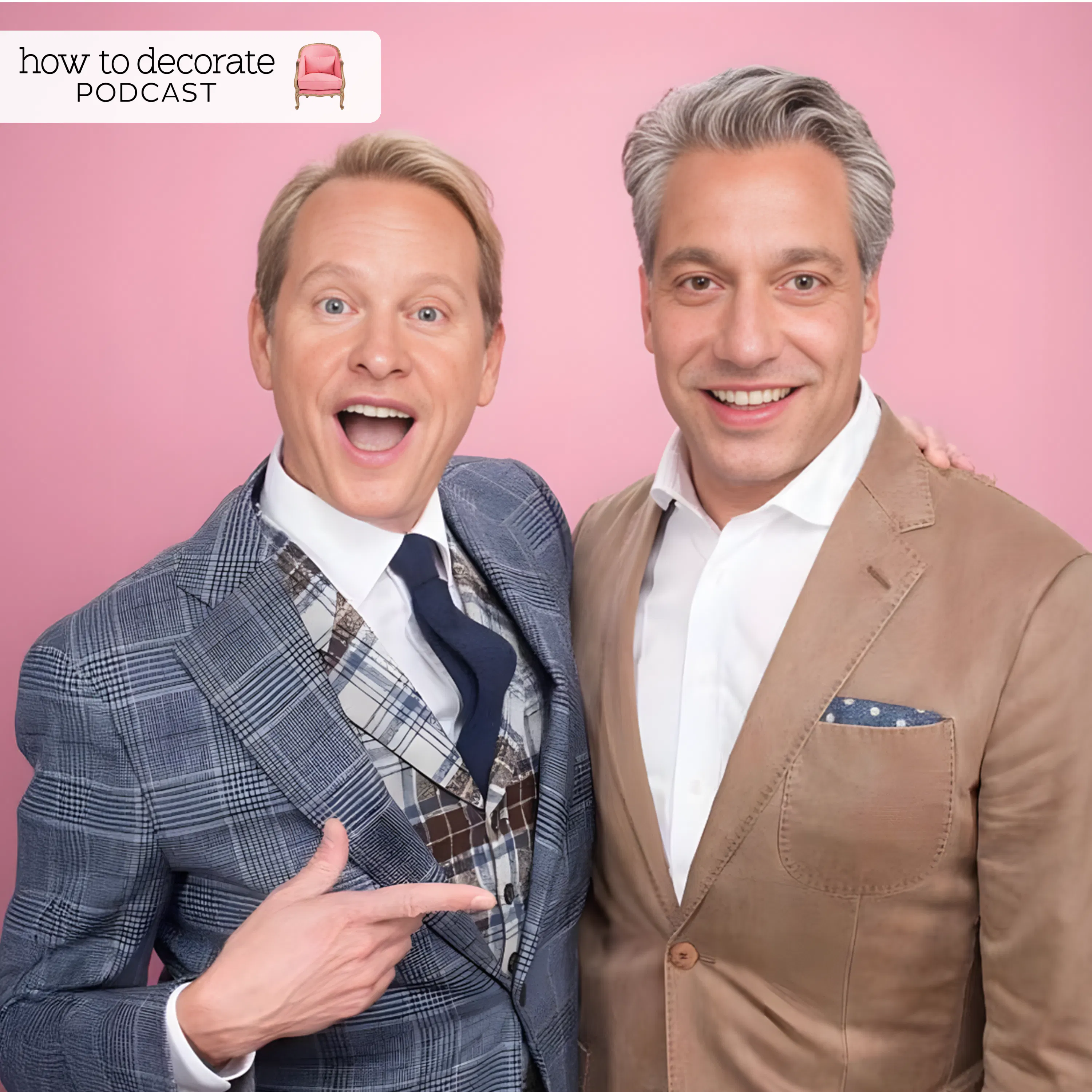
Okay, welcome back to the show. We have a very exciting new miniseries that we're launching today. Our first episode. If any of you have been following us on social media, you know that we've launched our latest partner collection. A new partner, Carson Kressley. You all know him, he's our most repeated guest on the show. He is a listener of the podcast, and so we thought it only fit to have him co host with us for four episodes and bring some of his favorite friends. So, Carson, welcome to the podcast.
- [00:29]
B
Thank you so much. This is a dream. You know, I'm up. I'm a Ballard super fan, as I've said before, and I love the podcast and I love the brand and I love when the catalog arrives, and to be part of it is just. It's one of my most exciting things that's ever happened to me, and I've done some exciting things, but I just love this partnership and I love the pieces, and they're very special to me and personal to me and authentic. And some of my own items from my own home that we've reimagined and some items that we've created just for our friends at Ballard, so I could talk about it all day. I have pictures of my Cisco side table in my wallet already, and I show people at the bus station every morning. Now that I'm doing a collab with you guys, you had the brilliant idea of having me come on and do a little miniseries, and I've always wanted to be in a miniseries. I thought it was gonna be on tv maybe, you know, like a romantic four part drama. But I'll take design any day because I love it so much. And we get to talk about my collection. But more important, we get to meet some of my stylish friends who owed me podcast engagements because I've done theirs. And, you know, it's people like my longtime friend and design buddy, Tom Felicia from Queer Eye. And of course, we did a show on Bravo called Get a Room with Carson. And Tom, he is, you know, such an incredible, amazing designer, a great friend. I've learned so much from him, and I think he might have learned a few things from me. And then we have my good friend Bobby Flay. We're gonna talk about entertaining and kitchen design and, you know, how to be the perfect host, which he is. And then junk gypsies, I don't know if you know them, dear listener, but they are a fabulous design duo in Round Top, Texas. And we're gonna talk all about the Round Top experience and thrifting and one of a kind finds can really define your space and personalize it. And then last but not least, we have the grande dame of Southern charm, Pat Altschul. She is a great friend of mine. We love to go get a Costco hot dog together. So we're gonna get some inside scoop on not only Southern charm, but how to decorate with Southern charm. So I am very excited. You can't. I'm not shutting up, so make me stop.
- [02:55]
A
Each of the episodes was so fun to record. And you know, Liz and Taryn and I, we were sort of, we were kind of guests in this episode, which was really fun because you as our co host was really leading the way and it was just a great conversation. So I'm excited for people to hear it. And this is our first episode in the miniseries with Tom. Like you mentioned, you're a longtime collaborator. He's been on the show twice and we kind of revisited some of those memories, but also heard about some of his more recent adventures and decorating. And so I think that it's time to get to the conversation.
- [03:33]
B
Let's hop on with Tom.
- [03:36]
C
Hi, it's Hilary. You may remember me from our yearly Trend Report episodes. I'm one of the in house product designers at Ballard Designs and I'm here to tell you about all of the incredible new pieces we recently launched on the site. Some of my favorite pieces are in the Biloxi Outdoor collection. If you are like me and do not enjoy covering or storing your outdoor cushions, this collection was designed for you. It features a beautiful teak frame with turn details that will patina and silver as it ages. Despite not having cushions, you will sit comfortably on its hand woven resin seat and back. Bilexi's basketweave pattern adds warmth and texture. And since the weave continues on the back, the pieces can float and look great from every angle. So go check out all of our latest arrivals@ballarddesigns.com New all right, let's get back to the show.
- [04:24]
A
So today we are excited to introduce a new four part series special that we are recording with our guest host for the for the series, Carson Kressley. We are, you know him, he's a TV icon, a style expert, he's a Ballard super fan and he's launching his new exclusive collection with Ballard Designs this month. So we invited him onto the podcast and he is bringing some of his dearest friends, his most stylish friends to talk about decorating, entertaining and all things design. So Carson, who do we have this week? And thanks for joining Us.
- [05:01]
B
Well, thank you, Caroline. You guys are the sweetest. Thanks for having me. I love being a little guest podcaster. We have somebody really special and fun. Oh, wait. Oh, they couldn't make. We actually have Tom Felicia who actually is special and fun. I adore him. Let me. I didn't prepare an intro because I know him so well. I feel I can just let you know he is a super, super successful, amazing interior designer. AD100, all the accolades. He has worked with superstars like Jennifer Lopez and Iman and David Bowie. He's done commercial projects, hotels. He's an Emmy winning TV personality for his work on Queer Eye for the Straight Guy. He's had other design shows like Dress My Nest and also the critically acclaimed Get a Ro.
- [06:02]
D
Best show ever.
- [06:03]
B
Best show ever. And he's written many books, but he's just a fantastic person. He brings so much joy and life to every project. And I will tell you a fun fact about Tom Felicia is he's the most efficient energy saver. So, like, if there's like five minutes and he's very busy, he's always traveling around to site visits and hosting things, but he can sleep for five minutes and have the energy of like having slept for eight hours. I will call him. Like, we do award shows together. I'm like, hi, I'm downstairs in the car. Where are you? He's like, I just woke up from a nap. I'll bedroom in five minutes. This is a true story. And then he comes down and gets in the car and he's totally normal. Like, I'm groggy. I look like a newborn kitten after a five minute nap. I'm just like, I can't wake up. Tom can do anything. He actually had his makeup done while he was sleeping when we would do Queer Eye. Cause we would start early in the morning and he would just be laying in a bed in a hotel room in Dallas and they were putting his makeup on like he was in a casket.
- [07:14]
A
That's talent.
- [07:15]
B
He just has so, so many special skills. So, ladies and gentlemen, I give you Tom Felicia.
- [07:22]
D
Hello. Hello, Carson. That was, I have to say, for not having an introduction that could have been my favorite introduction ever. That is so hilarious and accurate.
- [07:33]
A
What an amazing talent.
- [07:34]
D
Honestly, when we couldn't get my headphones to work, I took a nap.
- [07:37]
B
I'm sure you did.
- [07:39]
D
And I feel like a million bucks.
- [07:41]
B
I'm sure you did.
- [07:42]
D
Which isn't even that much money anymore. We have to update that to a trillion.
- [07:50]
B
Exactly.
- [07:51]
D
What's happening?
- [07:52]
B
Where are you right Now.
- [07:54]
D
So right now I am in my showroom, Sedgwick and Brattle, at the New York Design center in Manhattan. And I just got back from Colorado. I was skiing. It was great.
- [08:10]
B
How's your Aspen?
- [08:12]
D
My Aspen is fabulous.
- [08:14]
B
Oh, great.
- [08:15]
D
No, Aspen was great. It was super fun. And obviously I was with you just before that. We were in Dallas having lots of fun and doing all of those shenanigans, which was great.
- [08:31]
B
You know, we have a lot of people like me who I consider myself, like, a design super fan, but I'm not a professional. But probably have a lot of professional interior designers listening to this podcast since it's called how to Decorate. And you were talking about this thing we did in Dallas. And I don't know if a lot of people.
- [08:48]
D
The arts awards. The arts awards, yeah.
- [08:50]
B
Tell people about the arts awards.
- [08:52]
D
So, yeah. So Arts is an organization that recognizes designers and manufacturers in a variety of categories, from outdoor to lighting to just all of the categories, rugs. And also they recognize people within the industry, like people that sort of represent the product and the sales teams and all of those people. So it's a really great organization. They do a big event. And I have to say, as you know, Carson, the event is, like, incredible the way that they put it together. And the funny thing is, they have Carson, and I go. I mean, I think it's, like, been for seven years. And we get up there, they give us a script, we kind of loosely follow it. I mean, at best, we're up there, like, giggling and making jokes and sort of, like, pushing each other. And we've done a lot of really crazy things up on that stage. And they just really enjoy, I think, the natural energy of the two of us and that we're both interested in what's going on and that we're. And that we just connect with everybody. We sort of meet with them, we say hello to them, we take pictures. We have fun. We are at the bar. We go from bar to bar.
- [10:06]
B
Yes, yes. We might even have a couple of bottles of Chardonnay backstage.
- [10:13]
D
We do. We keep hidden bottles of wine around. It's like an Easter egg hunt.
- [10:19]
B
It is.
- [10:20]
D
I tape quarters to them. And you're like, yay, I found another one.
- [10:25]
B
Look, Mommy, it's Sauvignon Blanc. My favorite.
- [10:29]
D
Ever find an Easter egg, like, very, like, months after Easter? Yeah, I don't think. I knew you weren't supposed to eat it.
- [10:37]
A
The chocolate was always discolored.
- [10:39]
B
Yeah, yeah. When the chocolate is like toast.
- [10:42]
D
Yeah, yeah. When the chocolate is. Yeah. In a kind of flaky. I was like. It just. I think. Yeah. I think I just was like, oh, maybe it's Belgian.
- [10:52]
B
Yeah, exactly.
- [10:54]
D
Exactly. It's an exotic chocolate. Yeah. The art.
- [10:57]
B
The arts awards are really fun.
- [10:59]
D
Yes.
- [11:01]
B
For any designers who are listening, definitely get involved with your local chapter. They support designers all over the United States.
- [11:08]
D
Right.
- [11:08]
B
And then they have this fun.
- [11:09]
D
Awesome. And the industry as a whole. Yeah.
- [11:10]
B
The Emmys for furniture, they have, you know, they have a category for accent furniture.
- [11:16]
D
Yeah, yeah, yeah. No, they have a category almost for everything. And I have to say, the production quality is, I would say, equal to. I would say any amazing award show that I've been. That's televised. Right. I mean, it's really well done, actually.
- [11:31]
B
It's actually better than.
- [11:32]
D
Yeah.
- [11:33]
B
Televised award shows.
- [11:34]
D
Yeah, yeah, yeah, yeah, yeah.
- [11:35]
B
We must be biased, so.
- [11:37]
D
I know.
- [11:37]
B
I know you just. I know you just got back from Aspen.
- [11:40]
D
Yes.
- [11:42]
B
Is that your favorite place? And have you ever designed any homes there?
- [11:45]
D
You know, I've done a lot of. I've done a lot in Colorado. I've actually not done one in Aspen. I actually, just, as I told you, I was very lucky to find a little teeny, tiny condo right in the village of Aspen for myself. And that actually was my Christmas present to myself and Lago, my dog. And it went through. So now I'm actually doing that little project there. And I'm excited about having a home base there just because I'm a big skier. I love skiing and also I love that town because there's so much to do and the arts and the food and all of that. So I'm excited about it. But yeah, I mean, we. I'm just. I'm excited to have a home base there because it will make just doing projects there a lot easier, you know, just because. Just having a sort of a, you know, sort of a place to land, which I think is really exciting. There wasn't a lot of snow, so skiing was not bad, but it wasn't fabulous. So I'm hoping in a few weeks I'll be able to zip out there and so, you know, not break an ankle.
- [12:52]
B
You're going to design your. Your own home.
- [12:55]
D
Yes. Right. And I'm using a lot of the Carson Kressley the Thrill of the Hunt.
- [13:01]
B
Pieces collection for ballot.
- [13:02]
D
Exactly. Yeah, yeah, yeah.
- [13:03]
B
I thought so.
- [13:04]
D
Yeah, yeah, yeah. Exactly. And I'll tell you exactly which pieces I need. Okay, perfect. And I'm going to have you check availability.
- [13:13]
B
This is really. This is really good, because. Anybody listening?
- [13:17]
D
Yes.
- [13:18]
B
Like I said, I'm just a, you know, a stay at home designer. I don't have a company.
- [13:23]
D
I tell everyone you're a plus size stay at home model.
- [13:25]
B
That's. I also.
- [13:26]
D
Wasn't that your tagline from a million years ago?
- [13:32]
B
But yes. Now I can't remember what I was gonna say. Oh, I do. I remember.
- [13:39]
D
What was it?
- [13:40]
B
This is great that you are doing your own project and you're gonna ask me for product because, yes. What I do as an amateur stay at home.
- [13:48]
D
Oh, yeah.
- [13:49]
B
Is I go to High Point Market, which is where everyone goes to, and I order things from my house. And then they say, well, who's your account? It's like, tom, put it on. Tom, Felicia. And then six months later, I get.
- [14:04]
D
Like four things that end up in my showroom because I have a loading dock. And also my showroom is like two blocks from his house. So all of a sudden, these three chairs and like, a thing and something else and a vase and two lamps and some. A chain or whatever it is. And some horse whips show up at my house. And the next day I'm in my office and someone's like, tom, what's going on? What are you into? And I'm like, this is Carson. These are not my horse whips. Because some of this stuff looks kind of like, wait, what's that? And I'm like, okay, this is equestrian stuff, guys. Don't get nervous. This has nothing to do with my personal lifestyle. That's a bit. I don't wear that in inappropriate moments. Just like, please, let's not think that way.
- [14:49]
B
I did walk it till you tried it.
- [14:51]
A
I did walk market with Carson, and he did use your name quite a few times.
- [14:55]
B
He does, yeah.
- [14:58]
D
And then people tell him to get out. They were like, get out.
- [15:01]
A
Kicked out of so many showrooms.
- [15:06]
B
I did get asked to leave a couple showrooms because they thought I was another designer who I'm not going to name, but they thought I was, like, in there, like, getting ideas and stealing.
- [15:17]
D
Stealing, yeah, yeah.
- [15:18]
B
And I was like.
- [15:19]
D
But you know what's funny? When they go up to you, Carson, they say, ma', am, can you please leave?
- [15:24]
B
And. And that happens often. Mostly on airplanes.
- [15:29]
D
On airplanes, Sir. Ma'. Am.
- [15:32]
B
So we better get into some decorating.
- [15:36]
D
Let's talk. So let's do some decorating talk when.
- [15:39]
B
You'Re designing your own home.
- [15:40]
D
Yes.
- [15:40]
B
Is it like the shoemaker's kid were like, they fall kind of to the wayside and they're the last thing that you work on. Or do you consider it more like a laboratory and you can try out things or, well, you know, your own product?
- [15:53]
D
I mean, I would say. Okay. First and foremost, I think the thing that's really interesting about doing your own place is that you're. I feel like most designers are a lot more creative with their own spaces for a couple of reasons. One is you're your own client, so you can kind of push the envelope a little bit. But also it's really. Sometimes it's a real exercise in value engineering because you can really look at what you're doing and you're generally trying to do it on a different budget than your client. So it really does give you an exercise in sort of how to do things that you're really excited about, maybe that you haven't done yet or you haven't been able to convince somebody to do. But how do you do it and also do it in a way where you kind of get that same aesthetic without, you know, some of the things that maybe you just don't fit your budget. So I think that's great and I think it's exciting. I think sometimes when you are trying to do things that you're excited about, but do them in a cost effective way, I think it really pushes your creativity. And I think it, you know, kind of gets you to really sort of thinking about a mix of materials or what's out there or, you know, and just using materials sometimes. Like, what's really great about what I'm doing in Colorado for myself is that I'm also trying to make it incredibly durable so that if I were to lend it to friends or, you know, people are walking around, people like, I. I'm so close to the mountain, which is awesome. So I was in my house, I was in my condo with my ski boots on, like walking my dog and then running across the street for apres ski. So it's like, you know what I mean? Like, so I want it to not be something that's really precious, but I want it to look cool and be interesting and be very comfortable and be very functional and chic, you know, sort of, sort of like it needs to kind of tap into all of those things. So I think it's really great when you're doing your own places because it is that sort of laboratory in those ways. I mean, I'm also doing my house out east, you know, the one that you were at in Sag Harbor. And that one's a totally different thing because people aren't walking. They're Usually barefooter and flip flops or, you know, or, you know, just the only thing I worry about there is really like, you know, dogs and, you know, you know, people falling in the pool.
- [18:15]
B
Right.
- [18:15]
D
Actually, you falling in the pool?
- [18:18]
B
I may have fallen in once.
- [18:21]
D
I mean, that's hilarious. But, yeah, so each one, I think when you do your own house, which is really what most people really do, and as a designer, I think it's a great way to sort of, sort of relate to sort of when you're talking to people that are actually the end user, you know, it's like, so I have products that I sell sometimes to designers, a lot of times to designers, and sometimes to the actual sort of the homeowner or like the person that's like living in the space. And so I love that I have the ability to communicate kind of as a. As a do it yourself kind of person essentially, as well as a designer and being able to communicate sort of how to make those ideas come to life and how do you. What. What. What to use around you. And I mean, I think that's what's great about your very attractive, fun, cool, curated collection, is that it does look very collected. You know, I think it looks. It looks like, you know, they're. They're interesting pieces from your travels that you love and that were inspiring to you. And I think that is ultimately, you know, when you're layering in a space, you're trying to make it look and feel like the people are the person that lives there and sort of tells their story. And I think having access to pieces that actually help you communicate that and that you can be emotionally connected to and have fun with. And whether people are emotionally connected to them because they love you, or they love the product, or they love both, or it's just something that sort of fits their aesthetic, or it's that missing piece they couldn't find, or it's a great gift to give or, you know, I just think that's. That's sort of the. That's the fun of design, I think, when you get to that. That layer of it. So doing your own place I think is. I love it. I don't know. A lot of designers say it's difficult.
- [20:15]
B
I think it's the hardest. I'm so good at telling. Telling people what to wear and what to buy and what shoes gonna look great and what kind of. Well, I think that's why wallpaper. But for myself, I'm just like, oh, my God, there's too many choices. I'm Absolutely paralyzed.
- [20:30]
D
Well, you know, it's interesting. That's what. That's what a lot of people say that are designing their own homes. They say the same thing. They just say, like, I'm paralyzed. I'm not sure what to do. But if they walk into a friend's house, they can sort of assess what their friends are doing and tell you what they like, what they don't like. But then when they get to their own house, they have a. They have difficulty sort of expressing. And I think it's. I think it's just. It's like. It's a layer of insecurity. I think it's something that people don't do every day. Like, you get up, you get dressed every day. You kind of know your aesthetic. You can pick out a sweater here or a belt there. Like, you can find something at a thrift store, whatever. It's like you can literally pull things together, bring it home, and go, oh, my God, this is amazing. I can use it here. I can use it there. The minute you start talking about home accessories or tabletop or lamps or lampshades, rugs, people sort of get paralyzed because they feel like it's a decision they're not comfortable with making every day. So they just are like. They just feel like it's a little bit out of their wheelhouse. And it's funny, I think sometimes even designers do that when they. When they're designing their own house, as we just were talking about. So I think it's really. I think it's. I think it's something that a lot of people share, you know? And so I think. I think giving people solutions, ideas, and the product to sort of help them make those solutions is. Can be a lot of fun. And then having this conversation about how to solve those, you know, challenges you.
- [21:57]
B
You touched on something. And this was one of my favorite shows. When you did Dress My Nest.
- [22:02]
D
Yeah.
- [22:02]
B
And that was. That was really the format of that was that you. You know, you went in. You kind of looked at these people's personal style and looked at their closet and saw the things that they like and the colors they like. Is that something you do with clients as well?
- [22:16]
D
Well, you know, it in an. In. In a certain. At a certain level, yes. But I mean, that was a very kind of made for everyone to understand and really participate and see. So the idea was that these were women who had a very distinct sense of style, whether they were, like, boho chic or whether they were like, you know, like, very conservative and kind of business you know, sort of gal type, or they were just kind of like, cool mom. Whatever their aesthetic was, they were really good at their personal aesthetic. But when you would go into their house, they were a complete and utter train wreck. They had no idea what they were doing. They just were making mistakes around every corner. They couldn't get it together. They were confused. They were overwhelmed. It was too much. And so the idea of taking something that somebody is really good at, like, for example, taking this out of, like, sort of the. The space of dress, my nest. Like, if I'm talking to a husband of, you know, husband and wife, and the husband is like, I know nothing about design. If I start talking to him about cars, he knows everything in the world about design. So I know that if I relate, like, if I say, like, that sofa is really cool, but it's kind of like a 9 11. It's like the kind of sofa you might sit in on a weekend, but it's not an everyday sofa. It's not like. You know what I mean? It's not like an Audi allroad, you know what I mean? So, like, all of a sudden, he's like, oh, my God, I totally get it. We need an Audi All Road in our family room. And I'm like, yeah, this is the Audi all road. That's the 911. And so all of a sudden, you're speaking the language of. And you're basically giving someone a comfort zone, and you're giving them the opportunity to connect with something that they understand and that they're comfortable with. So it's just understanding your audience, knowing how to, like, connect with them, making them feel comfortable, making them feel empowered to be a part of the conversation. I mean, Carson, you're. You know, I think you and I are both the kind of people that when we go to a cocktail party or a dinner party and we sit next to somebody and one person on one side is amazing and, like, super gregarious, and then the other person's floundering. Don't you feel like you're able to kind of connect those two people and get the floundering person to kind of come alive? Because you're able to sort of pull the. Whatever it is about them that they are confident in out. It's the same thing you do when you're meeting with clients. It's the same concept. And so you want to give them. You don't want one person to feel like they're sort of directing the show and that the other person is kind of floundering. So I think at a certain level, you know, designers, we always say, like, we're like, you know, we have to be a psychologist as well, but it's really just about kind of caring about the people that you're working with, wanting them to have a good experience. And also, you really. I really want them to participate because I want them to feel like, at the end of the day, this journey is about creating a space that typifies them and not really typifies me. And it allows me as a designer to have, like, a little bit of a variation in a different journey on sort of the look and feel and the aesthetic and the point of view that I bring to the table. So it's not always the same thing. I don't love. I don't love just sort of delivering my product. I like delivering something that feels fresh and new and personalized, you know, to that. To the client, the location, the lifestyle of that first, second, or third home, whatever it is. So, yeah, anyways, that's kind of. That's my thing.
- [25:47]
B
Well, one thing I love about your work, and we have a lot of people who do books and everything, and we'll look through the book and be like, I love this room or that room. I don't have that because I was not prepared. But I do have your books, Many of them.
- [25:59]
D
You have four books. You don't need my books. You've been in. Yeah, four books. Yeah.
- [26:04]
B
I've been to most of these places and rolled around on his sofas and his beds and really checked it out. I would say the design style is very. I would say it's masculine, it's contemporary, it's clean, it's layered, but it's also incredibly warm. And that's the thing that I think is your personality. I think that's you, your trademark. Every place that I go that you've touched, whether it's someplace at the beach or in the mountains or at Yellowstone Club or wherever, it always has so much warmth and texture. And you can tell it's a Tom Felicia room. Even if I go to High Point and I go to the Vanguard showroom, and I'm looking at your products, your beds and sofas and chairs and rugs and artwork. It's very consistent. And I don't know if that's intentional or that's just your vibe.
- [26:58]
D
I would say, you know, that is intentional. I mean, because I look at it as that.
- [27:03]
E
This episode is brought to you by Peloton Break through the busiest time of year with the brand new Peloton Cross Training Tread plus. Powered by Peloton iq. With real time guidance and endless ways to move, you can personalize your workouts and train with confidence, helping you reach your goals in less time. Let yourself run, lift, sculpt, push, and go Explore the new peloton cross training tread plus@1peloton.com when I'm looking at the.
- [27:29]
D
World of product, I use not only our product, but I use almost every other product that you can imagine. I mean, like, you know, we're shopping at, you know, and for example, on my floor at the New York Design Center, Sedgwick and Brattle, my space. But we are in Verellon, which is, like, right next door to us, or like we're. We are in our showrooms, the other four showrooms on our floor all the time. And whether it's, you know, whether we're getting paints from Benjamin Moore or whatever it is, I mean, so we use everybody. We work with everybody. And it really depends on what the project is and the personality of the project. I think a lot of times, you know, I always say that what I love to do is sort of cool down a Georgian and warm up a glass box. And so that sort of urban sort of glass box or that, you know, that sort of really modern house at the beach, I like to sort of warm that up and that really sort of like, beautiful renovated barn or that incredible sort of Georgian colonial. I like to really cool that down and make it feel fresh and crisp and clean. And I love sort of landing in that middle space. And so that's really what I love to do. And I think of the work that I do as being very traditional and rooted in classic sort of clean, fresh design. I wouldn't say it's very traditional because I don't think I'm a very traditional person. But it has elements of tradition. But I would say it lands in a place of classic and timeless or sort of classic and timely. I don't even see myself as being truly modern. So it's really kind of using those kind of words. It is. I mean, transitional, I feel like, is kind of a. I think that's a very specific space. I think what we do is really more of a balancing act and play with a lot of nuance of those. You know, you're looking at, you know, transitional is just sort of always being in the middle. I think what I'm doing is really balancing sort of the things from the far ends and bringing them together. So it's really looking at the materiality of the architecture and sort of saying, okay, what is this materiality? Is it rustic? Is it warm? Is it very layered? Is it very. Just the materials of the environment? And then when you start looking at the things that you bring into it, you want to bring things in that are clean, they're clear, they're maybe man made, as opposed to handmade, to really get that contrast and create that balance. So in a weird way, I much prefer the word balance to transitional because to me, balance is. Is about sort of working together, whereas transitional to me is just sort of like standing apart and being in the middle. And so, I don't know. To me, it's a. I think I. I like the idea of it being more inclusive about the overall experience, if that.
- [30:34]
B
Yeah, I. I never really, in all the years that I've been like, design adjacent, I was like, what is transitional? I don't understand.
- [30:42]
D
I'm like, just because I'm wearing a ladies cardigan doesn't mean I'm transitional.
- [30:48]
B
Well, I wanted to also ask you about.
- [30:59]
D
Yes.
- [30:59]
B
Some of your favorite projects. And, you know, there's celebrity projects, and I did maybe, you know, name drop Iman and David Bowie.
- [31:07]
D
Yes.
- [31:08]
B
I think we kind of have to ask about that because I'm sure we're all, like, major fans. How did that happen? What was it like? Where did you work?
- [31:17]
D
Well, so, I mean, with that. Yes. He was amazing, and he was such a cool person and such an incredible artist. And Iman is amazing as well, and she's, you know, they're two very, you know, accomplished, creative people on their own and as a team. They were very much a team, which is really beautiful to see, because you don't always see that in anybody, in any client, whether they're just. They live down, you know, they live in Tribeca or they're on television and they're a superstar or a rock star. No, they. He. He was a really incredible, you know, creative genius and a lot of fun to work with and had a really great personality and a very cool aesthetic. And she's also. Same way. They were lovely. And it was so. Yeah, it was really, you know, it was very, very sad when he passed, but they were quirky, quirky, quirky and. And cool. And their place that I designed for them outside of the city was really spectacular and just filled with really interesting art. And they just, you know, they just. Two people that are very open to. To really a lot of different, you know, beautiful things and coming up with a way to bring all of those things together and make Them live sort of in harmony and sort of tell a sort of a collected story that was unified, basically, for both of them, was really fun because they. They just, you know, they're. They're. They're. They're just. There's a lot of ideas and personality and creativity going into sort of their aesthetic. So that was really fun. They're also very straightforward, down to earth and confident people, which is really lovely. I mean, I think anyone designing anything or anyone picking out an outfit or looking at jewelry. When you're comfortable in your own skin and you're confident in your person and who you are and you're not trying to put on errors or trying to, like, fit in or, like, trying to, like, keep up with anybody, it's just such a different experience, you know, because you're. There's an authenticity to what you're doing. You're having fun with it. It's real. It's cool. I mean, I just always tell people, you know, I said, if there's one. It's bit of advice I give people when they're designing is like, you know, just, you know, be authentic and be like, let it be exact. Like, this is about you. This isn't about winning. This isn't about having something that someone else doesn't have. This isn't about keeping up with anybody. This is about creating a space where you feel comfortable. And it sort of. Sort of is creating, you know, it's personalizing your. Your world and. And just having the luxury to be able to do that, you know, is. Is a wonderful place to be in your life. And so I hope that people, you know, it's always fun to work with people that are comfortable in their skin because the design feels so much more energetic and light and fresh, and it's full of personality, whether it's clean and simple or it's, you know, or it's, you know, it's layered to the. You know, to the last layer. It just. It's fun, you know, when you go into someone's environment and it's unpretentious and cool and fun and interesting, and there's a lot to look at, and it just. It tells your story, and they're excited about it and they're connected to everything. It's a very different experience than someone who's like, you know, I. I didn't. I don't really. I know nothing about this. It just looks pretty and it was expensive. It's a different experience.
- [35:01]
A
You were talking about before, like, relating the language or you. The decorating process to something the other person speaks. I feel like that's such a. I loved that insight and sort of what you were just saying about having fun. Like, we all hate doing something that we feel we don't know anything about. You know, like taking your car to the mechanic. You're like, I don't know what I'm doing. I don't know any of the language. Like, I'm just. I dread it. And that's to your point. Like, if you are able to, you're. You're helping your. Your client have fun with the experience.
- [35:33]
D
Right.
- [35:33]
A
So they're going to enjoy it more because you're like, teaching them a language that just is. Is so smart. And they're gonna. They're gonna be so much happier with the end result because they.
- [35:42]
D
And feeling. Yeah. And feel like they're. I mean, you know, that. And feel like they're actually a part of the journey of what's happening. You know, they're. They are. They're influencing the decisions as well. They're part of the collective. They're part of the conversation. They're. They're. They're moving the narrative forward. And I think when it's done and it's in, you know, sometimes I just think people are more excited about the product. The final, like, look and feel when they feel like they've had their hand in it. And then I think, look. I think the same thing is with cooking. I think the same thing is with fashion. I think the same thing is with friendships. I mean, it's the same thing across the board. You know, you want to feel like you're participating.
- [36:28]
B
Yeah. You know, it's the old. It's the old adage. You, you know, you get back what you put in. And I think if a client is really invol in the creative process and all of the juices are flowing, that's, you know, the ideal flow state that you want to be in. Because ultimately, you're helping them tell their story. And you're kind of like the translator and the writer of the book and the person who's, like, getting it printed, like, you're enabling them. I always think that, you know, rooms, homes, offices, whatever you're designing should be autobiographical. And I hate the word, like, tell your story. Cause that's so cliche now.
- [37:05]
D
Yeah. Yeah.
- [37:06]
B
But I think you should always be able to walk into a home and be like, oh, this person likes horses, or this person is from Pennsylvania, or. It just. It feels good when it's. When it's authentic to you.
- [37:20]
D
Yes, I agree. And I think also, I think when someone walks into a space and they. A friend walks into someone's space, and they feel like. It feels like the people they know, even though it's like a very elevated, kind of new, fresh, different, very thoughtful version of maybe what was there before, but they know it's been elevated, and they know that they've worked with maybe somebody to do that, or they've gotten ideas from somewhere, but they still feel like. It feels like this is definitely my friend's place. And I can see all of the things that are kind of like what was here before, but is so much better version of that. And it feels so much better. It looks so much better, but it still feels like them think that's when you know it's a success. Like, I think that's when you know a space is. Ben. I think, as a designer, to me, when. When people say, this looks like this totally is them. This is like their thing. I can like this with. The minute I walked in, I was like, oh, my God, this is so Sarah and Bill, I think, oh, my God, this is so them. I think that's like, that's. That's like, that's when you know you. You're doing what you should be doing. And by the way, even if you say, like, commercial, think of a commercial job like a restaurant. Like, going into a restaurant and, like, looking at the design of the restaurant and kind of knowing what you're going to be eating and knowing what those flavors are going to be is kind of understanding that environment. Or when you look at a hotel that you love, a brand that you love, and the interiors kind of really speak to the experience of where you are, what it's going to be like, what the vibe is like. It's totally chill, it's cool, it's relaxing, but it's super chic. It's unpretentious. Like, all of those things. I always say the way that you describe an interior should be the way you describe your best friend. You know, it should be, like, fun and interesting and cool and down to earth. And I love to get drunk, But, I mean, I think that's the best way to describe an interior, is that it should sound like you're talking about a best friend.
- [39:21]
B
A person. Yeah, exactly. One of the things, and Tom and I, for those of you who are listening, who don't know who we are, we did do a design show, well, many years ago, 25 years ago, almost called Queer Eye for the Straight Guy.
- [39:36]
D
Yes.
- [39:37]
B
And then we also the OGs. The OGs. And then more recently, in 2018, I think it was, we did Carson and Tom Get a. Get a room with Carson and Tom.
- [39:49]
D
I know. It sounded so slutty, though. Get a room. People were like, what is that about? I'm like, well, it's about like a room. Not like, get a room, but like, yeah. People were so confused. But I love that show. Whenever anyone finds that show on, like, you. I don't know where they're finding on YouTube, I guess, but people.
- [40:04]
B
I like streaming in Bulgaria.
- [40:06]
D
Oh, my. But people will come up to me in, like, airports and be like, oh, my God, I found that show that you and Carson did. Oh, my God, that's the funniest show in the world. And I'm like, it really was really funny.
- [40:17]
B
Oh. And we had the best time. I tell people all the time. I've made many, many television shows. That was the most fun, mind you. Like, and we were doing, like, high, high end rooms, like a $200,000 living room. That's why I.
- [40:32]
D
Which for television was un. But we were at doing like, the little. Sort of like the little space that was kind of the give back space. And so we were doing kind of both to sort of make that message of, I think the. The concept really, that I. I was like, let's do real design so people understand the value of things. They understand that this isn't like this. So we're going to give you a $9,000 kitchen. Like, what does that even mean? But so, like, you know, and so like, that. I was, like, trying. We were trying to be at a time when the idea of giving people real information about design and keeping it, you know, sort of authentic to the world of, like, product and what things cost, but not make it crazy. And then also we were doing the thing that was kind of, like, approachable and very much a give back. And it was like, we could work with product that was super readily available.
- [41:28]
B
Yeah.
- [41:28]
D
And easy to get. So it was kind of.
- [41:30]
B
We did very rooms. And then we did a brownstone in Brooklyn that was all about.
- [41:35]
D
With a psychic. Oh, my God. That talked to my mom. Oh, my God. Remember that?
- [41:39]
B
Then I did. I did. I did. Yeah. Tom would have to do, like, the fancy ones where you needed to not mess it up. And then I would be like, I'm gonna do a psychic parlor. And I did in all Howard Johnson's colors of, like, coral and aqua. And Tom's eyeballs were popping out of his head. I'm like, this is gonna Be great. And it was.
- [41:58]
D
No, it was fun. I loved it. It was great. It just. It was cool.
- [42:02]
B
Tom would do, like, you know, he would be working for hours and not sleeping and shipping in giant sofas from his showroom. And then I would show up, like, at the last 10 minutes and, like, put a white orchid on a coffee table and be like, okay, we're done, everybody. Good job. So I had these in. But one thing. This is the longest segue ever. But one thing that was really. That I learned. I learned so much doing that show because I was really kind of like Tom's assistant. And I learned about editing, and all of my houses up until that point and maybe a little bit now kind of look like stores, because I love so much stuff. So I have, like, you know, I don't have, like, one Ralph Lauren Hurricane. I have, like, 17 of them and books and stacks, and I tend to overdo. And editing is something that I learned from Tom. It's so important. Cause it makes the good stuff sing. If you're not, like, competing for all that visual clutter.
- [43:02]
D
I learned a lot on that show from Carson about airbags, because he was driving the car, and it was a very big SUV that Carson would sometimes, like, see a door on a house while we're driving through a neighborhood and say, oh, my God, I need to get a picture of that door. And jump out of a moving vehicle without putting it into park while I was buckled into the passenger seat on a hill. And then all of a sudden, he.
- [43:29]
B
Would get out to take the picture.
- [43:31]
D
And I would roll away with the car in it. And I'm, like, going, what? And I'm trying to get my leg over the middle console, put my foot on the brake, because while I was strapped into the seat, and I'm trying to unbuckle my seatbelt to get the car to stop barreling it down this hill. Anyways, those were many moments. Like, that many. I mean, I think there were so many. Yeah, that was hilarious.
- [43:58]
B
There was also a lot of high, low design in that show, and I love that. I think you've talked about that a lot. Like, that's how we live. Like, we eat hamburgers and French fries from Shake Shack, and then we go to, like, maybe a fancy restaurant. Like, it's a lot of.
- [44:12]
D
Yeah, but I mean, like, think of all the things people. I mean, like, I mean, just look. It's so funny. I mean, how many restaurants now serve, like, caviar and potato chips? Or look at, like, just sort of, like, everyone's Wearing like a T shirt that costs $9 from, you know, like their favorite, like, store where you can get something like that with like a $2,000 bill, you know what I mean? Or, you know, like, really fabulous, like, cool sneakers that, like, that are hard to get and are like, you have to get a mortgage to buy them. And then you're wearing them with, like, your favorite jeans you've had forever. So it's like, I just think that, like, that's kind of the way we live today. And I think, think if you're an interesting, cool person, that mix is how you sort of create the combination that makes sense for the event and the things that you're doing in that day. From a fashion standpoint, that's the same thing you do with a house. You know, in the. There are certain rooms where the combination might lean a little bit more high and a little bit less low. Then there are rooms where you do just the opposite. And then you go into a kid's room or a kid's space or the family room, maybe the entrance hall has like, a little bit of, like, you kind of do all of those things so that it's sort of appealing to everybody and it doesn't feel too pretentious. But then you go into like another room where you can like, really go kind of crazy and like, really push like all of the envelope and like, go crazy with your budget and do things that are maybe a place that you're not worried the kids are going to, you know, sort of run around. But like, I think that is the way we live. And I think to celebrate that is really cool. And I love the idea that, that I think high, low is. Is how people are cooking. It's everything. It's just like mixing really high end ingredients with everyday things I think is a really nice way of being sort of a thoughtful, global kind of person. You know what I mean? It's just like things from all over the world, things from your childhood mixed with things that you were so excited about getting as an adult and letting those things sort of play well together. I think it's a great way to create a very personalized space that doesn't feel like everything else that's out there. And I think that's. I feel like that's everyone. I think the idea of personalizing your interiors is really what people are doing across the board, whether it's food or fashion, interiors, all of those things. People, I think, think going into a space that feels personalized when someone does something with an outfit that Feels like I haven't seen that before. I love how you mixed all those things together. That's so cool. That's sort of. That's what everyone's trying to do, I think. And I think that's what's exciting about design right now, is that it is really more about rather than. Trends are maybe just like, little sort of like, they're these ideas that can help people sort of navigate, but they're not sort of what you're looking to accomplish. I think that it's really about looking inward for your inspiration as opposed to outward. So I think that's kind of the moment we're in, and I think I hope it continues. Yeah.
- [47:15]
B
I think that trends are great, and they're fun, and they keep it fresh. And I always relate that to, like, the fashion world. Like, if, you know, the Tory Burch flat is having a moment like it did back then, that was a fun little trend too be a part of. But it shouldn't be your entire wardrobe. And I think in your home, too. I'll add a piece of artwork or maybe, like, a new plant or something to just make it feel a little bit more up to date. I don't have to redo my whole house. I'll just maybe change out a coffee table or a rug or switch my rug seasonally or do different pillows. And you don't have to spend a lot of money. And you can really get that feeling of refreshment, which I love.
- [47:55]
D
Well, yeah.
- [47:55]
B
I mean, sometimes it's just about editing, too, and, like, getting rid of some things.
- [47:59]
D
Right.
- [48:00]
B
Refresh your home.
- [48:01]
D
Well, also, knowing when you've kind of, like, when you. As we all do, we layer things in over time, and then, you know, you kind of have to look around and say, hey, like, how. Okay, I've got to really think about this, like, where there's a lot happening in this one area, and I've got to really sort of, like, just kind of give it like a. Just sort of, like, kind of. You know when your phone gets a little crazy and you turn it off, you count to 100. I never wait that long, but maybe I count to five, and then I hit it back on again, and it sort of all stops doing that wiggly, jiggly thing, and you're like, okay, we're back. Everything. Look, I can get all my stuff. And so I think that's kind of what you need to do with your wardrobe. Every once in a while, you have to do that with your house. Every once in a while, you have to do that with that drawer in your kitchen that you're just like, I don't even know what. It doesn't even open anymore.
- [48:49]
B
I'm literally. It's January right now.
- [48:52]
D
When you're like, I found the dog. Okay, everybody call up search.
- [48:57]
B
I'm literally doing that right now. Decluttering and refreshing. And it just. Yeah, it feels so good to do a January.
- [49:05]
D
Yeah. I think when we were kids, it was called spring cleaning. But I think it. You know, I think it. We have to do it now. I think we call it seasonal. Like, you know, seasonal cleaning now. Because. Because I feel like it needs to happen more than just in the spring.
- [49:21]
B
Yeah, no, especially, like, right after quarterly cleaning. And there's. There's stuff everywhere.
- [49:27]
D
Yeah.
- [49:28]
B
I think it's a great time to. To reset. And somebody told me this. They said, if your closet is disorganized, your life is disorganized.
- [49:39]
D
Yes. Yeah, yeah, yeah, yeah.
- [49:41]
B
Your checkbook is disorganized. Your life is disorganized. So for me, I'm such a visual person that when the clutter and the disorganization gets to a certain point, I can't even think. Like, I'm just, like, adding my heart out, like, oh, let's put those Christmas boxes away. Oh, there's a bird who wants to see Elena Wilson. Like, I just. I have to have structure around me to be able to function. So I.
- [50:08]
D
And, yeah, everything has to have a place for me. So, like, it needs to. I need to kind of know. Yeah, I'm. I'm. I'm. I. Like a little. I will say, though, I like a little bit. Like, when I go into an environment and it's. It's so buttoned up that it feels a little like. It kind of feels wound that. That I don't know if I love, love, love that.
- [50:31]
B
Right.
- [50:31]
D
And I would say it's not. Maybe not the middle, but something like 75%. Like, you know, organized is really nice. That 25% or that 10% of freeform is. I. I think that is what allows people to feel comfortable in a space. You know, I think. I think when things are buttoned up enough that it feels really together, but there's a little bit of imperfection. That little bit of imperfection is what allows people to be like. To feel like they can breathe in a space. Because I will tell you, there are some interiors I've been in where I just, you know, I know that. That it intimidates people, makes them feel uncomfortable. They sit in an uncomfortable way. They are kind of like, hey, let's go out to dinner. They can't wait to get out, you know. And I think whenever anyone goes into a space and they're excited about being in that space and they use it in a respect, in a respectful but comfortable way. I think, you know, as a designer, as a host, that you're giving the right message to people. I think when your host is like, barefoot and like, you know, and is like very like, you know, casual with certain elements of what's happening, but also very buttoned up in, on point with other things, you're creating that. It's going back to that word balance, but you're creating that balance that allows people to not only feel well taken care of, but also at the same time feel comfortable. So I think it's a little bit of a mix that way.
- [51:59]
B
Yeah. And we know that feeling. Like when you go to your favorite restaurant, it feels warm and welcoming and you're just like, ah, you can exhale.
- [52:06]
D
Yeah, yeah.
- [52:06]
B
And I know that's how I want my house to feel. I think that's the goal for most everybody. And even like in fashion, like when I was at Ralph Lauren, we weren't striving for perfection. We wanted things to look a little lived in. We wanted to have the collar zhuzhed. We would take a cheese grater and grate the, you know, the knees of the jeans so they would like, look a little bit more like, worn out. That little bit of lived in insoucance is what makes people feel comfortable. And it's really, really in interior design. Because that, yeah. Personally, I think that's the goal. Make you comfortable and make your guests comfortable. That's. Yeah, that's why we entertain at home. That's, that's, that's the, the total reason for doing it. So.
- [52:52]
D
Yeah, yeah, agreed.
- [52:54]
B
I did want to. And I, I think we probably have about 10 minutes. But I wanted to talk about. You've worked with so many legends in the business, like Albert Hadley.
- [53:05]
D
Yeah.
- [53:05]
B
Are there lessons and things that you took from each person that you would say, like a gem I want to share?
- [53:11]
D
Yeah, well, so I, you know, I worked so when my first job out of college, which is so, you know, I mean, and the, the way I got that job was so crazy.
- [53:20]
B
In the 60s, right.
- [53:22]
D
That was in 1947. 47, yeah, yeah, yeah, yeah, yeah. It was lovely. Anyways, it was a good time. It was a good time. You know, traditional was still kind of like, it's just getting kind of. We're leaning into the 50s, getting a little bit chic, you know, it's nice. No, it was in. It was in. God, what year was that? When. The 90s. So it was the 90s when I met, like, still very long time ago. But so I was. You know, my first job was working at Parrish Hadley and working with David Kleinberg, who's amazing, and Albert Hadley and Libby Cameron and, oh, my God, Michael Zabriskie and David McMahon in the design office. And I was lowest man on the totem pole. And I got my job there because I called and basically acted like. Like, I was like, hi, this is Tom Felicia from Syracuse University. So they. I think they. I. Can I speak with Albert Hadley? I think they thought I was giving Albert, like, award. Like an award, like, you know, lifetime achievement award or like an honorary degree or something. They're like, albert, we have Syracuse University on the phone. And then they get me on the phone, I'm like, hi, it's me, Tom Felicia, and I was wondering if I could come and interview for an internship. Anyways, he said yes, and I went in and had an amazing interview with him. I was a junior in design school, and it was amazing. And I ended up getting the internship, and then I worked there. They hired me out of college, so it was great. And what I loved about that experience is that I worked in not only the design office, but I also worked in the architecture office. So I was doing. Whenever they needed somebody, they so much going on that, like, they were like, we need someone to drop, like, elevations for, like, a dining room. I'm like, I'll do it. So I would run and do that in the design in the architecture office. Then I was, like, shopping for fabrics and, like, organizing things and going on installs and doing whatever. Doing what, really? Whatever they needed. But it was so awesome to have that experience. But what Albert Hadley once said to me, which, like, I loved, and it's so. It still. He was so amazing with furniture layouts. And he would always talk about how every room needs a surprise. Like, you can't be predictable. There has to be that element of. You didn't expect this.
- [55:38]
B
And I have, like, what?
- [55:40]
D
Just, like, the way a room is laid out. Just the way you lay a room out. Like, when you're designing, when you're doing furniture layouts, you know, it's just like, there's the sofa and then a pair of chairs, and then another pair of chairs in front of the fireplace and then an ottoman in front of the. And he's like, that's all beautiful. He's like. And it makes sense in the way that the room is laid out. He's like, but you have to have, like, just sort of that unusual piece of the furniture, that chair, that extra sort of, like, sculpture that. That little sort of whatever it is. Like another little table that like. Or just a pair of, like, quirky, weird chairs, like, pushed up against the fireplace, you know, the mantle. Like, just something that you're like, wait, that. I've not seen that before. That's fun. That's unusual. That's a little quirky. Just whatever it is. He's just like, you've got to always think about the pieces that sort of give it that sort of. You didn't you unexpected moment. That, like, surprise is what he would call it. And so I loved that. And it really serves me so well in all of my projects. It helps me with my showroom. It helps me in just. And it's really a concept. It doesn't even. It doesn't have to be a piece of furniture. It's really just a concept. It's like. It's like even. Even in a conversation or in a story or in a movie or in anything that unexpected thing or, like, you know, entertaining. Like, and everyone's having a wonderful time. And you're like, oh, my God, we have to have this after dinner. Like, sort of like cordial or drink that. Everyone's like, what is it? I've never had it before. It's just, like, a fun thing. And you just, like, go around and there's like, special glasses, and you just do this pour. And everyone's like, wow, this is so fun. Like, any. Those unexpected moments are really fabulous in design, in lifestyle as a whole. I would say in lifestyle as a whole. So I love that. I learned that from Albert, and he loved that. And it was that when you look at his work, you'll always see, like, a little bunny rabbit, like, next to, like, a door, or you'll see, like, just something quirky and weird that you're like, where the hell did you get that? And it's like he loves all those moments, you know? And I think that it gives personality. It's a surprise, something to talk about, think about, about just fun. So I love that when I worked for Robert Metzger, he was such a good businessman, and I love what I learned from him is that a lot of what you need in your designs to finish them, a lot of other designers need as well. So always have a showroom. That is a way for you to Finish your own projects. And also to help other designers do their. So he was such a good businessman and he was such a warm hearted person. I mean, I'll never forget I came in, I would go to work some days because I was like 11 when I worked there and it was crazy. I would like sometimes come in with like having gone home and showered and gone to work. Like never even slept. You know, it was like 25 or 7 or whatever. So it was so much fun. But one time I was like, I literally went home and I passed out. And by the time I got into the office, at least like noon, which I never do. Have you ever known me to ever not be where I had needed to be? I'm always like, I am where I need to be. But I was cuckoo bananas as a kid. And I came, I was like three hours late for work and I walk in and he looked at me, he goes, you could have at least called. We were worried sick. And meanwhile, I thought he was going to like fire me and be mad at me. He wasn't. He was mad that they were like worried about me. You know, it's like. Anyway, so he was that kind of guy, Alan Tanksley. I worked for him. He was amazing. He really kind of taught me how to like how to be organized in an office because no one ever really taught me that. And he really was like. I helped him sort of set up his whole office and how to be organized in your office, which is probably still not my greatest asset, but. Or my greatest attribute or thing that I bring to the table. But. But he was really good at that. And I loved the way he talked. He was very, you know, he's just, he's very. Alan's an amazing guy. And then Jeffrey Bill Huber, Gosh, I think I learned probably the most from Jeffrey Bill Huber. I just think he, you know, his aesthetic and my aesthetic are oddly very similar and usually very different. You know, I think, I think it's funny, but I really love. He and Albert Hadley were very similar also in a lot of ways. But Jeffrey was, I would say like the kind of cuckoo bananas version of Albert. So I think that's why I loved his aesthetic. He was so much fun visually and. And he does so many interesting layers, which I love. We have like a. I was almost like, if you were to take like maybe like someone like Bill Sofield and Jeffrey Bill Huber and put them into a blender, that's sort of who I am, I think. But like aesthetically so I. But so that's kind of how I landed there. But anyways, so, yeah, I love all the people that, that were amazing opportunities for me to work with and, like, get to know and become friends with and, and learn from. I mean, you know, so many incredible people that have brought so many. I mean, I remember going, like, meeting Sister Parrish. I mean, God, she was so, like, talk about an intimidating person.
- [61:26]
B
Yeah. I don't know too much about her, but I think I've seen some foreboding photos.
- [61:32]
D
She was, she. I only met her twice, but she was. Yeah, yeah, yeah. And she was really. I don't think she was working a lot when I, when I was there. She would kind of come in for these little cameos, but I would stay in the parish Hadley office, like, on the weekend and do things and, like, catch up on stuff. And, like, I was helping work on the book and get things organized in, like, the fabric. They would let me go in. I would just go in and organize the fabric room, you know, which was like, just to see all the fabrics. I was so excited. But then to organize them all, and then they were like, I can't believe you did this. I was like, I can't believe I did it either, but it was really fun. So those were really cool.
- [62:08]
B
I can't believe it's not taffeta.
- [62:10]
D
I can't believe it's taffeta.
- [62:14]
B
Well, now that you're old.
- [62:15]
D
Yes.
- [62:17]
B
What are you telling kids today about design? Like, how do they get their start? What's your mantra? What's your Albert Hadleyism?
- [62:25]
D
My Albert Hadleyism is first. I always say, like, like, you know, take what you do seriously, but don't take yourself so seriously. And for the love of God, don't be pretentious, because that is, that is those days I hope in our business are over. But I also talk a lot about internships and the power of, you know, going and working in an office, in a showroom with a team with just, if you're interested in it, donate your services, go there and work. I mean, you'll get paid. You know, there's no. I, I always, I never have ever done that. But, But I, I, I, I just think, like, just go in and say, I will do anything. Like, I want to be here and, and, and what you will learn from that and soaking that up is incredible. And it's so important because knowing what you, what you want to do and knowing what you don't want to do, knowing what works for you, knowing what you know doesn't work for you. Is. Is very important going out into the world and starting your. In your. Starting your career. There are so many layers to what we do in the design world, from the PR to the design to the architecture to the product to the showrooms, to the magazines, to. To, like, the world of, like, the high point and all of that. Like, I just think the more, you know, the more you understand who you are in the. In the. In this world world, the more of an impact you're going to make.
- [63:54]
B
Right. So you're more able to do what you do and bring you to the equation, which is important.
- [64:01]
D
Yeah. And jump in and do not think just. I just think do as much. If you can do every job, from emptying the waste baskets to drawing the elevations, to picking out fabrics and furniture to. If you can do all of those things and know how to write a purchase order or a proposal or how to describe a piece of furniture, that will help someone to understand what it is. I think those are all really important skills. And, you know, whenever anyone says, like, oh, I don't do that. That is not something I've ever done or I would ever recommend anyone to say, I would say, say, I've never done that, but I think I can do it is what I would recommend people say.
- [64:48]
B
Right.
- [64:48]
D
Jump in. Be a part of the solution.
- [64:51]
B
We're probably getting close to the end. I don't know if Caroline, Liz, or Taryn have questions for you. I've monopolized.
- [65:01]
A
I could listen to y' all chat all day. Y' all are just. I thought I was listening to a podcast, not on it.
- [65:08]
B
This is wonderful.
- [65:11]
D
You're welcome.
- [65:11]
A
For the new vacation. No, we just chill out.
- [65:15]
D
Staycation.
- [65:17]
A
It's so weird that we invited Carson to do this. So weird. We were like, you know what? We're gonna need some time. January and February.
- [65:24]
D
Thank you.
- [65:25]
A
We'll have Carson host the podcast. No, you know, I was actually thinking, hold on, y'.
- [65:30]
D
All.
- [65:30]
A
Did your show get a room with Carson and Tom? I think that. I think you were. I think you said 2018, and that's the first time we had you on the show. So we. And we came to your showroom. I don't know if you remember. I remember. Yeah.
- [65:40]
D
And I do remember. Yes, I do. I remember going into your studio. We were actually at your studio when we did it.
- [65:47]
A
We did. We did twice. Both. Yes.
- [65:50]
D
Oh, that's right. You're right. You're right, you're right, you're right.
- [65:52]
A
You're recording your showroom.
- [65:53]
D
I think we did the one In Atlanta.
- [65:55]
A
We did, too.
- [65:55]
D
We did it. We were in Atlanta.
- [65:56]
A
Yeah, y' all were hosting something here. So you were both in town. So then we did. That was maybe a year or two later or something. But anyway, no, y' all are always so much fun. So we love to have you. Have you both. Because y'.
- [66:09]
C
All.
- [66:09]
A
Y' all know each other so well and have such a great, great repartee.
- [66:15]
B
Sure do. Well, Tom, tell everybody where they can.
- [66:19]
D
Find you at a bar in your neighborhood. I'm just kidding. No, you probably could. No, I am. So Sedgwick and Brattle, which is S, E, D, G, W, I, C, K and Brattle is in the New York Design cent. We are a just multi line showroom. And it's fun. It's great. I'm in it right now. I love it. I'm also.
- [66:46]
B
Can anybody come to that, or do you have to be a designer?
- [66:49]
D
Yeah. So designers, it is really. It's a. To the trade showroom during the week, and then on Saturdays, it also is available to, you know, to everybody. So that's really kind of cool. And then also, we have. But we. People do come in time to time during the week. But so then we also have Tom Felicia Incorporated, which is my interior design office. And we're about 18, 20 people. And we do commercial and residential design. Mostly residential right now, but we do commercial and residential. We also have a product division. And so we have the Tom Felicia home collection, where we have licensed partners in rugs and wall coverings and furniture, textiles. From Kravit to Vanguard to Fazee to, you know, to York. We Kravit fabrics in both indoor and outdoor. I'm looking around. We have cyan, our accessories. We have lighting with visual comfort. So we have. We have a lot of different licensed partners that we work with, and we're designing. So we have a little team that does that as well. Well, which is the Tom Felicia home collection. And I don't know. I'm just thinking, like, you can just go to Tom Felicia T, H, O, M and Felicia with all I's. F, I, L, I, C, I, A Tom with an H. And you can go to Portfolio. You can sort of see what we do. And also.
- [68:21]
B
Or you could go to Amazon and just get one of his books. Which.
- [68:25]
A
American Beauty is one of my favorite design books.
- [68:29]
D
Oh, well, thank you. That was my lake house, which is now. That was my.
- [68:33]
A
If you get that book today. I mean, you published it in 2012, so I have to imagine you designed it in what, 2010 or something, right?
- [68:40]
D
Yeah. Yes.
- [68:41]
A
It is as classic and stylish, you know, 25 years or 15 years later, like, it's crazy.
- [68:47]
D
Thank you. Thank you. I'm actually working on a new book right now with Rizzoli and which is going to be, you know, more of a monograph of sort of what we do and, like, which I'm excited about. And, yeah, I mean, you can go to Omfelicia and sort of see what I'm doing on Insta. And that's it. That's sort of me. Lago and I. Lago, what are you doing? He's like, I'm stretching. I'm stretching.
- [69:16]
A
Well, thank you for joining us. It's always a pleasure.
- [69:19]
D
Thank you, guys. Thanks for having us. This was lots of fun.
- [69:23]
B
Well, that's the show, everybody. I want to say a huge thank you to my dear friend Tom Felipe. Taught him everything he knows for joining us today. No, actually, he taught me everything I know. And I just want to say thank you so much, dear friend. If you were inspired by anything we talked about today, literally anything at all, you have to check out my exclusive new collection with Ballard Designs. We've put links to all my favorite pieces right in the show notes. So thanks again and click away. I'll be here again next week on the how to Decorate Great podcast with a guest I know you're going to love. It's the junk gypsies, Amy and Jolie Sykes from Round Top, Texas.