Loading summary
Transcript175 lines
- [00:02]
A
Welcome to how to Decorate from Ballard Designs, a weekly podcast all about the trials and triumphs of decorating and redecorating your home. I'm Caroline. I'm on the marketing team. And I'm Taryn, and I'm a product designer. I'm Liz. I head of the creative team. We're your hosts. Join the expert team at Ballard Designs for tips, tricks, and tales from interior designers, stylists, and other talents in the design world. Plus, we'll answer your decorating dilemmas at the end of each episode. We love answering your questions, so don't forget to email us@podcastallardesigns.net now, on with the show. Okay, we're back for episode four of our Carson Kressley miniseries. I can't believe we've already hit episode four. We're gonna be so sad to miss you next week, Carson.
- [00:44]
B
I know time flies when you're commandeering a podcast that you love from its original hosts, but I'm sure you'll be happy to get rid of me, but I will come back anytime. And I feel like we had a great time. We laughed, we cried, we talked design. I embarrassed myself in a gas station. We. But we have saved perhaps, I think, the most glamorous guest for last.
- [01:08]
A
Okay, so tell everyone who our guest is because she's a dear friend of yours, and I know they're excited to hear.
- [01:14]
B
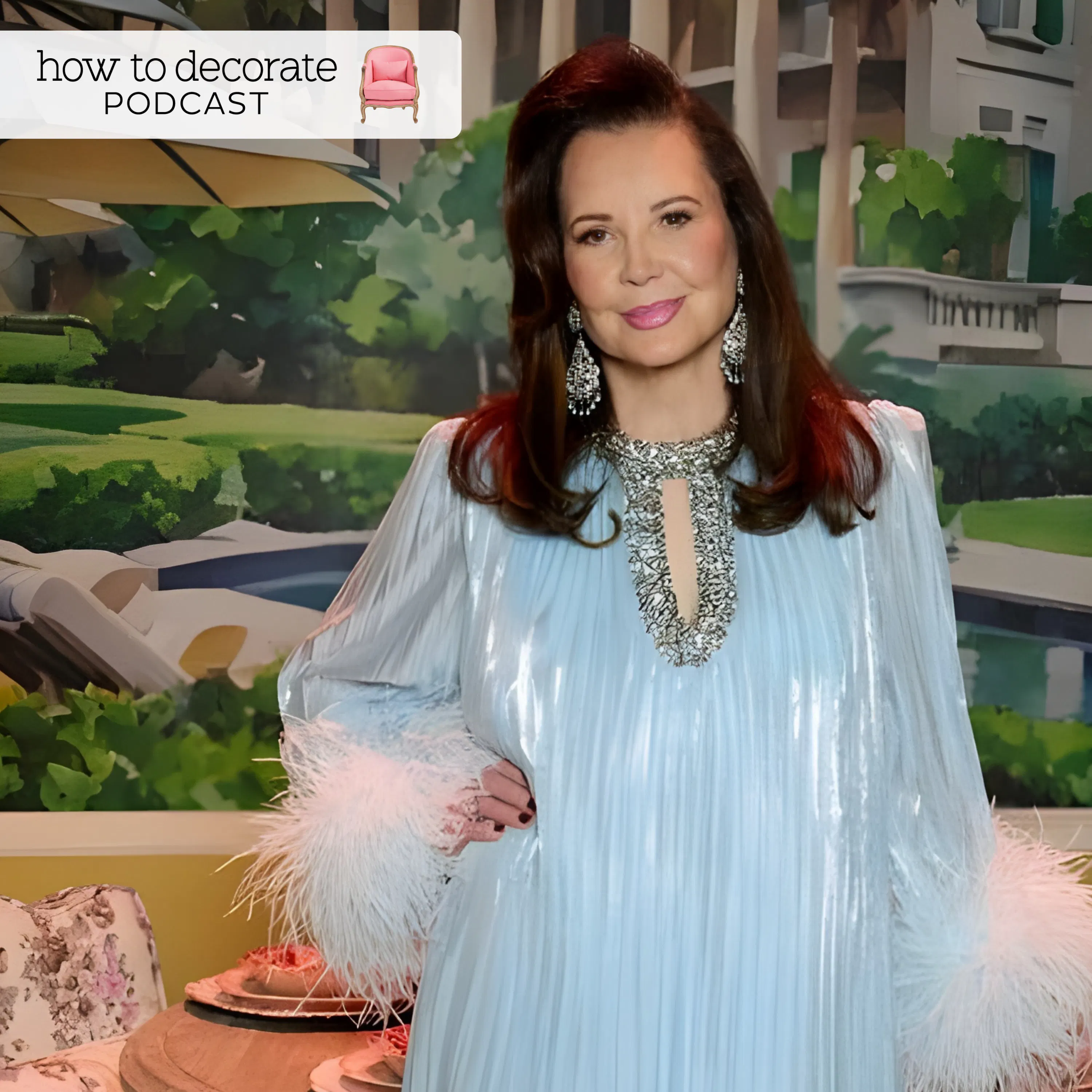
She is. Yeah. She is the grande dame of Charleston. She is everybody's favorite on the Bravo hit show Southern Charm. She has been a dear friend of mine for a long time, and we're gonna learn some things that maybe y' all didn't know. Oh, I'm turning Southern now. I just said, y'. All. You all didn't know about Ms. Pat, that she was an art advisor in the 80s and 90s. Some of the homes that she's worked on with her favorite designer, the prince of chintz, Mario Buata. And we'll probably, you know, get some spilled sweet tea about what's coming up on the next season of her hit TV show Southern Charm. So you're gonna love her, and I can't wait to get this conversation started. So mix up a martini and let's meet Ms. Pat Altschul. This is one of my favorite people on the whole planet, and we are strangely simpatical. We love all the same things. We love a Costco hot dog. We love zubair murals. We love all things Southern. We love reality tv. We love Bravo. So I don't know if you've guessed by now, but our guest today is the inimitable Patricia Alt. And she is one of the stars, I always say, the star of Bravo's hit series Southern Charm, which is actually a concept conceived by her son and produced by him by Whitney Sudler Smith. And this lady, and I mean that in the truest sense of the word, is so multi hyphenated and so talented. She's an author, a TV star, I would say a design aficionado, a caftan maker and connoisseur, an art consultant. Gosh, there's so many great things I can say about Pat, but we should just get in the conversation and learn more about our wonderful guest today. So, Pat, hello.
- [03:21]
C
Hi there. Thank you for that lovely introduction.
- [03:24]
B
Of course. Did I miss anything important? I'm sure I did.
- [03:30]
C
Well, yes, but I don't think that we need to publicize it in any way.
- [03:36]
B
Oh. Oh, well, if it's salacious, then yes, we should. But we'll spill a little tea. Well, this podcast is called how to Decorate. So it's primarily about design and decor.
- [03:51]
C
My favorite things, by the way.
- [03:53]
B
Mine too. Mine too. And I think you don't have to be a decorator or a designer to a. Have great taste to really love interior design, to tackle some of the things yourself. So I think we're gonna have a lot to talk about. You are sitting in your beautiful home in Charleston, and I see that gorgeous Zubair wallpaper, which I know you've moved from home to home, and you've taken that wallpaper with you, which I don't even think most people know that's even possible. But you've lived in so many great places. I know you. You grew up in Virginia, right?
- [04:32]
C
I grew up in Richmond, Virginia, and my parents had Zubair, but it was the. Wasn't the Revolutionary War. It was like kind of a general, ladies with parasols and coaches and, you know, 18th century style scene.
- [04:52]
B
Yeah. And you've all. You've always loved design and decor. I mean, do you think growing up in Richm at that time with stylish parents who had traveled a lot informed that sense of style?
- [05:06]
C
Well, we had kind of an eccentric interior to our house because my parents did travel extensively. They collected and everybody in Richmond had reproduction Williamsburg furniture. They had a few anti. Mostly silver. The Southerners are very big on family silver. And there would be some portraits, you know, family portraits, but there was a lot of reproductions and kind of boring interiors. And I grew up with Chinese pastel rugs, strange mixes of things Oriental My mother loved everything French. So we had a lot of furniture fabric that she would get in Paris and mix that up with, you know, Chinese vases that were taller than I was growing up. And paintings, dog paintings, horse paintings. I mean, it was a hodgepodge, but I thought it was very chic.
- [06:21]
B
Yeah, I mean, I think that it sounds incredibly chic. And I love the authenticity when people design and decorate with from their travels. And I do think that's a very southern thing to have a lot of heirlooms and those things that you mentioned, dog paintings and horse paintings and chinoiserie, which I'm crazy about.
- [06:45]
C
Me too.
- [06:46]
B
Yeah. And you've lived many, many places. And I think a lot of people don't realize what an academic you are and that you were a very, very sought after art advisor. Was that starting in the 70s or that was in the 80s and the 90s?
- [07:04]
C
Let's see. I graduated in. I think it was. I went to graduate school after, you know, getting my undergraduate. That must have been like 1969, 70. And I was an academic. I taught introduction to art, art history. And then I started a firm being an art advisor. And I did that for 20 some years.
- [07:40]
B
And what does that entail? I've always. It sounds so glamorous and fun. Pat has several books, and the last one, Eat, Drink and Remarry is phenomenal. And there are great stories you talk about in there about being an art advis and flying on the Concorde and meeting all these, you know, rich and famous people and telling them, you know, what kind of art they need. So how does that work?
- [08:08]
C
Well, I worked with a woman. I was very lucky. I got to know her just socially, and she was the authority in American art. And so she and I worked together. I would do all the legwork, go to the auctions, go to private dealers, fly on the Concorde almost weekly back and forth, going to London or Paris, going to art galleries, and it was just incredible. I had the best time. It was the best job anybody could ever ask for because the clients. We had one client who wanted a discreet collection with the best of the best. Money was no object. He was a billionaire back in the 70s.
- [08:57]
B
Wow. Is he still around and is he single? He sounds great.
- [09:04]
C
Well, the interesting thing was when we started this project, we were told that we could not divulge anything about him or his family or his circumstances or what he bought. And so I can't. And I still have never said anything about him or his family.
- [09:30]
B
Amazing.
- [09:32]
C
But he's sitting on one of the best collections in the world, which nobody knows about.
- [09:36]
B
Oh, wow. And so he's still with us and still has this collection. And one day it'll, I guess, all be revealed.
- [09:45]
C
Perhaps.
- [09:47]
B
We shall see. Speaking of art, I think that's, you know, we have a lot of listeners who are decorating their own homes and it's springtime is approaching and I think changing out your artwork is a great way to freshen up the space. And, you know, all of us, even on this podcast, have different kind of artistic either murals or framed artwork behind us. What would you tell somebody about buying art? Like, I think everybody thinks it's scary and expensive, but you probably have some great intel on art that you should have in your house. Where to get great art, art that doesn't have to be expensive. What are your thoughts on that?
- [10:28]
C
Well, first of all, I think before people start buying art for themselves, they should do some reading, go to museums, go to some exhibitions, go to auction galleries. It doesn't cost anything on a Sunday to go to any art gallery, any auction house, and just look. Because how would you know what you really liked and what your taste is unless you have done a little study and research? And I think once you do that, you might form an idea of the direction that you want to go in your collecting. And I would say local auctions are the way to go. I have discovered so many incredible buys and usually for other people, some for myself, but that's what I would do. I would say you want to look at condition first of all. Well, you want the style that you're most compatible with. Then you want to look at the condition. If you're going to buy something of that nature, I would invest in a black light because they have portable black lights, battery operated, and you scan the painting and you can see if it's been in painted, if it's been damaged, if it has cracks. So do that. Look at the frame because a lot of times the period frame is almost worth more than the painting really. But you can get great buys by just doing a little research and being prepared.
- [12:16]
B
What are some of your. I know you've sent me over the years, some different auction sites, when you see like horsey things. What are some of your favorite auction online resources that people can kind of scour and shop from?
- [12:30]
C
I would say Stair and Company because they get some of the most incredible upholstered pieces. I know that when some of the decorators die, their estates go up and maybe wildly expensive things go to Sotheby's and Christie's but then upholstered pieces, you know, cabinets, some paintings, some watercolors, porcelain. Go to Stair. And I found some great things and also great things at Stair too, as well as Sotheby's and Christie's.
- [13:14]
B
I'm looking at their site. It's Stair Gallery, like Climb the Stairs, but Stair and, and what a great tip if you're looking for great design pieces. Finding the estates of a favorite designer or somebody who's collected all this great stuff over the years. And maybe it's not, you know, Faberge eggs or something pedigreed, but they may have had it handmade or it might be a beautiful painting that they found on their travelers on their travels. That is a great tip because I love an estate sale and you always want to go to estate sales in fabulous neighborhoods. But if you go to an online resource like Stair, it's kind of all consolidated for you. So I knew you would have all the answers.
- [13:57]
C
Ms. Pat, I've got a really big tip for everybody. Yes, please get the app Live Auctioneer. It covers auctions all over. And I have found some incredible things at little auction houses in Connecticut, in la, and I recently got some porcelain. And I think it was 180 pieces of. And I can't remember, it was a brand name. It was French, right? I can't remember. But I got it for like $600. And I looked up a piece like the teapot was, I think it was $380, you know, on somebody else's site. So I got all of that for what I think was an incredible buy.
- [14:59]
B
Absolutely.
- [15:00]
C
Just get Live Auctioneers app. It's incredible. And you can buy everything, whatever kind of furniture, jewelry. They have great jewelry sales.
- [15:12]
B
Well, I mean, and the great thing about those apps is that you can put in the search criteria, the things that you're interested in. So I always put in like Hermes Chanel Equestrian. And then when those pieces of like Equestrian art or a sculpture comes up, I get a little. I get a ping, I guess. I don't know. I'm terrible with technology, but I get an alert that things that I like are coming up for sale. And that's a great way, like you said, to find something that maybe somebody in that area doesn't appreciate but you love and you'll get a great deal. So we love that you're a collector. I love that you're a shopper, and I love that you're so, you know, high, low. Like I've actually. Didn't we go to Bojangles Drive through together. And I know you love Costco. Hot dog, no pretense. And I love that about you. And you have the most beautiful home, but it has a sense of humor, and things are mixed. Would you tell us a little bit about your gorgeous home in Charleston? Is it called the Isaac Jenkins Mickle House? Am I getting that right?
- [16:19]
C
Michael? They say the locals call it Michael.
- [16:22]
B
Okay.
- [16:22]
C
It's Bell Mickel. It was built in 1853 by a gun runner who was active in the Civil War and apparently lost all his money. He had three wives, but that's all they know about him. They don't know who the architect was. And the style is Greek revival, but it has an unusual element. The capitals are ram's heads and very atypical.
- [16:54]
B
Mm.
- [16:55]
C
So. And I have very high ceilings. I can't remember. I think they're 14ft high. Lots of fireplaces with original mantles. The spatial interiors are just what I wanted. Double drawing rooms, library. My dining room is a little smaller than what I'm used to, but I've decided it's cozier. You know, I can get about eight people squished around my table, and it makes for good conversation. I like a round table.
- [17:38]
B
Yeah, I was gonna say you have a round table about six or eight feet across, if I remember, in your beautiful dining room where you are right now. And it is a great tip if you really wanna have lively dinner parties and a lot of conversation. It's small enough and everybody can see everybody. You can kind of facilitate conversation throughout the entire group. And when you're at a big, long table, you're kind of just, you know, stuck with the people. Not stuck, but you're only talking to the people to your right and left. Just because of, you know, physics or whatever it's called.
- [18:13]
C
I have a wall garden, a formal garden with boxwood. We put in a heated saltwater pool, and it's like a little Italian villa in the middle of Charleston.
- [18:28]
B
Yes.
- [18:29]
C
I moved everything from Long island in New York, and Mario Bolota was my decorator, who I think was one of the best. Carson. Did you know him at all?
- [18:43]
B
Sadly, I didn't. I didn't really, like, sashay my way into, like, the interior designer world until I started going to High Point Market and just doing shows with Tom Felicia. So I just missed the Mario era. But I'm so glad you brought him up. And again, for our listeners, Mario Buata, famous, famous, famous interior designer. The Prince of Chintz, as he was known as many, many books. I highly recommend, if you Want to see classic American interior design? You must check it out. But you worked with Mario in a couple of your homes, correct?
- [19:21]
C
He did four projects for me over 30 years. And the last one, we moved everything from New York down here because this was the largest of the houses that we did. And he was such a good friend. He thought he was. Well, my son called him the Dame Edna of decorating.
- [19:46]
B
I love it.
- [19:47]
C
I mean, he. He was outrageous and funny and so I always had such a good time with him. We shopped. Gosh, we'd go to London and Paris and go to auctions here. We had a wonderful time together. And his auction of all, he. He always complained about never having anybody be able to come to his apartment because it wasn't done. Everybody else's was done that, you know, he worked for, but his was not done. But when he passed away, he had something like seven warehouse rooms. And Sotheby's did like a five day auction. And it was incredible. People flew in from all over the world. He had amazing things. So he was just an extraordinary and talented human being.
- [20:47]
B
Yeah. And so great with color. Like, I love your double parlor at your house in Charleston. It's a limey yellow. Yellow green, Right, Would you say?
- [21:00]
C
Yeah, it's called apple green. Benjamin Moore. And he added some stuff to it, but basically it was apple green.
- [21:08]
B
You know, it's so traditional, but it's also so vibrant and it almost has like an 80s neon feel. And it just. It looks so great with all of your beautiful, traditional furniture.
- [21:19]
C
And.
- [21:19]
B
And I just think he was a genius with exuberant, tasteful, classic, but rooms that had a sense of fun and
- [21:28]
C
energy and very comfortable. I mean, I have a friend who has a lot of really beautiful antiques, mostly French antiques, but you can't find a place to sit down that's comfortable.
- [21:45]
B
Right.
- [21:46]
C
It looks great, but it's not very livable. But I think that one thing that he was extraordinarily talented in doing was working with scale. Because how often have we bought something, brought it home, looked great, you know, at the place of origin, but you get it home and it just isn't right. And Mario always said that you have to have a good sense of scale. Having things that are low, having things that are higher, you know, having them in the right place and arranging furniture is not easy. Because I know when I moved down here, I thought, well, you know, I'll arrange it. I'll put it in the double drawing room myself. Well, I mean, it was just a hodgepodge. I just Couldn't work it out. And he came down and we had movers, and, you know, in one day he had two rooms. Exact. And I haven't changed it since.
- [22:55]
B
When you create a classic floor plan and you have the right scale and you have beautiful, timeless pieces. You could look at a Mario Buauta room from 1980 or 1990 or 2010 or right now, and they're really timeless. They're classically beautiful, and they stand the test of time. So. Well,
- [23:14]
C
you know, he worked with John Fowler in London for many, many years, and I know they always spent Christmas together. And so Mario adopted kind of the English country style, which in translation, I think, emphasize high quality upholstered pieces, but comfortable. And they can be old and faded. It doesn't make any difference as long as they're comfortable. Mixed with eccentric pieces that you've collected in your travels. Antiques, family paintings, family pieces, discreet collections. I mean, I have you mentioned high and low.
- [24:04]
B
Right.
- [24:05]
C
I mean, I have some very valuable antiques, but then I have my little pug collection, which is kind of tacky, let's face it, never. But, you know, it's on an 18th century table. So I think you can mix things up and just have it be livable and still chic.
- [24:30]
B
Absolutely. I think that is kind of, you know, that great English sensibility where you can have beautiful things and family heirlooms, but there's a, you know, a dog taking a nap on a tattered sofa. Nothing's too precious. But even though you have a lot of really precious, beautiful things in there with them, I want to talk a
- [24:50]
A
little bit about the grounds of your space, because the. It just is so, so beautiful. And to have that space available to you in Charleston is just remarkable. What are some. What are some features of the outdoor
- [25:10]
B
space that you really, really love?
- [25:14]
C
Well, the entire area is. Is within a walled garden, and so I have total privacy. I still have the ironwork at the front of the house that was done probably in the 1850s. Charleston is known for its ironwork, decorative ironwork, except for those houses that donated theirs for the Civil War. The architecture is interesting because I have a. They call them piazzas at Charleston instead of a veranda or a porch. And I have. Mine is colonnaded, so I have one of the few houses that has columns in Charleston, and I love that. And the color is kind of a muted, pale, apricot, golden color that's faded. And green shutters, like Monet green shutters. And so it looks kind of like an Italian villa. And I've Got very tall, very old magnolia trees all across one side. And it's just beautiful any time of year. Like right now, it's cold and rainy, but everything is green. I don't know why, but it is.
- [26:51]
B
Right?
- [26:52]
C
And I have lemon. I have Meyer lemon trees and big Italian pots on the piazza. And so even though, you know, it's within the city, it's still private and very livable and very green.
- [27:10]
B
Yeah, I love the piazza too, because that is a great place to go out and have a drink under those lemon trees and the big French pots or Italian pots. It's just so divine. And here's a little fun tip. Pat has all of this beautiful stuff, and I've been to her home for a couple different events. And then they will also film episodes of Southern Charm there. And people are putting gaffer's tape on an 18th century table or knocking over maybe, you know, some Faberge egg. What is it like having to have a film crew in your gorgeous house where you have so many beautiful things?
- [27:52]
C
Well, they're basically afraid of me, number one. And I've lost, like, they. I have original glass in most of the. The doors, like, have French doors all across. And they have, you know, with their booms or whatever, knocked out an original glass panel. And I had an antique, what do you call it, a cocktail shaker that my father had gotten in Ireland years and years ago. And they broke that. They knocked it off and broke it. And invariably one of the dining room chairs, because the guys are all big and I have kind of delicate 18th century hand painted Italian chairs. There's always a chair leg that gets broken or even. I'm ashamed to admit it, my own son was tipping the chair and went over backwards and just broke the chair in a million pieces. So. And they spill red wine on my white sofa. Ah, the worst that DeAngelis made.
- [29:03]
B
Right, right. Yes, but.
- [29:05]
C
Oh, it can be a disaster. But, you know, I don't get too exercise about it. But now I'm eagle eyed. I watch how they set up spaces and what they do. So I'm on them at all times now.
- [29:18]
B
I think you should get some fake Faberge eggs from the Franklin Mint and place them around and kind of like punk them and pretend that they've, you know, knocked them over and broken them. Just, it's fun to see the people's like, look on their face.
- [29:34]
C
Do you own anything? I'm amazed that you know what the Franklin Mint is.
- [29:38]
B
Oh, of course. Yes. I know all about that. It's the same people that own the Franklin Mint, own Palm Wonderful Pomegranate Farms. And really they're, yeah, they're a multi, multi brand entrepreneurial family from la, and they buy things like that and reinvigorate them. So.
- [30:00]
C
Huh. How interesting. I didn't know that.
- [30:02]
B
I know. You know, this is an educational program, Pat.
- [30:06]
C
Yes.
- [30:08]
A
Ms. Pat, I was curious because you mentioned that Mario did four projects for you, and I'm wondering, you know, kind of the personalities of each of them and whether, you know, when you moved to Charleston, how much was new, how much was left, you know, were moved from previous homes and any homes that you kind of miss and wish, like, that was a great house. I kind of, I kind of miss that one.
- [30:33]
C
Well, we started out with the when I was married to Arthur Altschool and I moved in, we got married. I moved in from I was in the hunt country in Virginia, and so I gave up my house there. And Arthur had a magnificent apartment on Fifth Avenue right across from the Met. It had seven bathrooms, a library, a big living room, redone kitchen. I mean, it's two terraces. It was an incredible apartment. And he was a fantastic art collector. He was listed as one of the top 20 art collectors in his day. And so when I married him, he had the remnants of two other wives decorating in the apartment. And it was pretty ghastly. And there were great paintings in every room, on every wall. And the first thing I did was pick up the phone and call Mario and say, I need your help. You've got to come over here. So Mario looked around and he said, well, I guess we'll have to work around all these paintings. But he didn't like the fact that there were, you know, wall to wall paintings because he wanted, you know, his own wallpaper. And anyway, he considered it a problem, but I thought it was pretty fabulous. So he decorated that apartment. And then we bought Southerly in Long island on center island, and that was it was colonnaded, but it was built, I think, in the late 30s, so and it was on 10 acres of land on Oyster Bay, and it was so beautiful. And I was able to have my mini horses there, right? So I had really two cute little mini horses. So Mario started and let it be known anybody using a decorator worth their salt, you're not going to have a whole room put together at one time. In fact, I say Mario was like watching paint dry, literally, because first it might be a rug and then there's a piece of furniture here. Fortunately, we had because I move my things up from Virginia. So we had quite a few things for that house, but that's when Mario and I went on most of our buying trips was for that house. And so 2000, when I bought an apartment after Arthur died in 2002, I bought a maisonette in 965th, which is a great building. We had a French chef. Waiters were trained at Buckingham Palace. All you had to do was call up that morning and say, you know, I'm having a dinner party. Could you be here at 7:00'? Clock?
- [34:04]
B
Wait, wait.
- [34:05]
C
They were great.
- [34:05]
B
This is like the building had trained waiters and cooks and things that you could avail yourself of because you were a resident in that building.
- [34:16]
C
Yes, exactly. Which was. I mean, I love that apartment house. And so Mario designed that for me. So at one time I had that gave up the big apartment, had the maisonette, and then Long Island. But all winter, when it got cold and snowy, I'd go out there and I tried to get friends to come out. Nobody was interested in going out there. In the summer, it was like running a hotel. But in the winter, I'd be out in this big house by myself with, you know, gardeners and cooks and everything. So I decided, the heck with this. I miss the south and I'm Southern. So I thought, you know, I'll just retire and I'll go down south and eat bonbons on my chaise and, you know, have a martini.
- [35:12]
B
Sign me up.
- [35:16]
C
So I came down here, Mario. We bought the. I looked for two years. I flew all over everywhere trying to find just the right house down South. And when this one came on the market, I bought it immediately because such a great house, it was exactly what I wanted. So I then moved everything down from Long Island. So that's basically that he. So he decorated four projects and say, 20 some years.
- [35:47]
B
Right, right.
- [35:50]
A
I imagine. When you moved, did you recover a lot? You know, do some reupholstery? How did. How did maybe the color palettes change from southerly to this house?
- [36:03]
C
Well, some of the rooms kind of remain the same. Like, I love the library. So he did it the same way with an ocelot carpet, gold T paper on the ceiling, and then glazed red walls, Chinese red walls. And then my dining room, you know, we moved the Zubair wallpaper. And for anybody interested, Zubair wrote a book. You know, the. The company wrote a book and I wrote the introduction. So it covers all of the historic wallpaper that Zubair has ever done.
- [36:43]
B
Oh, wow.
- [36:44]
C
This isn't aside. It's like People think I have nothing to do. And I get. I get like your only accomplishment was in marrying three rich husbands. I'd like to disabuse people of that. I have always worked and I'm still working.
- [37:04]
B
Right, right. And now you're a reality TV star. Did you ever think that would happen? And how did that happen?
- [37:16]
C
No, I certainly didn't. I thought I was coming down here, you know, in my dotage, to just relax and have fun. Well, my son has done other TV shows and documentaries, and so he sold a show. It was called Southern Gentlemen. And they changed. They bought it, but they changed the title to Southern Charm. And they said, well, we want the producers in addition to Whitney's, because Whitney wasn't keen about me being on the show, with good reason. So I said, okay, I'll do it for five minutes. And that's, you know, that's it. And apparently I got high. What do you call it when they.
- [38:08]
B
Oh, like a Q score. Like a score based on, like, how you resonate with people and people have positives.
- [38:13]
C
Yeah. Whatever that is called. So they said, we want you to do it more. So, you know, I do things that amuse me on the show. Like it's fun to have dinner parties and all the guys come. So, you know, it's a traditional guys dinner because they're all train wrecks and are entertaining for me.
- [38:36]
B
So I think that's why it's so successful. You're the perfect foil, you know, the elegant lady of the manor. And then you have these guys coming in and it's a great mashup. And it's such an entertaining show. It's one of my favorites. And you're my favorite person on it, obviously, because you have such.
- [38:57]
C
Thank you, darlin.
- [38:58]
B
Phenomenal taste. It takes place in Charleston and I know that the house, kind of your house is so spectacular there. I could see why after looking in Virginia and all over the south, that you, you know, this one particular property was so special, it lured you to Charleston. And Charleston has since become travel and Leisure's, like, number one tourist destination in the United States. It's always on the list of places to go. People go there to get married, have bachelorette parties. You're a Charleston expert, I feel, and you go to the best places. We went to Hall's Chop House together. There are some phenomenal antique and design stores there. Krogan's Jewel Box, which is a great jewelry place. What are some of your Charleston must dos and places you love to go? If people are thinking about Visiting Charleston.
- [39:56]
C
Oh, my goodness. We have so many new restaurants now. I haven't even been to all the new ones. And I think two or three of our restaurants got Michelin stars, and a three or four were on the list under that. I mean, the food scene here is incredible. And there are all kinds of chic boutiques now on King Street. But I wanted to tell you a funny story about coming down to Charleston. When I first came down here 2008, all of my New York friends said the same thing. What? You're moving down south with Honey Boo Boo and the Gator Boys, and what is wrong with you? You're in, like, the best city in the world. And now they're all leaving or have left, and they think I'm a genius now for coming down to Charleston. But there are so many fabulous places now since I've lived here. Restaurants. You've got five or six major beaches. There's boating. The gardens are incredible. The architecture goes from Revolutionary War architecture to Civil War architecture. We don't have much modern, but you could just spend hours walking around downtown. And it is walkable. It's still small, but it's so interesting and beautiful. The gardens are incredible. People are very particular about their gardens here. And you just see remarkable sights on any street. It's a lovely place to live.
- [41:47]
B
Yeah, I need to get back there. And I see they're even putting in a. I just saw today, I think on Instagram, a new Four Seasons is coming to Charleston.
- [41:56]
C
Yeah.
- [41:57]
B
So it's. You're a trendsetter, Ms. Pat.
- [42:00]
C
That's me.
- [42:01]
B
You knew before everybody.
- [42:04]
C
You should come down. The last time we had fun when you were down here.
- [42:07]
B
I know. Ms. Pat had the most fabulous party for my book, and I met all kinds of characters, and people were trying to get me to go skinny dipping in the pool after the party. And then we did another fun trip where we went to Scott's Antiques in Atlanta and Tula.
- [42:25]
C
I love that.
- [42:26]
B
I love it. We're gonna have to coordinate that for spring.
- [42:29]
C
Well, you know, we have a design. When is that? It's in March sometime. You should come down for that.
- [42:36]
B
Oh, is there like a Charleston design week or something?
- [42:39]
C
Yeah. And, you know, a lot of, you know, the who's who of designers come down here.
- [42:46]
B
Well, I'll come. I'll come anyway.
- [42:49]
C
Come anyway as well. I'll send you the. I'll look it up. I think it's the 8th or 12th March. I'll look it up and see. It's like three days.
- [42:58]
B
I just looked it up. It's Charleston by design. It's a design celebrating architecture, interiors, and historic preservation. It's March 12 through the 15, so maybe I can shoot down for, like, the first day because the 15th are the Oscars, So I have to go do that and do the fashion recap.
- [43:18]
C
You know, we're a month ago. I know, I know.
- [43:22]
B
But maybe I can come down on the 12th or the 13th.
- [43:26]
C
That would be the opening night, is when all the people are gonna be there.
- [43:30]
B
Okay, so maybe the 12th.
- [43:33]
C
The 12th.
- [43:33]
B
I'm going to research that and I will let you know. Fluff up, fluff up, fluff up your guest bed, ok.
- [43:40]
C
It's waiting for you.
- [43:42]
B
I'll pop down there. Before we let you go, I did want to talk about. Do you love a good martini? And it's a big part of Southern entertaining. I think Southern hostesses really just know how to do it. It's more of a cultural centerpiece of Southern living is, you know, gracious entertaining. And you make the best martini. And there's a secret that not everybody knows with, like, the ice bag and everything. Would you walk us through that?
- [44:15]
C
Well, it's done with crushed ice, and you have what they call the Lewis ice bag and mallet. So you put your ice in there and you splinter it. So it's like splintered glass and very little. Well, first of all, you put the vermouth in and then swirl it around and throw it out. You do the crushed ice, and then you pour your gin. I'm a gin martini drink, not a vermouth, and I like it with olives or a lemon twist. But it's not easy to make a good martini. Michael, my late butler, used to make the best martini.
- [44:59]
B
Absolutely.
- [45:01]
C
And I've tried to emulate it, but I don't know, it never tastes quite the same. It's hard to make a really good martini.
- [45:07]
B
It is. I think the key is. Yeah, it's just a whisper of vermouth. And I know some people use an atomizer, or they just put it in the glass, and then, like, you throw it immediately out. And then having the splintered glass, which keeps it like, almost like a slushie, you know, when you do that first pour, there's little tiny ice particles in there. I think that's the key. And it's always better when someone else makes it for you, I think. And you see that.
- [45:34]
C
I agree.
- [45:34]
B
Pouring it in and it's just. It completes the experience. So, Taryn, do you have a question for Pat?
- [45:43]
A
I Feel like that was a good
- [45:45]
C
one to finish with a drink.
- [45:46]
A
Do you have a custom. Do you have your go to entertaining cocktail and meal? Those are my aspects as a Southern lady. I'm sure you have your go tos.
- [45:59]
C
My go to is a good bartender.
- [46:03]
B
Excellent.
- [46:06]
C
That is perfect. I will. Because down south, I mean, you have a lot of bourbon drinkers and they like specialized drinks that can get very complicated. So, you know, I like to turn it over to somebody else because.
- [46:23]
B
Yeah, leave it to the experts. We have just a few more minutes left. And I know because I'm eagle eye on your Instagram always. I know that you had posted some glorious photos, I think it was yesterday, of you in New York in the 90s. And a lot of us have been obsessed by Love story on Hulu about the life of John F. Kennedy Jr. And Carolyn Bessette. Besant and Besset. I never can get that last name right. But you were talking about life in New York in the 90s, and was it that fabulous? And your answer was, yes, it was. Would you tell us a little bit about, you know, the vibe back then?
- [47:10]
C
Well, we went out almost every night. We had lunches as well. We dressed up, we wore stockings. We had our hair done. It was more formal, but much more fun, I think. What's the French restaurant that is no longer there?
- [47:37]
B
La Cote Basque?
- [47:39]
C
Yes. We would go to Laco Basque for lunch and go to an event in the evening. It could be private or it would be a charitable fundraiser. But, yeah, we were out every night. And then we would go to the country on the weekend and have guests on the weekend. But it was fun.
- [48:01]
B
And when you lived on 5th Avenue at 960, did you see Jackie O. And were those people out and about in New York at that time?
- [48:11]
C
Well, yes. When I was married to Arthur, we had that apartment, his apartment at 9935th, which was right across from the Met. And next to us was the Stanhope. But I would see Jackie, and I met her on numerous occasions. Lee Radziwill was a very good friend of mine. I used to see John all the time at the Stanhope.
- [48:41]
B
Did you?
- [48:42]
C
Because he was. He moved out of the, you know, apartment that he had with Carol and Bessette and moved into the Stanhope. I don't know if people know that or not, but he was separated at that time.
- [48:57]
B
Wow. Okay. Some. Some.
- [49:00]
C
And we used to see him. The. The Stanhope Hotel had a big restaurant, but it also had, like, a sidewalk cafe like you would find in Europe. And I would see him out there practically every afternoon.
- [49:15]
B
Wow. Amazing. Did you ever say hello?
- [49:20]
C
No.
- [49:21]
B
And was he as handsome as he appears to have been?
- [49:26]
C
Absolutely, yes. Yeah, he was very handsome.
- [49:31]
B
So gorgeous.
- [49:32]
A
My gosh. And that actor is.
- [49:35]
B
I know, so good. It's a very good show. Have you seen the show, Pat?
- [49:40]
C
No. Because I know what the real story was and the concept. Maybe I shouldn't even say this, but the concept of it being a love story doesn't. I don't know, it seems contrived. I think the real story would have been much more interesting, but depressing. It was depressing. Anyway, anytime you know, any. Any people end up in that circumstance, it was tragic.
- [50:11]
B
It was. It was. Well, I know we're probably almost out of time. Anybody else have anything else I don't want to. I commandeered so much of this time because it was a good kiki with my great friend and a nice catch up.
- [50:27]
C
Well, I'm counting on you coming down.
- [50:30]
B
I'm literally going to look at that right after this and see if I can get there on the 12th.
- [50:34]
C
Yeah, that'd be fun.
- [50:36]
B
Super fun, Pat.
- [50:37]
A
Thank you.
- [50:38]
C
I mean, well, thank you.
- [50:40]
A
It's beautiful. And look at your background. Could be fake. It's so pretty.
- [50:44]
B
It's so gorgeous.
- [50:45]
A
If I hadn't seen the pictures.
- [50:46]
C
Everything is fake.
- [50:49]
B
No.
- [50:50]
C
And.
- [50:50]
B
And you look gorgeous. Your hair, your makeup, everything. You're just. You're so stylish. It's effortless. You're so glamorous and chic and it was so generous of you to take time out of your day and talk with us. We really appreciate you.
- [51:07]
C
Well, listen, I love you. Anytime we can chat. I'm up for it. Thank you for such a fun afternoon.
- [51:15]
B
Yes. Well, next time we'll be in the flesh in. In Charleston. And if you're gonna be in Atlanta, anytime, you come on by Ballard Designs and we'll do another podcast with you.
- [51:27]
A
Yes, we'd love that.
- [51:28]
C
I've gotten a lot of things from Ballard.
- [51:32]
A
Oh, good.
- [51:33]
C
In fact, I was just trying to figure out. I was up in my storeroom and I have crystal lanterns. I have like a hundred crystal lanterns that I got from Ballard and I'm trying to figure out where to put them. I use them for parties. They're great. I've gotten a lot of things in Ballard. Very chic, very chic. Shopping.
- [51:57]
B
Yeah, it's good stuff. Thank you. Well, thank you. I will be in touch very soon. And we just so appreciate you and couldn't have been more thrilled to have you here. So all the best and I will talk to you soon.
- [52:11]
C
Great. Can't wait.
- [52:13]
B
And that's the show everybody. I want to say thank you darlin to our guest Pat Altschel for joining us today and sharing all of her Southern charms with us. And thank thank you so much for listening. If you were inspired by anything we talked about today, literally anything at all, you have to check out my exclusive new collection with Ballard Designs. We've put links to all my favorite pieces right in the show notes. So thanks again and click away. Well, thanks so much for listening to my four part takeover of the how to Decorate podcast for Ballard Designs. I had the best time ever. If you haven't listened to the full series, what are you waiting for? Put those in your queue right now. Amazing guests like Junk Gypsies, Amy and Jolie Sykes, Bobby Flay and Tom Felicia are waiting for you. So cue them up. I'll wait.
- [53:07]
A
And that's our show. You can find all of the show notes on our blog howtodecorate.com podcast to
- [53:12]
C
send in a decorating dilemma, email your
- [53:14]
A
questions to podcastallarddesigns.net so we can help you with your space. And of course, be sure to follow us on social media at Valor Valor Designs. Don't forget to subscribe wherever you get your podcasts so you never miss an episode. And please leave us a review. We'd love to hear your feedback. Until next time, happy decorating.