Loading summary
Transcript343 lines
- [00:02]
A
Welcome to how to Decorate from Ballard Designs, a weekly podcast all about the trials and triumphs of decorating and redecorating your home. I'm Caroline. I'm on the marketing team.
- [00:11]
B
And I'm Taryn and I'm a product designer.
- [00:13]
A
I'm Liz.
- [00:13]
C
I head of the creative team.
- [00:15]
A
We're your hosts. Join the expert team at Ballard Designs for tips, tricks and tales from interior designers, stylists and other talents in the design world.
- [00:22]
B
Plus, we'll answer your decorating dilemmas at the end of each episode.
- [00:25]
C
We love answering your questions, so don't forget to email us@podcastallardesigns.net now on with the show.
- [00:33]
A
K Pop Demon Hunters, Saja Boy's Breakfast Meal and Hunt Tricks Meal have just dropped at McDonald's. They're calling this a battle for the fans. What do you say to that, Rumi? It's not a battle. So glad the Saja boys could take breakfast and give our meal the rest of the day.
- [00:47]
D
It is an honor to share.
- [00:49]
A
No, it's our honor.
- [00:51]
D
It is our larger honor.
- [00:53]
C
No, really, stop.
- [00:55]
D
You can really feel the respect in this battle.
- [00:58]
A
Pick a meal to pick a side
- [01:01]
D
and participate in McDonald's while supplies last.
- [01:03]
A
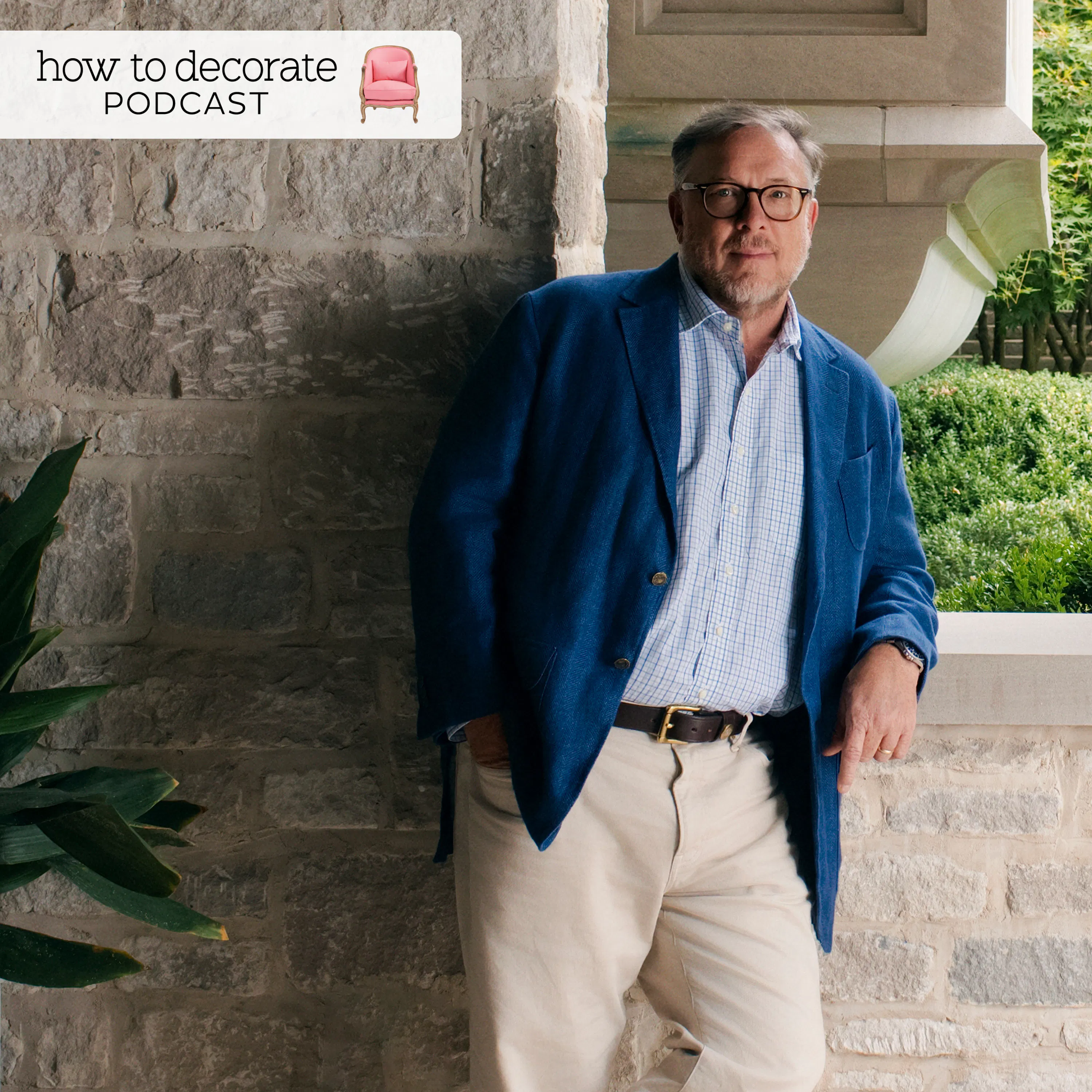
Our guest today is award winning Atlanta architect Timothy S. Adams. His firm, T.S. adams Studio Architects, has become synonymous with classical lines and highly detailed craftsmanship. Today we're talking about your new book, Tradition Made Houses with a Sense of Soul and History, which celebrates homes that feel grounded, authentic, and built to last generations. Tim Adams, welcome to the show.
- [01:26]
D
Thank you. Excited to be here.
- [01:28]
A
So happy to have you. We have your book here. We've all read it and it's beautiful.
- [01:33]
D
You're supposed to just look at the pictures, by the way.
- [01:36]
A
Oh, we don't.
- [01:37]
D
I know. I don't read architecture books. I look at the pretty pictures.
- [01:41]
A
Well, there were a lot of pretty pictures. Yes.
- [01:43]
B
If we had just done that, it would have also been very fulfilling.
- [01:46]
A
Yes, but the words are where the good part is, so we couldn't miss that. Thank you. Okay, as I mentioned in the introduction, you have very sort of classic sensibility in terms of your homes, but there's also a real authenticity. You talk a lot about building your projects based on the location, where they are. So maybe just talk to us a little bit about, you know, kind of your overall thoughts on building residences for your clients and why, you know, kind of what you're going back to in terms of the styles and the, the, I guess like the. Just the, the location, the way that connects to the Location.
- [02:34]
D
All of our houses kind of respond to the site. And I think, you know, there's a couple things at play. The. The client's program, kind of what they want, their wish list style. We, you know, we can do whatever we want, but we really are leaning on the client to kind of give us an idea of what they like, because this ultimately is their house. But then how does that integrate into the location and that. That's the site. You know, we do a lot in North Carolina, that there's a lot of topography. We do a lot in Florida, where it's flat. And in any case, we always go and visit the site before we start designing, because small lot, big piece of property, whatever it is, there's always pros and cons to everything, and you want to be reactive to that, and you want to consider all that in the initial design work. So our process is really about, you know, getting to the client, understanding kind of how they want to live, how they're going to use the house directionally, stylistically, what. What they want to do. And, you know, that sometimes it's all over the place. Sometimes it's very, you know, specific, depending on the individual, and then take that information and then go kind of walk the property. And. And as I'm walking the property, I really start to place elements on the site. And in a way, I am designing the house. Now, it's not in specific of what everything is, but it is a relationship of, well, you know, responding. Where does the garage need to be? Because you tend to start there. How you deal with, unfortunately, cars, they just take up a lot of space and have a lot of needs. So that. That's kind of a starting point when you deal with topography, but, you know, views and light and orienting towards, you know, natural light, where you can use it to your best on your best behalf, and then placing the elements around that. And that comes from, you know, understand the client, what they're wanting to do, and then from there, we start to build on that, that process. But responding to not only just the property, but a lot of times there's a view we're looking at. We do a lot of waterfront homes, mountain homes. So these clients pay a lot of money for these views, and you really need to honor that and respect it. Sometimes, though, in the views, there's something negative you don't want. There could be a cell tower. There could be a house next door that really is offensive or just ruins your privacy, you know, so. So you take all that into consideration in the early design Phase. So that, that all kind of happens in a real. You know, it's funny because clients will want to meet me on site and they're thinking this two hour meeting and literally within 15, 20 minutes you have it, you, you, you, you process it. This is a normal lot. Now if it's a thousand acres, different story, that's a day that's driving around that, that, that's looking at aerials and studying that. And, and that's a different challenge, but it's a fun challenge. And that is more than just one site visit. That's generally a kind of a ongoing piece. You come up with a concept, you then vet it out in, in the field and you might, you know, drive where the roads would be or walk it and get an understanding and move things around. So that's a little bit different. But when you're your typical lot, if you will, a piece of property that somebody's buying in a, you know, one of the communities up in North Carolina and Florida or wherever it is. Yeah, you start there.
- [05:42]
A
Yeah.
- [05:42]
B
I picture you just standing on the top of a hill in like North Carolina and being there for like five minutes.
- [05:47]
A
Big. All right, got this. Yep, there, there you're climbing.
- [05:51]
D
So that pretty much is what it is. Yeah, I'll make it a lot more than that, for the record. I will expand on it. I will, I will. You know, they're excited. You want to respect that.
- [06:01]
A
Yeah.
- [06:02]
D
And you want to kind of give them an insight inside, you know what I'm thinking in some direction. So I'm not gonna go up there and be like, oh, all done, see you. I'll talk to you in a couple weeks.
- [06:11]
A
No, it, yeah.
- [06:12]
D
And you wanna respect that. But there, you know, I go into a lot more detail with them and talk about, you know, like tomorrow I'm going up to North Carolina and we had to move it cause of the snow, so the clients can't be there. So this will be a 15 minute site visit. Done. Got it. There's also sensibility of materiality and, you know, what works in a region, what doesn't. So we do a lot of work in places we've never worked before. And one thing I'll do a lot of is I'll drive around the community, look at the older homes, look at the architectural character, the details, the materials that they're using. That will tell you a lot about what works and doesn't work in a, in a certain region. So when you get in, you know, humid areas, there's a different type of material that you want to consider versus dry and arid. So a lot happens, you know, in that timeframe, but it just kind of, a lot of just perceiving what's going on around you, but that it's really important to understand that and think about that.
- [07:05]
B
I think the perceiving is an interesting. Again, I'll do thinking about it, if that makes sense. You'll drive around a neighborhood and be like, why does this feel so good?
- [07:13]
A
Or like, why does this feel bad?
- [07:14]
D
Yeah. Why does it does not work.
- [07:16]
A
Yeah.
- [07:16]
B
Yeah.
- [07:17]
A
Sometimes I feel like it's easier to spot what doesn't work versus what does work, you know?
- [07:22]
D
Yeah. Because generally it stands out. It's forced. And that's what a client wants. A certain thing. We're going to honor that. It will explain why we may not want to, but, you know, I did a house on West Basis Ferry. Gosh, this was 15 years ago. Maybe they wanted to do a really contemporary house on West Paces Ferry near
- [07:44]
A
Pace Academy, which for our listeners, I mean, the Governor's mansion is on the street. Yeah.
- [07:50]
D
Narrow that down.
- [07:50]
A
Yes, it is a very traditional.
- [07:52]
D
Very traditional.
- [07:53]
B
Yeah.
- [07:54]
D
And I said to him, I said, I'll do it, but I don't think that's the right decision. You're really going to kind of. You're going to really stand down. It's. It's just a few doors down from the Governor's mansion. And through the conversations where I kind of led them was, okay, well, let's do an English manor house. Let's. Let's really pull it way back. So we keep the lines. We keep. It's all stone, slate. Really strong materials, strong details, very simple and, you know, clean. But nobody's gonna drive by and go, oh, flat roofs and big window expanses and monolithic materials. And it blends in. And we, we set it back. We landscape the front, but it looks appropriate, but it fits their wish list and their desires. Then inside, yeah, we stripped it way back. It went really clean. And. But it was done in a way that the exterior still spoke to the interior. Cause I think that's important by, by the simplicity of the details. But if you drive by the house, you probably wouldn't pick up on it, that it's such clean lines on the inside.
- [08:55]
A
I would think, too, that it would. That would give the house more longevity. I mean, most people are designing for themselves, but you do want to build something that will la. That other people will appreciate and you can sell. And I mean, not that you're designing for resale, but something that has staying power, I guess. Yeah.
- [09:13]
D
And those are conversations we have with clients because they're like, this is our last house. I said, that's fine. And again, if you want to just do one bedroom, knock yourself out. But I also say to them, what if in 10 years you come across the most unbelievable piece of property that you can't pass up, and now you've kind of saddled yourself with this house that's not really marketable, not really a driving decision maker, but it's a conversation that should be had. And usually they're like, yeah, we probably just need to consider some, some of these other things. But also, you know, we, we're trying to create architecture that, you know, I use the word soulful and soul because I think timeless is just used so much nowadays. And I not to use that because I feel like it is kind of just this word that's tossed over. And so I really kind of gravitated towards soulful architecture and something that if we do our job right and we, we design a house that's rooted in the right materials, the right proportions, the right details, yet lives in this century. You know, it's not, we're not designing for the, the medieval times, but we can draw from that. And if we put it together properly, then I feel like that house has soul. It's kind of like antiques have soul. And there's. That's that. And so when we put all that together in a way that it feels right, like we were talking about a minute ago, then I feel like in 20 or 30 years, the house is still relevant. It's. It's not, you hate to say it. The, the. Some of the trends that we've gone through, and we always go through them. If you really kind of boil it down to what makes an architecture work and then bring that into the house, it's going to have that sense of
- [10:50]
A
soul you were talking about. And you do a great job in the book of this of you have these fantastic lots, many of your clients. And so you mentioned in the book, in certain projects where you're kind of echoing the shape of the house around the topography. And that obviously makes total sense. I'm curious what that process looks like when it's a square lot in, you know, a subdivision or something. You may not be doing a lot of those projects, but is there something that our listeners who maybe they are building a house and it's a beautiful vista view of Huttons, North Carolina, but what kind of things should they maybe consider in the way their house Is positioned that. That will, you know, make a difference
- [11:37]
D
in the livability, I think goes back to it. And we do houses on narrow lots. And we're doing stuff in Florida where ellis beach is 35ft wide. I mean, you know, it's. It's very, you know, internal focused. So no, we deal with that a lot. Again, it is very site responsive because, you know, if you. If you've got a garage and driveway to the left of your house for your neighbor and then a kitchen window on the right hand side. Okay, well, we need to think about where we place our windows, where we place our master bedroom and. Or our primary suite. You know, how do we arrange these things? And it depends on the width of the lot. Sometimes we can get more of a U shape or a courtyard type thing where we can focus ourselves in. A lot of times particular, particularly here in Buckhead, we're really focused front and back in the sides. Yes, I'm gonna always have windows in contemplate what that architecture looks like. But I want to try to be conscious of what they're looking at, what they're doing, what that room is, you know, not put big windows in the master bedroom looking at somebody's garage.
- [12:39]
A
Right.
- [12:40]
D
We will intentionally focus towards the back because you don't want to. Right. That's awesome. So, you know, that's one of the most important things about walking the site is making notes of what's there, what's positive and what's negative. And even then, you still have houses behind you. Landscaping becomes really important to create privacy or if the budget allows. Do you have a pool house in the back? There's a house in Louisiana that's in the book. You probably picked up on it. But when I walk, it's a very big lot and it's on the Viridian river and there's kind of a bend in the river. And I walked out there and I told the client, I said, the one bad thing is we've got this huge white Greek revival house across the river from you. It's not that it's a bad house or an ugly house. It's just this white. So you got all this green and then you got this monstrous white house that when you come, when I walk in the lot, I'm like, that just draws your eye into it. And I knew that he loved orange and citrus trees, lemon trees. He had grown them. And so I knew that there was kind of that thread of history, if you will, of what he's done in his gardens. So I said, I Know, we're gonna do an orangerie. I said, frankly, fabulous. What if we propose an orangerie at the back of your sight line, coming through the main space to stop your eyes, you're not looking at the White House. And then what it does is it turned your eye up the river, so now you're looking up the river. Preview versus the house. So walking the site is paramount. And I get people interviewing us and saying, hey, you know, we don't need you to come to wherever. You know, we're talking something in Kansas the other day and, like, well, do you really need to come? And I'm like, I won't do your house without doing. Because I'm not doing my job properly.
- [14:26]
B
Yeah.
- [14:27]
D
So even again, even it's a large piece of land. The nuances of all that's so important.
- [14:32]
A
Yeah. That seems like a great takeaway for anyone building. Like.
- [14:35]
D
Yeah.
- [14:36]
A
If your architect that you're talking to doesn't want to come to the physical site, maybe that's a red flag.
- [14:42]
D
It definitely is a red flag, because they're missing out on one of the fundamental pieces of my mind.
- [14:46]
A
Yeah.
- [14:47]
D
And, you know, we get asked all the time, can I buy this plan? We don't sell plans. And I tell them it doesn't. That that house was designed for that site, you know, generically. It may fit all the family needs of, you know, most families, but it was designed for that particular spot and location. And so I'll tell them it's a great place to start. I know what you like, but let's do it right, and let's, you know, put together something that's responsive to all of these pieces.
- [15:22]
A
Yeah. Do you think there are any instances in which a. One of those plans, you know, like, Southern Living, used to sell their house plans. Are there any situations in which that works and, you know, could be a good fit for someone?
- [15:37]
D
Absolutely. You know, what we do is not a. Not inexpensive. It's a lot of time. It's a commitment. You know, we put a lot of energy into it. So, you know, it's not a cheap thing to do, and I respect that. And I will have people call me and talk to us. And I said, look, I don't. For your budget and what you're wanting to do, we're not the right fit. You don't need to spend the money on us. And. And then a plan, you know, something like that. The Southern Living plans are great, and they work really well on fairly generic lots, if you will. So when I say generic, not boring, more Something that's, that has, doesn't have a lot of topography is easy to work with. You are going to compromise potentially some, you know, you looking at your neighbor's kitchen window or something like that, and you could probably make some adjustments on that. But there definitely is a time and place for it. And I will say we've done a lot of work in Watercolor Florida and some of those communities and they, it works really well there because you've got this foot, you know, your, your site's 50 by 90 and you've got a seven and a half foot setback on each side and it's, it's, it's flat and you're building every bit of that. So the box is the box.
- [16:46]
A
Right.
- [16:47]
D
And they're. So you have to have a porch here. You have to have a two story porch here. So it really, I don't, I really kind of stopped designing there because it got boring, if you will. I don't say that. Love some of the houses we did there. We may want to take that part out for our clients in there. But it got to the point where we're just regurgitating the same thing. And you're trying to be creative and trying to give something special to each client.
- [17:09]
A
Yeah.
- [17:09]
D
But when they tell us you have to do, you know, eight out of ten things, well, then it comes down to where do you put the great room? Is it in the front of the back?
- [17:16]
A
Yeah.
- [17:17]
D
How does everything work inside this box? There's so many, there are so many
- [17:20]
A
solutions on the fourth floor to make it creative.
- [17:23]
D
Yeah.
- [17:23]
A
Yeah.
- [17:24]
D
We thought we'd really kind of throw you a loop. Yeah, I don't think that'd go really well. Yeah, probably not. So there are, there's definitely applications and I completely recognize what we do is not for everybody. Hopefully someday they will be there, but it's not for everybody. And, and, and I think it's a great thing. And there's some beautiful plans that you can purchase online if you're, if you're really kind of selective and look hard enough. So.
- [17:50]
A
Well, how, when you have the, the a plan like I imagine maybe how do you, how are you placing it inside the lot? Right. Like, is that something that you, that you're, your contractor would help you do or.
- [18:06]
D
I think, yeah, a lot of people work with their contractor, their builder, and they place it there. And most good builders have a pretty good sense of what works and what doesn't work. And that's, you know, again, just understand a lot in the topography and what you're working around, but generally that's how it's done. Or they may engage a landscape architect or civil engineer to help out with that.
- [18:26]
A
Yeah.
- [18:27]
D
If there is a little bit more work to be done.
- [18:29]
A
You talk about in the book, how you say something. It's like subtle features can make a.
- [18:34]
D
I know what I said. I haven't read the book but once, believe it or not.
- [18:40]
A
Wait, what? Well, you did.
- [18:41]
D
I only read it once.
- [18:43]
B
Wrote it, so I can see why you're like, I only need to read.
- [18:46]
D
It's a really weird thing. I, you know, obviously, I read everything multiple times. I was writing with the. The writer, but I. I read through it. I don't think I've read through it again since I got in hardcover. Just kind of a weird.
- [18:59]
A
What came out of your brain. What do you read it for? Well, you supposedly said.
- [19:03]
D
No, I said. And I do know that I will back that up.
- [19:05]
A
Or maybe you're. Or maybe chat. GPT. Just kidding. I know you, but this is pre Jet. It's fair. Here we go. Okay. You said subtle features can make a tremendous difference. And I really. You know. And you were about how sometimes small, I guess, gestures or elements within the design can really change the feel of the house in general. And I was kind of thinking about someone, if they're building a house and they're working with an architect, how they might know when. Because we. And we were doing an episode a couple weeks ago about all the things that happen in the build process and, you know, little changes that happen. And, you know, there's a lot of elements all coming together, and sometimes you might be compromising on things. How do you know that the things that you're compromising on is. That's gonna be. That's gonna make a really big difference or something that is something you can live with.
- [20:03]
D
I. I take the approach when I'm designing house that I'm gonna give you my best. But my best ideas, my best design, whatever I can. And I'm gonna listen to you as well. And a lot of times we'll put something on paper and the clinic's. That's not really what we were thinking. But then I'll go through and explain why we did it. And then they're like, wait, that's exactly what we wanted. And so those nuances are really important. That. That comes from listening and understanding and really reading between the lines with clients. But there are times where clients like, I don't want to do that, and I really just don't want to do that and fine, we won't do it. And I've said many times in the back of our office, I'm like, they don't really realize what they gave up and they never will and nobody ever will because you know that that moment has passed. And sometimes that does happen, and for whatever reason, they. They can't get on board with it. They just. Sometimes it's budget driven, sometimes it's just stubborn, whatever it is. So the really kind of sage clients we work with and, or really, I would. I don't know how to put this, have either done it quite a few times or very comfortable with themselves in, In. In business or what have you. And they trust people. They trust the people they hire. They'll ask, they'll say, if we take that out, am I really making a mistake? And I'll be honest with us, that's. That to me, that's a 5050 kind of cool. Not a big deal, or. Yeah, you're really messing. You're going to miss something and it would have been a missed opportunity. Um, so I think if you're really smart and you want to get the best out of an architect, ask those questions. Why did you do that? I don't understand it, but why did you do it? And what's your thought behind it? And do you feel passionate about it? Yeah, because sometimes I don't feel passionate about something. I'll tell a client and it's. It's fine. It's a neat detail, but there's other things we can do just as cool that will accomplish the same thing. And other times I'm like, you're really messing up.
- [22:01]
A
Can you give us some examples of something that is. Hi, listeners. If this episode has inspired you to tackle a project in your own home, we want to help with a special offer just for podcast fans. We know how exciting it is to bring your vision to life. Whether you're updating a room or starting a refresh, you'll find everything you need to create a space that feels uniquely yours. As a thank you for listening, enjoy. 20% off plus free shipping. On your next order with the code 20podcast20, visit Ballardesigns.com to get started. Your dream home is just a click away. Use podcast 20 for 20% off plus free shipping codes not combinable with other offers. See terms and conditions for details. All right, happy decorating. Let's get back to the show. A non like something that will really make a difference.
- [22:48]
D
A lot of times it's materiality.
- [22:50]
A
Okay.
- [22:50]
D
You know, I mean, there's a time and place for things. Um, and again, I always try to be conscious and sensitive to a client's budget, because ultimately, if we design something that's so far out of reach, it's a waste of time. There's nothing. There's nothing good that happens with that. So I always tell my clients, I'm gonna push you. I'm. You know, we talked about your budget. I'm gonna push you a little bit. Because I feel like if we push the envelope a little bit and then we have to pull back. We're pulling back, but we're pulling back to a. To. We started at a higher point, right? So I said we. We designed to 11, and we make some. Some cuts. We end up at a 10 or 9 versus starting to design at a 9, we end up at a 7. So a lot of times it's materiality, something like that. Sometimes it's a detail they don't understand. A good example is I had a house on Lake Kiwi I did for a client. This is the second house I'd done for him. And we detailed everything out. We drew it, and they started construction in the. We had drawn all exposed rafter tails, which doesn't sound like a big deal, but when you start to see a house that's on the lake that's meant to be a little more rustic, and you got the repetition of these little details, and you just see a little bit of it, but it continues down the house on all the sides. And the builder convinced him to take that out and do a closed soffit, which there's a time and place for everything that wasn't the time and place. And we went out there and it was too late. And the client, he's like, yeah, he. He told me I'd save a couple thousand dollars. And I said it wasn't worth it. That was a huge mistake. And I wish you guys would've talked to us first. But the. The builder, which. We don't work with him anymore because he really burned that bridge rather than have the conversation. And let's see what we can do to. Maybe we save money elsewhere.
- [24:34]
A
Right.
- [24:36]
D
But not there. And so it's little things like that that can happen. And it really altered the design significantly. And later he regretted it. The owner did. He's like, yeah, I understand why you were so passionate about that.
- [24:50]
A
Yeah, that's so hard to hear that. It's just a couple thousand dollars. Like I could imagine if it's like, you know, a whole lot.
- [25:02]
D
$30,000, $20,000. Yeah, it was not much in the grand scheme of things.
- [25:07]
A
Yeah. Like.
- [25:07]
D
And we probably could have done it in a slightly different way. That would have saved him enough money to where it would have been a minimal change, cost wise.
- [25:15]
A
Yeah.
- [25:15]
D
And the thing about it is the client really is not strapped for. For money. It wasn't. I don't even think it was that much for him other than the builders didn't want to do it. And he convinced him that this is what he should do, because I know the client. He's done just fine. So I don't. Yeah, I mean, you might spend that on a couple dinners and bottle of wine. You know, I mean, when you put it in that perspective. But yeah, it was just the builder kind of got over his skis and. And had his ear. And so, you know, we. We try to interview our builders and make sure that they're team players and that, you know, when something like, comes up, talk to us first. Let's have that conversation. If the client's passionate about it, then let's all talk about it. But let's not deviate from what we've worked on. Yeah.
- [25:59]
A
Do I imagine you do most like, I know there's parts of the architectural, like the design process where you're really doing the plans, but then there's also the project management. And like, during the construction part. What would you say to someone that is not necessarily planning to have the architect stay on during the building process?
- [26:22]
D
That happens from time to time. We. We're trying to. We're including construction admin as part of our fees because we feel like it's a really important piece of the project, that the project does get better when we're involved all the way through. And I don't like to make changes during construction because it's not about that. It's more about. And it's not about checking the builder either, or managing him. It's more about being available and reviewing shop drawings and materiality and making sure we're picking the right colors and making sure stones right and the mortar's right, nor are we laying it the right way. Does it fit our vision. And we design a house and that's it. So it's not a perfect process. And there are times where you go out and you're like, we should probably look at that trim detail. It's not quite coming together. And so little nuances like that that can elevate a project by us having an extra set of eyes from a creative perspective makes a tremendous difference if somebody doesn't want us to do it, we'll respect that, and that's fine. We don't want to be adversarial in anything we do.
- [27:29]
A
Right.
- [27:29]
D
But we try to explain to them we got a house right now that that happened. And I told the builder in the background and I said, look, I'm not walking away from the project. We still want to do this stuff. I don't care if we don't get paid for it. I want to make sure we get it right because it's a really nice house. And so we'll just take it on the chin and it's not a big deal.
- [27:47]
A
Mm.
- [27:48]
D
Because it's more important that when we're all done that it comes out right.
- [27:52]
A
Yeah, yeah.
- [27:53]
C
It's such a big investment that you do want to have, you know, someone with your skill and knowledge and. And experience to. To really follow through.
- [28:05]
D
Absolutely.
- [28:06]
A
Yeah.
- [28:06]
D
And. And I think it. It. The builders appreciate it too, you know? Cause we're. I tell you, one of the first things I tell a new builder that I've not worked with is, look, this is a team effort. We're here to support you, not bite you. And. And we want to be part of that team, and we want you to reach out to us with questions and clarifications and what you need. The vast majority of the clients get it and they want it. And, you know, when we interview, I tell them, look, I'm with you from now until you move in. So a little bit after that, because I think it's really important and you establish that relationship. But there's some that. And usually, again, as I was saying earlier, the clients who have been around it enough and have done it enough and value kind of your role, they're the ones, they. They get it and they understand it.
- [28:52]
A
Yeah.
- [28:53]
D
Some people think we're. We're, like, getting in the way of the builder or helping the builder. We're like, no, we're not doing his job. I don't want to do his job. We're supporting him. Yeah, yeah, yeah. You're.
- [29:08]
B
I mean, you're giving the direction. Yes. From the beginning of what the client wants. And so, again, the builder supposed to be just helping that process. So.
- [29:18]
A
Yeah.
- [29:19]
D
Yeah, he's managing the process and bringing it together and then. And making sure that things stay on track.
- [29:24]
A
Yeah. But there are a lot of moving parts and lots of things can go wrong and adjustments maybe need to be made for better or for worse. And, yeah, you're there to make sure it's still getting to the Same point.
- [29:38]
D
Right. We're trying to hit the intent. A little thing that's not really a little thing is window shop drawings. I can almost guarantee you every. So when, when you, when you do a project, the builder sends the windows out to get priced, that manufacturer sends back the drawings of all the windows. What's been priced. And I can almost guarantee you every time we review one of those, there's two or three mistakes.
- [30:02]
B
Yeah.
- [30:03]
D
And it's usually the light pattern in the windows or there's a missing window or there's a size that's wrong or proportions are off. There's always something in a builder's not going to always catch that. But it seems like 99% of the time, something is overlooked. And once you sign that thing, you're committed, you own it.
- [30:23]
A
Yeah, yeah. You were talking about construction administration. What would be like a general idea of the cost compared to the overall architectural.
- [30:36]
D
That's hard to answer.
- [30:37]
A
Well, like, would it be like 5%, 10%, you know what I mean?
- [30:41]
D
Like 10% of the fees?
- [30:43]
A
Okay.
- [30:43]
D
So. And then the reason that's. I'm giving a vague answer is because it's, there's such a wide, you know, Is it a 3,000 square foot house? Is it a 15,000 square foot house? So it's not really. It's hard to quantify that.
- [30:55]
A
Yeah.
- [30:55]
D
But generally it's around 10%.
- [30:57]
A
Okay.
- [30:58]
D
Just. And you know, sometimes we do it hourly because we know the builder. We're like, he, he's not gonna, he's gonna do his job. He's gonna hit me when he needs me, otherwise he's gonna roll. And if there's a problem, I'll know about in advance. You don't need to pay me as much because you got the right builder. I'll tell clients that up front and others come in the door. I'm like, I really like him, but he's gonna wear us out.
- [31:19]
B
Yeah.
- [31:20]
D
So you're gonna pay for it, and that's fine. But recognize he's going to call three times a week or three times a day, and he's going to need us out there all the time. And as part of it, he wants to make sure he's doing it right. It's not a bad thing, but he's maybe a little more insecure about what he's doing versus another builder. And I've got builders all over like that that we work with all the time that fall in different categories.
- [31:43]
C
Do.
- [31:44]
A
When you, who do you find most people are hiring first? The architect or the Builder, Architect, generally the architect.
- [31:52]
D
Yeah, I would say nine out of ten. Nine out of ten times we're in
- [31:57]
A
the door first and then are you like, do you ever give like suggestions or recommendations about builders that you think are good? Yeah.
- [32:07]
D
So our, our role kind of I tell clients in the hires, we, we now work for you. We're your manager, you're your point person. And as we go through the process, I'll want to recommend several landscape architects, several interior designers, several builders. Now Covid, you had to just pick a builder and get in line because you were waiting six months. So we'd be picking a builder when we, you know, had a concept and you just accepted that. But I would help them pick that builder and you know, they'd probably go interview two or three and then say that's it. But generally I like to give several names. There are times where I feel very passionate about somebody, that it's a fit.
- [32:46]
A
Yeah.
- [32:47]
D
And I'll just say this is the right person. If you don't like them, then we'll give you some other names. But generally I don't. Yeah, I don't have relationships with any one person, whether it's landscape architect, designer, builder. Because I feel like each person has, every client has a different personality. So part of what I'm trying to do is marry up who's going to connect well with that family so that it is a win because it's a lot of time and money you're spending with this person. Um, so it's. I like to build the team. I like to, you know, present them to the clients, let them pick who they can I connect with.
- [33:19]
A
Yeah.
- [33:19]
C
What kind of traits are you looking for in a client and a builder to pair them up? Like what?
- [33:26]
D
Yeah.
- [33:26]
C
What kind of matchmaker?
- [33:27]
A
Matchmaker, yeah, exactly.
- [33:29]
B
Yeah.
- [33:29]
D
Like a lot of it's personality. You know, some people who are executives, for instance, they're going to want buttoned up numbers. You know, they want to see every line on. They want to see a rolling budget that when thing, you know, they want to see, you know, things going up or down and kind of pairing along. Others are like, I just want it done, I want it done right. You know, so it really is a personality thing. And you've got some builders who are really, most of them come from a commercial background and move into residents. They're very organized, buttoned up. And then sometimes it depends on some builders have a big team. And so you're not really dealing with a builder per se. You're building with this deal with the superintendent. And so in that case, I'll want the client to meet the, the, the project superintendent. Because I'm like, that's the guy you're going to see every day when you're out there? Yeah, this guy's great. And because he's there, stuff happens. Right. So I'm not discounting what he's doing because he's. That's very valuable. But this is a guy, when you walk on the job site, it's going to know everything about it, ins and outs, if you have questions, that sort of thing, he's your guy. And so you need to meet him before you hire this builder. And then some people want to have that relationship where it's one builder who's just doing a couple projects at a time, maybe doesn't have all the back of house stuff. It. It really is interesting as you get into it, you know, how it kind of unfolds with who, fits with who. And, you know, with landscape architects, it's similar because some are really good with gardens and details. Others are, you know, more broad and big picture. And some clients want that, the little fussy kind of gardens and a lot of detail, and they love gardening. Others are like, I want low maintenance, I want to look pretty and I don't want to touch it. So you have to marry some people in that way. And then with interior designers, it's a lot of times personality and style. You know, there are some interior designers have a wide range of style, and there's some that are very kind of. They have their lane and that's a great thing. There's not one not better than the other. It's just that's, you know, that's where they've picked to be and that's what they do. And they do it really well. So a lot of it, you know, I'll talk to the client's personality, then try to marry the personality with the style that they want.
- [35:41]
A
The idea of the contractor with a number that makes a lot of sense. I wouldn't have thought about maybe that when picking someone and then when you were talking about the superintendents of the site, is that, will the builder tell you this is who you're building?
- [35:56]
D
You'll ask, okay, some will. Some, some will say, I've got this guy pegged. He's finishing up a job, he'll be rolling off that about the time you're gonna start. And this is who we're thinking. Others, I'll just ask.
- [36:06]
A
Yeah.
- [36:06]
D
And a lot of them won't know. I'm like, oh, you love him. He's awesome.
- [36:09]
A
Yeah.
- [36:09]
D
Or I'll be like, you guys will fit. And then I'll go talk to the builder and say, you. You. This is not a good pair.
- [36:13]
A
Yeah.
- [36:14]
D
Yeah. No, still want it to work.
- [36:17]
A
Right, Right. That's just that I wouldn't have thought to ask about who that person would be, because, yeah, they're not the fa. They're not the pressure and person you're interviewing. But to your point, they're the person you're talking to when it's the person
- [36:30]
D
you're gonna see out there every day.
- [36:31]
A
Yeah. Another thing you talked about in the book was focal points and creating, like, a central focal point and then having all those focal points have a sight line to, like, the next focal point. I love that idea. Can you explain that for our listeners? Because that was something that, to me, I could really visualize that and see how that's leading you from one room to the next. And I'm not sure that that's something that I would have thought of that the next sight line or the next focal point should be visible from the first one.
- [37:01]
D
Yeah. I think no matter how big the house is, there needs to be consideration of how you're going to flow and what you're going to experience in that flow. And it's little things like putting a window on center with the hallway when you're coming down the hall, versus having a split where you're looking at a mall right now. You're not seeing out, but it can. It'll draw you into space. It'll help you move around. And sometimes it's just an art wall. It's very intentional that that pulls you to a space and sets a mood. But even in a small house, you can do that. And it's just very, very. It's really kind of focusing and being very conscious of what. Where your openings are, how they relate. Shifting walls so things center up and align. I'm very asymmetrical, so it's not like I'm this fiend with symmetry and everything I do, because that is not me at all. The opposite of that. But in design, I think when you get into a room, things need to be balanced and symmetrical and related. Doesn't mean everything's equal everywhere. It is, because you can balance things with the fireplace or a window or you can offset things. So it's not even about that. It's about understanding relationships. But by doing that, then the house becomes this experience. And that's one of the harder things when. When People want the open concept because now suddenly you've kind of taken away some of that, and there's definitely a trend moving away from that, which I'm excited about. We're getting back to more kind of traditional rooms and spaces and breaking things up a little bit. But, you know, just always thinking about, as you're moving through the house, what are you experiencing? What are you looking at? Never do you want to walk into a corner of a wall coming down a hallway or see the corner of something. I will work really hard to move that because that drives me crazy. It just. Visually seeing that is not a good thing. Yeah. Kind of splits everything in half.
- [38:42]
A
Yeah. I want to talk about fighting over
- [38:45]
C
who gets, you know, a lot of. A lot of the homes that you're featuring in your book, like, they have. They are perfectly placed in the landscape. They feel like they've been there forever. They have, like, a natural patina to them, but they're new. What are some things that you're thinking about when you are choosing materials for. For a piece? Is it. Is it structured around, like, the style of the home? Or like, what is.
- [39:21]
D
What are.
- [39:21]
C
What gets you excited about materials? Because it's clear that you have a definite vision.
- [39:25]
D
Yeah.
- [39:26]
C
For the materials that you use.
- [39:27]
D
Well, first of all, what gives me. Says real materials, you know, you can't do that with synthetic materials. It doesn't age, it doesn't patina. It doesn't really. It always looks new. Um, so that's kind of paramount to all this. And granted, we have to make compromises based on budgets, stuff like that. But our all. Our goal always is to try to incorporate the real thing, and maybe we work something else out to accommodate financially using more stone or managing that. But I think the fundamental kind of takeaway is you've got to start with the roots of something. And so a client will bring us 10 images, 30, a hundred of houses they like, someone brings one. But in that, you generally can find a theme and a direction, and they may not know what it is, but in what they're showing, you may not even look like an English tutor house, but it tries to. So then you start to educate them about what that is, and that becomes kind of your. Your palette of materials that you build from. And when you do it that way, then it kind of gets that response of nature, you know, human. We see things and we feel things. So that gets you that feeling that you want, and then just, you know, letting them age naturally. Like the book on the COVID that Stones of North Carolina it's called Doggett Mountain, but it's a native stone up there, and it's very responsive to what's there. It feels right. And it's already got some patina and age on it, so that's always helpful. Granite. We use a lot of Lithonia granite, which is a hard one because when it comes out of the ground, it is that blue gray color. But it does patina really nicely over time, and it takes a few years, so that's a little more challenging, but it will get there. So it's just really all about understanding the basis of where you're coming from and then really picking the right materials and then balancing that, not getting too carried away with one thing or another. So,
- [41:21]
B
yeah, you can tell in your book, obviously, that the materials are just such a focal point. So much stone and beautiful beams inside and some of those mountain homes. And again, I'm sure it's based on. Because it varies, of course, with your landscape. I was wondering what are people asking more for? Because you talked about, again, not the we're going back to rooms versus open concept. Like, people are feeling more intentional. Is there certain spaces that people are expanding on, contracting on different spaces? I know we've talked a lot about sculleries in the past few years. People are still doing.
- [42:00]
D
I love them. I mean, I think it. It's a great way to keep all this. Keep your kitchen clean, you know.
- [42:06]
B
Well, not. The kitchens are like the hangout boy.
- [42:08]
D
Well, they are.
- [42:09]
B
We've.
- [42:10]
A
Yeah.
- [42:11]
D
No matter what we do, people live in the kitchen. That's when you entertain.
- [42:13]
B
Yeah.
- [42:14]
D
So I think, you know, the trend I'm seeing is, which I'm excited about, is people are now engaging in rich materials and colors and. And you're, you know, we're seeing on the interior design with all the wallpapers and, you know, going back to some of these amazing, you know, Gracie and Zubair and all these different wallpapers with lots of patterns and patterns on patterns and. And moving away from the whites and the gray tones and just kind of that start transitional and beyond, which is great. You know, we've always, like, even in that we were always pushing for, okay, well, if we're going to do white, let's do wood walls. So there's a warmth. It's not Sheetrock painted white. It's a wood wall that's painted white. So there's inherent kind of wood or a plaster that's got inherent kind of warmth and natural feeling to it. So even though it is a gray Tone or white tone, it's still has some richness to it. So I'm seeing that. I'm seeing a lot of. A lot of people are wanting smaller spaces, more intimate spaces. They're, you know, the idea of, you know, the big. Obviously there's going to be the family slash great room, the gathering spot. But I'm seeing a lot of people really want to have like a den or a little parlor that. That is scaled back and it's intimate. So, you know, if it's an empty nest or the two of them, that's where they'll watch tv. You know, that's where they'll hang out and have coffee and spend most of their time. So starting to get some more spaces back like that. Still not seeing, you know, living room and a family room necessarily, but it's leaning a little bit towards that. And then dining rooms seem to be coming back a little bit more in a movement away from, you know, all the. The one space where you're eating dining and cooking at the same time.
- [43:52]
A
Yeah. What about home offices?
- [43:56]
D
Yes, definitely.
- [43:57]
A
Still a lot of home offices.
- [43:57]
D
Still a lot of home offices. And especially now, you know, the ability to work remotely. You know, so many people, particularly in second homes, it may be just, you know, a little small space, like half of this or a third the size of this room, but a place where they can close the door, have a conference call, a zoom call. They don't want to work all the time, but they also recognize that that, you know, gives them the ability, if they can do that, that they can be there more.
- [44:23]
A
Yeah.
- [44:24]
D
So because of, you know, the ability to work remotely, that's definitely kind of coming back. It has been for a little while.
- [44:31]
A
What about more in the kitchen trend? Because I do feel like they have gotten so big. So do you feel like the size is kind of still, you know, a big grand scale meant for entertaining?
- [44:49]
D
Well, for us, it's more of a case by case situation. One of the first things we ask clients, do you entertain or not entertain?
- [44:54]
A
Yeah.
- [44:55]
D
And then if it's yes, we Entertain. Is it 10 people? Is it a hundred? And they say a hundred. I'm so. Okay, challenge.
- [45:02]
A
Yeah.
- [45:03]
D
How often is it a hundred?
- [45:05]
A
Kitchen. Yeah, yeah.
- [45:06]
D
And then that's where we go, you know, we bring in a catering kitchen. So for me, two things. It's about lifestyle. It's like how you live, how you entertain. You know, the person that, that cooks for, you know, several couples, it's going to be a little bit smaller, but. And then the person who's entertaining big time. They're gonna have a, you know, a big scullery or catering kitchen and full setup cooking back there. The other thing is it needs to be kind of proportionate to the house. You know, if we're doing a 35 by 4,000 square foot house, the kitchen needs to kind of work. All the spaces need to be. Kind of need to relate to each other. So then it feels right.
- [45:44]
A
Yeah. Is there ever a mismatch between the. The size or the scale of the house they're wanting and the needs?
- [45:54]
D
Every time. People always come in saying, I've run my rooms, I've measured them all out and I've come up with 3200 square feet. And I'm like, you're forgetting about walls and circulation and all these other things. So I can't tell you how many times. And this is mostly with empty nesters. We want to downsize. We don't need the 10,000 foot house. We don't need all that. We want to downsize and we get, we want to get to 3,500 square feet. I'm like, okay, what do you want? And then they start rattle off ensuite bedrooms, four bedrooms, master suite, all the different pieces. I need an office, she needs an office. Like you're at 5 to 6,000 square feet. You've got to decide what you want to do to make it work. And it's just funny how that dynamic
- [46:33]
A
always plays out in theory.
- [46:36]
D
In theory. And if you're to accept and understand, you know, the scale of things can pull way back. It's doable, it's completely. We're doing several houses that are 3,500 or 44,000 square feet, but the client needs to understand what they're getting and make sure that that's what they want.
- [46:55]
A
Yeah. I feel like when you know the, the challenge with an empty nester though is that you probably have grandkids, they're coming to visit, maybe they live out
- [47:04]
D
of state and they need a bunk room.
- [47:06]
A
Yeah.
- [47:06]
D
And they might need two bunk rooms. One for boys, one for girls.
- [47:09]
A
Once you get all these kids and their kids, like you're not really downsizing all that.
- [47:12]
D
Well, the conversation is, well, we want to downsize, but we have three kids. All three are married. They all have two or three kids.
- [47:19]
A
And we want em to come visit.
- [47:20]
D
And we want them. Yeah. We want to make it so that they would. Because usually these houses are in spectacular places.
- [47:24]
A
Yeah.
- [47:25]
D
And so the kids are going to come.
- [47:28]
A
So in that instance, do you do and There were a couple books or a couple room or a couple houses. In the book where you had like a guest house or something. Is that kind of where you go like, okay, well, the normal house is going to be slightly smaller, but we're going to add some.
- [47:42]
D
Yes, I mean, we do. We talk about that a lot. And it's a budget thing too, because, you know, once you pull it out of the house, it's definitely more expensive to build that guest house. But it sure is nice. It's definitely a great way to work it. Some people love that idea. Other people don't want them far away and they want them under the same roof and that sort of thing. And it takes property. You know, you gotta have room to work it. There needs to be space between them, otherwise it doesn't feel natural. So those work better on, you know, several acres of land.
- [48:11]
A
Yeah. So do they then just sort of. Because if, if the goal is to have a house where you're using every room, but then you really only need certain rooms when guests are there. I mean, like, do you just sort of accept that you're not gonna have. You're not gonna use every room?
- [48:30]
D
Yeah. And generally the. We'll take the secondary bedrooms and move them upstairs, or if it's a mountain lot in the basement, a lower level, so there's some efficiency there and then put the stuff on the main level that you're going to use. We're doing a lot of houses up in North Carolina where there's the primary and then there's another guest bedroom on the main level because they're friends that are coming up, but they're same age and they don't want to do stairs either. So. And then there'll be like two bedrooms up or down for kids. And then when all the kids are there, they've got room. Yeah, it's all about what. It's all about compromises. At some point, all of what we're doing is compromise. You know, it's, do you want to have this material? You want to have that material? Do you want to have this big of a house or do you want a smaller house? Well, if you have the smaller house, can I accommodate what I really want?
- [49:10]
A
Yeah.
- [49:10]
D
Every now and then we get clients who. I got three kids and we need to do all this. And then about halfway through the conversation, like, we don't want em all around at the same time anyway. So just cut it all back. Easy enough. You make that decision, not me. But sometimes clients will get their budget back and like, well, we need to scale back. We wanna cut some rooms out. And I said, okay, what do you wanna get rid of? Cause this is. Everything you asked for on the list is in here. And usually what happens about 10 minutes of them going through the plan. So, like, we'll just have to look live with it. Yeah, but I'm not gonna make that decision for them. I can kind of give them the different solutions and the options, but they've gotta make that decision of what they want to give up.
- [49:48]
A
Yeah.
- [49:49]
D
To do it right.
- [49:50]
B
Yeah.
- [49:51]
A
Okay. Before we started recording, of course, we were having a great conversation about AI and technology. And I was curious about, you know, there was such a trend for a while about smart houses and, you know, having, you know, like AI can or, you know, Google have all your locks. And then, and then we were hearing a lot more about people wanting dumb houses where there was not a lot of connectivity. What is your sort of thoughts on that?
- [50:19]
D
You know, personally? Yeah, I want a dumb house.
- [50:22]
A
Yeah.
- [50:22]
D
Yeah, I. I think there's. This is kind of going in a different direction maybe, but I think there's a lot of concerns about security and stuff like that with all that. And I'm not a computer person, obviously, but I think there's some issues there that people need to be aware of because, look, if they got a camera on your security pad, they can see in your house.
- [50:40]
A
Yeah.
- [50:41]
D
Like it or not, it's there. Put a piece of tape over it. That, that's kind of one aspect that people need to consider. And some people love that. They love the connect. They want to be able to drive up to their, their house, wherever it is, and leave and turn the air conditioning down to 68 and they walk in. It's perfect. That's awesome. Some people don't want that. Some people don't want to worry about it. Some people want to walk in a room and hit a light switch. Others want to get their iPhone out and say, okay, set this mood and do that. So it's really a personal preference. A lot of my clients have had those smart homes and all that stuff, and they get very frustrated because something happens, they can't program it. And now, you know, it's a Saturday night, they got people coming over and they can't get a tech over to fix it in time. I hear that a lot. So I think I do like a balance of that because I think the Lutron lighting systems are wonderful where you can. You can control the whole house. You can turn the lights on, you can bring your shades down there's such so many nice things about that application.
- [51:40]
A
Right.
- [51:40]
D
But I also. We talk a lot about, okay, well let's have a redundancy in some of this stuff. And maybe in a closet we do a bank of switches. So if something's off, you can go turn some lights on. Or you just want to walk in this room and hit. Yeah, you can. You just want to hit a switch because that's the way you live at that particular time. So that happens a lot too, where there's kind of a balance of both. I mean, technology is going to be there. It's not going to change, it's going to continue. I think we all need to go into eyes wide open.
- [52:07]
A
Right. What about though too, like the technology is changing so quickly. So if something you. Is state of the art now you put it in. But 10 years later, like, is it
- [52:18]
D
that two years later by the time you do it, the house. It's sometimes. Yeah, it's beyond.
- [52:23]
A
Yeah. I don't know.
- [52:26]
D
I went to tech, but I'm not the engineering side of computer science. I was in the one odd school.
- [52:34]
A
It's an interesting. I think because I hear a lot of people talking about the same thing in cars and so I'm always just curious what, you know, being so classical in your style, how that works with the technology. That too, you know.
- [52:50]
D
Well, we need to embrace it for our clients and I think, you know, our, our, our work is very traditional and. But we also need. It needs to live with the way we live now.
- [52:58]
A
Right.
- [52:59]
D
So I mean, we have to embrace all that and it really is a client by client discussion because it's all over the board.
- [53:08]
A
Yeah. Do y' all have all of your lights and stuff programmed to your phone?
- [53:13]
C
I do.
- [53:14]
A
You do? I do.
- [53:15]
C
But I'm the only person in our family that knows how to do it and knows how to fix it if it goes offline.
- [53:21]
A
Yeah.
- [53:22]
D
And so when you're on vacation, it goes down.
- [53:26]
A
Yeah.
- [53:26]
B
Family sitting in the house.
- [53:29]
A
Well, light a candle.
- [53:30]
C
You know what? No, they can manually turn the switches on.
- [53:33]
D
It's totally fine. Yeah, they'll survive.
- [53:35]
A
Yeah, you have a lot of.
- [53:38]
B
Yeah, we like them. But I just like it because. But yes, we have to know how to say, hey, Google, turn on whatever
- [53:44]
A
the room name is.
- [53:45]
B
And then half the time she's like, I don't know what you're talking about.
- [53:47]
D
And you're like, nor you.
- [53:49]
A
Thank you.
- [53:51]
C
My Google only, only understands me if I talk in a ridiculous voice. Otherwise it doesn't, it doesn't understand Me. So I have to really, like, use
- [53:59]
D
like a really theatrical voice.
- [54:00]
C
Yes.
- [54:01]
A
Can you give us an example? Yeah, yeah.
- [54:03]
D
You knew you were walking into this one.
- [54:05]
B
Yeah, she like, she's lined up like.
- [54:07]
C
Oh, no, no. Sometimes I just use like a really kind of like I used to do it.
- [54:14]
D
Really do it.
- [54:15]
C
Okay. Say we can cut this break.
- [54:17]
A
No.
- [54:19]
D
Yes, we can.
- [54:21]
A
Sure.
- [54:22]
C
Now sometimes I'm. Hey, Google, turn off the kitchen light.
- [54:29]
D
And then. And then it'll turn it off.
- [54:31]
C
Otherwise it won't recognize my regular everyday voice. And now it just turned off my kitchen light. Thank you.
- [54:40]
D
That's right.
- [54:40]
C
You go turn on all of our listeners kitchen lights.
- [54:44]
A
Thank you. God, that's amazing. I feel like we got it in there. I can't top that. But we do have a decorating dilemma, actually. Are you up for it, Tam?
- [54:59]
D
I will do my best. I'm an architect, not a decorator, though.
- [55:02]
A
That's true. Well, she's asking for paint color, so we're sort of in that middle ground.
- [55:08]
B
And if you do a terrible job answering, we'll ask the next person we have on.
- [55:12]
D
Perfect. You just edit it right out.
- [55:13]
A
Yeah, exactly.
- [55:14]
B
Absolutely.
- [55:15]
A
This is actually from Jamie, and I think Jamie has asked. Has written in multiple times, so. Hi again, Jamie. Thanks for writing in. Okay. Hello, ladies. I would love your help with a paint color for my entry. I know it's difficult to definitively recommend paint color, but even ballparking a color would be helpful. I've been staring at this for four years, and I did find a Ballard product to occupy some of the safe, but it really needs a color. Green, neutral, yellow, peach. Any tips would be great. These is east facing, gets a lots of natural light. I want it to feel warm and welcoming. Thank you. Yeah, she put our Valletta sconces on the wall.
- [55:48]
C
So pretty.
- [55:49]
A
And it's. Y'. All. You've all seen this space before. It's the double height entryway with the big old chandelier. She did a great job picking a good big scale chandelier that's, you know, can be a challenge. And the second floor landing is open to the entryway. Looks sort of like an off white color right now.
- [56:13]
D
Yeah. Off white or is it kind of
- [56:16]
A
green tint, a little cream, or is
- [56:18]
D
that just the print?
- [56:20]
C
And she chose the sconces that have a real patina to them. There's like a real earthiness to them and tradition to them.
- [56:28]
B
They get some gray and brown on them. Yeah.
- [56:30]
A
And she has a sort of a. What would y' all say? Midtone oak Banister and rail.
- [56:35]
D
Well, something I do a lot of with our clients is we paint the railing black. Just kind of. It's a traditional. Very traditional thing. Gosh. A color. I would look to the sconces and pull something that's a little kind of warmer, moody, or. I think it's going to help bring the scale of that space down. If it's something that's a little bit darker, I don't know a color, because I'd have to pull out the fan book, because that's how I work. Not in this world all the time, But I think if you pull that out and get something that's moodier and darker, it's going to really kind of soften that space considerably. That's my answer. If I need a color, I'll have to. I need a fan book.
- [57:17]
A
Yeah. Yeah.
- [57:18]
B
I feel like color's so personal.
- [57:19]
D
It's one. And, like.
- [57:21]
B
Yeah, we have. We have two sconces in here and a chandelier. Like, of truth.
- [57:25]
A
Yeah.
- [57:25]
B
She can. The sky's the limit.
- [57:27]
A
Like, you truly.
- [57:29]
B
If you had an art piece to pair it with a rug, multiple colors.
- [57:32]
D
This is hard because what's happening to the left of the opening, what's behind us, obviously, it's going up to the upstairs, but knowing that it's a. There's some volume here. If. If you're really trying to make an impact, get something that's moody. That's going to really kind of. I think that'll actually enhance the. The sconces and the chandelier. It's going to kind of make them become more important.
- [57:54]
A
What about a wallpaper? Cause here's. Here's the problem with this space. I feel like you have so much height, and you're not gonna hang anything up there. And then there is sort of this space in between the sconces on either side of both of them. That's like, dead space. She needs a lot more happening on the wall, I feel, like, to balance the volume. So maybe a wallpaper would kind of draw your eye up some more. But you're not hanging, like, a million little things on the wall up the stairs.
- [58:31]
D
Yeah, it could. It just depends on what's happening past that landing.
- [58:35]
A
Yeah.
- [58:35]
D
Like, where does it go?
- [58:36]
A
How does it tie in?
- [58:37]
D
And do you want to. Do you want to draw people's eye up? I almost think you don't.
- [58:41]
A
You don't.
- [58:42]
D
I think you want to draw people's eye back into the house, is my thoughts.
- [58:48]
A
Yeah.
- [58:48]
B
Yeah.
- [58:49]
D
I mean, I love a good wall covering, but I think depends how much.
- [58:53]
B
Yeah. And if it keeps going, like you said, landing, if it's huge and there's no stopping point, now you're buying a lot of wallpaper.
- [58:59]
A
Yeah, that's true. It wouldn't be. It wouldn't be the most cost effective method, for sure.
- [59:04]
C
No, I think that's really great to kind of think back to, like, bringing it down to, like, a human scale and bringing it into a little bit more intimate, which is, I think, something that you do in the homes that you're building. I'm noticed a lot of them have really tall ceilings or really tall doorways that end up, you know, but you use an earthier color or earthier materials to kind of bring it back down into a human scale.
- [59:28]
D
Yeah, the natural materials, the wood and the plasters, really help kind of help us connect. Yeah, you do. It's back to what I said earlier. You feel it? Yeah, you do feel these things.
- [59:39]
B
She didn't ask this, but I feel like a little bit of, like, some trim and millwork right here, like behind the stair rail.
- [59:46]
D
Oh, if you could do a Wayne
- [59:47]
B
Scotting in there, I feel like that would maybe add. If this is her entry, and she's really just trying to make it, like, a little more depth.
- [59:54]
A
That could add. Break up that expansive.
- [59:57]
B
Yeah, yeah, yeah. And that might help it again for you to focus on something else. I know she didn't ask that, but classically, we'll give you more than you asked for.
- [60:05]
D
Nothing wrong with that. You can build on it, and it could be. I mean, to do that, you can do it fairly simple with applied molding, and then that could be a different color. That helps break the scale of that.
- [60:15]
A
Yeah, I do like a mood. The idea of the moodiness, I think that would be pretty.
- [60:19]
D
Yeah, I think it would really soften the space, and I think it would kind of embrace you a little bit more when you come into it.
- [60:26]
A
So would you. Did you say that? Did you. Would you paint the trim and, like, the stair risers and like, what. Where would you end and begin?
- [60:38]
D
Well, yeah, I think when you. Once you pick that main wall color, you're going to want to look at your trim color. I mean, another suggestion is a stair runner on the. On the stairs. That just always helps. What I would recommend is take the sconces, build a color off of that, and then build a color palette and look at, you know, stair runner. Look at your trim color.
- [60:58]
A
Yeah.
- [60:58]
D
Because if you do a moody color, then you've got, I think, where you're headed. And the trim start white. That's not what you want either, right? You need to kind of now pull that color back a little bit. So.
- [61:11]
A
Yeah.
- [61:11]
B
Cause then your eye is just.
- [61:12]
A
Yeah.
- [61:13]
D
Then your ceiling doesn't want to be just a ceiling white at that point. It can still be lighter, but it doesn't want to be that much of a contrast. So a lot of times we'll mix a little bit of the color from the wall into the ceiling to kind of soften that down a little bit.
- [61:26]
A
I love that idea. There's like some shades of blue in the Scotts. It's like a gray blue. Does it have some. Well, it's like a chippy gray blue finish. Like there's a little blue undertone to the gray. So I do think the blue would be pretty. Yeah. Or like, you know, brownie. So many good options. I know. Yeah. Good luck, Jamie. Sorry, I don't know if we answered.
- [61:50]
B
Send more photos.
- [61:51]
A
Yeah, send more photos if you want a more in depth wall. Yeah. Big. I.
- [61:55]
D
Well, I think more photos would be very helpful because understanding what's the whole context. I mean there's so much more that can change all of these decisions.
- [62:05]
A
Yeah.
- [62:06]
D
Or impact them.
- [62:07]
A
Just like your site visits.
- [62:09]
D
Yep. A lot of times I'll go to a site and have one thing in mind based on the survey and they get them like.
- [62:15]
A
Yeah, no.
- [62:16]
D
Flips it all around.
- [62:17]
A
Yeah. Tim, can you tell everyone where they can find you, follow you and see your work and get your book?
- [62:22]
D
Yes. The book is available on Amazon. You can probably have it tomorrow if you ordered it today. It's there. We're actually on our second printing, which is exciting.
- [62:31]
A
Oh, that. Congratulations.
- [62:32]
D
So that's kind of a big, big deal. Our website is tsadamstudio.com and then our Instagram is. I think it's ts Adam Studio. I should know this.
- [62:43]
A
You know what it is T.S. adams Studio.
- [62:47]
D
Perfect.
- [62:47]
A
There you go.
- [62:48]
D
You can find us. We're on Pinterest. We don't really do houzz anymore. It kind of went a different direction for what we're doing, but that's kind of where you find us.
- [62:57]
A
Thank you so much.
- [62:58]
B
Yes, thank you so much.
- [62:59]
A
It really was. And that's our show. You can find all of the show notes on our blog howtodecorate.com podcast to
- [63:07]
B
send in a decorating dilemma. Email your questions to podcastallarddesigns.net so we can help you with your space.
- [63:13]
A
And of course, be sure to follow us on media social social media at ballardesigns don't forget to subscribe wherever you
- [63:18]
C
get your podcast so you never miss an episode.
- [63:20]
A
And please leave us a review.
- [63:22]
C
We'd love to hear your feedback.
- [63:23]
A
Until next time, happy decorating.