← How to Decorate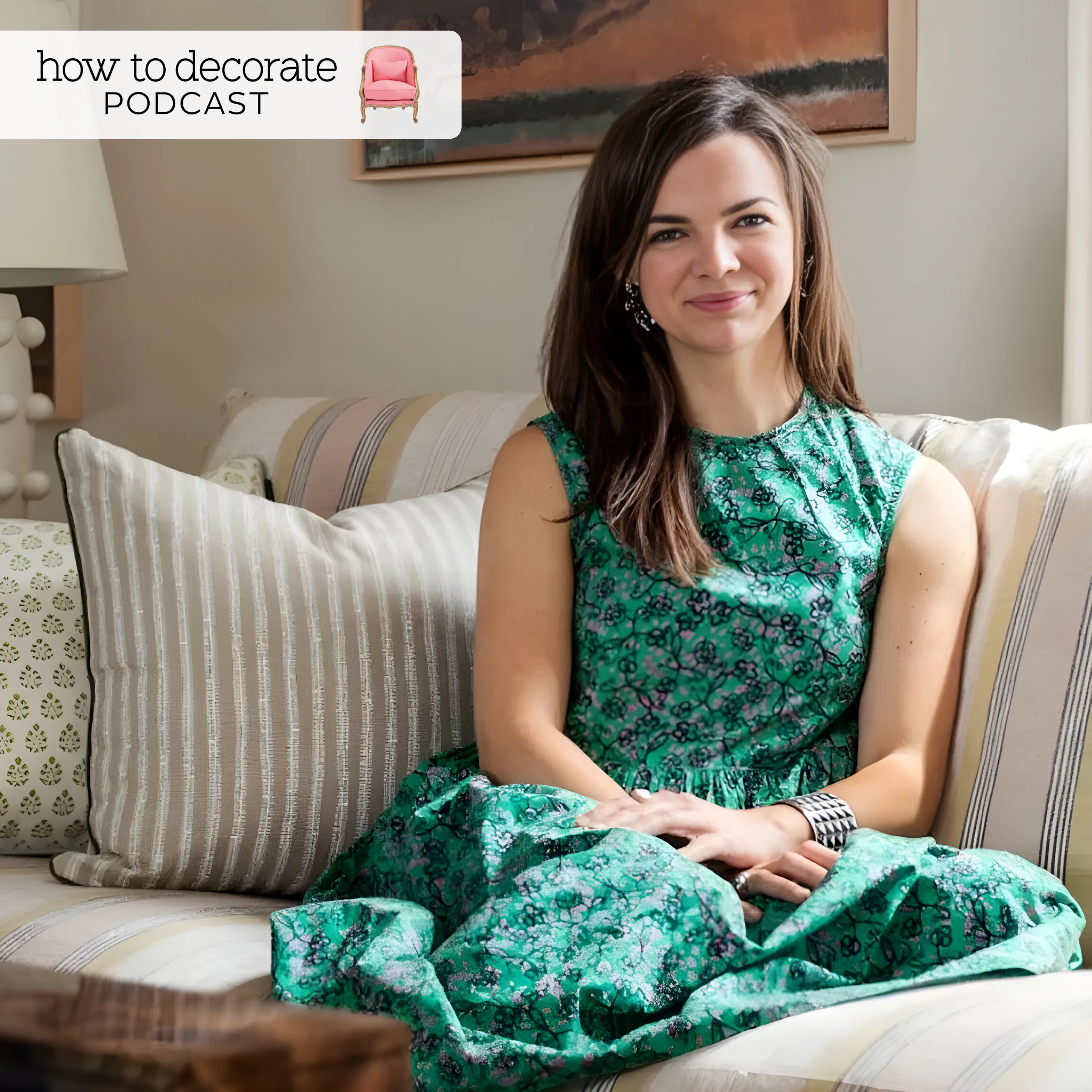
Loading summary
Transcript90 lines
- [00:02]
A
Welcome to how to Decorate from Ballard Designs, a weekly podcast all about the trials and triumphs of decorating and redecorating your home. I'm Caroline, I'm on the marketing team.
- [00:11]
B
And I'm Taryn and I'm a product designer.
- [00:13]
C
I'm Liz, I head of the creative team.
- [00:15]
A
We're your hosts. Join the expert team at Ballard Designs for tips, tricks and tales from interior designers, stylists and other talents in the design world.
- [00:22]
B
Plus, we'll answer your decorating dilemmas at the end of each episode.
- [00:25]
C
We love answering your questions, so don't forget to email us@podcastallardesigns.net now on with the show.
- [00:34]
B
Morning decisions. How about a creamy mocha Frappuccino drink or sweet vanilla smooth caramel maybe? Or white chocolate mocha? Whichever you choose, delicious coffee awaits. Find Starbucks Frappuccino drinks wherever you buy your groceries.
- [00:49]
C
Our guest today is Laura Keeler Purse, the founder of the New England based design firm Keeler Company. Under her leadership, she the firm creates spaces that thoughtfully connect contemporary living with heritage design sensibilities. Whether she's designing a private residence or an iconic commercial space like the Claremont Hotel in Maine, her projects are always rooted in history, rich with narrative and deeply connected to their sense of place. She's a recipient of the prestigious New England home five under 40 award and alongside her husband is the co founder of the beautiful home furnishing shop Rusticator in Seal Harbor. Laura, welcome to the show.
- [01:28]
B
Thank you so much for having me. I'm so delighted to be with you both this afternoon.
- [01:32]
C
I always love to hear people's journey into interior design. So let's start there. How did you get into interiors and where's talk about your passions?
- [01:44]
B
Yeah, it's such a great question. It's been a really meandering road for me. I my parents are originally from the UK and they moved over here just before I was born and I spent a lot of my youth, all of my youth moving around and so I think I'd lived in like 16 different houses before I graduated from high school which was quite remarkable and all over North America and when it came time to then go to college I was highly ambitious and thought that I was going to be pre med and a bio major and you know, time went on over the years. I ultimately graduated with just an art, art history degree and went into the thinking that I was going to do something sort of creative adjacent though really. I had pursued the art degree because I enjoyed painting and the sort of physical creation of things and coming out of school, I went into the art world in New York City, as, you know, you do, with an art history degree. And then I decided that I wanted to do something a touch more creative and found myself in event planning. Eventually that transitioned to fundraising in education, which is something I have always been passionate about on the volunteer side. And after a few years in that, I realized I had deviated from the creativity. And so I went back to school. I went to RISD in Providence and got my certificate in interior design. And I remember the first day going back to school. There's something really special about going back to school is sort of like, oh, I'm going to try this in a professional way versus just like, going to school for going to school. And I did something I'd never done before, which is I sat in the middle of the front row. And I remember spending the entire time sort of like, eating up everything that my teacher was saying. It was a Intro to interior design class 101. And I left being sort of like, how do I do more of this? And so I proceeded to sort of figure out how to leave the fundraising world and go full time and really jump into school. And two years later, graduated with a certificate in interior design. And having zero intention of starting my own business, a dear friend of mine reached out about a project, a renovation that she was in Boston, and asked if we would help. And I said yes. And here we are almost nine years later, so. And so I. I guess what I should probably circle back to is that, like, moving 16 different times before I graduated from high school, because I think that, you know, looking back, my parents always built a new house or renovated something. And so I grew up being dragged to, like, the fireplace supply store or, you know, somewhere to look at light fixtures, like lighting stores were so boring growing up, but I was always sort of around the sawdust of a construction site and trailing behind my parents as they were picking finishes. And my mom would let me decorate my room. And so looking back, I'm like, oh, really? Maybe it does make sense that this is where ultimately I landed.
- [05:29]
C
I love that because, you know, so much of what we. Of what we experience, you know, as little people, ends up informing who we are. And I love that kind of tying back to those experiences. And also, I think, you know, looking at your body of work, it's really interesting that your parents are from England, because I feel like there's such an English sensibility to your work in kind of the heritage aspect, the mixing of patterns, the very kind of comfortable feeling of your spaces, but you definitely bring an American modern twist to it, which I think is really fun.
- [06:12]
B
Thank you for saying that. I really resonate with the English sort of design sensibility and that idea of collecting over time and, you know, maybe sort of doing something once and then tweaking it over the year. And that's really sort of how our, we've like approached our own home. And when I'm thinking about working with clients, we're trying to bring that same level of like story and history that comes with having things that have been around for forever and were passed down and sort of landed in that space, bought and or, you know, refinished or painted to be brought into the world in a new with new life, but are ultimately something that, that's been rooted in the place for a long time. And it's funny going back to the uk, we go back all the time. My family's still there and a lot of the wonderful crafts people that we work with are over there. And you know, you go into these truly English spaces and their tolerance for the imperfection is so high. I'm always like, can you imagine if we as Americans put like a row of four square tiles with no edge piece around them as a backsplash on a sink? We would be shot, right? Like, I'd be out of business. But you go over there and it's like so charming and wonderful and delightful and everyone is, you know, walks out of the bathroom and they're like, that was so cute. And so it's that constant tension between like, how much, much of that like, imperfection can we bring to our work? And does that like American market have the appetite for? And how much of it is like, well, we, this really does need to, you know, sit extra comfortably or, you know, the, the trim needs to be perfectly placed or whatever it is, it's, it's a fun balance.
- [08:14]
C
Those details are really amazing. And so talk to me a little bit more about like some of the details you think make a space perfectly imperfect.
- [08:23]
B
One of the things that we are really lucky to often have the opportunity to work with. We work on a lot of multi generational family homes, especially in Maine, but sort of all over the eastern up and down the east coast. And oftentimes those houses come with treasures. You know, they come with this slew of things that the family's been living with or even many times when families are buying them outright, they're not inheriting them, they're still coming with furniture because the family couldn't figure out what to do or that comes with the sale. And to me, one of the my favorite places to do that sort of initial shop for a project is in the home itself and going through what's already living there and what can we keep and save. We've recently renovated a family house up here, my family. And it was a new to us house, new to our family, but it came with a lot of wonderful pieces. And part of the charm was going through and being like, okay, which twin beds are going to stay and do they stay, you know, are we going to paint them, do we refresh them or are they, you know, brand new? And, and oh wait, we've kept these ones and they had a custom size mattress that came with it. So I guess we're keeping. But it is for me, so much of that story and collecting comes from retaining the old and then being really sensitive about the new that comes in and making sure that we're allowing for things to function beautifully and have that appropriate conversation that's happening amongst the pieces. And we're very sort of layered with textiles. And so often there can be that layering that happens around the pieces themselves that have lived this life.
- [10:31]
C
What are some of the things kind of taking off of that? Like, what are some of the things that you think about when you're layering patterns or textures or kind of bringing some life and history and personality into your spaces?
- [10:44]
B
One of the things that I think really allows for us to. To be successful in the layering process is kind of thinking about the story of who is there and the reason why they're there, and then understanding the appetite for, you know, what they want this place to represent. And I'll use Maine as an example just because I'm in Maine at the moment. So much of our work is here. And our corner of Maine, Mount Desert island, is where Bar harbor is among other sort of summer classic summer cottage, classic summer village enclaves filled with summer cottages. And Bar harbor used to rival Newport in the Gilded Age for sort of summer colony. And so there's this rich history of decorating on mdi. And so we're trying to understand with our projects and our clients, okay, how traditional do you want this to feel? And are you up for all of those beautiful classic florals everywhere, the wallpapers, the sort of trim on trim on trim, that sort of more refined way of decorating a summer cottage? Or is this, does this mean to you something that's much more simple?
- [12:12]
A
Our.
- [12:12]
B
Is our use of layering, color and pattern something that we're doing in maybe a more. A larger scale versus the small scale. And so what I mean by that is, are we really looking at how these rooms play together and the layers that come within a room? And so maybe it's a little less maximalist, but we're getting those layers in a different way versus that sort of traditional approach where it really was like more is more and more and it's so wonderful and we can't get enough of it.
- [12:49]
C
It's so interesting because, like, I feel like maximalism has been such a big theme for a while now. And now I feel like the term I keep hearing is minimalism, where it's not quite over the top, full of everything, and it's not quite minimal, but it's a kind of an in between space that's a little bit more. And I think your, your work kind of fits within that where there are some really kind of modern pieces or modern colors or a twist on things that end up being layered in with things that would be traditionally maximal. Maximalism.
- [13:28]
A
I totally agree, Liz, about the minimalism thing, but I was just. I fell in love with your Northeast Harbor House, the one on your, in your portfolio. And you know, everything you said, Liz, about it, it does have a lot of layering, but it doesn't feel. It doesn't feel maximalist and it doesn't feel overwrought. And I was also struck by just how coastal it felt, despite the fact there weren't a ton of those, you know, coastal tropes that you kind of lean many, many houses kind of have within them. Not, not necessarily that that's a bad thing. But I kept thinking, why does this house feel coastal? Because I can't put my finger on any one thing that makes it feel that way. So I was curious if you, if you have thoughts on maybe what. There were certain things that maybe I, after digging in, felt like, oh, maybe it's this, maybe this. But I'm curious what you think gives your, your client spaces a coastal feel.
- [14:32]
B
When I think about coastal, it's really hard for me to separate coastal from the sort of specific location of the home. And like, what coastal. And so, you know, coastal in Hope Sound, Florida, is so different from coastal on Cape Cod and so different from coastal and on Mount Desert Island. And that Northeast Harbor House is situated right in town, just up from the harbor, peeks over the trees to the boats beyond. But you can also get on your bicycle there and you can be in Acadia national park within five minutes and up a mountain on Your hiking shoes and, you know, maybe 10 or 15 minutes. And so part of the kind of magic of being in Northeast harbor is that proximity to ocean and mountain and sort of the. The culture coastal is getting out on the water, on the boat, going and picnicking, and then it's getting. And getting outside and into the park. And so when we thought about that project in particular, I think you really. I mean, the easiest thing to do is to take advantage of the place and the outdoors and the color palette that comes from the view out the window. And I think you really see that in that house, the blues and the greens. And they're not those tropical blues and greens. They're those muted sort of main blues and greens that feel sort of tranquil on a foggy day and feel sort of bright and airy on a sunny summer day. And those particular clients are here not just in the summer. They come up in the winter as well. And so we wanted to make sure that that house felt. Had the joie de vie of being a summer house, because that's their reason for being here primarily, but had the comfort and sort of real, like. Felt like a retreat, the way that you want a winter house to feel. One of my favorite parts of that house that I think is just such a nice sort of subtle nod to the coast is there's a television in their family room that is concealed, and it's concealed by these two wave panels. They're Gracie wallpaper panels that you open them and you get, that you. Reveals the tv. You can watch football, whatever, close them, and they go away. And that Japanese wave motif, I think, speaks to what's happening outside. It also speaks to, you know, some of the collections that the clients have, and. And, you know, the sort of classic Asian influence that I think, for a lot of folks really resonates when they think about what they grew up with. And so how do you have a updated version of that? You know, you don't necessarily want your grandmother's china surrounding you all the time. Maybe you do, but how do we take sort of a piece of that, an element of that, and create an updated way of living and experiencing that?
- [17:53]
A
Yeah, I think the palette is what gives it that coastal vibe. And I was just. I just loved every single. There were so many shades of blue, and they were so muted and muddy, like you said. And I. But there were also lots of shades of green, and sometimes they sort of blended together. And so it was kind of hard in places to be like, is that blue? Is that green? There's A little bit of both. What is your. What are sort of your guidelines when you're pulling colors? Hi, listeners. If this episode has inspired you to tackle a project in your own home, we want to help with a special offer just for podcast fans. We know how exciting it is to bring your vision to life. Whether you're updating a room or starting a refresh, you'll find everything you need to create a space that feels uniquely yours. As a thank you for listening, enjoy. 20% off plus free shipping on your next order with the code PODCAST20. Visit Ballardesign.com to get started. Your dream home is just a click away. Use podcast 20 for 20% off plus free shipping codes not combinable with other offers. See terms and conditions for details. All right, happy decorating. Let's get back to the show of what works together and, you know, what's going to maybe fight one another.
- [19:12]
B
Kind of feel like anything can go. It's. It just always needs a friend. And so we're really thinking about okay if we want to introduce. And I think one of the challenges with that house in particular is, you know, our clients love blue. They also love green, and how do we not overuse them and, you know, end up with a house where you walk around and you're like, every. Every room feels the same, but. And so that you'll see a lot of different shades because of that reason. But when I'm thinking about color, I mean, we're pretty fearless with it. And to me, it's really just finding a friend for it within the. And sometimes that's as simple as a wood tone, which is going to offset, like, a little bit of yellow or a little bit of orange. And sometimes it's being a little bit more literal. We have a project that we finished a year ago in Hope Sound, Florida, that is sort of that Florida coastal, and that has a lot of those very vibrant blues and greens. Our clients came to us with a pretty fun art collection as well, and we partnered with Adira friend of mine, Hadley Powell, who owns a fine art advisory, and she helped to fill in a lot of the pieces there. And there was this constant color that we were seeing in the art, this, like, pop of coral. And so we were like, how do we pull this in? Because this feels like we're getting that, like, really fun, playful accent that allows us to celebrate where we are and why we're here. We're here because we want to, you know, get outside and have fun and be together as a family. And it's sort of, like, this energetic home. And so we really took advantage of that. Like, the sconces have the pop of coral. The pendants over the kitchen island have the pop of coral. And so it was sort of this way of getting out of that, like, classic blue and green, which we all know really jives in these places, and sort of saying, well, what else can live here? Without being too trite, I'd love to
- [21:28]
C
talk a little bit about the Claremont Hotel that you worked on. I know that's a space that Taryn, who couldn't join us today, was talking about and has just said it's like the talk of the area. It's a beautiful space. It's very different than the Claremont hotel here in Atlanta. And if, you know, you know. But the Claremont Hotel in Maine is just. It's such a beautiful space. What are some of the things that you thought about with that hotel, and what are some of the things that you thought about differently about the hotel versus a private residence?
- [22:06]
B
One of the things. So the Clermont is this. It's sort of like one of the grande dame hotels on Mount Desert Island. It's overlooking some sound sort of at the mouth of the sound. And so it's overlooking all of these outer islands. And the Hinckley boatyards are nearby. So there's all sorts of lobster boats, sailboats, every. There's all kinds of activity happening around it. Its history is as a place that people would come year after year to spend summer, famous for its croquet courts. And it had really sort of become a little bit tired. And I was so delighted and also slightly petrified when we were approached to. To help with the interiors, because it really is one of those properties that means so much to so many people. There's generations and generations of people who have celebrated weddings and birthdays and, you know, milestone events there. And as soon as you start working on it, you realize how many more of them they are. They all come out of the woodwork. And so it was a big sort of. I felt a big weight on our shoulders to make sure that we really got it right. But one of the things. Things that I am just kind of obsessed with and I think have always been primarily due to the moving around. Growing up is this idea of place and the role that place plays within an interior and how it informs the design. And to me, Mount Desert island is a place where it has that rich history of decorating. It has that the mountains meet the sea. It has this. This sort of culture of gardening and celebrating the outside world. And so how do we take all of these different elements and create a space that is worthy of being the backdrop for multiple generations of celebrations that are going to happen and continue to happen there? And so, to me, again, the first thing we did was we shopped the hotel. And it's like. Like, okay, this dresser looks like it's just fine. Let's paint it and pop it in. But it was really so informed by what was here. And when it came time to sort of the tactical side of it, I spent a lot of time thinking about how do we incorporate things that really say Maine? So a lot of the wallpaper throughout the hotel is from Sister Parish. And Sister Parish has that beautiful home on Islesboroug not too far from us. Here. You'll see William Morris. William Morris is found in a lot of those old Bar harbor homes. You see, it's sort of vestiges of it that still live on. So really kind of thinking about how we can incorporate that and then that layered sensibility. I mean, how do you take the idea of nostalgia and, I don't know, there's like a sweetness and a sort of, I don't know, innocence to summer. And it was. How do we embody that? And I think it's colorful fabrics and prints that are playful and not being afraid of a little bit of patina. We were really fortunate to have great collaborators in the client. Their creative director, Krista Stokes, was really fun to work with, and it really kind of, like, allowed for this creative explosion to happen. You know, I think about the bar at the Clermont and the idea. It's called Harry's Bar. It's really kind of this, like, cozy. It's like the perfect bar for a foggy day. It's this cozy sort of ship Captain Y. You could imagine someone coming off the water and coming in for their drink and, you know, creating this handsome, warm space that's totally covered in these incredible collected things that Christa found throughout her journeys up and down the coast of Maine. It really is just such a delight to be able to come into a place and find a place to nestle and really sort of speak to that Maine weather and then also find a place to sort of have the whimsical moments where you just feel like you're. You're away from it all, too.
- [26:58]
C
Your work has so many, like, bright colors that kind of pair into kind of these darker, more masculine tones. And it's. There's always an element of surprise. I feel like, in all of the spaces that I see from Your portfolio up in Maine. What are some of the things that you're thinking about too? I mean, with that storied of a space, you want to use traditional fabrics, but you also have to make sure that it's super durable.
- [27:29]
A
Right.
- [27:30]
C
How do you find, how do you find that balance and what are you looking for in some of the more the durability for those pieces?
- [27:37]
B
Yeah, well, we know a lot about fire certs coming out of that project. We recently had the opportunity to work on a social club in just outside of Boston and one that has a membership that is using it very heavily. And so materials were of the utmost importance. You know, they're going in and with all of these commercial properties, you know, the, the investment is huge and you kind of get one shot at doing it. It's a sort of not going to come around for another 50 years. And so it's really, really important that whatever we're putting into that place is going to live up to the lifespan or the required lifespan of that project. And so I find that it can be helpful to use dark colors, it can be helpful to use a light pattern, like a plaid is more forgiving than a solid. And I do think patterns actually work to our advantage because they completely distract your eye. But it was really fun with the Claremont thinking about how do we, you know, our, our go tos are often like a nice linen cotton blend and everything is treated or cleanable or depending on the family's lifestyle. You know, we don't have to overthink it. And it was really fun to be challenged to have to look at these more commercially rated materials and how do we integrate them and not lose the lightness and brightness of really a summer, a summer place.
- [29:22]
A
Did you find the options limiting at all? You know, that you, as an interior designer, I feel like, especially with, you know, to the trade, there's just endless options for pattern and color and you can get custom colors and, you know, I imagine the contract options have improved a lot. But, you know, it might. Was it an adjustment?
- [29:43]
B
Definitely. It is limiting in a way that if, you know, if we wanted to go out there and use sort of everything off the roll that we wanted to, you know, with a residential house, you can, I will say that it's pretty incredible when you want something created, how willing people are to step up and make it happen and so, and really have to credit our vendors and the lines that, that we work with regularly. When we said, you know, we, this would be the perfect headboard, how do we make it happen? And how do we make it both fire rated and live up to, you know, years of use? Oh, we just print it differently and we'll, you know, we're happy to do that for you. And so I was really grateful for that. It really, that helped us out a lot.
- [30:37]
C
Yeah, I was wondering about that because you had like some of the headboards that you use are so beautiful and have that William Morris or William Morris esque design on them. But I think all of those tips are really great to think about for our own homes too. Like, and think about, you know, bringing pattern in on those high traffic areas
- [30:56]
B
or
- [30:59]
C
you know, thinking about thing materials that are a little bit more durable. Are there any other things that you would bring into a high traffic home?
- [31:07]
B
And I would say, like, don't be afraid of the patina. If you go back to that English sentiment that we were talking about earlier, nothing is too perfect. And I sort of feel like it's a joy to live with these things and truly live with them. And I have a three year old, so I'm really learning that. And it's part of the story when, you know, the mug gets left on the table a little longer than it should have without a coaster. That's part of our story now. And I will say we're pretty good with coasters, which I'm very grateful for. But I think, you know, in terms of objects and things that are really usable, we also like to just stick with your, you know, like a wool carpet is going to hold up to the test. It's going to stand the test of time. Um, and so, you know, we are always thinking about, can we buy it once, do it once, do it right. Buy something that's going to hold up, that you can clean easily and, and use materials that are, are not necessarily the, the things that are, I don't know, going to deteriorate over time.
- [32:30]
A
As you mentioned this and Laura, I love this, in your work the last maybe 15 years, there's been such an emphasis on light, bright and interiors and white. Oh my gosh. The white couch was just this like this symbol of perfection for a long time I think, you know, probably in like the 2010s and just lightness, you know, natural fiber rugs, which of course we love and all these things. But I love seeing how you're using darker pieces and darker tones, earthier tones and, and it's not necessarily dark overall. Like in the whole, it doesn't feel dark, but it's a great just message to people that hey, the, the Darker things are not. They're not bad. They don't make your room feel smaller. They're durable. They're going to give you more longevity. So the white is not the symbol of. It's not the ideal, necessarily. And you can have some fun and make some really beautiful, airy space without defaulting to just something lighter. I love seeing that in your work.
- [33:43]
B
Definitely. I mean, it feels honestly like buying a white piece of furniture feels very scary.
- [33:50]
A
Right. But it's also aspirational. You know, it feels scary, but so many of us, you know, I guess, aspire to. To have that.
- [33:59]
B
Yeah, that's so true. And I hadn't thought about it that way, but that's absolutely right. Like having that level of order and cleanliness in your home. Home, such that you can have a white sofa. It's quite. Yeah, that's not.
- [34:11]
A
But why, you know, it's not really the reality. Such a strange fixation, I think, the culture the design world has had. And so, you know, not a. Not a white couch in your portfolio.
- [34:28]
B
No, that I. We veer away from them. And it's for that reason. Right. We're always trying to create a way for the sofa to be as user friendly as possible and, you know, hide all of those things. And so, you know, to go back to that Northeast Harper project, like that sofa in that room, it's a striped Schumacher fabric. It's a very small stripe. It has a little bit of a stained ground to it. And so it is forgiving. It's not going to show anything anytime soon. But it's also a little bit visually interesting. I. You know, for me, it's like, if we don't need to use a solid, let's not use a solid. Right. Like, let's add. I am here. Sometimes we'll be designing and we'll have to pause and be like, oh, we need a solid in here. You know, every. All of a sudden we've got so many patterns, and it's like an explosion and they all work together. But maybe there's just a moment that we need to, you know, sort of find for our eyes to rest. But I think those. Those little stripes and things like that can be your best friend when it comes to finding a way to add just enough visual something to make it so that if there is a small splash of something that ends up there, you're not being drawn to it every time you look at that piece of furniture.
- [35:58]
A
Yeah. There are also a lot of solids that are non solids. You know, it's almost. It's solid, but it's also a texture. So it reads from far away as a solid, but it up close there's really kind of a tiny stripe or a herringbone or a something to it, which is always a.
- [36:19]
C
You tell yourself no one wants your college era band tees, but on Depop, people are searching for exactly what you've got. You once paid a small fortune for them at merch stands. Now a teenager who calls them vintage will offer that same small fortune back. Sell them easily on Depop, just snap a few photos and we'll take care of the rest. Who knew your questionable music taste would be a money making machine? Your style can make you cash start selling on Depop, where taste recognizes taste.
- [36:50]
A
I think it's something that designers do really well, that maybe the average person decorating their home, we don't think to do that because, because it's such a, you know, detail, it's such a kind of thing, something that you really have to observe from up close, you know, that you kind of. I don't know, I find myself forgetting.
- [37:13]
B
Those can be some of the best fabrics. I mean those almost like Chanel weave fabrics that have four or six colors in them. And you can design an entire room around one of those. Like they can be your absolute best friend in often cases because they give you that common thread to then string the entire space around. It's like, here's your color palette, now go. And you haven't created that visual chaos with a large scale pattern or whatever it might be.
- [37:44]
A
You were talking about all the different homes you lived in growing up. 16, I think you said. And I was curious if there are any pieces in your own home that have come from, you know, that you've acquired from there. And did you reimagine them and how did you reimagine them?
- [38:01]
B
There's a lot of things still in my own home. We have a coffee table that I am ready to part with, but it works and now has, you know, three year old milk rings all over it. So it's, it's there for the moment. I, as I got older, my mom did a beautiful job of allowing me to participate in the decorating process. And I think I was sort of end of middle school, early high school when we decorated a house in Connecticut or she decorated a house in Connecticut. And I had a little bit of say in my bedroom and the question came as to what we were going to do with my bed. And there was a store that had recently opened and it had this floor model of this metal bed that had these beautiful flowers all over it. Sort of a sponge painted metal bed and these floral details. And that's now in our guest bedroom. I can't part with it. It's such a pretty piece, and I feel really grateful to have it. And it's one that I hope will stay with us for forever and get passed down. And then we have, you know, all sorts of various other things that, that, you know, are waiting for bigger places or other places. But, you know, that moving definitely helped. And then my mom likes to take things back every once in a while too. And that's always a conversation. I know we had these incredible chairs in our living room in Boston. And when parents renovated the our family house up here, they said that they, they needed those back. And up they came to Maine.
- [40:04]
A
And, well, that gives you an opportunity to pick something new.
- [40:07]
B
Exactly. Redecorate. Right, Exactly. Now we have exactly what we want there. So it was a win. Win.
- [40:13]
A
That's great. Do you find there any similarities between some of those houses you grew up in and. Or maybe the way even your mom decorated them and the way you do now?
- [40:24]
B
Yeah, absolutely. My mom is. Loves color and also loves pattern and I think loves color in its, like, most saturated form. And that, I think, has really resonated with me in that there's this fearlessness about when we're putting together designs, whether they're saturated or whether they're pattern filled or whether they're sort of like, I don't know, dark and moody. It's sort of this, like, okay, we're heading in this direction and this is just where we're going. Because I think she always had that and brought that to our homes. We lived in Montreal at one point, this beautiful old house. And she decorated the living room with these fabulous silk drapes. They were bright pink, very large scale. Check. I loved them so much that she made my prom dress out of the same material my senior year in high school. They're really incredible, but they're tall ceilings, like really just these fabulous, fabulous drapes and something that everyone would walk in and be like, oh, my gosh, the drapes, the drapes. And I think she just had this ability to say, this is what I want in here and this is how I want this to look. And I don't care what anyone else is things. It always looked incredible. It was never. It was, you know, her eye, I think, is really the thing that trained me. But. But it's not always.
- [42:00]
A
How did, how did you even have time to move and 16 houses. I'm like, how did you even do that growing up and decorate? It's taken me five years and I'm not even half decorated with my own house.
- [42:14]
B
I will say some of the houses we were living in because they were. They were temporary while the houses were being. Being built or being decorated. So there was a little bit of that kind of moving. Not.
- [42:33]
A
I'm impressed by her, by their energy. I mean, I know, gosh, right.
- [42:37]
B
They love a project. Oh my gosh. Absolutely love a project.
- [42:41]
C
And it sounds like they still love a project.
- [42:42]
B
Still love a project. Yes. I don't know. I think they're done. But it's very possible that there's something around the corner that we don't know about.
- [42:52]
A
What about you in your home? Do you. Are you in a place that you'll be in for a while or are you.
- [42:57]
B
We are not. We. We. Well, I. Well, who knows? We have a. A wonderful little house in Boston that we've lived in for 15 years. And so it's really seen all of the phases of kind of like, I don't know, post college to. I don't know what I would call my current state, but I had a milestone birthday this year that made me feel old. And we do know that we will ultimately be moving to my husband's grandmother's house, which is a really beautiful spot that has been in his family for forever. And so we know where we will end up. But at the moment, we're in this very snug little space that I don't want to leave because it feels just like home. And so it's a. It's a cozy little spot. What about.
- [44:02]
A
You said you have a three year old?
- [44:04]
B
Yes.
- [44:05]
A
How has that evolved your approach to your own home?
- [44:11]
B
Well, there's more of a tolerance for things not being right. I am constantly paranoid around things like crayons and permanent markers. I refuse to decorate around the possibility of him destroying things. So we just redid our house in Maine, and so that was done with the idea that he's gonna live in it too. But I did not sacrifice on any of the choices that we'. Made. I just decided that we're all going to cohabitate and, you know, do it politely. But that might be idealistic. But one of the things that I haven't figured out and if someone has, if they could tell me is the toy storage is just. I just don't know. Yeah, I don't.
- [45:07]
A
No, I'm kidding. Don't give up. But it's. Yeah.
- [45:11]
B
And like, training him to put everything back in the right place. And I. I'm like, what kind of labels do we need? Are they handwritten? Do they have actual pictures of the little things on it? But that is definitely the bane of my existence. There are just toys everywhere and. Yeah, that's.
- [45:30]
A
I feel you. There. I am counting down the days until we have no toys. I'm like, I can't wait till I can get rid of this play kitchen in my living room. Exactly.
- [45:41]
B
Exactly. This is supposed to be a living room, not.
- [45:43]
A
Yeah. As far as play kitchens go, it's good looking. Um, no, it's. That's a great question. I. I think if you don't. You know, I don't have a. I don't have a playroom. So that is a real advantage for. For people who do have one. Because you can kind of close the door, focus it in one area. Yeah.
- [46:05]
B
Yes. We don't have a playroom either. Maybe this is our challenge. Is the solution is the playroom.
- [46:13]
A
Yeah. The problem is that I often find that kids don't want to play in the playroom.
- [46:17]
B
Yes.
- [46:17]
A
Because it's messy and there's Jun everywhere.
- [46:20]
B
Yeah. And so then the toys creep and then.
- [46:23]
A
Yeah.
- [46:23]
B
Yeah. We end up with every.
- [46:25]
A
Can't help you there.
- [46:28]
B
Shoot. I was hoping.
- [46:30]
A
Well, it was just a delight to get to browse through your portfolio. It really was. And again, I want to move into that house in the northeast. Oh, so beautiful living room. I just. I need that.
- [46:48]
B
I love that project. Those are very special clients, too.
- [46:52]
C
It's been a wonderful talking to you, and can you tell our listeners where we can find your work? Follow along and see all of the projects that we've been talking about today.
- [47:03]
B
Thank you. This has been really, really special, and I've really enjoyed my conversation with both of you. I hope you'll come see us in Seal Harbor. We're Rusticator. Our store is open May through October and is just a lovely spot to pop in and visit. And you can find us on Instagram and the stores Rusticator Shop and the design businesses, Keeler Company.
- [47:30]
C
Thank you so much.
- [47:31]
B
Thank you.
- [47:33]
C
And that's our show.
- [47:36]
A
And that's our show. You can find all of the show notes on our blog howtodecorate.com podcast to
- [47:42]
B
send in a decorating dilemma. Email your contact questions to podcast at ballarddesigns. Net so we can help you with your space.
- [47:48]
A
And of course, be sure to follow us on social media at Ballard Designs.
- [47:51]
C
Don't forget to subscribe wherever you get your podcasts so you never miss an episode. And please leave us a review. We'd love to hear your feedback.
- [47:58]
A
Until next time, happy decorating.