Loading summary
Transcript121 lines
- [00:00]
A
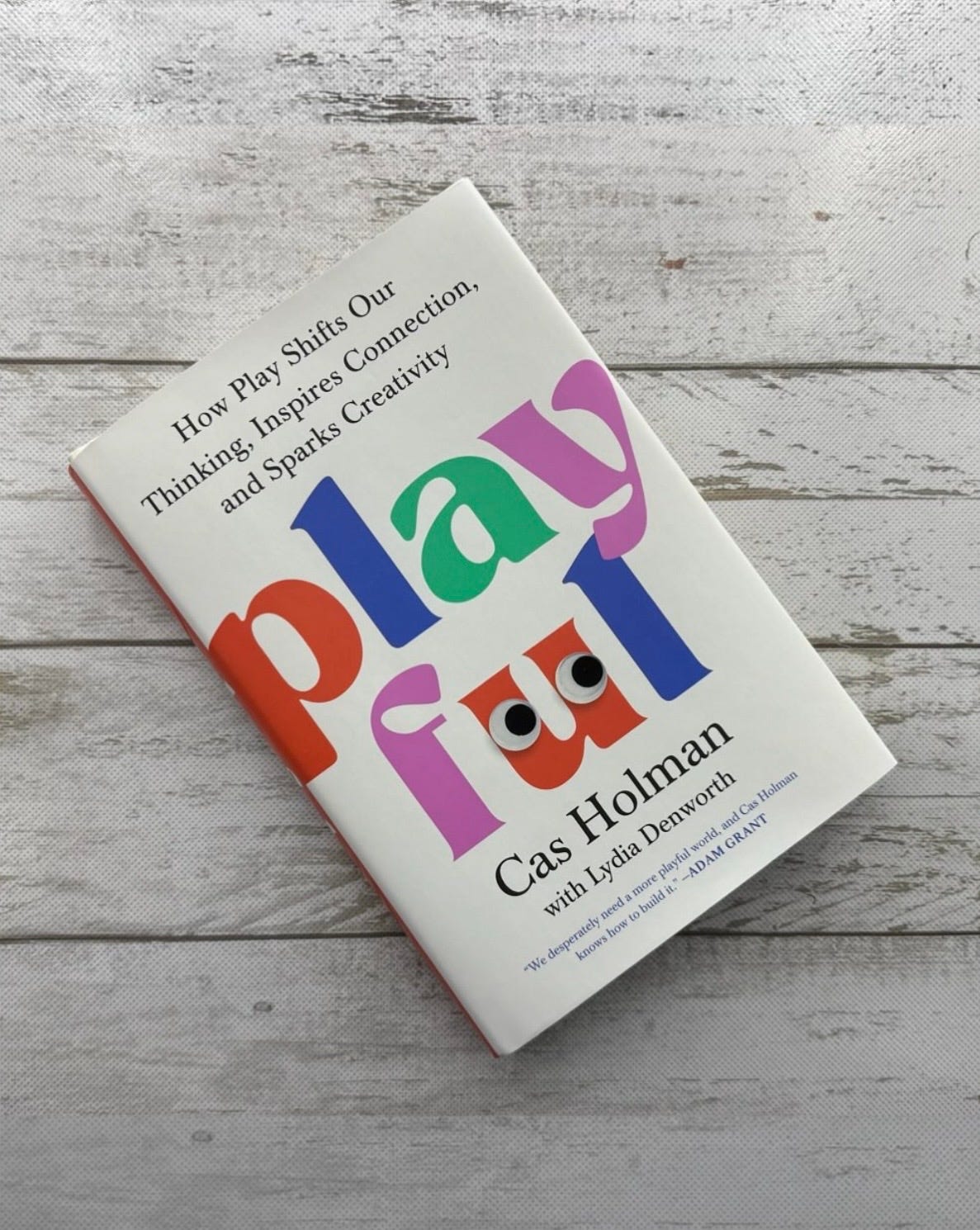
Hi, everyone. This is Katherine Price, and this is the how to Feel Alive podcast. And I'm absolutely delighted about the conversation. To tell you about the conversation I'm about to have, I'm here with Cass Holman, who is many things, but one of the things she is is the founder and chief designer of the toy company Heroes Will Rise. She's a former professor of industrial design at risd. She's worked with companies around the world, including Nike, Disney Imagineering. I don't understand the difference between that and Disney, but I'm going to hold off on that question. Lego as well as art museums around the world. But the thing I'm most excited about is that she's the author of a new book called Playful How Play Shifts Our Thinking, Inspires Connection, and Sparks Creativity that is out now. And Cass asked me if I would blurb this book. And I read it and I loved it and I blurbed it. And then I said, can I please talk to you when your book actually comes out? Because I really want to learn more and meet you because we've got a lot in common. So, anyway, welcome, Cass. I'm so excited to get to have this conversation.
- [01:02]
B
Thank you. Thank you so much. I'm really happy to be here. I'm also such a fan of your work and your thinking and the way you get ideas out into the world to inspire people to proactively help themselves. Be well with joy.
- [01:16]
A
Be well with joy.
- [01:17]
B
Thank you for that.
- [01:19]
A
Yes, we should all be well with joy. That could be a goal. There are many different things I'd like to talk to you about, but I thought that we would focus on three, because obviously your work has related a lot to kids in the past. But I don't want to talk about kids. I want to talk about adults. And so what I'm hoping we could talk about today is how you define play, because I think that that's something that adults really struggle with, especially when it pertains to themselves, why you think it's so important for adults and why it's so hard. So I guess that's two things in one. And then I want to talk about some ideas you have for how we adults actually can do this, because that's something I come up with, come up against all the time when I'm talking about fun or just in conversations with people. And also for myself, I want to learn from you on this.
- [02:09]
B
Adults, I think that we actually play quite a bit more than we think we do or give ourselves credit for. And I think for the most Part, we don't necessarily know what adult play looks like. Right. Which is part of why I think we play in ways that we might not have defined as play previously. There is like a kind of known. A couple different kind of taxonomies of children's play. But in the book, I define adult play because I do think it is different than children's play. And I think as adults, it isn't a matter of like tapping into your inner child in order to find your play. Like, I want people to play where they are right now. I want you to tap into your inner play as a 42 year old and find out what your play is right now. Like how play can be something that can help you be, you know, feel joy, celebrate, recover, build resilience, feel a sense of agency or like I mentioned, like maybe some sense of control over some part of your life in a fairly uncertain time. So. Yeah. So to answer the question, I think adults play in, in a lot of ways. And, and, and the, the type of play that I'm talking about is free play or the type of play that I kind of advocate for and I'm writing about in the book is free play, which is play that is a set of behaviors that are freely chosen, personally directed, and intrinsically motivated.
- [03:47]
A
I think you also describe it as. There's no planned activity and no predefined outcome. A moment when we got. Sorry. A moment where we did what we wanted, got caught up in it and didn't want to stop. So can you give a couple examples of what that free play looks like in children and then also in adults? Because I know in the book you have a really interesting prompt when you're asking people to reflect on some of their own childhood play memories and that those often lead to memories of free play. So can you give us a couple of concrete examples and kind of walk us through what that exercise might look like if anyone wants to try?
- [04:19]
B
Yeah, and one thing that's helpful to understand is kind of just, I'll differentiate the difference between intrinsic motivation and extrinsic motivation, because these do. Yeah, yeah. It's very critical in free play. And it's a. And it. And it kind of helps you understand why free play is important right now. Like why, why now free play matters so much? I think we're all not just children, but adults as well. We're all pretty out of touch with our intrinsic motivation because not just like the way that school works is very extrinsically motivated. Right. Like, instead of learning because it's fun and we're curious and excited to explore and experiment. We learn because we want to get an A. Right. And we want to get a bunch of A's or we want to get good enough grades that then we move on to the next grade. So those are all extrinsic motivators, things like grades, taking tests. Right. So we learn to attest. So it's all very outcome based. But we also like increasingly we move toward being good at things, being successful. We prioritize kind of efficiency over process. Right. If something takes longer, like we learn to do things the kind of the right way, the efficient way. We prioritize productive over, you know, dilly dally, heaven forbid. Right. And all of these things like what we're, what we're moving, shifting away from in, that is play. Right. It's playful to kind of be curious and, and poke around at some things instead of just kind of getting straight to the destination. Right. Or like take a new route because it's prettier. Like how often do people actually do that? It would take 10 minutes longer. Like no way you're, you're going to take the most direct route, even if it's like, you know, loud and concrete. Right?
- [06:06]
A
Right. Yeah. Don't follow the Google lady. You just gotta follow.
- [06:11]
B
And even I think with adults, like even things like our step counters, like those are extrinsic motivators. It's adding an extrinsic motivation to something that like could just be walking because it makes your body feel good. Now we walk because we have want 10,000 steps. So we're disconnecting ourselves from what do I want, what do I, what, what? Like how will I get it? And like, how can I figure out like what it is that I need and get it for myself? Right, right. And very often that can happen through play. And so, so you ask. So with children, children are, they are wired for free play. And, and they, and they will do it automatically. They are curious, they want to touch the thing, they want to smell the thing. They have to taste senses to learn about everything all the time. Like that playing is learning. It's all same, same, right. They just like are hungry for all of it to experience the world.
- [07:14]
A
So kind of explore it just for the sake of exploration.
- [07:16]
B
Exactly.
- [07:16]
A
Predefined outcome. Right.
- [07:18]
B
And because it feels good to you think about how exciting it is when you like discover something new or you find the, the lizard under the rock. Right. Or you like, you know, see the person in, on the subway, start to sit, you know, whatever it Is whether you're a city kid or a country. Like there are moments that are just like new discovery and they're infinitely exciting. And it's not about. And now I'm gonna name the lizard for the test and then I'm gonna get an A so that every. So then in school we slowly shift from intrinsic to extrinsic motivation. We do things because we're good at them. Maybe you know, by sixth grade, if we're not gonna star on the soccer team, then we stop playing soccer whether or not we love it.
- [08:03]
A
Right, right, right. Or singing or whatever. I mean, exactly.
- [08:05]
B
Or like, wow, you're not really that coordinated. So we're going to take you out of ballet and try chess club instead, you know?
- [08:11]
A
Right, right, right.
- [08:13]
B
And, and so we, we start to like understand our value as what we're good at. Right. Which isn't to say it doesn't feel good. Like I also, I catch myself all the time being like, oh, that doesn't. Maybe I shouldn't, you know, like it feels good to be good at things because I think because we came up like this, but it also feels good to just do things for the sake not you're successful. Right. Part of it is, is kind of reframing success is the goal of a 10 year old playing soccer that they become a professional soccer player or is the goal that they like have fun, learn conflict resolution, run around and play with some with their friends, like start to understand impulse control. Like I, you know, all of the things that are going on are the, are also. So this kind of when we reframe success and we can do that as adults too. Right, right. That the, the goal isn't maybe to, you know, do the hike in record time. The goal might be to be outside and you know, chat with your friend and if you slowed down a little bit and got less annoyed because she's walking really slowly.
- [09:20]
A
Right.
- [09:20]
B
Then you could have. Right. So reframe. Reframe success as you know.
- [09:25]
A
Huh.
- [09:26]
B
Wait, what are we actually doing here? This is the once every three months that we hang out together. Let's just take it down a notch. Forget about the top of the hill and like have a nice hike together. Right, Right, right, right. Take a walk.
- [09:38]
A
Right, right. I really like that. Switching. Yeah.
- [09:42]
B
So then. So that's a little bit the difference between intrinsic and extrinsic motivation in adult free play. I think quite a few of us could use a little more tuning in to kind of. Huh. What is it that I feel like I need right now? Do I need to do something quiet or do I need to maybe move my body around more? Right. Like we're like, I feel, let's see, like, do I need to organize the silverware drawer? Do I need to just go jump around? You know, so there's, there's kind of like first step is just like kind of tuning in. Like, what, what is it that I, that I need?
- [10:23]
A
Well, I think that's a really important point. One of my favorite parts of the book is when you talk about how a lot of adults, when they hear the word play, and I get this response a lot when I talk about fun, they kind of assume that they need to play in the same way they did when they were kids. And if that's not fun, doesn't feel good, they think I can't be playful. And you point out, well, it makes sense that as a 42 year old or whatever, a 51 year old, that like, maybe you don't want to play with an action figure dog, whatever, you don't want to play with a stuffed animal in the same way. And you also talk about how people confess to you in hush tones that they don't really like to play with their kids a lot of the time, which I totally hear because I never was really into make believe play. And like when my daughter asked me to do that. Yeah, but you just, you, you point out that even though you don't love the term developmentally appropriate, the reason that doesn't feel good to us as adults is that it's not developmentally appropriate for us. That's like not actually what. Yeah, how we want to be playing. So it's like, how do you tune in as an adult to what play means to you now? Right. And I think what you're saying is one of the first ways to do that is ask yourself what do you want or need to do in this moment without any kind of external goal, Just like what do you want and need? That's, that's a way of having a playful attitude, if I'm understanding you correctly.
- [11:36]
B
Yeah, exactly, exactly. And, and maybe it relates to what your play was as a child. You know, it might be like the grown up version of make believe where maybe you like, you know, join an improv class or you just kind of like let yourself daydream into some. I call it a possibility play.
- [11:55]
A
Oh, that's interesting too, because I love fantasy real estate. Had never thought about that as make believe play because I don't feel comfortable doing traditional make believe play like charades or like you know. Oh, yeah, but that's interesting. Yeah. And I love the idea of tapping into your inner playfulness by just making a practice of pausing and asking yourself, like, what do I want and need in this moment? Like, what would feel good is also a thing. I think you're suggesting that we ask, like, is it really going over and checking your email with this 5 minute break, or is that you want to go around, stretch or, you know, dance or do look at the sky, whatever it might be.
- [12:31]
B
I call it attention play. And it's kind of like, you know, like, so either daydreaming in general, but like people watching and imagining things. I, as an industrial designer, I like, look at. I find details of places or things that are around me and try to understand how they were made. Whether or not I want to be doing that. That's often what my attention is doing. So there's this like, kind of the, the play of noticing that I think happens when we, you know, don't habitually go to our, our phones, you know, and say, rather than escaping into this, rather than escaping the world around me, I'm going to hang out in the world around me and notice it and have some attention. It's quite rich and it helps me feel connected to it, you know.
- [13:21]
A
Yeah. And there doesn't need to be a point to it. Right. Like, I grew up in New York City and I remember coming back as an adult and realizing, wow, I never really looked above the second story on all these buildings. Not because I was looking down on my phone, we didn't have smartphones then, but just I hadn't. And then coming back as an adult and just almost making a game for myself of just looking, you know, above the second story and just seeing all these amazing architectural details, it's not something I would immediately have thought of as that's a way of playing. But it's interesting, having read your book, I now think, you know, that's like a little game you play with yourself or just.
- [13:53]
B
Yeah.
- [13:53]
A
Way of looking at the world that's not so outcome focused. Like there's no goal there. You know, I'm gonna. And curiosity actually was a word that you brought up again and again and again in the book. And I was, I was curious about your thoughts on curiosity because I've realized in the past couple months for myself, that's one of my absolute favorite words and my favorite characteristics in people and what that, yeah. What that word means to you or why it holds such resonance for you.
- [14:18]
B
I think that someone once told me, if you're. If you're interested, then you're interesting, which I think is very true and relates to curiosity. And I just think that there are a lot of really exciting, interesting, lovely, wonderful things around us. Like, the world has a lot of love in it. And I think that we. We get there by curiosity. We connect to it, we find it, we see it and remember it by being curious with each other. You know, even if there's something that we. That we have a reaction to, I'll, like, try to lead with curiosity
- [15:01]
A
in
- [15:02]
B
order to, like, you know, there's probably something there that I'm. That I don't understand. So let's see if this, you know, let's. Let's. Let's go a little deeper and be curious about the thing this person said or where they're coming from in. In that statement. Yeah, and. And I also think, like I said, there's. There's increasingly. We're. We're giving. We're given ways and we're choosing to escape the present, the place we're in, not like literally the place. And I, and I. I think that it often relates to a state of overwhelm or just kind of people feeling like it's all a lot and, and so turning inward in order to kind of like, protect, which is understandable, but that can be even more isolating, which is, I think, part of the problem. So I think that, that, you know, that again, with kind of like attending to looking around and noticing and being curious about what's around, you can actually help you feel much safer in it. And so the people around us, whether it's, you know, the people at the gas station or the grocery store or the subway or the bus, like, whatever your surroundings are, it's kind of all we've got. And if we aren't curious about it, if we don't want to be know it, I don't know how we'll ever be part of it or continue to, like, love it and take care of it in each other. So that's where curiosity.
- [16:39]
A
Yeah.
- [16:39]
B
Goes for me.
- [16:41]
A
Well, well, that leads me to the question I had about why you think that this is so important. Because I'm sure you get the same pushback I get from people with fun where it's like, okay, well, that sounds nice. Right? But, like, look at what's going on in the world right now. How can you possibly prioritize play and fun? And I have my answers to how. I think it's actually absolutely essential that we do. Exactly curious what you say And I'm
- [17:02]
B
curious about what you're like. You answer first. I want yours instead. I mean, yeah, play is. I think if we can play together, we can live together. And I think that that play transcends a lot of the ways that we're having a hard time living together right now. In play, we, like, we communicate without words when we're playing.
- [17:31]
A
We.
- [17:32]
B
There's. There's conflict. Resolution happens in play in ways that it can't in conversation, or it often doesn't in conversation. Again, I brought up impulse control. There's not just that we learn those as children, but as adults, we practice those. I live across the street. There's a playground across the street from me that has a lot of basketball courts. And I'm just, like, amazed at how it is rough. And these are very large adult men. And there's no fights, but there's yelling. Right. But everybody walks away fine, you know, and. And they'll. There's conflict, and it is resolved because they want to keep playing, you know, in a way that. That if that type of conflict happens just, like over a parking spot or in, you know, I don't know, all the places where we can wind up yelling at each other. It's. There's not a. There's not the incentive to. To resolve it that we have in play. Yeah.
- [18:37]
A
I mean, it's kind of ironic that you can get into a huge actual fight with someone over a parking spot, but then in a situation where it's a physically aggressive sport in the basketball or you're in a mosh pit, that. That can not cross the line to actual aggression or actual conflict because of the playful spirit, I think.
- [18:55]
B
Yeah, yeah.
- [18:56]
A
It allows people to work together in a way that. Sorry, go on.
- [19:00]
B
Yeah. And I think, to answer your question, that now, like I said, we're at a time where, like, we're having a hard time communicating in other ways. And in play, like, the more that we can like. And even that if that means, like, a block party. Right. Play doesn't have to mean that you're out, you know, wrestling together. Maybe it's, you know, different parades or holidays of things that people can come together and just be grounded in that we are all in it together.
- [19:26]
A
Yeah. I find that with fun, too. You know, it just is a very unifying force. Like when you're having fun with someone, when you're playing with them and you're laughing together, that creates a bond that transcends a lot of your differences that might show up, you know, those people on the basketball court, like, maybe they're very different off the basketball court. They're gonna read like different religions or political views or whatever. It doesn't matter because they're playing together and then they see each other as more human because they've had that play experience, which I think, I think is really beautiful. I was reading your book and like tearing up multiple, multiple times.
- [19:55]
B
Oh, that's nice.
- [19:56]
A
Yeah, yeah.
- [19:57]
B
I mean, I say that's nice usually because it means that like it's moved you in some way that was meaningful. So that's always good.
- [20:03]
A
Now that you just want me to cry a lot, I get that sense from you. So. Okay. I think we've established it's incredibly important. I mean, you also talk about it in the book as a release valve and a way for adults to gain sustenance. And I loved your quote. You wrote that being playful is critical for the well being of both adults and children. Play is how we learn to be human, how we learn who we are, how we learn to fail, communicate, love, fight, rebel, desire, build, survive. At its best, play is life affirming, soul sustaining and mind expanding. A life devoid of play is detrimental to our psychological, emotional and physical health. Could not agree with you more. It's a pretty great summation of when people are like, why does this matter? But I wanted to ask you more about specific ways you suggest that adults kind of break out of their own stayed adult selves and become more playful and play more. Because it is really hard for adults. And I know you were talking earlier about one way to approach this is to really redefine what success looks like. So go through your day and ask yourself. Like you were saying you're going for a walk with someone and you thought it was like a fitness hike and then they're going slowly and instead ask. Instead of getting annoyed at that, ask yourself. Wasn't my goal also to catch up with this person I enjoy spending time with and that that shifts your mindset? But I'd love to have you talk more about suggestions you have when adults are like, I don't know how to do this.
- [21:24]
B
Yeah, well, the, there are kind of three things which are the reframe success that I mentioned, which is kind of like, ask yourself, what is the goal? What am I actually after here? Embrace possibility, which is kind of like the curiosity thing. Right? So with the, with the hike as the example, embrace possibilities like, well, I've never. We don't really know where that trail goes, or maybe it's going to piddle out and not actually be a trail pretty soon, but let's just see. Let's see what happens. We don't know what we're going to find. Let's just try it. Right? Or even with certain ideas, embrace possibility might mean, you know, that maybe your partner or your teenager has an idea for what to make for dinner, and you're pretty sure it's going to be gross, but maybe there's something there. So if you embrace possibility and you all go into it together, then, you know, your teenager is going to be invested and everybody's going to figure out how to make this, you know, peanut butter and fish sauce concoction delicious. Right?
- [22:32]
A
Redefine success.
- [22:33]
B
Yeah, that's redefine success.
- [22:35]
A
Yeah.
- [22:36]
B
By reframing success, you're like, well, the goal isn't that we have, you know, the best dinner that we've ever eaten. The goal is that everybody's included and the teenager feels like their ideas are valid and seen. And so we, you know, and we're all going to do it together, and it's. We're going to bond and it's going to feel good.
- [22:52]
A
Right.
- [22:53]
B
And then the. The third tenant is. Is release judgment.
- [22:58]
A
Oh, it's such a big one. Tell me more.
- [23:00]
B
It's. I think this is maybe the biggest one for adults or the hardest one for adults. We are worst. Our harshest critics. Hopefully. I don't know. Hopefully there's. That's a tricky tenant. I'll just leave it at that.
- [23:15]
A
We.
- [23:15]
B
We can be our harshest critics. And we likely had, you know, quite a. A lot of us grew up with a lot of rules in our household. So we hear, you know, like, don't do that. You're going to do it wrong. You're not going to be good at it. You're going to break it. Stop being silly. You know, so there's a lot of. I call it the kind of. There's like an adult voice and a play voice.
- [23:40]
A
Right.
- [23:40]
B
So our play voice might say, go roll down that hill or go lay in the sun, or, you know, go step on your friend's untied shoelace or something. And your adult voice, mine is a little bit mischievous.
- [23:54]
A
I'm picking up on that. Yeah. I was like, don't make sure my
- [23:57]
B
shoelaces are tied if you listen. I am the youngest sibling, so I have younger sibling vibes still. But in releasing judgment, that also means trust that the people around you are not gonna judge you harshly for, you know, going and laying in the sun or making the joke that wasn't really that funny, but you tried, you know, right? Or whatever. Whatever playful, silly thing you want to do that your play voice is saying, do this thing. And your adult voice is like, you know, all of the things we've heard throughout childhood, don't dance. Nobody. Nobody wants to see you dance. Nobody wants to hear you sing. You're not good at singing. Right. And it's like, it's not about that. So releasing judgment is a. Is a big one, and I think that's the first step for adults. And it. And part of it is kind of being aware of your play voice, which is that kind of instinct that's saying, you know, do the silly thing. Sing along in the car, dance at the supermarket, brush your teeth with your left hand, because it's weird, whatever play instinct you might have. And then when you hear that, release judgment and say, like, I'm safe. I can do this. Nobody's gonna fire me for singing in line at the gas station. Embrace possibility. I don't know what's gonna come of it, but maybe people will sing along. Maybe it'll feel good and, you know, reframe. Success. Is success that I get through the line in the most expeditious way and don't make eye contact with anybody? Or is success that, like, I do the thing that might make me feel better on my drive home?
- [25:35]
A
Right. Right. Or you have, like, a moment of connection with a stranger. You reminded me in your book and with that example of a time. I actually wrote about this for my substack, but I was waiting in line. I was going tubing on the Delaware River.
- [25:47]
B
Oh, fun.
- [25:49]
A
I think so.
- [25:50]
B
Yeah.
- [25:50]
A
See? Bald eagles. But we were waiting on this, like, hot afternoon for the school bus. They would take us with our tubes. And I forgot how the Macarena came up. You know, it does in situations like that. And I was, like, trying to remember all the moves for the Macarena, and I couldn't get through this particular spot. And then I had this kind of aha moment where I'm like, I'm surrounded by other women my age who came of age in the early 90s, right. And I'm like, yeah, they know the Macarena. And so I asked one of them, I feel like you would have enjoyed being on this line. And all of a sudden, two of us are trying to do the Macarena, and then another person sees what we're doing. They get involved. Someone pulls it up on their phone, and before long, like, this. This experience of waiting in line for a school bus, which Took forever. Turned into a fun communal dance party, you know, and the bus pulled up, and by that point, we'd kind of forgotten that. We were annoyed that it had taken so long.
- [26:39]
B
Yeah.
- [26:39]
A
Because we found that moment of fun. And it also reminds me of something that came up again and again when I was talking with people about fun, which I think you definitely talk about as well, which is this idea of rebellion and about breaking the rules of supposed, you know, responsible adulthood. Like, just a little bit. He's like, who says you can't do the Macarena while waiting for a tubing bus?
- [26:58]
B
Right?
- [26:58]
A
Nobody said that.
- [27:00]
B
Right. And who are you impressing by being too busy to look up from your phone on a Saturday?
- [27:05]
A
Yeah.
- [27:06]
B
You know, there's this weird. I catch myself doing too. I'll be like, everybody's really busy. I should be busy. So busy waiting for the subway. I need to be busy looking at my phone. Like, busy, busy. It's like, no. Who. How did we.
- [27:22]
A
What.
- [27:23]
B
When did it become a bragging right to, like, right. Not get sleep, not have a weekend? Like, who wants that? Why is that what we're after? That's not fun.
- [27:32]
A
That does not sound fun.
- [27:34]
B
Yeah. So that's a great example. Like, yeah, who said you're supposed to be serious while waiting in line for a tubing bus?
- [27:41]
A
You know those rules. Nobody written down.
- [27:44]
B
It doesn't exist.
- [27:45]
A
It's. It does seem to me that a lot of it comes down to curiosity and, like, asking, like, you're saying, like, tune in to yourself in this moment and try to find that play voice, which might be very, very soft at this point for adults. Right. Do you have any suggestions for how people can start to even find that voice again?
- [28:04]
B
I think that play memories are really powerful.
- [28:09]
A
Okay.
- [28:10]
B
And that's kind of like, just remember some part of your childhood play and tell somebody and see what it brings out in them and kind of talk about play memories. You know, what you did? Like, Like, I think, yeah, just, like, think back. Think back to a time. You know, kind of close your eyes. Think back to. To some. Some part of your childhood. Maybe, you know, think of, like, okay, what about in this house? Like, maybe if you moved, like, maybe. Or maybe it's like your backyard, but usually just, like, think about a time you played. People will. Will have things and. And when I'm with groups and I ask them to do this, and then we kind of talk with each other and kind of share as a group what resonated or was there anything in common? What was some of the themes or overlaps in the. In the memories. It is so often play that there were no adults around. There's rarely a toy or, like, a thing. And it's fairly often like the kids are alone. Like, they're in a fort under the stairs, and they don't remember what they were doing, but they just remember, like, being there, you know, for what felt like hours. Right. Or they're in the backyard with a hose making some. A waterfall, Just, like, pointing the hose at things or arranging a bunch of sticks, like making tree forts for hours. And, you know, people say, but what were you doing? It's like, I was playing. Like, playing is the thing that you're doing. It was nothing I was do. But it was really important. Right? Yeah. Like, you remember how important it felt and how good it felt. I think that that'll help kind of like connect you to. To again. Like I said, like, that. That it's formative. Yeah. And. And probably start to like, spark some mem. Other instincts and memories that will come up. And again, it doesn't mean that you have to go collect sticks and make a stick for. Or like a little fairy fort in the backyard. It might mean, like, your version of that now might be tinkering in a wood shop, you know, or arranging your house. I was talking to somebody who is an interior designer, and she was like, oh, my God, I never realized, like, as a kid, like, the play memories she kept coming up with were all, like, arranging little things, like making a little house for the squirrel in her
- [30:46]
A
backyard or, oh, my God, my daughter.
- [30:48]
B
That's like arranging. Yes. And now she's an interior designer. I was like, of course you are like. And now that's her play. Like, she loves collecting things and arranging things and putting this with that and seeing how it changes the way a thing feels by moving it, you know.
- [31:02]
A
So, yeah, that also suggests that we might have. We might already be playing in ways we don't realize we're playing.
- [31:08]
B
Right, exactly.
- [31:09]
A
Which is important as a starting point, I would think, is like, recognize how you're already playing.
- [31:13]
B
Yeah, exactly. I'm also a fan. I'm a fan of all of the ways that adults play. It can be organized sports and video games or, you know, going to happy hour. I think those are the most common. The things that come up when I talk to, like, how do you play as an adult?
- [31:27]
A
They.
- [31:27]
B
They go to. They think very literally about it. They're like, well, you know, I pay. I play, you know, pick up football. I guess I go dancing with My friends, like going to the bar is kind of playing. Or they'll say, you know, I have video games or I play wordle on my phone. And those are great. They're play, but they're not free play.
- [31:49]
A
You know, I think it's interesting to think about the difference between free play and traditional play. I don't know what the right word is there, like organized play for adults. And like you're saying neither is. It's not like organized play is not a helpful thing or a fun thing either. But I was just thinking, I mean, you bring up some of these examples in the book, but like, you know, creating a ball, creating a game with a ball and two friends, but not organized sports. Like just making up a game is free play, but going to play the basketball game, that's not free play. Or I was thinking context. Like I play a lot of music and my favorite times of playing is just playing with friends with no defined outcome and no purpose. Like not practicing forever a performance, but just like, let's see what comes of this, you know?
- [32:31]
B
Yeah, maybe that's great. Going in with a playful mindset.
- [32:34]
A
Yeah, yeah, Playful mindset. I feel like you'd appreciate this. Recent, like my strongest recent play memory. You're one of them. I was actually heartened that I have recent play memories. I was like, oh, good. But my husband and I organize a camp for friends every summer and they should know that Cass lived at a place she called camp fun for 10 years. That was like literally a camp. It was like, we clearly should be friends, but we organize a weekend every summer. And this summer we were playing a game that we made up and it's called two balls for obvious reasons. It's like, just take two balls. You throw them at someone as they try to jump in the pool and they try to catch two balls. That's the game. You know, we played that for three hours, adults and children, just non stop. And at the end of it we're like, what just happened? It was 2:30, now it's 5:30. No waning of enthusiasm, just two balls over and over and over again. And I was thinking of that when I was reading your book because I was like, oh, we free play. That's free play. Like, yeah, we were just having a ton of fun.
- [33:35]
B
Yeah. And like kind of like improv, right? Like everybody was a yes and moment and people just took in and ran. I bet that it kind of evolved, right? Did you evolve?
- [33:44]
A
Yes.
- [33:45]
B
You add new rules, like maybe it gets a little bit more. And this is also Related to the saying is easy is boring. Like as soon as something isn't challenging, we kind of like it starts to. To piddle out. That's when you got to add a new element and be like, okay, now only one foot on the thing when you jump off. Or like two. They have to come from different direct. Right. We like add more and more rules to it in order to keep making it challenging.
- [34:11]
A
Yeah. This counselor is like, okay, well now you need to line up in a row and you need to catch a ball and then toss it to the next person. And then toss it the next person. Three balls caught. So that's so fun. But that touches on one thing and we're totally running out of time because said I could talk to you forever. We're gonna have to meet in person. But. But I, but I did notice I was thinking about play and like one reason that it struck me that adults don't play is that even though play is this like pressure release and it feels so easy once you're in it. It actually takes work to set up the environment or get into the mindset for play. It's so much easier to just stay on your couch at home alone and scroll versus looking at. Like you were just saying, look around your environment and see what there might be that invites you to play. You know, I think there's like an interesting. I don't know if it's an irony, but it's like setting up conditions for play does take a bit of work, but it's so worth it. And I don't know if you have any thoughts on that, but it seems especially true for adults where we're not in a play mindset a lot of the time.
- [35:10]
B
Yeah. And I would say the setting up or the creating the conditions, it's not a stuff problem. It's not like you're. If you have a bouncy couch and a tramp. You know what I mean? I mean it wouldn't hurt, but we do. We have very low ceilings and a really bouncy couch. So the 10 year old. It's like getting close at this point. But there I. It's. I think what's hard about it is that it's about having some brave conversations. And this kind of relates to releasing judgment in order to play. In particular free play. Because free play touches who we are. We have to trust and we gotta. We have to trust the people around us and we have to trust ourselves. And so I think that actually the. What's hard about playing for adults is just that Is. Is either having a conversation with somebody and saying, like, hey, I'm gonna do something that seems a little bit weird, like, do you want to do it with me? You know, like the plantation.
- [36:21]
A
Yeah.
- [36:22]
B
Yeah. And. And we. In the book, we kind of. This kind of was coming up mostly when we were trying to figure out. We kept. I kept coming up against and having conversations with people where they were saying, you know, if I have a couple drinks, then I can play.
- [36:38]
A
Yeah.
- [36:40]
B
And I was like, okay, well, what is it? You know, And. And everybody has their own relationship to alcohol and substances, for better or for worse. But if. If there's, like, what is it about, you know, that lack of inhibition that facilitates play and, like, how can we get there without it? Right. You know, like, without being a teetotaler. Like, there's got to be a way that we can access that. That, like, shedding of inhibitions without the couple of drinks off. Also, because, like, I want to be playful in the morning, and I'm not going to have a martini for breakfast during the workday.
- [37:18]
A
Yeah, exactly.
- [37:19]
B
Yeah. Like, I want to be. I want to be playful when I'm, like, driving three hours for, you know, to go somewhere with the kids, and I'm not going to be, you know, smoking a doobie for that. So, like, how do I access, like, the. The. The. The trust or the, you know, release of judgment without those things?
- [37:40]
A
Yeah.
- [37:41]
B
And I like to say. I like to frame things as practice. I. I was. I have a new camp now.
- [37:47]
A
Oh.
- [37:48]
B
I have this new camp in the Catskills that is significantly rougher than my other camp. But we were doing some flooring this weekend. And the long story short, I was really not making very many straight cuts accurately. And I kept calling them practice. I was like, well, that was the practice cut. You know,
- [38:12]
A
that's a good way. That's a playful mindset right there.
- [38:14]
B
Yeah. To be straight, I am just really ruining every single plank we have. No practicing.
- [38:22]
A
Yep.
- [38:23]
B
This is a warmup.
- [38:24]
A
Oh, my God. That's really funny. I could talk to you all afternoon, but I know we need to wrap up, so where can people find out more about you besides. Besides buying your book? Playful.
- [38:37]
B
The. My. The book. My website is casholman.com with 1s and the. Yeah, there's links to everything there. I'm. I'm on Instagram quite a bit, answering questions that have come up in the book or since the book. And yeah, the Abstract on Netflix is a beautiful documentary series, so season two, Episode four. I'm on there so check all of
- [39:06]
A
those things out and make sure to get a copy of Cass's new book, playful. I've been speaking with Cass Holman, and I wanted to just end with one last quote from you, which is a prompt that people can ask themselves. And you wrote, you and Lydia wrote in the book, what might change if you told yourself, I am a person who plays. So I want to offer that to anyone listening. What might change if you told yourself I am a person who plays. And with that, thank you so much, Cass. This is a true delight. And I really appreciate you making the time. And congratulations on the book.
- [39:40]
B
Oh, thank you so much. Yeah. Great to talk to you. I can't wait to play. We will definitely play in the future.
- [39:46]
A
Yes, we will.