Loading summary
Transcript55 lines
- [00:00]
A
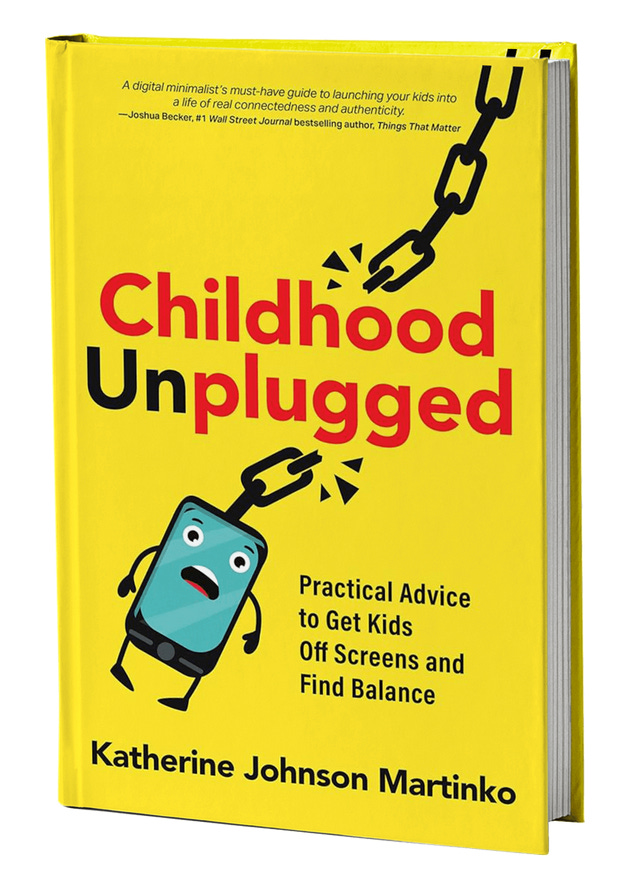
Hello everyone, this is Katherine Price and welcome to the how to Feel Alive podcast. I'm absolutely thrilled today to introduce you to my guest, Katherine Martinko. So Katherine and I became acquainted a couple years ago when I received a galley of her book, which is called Childhood Unplugged Practical Advice to Get Kids Off Screens and Find Balance. And absolutely loved it. And we recently have become reacquainted because Katherine and I are now working together officially as members of the team for the Anxious Generation Jonathan Heights book. And she is an absolutely wonderful person. A journalist and writer herself. She writes a column for the Globe and Mail in Canada about kids and technology. She's doing a lot of speaking events on behalf of the Anxious generation. And she has her own substack newsletter which I will link to, which is called the Analog Family, which I highly recommend that everybody check out. And also importantly for the context of our conversation, she is the mother of three boys, ages 9, 12 and 15. So I recently reread Katherine's book myself and loved it even more the second time. And I thought it would be a real delight to get to speak with Katherine about her book and her parenting philosophy and some of the practical strategies that she uses with her own family to create a healthy screen life balance for herself and her husband and her kids. So with that introduction, welcome, Katherine. I'm so excited to get to talk to you.
- [01:21]
B
Thanks for having me, Katherine. It's great to be here.
- [01:24]
A
This is confusing, isn't it? There's two of us.
- [01:26]
B
I know we have to avoid. I am.
- [01:29]
A
She's with a K. I'm with a C. But one of the things I wanted to start by asking you about, I think it's something we have in common because we have, in addition to our names, a lot in common in terms of our philosophy and approach to things. But one of the things I really appreciated about your book is that you really frame this from a philosophical approach. And I realized I should start by asking you a bit more about your own story because it's really interesting both in terms of your. Your own personal story and your husband's childhood when it comes to screens and how your respective experiences have informed how you're approaching this with your own kids. So tell, tell me about that.
- [02:06]
B
Yeah, definitely come from very different places, which I find interesting. So I was raised in the middle of nowhere, deep in the forest in northern Canada, on a lake with known year round neighbors. Um, I was homeschooled for many years as a kid. Um, my parents had no tv. There was of Course, no Internet back then either, but even when it became available, we didn't have it. Definitely a very isolated, very outdoorsy upbringing that I resented at times, but also really enjoyed. And I think that the older I got, the more I've. I've grown to really appreciate what I had. Meanwhile, my husband came from an opposite direction. So he was raised in suburban and Toronto, and he was raised on video games and tv and you know, you know, he had a very small yard, which was fine, but he just wasn't even allowed to go out to the yard. His parents were fairly protective, but he just. Yeah, he was raised with video games primarily, and it contributed to some academic struggles. He actually failed a year of university because he was gaming too much, and he had to go back and redo that and graduate a year later than all of his friends. And that was quite traumatizing. So I think he came out of it realizing how much video games and TV had taken from him and he didn't want his own kids to have that experience. So really we kind of came to the same place of not wanting our children's childhoods to be dominated by screen time. For me, just because it made sense. That's just how I was raised. It's the only way that I knew how to live. And him, because he, he knew what was at stake. So fortunately for us, never struggled to find common ground in that area. I think it can be really hard for some parents who come from very different backgrounds. I, I haven't had to deal with that, fortunately. I do hear from a lot of parents deal with that. But yeah, it's worked out. It's worked out for us so far.
- [03:47]
A
But. So what do you guys do? What is your parenting philosophy? What have you done with your boys? Yes.
- [03:53]
B
So we have a few basic rules. Well, first of all, I'll explain. So I'm not, I'm not anti technology. I think that that's really clear to set like, up front.
- [04:01]
A
I love the need to say that too. It's like, it's not anti tech. It's mindfulness and intentionality.
- [04:06]
B
Yeah, yeah. No, we're not, we're not Luddites who are rejecting it out of hand. You know, I, I rely on a laptop and an Internet connection and a smartphone to do my. Has enabled my entire career as a journalist for the past, you know, 13, 14 years. So I'm very grateful for it. I don't want to go back to a world where it doesn't exist. That being said, I don't want to live In a world where it takes over every single aspect of our lives. So we do not have a TV in our house, we do not have a video game console. The kids do not have phones and they don't have tablets. They never have had tablets or phones. So my husband and I do each have a smartphone. I have a laptop for work and my. We have a family computer in the house. So it's a desktop computer that sits in a common area and the kids can use that pretty much whenever they need to look something up. They can use it for group texting with friends, which I find really helpful. That's one of these workarounds that we have where they don't have phones, but they can still participate in imessage chats on the computer with friends. And they can borrow our phones whenever they need to make calls. And they can watch movies using a laptop. You know, if they want to have a family movie night or something. We do have a Netflix subscription. They can sit down and watch a bit of screen time for an hour or two then. But otherwise really their time is spent offline. And so when they come home from school, they're just, you know, hanging around the house, they're playing outside, they're playing with their pet hamster, they're playing board games, they're, you know, in their treehouse or on their trampoline, they're doing homework. There's just a lot of interaction that's happening. It's a loud, busy place to be, as you can imagine, with three boys. And they know how to navigate technology. These kids can certainly get around a computer and a smartphone quite readily, but they just don't own their own necessarily.
- [05:47]
A
So that's fascinating. And just to remind people, so you have a 9, a 12 and a 15 year old. This is not like you're doing this kind of digital minimalist approach with just little kids. Like you have a full on teenager.
- [05:58]
B
Thank you. So yeah, I like to tell people I've got a kid who's in elementary school, middle school and high school. So I'm at this stage in life where I've got a kid in all of the schools at our community right now. So we're kind of dealing with it all. Hearing about what other families are dealing with too at all these different stages. It's a lot easier to be screen free when your kids are little. I think if you have small kids, you are quite fortunate. You're at a great stage. Your kid doesn't know what they're missing at that age. They're not pushing back. It's a lot easier to keep tech out of the house than to be, you know, clawing it back or pushing back against it the way that you do inevitably when your kid gets older. My 15 year old resents not having a phone, certainly. I mean, what 15 year old wouldn't? It's an ongoing sensation. Resent maybe is too strong a word. He's not impressed by it, but he understands where I'm coming from and we talk about it a lot. And you know, we sometimes joke. I there was a great line I heard. I think it was Jennifer Garner who told her, like, if you can find me a study that shows that having a smartphone is more beneficial than not at your age, then maybe I'll reconsider. So, you know, sometimes he goes out and does a bit of research, but he hasn't been able to find it yet. It's great.
- [07:04]
A
He's learning analytical skills and research skills and, you know, maybe someday he'll find it and then he'll be 18 and then.
- [07:12]
B
And then, yeah, but, yeah, so he'll have. He's often asked me over the years when he's gonna get a smartphone, and for a long time I didn't have an answer for him. And then I heard a great interview with Jean Twenge, psychology professor from San Diego University, who said that for her it's 16. So when her daughters are old enough to get a driver's license, then they're old enough to have a smartphone, but not before that. And that, that made a powerful impression on me. Just this idea that you have to be mature enough to operate a motorized vehicle before you can possibly be handed a smartphone. So I've told him that 16, he can have one, he will be responsible for buying it and paying for it. So the other part of that I should just say is he won't be on social media. So social media for us is 18 minimum. So essentially he'll be out of high school, he'll be off to university, hopefully at that point and on his own. So to have a smartphone without social media doesn't actually make a lot of sense because really you can buy much simpler, much cheaper devices that do the things you need them to do, which is text and call your friends at a fraction of the price. So I'm kind of hoping that when that time comes, he's just going to look at it from a budgetary perspective and realize that he can still do all the same things and buy essentially a dumb phone. So, yeah, I don't know what he'll do because that's about a year away. He'll turn 16 next August. So he may have a smartphone at that point. But again, even though he will pay for it, if he chooses to get it, I still will maintain control over it, if that makes sense. Like, I will still have the right to take it away to check on it. I'll have the access to it with the password. Um, and we'll. We'll see how it goes, but we'll cross that bridge when we come to it. It's definitely an evolving process. You know, it's hard to be the parent who says no when. When you're only. So he's the only kid in grade 10 in his entire high school who doesn't have a smartphone right now. And that is. That's a tough thing to put on a kid. And I don't want to downplay that. Like, it's one thing for me to sit here and research and write about it and be this, you know, expert on the topic, but it's another thing to, like, push that philosophy onto my child, who then has to take it out into the world and, you know, be the one who's standing out in the crowd. So he. He does well. He's strong, he's understanding. Like, we talk about it a lot. There are sometimes very awkward situations where he comes back emotional because he felt like he was left out of something or he was singled out or made fun of or whatever it. So for those reasons, I can understand why he might want to get his own next summer. But we're definitely going to be extremely cautious with how it's being used.
- [09:34]
A
What do you do in those moments as a parent when you see your kid coming to you emotional about something you know is real, which is that he is getting left out at some things on social media or on smartphones in general? Because I think that's something parents struggle with so much, is you might want to do one thing because it's aligned with your own values, but you see your kid come in who's genuinely suffering as a result of it, because at the moment, not enough kids yet are off of these things. How do you deal with that? What do you tell yourself to keep your resolve or to talk to him about it?
- [10:05]
B
So it's hard. I mean, I listen to him, I hear the story, and then I often I sort of. First of all, I think as parents, you choose what's difficult. So it is difficult to choose this path and to forge ahead with it with him and teaching him these Things and insisting that he uphold this philosophy that I know to be so important and I believe in so strongly. And I think that he's starting to realize that there's a price to pay for it. And so I flipped the script a little bit and I asked him about how his, his classmates are doing and what are some of the experiences that they're having on their phones. And he's full of stories and anecdotes about like, really heartbreaking, horrible things that are happening to his kids on their phones, like the cyber bullying and, and my own friends, even within my friend group here in this town, the stories they're telling me about the stuff that they're dealing with with their kids, all phone induced troubles. So, you know, I've, we've, I have friends whose kids have been hospitalized for suicide attempts and friends whose kids are undergoing severe online bullying who are so anxiety ridden that they can't even go to school anymore. Like, there's just a lot of very intense experiences that these parents are dealing with. And I think that is hard. That is a very hard dealing with. It is also hard to be sitting here listening to my son tell me that he wants a phone and all his friends have them. But you choose your hard. Like, which, which hard is it going to be? You know, I'd rather be sitting here telling him he can't have it than sitting next to that hospital. Better in the emergency, you know, with a kid whose life is potentially at risk. Like it's, it's very hard to be a parent no matter what. I don't, I think you just have to decide which, where you're going to sort of allocate your, your, your focus, if that makes sense. But definitely flipping the script has been profound because I think that as time goes on, they're better able to see now the fallout from their friends having been given phones from a young age. And they're starting to see and understand why I would be holding back. And it's funny because just last night I was talking to my 15 year old and he used to say, oh, I'm gonna give my kid a phone as soon as he wants one when he's like 8 or 9 years old, when I'm a dad. And then last night he said, I'm definitely gonna wait till 13, so at least it's moving in the right direction. He's getting a little bit of perspective.
- [12:15]
A
Oh, that's fascinating. I think those are all really important points to keep in mind. And it also makes me think of another aspect of Your book that I really love, that I wanted to ask you about, which is that you really make a very compelling point that we're thinking about this wrong. We're thinking about not giving our kids phones and social media as potentially depriving them of experiences, which I suppose in some ways we could say that we are. But you make a really convincing case that actually by giving them phones, we're depriving them of experiences they otherwise would have had. And I'm wondering if you can talk a bit about that and also give some examples of the kind of experiences that you. You have as a family that you think are the results of your philosophy towards technology.
- [12:54]
B
Ooh, good question. Well, I mean, it's Jonathan Haidt, I think, who made that phrase experience blocker kind of famous. You give your kid a phone thinking that they're going to do things on the phone and learn things about the world, but really you're isolating them from the world. A kid who's on a phone is completely cut off from everything around them, and they lose interest in everything. And I was reading again in his book recently about the analogy of the cuckoo bird. You know, how a cuckoo bird will fly into another bird's nest and lay eggs. Then those eggs hatch and they just completely dominate the nest, and they push the other babies out of the nest, and then the mama, the original mama bird, comes and feeds the cuckoo babies, and they grow and thrive. And so basically the smartphone is like that, or the tablet's like that. You give it to a kid and it pushes everything out of the nest. The kid cannot really find the. The energy or the. Those friction points that they need in order to become engaged with other activities. So I would say in our own family, there's a lot of things that the kids just do on their own. Like they. We. I invest in activities that are conducive to sort of free, active outdoor play. And, you know, I bought a secondhand trampoline, and we have a slack line in our yard, and the kids have gotten quite good at scooter tricks and skateboarding and they're pogo sticks and they. We have a gym in our garage now where they can work out. And I find the teenage boys really love that. So my son often brings his friends back from school, and often there'll be a whole crowd of boys, you know, pumping iron out in the garage, which is kind of fun. They like to cook. They love to go on bike rides. They play musical instruments. We do have them in lessons, but I do find them sort of jamming now with their friends in their bedrooms. They'll hang out and do that. And then we do organized things as a family. We always go on a multi day canoe trip every single summer. You know, like backcountry camping in Ontario. We go on other camping trips as well. We go to. We do a lot of skating, a lot of sports, skating in the wintertime, skiing and whatnot, always on weekends. So we try to make time for that. So it's a, it's an active, busy life. I do think that we, as parents, you do have a responsibility to fill the void. I use that phrase a lot when I talk about especially you're used to having technology in your home. If you take it away, you have to help your kid find things to do because if they haven't exercised those independent play muscles before, they're just going to feel a little bit at a loss. But at the same time, you need to then transition into greater independence where you let your kids go, you have to just sort of let them go and let them go do things because otherwise you're going to drive yourself crazy trying to entertain them. And that's just not a sustainable way to live either.
- [15:22]
A
Well, that reminds me a bit about the points you make in your book about boredom. Right? So you're describing all these interests and these things that your boys are doing in the time that perhaps they otherwise would have spent on screens. And I'm getting the sense that that's not because you're choreographing their lives and putting them in organized, you know, trampoline class, things like that. So I'm wondering if you can talk a little bit about why you think leaving this space in this time for boredom is so important for kids and how you've seen that play out for your own boys in terms of perhaps their resistance to it. But what has ended up happening when you've given themselves that time and space to have to figure this out for themselves.
- [15:59]
B
Boredom is this magical ingredient that is conducive to creativity and curiosity and skill building and so many things that just make life more interesting. I think that you. We need more boredom in our lives. And what we've done is we've sort of eradicated it with the development of this portable technology in the form of tablets and phones. And so now, the second that we feel the slightest inkling of boredom, we can just whip these tools out of our pockets and get lost to some online world that really doesn't have any kind of lasting value in it. Um, and so I. I think that parents don't need to be afraid of boredom. Kids have an incredible capacity to find things to do when they are forced to find things to do. A kid will not remain in a state of boredom for that long. It is a muscle, again, kind of like that independent play muscle that I talked about. Like, kids do need to develop the skills to figure out how to, you know, break out of that boredom zone. But it does make a huge difference. I know. I wrote in my book too about Csikszentmihalyi, the Hungarian American psychologist who studied the hyper focused creative flow state. And he writes how it was only the teenagers who experienced profound solitude that were actually able to develop their skills in, like, music and writing and whatnot. But the message being that kids need boredom. Like, if we're going to raise the next generation of writers and artists and musicians and poets, they need to be sitting in their rooms, not doing a whole lot in order to, like, pick up those instruments and pick up the paints and the pencils or whatever it may be and sort of just hone those skills.
- [17:23]
A
I'm completely on the same page with you. I think adults, we also have issues with boredom, you know, giving ourselves space for boredom. And I totally agree with you that this is having a huge impact on our ability as both kids and adults to come up with creative ideas and insights and, you know, breakthroughs, because we're just constantly on intake mode. But you actually had an equation in your book that I loved in terms of, like, how do you actually produce creative free play? Which is what I think you're describing in terms of some of the things that you, your boys are doing. And I'll write this in the substack that I'll put out to accompany this podcast. But you write that kids minus digital media plus independence equals creative free play. So I don't know if you want to add to that at all, but I love that, that equation, let's make it mathematical.
- [18:06]
B
Oh, yeah, no, I. I do think of it in that way. There was a wonderful book I read that really influenced me as a parent. I read it years and years ago. I'm so glad I did. And it's called the Idle Parent. I'm not sure if you're familiar with it by a British writer named Tom Hodgkinson, but he. And he's sort of a humorous writer. The book is definitely written with this humorous sort of hyperbolic tone at times. But he, you know, he writes this manifesto of the idle parent and just basically rejects the idea that Parenting needs to be hard work, that we need to be spending a lot of money, that we always need to be going places, that we need to entertain our children. We should leave our children alone. I think we pledged to leave our children alone was one of the things on his manifesto. And then in brackets. And they should leave us alone, too. So I. I sort of. I mean, idleness obviously has a bit of a negative connotation, but I. I always loved that philosophy. Like, I just. I think we do need to find ways to make parenting fun again. I think it's a way to, like, de. Stress ourselves as parents who are just, you know, we're stressed to the max. Even the latest Surgeon General's advisory was talking about the extreme parental stress that parents are feeling. And I think a lot of it is coming from this, you know, extremely hyperactive parenting that we're engaging in. Intensive parenting, I guess, is the correct term. So I do think that when we just step back and let go and let the kids be and give ourselves time and space and grace to just be parents and do the things that we want to do and let the kids do the things they want to do, and you don't have to be running around. You don't have to sign up for extracurriculars. You can just have quiet evenings in your home where you can have a good meal and you can have a leisurely shower and you can go to bed at a good time. These are. You know, these all contribute to this general improvement, I think, in the quality of life and everyone's general happiness.
- [19:45]
A
Well, that touches on something I also wanted to ask you about, because I think a lot of times, a lot of pushback I get when I talk about fun in particular, is this idea that, well, fun is only for people who have the privilege to have fun, or it's only because of the certain resources that they have or the certain work schedule that they have or something, they get to have fun. I can't possibly. And I always try to push back on that by kind of redefining fun as something that's much more accessible, that doesn't require money to have. It really requires a mindset shift and some habit changes. And so as I'm hearing you talk about some of the things that you. You have around your house for your boys to do and the things they do, it makes sense living in a rural area as you do. And I imagine, in fact, I know, because you wrote about it, that you do get a lot of parents who are like, well, I couldn't possibly do that. You know, I live in like, for example, I live in urban Philadelphia. I can't, I don't have room for a trampoline. So I'm wondering what you say to parents where they seem to think that it's not accessible to them. Do you have any practical strategies or just philosophical mindset shifts that you offer to parents that make this kind of philosophy, this, this approach to parenting more accessible regardless of your situation?
- [20:49]
B
Yeah, well, I haven't lived in an urban setting in quite a while. I, I used to live in Toronto and I didn't have older kids when I lived in Toronto, I only had a baby. So I did interview families who lived in urban settings to try to get their opinions on whether they thought it was realistic to embrace sort of free range, independent play. And many of the families I spoke to said yes, that they very much had embraced this lifestyle in the city, that they felt that the city was a fantastic place to try to get kids off screens and outside playing more with neighborhood friends and whatnot. So I think it is possible. But regardless of where you live, fun does not need to be expensive, it does not need to be fancy. You know, I think that we maybe need to reframe our concepts of fun. For sure. I think that fun is for me being with people. You know, we entertain a lot in our home. I find that that's just a really wholesome sort of intergenerational way to engage our children in activities that also feel stimulating to us as like me and my husband. So it's not that we're doing a kid only activity, which is quite frankly quite boring. Often for a parent, it's not really fun if, if they're doing adult only activities. So definitely we've, we've had to think about where that common ground is. So often dinner parties. So kids say most weekends we'll have another family over for dinner and they might bring kids and they're adults. And so, you know, we, everyone's happy, everyone's stimulated, and it doesn't really cost anything other than maybe a bit of extra food, but you can turn it into a potluck. We do a lot of outdoor things and I think the outdoors is accessible to you. Even if you are in the city, there are places you can walk and we go for hikes a lot. We go skiing. We, you know, we have cross country skis. We really love doing that in the winter, snowshoeing and whatnot. And often get other people to come too. So that's sort of a good community Building activity, where we'll call up another family and say, do you want to go for. Do you want to go for a walk? And we'll do like a two hour hike out in the forest, which is just really fun and everyone's engaged and you could just get cheap forms of fun. Honestly, that sounds ridiculous, but their $25 hamster has been the best investment of our lives.
- [22:46]
A
No, okay, I am not talking about that, Catherine, because my daughter is in a hamster crusade and thankfully she doesn't have a phone or access to podcasts. But great to know that that's the
- [22:56]
B
greatest purchase I think we've ever made. Oh, my God, it's so compact. It lives in this little cage in our bathroom. And they play with this animal for hours and hours and hours every day. I don't even know what we did before we had the hamster. And then they spent all of their time building mazes for the hamster using cardboard boxes and toilet paper tubes and like we're on our third hamster, I should say. They come and go for sure. But wow, you know, because I didn't want. I don't want any other kinds of pets. People, Other people have dogs and cats and that to me, sees cards. We must work. The answer's the way to go. I'm sorry. Oh, geez.
- [23:33]
A
Okay, well, maybe we'll have to end this conversation.
- [23:35]
B
Tell me your friends, Katherine.
- [23:38]
A
That's so funny. I just completely lost my train of thought. Oh, okay, no, okay, I'm bringing it back. I'm bringing it back. I mean, it's like her Christmas list is like, hamster, hamster, hamster, hamster. It literally says hamster times a million. She figured out how many commas go into a million, so she requests a hamster that many times. Putting that aside, though, literally my son's
- [23:54]
B
Christmas last year, it was. I think he had the hamster written ten times on it because he wanted a replacement for the one that had
- [24:00]
A
died the year before. We have a question for you. Does he spell it with a P? My husband tried to spell hamster with a P. I'm like, oh, my God, I just want to reappear.
- [24:08]
B
Hamster.
- [24:09]
A
Thank you. Okay, it's hamster. Put it here first. What I was going to say is that just as a follow up to what you're talking about in terms of the options that exist for little or no cost outside of the house, I think that there's a lot that we can do as parents, regardless of our kids age, to provide like the props for Fun for engagement, you know, whether it's books or games or just craft supplies or just stuff to do in the house, which it occurs to me as I'm talking, in many cases are much less expensive than screen based alternatives. You can get an awful lot of cardboard for the price of an iPad, you know. So I remember when our daughter was really little, going to a restaurant because we didn't want to put her in front of a screen in order to have an adult conversation. We used to have kind of a go bag of drawing supplies or just like, or a picture book for her to look through or something where it was something that would engage her and then we would be able to have a bit of a conversation. But it wasn't putting her in front of a screen.
- [25:05]
B
Yeah, I often think of it as, I think I call it the survival kit. I used to call it that when they were little. But still whenever we go on a road trip I'll say, do you guys have your survival kit? And again it's that grab bag of things that you just kind of pull together random things and it evolves as they grow. It's going to look different for my 15 year old than it does for my 9 year old and it's different than when they were 2 years old. But yeah, if you plan ahead. And I think this is kind of the downfall for a lot of parents where they forget to plan ahead because we have this convenient item in our pocket that we know we can whip out if it absolutely is needed. Instead we forget to bring, you know, the snacks and the board books and the.
- [25:41]
A
I always forget the snacks.
- [25:43]
B
Balloons or whatever it might be. Right?
- [25:45]
A
Yeah, no, I always like she's nine, I forget the snacks in the water. I'm always borrowing snacks and water from other parents, but I do bring the crayons. I, but it, it ties in, I think to what you write about in your book when you're talking about advice for parents of younger kids of the begin as you mean to go on. Which I thought was a very powerful phrase that I wanted to ask you about.
- [26:06]
B
Yeah, that was a phrase that an older friend told me once. She said it was advice given to her by, by her mother in law when she got married and they've now been married for like 50 years. So she said it just was a good philosophy in her life that she always used. And then she brought it up when she first read my manuscript and she said I think that that's kind of what you're trying to say. And I thought yes, that's exactly what I'm trying to say. And I think it really, it's meant to be empowering, you know, to encourage, especially parents of younger children, newer parents who are just starting out. So much of parenting is really daunting and scary, but the best thing you can kind of do is just select the path that you want to head down and just keep going, start in that way. And like I mentioned before, it's easier to keep the technology out of the house than to try to claw it back or to try to manage it. I think parents often make their job a lot harder by introducing tablets and thinking, oh, this is going to be fine. We're going to, you know, keep a lid on it and keep it very restricted. But inevitably it gets out of control. No parent ever thinks it's going to reach the level of use that it eventually does for many families. So it is easier just to plot your course and stick to it as much as you can.
- [27:09]
A
Back.
- [27:10]
B
One other thing I wanted to say too, about play is parents need to embrace mess and chaos and that a certain degree. And I think that's, that's a hard one for a lot of us. Even I fight that urge still, you know, to want to pick up all the toys and vacuum the rug and just sort of reset at the end of the day especially. But kids need to see sort of the, the, the detritus of their play left all around the house because it's going to spark them again the next time they come down, the next time they see it. Even we as adults are like that. You need to set yourself up for success by making the ingredients of your success more, you know, accessible. Like, if you're learning an instrument, if the guitar is sitting on a stand right in your living room, you're going to be more inclined to play it than if it's in a case in a closet on the second floor of the house. So being reminded visually of these things can certainly be a good cue to get kids playing.
- [27:56]
A
I'm laughing because not only are you making a compelling case in favor of the hamster, but you're also telling me that I have to stop cleaning up all the toilet paper tubes that are in the back of our kitchen because my daughter is very crafty. She took all of her Halloween candy wrappers and she saved all of them in a basket. At least they were in a basket, I guess. But I was like, why are you saving all of those Halloween wrapper? She goes, oh, because I'm going to make a poster board where I'M going to hot glue gun every. Because we have hot glue gun for every single wrapper onto a board and then put a picture of our dog and say, the dogs did it. Like, I don't know why. That was a mess. And I was like, all right, all right, be calm, just deal. Catherine, accept the candy wrapper collection. And sure enough, last weekend, she did exactly what she said. And she made this kind of like abstract, almost modern art esque piece so the dollar would see it in like a. In MoMA or something. Like, just like Reese's wrappers, like pasted to this thing with a dog in the center. And this statement, the dogs did it. So what did they do? So many questions. But anyway, yeah, that's something I struggle with myself for sure. Is like embracing that mess. And I got to that part of your book and I almost started laughing out loud because I was like, yep, I need to work on that skill. Because you're right, you know, I do that actually with my own guitar. I leave the guitar out, I leave my music out. I have my own little messes that I leave out. And part of the reason for that is to make it easier to engage in those habits I'm trying to spend more time on. So you make a really good point that I should try to kind of take a deep breath and deal with that visual chaos that I have a hard time with because it is my daughter's creativity and she does want to come back to these things. You said something else that made me think of a part of your book I really loved. You were talking about the slippery slope where you introduce a screen and then it just kind of starts to take over. And one quote I love that you have in your book was from Neil Postman, who was talking about how technology has an effect on the ecology of your household, that you have an ecosystem, and anytime you introduce a new species to an ecosystem, you don't get the ecosystem plus a new species, you get an entirely new ecosystem. And I was just wondering if you could expand on that a bit, because I thought that was such an interesting point, you know, because I've got a lot of friends who are thinking about getting their kids an Iwatch or like a smart speaker or an iPad. And at first it's like, oh, well, that's not a phone. Like, maybe it's okay. But something feels uncomfortable to me, and I feel like that discomfort is somehow wrapped up in this quote.
- [30:12]
B
I do think it's impossible to introduce that technology into the home without fundamentally changing the feeling of that home. And I don't even know why exactly. I think just because maybe it's just such an addictive, such an all consuming thing, you know, it makes noise. It's very colorful children. I mean, you see kids who are looking at these screens and they become different little human beings. I see my own kids when they're friends, you know, they meet up with friends who have phones and suddenly it's like this magnetic force just like sucks all of their attention in and they lose all awareness of the world around them. They become disinterested in everything around them. So I think that it has this really profound effect and we underestimate it at our peril. This is maybe where it gets a little dark, but just the sheer number of parents that I've talked to at the presentations that I give, who come up to me and tell me that they feel like their children have been ruined by being given devices or that these devices have stolen their children from them and they no longer recognize the child that they once had. And the number of parents who say that one said to me, the worst day of my life was the day I gave my daughter an iPad. And that they wish they could go back in time. If they could do it again, they would do it differently. They would hold out, they would delay, delay, delay, which is another part of my philosophy. Just hold out as long as you can. Honestly, every week, every month, every year that you can wait is, is. Is a benefit at this point. So the science is starting to catch up. We're starting to understand a little bit more about what these devices are doing to our kids. But you don't even need the science to just be able to see what it does to them in terms of their curiosity, how it sort of just crushes them a little bit. I think they sort of become desensitized. They're exposed to such mature content and there's so little context for it because you're not there explaining to them what they might be seeing. And it's very confusing. So it is tough. I think that we do need to put these tools in their rightful place. And that's why I'm more comfortable with my kids using a computer. I know there's still a lot of things on it, but it's not portable. They have to be in that common area where there's people milling around. We can all see the screen that they're looking at. It just sort of creates a little bit more of a buffer that protects them. I think at a time when they still need to Be protected. Very much so, yeah.
- [32:16]
A
I mean, that reminds me of another quote you have in your book. I think you're quoting someone who is saying something to you, and you said, wow, you just summarized my whole book to me. But the quote was, kids just need to be kids, and technology pushes them out of that into an adult world sooner. And that really stood out to me as well, because that's something I think about a lot, too. Then I actually, Yeah. I was going to ask you about two other philosophical approaches that you have that I think have practical implications. And one is the idea that we should work backwards from an ideal vision of how we want our family lives to be. And then the other is your idea that we should make decisions about technology based on whether it will amplify or amputate. And so I was wondering if you could talk a bit about those two things about working backwards and then what you mean by amplify versus amputate when it comes to decisions about tech.
- [33:00]
B
Yeah, working backwards. I think that you never really know what you're doing when you start raising kids. I mean, you're starting from scratch. We're learning as we go. But it also doesn't hurt. Picture how you want your life to be and to sort of set that as this ideal goal. And then to think about what sort of to align your actions with your goals, if that makes sense. I had a friend, he told me that his therapist told him that recently, and I thought that that was very smart. In general, we should always be aligning our actions with our goals. But when you think about the kind of family environment that you want, like if you want kids who come home from school and who make eye contact with you and sit down at the kitchen island and start talking to you and telling you about their day. If you want kids who are sitting with you and you're sitting down to have family dinner together every single day, or who say yes when you want to go for a family hike, these are all things that I think are within our reach. We can all achieve these things, that there are choices that will need to be made in order to create that environment that's conducive to those sorts of interactions. So I think everyone can do this, but it can sometimes require making, you know, slightly difficult choices about how you're going to manage technology, for instance, among other things as well. Something else we do is we don't do extracurricular activities that interfere with, like, dinner and bedtime, because that's the time that we maintain as very sacred in our Family, we will adjust dinner and bedtime somewhat, but we, those things always have to happen. We always have to sit down and eat together. Yeah, we're the same way to block and, and you know, anytime my kids come wanting to play another sport or learn a new instrument or something, we say where is it going to fit into our life? And is it going to push too many other things out of the way? Because that's just non negotiable. That's basic quality of life. That's planning the kind of life we want and working backwards from it. As for the amplify versus amputate, that was a great line that I heard from Tiffany Schlane who wrote the book 24:6. So I heard her in an interview with Krista Tippett and she used that phrase and I think kind of comes full circle to what we were talking about initially that it's not anti technology. It's about choosing to use technology in ways that improve your life. That, you know, amplify opportunities for connection with other people like you and I are doing right now, but rejecting it if it's going to amputate your interactions with people. So to take a phone along when you're going out to meet a friend for lunch and leaving it on the table right in front of you and it'd be responding to texts while you are in person with someone you haven't seen in a long time, that's an amputation in my opinion. So being selective and just being really smart and maybe almost reclaiming the etiquette surrounding technology use that maybe never did exist in the first place, that we perhaps don't need to reclaim so much as develop.
- [35:31]
A
Yes, I completely agree with you. You talk about a lot. That really resonates with me as well is really making our decisions about technology, whether it's for ourselves or for our kids through the lens of opportunity cost that even if the effects of screens were net neutral, even if there was no negative effect of screen time, are they better than what we would be doing otherwise? And you make a wonderful point. I think about gaming where, you know, a lot of people really enjoy gaming. And sure there's a time and space. If you just want to play a video game, I think that's fine. But it can create what you refer to as an illusion of mastery where you've mastered this game. But do you have a real life skill at the end of it? Do you have something that's going to amplify your life outside of the context of that video game? And I Think you've got examples of. I forgot if it's your kid or someone else's kid who just starts to realize the things that he can do that his friends can't because he's actually spent the time building those skills.
- [36:20]
B
Yeah, that was a family that I interviewed. And yep, they're talking about their teenage son who never gamed. And definitely a lot more things. He was able to recognize his physical abilities versus his friends who were just sitting in front of a video game console all the time. So certainly kids especially, I mean, I have boys, I cannot speak for girls. I think that having girls is a very different experience. But my kids, I mean, boys need to engage in a lot of physical activity. There's a lot of competitiveness. They want to master skills. And so a big part of my philosophy is also embracing risky play. And I think that boys naturally gravitate toward the risks that exist on video games, the thrill seeking that happens virtually. But we need to sort of recreate that for them in the real world so that they feel that sense of achievement and accomplishment. And that means that I, you know, I will let my kids do something that will terrify me. Like they like to jump off of big cliffs into water, you know, one of their favorite things to do. So we went on a camping trip specifically to a provincial park in Ontario last summer that's known for its jumping cliffs and has these graduated heights of rocks. And this just was the highlight of their summer. They spent two days just jumping off of cliffs and some of them were very, very high. And they came away just glowing with joy. And I felt like I would rather them achieve that in a real life setting than just be doing that virtually on a video game, not even leaving their bedroom. So we do need to give kids opportunities to test their boundaries, test their physical limits, and then have something to feel proud of at the end. One more thing that ties into what you're saying before, that is very much this concept of techno selectionism, which I love. This is a term Al Newport. And he basically says, just because there's a new invention, a new form of technology, doesn't mean that you have to embrace it automatically. We need to be critical of the new things. Like we can test something out and then we can reject it if it doesn't serve our purposes or if it doesn't improve our life in some meaningful way. And we could all benefit from doing that, I think, a little bit more.
- [38:15]
A
Yeah, I completely agree with you. And the idea that we let these things into our lives without fully thinking about the impacts. And I think that's especially important for us to start doing with all the AI developments that are happening. You know, do we want these creations? Like, what role do we want these things to play play in our lives? That actually makes me really angry that they're just being rolled out without any kind of societal conversation about whether or not we want to have all of these tools with potential downsides. But I know we're going to need to start wrapping up, but just a couple more things. I love the fact that you refer to becoming your own algorithm, and I was wondering if you could just explain what you mean by that, because I think that that's a really interesting concept for all of us to keep in mind as our lives begin to become more and more ruled by algorithms that are created by other people and companies that don't have our best interests in mind.
- [39:02]
B
Mike Bungaris wrote the End of Solitude and he's a great Canadian author who's a work I've followed for many years. And he went offline completely for this experimental period of his life. And he talked a lot about how profound it was to suddenly feel like he wasn't having all these inputs that were shaping his thought processes. And I think that until you actually remove yourself from it, you sometimes don't realize how much of everything that's popping up in your daily scroll is actually directing your thoughts and shaping your. Your opinions and whatnot. So I have been thinking more about that and just pushing back on, questioning which thoughts are actually my own and which are the things that are sort of just being planted there by very savvy Instagrammers who, whatever, may be working online behind the scenes. So I think especially for kids who are fresh in the world, you know, they're forming their own opinions and their own ideas. I think it's even more important that they not be online and not be having their personalities shaped by just this influx of information. I think it's more important to just develop your tastes and your preferences from just existing in the world and being surrounded by people and having conversations with people and observing things somewhat passively, if that makes sense. But we are just connected to this fire hose of information that's just totally overwhelming and totally overstimulating and we just need time away from it.
- [40:19]
A
I completely agree. And I think one of the things I appreciate the most about your approach to all of this is that you are. You obviously have strong opinions, but you're coming at this from a non judgmental, non scolding kind of Perspective. And so as one of my final questions, I wanted to ask you, what advice do you have for adults and parents about our own responsibilities as role models? I think that our kids obviously look up to us. They notice what we're doing. So what do you think we should be doing differently? Horse.
- [40:45]
B
It's a. It's a sticky topic, right? I mean, I don't want to guilt parents. I don't want parents to feel shamed or anything for any of this. It's such parenting is so hard at the best of times. We do need to model the kinds of behaviors that we want to see in our children. I think that that's really important. You can't not model at any point. There's a great line from Sherry Turkle, who says that kids will always crave the objects of adult desire. So if you are worshiping your phone and you're on it all the time, your child will learn to desire that object above all else. So I think that that's really fundamental. But really, if you want to develop a wonderful relationship with your kid, you have to be present. You've got to show up for them. You just have to be there. And there can be these periods of time where you're just not on your phone and you are doing one thing and just that thing, like maybe you're just talking to your kid, maybe you're just going for a walk, maybe you're just reading a book together or you're just cooking dinner together and your kid, your kid's going to notice that. Kids are so perceptive. They can tell if your attention is just flitting back and forth between them and this device. And you also want to be present for those little bids for attention that kids are always making, especially when they're little. I mean, really, at any age, I should say. So I take that back because even my 15 year old, I can sense when he's just hovering. You know, he's sort of monosyllabic these days and a bit moody, but there's times where he's just hovering and I can tell he's waiting. Like he wants me to push, he wants me to ask, he wants me to inquire. And so I do value, I value those moments and I don't want to miss them by maybe looking at my phone instead. So I do think it's important to try to use our phones away from our kids as much as we can. I know that's not possible all the time, especially for those of us who work online and are sort of somewhat tethered to our devices for our careers. It is hard. It's really hard. But it's important to be aware of it for sure.
- [42:29]
A
Yeah, I completely agree. So before I read a quote back from your own book to close out our conversation, I wanted to ask if there's anything else we didn't touch on that you would like to share with the how to Feel Alive community.
- [42:43]
B
I do like to just tell parents that it's never too late. And, you know, we have new information now that we didn't have 10 years ago. So if you gave your Kid a phone 10 years ago before, you knew that there were risks associated with it, don't beat yourself up. It's fine. You can, you can reset that baseline, you know, your household interaction with technology and you can tell your kid, based on what I now know, we're going to revisit the rules surrounding screen time in our home. So that's totally fine. And I don't want parents to feel bad, but I also don't want them to feel defeated. You can certainly engage with technology in a healthier way at any point if that's what you want to do.
- [43:18]
A
I think that's a wonderful point. And it goes back to what you're saying about begin as you mean to go on, even if that is right now, as you're listening to this conversation, you know, begin it now. And you can't change what's happened in the past, but you can change going forward. So I just wanted to close with a quote from your own book that I really found to be powerful and that spoke to me a lot. And you wrote that those of us striving to curb our children's screen time habits are not the extreme ones. What's extreme is how much time everyone else spends staring at their devices. We're in desperate need of a societal reset, of a stern wake up call to come to our senses and realize that this isn't even about the technology so much as it is about fighting for quality of life. I really love that quote because I think that really taps into the philosophy here, is that we are trying to create better lives for ourselves and our children. So with that, I just wanted to thank you so much. I've been speaking with Catherine Martinko, who is a journalist. She's the author of a wonderful book called Childhood Unplugged that I highly, highly recommend. She writes a column for the Globe and Mail and she also writes a substack newsletter called the Analog Family, which you should subscribe to. And she speaks around the world about the same stuff that we were talking about today. So, Katherine, thank you so much. Even though you made that case for the hamster, I hope you get a hamster now. Oh, boy. Okay.
- [44:32]
B
Goodbye.
- [44:33]
A
No, seriously, thank you.