Loading summary
Transcript111 lines
- [00:00]
A
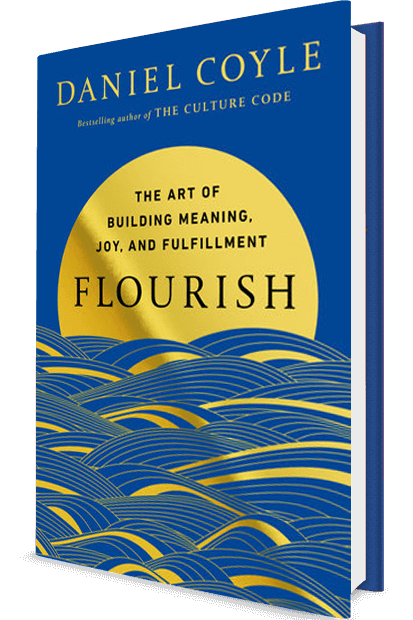
Hi, everyone, I'm Katherine Price and welcome to the how to Feel Alive podcast. I am absolutely thrilled today to introduce you to my guest, Dan Coyle, who is a journalist and the author of multiple books, including New York Times bestsellers, including such books as the Culture Code, the Talent Code, a bunch of other books as well, and most recently and excitingly, this new book called Flourish, which is the Art of Building Meaning, Joy and Fulfillment. Dan has done all sorts of fun sounding stuff in his life. Consults for all sorts of organizations and teams like the Cleveland Guardians, he's done work with the military. It sounds like you've really developed a really interesting career based off your interests, which is what I aspire to do myself as well. And I've had a funny experience over the past couple months where multiple people in my life have said, you have to read this book by this guy, Dan Coyle. Another person you've got to meet, Dan Coyle. You guys have so much in common. You have so much talk to talk about. You're going to love his book and then someone else saying the same thing. So I got a copy of Dan's book and it is true. I love this book and I'm super excited to talk to you. And so welcome to how to Feel Alive, Dan.
- [01:07]
B
Thanks for having me, Katherine. Well, I've been a fan of yours for a long time. I just love your work and I love. The universe has brought us together right now.
- [01:15]
A
Yes, exactly.
- [01:17]
B
Yeah.
- [01:17]
A
So I love this book and I have to be upfront with you from the very beginning that I have a very personal interest in talking to you, which is that everything you write about in this book about how to find more meaningful connection, how to feel alive, this is the stuff that keeps me up at night. And so when I read your book, I was both impressed by your journalism and your reporting and your prose, but I also was really excited to be able to get some practical strategies that I could try in my own life. So I'm particularly excited to talk with you about some of the things that you have done and tried yourself in writing this book and just the things you learned, because I'm always trying to come up with new things to try. So, yeah, so I thought I'd start by just asking you a bit of background. I know that you in some ways consider this to be the third in a trilogy of books with the Culture Code and the Talent Code. Now we have flourishing. And I was wondering if you can explain a bit about how this book fits into your other. This, this collection of Three, if you will. And then tell me a bit about what inspired you personally to write Flourishing.
- [02:12]
B
Oh, thanks so much. I appreciate it, Katherine. Well, yeah, it's funny. I mean, somebody told me a long time ago that journalism was a license to be curious. Like. And so I've always taken that, like, seriously. It's like having this magical card where you can call up anybody in the world and say, hey, let's, like, what's your deal? Let's talk.
- [02:27]
A
Yes, exactly. Here we are.
- [02:29]
B
People say yes, right? People say yes. People do it. So they do exactly what we're doing now. You can kind of do that with anybody. And so, you know, it started each. I find that, you know, I always thought that writers are the ones who had the answers, but what I've learned is that writers are the ones who are attuned to the mysteries. And so the stuff that has propelled me in my writing has been, like, really getting obsessively interested in a mystery, a mystery that was often right in front of my nose. Obvious. Right. And it started with individual talent. Like, why are these people here? Why do all the chess players from this town in Bulgaria, or all the. Right. All the. All the tennis players or all the politics. All the. All the dancers from this area. Why are they all so good? And so I. The first book was about that, like, how individual talent has grown. What happens when you practice in a certain way? What happens when you're motivated in a certain way? And that led to a lot of stuff. But one of the things that led to was the next mystery, which is what's going on in these rooms where these groups are talented. Like, it's not just individuals. It's actually like, oh, my God, the Navy seals are able to work together in such a way. And Pixar. What's going on there? What's going on?
- [03:38]
A
What is going on there?
- [03:39]
B
What is going on there? Right.
- [03:40]
A
It's good stuff.
- [03:41]
B
Yeah, it's good stuff. They're coming together like, one plus one plus one equals ten in these places. So what's going on? Okay. Individual talent. What's going on in that space between those individuals? So that's where that kind of grotesque. The next mystery. Excuse me. And then that leads you to the third mystery of this book, which is like, where's the joy coming from? Where's the meaning coming from? Like, the depth. If the first book was kind of about individuals, the second group was about the space between those individuals, what those interactions look like. The third group is kind of about the depth to which those Roots. And those blooms happen. Like, what exactly is going on there? So each, you know, it's kind of funny the way the world is. You know, it's. It's, you know, every. Every mystery can lead you to another mystery. And I think that's something that when you look into flourishing lives and when you look into the shape of our own lives, actually, if we were to kind of draw them on a piece of paper, I think what we'd probably find isn't that it was like, straight lines from Answers and Questions, what we'd find that, like, oh, we were drawn into this space for some reason in our life that opened up some door that maybe we didn't expect, that maybe was a bit of a surprise. And that was a curving line to the next thing and a curving line to the next thing. And so all these books, what all these books have in common is they're all kind of about these spirals of growth. Whether that's individual growth or whether that's group growth or whether that's kind of the type of flourishing that I write about, this next book, this latest book, rather. And so, yeah, it's been. It's. For me, it's been about getting addicted to mystery and exploring that. And then these same shapes keep recurring. Like, why is it a spiral? These aren't machines that we're discovering. They're like living systems. And living systems grow in a kind of a fingerprint. There's a signature fingerprint to how living systems grow.
- [05:31]
A
Huh. And I love that. That's the approach I try to take, take with my work as well, is just following the mystery. I hadn't really thought about it phrased that way, but I love that about following your curiosity and just seeing where it leads. And I'm just wondering personally, have you always been someone who does that, or is this something you came into?
- [05:49]
B
I guess I grew up in a family, three brothers, all born, like, super close to each other. So the question really, really early on was like, how do I get better than these guys? How can I compete? It wasn't Hunger Games, but it wasn't not Hunger Games either. Like, we've been three competitive brothers growing up. And so that was kind of this root level thing that got me interested in sports and competition. And I grew up in Alaska, and originally my plan was to become a shortstop for a Major League baseball team. And that one didn't work out. But if I couldn't be the best, I decided to study the best. That's kind of where that came from. And so yeah. And I guess the other thing that makes me think of is my dad happened to be a doctor. He was a radiologist, and so he was always putting up X rays of stuff. I remember walking his office and these big films, and you'd see what was underneath. And so this idea that there was always some levels to stuff. Like, there's the thing you can't see the functional. Like, everything that looks magical on the outside has a machinery underneath it. And so, like, that curiosity about, like, what's okay, that looks really cool, but what's going on underneath that? Like, Catherine's an amazing writer and an amazing researcher, but, like, how'd she get that way? And what's driving her? And those sorts of questions and opening doors.
- [07:10]
A
I love that image of looking at the X ray and knowing there's a mystery underneath, but that there is a structure to that mystery, because that seems to unify a lot of your work. And I'm wondering. I'm wondering what brought you personally to feel compelled to look into flourishing, because this seems like a much more personal exploration.
- [07:27]
B
It was. It really was. I'd spent my. I mean, the. There's a few different dimensions to it, but one is that my. I'm in my mid-50s, and my parents both kind of passed away unexpectedly. My dad had a heart issue, and three days after he passed away, my mom was diagnosed with cancer. And so it was just like, bam, bam. And, you know, even at 55, being an orphan is like this. It's the most. It's the most mundane experience ever. It happens to most people. It happens to almost everybody. And yet in today's world, where, you know, I definitely fell into a lot of common patterns, like being really obsessed with work and working really hard on projects and. And kind of running from one thing to the next a lot, that. That kind of double whammy just knocked me to the ground, you know, just was really tough to accept and get beyond. And I've got a friend who. His theory is everybody should have some event like that every few years. Like, you should just get absolutely knocked over. And it's kind of a crazy idea. And yet kind of got me deeply curious about these deeper questions where it's like, I'd spent my life looking at high performers, people on the top of the mountain. And one of the things you find out when you meet a lot of people who are at the top of the mountain is it's kind of a cold and windy place. Like, you find a lot of people that are secretly bummed out, like I'm the best in the world at X, Y, Z and I, I'm kind of driving myself crazy. And, and so that, seeing that and seeing how pervasive that was got me interested not in the mountains, but in the valleys. Like what's going on these places where there's like extraordinary creativity and growth and generativity and yeah, they're producing Olympic athletes. And all the Olympic athletes want to go back to this little town and live like.
- [09:21]
A
Right.
- [09:21]
B
What's going on there that's deeper than just performance.
- [09:24]
A
Right, right.
- [09:25]
B
That's what got me interested, like beyond just kind of the stuff you can measure into, the stuff that really makes life worth living.
- [09:33]
A
Yeah, no, that makes a lot of sense. And so how do you define flourishing? That's obviously the premise of your book. So. Yeah, tell us, tell me about that.
- [09:41]
B
Joyful, meaningful growth. Shared is the, is the quick definition, right?
- [09:46]
A
Joyful, meaningful growth. Shared.
- [09:48]
B
Okay, sure, sure.
- [09:49]
A
Tell me more.
- [09:49]
B
It's not, it's not, we're not coercing this growth. We're not sort of, you know, forcing someone to grow. Growth only happens when someone grows. It's not something that you can't do growth to people. Right. We try to, we try to a lot in schools sometimes. But growth is a natural inside out process, meaningful. It's connecting to something bigger. It's not just for its own sake, it's something that is connected to something bigger. And the keyword is really shared. Shared. I went into this thinking people could flourish alone. And yet every there. Let me just be the first to report. There are no flourishing hermits. Like there's no one in a cave, no one in a cave outside the Santa Fe, New Mexico, who's flourishing. We are social animals and we need each other to become our best selves. We need, we're pre wired for that. If, if you and I were to do a, say, take on a little contest right now, and we were to compete individually, our brains would light up a certain amount. But if we were to be on the same team doing the same contest, our brains would light up way more. Like we love that and we're built to that. And so over and over again I saw the same story. You'd see, you know, an individual or a small group flourishing. And what you would, you'd look beneath the surface and there'd be a whole community of people connected to those people. So the book really is about the transformative power of community in a way. We could have called it that, I suppose, but this idea that joyful, meaningful Growth is a process, not a state. It involves joy and happiness, but it's not chasing that stuff. It's a process where in which happiness occurs as kind of inevitable side effects of these joyful, meaningful growth communities.
- [11:41]
A
Okay, that's really helpful. I'm wondering if you can give us an example because you gave so many wonderful examples in your book of all the different communities that you came across in your research for this. I'm thinking in particular of the Homer Nutcracker, because I love that example, but feel free to pick a different one. But can you give us an example of what this looks like in real life?
- [12:02]
B
Yeah, that's funny. Well, we spend. I grew up in Alaska and we spend about half of our year up here and we raised our kids for 15 years. We have four daughters, raised them here. And Homer's a little town. You got to picture Alaska is a great big state. And on the coast, if you go down the South Central and go to the very end of the road and there's a spit that sticks out five miles in this bay and Homer's at the base of that spit. It's at the end of the road and the. It's a fishing town. It's an arts town. It's, it's blustery. I'm, I'm here now. It's probably 15 degrees and blowing and beautiful out. But it's not like an artistic. It's not a big city, right. It's doesn't have a lot of things a big city has and. But some years ago, somebody got this objectively insane idea. They should have this really, really high end ballet, a Christmas ballet, the Nutcracker. We should just do it here. And so people with no expertise in this came together and started kind of the carpenters to build a set and you get the people to start sewing costumes. And over time it's turned into this phenomenon where for some weeks in early February, I'm early sorry, in reading up to the holiday season and then for like three or four nights in December, the whole town stops and, and everybody throws themselves into this production and all the kids are part of it and everybody's making food or sewing costumes or building sets. And it's kind of crazy because the show only runs for a couple nights and then it disappears. It makes no objective sense. There's no utility. There's no like measurable thing that happens there. It is, in fact, it probably, you know, costs more energy than it produces. It clearly people could be more productive if they just did their jobs and didn't do this. And yet everybody coming together to do this thing that is really about music and beauty and togetherness and aspiring to be something that you're definitely not, right? All the beauty of Tchaikovsky is in this, like, you know, this old, this old town, right? And this kind of, you know, grimy fishing town. It's quite a. Quite a contrast. And yet it causes people to light up and connect and grow and create this, this community moment more than anything else this town could do. So when I started the book, that was kind of an example, that was foremost in my head of, like, that. That is what this is. That is an example of this aspirational, collective, non utilitarian project. I think Freud once said that, that a good life was about two things, love and projects. Get the love, do the projects. Like nurture the love, feed the love, do the projects. And the projects invariably in all these places I visited were kind of like the Nutcracker in that they were messy and that there was a lot of agency. They weren't about people like, we're going to follow orders and execute this plan. It was more like, oh, you can. You're good at sewing costumes. Please come join us. Oh, you want to do this? Please do that. More of a channeling of energy at less than, and much less a machine operating in a world where we're filled with. In the algorithm world, everything feels very efficient and utilitarian and a machine. And you've lost that kind of warm mess that I think these flourishing places really embody. And I kept seeing that scene over and over. And whether it was a business example or whether it was a community example, or whether it was an example from the sports world or the tech world, they all had this nutcrackery mess to them, which I found is this, this natural process by which we actually grow. You know, we don't grow by executing plans that other people make for us. We grow by. By behaving as a citizen, by behaving as. As someone who's bringing gifts to a big table and everyone's contributing. Those are the kind of moments that we found and they always feel like magic. Like whenever anybody talks about the Nutcracker in particular or any of these places, it's like, oh, it's just like this magical thing, the vibes, right? Great vibes, great chemistry.
- [16:16]
A
So many vibes.
- [16:16]
B
Yeah, so many vibes. And yet it's, it's, it's not. There's actually a process underneath it that is connected to the way that we're wired and the way we interact. And it's not, it's not magic. It's. It's much more like a collective skill.
- [16:30]
A
Well, I want to talk to you more about what goes into this, not magic. But I also wanted to pause for a second to say that what really stood out to me in all your examples is that this feeling that these groups are able to create really does seem to be this feeling of being alive. And I know you write that in the book yourself that when you were taking notes on these experiences and when you were observing these groups, you kept writing aliveness over and over again. Which seems to me also what so many of us are yearning for. Again, might just be speaking for myself, but I think that that's something that so many of us feel is missing from our lives, especially when you're a parent or when you're just really busy all the time. And it also really struck me how much or how often you talked about energy and used the word spark, especially with the example of the Homer Nutcracker, which I just love. And I wanted to just ask you a bit more about how you would describe this energy, because I know what you're talking about. But it's so hard to talk about energy without sounding totally woo woo about it or trying to get too scientific about it. But can you talk a bit more? Because I feel like I've got very similar words that come to my mind when I talk about the feeling that you're describing. And they are things like energy and spark and aliveness. So can you talk a bit more about that?
- [17:38]
B
I know it feels like we should put patchouli in our hair when we talk about that.
- [17:42]
A
Exactly, exactly.
- [17:44]
B
Get the crystals looking. I mean, I am, I am deeply rooted in science and I really have a hard time too, you know, with some of these ideas, and yet they are absolutely, undeniably real. And anybody who reflects on their own life and say, what? Where do you feel most alive? They will, they will come up with words like it's we. We lack a language to talk about this stuff that's not kind of woo woo. What I found is that aliveness happened when people stepped into uncertainty. Together. Oh, together. That was the thing for me. That was like the structural piece of it, where. And those, those, those moments had a certain geometry to them. One was that there was often some, like, pretty clear guardrails. It wasn't like, hey, let's do whatever we want.
- [18:31]
A
It was more like the nutcracker goes totally off the rails if you do
- [18:36]
B
the time right. Exactly. But it's more like, hey, there's a horizon. We all know what we want this to be in the end. Like, we all generally know we want it to be beautiful and we generally want everybody to be cooperative. We have this kind of horizon in our mind. We also have these constraints where we're getting together for here. Let's meet, let's meet for this time period. Let's meet in this space. Let's target this stuff. And then there's this sense of agency that's happening there. Those three things like horizon, some guardrails, some agency. And then you end up having the agency consists of creating. Again, here's some woo language. Creating space. I used to hate that.
- [19:10]
A
Are we on a journey, Dan? Are we going on a journey?
- [19:11]
B
We're on a journey. I think, I think we're going to hold space. We're going to create space. We're going to do it all. We're going to go on a journey. But they would create this moment really where people could notice a question. Questions end up being really, really powerful in this space. Because when you get people together and provide them the answers, you kill aliveness. If you want to kill aliveness, get people together and give them the answer to their problem. Give them the answer, tell them what they should do, give them high degrees of certainty. But if you get them together and you ask a question like, hey, what do you guys want to be together? Like, where do you want to be in five years? What matters to you? What you get is this uncomfortable moment. Like it's uncomfortable. Get ready for that, right? And you get this vulnerability and you get this, I would call it accountability almost, where it's like, I'm not telling you, you're accountable for yourself. Like you are. You're in charge of yourself. You have agency here. What do you want? And so those places are really good at posing those kinds of questions and letting people develop their own connections and their own moves into them. One example of one that I had. And inevitably these spaces kind of open up new possibilities. There's a sense of some. The aliveness I think comes from kind of this two things where, whoa, look at that. And whoa, I can be. I'm connected to that. Like that. That sense. I think the idea of. I think there's a nice definition of. Of this that In Jenny Wallace's new book on mattering, where she talks about moments where that you can feel the inherent worth of every person and everybody has the ability to contribute and that those kinds of moments end up being the ones that make people Feel alive because you're not. You know, you're taking them out of that narrow. That narrow view that we often have, that we have so often in the modern world of looking at things like their utilitarian machines, at looking what our next right move is. Next right move. And you're really asking that question, what do you want right now? What should we build together? Those are real questions.
- [21:30]
A
It's also really interesting to think that so much of this aliveness as you're talking about it really requires this vulnerability and this discomfort, which, of course, is what we desperately try to avoid. But you can only feel fully alive if you allow yourself that discomfort and that vulnerability.
- [21:45]
B
It's so true. Right? I mean, it's so true. We've. We've seen. And we've often thought of, you know, vulnerability as disclosure. Like, I'm gonna. I'm gonna be vulnerable. I'm gonna tell you everything that's in my heart. And what we. What these places give us is like. Vulnerability is something closer to, like, truth. Like, those places are vulnerable because they're sort of confronting some level of, you know what? We really do have a say. I really do have an opinion. A feeling about this. I really. We really do want to build a great ballet, and we really do have the gifts and the possibilities of building that together. And. And it's that kind of almost an. An active vulnerability or a shared vulnerability more than, like, I'm going to tell you my deepest feelings or I'm going to confess something to you. They're not about looking backwards. It's this vulnerability of saying, we're here now, we're together. What do we want to do together?
- [22:39]
A
Mm. That makes a lot of sense. So I wanted to ask you a bit about some of the structures that you discovered on this, under the surface that helped facilitate this. I mean, I guess part of the process is becoming vulnerable, but that helped facilitate this magical experience of aliveness and of flourishing. And I know you talk about there really being two fundamental things going on, and one is presence, and then another is group flow. And so I was wondering if you can tell me about those starting with presence, and then also give some suggestions for listeners of some concrete things they can do to have more presence. We'll start with. We'll start with that one, because I love some of the specific characteristics you brought up that felt like, oh, yeah, I can figure out how to do more of that.
- [23:19]
B
I know. Right, Right. Yeah. That's one thing I noticed in the places that I visited, and it actually is deeply Rooted into the attention systems of our brain, how we're built to pay attention to things. The places that I visited had this capability of kind of shifting the story. You know, we walk around with a story in our heads of what we're doing every minute, every day. And a lot of times, that story is a very narrow thing. I'm going to go from A to B to C to D. I'm going to check this box. I'm going to talk to this person to get this end. And what they had there was the ability to kind of zoom out, sort of surrender control and pay attention to some larger relationship. I called it awakening cues in the book.
- [23:59]
A
Yeah. I wanted to ask you more about awakening cues, like what they are, because I really thought that was a powerful term.
- [24:05]
B
Yeah. There are moments where the story goes from being a small story of control to a big story of connection.
- [24:12]
A
Okay.
- [24:12]
B
That's the best way to think of them. Right. You can either. And this is the moment where we would, I guess, play some theme music and talk about science. Would that be. Would that be appropriate?
- [24:21]
A
I mean, we'll have to imagine the theme music, but we can. We can deal. Yeah, let's. Let's do it.
- [24:27]
B
Science moment. So the science moment is we always talk about attention like it's one thing, but in fact, we have two attentional systems in our brain. One of them is controlling attention. It's task attention. It's narrow. It sort of sees the world as a flat puzzle, and it's designed to help us get stuff done. Right. If you think about it in evolutionary terms, all of your ancestors had to, like, do this one thing, which was identify and categorize pieces of food and grab them and control them. And that's where this attention system is rooted, to sort of look for something and say, oh, that's a coffee cup. Grab it. And that's what's part of living. The other attentional system is the relational attention system, the connective attention system. It's very broad where the other one is narrow. This one is very broad, and it's designed to help us see and connect to things that we cannot control, to deeply connect to. If you think of your ancestors looking at a social situation and figure that out, or looking at the sky and see if a storm is coming. And so a lot of times in modern world, we go around focused in this narrow attention, looking very, very tightly at things, Looking at things just in terms of do we control them or not. And what I found in these places was that they had the ability through What I would say are awakening cues is allowing people to let go and simply connect. One of the best examples I saw was in a middle school, there's a guy named Jeffrey Borman who's done these experiments. And he had, you know, we all know that middle school is supposed to be very difficult and very difficult academically, very difficult socially.
- [26:05]
A
Yes. I highlighted a lot of parts about this in your book, because I have a soon to be middle schooler. So it's like, tell me how to not make it horrible. Yes.
- [26:11]
B
So go look out. All right, here's the deal. Here's the deal. You know, most middle schools will teach social, emotional learning modules where they teach kids to use their kind of narrow attention and control these things and learn empathy, and they teach them these skills. Borman got wondering if that was the best way to do it. Cause that's a pretty expensive way to go and it's very time intensive. So he did the cheapest possible intervention. He had the rising middle schoolers, the rising sixth graders, write a letter to the incoming sixth graders. And those letters had two real themes. The first was, middle school's hard and almost everybody gets through it. And the second theme was teachers are there to help you. So they get the letter, they read the letter. A couple weeks later, he has those same. Those same middle schoolers write a letter of advice. Just two, two quick 15 minute interventions. One they're reading, one they're writing. Not task related, purely relational, purely tuning into these big signals from their environment. And at the end of the year, what he found was that this simple intervention reduced absences by 20%, improved the percentage of failing grades by 19%, improved disciplinary instance by a similar amount. It had this kind of transformative change, not because they were teaching kids exactly what they should do, but because they allowed kids to let go of those concerns and sense this belonging, sense this connection that they had in the middle school and create that bond.
- [27:43]
A
Hmm.
- [27:44]
B
So it's. The places that I visited were all very intentional about finding and creating spaces where they could direct people's attention to where they could say, hey, you can let go of control and look at the connection here. And it was almost like a jiu jitsu, almost like an intentional judo move where you can stop, let go of control, and connect to something bigger than yourself.
- [28:10]
A
Well, I loved the. You have a quote in the book where you talk about this, because everything you're saying about attention reminds me a lot of my own personal biggest takeaway when I was writing how to break up with your phone, which is that our lives are ultimately what we pay attention to. I actually have a bracelet on my desk here that says pay attention because it was my personal reminder. Yeah. I don't do tattoos, but I was like, I can make myself a bracelet. But you have a quote where you say, the type of attention we bring to the world changes the world we find. And that really stood out to me. And it seems like what you're describing with this middle school experiment where you're inviting the kids to pay attention to something other than the suffering of middle school and actually to share this wider potential with their peers. And I would think that that would also impact the kids who wrote the letters, not just the ones who receive the letters. So I think that's just a beautiful example. Yeah.
- [28:57]
B
Yeah, it is. And what they, you know, the things that I sort of took away from it, too, from a personal point of view. Because, of course, like all writers, I'm also looking like, hey, what can I steal?
- [29:06]
A
Yeah, yeah. I think of it as borrow, not too borrowing.
- [29:10]
B
Thank you. That's good.
- [29:11]
A
Aspired to adopt.
- [29:13]
B
Adopt. I'm just simply adopting it. Exactly. There were a few that were just like, really brief moves. One of them where you kind of this. Lisa Miller, who's a psychologist at Columbia, taught me this one called the council exercise. And it's really simple. You just close your eyes and kind of imagine a wooden table. And on that wooden table, you imagine the people in your life, living or dead, that have your best interest in mind. Like, who has. Who is that? Who's at your table? Picture that, and then take time. And then at any point, you can kind of ask them, what do you think I should know right now? And we're in Woo Woo territory.
- [29:48]
A
Oh, yeah, we have. We're fully in there. That size that went away. We're no longer in that theme music,
- [29:52]
B
but different theme music.
- [29:54]
A
Yeah.
- [29:55]
B
Could listen to the crystals and the feathers, but, yeah, so it. It absolutely makes, you know, you know, very little. Very little scientific sense. And yet try it and see what happens. I mean, yes, just neurons in your brain firing, but the fact is that what you're doing is you're turning off your controlling attention, you're activating your relational attention, and those people are always with you, and their influence is always with you. And we all carry around communities in our heads between our ears that we have access to and creating space. Let's go back to that term and asking that question. What she has you ask is, what is it important that I need to know right now? It's a real simple question, but like, hey, Council, what's up? You know, tell me what I need to know right now. Yeah, Incredibly grounding experience, and that's a term that I. That I really saw a lot is the way the world is moving so quickly. These places had the ability to kind of through asking these questions, through having these brief mental exercises, whether it's writing a letter or having a mantra or having a counsel exercise of like regrounding yourself in relational attention in the world so that you can sort of make better decisions, right?
- [31:10]
A
Yes. And it sounds to me also, and I think you write about this in the book as well, is that a lot of this is about tuning our attention or starting to pay attention to the opportunities for connection that exist all around us all the time, or how you could tap into some kind of connection in a way that we don't normally think of that there really are these opportunities to feel closer to ourselves, to closer to strangers, to our loved ones, and we just need to switch the way that we're approaching the world.
- [31:33]
B
I know it's a small rechanneling, that's the thing. Kind of the theme of the places that I visited. I kind of expected them to be kind of magical in a whole new way, but it was just like these gentle little rechannels. A good example was the writer Kurt Vonnegut, who he used to walk into his town. He lived in a small town in Indiana. He'd walk in his town, he'd buy one envelope at a time. And one day the clerk sort of said, Mr. Vonnegut, I've got a whole box, like, I'll sell you like a whole box of envelopes. You don't need to come and buy one every day. And he goes, well, I'm not here, you know, I'm buying an envelope. But I'm actually, if I walk here to buy an envelope, I get a pat all the dogs that I meet on the way, I get to make funny faces at the babies and the strollers, and I get a thumbs up to the fire engine. It goes by like, I'm a one envelope guy. And this idea of, I've heard it called friction boosting, where you're sort of looking at your life with an auditor's eye and saying, I could be live in the algorithm world and I could be really, really efficient and swipe left and swipe right and tap and click and get everything delivered to me and not have any interaction at all. And you'd be highly efficient and also highly alone and Also, I would say in the long run, probably highly bummed out, or if you look for places where that happy friction exists. Like one of the phrases that resonated most for me after I wrote the book. It's not in the book, but it should be. But it's. Annoyance is the price of community.
- [33:10]
A
I heard you mention that in a conversation, I think, with Rufus, right? I was like, oh, yes. I was stopped in my tracks. I was in my kitchen and I was like, oh, yes, tell me we're annoying.
- [33:20]
B
People are annoying, right? I'm annoying, you're annoying. Life is annoying. And that's, that's actually what makes it. It's annoying. And it's also transcendent. Like, if you want to live in the world, if you want to feel alive, you have to say yes to see to being annoyed from time to time.
- [33:35]
A
Because I think that's such an important point.
- [33:37]
B
Kind of table stakes, right? And I think our, our culture and certainly our economy tries to talk us into the myth that annoyance is some kind of a horrible event that was unrecoverable from. And in fact developing the appetite for and the tolerance for that can be absolutely transformative. Because if you can tolerate that and you can get past little things that separate you from other people, other people are your salvation, right? Other people are the way that we become our best selves. They're the way that we grow. And so to have kind of an immune response to people where you think of annoyance as being absolutely deal breaker, that can be a false barrier that can keep you from developing the ecosystem of your life. All of the research, if you were to sum up all of psychology into one sentence, it would be relationships are
- [34:36]
A
everything, or even just relationships matter. Yeah, but are everything because just say. That's it.
- [34:41]
B
Just say relationship.
- [34:42]
A
Relationships.
- [34:43]
B
Human relationships.
- [34:44]
A
Human dogs too, but not AI.
- [34:46]
B
We'll throw dogs in there. Not cats, but dogs.
- [34:48]
A
Yeah, I didn't say.
- [34:51]
B
Just offended half the listeners.
- [34:52]
A
I know, I'm very allergic. It's nothing against the cats themselves, except maybe Lil. No, but what you're saying, I mean, that really resonates with me. I love the Kurt Vonnegut story in the sense that he was after the experience, not the output. And then what you're saying now reminds me of, of something you talk about in the book, which I think relates back to the second ingredient you talk about. So you've got presence and also group flow, which I want to ask you about. But that part of group flow is what you call beautiful messes. So I'm Wondering if you can tell me a bit about what group flow is and then your equation for it with the beautiful messes. And what's your other. What's the other one? Oh, the rule of surprises.
- [35:26]
B
Yeah.
- [35:27]
A
Right.
- [35:27]
B
There's. When you're looking at machines, you can always tell there's a machine there. Right. Whether that machine is our phone or whether that mach is a car. They're. They're predictable. They do a good job. Machines are great. Right. It's good to have some machines in your life. And machines are great to automate things. Habits. When we talk about habits, everyone in the modern world loves habits. Habits are a kind of little machine that you put in your life that helps things go better. You don't have to think about it. It produces a predictable output. What I found in places that created that feeling of aliveness where there was joyful, meaningful growth was that they were never neat and clean. They were never quite predictable either. There was a woman named Linda Berry who teaches writing and she has a great little, little machine. You're right. She's for, for teaching writing where she combines a master's student with a 4 year old. Now that is not a machine. That is not a neat and clean. You don't know what you're saying yet.
- [36:24]
A
You do not. You know.
- [36:26]
B
And. But what you end up getting is this kind of bloom. The master's student kind of rediscovers the joy of creation. And the four year old all of a sudden realized that adults will listen and observe and connect to what they have to say and do. It's absolutely fantastic. It's like a little petri dish where something is growing and it's the same. The all Black, you know, this very disciplined, super talented. More. Best rugby team in the world. They do a week of practice where the, the coaches sort of swallow their whistles and put away their clipboards and the players organize it. Which again, not. Not neat and clean. Not clean. No.
- [37:03]
A
It seems very messy. Yeah.
- [37:04]
B
The inmates are in charge of the asylum. Right. It's like and, and something grows there. You get a sense of accountability, ownership, cooperation that you would never get with obedient players and authoritarian coaches. So what I saw in these places, they were consistently creating the condition where some mess, some slightly unpredictable mess could be created. Could be. And they couldn't force it to happen. But when you create those conditions, and we talked about them a little bit earlier, where it's like we've got some pretty clear guardrails, like we're not going to put these, you Know the four year old and the master's student to go live in an apartment for a year together. No, we're going to have an hour where they spend and they have to this canvas and these pens or it's a week of practice, it's not a whole lifetime.
- [37:52]
A
Yeah, they're not making up a new game. They know the rules of the game, but they're.
- [37:55]
B
They know the rules of the game. Exactly. But you put a position where instead of obeying like a machine would obey, where they're able to play pickup basketball in this game and reinvent things a little bit and reshape and self organize. Like to me that is like the key term that is messy and it's. And it's beautiful and it also creates a sense of surprise. And that's what you saw in all of these places. There was this unpredictability at the core of it. It wasn't like anything could happen in the world, but there was just a sense of new things bubbling up all
- [38:30]
A
the time and a potential for delight. It seems like, I mean, I know you used that word earlier yourself, but this sense of delight, like, oh, you're just delightfully surprised because you had no idea that this could be possible. Or like the Nutcracker. I'm sure that every time the Homer Nutcracker happens, there's some element of surprise and delight and wonder that no one could have plan. But that makes everyone feel more connected with each other and more alive.
- [38:51]
B
That's it. That's exactly it. And to have those moments, to realize that those moments aren't just sort of, you know, divine or happenstance or vibes. Those moments are actually nurtured. Like they're creating gardens, gardens of connection, gardens of clear goals. Gardens of where there are clear guardrails where. What does a good garden have? You clear the space, you nurture it with sunlight, with water. You wait and then stuff grows. And that's what we're. That's what's happening in all of these places. That the leadership is often very patient. That's one quality that I saw in those leaders. They're like waiting for something cool to happen. And when it does happen, celebrate it like crazy. Like really those little moments where something new is happening is a moment where you can either kind of kill it with judgment or grow it with affirmation and celebration. Ed Catmull, who runs Pixar, was really good at that. He would. Each movie happens, it gets given to a team. So they'll. Okay, you're in charge of the Scottish movie about the girl. And so these 10 people are in charge of it. And he would always kind of wait and watch worriedly, but he'd always be watching for a sign that the team was running with it and was creating something new. And there was a time that he shared with me where he knew the movie was going to be good. When he saw the team, he walked in one day and the team had camped on the lawn at Pixar like they had spent the night outside looking at the stars. And he was like, okay, I didn't expect that. That's surprising. And that is the kind of leadership where you're creating the conditions and you give people that agency they need to. To actually take ownership of. Of this growth process.
- [40:39]
A
I love that once they start to camp out and look at the stars and you know you're onto something. Well, as I. I could talk to you all day, but as I start to wrap up our official conversation, I thought you had such a beautiful story at the end of the book that seemed to encapsulate an example from your own life of putting all of this into practice. And it's in the, as you probably know, the section about yellow doors, in your experience, saying yes to an invitation to go indoor climbing. And so I'm wondering, could just briefly tell that story about what you said yes to and how that turned into your own. What sounds like flourishing community full of presence and group flow.
- [41:17]
B
Yeah. Thank you. Now, there's a Lisa Miller, who we talked about earlier, talked. Told me about a concept she calls yellow doors. It says we normally go through life looking for green doors that are open or red doors that are closed. Like, clear signals. Go, do this, don't do that. And that's certainly how I went through my life. And she pointed out yellow doors, which are like these ambiguous signals, ambiguous opportunities to do things that we wouldn't normally do. And for me, that came along, I had a friend who, he'd love to indoor climb. And one day he invited me and, like, five other guys to go indoor climbing. And I've always not liked heights, and I've always not liked that sport. Cause it is objectively, like, stupid. Like, it's a stupid sport. You wear these stupid little shoes and this stupid little harness and your fingers hurt. And it just seemed like a big pain. So I go. I put on all the equipment backwards and have kind of a. I'm like, yellow door. I'll.
- [42:13]
A
I'm.
- [42:13]
B
I'm gonna. Yellow door.
- [42:14]
A
Like, vaguely uncomfortable, but, you know, why not? Kind of.
- [42:18]
B
Why not? I'm gonna do it. I know I'm not gonna. But that's okay. I'm gonna hate it.
- [42:21]
A
And then. Yeah.
- [42:25]
B
And then these guys. Oh, these guys are. This is kind of fun. Like, I'm gonna go again. Even though I don't really like them. I'm go again. I'm gonna go again. I'm gonna go again. And then pretty soon, these relationships. Because relationships aren't machines. We use that word. Like, I'm going to network. I'm going to build a relationship. You don't build them, you grow them. And growing takes feeding them. And they don't grow in, like, predictable increments. You're not building a Lego tower. Like, you're actually nurturing something, which means you're. You're giving energy to it, and it's going to grow. And so all those little moments, all those little laughs, all those little mistakes, all those little adventures like those, they just fed those relationships and to the point where, you know, we start traveling together, going on ski trips, playing music together, and it's. It's keeps evolving. We're actually having some of our kids play music, and we're going to have a battle of the bands between the dad, the dads and the kids.
- [43:19]
A
Like, that's amazing.
- [43:20]
B
We're going to. We're going to come together. So, like, nobody expected that. And. And it is surprising. And believe me, it's messy. Like, we are kind of bad musicians, but it is. There's still moments where we sound good. And so, like, those kind of embracing the imperfection of that. Like, this whole thing has been imperfect from start to finish. And it's been kind of annoying, frankly, at times. Like, annoyance is the price. But, man, it's also been kind of transcendent to have as an adult, like, a group of guys to do stuff with and have fun and mess around and play music and go climb also
- [43:56]
A
seems like the kind of thing that you would never have foreseen this when you said yes. You know, when you're like, yeah, whatever, what am I doing tonight? Are you sure? I'll go indoor climbing. And here you are several years later with a community of people. I know you were saying your wives are now friends. Now you've got your kids playing music and doing a battle of the bands. Like, to me, that's what it's all about, you know, like, that's. You just never know where saying yes will take you. And sometimes it doesn't take you anywhere, but sometimes it leads to something like that. I had something similar happened With a guitar class. For me, where it was. I decided to take a guitar class. Yeah. And, you know, fast forward several years, and I'd met all these people I never would have met before and developed all these friendships, and it's just. It's amazing where things can go. But as you're saying, I think we have this tendency in adult life to shut things down before they even start or to assign too much of a purpose, where I'm assuming you're not going to try to take your Battle of the Bands on a national tour, but it's this.
- [44:44]
B
Oh, not so fast. No, but it's structure.
- [44:48]
A
It gives them just enough of a structure to make it fun, but not too much of a structure to take that away. So I just love that example from your book.
- [44:54]
B
That's so good. Well, what is it about music? Like? I think you really have to put music in an extremely special place when it comes to connecting power and a medium that captures more closely than anything else in existence what it's like to be alive.
- [45:09]
A
I completely agree.
- [45:11]
B
Absolutely captures that. And the other thing that makes me think of is, like, life ain't a machine. It is something you grow. And it's not straight line. It's curving lines all the way down. It's curving lines and spirals. And so learning to expect, appreciate, anticipate, nurture. Those yellow door moments are like. It's. It's not weird that it happens. Actually. That's how life is built to happen.
- [45:38]
A
Yeah. That's beautifully said. Well, speaking of yellow door moments, you and I came up with an idea that I'm excited to try, a little nervous, which is to actually put some of the ideas from your book into practice. You've got a section about the Penn State basketball coach who uses a series of questions to develop connection between his players. And so I was thinking it'd be fun for us to actually try that as kind of a bonus thing at the end of this episode before doing that, because I have that for my paid substack community, in part because it's going to be vulnerable. But I wanted to thank you so much for joining me and just to ask before. And first of all, to say, Dan Coyle is who I've been speaking with, and his new book is called Flourish, and you all should pick it up. It's fantastic. And he talks about all the things we were just talking about in this conversation, but where else can people find you? In addition to getting Flourish, the Talent Code, the Culture Code, and all of your other books, where should they go
- [46:27]
B
danielcoyle.com and there's a little link there. People can send me an email if they want to chat or whatever. Whatever works for them.
- [46:34]
A
Perfect. Okay. Well, thank you, everyone, for joining us. And stick around. If you want to hear me, at least get vulnerable.
- [46:40]
B
Right on. All right.
- [46:42]
A
Thank you. Dan, are you good for a couple of minutes? I just realized.
- [46:45]
B
Absolutely.
- [46:45]
A
Oh, excellent.