← How to Sell Your Stuff on Etsy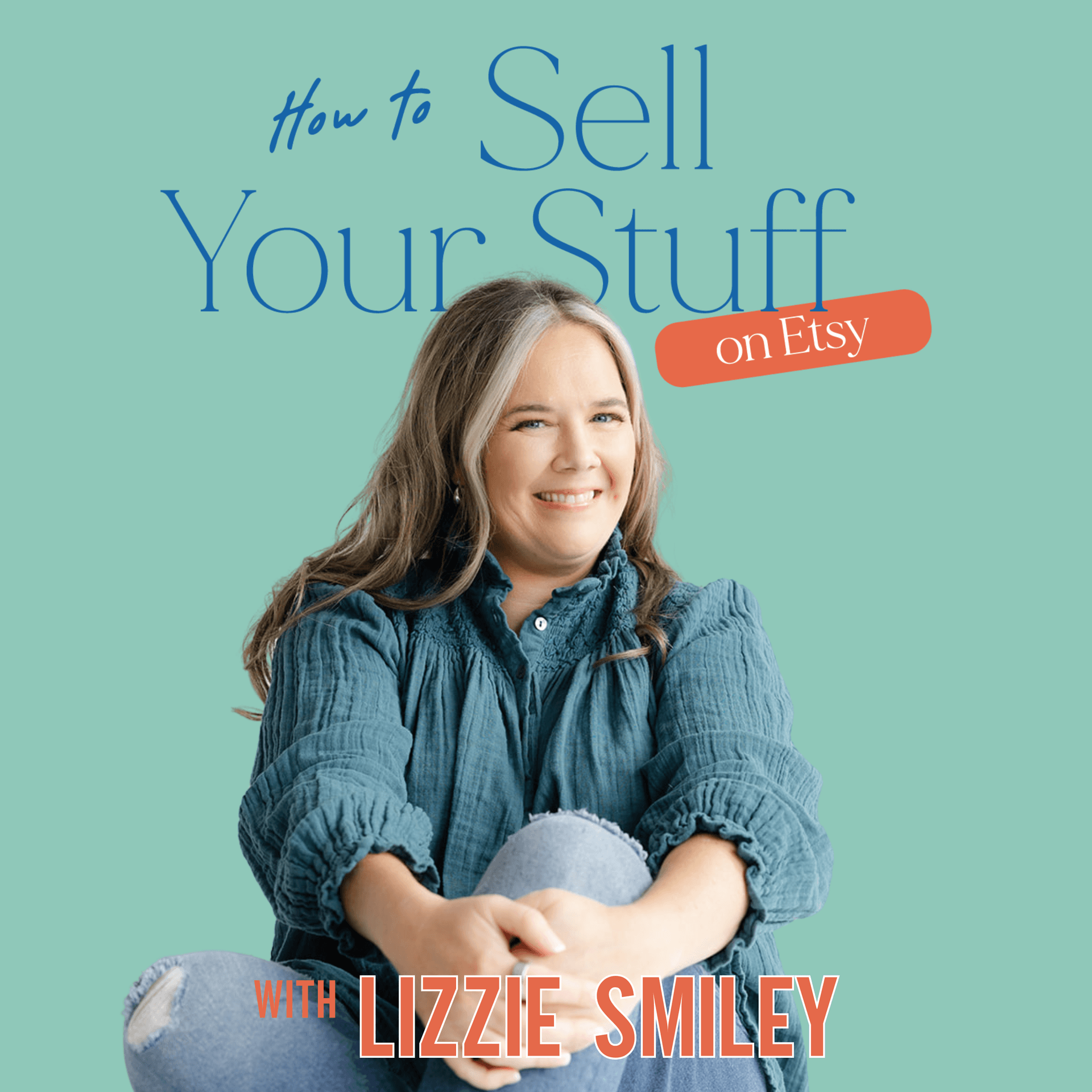
How to Sell Your Stuff on Etsy
Ep 206 | From Handmade Crochet to Digital Crochet Patterns -with Jocelyn of Oak and Marlow
01:05:02
Loading summary
Transcript165 lines
- [00:01]
A
Hey, my name is Lizzie Smiley and I absolutely love helping people connect with their calling and all the tools they need to kick roadblocks and excuses right out the door so they can cultivate the life they dream about. If you want to launch, grow, pivot or scale your Etsy shop, or you've always wanted to develop the mindset and skills to run your own business, then I'm your girl. I've had that entrepreneurial spirit going strong since my very first lemonade stand. And now I'm a work at home mama with multiple online companies and a full time Etsy shop. All while being present with my kids for the everyday chaos and most important milestones. On this podcast, we'll talk about all things business, mindset, Etsy, creativity, dazzling our customers, and so much more. There's plenty of room at this table for you, so scooch on in and let's go. I'm holding nothing back. Welcome to how to sell your stuff on Etsy. I'm so glad you're here.
- [00:58]
B
Hey guys, welcome back to the podcast. I'm super happy to be back behind the mic. Listened to last week, the intro on the replay. I took my daughter on a cruise for her fall break and we had the most amazing time ever. I'd never been on a cruise. I'd always been like really hesitant because I'm not big on crowds and things like that and just like contained closed places. But it was literally, I had the time of my life. It was the best vacation. I was so obsessed. However, on the very last day, we ended up getting norovirus, which is a really, really nasty stomach virus. I was super sick, going home out of nowhere. And then she and I were stranded in Chicago for a week trying to protect husband and son from it. And then we get home and they get it anyway, like you guys, it has been, I had to cancel so many recordings. It has been a whole situation. So you probably heard that last week. But anyway, this is my first interview back behind the mic since all of that. And oh my gosh, it feels so good and it was so worth it. Like, I can't wait to introduce you to Jocelyn, but just like let you know what's going on. So just this week, on Monday, November 3rd, my new template drop service just, just launched. Like it went official. A whole bunch of you are already inside there. But basically what happened was I was looking at what are some other ways that I can support you guys as Etsy sellers, You know what I mean? Like, I'm doing the trend spotting. I'VE got the coaching group and you've got the free content coming out on YouTube and the podcast every week. And people just need, like, time is a really big issue. And so since templates do so well on Etsy, I am giving every single week, I'm dropping a. A new template that you can use. So, like trackers and spreadsheets and invitations and planners and games and classroom activities. Every week it's something different. A lot of times it'll correspond with what we found in trend spotting. So it's super relevant for right now and, like, what's selling. But then you get to take that template and use it for commercial use. You can tweak it for your niche. You can tweak colors and fonts and little things, but the basic thing is there for you. So I'm keeping it super affordable. You join, it's like a membership, but you get a new template every single week in your inbox every Monday. And I'm super excited. Like, we're off to the races and people are loving it. And so if you want to jump in on that, like, by all means, the link is down there. You could even get, if you're in this week, you'll get, you'll be able to still get this week's template. So I'm really excited and, like, get your feedback and all of that. So that's live. It's a way that if you're selling digital products, that you can add another, you know, listing to every, every single week that it's just kind of done for you. And then you can customize it to the point where you feel like you're comfortable, like you're complying with Etsy's terms of, like, having it be something that you've made. If you're tweaking it enough, then that will be great. And I think sometimes these things could end up being lots of listings. You know what I mean? Like, if it's a certain kind of spreadsheet, you could, like, remake it for a whole bunch of different niches. So I'm excited. And then the other thing, like, I know a lot of you are new. I'm getting dms, I'm getting emails. A lot of you are new around here thinking about launching a shop in the new year, or you're just getting started for Q4. And so I want to make sure that you know about what I think is the most affordable, helpful tool to get started with, and that is Profit Tree's. Profit Tree is the main tool they have. The reason it's so affordable is because you just pay once and you get lifetime access to their basic data. And like what you're going to hear me say over and over again on this podcast is you want to make data based decisions. That means that before you create a listing, you want to go look on Etsy and you want to see what's trending right now. You don't want to be creating something that like sold a ton four years ago, but no one's interested in right now. And Etsy itself doesn't give us that data. There are third party tools that integrate with Etsy that do it and a lot of times they can be costly. You're paying monthly membership fees with Profit Tree. You can use their Etsy Rate radar tool to see some baseline data points and it's going to tell you how many times like how new a listing is. That's really helpful to know, like how old one is. It's going to tell you how, how much, how many times it's selling in a month, how much money it's made so far. That data is really helpful for you to be able to establish like, is this something right now that I could create a competitor to and then it would work. And so if you are on a tight budget, Profit Tree is going to be the cheapest way to get some of that data without having to pay a monthly membership they have right now. I don't know how long they'll have it. They have a lifetime access fee at $67 to get their basic data forever. You have to pay again. You might decide down the road you want more of the features that Profit Tree offers and you can upgrade it but for like shoestring budget, to get that baseline data of those numbers, how old a listing is, how much it's making, how much like how many times it's selling in a month, that kind of thing. That's incredibly valuable to help you save time and make better choices on what to create. So I'm going to go ahead and link that below. So grab it while they still have the lifetime offer. I think it's like an incredible deal. Where I mean like ever be is amazing. It's my favorite tool and it's very robust and you can get all of your SEO from it, but you're looking at spending over $30 a month minimum to really get the data. So this is a, this is a great way to start. I want my newbies to know that profitree is there. I will have linked below a way for you to get that that special discount at just the 67 lifetime access. I will have a video showing that. I'll show you on YouTube like kind of how I use it and what some of the data points are. I will also be linking their free ads masterclass. So they teach the founder Hannah G, a friend of mine and she teaches Etsy ads better than anybody I know, way better than I could. And she has a literally a free course about it that'll also show you some of Profit tree and how you can use it to help with your ad data. But it's just going to teach you how to run Etsy ads as well. So enough about that. I just want you to know about it. It's going to be linked below for you. And you know, you guys let me know if you have any questions on it. But I'm super. It's like I'm using it every single day. It's incredible. Let me tell you about our guest today because this has been a long time coming. I've been really excited to talk to Jocelyn and literally was it like last year? Now Bree Dudley is another crocheter who came on the podcast and she's the one who told me about Jocelyn and that's how we got in touch. Or she or she mentioned Jocelyn on the podcast that when she was on it. So this is so, this is like so fun. Full circle moment. Here's what Jocelyn says. She says, hi there. I'm Jocelyn, the maker and creative designer behind Oak and Marlo. Growing up in a family of artists, my mom a talented doll maker, I developed a love for textile arts. I can remember many nights working away on creative projects in my bedroom, hoping no one would hear my sewing machine clunking away in the wee hours of the night. Relatable. Back in 2001, I attended Dundas Valley School of Art in Ontario. And since then I've explored a wide range of creative outlets, from mural painting to sewing, jewelry making and cake designing. In 2004, I discovered crochet and dabbled in some simple projects like hats and baby blankets. However, it wasn't until 2016 that I ventured into crafting handmade items to sell. Drawing on my artistic background, I eventually uncovered a love for designing my own crochet patterns. And that's how Oak and Marlo came to be a space where I can share my original crochet designs with all of you. Every pattern you'll discover here has been created with attention to detail, staying true to my goal of offering simple and beautiful patterns for both beginners and modern Makers Crochet has been my way of finding a little calm in this crazy world. There's something about the repetitive and meditative nature that grounds me when life gets hectic. So whether you're a seasoned crocheter or just starting your yarny adventure, grab your hook and a cozy seat. Let's make something beautiful together. Okay, so she. We're going to talk all about her Etsy story, how she went from, like, handmade and selling crocheted items to moving into patterns and overcoming, like, not necessarily being great at math and stitch counting and all of that. This is one of the best stories ever. So, guys, please help me welcome Jocelyn to the podcast. Jocelyn, hey. Welcome to the podcast.
- [08:24]
C
Hello.
- [08:24]
B
Thank you.
- [08:25]
C
I'm so excited to be here.
- [08:27]
B
I love your story. This is going to be so fun for people to hear. And I just think you've built such an incredible business and shop and your, I don't know, you're like, vision and your humility and everything to me is, like, so attractive. So I, I just, like, I just can't wait to, like, jump into all of it. And I'm just going to come right at you. Jocelyn, I. You. You sell crochet patterns on Etsy, which we talked about in your intro. Tell me, like, why has that been the perfect product for you to sell on Etsy? Because to me, it feels very intimidating, but for you, it's like the. The secret sauce. So tell me all of the things.
- [08:58]
C
Yeah, I mean, there are so many different reasons that it's been amazing. I mean, obviously there's benefits of digital sales, which I know you've talked about, but I think for me, it takes it to another level because in order to make these crochet patterns, which are then, you know, distributed in a PDF form, I have to make this, like, little cute, beautiful, tangible item here in my home. Right. And then I've got this pattern that somebody else can follow where they can repeat and make that same item in their home. You know what I mean? It kind of feels more connected.
- [09:33]
B
Yeah.
- [09:33]
C
It's a story. Yeah. And it's like passing that on to other, other people. So, yes, it's amazing because it's digital. You know, we could get into, like, I'm in Canada. We've had Canada post strikes. I think they're rotating now. But, like, we've had so many, and it's challenging sometimes. And I know a lot of shops struggle with the shipping side of, like, physical items. Right. So this is kind of. It's the next step to that. Right? It's, it's sort of like you can have the same item in your home, you're obviously going to make it yourself. So. Yeah. And I mean, teaching comes naturally to me. I love that. So it feels like another way of kind of like sharing my, my talents and my, my vision for things with other people. So it kind of checks all the boxes for me.
- [10:15]
B
Does it take up a lot of your time? Like, is this a pretty full time thing for you? And like how, I mean, how does that work?
- [10:21]
C
Yeah, I mean, it has become a full time thing for me. In the beginning it was part time because I was working part time as well. I've decided that I want it full time, so. And I've got a few different platforms going on now. Like, I've got kind of a pattern coming out maybe every month and a half at the moment, which is pretty rapid. And then I also have a blog. So I try to be consistent with posting on my blog and just maintaining, you know, keeping up with Instagram and posting things and things like that. It ends up being a. I say full time. You know how it is.
- [10:56]
B
It ends up feeling like a lot. It ends up feeling like a lot sometimes. But you know what? I never thought, I didn't remember to ask you about your blog. So I have to pivot here for a second. People talk a lot about, like I actually recently I had a, I had a blog that was like my main income long before Etsy was, when I first had my first child. And I recently like totally took it down. I'm just curious, like, how is that still profitable for you? Like, how do you use your blog and how are you sending traffic to it?
- [11:24]
C
Yeah, my blog is a work in process, progress. It's, it's not there yet. I do have mediavine, but I'm, I'm with Journey, so it's like beginner mediavine. So it's not super profitable. But I am getting some traffic. I was advertising with Pinterest for a while, but I, I'm not any longer. I do try to get, you know, get regular pins out. Traffic's okay. It's, it's not amazing, but it's fun and it's a place for me. It's another artistic outlet where I can share patterns, like little freebies and extras with existing patterns. So for me, that's what generates traffic for my patterns as well. Because, okay, I'll have something offered for free or an accessory for something that I already have and, you know, that brings in traffic because there's a Free thing. And then people get excited that already have that pattern and there's this freebie. So it's kind of part of the full circle community that I'm trying to create. And it's a long term goal. Right. So eventually I'm sure it will be more profitable on its own, but right now it's just like kind of another working piece of my business.
- [12:27]
B
So where is it hosted or like, is it. Yeah, yeah. Like, is it a Shopify or.
- [12:33]
C
Oh, so yeah, it's a WordPress site and it's E Commerce.
- [12:38]
A
Wow.
- [12:40]
C
Yeah. This is. I mean, this could lead to a whole other conversation.
- [12:43]
B
Oh, yeah.
- [12:43]
C
Making decisions early on in your business in hindsight, because it's always 2020. I don't know that I would have gone with. With Woocommerce. It's a little clunky.
- [12:54]
B
I used that in the beginning. Yeah.
- [12:56]
C
So I may, you know, switch over, but the more patterns I'm adding, the bigger a job it is to do that. So I keep kind of like putting that on the back burner. It's not my favorite platform especially. There was a short time I was doing some physical products, some kits, and it just is not. It's not user friendly in the back end for shipping things for now.
- [13:18]
B
So the point is, for you, the blog is really. It's like when we say, oh, I'm selling on my own website, that's really what you're doing. And then you are blogging about it, but also your Instagram's pointing to it and all. All of that.
- [13:31]
C
That's right. And it's a landing hub to kind of build trust too. Right. Like my little place.
- [13:35]
B
That's just when I think about 2025 blogging, my brain immediately goes to substack. Like the traditional WordPress blog is less of a thing now. So have you played with that at all, Substack?
- [13:45]
C
No, I haven't.
- [13:46]
B
No. No. And I'm not suggesting I don't need it. I'm not trying to put something else on your plate. I'm just curious because, like, we're all out here living, you know, like, I don't have time for Substack. I wish I did. I'm just like, oh, that could be really huge. But it's so, so. Hey, anybody out there who's using Substack to promote their business, you need to reach out to me and we need to get you on the podcast to tell us the tea. Okay. So, Jocelyn, I want to rewind a little bit because your story gets really interesting. You Started with physical handmade crochet products. Right. Can you, like, tell us. Start us from the beginning, like when you launched that Etsy shop. Yeah.
- [14:17]
C
So, well, actually. Okay. So I did start in 2020 during the pandemic. I was I crocheting. Yeah. But I was making handmade things at the time, and I was making these bunnies, and I loved doing them. They were someone else's pattern. I mean, I could go down another rabbit hole with kind of how I got to the. Okay. Yeah. I mean, so it started with that. I was doing that for a long time. I love being able to sell somebody like this finished, beautiful, plush item. Right. So. But my brain would always struggle with new patterns, so I tend to. I just struggle with. With the number counts. It's funny that I'm writing them, but. Yeah, counts and learning a new pattern and new languaging between designers. So I tended to stick with, like, one favorite, and I would just make them on repeat in different colors. And I was using chunky yarn because you can make them kind of less stitches, bigger finished item. Right. But my brain just wanted to go back to, like, blanket making, hat making, where I could just do it on repeat because I just find it so meditative and relaxing. So at one point, I've always been creative. I was kind of talking about starting a business again for a little while. We're now in, you know, late 2022, and my good friend, who's also very artistic, everybody around me is, said, why don't you try writing the patterns? And I thought, I don't know. I even said, I don't know why I do that. It feels like, do people do that? And so then I just thought, you know what?
- [15:46]
A
I'll try.
- [15:48]
C
And I did. And I was so excited because I could take a drawing and just. I used to sew. Like, I've done all kinds of different type crafting over the years, so being able to take a drawing and turn it into this item by switching some of the stitch counts was. It was awesome. I felt like this whole world opened up to me, and my first thing that I wanted to do was make patterns that I could kind of make on repeat and relax my brain and not have too many weird, crazy stitch counts with different stitches to learn.
- [16:17]
B
Yes.
- [16:18]
C
And get both sides of, like, having this beautiful, finished, plush item, but also having easier stitch counts and a more relaxing make. So that was my goal. I set out. I started writing. I think I wrote my first pattern at the end of 22, and then I think I launched one on my Etsy site, which is funny because my Etsy page actually had been there already for maybe seven years. It had sat dormant because Oak and Marlo, which is my business name, I actually was making felted animals, of course. Animals, right. And I had been making them. I had them all listed. None of them sold. They just sat on my bookshelf. I actually have one up there. Yeah. And it. So I reopened it. I thought, is this okay? I thought, well, whatever. Like, I don't really think much is going to come of this. So it's. The name's nice, I like it, and it's very me. So I'll just run with this and reopen this page. And I started putting a couple listings and I think I would sell, you know, one pattern every one or two weeks. And I was super excited when it would happen. Yeah. So, I mean, and then it just, you know, things keep going. I don't know how far you want me to get into detail.
- [17:26]
B
Oh, my gosh. No, I. The way I just, I could talk about it all like these stories. For me, Jocelyn, I could never, ever get bored. It's the absolute best. But you know what I think would be a really fun thing to talk about here is you. You had kind of like a big event that really changed your business. Tell us about what happened.
- [17:43]
C
Yeah, so, okay, so we're 20, 23. I've got a couple new patterns that are coming out. I decided. So I had been for the last couple of years leading up to then, we were really big into chickens. My girlfriend actually had little chickens on her homestead and we were just always looking for chicken themed things. I had been making little clay chickens and we were looking for chicken pants and all the chicken things. So I desperately wanted to crochet like a simple little silly chicken for her. And so using this different yarn, it's. It's mostly what I use now. It's like a thicker. It's called blanket yarn.
- [18:18]
B
I love it.
- [18:19]
C
It's your softer. It makes sort of like, I have a couple little guys back here. It makes a bigger, softer, huggable item. Right. Instead of that traditional thinner yarn that you might use for hats or something called amigurumi, which is a tighter kind of crochet item I actually decided to use. This is so crazy. But I had a pattern called Jolene Kitty and she's just still so dear to my heart. She's very doll like body and with that kind of older style. Like not older style, but traditional style yarn. And the head on her. I always laughed because the head's very simple. It's kind of like a little bowl that's kind of closed at the top to make the ears. And I thought, I'll just use her head and make a chicken. So I made this silly chicken. I took a picture of it and sent it to my sister. And I was like, this is ridiculous. It's cute. But, like, what? So I was going to give it to my friend for, I think it maybe was her birthday or Christmas. And I showed it to my husband, and I'm like, this is really silly. He said, why don't you, like, list that pattern in your shop? I said, nobody's gonna want this. It's ridiculous. It's just. It's like silly, simple thing. And I. At the time, I think I had about 40 followers on Instagram. And I had just started poking around, but I was. I didn't really know There was this huge community of crochet accounts. I think I followed a few handful of my favorites that I noticed them. And I actually reached out to a couple people because I had seen people doing something called a tester call. And I don't. You know, probably most of your listeners are not crocheters, but in this community, it's amazing. So people will do, like, a call for testers and bring people on, and they volunteer to test out these patterns, and they'll kind of show the process and share. So I was too afraid to do that because I didn't. I was afraid of rejection. So I reached out privately to a couple of these makers that I had found in the community, and they were like, yes. And I thought, oh, my gosh, what is happening? I can't believe they just want to do this to help me out.
- [20:15]
B
Yeah.
- [20:15]
C
Then it happened. They tested it, and it went viral. It was crazy. Like, I think I hoped I would sell, Like, I think it was like, 12 patterns is what I wanted to sell the first day. And I think it was like. I don't even want to say it was a lot of patterns on the first day. It was like 130 or something. Like, it was. And I was, like, freaking out. Yeah. And then someone shared it in some, like, Facebook chicken lovers group, like, actual chickens. And it just, like, grew. Anyway, it just was so crazy. And so everything kind of changed. We also, at the same time that. So that was May 24th, I released Mabel Mabel Chicken. And yeah, I. By the summer, we had some crazy things happen, like a flood in the house and like a death in the family. And there was just all this Crazy stuff. And I ended up actually putting my job at the time on pause and I never ended up going back. So it was one of these crazy, crazy, like, things. And I decided to take the boost that that gave. You know, I had more followers now and I had, you know, more eyes on what I was doing, and I decided to run with it. And I really brought my style into my business and kind of kept working at it from there. So, yeah, that's the crazy story.
- [21:31]
B
It is completely amazing. But here's. Here's what's kind of cool. And I think. I think this exists in a lot of circles and I think we live in a time where there are a lot of people who believe like, we do, like, community over competition. This is why I always want to collaborate with other Etsy coaches. Like, I think everyone's amazing. Everyone's got a different way to the top. There are so few bad actors like, you guys hear these. It's amazing. And so in the crochet community, there's a lot of people supporting each other. So you went viral, not because you made some incredible reel that went nuts, but because you had the courage to just share what you were doing. And other bigger accounts loved the pattern, shared it, and then it went from there like this. It's a different. It's a different way to go about it. It's not you trying to hit the Instagram algorithm perfectly. It's about you leveraging community. And I think so many of us could. Could do that. Like, that's one of the reasons I love it is because sure, we love like the, like the, that feeling of like someone just has a reel go nuts and then they sell thousands of their product? But how much cooler is it that like literally a bunch of other crochet people lifted you up and it launched your business to a whole new level. Did you get a bestseller badge on that, on that pattern and on Etsy, or were you selling it from your blog?
- [22:42]
C
Yeah, yeah, no, I, I sell it on Etsy mostly. Most of my sales are on Etsy and, and some on my website. Yes, I did get a bestseller badge on it.
- [22:52]
B
That is just so stinging. Cool. Okay, so because you are a self proclaimed, like, not necessarily great with the stitches and the numbers and everything, I have got to know how you learned how to write crochet patterns. Like tell us, write down that process for us because I'm over here. Yeah, I don't know how. I literally just recently tried to edit. It's over here somewhere. A sock pattern. Because I'm Making socks for someone with really big feet. And I'm just gonna tell you right now, ChatGPT did me dirty. They did me dirty. I had to call my, like, my like, local yarn shop where I'm friends with the owner, and she steered me clear. So, like, I just want to know how you, how you learned this, you know, like. Right. If you know, you know.
- [23:29]
C
Yeah, that's. Yeah, that's terrifying. I can't imagine what Chat GBT would come up with. Yeah. And that's a whole other thing you see sometimes, like these weird AI looking pictures, which is getting tricky to detect.
- [23:40]
B
Yep.
- [23:41]
C
And you know, there'll be comments underneath. Send me the pattern, you know, because I'm seeing this because I'm in the crochet world and it's not real. Like, it's just AI generated.
- [23:49]
B
I don't.
- [23:49]
C
If there is a pattern, it's not going to make that. So. Yeah. And the designing of the patterns was a slow burn. I'm the kind of person, I mean, I've always been the kind of person that once I see something, I have a little bit of information, I can fill in the rest and run with it.
- [24:05]
B
Okay.
- [24:05]
C
So, I mean, it was just, it took me, like I said, it took me a long time to learn the basics of crochet just for my own making purposes. So that was that kind of learning that I'm saying, like, and then, you know, it was really just me with a notebook drawing things out and trying to count out, like, how these stitches increase in this pattern and how you can change the shapes with these stitches.
- [24:28]
B
And.
- [24:28]
C
And it's mainly all just single crochet stitches, which are the main base kind of stitch, which makes it so much easier. So it's a matter of just increasing and decreasing your stitch counts to change the shape. And once I discovered that, it was like, it just opened up to me. So, yeah, it was. I was writing them down in notebooks. I have tons of notebooks with all these notes. And then I. My first pattern that I put into a PDF, I was actually doing them in Word documents.
- [24:55]
B
Okay.
- [24:55]
C
Like, the Mabel chicken pattern was in a Word document, which is insane when I think back. Those amazing testers that have stepped up and helped me. It was just days before I was going to launch that maple chicken pattern. And one of my amazing testers, like, again, I could go on for days about how incredible this community is. But one of them sent me a little video. She'd said, oh, have you thought about doing this pattern on Canva? And I thought I've used Canva for something, but, like, I can't imagine how I do that. She sent me a video of how she was kind of like formatting hers and showed me how to do it. Like, she didn't have to do was just absolutely incredible. And so then I sat up because I was like, oh my gosh, another creative outlet. And I went nuts. And I reformatted the whole pattern days before it came out, which was just so exciting for me because now I had the creativity on this side of designing the pattern, but also the creativity of playing in this PDF with Canva. And at the time I just had the free Canva. Right? Oh my gosh. Yeah. So that was so cool when I got to that point. And then it's kind of from there. I've just been. I'm still working obviously in Canva, and yeah, it's just growing from there, so.
- [26:03]
B
And I'm a little shocked. I was very ready for you to tell me there was some special software, the. Some special, you know what I mean, where you, like do patterns and I'm sure that that exists, but the fact that all of you, like big time crochet designers are literally designing it or like literally writing in Canva that I don't know, something about that just like, makes me smile. Do you know, like, how encouraging, like how, how like, I mean, anyone could do that if they learned it. And I want to know, though, Jocelyn, the math. Has the math been tricky for you? Or do you just. Do you have like charts and things that help you make it easier? Or is it. Do you just get to use your brain and I need to just calm down.
- [26:35]
C
I don't know, it just. It takes a lot out of my brain. But it's getting easier because I've gotten used to it and I have a tech editor now and that has been just a gift that has been game changing since just the summer. But you know, my testers have been amazing too. Up until then, even they would catch things if there was stitch counts off and sometimes I would have hiccups or miscalculations. It's not too bad. I think I'm just so driven to get this thing perfected and shaped the way I want that I just find a way to like light up my brain and just figure out the numbers. I'm just really motivated.
- [27:10]
B
Where does one find a tech editor?
- [27:14]
C
Oh my. I mean, I just happened to know someone who had tested for me in the community and she. I would say we'd become friends.
- [27:22]
B
Community.
- [27:22]
C
And then she Reached out to me at one point and said, guess what? I'm starting to do this. And I thought, what? I never knew I could have a tech editor. And so it was somebody I already knew and trusted.
- [27:33]
B
Wow.
- [27:33]
C
And I just feel like I won the lottery. She's absolutely incredible and a game changer. So I still have my testers, but she does my tech editing. So she gets her hands on it first. She'll look at things if I'm confused as I'm building my pattern like she is, is just. Yeah. It's amazing.
- [27:48]
B
So that feels just like such a game changer. Do you know what I mean? Like such a. Like a load off.
- [27:53]
C
Yeah. My friends. So I can focus on the creativity to creative part.
- [27:57]
B
Okay, so I have to look at this because my phone. Because since we're talking about the community, didn't. I think I got in contact with you because Bri Dudley told me about you. Does that sound right? It was a long time ago. Now. Does that sound right to you?
- [28:08]
C
It's possible, yeah. Because I remember Bri was on your podcast from Dear Little Dudley.
- [28:14]
B
Is her. For anyone listening, Brie is. Is Dear Little Dudley on Instagram. She came on the podcast. I'll have to link the episode because I can't remember, but she was just, like, singing your praises. She's also. She's actually a coach in our coaching group in this. In my school coaching group for. So she's like our resident crochet. We should put you in there too, Jocelyn. That would be really fun.
- [28:34]
C
Cool.
- [28:34]
B
That would be really fun. I mean, she's. She's super busy with kiddos and everything, but I had to shout out to her because that's literally how we got connected, y'. All. Yalls community is really special. Like, seriously.
- [28:44]
C
Yeah, it really is. And it's unique. I think I made wedding cakes years ago, and the community was just different. It was not like this. It was also. Things have changed. Like, that was years ago, and people didn't use social media the way they do now. But this community has tried really hard to stay, you know, in a place where we're all helping each other out and lifting each other and celebrating each other. And I. I don't know, I've just never met so many people that are so generous and kind as I have in this community. It blows my mind all the time.
- [29:17]
B
So, yeah, here's what I know about our culture right now that, you know, the media and everything likes to make sound so divided and are there issues and divisions and, like, terrible things 100%. I would not minimize that for a millisecond, but just getting emails and DMs and communicating with this community, the how to sell your stuff family every single day. I don't care, you guys, what niche you are in. You will be able to find people like you who want to collaborate and help. It may not be every single person you talk to, but, like, there are so many of us out there that even if it doesn't exist, like, let's say we went back to the wedding cake community and. And there may be a natural thing there where there's just like kind of more competition happening. I promise you, though, in that space, you guys could go create it. If it doesn't exist, create it because there are. There's more than just one of you who cares about the collaboration. I don't know. I just think. I almost think the division in our culture is pushing some of us closer together. And that part, like, we have to celebrate the win we get out of it, right?
- [30:14]
C
Yeah, it could be. Yeah. I'm not sure why this seems different here and I don't know what other this already exists.
- [30:21]
B
Do you know what I mean? Like, a bunch of people have already come together and they're really loud about it. Like, that is what. You know. Who knew crocheters could be so loud? In a good way, though. Like, they're like, boisterously sharing their support of each other, you know, that's like, where it's at. It's so beautiful. It is really special. It's just established, I think, but. So let's actually talk about social media a little bit, Jocelyn, because you're. I'd love to hear about your strategy, like, and not only your strategy, like, where are you marketing and how. What kind of content do you create? But I'd love to know too. Like, when you're looking at your Etsy stats, assuming you do, some of us don't even get into the weeds, so if you don't, don't worry about it. But I'm just curious if you looked at the data to see how much of your. Your sales are coming, like, from Instagram or coming from your social media versus organic on Etsy.
- [31:04]
C
Yeah, I had to look at this and did I write it down? Because I am not a numbers girl. So I'm really bad at that sometimes. I'll get my husband to do that. He's my numbers guy. Same. And so I looked at it because, you know, I was just kind of thinking about it before we were chatting and now that I'm going to tell you. I think I'm going to end up saying it wrong. It's 60. 40, I think it was. Yeah. 60 Etsy.
- [31:30]
B
Wow.
- [31:30]
C
And then 40, I don't even know what's normal. And 40 organic traffic, which includes Etsy ads. So that includes social media and stuff like that, like Pinterest. Wow. That's just. They have a new tab on Etsy that laid it out really nicely and you could dig in kind of deep. So it was kind of fun to look. I don't usually, but it was nice to go and have a look. And then I also checked in on my Etsy ads and was like, oh, it's time I look at this and review. So that was good.
- [31:58]
B
I'm sorry I put so much more work on your plate just by asking the question.
- [32:02]
C
It needs to be looked at. So no.
- [32:05]
B
With how much work you're doing and what's happening on like Instagram for you and in the community, I'm, I'm. I think it's very interesting that Etsy is still organically doing more for you than obviously what you're doing is what worth it. 40% is no small number. Like that's a big deal that you're contributing to your business. But I think it's really encouraging to others listen who listening who don't necessarily have the following yet. They're going to be starting from scratch to know that the Etsy algorithm by itself can give you a decent business like that is. So I think that's so cool. So talk to me about Instagram. Do you do TikTok as well or is it just Instagram?
- [32:37]
C
I have a TikTok, but it hasn't been updated in many, many months. So I try to like have some videos there sometimes, but I'm not regularly on it.
- [32:48]
A
Are you a print on demand or digital product Etsy seller who's tight on time or still learning all of the Etsy secrets? I totally remember the days of having no idea what product to create next before I learned how to make those informed decisions. So I can really identify with where you're at. I know how stressful and frustrating it can be to just create listing after listing and see little to no results. You wonder what you're doing wrong and.
- [33:10]
B
Just you just want to someone to.
- [33:11]
A
Tell you what to create that's actually going to sell. Where are those opportunities? So let me give you a leg up with my weekly trends and opportunities report. You just join my membership and every Monday I'm going to send you an email with a list of exactly what is trending right now with a video tutorial showing you how I found those trends and how to apply them in your shop. We're taking guesswork and time, extensive time off of your table. I'm also going to send you five print on demand addition digital product opportunities that are growing in demand right now, helping new shops make sales and still have very low saturation in the marketplace. So your tight schedule, your newbie status doesn't have to hold you back anymore. I'm going to help you earn while you learn. You can grab my free demo to start and see an example of what the weekly trends and opportunities email looks like right from the show Notes, see what you're going to get and I will see you on the inside soon.
- [34:03]
B
See, I'm super curious. I feel like this is, this is Lizzie's opinion, but opinion based on like really watching it. I feel like unless you're selling on Tick Tock shop, it's kind of hard to like, people want to stay on Tick Tock, you know what I mean? They're not going to the link as much as on Instagram. I feel like it's a lot easier to get people to click a link. Right. Like I don't know what that's about. And, and here's the thing, guys, prove me wrong. So again, if you're listening and you are crushing it on TikTok and you're getting sales to your Etsy shop or your website from specifically TikTok, I want to hear about it and I want to interview you. So tell me. But that's just my. From all the people I've interviewed, what I've heard. That's my gist. That's what I think. So what kind of content are you doing on Instagram? That tends to work the best. And if it's still just. No, it's really just the collaboration, that's great too. But I'm just curious what's working well for you.
- [34:56]
C
Yeah, I feel this sounds disappointing that I don't pay attention as much as I should be to.
- [35:02]
B
That's exactly what I want you to do. I'm always telling everyone, stop looking at the data. Stop it. It doesn't stop. I know.
- [35:09]
C
I never really have been good at that. I do feel like the videos for me right now are still doing a little better. Some reels.
- [35:16]
A
Okay.
- [35:17]
C
I'm finding I'm starting to get more consistent. It's, you know, I've had to work at one piece at a time in the Business. Right. And so that was just something that was really sporadic. I was kind of doing it when it worked for me and I had something to show. I'm trying really hard to be consistent. And I do feel like maybe it's helping a little bit algorithms to maybe post just. I think it doesn't even matter necessarily how often. It's just a consistency and that comes up like in layers through this business. Right. Just consistency, consistency. So I'm trying to post, you know, twice a week, ish kind of thing. And I do feel like that's better. But I would say that reels do better. And, you know, there's. There's some of them that are going to obviously have higher numbers, but it's because of this community thing that we were talking about. Like, if I'm putting out a tester call is what we're calling it, there's going to be people sharing and things like that.
- [36:06]
B
And.
- [36:06]
C
And it's getting shared because it's part of that process. So, you know, that's going to bring up numbers too, with views. Yeah. But I wouldn't say I really have like a trick to it other than just right now being consistent. There's things that I want to do. I don't really want to make any changes, but I. I'm kind of at the point where I feel like with AI and things going on with that, I feel like I need to bring in a little more of me into what I'm doing.
- [36:30]
B
Yes. And that's hard.
- [36:33]
C
So this is great.
- [36:35]
B
We're stretching Jocelyn. We. I had to. I had to work on Jocelyn for a while to get her to sit down with me today. But we're like one step at a time. So like, with the content, is it. Do you find that what works really well is like video footage of the. Of the product itself or is it more like. And I guess you sort of just answered this, but I'll still ask like you with just captions and things like that or what. What tends to work well. Is it showcasing the product?
- [37:01]
C
Most of my stuff is showcasing the product. And that's. I think that's where I need to expand a little bit, is have a little bit more of the process behind it and the story behind it and me and instead of just the product because it's great for people to stay up to date with what's coming and because I've had so many, like, I've had frequent new patterns coming out. There's been lots of content, but it might not always be like that. And people might want a little bit more of that background story and kind of what goes on behind the scenes. So I'm hoping to trickle a little bit of that stuff kind of in, you know, over the next few months.
- [37:35]
B
So the great thing about that too is that I don't know what you're like long term plans are, but the more you put yourself out there, then down the road you could become the coach who helps people launch a crochet business.
- [37:47]
C
I would love that.
- [37:48]
B
That would be like, that would be the next level. Like, that would be like the 10x from where you're. You're at of creating this stuff is then being able to raise up not just as being a tester for them, but actually teaching them everything you've learned and becoming the coach.
- [38:01]
C
Yeah, well, let's just say everybody keep your eyes out and ears out. But we'll see. There's some fun plans coming for next year, so I'll be sharing more about that soon.
- [38:11]
B
I love it. The natural teacher. The natural teacher is going to be good. Oh, have you done anything with carousels.
- [38:16]
C
With photo carousels on?
- [38:17]
B
Yeah.
- [38:18]
C
Yes, I and I definitely do use those especially now that I've realized kind of how they work a little bit about how they work just because I guess my understanding is that if you're scrolling and you see a post, next time you scroll past that post it's going to show you a next image from the carousel. I think Pinterest kind of works the same way. So yeah, I've been using those. Instead of just posting one photo, I try to post multiples. I guess that's what you mean.
- [38:43]
B
Yeah, no, definitely. I would just think versus the reels like are the care. I know like probably static. One static image is harder to do to get to do watch on Instagram. You know, like when I just post a. And you know like about the podcast or what the episode was, it's not usually going to get as much traction as if I do a reel, but carousels do really, really well.
- [39:01]
C
I'll have to go back and look because I have been trying to mix, mix them up just reels and carousels. So I'll have to look and kind of compare the two and see.
- [39:09]
B
Yeah, so interesting. And we're at like in different spaces. Okay, so you said that you, you're getting some, some business from Etsy ads. Tell us about that. You know, were you like reticent about ads or did you start them right away? Like tell just give me your thoughts on them.
- [39:25]
C
Yeah, I mean Again, it's not something I've been really digging too deeply in the weeds over. I, I didn't do them right away, but I think after a little while I decided to put a little bit into my chicken series because I have that maple chicken pattern that came out and then I have other sizes that came out. So I did for a little while and it looked like it was profitable. And so then I actually have it set to automatically add any of my new pieces in there. And then I'll go in and edit and remove if I don't feel like it's really paying off to have it in there. So. Yeah, yeah. So I do think that they're good. To me, it looks like there's been a really good, like, what do you call it?
- [40:06]
B
Roi? Return on investment.
- [40:08]
C
Yeah, that's. I couldn't remember the term. Yeah. So it looks like most of the time they're good. There's a few that have been, eh, okay. And I just removed them because I feel like you're taking up space when those funds could be allocated to the other ones that are doing better. But that's kind of the extent of my understanding.
- [40:24]
B
Well, and that's you, you've, that you've done exactly what I would have suggested. Like, you get proof of concept. You've got something that's selling organically on its own so you know people will buy it. Then you put ad spend behind it. This is why. And guys, if you want to learn more about Etsy ads, I will link Hannah's ads Etsy Ads Masterclass. It's completely free and it will teach you. You, you will get more than you would for a paid course on ads in that free class. But for me, Jocelyn, when I, I, I had heard be careful with Etsy ads because you can lose a lot of money, which I think if you don't know what you're doing is completely true. And, and so with my signs, I got them to where they were selling organically. And then what happened? For me, I got to about like $6,000 a month I was making on my, on my signs. And then I turned on Etsy ads for the same things that were already working. Just like you said, you had proof of concept on Mabel the chicken. I'm super crushing on the name because I have one of our kittens is named Mabel. So I'm just like, oh, Mabel, Mabel would probably eat a chicken. But we'll forget that for right now. But I turned on Etsy ads on those same listings and I was able to Scale like to like. My biggest month was $13,000 in signs and I didn't want to get bigger than that because I only have two hands and I had a child. But it was completely right, it was completely crazy because that was the big thing I did was I turned on ads. You just have to know, just like you said, you have to, you have to get proof of concept first. You don't have to understand all of the, you literally just have to be able to go in and review them every few weeks and be like, okay, this is still making it. This, I'm still making a profit running these ads. Which profitree fixes that and tells you for you if you're not good at math. I really wish I'd had that back then because me sitting there with my like calculator and pencil was not, was not working. So I just think people need to know but I think you've done it literally perfectly to this day I'll still go in and I'll like I'm particular. I'm not having it on my whole shop. I'm having it on specific listings, turning them off after they're slowing down, paying attention to, you know, to all of that. But it's not, not, I promise it's not rocket science, guys. So just there's, there's more data on it. But I love that you've, that you've done that and I think you're like a perfect testament to how, how it can like, I mean it, it's contributing to a 40 growth in your business which is a big deal.
- [42:34]
C
Yeah.
- [42:35]
B
What about, is there anything you wish you've done differently over the past couple years?
- [42:39]
C
I. Yes, there always are going to be things I think too because it happened quickly. I mean there was a slow build up to the business and then it kind of, of got on its feet quickly. And so I made a lot of decisions quickly. I think that if I were to go back, I would probably take a minute to decide how I was going to present my like my photography has been fine, it's worked. But I think branding and photography together for my Etsy listings might have been something I could do better and have more consistency between my listing photos, things like that. I think because when you go to that shop it's really important that it has a certain feel and you know, I think mine has developed that over time. But having that branding in your colors and maybe framing and, and things like that on your photos so that when you look at it, everything is just relaxing to look at it Looks consistent and clean and, like, you know what it is. And in hindsight, I guess I wish I had a better plan for that because now I've got these listings that have been great and I have a decent photo on there, but I don't want to really swap out photos now because they've done well. And here my shop is looking fine. It still looks clean. It's just that I see inconsistencies in the photos. So that's one thing.
- [43:59]
B
You're being a perfectionist, but I hear you.
- [44:03]
C
But it's important, I think. Yeah, maybe I am.
- [44:05]
B
But, yeah, I think that cohesive look is really important. But I think, like, I love how you did it. Like, so what? Here's what breaks my heart, Jocelyn. This is what I want to, like. I want to, like, I don't know, encourage you about it. I see people who wait two to three years to even start because they're so scared of that. And I will not ask you how much money you've made in that amount of time that you would have lost out on if you were waiting to have the perfect cohesive brain. Do you know what I mean? Like, actually. And as you go forward to teach people the fact that you can tell them that you did it messy is, like, it's going to be so empowering for the person who's literally so scared to start because of that.
- [44:42]
C
So, yeah, such a good point.
- [44:45]
B
Good job. Thank.
- [44:46]
C
You know, yeah, and I was thinking about this too, like, I think at the time, because on social media, a lot of pressure can come from social media. And really, I was hard following. Yeah. In case you didn't know.
- [45:00]
B
That'S crazy. What?
- [45:03]
C
It's wild out there.
- [45:04]
B
Right.
- [45:05]
C
So I was hardly following anyone. I think I felt fearless because I didn't. I didn't know this community was even there. So everything that I did was very organically me, and I wasn't afraid of just doing me right. And I think you're right. I think if you get too far in, you could easily start questioning yourself and your own style and your own why and what it is you're doing for who. Right? It can just get all tangled up when you have all these other voices because it is noisy out there.
- [45:36]
B
Yeah.
- [45:37]
C
So I think taking the time in the beginning of starting your business to decide what your. What filter you're going to put everything through. Right. Like, what's important to you? Who are you doing this for? Why are you doing this? Right. So that when you go out there and you jump in, you feel Confident that you have a good foundation. Yeah. It's just something that I was lucky enough to kind of just get tossed in because I didn't question anything. So. Yeah.
- [46:03]
B
I wish you guys could see some of my original pictures of my signs leaning against a tree, which I thought was going to be great because I loved nature. And let me just say. You want to talk about being messy?
- [46:20]
C
It's hard to navigate in the beginning.
- [46:22]
B
Yes, absolutely. What about what's something that's been, like, easier or more fulfilling than you expected? Because, you know, again, we look at it and you just talked about something that was actually kind of overwhelming, like, oh, this whole doesn't look right. But what was something that was just so easy and natural and kind of surprising in that way?
- [46:39]
C
Yeah, I mean, I guess I didn't know that once I learned this type of expression of my artistic ideas, you know, that came easy to me. I had no idea that it was available to. To crochet these things. Right. So for me, I have an explosion all the time of ideas, and I just feel like it's the most incredible outlet. So that's something that's been incredible. One thing that I have loved is I get emails quite regularly from people all over the world because, again, it's digital.
- [47:10]
B
Right.
- [47:10]
C
So I'm reaching really far. Just showing me a picture that they've made of something. And some of these stories, I can't explain to you how they just. They're so moving. Some of these stories where teachers have had items that they've made for my patterns in their classrooms to help students or something was given to a loved one that was going through a hard time. It just, you know, and sometimes big kids are getting these things too. Right. And I just have such a heart for these big kids. My kids are older, and I know that they need that stuff, you know, just as much as the little ones do. So, yeah, I just. The stories that have come out of it, and some people that have started businesses because of this maple chicken. That is just. That is my. Why, like. Right. And this is the kind of stuff that brings me joy. And now that I can see, I see other people are having. They're receiving joy, too, in different ways. And so that has just. That's life complete. That's what, like, fills my cup.
- [48:08]
B
So, yeah, I mean, how we, like, you know, get into it for a creative outlet or we get into it to make money or something like that. And it turns out, like, the things that really overwhelm us with just joy and gratitude are not bad at all. It's totally about how it connects us to other people and makes us feel a little less alone and, like, we're contributing a lot to the world. You know what I mean? Or, like, more than maybe we thought we were.
- [48:28]
C
Yeah, totally.
- [48:29]
B
I agree.
- [48:30]
C
A bigger story than maybe you'd expect. Yeah.
- [48:33]
B
Yes, I would be. I would literally be a soppy mess. Like, hearing about teachers using them in classrooms or like, someone getting chemo snuggling their stuffy. Like, I can't. I cannot. Like, I cannot. Oh, my gosh. The way.
- [48:48]
C
Yeah, sorry, go ahead.
- [48:49]
B
No, I'm let. The kittens are literally trying to pound the door down. No, I was gonna say the way at 43, like, I just want a stuffing. I just want someone just give me a stuffed animal. You know what I mean?
- [48:58]
C
Right away for everybody. Right? So, yeah.
- [49:02]
B
Especially handmade like that. Do you know what I mean? It's not. And, like, not to, like. It's not just like something from the shelves of Walmart. It's something that, like, someone had to. I can't. I cannot. What. What tips do you have for new sellers, Jocelyn?
- [49:13]
C
Yeah, I think, I guess we sort of touched on that. Just knowing your why, right? And kind of having like a. I guess like a vision statement, maybe that sounds really official, but taking the time to kind of frame out and draw out like a. What is your style? Why are you doing this? You know, to build, like a really good foundation. I actually was writing some thoughts down earlier.
- [49:34]
B
Why do you think that helps? Cause I think we hear that kind of those tips all the time, and I think people sometimes, like. I'm really glad you're saying it. Why do you think having that vision statement or that why in the beginning makes any difference for somebody versus just like, just doing the work?
- [49:48]
C
I mean, you can lose yourself so quickly. You can lose your style and then. And then you wake up one day and you don't know why you're doing what you're doing. Right. No matter what trends change, things change on the outside, but your personal style really doesn't. I mean, sure, it can a little. But genuinely, your deep, deep style and your tastes and the things you love aren't going to change. You always think that you're alone and nobody would maybe appreciate your style. And that's kind of. I would struggle with that sometimes. Right. And I thought with some of my earlier patterns, I thought, well, who would really like these? They're so personal to me. But it turns out that there are other people out there. There's so many of us that are alike. So, you know, then you can put out something that's really you and feel confident that you know that that's just. That's you, right? The other thing is too. I mean, for me, one thing, if you're a beginner that I struggled with in the beginning is I tend to be the kind of person, I think we're all a little like this is I will have bouts of energy where I've got all kinds of motivation to do something, a big idea. And then weeks will pass and, you know, I've been just, I don't know what, living life, doing other things or working a job, coming every day or like five days a week or four or three days or whatever it is that you've committed to. And just consistently showing up to start building your foundation and do the work even when you don't feel like it, I think is one of the most important things. There was a time early on I was listening to your podcasts in my ear and crocheting, and I was working on building my Etsy shop. And I actually had this little habit tracker I was using at the time, which was a game changer. It was like a $10 download, and it was an Excel spreadsheet that looked really cute. And I love cute things. So I got right in there and I made like a yearly plan and my goals for the year. And I think at that time I wanted to bring in $200 a month extra for our household. I was afraid to write it because I didn't want to put the pressure on myself and have it not happen. But that was what I had decided at the beginning of 2023. For that year, it was really cool because it broke down my goals and then what I'd have to do monthly and what I'd have to do in the nitty gritty daily to get to that end result. Because those goals mean nothing if you're not doing something daily to get toward them. So I'm the kind of person who kind of runs on big ideas, and I'll run and I'll give everything to that idea. And then I kind of have like a quiet time after because I've kind of worn myself out a bit. It's just creative people, I think, are like that. And so it would have been easy for me not to be consistent. But I pushed through and I was consistent and I did a little bit every day. And I think that's what built the foundation for kind of what happened over that year. Along with other things, there's obviously other things that happened in my favor that there was luck involved and. And so I can't take credit for the entire thing turning out the way it did. But I think once I was realizing that I had been kind of given this opportunity, I feel like I was ready to take on the weight of moving forward with what I had been given. Felt like kind of a blessing, right? So, yeah, I had that ready to go. I had routines and habits already in place to keep going with it. So I would highly recommend building out something like that, you know, and having some consistency and a framework. So.
- [53:04]
A
Are you brand new to Etsy, about to get started, or struggling a bit to find your groove? What I'm about to say is just for you, okay? I can completely relate to where you're at because I think I can help you achieve success faster. When I first started my Etsy shop, it was not one of those success stories that we hear, you know, on the big YouTube channels, even on this podcast, where I just had crazy success. And it took off right away, right? I all but failed for my first.
- [53:27]
B
Six months, just like a lot of new sellers.
- [53:28]
A
And so it's very relatable. And the issue for me was I didn't understand demand, for one, I didn't understand SEO. I was way too broad in my search terms and I didn't know how to position my product so that customers just couldn't help but click add to cart. And so once I learned those things, I went from making about $25 a month in sales to $6,000 a month and up. And in the holidays, I would even have $13,000 a month, like at my shop peak. And the thing about me, if you've been here for a minute, you already know this. I'm a terrible gatekeeper, okay? When I figure something out, when I crack a code, when I get excited, I cannot help but tell everybody who wants to listen. It's like either my. My best asset or my toxic trait. I can't decide. But I put everything that you need to know to fill that beginner knowledge gap into a low ticket, just under three hours beginner course that I have called Six Figure Secrets to getting started on Etsy. In it, I'm teaching you how to find what's in demand for your niche, how to find and use trends, how.
- [54:25]
B
To start your shop.
- [54:26]
A
If you're worried about that part, SEO strategy to find the micro niches where the opportunity is, how to understand the Etsy algorithm, and a ton more. The whole thing is bite sized videos, not long form, just small bite sized videos. Zero fluff. And to the point, you could get the course today, go through the less than three hours over the next couple days, launch your shop this weekend and have sales coming in as soon as Sunday. So let's get you the few missing pieces of the Etsy success puzzle, those little tweaks you need to make so you can start making the sales that you deserve. Because I have never been more convinced that there is room at this table on Etsy for everyone and the opportunity is so ripe right now. I am in the, in the numbers, in the data every day and my mind just keeps expanding on the possibilities. Okay, so as a special treat, use the code save50 to save $50 on the six figure secrets code course today. That's $50 off with a coupon. Save 50. And by all means DM me or shoot me an email when those sales start popping. Because I want to celebrate with you.
- [55:28]
B
I really like. I know. Because I talk a million miles an hour. I know I have a lot of people with ADHD who listen to the podcast and I hear over and over again, you're like, see, I. You. I don't see. I'm sure I just don't see it. You are so like, put together. But I get it. Like, we learn how to mask it so well, right? Like, you've probably been asking since you were a little girl, but. But they're asking me over and over again, like, how do I overcome, you know, the squirrel syndrome? Like, how do I. And the fl. And the, and the. What is it? The. I can't think of the, the shiny object syndrome. Like, and I was just reading about this on TikTok. I think it was either last night or this morning talking about how our. When you're adhd, neurodivergent brain processes dopamine differently. And so that's why we can get super obsessive and have these massive bouts of energy where there's tons of dopamine and we can be really, really productive and then we can go through spells of like, weeks with no motivation. That still happens to me. And I always call it burnout, which, you know, who knows, I. A little bit of both. Right. But I, I wish I knew. And I don't know if you and I have any thoughts we can share this. Like, what we could. How we could encourage people. I think I'm not an expert, so I don't know what's going to work for every single person, but I think I try to Look, I. For me, work is play. Like when I'm putting together podcast guests or working on one of my own Etsy shops, or thinking about what next thing I'm going to release to support you guys, whether it's a workshop or a service or whatever it is, one of the ways I keep myself engaged in the work is to allow myself to within guardrails, have something new that I can be creating so that when I have to go do something mundane, like put together show notes, for example, I can then reward myself with that dopamine hit of that newer thing that I can work on. I just try to keep it again in the guardrails of.
- [57:24]
C
Of.
- [57:24]
B
It's got to support Etsy sellers. You can do whatever you want, Lizzie, but it's got to support Etsy sellers. And ideally it's got to bring. It's got to help our household income, right? Like, I'm a critical part of that. And so. But beyond that, I can find lots of ways to be creative. And that's why I think in Etsy shops, I think letting. Letting yourself be a little more free. Like, it doesn't have to be. Not every single listing has to be for the dachshund, mom. Do you know what I mean? Like, let yourself. Let yourself. Don't be so rigid about it. So I don't know, Jess, I'm putting you on the spot, but as someone who's like, in this and also has had to discipline yourself, by the way, guys, I started this podcast in 2021. This is the longest I have done one thing consistently, every week or in the beginning, twice a month, ever. Like, I can't, you know, you.
- [58:08]
C
That's incredible.
- [58:10]
B
Well, tell you what I really learned. This is going off track now, but I really learned that people aren't joking when they say the results come when you just stick with it long enough. Like, what are they? An old blind squirrel finds a nut every now and again if he just doesn't give up. And I am every day now really astonished by, like, yeah, we really overestimate what we can do in six months, but we underestimate what we can do in two years. And that's the problem for, like, the neurodivergent brain. You've got to find ways to get yourself the dopamine within the project that you're doing. And you've got to find ways to re to if you're going to have yourself because you have to do, do things that are more mundane, that you don't enjoy, plan something that will really? That will, that will spark joy for you for right after as a reward. That's like my best tip off the cuff. Do you have any like, how do you do that? How do you make yours? Because you've now since 2020, you've been, you know, you too, you're in it.
- [59:03]
C
Yeah, I totally agree. The new shiny object thing is a struggle. Like, you know, and for me I can see it because I'll have an idea for a new pattern and I'll write it down in notes, which is super scrappy and messy. It's not cute in a canva doc and I'll make it. And then I'm like done. I did that. And now I'm like, oh, I have to now actually put this to the canva doc and have and that it can take weeks. Right. And although I do love doing that stage switch tasking is really hard for me. I want to just crochet things and then honestly if I get into like into my canva docs and I'm deep in the weeds and I'm right in there, I also don't want to go crochet anymore. I just want to do the one thing. So it's hard to kind of tear yourself away from back and forth between tasks. I struggle with that. I tried for a while. Doing one day is all this, one day is all this. I thought that would work best for me. I actually feel like it works better to have maybe two goals that might be kind of opposites and that's okay through the day. But with that morning goal, it's all the computer stuff. I cluster the type of work it is and then if it's like hands on stuff like crocheting or taking photos, like process photos that's together, I switching. I just feel like the hands on stuff versus computer stuff for me feels really different. So yeah, I mean you do have to love what you're doing. Yeah.
- [60:27]
A
Yeah.
- [60:28]
C
Less switch tasking. Right. So that's what I call it.
- [60:30]
B
I don't know. But also bundling. You're like bundling your stuff. So I actually, I do the same thing that I think about it, I'll be like, I'll get so bogged down by like building some new thing and then I'll have to like put it aside for a day or two and I just go design for my Etsy shop. I just go, I'm going to just go play, you know.
- [60:47]
C
Yeah.
- [60:48]
B
So like it's that. Yeah. But like bundling those tasks.
- [60:51]
C
Same like tasks. Right, Right. A little easier yeah. So, yeah, I find that helps. And I mean, in the end, you still have to love the work. So it can be fun to have a finished crochet item, but if you don't really like crochet, you're not going to be able to push yourself through that. Like, you can't just be going after that finished product. Right. You have. You do have to ensure not everything is going to be a favorite thing to do or a favorite task, but you do want to find something to get into that you love. Like, if you can't stand working in Canva, which I can't imagine that, but if you can't stand working, but you know, that's probably not going to be. You're not going to want to be making digital products. Right. So it's. If that's. I guess I'm assuming Canva is like the only platform to be doing that kind of thing. It's the one that I go to.
- [61:38]
B
Kindle, Photoshop. Yeah.
- [61:39]
C
Yeah. So, yeah, I mean, it's this fine line. You want to find something that you love and that's going to motivate you enough to do it. But also, you know, there's going to be things that you're going to have to push yourself through. So.
- [61:51]
B
Yeah, thanks for letting me put you, put you on the spot there because I'm always just trying to figure out how can I encourage people who are feeling that, you know, Like, I really. I know what that feels like and I wish I had more tangible, like, here's what you do. But. So thank you so much, Jocelyn. Where. Where can people find you and connect? Like, if they want to follow along, if they want to reach out, where's the bet? Where are the best places?
- [62:10]
C
Yeah, so Instagram's probably like where the most stuff is happening. That's where I try to. I always have stories up of things that I'm working on or sharing. I try really hard to share other people's pieces that they've made because I just. The talent in this community is crazy. So I will try to share as much as I can into my stories. And then I'm, you know, trying to consistently post stuff. So there's new patterns coming all the time. So Instagram is the place to see all that. And then I would say if you want to get in touch, you can email me at hellocan marlo. And if you. I guess, yeah, my website, oak and marlo.com. so that's kind of the hub of everything there too. So you can access all my latest Patterns there, blog posts, freebies, things like that. So it's kind of a good landing place online.
- [62:53]
B
So I'll have all of that linked for you guys in the show notes, as always. But, Jocelyn, first of all, I want to tell you how much I respect your. Your courage, and you're pushing yourself out of your comfort zone to do this. I know you had to. You had to chew on it for a bit. And so I just. I, like, I really admire you for. For being willing to do that. Like, as it is in business, we're doing this every day, right, Putting ourselves out there. But you, like, have really done that this time, so just like, wow, you're amazing. And. And thank you so much for just being willing to share and encourage others. There's a lot of people who are going to listen to this, who are gonna be inspired, who are gonna feel like taking the next step, who are gonna try things they wouldn't have, or who are going to be less scared of all. So, like, literally 30 different things that you mentioned. And so just thank you so much for your generosity of your. Your time and sharing your story.
- [63:44]
C
Oh, thank you, Lizzy. I really have to say I. I have a lot of people reach out asking about the business side of things, and I always direct them to your podcast because that is what got me started on Etsy. So, yeah, I just appreciate so much what you do, and you're just such a authentic, genuine person. I love listening to you chat and, yeah, it's been really fun. So thank you again for having me. It was awesome to talk to you today.
- [64:05]
B
You make me cry. Stop it. Thank you so much, girl. All right, guys, we're so glad you hung out with us, and I hope you took away so many goodies and you're walking away encouraged and inspired and ready to go. So until next week, go make something awesome. Thanks, guys. Bye.
- [64:21]
A
And that's a wrap on this episode of how to sell your stuff on Etsy. Thanks so much for hanging out with me today. If you're looking for more resources, head on over to howtosellyourstuff.com where you'll find podcast show notes, all the links from today's episode, the blog, courses, coaching, and more. If this episode was helpful to you, awesome. The greatest compliment I can receive from you is a rate, review and subscribe on this podcast. Not only will it allow us to connect again on a future episode, it lets me know I'm providing you with value and helps other people find this content more easily. From the bottom of my heart, thank you for your support. Have a great day and see you next time.