Podcast
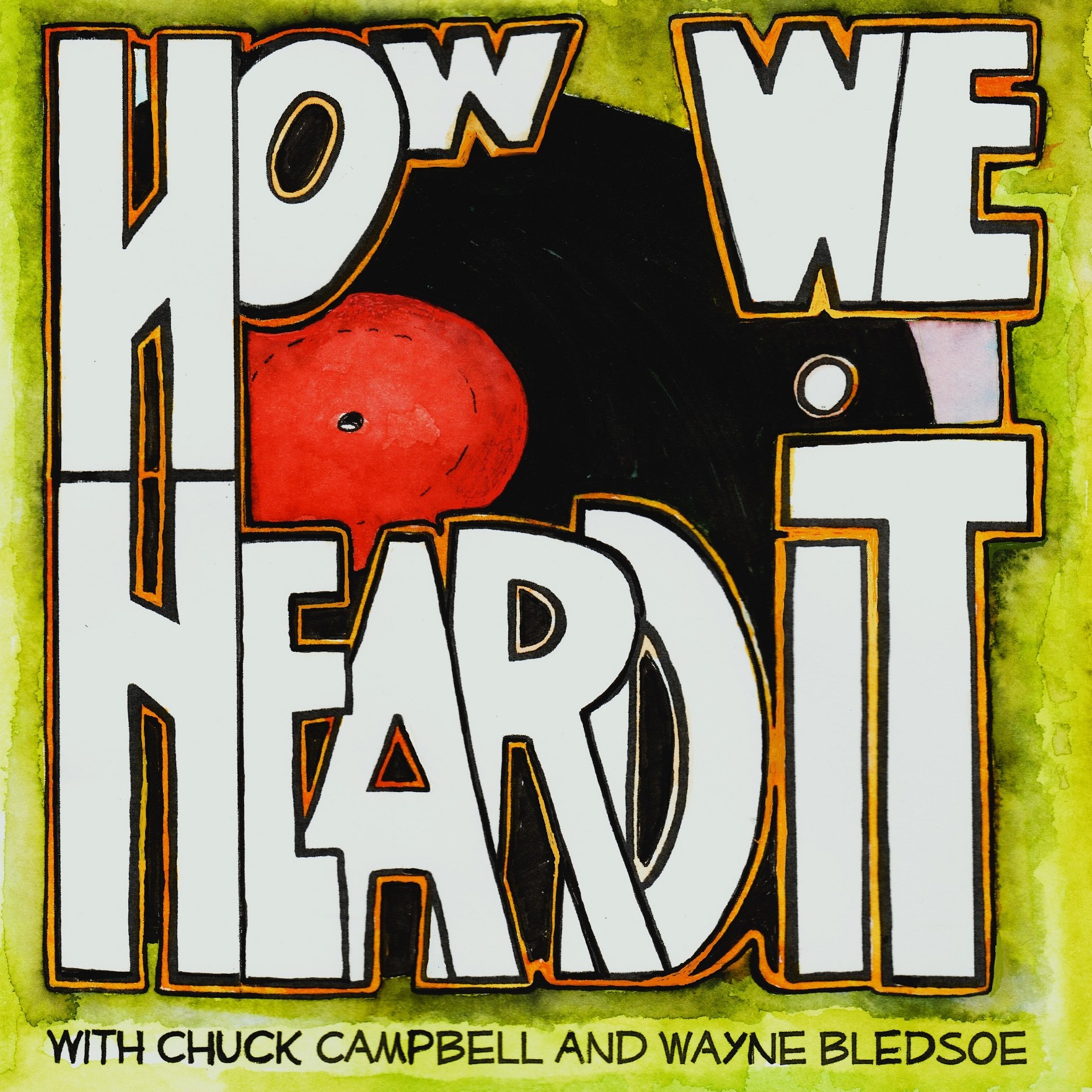
How We Heard It
Hosted by howweheardit · EN
Veteran entertainment journalists, music columnists and longtime friends Wayne Bledsoe and Chuck Campbell host ”How We Heard It,” a breezy and sometimes offbeat take on how music and movies got to where they are today and where it’s all going.
They break down who are the most promising Generation Z singers one minute and the next they debate who are the most overrated acts from the past. Sexy songs, soundtracks, controversies and weird movies find their way into the discussion, and they also weigh in with recommendations on who to hear and what to see in music and film from the past and present.
Wayne and Chuck have more than 65 years of experience in professional journalism between them, but they don’t waste time indulging in scholarly breakdowns of their institutional knowledge. Instead, they share behind-the-scenes stories about their odd, funny, inspirational and embarrassing encounters with celebrities, managers, fans and readers. And they laugh at themselves and each other. A lot. Because being an entertainment journalist does that to you.
An important third voice in the ”How We Heard It” podcast is engineer John Baker, himself a musician and producer who reins in Wayne and Chuck when they need it. John’s tastes are a little bit Wayne and a little bit Chuck, and he’s a friendly sort.
Wayne’s primary role in his nearly four decades at the Knoxville News-Sentinel was his work as an entertainment writer and critic. He currently hosts ”The Six O’Clock Swerve” weekly radio show on WUTK, 90.3 FM in Knoxville, he’s a former Grammy nominee, and he’s an organizer of the annual concert series ”Waynestock: For the Love of Drew and Rylan.” He’s also an artist and unconventional garden writer - see more at www.waynebledsoe.com.
Chuck started his career in journalism at the Daytona Beach News-Journal in Florida before joining the staff in Knoxville. He has reviewed more than 5,500 albums, and his column was distributed by the New York Times, Gannett, Cox News Service and the Scripps Howard News Service. He was an entertainment and travel editor in both Florida and Tennessee and a regional news planner for Gannett’s South Region.
”How We Heard It” is a Cozy Planet Productions podcast recorded at The Arbor Studio in Knoxville, Tennessee. Send requests, comments and suggestions to HowWeHeardIt@gmail.com
43episodes
Episodes
Newest firstAll episodes
Prediction: The Grammys are going to enrage a lot of people
Jan 1701:25:19Tap to summarizeIt seems like forever ago that awards shows were a time to honor excellence. Now they've become an excuse to hate watch, an opportunity to tear apart artists for what they wear, what they say and even how they look at each other. Coming off a particularly contentious 2025 around the world, the upcoming Grammy Awards will certainly tick off a lot of viewers. For starters, these days we just get mad at everybody all the time for everything anyway. What's more, there are raw nerves out there about any number of social and political issues - and musicians aren't known for being diplomats who keep their opinions to themselves. And on top of everything, last year's Grammys saw Beyonce finally win her first Album of the Year award - for a country album that many country fans refused to accept as "country." (There are still residual hurt feelings over that one.) Many of this year's top contenders, for Album of the Year and other major awards, have been linked to key social issues and are known for saying what's on their minds. Bad Bunny (set to perform at halftime of this year's Super Bowl) could win Album of the Year among other awards. It would be the first time a Spanish-language album won for best overall album ... and it should be noted the Puerto Rican performer was in the news in 2025 for canceling shows and/or avoiding performances in many cities because of expectations of ICE raids targeting concertgoers. This year's Grammys could also find Kendrick Lamar or Lady Gaga win their first Album of the Year Grammy. Lamar, an early and committed advocate for the Black Lives Matter movement, hasn't flinched from controversy in his career - including during his recent vicious rivalry with Drake. Meanwhile, Lady Gaga has been a career-long, unapologetically vocal, ally for the LGBTQ members of society ... and 2025 was a particularly tough one for trans Americans. Enter Wayne Bledsoe and Chuck Campbell, veteran music journalists (and friends) who have been arguing about the Grammys since the 1990s. As hosts of "How We Heard It," they invite listeners to play along during this episode as they make their picks from this year's nominees, choosing who deserves to win and who likely will win. Most importantly, they urge everyone to relax and enjoy the music. We're all friends here.
Transcribe →Songs for the dead of winter! (It's more complicated than you might think.)
Jan 1001:19:22Tap to summarizeHere we are again, the least popular time of year for the most of us. The year-end holidays have passed, and spring is still months away. Oh, and it's the darkest and coldest time of the year, too - because why wouldn't it be? Some of us go dormant like plants this time of year, insulating ourselves and enduring the season with introspection and maybe a touch of seasonal depression. Others go on a more positive spin, taking time to detox and find spiritual rebirth. And of course some people actually love the winter, they vibe with the chill and embrace the darkness. Besides, if not for the harshness of winter, would spring even seem so amazing? Then there are those whose kinkier sides come to life in winter ... but that's another podcast for another day. In this episode of "How We Heard It," your hosts explore music about winter, inspired by winter or evoking winter and all the heartaches and trials of the season as well as the victories and joy. You might be surprised how inspiring winter is for songwriters and just how many loving and uplifting songs are spawned during a "bleak" time of year. There's some moody and sad stuff too, but you know that can't be avoided.
Transcribe →Will AI fix music ... or destroy it?
Jan 301:25:55Tap to summarizeAs Artificial Intelligence continues its relentless spread into so many parts of all of our lives, it seems like all we can do is sit back with a mix of hope and dread and wonder where this is all going. We know we can't trust anything on social media anymore - be it photos, audio or video - though we see that many of our friends are susceptible to just about anything. Meanwhile, we may be uncomfortable with how much the electronic devices around us know about us thanks to AI, and who hasn't felt alienated when they've been trapped in an AI-automated loop when all they want to hear is a real human voice? And speaking of human voices, you may be hearing fewer of them when you listen to new songs. AI has crept into the business, becoming a common tool to write, produce and distribute music. So the next song you hear may be created and "performed" entirely by AI programming, without any real singers or musicians. Should you be alarmed? Does AI music have a soul? Can you enjoy it even if everything about it is fake? What is this going to do to the music industry? Those are the questions pondered this week by your hosts of the podcast "How We Heard It." On one hand, AI will make it easier for more people to "create" music, from musicians and singers with limited skills and resources who need help filling in songs with instrumentation, lyrics and voices to those with no music skills at all who can whip up a new song with just an idea. Like any shift in business, there will be winners and losers, and most of us will win a little and lose a little. Yet unlike past innovations - from AutoTuned vocals to electronic programs that sound like "real" instruments - there's much more at stake with AI, which reaches far beyond music. Should we be excited, afraid or both?
Transcribe →Here's some holiday music you'll like for a change
Nov 16, 202401:15:25Tap to summarizeAs another Christmas rolls around, you might want to enjoy something more than the same stale songs you hear every year. This episode Chuck and Wayne dig through a sleigh full of albums to find the right match for you, including more than a dozen newish albums you maybe didn't know about (from Sabrina Carpenter to electronica) as well as older music you may have missed. Whether you prefer remakes of classic songs by new artists or new songs by classic artists, and whether you like your music lavishly produced or humorous and weird, they've got you covered. So freshen up your holidays and ho-ho-ho ...
Transcribe →Best breakup songs!
Nov 9, 202401:08:49Tap to summarizeThere are breakups and there are BREAKUPS songs. If you've ever been through a BREAKUP, and even if you haven't, you know nothing gets you through drama like the right breakup song. But what is the right breakup song? Do you need a good cry or a good laugh ... or maybe a good scream? In this episode of "How We Heard It," veteran music critics Wayne Bledsoe and Chuck Campbell sort through some of the best, and worst, songs to help you move on from a broken relationship. From classic rock and country to modern pop and hip-hop, there's something for you. And you don't even have to be breaking up with anyone to enjoy.
Transcribe →Why aren't they bigger?!? (Acts you may have missed)
Nov 2, 202401:15:27Tap to summarizeWe all wonder how some performers made it big. We question their talent, their fans and the world in general when we see their enduring popularity, and frankly we've had enough of them. On the flipside, we all know performers we think should be more popular than they are. Despite all that they bring to the table, they aren't getting the recognition they deserve. On this episode of "How We Heard It," veteran music journalists Chuck Campbell and Wayne Bledsoe take a look at some unappreciated artists - who they are, why they're special and why things didn't exactly go their way.
Transcribe →'Nepo babies' in music: the good, the bad and the unexpected
Oct 26, 202401:29:56Tap to summarizeHollywood is full of "nepo babies"- so much so that you might wonder if every famous actor today is the child of a famous actor or producer. The same is true in the music industry, and you might be surprised who got a leg up on the competition thanks to mom and/or dad. In this episode, veteran entertainment journalists Chuck Campbell and Wayne Bledsoe talk about the celebrity offspring of some of the biggest stars in music - ranging from the Beatles, Frank Sinatra to Hank Williams to Lenny Kravitz, Will Smith and Madonna. Some of these nepo babies have failed to live up to expectations while others became bigger stars than their parents. Chuck and Wayne also take a look at Blue Ivy Carter - whose parents, Beyonce and Jay-Z have been trying to make her a star since she was two days old. Is she destined for glory? Does she even want it?
Transcribe →Here are the cover songs that got it right (and wrong)
Oct 19, 202401:14:31Tap to summarizeYou might be surprised to find out how many of your favorite hits are actually cover songs - from Aretha Franklin's "Respect" to Sinead O'Connor's "Nothing Compares 2 U." This week Wayne and Chuck dive into the powerful world of cover songs - who has done them (spoiler alert: almost everybody) and why they would do them. They talk about who out-"Hurt" NIN, who out-"Creeped" Radiohead and the very rare times other artists have bested the Beatles with their covers of songs by the Fab Four. The guys also talk about how a song about sex keeps getting covered as a song about religion, and they try to settle the great Whitney vs. Dolly debate.
Transcribe →How to use music to get what you need
Oct 12, 202401:18:42Tap to summarizeMusic can change your mood instantly. It can bring you joy or sorrow, and it can make you feel weird in ways you can't explain. Music will make you remember someone you lost, it will remind you of places you've been, and it will conjure memories of the happiest and saddest times of your life. Sometimes even new songs will have a strange effect on you, bringing to mind thoughts you didn't know you had. This week Chuck and Wayne talk about the power of music, how it can lift you and how it can crush you, and how you can use it to find the connection you need and how you can use it to escape.
Transcribe →Songs we never want to hear again!
Oct 5, 202401:08:56Tap to summarizeVeteran music journalists Wayne Bledsoe and Chuck Campbell have heard tons of terrible songs over the years. These are the worst of the worst.
Transcribe →