Podcast
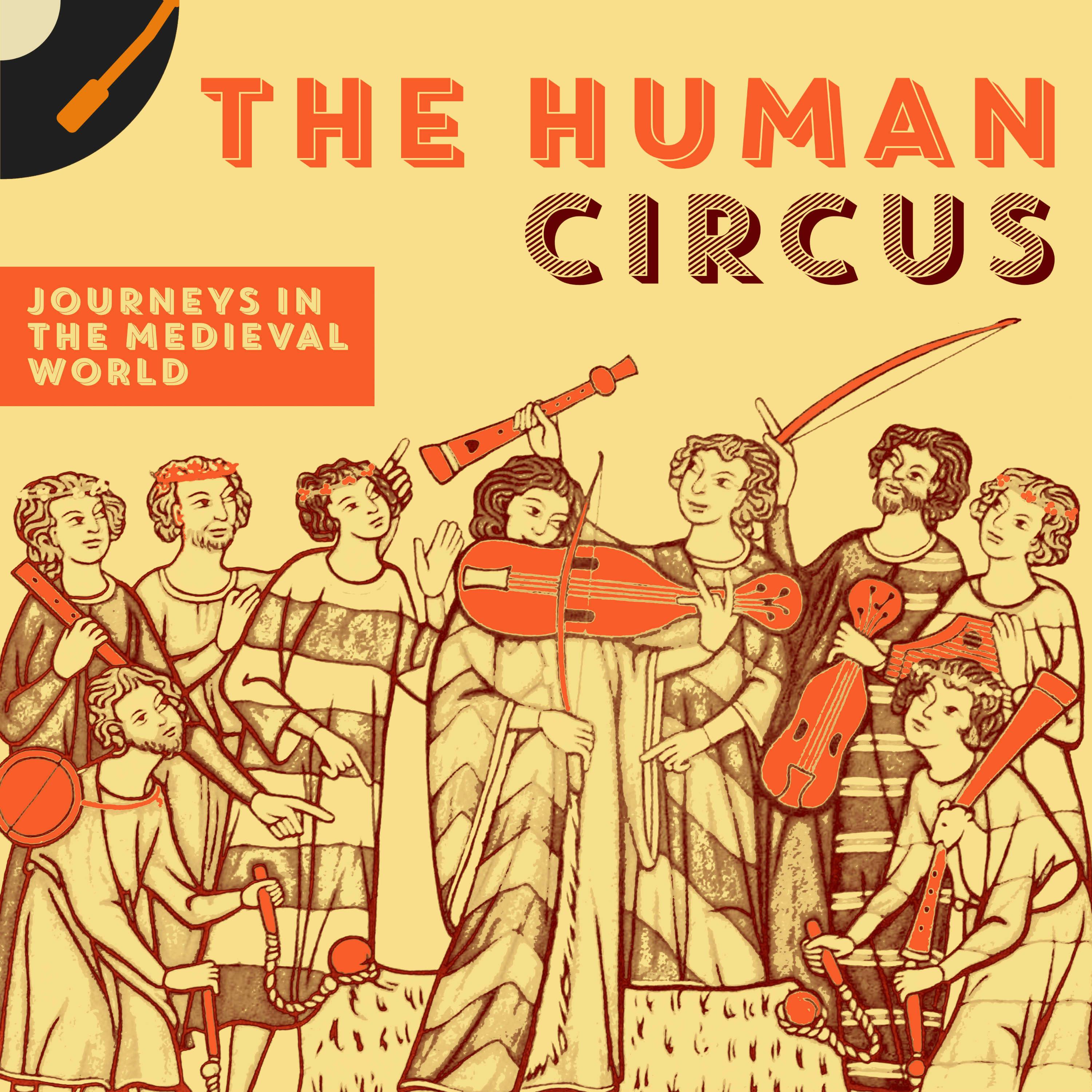
Human Circus: Journeys in the Medieval World
Hosted by D Field · EN
A narrative history podcast following the journeys of medieval travellers and their roles in larger historical events. Telling great stories, showing the interconnected nature of the medieval world, and meeting Mongols, Ottomans, Franciscans, merchants, ambassadors, and adventurers along the way.
26episodes
Episodes
Newest firstAll episodes
Medieval Lives 8: Giovanni Fontana
May 1, 202400:36:37Tap to summarizeGiovanni Fontana was a 15th-century Italian engineer and inventor. His designs included everything from systems for retrieving sunken ships and automating the defence of fortifications to measuring time and producing music. He created locks, clocks, and magic lanterns.If you like what you hear and want to chip in to support the podcast, my Patreon is here.I'm on BlueSky @a-devon.bsky.social, Twitter @circus_human, Instagram @humancircuspod, and I have some things on Redbubble.Sources: Fontana, Giovanni. Bellicorum instrumentorum liber cum figuris... Digitized at https://codicon.digitale-sammlungen.de/inventiconCod.icon.%20242.html Gilbert, Bennett. “The Dreams of an Inventor in 1420,” Public Domain Review. 2018. https://publicdomainreview.org/essay/the-dreams-of-an-inventor-in-1420/ Grafton, Anthony. “The Devil as Automaton: Giovanni Fontana and the Meanings of a Fifteenth-Century Machine,” in Genesis Redux: Essays in the History and Philosophy of Artificial Life, edited by Jessica Riskin. University of Chicago Press, 2007. Grafton, Anthony. Magic and Technology in Early Modern Europe. Smithsonian Institution Libraries, 2005. Grafton, Anthony. Magus: The Art of Magic from Faustus to Agrippa. Harvard University Press, 2023. Rossi, Cesare and Russo, Flavio. Ancient Engineers' Inventions: Precursors of the Present. Springer, 2016. Sparavigna, A.C. “Giovanni de la Fontana, Engineer and Magician.” Cornell University Library, 2013. Learn more about your ad choices. Visit podcastchoices.com/adchoices
Transcribe →Brancacci's Mission 2: Already Dismissed
May 21, 2020Tap to summarizeThe conclusion of the Felice Brancacci story. Our ambassador from Florence deals with the Mamluk sultan in Cairo, with sickness, and with a shortage of funds, and he comes home to commission some memorable art at the Brancacci Chapel.If you like what you hear and want to chip in to support the podcast, my Patreon is here, my Ko-fi is here, and Paypal is here.I'm on Twitter @circus_human, Instagram @humancircuspod, my website is www.humancircuspodcast.com, and I have some things on Redbubble at https://www.redbubble.com/people/humancircus.Sources: Florence's Embassy to the Sultan of Egypt, translated by Mahnaz Yousefzadeh. Palgrave Macmillan, 2018. Ashtor, Eliyahu. Levant Trade in the Middle Ages. Princeton University Press, 2014. Behrens-Abouseif, Doris. Practising Diplomacy in the Mamluk Sultanate: Gifts and Material Culture in the Medieval Islamic World. Bloomsbury Publishing, 2014 Goldthwaite, Richard A. The Economy of Renaissance Florence. JHU Press, 2009. Najemy, John M. A History of Florence, 1200-1575. John Wiley & Sons, 2008. Shulman, Ken. Anatomy of a Restoration: the Brancacci Chapel. Walker, 1991. Learn more about your ad choices. Visit podcastchoices.com/adchoices
Transcribe →
Salah ad-Din 6: The Ayyubids
Sep 28, 201900:44:01Tap to summarizeThis episode is a what-came-after for the Salah ad-Din series, covering the decades beyond the dynastic founder's death. This is the Ayyubid Sultanate, the legacy of Salah ad-Din, a run through decades of civil war and crusades, culminating in the rise of the Mamluks.If you like what you hear and want to chip in to support the podcast, my Patreon is here, my Ko-fi is here, and Paypal is here.I'm on Twitter @circus_human, Instagram @humancircuspod, my website is www.humancircuspodcast.com, and I have some things on Redbubble at https://www.redbubble.com/people/humancircus.Sources: Abulafia, David. Frederick II: A Medieval Emperor. Oxford University Press, 1992 Afaf Lutfi al-Sayyid Marsot. A History of Egypt: From the Arab Conquest to the Present. Cambridge University Press, 2007. Humphreys, R. Stephen. From Saladin to the Mongols. State University of New York Press, 1977. Lyons, Malcolm Cameron & Jackson, D.E.P. Saladin: The Politics of the Holy War. Cambridge University Press, 1982. Learn more about your ad choices. Visit podcastchoices.com/adchoices
Transcribe →
Salah ad-Din 5: The End of the End
Aug 15, 201900:43:42Tap to summarizeThis is the end of the Salah ad-Din series, featuring the arrival of Richard the Lionheart and Philip II at Acre, the Battle of Arsuf, and the Treaty of Jaffa. If you like what you hear and want to chip in to support the podcast, my Patreon is here, my Ko-fi is here, and Paypal is here. Sources:Itinerarium Peregrinorum et Gesta Regis Ricardi, edited by William Stubbs. Longmans, 1864. Translated by James Brundage, The Crusades: A Documentary History. Marquette University Press, 1962.De Expugatione Terrae Sanctae per Saladinum, edited by Joseph Stevenson. Longmans, 1875. Translated by James Brundage, The Crusades: A Documentary History. Marquette University Press, 1962.Cobb, Paul, M. The Race for Paradise: An Islamic History of the Crusades. Oxford University Press, 2016. Edbury, Peter W. The Conquest of Jerusalem and the Third Crusade: Sources in Translation, 1st Edition. Routledge, 2017.Gabrieli, Francesco. Arab Historians of the Crusades. University of California Press, 1978.Lyons, Malcolm Cameron & Jackson, D.E.P. Saladin: The Politics of the Holy War. Cambridge University Press, 1982.Man, John. Saladin: The Life, the Legend, and the Islamic Empire. Bantam Press, 2015.Terrell, Katherine H. Richard Coeur de Lion. Broadview Press, 2019. Learn more about your ad choices. Visit podcastchoices.com/adchoices
Transcribe →
Salah ad-Din 4: The Beginning of the End
Jul 28, 201900:40:51Tap to summarizeThis is the end of my Salah ad-Din series, part one. As I mention in the episode, I was aiming to wrap things up here, even aiming to do so with an extra-long episode, but there's just too much left to do that. So, this is the end, part one. In this episode, we follow the Salah ad-Din story after the Battle of Hattin and up to the arrival of King Richard the Lionheart at Acre.If you like what you hear and want to chip in to support the podcast, my Patreon is here, my Ko-fi is here, and Paypal is here. I'm on Twitter @circus_human, Instagram @humancircuspod, my website is www.humancircuspodcast.com, and I have some things on Redbubble at https://www.redbubble.com/people/humancircus.Sources:Itinerarium Peregrinorum et Gesta Regis Ricardi, edited by William Stubbs. Longmans, 1864. Translated by James Brundage, The Crusades: A Documentary History. Marquette University Press, 1962.De Expugatione Terrae Sanctae per Saladinum, edited by Joseph Stevenson. Longmans, 1875. Translated by James Brundage, The Crusades: A Documentary History. Marquette University Press, 1962.Christie, Niall. "Fighting women in the crusading period through Muslim eyes: Transgressing expectations and facing realities?" in Crusading and Masculinities. Routledge, 2019.Cobb, Paul, M. The Race for Paradise: An Islamic History of the Crusades. Oxford University Press, 2016.Edbury, Peter W. The Conquest of Jerusalem and the Third Crusade: Sources in Translation, 1st Edition. Routledge, 2017.Gabrieli, Francesco. Arab Historians of the Crusades. University of California Press, 1978.Lyons, Malcolm Cameron & Jackson, D.E.P. Saladin: The Politics of the Holy War. Cambridge University Press, 1982.Man, John. Saladin: The Life, the Legend, and the Islamic Empire. Bantam Press, 2015. Learn more about your ad choices. Visit podcastchoices.com/adchoices
Transcribe →
Salah ad-Din 3: The Horns of Hattin
Jul 1, 201900:40:35Tap to summarizeSalah ad-Din (Saladin) enters Aleppo, struggles with Reynald de Chatillon, and faces the armies of Guy de Lusignan at the Horns of Hattin.If you like what you hear and want to chip in to support the podcast, my Patreon is here, my Ko-fi is here, and Paypal is here. I'm on Twitter @circus_human, Instagram @humancircuspod, my website is www.humancircuspodcast.com, and I have some things on Redbubble at https://www.redbubble.com/people/humancircus.Sources:Cobb, Paul, M. The Race for Paradise: An Islamic History of the Crusades. Oxford University Press, 2016. Lēv, Yaacov. Saladin in Egypt. Brill, 1999.Lyons, Malcolm Cameron & Jackson, D.E.P. Saladin: The Politics of the Holy War. Cambridge University Press, 1982.Mallet, Alex. "A Trip Down the Red Sea with Reynald of Chatillon,"Journal of the Royal Asiatic Society. Vol. 18, No. 2 (Apr., 2008).Man, John. Saladin: The Life, the Legend, and the Islamic Empire. Bantam Press, 2015. Learn more about your ad choices. Visit podcastchoices.com/adchoices
Transcribe →