← I AM HealingStrong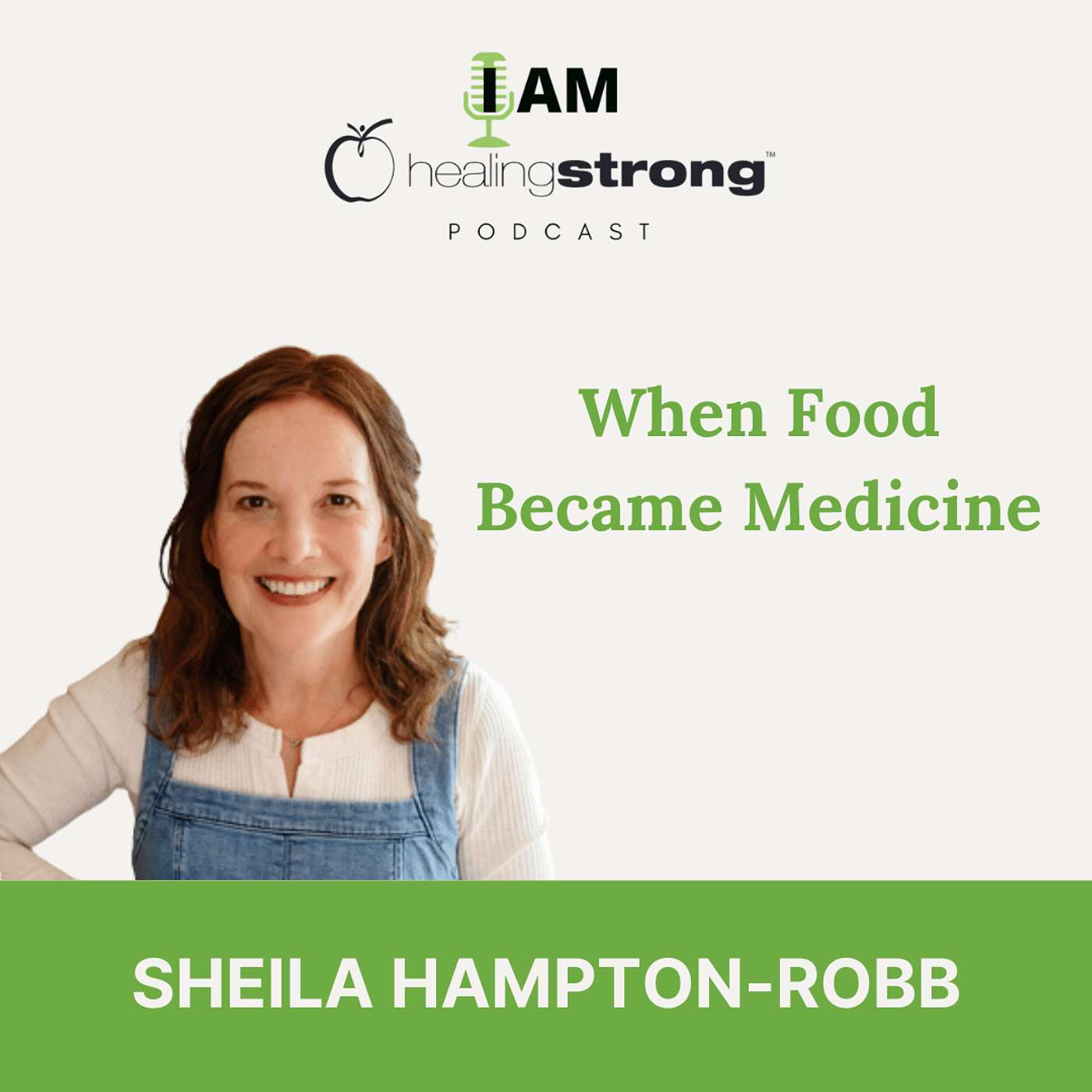
I AM HealingStrong
130: When Food Became Medicine, Lymphocytic Leukemia, Multiple Myeloma, Autoimmune Conditions, Rare Brain Malformation| Sheila Hampton-Robb
00:39:36
Loading summary
Transcript73 lines
- [00:00]
A
It was just miraculous. Like, she went from being awake one or two hours a day to being awake 13 hours a day.
- [00:08]
B
Wow.
- [00:08]
A
She. She went from having seizures every single day. So many that the nurses could not chart them on their notes because, you know, they would cover the pages to, like, one day I walked in and the nurse said it was the end of the day, and she said I didn't chart anything. And that just. I was like, God, you are so good.
- [00:33]
C
You are listening to the I am Healing Strong podcast, a part of the Healing Strong organization, the number one network of holistic cancer support groups in the world. Each week we bring you stories of hope, real stories that will encourage you as you navigate your way on your own journey to health. Now here's your host, stage four cancer
- [00:57]
B
thriver Jim Mann, traveling to my favorite town of Nashville, Tennessee, actually, near Franklin, which is even more of my favorite town. I love Franklin. Whenever I go to Nashville, I always end up at Franklin, at the factory or at the Frothy Monkey there. I have a lot of friends there, so I find myself there all the time. But now I got another friend there, Sheila. Sheila Hampton. Rob, Is that right?
- [01:24]
A
Yes, that's right.
- [01:26]
B
You are close to Franklin. Anyway, how long have you lived there?
- [01:30]
A
A long time. Probably like 20, almost 25 years in this area, so. Wow.
- [01:37]
B
So you moved there when you were one?
- [01:38]
A
No, no, no, no. I was a newlywed when I moved here, so.
- [01:44]
B
Okay. Did music bring you there?
- [01:47]
A
Actually, no. We are still in Williamson County. And so what brought us to the. Well, I initially moved to the Nashville area to go to college, but then we moved out to this area that I'm in because of the school system and just because properties were so much lower in this area. The price was so much lower at the time. Yeah, it's gone up exponentially since then.
- [02:13]
B
And you went to Lipscomb, you said?
- [02:15]
A
I did. I went to Lipscomb Undergraduate. Yes.
- [02:18]
B
I just know the coffee shops around there. I was just at the well there, and I know Lipscomb is. I see a sign there, it says Lipscomb. So it's part of the campus anyway, but great area. Well, you have a. I was looking over some of the notes that you had sent me about your story, and you. Let's just say you have definitely been affected by cancer. You and your family. You had lost your parents, right?
- [02:42]
A
Yes.
- [02:43]
B
How long ago was that?
- [02:46]
A
My. My dad passed away, actually, when I was a freshman at Lipscomb. So it's been a number of years. He was. He actually was someone that never really went to the doctor a lot, you know, it's just definitely kind of a self made type person and worked really hard. And so anyway, he had gotten sick and he started, I think he started throwing up blood and so he was put in the hospital and they diagnosed him with lymphocytic leukemia. And he really. Only he never left the hospital. So he passed away maybe like two or three weeks after that. So it was very hard. That was my first experience with cancer and I was, I was 17, I think 17 or 18. That was the first time. And then my mom actually passed away probably 11 years ago and she had multiple myeloma. And so she lived a lot longer than my dad, obviously. But she was on like an oral chemo for a very long time, many, many years. And then by the time they realized it had progressed to stage four, she had actually been in a car accident just right before that. And so they saw on the scans when she was inpatient for injury, she got in the car accident, they saw the areas of cancer and, and they knew that she was just too frail and, and too old to really go through all the things and. But she really just lived like a few more weeks in both instances. Neither of my parents went through chemo or radiation.
- [04:28]
B
Right. Mostly because of time.
- [04:30]
A
Right, right. It really was because of just, you know, the detection was so late. Although my mom's was, you know, they did know that she had, it was a, you know, type of blood cancer, I think is what they initially told her. And, and so they just put her on this oral chemo pill that she took for many years. And so the multiple myeloma was just kind of, you know, that came. They saw that on the scan at the hospital and it was already very progressed. And so, so, so both times there was not really time to do anything.
- [05:06]
B
Yeah. What. Where were they living? Were they in, in Tennessee or somewhere else?
- [05:11]
A
They, they both lived in Tennessee. That little town that I grew up in, which was Brucen. It's a really small town, there's maybe a thousand people. So it's definitely like a farming, rural community. So.
- [05:24]
B
Wow, that's devastating. I mean, it's bad enough to lose parents. Just when mine both passed away in their 90s of just natural causes. My mom had dementia. I mean, that was kind of tough, but I mean still, they're well in their 90s and, and that's hard enough, but just to lose them to a disease and especially when you, you didn't even know they had it. You also lost an older sister, didn't you?
- [05:48]
A
Yes, so. So actually I lost my older sister. She's my oldest sister. She's about 13 years older than me. And I lost her maybe a year and a half, passed away. So she had glioblastoma, which is a very aggressive brain cancer. And she did come up here to Nashville and her. And her husband and she did go through chemo and radiation. The tumor had actually shrunk some from the treatment. Not enough to, you know, she wasn't in a remission or anything, but it had shrunk some. But she actually passed away from side effects of the treatment. It caused her blood to be like hypercoagulative, meaning, like it was going, she was going to develop clots more easily. And so she developed a blood clot in the brain which caused a massive stroke. And so they said that took out the rest of the area of her brain. So she just lived maybe a couple of weeks after she had the stroke. So I will say, like, my, my dad and my sister both were long term smokers. So, you know, in hindsight, even though I knew that was bad for you, and I knew that it probably did play some kind of role, I didn't understand it as much then as I do now. And, and I know that my mom breathed secondhand smoke all those years, you know, so she was not a smoker herself. And so my dad started smoking in a time where, you know, smoking seems so cool on like, you know, the TV and the mov and stuff. And, and so, you know, it wasn't really until long after he'd started that all the things kind of came out about, you know, how it caused cancer and how bad it was for your health. And, and by that time he was, you know, very ingrained in, like, I enjoy smoking. I smoked for a long time. So I will say, you know, there was that, and I do think that played a very big role.
- [07:50]
B
What did all that do to your mindset, losing three of your family members like that? The cancer had that. Other than the grief, how does that make you feel? You felt like, oh, I'm going to get cancer myself.
- [08:01]
A
I, I didn't necessarily think that. But then, you know, I had a family member say to me and my other sister that, you know, are still living, they said, you need to be careful because you're, you know, you're next. You're, you know, like everybody in your family has had some type of cancer. Like, you need to be careful. You're. This is, could be something that happens to you. And so that really made me take Pause and go, well, I'm not sure if I believe that I'll get it just because they all had it. But then it also kind of did scare me a little, so.
- [08:34]
B
Right. That would mess with you there. Of course, there's always friends around to encourage you. Well, meaning, I'm sure. But for those of us who have gone through cancer and, you know, are now thriving, there's always those friends who say, yeah, it could come back. Are you ever afraid of that? You know, yeah, every time I have a headache, I think I got a massive brain tumor. But still, you know, thanks for the encouragement. I'm fully aware of that.
- [09:01]
A
Right. There's nothing like planting the seeds of fear.
- [09:05]
B
Yeah, definitely. Now, did you also have a scare, a cancer scare, or.
- [09:11]
A
I did so about four or four and a half years ago. So this is really tightly related, very closely linked to my youngest daughter. So my youngest daughter, she was born with a rare brain malformation. It's called dysgenesis of the corpus callosum, which means the part of her brain that connects her, connected her left and right hemispheres, was partially formed. It did cross over and connect, but it wasn't fully formed when she was born. And so I basically had spent 14 years just trying to save her life. She had daily seizures that were intractable. And meaning, like, they really didn't have any hope of controlling them with drugs, but, I mean, or stopping them with drugs. So the anticonvulsants. But the goal was to try to, you know, minimize the number she had, you know, and the seizures would cause her to aspirate and get pneumonia. And so we spent a lot of time in the hospital and. And literally, like, it's really not an exaggeration to say that I live probably 14 plus years of my life not knowing if she was going to make it to the next day, because it was like every day, you know, she was aspirating, you know, from her seizures. And I. I didn't know if that was going to be the next pneumonia or, you know, and her seizures were like these repetitive jerks. It was a really rare form of epilepsy called infantile spasms. So, like, every jerk is a seizure. So she could literally jerk like a hundred times or, you know, a thousand times. It just really depended. And. And so it was just so difficult. Like, it was very stressful. And I was up every night because she had seizures. It would typically be right after she woke up. So if whenever she would wake during the night, she would, you know, have seizures. And when she would Wake in the morning, she would have seizures and, and she was a complete angel. She was so sweet, like the sweetest person that God ever introduced me to and, and gave me the privilege to know. But it did take a toll on my health as well.
- [11:23]
B
Yeah.
- [11:24]
A
And so at the 14 year mark, Ella is my daughter that I'm talking about. She's my youngest. She was very near passing. We had nurses in our home, 24, 7. She was on oxygen, she was on a ventilator, she had a feeding tube, she, I mean it was just, her room was a hospital room. There were monitors day and night, oxygen monitors, alarms on the ventilator. There was probably 50 plus pills and breathing treatments that she received every day and all that. It was just, it was so much, it was more than I really can. Even now I know that I only made it through that because of God. I mean, because my body just took an immense beating, you know, because you think about like getting woken up five, ten times a night and then it's an emergency every time, you know, it's your child needs you and you've got a race, you know, to get there. And the daytime, you know, seemed a little less, but it was, but she had, you know, similar during the day. So she had some fun times and she was happy and got to play at times, but there really wasn't a day that she didn't have seizures. And so even so at the 14 year mark when she was really only able to stay awake maybe an hour or so a day, she was so weak, like almost every part of her body was failing. I mean, you know, she had recurrent UTIs. Obviously her lungs were in very poor shape, supported by the ventilator, oxygen, GI issues. All the drugs just really slowed down her gut and the enteral tube feeds, skin issues, hormone issues, like really, I can't even list all the different things. And so for me, I started just feeling all of a sudden, I guess it wasn't all of a sudden, but all of a sudden I noticed I was like, what is going on with me? Like I had developed an area on my left breast that just hurt day and night. And it was very concerning to me because of the history that my family had. And then I also had a spot on each lung. When I say a spot, it wasn't like I, you know, visibly had seen it on a scan. I could just feel it every day. Like it, I had these areas on my lungs that hurt. And I also obviously had, I had GI issues, you know, just my stomach hurt a lot I developed an autoimmune skin condition called granulari. And your loma, which initially looks like a bruise, or it did on me, it looked like a tan bruise. And then I just started to get more and more. And. And so the doctor just told me, you know, because it was around the time of COVID she was like, well, you know, we're seeing more of this because people are stressed. And she didn't really know my history and stuff, but. But it was really, you know, I'm sure there's some part was related to stress, and there was just so many different things going on. And so I initially went to my gynecologist to talk to them about the pain in my breast. And my doctor actually happened to not be there that day. And there was a nurse practitioner, and I told her, I was like, I. I don't really want to be exposed to a lot of radiation because I've been exposed to a lot of radiation with my daughter because she's had so many scans and X rays and that I had been in the room for so many of them. And so she was like, well, you know, have you ever heard of thermography? And I was like, no, tell me about it. And so she explained it to me and how, you know, there wasn't any radiation and. And that, you know, I wouldn't come away with, you know, any. Any other toxins or anything like that. So. So I ended up going that route. And that started me on. I think that was one of the first steps in just changing my life. I did do the thermography, and the lady told me that. Thankfully, she was like, I don't see anything that's indicative of breast cancer. She's like, what I see, see is that you have a lot of lymphatic congestion under your arms. And she was like, in the area that you're tracing with your hand on the side of your breast. She's like, this is the area where you have a lot of lymph nodes and a lot of congestion. And she showed me on the scans how it was very red. So I was greatly relieved. But I also, you know, knew that I had all these other health issues. And so the second thing that happened was that I kept getting these emails, and I feel like it was just a God thing. I don't know how I got them, but it was crispy cancer. And so I guess because of everything that was going on, I finally, like, opened it and I started watching the Square One videos. And I will say my other sister at the time my second sister had been diagnosed with cancer. Man. So, so this is now. Every member of my nuclear family had been diagnosed with cancer. She ended up having a complete hysterectomy. And it was a, I think an endometrial cancer. And she did not have to go through chemo and radiation. But anyway, and so as I was watching that, it's just. It was just an amazing light bulb moment for me. And I can only say that, you know, I guess the Lord knew that I was ready to have my eyes open and I was ready to listen and because I've been praying so long for my daughter and so sorry. So I started listening and it all made perfect sense to me all the while that I was giving my daughter all these drugs all these years and these internal nutrition products that were, you know, just pasty white and had, you know, no plants of any sort in them and just 100 ingredients that you couldn't recognize. I never felt good about it, you know, but I always heard all the doctors voices in my head, which was, you know, you don't have a choice. This is the way Ella is. And, you know, you're just going to have to accept this. And these are the treatments and you just need to choose, you know, from these. So basically, I changed my diet and my daughter's diet immediately. Like, we went to an all raw food, plant based diet. I took out anything that could possibly be inflammatory. I mean, dairy, you know, processed meats. There just. There wasn't anything. I bought a juicer and then I got rid of all of our personal care products, anything that could be like toxic and pretty much they all work. Later I learned, you know, like all the things we were putting on our skin, I got rid of all the candles around the house. So I was constantly burning a lot of candles in the house, you know, from like a popular, a really popular chain and that has all the food smelling candles. And so not realizing that those were affecting my health and my daughter's health as well, you know, as far as like the, the areas of my lungs. And so literally within days, it started to turn around for me and for my daughter. Now at this point, my daughter was sleeping probably 22 hours a day. Her lungs were just. I literally had to bag her back up with an ambu bag because many times at this point she was in respiratory distress even on a ventilator. And so it was, you know, and the pediatrician had said, you know, she's very near passing, but within days it was just miraculous. Like she went from being awake one or two hours a day to being awake 13 hours a day.
- [19:33]
B
Wow.
- [19:34]
A
She. She went from having seizures every single day. So many that the nurses could not chart them on their notes because, you know, they would cover the pages and stuff, to like, one day I walked in and the nurse said it was the end of the day and. And she said I didn't chart anything. And I just, I was like, God, you are so good. You are so good. Like, I just, I believed when I read, you know, and heard the stories from Chris and then I read the God's ultimate way. What is it? God's way to ultimate help. And so I believed and I knew it made perfect sense. It aligned with God and it aligned with science and it just made sense. But just to see how rapidly it started to turn around for myself. And my daughter was amazing. And, you know, within a few weeks she went from having like chronic blood issues to having like high normal hemoglobin. In a period of a few months. She came off of all of the anticonvulsants, she came off of oxygen. She basically came off of 50 of about 53 of the drugs. It was amazing. And once you've had your eyes opened, you can't close them. And all the things with me healed, my gut healed. I used aloe vera juice as one of the, you know, things. And then of course, the plant based diet. The pain in my lungs went away. The area, the pain in my breast went away at the respiratory. Like I was getting a lot of repeat respiratory infections too, and that went away. So it was really just miraculous. I just don't even know how to say, like, my daughter's hormones came back into alignment. You know, she. She had also developed lots of conditions that were related to all the drugs and the diet and those quickly came back to normal. It was beyond words.
- [21:35]
B
That's incredible. You can't say, well, that's just a coincidence. Medication all of a sudden worked, you know.
- [21:40]
A
Right. Yeah. So none of the medications ever stopped her seizures. None of them. And she was on five different ones at the time that we. And she was on doses that probably you and I would not be able to function at. I mean, you know, she was a little girl. I mean, she was probably like 70 pounds and she was getting some crazy number, like six kepper a day, you know, like four on fee. I can't even remember all the, the different names of the ones. But I mean, it was just. And I journaled it because I just was like, I don't know, just Something in me was like, write this down. Write down every time she comes off a pill, you know, write down all the things you see. And then I was writing it down for myself, too.
- [22:25]
B
How did she react? Was she. I mean, without having the seizures and all that and obviously staying awake much longer, was she able to talk?
- [22:34]
A
She wasn't able to talk. She still had the trach in place, you know, that was still in place. She could make sounds, but it was like. As if. Like this whole person that had been in there the whole time, you know, we always saw, like, her sweetness and her angelic heart. But because of all the drugs and because of all the seizures, she had a very difficult time focusing for any. For just even a few minutes. Like, she could play with her hands, but, like, she couldn't make choices for herself. And so now all of a sudden, she can make choices, you know, so she could, you know, you could present her with things and she could choose what she wanted, you know, and she had this big personality. You know, she had great sense of humor. Like, she loved. I don't know if you've ever heard, these are old children's books, but she loved Little Critter or Little Critter. And the humor is kind of like an elementary school version of Diary of a Wimpy Kid or something like that. But she would just. I don't know, she was such a light. And so it just brought her personality out so much more. And she was able to. Like, once she came off the last anti convulsant, it was just like this fog must have cleared from her brain because I would say things and she could clearly understand it and you could tell, you know, and as she would like, I'd be like, okay, hey, smile for Daddy. I'm going to take a picture, you know, and she would stop and. And turn and smile really big and see, before. That's such a small thing. But she couldn't even do that. I mean, she was so medicated. And if she wasn't medicated, she was always medicated. But, you know, she slept a lot, you know, had a lot of seizures, and. And so really, it was just, you know, the good times that we had were so precious. Like when she was awake and, you know.
- [24:29]
B
Wow. And then sadly, she did pass away. But not from all that, right?
- [24:33]
A
That's right. She did pass away about a year and a half after that. It wasn't from any of that. So that was kind of. Yeah, I think that was something that just really kind of through me because, you know, she was my little girl. And, you know, after making such amazing strides, she ended up developing intestinal strictures, which are basically like a narrowing in the intestine. And we didn't know that she had it, but she started throwing up a lot. And so that's. They found the intestinal strictures, and they were doing what they called a non invasive procedure where they would just put her under and go in and just basically, like, stretch it open. But it was a bloodless procedure. And so I really didn't want her to go back to the hospital at all, because unfortunately, every time we went there, she got something. Something happened. You know, like, she would go in and it would be like, oh, okay, now you've got a UTI because they cathed you. And now you're going to have to stay longer because you have to go through the treatment for the uti. And I don't know, it was just. It just seemed like there was always something. And I really was trying to keep her away from the pharmaceuticals. And the other thing that was just so shocking to me and just that I wasn't mentally prepared for was that no matter how much she progressed, none of the doctors really supported me or, you know, were like, wow, what are you doing? Like, how did you stop her seizures? And I think that really threw me is like, I was thinking everybody would be like, yay, this is so great for Ella. You know, tell us what you're doing. But it didn't happen. You know, I got a lot of pushback every time I tried to take her off of a medicine, and a lot of trying to scare me, you know, to tell me, like, what was the worst thing that could happen if I took her off. And I just had to. I felt like, you know, it was just me. And God, I was like, you know, I felt like it was just him. And I, you know, just. I was like, look, Lord, I know what you're doing. I. I'm just going to keep going. But what happened at the hospital was just basically she was supposed to be there for the third of these procedures. So the first time they did get a little bit of it open, and the surgeon came out and he just said, it's a lot longer of the stricture than what we thought, and we can't do it all in one session, so you'll have to bring her back. So she did fine the first time, and we got to go home. This was in Ohio. And the second time we took her, they never told me that this was a potential risk, but she the second time, they accidentally grazed her pancreas when they were scoping and caused her to have pancreatitis. So we had to stay in the hospital, or she had to stay. I think it was the least a couple more weeks, because when we left the outpatient procedure, she proceeded to throw up all night long, and her heart rate was extremely high. So we had to go right back to the er. And then when we got home, you know, I just. As a mom, I did tons of, like, research online, and so I looked for the natural thing to help with everything at this point. So for the pancreatitis, I think I found something on, like, grape seed extract, and I started giving her that, and that really helped her lipase come down, and so the inflammation come down. So we had to go. The third time. Well, the third time they said we can't do it because. Because she's been throwing up so much, some of her numbers are off as. As far as, you know, with her blood work and her nutrition and stuff. And so they were afraid that if they did it, she could possibly, like, bleed out or like, they could. You know, the intestines could tear. It was just, you know, so anyway, so. So they had us. They placed a line in her arm to give her nutrition through. Not a pick, but a central line through. So they placed a central line to give her the nutrition. And then they said, once she's at a point, that's okay with us. We'll give it to her. And so I didn't want to do that because in the heart, I felt like God was telling me, like, don't go back there. But I also knew, like, she had lost a lot of weight from the throwing up, and I did not at the time. I could find answers for so many things to help her, but for I could not find any natural things online to help her with the intestinal stricture and anything that I felt that I could rely on. And so we did go back, and so whenever they put the central line in, she got an infection that came in through the line, and there were two infections she got. So the other thing was, the first night we were there, I told them, you know, like, the last time we were there, I was like, please don't cath her anymore. She hadn't had a UTI in a year, you know, since we made all the changes. And I was like, please don't cath her, because I knew that she could get a UTI again from that, because they didn't. They don't always do they're supposed to do a sterile method, but sometimes they have new people, and they go in and out twice with the same cath, you know, or. I mean, it just. The risk was there. And so I went across to the Ronald McDonald House around midnight to go get some sleep, which was just across the street. And when I opened up my app in the morning for the hospital to see my daughter's labs, my heart just immediately raced because I saw that they had cathed her during the night. So she ended up getting an infection from the catheter. So she got a uti, and then she got an infection from the inline, the central line, which traveled to her brain, and so she became septic, but they didn't really notice it because she had a known seizure disorder. So what happened was she started having. Not seizures. They were convulsions. She started convulsing, and so they thought those were seizures. And I told them that her seizures didn't look like that, but it went on too many days. And so, you know, she just got very, very sick. In the end, we just had to make the choice to let her go, because they just said she would probably. If she healed from that, they said she would have to be there at least six months, and they couldn't guarantee anything, you know, And I just. I couldn't put her through all the stuff they did to her again, and so I had to let her go.
- [31:25]
B
Oh, Sheila, you're the kind of person that sticks out in the crowd. You know, if there's issues going on, you're seeing people panic, you look at you and you be calm as can be because you've been through so much. My wife is like that. Whenever there's, like, panic and everyone else, my wife is just like. That's when she kicks in because she's been through so much stuff like that. My hat is off to you, figuratively speaking. It's still on, obviously, but. Yeah.
- [31:52]
A
Thank you.
- [31:53]
B
God obviously knows that you're strong or made you strong through this situation.
- [31:58]
A
He's definitely the second one.
- [32:00]
B
Okay.
- [32:01]
A
Definitely the second one.
- [32:04]
B
All right. All right. Well, either way, you're strong, and you have. You have another daughter, you said.
- [32:09]
A
I have a daughter and a son. So my daughter Chloe is 22, and my son Caleb is 24. So they were three and five when Ella was born. So they kind of grew up a crazy life, but the. God has really used that in their lives to make them very caring adults.
- [32:31]
B
So one of my daughters is 22. She's home for spring break, but she's studying to be a nurse one. One more semester after this and she'll be a nurse in time to take care of me. That's what I told her. And she says okay. I said I expected to be free too.
- [32:48]
A
So, hey, as long as she can work a juicer, right?
- [32:52]
B
Yes, yes, definitely. I also have a 24 year old who, she's an artist. And then I got a 32 year old lives near you there in Nashville and.
- [33:01]
A
Oh, wow. Yeah, so that's so cool.
- [33:04]
B
Wow. So now you're a nutritionist because of all this, right?
- [33:08]
A
I am so God placed on my heart during all that. Like, you know, regardless of what happened with Ella, I know, you know, the end part, I knew, like, what I saw. And I know that there are just so many people that are so sick and are on so many pharmaceuticals and on top of that, there are so many children with special needs, like my daughter, that are just medicated, you know, that really can't even advocate for themselves. And honestly, like, I knew that like, you know, dietary changes and some of these other just basic foundational changes make all the difference in the world. And so I just knew that. I felt that the Lord was calling me to do this just to, you know, be there to help people in this way and to share, you know, some part of my story and Ella's story. And so I opened my own business about a year and a half ago. It's called Eber Holistic Nutrition and Wellness. And I don't do anything invasive whatsoever. I actually use applied kinesiology, muscle testing. And then I, I really just use common sense. You know, I have used like a questionnaire, probably seven or eight pages just to find out about the whole person whenever I see someone. And I love it because it's opposite of what happened to my daughter. You know, like, everything that my daughter went through was so invasive. You know, it was blood draws, you know, just every day that she's in the hospital, scans, X rays. She had so many bruises and lost so much blood. And, you know, and the drugs had such a negative effect. I mean, just damaged so many parts of her body and. And I just don't believe that that's how God heals. I. I've seen the way he heals and I just, I can't go back to that. And I. And so I just want to really help other people to know like, that God really cares for them and sees them in their pain and he hasn't forgotten them and he hasn't left them without resources to heal you know, so I was telling a friend the other day, I was like, you know, I don't know how we kind of got to the point where, you know, we look to drugs and pharmaceuticals and then just the medical system for every little thing. When the God that created us, how do we not know that, like, he wouldn't just create us in his image and then not leave us with the means to, like, heal our bodies? And so. So I love all the plants and the herbs and fruits and vegetables, net seeds, all that. Those things. And. And so that's what I use in my practice.
- [36:05]
B
Nice. Do you have a website?
- [36:07]
A
I do. It is E Bear B A R E Holistic nutrition dot com.
- [36:14]
B
All right. So people can get a hold of you that way. Also, when they're in that area, they can come to your healing, strong group. Right. Are you in person? Are you on zoom or.
- [36:26]
A
We are. We are doing them in person. So there is a. A place here in Spring Hill that is letting me use their facility, which is bigger and letting me use their facility for the group meetings. It's called Sweet Wellness. So that is where we do the meetings.
- [36:43]
B
Okay. Well, Sheila, you got quite a story. And I know. I know Ella is doing just fine now. She will know, so that's exciting for her, and you will see here soon enough. I'm not trying to get rid of you, but you know what I'm saying.
- [37:01]
A
I know what you're saying.
- [37:03]
B
Yes. Your other two kids, they've been through a lot, but they are stronger for it, I'm sure. And they'll be doing some great things.
- [37:11]
A
Absolutely.
- [37:12]
B
It was an honor to get to meet you, and you're a rare person. Unfortunately, there are people that are not quite as deep or as strong, but sometimes it takes these kind of things to. To make people that way. And. And nobody really wants to go through this, But God allows these things. He doesn't cause them, I don't think. He just allows us to go through it to make us better people. And one day it'll all just make sense. It doesn't make sense right now. I know, but it will one day. So hopefully, you know, we'll cross paths when I'm in Nashville several times a year.
- [37:45]
A
Absolutely. I would love to meet you on your meeting.
- [37:49]
B
When are your meetings?
- [37:50]
A
Uh, well, I haven't scheduled one for this month, but I'm actually teaching an applied kinesiology class at the Sweet Wellness this month, but hopefully next month.
- [38:01]
B
Okay, well, I'll look it up online. I don't know when I'm coming next but I'm due due to be. I love. I love Nashville. Hate the traffic, but I love Nashville.
- [38:12]
A
That's true.
- [38:13]
B
Yes. Well, thank you so much for doing this.
- [38:16]
A
Thank you Jim, so much. God bless you.
- [38:18]
C
You've been listening to the I Am Healing Strong podcast, part of the Healing Strong organization. We hope this episode encouraged you and gave you confidence to take charge of your healing journey, trusting God to guide your path. Healing Strong is a nonprofit dedicated to connecting, supporting and educating individuals facing cancer and other diseases through strategies that rebuild the body, renew the soul and refresh the spirit. It's free to join a local or online group. Just visit healingstrong.org to find one near you or start your own. While you're there, create a free my HealingStrong account to access all of our free resources to help you live healthier and heal strong. Though our groups and resources are free, we invite you to support our mission through a monthly Hope Givers donation of your choosing. Your generosity helps us reach more people with hope and encouragement. If you enjoyed this episode, please leave a five star rating and review to
- [39:24]
A
help us spread the word.
- [39:25]
C
We'll see you next week with another story on the I Am Healing Strong podcast.