← I AM HealingStrong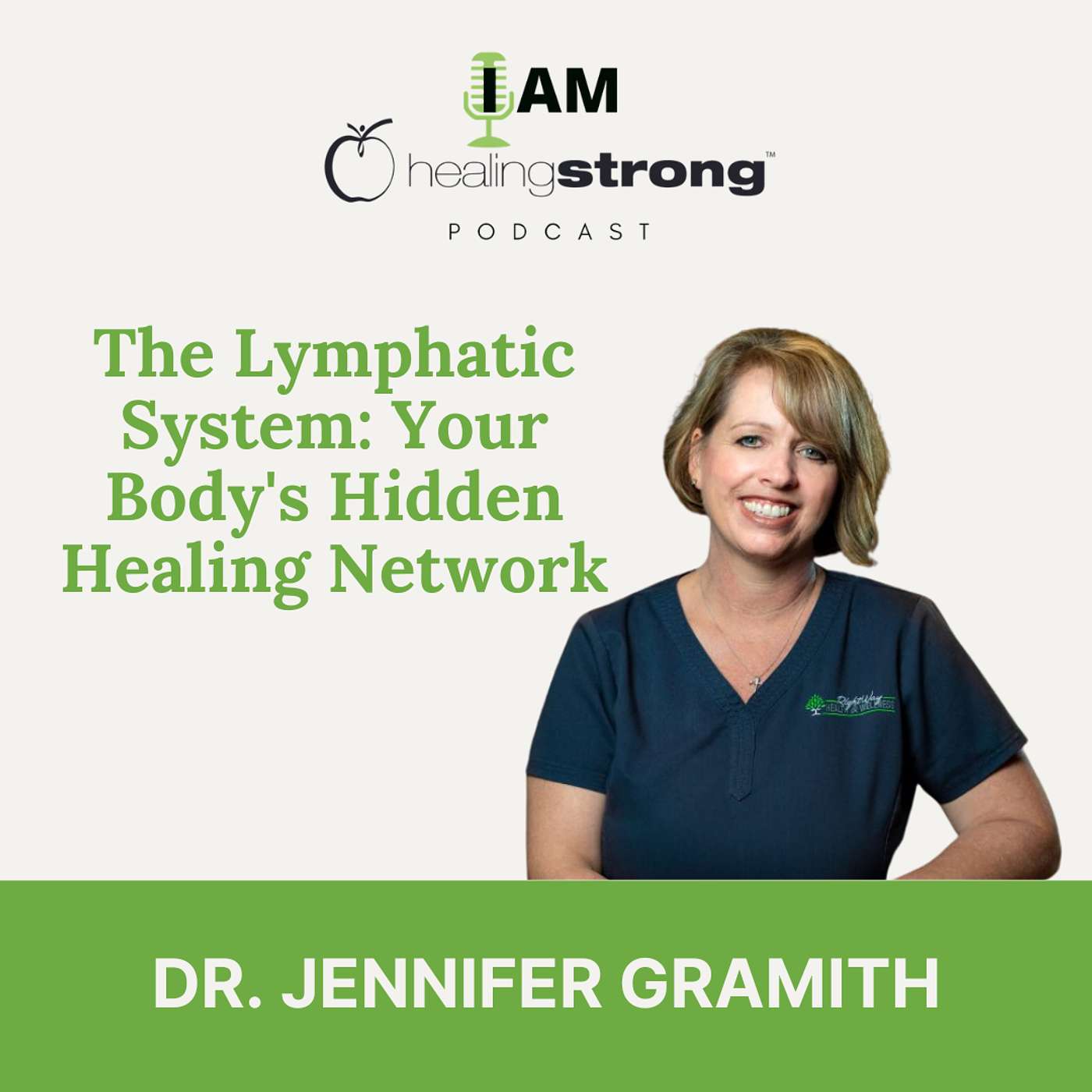
I AM HealingStrong
142: The Lymphatic System: Your Body's Hidden Healing Network | Dr. Jennifer Gramith
00:41:36
Loading summary
Transcript85 lines
- [00:00]
Dr. Jennifer Gramoth
So one amazing thing about this technology is that one of the gases that are in the transmission head, it relaxes the parasympathetic nervous system. I mean, it takes you out of fight or flight immediately. So during that session, that therapy, you, your clients get off the table and they're like, oh, my gosh, I feel so calm. I feel so at peace. I don't have the pain. I have more energy, those types of things. And I'd have seen as a practitioner the impact that it has on the modulation of their immune system. And so I used to say when I first got into this that it helped boost your immune system, but I found that to not quite be accurate because it not only boosts your immune system when your immune system is extremely weakened. Okay. But if your immune system is overactive with autoimmune, it actually regulates it. So it does both, which is amazing.
- [01:03]
Podcast Narrator
You're listening to the I Am Healing Strong podcast, a part of the Healing Strong organization, the number one network of holistic cancer support groups in the world. Each week we bring you stories of hope, real stories that will encourage you as you navigate your way on your own journey to health. Now here's your host, stage four cancer thriver Jim Mann.
- [01:29]
Jim Mann
On today's episode, we're talking to Dr. Jennifer Gramoth. That's how you pronounce your last name, right?
- [01:35]
Dr. Jennifer Gramoth
Correct.
- [01:37]
Jim Mann
Excellent. You're a naturopathic doctor. You're president of the Right Way Health and Wellness, also president of the foundation for the Advancement of Energy Medicine Technology. What is Energy Medicine? Is that clinical coffee?
- [01:49]
Dr. Jennifer Gramoth
Well, could be, but not in my case. It's using modalities like the XP2 and energy devices to stimulate immune function.
- [01:59]
Jim Mann
So, okay, that sounds. That sounds like a lot of fun.
- [02:04]
Dr. Jennifer Gramoth
It actually is.
- [02:06]
Jim Mann
Now, the Right Way Health and Wellness, That. That's something you're the founder of that. How long ago did you put that together?
- [02:13]
Dr. Jennifer Gramoth
Well, I've been in this field for about 30 years. So originally was called Right Way Enterprises. Then later when I opened up the clinic, it was Right Way Health and Wellness, and has been for, I guess, 20 years now. But, yeah, my mindset behind that is, you know, learning how to do things the right way, whether it's in our spiritual life or, you know, physical life, mental, emotional health. You know, there is a right way to do things. And so that's where the name came from.
- [02:49]
Jim Mann
Do I understand right? You have clinics, like, all over the country?
- [02:52]
Dr. Jennifer Gramoth
Well, I have a local clinic here in Woodstock, Georgia, and I work with practitioners that have clinics all over the country and even out of the country as well. Because of my specialty with the immune system, lymphatic system, I help them create protocols for their patients who are struggling with whether it's autoimmune or cancer.
- [03:13]
Jim Mann
All right, that's pretty good. Before I've got cancer, for me, the lymphatic system, the only thing I knew about it is when someone had cancer, they took out lymph nodes to see if it spread. I don't even know what they looked like or how many you have in your body. But when I heard someone had, like, 25 taken out, like, yeah, I thought that's all you got. But obviously, there's more than that.
- [03:36]
Dr. Jennifer Gramoth
There's lots more than that. And they can be as tiny as size of a, you know, top of a pin head or as large as an olive normally. And then they can, you know, enlarge even larger than that to the size of, you know, softball in some cases in the axle region. So you can have, you know, anywhere from 700 to 12, 13, 1400 lymph nodes throughout the body. The more you have, the more chance your immune system has on helping you fight off infection and cancer and disease. And so, yeah, it's. It's an important thing. And back when I worked in the medical field, I knew nothing about the lymphatic system other than you had some lymph nodes and that it was your detox system. But the lymphatic system is so much more than that.
- [04:27]
Jim Mann
And I have a. I have a really gross story I like to start out with, because after I had surgery, I had melanoma stage four on top of my head. So they took four lymph nodes out, like, in the back of my neck. At least one of them was, like, tucked under my skull, which is. Sounds so weird, but I don't know how long ago. How long after the surgery was probably a couple months. But I was out eating with a friend, and all of a sudden, this rancid smell came and. Which you don't want in a restaurant especially. I thought, that smells like rotten food. I said, how come no one else is reacting? And then my friend went to the. To the restroom, thank God. And I thought, oh, something's wet on my neck. And so I reached back there, and it's like this stuff that reeked so bad. I thought, oh, my gosh, does everyone else smell this? Or it's just because it's under my nose. But it. It had leaked out of the incision, which apparently wasn't totally healed. Is that. Is that normal? It does it. Like if you were able to open up a lymph node, it. Does it smell terrible?
- [05:31]
Dr. Jennifer Gramoth
Well, it's usually the infection, the bacteria, you know, that is in the tissue that develops because they're not getting filtration through that lymph node. So. Yeah. You know, one thing that people notice when they get assisted lymphatic therapy is that they no longer have any body odor, because now your lapse are detoxing a moving fluid. So you have to think about the lymphatic system like you think of a stagnant pond. So a stagnant pond. What does it breed? Bacteria, infection. So when fluid doesn't move, it gets molded, it gets nasty. Same thing happens inside your body when your fluid does not move. And so, you know, that's the job of a therapist like myself or even a manual therapist, is they're trying to get that stagnation of that lymph fluid, whether it's superficial or deep, moving through the body. And that gets rid of the smell and the bacteria and the debris and the excess proteins that are clogging up your drainage pathways.
- [06:37]
Jim Mann
Wow.
- [06:38]
Dr. Jennifer Gramoth
All right.
- [06:38]
Jim Mann
So obviously, the lymph node or the lymphatic system is there just to filter out the garbage. Is that's in you, right? Is that the main function of it?
- [06:49]
Dr. Jennifer Gramoth
Well, that's one of the functions, and that's the functions that we really have kind of spotlighted over the years since we've understood a little bit more about the lymphatic system. You know, you mentioned that you only heard about lymph nodes when people were diagnosed with cancer and then they were having lymph nodes removed. That was the case with me as well, because working in the field of oncology, we would do radical removal of lymph nodes, because that's where we got the positive that the cancer had spread in the body. Because we would take out the nodes, open them up, and, you know, through pathology, discover that there were cancer cells in there. Well, our first thought was, oh, there's cancer cells. That's bad. That's a bad thing, because we don't want the cancer spreading through the body. But the lymph nodes are the centers that destroy cancer, so they should be there. If the immune system is working properly, it should be there and destroying them. We don't do radical dissection of lymph nodes anymore because we've caused another disorder called lymphedema with our patients. And so we are very careful in allopathic medicine. In this day and age to not do, you know, 25 lymph nodes just because we want to see. So we have better, you know, imaging type of things. So hopefully you will see a decrease of lymphedema in edemic situations because that's another burden on the immune system, on the lymphatic system and on the cardiovascular system. So.
- [08:30]
Jim Mann
And like when a lymph node is removed, it doesn't, the body doesn't like grow another one. Right.
- [08:36]
Dr. Jennifer Gramoth
It's just now, yeah, it's gone. Once it's gone and you know, it's just like we did radical, you know, would take everybody's tonsils if you had a sore throat. Let's take out your tonsils. Then later found out your tonsils are your first line of defense for your immune system. So now we took down that wall. So now you're exposed to all of these viruses, bacterias in your environment and you don't have that first line of defense. God is so wonderful. He knows what we're going to do. So he put lots of cerebral lymph nodes in our neck. And so that will help to filter out anything coming through the openings in your, you know, in your head as a. Another backup system before it dumps into this cardiovascular system, which is right here at the base of the neck and the thoracic and the right lymphatic duct that goes straight into your bloodstream. Well, you know, that can be dangerous. If you got infection, it doesn't get filtered out and it goes straight into your bloodstream. You can get infection in the heart and it to carries it to all the organs elsewhere throughout the body. So, yeah, it's just amazing, you know, how God has designed our body to heal in the right environment. And so we've learned, unfortunately, through trial and error, and we're still learning that God doesn't put these things in your body just because they have a purpose. Tonsils had a purpose. Our appendix have a purpose. You know, our gallbladder has a purpose. And the, our knee jerk reaction shouldn't be to remove, remove them. That we don't really need them because we do.
- [10:19]
Jim Mann
Wow. So I'm down four lymph nodes and two tonsils in my neck area. Yeah, that's great.
- [10:27]
Dr. Jennifer Gramoth
Yeah. When you have about 12, 1500, you know, in your body and not like the 7 5, 700 some people have.
- [10:34]
Jim Mann
Yeah, they can pick up the slack is what you're saying.
- [10:36]
Dr. Jennifer Gramoth
Hopefully.
- [10:37]
Jim Mann
Now, other than, of course, coming to your clinic, what's the best way to have the lymph move is just walking or obviously rebounder and things like that.
- [10:47]
Dr. Jennifer Gramoth
Right, right.
- [10:49]
Jim Mann
What's the best way?
- [10:50]
Dr. Jennifer Gramoth
Yeah, so everybody should be doing certain things like that at home. Your lymphatic system doesn't have an automatic pump like your circulatory system. Your heart keeps your blood pumping and moving through the body while the lymphatic doesn't. The lymph actually piggybacks your cardiovascular system like this. And so because in this day and age, we sit behind desk, you know, 24, seven, we're not exercising, we're under a lot of stress, we're exposed to more environmental toxins, our lymphatic system becomes very congested, very thick, even to the state. It can go from a consistency of water to then butter to then, like cottage cheese, to do fibrotic, actually. And that can be extremely dangerous for our health. It's interesting how many people, especially in the US but worldwide in this day and time, because we have so many processed foods and people depend on that at, you know, the majority of their diet, that their lymphatic system is congested 70, 80% of the time. And so because you don't have an automatic pump, you are designed to move. So deep breathing will help move lymph. Walking, like you said, will move the lymph by contraction of the muscles pushing up against what is called the lymphangions. It's like a spiral muscle around the vessel, and it propels fluid forward. And so I think that is a big part of the problem with it. Not just the amount of toxicity that we're exposed to, the processed foods that we're putting in our body, the stress that we live under, but the fact that we are so sedentary.
- [12:44]
Jim Mann
Yeah, I know there are manual massages you can do. I had somebody on the podcast, it's been several years ago, but I remember her showing different ways. You start in a certain area and you got to do it in order. Well, don't have to, but that's the best way.
- [12:59]
Dr. Jennifer Gramoth
Yeah.
- [12:59]
Jim Mann
And then somebody in our My Healing Strong group last month was talking about, you know, slapping the different areas in your arms and getting things going when you first get up. What's the difference between that and the assisted lymphatic therapy? Therapy?
- [13:15]
Dr. Jennifer Gramoth
That's all good. And I highly recommend people learning those techniques of manual massage, because the lymphatic system, there's two new light levels of the lymphatic system. So there's the superficial, which is 70% of your lymphs are Directly underneath your skin. And it can be palpated and moved very easily. But the 30% that is deep in the body, it's below the fascia, it's around the organs, it is where your immune system lies most times cannot be palpated effectively to get it moving like it should. And so sometimes with a very toxic individual, you may start taking supplements or medications, and they go into a hurtsing reaction because their body is so congested. In the deeper lymphatics, it's kind of like a bathtub that's clean, clogged, and you're pouring all this good water in, but because it's clogged in the drain, it's just overflowing. And that's what patients experience at times. So what assisted lymphatic therapy does is it really goes deep into the body to dissolve that congestion in the deeper lymphatics. So it opens up those pathways, it clears the, the bowels, it opens up the liver, gets more flow through the kidneys. And so it's about 70 to 80 times more effective than manual when addressing, I'm viewing the immune system. So. And it uses inert gas ionization, it uses Tesla's technology, the Tesla coil. And so it's excited by that current. And it's like a. I'll show you what a transmission had looks like. So it's lit up and it. When you rub it onto the skin, you can feel the congestion in the body, depending on what level you know how deep it is. And then you can feel the congestion, dissolve and move out. And clients, you know, have results immediately they get up off the table, their nervous system is calm. That is one thing I have really seen is that people, the majority of people are in fight or flight. And you know, Jim, as well as I know that people can't heal when you are in a fight or flight state. Well, why is that? Why can't you heal? It's because your body is creating inflammation from the inside out because of that nervous system. So one amazing thing about this technology is that one of the gases that are in the transmission head, it relaxes the parasympathetic nervous system. I mean, it takes you out of fight or flight immediately. So during that session, that therapy, you, your clients get off the table and they're like, oh, my gosh, I feel so calm. I feel so at peace. I don't have the pain, I have more energy, those types of things. And I have seen as a practitioner the impact that it has on, on the modulation of their immune system. And so I used to say when I first got into this that it helped boost your immune system, but I found that to not quite be accurate because it not only boost your immune system when your immune system is extremely weakened. Okay. But if your immune system is overactive with autoimmune, it actually regulates it. So it does both, which is amazing.
- [16:54]
Jim Mann
So somebody like myself, I had. I did immunotherapy for two years, which is great. I mean, it shrunk the tumors in the first two months, but they kept me on for two years. And some of the side effects, I didn't have any bad side effects, but they did say that, I mean, some of the bad side effects is it'll attack your organs and your brain and stuff like that. That's pretty bad. Another bad side effect is death. I didn't have that. Where there's one where it kind of affects the tendons in your legs and the joints, it just to where you feel like old. And one doctor told me, he goes, well, that, that shows it's still working in you. I thought, well, I guess that's good. But again, would that regulate something like that?
- [17:41]
Dr. Jennifer Gramoth
Exactly, exactly. That is exactly what I'm talking about, is that. So there are certain medications that work on certain methylation pathways to shut off those circulating cancer cells. They actually, you know, immunotherapy can be very targeted. But like you said, it does have. It affects not just that pathway that you're wanting it to affect, but it affects other pathways and how you methylate. And so your body then creates inflammation. And then, you know, the immune system doesn't. Gets confused and doesn't really know what to do, and it starts attacking itself. And so you can develop autoimmune disorder. So this allows. When you decongest the lymph, it's like if you're swimming in a swimming pool that's just muddy water and you can't see which direction you're going. And then all of a sudden the water is cleared. This is what's happening inside the body when you do things like assisted lymphatic therapy to clear. Clear out that murky water. So now your immune system, which knows how to function and knows how to work properly in your body, it now can. And so that's the beauty of. Dissolves inflammation. You know, like I said, it modulates, so it strengthens or it brings the overaction, overreaction of the immune system back down.
- [19:07]
Jim Mann
Wow. I'm only like two hours from you. I'm on my way over.
- [19:11]
Dr. Jennifer Gramoth
Yeah, come on. Over. And we have therapists, we have thousands of therapists here in the US and so we are continuing to train more and more practitioners as the lymphatic system has, you know, since COVID actually become a spotlight, you know, everybody's like, oh, I need to know if my lymphatic system is healthy or my immune system is healthy and what can I do to make that healthy so I don't have to deal with chronic illness. So I love that we're seeing a proactive approach and people are not just waiting until they're actually diagnosed with that chronic illness. I don't like the fact that we live in a society fear driven and fear based, because I don't think that's what God would have for us. But I love the fact that people are curious and they are searching for answers.
- [20:06]
Jim Mann
Now, is this something that, that you people should do periodically or just when they have symptoms?
- [20:13]
Dr. Jennifer Gramoth
Yeah. So, I mean, that's a great question, you know, in my mind, in my life, because this is what I see. I see the world as everybody needs it, you know, but it's really. I would base it upon symptoms, but you need to know what symptoms that you're looking for. So if you have allergies, that's the sign of a compromised, congested lymphatic system. If you get bloated, if you have headaches, if you have acne, I mean, lymphatic therapy back ages ago started with a doctor who was trying to help his patients clear up acne, and he was doing manual massage for that. And so, you know, fatigue. And these are just common symptoms that we all struggle with. Depression, depression, you know, you name it, you can link it back to the lymphatic system. And so in my practice, the lymphatic therapy is the foundational therapy. It brought me from having about a 30, 35% success rate with stage 3, stage 4 cancer patients to a 75 and 85% success rate with that one modality. That's pretty amazing. So same thing with the Lyme patients. Instead of taking five years to help put them in remission, it took less than a year. I mean, it's just amazing what the potential of a healthy lymphatic system can, what it can do for you.
- [21:44]
Jim Mann
Wow, I never knew any of that. I feel so much harder right now. Now. And I'm sure you got some stories from clients that kind of stick out with you.
- [21:55]
Dr. Jennifer Gramoth
Yeah, I've got hundreds of stories from. From clients, you know, in the world, dealing in the world of oncology. Which is what my specialty is. And I don't know if I have, you know, shared my story with you, but I worked in mainstream medicine so I, I've worked both sides of it and I still, you know, am I facilitate for practitioners working with patients and patients trying to understand what their doctors are wanting them to do and the pros and the cons of all things that are thrown at you when you get that kind of diagnosis, I help walk people through that process. And so dealing with patients in oncology, you're going to see some very sick individuals that doctors have just given up on. Especially when, you know, typically in the last 30 years that I've been doing this, patients don't come to naturopaths or functional doctors until they exhausted all of the allopathic way. So they come very broken. You know, their bodies are broken, their mind is broken, their spirit is broken. And it's, it's very difficult for me as a practitioner. You know, early in my career I went back to school to become a psychologist because I didn't know how to deal with all of these people in this state of mind. And I'm just like, okay, well let's get over it, let's just move forward, you know, and that doesn't work. So, so I see the worst of the worst. And one case in particular, she was a five time cancer survivor. She had, was not diagnosed when she should have been for hemochromatosis. And so she ended up very early in her life, but in her 20s, I think, having a heart attack. And so she had cancer in her 20s and then she got that reversed and then she developed hemochromatosis and went undiagnosed and it caused her to have a heart attack. She had to have a pacemaker put in and then she actually had, you know, she, her lifestyle. She is from la, she travels, she very influential individual. And she was sent to me from my mentor, Dr. Lee Cowden, because she had lymphedema and so that I'm known for lymph work, you know, so she came to my office with legs that looked, you know, four times the size that they should have been. They were becoming fibrotic and he wanted me to try to help her because it was too much pressure on her heart. So we started doing therapy with her, was able to get her legs down to a normal size without doing compression at that time. And which is amazing. That's one thing that people hate about the manual lymphedema treatment programs is that they, the protocol requires Them to go into their practitioner's office every day, get manual massage, and then leave their bandage wrapped up, up like the Goodyear tire man, you know, and it's very uncomfortable, and it's just not sustainable. And so they would have to do that every day, you know, every day for, like, two weeks. And then they'd get fitted for a compression garment, and then they'd have to repeat it. And it's. So most people just like, forget it. I'm not doing it. And that's why I started looking at alternatives, because if, you know, even if it's effective, if your patients won't do it, then, you know, you've. You've lost that battle. And so with assisted lymphatic therapy, I was able to have them come in once a week, twice a week for an hour. It's like getting a massage, and it's a full body approach. So we're addressing the entire lymphatic immune system and. And have those types of results. So we're able to bring it down to normal size and keep her, you know, vibrant and healthy. And, you know, I've had a male patient who had non Hodgkin's lymphoma, had tumors in his neck and his abdomen, under his arms, and the size of softball, able to break those down with this type of therapy. And of course, they have to do diet. They have to do all the other things, too.
- [26:29]
Jim Mann
Yeah.
- [26:29]
Dr. Jennifer Gramoth
We are complex individuals, and cancer is a very complex disease. And there's just not one thing that you can do, and there's not one thing that caused it. It's a multiple tude of things in your life, and you really have to start digging and be willing and open to discovering more about yourself of what was the root cause.
- [26:51]
Jim Mann
Yeah. Yeah. The most surprising thing to me was how important your attitude, your outlook is. I'm like, what?
- [26:59]
Dr. Jennifer Gramoth
Right.
- [27:00]
Jim Mann
Why does that have anything to do with anything? But fortunately, I have a really good attitude. I'm like a child. I see it as immaturity, but it actually. It was in my favor.
- [27:09]
Dr. Jennifer Gramoth
Yep. I think, you know, Jim, I will tell you, in the 30 years of doing this, the patients who thrive, survive, and don't have reoccurrence are the one that work on their trauma, their mental emotional health on the forefront. And so. And it's interesting to me that when clients come here and they sit in front of me and we talk about, you know, okay, this is. Looks like this is what caused the cancer to develop. And largely it's from trauma from childhood or, you know, divorces or, you know, things like that.
- [27:50]
Jim Mann
Yeah.
- [27:51]
Dr. Jennifer Gramoth
Their unwillingness to work on that. You know, it's like, I'll take all the supplements you want. I'll do the diet, I'll do the therapies, but I really don't want to deal with that. I buried it. Well, the reason, you know, you bearing it is probably what caused the cancer in the first place. And. And so it's. It is interesting. So I pray that people, you know, who listen to me on this podcast understand the success rate you will have with working on your stuff that you really don't want to work on is, you know, is near 100%, if you are willing to do that. And so be open to that. To me, that's where it should start. And you start with the emotions, the traumas, the things that. And that's scriptural. I mean, if you go, you know, look for these things scripturally, you'll see, you know, that your mindset is critical. And so, yeah, just. I encourage people to not be afraid and to dig up those things and then, you know, lay them back down at the beat of Jesus and move on. Don't be carrying that burden.
- [29:11]
Jim Mann
See, that's my problem. I haven't had enough trauma in my life.
- [29:15]
Dr. Jennifer Gramoth
Sometimes it's our parents trauma and generational stuff that you see. So I study recall healing and new German medicine. And, you know, it is interesting how some things are carried from generation to generation that we're not even consciously aware of.
- [29:31]
Jim Mann
Well, you're like the perfect person to do this because you. Like I say, and I read this about you, you were like a conventional doctor, and now you're a naturopathic doctor. So, you know, both sides of the fence. It's like getting an accountant that used to work for the irs. I like them. They're the best ones.
- [29:47]
Dr. Jennifer Gramoth
Well, I was a conventional nurse, and then I was become a naturopathic doctor and functional practitioner.
- [29:55]
Jim Mann
Yes. Well, there are people listening to this podcast, obviously, who just got a diagnosis, and they're scared to death. You know, they think this is the end. And usually the doctors scare you, say, oh, you got to do something really fast, or in six months you're gonna be gone. What. What would you say to encourage these people that are listening right now?
- [30:15]
Dr. Jennifer Gramoth
Yeah, I don't accept that prognosis. As a nurse working in oncology, we were trained to do that. And the reason you're trained to do that in allopathic medicine is because we know that once patients get home and start, you know, Researching the chemotherapies, the things they're going to be so afraid they're not going to do it. So we have to, we were TR to pressure them into agreeing, you know, signing on the dotted line, getting things going immediately. And so don't you know it, it is out of good intentions because in their mind and allopathic medicine, if you're not doing exactly what they want you to do, you're not doing anything. And so I encourage you to educate yourself. Cancer did not develop in your body overnight. It's not going to spread overnight. You know, if you study new German medicine, you know that it is. Cancer survives on a 12 year cycle. You're usually not diagnosable until year seven or eight. That's where we get the five year. You live past five years, you're in remission. You know, that's where all of that comes from. And so it's been in you, it's been developing. And we all have cancer cells in our body that have little, create micro tumors. And then our immune system, if working properly, will destroy that. They actually have a purpose. That was amazing to me because I always thought, well, why did God put cancer in our body? Why would he allow that, you know, to be there? It's like a ticking time bomb, but it actually has a restorative, reparative, you know, process. So I, you know, I just encourage people to educate themselves. Do not give up. Doctors don't know everything. And if you feel led to go the holistic route, go the holistic route. I am not an anti allopathic medicine, you know, practitioner. I am more of integrating. And so get good counsel, but make that decision, pray about your decision and whatever you decide to do, have peace about it. Don't do anything that you're not sure of. But when you have that peace, that yep, I need to do this or yep, I need to move in that direction. That's the spirit moving you.
- [32:51]
Jim Mann
How did you come across healing strong? Where did that happen?
- [32:55]
Dr. Jennifer Gramoth
I met them through lots of organizations because cancer is my specialty and I speak at conferences like ACI and you know, Belgianski and things like that. I have, you know, met them multiple times. The Dr. Bergeron here locally does the faith and medicine conference. They're usually there. So I, I, you know, early on wanted so desperately for them to, you know, for my patients to have a support group, you know, and not the one in the hospital, you know, where everybody gets together and oh, woe is me. And you know, they're just kind of settling into Their diagnosis and becoming that. So I wanted something positive, something they could learn from. And when I met someone with Healing Strong, it was just like, this is it. This is what people need. They need their community, because we all need community coming around them, encouraging them, because they. They get so much crap from, you know, mainstream medicine. Alas, I mean, holistic medicine as well, because they're. You've got friends who believe holistically. You've got friends that are all allopathic. You got people who have great intentions, but they are just throwing all of this information, and you're just, like, drowning in it. And so. But I think when you have something like Healing Strong, you have a community of people that will just listen and hear you and possibly have struggled with a lot of the same things that you're struggling with, and you can find some answers and you don't feel pressure, and you don't feel like you're going to disappoint, you know, and so I just think that's what people need, and that's what they, you know, that's one of my main focuses here, is not to be a dictator. Tell them what they should and should not do, but just lay out all the possibilities, pray with them, you know, help educate them, and then let them know that whatever decision that they make, we will walk that journey together and they don't have to do it alone.
- [35:10]
Jim Mann
I had to start a group in Greenville because there wasn't one. And it took seven years for actual leaders to step up. Finally, yeah, take over, because I thought that would happen in the first month once they saw my lack of leadership.
- [35:23]
Dr. Jennifer Gramoth
But I don't blame that.
- [35:26]
Jim Mann
Seven years as they watched me squirm. But, yeah, the meetings, the most valuable part, other than, you know, learning from the curriculum and whatnot, but it's just a bunch of people going through the same type of thing, and everybody's happy, which is so weird because it's like a room full of people fighting cancer, yet they're so excited. Like they just joined a new club, which they did, actually. And, you know, they're learning from each other, you know, that we all share with what we did this week or this month, whatever it is. And. And it's just. It's so weird. It's like we're sitting in Disney World.
- [35:59]
Dr. Jennifer Gramoth
I know. It's beautiful. I mean, it's just wonderful. And I wished. I wished all of medicine was like that, you know, where people felt heard. And I was talking to a patient yesterday, and she's like, you know, I came Here because I always felt welcome. She said, the first time I walked in your door, somebody called me by my name. And, you know, at the hospital, when I would go in for treatment, they would, you know, treat me like I was a number. And they were just kind of rush me in, rush me out. And I just felt like, ick, you know, I didn't feel, you know, treasured or valued at all. It just felt like, you know, get her and get her out. There's nothing else we can, you know, do for her. And this was a lymphedema patient, you know, and she said, but I'm just so grateful, you know, I found this place. And she's been coming here for years now. But, yeah, what should be.
- [36:54]
Jim Mann
Dr. Jen, I now know everything. Lymph.
- [36:59]
Dr. Jennifer Gramoth
Yes.
- [36:59]
Jim Mann
How can people get a hold of you?
- [37:02]
Dr. Jennifer Gramoth
So you can reach me at Rightway Health and Wellness. Actually, you can go to Dr. Jennifer gramoth.com and learn more about the things that we offer here. You can learn more about lymphatic therapy if you're really interested in doing that. But we, you know, I'm a functional practitioner, so we do all kinds of things where we do labs, we do biofeedback testing, we do ozone therapy. We do, of course, lymphatic. We have the wellness table. Just anything that I have felt that people really benefit from, we typically will offer that. You can also go and, you know, find a therapist if you're interested just in lymphatic therapy, you can go to my site and find a therapist near. You also do telemedicine, so you can. Or tele wellness is what I like to call it because. And I do that. You know, I have. It's not just myself, but I have a team of practitioners here that specialize in digestive health or your immune system, your lymphatic system. We have, you know, great practitioners that work here at Rightway that are here to serve our community, whether it's local or abroad. So you can call the office at 404-474-2100 as well. So there's. You can find me online. I'm everywhere.
- [38:30]
Jim Mann
All right. And I know you're familiar with Greenville, if I remember correctly, where I'm at. I'm sure I can find somebody there that could help me out. Right?
- [38:38]
Dr. Jennifer Gramoth
Yeah, I'm sure you can. Yeah. We have a couple of practitioners in your area.
- [38:44]
Jim Mann
Okay. I passed one of your favorite restaurants this morning.
- [38:47]
Dr. Jennifer Gramoth
Oh, halls.
- [38:50]
Jim Mann
I looked there. I said, oh, that's her favorite restaurant. I talked to her today.
- [38:53]
Dr. Jennifer Gramoth
You need to try it. It's delicious.
- [38:55]
Jim Mann
Yeah, yeah, yeah. I do like that place. I went there one time. Another story. And some of our workers, my wife's business, she's got an after school care business and so we would take them out once a year to eat and we took our three favorite there and they were very beautiful college kids from Clemson University. Yeah, it was three of them. And my wife who was pregnant with our last child. So it's been a while ago. And my wife is very beautiful, thank God. And the, and the hostess, you know, looked at, we had things, you know, reservations and everything, but she looked at the women and looked at me and she goes, are you rich or something?
- [39:36]
Dr. Jennifer Gramoth
What? It.
- [39:38]
Jim Mann
She was serious. It made those girls so mad that she said that like, well, it ain't
- [39:44]
Dr. Jennifer Gramoth
cheap there, that's for sure.
- [39:46]
Jim Mann
Yeah, I'm glad you're not getting the tip.
- [39:50]
Dr. Jennifer Gramoth
Yeah.
- [39:51]
Jim Mann
But the food was great. The food was great.
- [39:53]
Dr. Jennifer Gramoth
They do an amazing job. It's very fresh. It's probably not all organic. Hopefully it is, but we just pray our well.
- [40:01]
Jim Mann
Thank you, Dr. Jen, for sharing your knowledge and we, we hope it'll help so many people. I'm sure it will be because so many people don't know about the lymphatic system like myself. So now we all know.
- [40:15]
Dr. Jennifer Gramoth
Yeah.
- [40:16]
Jim Mann
All right, we'll see you later.
- [40:17]
Dr. Jennifer Gramoth
Thank you.
- [40:18]
Podcast Narrator
You've been listening to the I Am Healing Strong podcast, part of the Healing Strong organization. We hope this episode encouraged you and gave you confidence to take charge of your healing journey, Trusting God to guide your path. Healing Strong is a nonprofit dedicated to connecting, supporting and educating individuals facing cancer and other diseases through strategies that rebuild the body, renew the soul, and refresh the spirit. It's free to join a local or online group. Just visit healingstrong.org to find one near you or start your own. While you're there, create a free my HealingStrong account to access all of our free resources to help you live healthier and heal strong. Though our groups and resources are free, we invite you to support our mission through a monthly Hope Givers donation of your choosing. Your generosity helps us reach more people with hope and encouragement. If you enjoyed this episode, please leave a five star rating and review to help us spread the word. We'll see you next week with another story on the I Am Healing Strong podcast.