

Podcast Summary
Overview
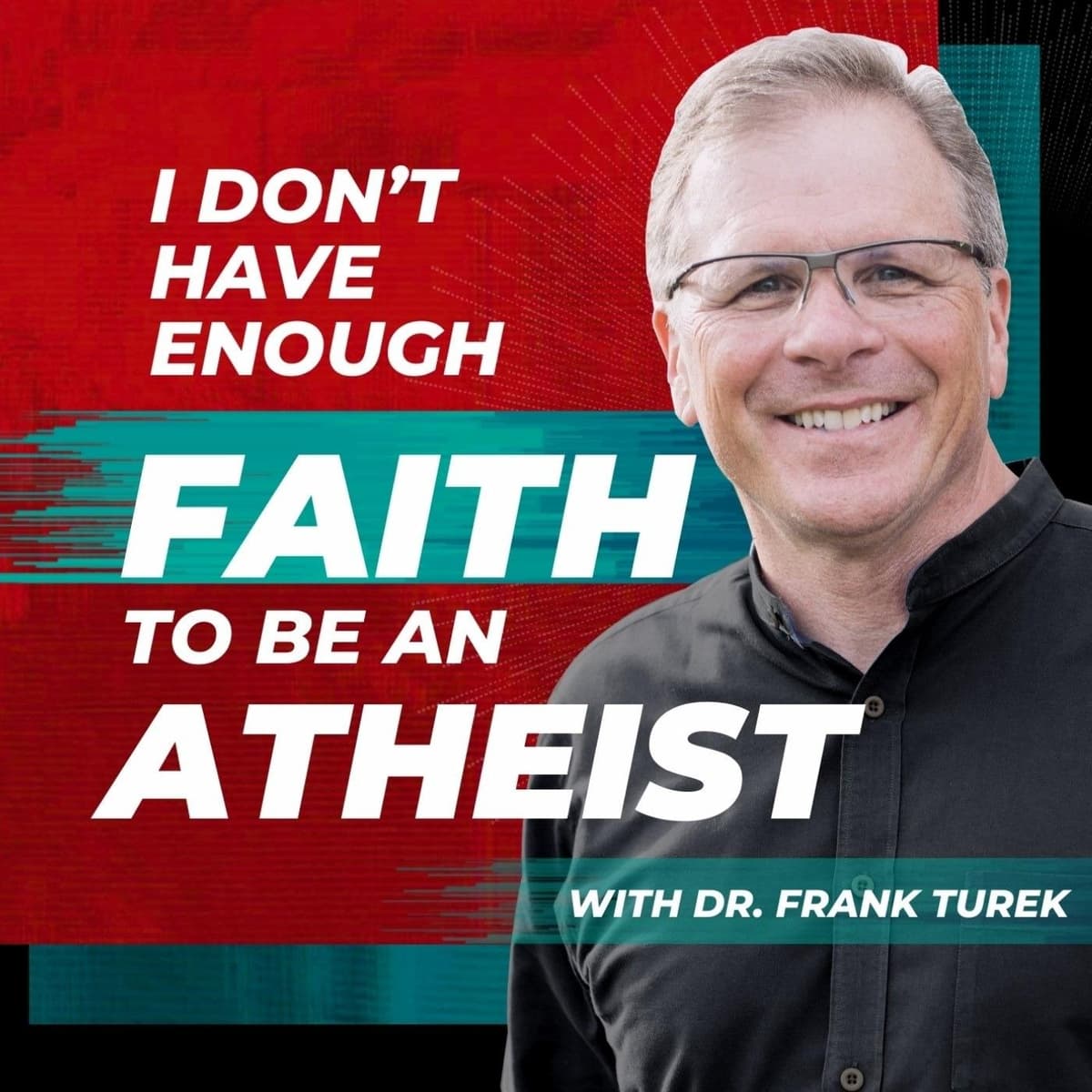
Podcast: I Don’t Have Enough FAITH to Be an ATHEIST
Host: Dr. Frank Turek
Guest: Abdu Murray (Embrace the Truth Ministry)
Episode: Fake ID: How AI and Identity Ideology Are Collapsing Reality
Date: January 30, 2026
This episode explores Abdu Murray’s new book, Fake ID: How AI and Identity Ideology are Collapsing Reality and What You Can Do About It. Dr. Frank Turek and Murray examine the collapse of shared reality through artificial intelligence (AI) and modern identity ideologies, the Christian response to cultural confusion, and why truth must be our anchor. Murray connects philosophical, technological, and theological concerns, emphasizing the critical importance of objective truth for human freedom and flourishing.
Key Discussion Points and Insights
The “Scandal of Evil” and Suffering
- Murray opens the episode by sharing the tragic murder of his father in October 2024 and reflects on faith, suffering, and community response.
- He shifts from calling it “the problem of evil” to “the scandal of evil,” emphasizing the personal devastation it brings.
“Once you’re touched by evil in this way...it’s no longer just an academic problem to address. It’s a scandal that an all-powerful, all-loving, all-good God would allow this kind of thing to happen.” — Abdu Murray (02:21)
- Murray describes the outpouring of kindness from his church and community, which provided comfort and tangible evidence of God’s goodness and mercy through tragedy.
- Both Turek and Murray refer to the Christian hope in the resurrection, making suffering meaningful and survivable.
“Without the resurrection, there is no hope...it really became real when [Gary Habermas's] first wife, Debbie, died of cancer.” — Dr. Frank Turek (07:14)
- Murray’s faith was “never shook,” and he sees how God has used his suffering to allow deeper testimony and ministry.
Murray’s Background: From Islam to Christianity
- Abdu Murray was raised Muslim; after nine years of study, he became a Christian and apologist.
- His parents were devout:
“He fervently believed it, fervently believed it, knew the Quran, taught us to obey it, taught us to love it, taught us to spread it. So, yeah, he was pretty committed.” — Abdu Murray (08:58)
The Intersection of AI and Identity Ideology (10:47)
- Murray’s new book frames two cultural tsunamis:
- AI Mania: “Unbridled enthusiasm” for artificial intelligence, accompanied by deepfakes and blurred human/machine boundaries.
- Identity Ideology: The legal and cultural reshaping of biological and personal reality, most clearly in gender debates.
“What I didn’t see was a lot of books talking about the convergence of these two things at this particular cultural moment and how both...are creating some confusion.” — Abdu Murray (10:47)
- AI and identity ideology are converging to erode distinctions between reality and fabrication, truth and preference.
- The problem is compounded by the speed of social media, encouraging poorly informed ‘hot takes’ and virtue signaling.
“Hot takes are usually bad takes because you have half the facts, if you have any of the facts. And now it’s getting harder and harder.” — Abdu Murray (14:07)
Deepfakes, Social Media, and the Collapse of Reality (12:54–15:26)
- High-profile cases of AI-created images and reports mislead even government leaders.
- Example: Dick Durbin showing an AI-generated, obviously fake image on the Senate floor.
- Challenge for everyone, not just the “old” or technologically illiterate:
“If people at our highest forms of government are being taken in by the deepfakes...how are we not seeing reality collapse right in front of us?” — Abdu Murray (12:54)
- Social media conditions us to respond instantly, raising the risk of amplifying misinformation.
“A lie can get halfway around the world before the truth has had a chance to put on its shoes.” — Abdu Murray (14:07)
- Real tragedies are dismissed as fake, and faked events are assumed real — eroding common standards for truth.
Biblical Diagnosis and the Root Problem (16:05–17:23)
- Murray claims the Bible uniquely diagnoses why humanity struggles with truth, identity, and the drive to create ever-more-powerful machines.
“Not only describes the way out of the truth problem, but...predicts the reason we’re having the truth problem in the first place. Which means to me that there’s a good reason to trust this book.” — Abdu Murray (16:37)
- The desire for “divine autonomy”—to be a law unto ourselves—explains both post-truth culture and the allure of AI.
Notable Quote Analysis: Post-Truth Culture
- A viral clip from Catherine Marr (former CEO, Wikimedia, now at NPR) argues for pursuing “the best of what we can know”—not “the truth.”
[17:59–19:42]“I know that the truth exists for each of you in this room. It also probably exists for the person sitting next to you. But the thing is, the two of you don’t necessarily have the same truths...for many of us, truth is what we make when we merge facts about the world with our beliefs about the world.”
- Both Turek and Murray critique this as self-contradictory and dangerous:
“A post-truth world...has elevated our preferences and our perspectives above truth. We haven’t denied truth. We simply said that if the truth serves my preferences...I’ll talk about it. But if it doesn’t, well, then I’ll call anybody who uses it a bigot or a something.” — Abdu Murray (20:00) “That sounds like Satan talking, doesn’t it? ‘Pay no attention to the man behind the curtain. That’s a distraction.’” — Dr. Frank Turek (21:53)
- Both Turek and Murray critique this as self-contradictory and dangerous:
The Autonomy Crisis and Loss of Shared Meaning (26:41–29:41)
- The rise of “my truth” is not just the affirmation of personal experience; it is a claim of unchallengeable, sovereign ownership of reality, immune to counterevidence.
“Ultimately the post truth culture...is not based on a search for the truth, it’s based on a search for autonomy, for a divine autonomy that only God himself can have.” — Abdu Murray (27:04)
- The inevitable result: societal conflicts are settled by power, not principle or reason; minority perspectives risk censorship or coercive exclusion.
- Turek and Murray recount examples of “cancel culture” where truth becomes secondary to emotional offense; dissent is not tolerated “in the name of inclusion, tolerance and diversity.” (31:01)
Bioclasm (Gender Ideology) & AI Mania: Twin Tsunamis of Reality Collapse (31:09–35:44)
- Murray introduces “bioclasm” (his word for radical gender ideology): the idea that even biological facts can and should be reshaped by preference.
“The bioclasts take the givenness of biology and they destroy it in favor of this autonomy...to define my reality as I want it to be.” — Abdu Murray (31:14)
- The AI mania, while morally neutral in itself, can similarly decenter personhood, creativity, and agency.
“It’s not the AI that I’m worried about. It’s the humans using The AI that I’m worried about.” — Abdu Murray (33:39) “The technology is amoral; it’s what you do with it.” — Dr. Frank Turek (33:40)
- Both movements spring from the same contradiction: Western culture tells us we’re mere machines, but also that everyone is a god unto themselves. “You’re a machine and you’re God, but you can’t be both.” (35:44)
What Does It Mean to Be Human? (39:36–43:16)
- AI threatens to undermine human uniqueness, especially through “creative” acts (e.g., AI-generated art, sermons, even prayers).
“If human creativity...is what makes us unique and sets us apart...this machine comes along and it acts just like us or even better than us...what does that say about us? Does that say that we’re soulless?” — Abdu Murray (39:48)
- Murray critiques claims that AI “defeats” humans: AI is always an artifact of human intelligence, and thus points to the design inherent in nature.
“Artificial intelligence presupposes natural intelligence. Whenever we see intelligibility in the world, we see intelligence that precedes it.” — Abdu Murray (43:21)
The Theological Foundation: Necessary Being and Divine Name (43:16–48:21)
- All intelligence (including artificial) ultimately points back to an “uncaused cause”—God.
- The biblical declaration, “I AM,” encapsulates the philosophical necessity of God’s existence, predating even Enlightenment arguments for a necessary being.
“He takes that entire argument and he summarizes it in his name. That, to me, is an efficiency of words that bespeaks the genius of the one who not only gives us the word of God, but who is the word made flesh.” — Abdu Murray (47:36)
Notable Quotes and Memorable Moments
-
On Post-Truth Culture:
“A post-truth world...has elevated our preferences and our perspectives above truth.” — Abdu Murray (20:27)
-
On Autonomy vs. Truth:
“In the quest for ultimate autonomy, someone ends up in shackles.” — Abdu Murray (29:28)
-
On Reality:
“Reality is that which, when you stop believing in it, doesn’t go away.” — Abdu Murray, quoting the book (38:04)
-
On AI & God:
“Artificial intelligence presupposes natural intelligence. Whenever we see intelligibility in the world, we see intelligence that precedes it...There is a necessary being that has to start it all...That, by definition, is God.” — Abdu Murray (43:16)
-
On God’s Name:
“When Moses asks God, who shall I say has sent me, what is your name? God says, I am. Tell them I am that I am has sent me...He takes that entire argument and he summarizes it in his name.” — Abdu Murray (47:36)
Important Timestamps
- 00:03–07:14: Tragedy in Murray’s family; “scandal of evil”; faith and hope in the resurrection.
- 10:47–13:23: Introduction of “Fake ID,” cultural convergence of AI and identity ideology.
- 12:54–15:26: Deepfakes, urgency in media, collapse of trust in reality.
- 17:59–19:42: Catherine Marr’s “multiple truths” statement.
- 20:00–22:49: Murray’s critique; “the post-truth world” and loss of reverence for truth.
- 26:41–29:41: “My truth” and the rise of autonomy over objective truth.
- 31:09–33:55: Bioclasm, gender ideology, and cancel culture.
- 33:55–35:44: AI Mania and the contradiction of being both “machine and God.”
- 39:36–42:09: What does it mean to be human? AI-generated art and religious practices.
- 43:16–48:21: AI implies design; philosophical necessity of God; “I AM that I AM.”
Final Thoughts and What’s Next
This episode highlights the profound cultural dangers in divorcing reality from objective truth—whether via technology (AI), social constructs (identity ideology), or a blend of both. Murray and Turek contend that Christianity not only diagnoses this crisis with unique clarity but also offers the only viable anchor for dignity, value, and truth.
The next episode (“midweek podcast”) will further explore what listeners can actually do in response.
Recommended Resource:
Fake ID: How AI and Identity Ideology are Collapsing Reality and What You Can Do About It by Abdu Murray
(Available February 3, 2026; pre-order on Amazon.)
Find more: EmbraceTheTruth.org
This summary captures the major themes, arguments, and memorable moments of a rich and challenging conversation, providing orientation for new listeners and additional depth for those wishing to revisit the episode’s core ideas.