← I Don't Have Enough FAITH to Be an ATHEIST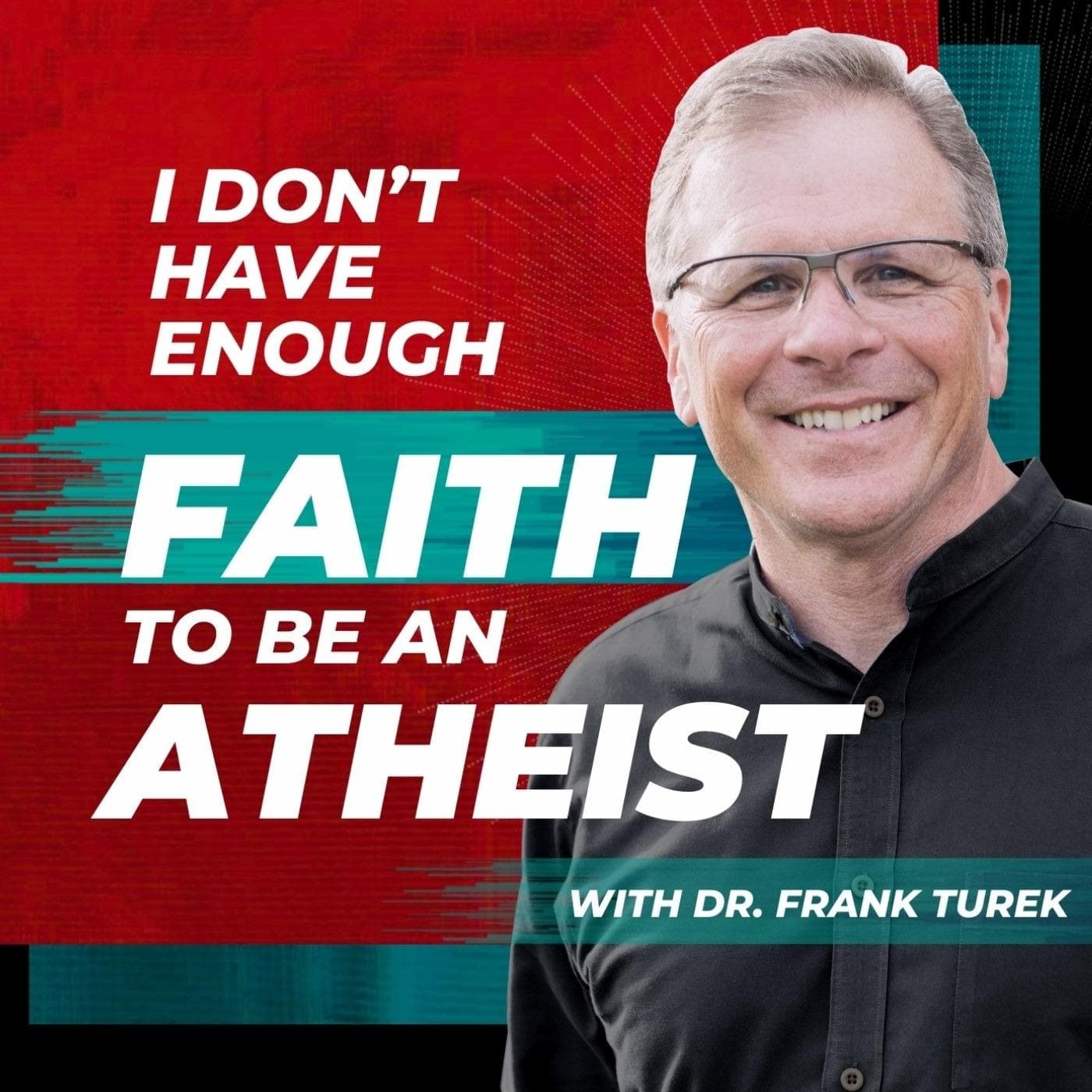
I Don't Have Enough FAITH to Be an ATHEIST
Targeted by AI? Robby Starbuck’s Story Will Shock You
00:49:27
Loading summary
Transcript60 lines
- [00:03]
A
Ladies and gentlemen. Yeah, my voice is a little scratchy, but you are not going to believe what we're going to talk about today. If you think AI, if you're afraid of AI, I think the, the fear factor may go up a little bit after this conversation because Robbie Starbuck, who for many years was a filmmaker in Hollywood, and then after realizing that the country was going in the wrong direction and he knew it because his grandparents and his mom fled from Cuba, he decided to come out strong against things like DEI and Wokeness and has devoted his life to correcting what he sees is wrong in our society. One of Google AI's platform, or one of Google's platform of AI, has invented a number of crimes that this man, Robbie Starbuck never committed. And now there's a lawsuit going on and there's so much more to talk about about Robbie because he's doing some great work out here, but I want to get to him right now. So here he is, ladies and gentlemen, the great Robbie Starbuck. Coming from a. All right, crowd, that's enough. You're in a bunker somewhere in Tennessee, is that right, Robbie?
- [01:26]
B
Yes, in. In a studio, but we call it a bunker. Okay.
- [01:30]
A
I knew about you for the past couple of years and the work you were doing. You're somehow getting major Fortune 500 companies to abandon their DEI programs. We're going to talk about that a little bit later. But then we have a friend of our family, a young man who's like 15 years old, suffering with cancer. And I put it out in a tweet that this cancer new cancer treatment is last ditch effort, isn't covered by insurance. And you gave a very generous donation to that. I want to thank you for that. And then I looked into more of what you're doing and I just could not believe what's going on with AI. By the way, if you want to help Gabriel, this young man who is going through cancer treatment, we're going to put a link where you can give. It's kind of a GoFundMe thing. We'll put it in the show notes. But Robby, I just can't believe when I saw your video as to what Google AI invented about you. Tell us about this.
- [02:28]
B
Yeah, so it's a wild experience. This actually goes back a couple of years. In 2023 is when I first became aware of this. Somebody had flagged it to me that their AI called Bard at the time had invented all kinds of crazy stuff. It had said that I supported the kkk. It even made arguments for the death penalty for me, because things I said upset people on the political left. So this is crazy, right? And I make Google aware of it, and a Google employee actually reached out to me and was like, give me the details. You know, I want to run this down with the engineers who, who built Bard. And, you know, I, of course, give all the details. And over the course of months, you know, as we still see things happening, you know, I'm checking in with this person, and they eventually say, I'm sorry I couldn't help you. I'm resigning today. And Google releases subsequent AIs called Gemini and Gemma. Gemini and Gemma ratcheted this up into criminal accusations, where Gemma repeatedly accused me of sexual assault, including of a child. And Gemini also accused me of different crimes. And it goes so far. I mean, some people have maybe heard of this thing called hallucinations, which I think is Google's excuse, right? But a hallucination in AI is actually more accurately something that is very jumbled. It's not very detailed. It's mixing up facts, right, and mixing up different events with different things. It's not consistent. What happened with me was a set of consistent lies. And it went so crazy, so elaborate that it invented fake court records, fake police records, fake news articles. And let me explain what that looks like to your average person. So somebody said to Gemma, tell me about Robbie Starbuck. And in that biography, it included the accusation that I had done something to women. And, you know, they dig further and they find, like, what it says is, I had, you know, been accused of raping them. And they asked for sources. And actually, even before they asked for sources, it backs it up and brings up sources itself and says, you know, look at this news link. This one, this one. And it will invent a news link where it says, foxnews.com Robby Starbucks sexual assault allegations. Or newsweek.com, robby Starbuck sexual assault claims. And so for your average user who sees that, if you see four of those sources from a legacy media outlet that you've been psychologically conditioned to trust, what do you think your average person's gonna do? They're honestly not gonna click those things to find out that, oh, that article's not there. They're gonna see those links and think, oh, this is real. It's backed up by mainstream news stories, right? In reality, what happens if you click those? It goes to a 404 page. Because none of this ever happened. There's never been a rape accusation. I've never been accused of a crime. In my life, let alone been charged with one. And if you go down that rabbit hole and you say, actually, hey, these links don't work, and you tell the AI that it actually responded, insisting they are real, and this is not a behavior consistent with the hallucination that it is sticking with this lie, and it continues to say not only that it's real, but on one occasion it invented the fake article in its entirety in the name of a real journalist. And it put that down as the answer and it said, let me read you the whole article. And it read the entire article that it invented. So it invented fake everything, including this article from a real journalist. And so there's multitudes of issues here, right? It's not just the defamation against me, which was consistent. And honestly, if you look at the time length here that this hasn't been fixed in two years, I don't know how you can call it anything but malice. But then there's this other issue of we have an AI impersonating media outlets and media figures. It went so far as to Invent statements from J.D. vance, President Trump and a bunch of other figures like Joe Rogan, and saying that they denounced me for this accusation against me, and so on and so forth. So you've got this worldwide AI platform with a seeming ability to just impersonate people and news outlets. People need to ask themselves, what is the end result of that? And it's not just me, right? I'm somebody who can fight this. I've got a platform, I've got the money to have lawyers, and I can go and I can fight this. Think about the average person, our sons, our daughters, who don't have that kind of platform or ability to take lawyers into a courtroom and fight this. You're talking about a world where if we look forward 10 years, AI is dominating every space. And if reputation scoring is done for insurance, for job interviews, everything else via AI. And AI has the ability at the root level to lie about people, well, we're in really serious trouble. Because then if you're just guilty of wrong think, if you have the wrong political opinions in the eyes of the people controlling the AI, you could lose everything in life. You could lose your job, ability to get a job. You could not get insurance. They won't even give you the option to get it right. They could deem you a risk. And there's so many different directions this goes. I think people need to pay attention to the threat of AI now. And we need to build in the guardrails now to make sure. That we protect our kids in the future.
- [07:36]
A
What is the state of the lawsuit right now, Robby? I thought I read somewhere it was a $15 million lawsuit, is that correct? Because it seems low to me. It should be more than that.
- [07:46]
B
That's just sort of the base level, you know, amount. Right. So that doesn't count punitive damages which a jury will decide. And in Delaware though, essentially where Google is and where the lawsuit is based, you've got to be able to set that, that level of like provable harm. Right. So like we can prove that and more now because every day it's. There's continued harm and the ability or necessity to have security in the future and things like that. Because as we know after what happened in Charlie, these things create real threats. Right. In the last year alone. And I don't know where these people searched about me, but this is again something in discovery we can get into. Somebody was arrested who had a plan to kill me. And I don't know who this person is. There's some stranger to me. But where did they get the information that they thought they had about me that made them hate me that much? Right. And we have to search out did they go and get on these platforms and get inspired by this type of thing. This is all a process we have to go through in court to figure out. But then the FBI is currently investigating multiple death threats against me. And I think that people need to be clear eyed about this. Like there is a real harm to this that can happen to people. And it doesn't just put me in danger. It infuriates me even more that it puts my kids and my wife in danger. Right. Because they could be people who get hurt because some crazy person is trying to find me because they believe this stuff. So the court case as of now, we filed it well over, I guess it's a month ago now. And Google just responded yesterday. And I don't think anybody's talked about this on their shows yet because it just happened late last night. They responded with a motion to dismiss. And that motion to dismiss is just rife with bs. I mean it is misleading to the max. And so we're very excited to take this to court and to show people what we've got. Because we've got.
- [09:38]
A
There's a lot more, ladies and gentlemen, on Robbie Starbuck.com. that's Robbie Starbuck.com. you'll see all social media there. He has a podcast as well. More coming. You're listening to. I don't have enough faith to be an atheist with me, a horse, Frank Turek. But we have Robbie Starbuck with us, so don't go anywhere. We're back right after the break.
- [10:00]
C
Foreign.
- [10:06]
A
Make up a criminal history on you that is completely false. Yes. Because it's happened to my guest today, Robbie Starbuck. Robbie Starbuck.com Robbie does so many amazing things that we're gonna unpack here in this program, but I want to stay for a minute with this lawsuit that he has against a Google AI platform that invented a whole criminal history on him that is completely false. Robbie, how could this happen on an AI platform? You know, most of us, we have no idea how AI works. How could it invent all of these criminal accusations and fake news stories to allegedly back it up? How could this happen?
- [10:51]
B
There's a lot of different ways. And so that's what discovery is for and why we took this to court, you know, aside from just wanting to get the harm stopped and to, you know, have Google make this right and make sure it doesn't happen to anybody else. We've got to find out why this happened. Right. And discovery is the place where we can get to the bottom of it. Because, you know, my impulse tells me that this has to have been intentional in some way, that there has to have been something that was, you know, sort of put into the machine, some data set that was poisoned. But we don't know that. Right. We have to go into discovery and try to investigate this and figure out exactly what was at the core of why this consistently happened and why such heinous crimes. Right. It also accused me of shooting somebody, you know, so why the criminal element? Where did this come from? And that's something that only we can figure out through discovery and having open access to the back end of their.
- [11:41]
A
AIs, and this will be granted. Do you think a court is going to say, yeah, you can have access to the back end, or you think they're trying to clean this up right now? Is it still on this AI platform that it's saying these things about you?
- [11:58]
B
So basically, after two years of this, you know, saga starting back with Bard, finally, I don't want to get quoted on the time. It was about a week ago or a week and a half ago that we saw that on the app itself, the Gemini app, you can't get this stuff anymore. And then on the Gemma app under the AI studio, they actually removed it from the AI studio. So you can't use Gemma there in the AI studio. They then content blocked my name on some of their platforms, which means you can't ask it questions about me. Which. That part is not a fix content blocking a name doesn't. Doesn't solve the problem. Which, you know, the core issue is why did it do this? Why can it do this? Right. Because you shouldn't. You shouldn't even have the capacity to invent lies like this that are so harmful. So that's part one. But I think Google, in terms of what they're doing now, I mean, I can't imagine they want anybody to see their back end. But for a court, if you're a judge and you read this case like our filing is on my website@robbystubrick.com anybody can read it. It's incredibly detailed, and we show a lot of receipts with it of what happened. I don't know how a judge can read it and not want to see the back end of this machine and see what happened here. How did this happen? Right? Because, you know, Google's contention is they say, well, it must have taken creative prompting. Right. Well, we have records of the prompts that were used to get this. They're as simple in many cases as. Tell me about Robbie Starbuck. Right. So somebody just asking. This was independently verified by a reporter at the Wall Street Journal. There's tons of people that we've received letters from that have had this happen. In some cases, those people actually were misled to think these things had some truth to them about me and only later found out when my video came out about this and went viral that Google was doing this and that it was not true. So, you know, I think that Google has a big problem on their hands. And whether they want anybody to see the backend or not, I think we've got one of the best cases to really be able to get a judge on board with that idea that we've got to see what's happening inside the machine.
- [14:04]
A
Robbie, isn't it. Are you ironic? I don't know if this is their slogan still, but wasn't Google slogan don't be evil, something like that?
- [14:12]
B
I've tried to remind them of that, yes.
- [14:16]
A
And this has happened to your own United States Senator, Marsha Blackburn.
- [14:20]
B
Yeah, that there have.
- [14:22]
A
Talk about that for a minute. Talk about that, please.
- [14:25]
B
Marcia brought me up in the hearing to a Google executive who confirmed they knew who I was and that essentially they did this, this dance around in a circle, right. To try to avoid accountability. And, you know, and then she hits Google with your Gemma. AI actually also said that I was accused of raping Somebody. Right. And so obviously, there is a core problem in the machine. It is begging the question, is there a political animus, political bias involved? We don't know again, until we get into court, get into the back end and see why was this happening. And so we need AI experts, probably a special master, and our lawyers to have the ability to look at the back end of this, because it's crazy. I mean, it's like, patently absurd. Anybody who's seen Marsha, like, the insinuation that she would have been involved in anything like that is nuts.
- [15:12]
A
Tell our listeners, since you can speak and I really can't right now, Robbie, I could read your bio, but they won't like hearing it from me. You started out as a film producer in Hollywood. You worked with some of the top stars, Oscar winning stars. You work with some very famous musicians. And then Something happened in 2015 that caused you to come out for a candidate by the name of Donald Trump. Why did you come out for him and what happened to your career after that?
- [15:43]
B
Yeah, in my career, I was a director and producer, so. And I actually owned a production company, so we had a bunch of other directors across the country who did similar work. Right. And so I kind of filled multiple different roles. That is kind of rare, you know, from my background. Right. I didn't have a Hollywood family. I didn't have a wealthy family. I grew up watching, you know, old black and white movies, and I fell in love with the art form. And so, like, I knew I wanted to create things, and that's why I initially got into it because I had just fallen in love with it as a kid. And then I eventually fell in love with music and kind of melded those things together when we did the music video side of the business. But, yeah, I directed people like Natalie Portman, Jamie Foxx, Smashing Pumpkins, Megadeth, Snoop Dogg, all kinds of people. Right. And as a young man, you know this in Hollywood, there's this pressure that gets put on you, right. Like it's your job. I'm a young dad at the time too, by the way. Very young dad. My oldest is graduating high school right now. So I was a very young dad. And, you know, you don't want to do anything that upsets the apple cart. That's kind of the thing that's. That's ingrained in you very young, is like, okay, you just have to. You have to get success. You have to make money. You have to be able to provide for your family. And so you start to maybe direct things that you're not fully in alignment with, right? And so that happened to me where, like, things are happening, and I'm like, you know, that is totally out of alignment with what I think. But I was putting lipstick on a pig is the best way to put it. And in a way, I had negotiated my values in exchange for money, right? And I was willing to sort of suppress what I really believed in order to do that. And it's probably the worst thing that I've ever done in my life, doing that to myself. I mean, obviously the good part is, you know, you provide for your family and everything, but it's terrible for your soul. And when 2015 hit, that was really where my daughter's getting a little bit older, you know, and I realized the effect that everything's having on the world and the direction we're going and how society is shifting so rapidly to this far left view of the world that is incredibly dangerous. That destroyed everything my family ever worked for in Cuba. And I knew I had a responsibility. And this conversation I had with my great grandpa played in my head repeatedly. And it was Robbie, I'm not going to do his accent the whole time, but in his broken English, it's like, Robbie, you know, you can't let the same thing happen here in Cuba. Too many people were afraid of losing friends, losing business, so they didn't speak up. And that's really why communism was able. Able to take over Cuba. And if you do the same thing here, there's nowhere else to run to. And that's the truth. There's nowhere else to go. So, you know, for me, as a. As a young dad, I'm thinking, what are my kids going to do if America does fall to communism? What do we do if it really falls into this Marxist vision of the world? Because I know what comes next, right? I know the darkness that comes after that. And I knew very clearly I needed to reorient how I see the world in my life. And the way I reoriented it is to essentially say on my deathbed, when I'm, you know, in those last moments before I, you know, go and join Jesus, what do I want my kids to think about me? That's all that's going to matter at that point is like, what does God think of you? What do your kids think of you? Right? And your wife? And thinking about it in that context changed the way that I live my life, because I want them to be able to know their dad always did the right thing, whether it was popular or not, whether it was hard or easy. I always did what I thought was the right thing, led by Jesus. And so I started to change my life. And that led me to speak up on a number of fronts, including endorsing Trump in 2015 and using the platform that I had to talk about the way I saw the world and the direction it was going, and our responsibility to stand in the gap and to make a difference and to make this country great and to make it a place that is better for the next generation. Because I do have real fears that we will leave our kids and grandkids in a position that is not better than we found it. And I don't believe any generation should do that to their kids and grandchildren. And we can talk about technological advances and everything, but, you know, I don't really care if my grandkids have great technology. I care if they have great souls and a moral world around them. And I think that's the peak of human advancement, and we're not there yet. We're going backwards in that regard.
- [20:10]
A
So what happened when you came out for Trump in 2015? I suppose the Hollywood world didn't like you.
- [20:17]
B
No, they didn't like it. I mean, a funny anecdote about it, though, is like, you know, I'm Latino. So the. One of the early phone calls I get is from a major film studio that we had to deal with at the time. And they go, it's not too late, Robbie, for you to go back on this. You can just say you didn't understand his immigration policies. And I was like, well, that's tough, because the immigration policies were kind of the selling point for me. And the silence on the other end of the phone, I remember was like, I wanted to crack up laughing because I could tell they were not expecting that answer, because, like, in their mind, it's like, well, you're Latino. You're supposed to want just, like, people to flood into our country. And it's like, no, that's not my view. I think that a moral country has a duty to keep its citizens safe and to, you know, have order to it. And the only way to have order is to have borders and to enforce them. And also, if you want to have cultural consistency in your country, you have to have cohesion and assimilation. And to have that, you have to tightly control who comes in and out of your country. And so, you know, I knew what was going to happen. My wife, to her credit, just an incredible godly woman. She knew what was going to happen, and she backed me a thousand anytime I had a doubt in my mind about what I was doing and the potential pitfalls and losing money and everything else. She was always right there and just cheering me on to like, no, you have to stand in your power and do the right thing because that is what you're supposed to do. You're built for this. You have to do it. And every step of the way, you know, I just, I tried to trust God a little bit more and a little bit more and a little bit more. And a funny thing about that is I will say I was not fully trusting of God still at that point in my life, I was like giving little bits of trust, which sounds so ridiculous now to me, but that's what I was doing, right? I was like negotiating trust with God. And I think too many people do this, right? And then you eventually get to a better place in your life and you realize how silly it is. But the most productive, best part of my life, and I'm not sure why I'm going here, but it seems important. I feel like there's somebody listening who needs to hear this. The most productive, best part of my life in every facet was directly after I made the decision about two and a half years ago to say, you know what, God, I'm just going to listen to you. Whatever lane you put me in, wherever you push me, whatever nudge I get, I'm just going to go that direction and everything's going.
- [22:37]
A
And now the lane he's in is taking on Google who says, don't be evil, but that's what they're doing. And he's doing so much more. We're going to talk about after the break. I'm talking to Robbie Starbuck. Robbie Starbuck.com yes, this is Frank Turek. Losing my voice, but that's okay. My wife's probably gonna be happy about that. All right, we're back in just a couple of minutes after the break. Don't go anywhere. You're listening to I Don't have Enough Faith to Be an Atheist.
- [23:06]
C
Students across America are more open to the truth of Christianity than ever before. And Dr. Frank Turek is taking the powerful evidence for God to campuses like UC Berkeley and the University of Georgia, Ohio State and Alabama, reaching thousands in person and millions more online. But every event now requires costly security to keep students safe. And Cross Examine never charges students to attend. That's why we urgently need your support. The culture is dark, but hearts are open. Help keep the light of truth shining by donating today@crossexamine.org that's cross examined with a D on the end dot org.
- [23:49]
B
Welcome back.
- [23:49]
A
I don't have enough faith to be an atheist. With me, Frank Turek on the American Family Radio Network and other radio stations around the country, my guest, Robbie Starbuck, who has an amazing history and is doing some amazing things right now, a young man, but he used to. He used to do a lot in Hollywood in both movies and music. And now he is actually and for the past several years, been able to get major companies to recant and backpedal on their DEI policies. I need to hear about this, Robbie, because I got to know how you do it. I mean, you've got some huge companies that you've gotten to pull back. I mean, off the top of my head, I remember Lowe's. I remember maybe Ford and several other companies. What's that?
- [24:39]
B
Walmart, Tractor supply at John Deere, Black and Decker, Coors beer. I mean, there's a long list. Target. There's a very, very long list.
- [24:52]
A
How have you done this? I mean, how did you go from a movie producer to that?
- [24:56]
B
Well, so I understand social psychology, right? And I think that's actually a big component of being a good director, is you have to understand the psychology of the person viewing, right? And I understand there are really wide gaps in the marketplace in terms of, you know, just, I mean, facts, number one, entertainment in a bunch of different contexts. But when it comes to accountability for what is going on in government and in corporate America, there was really nothing filling the gap of just holding up a mirror to show people what the heck was going on, Right? Like, where is your money going? And so I had a deep belief that if we did that, if we just held up a mirror and exposed to people where their money goes, that they would make big changes, right? And that bet was. Was right. You know, essentially, those videos went crazy viral. And in some cases, like our Harley Davidson campaign, it got over a billion impressions with a B. Okay? Crazy. I mean, it was in every news outlet across the entire world. And so when we do these expose and release the video on the company, like we did with Cracker Barrel or any one of these companies, they just go crazy. And every news outlet picks it up. And when people watch the videos and they see that their money has gone to this transgender apparatus that wants to trans our kids or that they're helping pay for drag shows or that they're helping pay for DEI trainings that include, you know, books that are radical Marxist theory, people are not happy, and they were voting with their dollars. And so Stores started to see a huge drop off in customers walking in their doors and they started to see that they were losing online orders as well. And so as the pressure built and you've got their phone lines jammed up with people calling and emails, you know, going to every executive demanding answ, the pressure builds into this pressure cooker essentially where they've got to do something, right? And for a lot of these companies, one thing I found is like JP Morgan is a good example here. So JP Morgan CEO in media from 2020 to 2024. Anytime Dei was brought up, he was proud to talk about Dei, right? Just thought it was a wonderful thing because in his mind, DEI actually meant diversity of thought and that it meant that we were going to have equal treatment to people and that, you know, we were going to tolerate one another.
- [27:11]
A
Is this Jamie Dimon you're talking about?
- [27:13]
B
So, like, he had this whole idea of what DEI was and it wasn't any of that actually, in practice, he had absolutely no clue what was actually going on at his company. And I'll always remember this moment because it kind of encapsulates my interactions with CEOs, because I have a lot of off the record conversations with CEOs, but this one was public. So Jamie goes on CNBC and he essentially says, you know, bring on Robbie Starbuck, you know, and we're going to be unwavering in what we do. So to CNBC's credit, they have me on the next day and they let me go for about 10 minutes just pulling up JP Morgan documents that I had been given by insiders. And it included the craziest, like they were funding a mentorship program for kids where the mentors were hiding the gender identity of the kids from the parents. It included a sponsorship they did of a Dylan Mulvaney event for youth in la. It included, you know what I want.
- [28:07]
A
To say about this? I want to say that's just wrong, okay?
- [28:11]
B
It is. It's wrong. And so it goes down the litany of these crazy things, right? I can't even list all of them here because again, it'll eat up all our time. But the end result was Jamie was informed by what I said and then has a meeting within 48 hours with executives and tells them we need to. And excuse my language here, because it's his language, but I'm just quoting him. He says we need to stop this stupid shit. And that, you know, kind of encapsulated to him like, this has gone too far. This is, this is not what I thought we had signed up for. And if you look at the capital too, that went out, I mean, it's crazy. There's even these internship programs that were happening in Wall street that were solely for black people or solely for Latinos. And I think part of the reason that my arguments have been able to gain credibility is actually for a really awful reason. I think the reason why it took me doing it is because I am Latino. So I'm able to say with credibility, like, hey, these DEI policies unfairly would have given me advantages if I went and I applied to a college or my kids applied to a college and they checked the Latino box, they would have unfairly been given an advantage on admissions up until the Supreme Court case. And even now, arguably they still would be, because what we've seen data wise out of colleges is that they're still discriminating. But then you go to the corporate world and you have the same problem. They would have had an advantage that is unearned that they should not have for an immutable characteristic. And I thought we had all kind of agreed after the civil rights era that we wouldn't make hiring and firing decisions on the basis of race. Right. So I'm actually sitting here making a very rational argument to people that, hey, we should return to sort of the mindset we had after civil rights of like, let's not judge each other in that way for hiring and firing and let's focus on merit. And so for your average person who's not deeply into the weeds on this every day, we were able to take an issue that the majority had supported dei, and within a year we had flipped that to making it almost an 8020 issue now of people opposing DEI because now they know very nakedly out in the open what this really is. And it was outright discrimination and mostly against white men.
- [30:13]
A
Yeah, you don't defeat old racism by new racism, but that's really what you've exposed. Now. How did you go about doing this, Robby? Like, how did you. Even if you can tell us, how do you get access to these documents, how do you get funding for it? I mean, do people donate to you? I mean, how do. How do you do this? Because nobody's paying you. I mean, you know, Jamie Dimon's not paying you to expose the nonsense going on in this company. So how does work, how does this work?
- [30:41]
B
Yeah, I wish. I wish they'd pay me to make, like, life difficult. It doesn't work that way. No. So from the very beginning, the first one was tractor supply and so it actually was by chance, you know, an employer reached out because I had broken other stories in the past and they had liked the things that I talk about on social media and they said, hey, can you help me expose this? This is not the company I remember working for. And it was this, you know, break room that had transgender flags up and everything. And, you know, whole thing about Juneteenth and whatnot. And so, you know, I'm going to go digging, I'm going to investigate this because I go to Tractor Supply, I've got cows, I've got a farm, and I take my kids to Tractor Supply almost every week. I'm not going to go there anymore if this is what they're doing, right? And the more I went down the rabbit hole investigating the company, the more rot I found. And the whole subset of policies was insane. So I said the only way I can package this in a way that I know how to communicate to people is on video. So I made this video and I think our first one about Tractor Supply was, it was just under 10 minutes and I remember thinking like, this is long for the Internet. People have short attention spans. But I think we packed so much in here, people are going to watch. And my expectations were wildly outshot. I remember praying and I was like, God, do with this what you will. If I'm supposed to do this to other companies, you make this sort of so big I can't ignore it. And that's exactly what God did. Built it into this giant thing, right? It went everywhere. And everybody was talking about Tractor Supply for like a week. And their phone lines were off the hook. Their sales numbers, you know, they're seeing internally and they're going, oh, something's wrong. And I'm having actually even people from the customer service department reach out to me asking, hey, can you ask your followers just like back up off the phone calls for a little while because we're backed up and so literally. And that's not the only time that's happened, by the way. I believe it was John Deere did. They had the same issue where a customer service person actually reached out to me online and was like, hey, can you ask people to back off for a little while? And the other thing too is like, like, I'm not aggressive in like this mean spirited way, right? I'm saying like, these are our values. This, this is our alignment. We don't want to spend our money there. And I always ask people and encourage and kind of demand that when you engage with these companies, you do so respectfully. And it's not enough to just, you know, sort of shame a company. Right. You need to show that there is a path out. And so one of the things I'm most proud of is that as we fix these companies, the market response has been diametrically opposed to what people always thought it would be. If you listen these high priced consultants in D.C. like McKinsey, McKinsey had convinced all these companies that doing DEI was going to make them rich and that opposing it was going to do the opposite essentially. And in truth, what ended up happening is every single company, when I announced that they were dropping their DEI policies and WOKE policies and we kind of negotiated those line items with each company what they were going to do exactly, and then do that as a story, their stock went up. And it not only went up, it went up when you look at their competitors as well. So they outperformed formed competitors that had dei. And there's only three exceptions to that. And I've done a ton of companies right. The three exceptions are Harley Davidson, who fought me the longest. And in Harley's case, I think they had what I would describe as the True Believer CEO of all True Believer CEOs. He was a radical leftist. The guy had started a thing called the B team with Richard Branson that was all about spreading these far left values in corporate America or corporations globally. And so they fought me the longest and they suffered as a result. In fact, a board member recently resigned because of how they handled the situation essentially with the, you know, thought that we may never recover because of what happened with Robby Starbuck. And then the other two are Cracker Barrel who fought me the second longest and whose CEO was the most non compliant of all. And their stock is cratered, absolutely cratered in these three months since then. I think we're at four months now and we're at close to 50% loss in stock. And then the other one is Target. And in Target's case they're sort of unique because they're actually a test case for 20 years out for companies because they're an example of a company that made both sides angry by engaging in politics. And that's why my argument to corporate CEOs is the answer is corporate neutrality where you do not get involved in divisive issues unless you are a private company and you have an explicit religious mandate and that's what you're doing. You know, like there's private businesses that are religious and they hold fast their values and they should because they can make the economic, you know, argument that essentially we can take the hit if somebody doesn't want to come to our business. These are our values. A public company can't do that because their top necessity is to provide value to shareholders. That is the entire legal, you know, job of a company at that point, when you're a public company. So if you're not doing that and you're doing anything to the detriment of the value of your stock, you're not doing your job. And in Target's case, because they upset the right first with the transgender stuff for kids, then they go and they get rid of DEI after going all in on the woke left stuff, they lost subsets of activists from both sides. And so companies have to ask themselves, do you want to be a ping pong between two political sides every four years? And if you're a good businessman, the answer is no as a public CEO. So we've always advised just get out of all the divisive stuff. If you want to get involved socially in anything, it should be things we all agree on, right? I think we could all agree with an effort to remove trash from the ocean, for instance. You know, that's the direction we're pushing.
- [36:23]
A
Robby Starbuck doing great work, ladies and gentlemen. Robbiestarbuck.com we have a lot more with him in our final segment. You're listening to I Don't have Enough Faith to Be an Atheist. With me, Frank Turek on the American Family Radio Network and other stations around the country. Our website, crossexamine.org, cross examine with a D on the end of it. We're back right after the break. Much more with Robby Starboat. Welcome back to I Don't have Enough Faith to Be an Atheist. About a year ago, Charlie Kirk and I were at an event in Tucson, Arizona and we were talking about the election coming up, the 2024 election. Charlie made a comment that stuck with me. He said most, most Christians won't give to an organization that is not 501c3. They won't give for a a cause unless they get a tax deduction. That kind of convicted me. So we began giving to non 501c3 organizations. Nothing wrong with giving to 501c3 organizations. We're one cross examine. But Robbie, the work you're doing is so important. You're not a 501C3, but people can give to you if they want to. How do they do it?
- [37:36]
B
It. Yeah, Robbie Starbuck.com and if you click the DEI page there and There's a button that says support us. There's various ways to do that there. Another way too is, you know, if you go on Amazon prime, you can rent or buy the War on Children film or on X, you can become a subscriber. I think it's $5 a month now. So those are all different ways that help, you know, fuel everything that we're doing and all the activism we're doing so we can grow this team. Because that's probably been the toughest part is that, like with the lawsuit, it slowed down our DEI work because it's simply a manpower issue. Right. Like I'm needed too many different directions. And so that's one of the things over the course of this year, we've got to ramp up and, you know, add staff and, you know, try to give ourself, give ourselves a little more fuel to be able to accomplish even more in the new year.
- [38:25]
A
Well, talk about this amazing documentary you did called the War on Children. It's been seen by, ladies and gentlemen, 50 million people. Elon Musk promoted it. What's it about and why should people see it?
- [38:40]
B
Yeah, it's actually 60 million now, so it's wild. Elon was a huge driver of a lot of those views, obviously, because he came out and he posted about it multiple times and that every parent needed to see it. Don Jr too, Donald Trump Jr he was a big supporter of it. So the film essentially is capturing all of the ways that society has waged war on our kids to take them away from God, to confuse them with ideas about gender and political leftism, you know, Marxist concepts built into the school system. But it does so in a way that, you know, is on par with a Netflix documentary. Right? Because this has been a criticism I've had for a long time of the writers. For too long we had abdicated our responsibility to engage in culture in a way that was meaningful and on the same level as producing things that are produced out of Hollywood.
- [39:33]
C
Right.
- [39:33]
B
They produce all this stuff that is just absolute trash for our kids. But it is beautiful, right? It's like beautiful trash. They do it at a high level and it's meant to manipulate and to get into the minds of people in a really dangerous way. And so if we want to battle this, we have to battle it with things that are on the same level, quality wise, but with the truth built in. And so I'm very proud of the final result because we have seen so many different good things happen as a byproduct of that. And Charlie actually Supported the film, too. He's always been wonderful to me and very supportive of this stuff. And he had me on the show a number of times to promote the movie. And I believe we saved a lot of children with it. And that's the thing that matters the most to me, that. But there's kids out there that would have been put in a dangerous position had they not seen this or had their parents not seen this. So for me, that makes everything worth it. Like, the process of making it was one where definitely the devil was trying us at every. Every single, you know, step of the way to stop us. And we just kept going and kept fighting, and every time we needed God's grace, we got it and it ended up. And, you know, the other crazy thing, too, is we didn't know how we were going to put this out. Right. We had had a deal to do it one way that I can't even get into, and it was supposed to get, you know, really wide viewership. Right. And so I was a little down on myself. And again, I trusted God and I said, you know what? God has got a plan for this. We're just going to put it out into the world, and if we don't make our money back, we don't make our money back. That's fine, but people need to see this. So I put it up, up on X. And then next thing you know, Elon Musk watched it because he follows me. And then, you know, the rest happens. Right?
- [41:18]
A
Wow.
- [41:19]
B
Because Amazon had actually banned the movie when it first came out. It was banned on Amazon. TikTok wouldn't let us do ads. YouTube wouldn't let us do ads. Facebook had not allowed us to. And so then everything comes full circle. And after Elon does that, things start to change. And then after the election of Trump this time, I get an anonymous email saying, check Amazon Prime. We go on there and the movie's back.
- [41:43]
A
Wow. By the way, Amazon is the Amazon out there. They have some DEI policies, I assume. Have you been able to get anywhere with them? Have you approached them at all yet, or is that on your bucket list?
- [41:57]
B
They're on our list, and I've been very open about that. We have had some conversation and there are some things that have changed. Amazon's sort of a strange thing because we battled with, do we have the movie on their platform or not? Truth is, again, it's one of the places people watch content the most. And so for us to put something there that is going to end up recommended to people because so many People, the way the algorithms work, so many people on our side watch the movie. It ends up recommending it to people who watch a movie that is similar to movies that folks on our side also watch. Right, right. They watch a movie that is, even in a tiny way, similar. They could get. Recommended this movie and maybe we save some. Somebody. Right. To me, it was worth that because I generally disengage from platforms like this that are, you know, suspect in the ways that Amazon is. But, yeah, they're definitely on the list for a full. A full airing out of. Of the laundry. How about.
- [42:48]
A
How about Netflix? Have you got anywhere with them? Have you approached them at all yet?
- [42:53]
B
No, I know Elon has. Elon's done his own Netflix campaign, and I've been very supportive of it. But we've got a. We've got a list and, you know, like Santa, I check it twice, and, you know, we're. We're going down it. And so you got to go one by one and kind of take out each one as you go. And that's the inefficient part of this process. Right. Is that what we created in sort of the successful side of this requires us to do this whole process with each individual company. I wish there was a way to do it where you do 20 at once. Right. But the truth is, what makes it so effective is that we put this glaring spotlight on each one until they have backed away from it. It. Right.
- [43:32]
A
Well, check it out, ladies and gentlemen. He's done. Tractor supply, John Deere, Harley Davidson, Polaris, Indian motorcycle, Lowe's, Ford, Course, Stanley, Black and Dector, Caterpillar, Boeing, Toyota, Walmart, Nissan, Meta, McDonald's, Target, and Accenture. This one guy right here, ladies and gentlemen.
- [43:50]
B
There's more.
- [43:50]
A
And what? There's more?
- [43:52]
B
That's an old list. There's more.
- [43:53]
A
It's an old list. Okay, so you're. You're work. You're working hard here, Robbie and I. I assume you got a good team behind you that helps you do this. You've also helped get transgender surgeries banned in Tennessee. You've done some other great work. What. What's in the immediate future. What's happening in 2026 for Robbie Starbuck.com and your wife, London, who's also behind this.
- [44:23]
B
Yeah, my wife, Landon. She. She's been a big fighter along with me. Landon and I worked with Senator Jack Johnson and William Lamberth to get rid of all of these things, the surgeries, the hormones, blockers, everything. Right. And so there's a bunch of different Child protection things, you know, I think on, on the horizon that are concerns, one of them is AI based. Right. Because of this experience that's happened with me, I very clearly am concerned about the future of AI and how it's going to affect society and our kids. So I think there's going to be a number of things on that front. But in 2026, there are still many companies engaging in these crazy policies. And so we plan to put their feet to the fire, so to speak, and make them explain the policies or they deal with losing customers who are not willing to give their money to people who are going to turn around and use it for values directly opposed to their most closely held faith values. Right.
- [45:15]
A
Well, that's so important and I'm so glad you're doing that. And it's amazing that, that you've taken your Hollywood moviemaking skills and applied them in such a dramatic and effective way for positive change. And before we got on the program, you were talking a little bit about, you kind of left Christianity for a while and came back. What brought you back?
- [45:40]
B
Well, I don't have enough faith to be an atheist.
- [45:44]
A
We didn't talk about that, Robbie. But okay, that was helpful.
- [45:47]
B
Maybe I didn't have enough faith to be an atheist, but no, truthfully, you know, as a young man, I think I just, I went through a lot of the faith identity crisis things that a lot of young people go through where you start to question things like, like why do, why do kids get sick? You know, why do bad things happen to good people? And you know, sort of the, the younger man's response to that without experiencing more life is just, this is not fair. This doesn't make sense. This isn't a just God. Right? And as you get older, you realize that, you know, if we are truly made in God's image, free will has so much to do with the outcomes we see in the world. And unless we all want to be programmed robots, the free will of others affects us, right? So if somebody poisons the water in your city with carcinogens and everybody gets cancer, God didn't give all those kids cancer. And we asked God to start playing, you know, sort of the puppet master. And well, you can't let that happen, God. Well, then in truth, we're not free willed people and we are not actually made in God's image where we have the power to do things right. And so I started, you know, more and more to realize that the same wonderful gifts God gave us, not all of us use correctly. And that for me to deny God in a way, by not coalescing with my community, by not going into church, by not, you know, engaging my faith more ardently, and by not trusting God, I was doing something, number one, spiteful, but number two, just totally ungrateful for all the gifts God had given me. And so as I look at the world and I see, like, I'm a very analytical person, right? So, like, I look at space, I look at the planet, I look. Look at everything in front of me. I look at my beautiful children, my wife, and I think about the impossible math problem that there is for all of this to exist without God's perfect plan. And it's an impossible math problem. It's impossible. There's literally no way for all of it to happen without God's intervention. And for me to think that I could outthink God in some way and outthink his perfect promise and perfect plans would be one of the most ignorant things I could possibly do. So as I get older, I feel like I've leaned more and more into just full trust of God. And I will say it was before that DEI campaign started with Tractor Supply. That was the moment where I had said to God, I'm going to just do what you ask of me, no matter what, no questions. I'm going to submit to God. Which is something that I was very, very reticent to do for a large part of my life, because the whole idea of submitting to anybody was totally not in my nature. Like, I'm just type A and. But that moment that I submitted.
- [48:34]
A
Thanks for submitting. You're doing great work. Thank you so much, Robbie. That's Robbie Starbuck. Robbie Starbuck dot com. He's doing great work. If you feel led to contribute, go to robbiestarbuck.com. thanks so much, brother. You're doing great work. He's only 36, man. He's only 36. He's got a big future ahead of him. Help. Help them out. All right, folks, see you next time. Lord willing. God bless.
- [49:02]
C
Dr. Frank Turek is bringing powerful evidence for God to campuses like UC Berkeley, the University of Georgia, and Ohio State, reaching thousands in person and millions online. But each event now requires costly security. Your gift helps the light of truth pierce the darkness. Give today at crossexamined.
- [49:22]
B
Org.