← I Have ADHD Podcast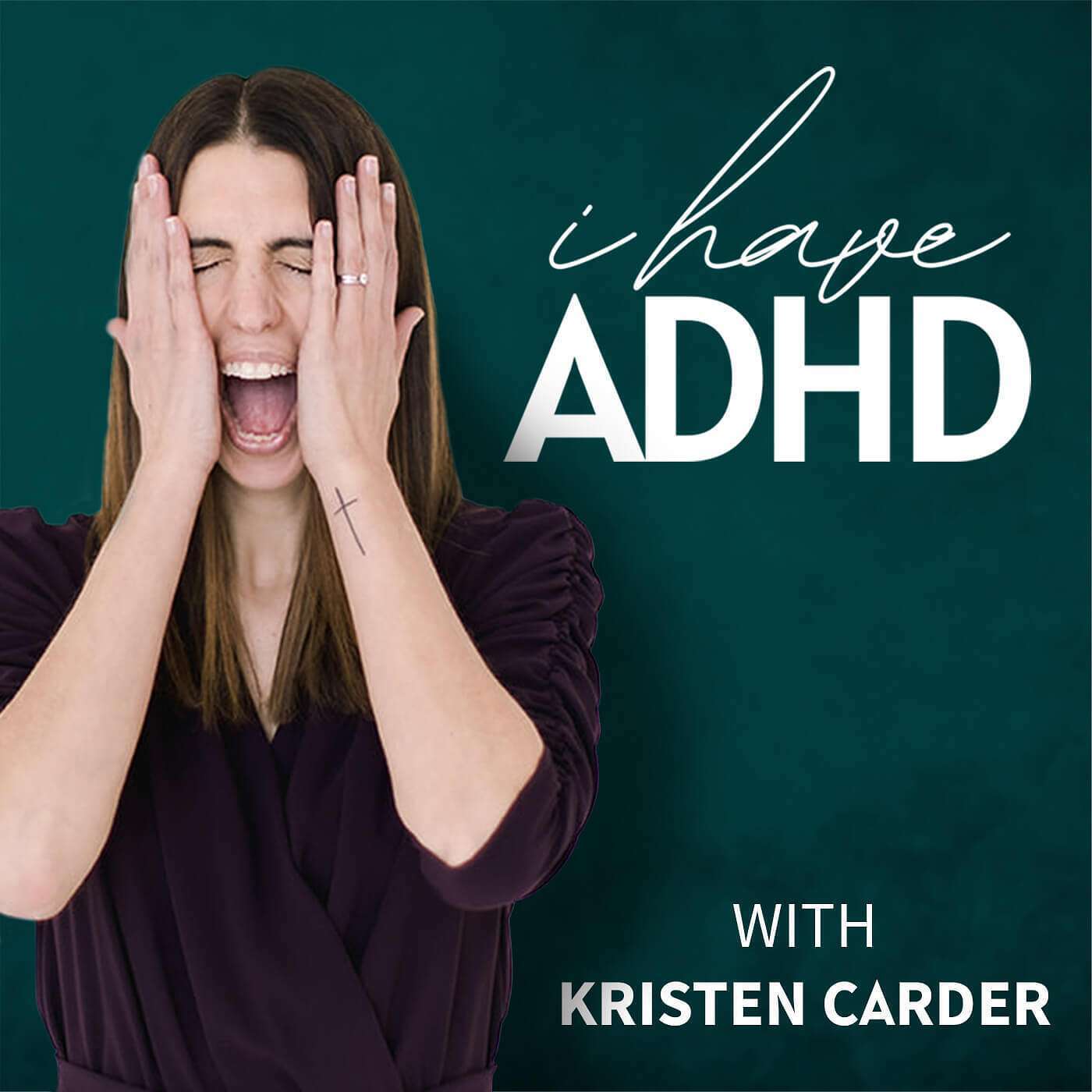
I Have ADHD Podcast
346 Voicemails from the ADHD Trenches: Marriage, Faith, Regret, and Rage (Yep, We’re Going There)
01:01:29
Loading summary
Transcript50 lines
- [00:01]
Sleep Number Representative
Why choose a sleep number Smart bed?
- [00:02]
Kristin Carter (Host, I Have ADHD Podcast)
Can I make my site softer?
- [00:04]
Can I make my site firmer? Can we sleep cooler?
- [00:07]
Sleep Number Representative
Sleep number does that cools up to eight times faster and lets you choose your ideal comfort on either side your sleep number setting. Enjoy personalized comfort for better sleep night after night. And now max out your savings. The more you buy, the more you save on beds, bases and more. Plus get free home delivery on any smart bed with base limited time. Check it out at a sleep number store near you or@sleepnumber.com today.
- [00:37]
Kristin Carter (Host, I Have ADHD Podcast)
Welcome to the I have ADHD Podcast where it's all about education, encouragement and coaching for adults with adhd. I'm your host Kristin Carter and I have adhd. Let's chat about the frustrations, humor and challenges of adulting relationships, working and achieving with this neurodevelopmental disorder. I'll help you understand your unique brain, unlock your potential and move from point A to point B.
- [01:05]
Hey, what's up? This is Kristen Carter and you've tuned in to the I have ADHD podcast. I am medicated, caffeinated, regulated and ready to roll. Come in, come in, come in. Get cozy. I am so glad that you are here. I'm so glad that you pressed play on this episode. It's gonna be a good one. We're going through the voicemail inbox. That's what we're doing today. And I love love when and you leave me stories, you leave me thank you notes, you leave me love letters and you leave me questions and it is the best. My team keeps everything in a folder and I listen to every single voicemail that comes through. Thank you so much. And today I'm just addressing some of the common questions that we're getting in the voicemail inbox and so I think it's gonna be really helpful. What I love about this is that you as the listener get to hear in the adhder's own voice, in their own words what they're struggling with. And I know you're going to relate. I know you are. I know you're going to relate. And so we're just going to go through. I'm going to offer as much support and wisdom as I'm able to. We're going to hit as many of these as we can in the time that we have together and I hope it's really helpful. I hope it's encouraging, I hope it feels supportive, I hope it feels uplifting to you. I wanted to say as we get started here that the world is just a Very difficult place to be existing in right now. And I'm feeling that I just bumped my mic. I always do when I'm feeling passionate. I'm feeling like the world is a tough place to live in. And one of the things that I am doing to combat that is I'm trying to stay off of social media as much as possible. I don't know how you feel about that, but I wanted to offer that to you as maybe a way to mitigate all of the wild craziness that is happening and all of the input that we take in and how difficult it can be to stay regulated and to stay sane in the environment in which we're currently living. And when I say environment, I'm just gonna go ahead and say the political, social environment in which we are finding ourselves. I don't know about you, but as an empathetic person with adhd, as someone who tends to absorb a lot of people's emotions, I have to kind of go ahead and set a boundary with myself in how much I am consuming, because I've not really been okay. I wonder if you feel the same way. My anxiety has been higher. My sleep quality has been pretty poor. I'm really preoccupied with the weight of the world. And on one hand, okay, that's kind of like just the way it is to be a human in the world right now. But on the other hand, I'm still a person. I'm still a human who needs to be taken care of. I still have a family that I need to be able to support emotionally and physically and with my presence. And when I'm anxious and preoccupied by everything happening and everyone's thoughts about what is happening, just getting everyone's perspective, everyone's take on it, it's been really overwhelming for me. One of the things that I've used is the brick. It's a device that allows you to turn off certain apps on your phone. And what's great about it, it doesn't come with a password. It's not something that you can override unless you have the physical brick in your hand. So you scan your phone on it. And what I've done is I scan my phone, it shuts down all of my social media, and then I go to work. The brick stays at home, and I am at work with no access to social media. To me, that has been so helpful and a really great way to support myself, staying focused on what matters most in those couple hours, in those six to eight hours that I'm at work. What matters most during that time is work. It's you, it's my clients that I'm supporting, it's writing my book, it's supporting my community. And so being able to turn off the noise, turn off the overwhelm, turn off some of the anxiety, even just for that short period of time, has changed my life. I highly recommend that to you. I really do. Figuring out some way to be able to stay off of social media, even for just short periods of time throughout the day, going for a walk without your phone, having dinner with your family without your phone, making sure that you're connecting with humans in your real life without your phone. These are the important things that we need right now. And I don't know why I thought we needed a TED Talk about this today, but I think because I'm coming from a place of where it's hard and where my anxiety is kind of through the roof. And I know that exercise, being in nature and being with humans in real life is the antidote for me. And I'm wondering if maybe it's the antidote for you, too. So I just wanted to put that out there. If you are also struggling as someone with adhd, as maybe somebody who also, like me, absorbs people's emotions, even without my own consent, like, I don't even. It's like inadvertent. I don't want to do it, but I come across a reel and somebody is very upset and, like, it makes me upset. I absorb those emotions even through my phone. And so that's something that I've just really been trying to be a grown up about. I am a grown woman. I'm in my 40s. I get to decide what input I take in. I don't want to be ignorant about things in the world, and I definitely want to know what's happening to a certain extent. But at the same time, I also want to guard my peace. I want to guard my emotional regulation. I want to guard my ability to show up for my family and the humans that I love in real life. I hope, I hope that that inspires you to maybe set some limits for yourself, set up some guardrails for yourself, figure out a way to engage in real life even more. All right, let's get to some of your voicemails. If you are inspired by this episode and you want to call in and leave a voicemail, the number is 833-281-2343. I listen to every single one. I answer as many as I can on this podcast. Some of them have been sitting for a couple weeks or a couple months. But I do try to to them and answer them on the pod. Again, the number is 833-281-2343. We're going to start with Caroline. Caroline hates the way her body feels when she works out. It's sensory overload. Let's go ahead and hear from Caroline.
- [08:37]
Caroline (Caller)
Hi, Kristin. My name is Caroline, and I am looking for advice on a way to create a workout plan and a workout routine that really works for me. I have, and I feel like this is probably related to adhd, but where you just feel really uncomfortable in your body. Not necessarily body dysmorphia, but, like, overcoming that discomfort whenever you start running, right? Like, you have that panic and it feels like, oh, my God, I can't breathe. Everything hurts. And trying to get over. It's almost like an overstimulation of body sensory something. And I tried to do a quick search through your podcast for an episode, and I couldn't find anything that was really quite related. And I'd really love an episode or even just a quick recommendation on a podcast that I could listen to that would maybe address those body sensory issues and overcome that. So that way I can work out. Because I'm 32, I really want to start taking care of my body better. I'm 190 pounds. It's the heaviest I've ever been. And I just. I really want to start taking better care of my body. Anyway, thank you so much.
- [09:41]
Kristin Carter (Host, I Have ADHD Podcast)
I love this. Caroline, I'm not going to give you a whole episode, but I am going to do my best to answer this question for you. And I agree with you. This does sound like it's related to ADHD and sensory overload and just being really overwhelmed with all of the sensory input happening when you're working out. And what I wanted to just offer to you, Caroline, and anyone else who relates to this is I wonder if there's a way to be more gentle with yourself and to figure out a type of exercise that feels more supportive, that would still be moving your body and taking care of your body, but not in a way that makes you want to panic. So if we're going from, like, not working out to running, that's a very big jump. It's a very big step. It's a very big leap. And there would be a lot of sensory input with going from, like, not doing much at all to then straight on running. And I wonder if we could just create some stepping stones for you. I'm going to pause here. I'm gonna pause for all of us here and say, I acknowledge that no adhder wants stepping stones. We don't want stepping stones. We want to take the giant leap off the cliff. That's going to give us the biggest bang for our buck. That's gonna be the most exciting, the most explosive, the most impactful. We want it fast. We want it now. We want change immediately. Unfortunately, my friend, what that is doing is making it so that your body is freaking out. Your sen input is way too high. You're getting overwhelmed. And then there's probably. You didn't say this, but there's probably like a shutdown effect and a resistance to it after that. And so what I want to offer to you is being much more easy with yourself. Can we start with a walk? Can we then maybe add a weighted vest? Can we then maybe increase the distance? Can we then maybe run for one minute after we've walked for maybe, you know, a whole month? Can we add in a minute of running? I am talking going so slow and allowing your body to adjust and adapt so that it is not such an overwhelming experience for you. Additionally, there are a million ways to work out. There's a million ways to do it. You could dance. You could bike. You could kayak. You can hike. You can, I don't know, do yoga. You could do an exercise video. You could lift weights. I want you to get creative, so I really want you to expand your thinking on what quote, unquote, working out means. What it looks like. There's not one right way to do it. The only right way is the way that you can get yourself to engage with it consistently. Ish. Persistently, let's say. Okay, so, Caroline, I want you to prioritize the way that your body feels and be real gentle with yourself. I'm not gonna force myself to do something that feels terrible. So let me ease into it in a way that is really slow. And I know every person with ADHD listening is like, well, that's not worth it. That's not gonna do anything. Why would I do something slow? I want you to think about this is for the long haul. If you could just move your body every day in a way that feels good to you, even for five minutes or five seconds. Like, if we could just get into the habit mindset that I'm just going to move my body and I don't have to make myself be in pain. Did you know that you could work out without being in pain? Did you know that you can do things that are actually fun that feel supportive and good and gentle and not like you're going to die every time you work out. So that's what I want your goal to be, honey. Okay. Is getting a little bit more creative and going much slower and easing into it. And then what will happen over time is you're gonna develop the acceptance of, like, okay, I believe myself that I'm not gonna punish myself with my workouts and I'm not gonna feel terrible. And I believe myself that, like, a little bit does matter and it does make a difference. And I promise you, I promise you, this is the way. This is the way. Find something fun, find something easy, and then build on that. It can't be a P every time. It just can't. That's not sustainable. We're not going to keep up with that. Okay, let's go on to our next question. We're struggling to keep a job. Let's go ahead and hear from our next caller.
- [14:37]
Accountant Caller
Hi. Good morning, Kristin. So glad that I was able to find your. Your telephone number on the I. On the iPad cast. I am. I've been listening to you for at least about good year, year and a half now. I started this morning to Listen to episode 325, ADHD Burnout. I've been diagnosed with ADHD in attempted deficit for about two years now. I've been getting medicated for it. I've been getting treated for it. I don't know if my treatment is working or not. I am calling because I'm an accountant, a senior management accountant, and I can never in my life have been able to hold down a job for more than a year, two years. And it always comes back to a lot of the traits that I have with adhd, which is making simple mistakes, overlooking something and not being able to focus. And time management has been one of my traits. It's difficult because I'm recently married and my only daughter just went to College of 18 years old. And it's like I feel like a failure.
- [16:02]
Kristin Carter (Host, I Have ADHD Podcast)
I just. I want to send you the biggest hug. I am so sorry that you feel like a failure. That is a terrible way to feel. I'm just so sorry. I just am sending you so much support. It is no fun to feel like a failure. And I know every single person who's tuned into this podcast can relate. I know it. I know we all can point to a time in our lives. Maybe it's right now. Maybe it was last week or last year or five years ago. It doesn't matter. We've all been there where we're just like, I just cannot get my shit together. I just cannot keep it together. I feel like such a failure, and I just. I don't know your name, but I just want to say that I hear you. I see you. I fully, fully hear what you're saying, and I'm just so sorry. That's just so frustrating. The first thing that I wanted to say to you, my friend, is that just kind of in passing, you mentioned I've been medicated for two years, but I don't know if the treatment is working. And I really believe that that's where we need to start. Because if you are medicated with ADHD medication, but you're not really seeing much of a difference, that's likely an indicator that an adjustment needs to be made. Okay, Now, I'm not your doctor. I'm not a medical professional, so this is something that you talk to with your care provider. But I do want to encourage you that that is probably the most important place to start is being able to confidently say, I am being treated for ADHD and the treatment is making a difference. So that's where we need to start. That's kind of foundational, and it makes sense. I mean, listen, you're only two years into your ADHD treatment journey, and this can take a little while, but I want to empower you. I want to encourage you. I want to nudge you to go talk to your care providers about tweaking your support, about adjusting your medication, because if you're not able to point to decent improvements and decent results with your treatment, then it probably needs to be adjusted. And starting there could change everything. It really could change everything for you. So that's where I would encourage you to start. The next thing that I would say is that I really would encourage you to, in your job now or as you are getting a new job, to try to be as honest as possible about your weaknesses in addition to your strengths. I think that when we're looking for a new job, and the message was cut off a little bit, he did talk about, like, wanting a new job. And what I wanted to offer to you, my friend, is that when we're looking for a new job, yes, we want to put all of our strengths out there, and we do want to present ourselves really well. I know that. But also, it's important that we're clear on our weaknesses as well, where we need support. And what I wanted to offer to you is, hey, is there any way that we can find a job that can capitalize on your strengths and have a little bit of support for the areas that you're weak. Can we have some accountability? Can we have some support in any way that. To make sure that the things that you struggle with are not gonna be a deal breaker for your next job placement? Because that has kind of been the pattern, is what it sounds like is that your ADHD symptoms kind of become a deal breaker, and then we can't hold a job long term. And so I'm wondering, as we're looking for the new job, can we present our strengths very confidently and also ask for just a little bit of support with your weaknesses? You, my friend, need to be very clear on what your weaknesses are. You don't need to share them necessarily with your boss explicitly, but if you are clear on what your weaknesses are, then you can ask for the right supports, maybe even without sharing what you struggle with, you know, specifically. So I wanted to offer that to you. I hope that's helpful for anyone listening. If you don't feel like the ADHD treatment that you're on is actually making a difference, go talk to your doctor about that. Go talk to your doctor about that. Okay? Why bother take a pill if you don't feel like it's making a difference? Let's at least get to the point where we can say, okay, obviously pills don't teach skills. It's not perfect. But I do see improvements. I can point to things that are making a difference. I can point to areas of my life that have gotten better. And I want that for you, too. Okay? So I just want to encourage you to do your best to get yourself the support that you need and you deserve.
- [21:30]
Everyone with ADHD knows what to do.
- [21:32]
To improve their lives. You go to bed at a reasonable time. You wake up early, you make a list.
- [21:37]
You cross things off the list in.
- [21:38]
Order, blah, blah, blah. Like, yeah, we know what to do.
- [21:41]
But ADHD is not a disorder of not knowing what to do.
- [21:45]
It's a disorder of knowing exactly what to do, but not being able to.
- [21:50]
Get yourself to do it. That's why I created focused. It's an ADHD coaching membership for adults with ADHD. I'm a life coach with multiple certifications, and since 2019, I've coached over 4,000 adults with ADHD from all over the world. I know what it takes to help an adult with ADHD go from hot mess express to grounded and thriving. I'll teach you how to understand your ADHD brain, regulate your emotions and your behavior and accept yourself, flaws and all. And with this foundation, we'll build the skills to improve your life with adhd.
- [22:27]
And not only do you get skills.
- [22:29]
And tools and focus, but you're surrounded by a huge community of adults with.
- [22:34]
ADHD who are also doing the work.
- [22:36]
Of self development right alongside of you. Dr. Ned Hallowell says healing happens in community, and I have absolutely found this to be true. So if you're an adult with ADHD who wants to figure out how to be motivated from the inside out and.
- [22:51]
Make real, lasting changes in your life.
- [22:55]
Join hundreds of others from around the world in focused. Go to ihaveadhd.com focused to learn more. That's ihaveadhd.com focused to check it out.
- [23:07]
All right, next up, we're going to hear from the Becky, and she's got a bone to pick with her husband. Let's hear from Becky.
- [23:15]
Becky (Caller)
Hi, it's Becky. How do I, as someone with adhd, managing a literal army of people with adhd, get my husband to be interested in and or at least receptive to learning more about how to emotionally regulate how to manage adhd? He is not medicated. However, those of us who are diagnosed, myself, my son, and my daughter are medicated, but he has a lot of negative feelings from past experience about medication, so that's not really an option. However, when I try to address and talk to him about techniques and tips and ADHD things and how we can do better, he is either disengaged or defensive, typically defensive. And if it's something that I suggest or something I have heard or something I have learned, he doesn't really believe it. Sometimes if he hears it from an expert, he will believe it. But he's extremely unlikely to listen to or even pursue any expert research, opinions, anything. So I don't. It's just such a huge challenge. It's a huge weight on me. And the only reason I am, quote, unquote, good at it is because I work so hard and can't keep going at this pace.
- [24:46]
Kristin Carter (Host, I Have ADHD Podcast)
Oh, did you guys feel that? Like, I felt that through her voice. I work so hard and I can't keep going at this pace. Becky, thank you so much for calling in and for sharing your story. I don't know if you're really going to like my answer, but this is what I have for you. We can't really get our spouses to do anything. That is kind of a bummer. If I could figure out a way where we could force our spouses to do what we want them to do, I would. First of all, I would love that. And then second, I would tell you I don't know a way where we can get our significant others to do anything. So there's that. It's probably not what you wanted to hear. I'm very sorry. But I do want to say a few things along with this. I think that your experience is extremely valid and it matters. And the way that he is choosing to engage or not engage with you really matters. And you can speak to that. I would encourage you to start to own and be honest and vulnerable about the way in which he is affecting you. Hey, when you are dysregulated, here's how it affects me. Hey, when you're dysregulated, when you're defensive, here's how that impacts me. Does that matter to you? Does it matter to you how it impacts me? Now, Becky, this sounds like a dynamic that's probably been going on for a while. And, you know, a five minute blurb from Kristin Carter is not gonna solve that. But I do want to let you off the hook that it's not your job to figure out how to say it in the perfect way so that he can receive it. I don't think that that is, like the way forward. It sounds to me like counseling, couples counseling would be an excellent next step for you guys, because just from your two minute call in, what it sounds like to me is that you figured some things out and you would like to improve the dynamic in your family, and it's just not something that he's consenting to. And then there's this friction because you're unsatisfied with the way that things are going and rightfully so. And that's a bigger. That's like a pretty big issue. That's a dynamic issue. That's a communication issue. That's a willingness issue. And so, Becky, honestly, what I would say to you is I would encourage you to see if you could find a couples counselor and if he would be willing to go with you to even just for a couple sessions, hey, we need to go talk to somebody about this dynamic because it is not working for me. There's like a boundary issue here, Becky, and I'm not really sure how to. To say it clearly, so I'm gonna kind of fumble my way through it. But it seems to me that your boundaries are being crossed pretty often, and I want you to own that. I want to encourage you to speak those words that, like, lines are being crossed and I'm no longer okay with it. I'm no longer just Gonna suck it up and take it. Because these lines that are being crossed, it's unacceptable, and it's not working for me any. So we need to tweak this dynamic, because I'm not okay. And, Becky, that's going to take vulnerability from you. That's going to take some raw honesty from you. That's going to take some standing your ground. That's going to take you being very real with yourself first and then with your partner. You know, the man that committed his entire life to you, that person. Sometimes we forget that we've committed our lives to each other, and we allow each other to kind of be, like, dismissive, defensive. And sometimes we just need a reminder, like, hey, do you remember that I am the person that you love? I am the person that you've committed to. I am the person that you stood up in front of hundreds of people and said that you vow to love me for the rest of your life. Like, don't forget who we are. And so I wanna encourage you, Becky, to take this pretty seriously. Cause this is not, like, a quick fix, you know, Kristin can just give a couple tips and tricks like that. It's deeper than this. And I hear the pain in your voice. I hear it. I hear the. I hear that you're running out of steam. And I feel very protective of you in that. I would really love for you to take yourself seriously and make some steps forward with the support of a counselor. That would be my recommendation for you, honey. Whew. That was tough. That was a tough one. Let's just all take a deep breath together, shall we? All right, we're gonna hear from Alex next. This is a hard one, too. And we'll go on to something lighter after this. Let's hear from Alex. Alex.
- [30:40]
Alex (Caller)
Hey, Kristen. My name is Alex. I'm from South Florida, and I've been a listener to your show for a few years. It's been really helpful to me, so. And countless others. So thank you for making this resource for us. I've been having a really hard time the past, like, year or so, which is a little long to admit, but. But I've been having a really hard time with their breakup. And I was wondering if you had any advice specifically for, like, big emotion waves surrounding breakups.
- [31:24]
Kristin Carter (Host, I Have ADHD Podcast)
Hi, Alex. I'm really glad that you called in, and I'm really sorry that you're hurting. I can hear it in your voice. I can hear that you're hurting, and that sucks. It just sucks so much. There's so much pain in the world. Right now, you know, and I hear that through your voicemails. A lot of you are calling in with these, like, big, heavy weights, and I just want to honor that. And I feel privileged to be able to hold that for you and stand shoulder to shoulder with you in that. So thanks for calling in, and I don't want you to be embarrassed that you're still upset after a year. Breakups, relationships are intense and hard, and they can be painful for a long time. And I wonder, Alex, what emotional regulation tools you have in your toolkit, whether or not you have done any of the emotional regulation work that I've put out there on the podcast. I know I have given a lot of tools here, and I just wonder if you've been able to implement any of that, because it does sound to me like you're kind of stuck in grief. And grief is. It is so painful, but it is an emotion that demands to be felt. And when we try to keep grief at bay and kind of hold it at arm's length, it doesn't go away. It just is there and, like a wall of emotion that we're constantly trying to push away. And it's exhausting and painful. And I wonder, Alex, if you have taken the time to really, truly allow yourself to grieve, if you've allowed yourself to feel the weight of it, or if you're kind of trying to hold it at bay, and then, you know, whether you like it or not, sometimes the waves just kind of crash over you. I would encourage you to treat this breakup almost like you would. Not almost, I think, like you would a death. You're grieving a huge loss. Have you given it that much attention? Have you given it that much honor in your life where you're saying, this is a significant loss and I need to allow it to take up some space in my life, and I need to cry and scream and yell and lay in my bed and just really allow myself to fully grieve so that I can get onto the other side of it. Because it doesn't sound like you've been able to get yourself onto the other side of that big wall of grief. And so that is kind of like a tell, or. Yeah, like a tell for me, that it's like a hint, a sign that maybe you haven't actually spent quality time processing that grief. I just want to invite you, Alex, if you're able to, to come into Focused, because in that community, I have an emotional regulation course that you can access. And we have just a big group of people that will surround you and support you. And I. I'm hesitant in that I know that we're all in different places financially. I also don't wanna like use your pain as an excuse for me to sell. And that's not at all what I'm trying to do. But this resource, or a resource like it, maybe it's therapy for you, maybe it's a one on one coach, some sort of supportive resource that will give you some tools for emotional regulation and also surround you with supportive people. Because these types of big emotions really are better processed in community. Yes, you're going to do the bulk of it, the heavy lifting of the grief, work on your own, but also to have a community of support where you are surrounded by people who are empathetic and kind and accepting and loving. That's gonna be everything. That's gonna be everything. So I have a ton of episodes on emotional regulation. You can just search the podcast for those on emotions on how to process your emotions. So if you need free resources. Absolutely. Actually, let me just pause. I will go find them. Okay. I went and found them for you, Alex. So episode number 323 is all about emotional regulation. And then the episode prior to that, episode 300 is actually me walking you through a mini emotional regulation practice. So it's a 10 minute episode. It's me leading you through a guided practice. So there are free resources here for you on the podcast, for you and anyone else who needs them. And I really hope you'll take advantage of that. But also, if you feel like you need more support during this time of grief, go get it. Go get more support. You deserve it. It. You absolutely deserve it. This episode is sponsored by AG1. And you already know how I start every morning with AG1. It's my one non negotiable. Well, that and coffee, let's be honest. But lately I've been realizing that my morning routine is only half the story. Because what I do at night, how I wind down or don't wind down, hello. Completely shapes how I feel tomorrow. So I've added something new to my nighttime ritual.
- [37:23]
Agz.
- [37:25]
It's the new evening drink from the team behind AG1. And it's going to be a game changer for you. It's going to help you to transition out of the chaos of the day. You have adhd. I have adhd. We both know how winding down at night is so hard. I mean, it's always been so tough for me. My brain just doesn't know how or when to turn off But AGZ helps me shift into rest mode.
- [37:53]
It's a melatonin free formula made with.
- [37:56]
Clinically studied herbs, adaptogens and minerals, all which support sleep quality and cognitive function. Oh, I love it. It's so good. I drink mine warm about an hour before bed and it has this like subtle herb flavor that just feels part of a cozy nighttime ritual. No sugar, no artificial flavors, just calm and earthy. It's like an earthy taste and it signals to my brain, hey, it's time to chill, time to rest.
- [38:24]
It's time to turn off.
- [38:26]
If you've ever tried magnesium or sleep supplements before, this one's different.
- [38:31]
It's gentle, not groggy.
- [38:33]
I wake up feeling actually rested, not.
- [38:36]
Like I need three cups of coffee just to function.
- [38:39]
So now my routine feels complete. AG1 to start my day, AGZ to end it. It's like a full circle support for.
- [38:48]
My body and brain energy and focus when I need it, calm and recovery when I don't.
- [38:54]
Because honestly, how I sleep is going to define how I show up. And that's true for you too. So if you're ready to turn down the stress and focus on the rest, head to drink. Ag1.comIhaveADHD to get a free frother with your first purchase of AGZ. That's drinkag1.com I have ADHD. Go check it out. Okay, my friends, let's move on to Jen. Jen has an interesting question. I haven't talked about this much, but let's go ahead. Let's touch on it. Go ahead.
- [39:34]
Jen (Caller)
Hi Kristen, my name is Jen and I'm from New Hampshire. My question is some curiosity around that cross tattoo that is on your podcast profile picture. I was actually first introduced to you when you were a guest at a Christian summit on mental health. So I think you're a Christian. But I would love to hear more about how you think having ADHD has impacted your faith and your spiritual practices, maybe even your experiences in church communities as an ADHDer for good or, you know, not so good, but for context. I'm an ADHD woman in Christian ministry. I'm on staff at a church and I'm also a spiritual director. And honestly, I found so few resources about ADHD and spirituality, so few in fact, that this is something that I'm actually researching. So I've already found a handful of stories from ADHDers who have shared about their faith and church experiences. But I'd love to hear your story. I'm sure that this is a very personal thing for you, but I think that it could resonate with a lot of people. So if that's something that you're willing to share, I know that it could probably be a whole episode, but I would love to hear more. So I look forward to hearing from you and hopefully hearing your story. Thanks.
- [41:01]
Kristin Carter (Host, I Have ADHD Podcast)
Well, hey, Jen, I appreciate this question. Jen probably left this voicemail like three or four months ago, and I just haven't known how I wanted to address this because I've said on the podcast several times that I am a person of faith, I am married to a pastor. And also I want to make sure that this is the most inclusive, warmest, most supportive environment ever. And so I would never, ever want, you know, my own faith to deter anyone from feeling accepted and at home here on the podcast, but for the sake of sharing my own, like, a little insight into my own personal journey. And Jen, I'm so glad you asked and I'm glad that you're doing this research. That's so cool. Yes, faith has been a part of my life, my whole life, and it has been a complicated, twisty turny scenario, as I think I would expect any faith practice from any religion with a person with adhd. It would probably be a lot of that as well. I never really felt like I did it, quote unquote, right. It's kind of like the neurotypical version of what Christianity and what faith looks like is different from the way that my brain has always processed it. And so when I would be in environments that were very rigid, that was always really hard for me for obvious reasons, like, it would be hard for any of us, I think, probably. And so I always felt like I was doing it wrong. And it wasn't really until I accepted my own ADHD and the way that my brain works that I was also able to kind of tailor my faith practice to that as well and let myself off the hook for the neurotypical standards. I hope that makes sense. So, like, there were times when I was in very kind of more rigid environments where the pastor would say, like, you should be reading your Bible every day. You should be carving out time to, like, actually spend with God every single day in a very systematic way. Well, my brain doesn't do anything systematically. And so I spent a lot of time feeling like I wasn't good enough, I wasn't doing enough, and I wasn't, like, I wasn't doing it right. And it wasn't until I realized, like, in my opinion, God is multifaceted and he doesn't need me to show up a certain way. That's actually the whole point of Christianity is, like, you showing up a certain way is neither here nor there. It is like your dedication, your love, your devotion to God can look different for different people. And when I allowed that to start looking just like a little bit scattered, a little bit inconsistent, a little bit, you know, high highs and low lows, a little bit more like, you know, who I am, that. That was helpful. That. That was really helpful. So how has ADHD affected my faith? I think it's been. It's made it really hard to show up in rigid, neurotypical environments. And I think any system is difficult for an ADHDer to fit into, whether that is a school system or an office system or a church system. I think it can be really, really difficult. But I am grateful for grace, and I am grateful that, you know, for the belief that even with adhd, I'm created in his image, and I can be someone who is able to love people the way that I feel loved by God. And that, I hope, is what kind of translates on this podcast and translates in my program is not that I show up necessarily in a certain way. I love people of all faiths, all religions. Like, we are an extremely inclusive environment. And there is no one that I will not coach and will not love and will not hold space for. And I believe that it is my faith that allows me to do that. It is, you know, understanding love because I'm loved by God is what allows me to, like, genuinely love every listener of this podcast, every member of my coaching program. And so it informs my work in that way. It does inform my work in that way. But again, I've always hesitated to answer this question because, yes, I genuinely am a person of faith, and also I am someone who is open and loving and inclusive and does not discriminate and does not feel the need to bring my own ideas into every conversation. Because when I am here, I am here for you. I'm here to support you. I'm here to hold space for you. I'm here to focus on you and what you want and what you want to get out of life. Okay. Anyway, I'm gonna stop talking about it. Jen, thank you for your call. All right, let's go to Cindy. Cindy's struggling, is both partners have adhd. So now what are we gonna do? All right, let's hear from Cindy.
- [47:15]
Cindy (Caller)
Hi, Kristen. My name is Cindy. I am from Tulsa, Oklahoma, and I love your podcast. I just got diagnosed in September. I'm 34 years old. So, yeah, your podcast has been life changing. And I'm calling because I am fortunately getting married in less than three months, and my fiance is actually the wonderful human who led me to discover that I have adhd. Because he has adhd. We both have adhd. We are both unmedicated. Well, I shouldn't say it like that. He went the Adderall route for about 20 years. It messed him up. I'm sure you're very familiar with that. I, on the other hand, cannot tolerate any kind of stimulants. So I'm sure you can understand. Our brains are completely opposite. And I love him so much, but I'm calling because it's so hard. The communication is so hard. The rejection, sensitivity, the facial expressions, the tones. That is most of our arguments. And I love him so much. We love each other so much. We are not breaking up by any means. But I would love to hear your tips for couples that both have adhd. I don't know if you'd have enough content to do a full episode. I hope so, but that would be wonderful. And I hope to join focused as well. I. I love it. I love the idea. I just got to save up some money, so thank you so much for listening. Hope to hear from you soon.
- [48:44]
Becky (Caller)
Bye.
- [48:45]
Kristin Carter (Host, I Have ADHD Podcast)
That's so fun, Cindy. Well, congratulations on your engagement and your. Your wedding coming up. That's so great. I'm so happy for you. I'm not speaking from experience because I'm married to neurotypical, but here's what I know about when two, like when both partners have ADHD is that somebody needs to be the frontal lobe. And so you're probably going to need to outsource your frontal lobe. And what I mean by that is I really want to encourage you, as you are setting up your lives together, to outsource as many of the executive function tasks as possible. What I mean by that is please hire a cleaning lady. Please, please hire a laundry service. Please make sure that you have, like, a meal box coming, that you're not having to, like, plan every single meal, like, those types of things. I know you asked more about the relational aspect, and I'll speak to that. But I do want to say that with both of you having prefrontal cortex deficiencies, if you are, like, double income, no kids right now, I encourage you to set up your life where you're just really accepting of the deficiencies that you guys have, and you're just totally accepting that, like, okay, this is something that we're deficient in. This is something that, sure, we can make progress in, but also, how about we spend the money that we have to outsource our frontal lobe? Okay. Because I think in relationships where one person has ADHD and one person is neurotypical, it's usually, like, the neurotypical person can kind of carry that part, at least with, like, the reminders and the helpfulness and the consistency. Whereas when both partners have adhd, there's a lot of friction, and, like, neither of us are good at this part. And, like, laundry has to be done, dishes have to be done, done. People need to eat, like, all of that kind of thing. So the first thing I want to say is, if both of you are bringing prefrontal cortex deficiencies into the relationship, make sure that you are setting up your lives where you're outsourcing as much as possible. So there's that. The next thing I wanted to say is I would highly. This is my second recommendation on this podcast for couples therapy, but I would really recommend sitting, at least just for a couple sessions, with a counselor that can help you walk through communication and improving communication. Now I am writing a book on how to have healthy relationships for adults with adhd. I have no idea what the title is. I have no idea what the title is going to be, so I can't even tell you. Like, you know, in a year, you'll be able to go by xyz. I don't know what the title is, but in about a year, I'll have a book coming out all about the things that we struggle with in relationship, how to improve them, and how to navigate relationships with ADHDers or normies, either way. But for the time being, I think what I would really recommend is just like, hey, we're starting this new life together. Let's set ourselves up for success, and let's do it before any problems arise. Let's just go to therapy when things are good. When we're in the honeymoon phase, when. When we're not trying to put a fire out, but we're just trying to build skills. It sounds like you need some language around that rejection sensitivity. You need some language around those facial expressions. You need to build some resilience within your relationship on these things. And I think sitting down with a counselor, again, hear me, y', all, if you can go to a counselor when things are good, just to build some skills, hey, I think we could build some skills in this area. Do you want to go while we're not hating each other, while we're not fighting, just so that we can get better at this to mitigate the issues that may arise down the road or give us tools in our tool box so that when those issues come, we know how to handle them. I think that would be amazing. Good luck, Cindy, and congrats on your marriage. I'm really, really excited for you. I'm so glad you found someone that you love so much. That is a gift. That is such a gift. Okay, we're going to end here. Let's hear from Dana. Dana is having some regrets about the past. I know we can all relate to this. So let's go ahead and hear from Dana. Dana.
- [53:37]
Dana (Caller)
Hi, Kristen. My name is Dana. I am a newly diagnosed with ADHD adult. I am 46 years old and found out very recently in the last couple of months that I have adhd, and I have started medicating and it's been a game changer. My question for you is for people, people who are diagnosed as adults so late in life, how do you move past the regrets or the looking back at your life and feeling like you missed all these opportunities because you didn't know that you had this disorder until you were older? And I feel myself pretty frequently, like, looking backward at my life and kind of of having moments of frustration after the fact because I understanding my situation now, I feel like I could have handled those things so much better if I had been medicated earlier in my life. Yeah. Anyway, I love what you do. I appreciate the podcast very much. I'm pretty new to it, but the information you provided has already been extremely helpful. So thank you so much for what you do. And, yeah, I look forward to hearing from you. Thanks.
- [54:55]
Alex (Caller)
Bye.
- [54:56]
Accountant Caller
Bye.
- [54:57]
Kristin Carter (Host, I Have ADHD Podcast)
Well, thanks, Dana. It's great to have you here as a listener, and I'm so glad that you called in. I have talked to so many people who feel the exact way that you do. You are so not alone. Feeling like, gosh, if I had only known, if I had only been diagnosed, if I'd only been treated earlier, I would not have maybe lost that job or ended that marriage or made that stupid money mistake or, you know, you fill in the blank. There's a lot of regrets that people carry around with them. And here's what I want to say. When we are regretting the past, we're connected to it in a really unhealthy way and we're kind of carrying it around like a ball and chain. Our memories just keep smacking us in the face. Lay in bed at night and like, ruminate on all of the things that we Wish we had done. And we stay chained to the past. And that is really important to notice. It's very, very, very important to notice, because if we're continually chained to the past, we're gonna really struggle to move forward into the future. We're gonna really struggle to be a different person moving forward because we're still very much tethered to the past. And this is the least sexy advice that I could ever give you, and I am so sorry, but the pathway to cutting off that ball and chain, to releasing yourself from all of that regret and your past mistakes is being willing to grieve. That's the pathway. And like I said, it's not sexy, and I'm so sorry. But really allowing yourself to name the losses that you experienced because of your adhd, and now you're making an assumption that it would be different now because you could, you know, you would be diagnosed, you would be treated, and you would have handled it differently. And, of course, Hindsight is always 2020, and we look back and we say, oh, I could have done this and this and this. Not super fair to do that to ourselves. But still, there are losses there. There are things that you wish that you had done that you didn't, or there are things that you wish that you hadn't done that you did do. And. And grieving that, really allowing yourself to feel the pain of it, to have a good cry or two or three or four or a rage walk or a rage hike or whatever, like, getting, like, processing that and allowing that deep regret and pain and grief to really move through your body, that is the pathway to cutting the tide with all of that regret, just honoring the grief that you feel, honoring the regret and the. I wish I had done it differently. I know this is not the same. It's not the same at all. But the things that I regret the most are like, the ways that I treated my kids when they were little. And I struggle not to be tethered to that. And every time I feel myself tethered to it, I know it's an invitation to grieve. I know it's an invitation to grieve. I also know that it's potentially an invitation to make a repair with my kid, to say, hey, I just had a memory about this. Do you remember that? I'm really sorry I treated you that way you didn't deserve. I really want you to know that I want to be different moving forward. So it's an invitation for grief, and it potentially is an invitation for repair. And I wonder Dana, if there are repairs that you also would like to make in addition to the grief, in addition to, like, the allowing yourself to feel the pain of it and the loss, I wonder if there are certain things that you would like to repair, kind of making amends, whether it's like, maybe with an old boss or, I don't know, a child or a partner, whatever the case may be. But again, this is not fun. This is not, like, give me the quick tip, Kristin. And like, okay, X do these three things and everything's gonna be. It's like, no, this is deep work. But the regret that you feel, that's real. And that shows me that there's some grief there. There's some loss that hasn't been processed. And so I encourage you to really take that seriously and to honor that. And then if it's appropriate, if things come to mind and you feel like it's appropriate, then make some repairs as well. I hope that was helpful to you, Dana. I'm really, really glad you called in, y'. All. I love getting your voicemails. I love hearing your voices. I love. I just love interacting with you. I think this ADHD community is really special, and I so appreciate you being here. And listen, if you want more of this, if you want more of, you know, you have a question, and Kristin Carter gives you specific time and attention, I want to invite you to come in and join Focused. It's my monthly coaching membership where I offer coaching and courses and support and really just a lot of encouragement for adults with ADHD from all over the world. You don't have to be in the US you can be in Canada, in Europe, in Australia, anywhere. You can be any, any anywhere. We would love to have you. Thank you so much. Thank you for being here. Thank you for listening to this podcast. If it was meaningful to you, hit that like button or rate it 5 stars. I appreciate you. I will talk to you next week. Bye. Bye.
- [61:27]
If you're being treated for your adhd, but you still don't feel like you're reaching your potential, you've got to join Focused. It's my monthly coaching membership where I teach you how to tame your wild thoughts and create the life that you've always wanted. No matter what season of life you're in or where you are in in the world, Focused is for you. All materials and call recordings are stored in the site for you to access at your convenience. Go to ihaveadhd. Com Focused for all the info.