Loading summary
Transcript77 lines
- [00:02]
Rabbi Ami Hirsch
I'm Rabbi Ami Hirsch of the Stephen Wise Free Synagogue in New York, and you're listening to in these Times.
- [00:11]
Natasha Hausdorff
Israel is fighting a war on many fronts. Not only on the battlefield, but also in the courtroom where the Jewish state has been misrepresented, maligned, slandered and accused of perpetrating the worst crimes against humanity.
- [00:25]
Unnamed Expert
Isn't it just mind boggling that we're sitting here having a conversation about whether or not Israel is even guilty of genocide?
- [00:33]
Natasha Hausdorff
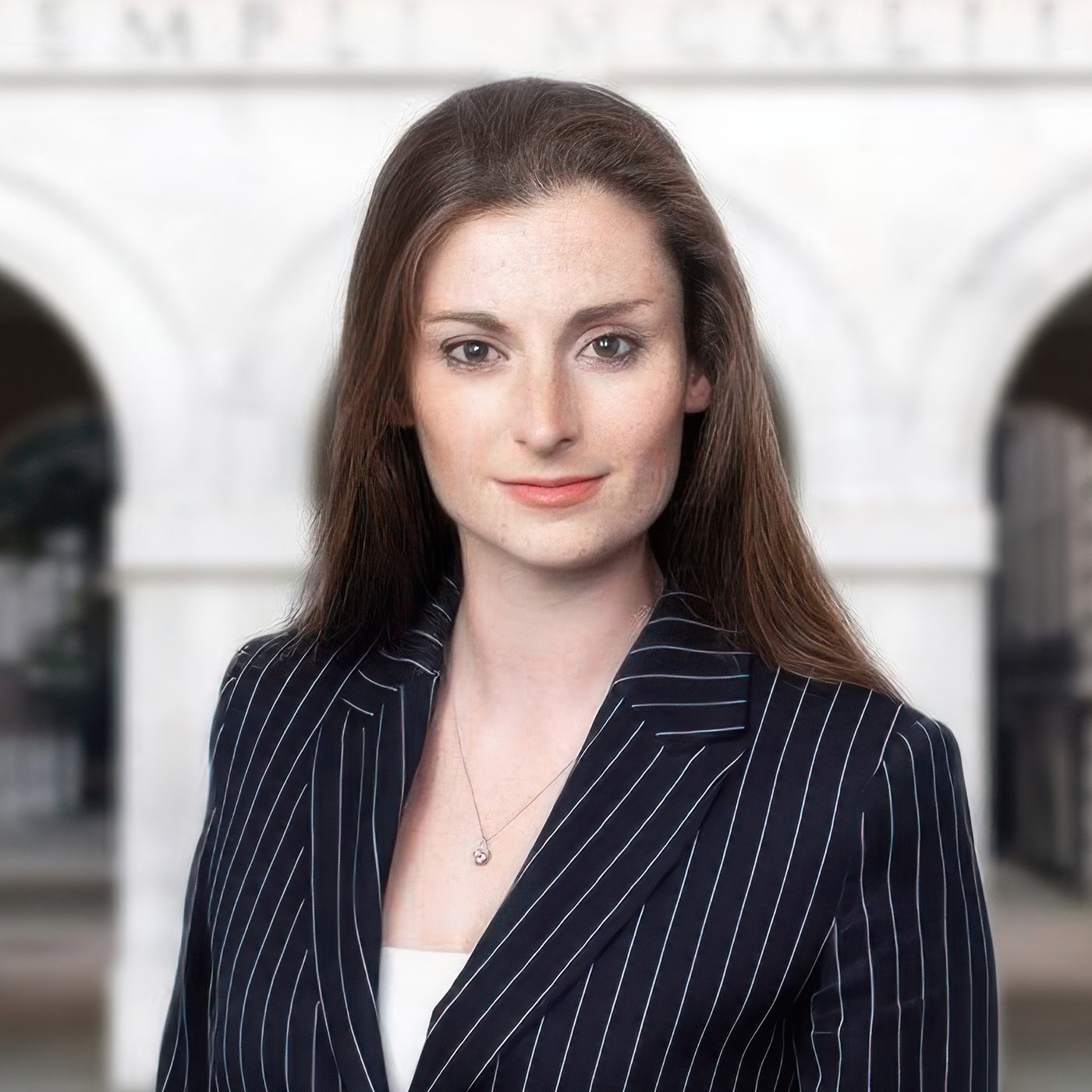
Natasha Hausdorff is an expert on international law. A graduate of Oxford and Tel Aviv University, she was a fellow at Columbia Law School and now works as a barrister in London and serves as the.
- [00:46]
Unnamed Host
Legal director of UK Lawyers for Israel Charitable Trust.
- [00:51]
Natasha Hausdorff
It is in that capacity that Natasha has been outspoken in her defense of Israel. I asked Natasha to join me today to help us understand international law, how it applies to Israel during this war, and how the law has been weaponized against the Jewish state.
- [01:14]
Unnamed Host
Natasha, this is a real honor to have you here as a guest. I've been counting down the days. I've admired, admired you for so long, especially since October 7th. So thank you for taking the time. You're a practicing attorney, so this is pro bono from your perspective. So welcome to in these Times.
- [01:35]
Unnamed Expert
Thank you so much. It's really my pleasure to be with you.
- [01:39]
Unnamed Host
I really meant it. You're a hero of mine, real warrior in the media and in polemics and public debates. And I want to talk to you about that. But for first, you're a leading expert on international law and of course, this has become part of the battlefield since October 7th, and you're one of our leading generals. So I wanted to ask you, just explain to us what is this concept of international law? Do people respect international law? Who determines what international law is? And when you take Israel into court.
- [02:13]
Rabbi Ami Hirsch
What does that actually mean?
- [02:16]
Unnamed Expert
Well, these are all entirely fair questions. I studied public international law at university and was reliably informed by my professors that it was a thing, it did exist. And the proof of that was that most states abided by most international law, most of the time. That was, I think, the common refrain. International law is essentially the law that governs relationships between states. So whereas, you know, a domestic legal system will regulate relations between individual people in the context of public international law, it's the way states interact with each other, their rights and obligations towards each other. And much of the early international law was about international trade aspects of life outside of the domestic jurisdiction of individual states. One of the key aspects of international law that is Being discussed now in relation to Israel is of course, the laws of armed conflict. They developed a little later on, but they are for the most part embedded in treaties, international conventions, and also, to an extent, in what is called customary international law. So I think when we're looking at the international legal system, we need to be particularly aware of two key sources. Treaties or international conventions are written, and this is law that states opt into. But customary international law is a very strange beast, and this develops over time out of the practice of states. So it's a bit of a nebulous concept, but the core principles of international law are often said to be subject to customary international law. And in relation to the allegations that are being brought against Israel in international legal fora, there are several of them, in fact, the International Criminal Court, the International Court of Justice included. The real concern I have here is that so much of what we've seen play out, not just in the last 12 months, but actually it's been the process of several years of what I've called out as lawfare. This is not the proper application of international law. This is in fact, the politicization, the weaponization of international law against the Jewish state. And we've certainly seen that on full display in the context of the recent proceedings at the ICC and the icj. But it feeds into, I would suggest, a much broader misrepresentation of international law. It follows a process by which these legal terms like genocide, ethnic cleansing, apartheid, colonialism, all of these are, well, until recently, had a pretty defined legal meaning. But the way in which they've been consistently now deployed against Israel inverts that legal meaning and in fact, deprives these terms of their previous essence. And in that respect, we've seen the politicization, both of these legal terms, but also of the legal processes which have played out in the wake of the 7th of October, and everything we've seen in terms of Israel being targeted.
- [05:34]
Unnamed Host
So let me ask you, so in respect to the two courts that have been in the news recently, the International Criminal Court, that's called the icc, and then the International Court of Justice, the icj, you have to be a signatory in the ICC to actually have it be bound on you, right? And Israel's not a signatory, and the United States is not a signatory either. I don't know about the uk, so why does that even bind Israel, let alone have a prosecutor issue arrest warrants for Israeli leaders?
- [06:07]
Unnamed Expert
So this is a prime example of what I mean when I say these institutions are being politicized. You're absolutely right that Israel is not a signatory to the icc. Specifically, the contract, if you will, the convention that established the International Criminal Court, which is called the Rome Statute, the US Is also not a signatory. I believe that both Israel and the United States saw, even at that early stage, while the convention establishing the Court was being drafted, saw the trajectory, saw the direction of travel of the International Criminal Court, and both decided they wanted no part of it. The essence of the Court's jurisdiction does come from the territorial jurisdiction of those States that have signed up to the Rome Statute. So it's important just to understand that this is an international court, it's a criminal court, and its jurisdiction is over individuals, so not states, but the jurisdiction derives from the States that have signed up. And there are two major problems with the Court having absolutely no jurisdiction over the Israelis that arrest warrants have already been sought in respect of. That's Prime Minister Benjamin Netanyahu and Defence Minister Yoav Gallant. One is the fact that Israel is not a signatory and so the Court has no jurisdiction over Israeli territory. The other problem here is that essentially the Court have sought to determine that they have jurisdiction on the basis of recognizing supposedly territorial jurisdiction over the State of Palestine. Now this is a major controversy in the history of the Court that it is purported to accept a so called State of Palestine joining it. There are innumerable problems with this, not least the fact that Palestine has no status as a State in international law. There's very clear international law on this in the Montevideo Convention, which is considered to be so important. It is part of customary international law. The attributes that a State must have, the Palestinian Authority in the west bank and Hamas in Gaza, do not meet the requirements of statehood. And yet the Court purported to say, okay, well, we accept that Palestine has joined us, and we accept therefore that we have territorial jurisdiction as a result of Palestine signing up to the Rome Statute. Another major problem with that is of course, under the Oslo Accords, which established the Palestinian Authority, which has purported to join the Court, there was clear provision that there would be no jurisdiction, criminal jurisdiction, over Israelis. So the very agreements which constituted the origins of the entity that purported to sign up to the Rome Statute, exclude the jurisdiction that the Court is now seeking to exercise.
- [08:55]
Unnamed Host
So this is all obvious to you. Do you think the Court wants to have a certain outcome and is then working backwards and just applying and distorting.
- [09:06]
Rabbi Ami Hirsch
Some of its own principles?
- [09:08]
Unnamed Host
Or how does it work, just from a lay perspective, to sit back and see that it's the democratic Leaders of Israel who have an arrest warrant issued against them in a war where they're fighting Islamist terrorists who are anti Western.
- [09:25]
Rabbi Ami Hirsch
How does that even happen in a.
- [09:26]
Unnamed Host
Court, in an international court, presumably, that stands for justice.
- [09:32]
Unnamed Expert
It's a fair question. What is it that is motivating the court, and in particular now the Office of the Prosecutor, to involve itself in an ongoing armed conflict in a situation where we have also. So I should indicate I'm extremely privileged to be working with extremely gifted and dedicated lawyers at uk, lawyers for Israel, and amongst other things, in terms of the submissions we've made to the International Criminal Court on this issue, we have highlighted the slew of false information that the prosecutor, Karim Khan, put forward to support his arrest warrant application. So when you take into account the false information, the lack of jurisdiction, and the clear, I would suggest, political motivation behind these applications, it strikes me that the court must be seeking to rehabilitate itself here. That the court has had an extremely troubled history. The amount of money that has been invested into the court for what I think are only 10 successful prosecutions that resulted in convictions, I believe more or less exclusively against African defendants. The court came under enormous criticism for being both ineffective and coming across as rather racist in its approach and its focus on defendants. Well, here is potentially the answer to all of those criticisms. What better way of seeking to rehabilitate yourself in the context of, you know, the international communities, by going after, essentially the world's punching bag, the only Jewish state? I cannot get over that as a key motivating factor, given all of the problems with which the court is faced. And yet the prosecutor has launched into this, and in particular, when we consider the very public nature of the announcement of this application, unprecedented, entirely unprecedented in the court's history. Most of these arrest warrants are applied for in secret, so that those subject to them aren't aware that they're liable to be arrested when they travel internationally. And here we had a press conference, we had a celebrity panel of experts that was brought in, supposedly to rubber stamp the prosecutor's application and an interview given on Christian Amanpour. The fact that arrest warrants were applied for in parallel for Israel's leaders and the leaders of the internationally prescribed terrorist organization Hamas, should fill any reasonable individual with horror. This obscene and repugnant moral equivalence which it seems the prosecutor was seeking to draw between Hamas and Israel. And yet I think it's also reflective of deep misunderstanding by those working in the Office of the prosecutor, this idea that they could be absolved of any criticism by Essentially going after both sides. That's extremely problematic and I think reflective of a deep, deep seated misunderstanding, one that has undoubtedly been contributed to by a great deal of misinformation for several decades, especially in the international legal community, about what Israel is, what its aims are, how it conducts itself. And this is ultimately part of the factual misrepresentations that sit alongside the legal misrepresentations. And I believe we have to combat both of them in parallel.
- [13:05]
Unnamed Host
And this is what you mean by law fare right, by distorting principles of justice to pursue political aims?
- [13:14]
Unnamed Expert
Absolutely.
- [13:16]
Unnamed Host
Can I ask you, just on the issues that are being litigated both in courts, but also in the international media and in international discourse, is Israel committing genocide? Is Israel even close to genocide? Where does this idea even come from? In particular, since I tell you, it's especially galling because of course, the concept of genocide arose after the attempt of genocide of the Jews. So where does this even fuan, where does it come from? And to set us straight, what is genocide? And is Israel approximating genocide? I think the ICJ called it something about plausible genocide. Where's all this coming from?
- [14:00]
Unnamed Expert
Right, so there's a lot to unpack here. But isn't it just mind boggling that we're sitting here having a conversation about whether or not Israel is even guilty of genocide? I mean, the fact that the Overton window seems to have shifted to such an extent that that is a legitimate conversation to be having is mind boggling and should be deeply concerning about how far the factual and legal misrepresentations have come here.
- [14:25]
Unnamed Host
By the way, I worry about the implications on the West. I always felt that October 7th was really a war about Western values. And I worry that the west can't.
- [14:38]
Rabbi Ami Hirsch
Distinguish between freedom fighters and terrorists and.
- [14:41]
Unnamed Host
Between defending against genocidal maniacs and perpetrating genocide.
- [14:49]
Unnamed Expert
When we come to this, the term genocide itself, that is the latest in a long list, I think, of legal terms that have been seized upon and abused in order to promote hatred towards the Jewish state. I consider this to be part and parcel of the modern blood libel. If we think about how pervasive the ancient blood libel was, how widely believed it was that Jews killed Christian children to use their blood for religious ritual. Well, perhaps it's not so surprising in that context that the modern blood libels Israel targets children or shoots them in the head, or is ethnically cleansing or is committing genocide. I mean, all of these are horrifically false allegations, but they have plainly gained traction. And yes, the origins of the term genocide make this development particularly pernicious. It was Raphael Lemkin, a Jewish jurist, who coined the term after the Holocaust to provide some form of legal terminology to the experience of the Jews of being targeted for extermination because they were Jews. And subsequently it has been deployed in other contexts. But the core of it is the intentional targeting of a group by killing them or creating conditions that make life impossible. But it's the intentional targeting of a national, ethnic, religious or racial group, and it has to be with the intention of essentially eliminating them in whole or in part.
- [16:21]
Unnamed Host
Eliminating them mean killing them or expelling them.
- [16:26]
Unnamed Expert
Well, creating conditions that make life impossible. Targeting an ethnic, religious, racial or national group because of their identity. That is the essence of the crime of genocide. It is what distinguishes it from other crimes against humanity. And in the case of what happened on the 7th of October, and subsequently, we are seeing the victims of genocide being accused of the very crimes that were perpetrated against them. To my mind, there can be little debate that what occurred on 7th October constituted Acts of genocide by Palestinian terrorists against Israelis. They were targeting Israeli Jews by virtue of the fact that they were Jews, and they were targeting them with horrific acts of barbarity, of torture, of gang rape, of victimizing them and abusing them and slaughtering them. And there was no secret made of their desire to target Jews because they were Jews. This is integral to everything the leadership had been saying. This is integral to the testimonies or interrogations that we've had of NUKBA terrorists who have been taken into custody. And the acts themselves are, of course, not disputed. They were videoed by the perpetrators and celebrated and transmitted around the world. So the evidence of that has been well documented. But isn't it telling that, once again, the victims of this crime are the ones being accused of perpetrating the very crime that was committed against them? And we see this, in fact, across all of these abuses of this legal terminology. The allegations of ethnic cleansing made against Israel. Well, in fact, it was 850,000 Jews that were ethnically cleansed from the Arab world. Allegations of colonialism. Well, in fact, it was the Jews who were the indigenous people who had been subject to colonialism for centuries. So allegations of apartheid. I'll tell you where the real apartheid is in that part of the region. It's in the west bank that is controlled by the Palestinian Authority. Because if you see a Jew walking into Ramallah, the chances are you're not going to see them five minutes later. And we have, unfortunately, very Tragic incidences. The very famous Ramallah lynching in the police station where two off duty Israeli reservists found themselves lost in Ramallah, went to the local police station looking for assistance, and what was done to them was reminiscent of what was committed on the 7th of October. So when we step back and we realize that there is a long history of the victims of crimes here, necessarily Israelis, Jewish Israelis, being accused of the very crimes that were committed against them, I think we start to see this phenomenon in a slightly different context and it starts to make more sense, the very concerted effort that is being conducted here. And when we think about South Africa's application against Israel alleging genocide at the International Court of Justice, we can see the impact that it's had. The shifting of the Overton window of what is acceptable. The day after the first Provisional Measures Order was issued, on the 26th of January this year, I was on South African national television discussing the implications of it. And my counterpart said, isn't it wonderful? Now we can finally talk about Israel and genocide in the same sentence and nobody can tell us otherwise. And therein I think you had a full acknowledgement of what South Africa was seeking to achieve and plainly what it ultimately did successfully achieve in shifting the public debate. And here we are now having this absurd conversation about whether Israel is in fact guilty of genocide.
- [20:15]
Unnamed Host
What politically do they want to achieve with the accusation of genocide?
- [20:19]
Unnamed Expert
Well, it's the isolation of Israel, treating Israel as a pariah state, the institution of sanctions against Israel. Very, very similar aims, I would suggest, to those associated with the allegation of apartheid against Israel, because there is a plain precedent for what happens once you establish apartheid as a credible allegation. South Africa was subject to sanctions, to boycotts, and it has been a central plank of the BDS campaign against Israel to seek to legitimize its activities with these utterly unfounded and abhorrently false allegations.
- [20:56]
Unnamed Host
And do you think that the aim is to create a Palestinian state or to so weaken Israel as to eventually dismantle the Zionist enterprise?
- [21:08]
Unnamed Expert
And this is from South Africa's perspective itself. Well, they profess to be doing this on behalf of the Palestinian people, but it is Hamas that was celebrating their application, in fact thanking the South African legal team for their good work. And no one can be under any illusions that Hamas, and in fact the Palestinian leadership in the west bank, have no real aspirations to a Palestinian state alongside Israel. Everything they have said from the very inception of the PLO in the 1960s, and of course Hamas, within its founding charter makes it perfectly clear they are dedicated to the eradication of the State of Israel in any borders. And unfortunately, South Africa, and I would say, much to the lamentation of many ordinary South Africans, South Africa has thrown its weight entirely behind that enterprise. There was just one aspect I wanted to pick up in your original question about the icj, and it's to do with what the Court has actually found here. Has it found Israel plausibly guilty of genocide? And this is an interesting case study, I believe, of how these international legal frameworks, determinations, are twisted in order to advance a particular narrative, false narrative, against Israel. Because on the 26th of January, when the court issued its Provisional Measures Order, what the order in fact said was that the Court was asking Israel to abide by the Genocide Convention, which Israel has been clear it has always abided by. But the Court was making that demand, if you will, in a provisional measures capacity, having determined that the rights South Africa was claiming plausibly fell under the Genocide Convention, that South Africa was raising plausible rights. Now, what does that mean? The Court did not consider the merits of the case at all. It did not consider what Israel was doing. It did not consider the evidence that Israel put forward. It's a very, very basic question the Court asked itself, which was essentially, is the Genocide Convention engaged? Is what South Africa is alleging something that properly falls for the legal determination of the Court? That is, as far as it went. And yet the world and his wife, after 26 January, was purporting that Israel had been plausibly found guilty of genocide or that there was a plausible risk of genocide. But every single report that I saw on the international media, and there were many lawyers and some respected former judges, even of the Supreme Court in the United Kingdom, that were falling into this false narrative and this misrepresentation of what the Court had said. And it was only when the former President of the icj, she'd retired since writing this very Provisional Measures Order, she came out on an interview on the BBC to clarify the position, which is equally unprecedented, that a retired judge would then speak about an order that she had written and got her colleagues to endorse, actually said and actually meant. But these are extraordinary times and extraordinary positions. And I think it's extremely lamentable that despite that unprecedented clarification coming from a judge, you still have people who are misrepresenting the position and saying that South Africa has proven something against Israel when it plainly hasn't.
- [24:34]
Natasha Hausdorff
Talk to us about proportionality.
- [24:37]
Unnamed Host
Lots of people have been killed on the Palestinian side and now in the war in Lebanon, what is the legal standard for proportionality? And you hear all the time people saying they're not necessarily talking legally, they're talking politically. But okay, the Hamas attacks were horrific, but the counterattacks on Israel's part are way beyond proportionality. They're completely disproportional.
- [25:04]
Unnamed Expert
This is a fundamental misrepresentation of what proportionality means. Proportionality is not a comparison of casualty figures or of the effects of military action. And if they're using it in a non legal context, then they're going to have to clarify what they mean by proportionality, because it's utterly macabre, even outside of a legal context, in any other context, to suggest that one should weigh up casualty figures and assess military action essentially on that basis. It simply encourages Hamas to continue to pursue its appalling strategy of increasing civilian casualties as much as possible through the use of human shields and inflating casualty figures, which it is now a matter of public record that the supposed Ministry of Health in Gaza and the figures that they put out have in very many respects been entirely fabricated and inflated. But as proportionality is not an assessment of casualty figures, we can pause the discussion on the fake and false casualty figures that are coming out and talk about what proportionality actually means, because it's not an effects based analysis, it is based on intention. And the rule of proportionality in the law of armed conflict requires that every strike be weighed up. And the balance that needs to be struck is by considering the anticipated civilian or collateral damage and what is known in terms of intelligence to inform that assessment of what damage will be anticipated. Because there is a very tragic but accepted fact in armed conflict that civilians do die. And all of the laws of armed conflict are designed to keep civilian casualties down to a minimum. And so that law abiding states exercise precaution wherever possible, but they do not work to stop an army from defending itself or its people. And they do not work to prevent a military, a law abiding military, from being able to conduct strikes that target military infrastructure that are necessary and that advance a particular military aim to secure a military advantage.
- [27:28]
Unnamed Host
So if you have a, you have a hospital, actually as we speak there, there are hospitals in discussion now with respect to Israeli military operations. And there might be patients there, there's a medical staff there, and under the hospital there's an underground Hamas military headquarters.
- [27:50]
Natasha Hausdorff
Is that a legitimate target?
- [27:53]
Unnamed Expert
The presence of a military command center, military infrastructure in what would otherwise be a protected or civilian building absolutely has the effect of changing the status of that unit so it becomes a legitimate military target. But it's important to note that that doesn't mean that Israel has been willy nilly targeting hospitals, despite the number of civilians and human shields that have been collected there by Hamas in order to get to the terrorists and their infrastructure, even though that is, as a whole, a legitimate military target. Israel takes into account the presence of civilians in the context of its proportionality analysis. And it also takes into account another principle of the law of armed conflict, the principle of precaution to seek to navigate this impossible situation that Hamas and Palestinian Islamic Jihad and other Palestinian terrorist organizations there have orchestrated by embedding themselves in civilian infrastructure. In terms of the precautions that Israel takes, well, the warnings that it issues, the evacuation that it seeks to facilitate, I've certainly seen reports and heard testimonies of soldiers defending fleeing civilians from Hamas fire along the humanitarian corridors that have been set up to safely evacuate these civilians. So the whole point of Israel seeking to evacuate hospitals, seeking to target the terrorists around them, one instance I remember in the context of Al Shifa, Israel went in with Arabic speakers and with medical staff into the hospital in order to seek to provide for legitimate patients, civilians, et cetera, that were in there and distinguish them from the Hamas terrorists that they were targeting. I remember that in particular because the news report I think that was put out by the Associated Press suggested that Israel went into the hospital targeting Arabic speakers and medical staff, which was, of course, completely false. So it all essentially comes down to the proper application of the proportionality analysis. And what we have seen throughout this last 12 months in Gaza is that Israel is consistently not attacking where it can avoid that. And it took a long time before it ultimately went to grapple with the Hamas presence at Al Shifa or many of the other hospitals in the Gaza Strip. And when it ultimately did that, it wasn't bombing these hospitals from the skies. It actually went in and by all accounts, sacrificed many soldiers in an attempt to comply with another rule of international law, which is distinction to distinguish between the terrorists and the civilians they were hiding behind.
- [30:48]
Unnamed Host
You appear in the media a lot. I think you probably consider it, if I can assume your intentions, that it's part of your responsibility as somebody who cares about the truth and about the Jewish condition and the defense of Israel.
- [31:03]
Unnamed Expert
I would also add that I also see it as part of my responsibilities as a barrister. We are an independent profession with a very long, proud history of standing up for the rule of law. And I'm an officer of the court. I have a duty, I believe, to stand up and say something. If I see the law being so resoundingly misrepresented on such a seemingly universal.
- [31:27]
Unnamed Host
Basis, that's really admirable. I deeply respect that.
- [31:32]
Natasha Hausdorff
Can you give us some intellectual and.
- [31:35]
Unnamed Host
Emotional response to your frequent interactions with.
- [31:39]
Natasha Hausdorff
Members of the media?
- [31:41]
Unnamed Host
Do you think it's generally fair? You know, we look over here on this side of the ocean and we have our criticisms with the media, but.
- [31:49]
Rabbi Ami Hirsch
It'S nothing like the BBC, for example, or even Sky News.
- [31:54]
Unnamed Host
So tell us something that you think we need to know about your interactions with the media.
- [31:59]
Unnamed Expert
Well, I would perhaps start by saying, unfortunately it's nothing new. And yes, the scale and the level of coverage over the last year has been unprecedented. And some of the individual examples of the false reporting I mentioned, the reports of the Associated Press, of the hospital that were repeated by many other news outlets, the immediate allegation that Israel had struck the Al Ahli hospital already in October last year, there are countless individual examples. I think this is the work of decades. I remember 10 years ago reading Matty Friedman's series of essays about his experiences being part of the Associated Press in the Jerusalem bureau and the editorial lines that everyone was subject to and what needed to be reported. And there was a, you know, received wisdom that Israel was bad and the Palestinian scenes were good and stories had to conform to that logic. Whether or not it had any bearing on the factual realities on the ground, there is that. There is also the fact that now when one comes to look at the commentators that are being booked, and I suppose this goes to my, you know, individual experiences over, over the last 12 months. I mean, the bookers themselves are extremely young and it seems to me that they seem to get their knowledge of international affairs, perhaps international law and certainly history from TikTok. So this interplay between social media and the so called mainstream media is very much more significant than I think many people realize. And it's shameful, it's abysmal, especially when one thinks about, you know, hitherto respected institutions like the BBC, it still has a lot of respect around the world and people turn to it as a source of trusted material. It has completely abused that position. I mean, even if we consider the Al Ahli Hospital and this was a personal experience of mine because I was due to be interviewed that evening, I was in fact on the line with the BBC when the deputy editor of the channel called me and said, I'm so sorry, Natasha, we're going to have to bump you again. I think this was the third time that had happened to run with the rolling coverage of this breaking news. And I said to him, what are you talking about? Now more than ever, you need me because you're calling this an Israeli airstrike. I was already then looking at reports that this was a Palestinian Islamic Jihad rocket that had fallen short in the Gaza Strip. He told me I hadn't seen that on any of the wires. But they didn't even exercise the most basic journalistic integrity. They didn't send one of their stringers, they have many on the ground in Gaza. They didn't send anyone down to walk to the end of the street and actually look at the hospital, because if they would have done so, they would have seen not only was the hospital still intact, but that the rocket which had come from Palestinian Islamic Jihad had fallen in the car park of the hospital, created a small crater, but that there was no way that the 500 casualties that Hamas were claiming as a result of this supposed Israeli strike could have been caused as a result of this PIJ rocket that fell in the hospital car park. It's interesting to note that I don't think that 500 casualty figure has ever been revised. So that's still part of the inflated casualty figures, that the media were parroting this Hamas propaganda. And ultimately, albeit I sought to argue with the editor and I sought to ask him to apply, you know, basic journalistic principles, consider what he knew, what he didn't know. Israel doesn't target hospitals. Israel was providing warnings of everywhere. It was striking at the time. Hamas and Palestinian Islamic rockets do fall short in the Gaza Strip. Hamas kept weapons caches in hospitals, as we knew, you know, all of these aspects of the context and, you know, a little bit of critical thinking needed to be applied to the situation. But no, immediately they were off on one. And the real indictment is that after it became perfectly apparent that this was a Palestinian Islamic Jihad rocket, there was no acceptance of responsibility for essentially the blood that the BBC had on its hands. There were riots across the Middle east as a result of this false reporting. There was a breakdown of international negotiations as a result of this false reporting. And when Jeremy Bowen was asked about it, he said he didn't regret.
- [36:21]
Unnamed Host
Jeremy Bowen is the correspondent of the BBC on the ground who reported.
- [36:25]
Unnamed Expert
He's the Middle east editor. And I think much of the absolute travesty of the reporting of the BBC rests very much on his shoulders.
- [36:34]
Unnamed Host
Do you think that the standard has deteriorated over, say, the last 10 or 20 years? And is it unique to Israel or Is the BBC still the BBC, you know, and it's kind of the gold standard of international media, or it used to be, at least.
- [36:50]
Unnamed Expert
So I know about Israel and the Middle east, and I know what the realities are, and I follow this extremely closely. So I know what it is that they are reporting as false. I'm not in a position to judge the veracity of the reports that they put out from other parts of the world, and I'm deeply, deeply concerned when I see how badly wrong they get it. In the case of Israel, there are no other examples that I'm aware of of, you know, states being so resoundingly targeted with misinformation, with abuse. You know, when one looks at the UN resolutions passed against Israel, which are more numerous than those passed against the rest of the world combined, when one looks at all of the NGOs that propagate all of this misinformation about Israel, then I think, you know, it's fair to say that this is a unique case. Israel is the Jew among the nations and therefore subject to that sort of defamation, slander on a far more frequent basis. But given the complete renunciation of responsibility, given the dire state of journalism that we see with respect to reports coming out of Israel, then I think we really do need to question what it is that we're being told about all the other parts of the world.
- [38:04]
Unnamed Host
That's an example of what I was talking about before, that if there's a specific obsession with Israel, it clouds your judgment and it distorts the very values and principles that supposedly you stand for. So we saw that post October 7th with international legal bodies. We saw it with feminist groups. We saw it with so many social justice partners with whom we were allied for years and even decades here, civil rights partners. That's what I mean when I say.
- [38:37]
Unnamed Expert
This has deep ramifications, 100%. Yeah. And I think it's important in that context that we also see this for what it is, which is a civilizational war. Israel is not just fighting Islamist terrorism on its own behalf. It is doing so on behalf of the west more generally, on behalf of all liberal democracies. And it's about time. I would suggest that its allies wake up to that reality and start supporting it in the appropriate and robust fashion. I mean, the rhetoric that we have seen coming out of our respective countries, out of the United Kingdom and the United States, is just monstrous. And by all accounts, it has clearly had significant effects. I mean, Iran has consistently sought to attack Israel via its proxies, via Hamas, Hezbollah, Palestinian Islamic Jihad, the Houthis and others in Iraq and Syria. But we saw as a result of weeks of American rhetoric that was critical of Israel in an extreme sense, that was even suggesting that Israel was acting disproportionately or indiscriminately. Indiscriminately. I mean, that word, I think was walked back pretty quickly.
- [39:58]
Unnamed Host
Yeah, but it did a huge amount of damage.
- [40:01]
Unnamed Expert
Huge amount of damage. And it's plainly had an impact on Iran's calculus. I don't think we would have dreamt of seeing Iran striking Israel directly in the manner in which it is done now on two significant occasions, were it not for this extremely troubling rhetoric and ultimately the mixed messages that have been sent in particular, unfortunately, I have to say, by the United States talking about.
- [40:27]
Unnamed Host
Threats to Western institutions and civilization. So one of the jewels in the crown of Western civilization, without which we really don't have a future in the west, are universities. Of course, you're a graduate of some of the great universities in the world. You've studied in Columbia, you studied at Oxford. Do you go to universities and speak to students? And what do you know about universities, both here as well as in the UK and their approach to some of the issues we spoke about and specifically about their understanding of Israel?
- [41:00]
Unnamed Expert
I speak at universities a lot and I have done so, say, for the better part of 10 years. I mean, I'd be inclined to say certainly the situation has worsened over that period. But the essence of the misinformation, both coming from student groups and faculty, is of significant long standing. I mean, it's apparent to me that even the, you know, the Zionism is racism events, movement resolutions at the United nations that we saw in the 1970s were ultimately born out of academic discourse. All of this has essentially started in the academy and filtered through elsewhere. So it makes sense then that the academy has got to an absolute extreme, which is probably going to foreshadow where other institutions follow through to. I didn't quite study at Columbia, but I was there as a researcher in the National Security Law Program. So I was a visiting fellow and ostensibly, you know, part of the faculty there. I spent a lot of time with members of faculty and I saw that this was not just a bottom up phenomenon, but it was very much a top down.
- [42:08]
Unnamed Host
When were you at Columbia?
- [42:10]
Unnamed Expert
2018. So not all that long ago.
- [42:14]
Unnamed Host
So looking back, do you understand now what resulted, what erupted post October 7th at, say, Columbia, an institution that you know from firsthand experience?
- [42:27]
Unnamed Expert
Yes, it didn't surprise me at all. I'm sorry to say I certainly saw it on full display when I was there. It probably didn't surprise me that Colombia has very much led the way on the extreme chaos, violence, even, that we have seen. Rhetoric, certainly. But as I say, it. It's not just come from the students. It has very much been encouraged by faculty. You know, all of this is interrelated, especially in the context of international law, because the academy plays such a significant role in discussion about it, and it's even in its development. I mean, one of the sources of international law is considered to be the statements of the most well respected jurists, you know, academics on the subject. So I think the backlash that we have seen, the realization of what has happened, is the only encouraging thing that I can take out of this debacle. I consider it to be a significant indictment, though, on us, on, you know, society more broadly, because it is not just as a result of, you know, questionable Qatari funding of these institutions and the establishment of chairs in studies that are designed specifically to demonize the Jewish state and the development of teaching materials that propagate blood libels. I mean, all of that is essentially a significant problem that has to be addressed. But so much of this has caused these institutions really to become rotten to the core. There is another aspect of this which has meant that the material has fallen on such fertile ground. And that, I think, is the lack of purpose that the generation that is currently going through these institutions, unfortunately, has. They have been welcomed with open arms into groups that support terrorism. They have camped out and felt as though they were part of something because they have been given no understanding and no pride in the Western liberal democratic values that the causes they have thrown their weight behind are seeking to harm and essentially tear down. And that I see as an indictment on us. Because if we are to have pride and a sense of purpose in what we have achieved and a recognition that democracy, democratic values, and the freedoms that we enjoy are fragile and need to be protected, and that actually the most important purpose one can have is in picking up the baton. When the younger generation tire of that fight to protect those values that we hold dear, it is up to that younger generation to pick up the baton and continue that fight. And that is, I think, where the disconnect has erupted. And instead, we have seen these people, in seeking purpose, these young people throw themselves into the cause of internationally prescribed terrorist organizations. I don't know how we come back from that.
- [45:33]
Unnamed Host
Well, I wanted to follow up on that. Are you optimistic? You think there could be enough Pushback so as to dramatically change the condition of Western universities.
- [45:50]
Unnamed Expert
Listen, I hope so. If I thought it was an entirely lost cause, I wouldn't be continuing to travel and to speak. But the fact of the matter is that we have the truth on our side. And there is something even more important, I would suggest that gives me great cause for optimism, and that is the state of Israel and its people and its army. There are many have called the IDF the most moral army in the world. And I think that is very much reflective not only of its ethos but of its track record in grappling with the most barbarous terrorism and in protecting Palestinian civilians as well as Israeli civilians. But the progress that Israel has made in Gaza, which I witnessed in September on the ground with my own eyes, the manner in which young people in Israel have risen to the challenges, the unimaginable challenges and the horror that followed of 7 October, and the progress that has been made, as I say, on the ground, I mean, the way in which the army has risen to these challenges indicates that if anyone was in any doubt, Israel will win with or without the backing of the United States and the United Kingdom. The proper and appropriate backing that I think should be given and the battle against the misinformation and the false narrative is something that will need to be picked up. And I think Israel will probably have to come to terms with devoting more resources to fighting. That it is not. It has left that battlefield entirely vacant for many, many years, unfortunately. But the most important thing is the safety and the security of the state of Israel and the people of Israel. And that I think we can have great confidence in maintaining and everything else.
- [47:34]
Natasha Hausdorff
We'Ll work on with that.
- [47:37]
Unnamed Host
Natasha, I want to thank you very much. That's a beautiful way to end. Just to sit back and to listen to you honestly is a pleasure. I mentioned to you I studied law at the London School of Economics a long time ago. If I had a professor like you.
- [47:55]
Natasha Hausdorff
I would take every class, just sit.
- [47:57]
Unnamed Host
Down and listen and remember it for a lifetime. So on behalf of the truth, on behalf of your commitment to the law, and on behalf of the Jewish people, thank you for everything you do.
- [48:12]
Unnamed Expert
Thank you. I'll just say one final word, if I may. I am tremendously grateful to have this purpose. I have always valued it enormously. It has been the work of somewhat over 20 years, but I certainly do it out of a sense of duty. But I'm, as I say, extremely grateful to have this purpose. And I hope that through having these sorts of conversations, we may both be able to inspire many more people to pick up that similar purpose.
- [48:42]
Unnamed Host
Amen to that. Thank you and keep up the brilliant work.
- [48:50]
Natasha Hausdorff
I can't tell you how much I admire Natasha Hausdorff. First, she's brilliant. It's rare to encounter a person so highly intelligent and demonstrating such mastery over the material she addresses. Just to sit back and listen to someone like that is an unusual privilege. But second, she's brilliant. For all the right things, she has the right values. As she said, part of her motivation is to defend the dignity and integrity of law itself. She despises lies, hypocrisy and deception. She is ferocious in upholding truth, honor and decency. And she is a proud Jew, never retreating, never skulking, and never intimidated, no matter the personal or professional cost. This, more than anything, is what makes her a role model and an exemplar for young people in the west, and especially young Jews. High intelligence is a tricky thing. You might be a genius in one field, but that does not necessarily translate into other areas of life. Sigmund Freud once wrote about his conversation with fellow genius Albert Einstein. He understands as much about psychology as.
- [50:05]
Rabbi Ami Hirsch
I do about physics.
- [50:06]
Natasha Hausdorff
So we had a very pleasant talk. Plenty of people are truly brilliant. They are described as the best and the brightest, but turn out to be the best at what is not bright and bright at what is not best. We might be smart doesn't mean that we'll make smart decisions. Stalin was smart. Chamberlain was smart. Napoleon was smart. Smart people often make dumb decisions. There are all too many brilliant scientists who design viruses that kill many exceptional lawyers pervert justice. Courageous warriors often inspire legions of followers to commit horrendous atrocities. The most learned professors in the most elite institutions can defend the most outrageous evils. They convince themselves that massacring 1200 men, women and children in their beds, rampaging through a concert, kidnapping babies, children, parents, grandparents, was legitimate and moral resistance. The most brilliant people in the world could no longer distinguish between terrorism and freedom, fighting, democracy and dictatorship, decency and degeneracy. And once so convinced nothing could bring them out of the spell they were under. The very people who supposedly cherish nuance, evidence and reason themselves became impervious to reason. We can think ourselves into practically anything. Reason can easily lead us astray. We can reason ourselves into the most unreasonable positions. Most of history's evils were not accidental. They were the product of deliberation. Intelligence can lead to catastrophe. It's a shame that the most evil are not the least intelligent. Some People attended the best colleges in the world, but did the worst deeds. I've twice visited Wannsee in Germany, the lakeside villa outside Berlin where the Final Solution was planned. Half of the participants in the Wannsee conference had advanced degrees and carried the title doctor. They reasoned and convinced themselves into the Final Solution and with them, much of the population of Germany, the most technologically advanced and intellectually gifted civilization of the era.
- [52:25]
Rabbi Ami Hirsch
They were educated, they were cultured.
- [52:28]
Natasha Hausdorff
At one and the same time, they were refined and savage. In our technological age, refined savages are the most dangerous of all. Alas, the sad history of the human species teaches that there is no correlation between high intelligence and high morality. When radicalism hijacks liberalism and prejudice imprisons reason, even the most dazzling intellects darken. The mind still sparkles, but in subjugation to a corrupted heart that gradually takes possession of the soul.
- [53:06]
Rabbi Ami Hirsch
The world is becoming increasingly perilous, especially for Jews. I often think of the 1930s. How was it that so few people even saw, let alone mustered, the will to act upon the looming threats that in retrospect were so obvious? I do not think our condition is equivalent to that of mid century Europe. But I do think that we are entering what Winston Churchill described as a corridor of deepening and darkening danger. Whatever you think of Netanyahu, whatever harsh criticism of his policies or personality you harbor, the ICC arrest warrants for Israel's prime minister and former defense minister was another warning. Like in previous preludes to darker times, people are losing their minds and their long held values. As in the past, Western legal standards, developed through centuries of blood and tears, are being manipulated and corrupted before our very eyes. Not only against the Jewish people, but the west itself. Hamas praised the court, proclaiming that international justice is with us. Hamas. That's the thing about hatred generally and especially antisemitism. It so overwhelms reason that it ends up corrupting the very principles we think we are upholding. Educational institutions devoted to the free exchange of ideas end up shutting down debate in a fit of intolerant certainty. Feminist organizations devoted to upholding the dignity of women who betray the very principles they claim to uphold. Legal systems that distort and corrupt justice, making a mockery of the very concept of law. Antisemitism ends up weakening and eventually destroying societies and organizations that tolerate it. Which is why I have been warning since October 7th that this war against Israel is a test for Western civilization itself. Do we still know what we believe? Or have we become so confused, so lost and so anchor less that liberty itself is now imperiled. In 1935, Churchill addressed the House of Commons with these it would be folly for us to act as if we are swimming in a halcyon sea, as if nothing but balmy breezes and calm weather were to be expected. It is not only the supreme question of self preservation, but also the human and the world cause of the preservation of free government and of Western civilization against the ever advancing forces of authority and despotism. It has fallen to us to fight these forces with all our powers, and Natasha Hausdorff is one of our most courageous warriors. Until next time. This is in these times.