Podcast
Inevitable
Hosted by an MCJ podcast · EN
Join Cody Simms each week as he engages with experts across disciplines to explore innovations driving the transition of energy and industry. Inevitable is an MCJ podcast. This show was formerly known as 'My Climate Journey.'
62episodes
Episodes
Newest firstAll episodes

Turning CO₂ into E-fuels with General Galactic
Jan 30, 202500:49:38Tap to summarizeHalen Mattison and Luke Neise are co-founders at General Galactic. General Galactic is a seed-stage e-fuels startup out of El Segundo in the Los Angeles area that converts captured CO₂ into synthetic fuels, starting with natural gas. They claim that their end product is a carbon-neutral drop-in replacement for natural gas that can run in all of today's vast gas infrastructure. In their view, any company or country can in theory become a gas producer. The two founders met at Stanford and went on to early careers in aerospace, Halen at SpaceX and Luke at Varda Space Industries. As they'll share, the vision for General Galactic was ultimately inspired by technologies that are used in space today, which they felt could help solve the energy transition here on Earth.In this episode, we cover: [1:43] The origin of the name General Galactic (GG)[3:07] Halen and Luke’s backgrounds[7:00] An overview of GG[8:14] How GG’s technology leverages existing infrastructure[14:15] GG and its connection to SAF[16:55] How GG chose to focus on natural gas[19:18] Differences between CNG and RNG[22:44] An overview of LNG[26:06] The Jones Act and its impact on fuel transportation[28:14] GG’s drop-in replacement and its economic implications[31:02] The footprint of GG’s “Genesis modules”[34:49] The importance of location for GG’s hardware[38:05] Addressing methane emissions concerns[40:19] GG’s technology readiness and commercialization pathways[42:11] GG’s business model and go-to-market strategy[45:12] GG’s financing to date[49:20] Who GG wants to connect withAdditional Resources:Our World in Data - Energy MixEstimates of Methane Emissions by Segment in the United States*The claims made in this episode are based on current research and theoretical models. Real-world impact will depend on factors like scalability, infrastructure readiness, and policy support. We encourage listeners to stay curious, explore further resources, and engage in the evolving conversation around these solutions.Episode recorded on Nov 7, 2024 (Published on Jan 30, 2025) Enjoyed this episode? Please leave us a review! Share feedback or suggest future topics and guests at info@mcj.vc.Connect with MCJ:Cody Simms on LinkedInVisit mcj.vcSubscribe to the MCJ Newsletter*Editing and post-production work for this episode was provided by The Podcast Consultant
Transcribe →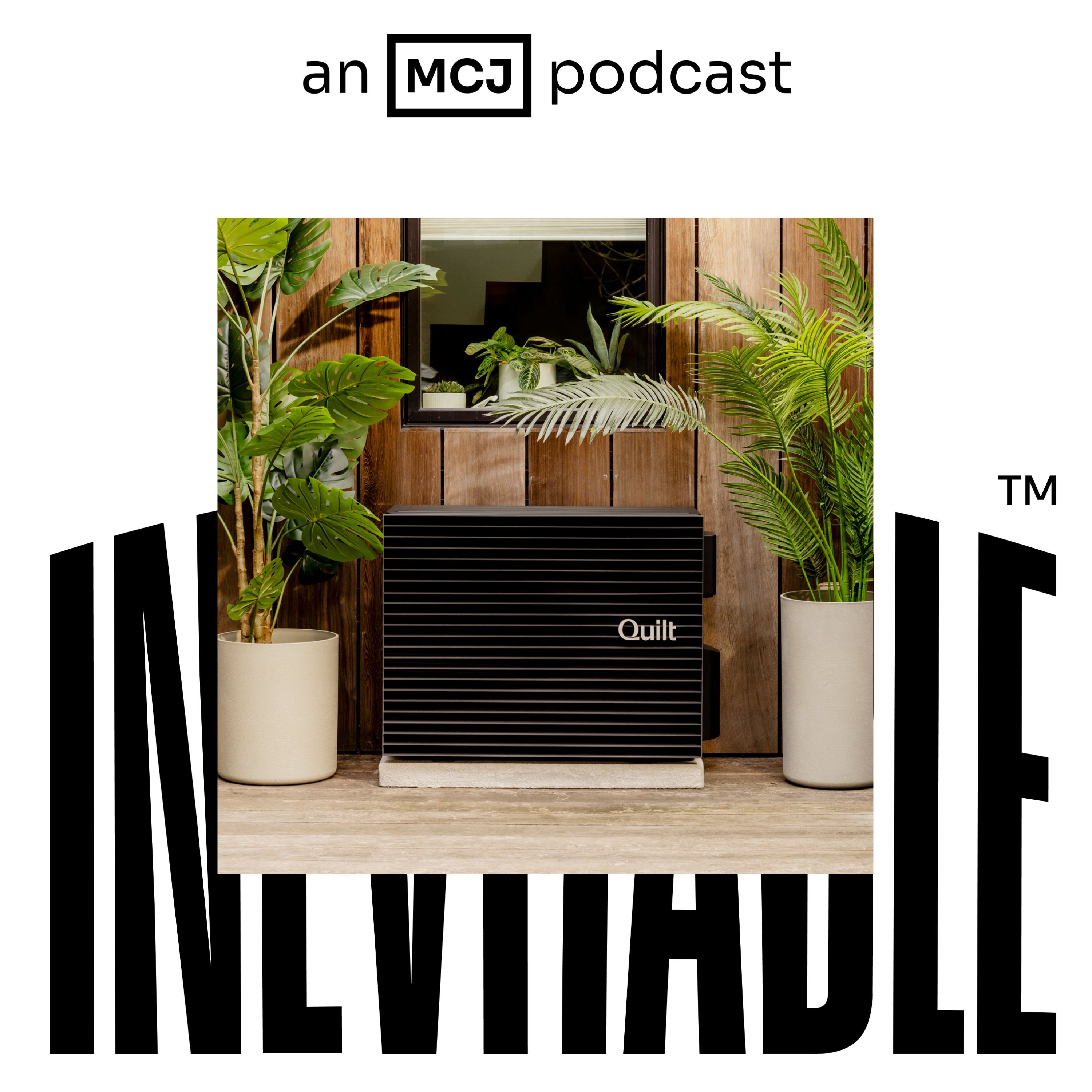
Designing Smart Heat Pumps That Work for Every Room with Quilt
Jan 23, 202500:47:50Tap to summarizePaul Lambert is the Co-founder and CEO of Quilt, a company designing smart ductless heat pumps for residential heating and cooling with intelligent room-by-room controls. Quilt was founded in 2022 and launched in the San Francisco Bay Area in spring 2024. Since then, they have achieved hundreds of deployments and are preparing to expand to their next market in Southern California. Earlier this year, they announced a $33 million Series A financing round co-led by Energy Impact Partners and Galvanize Climate Solutions, following a $9 million seed round in 2023 co-led by Lowercarbon Capital and Gradient Ventures. MCJ is proud to have invested in both rounds through our venture funds.Before founding Quilt, Paul led sustainability efforts at Area 120, Google’s in-house incubator for product ideas developed during employees’ 20% time. He previously held product roles at Google and Twitter and began his career by founding, running, and exiting a startup called LearnDot.In this conversation, we wanted to understand Paul’s product mindset—how Quilt works, the assumptions he’s validated along the way, and how he’s approached the challenges of building the business.In this episode, we cover: [2:01] The origin of the name Quilt[3:32] An overview of Quilt’s product stack[5:37] Quilt’s installation process[8:24] An overview of mini splits[10:56] How Paul and his co-founder decided on ductless mini splits[17:09] Paul’s path from design spec to prototype[18:47] The company’s progress to date[21:38] Consumer sentiment about heat pumps[23:51] Seasonal changes that drive consumers to purchase Quilt[27:16] Paul’s biggest learnings in building the company[32:16] Design considerations in Quilt’s product[34:59] Workforce development and other inertia challenges[40:51] What’s next for Quilt[45:52] Where Quilt is hiring, plus its newly launched merch storeEpisode recorded on Dec 17, 2024 (Published on Jan 23, 2025)*Due to the recent fires, Quilt will now launch in Los Angeles in the Spring of 2025. Enjoyed this episode? Please leave us a review! Share feedback or suggest future topics and guests at info@mcj.vc.Connect with MCJ:Cody Simms on LinkedInVisit mcj.vcSubscribe to the MCJ Newsletter*Editing and post-production work for this episode was provided by The Podcast Consultant
Transcribe →
A New Framework for Family Offices with Integrated Capital Strategies
Jan 20, 202500:48:49Tap to summarizeSharon Schneider is the Founder of Integrated Capital Strategies, a consulting firm that helps founders and family offices drive positive social change. Her firm specializes in setting up or realigning family offices to better align with the values and evolving priorities of individuals seeking a more integrated approach to life.We invited Sharon on the show after being inspired by one of her posts, where she highlighted a growing trend: younger generations of high-net-worth families are rethinking their relationship with family wealth, especially in light of climate change.In this conversation, we explored the distinctions between impact capital, aligned capital, and catalytic capital, and how family office strategies can incorporate these concepts. We also discussed key considerations for entrepreneurs and fund managers when engaging with family offices, how family offices can structure loan guarantees to address the first-of-a-kind project finance gap—and much more.In this episode, we cover: [2:13] Sharon’s journey to founding Integrated Capital Strategies[8:42] Her perspective on catalytic capital[12:27] Feedback from family offices: privacy and urgency[16:14] Fiduciary duties of family offices[19:25] How Sharon collaborates with family offices[23:30] Tips for high-net-worth individuals[27:23] Guidance for founders approaching investors[28:53] Advice for GPs raising capital[32:55] Underutilized tools in catalytic capital[37:40] More advice for founders seeking funding[41:57] The role of corporate strategics in startups[44:11] Sharon’s outlook on the future of family office investmentsEpisode recorded on Dec 19, 2024 (Published on Jan 20, 2025) Enjoyed this episode? Please leave us a review! Share feedback or suggest future topics and guests at info@mcj.vc.Connect with MCJ:Cody Simms on LinkedInVisit mcj.vcSubscribe to the MCJ Newsletter*Editing and post-production work for this episode was provided by The Podcast Consultant
Transcribe →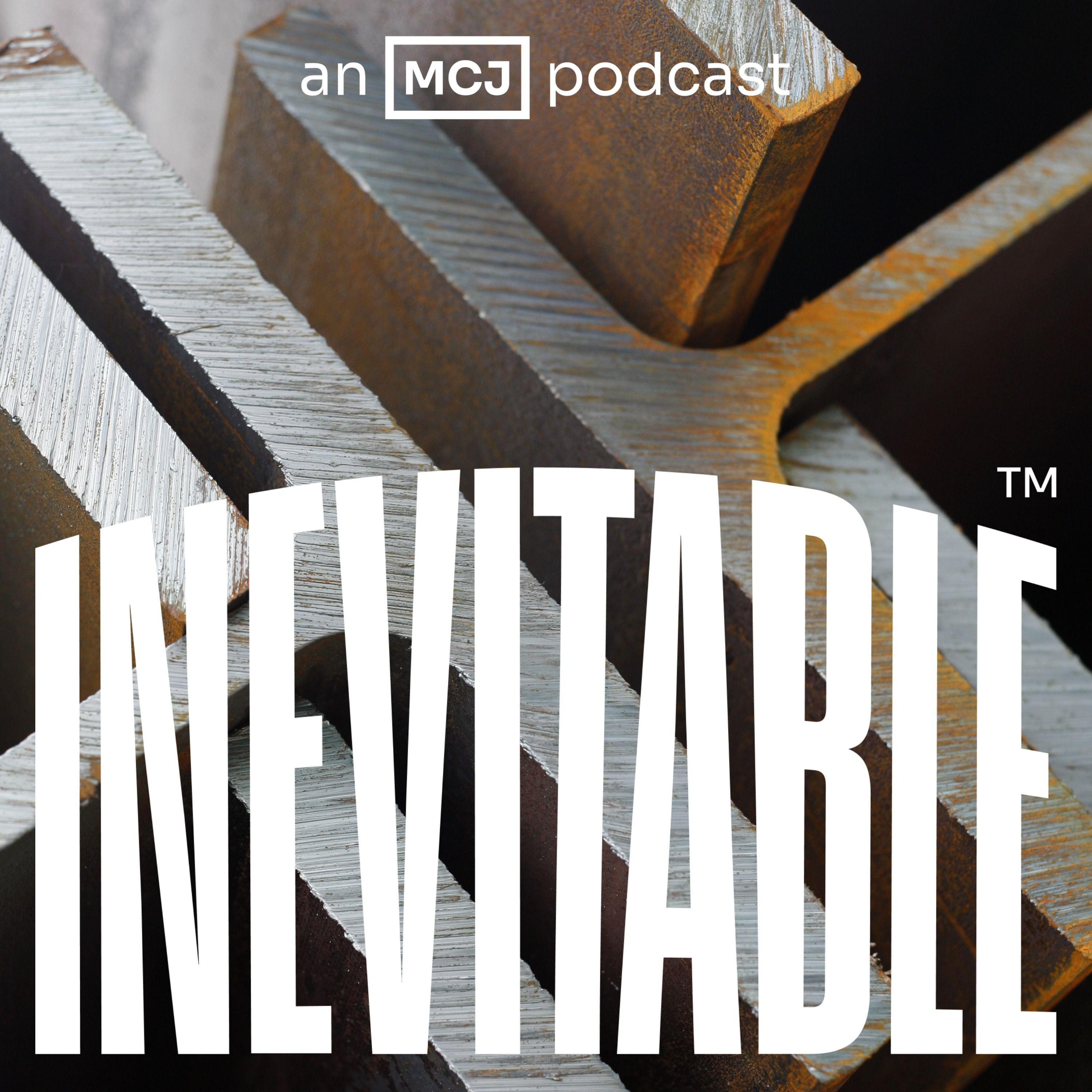
Circular Solutions for Heavy Industry with Cocoon
Jan 16, 202500:33:38Tap to summarizeEliot Brooks is the CEO and co-founder of Cocoon. Cocoon is driving the industrial circular economy, starting with a process that helps the steel industry continue supplying a critical feedstock for cement production. This feedstock is increasingly at risk as steelmaking transitions from coal-based blast furnaces to lower-emission electric arc furnaces. Cocoon was founded on the realization that as industries decarbonize, certain process changes disrupt circular supply chains. The connection between the slag byproduct of steelmaking and the demands of cement production is their starting focus. Earlier this year, Cocoon announced a $5.4 million pre-seed round led by Wireframe, Gigascale, SOSV, and Celsius Industries.In this episode, we cover: [1:33] Introduction to Cocoon[3:13] The challenge steel decarbonization poses for the cement industry[9:56] Cocoon's process for transforming steel slag into a cementitious material[10:51] Eliot’s background and journey to working on this technology[15:46] Cocoon's business model and go-to-market strategy[19:43] Decarbonization pathways for steel and the role of electric arc furnaces[21:10] Cocoon's current technology readiness and near-term deployment plans[22:05] Building industrial expertise at Cocoon[25:07] Comparing the US and Europe as initial target markets[27:57] Cocoon's recent $5.4 million pre-seed funding round[30:00] Eliot’s perspective on bringing expertise from other industries to address challenges in steelmakingEpisode recorded on Nov 20, 2024 (Published on Jan 16, 2025) Enjoyed this episode? Please leave us a review! Share feedback or suggest future topics and guests at info@mcj.vc.Connect with MCJ:Cody Simms on LinkedInVisit mcj.vcSubscribe to the MCJ Newsletter*Editing and post-production work for this episode was provided by The Podcast Consultant
Transcribe →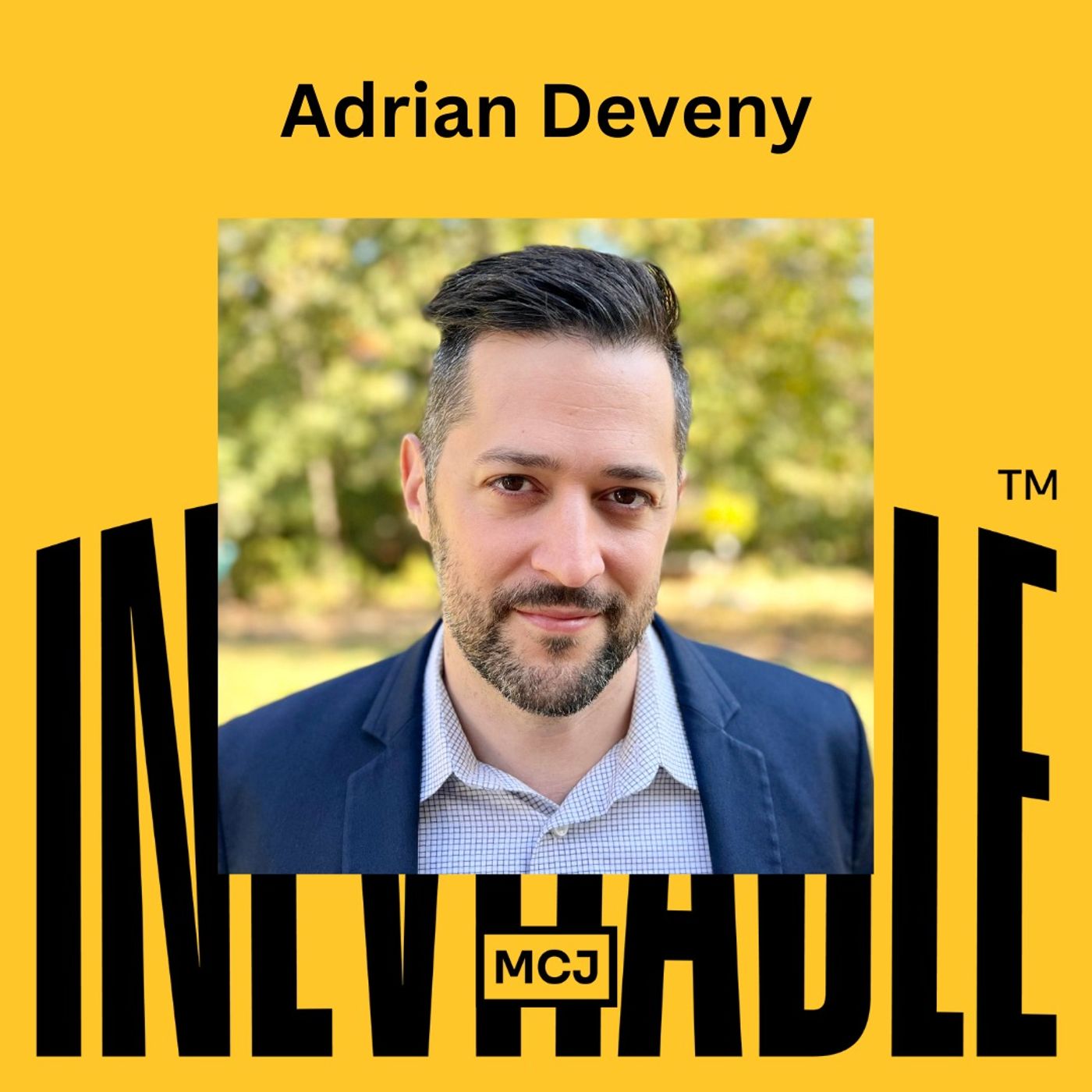
What’s Ahead for U.S. Energy and Climate Policy with Adrian Deveny
Jan 13, 202501:01:40Tap to summarizeAdrian Deveny, former Director of Energy and Environmental Policy for U.S. Senate Majority Leader Chuck Schumer, was a key architect of the Biden-era climate policy agenda, including the landmark Inflation Reduction Act. In this conversation, we explore Adrian's perspective on what to expect from Washington, D.C., in the years ahead, as the federal government transitions to Republican control of the executive branch and both chambers of Congress.We discuss the likely fate of the climate and clean energy provisions in the Inflation Reduction Act over the next couple of years and whether there are viable pathways for new clean energy policy in the near term. Given the ambitious policies rolled out in recent years, Adrian also shares insights on the "unfinished business" he sees as critical. Spoiler alert: he believes we need to more than double our policy efforts to meet U.S. emissions targets. In this episode, we cover: [3:36] Adrian’s background and journey in the Senate[8:26] Republican trifecta’s impact on climate policy[11:47] Regulatory challenges, including Supreme Court rulings[17:48] Challenges in EPA funding and appropriations[19:53] Defending clean energy tax credits under the IRA[24:08] IRA’s impact on manufacturing and the EV supply chain[31:48] Bipartisan opportunities in geothermal, nuclear, and defense projects[45:28] Debates on permitting reform for energy projects[52:00] Future clean energy growth and market forces[55:12] Adrian’s focus on advancing federal climate policyRecommended listening: Crafting Landmark Climate Legislation Russel Kenneth DeGraffEpisode recorded on Nov 20, 2024 (Published on Jan 13, 2025) Enjoyed this episode? Please leave us a review! Share feedback or suggest future topics and guests at info@mcj.vc.Connect with MCJ:Cody Simms on LinkedInVisit mcj.vcSubscribe to the MCJ Newsletter*Editing and post-production work for this episode was provided by The Podcast Consultant
Transcribe →
Wildfires, Floods and Extreme Heat: Why Climate Adaptation Matters with Intact Centre
Jan 6, 202501:01:42Tap to summarizeKathryn Bakos is the Managing Director of Finance and Resilience at the Intact Centre on Climate Adaptation, an applied research center within the faculty of Environment at the University of Waterloo in Canada. Our conversation today is all about the inevitable impacts of climate change, including floods, wildfires, and heat waves in particular, as these phenomena are Kathryn's main focus. We talk about the increasing severity of each of these, the preventative efforts that individuals and communities can each take to avoid their worst effects and how risk and insurance industries are navigating these perils. And lastly, we have a conversation about why adaptation measures have seemingly lagged behind decarbonization efforts in the public consciousness about climate change. In this episode, we cover: [0:00] Overview of the Intact Centre[1:30] Canada’s climate vulnerability[2:44] Kathryn’s career path[4:00] Major risks: flooding, wildfires, heat waves[9:59] Responses to flooding: individuals, communities, industries[16:55] Updating flood maps and using AI[26:07] Wildfire risks: actions for homes and communities[34:53] Wildfire insurance and resilience challenges[37:42] Balancing adaptation and mitigation[41:28] Political will for adaptation measures[45:50] Cost-effectiveness of adaptation[46:41] Don River and Waterpark Project[48:34] Innovation in resilience technologies[51:58] Heat risks and urban solutions[58:34] Final reflections on resilience effortsResources from Intact: Three Steps to Cost-Effective Home Flood ProtectionThree Steps to a Cost-Effective FireSmart™ HomeThree Features of a Wildfire-Ready CommunityThree Steps to Cost-Effective Apartment and Condo Heat ProtectionThree Steps to Cost-Effective Home Heat ProtectionEpisode recorded on Dec 2, 2024 (Published on Jan 6, 2025) Enjoyed this episode? Please leave us a review! Share feedback or suggest future topics and guests at info@mcj.vc.Connect with MCJ:Cody Simms on LinkedInVisit mcj.vcSubscribe to the MCJ Newsletter*Editing and post-production work for this episode was provided by The Podcast Consultant
Transcribe →
Simplifying Clean Energy Procurement with Verse
Jan 2, 202500:47:15Tap to summarizeSeyed Madaeni is the co-founder and CEO of Verse. Verse develops software that helps organizations understand, plan, and manage clean energy. Their platform simplifies the complex clean energy procurement process, enabling companies to meet their emissions goals in the most economical way possible. MCJ is proud to be a repeat investor in Verse through our venture capital funds, including participation in their recent Series A round alongside GV and Coatue. To us, Verse embodies the inevitable shift where large companies must integrate clean energy management as a core business capability.Hyperscalers have led this trend, driven by their insatiable need for electricity to power data centers—a demand that’s only growing with AI. We believe this focus on clean energy will expand across major corporations, much like the widespread adoption of IT and cloud technologies over the past two decades. But enough from us—let’s hear directly from Seyed about what he’s building with Verse.In this episode, we cover: [1:43] Overview of Verse’s mission and focus[2:05] How Seyed founded Verse[4:54] Lessons from Seyed’s time at Fluence[6:02] Insights into the buyer side of the market[10:03] Rising demand on the U.S. energy grid[13:02] Breakdown of Verse’s customer base[17:44] Challenges corporate buyers face with energy and emissions[19:14] Overview of virtual PPAs and additionality[25:14] How Verse helps buyers make energy decisions[27:28] Importance of data in pricing and forecasting[30:40] 24/7 carbon-free energy vs. carbon matching[35:00] The role of batteries in increasing emissions[38:56] How Verse is expanding its offerings[41:15] Understanding Verse’s approach[44:00] Verse’s funding history and goalsEpisode recorded on Oct 17, 2024 (Published on Jan 2, 2025) Enjoyed this episode? Please leave us a review! Share feedback or suggest future topics and guests at info@mcj.vc.Connect with MCJ:Cody Simms on LinkedInVisit mcj.vcSubscribe to the MCJ Newsletter*Editing and post-production work for this episode was provided by The Podcast Consultant
Transcribe →
Sustainable Project Finance with Nexus PMG
Feb 5, 2024Tap to summarizeBen Hubbard is CEO and Co-founder at Nexus PMG, an infrastructure advisory and project development organization dedicated to reducing carbon intensity and enhancing resource efficiency. Ben co-founded Nexus PMG in 2013 after multiple years of working on complex metal refining facilities in locations including Mongolia and Saudi Arabia.In this episode, Cody and Ben cover how Nexus PMG got started, what key risks the firm explores when assessing a project for development capital, Ben's advice for infrastructure-heavy startups as they scale, and how he sees the next five years of infrastructure deployment playing out. And they cover a whole lot in between, including the criticality of feedstocks, the role of insurance, opportunities for private equity, and first-of-a-kind project finance.In this episode, we cover: [01:56]: Ben's early mining experience in extreme climates during the 2007 recession[05:24]: Nexus PMG's founding story[11:51]: Abandoning all fossil-fuel projects and full transition to low-carbon focus[17:01]: Observations on declining investment returns in wind and solar projects[20:39]: Challenges in variability and quality of sustainable materials[27:15]: Turnaround of a distressed biomass plant in British Columbia[30:08]: Launch of Nexus Development Capital for scaling businesses[36:04]: Recent shifts from strategics investing to meet ESG goals[38:17]: Why team dynamics are critical to project success[42:50]: Trend forecasting in sustainable projects: hydrogen, sustainable aviation fuels[46:01]: Ben’s optimism about capital deployment in the next decadeEpisode recorded on Jan 8, 2024 (Published on Feb 5, 2024) Enjoyed this episode? Please leave us a review! Share feedback or suggest future topics and guests at info@mcj.vc.Connect with MCJ:Cody Simms on LinkedInVisit mcj.vcSubscribe to the MCJ Newsletter*Editing and post-production work for this episode was provided by The Podcast Consultant
Transcribe →
Tackling Cold Chain Emissions with Artyc
Nov 9, 2023Tap to summarizeHannah Sieber is the CEO and Co-founder of Artyc, a refrigerant-free battery powered cooling company. In this episode, we cover the cold chain. In short, the cold chain is how goods are transported if they need to be kept in certain guaranteed temperature ranges, with different logistics mechanisms that can maintain goods such as food or medicines, anywhere from room temperature to deep freeze. There are a few reasons why the cold chain is important for climate change. First, you can imagine that all of the refrigerated trucks, warehouses, and storage lockers use a lot of energy. Second, the refrigerants that are used to power the air conditioning or freezers that the cold chain uses are very potent greenhouse gasses with global warming potential that can be many times greater than CO2. Dry ice itself, which is often used to keep things cool, is basically pure CO2.Third, the cold chain today is pretty broken. A significant amount of food is wasted due to spoilage during transport, which itself can generate methane emissions if it's not properly disposed of. Not to mention the embedded emissions in our agricultural processes required to grow it in the first place. Hannah is going to tell us about all of this and how her product at Artyc aims to address these challenges while improving the traceability and accountability of goods in the cold chain. MCJ is proud to be a multiple time investor in Artyc via our venture capital funds.In this episode, we cover: [02:23]: Hannah's background living and working in China[07:44]: Founding EcoFlow with team from DJI to improve drone battery life[10:36]: Hannah's return to school for an earth science degree[12:10]: Her thesis on California power shutoffs and intersection with cold chain[16:06]: Overview of the cold chain, how it works, and where it breaks down[19:29]: Four different cold chains: ambient, refrigerated, frozen, and deep freeze cryo [22:29]: High global warming potential of refrigerants and tradeoff with ozone depleting refrigerants[29:33]: Artyc's mission of building refrigerant-free battery-powered cooling devices[31:26]: Their focus on durability, precise temperature control and stability[33:43]: Imagining an "infrastructureless" cold chain[41:38]: Use cases in healthcare and beyond[43:51]: Artyc's funding journey from grants to recent Series A[45:13]: Hiring and partnerships in developing new productsResource mentioned: After Cooling: On Freon, Global Warming, and the Terrible Cost of Comfort by Eric Dean WilsonGet connected: Hannah Sieber LinkedInCody Simms X / LinkedInMCJ Podcast / Collective / Instagram*You can also reach us via email at info@mcjcollective.com, where we encourage you to share your feedback on episodes and suggestions for future topics or guests.Episode recorded on Sep 28, 2023 (Published on Nov 9, 2023) Enjoyed this episode? Please leave us a review! Share feedback or suggest future topics and guests at info@mcj.vc.Connect with MCJ:Cody Simms on LinkedInVisit mcj.vcSubscribe to the MCJ Newsletter*Editing and post-production work for this episode was provided by The Podcast Consultant
Transcribe →
Startup Series: ByFusion
Mar 23, 2023Tap to summarizeToday's guest is Heidi Kujawa, founder and CEO at ByFusion. ByFusion is solving the global plastic waste crisis by turning unrecyclable plastics into building materials.Plastics are lightweight, durable, strong, low-cost, and built to last. Those qualities are fantastic in reducing the cost and weight of shipping and packaging items. And those qualities are equally terrible when it comes to waste. Not to mention, virgin plastics come from fossil fuels and are providing an increasing amount of the value of a barrel of oil. ByFusion is looking to take advantage of plastic's positives while obviating its negatives by turning waste plastic into durable building blocks.Heidi and Cody have a great conversation about her background, the different types of plastics, and what's recyclable and what's not (side note: we can all probably do better when it comes to recycling). They also talk about how ByFusion works with municipalities and waste management companies to source materials, what the company’s ByBlocks look like, who is building with ByFusion and what they are building, the evolution of plastic waste credits (which are similar to carbon credits) and how Heidi is financing the company and its product development. This is a jam-packed episode and we hope you enjoy it! In this episode, we cover: [2:09] Heidi's background and how it fed her experience building ByFusion [4:31] How she decided to focus on plastic waste[6:58] An overview of ByFusion and the company's ByBlock product [9:44] Recyclable vs non-recyclable plastics [13:34] Different use cases for ByFusion's construction materials [17:14] ByFusion's municipalities customers, unit economics, and who's paying [21:36] The company's business model [23:51] The plastic diversion/credit market [25:43] ByFusion's upcoming projects [28:34] State and country-wide policies around plastic and their implications [30:50] The company's financing to date [34:37] Where ByFusion needs help todayGet connected: Cody Simms Twitter / LinkedInHeidi Kujawa / ByFusionMCJ Podcast / Collective*You can also reach us via email at info@mcjcollective.com, where we encourage you to share your feedback on episodes and suggestions for future topics or guests.Episode recorded on January 18, 2023 Enjoyed this episode? Please leave us a review! Share feedback or suggest future topics and guests at info@mcj.vc.Connect with MCJ:Cody Simms on LinkedInVisit mcj.vcSubscribe to the MCJ Newsletter*Editing and post-production work for this episode was provided by The Podcast Consultant
Transcribe →