Podcast
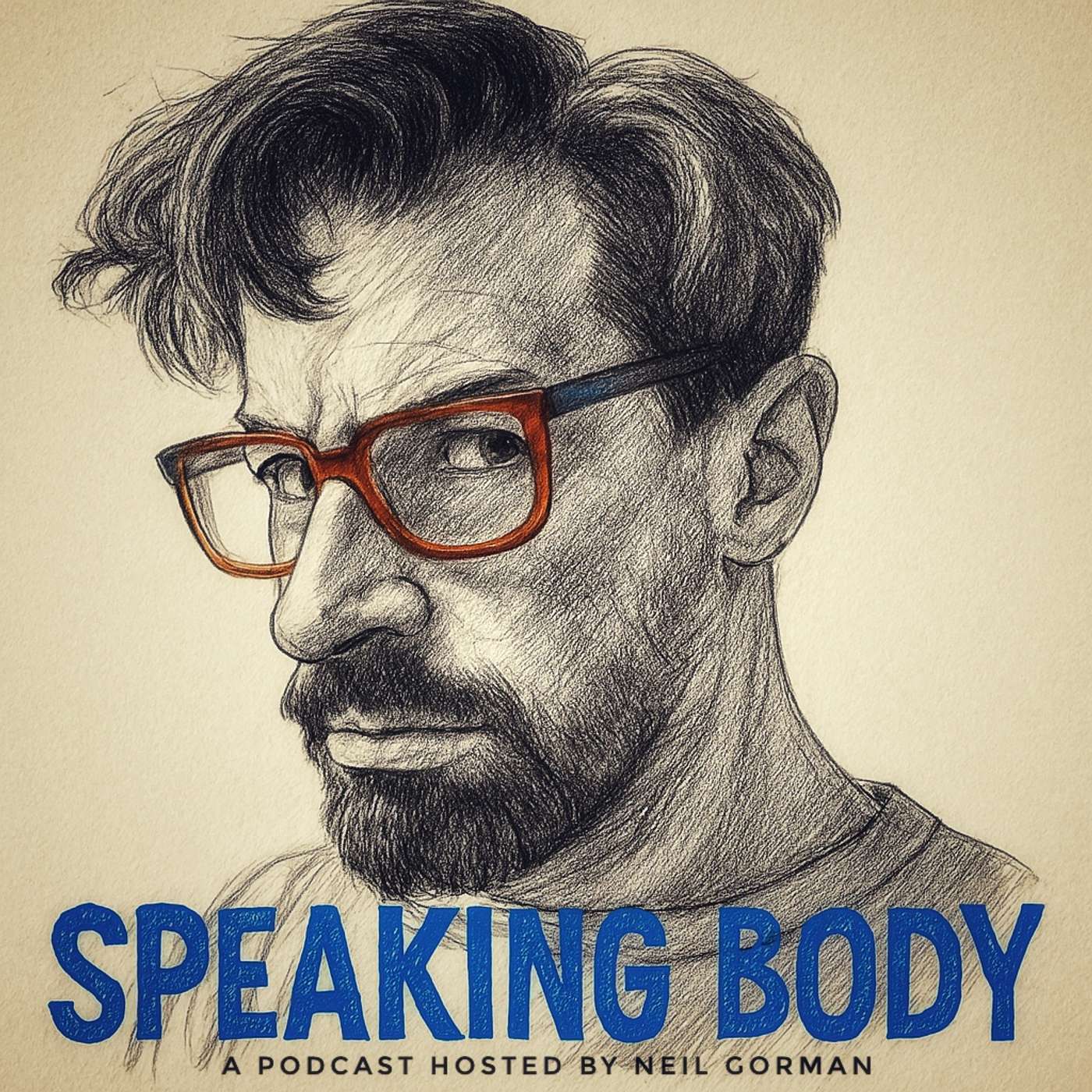
Speaking Body
Hosted by Neil Gorman · EN
From the clinic to culture, where psychoanalysis meets the everyday.
16episodes
Episodes
Newest firstAll episodes
Psychoanalytic Curiosity & Not Knowing
Mar 2300:16:02Tap to summarizeIn this short solo episode of The Speaking Body Podcast, I (Neil Gorman) try a new format and invite listeners to email feedback about whether they like it. I explain a key difference between how psychoanalysis is practiced versus many forms of psychotherapy, coaching, or other helping relationships: when someone seeks help, they often engage in transference by supposing the helper has knowledge, authority, and power. In many cases, the helper accepts this supposition and provides advice, tools, or a treatment plan, which can be helpful. By contrast, I argue that psychoanalysts do not take up this supposition of knowledge; instead, they adopt a position of not knowing and respond with curiosity, offering hypotheses and questions rather than prescriptions. I close by noting this stance is essential to psychoanalytic work and share where to learn more at speakingbody.substack.com.---Table of contents00:00 Welcome and Format00:37 Big Idea Setup02:02 Psychotherapy Side Explained03:34 Transference and Authority05:32 Helper Model Benefits06:46 Switch to Psychoanalysis07:58 Not Taking Transference09:19 Curiosity Over Knowing11:41 Interpretations as Hypotheses13:02 Continuum Not Binary13:54 Key Takeaway and Wrap15:17 Thanks and Where to Find
Transcribe →Relaunch: InForm is now Speaking Body
Feb 1800:12:50Tap to summarizeIn this episode, I announce that I’m rebranding and relaunching my podcast, previously called the Informed Podcast, as Speaking Body. I explain that Speaking Body will be both a podcast and a website (speakingbody.com) that will archive my writing, offer a newsletter, and sometimes include video episodes on YouTube, while keeping the same RSS feed for subscribers.Going forward, I will focus less on applying psychoanalytic theory and focus more on psychoanalysis and on how psychoanalytic work leaves the consulting room and affects everyday life and subjectivity. While I will sometimes use specialized Lacanian terms (e.g., jouissance, discourse of the master, object a, imaginary/symbolic/real, drive), I aim to restate key ideas in more commonplace language whenever possible.
Transcribe →InForm: Peter Rollins on Psychoanalysis, Theology, Community, and the Work He Does
Mar 6, 202401:08:07Tap to summarizeIn this episode of the InForm: Podcast, I speak with Peter Rollins, the man behind pyro-theology, the Wake festival, the Spark retreat, Atheism for Lent, and many more things that can provoke all sorts of interesting experiences and elaborations. I first became aware of Pete's work many years back as I was attempting to build up my own understanding of Lacan. I don't remember exactly how it happened, but I found a video of him discussing Lacanian ideas, in which he explained them in ways I found intelligible and useful. This led me to watch more of his videos, listen to his podcast, and then read his books. Today, what interests me about Pete's work is the way that he goes about building engaged communities that work and struggle together to acknowledge, experience, and communicate about the lacks and antagonisms that are at the center of human subjectivity (or the human condition if you prefer that language), which is the main thing I speak with him about in this informal but hopefully informative conversation.We do, of course, go in other directions as well; we even tell a few jokes, which I hope you all find amusing. One last thing: near the end of the interview. REFERENCED: 1. Pete's Patreon & his Website2. Todd McGowan's YouTube3. Analysis Laid Bear 3. The Aims of Analysis
Transcribe →InForm: Isolda Alverez Talks about the Psychoanalytic Clinic of Freud, Lacan & Today
Jan 31, 202401:02:46Tap to summarizeOn this episode of InForm:Podcast, I speak with practicing Lacanian psychoanalyst Isolda Alverez about the way the aims of the psychoanalytic clinic have changed from Freud's time through Lacans and into the present day.Recommendations: 1. Band: Yo La Tango (Spotify, Apple Music) Album: "And Then Nothing Turned Itself Inside Out" (Spotify, Apple Music)2. Lucifer (TV Show on Netflix, Comic) 3. The Unbearable Lightness of Being (Amazon)
Transcribe →InForm: Re-Release/Cross post From78 Interview with Jason from the Regrettable Century
Jan 18, 202401:53:22Tap to summarizeThis episode of InForm:Podcast is a re-release and crosspost of an interview I did as part of From78 (another interview podcast). It was originally released in 2020. At that time, I was still figuring out aspects of podcasting, so the audio is not as good as I make it today. Be that as it may, the audio is OK, and the interview is (I think) good.
Transcribe →InForm: An Interview with Rob Bell
Jan 4, 202401:14:17Tap to summarizeOn this episode of InForm: Podcast, I interview Rob Bell about his newest book, "Where'd You Park Your Spaceship." We talk about psychoanalysis, dreams, talking to people who work in stores, surfing, and lots of other stuff too. Referenced: The RobCast (Rob Bell's podcast) Peter RollinsHelene VoglesingerThe Outlaws (Amazon Prime video) Tao te ChingJim & Andy: The Great Beyond (Netflix)Station 11 (Max)
Transcribe →InForm: The State of the Podcast...
Jan 4, 202400:13:44Tap to summarizeThis episode is the first episode in season 5 of InForm: Podcast. It is short because it's just me giving some updates, announcements, info on what I want to do with the podcast in the future, etc. Because this episode is what it is, I'm also releasing episode 38 --which I think is a very interesting interview-- at the same time. Go listen to episode 38!
Transcribe →
InForm: Psychoanalytic Politics w/ The Regrettable Century | Pt. 3
Jun 28, 202301:33:25Tap to summarizeIn today's episode of the InForm: Podcast Neil covers chapter two of the book Psychoanalytic Politics by Sherry Turkle with Chris & Jason from the Regretable Century... I recorded this a long time ago. Sorry it took me so damn long to put it up.
Transcribe →InForm: Nathan Gorelick on psychoanalysis, psychedelics, psychosis, delusions, science, & mysticism
Jun 14, 202301:50:31Tap to summarizeOn this episode of InForm: Podcast, Neil talks with Nathan Gorelick about psychoanalysis, psychedelics, psychosis, delusions, science, & mysticism. The result is a long, hopefully informative conversation. Nathan is Term Assistant Professor of English at Barnard College in New York. He holds a Ph.D. in Comparative Literature from the State University of New York at Buffalo, and he has completed the six-year cycle of the Training Seminar in Lacanian Psychoanalysis with Gifric in Quebec City, Canada. He has published widely on the theoretical and historical intersections of psychoanalysis with diverse topics including ecocide and catastrophe fetishism, psychedelic drugs, Continental philosophy, the Haitian Revolution, Islam and Islamophobia, and the theory of the novel. His first book, The Unwritten Enlightenment, sets out a new theory of the relation between literature, ideology, and the unconscious, and is forthcoming early in 2024 from Northwestern University Press.REFERENCED DURING THE EPISODE: 1. Žizek video on ideology 2. Freud's -- Future of an Illisuion, Civilization & its Discontents, Moses & Monotheism, Analysis Terminable & Interminable. 3. Otto Rank -- The Trauma of Birth 4. Éric Laurent -- Guiding Principles for Any Psychoanalytic Act 5. The Lacanian Review #7 "Get Real"
Transcribe →InForm: Jared Elwart on Reading Sci-Fi & Thinking about Psychoanalysis
May 17, 202201:14:49Tap to summarizeWARNING: I drop the F-bomb in this episode, and we talk about sex. There is an explicit tag for a reason! INTRO: In this episode of the InForm Podcast, I talk with Jared Elwart about how reading science fiction makes him think about psychoanalysis and how thinking about psychoanalysis influences how he reads Science Fiction. CONTENT:We discuss two books and one film. The book The Left Hand of Darkness by Ursula K. Le Guin (We also reference The Dispossessed and The Lethe of Heaven) The book Axiom's End by Lindsay Ellis The film Everything Everywhere All At OnceWe also mention: The Rebel by Albert Camus The Human Crisis by Albert Camus Jared and I have a free-flowing conversation about how these three works might intersect with each of our thinking in and through psychoanalysis.
Transcribe →