Podcast
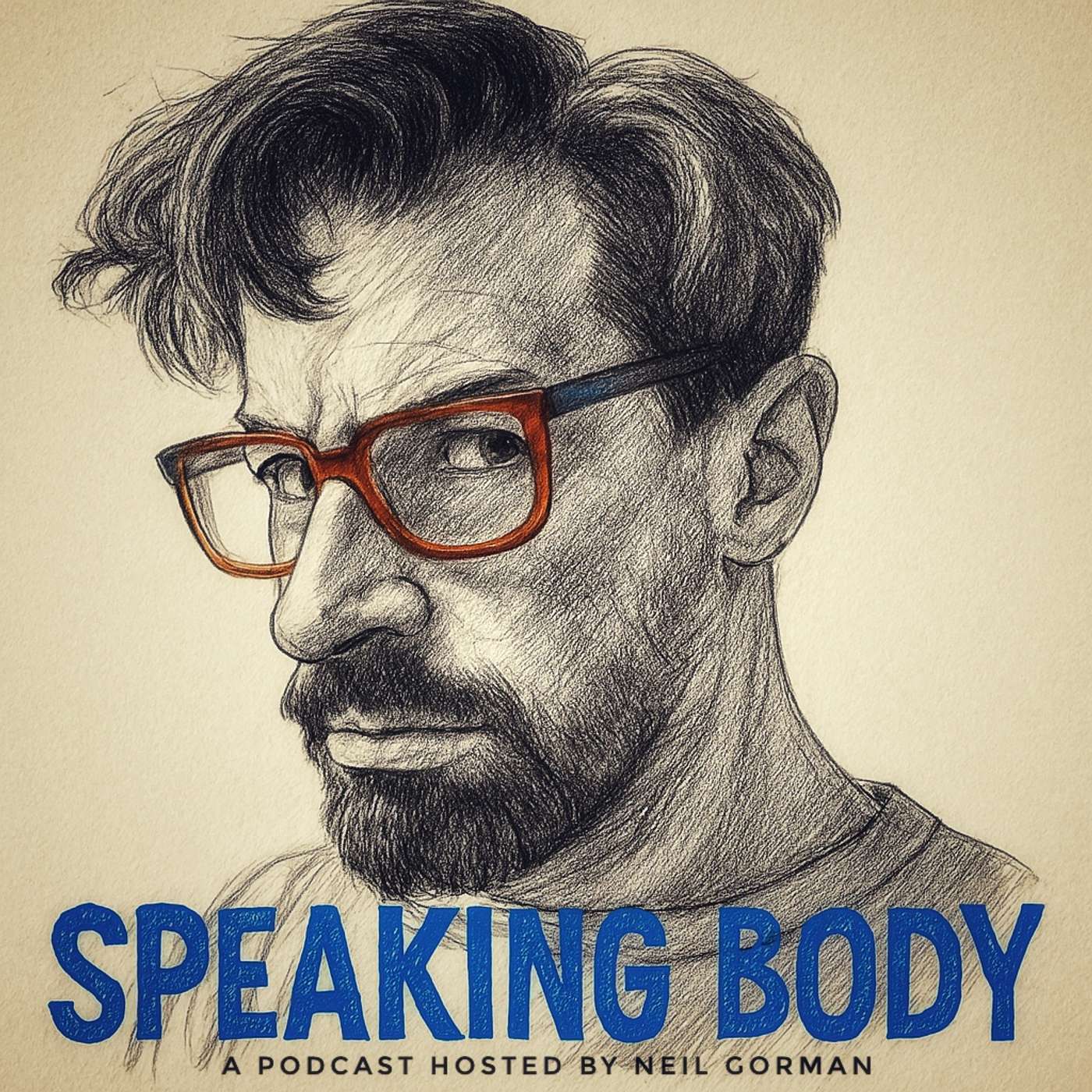
Speaking Body
Hosted by Neil Gorman · EN
From the clinic to culture, where psychoanalysis meets the everyday.
16episodes
Episodes
Newest firstAll episodes

InForm: Michael McAndrews on psychoanalysis for people who don't know they can have it
Apr 11, 202201:46:15Tap to summarizeINTRO: On this episode of the InForm: Podcast I talk with psychoanalyst Michael McAndrews who practices out in Colorado. Michael's practice is unique for several reasons. The first is that he provides psychoanalysis to people who normally would not have the ability to afford mental health services. The second is that he provides services to people who have lost a baby, child, or pregnancy. The conversation was very informal, and hopefully very informative. REFERENCES: Lacanian CompassFreud's Free Clinic by Elizabeth DantoWinnicott's Primary Maternal PreoccupationCPCTSurplus Jouissance Projects [S][J][P]
Transcribe →InForm: Psychoanalysis in the Classroom with Ryan Engley
Mar 22, 202201:24:23Tap to summarizeIn this episode of Inform: Podcast I interview Why Theory's Ryan Engley about psychoanalysis in the classroom. (Tod McGowan, the other half of Why theory was interviewed about this same topic on an earlier episode of InForm.) Our conversation ranges all over the place, but one of the consistent themes is the idea of sustaining the analysand's/student's desire/curiosity. Some of our references include: Lacan's Seminar 17 T.R. Johnson's book The Other Side of Pedagogy The Pedagogy of the Oppressed The TV Show: Peep Show, and (of course) Mad Men
Transcribe →InForm: Interview with Peter Rollins
Dec 21, 202101:30:15Tap to summarizeInForm Podcast: 052The episode you're about to listen to is a conversation with Peter Rollins, a thinker, writer, podcaster, and community organizer who works at the intersections of psychoanalysis, theology, and philosophy.Before getting started I'd like to say the following: Getting to do this was something that was very exciting for me because I've been reading Pete's books, listening to his podcast, and watching his YouTube videos for many years, and his work has had a significant influence on me. The conversation was long and we talked about lots of different things including, Pete's own analysisAttempts to hysteriasize liturgical structures Productively mal-adaptive symptoms (or sinthomes) The importance of lack or absence The impact of Hegel on philosophy, religion, and psychoanalysis Community organizingPsychoanalytic schoolsThe pass And much more
Transcribe →InForm: Todd McGowan & Psychoanalysis in the Classroom
Apr 27, 202101:32:00Tap to summarizeIntro: Psychoanalytic superstar Todd McGowan makes his second appearance on the InForm: Podcast. In this episode (after Neil makes an error), we talk about psychoanalysis in the classroom. Longer Show Notes: At the top of the show, you hear Neil realizing he has forgotten to hit record after we have all been talking for 25 min. But after that, you can hear Neil, Jared, and Todd discuss: How Todd started to get interested in psychoanalysis as a graduate student and the impact of reading Žizek's The Sublime Object of Ideology had on his formation as a psychoanalytic thinker and teacher. Does psychoanalysis need to be marginal in the classroom? Staying with the 99 & letting the one go. What it is like to motivate students, and one's own children... or not motivate them. Trying to teach from the discourse of the analyst. Teaching fro the discourse of the hysteric (or perhaps the obsessional). Grading practices. D&G's Anti-Oedipus as a text that might be more in line with Lacan than people think. Transference to institutions. And other stuff that I can't remember.
Transcribe →InForm: Autism & Psychoanalysis w/ Dr. Leon Brenner
Nov 13, 202001:41:16Tap to summarizeIntro: On this episode of InForm:Podcast we talk with Dr. Leon Brenner about his forthcoming book The Autistic Subject: On the Threshold of Language, which is part of the Palgrave Lacan Series edited by Calum Neil and Derek Hook. Dr. Leon Brenner is a research fellow at the University of Potsdam and lecturer at the International Psychoanalytic University, Berlin. He is a training analyst, studying member of the APPI and a founder of Lacanian Affinities Berlin (laLAB). His latest book on the subject of the psychoanalysis of autism is called The Autistic Subject: On the Threshold of Language, where he presents a novel account of autistic subjectivity from a Lacanian psychoanalytic perspective.About Leon and his experience as an analyst About why he did the work to write the bookThe argument (i.e. the point) of the bookThe history of autism as a psychosis & as a way of being-in-the-worldNeurosis, psychosis, autism, & the Name-of-the-FatherWho the book is written forExtras: For those who are interested in hearing Leon talk more about psychoanalysis and autism, you can do so by watching this video, or this one. You can buy Leon's book here. ----These are the links that can be added to the info:Dr. Brenner's personal blog and website:leonbrenner.comInstagram:https://www.instagram.com/leonbrennercom/Twitter:https://twitter.com/leonbrennercomLacanian Affinities Berlin website:lacanberlin.comThe Autistic Subject: On the Threshold of Language:https://www.palgrave.com/gp/book/9783030507145Recommended works by autistic writers and artists:Baggs, A. [silentmiaow] (2007, January 15). In my language. [Video File]. Retrieved from https://youtu.be/JnylM1hI2jc Grandin, T. (2006). Thinking in Pictures, Expanded Edition: My Life with Autism. New-York: Vintage.Sinclair, J. (1993). Don’t Mourn for us. Our Voice. Autism Network International. Retrieved from http://www.autreat.com/dont_mourn.htmlTammet, D. (2007). Born on a Blue Day: Inside the Extraordinary Mind of an Autistic Savant. London: Hodder & Stoughton.Williams, D. (2015). Somebody Somewhere: Breaking Free from the World of Autism. Portland: Broadway Books.
Transcribe →InForm: Ryan Engley of Why Theory
Sep 25, 202001:27:08Tap to summarizeINTRO: On this episode of InForm:Podcast Neil & Jared sit down and talk with Ryan Engley from the Why Theory Podcast about ordinary psychosis and the classroom as a psychoanalytic space. REFERENCES: T.R. Johnson's book "The Other Side of Pedagogy" (Amazon) Some info on Ordinary Psychosis (Text 1, Text 2, Text 3, Text 4, Text 5) Bruce Fink's book "A Clinical Introduction to Lacanain Psychoanalysis: Theory & Technique" (Amazon) Heathers (IMDB) 1408 (IMDB) Jacob's Ladder (IMDB)Intimate Strangers (IMDB, Prime Video)
Transcribe →