Loading summary
Transcript66 lines
- [00:00]
A
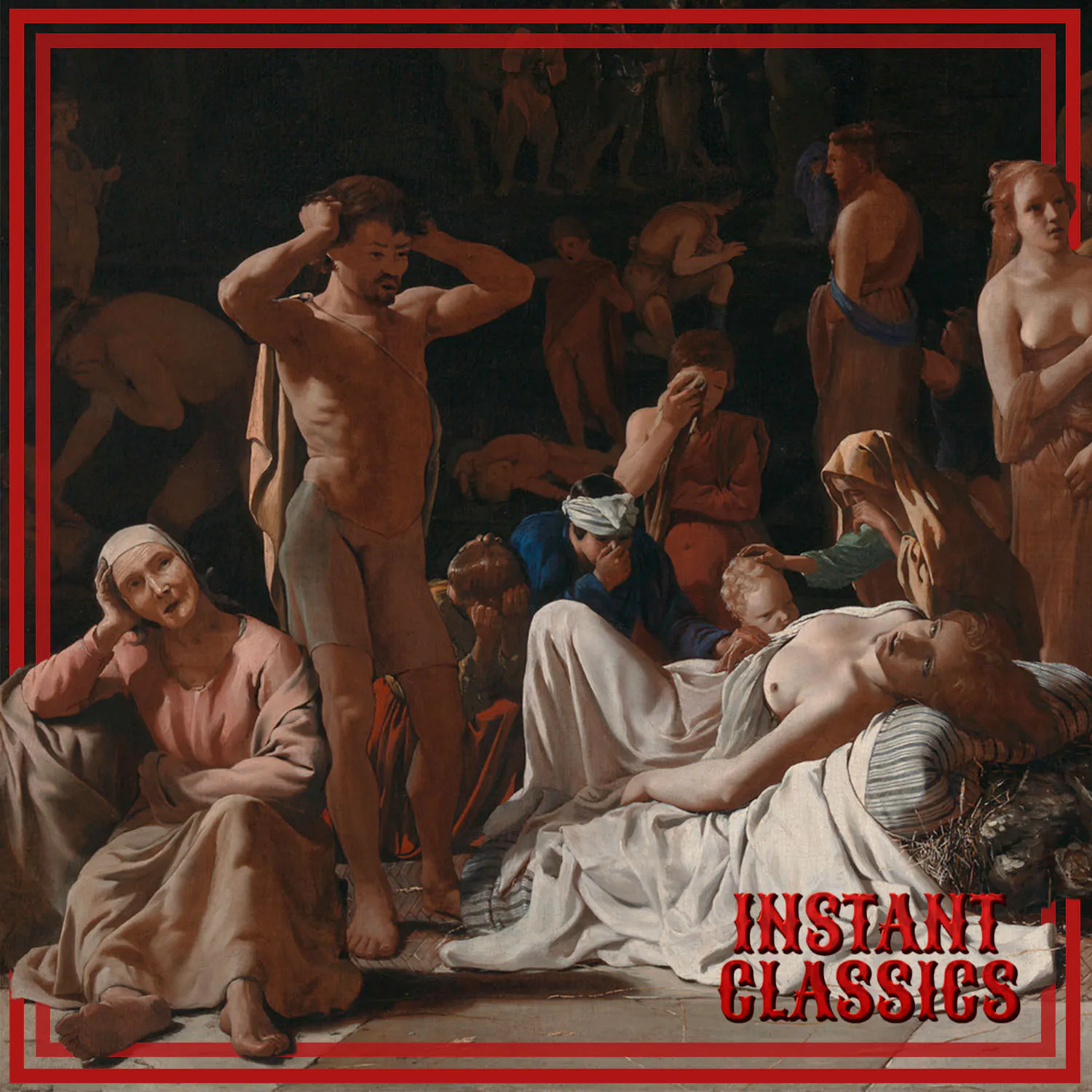
It started with a cough or a sore throat or fever. And then rather than improving, symptoms worsened. Pustules broke out on people's skin, people's throats started bleeding, people got intolerably thirsty and hot and then they got horrific diarrhoea after that. In most cases, people died and within a couple of years, about a third third of the population was gone.
- [00:28]
B
Now, we often think about plague as a medieval affair. Church bells tolling, cries of bring out your dead. Crosses marked on doorways. But this plague took place in Athens in the middle of the 5th century BCE. Now, Athens at that point is a democracy and we think of its theatre. We think of blokes, the discussing philosophy with the occasional woman lad in, and we think of honky athletes chucking their discuses.
- [01:03]
A
So when you read about a horrific plague, the collapse of social order, and all of this happening in the middle of a calamitous war against the Spartans, you really start to wonder, is this really the sweetness and light we associate with the so called golden age of Athenian culture?
- [01:21]
B
In. In this episode we're going to explore how much we really know about the plague of Athens, mostly using the words of the contemporary historian Thucydides. As ever, we'll be asking bigger questions though. What does the reaction to the plague say about Greek society? And how is it different from accounts of other plagues we have through history? Now, during the COVID pandemic, there were certainly a good few cocksure know alls and maybe including us who said that Thucydides had a lesson for the 21st century. Well, we're not sure about that exactly, but six years after the lockdowns in Europe and America, we think he's well worth another look. This is Instant Classics, the podcast that uncovers the ancient stories still shaping the world today. I'm Mary Beard.
- [02:25]
A
And I'm Charlotte Higgins. Each week we dive into the myths, the dramas and the characters of the classical world to discover what they still mean to us. Now this episode, the great plague of Athens.
- [02:50]
B
Pepsi Prebiotic Cola in original and cherry vanilla that Pepsi taste you love with
- [02:57]
C
no artificial sweeteners and 3 grams of prebiotic fiber.
- [03:01]
B
Pepsi Prebiotic Cola.
- [03:03]
C
Unbelievably Pepsi.
- [03:05]
B
Okay, Charlotte, we are in the second half of the 5th century BC and the leading powers in the Greek speaking world were Athens and Sparta. And during this period they were at war with each other for basically 27 years between 431 and and 404 BCE in a series of conflicts that we usually group together under the title the Peloponnesian War. And they're described, these wars are famously described by the historian Thucydides, who was born about 460 and actually was a general in the war itself before, after a military misfortune, was exiled in 4243 BC either he was a victim of scapegoating or he was hopelessly incompetent. And he then writes this story of the war, this history of the war from exile outside Athens, but having been a participant of it up to that point, right?
- [04:33]
A
And he is, you know, in terms of the history of history writing itself, he's just a super, super important figure because he foregrounds, doesn't he Mary, the power of eyewitness accounts. He strips out or says he's stripping out sort of fanciful elements and ideas of the supernatural. He situates these wars or this war in the world of human agency. He tells us that he's only writing about stuff that he actually properly knows a lot of stuff that he's literally seen himself. And because he's a military man and he writes with this kind of military analytical eye, he is the love is much quoted to this day by military leaders and analysts. But I think it is really worth saying just, even just here that, you know, take that with a pinch of salt. Just because someone's saying that they are deeply objective and they seem extremely straightforwardly analytical, doesn't mean that they haven't got their own agenda.
- [05:48]
B
There's hardly a historian in the world who says, look, I'm really not objective at all, right? You know, this is just my ideology here. So we have to be careful, I think, about fetishizing Thucydides as the origin of objective history. And he is like you say, he's taught in military academies even now. And you know, the idea is that here we've got someone who is as hard headed as you can get about power struggles in their world. And in Thucydides case, it's the power struggle between Athens and Sparta. And I'm sure that we're going to come back to Thucydides in another episode and look a bit harder. That claim to being the most analytically objective of all historians there ever been, right? But this week, I mean, we're just going to try to zoom down into one episode in Thucydides history and think about what he tells us about this great plague of Athens at the beginning of the Peloponnesian War. Now we ought to say at this point he's not the only ancient historian to mention the plague There are later Greek historians who do too, but mostly we think they get their account. They draw very heavily on Thucydides. And Thucydides is the contemporary witness of it, right?
- [07:35]
A
And he actually gets the plague. He tells us that he gets the plague. He recovers from the plague. So he is as close to this as you can possibly be. But another, I would say another kind of just little warning is his Greek, as I know from bitter, bitter experience, is incredibly difficult. And translating Thucydides is very hard.
- [08:02]
B
And I don't think we can stress this difficulty, you know, hard enough. And I think there isn't anybody. I mean, I think the more people know about Thucydides, the people, people who have really kind of made Thucydides within Classics their life's work, they are the people who say, look, some bits of this are close to ununderstandable. Thucydides is not only parading his own objectivity, he's also. He's reveling in the difficulty of language. And that underlines almost everything we ever have to say about Thucydides.
- [08:40]
A
That's the kind of the background to the plague, the plague itself, this outbreak, this epidemic of disease. He tells us it starts at the beginning of the second year of the Peloponnesian War, that is in 430 BCE and it's just Athens is invaded by the Spartans, or the territory of Athens is invaded by the Spartans, and almost simultaneously, this disease breaks out. Thucydides tells us that it has spread ultimately from Ethiopia. It spread through Egypt. It has affected quite a lot of the Persian Empire, and now it has come to Athens. And he gives us an incredibly detailed account of symptoms of this disease. And it's really interesting to put his description of the symptoms alongside contemporary medical texts, because medical texts were, you know, becoming a big deal in Greek culture. We've mentioned some of these. Back in our Q and A seasonal Q and A episode, we talked about this collection of medical texts called the Hippocratic Corpus. And this is a sort of beginnings, I suppose, would you say kind of scientific again, taking the gods out of the equation and doctors kind of writing about symptoms and diagnostic thinking from a kind of, you know, quasi scientific perspective. But anyway, the he. He really goes to town on this detailed description of. Of the symptoms, which. Horrible. We described a bit in the introduction. But I mean, you know, you think it starts off okay. You think, okay, it starts with a cough and a sore throat. So much so far, so Covid. And then it gets really quite sort of baroque I'd say, you know, this bleeding throat and tongue, appalling foul breath, vomiting. And people vomiting. So they're just vomiting bile, skin breaking out into pustules. And then this thing that people. Their skin didn't feel hot to the touch, but they themselves felt so intolerably hot that they couldn't. And saw that they couldn't have any clothing, they couldn't have anything touching their skin. They just wanted to throw themselves into water and they were kind of wandering around the streets naked. I mean, it's really quite a horror show.
- [11:12]
B
In fact, the bit that always makes me kind of want to cover my eyes and not think about it is the idea that body parts fall off the disease. At a certain point, quite late in the story, the disease attacks the body's extremities. So people lose their toes, people lose their genitals because they're attacked by this plague, whatever it is.
- [11:44]
A
It's really horrible. It's like there are almost three stages. The first stage is you could die from the initial fever. The second stage is you could die from weakness caused by this horrific vomiting and diarrhea. And then if you survive all that, that's when your fingers and toes and genitals could start. It's just horrific.
- [12:09]
B
Some people do survive, and Thucydides is one of those who did. But he also notes, and I think this is quite interesting, he's got some sense that proximity makes you more likely to get the disease, so that carrion birds who come and peck on the corpses, they get sick, but people who tend the sick also get sick. Now, there isn't actually, in classical Greece, a kind of a theorized idea of infection as we have it. But Thucydides clearly sees the bottom line there, that the closer you get to someone who's got it, the more likely you are to pick it up. Now, that seems to us blindingly obvious, but actually, that's a very important bit of new radical thought about how you get or avoid disease.
- [13:13]
A
Yeah, no, absolutely, totally. So it's all based on the. He can see that it's spread and where it spread from. But we're in a world without germ theory. You know, this is. This is way before, way before kind of ideas around bacteria. And I mean, none of this was available. So this is all based on observation. And I think, you know, crucially, there are other writers write about plagues in ancient Greek culture. I mean, I'm talking about plagues in literature, in fiction, effectively. Not that they would have defined it as fiction as such. But there is a plague in Homer's Iliad. Right at the beginning of Homer's great epic, the Iliad, the Greeks are hit by plague and a lot of them die. In Sophocles play Oedipus the King, which is roughly contemporaneous with Thucydides. That play begins with a plague afflicting the city of Thebes. Now, so there are plagues around and plagues described. But the crucial thing is that in Sophocles and in Homer, those plagues are said to have come directly from gods as some kind of divine punishment. And in Homer's Iliad, literally, Apollo, yeah. Gets out his bow and arrows and sends the plague to the soldiers. And in Thucydides, there's none of that. Right. This is taken away from the world, or at least directly it's taken away from the world of the gods.
- [14:59]
B
It's really worth going back and looking at some of those other accounts. Love. And I used to be a real bore during COVID because I used to say, thinking back to the Iliad, what is the first event in world. Well, what is the first event in Western literature? Well, it's what happens at the beginning of Homer's Iliad, the earliest literature, literature of the West. And what is it? It's a plague, right?
- [15:25]
A
Yeah. But before anything else happens, and it is the plague, it's the thing that causes the wrath, you know, when we talk about the wrath of Achilles, which is the thing that happens in the Iliad, that only happens because there's a plague. And wasn't it interesting how we were much, us classicists were like, suddenly much more attentive to the idea of this plague when Covid. When Covid happened.
- [15:47]
B
You're absolutely right, aren't you? That Thucydides account here is certainly at first sight diametrically opposed to Homer or Sophocles, divine accounts of plague.
- [16:02]
A
I mean, partly because it goes into so much detail about the symptoms which are not. Which doesn't really happen in those other accounts, those fictional, as it were, accounts. And I think for this reason, because there's so much quasi medical detail, it has always seemed super solvable. Like the question of what is this plague? Has obsessed, I would go as far as to say has obsessed scholars, particularly medical and scientific scholars looking at this text. And, you know, the question has always loomed, what is the. This disease? We've got a list of symptoms. We must be able to diagnose it. And I can tell you, Mary, and you know this too, the list of things that this set of symptoms has been said to represent is almost infinite. I mean, there are so many things that it's been said to be, so many options.
- [17:01]
B
And there are different fashions in what people think it was. I remember when I was a student, we were sort of told it was measles. It doesn't now look very much like measles to me, but yeah, measles, smallpox, bubonic plague, typhus, and a whole lot of less quotes. Familiar diseases which people have picked out because they seem to explain some or some particular symptoms that Thucydides describes. That there's a disease called tularemia or rabbit fever which appears to cause the same sort of fever and ulcers that occur in Thucydides account, for example.
- [18:02]
A
And I think the measles maybe because the sort of painful rash, but also I think it could send you blind in Thucydides, I mean, it also. Ebola has come up as a, as a, as a possibility. Kind of very complicated kinds of flu have come up. Rift Valley fever. I mean, goodness knows it's nowhere near the Rift Valley. But anyway, there's sort of, you know, things caused by mosquito bites and then
- [18:29]
B
there's sort of strange kind of hybrid diseases, so that it's, it's, it's flu, it's influenza, but it's kind of got mixed up with staphylococcal infection to produce the kind of symptoms that Thucydides describes. And it's, I mean, classicists without medical knowledge combined with doctors without much classical knowledge, have had a field day in posthumous diagnosis. And, you know, I have to say, just, you know, remind us. It, it's not only Thucydides's plague that they like to do that in. You know, you get any symptom of anything in ancient literature and people are always homing in to say, so what disease did he really have? You know, you know, what was Caligula's precise mental health condition? You know, why did the empirical Audius have a limp, et cetera, et cetera. So, but it's the detail of Thucydides that makes it cap all the others in terms of these diagnosis games.
- [19:41]
A
Typhoid was supposed to be the definitive answer because people did DNA testing on a mass grave back at, but sort of 25 years ago. But actually that's all fallen apart now pretty much. I think, like, I think we're still in the world of nobody. Nobody knows what this disease was, although there are many theories. But I kind of feel like this is. So it's Just incredibly revealing in itself that people, that it tells us the nature of the symptoms is very tempting because they feel so precise that they must somehow be. There must be a diagnosis out there. But I think the reasons why it can't be diagnosed, I mean, I think it can't be. I mean, I would lay a bet on nobody like really solving this in my lifetime. And I think there are loads of reasons for that, aren't there, Mary? I mean, I mean the disease, the nature of the disease could have changed over years. The Greek is unbelievably difficult.
- [20:43]
B
Yes. I mean, I think that this is where difficulty of these synoduced Greek actually has a real practical implication here. And you, you can spot people trying to rationalize Thucydides Greek. So at one point Thucydides said people had very hot heads. Now some translators think that's not a very good early symptom of a disease. So they say they had a headache, right? Started with a headache. Now that is not what thed says actually. So in part what we're trying to do is both understand the Sydney's Greek and also make it make sense in terms of our view of what symptoms are. We got this kind of this sort of diagnostic filter of what we are looking for in a disease. And of course that differs wildly from, from culture to culture and time to time. I always wonder what somebody in 2000 years would make of the question that we often ask, where is this pain? On a scale of 1 to 10,
- [22:04]
A
a question I can make no sense of at any given time anyway.
- [22:09]
B
Actually, the conversion to, to language of bodily symptoms in a sense really, I think undermines the possibility of ever getting to the, to the bottom of what theseydoches is talking about. Because he is trying to construct a symptomology in his own terms which just don't fit us.
- [22:35]
A
I think it's such a great point, Ms. Mary. And it reminded me of this amazing, amazing book that I read last year called a beautiful work of nonfiction by an American author called the spirit catches you and you'd fall down by Anne Fadiman. And it's a book about the difficulty of translating medical knowledge or symptoms or disease across cultures. And it's actually about a girl from a Hmong community, that is a small community in Laos, who, with a lot of people from her community, arrives in America and she has something wrong with her. And this entire book is about the actually tragic clash between modern American medicine and the way that her culture thinks about the disease that she has now. It's a beautiful book full of very well intentioned people like nobody is trying to do anything bad in this book but it has tragic consequences. Anyway, I highly recommend it. Nothing to do with classics but in, but where I think it is to do with our conversation is if this complete mismatch in the way that we think about disease can happen in the 20th century between, you know, two different continents and two different communities and two different worldviews, then I think we're potentially, we're kind of screwed. Even though Thucydides has this kind of, you know, apparent exactitude and it's just, it feels like it's just out of reach and that if only we, you know. But I, I, it feels familiar but I just don't think it, I just don't see how it can be particularly if you read the Hippocratic. So you know, if you dip into these Hippocratic texts that, that we've compared it to and which you can get in Penguin translation. I mean actually if you read enough of them, they do start to feel very alien I think even though as we've said, they sort of strip the gods out. But even so they're actually very strange basically.
- [24:37]
B
Charlotte, we are kind of, we're not going to go down the route of diagnosis after two and a half thousand years. Definitely not. And we're going to say we don't know what this disease was, but we do know that it was very, very nasty and very, very dangerous. But I think also, and this is what we're going to come to in the next part, I think we want to say, look, the fact that we can't give this disease a name, the great plague of Athens, we can't do more than that. Doesn't mean that Thucydides isn't also telling us something quite important about accounting for disease, the effects of disease, how disease operates within a community. So there's, I think there is much more to Thucydides account than chasing after a name to put on the plague. And that's what we're going to look at next.
- [25:44]
C
Eczema as unpredictable. But you can flare less with ebglis, a once monthly treatment for moderate to severe eczema. After an initial four month or longer dosing phase, about four in ten people taking empglis achieved itch relief and clear or almost clear skin at 16 weeks. And most of those people maintain skin that's still more clear at one year with monthly dosing.
- [26:04]
D
Emplus Lebricizumab LBKZ a 250mg 2ml injection is a prescription medicine used to treat adults and children 12 years of age and older who weigh at least 88 pounds or 40 kilograms with moderate to severe eczema, also called atopic dermatitis, that is not well controlled with prescription. Prescription therapies used on the skin or topicals or who cannot use topical therapies. EBGLIS can be used with or without topical corticosteroids. Don't use if you're allergic to Epglis. Allergic reactions can occur that can be severe. Eye problems can occur. Tell your doctor if you have new or worsening eye problems. You should not receive a live vaccine when treated with ebglis. Before starting ebglis, tell your doctor if you have a parasitic infection.
- [26:38]
C
Ask your doctor about eglis and visit eglis.lilly.com or call 1-800-lilyrx or 1-800-545-5979.
- [26:45]
B
Hello lovely listeners. If you're not yet part of our Instant Classics Book Club, well, now is the perfect time to join because we are making our way through one of the most exciting works of literature ever. That's Homer's Odyssey.
- [27:05]
A
We would love you to join our book club, which we absolutely adore. So please do join now to give you all the access to our previous episodes and loads of other perks like being able to join our online community and getting early booking access to our live events.
- [27:24]
B
All details are on our website, instantclassicspod.com
- [27:31]
A
so Mary, we have, we talked at the very beginning of this episode about this apparently objective approach of Thucydides. But you have made the point to me in the past that object, objectivity and inverted commas, it's not a. And I think as a journalist, I would also completely agree with this because objectivity isn't really a thing. I'd say objectivity is a kind of style. I think that's your phrase and not
- [28:03]
B
for a minute saying that objectivity is a style and therefore Thucydides is telling a load of whoppers. That's not the point. But what Thucydides is using is a particular kind of rhetoric of language to make his account seem authentically true and unbiased. And it's the language which is doing that. Whatever. You know, Thucydides had, well had his own opinions. And occasionally he expresses them not objectively at all. But what it does is it draws us in to the whole kind of so can I reach a diagnosis from these very objective words when we should be thinking, how does Thucydides apparently forensic account of the plague fit into what he wants to say about Athens, the course of the war, Athenian leadership and the sense of Athens is social and moral order. So I think it really is important not to fall into what I'm now going to call the Thucydides trap, though people have used that phrase for all sorts of other things about Thucydides and think that because he looks rigorous, we should think that this is an absolutely non. Ideological account, Thucydides account of the war. It's very ideological.
- [29:46]
A
I would also say that in a sense, in the sense it's doing Thucydides a disservice to not be attentive to the selection of material, the placement of material, the design of the work and all of those things about structure, about where he places this account and next to what. Which is what we're going to look at in a minute. You know, all of those things are part of what a writer does. And all those things about form and structure are going to be. Going to be telling us stuff as well, as well as just what happens linguistically. And if we look at what. I think this is a really crucial thing. If we look at where the plague sits in Thucydides wider history, it's I think absolutely central is to look at what comes immediately before the plague, immediately before his account of the plague. Perhaps the most famous passage in the whole of this history. One of them anyway. And it is Pericles funeral oration. Okay. That's what we. It sort of tends to be called and what that is.
- [31:06]
B
Tell us about Pericles for a start.
- [31:08]
A
Yes, well, Pericles was a very. I mean, we don't need to say too much about Pericles, except to say that he's a super important statesman in Athens and responsible for stuff like building the Parthenon. He cropped up in our Parthenon episode several months back. And he. This funeral oration is him as this important statesman giving a speech in honour of the Athenians who have died, who have been killed in battle in the first year of the war. And Thucydides gives us a full readout of this speech. He gives us a speech in full. And there's a. Actually, I think I'm going to hand over to you here to talk about speech. Speech is in history, Mary, because it's a slightly confusing thing that, you know, we don't expect to get politician speeches in full in works of modern history, but we definitely do in ancient historians
- [32:14]
B
or we don't expect to get politician speeches in full in works of modern history unless we actually have the text of what they said or a recording of what they said. Now, speech is in Thucydides because he gives. He gives long speeches, puts them in the mouth of many of his leading characters, the protagonists in the war. And in some cases, he was present at the giving of those speeches. In some cases he clearly couldn't have been, certainly when he was in exile, but in some cases he was. And of course, he may have taken notes, but he says honestly that they were as accurate as he could be. But when he didn't have accurate information, he would give the most appropriate version of the speech as it would have been delivered. And that means that what these speeches are doing is that they're not documentary insertions, as they might be in a modern history. They're a way of expressing something about the pressing issues of that moment in time. And how, you know, what somebody would have said at that moment in time. Whether they did or they didn't is absolutely crucial for understanding it. This speech that Pericles gives at the memorial event of the Athenians he died at in the first year of the war is programmatic. It's a kind of manifesto for Athens at this point. And it includes many phrases that, even if you've never read the speech, have sort of entered the culture about what classical Athens is all about. Things. Things like, you know, our city is an education to Greece. It's long been a slogan for the Athenian cultural moment, the Athenian cultural example that we're supposed to still be inheriting. It's pretty down on women, you know, that your greatest virtue is to show no more weakness than is inherent in your nature and to cause least talk about yourselves among the men. So it is in some ways a litany of the. You know, I'm undermining it by calling cliches, but of the sort of. The brand of classical Athens is.
- [35:02]
A
Yes, it's all about kind of. They have. It talks about the particularity of the democratic system, of the freedom of the citizenry, of. About how everybody takes part. You know, is. It is. You know, if you want to read a thing about what the Athenians, well, Thucydides, slash, Pericles, thought about the exemplary nature of their own culture and their own political system. It is here, like you said, it is a manifesto for Athens. You know, the rule of law, the fact that people are equal, the fact that poverty is no barrier. You know, these kind of ringing. I know. Ha, ha, you know, already, you can See that there are holes in this, but it's the ideal of Athens expressed in, you know, paragraph after paragraph of ringing rhetorical prose. And it's kind of glorious if you don't want to see the holes in
- [36:07]
B
it and also if you don't want to see what happens next in Lucidity's account, because this is where we come back to the plague, because we have this glorious set piece which people normally have to say, quote, entirely taken out of context. But what happens absolutely next in the narrative is the plague that destroys Athens, or it destroys so many people.
- [36:40]
A
And it's really, really, really compressed, I think it's worth saying, like this speech of Pericles is supposed to happen in the winter. Well, it did happen in the winter, if we believe Thucydides. No reason not to. It happened in the winter. The plague happens the next summer. We go from this winter to this summer incredibly rapidly. You know, it's half a page, a third of a page in the Oxford World Classics translation. So we go straight from this great advert for the glory of Athens and its culture and politics into this horrific, horrific plague. Just like that.
- [37:20]
B
Yeah. And what is really striking is that, know, it's. It is, you know, it's easy to be kind of very upset, actually, by the description, the apparently analytic description of. Of the symptoms of the plague. But it. What's kind of almost worse is what gets left out of the medical analyses, which is the. The. The nature of the social and moral community collapse that comes with the plague. We get looting. People steal the property of the rich, dead bodies get left in the street. Proper burial in Athenian culture is absolutely essential. But the dead are going unburied. People are throwing their own dead onto funeral pyres meant for.
- [38:19]
A
For others.
- [38:21]
B
The absolute basic principles of Athenian communal life are being forgotten or overturned.
- [38:31]
A
There is this sort of extraordinary contrast that seems very, very clear between the ideals extolled in the speech of Pericles and what happens as a consequence of this plague. And it's very, you know, very specific. So the whole point, the whole point of Pericles funeral oration is that it's part of honours given to the dead. It's part of burying the war dead to go straight to the plague. And these dead, the dead are lining the streets, the corpses are in the streets, the corpses are unburied, ultimate to be broken. And also the rule of law. I mean, the oration talks about how Athenians keep the law. The law is sovereign in Athens, but the plague brings this great lawlessness and people start, you Know, they become careless of the law because they don't think they're going to live long enough to be punished for breaking the law. So this sense of this absolute collapse now, the fact that these events are placed in such close proximity, the great segment of Athens virtue and the great, great description of Athens's collapse is fascinating.
- [39:51]
B
No, you have, you have to. Once you've ended Pericles speech on a great high, you know, it's an up about Athens. You can't help if you're reading carefully. You have then to read back. Once you've read Thucydides description of the plague and seized so many of those norms that Pericles extols those norms broken. And it has to raise the question with you, so what kind of account did Pericles funeral speech offer of Athens? How kind of, how saccharine was it? You know, how much was some of these things like the rule of law, etc.
- [40:42]
A
Etc.
- [40:43]
B
How much of that was much more fragile than Pericles ever suggests? And the other thing of course, is the story of Pericles himself, because he's giving this big speech. But he then becomes blamed for what happens around the plague, if not for the plague itself. He's punished, he's given a fine, he loses his position as elected general. That had been in the sense of what gave him his status as really the main leader of Athens. And he kind of, he does get it back. But the plague also destroys the politician that took Athens into the war with Sparta. And in the end, although Thucydides doesn't make anything of this, other writers do. Towards the end of the outbreak, Pericles himself dies of the plague. So in a way, there's a huge impact on not just Athenian society and morals, but on the whole governance of Athens comes from the plague and its consequences.
- [42:16]
A
This is all part of Thucydides plan, his construction, his structure. And that in itself is really important, I think. And I think just because Thucydides takes the plague out of the obvious world of gods, I mean, there's no Apollo shooting arrows here for sure. It doesn't mean that these two set pieces, these two incredibly famous parts of the history set so close together, are not talking to each other. And that does not mean that we're not operating in the world of moral judgment. And I think for me, I would go so far as to say it does remind me slightly of a Greek tragedy, Mary, that one day everything is wonderful and the city is working beautifully and here is our great leader giving a speech and the next day, metaphorically Speaking, everything has collapsed and there has been a total reversal.
- [43:18]
B
There is an undercurrent of religion here too. I mean, it's very hard actually to pin Thucydides down on where he stands about religion because you're right, this is not a plague sent by Apollo. But a wonderfully revealing bit is where he says there was an old prophecy. There was an old prophecy which said a Dorian, that is a Spartan war will come and with it a plague. And you think, right, okay, so Thucydides is recognizing something about religion here, but he's wonderfully on the fence because once he said, anyway, a Spartan war will come and with it a plague. He then says, and this is his, you know, his rhetoric of objectivity, he says, oh, it's a bit more complicated than that though, because the word for plague in Greek is loymos. So with the Spartan war will come a loymos. Then he says, but some people said that wasn't what the prophecy had said. The prophecy had said with the Spartan war will come a lemos, which is a famine. Right. And so is it was the prophecy about a famine or about a plague, Lemoth's or Loymos? And he wonderfully, revealingly said that people's decision about what the word was depended on their view of the geopolitics and the plague. And what was happening to Athens when he decided it was a limos, a famine, or a lemos, a plague. So religion never goes away from this account, but then Thucydides can cleverly distance himself from it.
- [45:07]
A
Yeah, he says that he's not going to pronounce on causation of this plague. And he certainly doesn't commit himself to believing in the prophecy. But he talks about an oracle that is a kind of prophecy given to the Spartans by Adelphi by the Delphic oracle, which is the most famous sort of prophesying thing in ancient Greece. There was a temple in Delphi where Apollo was supposed to give prophecies to those who came to the temple and asked for them. And anyway, so the Delphic oracle was supposed to have said, he reports that the Delphic Oracle said to the Spartans that they would win a war and the God would help. Now, which God is this? This is the God Apollo, the God who gives out the prophecies at Delphi. And that is the same God who's in charge of sending plagues. That is the God who sent the plague to the Greeks in the Iliad. And so although this is kind of subtle, the fact that Thucydides even reports this, I think, albeit without committing himself to believing that it's true. The fact that it's there, I think on a very subtle level, does hint at some kind of the supernatural is not ruled out. And I think the fact is, the sort of clincher for me is that Thucydides is very careful to report that the plague affects only the Athenians. It doesn't really affect the Spartans. So I think the fact that that seems to be me to be very important, that there's something specific to the Athenians that has meant that they have this appalling calamity has come upon them.
- [47:10]
B
I think that that's right. And I think that doesn't sort of sweet religion away in the sense that is often claimed. But I think still for me, the important thing is not so much about all the diagnoses and the symptoms that Thucydides gives in his account. The important thing about his account is that he makes it absolutely clear that you cannot separate the plague from culture, from politics, from social conflict, whatever. Now, I think we have to be very careful here not to say, ah, Covid, that's like Thucydides plague. There are huge differences, as there always are when we're trying to compare apparently similar phenomena across time. But I think that for me, it's a pointer to look more carefully for us at how plague, and I'm thinking here about the modern world is never very far away from political blame, from moral blame. I mean, think of AIDS and the way that the first outbreak of AIDS that was seen as AIDS so often seen as a punishment for gay men and divine punishments.
- [48:44]
A
Yeah.
- [48:45]
B
And there's a sense that we now, when we look back at Covid, of course we see it scientifically. And I think I am extremely grateful that we put a lot of resource across the world into scientific analysis and the bringing of the invention, the discovery of a vaccine against Covid, not in any way trying to minimize that, but I think it was very easy for us to at the time, to turn away from the social consequences which we are now beginning to look at. I think a lot more carefully that when I read Thucydides's account of, you know, the difficulties of burial and people dying alone and whatever, you know, my mind goes to, you know, care homes where elderly people said goodbye to their families, you know, through an iPad, because they were totally isolated. And I think about what happened to, you know, as we now recognize a generation of school kids who came out of COVID you know, having been close to imprisoned now Maybe that was right. Weakness. The jury is still out about the scientific rectitude of that. But it's absolutely, it's straight from Thucydides playbook that, you know, if you have pandemic, you have to look not just at the medical consequences, you know, the disease consequences, important and terrible as those are. But pandemic is about. It undermines really important, really important principles that are taken for granted about living in a community, about getting together, going outside, being with your relations, about the burial of the dead, etc. And you know, I wouldn't for a minute want to say that, you know, as I said that Covid and the pandemic, Covid and Thucydides plague are not the same. But Thucydides for me presses me not just to kind of an objective analysis here. He presses me to think about the societal consequences of disease.
- [51:26]
A
Yeah, so, oh, disease, Disease is also a cultural, it's also a cultural phenomenon. It's an ethical phenomenon. It's, it's a moral phenomenon. And I just don't think you can separate that from, from the medical phenomenon. And I think, yeah, Thucydides is on the money. Is absolutely right in the way that he described that. That's the way he describes, describes this plague. And that's what we should take from it.
- [51:55]
B
You know, careers of politicians, social order. It took us a long time to realize what was going on. And, you know, dare I say it, Thucydides got there first.
- [52:06]
A
As ever, we want to know your thoughts and comments, ideas, questions. And so if you have them, please do send them to us@instantclassicspodmail.com or on our social media at Instant Classics Pod.
- [52:22]
B
Bye bye. Hey, Mama, thanks for making all my favorite recipes. Hi, Ma. Thanks for your unfiltered advice. Hi, Mom.
- [52:38]
A
Thanks for always being by the phone. Hey, Mom. Happy Mother's Day Day.
- [52:43]
C
When you ship UPS Air at the UPS Store, your items arrive on time or your money back, guaranteed at no extra cost, exclusively at the Upstore US retail locations. Visit the upsstore.com airshipping for full details. Terms and conditions apply. Send your Mother's Day gifts at the UPS Store and we'll get your gratitude there on time.