Podcast
Instant Classics
Hosted by Vespucci · EN
Join world-renowned classicist Mary Beard and Guardian chief culture writer Charlotte Higgins for Instant Classics — the weekly podcast that proves ancient history is still relevant.
Ancient stories, modern twists… and no degree in Classics required.
Become a Member of the Instant Classics Book Club here: https://instantclassics.supportingcast.fm/
56episodes
Episodes
Newest firstAll episodes
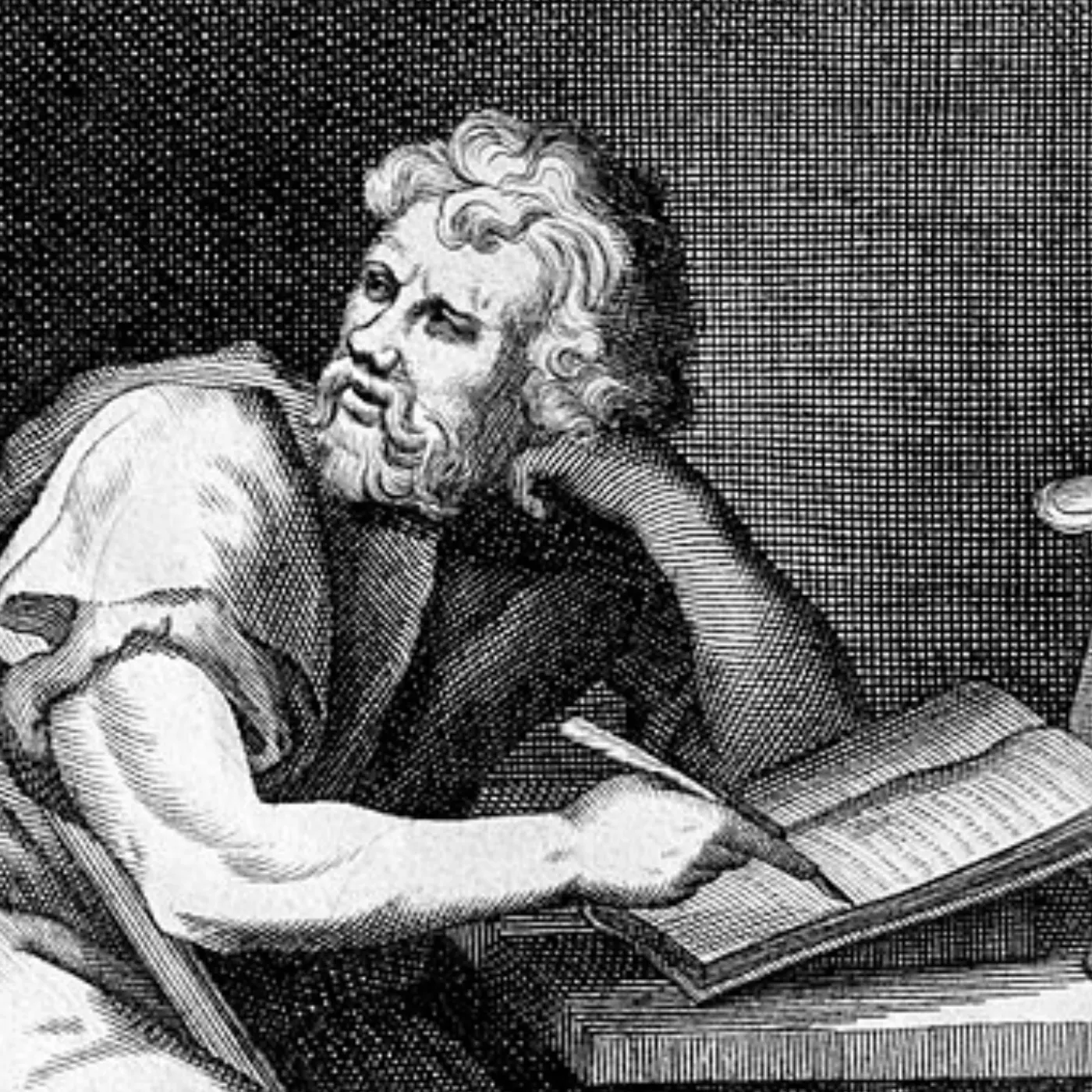
BONUS: Which Translation of the Odyssey should I read?
Yesterday00:11:29Summary readyWith the world gripped by Odyssey fever, Mary and Charlotte keep being asked the same question: which translation should I read? So here is a quick bonus episode to help you decide. Mary and Charlotte cover the waterfront of the modern translations (Emily Wilson and Daniel Mendelsohn), but also celebrate some past classics, like E.V. Rieu’s. In the end, the simple answer is don’t worry - work with what you’ve got most easily at hand. Any translation that has been printed by a major publisher has its merits. Further reading: The two recent translations we discuss at the start are: Emily Wilson (translator), The Odyssey (W. W. Norton and co) Daniel Mendelsohn (translator), The Odyssey (Chicago UP and Penguin Classics) Both are available in paperback. Earlier translations which you might enjoy, and trust, include:: Richmond Lattimore (Harper Perennial Modern Classics) Robert Fagles (Penguin Classics) Robert Fitzgerald (Farrar, Straus & Giroux) Peter Green (University of California Press) E. V. Rieu (Penguin Classics) Charlotte referred to Matthew Arnold’s lectures from the 1860s, “On Translating Homer” @instaclassicpod for Insta, TikTok and YouTube @insta_classics for X email: instantclassicspod@gmail.com Instant Classics handmade by Vespucci Producer: Jonty Claypole DOP - Ben Warburton Video Editor: Tom Green Theme music: Casey Gibson Learn more about your ad choices. Visit podcastchoices.com/adchoices
Summary
Classical Beach Reads
5d ago00:58:42Summary readySummer is here (in the northern hemisphere at least) and with many listeners eyeing trips to the beach, Mary and Charlotte are here with some cracking beach read suggestions. Move over Carley Fortune, Ann Patchett, and Tana French and make way for Herodotus, Lucian and Longus. Charlotte does a hard sell for Herodotus’ Histories (all 700 pages) and Ovid’s (mercifully shorter) Heroides. Mary pushes the science-fiction humour of Lucian’s Selected Dialogues (while acknowledging it could do with a better title) and Longus’ Daphnis and Chloe. Turning to modern books set in the ancient world, Charlotte champions Colm Tóibín’s House of Names, while Mary chooses Samuel Butler’s The Authoress of the Odyssey - which, published in 1897, pushes the definition of ‘modern’ a little, but we don’t expect anything less from a Cambridge don! Finally, something for the kids… Mary is a fan of Caroline Lawrence’s Roman Mysteries and Charlotte feels equally enthusiastic about Percy Jackson. Charlotte’s recommendations: Herodotus, The Histories comes in many translations – Robin Waterfield for Oxford World’s Classics, and Tom Holland for Penguin Classics Ovid, Heroides, also has translations in the World’s Classics and Penguin Classics series Colm Tóibín, House of Names, Penguin, 2018 Rick Riordan, Percy Jackson and the Lightning Thief, Puffin, 2013 Mary’s recommendations: For Lucian’s Dialogues, the handiest translation is a selection of some of the best of his satire in Oxford World’s Classics. Peter Thonemann is producing a new translation of the whole lot in the Loeb Classical Library (Harvard UP), including the original Greek text too. Two volumes have appeared so far. Longus, Daphnis and Chloe is also published in World’s Classics, and in Penguin Classics (with other works of ancient Greek fiction), and on its own in the Penguin Little Black Classics series. Samuel Butler’s Authoress of the Odyssey is available in various modern reprints (often independently published) listed in online bookstores Caroline Lawrence’s series of Roman Mysteries is published by Orion. @instaclassicpod for Insta, TikTok and YouTube @insta_classics for X email: instantclassicspod@gmail.com Instant Classics handmade by Vespucci Producer: Jonty Claypole Video Editor: Jak Ford Theme music: Casey Gibson Learn more about your ad choices. Visit podcastchoices.com/adchoices
Summary
Classic Chats: Count Binface (Bonus episode)
1w ago00:34:58Summary readyIn this Clacton byelection special, Count Binface takes a break from the campaign trail and zooms in from his spaceship to chat with Mary and Charlotte about his deep interest in Ancient Greece and Rome. While denying all connection with an earthling called Jon Harvey who studied Classics at Oxford, Binface reveals the lessons he has learned by studying classical writers, like the Greek satirist Lucian, the failings of Athenian democracy and Roman republicanism, and his views on Christopher Nolan’s The Odyssey. All of which begs the question: will Count Binface make compulsory Latin in state primary schools a central pledge in his manifesto? Listen to find out! Further reading: If you are confused about who Count Binface is, there’s a piece in the Guardian that explains it all… Binface’s review of the Odyssey (paywalled) And a link to Jon Harvey’s broadcasting including his BBC Radio 4 series, Could an Ancient Athenian Fix Britain? For all the candidates in this byelection: https://www.bbc.co.uk/news/articles/ckge923jk3vo @instaclassicpod for Insta, TikTok and YouTube @insta_classics for X email: instantclassicspod@gmail.com Instant Classics handmade by Vespucci Producer: Jonty Claypole Video Editor: Jak Ford Theme music: Casey Gibson Learn more about your ad choices. Visit podcastchoices.com/adchoices
Summary
Classic Chats: Tom Hiddleston on Pompeii
2w ago00:54:51Summary readyLast week, actor Tom Hiddleston launched his new series - not the further adventures of Loki (at least, not yet), but Pompeii: Out of Time with Tom Hiddleston. Mary and Charlotte talk to Tom who reveals his life-long fascination with the ancient world, including a degree in Classics at Cambridge where he attended the lectures of one Professor Mary Beard. Tom talks about the impact Mary’s teaching had on him and how that fascination for the Classics has never gone away. His new series, available to watch on Disney+ and National Geographic, focuses on several real people and the decisions they made in the hours before the eruption of Vesuvius in AD 79. It draws on new research and technology to uncover the hidden lives of some of those who survived - and some who didn’t. Further reading Mary Beard’s book Pompeii is strongly recommended by Charlotte! And there is a recent book by Jess Venner, The Lost Voices of Pompeii (Harper Collins, 2026), which picks up and develops some of the same themes. In one of his first roles, Tom appeared in the Cambridge Greek play. You can find out more about this marvellous institution here: https://www.classics.cam.ac.uk/prospective/undergraduate/greek-play and here: https://www.cambridgegreekplay.classics.cam.ac.uk/ @instaclassicpod for Insta, TikTok and YouTube @insta_classics for X email: instantclassicspod@gmail.com Instant Classics handmade by Vespucci Producer: Jonty Claypole Video Editor: Jak Ford Theme music: Casey Gibson Learn more about your ad choices. Visit podcastchoices.com/adchoices
Summary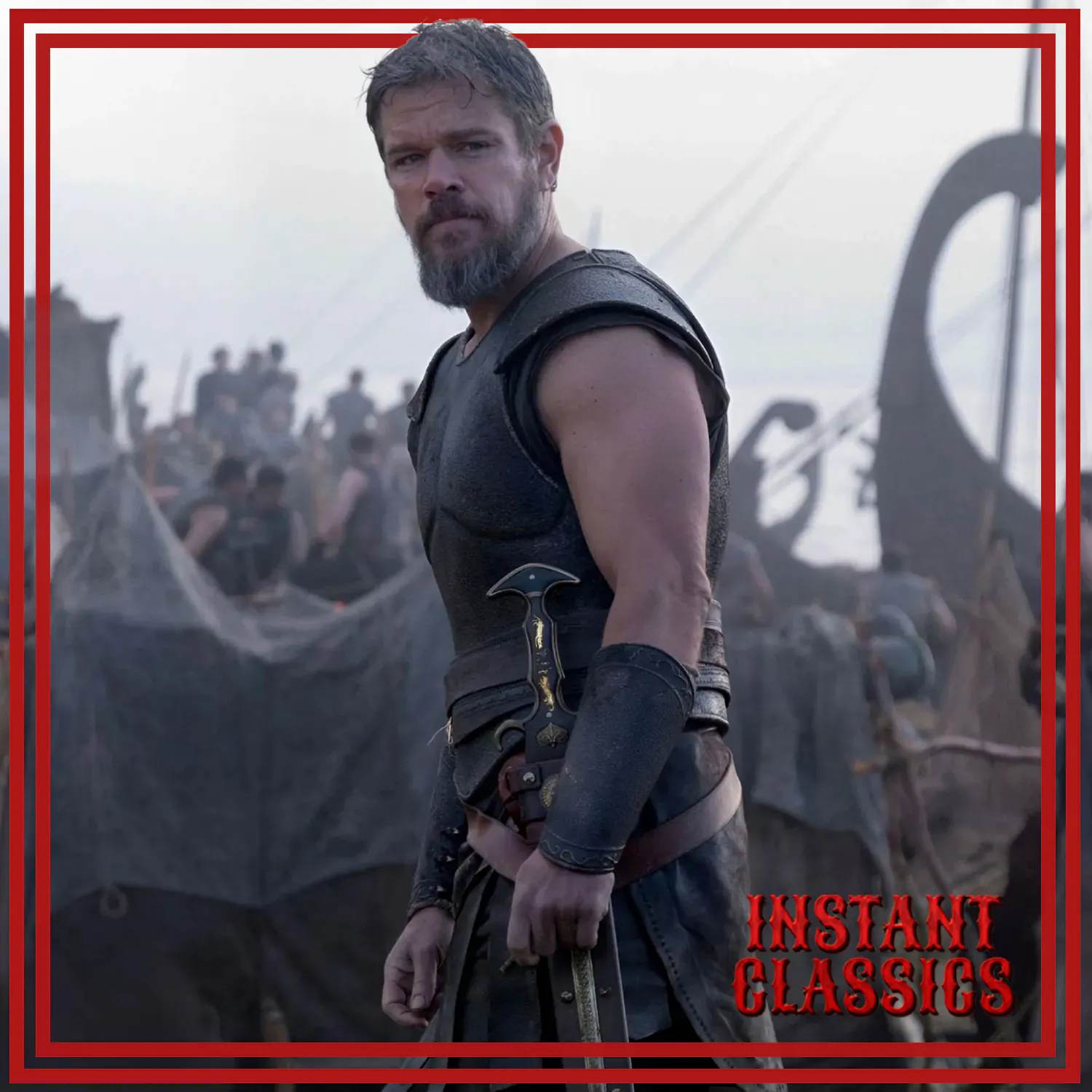
Christopher Nolan's Odyssey 3: The Pedants Revolt
3w ago00:56:31Summary readyLast week, Mary and Charlotte gave their instant verdict on Christopher Nolan’s Odyssey only hours after emerging from the premiere, dazzled somewhat by the proximity of so much A-list talent. A week later… they unleash their inner nerds to quibble with some of the decisions and omissions Nolan made in adapting Homer. Their biggest gripe is the treatment of the female characters. Nausicaa and the ghost of Odysseus’ mother didn’t make the edit. Helen of Troy is robbed of agency and becomes a victim. The Gods are mostly cut and there’s even the implication that some of the more magical elements of the story might simply be a figment of the imagination resulting from too much lotus eating. Odysseus himself has become a bit of a goody two-shoes, only lying when he really has to and wracked by guilt of all the things he did at Troy, unlike Homer’s Odysseus who doesn’t think twice about ransacking innocent people. It’s not all moan moan moan though. Who can disapprove of the enhanced role that Odysseus’ loyal dog Argus is given, complete with his own backstory, and the power of the canine performance? Give that dog an Oscar. Or better yet, a nice meaty bone. Mary and Charlotte recommend: No more reading than we suggested last week (except to urge people back to Homer itself). BUT if you haven't seen the film, you can see Argus the dog here: https://www.youtube.com/shorts/sxgHV-BmNrI @instaclassicpod for Insta, TikTok and YouTube@insta_classics for Xemail: instantclassicspod@gmail.com Instant Classics handmade by Vespucci Producer: Jonty Claypole Video Editor: Jak Ford Theme music: Casey Gibson Learn more about your ad choices. Visit podcastchoices.com/adchoices
Summary
Christopher Nolan's Odyssey 2: Instant Verdict
4w ago00:51:26Summary readyMary and Charlotte emerge from the premiere of The Odyssey, pausing only for a night’s rest, before regathering in the morning with strong coffees to give their instant verdict on Christopher Nolan’s summer blockbuster. Headlines Winners: Complicated, twisty-turny timelines; multiculturalism; Samantha Morton; Charlotte Higgins Losers: Feminism; humour; The Gods; Mary Beard To find out what all this means, listen to the episode! Further reading (and watching): The basic message here is “go watch the movie”. Mary is perhaps less keen overall, but still urges you to go see. It is also worth having a look at (and comparing) Ubert Pasolni’s The Return which is focussed on the second half of the poem. https://en.wikipedia.org/wiki/The_Return_(2024_film) Charlotte mentioned Colm Tóibín’s novel House of Names. @instaclassicpod for Insta, TikTok and YouTube @insta_classics for X email: instantclassicspod@gmail.com Instant Classics handmade by Vespucci Producer: Jonty Claypole Video Editor: Jak Ford Theme music: Casey Gibson Learn more about your ad choices. Visit podcastchoices.com/adchoices
Summary
Christopher Nolan's Odyssey 1: What you need to know before you go
Jul 900:47:42Summary readyChristopher Nolan’s adaptation of The Odyssey - the most eagerly anticipated event since Odysseus spied the shores of Ithaca - is almost with us at last. Mary and Charlotte have been exploring Homer’s epic over the last year in the Instant Classics Book Club, but if you’re time poor or just want a little refresher, then you’ll find the basics in this pre-screening primer. In the first half, they run through what actually happens in The Odyssey, as Odysseus, a twisty-turny man, makes his twisty-turny way back home. In the second, they pull out some of the big themes from the book - the problems of homecoming, post-traumatic disorder, the cost of war, growing up, fidelity, colonisation, and the thin line between so-called civilisation and so-called barbarism. This poem really does have everything, yet manages to be poetic and hugely entertaining while about it. In theory, it’s the perfect material for Christopher Nolan, who has long been fascinated with non-linear story-telling, the effects of war, and journeys. But whether he succeeds will be the subject of next week’s episode… Further reading Charlotte and Mary usually quote from Emily Wilson’s translation of the poem (W. W. Norton, 2018), but another good recent translation is by Daniel Mendelsohn (Chicago UP and Penguin Classics, 2025). But there are many translations on offer which will not mislead – so do not get too anxious about getting the “right” one. Approachable introductions to the poem include: Barbara Graziosi, Homer: a very short introduction (Oxford UP, 2019) Edith Hall, The Return of Ulysses (I. B. Tauris, 2012) Elton Barker and Joel Christensen, Homer: a beginner’s guide (Oneworld, 2013) Moses Finley, The World of Odysseus is an old favourite (reissued by New York Review of Books, 2002) @instaclassicpod for Insta, TikTok and YouTube @insta_classics for X email: instantclassicspod@gmail.com Instant Classics handmade by Vespucci Producer: Jonty Claypole Video Editor: Jak Ford Theme music: Casey Gibson Learn more about your ad choices. Visit podcastchoices.com/adchoices
Summary
USA 250: “I’m Spartacus!”
Jul 200:47:55Summary readyMary and Charlotte welcome Professor Maria Wyke back on the show to talk about two of the most famous words in cinema: “I’m Spartacus!” Hollywood has always had an obsession with Ancient Rome. So much so, the Roman Epic - or sword-and-sandal - is a cinematic genre in its own right. Stanley Kubrick’s Spartacus, starring Kirk Douglas, Laurence Olivier and a host of other stars, is perhaps the towering achievement. But what is Spartacus really about? It was adapted by Dalton Trumbo from Howard Fast’s 1951 novel. Both men had fallen foul of the House Un-American Activities Committee and were blacklisted from Hollywood. Their names were proudly displayed at the start of the film, marking the decline of the Committee’s influence on American culture. In some ways, the refusal by Spartacus’ slave army to betray their leader to the Roman authorities is a message about free speech and solidarity. The character of black slave Draba who defies white supremacist authority is also a statement on the Civil Rights movement. But the brilliance of Spartacus is that it defies easy interpretation and deliberately plays with themes and symbols - not least in the crucifixion scene at the end of the film. Mary, Charlotte and Maria move forwards a few decades to Gladiator - and argue the power of that film is the way it similarly seems to, but doesn’t quite, push a moral message. Gladiator 2 on the other hand… Further reading Our wonderful guest Maria Wyke’s book Projecting the Past (Routlege, 1997) has a fascinating chapter on Spartacus Howard Fast’s novel Spartacus, on which Kubrick’s film was based, is on the Internet Archive. See also: A. Futtrell, “Seeing Red”, in Sandra Joshel et al. (eds), Imperial Projections (Johns Hopkins UP, 2001) Martin Winkler, Spartacus: Film and History (Wiley-Blackwell, 2007) Martin Winkler, Gladiator: Film and History (Wiley-Blackwell, 2004) @instaclassicpod for Insta, TikTok and YouTube @insta_classics for X email: instantclassicspod@gmail.com Instant Classics handmade by Vespucci Producer: Jonty Claypole Video Editor: Jak Ford Theme music: Casey Gibson Learn more about your ad choices. Visit podcastchoices.com/adchoices
Summary
USA 250: Building a new Rome
Jun 2500:52:56Summary readyShortly after its formation, the United States of America initiated a building program for both state and federal governments, turning to Ancient Greece and Rome for inspiration. As Mary and Charlotte discover… In-between duties like writing the Declaration of Independence, acting as Minister to France and being President, Thomas Jefferson found time to make inspiration trips to study Roman architecture in France. Although he didn’t design the Capitol in Washington DC, he set the tone with his designs for Monticello (his Virginia home) as well as the University of Virginia and Virginia State Capitol. Over the decades, other influences gained greater prominence - whether nostalgic styles like the gothic or the modernity of Frank Lloyd Wright. But neo-classicism is on the rise once again. According to President Trump’s executive order Making Architecture Beautiful Again, ‘classical’ is the preferred style for federal buildings - in particular, the plan for a ‘United States Triumphal Arch’. Mary and Charlotte recommend some further reading: Donald Trump’s executive order on classical architecture. Edwin Heathcote, the architecture critic of the Financial Times, on triumphal arches and DC. The DC Commission of Fine Arts have published the schemes for Trump’s arch: https://www.cfa.gov/system/files/meeting-materials/1-CFA-16APR26-1-EOP_DOI_Arch-pres%20%5BApr9%5D.pdf The first scheme for the Navy Memorial, including the triumphal arch is shown here: https://escholarship.org/content/qt9r40k5hd/qt9r40k5hd_noSplash_87482e06371178d8fcd9bb449eb06f39.pdf A useful website for Jefferson’s classical architecture: https://www.monticello.org/jefferson-and/architecture The temporary triumphal arch in DC is pictured here: https://ggwash.org/view/40678/dc-once-had-its-own-arc-de-triomphe The detailed history of triumphal arches, from antiquity to now, is the subject of Peter Howell, The Triumphal Arch (Unicorn, 2021) Mary’s The Roman Triumph (Harvard UP, pb, 2009) discusses the Roman significance of these arches, and the incident with Pompey’s elephants. @instaclassicpod for Insta, TikTok and YouTube @insta_classics for X email: instantclassicspod@gmail.com Instant Classics handmade by Vespucci Producer: Jonty Claypole Video Editor: Jak Ford Theme music: Casey Gibson Learn more about your ad choices. Visit podcastchoices.com/adchoices
Summary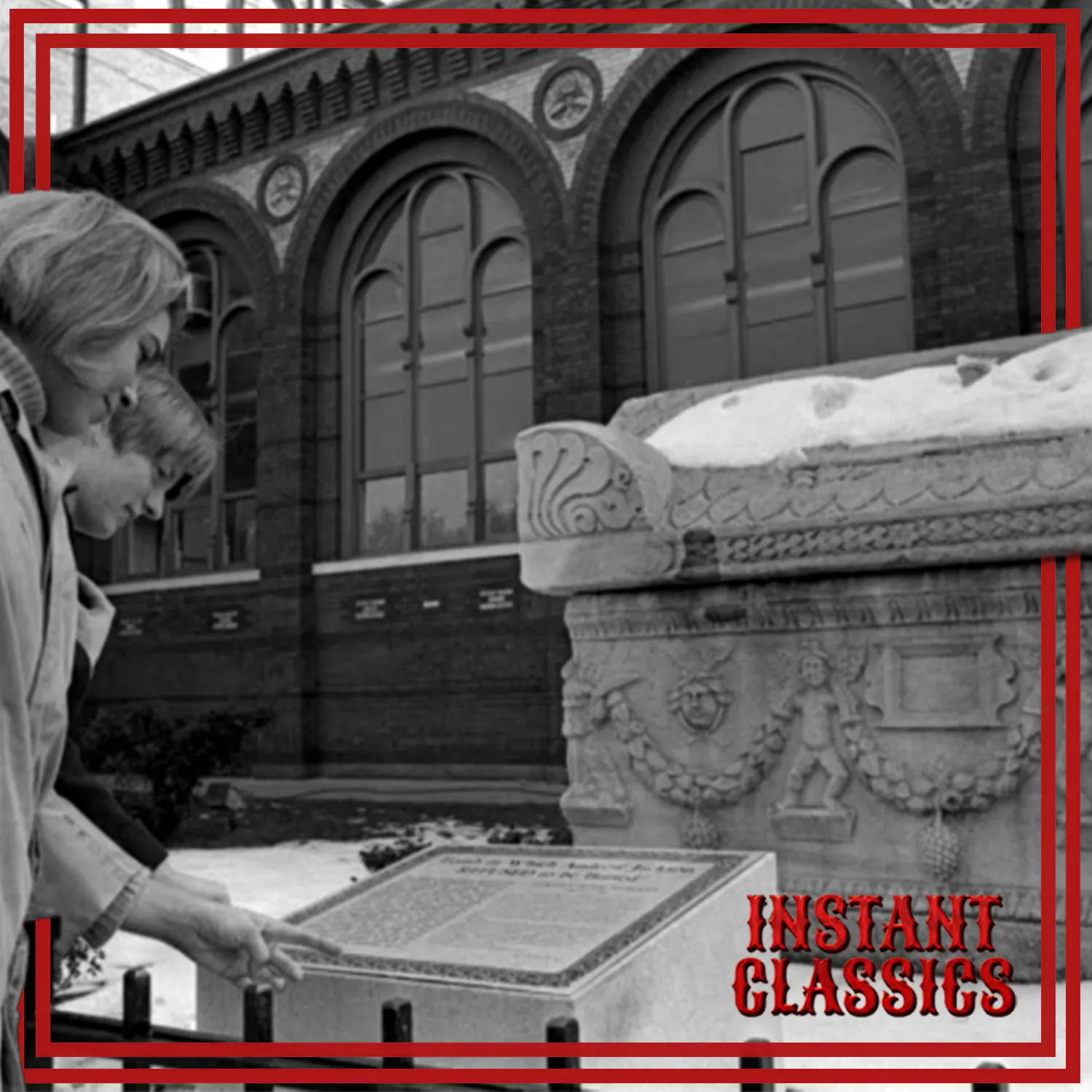
USA 250: President Jackson and the Emperor’s Tomb
Jun 1800:50:36Summary readyLast year, Mary spent nine months in Washington D.C. During this time, she became interested in visual iconography and real objects of Ancient Greece and Rome on display in the city’s museums and streets. In this episode, she tells Charlotte about her fascination with a sarcophagus in the Smithsonian collection, which was believed once to have held the remains of Emperor Alexander Severus. In the 1830s, a US navy commander based in the Mediterranean ‘acquired’ the sarcophagus in Lebanon and sent it back home with the suggestion it could be used as a tomb for President Andrew Jackson. This forced the question: was it appropriate for an American president to be buried in a Roman sarcophagus? On one hand, the USA liked to position itself as the inheritor of Roman values. On the other, Severus, who became Emperor after his cousin Elagabalus (a favourite of the show) was bumped off, was a despot, even if a comparatively benign one. The problem was heightened by the fact Jackson was frequently accused of acting like a ‘Caesar’. The conundrum of the sarcophagus went right to the height of the tensions - then as now - in the USA’s idolisation of Ancient Rome. As Mary reveals, there are many twists and turns to this story, which ends - bizarrely enough - with Peter Fonda’s Harley-Davison from the film Easy Rider. How are the two connected? Listen to find out! Mary and Charlotte recommend some further reading: Mary wrote about this sarcophagus a few years back in the Wall Street Journal: https://www.wsj.com/arts-culture/books/a-tomb-not-fit-for-a-president-11634356860 (it’s pay-walled, but the free bit gives you a great picture of a couple admiring it); and it was the object that book-ended her Twelve Caesars: Images of power from the ancient world to the modern (Princeton UP, pb, 2023). See also, from the Smithsonian: https://www.smithsonianmag.com/history/andrew-jackson-populist-even-deathbed-180962124/ The Roman archaeology of the sarcophagus: J B Ward Perkins, “Four Garland Sarcophagi in America”, in the journal Archaeology for 1958. Andrew Jackson (and his Caesarism) features in the first chapter of Margaret Malamud’s Ancient Rome and Modern America (Wily Blackwell, 2009) @instaclassicpod for Insta, TikTok and YouTube @insta_classics for X email: instantclassicspod@gmail.com Instant Classics handmade by Vespucci Producer: Jonty Claypole Video Editor: Jak Ford Theme music: Casey Gibson Learn more about your ad choices. Visit podcastchoices.com/adchoices
Summary