Loading summary
Transcript109 lines
- [00:01]
Podcast Advertiser 1
This episode is brought to you by Google Chrome. You think you know a browser, but Gemini and Chrome, that's new. It can help you with practically anything on the web, like restoring a vintage motorcycle from a 50 page restoration block. Or finally break down that long article you've had open for weeks. Gemini and Chrome is here for it, ready to make anything online make sense. There's no place like Chrome. Check responses set up, required compatibility and availability. Veris18
- [00:26]
Podcast Advertiser 2
trading at Schwab is now powered by Ameritrade, bringing you an expanding library of education with even more ways to sharpen your trading skills. Access new online courses, insightful webcasts, articles, engaging videos and more, all curated just for traders. Plus guided learning paths with content designed to fit your unique interests. No sifting to find exactly what you need so you can spend your time learning to trade brilliantly. Learn more@schwab.com trading welcome to intelligence Squared,
- [00:58]
Mia Sorrenti
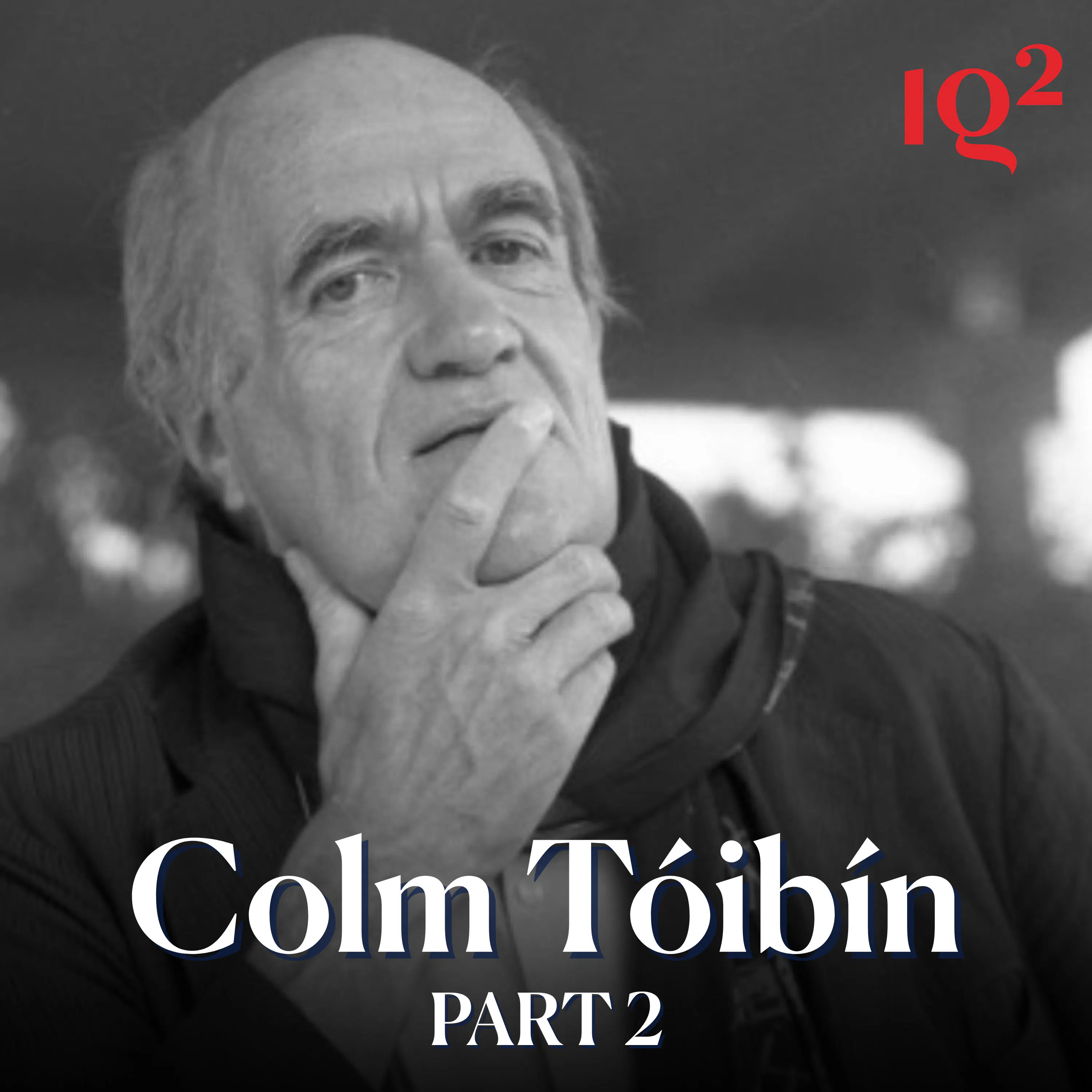
where great minds meet. I'm senior producer Mia Sorrenti. In this episode we return for part two of our live event with award winning novelist Colin Toybean. Toybean joined us recently at Union Chapel to discuss fiction, memory and mark the publication of his new short story collection the News from Dublin. He was in conversation with journalist and author Emma Brocks. If you haven't heard part one, we recommend jumping back an episode to catch up. But now let's return to the conversation live at Union Chapel in London.
- [01:30]
Interviewer
Just a last note on the Irish bars learning to go home on a Saturday night. How long did that take you?
- [01:41]
Colm Tóibín
You know, I suppose I don't drink alcohol anymore. I had cancer and I didn't go back after chemo. I didn't want any funny liquids going into me that would change my mood. I'd had enough, you know, so I just never went back. And I feel good about it. And I'm very puritan and I preached to everybody else drinking, you know, do you know what an idiot you are after two glasses of wine? Do you know what you sound like? You know, and it's a really boring person to be me, but I suppose I became really interested in, you know, writing for the London Review of Books. I had to read a lot of books. I had to compensate a lot for not having a PhD. You know, generally in my life, you know, I teach in the university in the English department and I'm the only one who doesn't have a PhD and therefore I have to overcompensate by preparing too much for classes. So I just became interested in burying myself in an Idea and reading a lot of books about that idea. I think there are two ways you can go. In a way, if you're a fiction writer, you can go permanently into just drinking and touring and generally just going on. But I found there was another way I could work, and it was that Saturday night thing of walking up through Dublin and looking at everyone outside bars on a Friday evening after work, big pints of lager, you know, so lovely. And I'm walking by them, looking dreary, about to go home and write some melancholy story.
- [03:04]
Co-host/Interjector
Why.
- [03:05]
Colm Tóibín
Why didn't I get a job? Nice job in the bank or a nice job in the civil service, and I'm standing with my friends, just really guzzling lager.
- [03:15]
Interviewer
But in those moments, do you have a flash of the road not taken? Would it ever have been a possibility that you didn't leave?
- [03:24]
Colm Tóibín
Yeah, it would have been a good thing to have gone instead of going to university, taking a job, which I could have easily done in the civil service and become a civil servant and gone into work every day and tried to, you know. Yeah, there were loads. Also, you always wonder what it'd be like if you weren't a queer, right? You know, you could have a wife and things.
- [03:44]
Podcast Advertiser 1
Like.
- [03:44]
Colm Tóibín
It could be as simple as that, you know. Yeah, obviously. Obviously those things, you know.
- [03:50]
Interviewer
On which subject, last time I saw you, you had a partner in LA who you were. I think the phrase that I used when I wrote the piece about you in the Guardian was you were reluctant to share too many details. Oh, really? Well, except then you explained that you had been quite cranky around him while writing House of Names, all quite demanding. And I wondered generally what you're like to be around when you are in the throes of.
- [04:18]
Colm Tóibín
Seemingly, I'm really quiet and moody and I'm just, you know. Yeah, I don't think about it, but I mean, living with someone, you sort of learn that you're not exactly, you know, a bundle of laughs all day or anything like that, and that, you know, I'm quite deliberate and, you know. Yeah, yeah, it's good, it's good.
- [04:34]
Interviewer
Does he tell you if you get too heavy?
- [04:37]
Colm Tóibín
He tells me all the time.
- [04:42]
Interviewer
There's a story in the book Sleep, which is about an older man dating an older Irish man dating a younger man in New York and the sort of culture clash between them. And there's a moment where the older man sort of looks in amazement at his boyfriend and says, you know, how strange for a person of my generation to think that no one in this building or no one in this city cares that we are two men together in this bed. I mean, yes, up to a point.
- [05:13]
Colm Tóibín
Right, yeah, but. But, I mean, in Ireland, the big change in my life has been that, you know, there are many other changes, but, I mean, the. The, you know, it was leading up to, I suppose, a referendum on gay marriage. And for the year before, I mean, there was one morning I was in New York and it was. And the phone rang early and so just turn on Irish radio now and I would have a radio beside me, which would be Irish radio. And Leo Radker, who later became Prime Minister, became Taoiseach, I think, was Minister for Health at the time. He's a policy wonk, you know, he's a serious guy about policy. He's slightly too right wing for me, but he's nice. And in the middle of an interview about something else, he said, well, as a gay man, I. I said, leo is gay. And I thought that was an amazing idea. You have to. Policy wonks are going to be gay. And very soon afterwards, a guy in the other political party, Fianna Fall, who had given no evidence that he was anything at all, announced he was gay and had been gay all along as well. And then Ursula Halligan, who's a journalist on tv, said she was lesbian all along. And honestly, it was great. It was just going on and I thought the entire nation, I thought the Archbishop of Dublin and the Protestant archbishop was going to join together and meet. They were both, you know, and that it was really going to be a great country, tourism would increase enormously, and it was going to be. But I mean, seriously, the lead up to the referendum was an amazing time because what was decided by the people who managed the campaign and was. Instead of telling gay people, why don't we all be quiet for about a month? Why don't all of us shut up? People are tired listening to us anyway. And ask your mother to speak for you. Ask your sister if you've got a granny, get your granny out and go from door to door with your mother. You go with your mother and it's a great idea. I wish my mother had been alive for it. And go to the door with your mother and knock on someone's door and your mother says, this is my son and he's gay. And we were at his brother's wedding last year. It was lovely. We all loved it. We'd love to go to his wedding, but his boyfriend is a man, so if you could vote, just lend us your vote for the day. And it'd be really lovely. We'd really appreciate it. It would really make us happy. And the woman on the other side of the door would say, oh, right, okay. And you would just nod your head, look sad and look worthy, and look as best you could. Like, if you got this gift, you would use it well. And so it was the mothers and the big issue was to get the fathers to change their minds. How do you get Irish men to change their minds? Like this stubborn Irish man. I don't like the sound of that thing at all. Getting men. Irish fellows want to get married. Are they all right the way they are? And I wrote some speeches for politicians. You know, this is. Can you imagine that your beautiful daughter, the daughter you love most, told you at night that she was lesbian and she was going to. She didn't see any future for herself. And she started to cry. And nobody loved her, nobody wanted her, and she was so. And then you went to bed and you were awake all night, and you thought, in the midnight, what if I went down and told her, I'm going to vote for you. I'm going to change my opinion. I'm going to vote yes. Wouldn't that be a great thing for you to do? And it was such a great time. And among the people who were asked to be quiet was a woman or a guy, whichever day. Anyway, she's called Miss Panty or Panty Bliss. And she's a wonderful person and she's so smart and so beautiful, especially with a wig and clothes on and stuff. And she was. I mean, all of us were quiet for three weeks or a month and. But the news on the day of the result of the referendum, the lead item on the news was, Miss Panty has arrived at Dublin Castle. And photographs of Rory o' Neill arriving at Dublin Castle. It was just like to get that on the news instead of, there's been another bank robbery, or Northern Ireland has exploded again, or, you know, Ian Paisley Jr. Is on the warpath. This was just the best thing ever. So, you know, when I'm talking about times have changed, it was sort of personal.
- [09:25]
Interviewer
Yeah. Yeah. How fantastic do you find that when you go back to Ireland, you click into a different mode of your personality if you find yourself moving between Personas on either side of the Atlantic.
- [09:41]
Colm Tóibín
I mean, the real problem, which is that if you began to have even the beginnings of an American accent, if you start to say 20 or in the States, we don't, you know, the ice. Well, you never say icebox, but, I mean, if you Just gave a sound. People would really say, oh, look at you. Look at you, look at you. Oh, look at you. And so you've got to be really control your own voice, like, just don't say anything.
- [10:09]
Interviewer
Well, where are you on tomato?
- [10:10]
Colm Tóibín
Oh, yeah, tomato. No, no, I would know. Oh, tomato. I would know. Not to say that. I really would, but, I mean, there's somewhere. I don't know what it is, but I've just done it. I don't know what it is. Have you just heard that? I don't know what it is. That's one of my students talking. I mean, I don't know what. Like, I don't know what. But other than that, absolutely nothing. It's just you sort of live in your head, you know.
- [10:34]
Audience Member/Interjector
Yeah.
- [10:35]
Interviewer
Let's just. Let's. Let's do some questions about Brooklyn and Long Island. Gosh. I was struck, having reread Long island recently, how much in a good way, you love to torture us as readers. And I know some readers have gotten quite angry with you. I mean, genuinely quite angry with you for not giving them an ending tied up in a bow. I mean, I'm sure most people here have read it. We won't spoil it. But you've written about how the withheld confrontation is so much more powerful than the explosion, possibly. Particularly in this era where we're surrounded by explosions constantly and something quiet actually pushes through much more effectively. But do you then get angry back at the reader when they remonstrate with you?
- [11:22]
Colm Tóibín
I don't. I mean, being this second hated man after J.D. vance, you know, in America, I mean, in other words, people thought the ending was too abrupt and didn't give enough information. And I have a lecture on this, but it's about the argument between George Eliot and Henry James in the 1870s. It didn't take place between them, but it took place between their books, where Middlemarch ends. It's very hard to end a novel like Middlemarch because there are so many configurations of characters, and who do you end with? And what she did was she gives you the information at the end of the book as to what happened to her characters over the subsequent 30 years. So you learn that Dorothea married Ladislow and that Ladislow went into Parliament. You learned that Lydgate became a doctor to the rich. You learn things about each of the characters, and you put the book down and you feel, that's me. I know everything now. That's me. I'm good. I don't need to know anything more. I have all the knowledge I need. But the answer is that is, of course, is knowledge. The question is being satisfied, like that is knowing a good thing. So when Henry James wrote Portrait of a Lady, which he would have begun about seven or eight years later, he has. At the end of the novel, Isabel Archer is in London and many possibilities are open to her, and she's put thought into the whole novel is about her thinking through things, working out what's happening, what you should do. That's the great gift of the novel, in a way. And at the very end of the novel, someone comes looking for her to the house in London and her friend says she's gone back to her husband. And that's the very thing you thought wouldn't happen. And you haven't seen her contemplating it. You've no idea why she's done it, and you've certainly no idea until you turn the page how she's going to be received by her husband. But when you turn the page, the page is blank, the novel's over, nothing more. And Henry James, he wasn't. I mean, obviously he wasn't on email or anything, but he did get letters from people who were really like, what?
- [13:11]
Audience Member/Interjector
What?
- [13:12]
Colm Tóibín
And the point would be, I suppose, that you put that book down and you wonder, you feel puzzled, you feel a sense of mystery, of things and how much you need to imagine. And that's as much as a novel knows. It's not particularly satisfying either. But anyway, that's the argument. There's no point in trying to write that back, you know, it's too long and it's too tortuous. But I honestly thought I had done the novel. I thought I'd ended it perfectly. So it just shows how little I know. But I have a website and there's a thing called Contact, and if you click on that, you get me directly. So I wake in the morning and people were really irate, and it was the novelist. I was, the reader as consumer. Somehow the tin of beans didn't have enough baked in them or something. And how can I say,
- [14:02]
Interviewer
I mean, we all have a need for closure. Do you know, in your own head. I mean, I think I do as I'm feeling.
- [14:08]
Colm Tóibín
You totally do. But how I would dramatize that, how I would figure that, how I'd get that into the sentences and into the structure that would in some way satisfy the reader in ways that are more puzzling and less obvious. I don't have that. If I did, I would have written
- [14:26]
Interviewer
it, you know, and it, you know, Just from a strategic point of view, it does keep people thinking about the novel for much longer.
- [14:34]
Colm Tóibín
I think if you started strategy on that, keeping people, you know, I think you'd really have to look for. I suppose you have to be quite penitent about it. If you did that, you know, it would just be morally wrong, I think.
- [14:49]
Interviewer
I think there's an assumption that. Oh, sorry, just quickly, we've got 10 more minutes probably, of our chat and so if people start to think about questions, we'll be coming to you shortly. I think there's an assumption that even the most glancing brush with Hollywood will radically change your life. The movie of Brooklyn was fantastic. Nick Hornby is the screenwriter and
- [15:15]
Colm Tóibín
Saoirse.
- [15:15]
Interviewer
Saoirse. Saoirse Ronan in the lead role. Was it fantastic? How was it?
- [15:23]
Colm Tóibín
I mean, it took a while to get the finance, which meant that Saoirse Ronan would not have been old enough at the very beginning. And she became, you know, she became absolutely right. And she hadn't ever played an Irish character before. And that's an amazing idea, that this great young Irish actress had not played an Irish character. And I went to Montreal when they were filming, you know, it was the first thing I said to the producer who asked me one day. I bumped into her in New York. She had made an ed. It was Fionola Dwyer, and she'd made an Education, the film in Education. Nick Hornby had written the screenplay and she told me who she was and I said, can you get me Nick Hornby? And so Nick wrote this screenplay and I didn't have any input into that, but I went to Montreal when they were filming and I have a role, Andy, little Irish guy with a cap on, looking slightly bewildered, going into America just before Saoirse. That meant, of course, that I got to meet her, because they had to do about 10 takes of that. And she's here and I'm here. She couldn't get away from me and I was just wonderful to be with her. And, yeah, I was starstruck by all that. And then it was up for these Oscars and they offered me a car for a day. You know, you don't have to give the car back until the day's over. This is in la, you know, and this is what everybody wants. It's what someone, Dan of Vreeland said about communism. It's such a great thing, communism, if you had your own driver and a car, you know. But the problem was that the all the Stars and Nick Hornby was up for an Oscar. Saoirse was up for an Oscar. They were all up for Oscars. And they all went in. In the route with the red carpet, the paparazzi interview, you know, sound bites. I was incredibly busy. And of course, people's jobs were to stop anyone who wasn't entitled to go in on the red carpet from going on the red carpet to go in where there was some lino and some cement by an entrance that was right beside. Right beside where the other. A sort of fence as high as your nose, maybe, just to stop you really from. And of course, I wanted to shout at Saoirse and say various things. And also there was Charlotte Rampling. Does anyone know her? I just thought, oh, my God, there's Charlotte Rampling. And if I put my hand over the fence and just down, I will actually land it on her head. I mean, I didn't. But nonetheless, there was a man who saw me and his job was to move people like me on. You, sir, are going in there, sir. Stop doing what you're doing, sir. And then I did it and I came out again. He caught me a second time. And you see, Emma Donoghue had written. She'd written the screenplay of her own novel, Room. And Emma's very tall and I could see Emma big time, and I wanted to get a selfie or I can't. I don't. Someone took a photograph of me and Emma on the fence, but the man going nuts. Like, this is not what. You know, you're at the Oscars. But the only. I mean, because there were so many ads. Basically, the Oscars are just a set of ads, and every time there's an ad break. I was drinking at the time, and you could go out and there was an Irish barman, and he understood my plight. And, you know, the plight was being at the very back of the hall at the Oscars when you can't even wave, you know, like, there's nothing in it for you. Why are you here? You should be at home. Novelists live in the shadows. You are nobody. You know, like, stop this nonsense. It's like losing the Booker Prize, you know, you're nobody. You mentioned being on the Booker short list three times. I lost the Booker Prize three times, you know, and like that, staying business off. Why did I cover what am I doing here? Like, what is this about? And you go out into London feeling like a murderer, a loser, a chancer, someone who shouldn't be alive. But it wasn't as bad as that at the Oscars. And it was made up for by this barman who always had a little glass of lovely white wine ready and that made. And then I got. I actually had the driver when it was all over and I had an invite to the Vanity Fair party and I just don't know anything. There was somebody coming out and he could have been Elton John, but I couldn't stop him to say, are you Elton John? Because that would. The whole point of him is that he is so insufferably Elton John, you know, and if I. So what can I say to him? If I'm in a scorty and I move at the Oscars, there's no narrative I owned that could, you know, warm me to Elton John. And. But then, honestly, this is like, I don't think he was there, but there was a man who looked pretty like him. I was going, holy Moses. But there was a woman in the middle of the Vanity Fair party, by the way. By the time we arrived, most of them had just gone home. I mean, people don't stay out late in la. But there was this woman in the middle and everyone was around her, photographing and all. She was, she looked amazing, but I honestly didn't know who she was. And I said to her, who's that? That's Lady Gaga. I looked at her for a while, but it was nothing I thought I could say to her that would be useful. So I just sort of sat in the corner. There was another movie that had been up for Oscars and I found the screenwriter for that. And she hadn't won an Oscar either, but at least she'd been up for one. I had just been the novelist who rented the Oscars. What an idiot. And then I went home. That's true.
- [20:34]
Interviewer
Okay,
- [20:42]
Podcast Advertiser 1
This episode is brought to you by Google Chrome. You think you know a browser, but Gemini and Chrome, that's new. It can help you with practically anything on the web. Like restoring a vintage motorcycle from a 50 page restoration block. Or finally break down that long article you've had open for weeks. Gemini and Chrome is here for it. Ready to make anything online make sense. There's no place like Chrome. Check responses. Setup required. Compatibility and availability Various 18
- [21:07]
Podcast Advertiser 2
Trading at Schwab is now powered by Ameritrade. Unlocking the power of thinkorswim. The award winning trading platforms loaded with features that let you dive deeper into the market. Visualize your trades in a new light on thinkorswim desktop with robust charting and analysis tools all while you uncover new opportunities with up to the minute market news and insights. ThinkOrSwim is available on desktop, web and mobile to meet you where you are. It's built by the trading obsessed to help you trade brilliantly. Learn more@schwab.com Trading this episode is brought
- [21:39]
Podcast Advertiser 3
to you by Facebook. So you were scrolling on Marketplace and there it was, the bike you'd been searching for. You sent a message and it turned out the seller was super chatty, kind of funny and an avid cyclist. The next thing you know, you're in a cycling crew. Well, a community cycling group. The thing about Facebook, you might find more than what you're looking for from a browse to a bike ride this summer. Find more on Facebook.
- [22:09]
Co-host/Interjector
It's me.
- [22:10]
Podcast Advertiser 3
The
- [22:12]
Co-host/Interjector
we don't need the jingle twice.
- [22:14]
Colm Tóibín
What about a third time?
- [22:15]
Co-host/Interjector
Stop it. This is about vacation inflation and how Priceline negotiates amazing deals on hotels, flights and rental cars.
- [22:22]
Colm Tóibín
Seems like we decided.
- [22:24]
Co-host/Interjector
Yeah, but I didn't mention that you can save up to 60% off hotels in the Priceline app.
- [22:29]
Colm Tóibín
Time to be the timeline.
- [22:30]
Co-host/Interjector
Fine. No one deals more deals than Priceline. Please stop Priceline. Touche.
- [22:36]
Audience Member Michelle Doyle
Priceline.
- [22:37]
Co-host/Interjector
Priceline.
- [22:38]
Podcast Advertiser 4
The best summer memories are made outside. And L.L. bean has the clothing and gear you need to make these memories. Their effortless styles are created for summers spent outside side with family and friends, like hand sewn boat shoes, coastal cotton sweaters, rugged polos, and of course the iconic Boaten tote, which has been made right here in Maine since 1944. L.L. bean, be an outsider. Visit llbean.com to learn more.
- [23:12]
Interviewer
Let's go to questions. The lady in red right there.
- [23:16]
Audience Member
Hi, Colin, I've just been reading Mary Lavin's stories, which you've written the foreword for and edited. And I read it because you'd done that and it seemed to me you had a great admiration for her. And when I read News from Dublin, I don't know if I was imagining it, but I could perhaps see some influences there. How could. Would you like to talk about how it influenced you if it did?
- [23:44]
Colm Tóibín
This is an Irish writer, she's called Mary Lavin, L A V I N. And her selected stories have just come out and I wrote the introduction to it. She was born in 1912, and when I came to Dublin in 1972 as a student, you could see her in the city and she came to the university quite a lot just to talk to students, just to tell you to control your Saturday nights, you know. But I mean, she was. And she was a widow and she wrote a good number of, I think, some of the best stories in that book. There's a story called Happiness, A story called in the Middle of the Fields, a story called In a Cafe, which are really about her as a widow. And my mother was a widow, so I took an interest in widows. But yeah, that there's a way of, I suppose, submerging of keeping emotion down, of not doing obvious drama, obvious confrontation, letting your stories be character led, so letting the characters do the work and not being particularly concerned about what year the story is set in or who's prime minister or what's going on in the economy or in the world. Just seeing it as one moment you could capture where all of that seems like background and where something. Someone's desires that might seem.
- [25:00]
Interviewer
Seem small.
- [25:01]
Colm Tóibín
You don't need to make them epic, but you need to give them their due, give them as much importance as the person who feels them might give them in the moment of the feeling. And you have to do that with an awful lot of slow work. Is this what the person would feel next and next and next and. Yeah, that's there. It's there in Joyce's Dubliners. It's there in Flannery o'. Connor. It's not just an Irish thing. But it was for me, important that she was around so much. Her books were still coming out and she was also a seriously dedicated person. There was a sense of her constantly rewriting and rewriting and reading deeply in, say, in say, the Russian short story writers in order to see if she could refine what she was doing. So, yeah, she was a great person and I sort of knew her a bit and I interviewed her a few times and it was a great privilege to be able to edit or to select the stories and write the introduction. So she's called Mary Lavin. L A V I N.
- [26:08]
Interviewer
The lady here in. Yes. Blue Stripes.
- [26:13]
Audience Member Michelle Doyle
I have to declare an interest here. I was at school with your brother Niall. It was in my class.
- [26:18]
Colm Tóibín
Anyway, where are you from?
- [26:19]
Audience Member Michelle Doyle
I'm from Bree.
- [26:20]
Colm Tóibín
All right.
- [26:21]
Audience Member Michelle Doyle
Right.
- [26:23]
Colm Tóibín
I think it's Brie. I think Brie is in this book somewhere. Yeah. No, Brie is in. Is in Brooklyn. Yeah. Yeah. Bree Hill?
- [26:30]
Audience Member/Interjector
Yeah.
- [26:30]
Audience Member Michelle Doyle
Yes.
- [26:32]
Colm Tóibín
What's your name?
- [26:33]
Audience Member Michelle Doyle
Michelle Doyle. When I read Sleep, I was really quite affected by it because I knew Niall had died. Is it autobiographical Sleep?
- [26:44]
Colm Tóibín
Yeah. The sort of surround isn't. The sort of. It wasn't exactly, you know, me with a younger lover in New York, that had happened but years before. But when my brother died, the brother you knew, you know, it's just really hard and you think, this is not going to get better. You think, oh, people talk about grief and how long it lasts and sadness. And someone said to me, you know, it's the mausoleum sadness and then the rat grief, and you realize it's never going to end. And I really couldn't deal with it. And I phoned Ivor Brown, who's a psychiatrist in Dublin, who I knew, and I asked if I could see him, if he would just give me some time. And I'd seen him before, years before, and everything in the story that's there happened. I went to see him. I thought he was going to put me through talk therapy. I was going to say, oh, I don't want to do that. I could just, you know. But he said he wanted to hypnotize me. Has anyone here? I mean, I thought hypnosis was a sort of joke. It was done in the theater, you know, that somebody, a magician would come and hypnotize someone in the audience who would think they're a dog and they'd start barking. And so, you know. But this was serious. And what's really odd and interesting especially, you know, was in 10 seconds, he was able to get me into a complete trance, into a completely other world in which I could not fully control where I was going or what was happening. He prompted me a bit. He just went, one, I'm going to go, 10, nine, eight, seven. And when I get to one, you are going to go, and you're going to think about the death of your brother. I can't even say it. The death of your brother. Instantly with the zero, I went there. It's so easy to get us like that into another. All of us into another state. And when it was over, about two hours later, maybe more, he didn't know because I hadn't. I wasn't talking where I had gone or what had been happening. And I thought he would want to know that the next part would be to. I would tell him. He said, no, that's for you. That's for you to know. But you don't need to share it with me. It's just for you. You need to explore everything you've been feeling and going. A while later, I wrote the story. And the story is really just going through stages, not of grief, but of actually moving closer and closer to something almost unimaginable, which is the death of somebody else. As though you, too, are somehow being asked to share it in some way. But, yeah, I imagine if you knew. Anyway, I wrote it down and I published it. And, yeah, it's autobiographical. There's no point in saying it's not. That's what happened. And it's as accurate as I could make it. I didn't. In the hypnosis thing, I didn't use the fiction. I didn't say, oh, I'll make it more palatable or I'll make it more plausible or anything. I just wrote down what happened. That's the story.
- [29:49]
Interviewer
Did you carry on with the therapy? No, no.
- [29:53]
Colm Tóibín
He said, that's what you need, one and done. You go with that and see what you can do with it.
- [29:57]
Audience Member
Interesting.
- [29:57]
Colm Tóibín
It was tough.
- [29:58]
Audience Member
Yeah.
- [29:59]
Interviewer
Fascinating. Yes. Hello. Sorry. Oh, sorry. Here comes the mic.
- [30:06]
Audience Member/Interjector
Just looking up there, I've become very nervous. Thank you very much. It's wonderful to hear you both as an illegal alien. Not that I'm saying you are. Colm, I was deported from Australia and America for working illegally back in the day. And I suppose I'm wondering if being an Irish person abroad seems to be. I'm assuming here has been a lot of the influence and inspiration for your writing. If you had stayed in Ireland, what might have been the inspiration for your writing?
- [30:53]
Colm Tóibín
I drifted into America. I didn't ever intend to stay. I think I had enough going on between. I suppose, just say, take the sexuality, take the whole business of family. Just take those two things. Sexuality, family and the changing Ireland and the changing me in Ireland. I probably would have gone on anyway writing stories. It just would have been different and. But, yeah, so it's hard to judge that. But I wouldn't have dried up or anything, you know, I mean, once I got going writing, I was always going to find something new to describe. But that homecoming, that aer lingus business has really. Once I began to notice it and live it, and I should say with that psychiatrist, Ivor Brown, he was very good on the subject of. It's like that Saturday night thing about staying home. He would say to patients in Ireland, don't go home for Christmas, which is the most unimaginable idea, that you're in Dublin and you're going to call home, say, I'm not coming home for Christmas. Because if you're trying to recover from a breakdown or from some sort of difficulty, that Christmas week could really put an end to you. And with all that. And it's called love, like, it's called love, all that love you're getting. And he said, don't go home for Christmas. And one day when he said it to me, I thought I could get a lifetime of writing from that single remark. Don't go Home for Christmas. I could honestly go on for years describing the various Christmases and the comings and goings just from Dublin to Enniscorti without having to think about San Francisco or Australia.
- [32:32]
Interviewer
Thank you. Just quickly on that subject. Sorry. And then I'll come over to that side of the room. You've also talked about only writing about a place when you've left it comprehensively. So you haven't reckoned yet with Dublin,
- [32:47]
Colm Tóibín
New York, Los Angeles, but the Barcelona, Enniscorti, a bit of the Wexford coast. No matter what you do, if you woke in the night, you could conjure them up and think. Not that you would wish you were there, but there's something about them that seems complete, that you went through the experience of being in them.
- [33:08]
Interviewer
Does that take the edge off the pain of leaving?
- [33:12]
Colm Tóibín
There's not much pain in leaving.
- [33:13]
Audience Member
No.
- [33:13]
Interviewer
I mean, you can always come back. Will you write? Have you written about L. A? I'm trying to think.
- [33:19]
Colm Tóibín
No, no. But I'm saving it up.
- [33:22]
Interviewer
Okay. I can't wait for the scene.
- [33:23]
Colm Tóibín
That does make sense of it, you know, it doesn't. It doesn't. It's just really hard to work it out.
- [33:27]
Audience Member/Interjector
Right.
- [33:32]
Interviewer
I'm mindful that I don't neglect one part of the room. Lady here in the turquoise at the front.
- [33:40]
Audience Member
Thank you for a fabulous evening so far.
- [33:43]
Colm Tóibín
Love all the anecdotes.
- [33:44]
Audience Member
Colm, you mentioned teaching a few times. I just wonder how important the teaching is to you, just personally and to your craft and you know what it
- [33:54]
Audience Member Michelle Doyle
brings to what you do. Thank you.
- [33:55]
Podcast Advertiser 4
Yeah.
- [33:56]
Colm Tóibín
My father was a teacher and teaching was considered in my family the pinnacle and the long holidays. But it wasn't just that. It was the place in society and all that. And my aunt. I had an aunt. No matter what I was doing to get a teaching qualification, it's called a H dip. And she'd often say to me, I'd be in the middle of writing articles and I was in Dublin. She'd say, would you ever think of doing a dip? And so I ended up as a teacher, and I don't teach that much. I teach one semester a year and I've recently just been teaching one course, which is on James Joyce as Ulysses, which is the best fun you can have with your clothes on, honestly. And, I mean, once you work out that it's 18 episodes as much as it's a book, and once you crack open the origins of each episode and the style of each episode, it just becomes infinitely interesting. That bar of soap, where is it? Now he has it in his pocket or you know, all the patterns he's building all the time in the book and the way he's using the Odyssey and the way he's using the city, Dublin and anyway, I get off on that.
- [35:08]
Interviewer
You had a rough time in the first 10 years of five years of education before you found your feet, right?
- [35:14]
Colm Tóibín
I'm a lesson to anyone, you know that like being an idiot, you know, I kept any intelligence I had to myself and I wasn't a parent to anyone. And I wasn't helped by, I mean I wasn't dyslexic, I just didn't read. And my sister, if I needed something read, my sister would read it for me like a comic. But she turned the pages on it too quickly and I couldn't see the pictures properly and stuff. But they just didn't know anything about children and they didn't bother me with child psychologists and anything like that. And teachers just hated me and just hated me because I could often get really shout something up really smart, you know, and they think. There was one teacher said, you and your sister smart answers, you know, they really just. There was a time when people just despised children and yet it wasn't great.
- [36:06]
Interviewer
I think that's probably all we have time for now. Colm is going to be signing books on the stage. Thank you all so much for coming. Thank you for your excellent questions. Thank you, thank you, thank you to Intelligence Squared for organizing the event and thank you very much. Comto Beam.
- [36:24]
Colm Tóibín
Thank you very much.
- [36:24]
Podcast Advertiser 2
Thank you, thank you, thank you, thank you, thank you.
- [36:33]
Mia Sorrenti
Thanks for listening to Intelligent Squared. This episode was produced by Ginny Hooker and it was edited by Mark Roberts for ad free episodes and full length recordings. You can become a member@intelligencesquared.com membership and if you'd like to join us at future live events you can find. Find our full program and buy tickets over@intelligencesquared.com attend. You've been listening to Intelligence Squared. Thanks for joining us.
- [37:10]
Audience Member Michelle Doyle
I see you.
- [37:11]
Podcast Advertiser 5
Avatar Fire and Ash is now streaming on Disney. It's the film critics are calling the best avatar yet. A true epic and completely jaw dropping.
- [37:22]
Colm Tóibín
This is the only pure thing in this world.
- [37:25]
Podcast Advertiser 5
Return to Pandora on Disney.
- [37:27]
Colm Tóibín
It will be an adventure for the
- [37:28]
Podcast Advertiser 5
whole family and watch the Oscar winning phenomenon at home.
- [37:31]
Colm Tóibín
This is sick.
- [37:35]
Podcast Advertiser 5
Avatar Fire and Ash now streaming on Disney. Rated PG13.
- [37:40]
Podcast Advertiser 6
This episode is brought to you by Snapdragon. Take the leash off your laptop with a processor that gives you long battery life. Work on the go. Jump between back to back calls. Stay locked in from morning to midnight. Get maximum performance even when unplugged. Finally, the freedom to move across the room or across the world is here. Snapdragon that's how go to snapdragon.com laptops Snapdragon branded products are products of Qualcomm Technologies Inc. And or its subsidiaries.
- [38:11]
Podcast Advertiser 7
Athletic Brewing company crafts award winning non alcoholic beers for those who want to be part of every round. With over 185 flavor awards, there are exceptional NA beers that fit your lifestyle and any social occasion. Summer's full of good times and Athletic fits right in. Go to athleticbrewing.com to have brews delivered to your door or find them at a bar, restaurant or store near you near beer. Athletic Brewing Co. Fit for all times
- [38:39]
Podcast Advertiser 8
still waiting in line Again, that's time you'll never get back. Save time and money with stamps.com Over 4 million businesses have skipped the line with stamps. Com. Join them to save up to 90% off carrier rates from your computer or phone right now. Print postage for certified mail, registered mail and packages in seconds. Then schedule a pickup right from your home or office for a limited time. Go to stamps.com and use code podcast for a free welcome gift. Taxes and fees apply.