← Intelligence Squared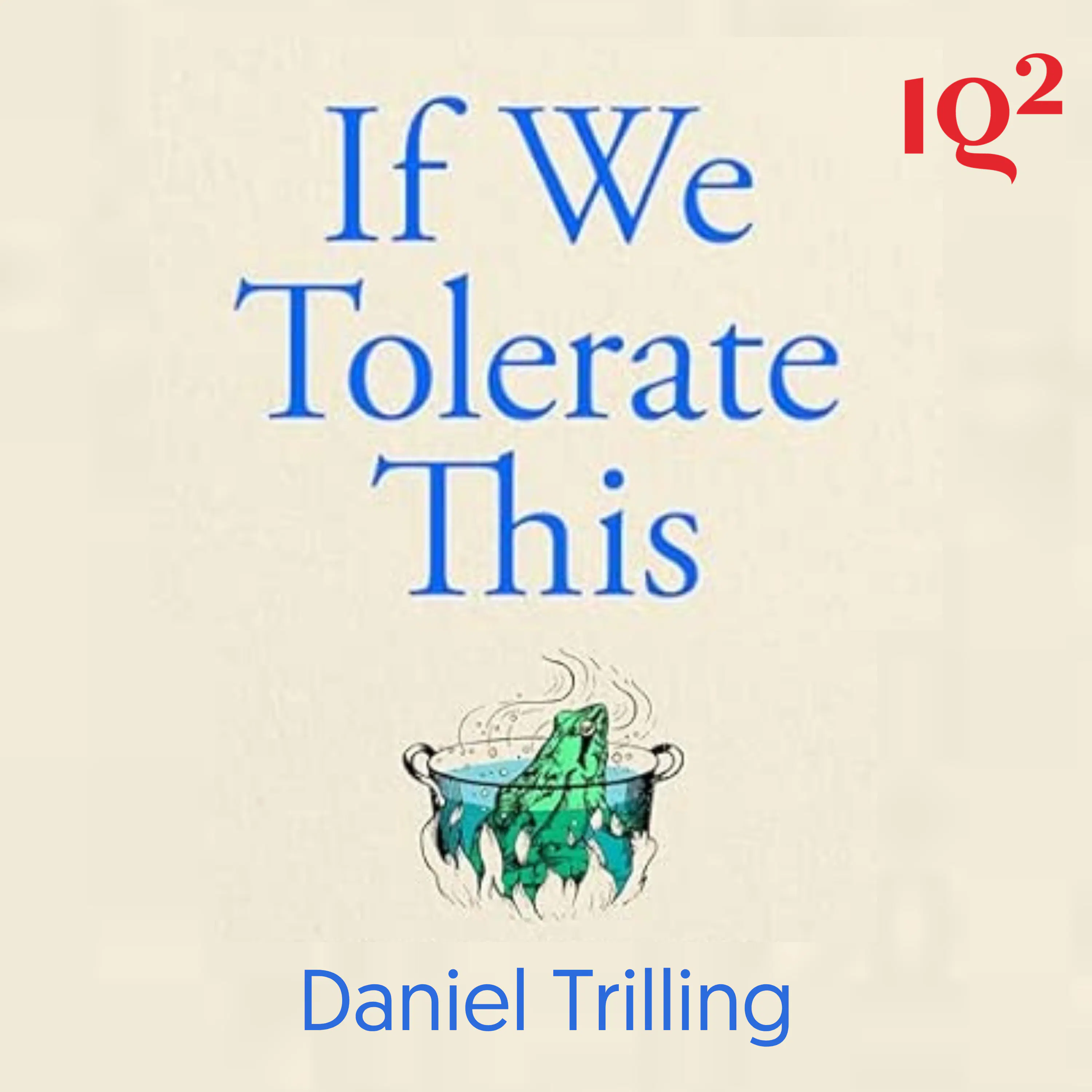
Intelligence Squared
Has Far-Right Politics Entered The Mainstream in the UK? With Daniel Trilling
00:47:55
Loading summary
Transcript33 lines
- [00:00]
A
Springtime is my catalyst to switch out the major players in my closet and take stock of what I have and haven't been wearing over the last year. It's a great time to get a bit more intentional about what you're wearing day to day, and if I'm getting rid of anything, I want to make sure that I'm replacing it with quality pieces and I've been turning to Quince for that so often recently. Their clothes are made really well and price even better, so it makes shopping for and wearing their pieces simple. Quince uses premium materials like organic cotton and ultra soft denim and their lightweight linen pants, dresses and tops start at just $30. They've also got incredible accessories. I just picked up a cognac Italian leather sling bag which is a huge upgrade from the crossbody that I have been using. The leather itself is really beautiful and I also love the gold hardware it comes with. I think it's just such a sleek bag. Everything at Quint's is priced 50 to 80% less than similar brands because they work directly with ethical factories and out the middlemen. So you're paying for the quality and craftsmanship of the products, but not a brand markup. Refresh your everyday with luxury you'll actually use. Head to quints.com intelligence for free shipping on your order and 365 day returns. Now available in Canada too. That's Q-U-I-N-C-E.com intelligence for free shipping and 365 day returns. Quince.com intelligence insurance isn't one size fits all, and shopping for it shouldn't feel like squeezing into something that just doesn't fit. That's why drivers have enjoyed Progressive's name your price tool for years. With the name your price tool, you tell them what you want to pay and they show you options that fit your budget enough. Hunting for discounts, trying to calculate rates and tinkering with coverages. Maybe you're picking out your very first policy, or maybe you're just looking for something that works better for you and your family. Either way, they make it simple to see your options. No guesswork, no surprises. Ready to see how easy and fun shopping for car insurance can be? Visit progressive.com and give the name your price tool a try. Take the stress out of shopping and find coverage that fits your life on your terms. Progressive Casualty Insurance Company and Affiliates Price and coverage match limited by state law
- [02:19]
B
welcome to Intelligence Squared, where great minds meet. I'm producer Mia Sorrenti. When ideas once associated with the Political fringe begin shaping mainstream debate? How should democracies respond? And what does the rise of populist nationalism reveal about the anxieties and frustrations driving politics in Britain today? On today's episode, Daniel Trilling, journalist and author, joins Sophie Scott Brown, historian and philosopher, to discuss Trilling's new book, if We Tolerate this, How the British Establishment Made the Far Right Respectable and the Forces behind the Growing Influence of far right Politics in the uk. Let's join our host, Sophie Scott Brown, now with more. Hello, welcome to Intelligence Squared. I'm Sophie Scott Brown and I'm joined today by journalist Daniel Trilling. Daniel is the author of books including Bloody Nasty People, the Rise of Britain's Far Right and Lights in the Distance, Exile and Refuge at the Borders of Europe. His work has been shortlisted for the Orwell Prize, the Political Book Awards and the Bread and Roses Award for Radical Publishing. But he's here today with us to talk about his new book, if We Tolerate how the British Establishment Made the far right Respectable. And obviously, given recent events here in Britain, the local elections, nothing could be more topical than this subject right now. So, Daniel, a very warm welcome to Intelligence Squared. I'm really looking forward to having a discussion with you on the. On your book. Congratulations, by the way. A very, very timely book indeed, raising lots of important questions. So, just to start off with, I mean, so what you're sort of saying in this book is that within the period of roughly last decade, 15 years or so, something like that, a new, powerful and, in your view, quite dangerous political forces sort of entered the arena, a new kind of ideology. And the established sort of political classes, as it were, have either not reacted fast enough, been indifferent or been actively complicit. So I wondered if we could start just by unpacking a bit, two of the key terms in your subtitle, the far right and respectability. Could you tell us a bit about what you think has happened? And what is it? What is this? How has the far right been made respectable?
- [04:38]
C
Yeah, so to start off with this term, far right, that's something that I think gets used in unhelpful ways quite often. You know, it's kind of a vague and fuzzy term. People argue over its meaning quite a lot. And I think in some people's minds, it just automatically means fascist or violent extremist, and it certainly does mean those things in certain contexts. And there was a time, so I started working on this subject back in the late 2000s, when that was kind of what sort of dominated the field. So when I started off as a journalist. I was reporting on the bnp, the British National Party, who were founded by neo Nazis. They came from this tradition of post war parties in Britain and movements that sought to revive a version of mid 20th century fascism in their own time. But actually just at that point I was writing about them, the BNP had started to do something different. They were pioneering a version of what we would now call right wing populism. You know, they, they professed a commitment to democracy, they concealed their, their more extreme views and they engaged in electoral politics. And actually that doesn't mean they moved away from being far right completely. It's just that far right actually has always referred to a broader collection of ideas and movements and groups that sit outside the traditional center right mainstream of politics. And I think for me, the most useful kind of taxonomy of that that I've come across comes from the Dutch political scientist Kassmuder, who is a world leading expert on far right politics. And he uses far right as an umbrella term to cover this collection of right wing nationalist movements, all of which are more radical or more extreme than what we have come to think of as traditional mainstream center right politics. But Muda divides the far right into two wings, so one of which is what he calls the extreme right. And those are groups that, as Muda says, are hostile to the essence of democracy. So fascism would sit within that wing of the far right. You know, fascism essentially seeks to replace democracy with a form of dictatorship. The other wing is what Muda and quite a few other scholars call the radical right, but in everyday terms is kind of, it's usually what we call right wing populism. So these are the groups that have really got the momentum at the moment politically in, you know, not just Britain, but across many liberal democracies. And they accept the essence of democracy, as Muda puts it. So they have a commitment to the, you know, electoral politics. For instance, most of the time they are committed to abiding by the results of those elections, although not always, as we've seen with Donald Trump in the US but they are nonetheless hostile to fundamental aspects of liberal democratic systems, which is the kind of system that we in the UK live under, where governments are chosen by voters, but there are various institutions that are supposed to act as checks and balances on the power of the executive to stop democracy becoming a kind of simple, crude tyranny of the majority. So those institutions would be things like independent courts or a free media that is free to scrutinize, criticize people in power. And wherever you see right wing populists doing well in the world at the moment, the consistent thread, I think, is that they, you know, they're not just rhetorically hostile to some of these things, but when they actually have power, they have sought to undermine them. And I think for me, the telling thing there is the idea of free speech. So free speech is a kind of rallying cry of right wing populism around the world. And actually the far right more broadly, even kind of the extreme bits of the far right, will often invoke free speech to give their cause legitimacy. But where right wing populists have had any power, I can't think of a single case in which speech has become more free as a result of what they've done. And in pretty much every case I can think of, you can point to ways in which it has become less so. So again, Trump, very good example of that. He has tried to intimidate media organizations that publish content he dislikes. Viktor Orban in Hungary, you know, one of the longest lasting far right populist national leaders, until he was kicked out at the elections, recently gutted the country's media, gutted the country's judiciary and so on. And that I think is, it's fundamental to that we're doing politics. And it's also why all of these groups belong under that umbrella term far right and should be seen as distinct from what we had been used to seeing in the mainstream of politics over recent decade.
- [09:33]
B
Okay, I mean, you've raised loads of really, really rich and interesting points. So I'm just going to come back on, pick up a couple. I think the sort of first answer is, so by respectful, what we're talking about are groups of people who are kind of utilizing language, political language that we affirm, we like. You know, it's sort of rhetoric like democracy, free speech, things that if you're a proper liberal and a proper democrat, two things which don't actually always go together as easily as they, as they sound, that you should like and endorse and buy into. So there's a particular kind of leveraging of mainstream political language and subverting it maybe from the inside, possibly, is the argument there. And the second element of becoming respectable is that actually, rather than attempting to operate outside of the political systems and in critique of them, you're saying that these parties are increasingly wanting to enter into these systems and into these spaces and take part in our kind of established electoral politics. I mean, let's not forget that Nigel Farage was an MEP for example, so he advanced a lot of his critique of Europe from within, as it were. So these are possibly the two elements which we're really kind of zooming in on. We're not talking about some, you know, because all, all politics has always had its fringe groups, right? And every now and then they almost, to the astonishment of them, let alone anyone else, they get somewhere, they get some attention, they get a moment in the spotlight, they might even get a counselor or even an MP over the line, but it doesn't last that long. What we're talking about more here is a much more kind of systematic and consistent project of infiltration and kind of almost, if you like, colonization of language and political space. Okay, so what I'd say is this opens up an interesting degree to which, I mean, you cite earlier examples of fascism which had a totally. Which you sort of say had a very, very different agenda. Yes, of course. Especially in the case of something like the Nazis. They did work through a similar process. They went through an electoral political process and they leveraged language like socialism. We are going to recover, you know, the sort of land for the German people. So there was a degree to which manipulating existing values and languages. So again, I sort of say, is there anything that's, you know, so maybe we've seen elements of this happening before. What really is it that's making this quite so, if not entirely new? Certainly a raised level of threat, perhaps.
- [12:16]
C
Yeah, so I mean, just to talk first of all about that, that comparison with the 20th century, obviously this is something again, that we all love to kind of argue about. And I mean, it's important to think about these things. And you know, for, for the last decade at least, you know, with the big breakthroughs for right wing populism in different parts of the world, that question of always, you know, to some people, it reminds them of fascism of the 20th century. And then what ensues is a kind of heated debate about, well, is this or isn't this like fascism? And I think that debate often gets stuck in a kind of form of sort of historical box ticking. You know, the game is to try and tick off as many features that resemble a movement from, from a century ago or almost a century ago, you know, whether that was in Germany or Italy or elsewhere. And you have to get to as many boxes ticked off as possible, and then, and then you reach your decision about what's happening now, to me, that seems to be the wrong way around. And obviously I come at this as a journalist, so what I'm primarily focused on is sort of what is happening right in front of us and what is new and specific about that. And I think where the comparison is useful for me at least, is not so much in looking at kind of the concrete features of particular movements, because I think those are always produced by their specific historical conditions, but the kind of emotional drives that, that seem to overlap. And so for me, that's where I think understanding the events of the 20th century are quite useful for understanding what's going on now. So I'm thinking here particularly about the historian Robert Paxton, who is one of the leading historians of fascism in the 20th century, who, as well as talking about the specific features of fascist movements, talks about them operating on a set of mobilizing passions, as he describes it. And that idea of fascism resting on this very strong appeal to the emotions and appeal to negative emotions is a vein of thought that a lot of other people have worked within as well. And those mobilizing passions, as Patsden defines it, are things like an imminent sense of national threat, of humiliation, of a desire for kind of strong, authoritative leadership. But I think crucially, this kind of conflicted desire for something radical and revolutionary that at the same time restores an older order, sets things back to how they were. And so that to me, although many of the features of 20th century fascism are not present in say, a modern right wing populist movement, that underlying quite conflicted emotional drive is there. Absolutely. And it's for that reason primarily that I think this is dangerous, because I think, you know, a desire for some kind of revolution that restores the status quo. And, you know, if you look at GB News, for example, which is a TV channel that airs right wing populist themes constantly, they're always talking about revolutions and uprisings against the establishment, against the elite and so on, at the same time as they're airing lots of very traditionalist, conservative views about gender, national identity, culture, and so on and so on. So that contradiction is there, you know, you know, watch kind of half an hour of GB News and you will see what I'm talking about in terms of the emotions. And the reason I think that's dangerous is because it's something that, you know, it's, it's, it's something that can never be fulfilled. You know, this kind of contradictory desire is exactly that. It's contradictory. And when you have politicians and movements who trade in that politically and make that their kind of, you know, their fundamental point of appeal to people, I think it can only really go one of two ways, which is either to kind of fall flat, it often does, because eventually those politicians will disappoint their supporters because that promised revolution will never arrive, or as also can happen. And as I think you do see happening in different parts of the world at the moment, it leads to a kind of acceleration of what those parties are offering, a kind of increasing radicalization, because one thing is never enough to satisfy that desire. And so if we come back just briefly to Reform uk, who, you know, in terms of their kind of overall image and their, their sort of top line rhetoric, you know, they're not, they're not an extreme right wing party. They're very firmly, firmly within that right wing populist wing of the far right that I was talking about before. Even among those parties, tonally, they're more moderate than, you know, the AfD in Germany, for instance, or even, you know, Donald Trump in the US but you can see that same kind of oscillation back and forth between kind of moderation and radicalization. If you look at their policy on deportation of unauthorised migrants in the UK a couple of years ago, Nigel Farage was saying mass deportations were not realistic and it wasn't something that Reform was going to be advocating for. In 2025, as his party started to split with splinter group saying that Reform weren't going far enough, and Elon Musk, the owner of X, laying into Nigel Farage as weak source, you saw Reform's position on deportations move swiftly to a much more radical direction to the point where they're now proposing to deport hundreds of thousands of people within their first few years of government.
- [17:58]
B
So I think let's stay on this point for a moment and maybe link up a couple of the threads from the previous answer too, about where this sits kind of historically and particularly in relation to events in the, in the, in the 20th century. So maybe one of the things, I mean, one of the great pleasures of the book, and obviously I use that word sort of slightly advisedly, obviously it's a tough subject and a really strong analysis, but one of the sort of really kind of interesting elements are the kind of analyses that you do of individuals decisions, turning points, both Najafarage and reform, but also within labor, within the conservatives, you know, points where this has been allowed to happen, allowed to advance, et cetera. But I think possibly, and again, listening to your answer just then and the one previously, there's a sort of broader point underlying all this. Since arguably since after the war, post 45 onwards, what we've sort of seen is the kind of rise and consolidation of what you might want to call a professional government class of political leaders. And this has been largely looking out towards and answerable to. And again, you discuss this in the book, a global capitalist international order, which of course affects the lives of ordinary people. But it's hard to pin that down because it's usually articulated in a very rarefied form in both political language and also in academic language. So people know it's affecting them, but it's quite hard to kind of get a handle onto as to why. So you've got an increasingly remote feeling, political elite or a professional governing class. And then you've got this space really for what I suppose you might call doing politics. This is exactly what you've been describing, that politics. This is not necessarily what, you know, I would like to see as politics. Like, you know, sort of people on the streets discussing issues of. About their community, making decisions collectively, all that lovely jolly sort of stuff. No, no, no. But this is an aesthetic of doing politics in the sense that, that it's something like reform. It does mobilize the emotions, it tries to get the heart racing. It's sort of like you mentioned, GB news. If you watch that for any length of time, it's almost like a cross between a blood sport and a sort of celebrity reality TV roast up or something like that. It's, in other words, it's kind of politics that's flawed and messy and salacious and kind of very far away from these quite detached, remote, very slick official pronunciations. And I think this has worked really well, not just for reform, who obviously someone like Farage is excellent at mobilizing this, but it worked for Donald Trump during the election campaign. The more he seemed to flout due process and do things his own way or do things quite eccentrically or make off the cuff pronunciations, actually the more popularity he seemed to get. So I'm sort of wondering, is this an element that's really feeding what you're describing here? That actually what we've lost is a kind of, as a people, as a sort of broad community, is any sense that we are participating in politics. And I'm not saying that reform are giving us that participation, but they're giving us a sort of. But they're dignifying that sense of being alienated from politics. So how much is the theater around reform important? And, you know, does that not mean that there's such a big difference between being able to fight election campaigns? But then actually what would happen if and when they Enter government.
- [21:57]
C
Yeah, I mean, I think the theater is really important first of all for the reasons we were just discussing, because it's where those appeals to the emotions are, but also because, I mean, in a way, politics is theater. You know, it's, it's, it's a form of collective activity where we have to come together and find ways to represent what we want as individuals or as groups to one another. So even if it's kind of very in your face politics, like, you know, it's kind of traditional sort of town hall meeting, there is an element of like, you know, you have to get up and perform in front of other people to get your views across in the time we live in that is mediated through various forms of technology and you know, has been for several hundred years. So reform have managed to find a very effective way of doing that in our current moment. But I think also it, the reason that they have been successful in doing so is linked to the other part of what you just mentioned, which is this idea of a kind of professionalized governing class that has grown up. Yeah, certainly since the Second World War, but I think that really kind of embedded even more deeply into British culture from the 1980s onwards with the changes that Margaret Thatcher brought in. And the idea that politics is kind of a business done by those people and the rest of us are spectators except for are allotted time in the ballot booth at elections. And you know, that's breaking down as, as that political class becomes increasingly unable to offer solutions to problems around us and people get increasingly frustrated with that. I mean, a good indicator of that is just, you know, the recent local elections in the uk. When did you last hear people discussing local elections to that extent? It being such a huge topic, you know, a newsworthy topic. I think turnout went up in most places and yes, reform are kind of one of the big stories of that election. But the overarching story is, you know, the old two party duopoly fragmenting into all these different pieces. One result of which is, is that it has engaged and energized people. I think people, you know, it's not always a nice feeling, but people feel that there's something at stake at the moment politically that it hasn't been for quite a long time. So I think that's what is going on more broadly. I think then you get to the question of, okay, well, so what are the results of that theater and that contestation and to stick with reform? I think what they're offering, you know, it's okay, I already explained why I think the kind of emotional drive is contradictory, but just ideologically as a party, they have a platform that is also very contradictory. So among their right wing populist cousins, I think, I think it's a general rule of thumb that today's right wing populists are always promising, you know, they're always promising some kind of national revival and that the current sort of received wisdom in that area of politics is you do that by unleashing the energy of capitalism somehow. You know, so like Javier Milei in Argentina posing on stage with a chainsaw when he was campaigning for election to indicate how he's going to slash away at the state and kind of revive Argentina's economic fortunes is a very good kind of symbol of that. But within that reformer kind of at the kind of most extreme end of those free market capitalist policies. If you look at Nigel Farage's background just as an individual, he is someone whose career as a financial trader was made by the big Bang, the deregulation of the City of London in the mid-1980s, which was a key element of Thatcherism, of the introduction of neoliberal ideology to British politics. He did very well out of that. He, I think instinctively still sees the kind of basic elements of neoliberalism as what he's there to push forward. Liz Truss mini budget in 2022, Farage described as the best conservative budget since the 1980s and then had to swiftly backtrack when it turned out it had some unintended effects. But at the same time, like other similar parties around the world, they are also mobilizing what I think is a kind of desire, sort of one that's been quite debased for, for kind of more community and more solidarity and more of the things that neoliberalism said weren't necessary for society. And you know, you can see that in a way that their two biggest groups of voters, at least according to a. A bit of polling done at the end of last year, are, I suppose what we now come to see is that kind of stereotypical pro Brexit vote in former industrial areas of the north and east of England, which tend to be people who favor higher state spending on public services, more workers rights, essentially those that are old enough to remember, kind of miss British social democracy of the immediate post war period. And another group of voters who are more likely to be in the southeast of England, who are wealthier, want fewer workers rights, want a smaller state, less tax, essentially people who did very well out of Thatcherism and the neoliberal boom years and want to see more of that. Where they both come together is that they essentially what they like about reform and can agree on is reform's proposal to turn the British immigration system into even more of a miniature authoritarian state than it is already. So reform as a governing project has got to deal with this. It's got to disappoint one of those groups at one time or another. And I think you've already seen that happening with the councils that it's had control of since the local elections in 2025, where it came in promising tax cuts and that it would unleash the sort of economic power of the council by slashing diversity initiatives. And then those same council very quickly found that this was kind of wishful thinking and they had to essentially they had to raise council tax, they had to make the cuts they had promised not to make to vital social services and so on. And you know, that's where this, this kind of mix of ideas that they've, they've assembled really starts to fall apart. I think.
- [28:26]
A
Starting or growing your own business can be intimidating and lonely at times. Your to do list may feel endless with new tasks and lists can easily begin to overrun your life. So finding the right tool that not only helps you out, but simplifies everything as a built in business partner can be a game changer for millions of businesses. That tool is Shopify. Shopify is the commerce platform behind millions of businesses around the world and 10% of all e commerce in the US from household names like Gymshark, Rare Beauty and Heinz to brands just getting started. Shopify has hundreds of ready to use templates that can help you build a beautiful online store that matches your brand style. And you can tackle all the important tasks in one place from inventory to payments to analytics and more. No need to save multiple websites or try to figure out what platform is hosting the tool that you need. And if people haven't heard about your brand, you can get the word out like you have a marketing team behind you with easy to run email and social media campaigns to reach customers wherever they're scrolling or strolling. Start your business today with the industry's best business partner, Shopify and start hearing. Sign up for your $1 per month trial today at shopify.com realm. Go to shopify.com realm. That's shopify.com realm.
- [29:51]
C
Your summer starts now with Memorial Day deals at the Home Depot. It's time to fire up summer cookouts with the next grill 4 burner gas grill on special buy for only $199 and entertain all season with the Hampton bay West Grove seven piece outdoor dining set for only $499 this Memorial Day. Get low prices guaranteed at the Home Depot while supplies Last priced invalid May 14 through May 27 US only exclusions apply. See homedepot.com Pricematch for details.
- [30:22]
B
Ready to soundtrack your summer with Red
- [30:24]
A
Bull Summer All Day Play?
- [30:26]
B
You choose a playlist that fits your summer vibe the best. Are you a festival fanatic, a deep end dj, a road dog, or a trail mixer? Just add a song to your chosen
- [30:36]
A
playlist and put your summer on track.
- [30:39]
C
Red Bull Summer All Day Play Red Bull gives you wings.
- [30:42]
A
Visit RedBull.com BrightSummerAhead to learn more. See you this summer.
- [30:49]
B
When you need to build up your team to handle the growing chaos at work, use Indeed Sponsored Jobs.
- [30:54]
A
It gives your job post the boost
- [30:56]
B
it needs to be seen and helps reach people with the right skills, certifications and more. Spend less time searching and more time actually interviewing candidates who check all your boxes. Listeners of this show will get a $75 sponsored job credit@ Indeed.com podcast. That's Indeed.com podcast. Terms and conditions apply. Need a hiring hero? This is a job for Indeed Sponsored
- [31:17]
C
Jobs Trading at Schwab is now powered by Ameritrade. Unlocking the power of thinkorswim. The award winning trading platforms loaded with features that let you dive deeper into the market. Visualize your trades in a new light on thinkorswim desktop with robust charting and analysis tools all while you uncover new opportunities with up to the minute market news and insights. ThinkOrSwim is available on desktop, web and mobile to meet you where you are. It's built by the trading obsessed to help you trade brilliantly. Learn more@schwab.com trading.
- [31:53]
B
Well, I think it's an interesting question whether a party that's good at doing politics and I mean literally almost as a kind of activity rather than anything else, I mean there is a question to say, well, would that even translate into a government space? I mean, have we now as I sort of implied by the question, you know, is government such a different business that's answerable to different sort of structures, you know, and therefore, you know, it is questionable whether that would, you know, what's going to happen when those two spheres meet. But again, I mean I think I was just sort of as you were talking there, I think that is you sort of discuss, you sort of mention the people a bit more like us, ordinary people and that's if I was to have any sort of little possible point to pick in the book. It's. There are brilliant analyses of, of Farage and Reform and other individual political individuals and strategies and what have you. But occasionally there are points at which the people, that's us, you know, us ordinary folk, we come. It can seem that we're either being slightly imposed upon or we're having our strings expertly pulled by these, you know, sort of political, brilliant political overlords, as it were. And I guess it struck me again coming at it as a historian
- [33:19]
A
in
- [33:19]
B
a sense, I wouldn't almost, almost wouldn't worry about trying to find an underpinning, intelligible logic to Reform's ideology. I think it is much more collage, impressionistic, very largely motivated by pursuing power. But one thing it really does do is mobilize an extremely powerful idea that certainly the right didn't invent, but the right's always been really good at, at manipulating is. And it's a very old, very ancient idea that's absolutely shot through right back as far as you can go in the history of popular politics in this country, in Britain, in England, perhaps even more specifically. But it's this notion of the freeborn Englishman. And this was a concept that was actually kind of discussed at greatest length by possibly one of the best known left wing historians of all time, E B Thompson. And his argument was that the industrial working class left that we kind of almost automatically think of today, that's actually a very, very new phenomenon and for the most part, so popular politics has often mobilized this notion of the free born Englishman, that is someone who is a free British or an English citizen and that they have certain rights that are due to them and those in power can remain in power. That's fine unless they stop observing these rights, in which case the are entitled to rise up, grab the pitchforks, light the torches and off they go to insist on their rights. And this is such a powerful idea. Now it has lots of different incarnations, but a very dominant form has been attached. And it was interesting what you were saying about those communities in the ex industrial towns up north which ostensibly do espouse quite strong social democratic views about, you know, workers rights and state investment in industry and what have you. And yet it's still very, very strongly attached to what you might describe as a highly racially prescribed, very sort of gendered community model. And I guess what I'm saying is there is a degree to which the progressive left, who tend to be educated middle class, there is a real resistance to Kind of, of sort of the idea that actually a lot of these notions really are within kind of the ordinary popular political imagination and have been for a long time, even in anti colonial struggles, interestingly, because, you know, reform does include a lot. There are a lot of different kinds of members of reform who buy into these sorts of ideas from lots of different ethnic and cultural backgrounds. And even in anti colonial struggles there was always an ambivalence between whether you wanted to be a free English citizen or whether you wanted independence. And quite often you had to be on the same side but wanting quite different outcomes from your struggle. So I guess to sort of round this all back up, repackage it and ping it at you as a question. Daniel, where are the people sitting in this? What role are they playing and to what extent? Is it actually not so much the cleverness of politicians but actually just the receptiveness or the canniness of parties like reform to just pick up on something that is there already?
- [36:49]
C
Yeah, that's a really good question. And I think you're right that in my book the people, as you put it, are not very present on the surface. That's partly because I thought the most pressing need at this moment, because so much has changed at that top level of representational politics in such a short time, was just to explain as clearly as possible what has gone on there, how are these different bits fitting together. But it's also actually because rather than kind of do an analysis of who the people are, it's addressed to a general reader. And in a way where the people are in that book is, it's, it's you reading it, which at least that, that's my hope. And I had a couple of reasons for doing that. One is because, as you say, well, all, all political entrepreneurs are clever with their techniques and they're used to the media and use the power and so on. I think it is, you know, it's just very important particularly for journalists to just, just show how that works so that people, anybody can understand what's going on when they see, for example, half an hour of GB news as we were talking about earlier. The other reason as well is because I think something that has dominated the way politics is discussed, particularly in the kind of Westminster and London based media and also among those kind of more educated progressive cultures within, within the country, is that it's a sort of missionary occupation where there's us who know the truth and we've got to go out to these benighted places around the country and convince people well, in the most patronizing interpretations and this does happen a lot, not to be so stupid or even in the more kind of thoughtful and well intentioned versions to kind of win people over to our side. And I think that's an incredibly reductive way of thinking about the country, which is partly bred by the kind of short term crude framing that comes with doing electoral politics in a country with a first past the post system. So the idea of there being red wall areas of the country where at most you get about half the voters within a constituency supporting what is seen as the stereotypical red wall set of values. So first of all that tells you, well there's another half of the community that think something different and aren't necessarily represented by the way that we in the London media and I'm including myself here to talk about them. The other reason is for exactly what you were talking about. There are also these kind of deep rooted democratic cultures and ideas among people across the country that I think have been really kind of neglected and dismissed certainly in my lifetime, but that rely on, they draw on various quite deep rooted ideas, some of which are to do with these very kind of longer historical ideas about liberty, about Englishness, about your, your rights. As somebody who lives in the country, I would also say, and I've got to credit my wife here because she's just done her PhD on it, there is a long tradition of that those rights being defined explicitly in opposition to the rights of migrants and outsiders. So if you want to look up Kathleen Commons work on this, feel free. But also it's, it's a mix of things, I think, you know, there is, there, there's, there's that, that kind of residual set of ideas. There is also now the residual ideas that are left by precisely the thing that E.P. thompson described being formed and being turned into a political project. The idea of kind of solidarity and standing with one another and that there is a working class in Britain and that it's, you know, it in some articulations of that, that it's diverse and diverse in its strengths. And so all of these things that I'm talking about just seem to never really get their due attention when we come to talk about, particularly when we talk about the growth of kind of right wing populism which plays on bits of these things. But I mean strategically it excludes a lot of the rest. And so the reason why I wanted to leave that open and just address the reader directly I suppose was right. It's because I wanted to avoid that feeling of being the missionary, coming from the center and preaching to the people. It's rather a kind of. It's my sort of act of faith that people don't need to be told that there are people all around the country who have either spent, you know, felt like the last 10 years have been a pro, has been a process of being told you're too elite and urban and woke to have an authentic opinion or you're too provincial and thick and old and whatever to have an opinion. And actually you just like me, are perfectly capable of looking at the world and making your own conclusions and deciding what is right and wrong. I'm telling you what I think is right and wrong in this situation. But from that point on it's for you to take up and do what you want with. So that's my kind of defense of the approach I took in the book. If.
- [41:55]
B
No, no, I mean, excellent answer. No, that makes total sense. And in fact I'm just going to pick up in the sort of closing chapters you actually do sort of. If the reader's sort of the implicit point of address for qu of the people. Us the people are the implicit point of address for quite a lot of the book. Then right at the end you sort of break that fourth wall and you talk fairly directly like what can you do if you don't want to put up with this? But you're feeling, you're looking around and you truly are between rock and hard place. Perhaps one place being slightly harder than the rock but you know, it's marginal and you sort of. And you know the kind of the spirit of the advice that you give and I won't tell everyone what it was. I will encourage people to go and go and find out for themselves. But the general spirit of the advice is actually quite in line with the sort of activist cultures that we're seeing increasingly emerging. Is a new and quite interesting but quite distinct political force. So it's a lot about what can you do directly yourself. So direct action orientated, quite community based and in some ways and, and you know, it's a positive way to end what is a difficult book but I suppose slightly related to that. The big question with that kind of activist politics is always scale, right? You can do some brilliant things on the ground and it is going to be more authentic and have more integrity and you're going to be able to keep more control of it and you're going to be able to keep kind of corruption at bay much better and all that sort of thing. But it is Limited, potentially too limited by its localism. And there's always been that question of how do you upscale? So I guess my sort of parting question to. And it's implicit in this book, in some of your discussions, but why haven't the Left been able to kind of do populism with quite so much effectiveness or success? Now, you do mention Corbyn. Corbyn was one example. We're now seeing Zach Polanski and the Greens. That's another example. And arguably it's the main difference between what someone like Polanski is doing with the Greens and. And reform is that they're trying to talk about what you might call the empirical communities. So democracy amongst the people who are genuinely in your community, not having to get rid of a whole bunch of them first before you can have the perfect community, but the problems as they live and feel to people in the here and now. And that sounds like that's a great project. That sounds like real direct democracy with all its warts and tough bits and ugly bits and satisfactions. Bang. Wonderful. And yet that project always seems to get so far and then kind of fizzle or collapse. So, Daniel, please solve this for us. Why can't the Left do populism as well as the right?
- [44:44]
C
Well, I think the Left has a harder task. You know, for the Right, it's about capturing the commanding heights of politics on vibes alone, effectively. I mean, ironically, it hasn't always been like that. One of the reasons, you know, we've talked a lot about kind of the decay of these older democratic cultures and the way that reform is kind of appealing to a sense that something has been lost, actually, another big democratic culture that has been lost in the last 40 to 50 years is the Conservative Party as a membership organization. You know, so there's a sociologist called Phil Burton Cartlidge who wrote a really good book a couple of years ago about the decline of the Conservative Party as a force in British politics. And he points out that, you know, it's not only because successive governments have failed to reproduce a kind of layer of conservative voters, I. E. Affluent homeowners who are likely to hang on to what they. What they have, but also because, you know, it goes back to that. That kind of old saying that the. The Church of England is the Conservative Party at prayer. Now, that's not just about values. That was once literally true, that the bedrock of local conservative associations, the way that people socialize and got to know one another, was partly through weekly church attendance. And as society has changed and become more Individualist, those things have declined. Now for the right to do without them is possible, I think, because you just need Farage and his gang, or rather as they see it, they just need to get into power and make the kind of changes that they want. And kind of, that's where they want to leave it for the left. It's not enough. You know, if you are trying to build a movement that mobilizes what you describe as the empirical community, then it actually has to mobilize and empower people and somehow reflect the collective desires that people have in a much more accurate way than a party like reform tries to do. I think the reason why the left has been so, so bad at this recently, even though it's had flashes of success, is for two reasons. One is that I think it's always much harder to rebuild a project when one has been built over generations and then has decayed. So in Britain, you know, this, what we're talking about, has been dominated for more than a century by the labor movement, whose formal political representative is the Labour Party. The Labour Party. You know, it's old news that the top of the Labour Party have long since been captured by that professionalized political class we've been talking about. You can see Corbyn as the Corbyn movement, as an effort to redress the balance by targeting itself at that level, at the kind of top level political class. But I think the big weakness of Corbyn was the movement. You know, it had very shallow roots beyond that. And again, you're seeing a similar kind of thing with the Greens and Polanski for the moment. You know, they have found a way to skillfully play the political game using our current setup of media and technology and people's various frustrations about the country. But I mean, you know, has he even been the Green Party leader for a year yet? Maybe just over a year. They've had this huge influx of, you know, tens of thousands of members, but are now struggling to kind of build an infrastructure that can actually, you know, embed that in the communities they seek to represent and also, you know, reflect that up and down the party hierarchy. These things are just very difficult. But the reason why I in the book kind of stress the sort of. I suppose I'm quite voluntarist in that respect and saying this is stuff you can do and think about where you live and so on is not just because that's an easy get out from these harder questions about structure and power, but also because I think Britain in particular, and England in particular, one of the key problems is not just about economic inequality and geographical and regional or sort of imbalances and so on, but it's that local democracy has been really thinned out and that the those failures at the national level of politics I've just been talking about are a symptom of there just not being enough beneath it to sustain people. And although it's not an easy route to something better, I just personally don't see any way out other than pushing to reinvigorate democracy at those local levels and then you have something bigger to build on next.
- [49:16]
B
So we basically we have to relearn the habit of democracy and you do that sort of one action at a time. The the phrase sort of act local, but obviously thinking, thinking wider, thinking global comes comes to mind. Daniel Trilling, thank you so much. That was an absolutely fascinating conversation. The book if you tolerate how the British establishment made the far right Respectable. Available now. Available now.
- [49:44]
C
It's available now.
- [49:45]
B
Fantastic. Thoroughly recommend it. Daniel. Chilling. Once again, thank you very much. This has been Intelligence Squared.
- [49:52]
C
Thank you.
- [49:54]
B
Thanks for listening to Intelligence Squared. This episode was produced by Ginny Hooker and it was edited by Mark Roberts. For ad free episodes and full length recordings. You can become a member@innigration squared.com forward/membership and if you'd like to join us at future live events, you can find our full program and buy tickets over@intelligentsquared.com forward/attend. You've been listening to Intelligence Squared. Thanks for joining us.
- [50:37]
C
Did you know if your windows are bare, indoor temperatures can go up 20 degrees. Get ahead of summer with custom window treatments like solar roller shades from blinds.com and save up to 45% off during the Memorial Day Early Access sale. Whether you want to DIY it or have a pro handle everything, we've got you free samples, real design experts and zero pressure. Just help when you need it. Shop up to 45% off site wide right now during the Early Access Memorial day sale@blinds.com Rules and restrictions apply.
- [51:06]
B
Your next chapter in healthcare starts at Carrington College's School of Nursing in Portland. Join us for our open house on Tuesday, January 13th from 4 to 7pm you'll tour our campus, see live demos, meet instructors and learn about our Associates Associate Degree in Nursing program that prepares you to become a registered nurse. Take the first step toward your nursing career. Save your spot now at Carrington Edu Events. For information on program outcomes, visit carrington. Edu Sci.
- [51:37]
C
You can't reason with the sun. Trust us, we've tried. This summer it's time to put that angry ball of fire on mute. Columbia's Omnishade technology is engineered to protect you from the sun's harsh rays that can burn and damage your skin. The sun is relentless, but so is our gear. Level up your summer@columbia.com to spend more time outside and less time slathering on aloe lotion. You're welcome, Columbia. Engineered for Whatever There's a new way to sweetgreen Meet Wraps Handheld, hearty and made for life on the move. With bold, chef crafted flavors, fresh ingredients, and over 40 grams of protein, they're built to satisfy without slowing you down. Try wraps today in the app or@order.sweetgreen.com available at all participating locations.