← Intelligence Squared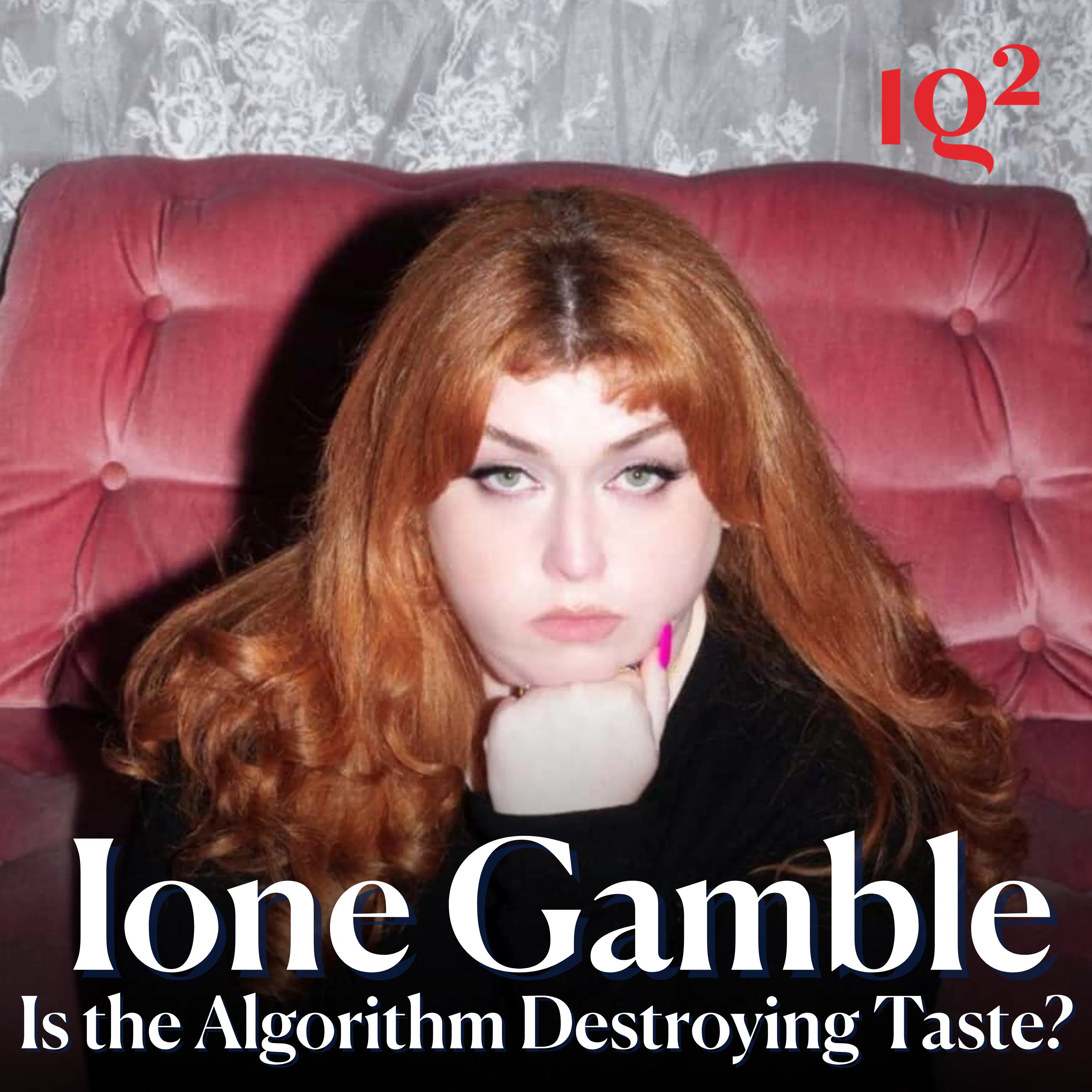
Intelligence Squared
Is the Algorithm Destroying Taste? With Polyester Editor-In-Chief Ione Gamble
00:29:59
Loading summary
Transcript175 lines
- [00:01]
Accenture Ad Voice
This episode is brought to you by Accenture. When your advertising operations fall out of sync, everything else follows. Spotify and Accenture are working together to reinvent the rhythm of ad sales using automation, analytics and smarter workflows to simplify campaign delivery and access better data across the business. The result? Less time spent on operations, more time connecting brands with the moments and fandoms that matter most. Learn more@accenture.com Spotify
- [00:31]
Indeed Ad Voice
when you need to build up your team to handle the growing chaos at work, use Indeed Sponsored Jobs. It gives your job post the boost it needs to be seen and helps reach people with the right skills, certifications, and more. Spend less time searching and more time actually interviewing candidates who check all your boxes. Listeners of this show will get a $75 sponsored job credit@ Indeed.com podcast that's Indeed.com podcast. Terms and conditions apply. Need a hiring hero? This is a job for Indeed Sponsored
- [00:59]
Mia Sorrenti
Jobs welcome to Intelligence Squared, where great minds meet. I'm senior producer Mia Sorrenti. What we like has never been entirely our own. Taste has always been shaped by class, culture, and the people around us. But in the age of algorithms and AI, our preferences are increasingly being predicted, curated, and sold back to us. In this episode, I speak to Ione Gamble, founding editor of Polyest Design, about how taste is formed, why it matters, and what happens when algorithms replace curiosity with convenience. From Spotify recommendations and TikTok trends to influencer culture and AI generated content, Gamble argues that digital platforms are flattening culture by rewarding familiarity over surprise. Why do our feeds increasingly feel the same? Or are we choosing what we like or simply consuming what algorithms decide to show us? And what happens to creativity when artists begin making work for recommendation engines rather than people? Drawing on the Polyester Book of Bad Taste, a collection of essays by writers including Nicola Dinan, Yomi Adegoke, and Ayony Gamble herself, Gamble makes the case for reclaiming our own tastes. She argues that resisting algorithmic culture means embracing friction, seeking recommendations from real people, and allowing ourselves the freedom to discover
- [02:19]
Host (Interviewer)
things we never expected to love.
- [02:21]
Mia Sorrenti
Let's join the discussion now.
- [02:23]
Host (Interviewer)
Hi Ione, welcome to Intelligence Squared. It's really nice to have you here.
- [02:27]
Ione Gamble
Thank you for having me.
- [02:29]
Host (Interviewer)
It's a real pleasure. You have edited this fantastic collection of essays all around the subject of taste,
- [02:37]
Co-Host/Interviewer
so it's worth getting first of all into it.
- [02:40]
Host (Interviewer)
How do you understand taste? What does it mean to you?
- [02:44]
Ione Gamble
I think so many different things and even more. After editing this book and seeing what all of the writers perceive and think Taste is, I think, for me, at its base level, taste is the things we like and why we like them and how culture, whether it's, you know, fashion, music, film makes us feel. But I think what interests me most about taste is that it isn't that straightforward and that it intersects with, like, different. Different modes of oppression and classism and all the. All of these other ways society is set up also impacts how we understand good taste and bad taste.
- [03:26]
Host (Interviewer)
Yeah, absolutely.
- [03:27]
Co-Host/Interviewer
And I think that's a really good way of thinking about it. And I always kind of think about
- [03:32]
Host (Interviewer)
it in the same way we think
- [03:33]
Co-Host/Interviewer
about desire, like sexual, romantic desire. You know, it's all. It's that kind of sticky thing that's at the intersection of, like, personal, political. It's something like weird and innate that is kind of inside us.
- [03:45]
Host (Interviewer)
We don't really understand why, but it's also very, very impacted by society, by all of our context, things around us. So lots to get into.
- [03:53]
Co-Host/Interviewer
But you mentioned class, which I think is really important to this discussion and
- [03:58]
Host (Interviewer)
is at the center of a lot of the essays in the book as well. I know you started out studying fashion journalism, and so the idea of taste must have been really front and center for you for a long time. And you talk about how class shaped your experience there.
- [04:13]
Co-Host/Interviewer
So I'd love to hear how you
- [04:15]
Host (Interviewer)
think class kind of charges how we understand taste and how we separate good from bad taste.
- [04:20]
Ione Gamble
Yeah. So I think that for me, it became so acute when I was at university, especially because I was studying fashion journalism, which is where, you know, one of the places within culture that, I mean, the class system is upheld throughout culture and the culture industries. But I think in fashion it's so acute because you're buying clothes and there's already that, like, very stringently defined system. It's not as if with there's so many class problems in everywhere, including film, but, you know, the cost of a cinema ticket is the cost of a cinema ticket, and that's too expensive anyway. But it's still far more affordable than like a designer dress or a handbag. And it wasn't that. It wasn't that. It was just that simple. When I was at uni, it was more that I thought my course was essentially an exercise in teaching good taste and teaching us the type of clothes and the type of designers and the type of culture that we should enjoy to be taken seriously. A lot of minimalism, a lot of, like, avant garde designers that were also minimalist in their approach. And it was basically kind of the polar Opposite to all of the things I enjoyed and the reasons I really loved culture. I've always been very drawn to maximalist things, but also political things. And at the time I was on Tumblr and there's a lot of work being made by young people and teenagers that was garish and crude, but also like feminist and queer and all of these things. So I would say how I understand taste is, yeah, as this, like, kind of hierarchical system in which things that are taken seriously often skew towards maximalism or. And minimalism and things that are expensive, whereas things that are in bad taste are often cheap, enjoyed by working class people, feminine, basically just all the way that society categorizes and oppresses people. Exist in the taste matrix as well.
- [06:21]
Co-Host/Interviewer
Yeah, definitely. It sounds like you got your degree and it was basically like you've been inducted into having cultural capital. Now we're going to teach you the ways in which you'll be accepted in these kind of very upper echelons of
- [06:35]
Host (Interviewer)
society and taste and culture, so. Well, it sounds very boring.
- [06:38]
Co-Host/Interviewer
And I'm glad that you do. I'm glad that you do what you do now, which. And a big part of that is
- [06:43]
Host (Interviewer)
obviously the polyester zine, which you set
- [06:46]
Co-Host/Interviewer
up in 2014, which, for those who
- [06:49]
Host (Interviewer)
don't know, everyone should know.
- [06:51]
Co-Host/Interviewer
But it's described as kind of an
- [06:52]
Host (Interviewer)
intersectional feminist publication about fashion and culture.
- [06:56]
Co-Host/Interviewer
And the kind of tagline of this
- [06:58]
Host (Interviewer)
publication is have faith in your own bad taste, which I believe is a quote from John Waters.
- [07:04]
Co-Host/Interviewer
So I'd love if you just kind
- [07:05]
Host (Interviewer)
of chat about that line, what it means to you, and what John Waters work mean to you as well.
- [07:10]
Ione Gamble
Yeah, definitely. So the whole. So have Faith in youn in Bad Taste is like our tagline that we've stolen from him. But the whole quote is something along the lines of, have faith in your own bad taste. Get on the nerves of your peers, not your parents. That is the key to fashion leadership. And I think that that really obviously resonated with me when I was studying, but also has continued to resonate with me. They have faith in your. About taste. It kind of just gave. And I hope it gave me and I hope gives other people the permission to be themselves and also interrogate why they like things, interrogate why they're drawn to certain things, but have faith that it is for a reason. I think John Waters obviously has always been such a trailblazer, but also someone that is so unapologetically themselves and makes the work that he wants to make. And we've seen, especially even recently, that that's not necessarily very lucrative in terms of money. Like, he hasn't been able to get the film made that he wanted to recently with Aubrey Plaza. But, yeah, I think he's just like an extremely inspiring person in terms of doing things your own way and having, like, resolute belief that the audience will find you.
- [08:23]
Host (Interviewer)
Yeah, he is definitely a very special director.
- [08:27]
Co-Host/Interviewer
And out of the collection. I thought many of your contributors talk about their teenage years as kind of a golden age. So we're going back before the fashion degree now to this kind of real
- [08:39]
Host (Interviewer)
golden age of discovering taste.
- [08:42]
Co-Host/Interviewer
And for a lot of your contributors,
- [08:44]
Host (Interviewer)
I would say around a similar age.
- [08:46]
Co-Host/Interviewer
So they're talking about a kind of time period that is, we'd refer to
- [08:50]
Host (Interviewer)
as the Noughties or the early 2010s,
- [08:52]
Co-Host/Interviewer
when they were kind of coming of age. So what do you think was specifically
- [08:57]
Host (Interviewer)
unique about this period in time, especially on the Internet?
- [09:00]
Co-Host/Interviewer
Because I know that feeds in so
- [09:02]
Host (Interviewer)
much to what people are writing about and then collection.
- [09:05]
Ione Gamble
Yeah. So I would say that it's around. Yeah, like late, like 2008, 9 up to 2014 was like really a golden period for the Internet in that algorithms were not anywhere near what we see now. I write in the book about how I was mostly on Tumblr, which a lot of my peers were, and also a lot of the writers in the book. And that. That didn't even have an algorithm. It was chronological and it didn't even introduce Infinite scroll until quite far into its existence. And I think that it just meant that the Internet felt a lot more free and it felt a lot less dictatorial and it felt a lot less. We had a lot more choice. It was much easier to find other people that shared similar interests to you, but it was also a lot easier to find completely new interests. I think that now the Internet feels so heavy for a lot of people, and this was a time period before, you know, personal brands or the expectation to be marketing yourself online. And it was more about using it for exploration and enjoying it.
- [10:13]
Co-Host/Interviewer
Yeah, definitely. And I love. I mean, Nicola Dinan's essay in this is one of my favourites.
- [10:18]
Host (Interviewer)
I think hers is fantastic. And I love her description of kind of when she's talking about her engagement with music, like trawling through reviews on Pitchfork, listening to samples to find new music that kind of generates this. What she describes as is a very kind of eclectic taste, like a lot of that would develop in surprising ways. And she says it made her feel like the world was open rather than closed.
- [10:40]
Co-Host/Interviewer
And she describes that kind of in
- [10:42]
Host (Interviewer)
contrast to how she feels now about her music taste using Spotify in particular,
- [10:47]
Co-Host/Interviewer
that you know, she has a lot
- [10:48]
Host (Interviewer)
of the same songs on repeat. The kind of radio function of Spotify will sort of churn out songs that
- [10:54]
Co-Host/Interviewer
she's already listened to or already in
- [10:56]
Host (Interviewer)
her library or sound very, very similar.
- [10:59]
Co-Host/Interviewer
And kind of using that example, I'd
- [11:02]
Host (Interviewer)
love to kind of chat because you describe how social media, especially Tumblr was
- [11:06]
Co-Host/Interviewer
chronological, didn't have infinite scroll. How do you think the Internet and
- [11:10]
Host (Interviewer)
social media has changed in kind of recent years? Even the last few months, things seem to change so quickly. How has the Internet changed and how do you think this has impacted taste and our interactions with culture?
- [11:24]
Ione Gamble
I think it's changed tenfold. Right. Like even one of the biggest shifts is that the Internet has become about just like an inroad to consumerism. So it's always people selling us stuff. Like it's not used as a showcase to teach us about things or introduce us to something. The end goal is always to buy a product and everything is kind of set up with that in mind and to tailor our experiences down to something that we would then want to purchase or data that can then be sold. I think that it can feel like we have so much choice, like an abundance of choice, but what we actually have is the big tech companies taking away our choice and taking away our control into these ever personalized algorithms that are showing us content that is more difficult than not to break out of. Gina on my team was speaking to a young person recently who had no. They asked her how to like, you know, find other accounts to follow or whatever on the Internet. And she was like, just look at the people you follow's following list. And they were like what? They'd never thought to do that because like younger people have just grown up with these algorithms that are constantly spoon feeding them content that they have no. Kind of like, you know, that little curiosity that there was for the Internet is gone and it just feels like a drudgery to have to go online now. So I think that really does impact our taste in that we aren't making informed choices. Even I think the most kind of like acute is obviously social media platforms, but even on streaming platforms you can't explore on streaming platforms anymore. You're fed like a homepage that is produced via an algorithm as to what like you've already watched. We're all watching the same releases, which is what we're talking about on social media. And it's, like, so difficult to find kind of like an undiscovered gem, even if that's just, to you, an undiscovered gem, because all of these companies have their own agendas that they're then trying to feed back to you. So I think that just makes us a lot more unimaginative when it comes to our own taste, because it's much more difficult.
- [13:33]
Co-Host/Interviewer
And you know that keyword about undiscovered
- [13:36]
Host (Interviewer)
or discovering something that's an active thing,
- [13:38]
Co-Host/Interviewer
you have to go and do the work.
- [13:40]
Host (Interviewer)
And when you're so used to something being so streamlined, for you, the purpose is to remove friction.
- [13:47]
Co-Host/Interviewer
And as soon as that friction is
- [13:49]
Host (Interviewer)
gone, doing anything to counteract that feels really hard because you're like, oh, but
- [13:52]
Co-Host/Interviewer
everything's set up for me perfectly. And I've got an infinite stream of content that the algorithm predicts that I'm going to enjoy. So it's hard to break out for that and kind of go and kind of discover something new. Again, I'm quoting Nicola.
- [14:08]
Host (Interviewer)
I really like the essay, but everything
- [14:10]
Co-Host/Interviewer
in the collection is great. But she says, it seems I've entered
- [14:13]
Host (Interviewer)
an era of driverless cars, never taking the scenic route, never placing my own hands on the wheel.
- [14:18]
Co-Host/Interviewer
That idea of taking the scenic route,
- [14:20]
Host (Interviewer)
it might take longer.
- [14:22]
Co-Host/Interviewer
You might have to use your brain
- [14:23]
Host (Interviewer)
a little bit more, but that's not happening anymore.
- [14:26]
Co-Host/Interviewer
And I wonder, aside from kind of
- [14:28]
Host (Interviewer)
predicting our behaviors and kind of feeding
- [14:30]
Co-Host/Interviewer
us this very curated, kind of infinite source of content, how do you think
- [14:35]
Host (Interviewer)
algorithms kind of oversaturate us with certain trends?
- [14:39]
Ione Gamble
I think that it's. It's like, you know, if you see, last summer it was butter yellow, right? And you might start with seeing one thing that's butter yellow, and you're like, oh, my God, that's so cute. Like, I've never thought to wear that color. Suddenly, it's all you're seeing. And you're not just getting organic content. That is like, here's how I style my butter yellow mini shorts. It's. Then you're being pushed advertisements, and those are increasingly, like, not just a fine line in how they look, but, like, in terms of disclosure as well. We just don't know. And at that point, you're just like, do I like this? Or have I just been shown it so many times that now I want it? I know there's stats that someone is more likely to buy something if they've been shown the same thing five times, for example, and it's basically just like tricking us into thinking we like something and forcing us to make decisions that we. If we actually just walk past it in a shop, for example, we might not give it a second look, but because we're constantly being fed it, everyone else is wearing it. It's. I. How I have been talking about it is like. It's almost like being back at school. Right. Like, do you remember being at school? And suddenly everyone would have the same bag. In my case, it was like this, like, fake Chanel flap from Miss Selfridge. Everyone had it. And it's like, I know when I was, like, 14, I wouldn't have wanted that bag, but everyone else had it. So suddenly you feel like you need it. And social media is basically putting us into this, like, suspended adolescence in that sense that we want the things other people have because we think it will, like, give us a better life or, like, make us seem cooler or like any of those things that are very, like, adolescent, immature feelings, but obviously they strike such a chord because of, like, a million other different things.
- [16:17]
Co-Host/Interviewer
Yeah.
- [16:18]
Host (Interviewer)
And it's interesting because I completely relate to, you know, in the way you're talking about school there. But the Internet used to be a way out of that for, I think a lot of people in that time,
- [16:27]
Co-Host/Interviewer
in that the Internet showed you that there were other. Other. Other brands available.
- [16:32]
Accenture Ad Voice
Exactly.
- [16:33]
Co-Host/Interviewer
But there's other kind of ways you
- [16:35]
Host (Interviewer)
can express yourself, other tastes. You can have other cultural influences that are out there. But it does kind of feel, you're
- [16:40]
Co-Host/Interviewer
right, that now we're just kind of in a kind of peer group, a
- [16:44]
Host (Interviewer)
school group of, like, however many million people in the world, and they're all buying butter yellow. In your recent article for British Vogue, you describe influences as kind of a new social class. So I wonder how you see kind of influences specifically as fitting into this new. Into this new landscape.
- [17:04]
Ione Gamble
Yeah, I mean, I think influences play a really pivotal role because they are kind of like the new aspirational lifestyle. Right. Like, it's like if you could just live your life buying the things you like and telling other people you like about them. Incredible. But I think as well, a lot of the recent kind of content that is talking about clothing in particular. Anything, to be honest. Like, it also spirals books, films. It's kind of marketed by these influencers in this way that's like, buy this to be, like, the ex girl. Buy this to be the smart girl. Like, hot girls read, girls do this, girls do that. It's very feminized. But there's. Men have their own fucking scary version in the manosphere where it's like bikeptides. So
- [17:48]
Co-Host/Interviewer
yeah, yeah, buy electrolytes and you'll
- [17:50]
Host (Interviewer)
have huge muscles or you know.
- [17:52]
Co-Host/Interviewer
Exactly. For girls it's like, yeah, buy XYZ
- [17:56]
Host (Interviewer)
clothing and just naturally you will be have a beautiful face, a very thin
- [18:00]
Co-Host/Interviewer
body and shiny hair.
- [18:02]
Ione Gamble
Exactly.
- [18:02]
Host (Interviewer)
Smaller package.
- [18:03]
Ione Gamble
And they're basically taking up the mantle that like magazine editors did in the 80s and 90s, right. Where they'd be like these very aspirational women that have like really high paying jobs and got to do nice things were telling us to eat like whatever that crazy Vogue diet was of like three eggs and a cup of coffee. Now that's influencers. And I think the kind of like veneer between them being relatable, one of us is slipping in favor of it being like, I'm better than you, here's what you buy to be more like me. And I think in that context they're kind of more influential than traditionally upper class people. Like traditionally people that would hold this power of taste because they still seem relatable to a lot of people.
- [18:52]
Host (Interviewer)
Yeah, definitely.
- [19:00]
Accenture Ad Voice
This episode is brought to you by Accenture. When your advertising operations fall out of sync, everything else follows. Spotify and Accenture are working together to reinvent the rhythm of ad sales using automation, analytics and smarter workflows to simplify campaign delivery and access better data across the business. The result? Less time spent on operations, more time connecting brands with the moments and fandoms that matter most. Learn more@accenture.com Spotify
- [19:30]
Indeed Ad Voice
when you need to build up your team to handle the growing chaos at work, use Indeed sponsored jobs. It gives your job post the boost it needs to be seen and helps reach people with the right skills, certifications and more. Spend less time searching and more time actually interviewing candidates who check all your boxes. Listeners of this show will get a $75 sponsored job credit@ Indeed.com podcast. That's Indeed.com podcast podcast terms and conditions apply. Need a hiring hero? This is a job for Indeed sponsored jobs.
- [19:59]
Facebook Ad Voice
This episode is brought to you by Facebook. So you were scrolling on Marketplace and there it was, the bike you'd been searching for. You sent a message and it turned out the seller was super chatty, kind of funny, and an avid cyclist. The next thing you know, you're in a cycling crew. Well, a community cycling crew group. The thing about Facebook, you might find more than what you're looking for from a browse to a bike ride this summer. Find more on Facebook.
- [20:29]
Home Depot Ad Voice
Pros trust the Home Depot for heavy duty storage solutions. For any job site or garage right now. Get up to 15% off. Select storage and organization Impact and water resistant totes and shelving built to hold up to £2,500. Storage systems have space for all your tools and protect them in the garage, on the job site and everywhere in between. Save time and maximize efficiency with adjustable shelving customized to your business's needs. Shop and save on pro grade storage at the Home Depot. How Pros Get More Done
- [21:00]
Crocs Ad Voice
when you think about Crocs, you think the classic clog. But did you know there's also a canvas clog, A vegan suede clog, A coastal inspired style. A style with studs, straps and lots of sass. Honestly, I could keep going with the surprises. You've got to see them for yourself because there is literally a style for every kind of girl. So do your thing and head to crocs.com or a store near you now.
- [21:31]
Co-Host/Interviewer
And it's interesting, you know, as we've
- [21:33]
Host (Interviewer)
discussed, algorithms clearly impact our individual interactions with the Internet. You know, we hear a lot of
- [21:40]
Co-Host/Interviewer
talk about how we're all in our
- [21:41]
Host (Interviewer)
own bubbles, but you also argue in your essay in the collection that algorithms are changing culture and art itself. It's not just about that kind of echo chamber.
- [21:53]
Co-Host/Interviewer
So would you mind expanding on that
- [21:54]
Host (Interviewer)
a bit more, how algorithms, and especially kind of AI as well, increasingly sort of changing culture itself.
- [22:01]
Ione Gamble
Yeah, so I think we did an episode about this on our podcast like last year or something about how it was about dead Internet theory and the theory that one day most people in inverted commas on the Internet aren't going to be people, they're going to be like bots and computers talking to each other. And I think we can already see the effects of that on some social media platforms, like Twitter, for example. Like how you click on a Tweet now is 200 bots underneath, just rewording the tweet and adding some inane commentary. And the reason why we have kind of come to this point, or we're getting to this point, is because of the attention economy and the views based economy in which most of these social platforms, if not all, run some sort of creator monetization scheme where you get like paid for views, paid for clicks. That has then kind of spawned up this whole cottage industry in which computers and bot farms are making content to get the attention of other bot farms because then the original content will generate revenue. And with the invention of generative AI, that means that this is a huge part of the reason we're seeing Like Fruit Love island or just like AI things. Human consumption is not actually the goal of this content. The goal of this content is to generate bot views. But a side effect of that is that humans on mass are now experiencing this content that was actually never made for our consumption. The argument that I make in the book is that this is leading us to an era of no taste. What is leading us to an era of art and of culture, and in which whether it's enjoyable or not is irrelevant. Because what is purpose is not to be enjoyable. Is purpose to generate attention.
- [23:42]
Co-Host/Interviewer
Yeah, definitely.
- [23:43]
Host (Interviewer)
And you can see as well, even in human made content, right, that people
- [23:47]
Co-Host/Interviewer
are changing their output and the things they create to kind of appeal to
- [23:52]
Host (Interviewer)
an algorithm, even if it's not directly speaking to bots, but they are speaking
- [23:57]
Co-Host/Interviewer
in a way to the algorithm. Because we can see how the algorithm
- [24:01]
Host (Interviewer)
kind of promotes maybe the least ambiguous, the least disruptive, kind of, sometimes the most bland content. And creators will see things that are successful and then copy them rather than
- [24:12]
Co-Host/Interviewer
kind of innovate and make their own stuff. So, you know, that is a.
- [24:16]
Host (Interviewer)
Is a cycle in itself, separately from AI slop, although they're all part of the same soup.
- [24:22]
Co-Host/Interviewer
That is kind of worrying for culture
- [24:26]
Host (Interviewer)
at large, I'd say.
- [24:27]
Co-Host/Interviewer
And I think there's a book by
- [24:29]
Host (Interviewer)
Kyle Chiker, I believe, which is called Filter World, where he sort of talks about. It's also just a tendency of an increasingly globalized and interconnected world that everything kind of ends up the same. The fact that we're so connected, it's
- [24:45]
Co-Host/Interviewer
like the example of the aesthetic of
- [24:50]
Host (Interviewer)
a coffee shop that we see sort of shipped out around the world.
- [24:53]
Co-Host/Interviewer
Maybe you'll be somewhere in Malaysia and then you'll see kind of very white,
- [24:58]
Host (Interviewer)
traditionally, what we know as hipster coffee
- [25:01]
Co-Host/Interviewer
shop is just kind of there.
- [25:02]
Host (Interviewer)
So it's in the real world as well.
- [25:04]
Co-Host/Interviewer
But it's all very weird.
- [25:07]
Host (Interviewer)
And just going back to your point on AI Sloth, I saw a really good piece for the Verge by Jess Weatherbed which she said that social media platforms are increasingly. They're rolling out AI info labels, but they will not allow people to filter out AI content. And it's precisely going back to the point that you said that what's happening here is generating all kinds of people,
- [25:29]
Co-Host/Interviewer
all kinds of money, and none of
- [25:30]
Host (Interviewer)
it is in the interest of actual people or art or anything interesting. It's all just kind of like a factory farm of weirdness at this point.
- [25:40]
Ione Gamble
But yeah, yeah, it's really depressing.
- [25:44]
Co-Host/Interviewer
But what I do like about this collection is.
- [25:46]
Host (Interviewer)
It's not all depressing.
- [25:47]
Co-Host/Interviewer
There are loads of.
- [25:48]
Host (Interviewer)
I mean, every single writer that you
- [25:50]
Co-Host/Interviewer
brought together for this collection has something really fascinating to say in their own
- [25:55]
Host (Interviewer)
incredible taste and their own engagement with kind of culture at large. As does polyester zine.
- [26:01]
Ione Gamble
Thank you.
- [26:02]
Host (Interviewer)
I wondered.
- [26:03]
Co-Host/Interviewer
That's okay. I wondered, how do you think.
- [26:07]
Host (Interviewer)
What are some ways that we can cultivate our own tastes and how can we kind of resist these forces?
- [26:12]
Ione Gamble
You know what? I agree with you. And I think that in the book, it really, like, touched me, and I was really impressed with how, like, human everyone's essays were. Like, we. There's obviously talk of the algorithms and all of the stuff we've spoken about, but it didn't feel like a very doom and gloom collection. And it kind of reminded me of the ways we can love culture once we let ourselves and stop feeling kind of like we have a wall up. Because everything is bad in some way. And even if it is, to then inspect why can be joyful in and of itself. Which I think Harvey Gevinson's essay does really well. I think just like experimenting is good and not always thinking that everything you're gonna watch, listen to, wear, or. Or make is going to be good or is going to look good, you're going to enjoy it. I think you have to watch things that you don't enjoy to then be able to, like, fine tune what you do like. And I think we're so risk averse in every aspect of our lives now because obviously the world is an extremely horrible place that we do just, like, give ourselves over, whether it's watching, like, you know, all of these Netflix originals or just stuff that has kind of, like, very little value. Because it's the easier option, like, it's better to just be placated than to have wasted two hours of your life on something that you actually hate. Which is something I actually disagree with because, yeah, I find it so valuable to, you know, like, enjoy and consume, which sounds like the wrong word because we're all consuming everything, all the time, but to really thoughtfully engage with things of lots of different genres, to speak to people, to, like, really take their recommendations on board, and yet to, like, as Ramesha says, to just, like, try things out. Like, try things out because you think you want to, not just because someone on the Internet is telling you to.
- [28:00]
Host (Interviewer)
Yeah, that encouraging of friction, right?
- [28:03]
Co-Host/Interviewer
Like putting yourself in a place and around people where you have maybe, like,
- [28:07]
Host (Interviewer)
more touch points with things that are unexpected. Like, you said that you might not like Exactly.
- [28:13]
Ione Gamble
And stay off the explore pages.
- [28:16]
Co-Host/Interviewer
Yeah, crazy. They are very, very strange.
- [28:19]
Host (Interviewer)
Go to a bookshop.
- [28:19]
Co-Host/Interviewer
I don't know. Go to a cinema. Which sounds very, kind of old man shouting at Cloud. But I do think it's, it's, it's all valid.
- [28:28]
Host (Interviewer)
It's all valid and hopefully people do.
- [28:30]
Co-Host/Interviewer
But we recently had Siri Hutzfed on
- [28:34]
Host (Interviewer)
the podcast and she is like this
- [28:36]
Co-Host/Interviewer
amazing author and poet and it's quite interesting.
- [28:39]
Host (Interviewer)
She's a very, she's an older generation
- [28:41]
Co-Host/Interviewer
of kind of public intellectual where, you
- [28:43]
Host (Interviewer)
know, when she has previously been writing and thinking about things, culture was very, very different. But she had a great answer to
- [28:52]
Co-Host/Interviewer
this idea about kind of combating the
- [28:54]
Host (Interviewer)
rise of the attention economy, which completely
- [28:57]
Co-Host/Interviewer
chimes with things that we've been talking about today, which is.
- [29:00]
Host (Interviewer)
She just says you need to cultivate an inner life, which I guess is very much similar to when we're talking about taste. Right. Taste is such an integral part of having an inner life.
- [29:09]
Co-Host/Interviewer
It's about engaging with a variety of
- [29:13]
Host (Interviewer)
art and things that make you feel
- [29:14]
Co-Host/Interviewer
whole and challenge you.
- [29:16]
Host (Interviewer)
Books, films, art, all of that good stuff.
- [29:20]
Co-Host/Interviewer
But so inner life, cultivating personal taste
- [29:23]
Host (Interviewer)
are all things we need to do if we don't want to lose ourselves
- [29:27]
Co-Host/Interviewer
to AI slot factory.
- [29:29]
Ione Gamble
Yeah, 100%. I think once you start doing it, it's easy and more natural than the other option.
- [29:37]
Host (Interviewer)
Yeah.
- [29:37]
Co-Host/Interviewer
Yep. Get some natural dopamine rather than something that's been.
- [29:41]
Ione Gamble
God knows we all need that.
- [29:43]
Co-Host/Interviewer
We definitely do. But I think that's maybe a good note to end on. So thank you so much, Ione, for joining us.
- [29:49]
Ione Gamble
Thank you for having me.
- [29:51]
Mia Sorrenti
Thanks for listening to Intelligence Squared. This episode was produced by me, Nia Sorrenti and it was edited by Mark Roberts. For ad free episodes and full length recordings, you can become a member@intelligencesquared.com membership. And if you'd like to join us at future live events, you can find our full program and buy tickets over@intelligence square squared.com attend. You've been listening to Intelligence Squared. Thanks for joining us.
- [30:28]
Facebook Ad Voice
You know those tiny back to school emergencies that somehow become your problem? That's why I love Uber Eats. You can order school supplies, snacks and lunchbox essentials for $5 or less. So when your kid casually drops, I don't like peanut butter anymore or I need five green highlighters for a project due tomorrow. Uber Eats has you covered. Get everything you need for back to school today from your favorite brands like Aldi and Staples on Uber eats. Order now ends 97 $5 or less before taxes and fees. Select items only. Availability varies. See App for details.