← Intelligence Squared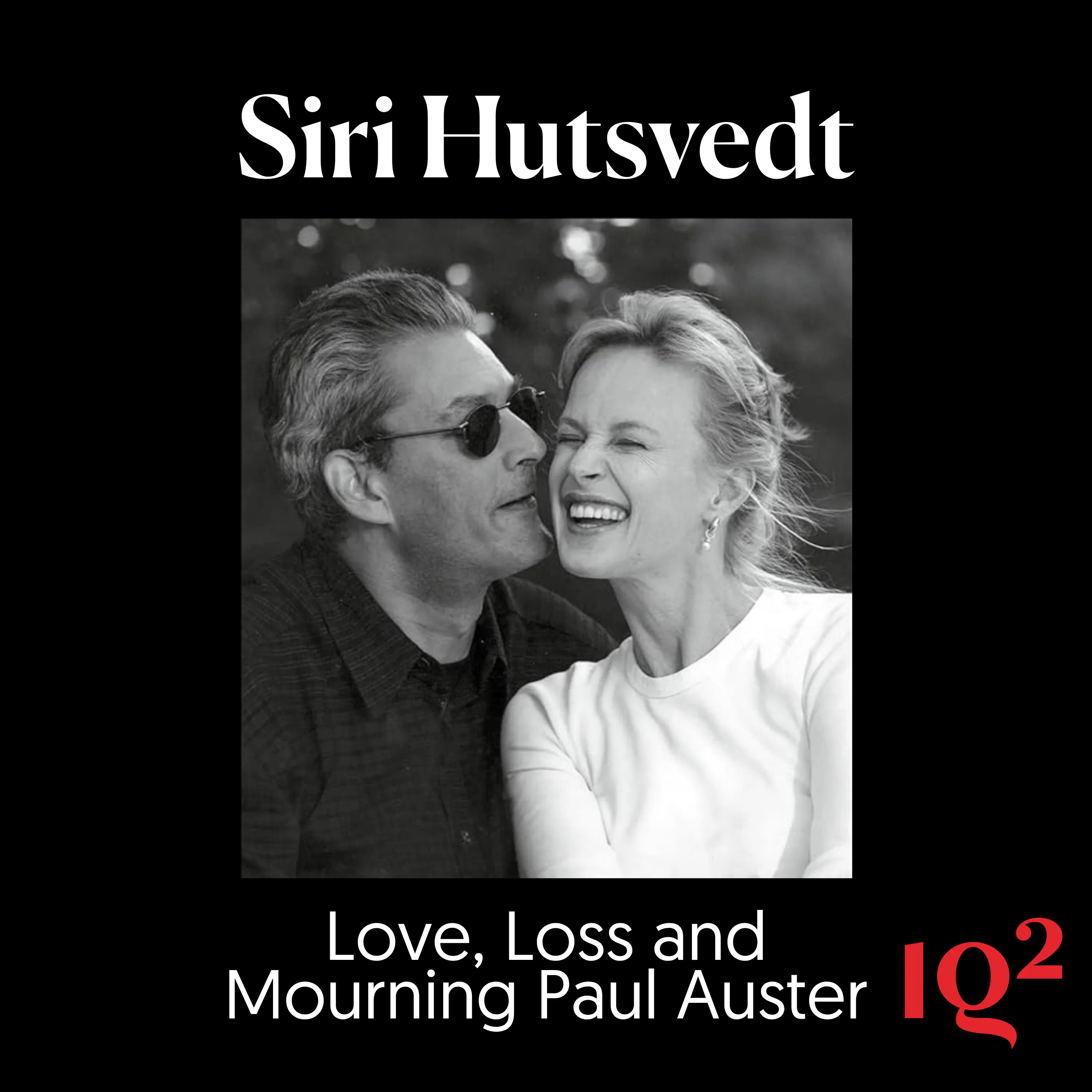
Loading summary
Transcript52 lines
- [00:01]
Progressive Insurance Advertiser
Insurance isn't one size fits all, and shopping for it shouldn't feel like squeezing into something that just doesn't fit. That's why drivers have enjoyed Progressive's name your price tool for years. With the Name your price tool, you tell them what you want to pay and they show you options that fit your budget enough. Hunting for discounts, trying to calculate rates and tinkering with coverages. Maybe you're picking out your very first policy, or maybe you're just looking for something that works better for you and your family. Either way, they make it simple to see your options. No guesswork, no surprises. Ready to see how easy and fun shopping for car insurance can be? Visit progressive.com and give the name your price tool a try. Take the stress out of shopping and find coverage that fits your life on your terms. Progressive Casualty Insurance Company and affiliates Price and coverage match limited by state law
- [00:54]
Home Depot / McDonald's / Columbia Advertiser
make every get together chill this Memorial Day. Get up to an extra thousand dollars off select top brand appliances like L plus. Get free delivery at the Home Depot Tackle pool towels and Camp laundry with a large capacity washer and host in style with the fridge serving craft ice, Mini Craft Ice, Cubed ice and Crushed ice. Shop appliance Savings now through June 3rd at the Home Depot offer valid May 14th through June 3rd US only. Free delivery on appliance purchases of $998 or more. See store online for details.
- [01:24]
Mia Sorrenti
Welcome to Intelligence Squared, where great minds meet. I'm producer Mia Sorrenti. On today's episode, the novelist, essayist and poet Siri Hutzfed sits down with Maithili Rao to discuss her new book, Ghost Stories. It's a deeply personal reflection and memoir on mourning, memory and her life with the late writer Paul Auster. Let's join our host, Maitha Lee Rao, now with more.
- [01:49]
Maithili Rao
Welcome to Intelligence Squared. I'm Maitha Lee Rao. Today I'm honored to be speaking to Siri about her new book, Ghost Stories. Welcome to Intelligence Squared.
- [01:58]
Siri Husfut
Thank you so much for having me, Siri.
- [02:00]
Maithili Rao
I first just want to offer my condolences for your loss. I first read your husband's writing more than 20 years ago when I first moved to New York, and I will always associate his work with New York and the wonderful formative years I spent there. Ghost Stories is a remarkable book. It's about grief, but it also feels like a very tender gift to the reader. You you bring the reader into your home, into your marriage. You introduce them to Paul the person, Paul the father, Paul the partner, someone you shared 43 years with someone who deeply adored you and always championed your work. Paul, you write, wanted me and my work to be seen unobscured by his shadow. And I think what's special about this book is that it shares not just how you saw him, but how he saw you, who you were in your life together, how and how that whole was greater than the sum of its parts. So, just to start from the beginning, can you describe how you met him? Just because it is a lovely, wonderful story that also gets us right back to where Cyri and Paul begin.
- [03:03]
Siri Husfut
I was a graduate student at Columbia. It was February 23, 1981. I went to a poetry reading at the 92nd Street Street Y with a fellow graduate student, a friend of mine, and we were going to hear Anne Louterbach, a poet I admire, read her poems, which we did. And when my friend and I left the poetry reading after it was over, I caught sight of this absolutely beautiful man standing inside the entrance to the Y, wearing a leather jacket, hunched over, very inward looking, smoking either a little cigar or a cigarette, I cannot remember which. And I said to my friend, you don't know who that is, do you? And he said, yes, that's Paul Auster, the poet. And I said, introduce us right now. And he did. And then I spent the next hours hanging in Paul's vicinity, trying very hard to get his interest. We did talk that evening for hours and hours and hours. And rather late that night, I looked across the table. We were at a bar in Tribeca, and I could see that I had talked interest into that face.
- [04:42]
Maithili Rao
By sheer force of will.
- [04:43]
Siri Husfut
Just my perseverance paid off, and I did. I took him home that night. And that was the beginning of our. What turned out to be a very long love affair.
- [04:57]
Maithili Rao
It turned out to be a very long love affair. But in the beginning, there was a break. And soon after you got together, Paul broke things off that wound up being temporary. And there are many letters that make their way into this book, and among them are some letters you wrote during the breakup. They reflect the fact that you've been experimenting with automatic writing. They show you smitten, confident, hopeful, trying to win Paul back. How did you feel rereading these letters, and why did you decide to include them?
- [05:28]
Siri Husfut
Well, you know, because these letters became part of the private mythology of our marriage together. Every once in a while, Paul would say, would you like to see those letters, Siri? And I inevitably said, absolutely not. Very worried about encountering my young self and her silliness. But after he died, I realized that I Did want to see the letters. And it was part of the. What I think of as the documentary aspect or quality of the book that I do reproduce letters. Notes that I remembered, of course, having written, but I did not remember them verbatim. So my response to those letters was a mixture of embarrassment and tenderness. In other words, I did feel a kind of tenderness for that old self. And it turns out that it's good I wrote them because the essential message was that I loved him. And I had a feeling that he loved me back. So once that was declared, I think it was vital to the ongoing relationship that we had.
- [06:53]
Maithili Rao
I recently went to see a local production of Noel Coward's very first play, which is called the Rat Trap. It's about two writers who get together very young with big ambitions for their careers. They get married. The institution of marriage and the world, with its oppressive ideas about gender, kind of close in on them. The man's career takes off, the woman stalls. It destroys them. That's not at all what happened with you and Paul. And the partnership you depict in this book is something very rare and beautiful. You write that you wanted the best for each other's books and that this book is the first book of yours that Paul didn't read before it was published. Can you describe a little bit what wanting the best for each other's books looked like in action? I almost got the sense that it started with those letters you exchanged with each other and the way words were a big part of how you connected.
- [07:45]
Siri Husfut
Yes. And I have thought of this, that if Paul and I had not admired. Mutually admired the other person's work, the marriage would have foundered. So I felt extremely nervous when he handed me his poems, the poems he had published by then, and the first half of the Invention of Solomon. Because I thought, if I don't like this work, I don't think. I don't think there's anywhere to go. But I admired it very much. And I. Well, was eight years younger than Paul and had published a couple of poems and literary magazines. Not much, but I did have about 100 pages of a manuscript of poems. And he read them. And I knew that he respected and admired the work. So that was the foundation. And you have to remember that even though Paul did indeed become famous as a writer when he was about 40. He was 34 when I met him, and we lived through 18 rejections of his first novel, City of Glass. And his reputation, if you will, didn't take off until he was 40. So we were both obscure writers. When we met, and I think the memory of that and living through each other's writing lives together makes quite a difference. There were many people who assumed that I met Paul after he was Paul Auster, a known writer. But that actually isn't true. And I do want to say that the Noel Coward scenario could have been ours if Paul hadn't been so supportive and generous about my work, because, as I said, I was younger. But also, there was a lot of sexism and misogyny in the way media and the press approached my work.
- [10:08]
Maithili Rao
It's something that you write about in ways that I found so interesting, because you tease out the specific incidences where there's an interview and maybe a line about you or you are being introduced somewhere and described as Paul's wife. And it's interesting the way that it's a narrative that would assert itself from outside, because that wasn't how you experienced your career or your life at all. And this narrative is about making sure the woman keeps her place in the order of things, as you put it. How did you manage that and not let it corrode or invade either your work or your marriage?
- [10:54]
Siri Husfut
Well, I tried to indicate that. It's not as if I wasn't irritated, and it's not as if, when push came to shove, I didn't defend myself at those moments. Mostly I did. I think in the very early days, I was so gobsmacked by what was happening, I was speechless. But, you know, listen, this goes on. I mean, I think in a review in the Times, I was described as an aspiring model. I was a graduate student at Columbia who did get her PhD, you know, in 1986. So there's something. There's a desire.
- [11:34]
Maithili Rao
Did you ever dabble in modeling, or was that just a complete she's tall?
- [11:40]
Siri Husfut
I did. And actually, even in the book, there was a moment in graduate school. I was so poor, I was stopped on the street by a photographer who turned out to be completely legitimate. And he sent photographs he took of me to the Ford Agency. And for about two minutes, I thought maybe I could make some money, you know, doing some modeling. It turned out that they wanted me to go to Paris and, you know, walk in the shows. But of course, that was impossible. I think I was. I was still taking classes for my degree. And that was the beginning and the end of that desire to make some money on the sag, which I never did. No.
- [12:30]
Maithili Rao
But that's what wound up in. In the initial.
- [12:32]
Siri Husfut
Well, yes. Then the aspiring model has followed me around for many, many years, my aspirations were rather puny and focused on trying to eat a little better than I was eating at the time.
- [12:49]
Maithili Rao
I want to spend a little more time kind of setting the scene of this world you inhabited in the 80s together. And you write that at the time, as you just mentioned, something that drew you together was this idea of the artist as an outsider and the romance in some ways of that obscurity. I'm going to read a little bit from the book. You said an idea of a literary avant garde still flickered as a weak flame among writers in New York City. Back then, commercial success wasn't necessarily a badge of honor. In an age of influencers and cliques, the idea has little traction. So now we're in this world where success is measured in followers. What is the antidote to that?
- [13:31]
Siri Husfut
Well, I think in some way the antidote is inner life. Paul and I shared our inner lives in some way and a sense of commitment to work that wasn't necessarily hugely popular and a feeling that art does have power. And that power, especially in books, happens one person at a time. You know, Paul used to say that reading is the place where two consciousnesses touch. And I would say it's also where two consciousnesses and unconsciousnesses touch can touch in absolute privacy and intimacy. And that experience of reading is not gone. And I find when I meet readers, of course it's usually people who have read a book by me that that intimacy continues one to one. And yes, we're all influenced by cultural perception we can't free ourselves from. At the same time, I think growing, if you will, making your inner world grow can help defend against some of that pressure.
- [15:12]
Progressive Insurance Advertiser
Starting or growing your own business can be intimidating and lonely at times. Your to do list may feel endless with new tasks. And lists can easily begin to overrun your life. So finding the right tool that not only helps you out, but simplifies everything as a built in business partner can be a game changer for millions of businesses. That tool is Shopify. Shopify is the commerce platform behind millions of businesses around the world and 10% of all e commerce in the US from household names like Gymshark, Rare Beauty and Heinz to brands just getting started. Shopify has hundreds of ready to use templates that can help you build a beautiful online store that matches your brand style. And you can tackle all the important tasks in one place from inventory to payments to analytics and more. No need to save multiple websites or try to figure out what platform is hosting the tool that you need. And if people haven't heard about your brand, you can get the word out like you have a marketing team behind you with easy to run email and social media campaigns to reach customers wherever they're scrolling or strolling. Start your business today with the industry's best business partner, Shopify, and start hearing. Sign up for your $1 per month trial today at shopify.com realm. Go to shopify.com realm that's shopify.com realm
- [16:37]
Home Depot / McDonald's / Columbia Advertiser
all new drinks are now at McDonald's with refreshers like the Strawberry Watermelon Refresher and the Mango Pineapple Refresher with Popping Boba to crafted sodas like the Sprite Berry Blast with berry flavors and cold foam. Who knew ice cold drinks could be so fire? Try them all now at McDonald's. Refreshers contain caffeine. Copyright 2026, the Coca Cola Company Sprite is a registered trademark of the Coca
- [17:06]
Siri Husfut
Cola Company Ready to soundtrack your summer with Red Bull Summer All Day Play? You choose a playlist that fits your summer vibe the best. Are you a festival fanatic, a deep end dj, a road dog, or a trail mixer? Just add a song to your chosen playlist and put your summer on track. Red Bull Summer All Day Play. Red Bull gives you wings. Visit red bull.com brightsummerahead to learn more. See you this summer.
- [17:35]
Maithili Rao
When you need to build up your team to handle the growing chaos at work, use Indeed Sponsored Jobs.
- [17:41]
Siri Husfut
It gives your job post the boost
- [17:42]
Maithili Rao
it needs to be seen, seen, and helps reach people with the right skills, certifications and more. Spend less time searching and more time actually interviewing candidates who check all your boxes.
- [17:52]
Siri Husfut
Listeners of this show will get a
- [17:53]
Maithili Rao
$75 sponsored job credit@ Indeed.com podcast. That's Indeed.com podcast. Terms and conditions apply.
- [18:01]
Siri Husfut
Need a hiring hero?
- [18:02]
Maithili Rao
This is a job for Indeed Sponsored Jobs.
- [18:08]
Siri Husfut
This summer, serve up the Cookout classics, Oscar Mayer Hot Dogs and Heinz Mustard. Grill up a dog, Add classic Yellow Mustard or Loaded Chicago style. We all know it's not a cookout
- [18:20]
Maithili Rao
without Oscar Mayer and Heinz. In the early part of the book, you try to draw a picture of your experience of grief, losing your husband and this person who, as you've described, was your sparring partner, your reading partner, your writing partner in some ways, in that you shared drafts with each other, you call it a cognitive splintering, and you wonder how to articulate the abyss without also falling into the abyss. The form of this book is unusual. How did you approach the way to tell this story and the way to write about what you're experiencing?
- [19:09]
Siri Husfut
Yes, the form Appeared, the title came. And then I realized that I had a desire to go back into the written materials so that they would form a kind of collage. And it is related to what I talk about very early in the book. In the first. In the second paragraph, that time was fragmented for me, I had a completely other radically changed sense of time. And I thought, how is this going to be presented in the book? Well, of course, we all remember in the present. The act of memory always takes place in the present. But it's a form of recovery of the past. So by putting these documents into the book, I was able to move from one time to another. And that represents a form of splintering that is part of our ordinary memory. But there is a timeline from May to the following March that also exists in the book so the reader can keep tabs on when I'm writing. So there's the time of writing, there's the time of memory. There's recovering these documents that are immediate to the time that they were written. And I think, for me, that worked as a form. It's also not written in paragraphs, but in blocks of prose. So between those blocks of prose, I wanted to give the reader air, if you will, air to make a transition. But it is an organic form. And then a very important ingredient is the book that Paul was working on before he died. Letters to our grandson Miles, that he hoped would be a book of 100 to 200 pages, but he couldn't finish it. He managed to write 35 pages. I put those also into the book. There was a moment early on when I thought I would have them as a block inside the text. And then I realized that didn't work, that I needed to contextualize some of the letters and that if they were interspersed, you know, between sections of my prose, that the dialogical or the dialogic nature of our marriage would be reproduced in the book as well. So my voice, then Paul's voice, two different kinds of prose. And so I felt my way forward. I knew these ingredients had to be included, but I felt my way forward.
- [22:15]
Maithili Rao
Let me talk a little bit more about these letters. Because like you said, they create this conversation between your voice and his. They're also doing something a little different from what your sections of the book are doing, which yours are. Remembering Paul, remembering you and Paul together, writing about this loss. And the letters Paul has written to your grandson Miles are both looking to the future and also sharing some lore and sharing some essential facts about Miles, parents and grandparents. I would not have initially thought that they were a natural fit for this book. When did it occur to you that, yes, they belong in here?
- [23:08]
Siri Husfut
Well, I think I wondered, I mean, soon after he died, I wondered what, what to do with these letters. I mean, they could certainly go among his papers. There weren't enough to really produce any kind of printed book. It could have been a little chapbook, you know, the very last writing of Paul Auster. But I realized that if they were put into this larger book, which is in many ways also a family story with its terrible aspects and its beautiful ones. So Paul writing to an imaginary future. Miles, a literate, more grown up person who's able to take in the information about the family and Paul's great love, I think, for me, for his daughter Sophie, for his son in law, Spencer, all of that comes across intimately in those letters. So he was able, in the context of my larger book, to communicate something about who he was without my telling the reader.
- [24:33]
Maithili Rao
I haven't yet asked you about the other tragedy that took place in your lives before Paul was diagnosed with cancer. The diagnosis came after what you describe as a horrible time. Not even a difficult time, a really horrible time. And in 2022, your stepson Daniel Paulson, from his first marriage to the writer Lydia Davis, died of a drug overdose. He was out on bail after being charged in the death of his 10 month old daughter Ruby, who had died a few months earlier from heroin and fentanyl exposure. There are so many happy memories in this book, but also this enormous, dark tragedy. Yes, yes.
- [25:16]
Siri Husfut
And I think I realized that my urge, my profound need, if you will, to write about what was happening to me, but also to write about Paul, that my resurrection urge, if you will, to bring something of Paul back. It would be utterly fraudulent to leave that out of the story. At the same time, I didn't want that gruesome story, and it truly is. Paul called it the horrible Things. I didn't want the horrible things to overwhelm what also existed with them, which was our great love for each other and Paul's great love for his daughter and then his son in law and his love for Daniel. But he couldn't trust Daniel. He was an addict. But he had had difficulties from very early on. And I decided that without, you know, turning the book into that story, I wanted to give the readers something of Daniel. And when I was unearthing all my papers and I found a comic that he had made, quite a good one. He was very gifted person and a very gifted photographer. I felt that Daniel could Say something in his own voice and give the reader a sense of this human being. Because the media attention to this story turned everyone involved, I think, into, or some of us anyway, into monstrous beings. And this is really rarely the case. So that was my method, if you will, of turning a lurid and gruesome story, genuinely gruesome, into something that also has real human dimensions.
- [27:37]
Maithili Rao
The fame that Paul experienced in his life was something you both grew used to dealing with and kind of working around. And you describe Paul as being embarrassed by it, by the groupies, by the super fans, by the invitation to be in a Japanese beef commercial. But then, of course, when Daniel's story is in the paper, suddenly this fame has a whole other side, where there are tabloid photographers waiting outside your house and, like you said, clamoring for every lurid detail. Has that changed how you write about your personal life or how you think about what parts of your story to share with the world? It sounds like something you've always been quite conscious of.
- [28:23]
Siri Husfut
You know, my sense is this, and it's always been my sense when I'm working on a book, is that if you begin to consider or think about how the book will be received, the book won't be worth much. So I do at times worry once I've finished a book, I think, oh, my God, what's going to happen here? And I have to calm my nerves. But while I'm writing, that is not the case. I think it can ruin writers. And I have never felt that. How shall I put it? This is harsh, but pandering to what one imagines will be accepted in some popular way is going to do your writing any good. And Paul felt the same way.
- [29:30]
Maithili Rao
In addition to writing about his loss and the grief, you also write about the months after he was diagnosed, where you were taking care of him and you're going to lots of doctors and you're navigating the diagnosis and potential treatment together. And there's a Norwegian expression used in this section of the book which roughly translates to. It goes without saying. Can you explain that phrase and what it meant in your marriage and in this phase of the marriage in particular?
- [30:00]
Siri Husfut
Yes, I think by that time in our marriage, I couldn't have said that. Early on, even after we were first married, we didn't know what we would become. We didn't know what, as I say in the book, the and would be the Paul and Ceres, Syria and Paul, how that end would develop. But by the time Paul fell ill, I don't think there was any question between us that the other, whoever the other was, if I had fallen ill, I know Paul would have done everything in his power to help me through it. And because I knew that and he knew it on the other side, that little Norwegian expression, which is Die Skulle bar, which means. It should only lack a strange translation, but yes, it means. But of course there's no question. But there was no question because of what had been created between us over all those years.
- [31:25]
Maithili Rao
Towards the end of this book, you turn your attention to the political moment we're in and how it feels to witness America's unraveling as you're in mourning and you write. I can't measure the degree to which Paul's death has increased both my political dread and my sense of powerlessness, but I know it has. The grieving want the impossible. We want the dead back in our lives. Political grief arrives from the same sense of futility. How can all those people vote for him? What can I do? One thing you do to ward off the futility is write this book, obviously. Can you talk a little bit about what you've learned about the connection between political dread and personal grief, where they intersect?
- [32:08]
Siri Husfut
Yes, it's. It was interesting. I tell a little story about making dinner. I was making dinner for Sophie and Spencer and little Miles, who were coming over, and I had the radio on while I was cooking, and I opened the refrigerator and reached for fennel in the refrigerator to take it out and chop it. And We Shall Overcome, the great civil rights anthem, came on the radio, and I started to sob and I tried to analyze what's going on. Was I, you know, We Shall Overcome? Was I crying for myself? Was it a kind of selfish breakdown because of that text? Or was I crying for the Republic? And I'm still not sure. I think private grief and grief for one's own country can intermingle and increase the other, if you will. And we often we do not separate so neatly as we would like to our emotional responses. I knew very well when I saw animal crackers that I had bought for Paul at Memorial Sloan Kettering, the hospital where he was being treated, that I was sobbing for my dead husband. But with We Shall Overcome, I thought this is where the private and the public mingle. And had Paul been alive, I would have had my ally in political talk and thinking, and he was gone. So I think, and I felt about private grief and public grief, that despair is not an option. Despair can become seductive when you're grieving. You just give it up, you know, it's like, oh, you know, it's too much. But that, as you said earlier, that movement toward the abyss is hugely dangerous. And I found ways by holding to the scaffolding, the routines, the forms of my life. Breakfast, lunch and dinner, waking up at the same time, going to bed at the same time, continuing to read, continuing to work. All of that, even when I felt cognitively splintered, even when it was interrupted by bursting into tears, all of that helped me enormously. And I have continued to stick to those forms and not to be seduced by despair that ruins people.
- [35:35]
Maithili Rao
I think also you find the humor where it is to be found. I was remembering a passage where you wind up in the bathtub with your socks still on in a state of grief. That's also very funny.
- [35:49]
Siri Husfut
It's hilarious. And I have to tell you, after I recovered from my shock of looking at those stocking feet, I burst out laughing. And during these two years of mourning, Paul and I actively mourn Paul every day. There have been any number of times when here alone in the house, I just burst out. I don't know. I think this is a wonderful thing about human life, that we are able to represent ourselves to ourselves as others. And once you gain the distance necessary for that representation, humor sneaks in. And also, I do want to say about grief that if you have the capacity to love and if you live long enough, you will grieve. This is not an extraordinary event in life. It is part of many, many, many people's lives. And that sense of shared experience brings both humor and compassion for that suffering self. Because you know you're not alone at all. This is so common. It's an ordinary business, but it happens to be an ordinary business that includes extreme emotions.
- [37:33]
Maithili Rao
So I want to end on an idea you share in the book about two models of love, mechanical and organic, one like a car, one like a tree. Can you explain these models in a little more detail and what they meant to you?
- [37:47]
Siri Husfut
Yes. So I was 23 years old, living in New York, my first year in New York, and I was reading a lot of 18th and 19th century philosophy at the time. So these two models have roots. But I was also having what I think of now as a mechanical love affair. The difference is this. In the machine model, say a car, there's no perpetual motion machine. Eventually the machinery breaks down. It can be replaced. But the way you do that is you replace a part, and it has to be the same part. In other words, the overall design of the machine doesn't change. So a mechanical love affair. People repeat over and over the same motions. And out of those motions you do get, I think, arousal and excitement. You know, you think of the elusive lover. That's a very good one. You know, one chases and the other runs and then there's a back and forth and it's all very exciting. But eventually the car runs out of gas. The organic model is something else because it grows and blooms and thrives and then a storm comes along and severs a limb. If that tree survives the storm, the limb does not grow back in the same way. It grows back in another way. And I think that's why the organic tree model is preferable in love relationship to the mechanical model, because you have to adjust to changed circumstances, to a new climate, to a missing limb. And I do feel that over time, Paul and I managed to do that, not without some difficulty adjusting to the person who is always becoming that you live with. You know, we are dynamic creatures, not static creatures, and we go on changing until we die. So when I was 23, I already believed in the organic model and I still do. So that young person and this old person of 71 are together on that thinking.
- [40:35]
Maithili Rao
Siri, thank you so much. That was Siri Husfut, author of Ghost Stories, available now in bookshops and online. I'm Maitha Lee Rao. You've been listening to Intelligence Squared. Thanks for joining us.
- [40:49]
Mia Sorrenti
Thanks for listening to Intelligence Squared. This episode was produced by me, Mia Sorrenti and it was edited by Mark Roberts. For ad free episodes and full length recordings. You can become a member@intelligencesquared.com membership and if you'd like to join us at future live events, you can find our full program and buy tickets over@intelligentsquared.com attend. You've been listening to Intelligence Squared. Thanks for joining us.
- [41:22]
Siri Husfut
Foreign.
- [41:32]
Home Depot / McDonald's / Columbia Advertiser
You can't reason with the sun. Trust us, we've tried. This summer, it's time to put that angry ball of fire on mute. Columbia's Omnishade technology is engineered to protect you from the sun's harsh rays that can burn and damage your skin. The sun is relentless, but so is our gear. Level up your summer@columbia.com to spend more time outside and less time slathering on aloe lotion. You're welcome, Columbia. Engineered for whatever. Did you know? If your windows are bare, indoor temperatures can go up 20 degrees. Get ahead of summer with custom window treatments like solar roller shades from blinds.com and save up to 45% off during the Memorial Day early access sale. Whether you want to DIY it or have a pro handle everything. We've got you free samples, real design experts, and zero pressure. Just help when you need it. Shop up to 45% off sitewide right now during the early Access Memorial Day sale at blinds. Com. Rules and restrictions apply.