← Interesting Times with Ross Douthat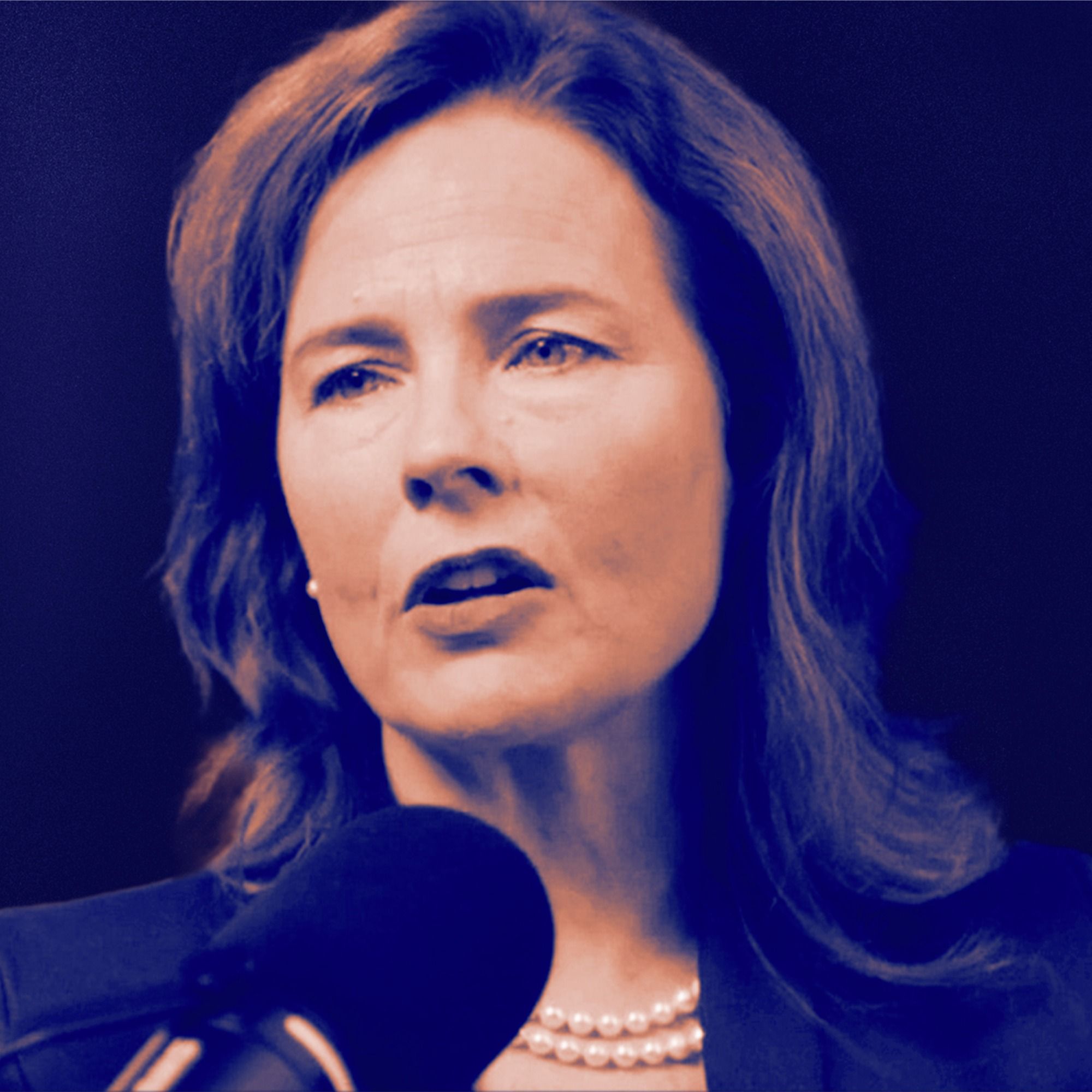
Interesting Times with Ross Douthat
Amy Coney Barrett Is Looking Beyond the Trump Era
01:04:19
Justice Amy Coney Barrett is playing the long game. In this week’s “Interesting Times,” she walks us through the current court’s most controversial rulings, why she believes that her originalist interpretations are resistant to ideological pressures and why she’s not comfortable thinking of herself as a cultural icon.
Loading summary
Transcript442 lines
- [00:00]
Betterment Advertiser
Don't just imagine a better future. Start investing in one with betterment, whether it's saving for today or building wealth for tomorrow. We help people in small businesses put their money to work. We automate to make savings simpler. We optimize to make investing smarter. We build innovative technology backed by financial experts. For anyone who's ever said, I think I can do better, so be invested in yourself. Be invested in your business. Be invested in better with betterment. Get started@betterment.com Investing involves risk performance not guaranteed.
- [00:35]
Ross Douthat
From New York Times Opinion. I'm Ross Douthat, and this is Interesting Times.
- [00:56]
Ross Douthat (Interviewer)
Right now there's a roster of cases.
- [00:59]
Ross Douthat
Before the Supreme Court that could reshape the entire Trump presidency and redefine executive power. And my guest this week, Justice Amy Coney Barrett, is likely to be the decisive vote in some of those cases, unfortunately. But predictably, that means that she couldn't or wouldn't respond to my most direct.
- [01:21]
Ross Douthat (Interviewer)
Questions about the Trump administration.
- [01:24]
Ross Douthat
But my goal was to push the justice on a question that she can answer, one that she addresses at length in her new book, Listening to the Law. I wanted to know whether her preferred legal theory, originalism, can bend and flex in response to prudential and political concerns. Barrett argues strongly that it shouldn't, that justices should rule without worrying about public opinion or who happens to be in the White House. But I tend to think that real world politics constantly test and limits that ideal. So in our conversation, I'm trying to find those limits and the ways in which even justices devoted to the original meaning of the Constitution have to deal with the highly unusual pressures of right now.
- [02:15]
Ross Douthat (Interviewer)
Justice Barrett, welcome to Interesting Times.
- [02:18]
Justice Amy Coney Barrett
Thank you for having me, Ross.
- [02:19]
Ross Douthat (Interviewer)
I honestly would never have said no, I have to be honest. So your book is mostly about and we're mostly gonna talk about theories of jurisprudence, the place of the Supreme Court in American life, possibly some issues related to the Trump presidency and executive power. But it does start with a little window into the personal world of Amy Coney Barrett. So I'm gonna start with a couple of questions about that terrain. We looked it up, and you are the first guest we've had on the show who has more children than I do, which is only because we haven't yet succeeded in booking Elon Musk. I should say there's still time for.
- [03:06]
Justice Amy Coney Barrett
You to catch up with me, Ross.
- [03:09]
Ross Douthat (Interviewer)
That's a bold statement, and I appreciate your confidence in my youthful energy and vigor. So when you were being nominated, this newspaper, the New York Times, ran a story that talked about your mix of sort of personal and professional obligations and how it made you a certain kind of trailblazer and the story described you and you know, you can accept this description or not, but a woman who is both unabashedly ambitious and deeply religious, who has excelled at the heights of a demanding profession, even as she speaks openly about prioritizing her faith and family. So I'm curious if you actually see yourself this way at all. Do you see yourself as a particular kind of trailblazer or role model in that kind of balancing act?
- [04:01]
Justice Amy Coney Barrett
I don't see myself as a trailblazer, nor do I love the word ambitious because I feel like the word ambition puts a focus on success or ambition.
- [04:13]
For its own sake, which isn't how I've ever conceived of my career when.
- [04:17]
I was growing up.
- [04:18]
So I was born in 1972, my mom stayed home and the parents of most of my friends had a working dad and a stay at home mom.
- [04:27]
My kids have had a mix and for them it's kind of become unexceptional to have a mom that worked. Whereas it felt kind of like a big thing for me to make the.
- [04:36]
Choice because my own mother had, had.
- [04:38]
I'm one of seven. She had a large family, which is, I say in the book, that's what I always wanted.
- [04:42]
That was my number one priority.
- [04:44]
And I wasn't sure that I could do that and work at the same time. But I always have since I had our first child. So I think my life looks different than the life of my mom and.
- [04:56]
My aunts and my friends, parents at the time. But it's one that my own daughters.
- [05:02]
And sons and their friends, I hope can just treat as unexceptional. Like, you can stay home if you want, you can work if you want.
- [05:09]
You can do both.
- [05:10]
Ross Douthat (Interviewer)
Do you think of yourself as a feminist, a conservative feminist? If that is a category that you would accept?
- [05:19]
Justice Amy Coney Barrett
No. Labels are so dangerous because they mean.
- [05:21]
Different things to different people.
- [05:23]
I mean, if. If being a feminist simply means having.
- [05:27]
The view that women can do whatever.
- [05:32]
It is they put their minds to.
- [05:33]
And have opportunities open to them, then yes, I am.
- [05:37]
But I think any stripe of feminism.
- [05:39]
That you describe is going to have, you know, labels are risky.
- [05:43]
So I'll just say yes, yes, labels are risky.
- [05:46]
Ross Douthat (Interviewer)
Labels are risky. Especially when you are charged with the interpretation of the entire US Constitution. How do you actually do it? And I say this as someone, I obviously work here. I am working. My wife is a journalist and writer and we do a lot of, I think the same kind of balancing that you and your husband have done. And it takes some sort of strange forms, but it's very challenging, I will say to have, you know, any number of kids is challenging, but to have a large family and have a busy professional life. And I'm just curious as a Supreme Court justice, how you actually feel like you guys make it work.
- [06:31]
Justice Amy Coney Barrett
A lot of people ask. That's probably the question that I get asked most often. It is challenging.
- [06:36]
Remember, I don't have seven three year.
- [06:39]
Olds and, you know, now my oldest is 24, so we have five children living at home, although one of those.
- [06:46]
Is in nursing school. So I really kind of think of us as having four at home now, but they're in middle school and high school now.
- [06:52]
It looks differently and it has looked.
- [06:53]
Differently at each phase of parenting, you know, and you grow a family slowly. So, you know, at various points we had one, two, three children.
- [07:04]
I think our attitude was always at each stage, it looked different at each stage. Our priority was always the kids and.
- [07:11]
We were always one of us. It didn't necessarily have to be me. Stood ready to walk away and stay home with the kids if that's what we decided that they needed.
- [07:21]
But, you know, for most of our family life, I was a law professor.
- [07:24]
And we lived in South Bend, which.
- [07:25]
Was a small, easily navigable city.
- [07:28]
Ross Douthat (Interviewer)
A very. There's a lot of very family friendly neighborhoods around Notre Dame.
- [07:32]
Justice Amy Coney Barrett
Yeah. And my schedule was flexible.
- [07:34]
I could work late at night. I mean, writers get some of that benefit too.
- [07:37]
I could be home with them, you.
- [07:39]
Know, after school and then I could stay up late at night or write on the weekends.
- [07:43]
So I had a lot of flexibility early on.
- [07:46]
Ross Douthat (Interviewer)
Do you think of yourself as a kind of relaxed, free range kind of parent or. Well, I ask because one thing that struck me, having a bunch of kids is just that, like the life that I guess in different ways we're both in sort of the life of the professional class or something. It just really seems set up for, you know, you have two kids and you're going to be helping them with homework and you're going to be going to parents night. And, you know, you have a sort of set of parental obligations. And a lot of people I know who do well with large families have sort of opted out of that kind of intensity, which isn't really how I would think a Supreme Court justice would approach things. But like, do your kids think of you as intense?
- [08:28]
Justice Amy Coney Barrett
I would say that my kids think.
- [08:29]
Of me as intense.
- [08:30]
Ross Douthat (Interviewer)
That's not surprising.
- [08:31]
Justice Amy Coney Barrett
Yeah, I Think they would laugh if they.
- [08:33]
If someone asked them whether I was kind of a loose, free range parent or my husband Jesse, for that matter? No. We're pretty organized and pretty intense. And in my experience, it's pretty tough.
- [08:43]
To run a large family unless you have a lot of organization. At the point at which we added.
- [08:47]
Our son John Peter, who at that point was number five. John Peter is adopted. He was three when he came home from Haiti.
- [08:55]
We kind of. We shifted.
- [08:57]
We had recently done a ren. Or just about to do a renovation in our pantry. We started doing so much Costco's and Sam Shipping that one of our daughter's friends came over, walked in our pantry.
- [09:06]
And said, this is like a grocery store. So, no, it takes a lot of organization. But I will say on the pressure to be at everything, we do a lot of trading off, not both.
- [09:17]
At every sporting event, we trade off. And so for, you know, my, My.
- [09:22]
Son'S soccer games, maybe just one of us is there. We.
- [09:25]
We aren't at a point where we can have the luxury of both attending everything.
- [09:28]
Ross Douthat (Interviewer)
Right. But even just one of. Yeah. I mean, my parents very rarely attended my JV soccer games.
- [09:36]
Justice Amy Coney Barrett
Mine either.
- [09:38]
Ross Douthat (Interviewer)
All right, last. Last question on this theme. And I think, you know, you've talked about resisting the idea of being particularly ambitious or seen as particularly ambitious, resisting labels. You succeeded Ruth Bader Ginsburg, who attained, even among Supreme Court justices, a kind of distinctive kind of celebrity, even a distinctive kind of brand. You know, you had notorious RBG shirts and hats and so on. How comfortable are you with the idea of either yourself or any Supreme Court justice filling that kind of cultural icon role? You know, people were fascinated by Ginsburg's workout routines. I'm not gonna ask about your workout routine. Right. But, like, is that appropriate to the office? Is it a challenge for the office? Is it something that justices should sort of want to withdraw from a little bit? How do you feel about that kind of the image of Amy Coney Barrett and culture?
- [10:41]
Justice Amy Coney Barrett
So I haven't thought a lot about the image. I mean, so. And I'll just talk about this with.
- [10:45]
Respect to myself and my own view or what I hope to contribute to.
- [10:52]
Young lawyers, young women, professionals, what have you.
- [10:55]
When they look at my career, I don't strive to be an icon or a cultural icon. I'm a lawyer, I'm a judge, and.
- [11:02]
That'S how I think of myself, and.
- [11:04]
That'S how I approach the job.
- [11:05]
And personally, I mean, I think that those who are judges do a lot.
- [11:11]
Of work by themselves. Because you spend a lot of time reading briefs and writing, much like writers.
- [11:16]
So it is a pretty solitary.
- [11:18]
Ross Douthat (Interviewer)
With slightly more power, with influence.
- [11:20]
Justice Amy Coney Barrett
There is a judgment line at the.
- [11:22]
End of what we write. No, I don't strive. That isn't really my personality and isn't what I strive for at all.
- [11:32]
I don't mind that people can see what it's like to have a large.
- [11:37]
Family and still work or still have a career like mine where you're working.
- [11:44]
At a high level of government, because I think that's valuable. I think it's valuable for people to see that.
- [11:49]
But that's not to say that I want to be an icon of any sort.
- [11:52]
I feel the same way.
- [11:52]
Just when my kids have their friends come over to our house.
- [11:56]
I think we have a great life.
- [11:58]
And I think a lot of people.
- [12:01]
Maybe don't always have the chance to.
- [12:02]
See how great it is to have a large family.
- [12:05]
Challenging, but also fun.
- [12:06]
Ross Douthat (Interviewer)
Slightly challenging.
- [12:07]
Justice Amy Coney Barrett
Slightly challenging, but also fun.
- [12:09]
Ross Douthat (Interviewer)
Yeah. No, certainly fun like, you know, an intense military campaign can be fun. All right, let's talk about the law. And I feel like I just want to start sort of big picture and theoretical. You were a clerk for Justice Antonin Scalia, who is sort of seen as one of the key intellectual progenitors of the school of constitutional interpretation that gets called originalism. You are an originalist. You write in the book about the theory and practice of originalism. What is originalism?
- [12:44]
Justice Amy Coney Barrett
So originalism, simply stated, is just the proposition that the Constitution should be interpreted consistently with the meaning that the words.
- [12:53]
Of the Constitution had at the time that it was ratified.
- [12:56]
So where the meaning of those words can be discerned, it is decisive.
- [13:00]
Ross Douthat (Interviewer)
Oh, well, that's easy.
- [13:01]
Justice Amy Coney Barrett
That's easy.
- [13:02]
Ross Douthat (Interviewer)
Okay, that's it.
- [13:02]
Justice Amy Coney Barrett
That's it.
- [13:03]
Ross Douthat (Interviewer)
That's it.
- [13:03]
Justice Amy Coney Barrett
We can go home, I think.
- [13:05]
Indeed Advertiser
Yeah.
- [13:05]
Ross Douthat (Interviewer)
I mean, I think one of the great advantages that originalism has had over rival schools of interpretation, especially in the years since Scalia joined the Court and sort of his influence began to sort of extend through the conservative legal movement. But obviously, I think beyond that as well, I think even most prominent liberal justices have to claim some kind of respect for originalism. There are liberal interpretations of originalism. It's been a tremendously successful theory, in part for the reason we just sort of jokingly exchanged, that it's incredibly easy to state, and it sounds like basic common sense. What else would a Justice do if not interpret what the words meant when they were ratified? But it is a little bit more complicated than that. In Actual practice. Right. So first of all, you talk about the meaning of the words. So you're not trying to interpret the intentions of the people who wrote the Constitution or wrote the statutory law.
- [14:13]
Justice Amy Coney Barrett
Right, right, right.
- [14:14]
So we're trying to interpret the meaning of words like freedom of speech, establishment of religion, unreasonable search and seizure. We're looking at the words and we're saying, well, what would someone in 1791.
- [14:27]
Which is when the Bill of Rights.
- [14:28]
Was RA, have understood those words, those phrases, those expressions to mean, as opposed to thinking your way into the mind of James Madison and saying, would James.
- [14:38]
Madison have thought that this was an unreasonable search or seizure?
- [14:41]
Ross Douthat (Interviewer)
And so does that make you a historian by necessity?
- [14:45]
Justice Amy Coney Barrett
No, it does not make me a historian.
- [14:47]
Critics might say, well, judges are originalist.
- [14:50]
Judges are amateur historians. You know, they're not historians, but they're trying to play them on tv.
- [14:55]
But a historian is trying to do something entirely different. A historian is offering historical narrative, historical account is doing a much more wide.
- [15:06]
Ranging search through many more sources.
- [15:08]
I mean, the questions that we as.
- [15:09]
Judges pursue are fundamentally legal ones.
- [15:12]
Is this speech protected?
- [15:15]
You know, the term has begun. We've heard arguments already and you know.
- [15:19]
History is relevant to some of those. And our constitutional document is more than two centuries old. And so we have accumulated all kinds of history, not just the original meaning, but also all of the precedent court decisions that have been decided in the.
- [15:34]
Interim since the Constitution was ratified.
- [15:37]
So we're not historians. We're looking at the legal history behind certain words and phrases. And that's something actually that all judges.
- [15:44]
Do, not just originalists.
- [15:45]
Because as putting on my constitutional law professor hat, there are various sources that all constitutional interpreters look to, and the question is just how do you weight them? History is a tool in everyone's toolkit.
- [15:59]
Ross Douthat (Interviewer)
We'll get to the question of precedent and how it influences decision making in a minute. But I want to stay with this question of history. So just take a phrase like unreasonable search and seizure. Right. So what does it mean for an originalist to consider what a phrase like that meant at the time of the ratification of the Constitution?
- [16:24]
Justice Amy Coney Barrett
Yes. So you would look back one of the famous cases, it's an example I.
- [16:28]
Use in the book is Kyllo vs United States, which presented the question of.
- [16:33]
Whether infrared technology to detect heat in a building for purposes of detecting whether.
- [16:39]
Someone was growing marijuana illegally, whether that was a search.
- [16:42]
You didn't enter the premises. You know, you didn't actually see anything. You just used this heat sensor to.
- [16:49]
Try to detect the drug Activity.
- [16:51]
And the question was whether that was a search. And so the court, Justice Glee wrote the opinion.
- [16:56]
It was, for a majority of the.
- [16:57]
Court looked to see, well, what did it mean to search?
- [17:00]
And that required looking at founding era dictionaries. What did a search mean?
- [17:06]
He looked at founding era legal treatises, Blackstone's Commentaries, looked at some cases from that period, and ultimately concluded that, yes, that was a search. Clearly they didn't have that kind of infrared technology or this, like, thermal imaging device. I think it was at the time of the founding. But something that enhanced the senses so that you could see things or sense things that would not be discernible to.
- [17:29]
The ordinary eye was that kind of invasion or line crossing. And I'm paraphrasing all of this to make it more accessible that one might consider a search of someone's home.
- [17:40]
Ross Douthat (Interviewer)
But reasonable people then will disagree about that. Some of that kind of historical interpretation. Right?
- [17:47]
Justice Amy Coney Barrett
Of course, because for a number of reasons, often people may agree about the principle, like, yes, this is what search means, but then disagree about its application to particular facts. And we have that kind of disagreement all the time in the law, even.
- [18:02]
When you're not talking about a situation in which history is relevant.
- [18:06]
So law is hard. And the cases that make it to.
- [18:09]
The Supreme Court are typically unsettled, which is why they make their way up to us.
- [18:14]
People sometimes caricature law, generally. Originalists in particular. I think it's a common misconception, but that answers are easy in that if.
- [18:22]
You can just find the right theory.
- [18:24]
There'S the promise of certitude, and no.
- [18:27]
Legal theory can deliver that, and that includes originalism.
- [18:31]
Ross Douthat (Interviewer)
So let's talk about, then, a case where there isn't a specific provision of the Constitution that everyone is trying to argue over what it means and how it applies. Which would be the case of abortion. Right. Where obviously one of the most controversial decisions that you've been involved in so far at the Court is the Dobbs decision that overruled Roe v. Wade. The Constitution obviously doesn't say anything about abortion. There's no abortion provision in the Bill of Rights or anywhere else. Right, Right. So does that just mean from an originalist perspective, case closed, abortion is left to Congress or left to the states, and that's all that needs to be said?
- [19:14]
Justice Amy Coney Barrett
No, because the Dobbs decision applied a framework. It actually isn't an originalist decision because it's building on precedent. So the Dobbs decision was interpreting the 14th Amendment's due process clause, which says.
- [19:28]
That no person shall be deprived of.
- [19:30]
Life, liberty, or property without due process of law. Because to the extent one might argue.
- [19:35]
That there is a right to an.
- [19:37]
Abortion in the Constitution, it's located in that clause.
- [19:40]
That's where Roe found it.
- [19:42]
That no person shall be deprived of.
- [19:45]
Liberty would be the relevant one there.
- [19:48]
And so the courts, the line of cases is known as substantive due process. And what those cases say is, yes, this, this phrase, no person shall be deprived of life, liberty or property without due process of law. It sounds like, well, Ross, if I'm.
- [20:02]
Going to take away your car, I have to give you fair procedures before doing so.
- [20:06]
But the court has long recognized that it also has a substantive component that.
- [20:11]
Inheres in that word liberty.
- [20:13]
And so there are some things that the legislature can't take away, be it.
- [20:17]
Congress or the 14th Amendment, applies specifically.
- [20:20]
Ross Douthat (Interviewer)
To the states that liberties, to be clear, that are not themselves enumerated.
- [20:24]
Justice Amy Coney Barrett
That are not themselves enumerated. Well, well, to be tricky, and I'll try to avoid going into complete law professor mode, but that word Liberty in the 14th Amendment does incorporate many of the guarantees that are specifically stated in the Bill of Rights and make it so the states have to respect, say.
- [20:44]
Freedom of religion, the freedom from unreasonable searches and seizures, and so on, because.
- [20:49]
Were it not for the 14th amendment, everything in the Bill of Rights would.
- [20:52]
Constrain only the federal government.
- [20:55]
But yes, that word liberty does protect some content above and beyond things that are expressly stated in the Constitution. But you see the problem. I might think a lot of things are in liberty that you may not think are in liberty that one would disagree with. And there's a lot of risk, and this has been a very contested area.
- [21:13]
Of constitutional law for a long time.
- [21:15]
There's a lot of risk in making judges the final arbiters of exactly what the content of that word liberty is. So in an effort to reconcile this idea that the Supreme Court is neither a constitution maker nor a democratically representative.
- [21:32]
Body in much less branch of government.
- [21:35]
The test says, well, if there are some things that are so deeply entrenched and so fundamentally a part of American society that they go without saying, we.
- [21:44]
Don'T need to enumerate them, we don't.
- [21:46]
Need to say them out loud, then those are the kinds of things where it's just widely understood, so widely understood that we don't have to put it in, in writing, we don't have to commit it to paper, commit it to parchment, so to speak, then those kinds.
- [22:01]
Of things inhere in that word liberty.
- [22:03]
And they have the Status of constitutional guarantee.
- [22:05]
Betterment Advertiser
But that's a small step.
- [22:07]
Ross Douthat (Interviewer)
What would be some examples of those kind of liberties, apart from the abortion question?
- [22:12]
Justice Amy Coney Barrett
Marriage, the right to direct the upbringing of one's children. These are all ones I'm pulling from precedent. The right to use contraception. The Court has said that the ones that are not included are the right to assisted suicide, the right to abortion.
- [22:31]
I think those are probably the two most prominent ones that have been held not on the list.
- [22:36]
Ross Douthat (Interviewer)
Right. And you were one of the people who held that the right to abortion was not on the list. Why?
- [22:42]
Justice Amy Coney Barrett
Yes, because given the test, so the test, as I said, these are rights that are so widely understood to be fundamental that they go without saying. The test is that before the Court will recognize such a right as an unenumerated constitutional guarantee, it has to be stated at a specific level. Because if you state something at a broad enough like right to control one's body, that could include a whole lot of things. Everything from assisted suicide to abortion to drug.
- [23:15]
Ross Douthat (Interviewer)
Drug laws against.
- [23:17]
Justice Amy Coney Barrett
Exactly. So you have to state it at a specific level of generality because it's also only if something is identified precisely.
- [23:25]
That you can really measure what the degree of buy in among the American.
- [23:29]
Public is and that it has to be deeply rooted in this country's history and tradition. You know, it can't be a Johnny come lately. The case I talk about this in.
- [23:39]
The book Washington vs. Glucksberg is the.
- [23:41]
Name of the test for purposes of this test.
- [23:43]
It's not an originalism thing. It's not just frozen at the moment of the ratification of the 14th amendment.
- [23:50]
This is actually looking more deeply at.
- [23:52]
The history and traditions of the American people.
- [23:55]
And abortion failed that test.
- [23:58]
The right to an abortion failed that test.
- [23:59]
Because it's been a deeply contested issue. It certainly was in 1973 when Roe was decided and continued to be contested. Casey v. Planned Parenthood. That's the case in which the Court.
- [24:11]
First confronted the question of whether to overturn Roe v. Wade.
- [24:16]
Prior to Dobbs and Casey, the controlling opinion did not say that Roe was right. But for reasons of stare decisis, which.
- [24:25]
I assume you're gonna want to talk.
- [24:26]
About precedent later said, better to just let this lie because we're hoping that this will just bring both sides of this controversy together in America. And let's just say, like now it's settled, it's a truce. Well, that didn't happen post Casey.
- [24:43]
You know, the right to abortion has continued to boil our politics. So what the Court held in do.
- [24:50]
Was that it could not be said that the right to terminate a pregnancy was one that was deeply rooted and was considered so fundamental by a supermajority.
- [25:02]
Of Americans that it didn't even need to be said. It went without saying.
- [25:07]
Ross Douthat (Interviewer)
But there, using that test, history beyond just legal history also becomes relevant, surely like the condition of debates about abortion in the 19th century become relevant to that kind of test. Right. Put it this way. I think it is very reasonable to look at the history of the abortion debate over the last 50 years and say the court tried to settle this case. It clearly didn't. There isn't a deeply rooted pro choice consensus in America. It's more contested than that. I think that's true. But it's a historical judgment. It's a judgment about public opinion. It's a judgment about a whole host of things that are right outside the letter of the law.
- [25:49]
Justice Amy Coney Barrett
So this test, this whole area of substantive due process is tricky for some of the reasons you say. That's been a criticism of the doctrine in general and a criticism of the general notion that we can have rights that the Constitution doesn't specify precisely because of the kind of inquiry that it invites judges to undertake. But Dobbs didn't. Dobbs didn't question that. Dobbs accepted there is this doctrine of substantive due processing.
- [26:15]
Ross Douthat (Interviewer)
Do you question that?
- [26:17]
Justice Amy Coney Barrett
Well, now, Ross, you're asking questions that I can't answer. I'm very careful in the book and I'm always very, very careful. You know, I apply kind of confirmation hearing rules. So I take everything and I do.
- [26:28]
In the book and my discussion of.
- [26:30]
Dobbs, take the law as I find it, as it is. And I will say, I mean, so I think you're right that this inquiry about is something deeply settled in this country's history and tradition. I do think that inquiry could sweep more broadly than just the law. But as a practical matter in the cases, and there are just kind of a handful of these substantive due process cases, the Court has focused primarily on the law and primarily on the existence.
- [26:59]
Of abortion restrictions, for example, in Dobbs.
- [27:02]
Like the Court could detail and could look at. Because that's right.
- [27:06]
Ross Douthat (Interviewer)
You could say here, right. There were abortion restrictions in the 19th century, in the 18th century and so.
- [27:11]
Justice Amy Coney Barrett
On when Roe was decided.
- [27:13]
Ross Douthat (Interviewer)
And when Roe was decided, almost every state had.
- [27:14]
Justice Amy Coney Barrett
Yeah. Still had prohibitions in place.
- [27:38]
Indeed Advertiser
You just realized your business needed to hire someone yesterday. How can you find amazing candidates? Fast. Easy. Just use Indeed join the 3.5 million employers worldwide that use indeed to hire great talent fast. There's no need to wait any longer. Speed up your hiring right now with Indeed and listeners of this show will get a $75 sponsored job credit. To get your jobs more visibility at indeed.com NYT just go to indeed.com NYT right now and support our show by saying you heard about Indeed on this podcast. Indeed.com NYT terms and conditions apply. Hiring Indeed is all you need.
- [28:14]
Comcast Business Advertiser
This is a 30 second ad. In just 30 seconds there are likely to be an average of over 30,000 cyber threats to all businesses. Since I've been talking, more than 10,000 likely just happened. Hey, cyber threats don't wait and neither should you. With advanced security Solutions, Comcast Business can help keep your network and data secure and your business reliably up and running. Get threat ready with Comcast Business. Learn how@comcastbusiness.com cybersecurity did you know that.
- [28:45]
All Free Clear Advertiser
Skincare can start in the laundry room? Allfreeclear is the number one laundry detergent brand recommended by dermatologists, allergists and pediatricians for sensitive skin. Allfreeclear is 100% free of dyes and perfumes. It provides an effective clean that's gentle on skin while removing impurities like dirt and body oil without leaving irritating residue. Plus, all free clear liquid is safer choice certified by the US EPA for a clean you can feel good about. All you need is All Free Clear.
- [29:27]
Ross Douthat (Interviewer)
At the risk of not getting definite answers sort of confirmation hearing style, I am just interested in pressing a little bit on both the limits of originalism and also just the places where interpretation of the meaning of the law interacts with prudence, I guess you could say sort of how justices think about their role in American politics and sort of their interaction with politics as it actually exists. So on that question of sort of limits and hard issues, right? The best reason why an originalist who might have some doubts about substantive due process would just sort of go along with the tests that you've just described would be stare decisis. Right? The premise that the Court has some kind of obligation to respect precedent and work from precedent and not just in every decision. Go back to treat every case as a de novo case and so on. Right?
- [30:26]
Justice Amy Coney Barrett
Right.
- [30:29]
Ross Douthat (Interviewer)
But at the same time, the Court overturns precedent, Right? All the time.
- [30:34]
Justice Amy Coney Barrett
Well, not all the time.
- [30:35]
Ross Douthat (Interviewer)
Okay, not all the time. How often?
- [30:38]
Justice Amy Coney Barrett
So in the Roberts Court, the statistics that I have seen, and I had.
- [30:42]
My law clerks gather them for me.
- [30:45]
For various purposes, the Roberts Court has overturned precedent roughly one time per year. Before that, the Rehnquist and Burger courts, I think, were more at around two and a half or three. So the court takes precedent quite seriously. And the court really does not overturn.
- [31:04]
Precedent, like all the time.
- [31:06]
Ross Douthat (Interviewer)
Right, yeah. Scott, so how do you, how do you, how do you tell, how do you tell when it's okay to overturn precedent?
- [31:12]
Justice Amy Coney Barrett
So stare decisis itself is a doctrine.
- [31:14]
And has its own legal test.
- [31:15]
So, you know, we're talking about Dobbs. So that's, that's a good example. I've talked about the doctrinal test of substantive due process, which is the way to measure whether Roe was rightly decided. But the question when you decide whether to overturn precedent is never just is.
- [31:30]
This decision right or wrong? Because if that's the only question, well.
- [31:33]
Then you don't need stare decisis because.
- [31:35]
You just decide what you think is right every time.
- [31:38]
The doctrine of stare decisis is the second stage of the analysis, because if a decision is wrong, then you have to decide whether you should keep it.
- [31:45]
For many of the reasons you say.
- [31:47]
You know, stability, reliance interests, et cetera.
- [31:51]
Ross Douthat (Interviewer)
What are reliance interests? What does that term mean?
- [31:54]
Justice Amy Coney Barrett
Reliance interests are things that would be upset or undone if a decision is undone. Typically the classic case when the doctrine of stare decisis was first articulated in the law, it was usually the classic examples were property and contract. You know, if you have a particular law that governs the sale of homes, for example, and the court overturns a precedent of real estate or property law, all of a sudden it could call into question title to hundreds of houses.
- [32:24]
In a way that would be hard to undo.
- [32:26]
And you can imagine things like that, particularly in commercial interests. Those are the classic law professor cases.
- [32:32]
Where you point to reliance interests.
- [32:34]
Ross Douthat (Interviewer)
So can there be social reliance interests in the sense of people making life choices on the basis of a right being protected?
- [32:45]
Justice Amy Coney Barrett
Depends what you mean by social reliance interests. So in.
- [32:51]
Ross Douthat (Interviewer)
Well, to make it concrete. Right. So in Obergefell v. Hodges, right. The Supreme Court recognized a right to same sex marriage. Originalist justices at the time believed that ruling was wrongly decided. One of the arguments for why Obergefell vs Hodges is unlikely to ever be overturned is the idea that people have made decisions about who to marry and therefore where to live and children and everything else on the basis of that ruling.
- [33:19]
Justice Amy Coney Barrett
Yes, those are absolutely reliance. Interesting. But I wouldn't describe them. When you said social reliance interests, that kind of sounds like things in the air. Those are very concrete reliance interests. So those would be classic reliance interests.
- [33:31]
In the terms of the law, in terms of legal doctrine.
- [33:34]
Those are financial, those are, you know, medical.
- [33:37]
Those are, well, you know, you can imagine going on.
- [33:41]
Ross Douthat (Interviewer)
But then is there a distinction between those kind of reliance interests and let's say, the interests of someone who made a certain set of life choices on the assumption that the right to abortion would be available to them? Like why? Why does Roe v. Wade fail the tests of stare decisis in this or other areas?
- [34:01]
Justice Amy Coney Barrett
So for purposes of Roe and Casey, if you're looking at the specific reliance interests, what the Court has said was, well, yes, but the reliance interest would.
- [34:11]
Run for nine months.
- [34:12]
So the more general. And this would be a disputed area of law. This kind of is there was some dispute back and forth about this in.
- [34:20]
Casey between the plurality and the dissenting opinions in that case.
- [34:24]
But that more nebulous.
- [34:26]
That's why I was kind of pushing back a little bit when you said.
- [34:28]
Societal interests and then you listed the kinds of reliance interests that people would have in marriage.
- [34:35]
I would define those differently than just.
- [34:37]
Saying their social reliance interests because I think ones that are not concrete or that just have to do sort of like with vaguer conceptions, those are the kinds of things that are really hard.
- [34:47]
For judges to measure or to know about.
- [34:50]
So I'm not saying that they don't matter. Those do. But for legal doctrine to take account of them would be quite challenging. So as a matter of legal doctrine, those are not the kinds of reliance interests that are classically considered part of the Stardesis calculus.
- [35:06]
Ross Douthat (Interviewer)
One of the points that you've made in the past is that when originalism was sort of first taking hold as a popular theory, one of the reasons for its popularity was that it was seen as offering a kind of restraint on Justices. Right. That we had just gone through the Burger Court, but really before that, the Warren Court, which was very active in, let's say, discovering new rights under the banner of substantive due process. And originalism seemed to say, okay, this is a way to limit the Supreme Court's power. But you've also noted that just as a theoretical matter, originalism isn't a theory of restraint per se. It doesn't say that Justices should avoid being activists or should just defer to legislatures or anything like that. Right. Is an originalist as likely, just at a theoretical level, to be ready to overturn a precedent as any other kind of Justice. Do you think.
- [36:04]
Justice Amy Coney Barrett
So? There's nothing in the theory of originalism, I think, that makes Justices more or less likely to overrule precedent. I mean, William O. Douglas, who was a Justice who was far from an originalist, you know, he subscribed to more.
- [36:23]
What I would describe a living Constitution.
- [36:25]
View for that to be your view where you're constantly updating constitutional doctrine to.
- [36:30]
Bring it into step with the mood of the time would be one way to describe it. You have to be willing to overrule.
- [36:35]
A lot of precedents to do that.
- [36:36]
And the Warren Court in fact did so.
- [36:38]
An originalist, some would say, well, I mean originalists would be more willing to overrule precedent so that they can return. So maybe their reason, like it might.
- [36:48]
Ross Douthat (Interviewer)
Be right before you have something like the Warren Court. The originalist maybe is more modest. But if you have a wave of sort of inventive rulings right, then the originalist has their own incentives to be activist in turn, maybe.
- [37:04]
Justice Amy Coney Barrett
But if you also have others who take a more kind of progressive or living constitutionalist approach on the Court, they still have the same incentives to continue to overrule precedent, to take it in that direction. So I guess I don't mean to say that I think either side is.
- [37:20]
Hell bent on remaking constitutional law.
- [37:22]
That isn't what I mean. I just don't think the problem of.
- [37:25]
Precedent is unique to any particular jurisprudential theory.
- [37:29]
It is one that every judge must and every theory has to grapple with it.
- [37:33]
And every judge faces the challenge.
- [37:35]
Ross Douthat (Interviewer)
What restrains the Supreme Court or a Supreme Court justice given the pretty open ended authority that the Constitution or at least Marbury versus Madison's interpretation of the Constitution gives to the Supreme Court?
- [37:49]
Justice Amy Coney Barrett
I think there are a lot of checks on the Supreme Court. So I guess I would resist characterizing the Supreme Court as an institution with open ended authority. I mean, for one thing, our jurisdiction is pretty narrow. We have jurisdiction that's hemmed in both by the Constitution itself and then also by Congress's power to dictate the limits of our jurisdiction. So we can't decide just anything and we can't announce.
- [38:13]
You know, when I was first confirmed.
- [38:15]
A friend said, so what's the first.
- [38:16]
Case you're gonna decide? And you know, that's not how it works.
- [38:19]
It's not like a who goes in and has an agenda and then on day one says, this is what we're.
- [38:24]
Going to start doing.
- [38:25]
We wait, the cases come to us, we're a reactive institution. Congress gets to dictate the limits of our jurisdiction, the Constitution does too. And all of those things hem the court in.
- [38:36]
Ross Douthat (Interviewer)
But the Court obviously goes through periods where it seems to occupy a more expansive role in American life, Right. The Warren Court being an example. And I guess I wonder maybe about a related temptation or issue which is just the extent to which any Supreme Court justice and any Supreme Court theory can resist sort of the pull of partisanship and ideological commitment. Right. And I've read a lot of Supreme Court interviews, not only with you, where justices, you know, go on at great length about how we should not see the Supreme Court as a partisan institution and how most of the cases that come before the court are not decided along any kind of ideological lines. People are unpredictable. You have nine to nothing rulings, you have mixed up six to three rulings and so on. And that's all true. Nonetheless, when it comes to the biggest cases, the cases that, as you say, are the hardest questions, right? The ones that get to the Supreme Court, the ones that get the headlines, it really is the case that the safest way to bet is to say Republican appointees are going to line up on one side and Democratic appointees are going to line up on the other, especially now that the Republican Party has become a little better at vetting its judicial nominations. Right. So what is your theory, for one, why that happens, and two, does originalism restrain Republican appointed justices from just issuing Republican rulings in any substantial way?
- [40:15]
Justice Amy Coney Barrett
Well, I guess I do wanna push back against your premise a little bit.
- [40:18]
Because, you know, my very first term.
- [40:21]
On the court, there was a challenge to the Affordable Care act that people were convinced, you know, was gonna be a 6, 3 decision. And it wasn't. I think it was 8:1, maybe 7:2.
- [40:31]
Ross Douthat (Interviewer)
Was this King versus no, King versus.
- [40:34]
Justice Amy Coney Barrett
Burwell predated my time.
- [40:35]
This was California versus Texas. You know, there were cases, there have been in the last couple terms, cases about guns and cases about voting that ex ante. At the beginning of the term, people thought were the really big cases and everybody thought like, oh, that's gonna be a 6, 3 case that's gonna break down. And then once the vote doesn't come out that way, once it's 7281 or even unanimous, then nobody talks about those cases. So I don't think it's true that even in all of the deeply contested, closely watched cases, but it is true that in some subset of those, so, you know, that's undeniable that there is a subset of cases last term. And I might have this number exactly.
- [41:16]
Wrong because now I'm just thinking of it off the top of my head.
- [41:18]
I think there might have been six cases that broke down.
- [41:21]
Six, three by party of appointing president.
- [41:24]
And all of those six were not.
- [41:26]
Ones that listeners would probably care deeply about. Some of them were more arcane issues.
- [41:32]
So what explains that difference? So you're suggesting that. Well, do we all think that it's just partisanship?
- [41:39]
Ross Douthat (Interviewer)
I guess I'm not suggesting that it's just partisanship. I'm just suggesting that there are times when I read a ruling like the first Obamacare ruling, which was on the question of whether the Constitution allowed the imposition of an individual mandate in health care. And that one broke down in a very weird way, but Effectively it was 4, 4 1, with Chief Justice Roberts as the swing vote. And I'm someone who grew up as a conservative, has a deep sympathy for originalism. But I read those arguments back and forth, and it just seemed to me to be a kind of constitutional coin flip. And maybe that's unfair. Right. But where it stood to reason that Antonin Scalia in the end was going to decide that the Constitution didn't allow this mandate because he didn't like Obamacare? Right.
- [42:31]
Justice Amy Coney Barrett
I think it's. Well, let's see. I'm certainly not going to say I think that's why Justice Scalia refused.
- [42:36]
Ross Douthat (Interviewer)
I wouldn't expect you to, no.
- [42:38]
Justice Amy Coney Barrett
But I think, Ross, what explains it now? I just want to bracket that judges.
- [42:44]
Are human and judges are fallible. And I certainly wouldn't sit here and.
- [42:47]
Say that judges never make mistakes or let their partisan views or personal views.
- [42:55]
Bleed into their marriage judgment. I wouldn't say that.
- [42:59]
So bracket that point for the moment. But I think in cases like the Affordable Care act case, the Commerce Clause challenge that you're talking about, or even in Dobbs, I think those breakdowns are explained fundamentally by baseline differences and approaches to the Constitution. So, for example, in Dobbs like let's put aside the stare decisis point for the moment on the merits point, the difference of opinion between the majority and the dissent was on the role of.
- [43:28]
The Court in identifying unenumerated rights.
- [43:31]
That's a fundamental, that's a disagreement. That is a constitutional jurisprudential one that transcends just the specific debate about abortion. It's a debate on which conservatives and liberals have long disagreed about the role.
- [43:45]
Of the Court in interpreting the Constitution.
- [43:47]
Same with the Commerce cl. It's just true, and this goes back to debates about the first bank of the United States, that there have been competing camps of constitutional lawyers since the time of the Founding who have approached the Commerce Clause with a fundamentally narrow.
- [44:01]
Interpretation or a fundamentally broader one.
- [44:04]
That's the fight between Alexander Hamilton and Thomas Jefferson, and we've just seen that play out again more recently. So I kind of point out in the book. There's nothing new under the sun in that respect.
- [44:36]
Indeed Advertiser
You just realized your business needed to hire someone yesterday. How can you find amazing candidates fast? Easy. Just use Indeed. Join the 3.5 million employers worldwide that use Indeed to hire great talent fast. There's no need to wait any longer. Speed up your hiring right now with Indeed and listeners of this show will get a $75 sponsored job credit. To get your jobs more visibility@ Indeed.com NYT just go to Indeed.com NYT right now and support our show by saying you heard about Indeed on this podcast. Indeed.com NYT terms and conditions apply. Hiring Indeed is all you need.
- [45:11]
Dr. Sarah Rahal
I'm Dr. Sarah Rahal, the founder and CEO of Armra. I developed armor Colostrum because I know your body was designed to thrive. It's your natural state, your birthright, and you can reclaim it. Colostrum is the first nutrition we receive in life with every essential nutrient our bodies need. It's nature's original blueprint for health. After a devastating health crisis almost took my life, I made it my mission to harness this power. Using proprietary technology, AMRA captures over 400 bioactive nutrients in every scoop, delivering over 1000 benefits that transform your health at its foundation. Whether for gut health, metabolism, skin, hair, immunity, mood, energy, fitness or recovery, I invite you to join this collective revival of health and discover radical transformation for yourself. Visit armr.com that's a R M R A dot com and enter code Health30 for 30% off your first subscription. Order this statement has not been evaluated by the Food and Drug Administration. This product is not intended to diagnose, treat, cure or prevent any disease.
- [46:19]
Ross Douthat (Interviewer)
Let's carry this question into the current political landscape. Right.
- [46:23]
Justice Amy Coney Barrett
Okay.
- [46:24]
Ross Douthat (Interviewer)
Where, where, where, where? We're in an environment where many of the central questions the court is taking up in the second Trump administration have to do with executive power. Claims of executive power made by the Trump administration that are, if not novel, at least we could call them ambitious and aggressive. I think it's fair to say you don't have to call I will call them ambitious and aggressive. So would you say there are sort of long standing camps debating the scope of executive power, and is there a sort of basic originalist view of executive power that sort of exists above and around the particular controversies you're likely to deal with this term?
- [47:10]
Justice Amy Coney Barrett
So I would say that the unitary executive theory, which is the theory that Article 2 vests. The executive power in the President is one that has long been associated with originalism. It's one that Justice Scalia advocated, the idea that the President has to control the executive branch. He had a famous dissent in Morrison vs. Olson, which was a case that upheld the constitutionality of the independent counsel statute. And essentially, Justice Scalia's objection to the.
- [47:40]
Majority opinion holding that the independent counsel.
- [47:42]
Statute was constitutional was that you could not have a prosecutor within the executive branch exercising prosecutorial power, executive power that was outside of the line of the President's control, because he essentially became sort of this bureaucrat with power, prosecutor with power unto himself. So, yes, unitary executive theory is one that has. It's a structural theory, and it implies.
- [48:11]
Ross Douthat (Interviewer)
Strong presidential power over federal agencies, for instance.
- [48:14]
Justice Amy Coney Barrett
It would imply strong presidential power over executive agencies.
- [48:19]
There has been a lot of debate and some new originalist scholarship debating right now, you know, whether indeed it has sound originalist credentials. But yes, it is one that has traditionally been associated with originalists. And this is, you know, you can see that this in debates during the Great Depression and FDR and the New Deal and the explosion of the administrative state. Back then, you had a debate about how much Congress could create administrative agencies.
- [48:47]
That fell outside of the President's control. And there were some who said, no.
- [48:51]
The executive branch has to be fully.
- [48:53]
Within the executive's control, and others who.
- [48:55]
Favored the New Deal expansion of the.
- [48:56]
Administrative state who said, no, Congress can.
- [48:58]
Take agencies and make them independent of the President's control. That's essentially the debate that we're seeing.
- [49:05]
Play out in some of the cases on the Court's docket now.
- [49:07]
Ross Douthat (Interviewer)
Right. And yeah, I think it's fair to say that the Supreme Court has a majority right now that is broadly in tune with some of the arguments you've just sketched. I feel like I see your mouth twitching slightly. I'm just making statements. I'm just making statements. You can agree or disagree, but there have been a number of cases, or at least a few related to executive power already in this administration where you have written, if not a dissenting opinion, at least a separate opinion. Right. So, for instance, in the. In the presidential immunity decision.
- [49:46]
Justice Amy Coney Barrett
Right.
- [49:46]
Ross Douthat (Interviewer)
The majority offered an expansive, or what was seen as an expansive view. Again, this is me editorializing, not you. Right. And you joined the majority, but also wrote separately. Right?
- [50:00]
Justice Amy Coney Barrett
I joined. I mostly joined the majority. I didn't join all of it.
- [50:03]
I mostly joined the majority, and I wrote separately because I understood it a bit more narrowly.
- [50:08]
Ross Douthat (Interviewer)
Could you just talk a Little bit about how you might see executive power differently from some of your colleagues.
- [50:17]
Justice Amy Coney Barrett
Well, so remember, I'm observing confirmation hearing rules here. You know, the immunity decision was a question of. It wasn't actually even of executive power straight up in the way that we're.
- [50:31]
Talking about this unitary executive problem.
- [50:35]
That was a different kind of. Yep, that was a different kind of question. And I think it's probably fair to say that all of the more recent cases, they're all on the interim emergency.
- [50:48]
Slash, you know, whatever we want to.
- [50:50]
Call it these days docket. So they're still in progress. So there are cases in which one might say the ending is tbd, so.
- [50:57]
I can't talk about them.
- [50:58]
Ross Douthat (Interviewer)
Okay. Okay. Then let's return maybe to a slightly higher level of sort of more theoretical or more general considerations. We're living through an era where it seems to a lot of observers like Congress is increasingly unwilling to, or at least unexcited by the exercise of its own powers, and that this is especially true when, and it's under control, the control of the same party as the White House. Like, there's a broad sense that Congress is doing less and in sort of a dynamic relationship to that the presidency is doing more as a member of the third branch, the other branch. Do you think that considerations like that have any role to play in the Court's obligation? Like in the sense that something like the unitary executive theory. Right. Might have a similar theoretical basis in 1975 as it does in 2025, but in 1975, the executive is relatively weak, hemmed in by the post Watergate Congress and more limited. And today, I think it's fair to say the Executive is much more powerful than it was at that period. Right. So is that something that enters into judicial considerations when you're thinking about the cases that you take, the scope of the rulings that you decide to make? Yeah. Does the existing balance of power between the branches matter at all to jurisprudence?
- [52:34]
Justice Amy Coney Barrett
So there's a lot in that question.
- [52:36]
Betterment Advertiser
Yes.
- [52:37]
Justice Amy Coney Barrett
I think maybe I'll hit two points in response. I think at a broad level, it's important to say, and I think this is actually a disconnect between what observers of the Court expect to see and.
- [52:51]
What the Court can actually do.
- [52:52]
I think the press and the public lives in the particular moment. You're either living in the Watergate years or you're living right now. And so you're seeing everything through that lens. The Court has to take a longer view. And so the content of doctrine cannot.
- [53:06]
Turn on just the precise political moment.
- [53:10]
Because the doctrine we're drawing on the cases that have come before. And I'm not saying this just this.
- [53:16]
Isn'T anything to do with just being an originalist.
- [53:18]
You know, the Court decides cases not just like in a one ticket, this train only what we decide today is.
- [53:26]
Going to apply tomorrow. You know, one point that I've made, I talk in the book a couple.
- [53:30]
Times about decisions that John Marshall made.
- [53:33]
Including in the trial of Aaron Burr.
- [53:35]
Those cases got cited within the last.
- [53:37]
Couple of years on more than one occasion.
- [53:40]
So what we decide now would be cited, you know, seven, eight or nine presidents from now. So we have to be very careful that the content of the doctrine isn't fashioned just for the moment because one reason that the Constitution has been able to survive is that it isn't contingent.
- [53:56]
Only on a particular period.
- [53:58]
So that's kind of at a broad level. But I do think there is a lot of discretion. You know, you asked about does it affect the scope of decisions?
- [54:05]
Ross Douthat (Interviewer)
Right.
- [54:06]
Justice Amy Coney Barrett
Yes, I think it can. I think those kinds of considerations, the Court does have a little bit more.
- [54:12]
Room in that regard. In deciding the breadth of a decision.
- [54:17]
Ross Douthat (Interviewer)
You also ask and whether to leave certain questions temporarily unanswered.
- [54:22]
Justice Amy Coney Barrett
Maybe that is not always possible.
- [54:24]
Ross Douthat (Interviewer)
Right.
- [54:25]
Justice Amy Coney Barrett
But yes, where it is possible, that is the kind of a thing where.
- [54:28]
The Court can decide.
- [54:30]
Where it can.
- [54:31]
There is sometimes a range of discretion in deciding how broadly or narrowly a rule to write a rule or rule should be.
- [54:37]
Ross Douthat (Interviewer)
And this is one of the conceits about Chief Justice Roberts in particular, that again you may or may not agree with. Right. But a lot of people see him in his role as Chief justice, as someone who is, is supposed to be the steward of the Court's position that in particularly fraught moments you go for the consensus point that delivers the non polarizing ruling over time. Roberts doesn't have. He doesn't have a lot of really committed admirers. Right. Obviously he doesn't have a lot of left wing fans, but a lot of conservatives prefer a kind of firm doctrinal consistency to sort of his kind of more political mentality. I've developed a lot of sympathy for that kind of approach. And again, you may not think that he is actually taking that approach, but I'm curious to what extent you think that enters into especially like a Chief Justice's calculations. Like is the time ripe for a decision, for instance?
- [55:38]
Justice Amy Coney Barrett
Well, let's see. So I certainly won't be the Chief Justice Roberts interpreter, horse whisperer.
- [55:47]
Ross Douthat (Interviewer)
No, we hope to get him on the show eventually, where he will just sit and say nothing. He will say nothing for 45 minutes.
- [55:55]
Justice Amy Coney Barrett
One reaction I have to what you said is, at the beginning, you asked.
- [55:59]
Me about whether I sought to kind of be an icon or have a Persona or whether I thought it was a good thing.
- [56:06]
And you pointed out that the chief justice has few admirers on either side. And I think that is a tribute to him, because I think an important part of this job and something I.
- [56:17]
Talk about in the book, is you.
- [56:18]
Have to be willing to be disliked. And so I think it's pretty clear that no decision that Chief Justice Roberts.
- [56:25]
Has made has been in an effort.
- [56:27]
To build himself a following. You know, his decisions are, you know, he's making decisions quite plainly, you know, based on whatever the calculus may be.
- [56:36]
And I won't offer a view on.
- [56:38]
That, but he's plainly making decisions that he thinks are, are the right decisions for the country, the Court, the Constitution.
- [56:44]
And not with an eye towards building up a fan base.
- [56:48]
And I think that's commendable.
- [56:50]
Ross Douthat (Interviewer)
All right, let's try to be a little more concrete again as we move towards the end. Even at the risk of non answers, the Trump administration has sort of discovered ways to use executive power to gain advantages, even if. If in the end, it loses the legal forays that it makes. So we were talking earlier about reliance interests and the extent to which you can have facts on the ground that might make the Supreme Court hesitant to overrule or overturn something. The administration has taken extraordinary steps around tariff policy. It's created substantial facts on the ground long before the Supreme Court gets around to hearing the case. And. And you're not going to answer a question about tariffs, but can you answer a more general question about how a court should think about sort of executive maneuvering and attempts to sort of box the Supreme Court in or use the law in ways that are, in effect, sort of disingenuous.
- [57:57]
Justice Amy Coney Barrett
I don't think I can answer that one. It's too difficult to extricate from the current.
- [58:01]
Betterment Advertiser
Current.
- [58:02]
Ross Douthat (Interviewer)
No, that's fine.
- [58:03]
Justice Amy Coney Barrett
From current cases.
- [58:03]
Ross Douthat (Interviewer)
Okay. So a very wise friend to me observed when I was preparing for this interview that it seems that the Trump White House has been extremely deferential to the Supreme Court and extremely critical of the lower courts in terms of sort of expansive, hostile rhetoric to lower court rulings. To what extent does the Supreme Court have an obligation to see itself as a defender and protector of the entire judicial branch in conflicts with the executive?
- [58:38]
Justice Amy Coney Barrett
I don't know that I really can.
- [58:41]
Answer that one either, because that weights in very much to the.
- [58:46]
Into current debates, which I probably.
- [58:49]
Ross Douthat (Interviewer)
Okay, let's make it general. Let's make it general. So when I was younger, almost all of the most stinging critiques of the Supreme Court came from the right. Right. And now there are still plenty of stinging critiques of the Court from the right. But there's also a sort of substantial movement from the political left that, you know, raised possibilities of court packing, adding justices to the Supreme Court, stripping the court of jurisdiction, other things. In the Biden era, is there an extent to which the kind of Roberts approach becomes more important when the Court is under threat or critique from both right and left? Or is it even more important in that kind of moment to maintain a sort of intellectual independence where you are sort of insulating yourself entirely from any kind of sense of political pressure?
- [59:43]
Justice Amy Coney Barrett
My own view. Your own view, My own view, and what I say pretty clearly in the.
- [59:47]
Book is intellectual independence. I mean, I think you have to make a judgment. You really cannot. Once you.
- [59:54]
Once you allow yourself, when you open the door to letting outside pressures of any kind influence or dictate, especially dictate your decisions, then it's over.
- [60:10]
Therein lies madness, because.
- [60:13]
Your oath, my oath, requires fidelity to the Constitution and to decide these cases by my best lights. And, you know, honestly, I'm a judge, I'm a lawyer. I'm not a politician. It's pretty difficult for me to say.
- [60:27]
What public opinion is. I'm not a pollster. I don't know what the consequences would be. So I don't even think that judges are particularly well suited to try to guess at some of those things.
- [60:41]
Ross Douthat (Interviewer)
But some of the decisions that you make, for reasons we discussed earlier, obviously have to try to take into account some issues in that terrain. Just the exchange we had before about abortion, where we were discussing to what extent are abortion rights deeply rooted in the culture and politics of the United States. Right. Like you are making some kind of cultural assessment about the state of American life when you do something like that. Right.
- [61:09]
Justice Amy Coney Barrett
Well, I resisted when you described it as a cultural assessment. And I said, well, it's a legal assessment. And in the cases where we've actually made it, we've been making a legal inquiry looking at what the state of the law was on the books, and the kind of assessment that. That gauging public opinion or public reaction would not be a legal assessment, nor would it be one that was kind.
- [61:30]
Of focused in the way that our substantive due process doctrine focuses the inquiry.
- [61:35]
In Cases like Dobbs, it would be.
- [61:39]
Kind of, well, when I read your newspaper, Ross, when I read the New.
- [61:42]
York Times, what do I think people think about this? And I just resist that entirely, as.
- [61:48]
Is the kind of thing I ought to be taking into account making decisions.
- [61:52]
Ross Douthat (Interviewer)
And does that apply also to the kind of long view that you were describing earlier when you said, look, we're not making law just for the Trump era, we're making law for the next 50 years. It doesn't bring in any kind of concrete vision of what the future might actually look like.
- [62:10]
Justice Amy Coney Barrett
Let's see. So I think these are complicated questions because we might be talking about different things.
- [62:18]
When you ask me, do we account for public opinion?
- [62:21]
You do look forward and you do take into account consequences of decisions.
- [62:24]
You raised the Trump immunity decision from last year.
- [62:28]
In that case, part of what the court's opinion said was we'll look at.
- [62:33]
The consequences of this kind of retribution that would come if the president didn't have some sort of immunity.
- [62:39]
He would be inhibited because, like, looking forward, I mean, the opinion took account of what might happen in the future.
- [62:47]
Future to the office.
- [62:49]
So that.
- [62:50]
Ross Douthat (Interviewer)
Yes. And then the effects of that on the larger constitutional balance of power, the state of the American republic. Right.
- [62:59]
Justice Amy Coney Barrett
Yes, it did.
- [63:00]
Ross Douthat (Interviewer)
But that, I just don't, I don't think you can quite get away from those kind of like, let's call them common good considerations.
- [63:09]
Justice Amy Coney Barrett
So those kinds of considerations are and always have been fair game and standard fare of constitutional decision making. I took you to be asking about public reaction to the court in particular, like, should the court be taking account.
- [63:24]
Of its own skin?
- [63:26]
Should the court be taking account of the backlash that it will suffer? Should.
- [63:31]
Ross Douthat (Interviewer)
But why are those two things separable? Why is it okay to say it's all right to think about how this decision plays out for the health of the republic as a whole, but it's not okay to worry about mass backlash against the judiciary specifically.
- [63:46]
Justice Amy Coney Barrett
So if you think about it, it, I think maybe we're talking about different things. I do think thinking about the larger.
- [63:53]
Structural point is important.
- [63:56]
I think thinking about how our institutions.
- [63:59]
Will be affected in the long term.
- [64:01]
Is important because we are making decisions.
- [64:04]
As I said before, not just looking at what happened in the past, but looking forward into what will happen in the future.
- [64:10]
I guess what I would resist is saying that a decision should be dictated.
- [64:15]
By short term consequences or short term pain in the institution.
- [64:18]
And Brown versus The board visited a lot of backlash on the court, but that was the right thing to do, Obviously it needed to do it despite.
- [64:27]
The short term cost.
- [64:29]
So I guess it was maybe the.
- [64:32]
Short term cost that I was resisting.
- [64:34]
Ross Douthat (Interviewer)
Right. And so this will be the last question. One issue related to those kind of short term costs and long term costs is general just the question of the Supreme Court's own position in the balance of powers between the branches and its ability to get the other branches to heed its rulings. Right. The Supreme Court does not command the power of the purse, doesn't command the military, it doesn't have police powers. Right. What it has, in a sense is prestige, public support, a historic constitutional role, and so on. And we're in a moment and we don't have to make this specific to the Trump White House. We're in a moment where it's very easy, easy to imagine from either the left or the right, some present or future president deciding to test the Court, Andrew Jackson style, saying, interesting ruling, Justice Barrett, good luck enforcing it. How do you think about that potential challenge as a member of the Court?
- [65:39]
Justice Amy Coney Barrett
Well, I think that you are absolutely right that just as the Court must take account of the consequences on the institutional dynamics, say, between a current president and a future president, the balance of power between the executive branch and the legislative branch, of course, those same kinds of institutional concerns for the long run are ones that play a part in the Court's separation of powers decisions and always have because they also are reflected.
- [66:08]
In concerns of the constitutional structure.
- [66:11]
Ross Douthat (Interviewer)
Okay, let me try that again. If a president defied the Supreme Court, what would you do?
- [66:17]
Justice Amy Coney Barrett
Well, as you say, the court lacks the power of the purse, we lack the power of the sword. And so we interpret the Constitution, we draw on precedents, we have these questions of structure, and we make the most with the tools that we have.
- [66:36]
Ross Douthat (Interviewer)
Justice Barrett, thank you so much for joining me.
- [66:39]
Justice Amy Coney Barrett
My pleasure to be here. Thank you for having me, Ross.
- [67:05]
Ross Douthat (Interviewer)
Interesting Times is produced by Sofia Alvarez Boyd, Andrea Batanzos, Raina Raskin and Victoria Chamberlain. It's edited by Jordana Hochman. Our fact check team is Kate Sinclair, Mary, Marge Locker and Michelle Harris. Original music by Isaac Jones and Pat McCusker. Mixing by Pat McCusker. Audience strategy by Shannon Basta and Christina Samulewski. And our director of opinion audio is Annie Rose Strasser.
- [68:03]
Indeed Advertiser
You just realized your business needed to hire someone yesterday. How can you find amazing candidates fast? Easy. Just use Indeed join the 3.5 million employers worldwide that use indeed to hire great talent fast. There's no need to wait any longer. Speed up your hiring right now with Indeed and listeners of this show will get a $75 sponsored job credit. To get your jobs more visibility at Indeed.com NYT just go to Indeed.com NY NYT right now and support our show by saying you heard about Indeed on this podcast. Indeed.com NYT terms and conditions apply. Hiring Indeed is all you need.