← Interesting Times with Ross Douthat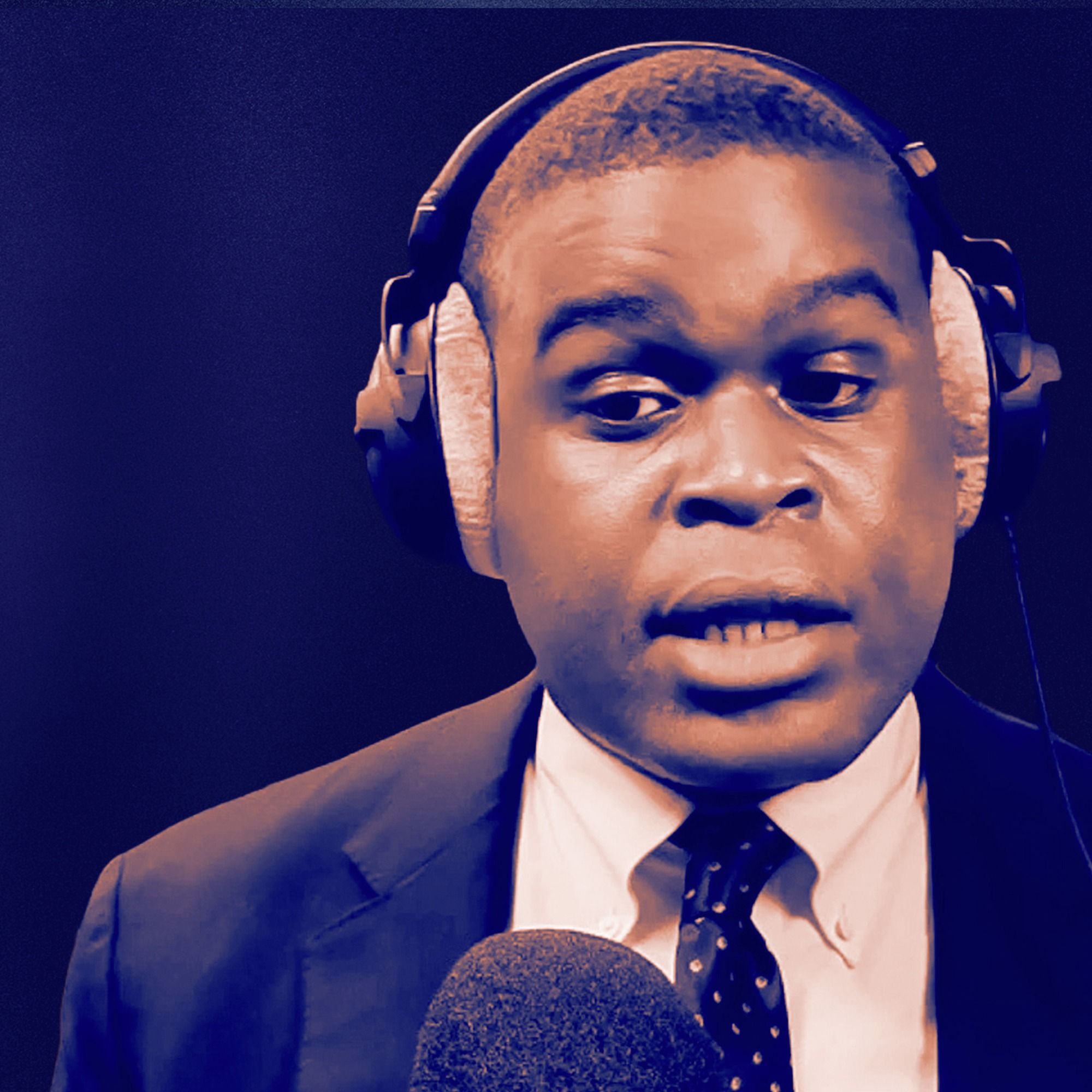
Interesting Times with Ross Douthat
He Has a Plan for the Left. It Might Involve Overthrowing the Constitution.
00:57:12
Happy Thanksgiving! If you’re dreading your family’s impending political feuds over turkey and dinner rolls, we’re here to share an episode that just might help guide you. In August, Osita Nwanevu, a progressive and the author of “The Right of the People: Democracy and the Case for a New American Founding,” joined Ross for a respectful debate about how we should be interrogating the democratic system the country is built on — without yelling or threats.
Loading summary
Transcript98 lines
- [00:00]
A
Don't just imagine a better future. Start investing in one with betterment, whether it's saving for today or building wealth for tomorrow. We help people in small businesses put their money to work. We automate to make savings simpler. We optimize to make investing smarter. We build innovative technology backed by financial experts. For anyone who's ever said, I think I can do better, so be invested in yourself. Be invested in your business. Be invested in better with betterment. Get started@betterment.com investing involves risk performance not guaranteed.
- [00:33]
B
Hey listeners, it's Ross and Happy Thanksgiving. If you're listening to me right now, I can only assume that you're either trying to escape your dinnertime obligations or trying to prepare for them to prep for an afternoon or evening with your Viktor Orban loving uncle, your openly communist aunt, or your generally politically paranoid grandmother. Maybe you're thinking, how will I get through this holiday? Well, we're here to help here on interesting times, we try to have respectful conversations about radical or extreme sounding ideas. And we try to talk seriously and thoughtfully across some pretty big political divides. So I thought I'd share an episode that might be a model for Thanksgiving discussion, a conversation I had this summer with progressive writer Osita Wainevu, who argues that now is the moment for a constitutional revolution. Osita is pretty far to my left. We don't share many political views, and I'm confident I would not enjoy his political revolution. But I think our conversation nonetheless reflected a mutual curiosity about the details of American history and where this strange political moment might be going. So respectful political debate is possible. Go forth and seek it out. And good luck out there. We'll see you back here next week. From new york times opinion, I'm ross douthit, and this is interesting times. After the great rebuke of 2024, many Democrats seem to think that their party needs to become more moderate. But there's another theory potent on the American left, which holds that Donald Trump's election shows not just that American democracy is in danger, but but that it doesn't really work at all. What the country needs isn't just a new policy agenda. It might need the kind of constitutional revolution, from adding new states to packing the Supreme Court that some Democrats already flirted with under Joe Biden. That's the kind of argument that my guest today makes in his new book, the Right of the Democracy and the Case for a New American Founding. Osita Wa Nevu welcome to Interesting Times.
- [03:20]
C
Thanks for having me.
- [03:24]
B
So we're going to talk about how radical ideas and radical critiques from the left might end up being very influential in Democratic Party politics going forward. But before we get there, I want to go back to the last election in which the Democrats had basically presented themselves as defenders of our democracy against the threat of authoritarianism, fascism, or at the very least, a dangerous kind of populism. And what you saw in 2024 was the failure of that argument, because in the end, Donald Trump didn't just win the Electoral College, he won the popular vote. Our democracy as it exists today voted for him. So I thought, to start, could you talk a little bit about that democratic message and why, from your perspective, it failed?
- [04:13]
C
Sure thing. So I think many voters went to the polls in November understanding the election as being a referendum on democracy in a precisely that way. I think the people thought that they were being asked to judge, on one hand, a set of abstract ideals that their civics teacher might have told them was important in high school or grade school, and the price of groceries, the cost of living. And I think a lot of Americans looked at that choice and they said, well, hell, I'm going to go with my own economic well being. The hope, which I think was a misguided hope, that Donald Trump's going to improve conditions within the economy. And so the abstractions the Democrats ran on the conception of democracy that they put forward wasn't compelling for a lot of different reasons. Early last year, Gallup, I think, did a poll where they found more than 70% of Americans didn't believe that democratic institutions were functioning properly. So when Democrats came out and said our democracy needs to be protected and saved, I think a lot of Americans doubted whether they had a functional democracy to begin with. And so they invested their hopes in Donald Trump, partially because they believed that he could be somebody who would unstick the institutions, tear them down, reformulate them in some kind of way. And so I think that this election can be read both as an indictment of the particular way Democrats talked about democracy in their pitch to American voters, and also as a culmination of, I think, basic anti Democratic deficits within the Constitution that have empowered Donald Trump and brought him to the White House yet again.
- [05:36]
B
Well, and I think just in your description, I think you can see sort of two potential takeaways that people sort of trying to reformulate ideas for the Democratic Party could draw from the election. And where you started with the idea that voters were asked to choose between abstractions and kitchen table issues, out of that sense, you get the argument that basically what the Democratic Party needs to do is just focus on those kitchen table issues, have policy debate, argue about specific issues, healthcare, education, the environment and so on, and not get caught up in larger theories of how democracy works. But you do have a larger theory of how democracy, well, how it doesn't work, you think, in America right now, and how it should work. So give me your definition of democracy. What is a democracy?
- [06:26]
C
A democracy is a system in which the governed govern. You can read a lot of political theory, you can read the classics, but I don't think you get a definition that is more succinct than that. Another formulation is Lincoln's government of, by and for the people. And so in a democracy, the people themselves are the people who govern. It's not entrusted as responsibility to some alien authority, some external power, some other hierarchy. People take upon the responsibility and burden and promise of governing themselves. That's the core idea.
- [06:59]
B
And how do you know that America in 2025 is not by the people and for the people, that the governed are not actually governing?
- [07:09]
C
So I think there are three characteristics of any democratic system. The first is political equality. People are equal in standing when they come to make a collective choice. So when it comes to the Senate, for instance, we have one of the most malapportioned upper houses in the world. I think only Argentina and Brazil among our peers are more malapportioned than ours. The same characteristic is responsiveness. There's real authority amongst the public. When they come together to make a collective choice, things happen. And the last thing I would say is majority rule. But as I write, I think in very, very basic ways, our system flouts all three of these things. So over the course of talking about this book now, I've done a lot of events in Washington, D.C. that is a city of about 700,000 people in this country without full representation in Congress, Eleanor Holmes Norton, the one delegate they have cannot cast a vote in the final passage of legislation in the house. There are 4 million Americans for whom that is true. Most of them live in Puerto Rico. They're governed by the federal government without a full, equal say in governance. That I think, by any reasonable definition, is not a democratic arrangement. It's something that's troubled people for many years in this country. But even beyond that extreme, those of us who do have representation have very unequally apportioned representation. Classic example, California's state of about 40 million people with its own country being one of the 40 largest countries in the world, is one of the largest economies in the world, has the same number of senators as Wyoming, State of fewer than 600,000 people, fewer, in fact, than Washington, D.C. that means functionally that people in Wyoming have about 60 or more than 60 times the representation of people at California do in the Senate. I don't think that's merely academic points you here in school that this is balanced out by the House. It's not really in a substantive way. The Senate alone shapes the judiciary. It shapes the executive branch, and obviously it's a veto point for the passage of even ordinary legislation. So right away, and I think the Senate is a crux of a lot of this, we have a fundamental piece of our system that flouts basic democratic principles, basic democratic intuitions, again, more so by international comparison than some of our peers. No country gets it perfect. There's no ideal democracy out there in the world. But I think it's fair to say that a system is not really democratic as much as it might purport to be one.
- [09:27]
B
And what about the economic component? How is a vision of economic equality, in your view, essential to having a functional democracy or having a democracy that is actually democratic?
- [09:40]
C
Yeah, well, this is one of the central provocations of. Of the book. And I think the kind of background intuition that people have in mind, even if they don't sort of know it consciously about democracy, is that we are entitled to an amount of, say, a basic level of say over the conditions that shape our lives. We're not mere victims of circumstance helplessly thrown about by the universe. We're not the peons of particular hierarchies of people who are more powerful than us or more privileged than us. That's a basic democratic intuition.
- [10:10]
B
And.
- [10:11]
C
And I think one of the things that gone around in progressive circles over the last decade or so is you have people like Elizabeth Anderson, for instance, who make the point that we are governed in more spaces than just the political sphere. We spend about a third of our time at work. The decisions that are made at the top of corporations we work for often affect us more directly, intimately and immediately than decisions made in Washington, D.C. or in our state houses or in our city hall. And yet we feel that we're not democratically entitled to any kind of voice in those spaces, except for maybe hoping that we can act through government to regulate the economy. When we try to do that, we find that Washington, D.C. and our political institutions are often dominated by wealthy people or bosses. And I think that when it comes to solving the concrete problems of inequality, worker power, the absence of worker power, the absence of worker voice, is one of the things that's contributed to our current economic situation. That is a democratic problem, and I think it suggests democratic solutions as well.
- [11:15]
B
All right, let's do an excursion then back in time to the American founding. Because one of your arguments is that America was not actually intended to be a democracy.
- [11:24]
C
Right.
- [11:25]
B
That in fact, we should understand our founding almost in terms of a kind of oligarchic coup. So talk a little bit about your view of the founding.
- [11:34]
C
Right. So, I mean, when you raise some of the objections that I've raised about the nature of our system, conservatives will often say, well, you know, we're a Republican, not a democracy. I think liberals by habit say, no, no, no, that's not true. The founders actually intended democracy, but they messed up in 50 million different ways. I think the conservatives have the better side of the argument. When you actually look at the historical record, people should understand that the Constitution is forged in a particular political and economic context. At the end of the American Revolution, we're in a state of true economic crisis. A lot of reasons for this. Land is destroyed and ravaged. Slaves escape. Trade restrictions are imposed by the British poor. Farmers, especially people in the backcountry across the nation are appealing for debt relief and for tax relief. They're asking if they can pay their taxes and their debts in kind with goods. They're asking for different measures of economic assist. And one of the main things they're asking for actually is the circulation of paper money. There's a shortage of hard currency in the country. They believe that the circulation of paper money will make it easier for them to pay down their obligations. This deeply, deeply troubles the wealthiest people in America. There's a belief that this undermines the stability of contracts, that it frustrates or complicates the creditworthiness of the country. And there's just this belief, too, that people are in economic distress because they hadn't been frugal enough. They were spending on gambling and drinking, on luxuries imported from Europe.
- [13:00]
B
Lot of my understanding is that they were in fact spending on drinking. Well, yes, to a substantial degree.
- [13:06]
C
To a substantial degree. Is that the source of economic distress across the country? Probably not. But there's a lot of colorful writing that Woody Holton goes through in unruly Americans. If people want another read on this. And so people are successfully appealing to state governments for this relief, with the exception of a state like Massachusetts, very conservative in its design with the state constitution, it resists these appeals. In fact, it increases taxes, and you have this uprising, which people may have heard about in school. Shays Rebellion, this armed uprising that is eventually put down. And it alarms the Founders significantly. There have been abortive attempts to rework the Articles and to reform government before then. But they come to understand that the state governments have gotten under control. They were actually directing the economic situation in the country, and something needed to be done. They needed a stronger sovereign federal government that could act directly upon people, that could request taxes and revenue directly from people, and that would actually be less accessible democratically than the prevailing order had been. And they come to Philadelphia in 1787 with that understanding. And this is not a matter of speculation. We have one of the very first speeches made at the conventions made by Edmund Randolph of Virginia, where he says, look, the thing that actually brought us together here is the excessive democracy at the state constitutional level. We have pamphlets and obviously the Federalist Papers. We have a real body of information that informs us as to what they were thinking when they designed some of these institutions. And it's not history that I think most Americans are familiar with or are encouraged to think about, but it matters. It matters in getting us to understand why the institutions we have function the way that they do. But I also think it gives us a kind of permission. This was not some kind of sacred compromise that came down, down a mountain on tablets like this, was a particular contingent agreement. And we should consider ourselves empowered with all we know now about governance, with the values we have now, to make dramatic changes to the political system with just as much right as the Founders did.
- [15:07]
B
Right. But it is also, in a way, an invitation that Americans have been taking, accepting since barely after the ink was dry on the Constitution. Because I think there's another narrative which says a number of influential founders, for different reasons, envisioned a more aristocratic form of Republican government than what we've ended up with. But some of that just sort of evaporated at the start.
- [15:33]
C
Right.
- [15:33]
B
Founders did not anticipate political parties. Founders imagined a version of the Electoral College, or at least some did, where literally the electors would be, you know, wise men deliberating. Right. And that collapses very quickly. And then you just have a sequence across the 19th and 20th century where the country steadily becomes more responsive to Democratic majorities. And this starts with Andrew Jackson, who is currently a figure in great disrepute on the left, but, you know, democratizes the system. Democratizes the system in a way that. That once led to him being celebrated right there. You know, in the old days of the. The Jefferson Jackson dinners that the Democratic Party used to have, and. And all of the narratives around New Deal liberalism, celebrate Jackson as a democratizer, but you have the expansion of the franchise over time to women, to freed slaves, African Americans and so on.
- [16:29]
C
Right.
- [16:29]
B
And so you have, by the time you reach the civil rights era and the middle of the 20th century. Right. You have a landscape where that founding Constitution, you have the direct election of senators. So America becomes, you would agree, right. Much more democratic.
- [16:44]
C
Oh, of course, of course. I wouldn't dispute that at all. We're living in a much more democratic society today in all kinds of ways than we were in 1787. I wouldn't dispute that. I think the case I'm making, though, is that the central institutions that the founders set up in 1787 in many ways survive today. Yes, we have the direct election of senators, that is true, but we have equal apportionment still, which is one of the central comprehensive compromises they made at the convention. For all they might have distrusted, disliked democracy, Madison and Hamilton both thought that the principle of equal apportionment went too far in advantaging the small states. They say this at the convention. They say this in the Federalist Papers. The small states we could not walk out.
- [17:25]
B
In fact, keep Rhode island happy, you.
- [17:26]
C
Gotta keep them happy. But Kelly Bedford of Delaware says during the convention, we will secede. We will join some other foreign power if we don't get a preservation of equal apportionment, which we'd had under the Articles of Confederation in the new system. So that feature which Madison warns about, I think quite cogently at the convention, continues to be perverse and continues to generate perverse outcomes for us to this day. People talk about the Senate in this respect, especially if population trends continue, smaller and smaller proportion of the country will win a greater and greater proportion of the seats. This is going to continue to distort governance, and actually the distortions are going to worsen. We have a presidency that we've seen in the last six months especially, I think, validates some of the concerns people had at the founding about whether they were creating some kind of monarchical or quasi monarchical executive. And so I think it's time for us to consider, at the extent that people are angry about Donald Trump again, what are the elements of the system that allow Donald Trump to rise as a political figure and that have sustained them. I think they're, to an ironic extent, some of the elements that the founders hoped would prevent somebody like Donald Trump from coming into power.
- [18:59]
D
Shopify is the commerce platform behind millions of businesses around the world, and 10% of all e commerce in the US from household names like Mattel and Gymshark to brands just getting started. Get started with your own design studio. With hundreds of ready to use templates, Shopify helps you build a beautiful online store to match your brand style. If you're ready to sell, you're ready for Shopify. Sign up for your $1 per month trial and start selling today at shopify.com NYT go to shopify.com NYT shopify.com NYT.
- [19:33]
E
This is the table, the one with the view. This is how you reserve exclusive tables with Chase Sapphire Reserve. This is your name on the list. This is the chef sending you something he didn't put on the menu. This is 3 times points on dining with Chase Sapphire reserve and a $300 dining credit that covered the citrus Pavlova and drinks and the thing you didn't think you liked until you tasted it, Chase Sapphire Reserve now even more rewarding.
- [19:57]
B
Learn more@chase.com Sapphire Reserve cards issued by JP Morgan, Chase bank and a member FDIC subject to credit approval hey, it's Vaughn Vreeland from New York Times Cooking. Colder weather is here and I'm no meteorologist, but I think the forecast says.
- [20:10]
C
You should bake with us.
- [20:12]
B
Almost any cake can be turned into.
- [20:14]
C
A one mole cake.
- [20:15]
B
It's like a croissant, but like even more crunch and flake. Oh my God, I could eat 5 billion of these. That is a brownie. They look so chocolatey and delicious. Don't be afraid. This is so forgiving. These are deluxe cookies.
- [20:29]
C
Do you guys want to try this.
- [20:31]
D
Bake with New York Times Cooking this season? Find all the recipes@nytcooking.com subscribe now for a limited time offer.
- [20:50]
B
So what should we do? Right, Give me again, in brief brushstrokes, the new Constitution that you think the United States should have.
- [20:59]
C
So we could start with the thing that I think most Americans think about when they think about the unarmed character nature of our system. A reform that most Americans have supported for a long time, which is dealing with the Electoral College. There's a proposal on the table now, actually something that's being acted upon in states across the country to move to a national popular vote by interstate compact without needing a constitutional amendment. I mean, the amendment process itself is one of the things that needs amending very, very hard. One of the hardest constitutions in the world to make substantive changes to ours. So if you get a number of states totaling up to the 270, you need to win a presidential election to say we're actually going to throw our electoral votes to the popular vote winner. You functionally worked around the Electoral College. That's one thing I've advocated in the past for adding new states to the Senate. I think that there is an ideological imbalance now for all kinds of reasons, in who gets represented the most and most reliably in that body. But that's not a permanent fix to the Senate at all. It's actually taking advantage of the equal state distribution.
- [22:00]
B
So that would be most likely Puerto.
- [22:02]
C
Rico and most likely Puerto Rico, D.C. the territories.
- [22:06]
B
So. Right. So an ideal Senate or would there be a Senate at all?
- [22:09]
C
Well, that's another question. That's another question. I think it's worth exploring. Kind of radical idea, but. But it's an argument that you have to make on the basis of getting people to understand not only that the system is not democratic, but what is the value of democracy actually to begin with.
- [22:24]
B
So one reason I wanted to have this conversation is that I think that the focus on Donald Trump and the focus on some of the very real radicalism of some of the ideas on the table on the political right right now has obscured a little bit just how much radical enthusiasm for structural change there is on the left. Right. Like in the Biden administration, there were both a set of sort of concrete legislative pushes for things like big new voting rights bill, that kind of thing. And then there were just a lot of proposals. So these run the gamut from, as you've already mentioned, statehood for D.C. and Puerto Rico to big changes to the Supreme Court were proposed. And I think now that the Supreme Court and Donald Trump are not in open war with each other, I think the left wing critique of the Supreme Court is gonna come back probably in a big way. And the filibuster, right, we haven't even talked about the filibuster as sort of a very concrete way that the Senate itself frustrates merely majoritarian efforts and requires super majoritarian efforts. So my expectation is that all of these ideas are going to be part of the political conversation on the left and are going to be very influential in the next Democratic administration. What I can't quite figure out is how they fit into actual practical politics. I'm just curious how you see that. Do you think that a Democratic candidate for President in 2028 or beyond should be running on this kind of narrative and saying, look, we need a kind of, if not a new founding, at least something along those lines where if we take power, we really are going to make big changes to how the Senate works well, I can tell you.
- [24:14]
C
What I'd like to see happen. I think it would be a mistake to do what we did in the Biden administration again, which is take these reform ideas in isolation and not connect them to, again, a kind of real material politics that most people come to politics to try to adjudicate. If we're talking about the Senate filibuster, and it's purely a matter of, well, you know, this is how majoritarian the system is by design, and we're not talking about, no, this is why we can't pass the health care reforms that we think we need. This is why we can't meet your material needs, improve the economy to your benefit. If it's merely an abstraction, I think it's a waste of time. If you connect it to economic concerns, material concerns, I think there's real potential there at the level of abstraction. Most Americans have been told that this system works all their lives, from the time they're in school, by politicians on both sides of the aisle up until Donald Trump who said, maybe we should, what was it? Revoke parts of the Constitution and dialed it back.
- [25:23]
B
Everything is negotiable.
- [25:24]
C
Everything is negotiable, right? Exactly. Most Americans, even to the extent that they might be concerned or be troubled by Donald Trump and are talking about our democracy, have a conception of the system that is we currently live in a democracy and need to protect and preserve it. You go out to these no Kings protests and what people say is, I'm really, really upset and I'm really, really angry that Donald Trump has violated the Constitution. People say that. I think with all the sincerity one can have. I think they say it for good reasons. I'm not somebody who believes that the Constitution is wholly bad. I like the Bill of Rights quite a bit. I think that we should have stable procedures to adjudicate how governance works. Even as I'm advocating for a new system eventually. But something about that register has to change in order for us to consider reforms at the level and at the scale that I'm talking about. I think I'd like to see people, whether it's candidates or activists, go out there and say, what really makes me mad is that Donald Trump is violating the principle that we have a right fundamentally as human beings to self governance. Donald Trump is doing things that abrogate our freedom as individuals.
- [26:33]
B
But isn't that, I think, see, it's just an outsider to this sort of intra left debate. I feel like you were on the most solid ground a minute ago where you were Saying no. The key is to link debates about self government to some powerful economic issue. It seems to me if you stand up and say, Donald Trump is violating people's right to self government. No, I mean, there are people who will care about that. Right. But you have to say, and the concrete effect is this public policy that you want cannot be passed.
- [27:05]
C
I would say beyond that, I think that you say that because when you talk about democracy in that level as a fundamental human entitlement, you say, I oppose Donald Trump's authoritarianism, and I oppose that in the mask of principle. And I also oppose our bosses, our executives, our investors in the economy, lording it over us at work, in the wider economic system. You say that we have a system that is undemocratic, not just because we have broken political institutions, we have broken economic institutions. And we should work towards fulfilling the promise of American democracy, not just by instituting these political changes, but by really reforming the economy so that we get our due from work, so that we're more empowered, we have more rights.
- [27:42]
B
And so if you were put in charge tomorrow of a new Democratic administration strategy to push something, push some set of proposals that you would think would bring the Senate to a kind of crisis point, right, where it's like you're going to use the filibuster, these things aren't going to pass. And this will create the opening to, at the very least, abolish the filibuster, if not also to add new states. What do you think are the most concrete things that Democrats could be promising there?
- [28:12]
C
I think the first item of economic legislation I'd put forward on the table is the pro act. I think that, again, there is a democratic character to arguments for more worker power.
- [28:24]
B
This is just for clarity's sake. This is an act that changes rules around unions and unionization.
- [28:30]
C
That's right. It obviates state right to work laws. It makes it easier to organize. It fights back against worker, or rather employer efforts to make unionization more difficult. That is, I think, the central piece of economic legislation. And you make a democratic argument for it. I think you say that we are now a party in the Democratic Party, aptly named, that is going to fight for democracy in all of its forms in all the ways that we can. That means resisting authoritarianism from the right. That means reforming our political institutions. That means granting each and every one of you as workers what you're due in terms of your voice and in terms of what you're entitled to as a matter of payment at work. That I think is a cohesive argument rooted in, again, a conception of democracy that is not just about casting a ballot every two to four years. It's a deeper conception of democracy that is rooted in principles about self governance that links you up with this whole, both political and economic agenda. And I think a novel way, and I think it's a novel way for the left specifically. I mean, we've invested a lot of time, a lot of energy talking about social democratic programs, whether it's Medicare for All, Green New Deal, this kind of thing. Labor power, although everyone will tell you it ought to be central to the agenda and generally believe that it's not been as central to the campaigns of someone like Bernie Sanders or Jorah Madani.
- [29:47]
B
But partially that's just because the labor movement has declined substantially and so few Americans are in labor unions. Right. So it does seem like you are, in a way you are raising your degree of difficulty as opposed to like a debate over Medicare for all. Right. Because with Medicare, all Americans, or almost all Americans expect to benefit from it. Everyone has some contact with it. You don't have to explain to people why Medicare might be good for them with labor politics. You do have to explain to the vast majority of Americans who aren't in unions. You have to sell them on unions because they're not invested already in this. Right.
- [30:22]
C
I mean, that's right, but I'd actually flip it. I mean, I think that one of the reasons why we don't have Medicare for All and it's been hard for us to do social policy in general, social democratic policy in general, if people actually perceive, well, you say this is for me and for everyone, but you're taking money out of my pocket to give it to somebody else who, I don't know, some stranger who hasn't worked as hard as me. Right. That's been the fundamental, I think, barrier to the success of social democratic reform in this country. Most people are workers, most adults anyway. People are usually not bosses, usually not managers. And so even if they're not in a union, I think you'd make a case that they're entitled to more authority, more voice, more agency than they currently have. And that's the case. Even if you're making no solid amount of money. Well, even if you're doing well now, what's actually protecting you from having your employer lay you off tomorrow or next week without your say or without any kind of voice or any kind of ability to resist? Everybody, I think, who works in this country has things that they would complain about at work.
- [31:21]
B
Not just for the record, not me. I love my job. It's fantastic. Just in case anyone, conditions at the.
- [31:26]
C
New York Times, zero complaints are perfect. So it actually flip that I think that there's more of a kind of cynically self interestedness within labor politics than the social Democratic politics that we've tried, where you're relying a lot upon the hope that people are empathetic towards other populations. I think that we can do that, but historically we've been able to do that on the basis of having a strong labor infrastructure. Labor is one of the key political factions or political power bases for the Democratic party as they build the New Deal society, as they build a great society. So maybe through labor you can socialize people into having a more capacious understanding of people they should care for.
- [32:09]
B
Okay, but then I want to with this, using this example, then I want to ask a question that takes us slightly back towards theories of democracy, right? Because suppose, having followed American politics through a number of presidential cycles, I can imagine a world where a Democratic presidential candidate wins an election, wins 51 or 52% of the vote, has a set of ideas, maybe the pro act is one of them, that poll reasonably well during the election. Then they come into power and they start trying to pass legislation. The legislation gets critiqued in various ways, there are arguments about it, voters pay more attention to it, and suddenly, if you look at the polls, the legislation suddenly becomes unpopular. Right? And this is sort of one particular example of what gets called the thermostatic trend in public opinion, where, you know, ideas are popular and then they're implemented and then the public swings in the opposite direction. Right. And I want to know how that fits into your theory of how democracy should work, because we've just lived through six months where, you know, Donald Trump, Stephen Miller as his aide, right, you know, have repeatedly come out and said, look, we just won an election with a majority of the vote. We represent the will of the people, not the Supreme Court, not the Senate and so on. Right? And there's a way in which that's wrong, because if you look at public opinion polls, lots of Trump's ideas are unpopular. But there is a reasonable point there, right? Which is that you have an election, you govern on the basis of the outcome of the election. It just seems to me that when we talk about the will of the people, we're talking about something that is very fickle and changeable, that is different six months after an election than six months before an election. And part of the case for a convoluted counter majoritarian system like the US Is that it's hard to really get at the will of the people just through elections alone.
- [34:13]
C
So, I mean, I address this in the book by saying I don't think the will of the people is a real thing. When you read polls and you say majority of American people believe this on taxes, and another majority believes this on environmental policy, majority believes this on the woman's right to choose and so on. These are not all the same group of people. There's not one, the majority, that's being represented across all of those issue spaces. So the concept of will of the people is very, very troubled. Theoretically, yes. And one of the reasons why I call my book the Right of the People is because I think that that phrase better encompasses what I think is actually going on in democracy. In a democracy, you have a stable set of procedures where people have an equal chance to kind of contest power. And majority is the way that we adjudicate who wins a particular contest. Right. If you're a minority now, you might be majority in the majority next time. That's a dynamic process. There's no one point at which we say we fully, transcendently, spiritually, whatever you want to say, have represented the will of the people in this electoral process, we should understand democracy as something more contingent and fluid than that. And so I think that the concept of the will of the people, though, is it's misled people, I think, who are well meaning. But I think it's also been proven useful for authoritarians, frankly speaking. So Donald Trump or Elon Musk saying, well, you know, whatever we say kind of goes because we are embodying the true, unquestionable sense of the American people.
- [35:35]
B
Okay, but what are they embodying then? You're leaning very hard on the idea that they're embodying the right of a contingent provisional majority to choose its leaders.
- [35:46]
C
I think that's exactly what happens in a democracy.
- [35:48]
B
And that's all.
- [35:49]
C
Yeah, and I think that that sounds deflationary. Right. But I think this is one of the things that makes democracy work and makes it, again, a useful means of governing ourselves with certain advantages. Overruled a few. The fact that it's dynamic, things change. You make an argument today and it doesn't work. You try a different set of arguments tomorrow and that might work and that might pull in more people. You have formed different coalitions. I think democracy has a character to it to produce, generate change, process change that makes it one of these are one of the reasons why I think we should value it.
- [36:24]
B
So I agree that we should value it. I think the deflationary argument, though, does make me personally more comfortable with the kind of tangled, complex system that we have right now, which I completely agree is not one that I think a sensible person would design from scratch. I think some elements of it are more defensible than others. I would probably mount a stronger defense of some elements of the Senate than I would of the Electoral College, though I might have a different view tomorrow because, like the public, I can change my views. Right, but if you're not getting the will of the people, then it seems like the case for revising our entire system becomes a little weaker.
- [37:06]
C
No, I don't think so, because I don't think what we're deflating is necessarily democracy itself. We're deflating the concept of the will of the people. But democracy remains important because, again, I think that through these fair contests, you allow people the chance to have a voice and have a say in their society and shaping the conditions of their lives. I think that's still a transcendently important idea. I think that's still a practically useful idea. And I think that we should be troubled when that isn't the case, when somebody, on the basis of a pure accident of where they happen to live, has much, much more say over the conditions that shape their lives than somebody else who happens to live somewhere else in the country. But I think that we should be open to the idea that, yes, we should have a complex political system. Yes, we shouldn't say, well, because X number of people believe this in the poll and we didn't get it, that means that we have a broken system. I think that the thing that more fundamentally matters to me is do each and every one of us really have a meaningful and equal say in shaping this country to the extent that we can as voters, apart from whatever policy outcomes that you might desire in substance.
- [38:11]
B
But those things are linked in part because one of the ways that. How do you tell if public opinion is uncertain and changeable and so on, right? One of the ways that you tell whether a certain set of people have a say in the government has to be whether at least some of their ideas are represented, right?
- [38:32]
C
Oh, certainly.
- [38:33]
B
And so here I want to make a less abstract and more concrete question or challenge to your argument. I think the story of the entire Western world over the last 50 or 60 years has been that we have a upper class, an elite class, a managerial class, whatever you want to call it. That is, broadly speaking, to the left of the general public on social issues, not always in every case, and there's obviously been a lot of change, but nonetheless, the drama of a lot of debates, whether it's about abortion when Roe v. Wade was handed down, or whether it's about immigration debates, especially in Western Europe, maybe more so than here, has been a case where you have social and cultural conservatives trying to claim more power through the political process and feeling themselves defeated, whether by judges or bureaucrats or anti democratic systems. And I think Trump himself is kind of a representative of that discontent erupting into the process, into the system and changing it. And so it seems to me that on those issues, a more democratic America would have still moved left on a bunch of these questions, right? Would not have stayed stuck in 1955 or anything like that, but would not look at all like the kind of society that I think most people on the left envision.
- [39:58]
C
Well, look, I mean, you can go back to Donald Trump again, having won the popular vote in November. I'm not supporting democracy because I think it is the means through which I get everything I want as oppressive tomorrow. And I think that if we had a democratic system, everybody would agree with me. All the woke issues I believe in, right? I believe in democracy as a fundamental core value for governing society, like a first order value. And that means that I'm willing to accept the possibility of losing an election or losing many elections in the course of making the arguments that I believe in for the kinds of policies and the kind of social attitudes they want. So I think that just means we have to do the work of trying to convince people to agree with this on those issues. And as you say, over the course of the last 10 years, people have actually moved left on some of these issues within the general electorate, especially after Ferguson in 2014. So I fully accept that we lose sometimes as progressives and sometimes we win. And that's all part of the game.
- [40:55]
B
Okay, I didn't. Maybe you're conceding more ground than I expected. So let me go a little further here, right, and say, okay, but then just in the case of Trump himself, to me, watching the Trump experience has given me slightly more faith, for better or worse, in the potency of democracy as a force in American life. Because from my perspective, one of the ways you can tell if a society is fundamentally democratic is do ideas and issues that have a lot of support but are considered disreputable among the great and good, the wise and mighty have political power and political representation. So in that way, a lot of forms of right wing populism seem like tests for democracy. Clearly, Donald Trump was considered disreputable not just by left wingers or anything like that, but by a large number of the people who ran the Republican Party when he started running for president. It just seems to me that it's kind of proof that America is actually a fairly democratic society, that he could win anyway and govern anyway. It's been a lesson for me about the perils and dangers of what the public wants, because Trumpism comes with all kinds of perils and dangers. But isn't that in some way a triumph of democracy? The entire Trump experience, There was something.
- [42:26]
C
Very odd reading after 2016, these narratives about populism in academia. This was all the rage for about five or six years there, where they were like Bernie Sanders and Donald Trump are both sides of the same coin, really. We have this kind of burgeoning anti institutional attitude within the public, and that means that democracy is kind of unstable and something we should distrust. They ignored the fact, and I think it remains worth pointing out that most people did not want Donald Trump to be president in 2016. He spent most of his time as a political figure, unpopular. So on that basic kind of level, I don't know that you can see him as a triumph. Now, I do think you pointed out something important though, which is, look, if we believe in democracy, if we believe in political equality, that means that we accept that there are going to be people within the political sphere, within our system, who have very, very extreme views, who have views that we might not like. That's something you have to accept. You can't be a fair weather friend of the democratic principle if you want it to work. And if you want to defend it from authoritarianism, you have to have a real principled commitment to it within certain bounds. But I'm not troubled by the reality that there are people in this country who I'm going to disagree with. This country is going to remain substantially conservative no matter how well I argue and how well people on the left argue. I think that's just the reality of life in a large and diverse country. And that's just something you have to accept.
- [44:13]
E
This is the table, the one with the view. This is how you reserve exclusive tables with Chase Sapphire Reserve. This is your name on the list. This is the chef sending you something he didn't put on the menu. This is 3 times points on dining with Chase Sapphire reserve and a $300 dining credit that covered the citrus pavlova and drinks. And the thing you didn't think you liked until you tasted it. Chase Sapphire Reserve now even more rewarding.
- [44:37]
B
Learn more@chase.com Sapphire Reserve cards issued by JP Morgan Chase bank and a member FDIC subject to credit approval with Venmo.
- [44:43]
C
Stash A tag on one hand and ordering a ride in the other means you're stacking cash back with Venmo Stash. Get up to 5% cash back when you bundle of your favorite brands. Earn more cash when you do more with Stash. Venmo Stash Terms Exclusion Supply match $100 cash back per month See terms of Venmo Me Stash terms hey, it's John.
- [44:59]
B
Chase and Mari Uehara from Wirecutter, the product recommendation service from the New York Times. Mari it is gift giving time, John. We have over 40 gift guides like Gifts for people who have everything on that list. I particularly love the self watering planter. I struggle to keep plants alive, so this is like a perfect solution. Check out all of Wirecutter's gift recommendations for yourself and everyone else at nytimes.com holidayguide. Let's talk about Sanders for a moment then, because I do think that Sanders and Trump both represented versions of what I'm describing here, where Sanders represented a set of economic ideas that elites, the great and good, you know, whoever else had sort of disdained and regarded as antiquated and anachronistic ideas that were also quite popular. And I think clearly lots and lots of people were very into what Sanders was selling in ways that elites did not expect and that had a destabilizing effect and that changed democratic politics. And I do, I think even in defeat, Sanders is, in a similar way to Trump, a kind of triumph for a certain kind of spirit of democracy on the left. I'm curious where you think that tendency is going, because again, in thinking about the concrete side of this, I look at that sort of Sanders eruption and I feel like it was perfectly calibrated to the mid-2010s. This is a period of low inflation. It's a period of slow economic growth coming out of the Great Recession, a sense that we didn't spend it, we weren't Keynesian enough, we didn't spend enough money. And it's just a zone where there seemed to be a lot of room to spend a bunch of money without raising a lot of taxes. And I feel like the left right now is just in a much more difficult position because of inflation, because of the shifts in the economy since then. Can you get that magic back? The case for economic democracy is it weaker now in 2025 than it was in 2016.
- [47:22]
C
I think it's stronger because if you identify economic democracy with empowering workers, I think one of the nifty fiscal things about something like the Pro act is it costs $0. You can do these things by statute. It's not a huge new social program. Yet you are, I think, materially improving the lives of ordinary Americans in all kinds of ways. You are building the political base so that eventually, when it's more fiscally sustainable, more popular, whatever happens to be, you then are in a better position to argue for the social Democratic policies that Sanders ran on in 2016. That's the kind of order of things that I think we ought to take up. And I think one of the benefits, too, is that it's novel sounding to people. Talking about worker rights, labor rights in democratic terms is not something I think people are mostly used to hearing from us. Again, they hear about social programs, they hear about Medicare for all. But empowering you democratically at work because you're entitled to certain things as a matter of basic principle, different register, I think. And again, it's registered. That has a lot of promise, partially because you can take liberals, for instance, who are closure to the center, angry about Donald Trump's authoritarianism, angry what they see going on in Washington, fired up about democracy. You could get them to say, look, there's another piece of democracy, too, and we can join these two things together. And so the people that Sanders had trouble with, which I think were largely this constituency within the Democratic Party, closer to the center, more kind of MSNBC liberals, to use one of the pejoratives that we on the left, I guess, habitually fall into using. If we can find a way of connecting our agendas, I think that's really, really powerful and something that we haven't really tried very much on the left. And it has a lot of potential when it comes to what happens in 2028.
- [49:06]
B
But a lot of that is probably then, though, tied up with the question of how Americans feel about corporate America. And this is we had Lina Khan on the show to talk about sort of antitrust and democratic politics and so on, Right? But I think one of the clear impediments again in the last 25 years to this kind of pivot, right, is that Americans have not necessarily felt incredibly hostile to big corporations, big companies and so on, and that they end up in a position where the left is saying, we need more labor power, we need more worker power. And the big companies are saying, oh, but if you do this, we won't be able to hire as many people. People will lose their jobs and so on. And those arguments have, I think, been more effective than some people on the left want to think. Do you think we're in a more anti corporate moment in 2025 than we were recently?
- [50:05]
C
I think we've been in an anti corporate moment for quite some time now. That doesn't mean that everybody was going to the polls last November because they wanted Lina Khan to stay on. I think it was strange for people to posit that on a very narrow.
- [50:16]
B
Segment of the public.
- [50:19]
C
I love what Lina Khan did, but that was a different level of politics. It was something behind the scenes. But general animus towards the wealthy, general animus towards corporations. I think we see that in polls. We see people supporting in large numbers taxing the rich more. One of the appeals that Donald Trump made, at least the first time he ran it was he was going to take a step away from corporate control of the Republican Party. Right. He wins the primary thing partially on his basis to build a constituency like that. So I think there's a real potency to that politics if we try it again. Bernie Sanders remains, I think, among the, or if not the most popular politicians in America. So I think there's potential there. But I think you're also right that people don't have a natural hostility to Amazon the way the people on the left want, or natural hostility to any of these big tech firms we use every single day. But I think that just means we need to make the argument that there is something unjust about the way this corporation is structured. So I think that there's a lot of restive understanding that inequality has gone out of control. The corporations do all kinds of things they can't in our politics and in society in general. But I don't think it's been directed in the way that I'm advocating for by the left. And I think there's still a lot of promise there myself. Anyway.
- [51:34]
B
Okay, well, let's end by talking about that message and messengers because you mentioned. Yeah. That Bernie Sanders is still very popular fills arenas, but no one has come along on the left with that. The same kind of popularity, the same kind of bond with large numbers of voters. You obviously have figures like Alexandria Ocasio Cortez who sort of are seen as potential heirs to Sanders, but even she, I think, sort of speaks to a somewhat narrower demographic. And this is where, you know, one element of democracy that we haven't talked about is the kind of mystical Right. There's a religious historian, Molly Worthen, who has a new book out about charisma in American life that I've been reading in recently. And charisma is. I mean, this is the element, I think, that sort of. In a way, it's sort of hard to defend as a Democratic theorist, because it is so weird and hard to pin down. Like, why. Why did Donald Trump cruise through the Republican primary in 2016? You can run down 17 different issues, but in the end, charisma has something to do with it. Why is Bernie Sanders so much more popular than any other prominent socialist politician? And the answer has something to do with his weird, grumpy mayor of Burlington. You know, charisma. Right. So, I mean, the concrete question I want to ask is about who you like as a future leader of the Democratic Party. But before you answer that question, could you say something about the mystical side of democracy and where it fits into your vision?
- [53:16]
C
I mean, this is just speaking personally. This is one of the things I actually like about democracy a lot. I mean, a particular kind of conservative will look at something like the British monarchy and say there's a kind of mystique to this system and the traditions involved. And when Queen Elizabeth died, there was a lot of this. And I remember writing at the time, democracy is way cooler than that. Democracy is way weirder and more mysterious and more mystical. It's the idea of people coming together from wherever they happen to be in society to make a collective choice. We all do this ritual of elections and so on. That's way cooler on an aesthetic level, to me.
- [53:49]
B
I mean, democracy in the American system, yeah, it generates charismatic leaders, and a constitutional monarchy tries to separate charisma from power. And democracy, you accept that there's going to be some relationship, but it's not.
- [54:06]
C
Just the charisma of a politician. It's the charisma of you going out in the streets as an activist, you convincing your family and friends to do a particular thing in an election, you having debates with your friend, your loved ones and your community. I mean, charisma exists everywhere, I agree, in the system. And I think that's one of the things that makes it, I think, spiritually powerful for me. But your concrete question, which I cannot answer, who is going to save the left?
- [54:31]
B
Well, and who's going to save the left? Not just in terms of policy proposals. Right. But we've talked, we've mentioned, just in passing, Andrew Jackson, fdr, Abraham Lincoln. Right. But who do you feel like is there? Who attracts you?
- [54:51]
C
I can't say that I know of anybody who is as of yet making the kinds of arguments about democracy on the left that I wish people were making in the public sphere. I'm waiting on that. All kinds of talent. I like Zoron quite a bit. Cannot be president for very stupid reasons.
- [55:07]
B
This is. Sorry, just Zor. This is Zoran Mamdani, the probable future mayor of New York City. And I agree. I mean, again, I think if you go down his list of policy prescriptions, even in a left wing city, you would have never imagined him getting elected. But if you watch a two minute video of him, you're like, oh, I can see why this guy might get elected.
- [55:28]
C
Right, Right. So there's real talent there. But here's how I tend to think about the trajectory of the left in general. There is not some kind of natural majority of leftists in the country waiting to be awakened by the right policy proposal or even the right charismatic candidate. I think that we are a movement that needs to build ourselves up by bringing more people over to our side. People on the left in the last decade or so, to a sense that I don't think we fully appreciate or say out loud, were shaped by the Obama experience. There's this comet from nowhere who comes in, wins the Democratic primary and then things change. Or at least he's able to capture the attention of the Democratic Party, capture this amount of power. That was what was going on when I was growing up and getting into American politics and so on. But I think it's clear now that all of that was a transient moment to a large extent. I do think there have been durable shifts since 2014 on social issues. I think the polls bear that out very, very clearly. But obviously we haven't won. Obviously Bernie didn't win in 2020 or 2016. And so there's a kind of what if we do moment before Mamadani prevailed in the primary, from my own personal experience in talking to people, there was a lot of cynicism, there was a lot of kind of hopelessness and a lack of direction people had. And I think he's reinvigorated the left in a really, really big way and demonstrated that there is still a kind of window here for us even within the Democratic Party, and evidently even within the Democratic Party in New York City, the seat of financial capital in the world, if that is possible, if he is likely the next mayor of New York and we'll see what happens if he gets in and how governance actually works. But if that is electorally possible, I think People have been given a new lease on life here as a movement. And I think where we go next is going to be determined by the extent to which we take seriously the task of conversion. How do we actually rope in more people who don't already agree with us, who aren't already reading Jacobin or even the New Republic, who are just sort of.
- [57:25]
B
Even the New Republic.
- [57:26]
C
Even the New Republic.
- [57:27]
B
I mean, if you can win in New York, you can win in New York. But what you need is a Bernie Sanders type politician who wins a purple state governorship. And when that happens, I will fully believe that the left wing moment has arrived.
- [57:45]
C
Right, we'll see, we'll see. But I think my own perspective, selfishly, self interestedly, is democracy has to be part of the secret sauce here. If you've never read Capital, but you believe that people have a right to.
- [58:02]
B
Govern themselves, which you've just described most.
- [58:05]
C
American voters, Which you've described most American voters, exactly right. What is the thing that's going to actually get you to accept the left's premises on the lack of power people have in the economy and the extent to which workers should direct the economy? I think that there is a democratic argument that is easier for people to understand, to perceive, to swallow and to sort of put in line with their existing politics. And a place to start that experiment for me is within the Democratic Party and utilizing this animus and this anger people have about the state of democracy to push people in our direction on economics. I think there's a real, again, real opportunity there that's worth exploring. If I'm wrong, then I don't know. I don't know. I'm humble enough to say that I don't know if we try beyond that. But I do think you've outlined the challenge, right? It's you win in New York, you went to New York. How do you reach out to the great middle of the country, most Americans, most voters? I think that's something we still have to demonstrate that we can do and it's something we have to be creative.
- [59:00]
B
About and that the mystery of democracy may yet reveal.
- [59:03]
C
Exactly.
- [59:04]
B
OSI to OneHVU thank you so much for joining me. It's a pleasure.
- [59:08]
C
Thank you for having me.
- [59:33]
B
As always. Thank you so much for listening. One last thing for today. You might not know that you can find Interesting Times in the New York Times app. Download the app and tap listen at the bottom of the screen to find us and all the other New York Times shows and narrated articles. Interesting Times is produced by Sofia Alvarez Boyd, Andrea Batanzos, Raina Raskin and Victoria Chamberlain. It's edited by Jordana Hochman. Our fact check team is Kate Sinclair, Mary, Marge Locker and Michelle Harris. Original music by Isaac Jones, Sonia Herrero, Aman Sahota and Pat McCusker. Mixing by Pat McCusker audience strategy by Shannon Basta and Christina Samulewski. And our director of Opinion Audio is Annie Rose Strasser. What are you doing in a meeting? That could have been an email. That's right, you're losing interest. Don't let it happen to your money, too. Vanguard Vanguard's Cash plus account can't help you at work, but we can help with your savings because Vanguard believes in giving you more. So how much interest could you earn? Find out@vanguard.com cashplus offered by Vanguard Marketing Corporation member FINRA and SIPC.