← Interesting Times with Ross Douthat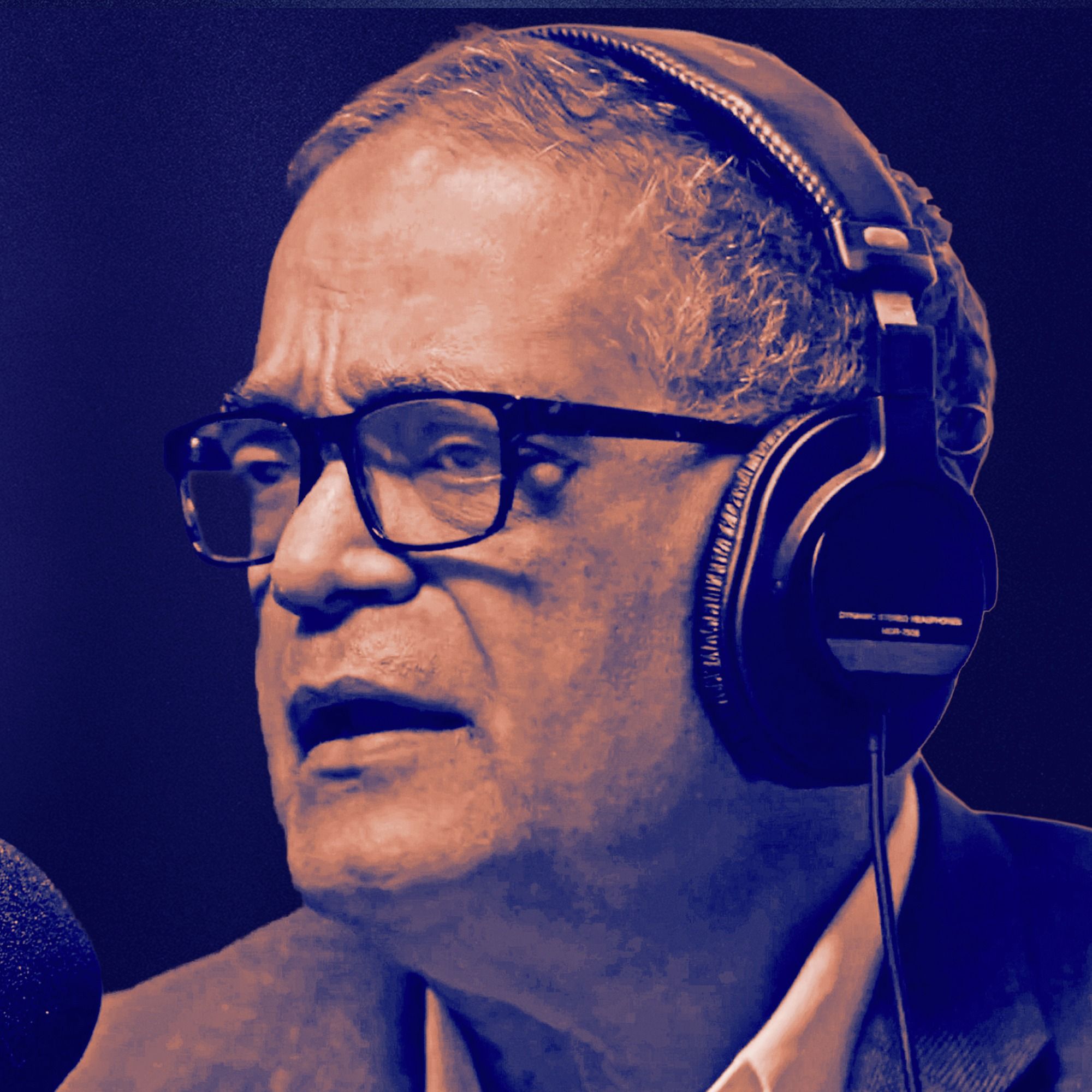
Interesting Times with Ross Douthat
The Future Is Indian
00:45:04
The next global leader is waiting in the wings — and no, I don’t mean China. India is the major power with the fastest-growing economy and the world’s largest population, and on the heels of trade deals with the United States and the European Union, it’s poised to become even more influential. I wanted to speak with Amitav Acharya, a prominent international relations scholar, about whether a new Indian century is about to be born.
Loading summary
Transcript78 lines
- [00:03]
A
From new york times opinion, I'm ross douthit, and this is interesting times. Right now, 21st century geopolitics seems like it's defined by the struggle between America and China. But the major power with the world's fastest growing economy and largest population isn't China, it's India. And right now, India has a unique role in global politics, doing deals with Europe one day and with Donald Trump the next, all while maintaining a strong partnership with Vladimir Putin's Russia. Its large and spreading diaspora gives it a unique cultural influence around the world, one that may only increase as other major powers grow old and people remain India's most important export. My guest today is a prominent international relations scholar who's written about what he calls a multiplex world order, a future where diverse powers compete to shape the world. I wanted to talk to him about India's role in this order and also whether there might be an Indian century waiting to be born. Amitav Acharya, welcome to Interesting Times.
- [01:33]
B
Thank you very much. I'm glad to be here.
- [01:35]
A
So I want to talk today about two big related subjects, which are India as a great power in its own right, and also the impact of the Indian diaspora of India on the move on the entire world. But I thought we could start with the story of the last 25 years that I think a lot of Americans who think about the world and great power competition have in their minds, which is a story where both India and China have modernized, have developed, have grown, but China has had the faster path, China has sort of roared to global prominence, and India has taken a slower path. So could you just talk about India's path to development and power just over the last couple decades and what that looks like?
- [02:23]
B
I think you're absolutely right that India's path to economic development, even strategic role, is slower to evolve. But let's not forget history. India was actually a major power and India actually had a much bigger imprint, at least on Asian international relations in the 1940s and 50s, where China was just getting settled into its communist government. But then India and China almost went parallel in terms of development. But then China took off. So there is always this India, China story narrative comparing these two. And economically, China has done very well, reduced poverty a lot more than India, but India hasn't done that badly the last few years. Actually, growth rates are higher than China, but it started on a lower base. And India has maintained its open political system, democracy. And despite some hiccups and problems, the main problem with India has been generating employment. And that's what this is a challenge for the current government. But I think if the Indians can, taking advantage of the trade agreements, for example, having more access to the European market, which they never had before, and reconciling with the United States and having fairly good trade deal for India, I think the India can overcome the crisis of the global economy and also in some ways become a little more self reliant. I think that that would be the best case scenario.
- [04:05]
A
Talk about demographics, right? This is a frequent obsession on this show. But one of the striking things about the Chinese position right now is that China's birth rate has collapsed, whereas India, while its birth rate has declined, is entering into what often gets called sort of the demographic dividend sweet spot, which is the period when you have a large young population and you don't have a large older population to support, which is going to be China's big, big problem. Why does India have a demographic advantage over China right now?
- [04:41]
B
Because China of course now is paying the price of a very strict and a one child policy. India never had the one child policy. So India has more young population coming up. But that can be a mixed blessing because you have to find jobs for these people, satisfy these people. India has to improve its educational infrastructure and employment possibility. That's not a given. But India is more open to integration into the global markets now. So with that trade deal with Europe, nobody would have thought that's possible. So I think if India can integrate itself more into the supply chain and it can never be like the factory of the world, like China is, but in terms of a combination of services, technology and, and manufacturing combined package, India can do quite well.
- [05:28]
A
Just describe the trade deal that India has just made with Europe because it's really quite distinctive. And I think the European leader, Ursula von der Leyen described it as the mother of all trade deals, which is not normal European lingo. It has to do with opening markets, it has to do with opening migration. It's gonna allow probably for more Indian migration into Europe. What does this mean for India and the world?
- [05:55]
B
I think it's a godsend blessing for Europe at the right time when they're facing all these tariffs and threats from the United States because both India and European Union are on the receiving end of Trump. For Indians, it's a bit of a surprise. I mean, in the long term because India has been very protectionist. But I think it opens up Indian exports a lot more, creates a new market at a time when American market is shrinking for Indians. And so the European Union doesn't have 19% or 18% tariffs on Indian exports. Indian exporters will be very happy to have that. And also there will be more investment with the European Union when it has this trade deal. It'll be more investment coming into India as well. It's a great opportunity for India and very timely.
- [06:41]
A
But politically also, and more migration. And more migration, which gives you potentially the sweet spot, right, where India has this potential demographic dividend. But as you said, India also has unemployment problems. But if you can have more migration to Europe, maybe the unemployment problems are not as big.
- [07:04]
B
Especially when the migration of India to the United States is under question because of all these restrictions of H1B. But that's only one all of restriction on the migration. Yes.
- [07:18]
A
So we're talking in a context where the Indian government has just negotiated successive trade deals. You know, there's been a deal of some kind with Donald Trump with the United States. But in terms of Indian companies and Indian products, what you know, if you're in Europe or if you're in the United States, like you have probably more of a sense of Chinese East Asian companies as exporters, as people you buy from. What are the companies in India, what are the industries where you would imagine a more open India ends up having more of an imprint on the West.
- [07:54]
B
When it comes to Europe, I think it will be agricultural products, textiles and mechanical goods. But I think ultimately we will see India moving up the supply chain just like China did and also provide Europe with a whole range of products. It could be minerals. But I think to me the India EU deal is a very political thing. I mean, the significance is more political than economic. Suddenly you have the psychological effect of creating such a large market between the European Union is a considerable economic power and there is India. So there would be, of course, further evolution. But I think basically India is going to import more high technology things from Europe, especially aircraft, and they're already importing automobiles. India has been actually investing in, say iron and steel, for example, in Europe. And the French have invested in India in aluminium. But I think this will be more of a resource cum industrial mix rather than a very high tech or purely agricultural resource export from India to Europe.
- [09:07]
A
So it seems like India has a substantial distance to go to get to anything like the point where China is in terms of being an industrial powerhouse, shipping things to the rest of the world. But maybe India's strength lies then as sort of a center of power for groups that don't want to be dominated either by China or the United States.
- [09:32]
B
Yeah, I agree, but just Keep in mind, let's keep in mind that China was not always like that. A lot of the exports from China to the rest of the world were actually in terms of products that were built with technology that was borrowed from outside. For example, China can now export fast trains, but originally it got the technology from Germany and Japan. So what I'm talking about is that India could also do the same thing. So one of the problems of Indian economy that it has not been integrated well into the global supply chain because of the protectionism. There is a political argument, ideological argument in India about having big corporations, foreign corporations, but Europeans may be more acceptable now than American corporations. Now it has a chance to have more investment and then use that to move up the supply chain and move up the industrial scale. Also in the services sector, which India is very, very well endowed, especially high technology services sector. So this is an opportunity. India is not going to have the kind of industrial revolution like China had. That stage has passed. It's not going to become the factory of the world like China has become. That window has closed. But the next stage of economic development, combination of industrial, high technology, services, India had to find that niche and still move off from exporting raw materials, textiles and the like.
- [11:03]
A
Tell me about India's relationship with Russia.
- [11:06]
B
Very close. The people, especially in the United States, don't understand it. But it goes back to certainly I would say the 70s when the United States and India, after having a fairly good start, actually went to different camps. So US Supported Pakistan and India had to look to Russia for help. The 1971 India Pakistan War of Bangladesh was a turning point where Nixon and Kissinger deployed the 7th Fleet in the Bay of Bengal and India had to conclude a defense treaty with the Soviet Union. So that memory and the Soviet Union. Now of course, Russia became the largest supplier of defense equipment to India. So the Russians have been fairly reliable and fairly friendly partners with India for a very long time. So there is a, therefore historical memory that is actually in some ways sentimental, I would say. I grew up in India during the Soviet Union and I have seen, felt that view, Indian view of the Soviet Union was nothing like the Western view, was seen as friendly, much more benign than many of the former colonial powers or the United States. So that remains.
- [12:24]
A
So how does that translate into the Putin era?
- [12:27]
B
Okay, the Putin era, India has continued because it's dependent on Russia for weapons. But then the new element of energy dependence, because India did not actually import a lot of oil from Russia until the Ukraine war, most of the Indian supply of oil came from the Middle East. But then when the Ukraine war in, Russia started selling discounted oil. So India become heavily reliant on Russian oil. But that's not a permanent. That can change. I think there is also the, you know, India, of course now under the Modi government moved much closer to the US Than any previous government had been. And they invested a lot on this relationship. I have talked to Indian leaders and they said this is the best relationship we had with the US In a long time. United States accepted India's nuclear power status, which is a big. This is not Trump. It started with George W. Bush. George W. Bush is hugely popular in India because of the change of policy. So with that relations with Russia were not as special as they could have been. So India as you know, is a non aligned or multi aligned country in terms of foreign policy. So India felt that it could maintain good relations with traditional partner. The Russians continue to get weapons. India wanted to maintain that relationship, diplomatic support from Russia, but at the same time cultivate closer relations to the US So you can say it's multi alignment, you can say it's playing both ways, having your cake and eat it too.
- [14:09]
A
And how long can you do that? I mean, I'm interested particularly. So on the one hand, obviously there's the challenge of managing a relationship with the United States when the US Is supporting Ukraine in its conflict with Russia and when Russia seems aligned with China against the U.S. but then even if that shakes up a bit as it has under Trump, right. So then India decides to sort of move into closer alignment with Europe, but Europe is, you know, Europe is at war with Putin. Right. Basically I'm asking, is there a way for India to sort of have a kind of sustainable, you know, non American, non Chinese bloc, or is it always just going to be lean towards Russia one moment, lean towards the EU the next?
- [14:56]
B
That's a good question. I mean, first of all, the Indian policy has always been not to depend too much on one country or align with one power. So it was non aligned. Now it's multi aligned.
- [15:09]
A
Multi aligned. Right.
- [15:11]
B
So I think the rationale for that is very clear that you don't have to choose sides. Like you can have some benefits by having that kind of a balanced relationship. But that policy would work as long as the United States say that, okay, it's either you're with us or you're against us. So only under the second Trump two that US started, you have to choose.
- [15:35]
A
And this is about, right, this has been mostly about energy, right? Saying you need to stop buying From Russia?
- [15:40]
B
Yeah, mostly about energy, but I think there is also, even under the Biden administration there was a kind of thing that India was playing both ways. There was always the feeling of unease about this Indian voting in the United nations against the United States. India's position in things like Ukraine where India abstained. So I have always argued in some of my writings that you cannot have sustained this for too long. At some point there will be a tension and then you have to choose or you will get into problems. And that's exactly what has happened. But at the same time the European Union is a relatively new thing. So they're moving so close to the European Union as a group. This is a very rules bound and very conservative beast.
- [16:29]
A
The Europeans like rules, they really do.
- [16:32]
B
And they also have human rights, they have democracy. You know, I can tell you this. I work with some NGOs in India and many of them get grants from the European Union based like German foundations. And the rules are now so strict that you have to. Everything has to be linked to human rights and democracy. And some of the foundations have closed their offices in India, moved to Nepal and other places. So I think the Indians don't like that. But I think it's a small. So the bottom line is that there is no reason why India cannot have good relations with multiple powers. But when one of these big powers is saying that you have to choose, then it becomes complicated.
- [17:49]
A
Strategically. What does India want? Is this just a matter of we're not one of the superpowers, we're just trying to play the best hand we can or are there a set of sort of geopolitical objectives that India is interested in? I think again, Americans are accustomed to the idea that China wants Taiwan, China wants a certain kind of dominance in East Asia. China has some client states in Africa. There's sort of a sense of Chinese grand strategy. What is Indian grand strategy?
- [18:23]
B
There is an argument that India doesn't have a grand strategy. I don't believe in that. But let me say Indians don't want to be a superpower in the same sense as China. I mean this. I have lived in China actually much longer in the last 20 years than I have lived in India. And in China there's an obsession of being number one. They don't say, they won't admit it. But the United States compete with the United States, overtake the United States. They have all sorts of studies looking at the relative power of nations. India has very little of that. India just want to have status and the key word is status. As a great power, status as respect in the international community, what it used to have. And I think that means a little more kind of realistic view of what India can do. But on the other hand, some Indians see their economy growing. I mean, it's overtaken its former colonial master, Britain. And they see India large country, number one in terms of population. Many projections put India within the top at least three leading economies in the world, after United States and China or China and the United States. So they see a potential to be recognized as a great power. However, they look around the world and they see that they're not getting that respect. And because everybody's obsessed with China. Everybody's obsessed with. Yeah, at the moment, it's. China is the name of the game. So Indians, you can say there is a complex here. I won't say inferiority complex, but a sense that they are not getting the fair recognition that they deserve and that's what they want. And they thought they were on the way to get this. Then President Trump's tariffs, India Getting until now 50% is a big insult.
- [20:05]
A
But shouldn't they take it as a compliment? Trump wanted to put those tariffs on China too, right? It's a sign. No, I'm joking, obviously, but it is in its own way. The scale of the tariffs that Trump wants to impose on you should not necessarily be taken as an insult.
- [20:21]
B
Well, I think it's not China. It's back. Pakistan. Pakistan got 19% and Pakistan gets a visit to the White House and India got 50. So now, of course, it's the other way around. India got 18% and Pakistan is very unhappy.
- [20:38]
A
So let's talk about then two concrete expressions of Indian power, the relationship with Pakistan and the relationship with China. Let's say we're living through a 15 to 20 year period where India's influence and power are going to increase. What does success for India look like with its less powerful but nuclear armed rival Pakistan and its more powerful neighbor China?
- [21:03]
B
I think, I mean, this depends on who you ask, the foreign policy.
- [21:08]
A
I'm asking you.
- [21:10]
B
My sense is that for India, if India can achieve the kind of growth and become the third largest economy, not necessarily overtaking China, but maintain its political system openness and have more diplomatic influence, I think that will be quite acceptable to India. India is not a revisionist power. India is a status quo power. So I think that's what success would mean. And domestically, at home, generate more employment. But you cannot have a third largest economy without having a sustainable employment and industrial base. With Pakistani terrorism, I mean, there Is of course, the Kashmir and other issues, but it's all linked to, from the Indian perspective, support for terrorism. And they see that. They see the west not really understanding India's position and then China's support for Pakistan. China is the biggest, you know, they say ironclad relationship with Pakistan and they see that Pakistan will not be as adventurous, as assertive vis a vis India without Chinese help. That's what gets Indians angry about China. Otherwise, I don't think there is any totally unresolvable or sort of dimension that cannot be diplomatically addressed between India and China.
- [22:30]
A
And what changes the situation for the better for India? Is it just economic growth or is it. Is there a kind of level of military power where India thinks that it could get Pakistan isolated and sort of force China to be friendlier?
- [22:46]
B
I think nuclear weapons play a big role here. I mean, so Pakistan has nuclear weapons, but China is also a much bigger nuclear power. For a while, Indian foreign policy moved in the direction of ignoring Pakistan and engaging China. So it's a China they have to deal with. China is the true sort of peer competitor rather than Pakistan.
- [23:07]
A
How strong is India's military, apart from nuclear questions you mentioned, obviously it's importing weapons from Russia, importing weapons from the United States. How significant a global force is the Indian military?
- [23:22]
B
Potentially, I think, depends on the location. So if it comes to the Indian Ocean, which is India's backyard, Indian capabilities are very significant in terms of the global power projection. I don't think India has the capability. So I think India focuses on the Indian Ocean. The Chinese, of course, building a Blue Water navy and they want to go into the Indian Ocean. They're already in the Indian Ocean. And India feels that it can act as a deterrent or counter to Chinese expansion in the Indian Ocean. And that in Indian strategic thinking is kind of helpful to the West. So Indian strategic doctrine focuses along with nuclear capability in the Indian Ocean, power projection within the Indian Ocean.
- [24:09]
A
I want to move to culture, but let's try and make a bridge between geopolitics and culture. So Narendra Modi, the Modi government has been in power for some time now. The Modi government is nationalist, Hindu nationalist. It has a particular conception of Indian civilization rooted in Hindu religion, Hindu identity and so on. Is there a kind of cultural geopolitics where Indian nationalists imagine themselves as sort of dominant in a kind of civilizational space where like all of South Asia is shaped by its Hindutva, this sort of religious ideology or political. Religious ideology, yeah.
- [24:55]
B
So that. That's A very good question. And certainly under the current ruling party or BJP, Modi's party, the BJP's ideology is based on Hindu nationalism, Hindutva. But I think you can say that some of the policies, domestic policies of India has moved in that direction, and it is creating a lot of concern among the Muslims, among the secular forces in India, which is still very substantial. And at the same time, the civilizational narrative you are talking about, that India is one of the great civilizations, there is a big debate in India about whether Indian civilization was born in India and went overseas, influenced the whole world.
- [25:42]
A
Yes.
- [25:42]
B
Or whether Indian civilization actually is kind of a hybrid. There was a preexisting civilization in Indus Valley, and then we had migration from the Pontic steppes to Central Asia, Persia, and it kind of become a hybrid civilization. That's the view I take, but that's not the view of some of the key members of the ruling elite, ruling party in India. And that creates aggravation and fear among the neighbors, but also within India, among the secular forces, which are still quite substantial.
- [26:44]
A
So the idea that Indian civilization is something that's born in India and then spreads around the world is obviously relevant to an age when Indians have spread around the world. And Modi has, I think, very explicitly talked about the Indian diaspora as kind of a mode of Indian national influence. But let's just. Let's start with. Let's talk about the diaspora. Let's talk about America. You mentioned in the United States, relations have been better than ever up until very recently. Trump in particular spent a lot of time courting Indian American voters. He did an event with Modi in 2019. Right. Howdy. Modi in Texas. It's an amazing name. But then in the second Trump term, there's been a swing. And it isn't just a swing where Trump is imposing tariffs on Europe. It's also a swing where there is this kind of anti Indian backlash on the right. So both tell me where you think that comes from. But also just talk about how you see. How do you think Americans see India or see Indians? I think is the better way to put it.
- [27:51]
B
By the way, don't forget that Modi had this, one of the biggest rallies right next door, Madison Square Gardens.
- [27:57]
A
Not just Texas. No, no. It's New York as well as Texas. All the centers.
- [28:01]
B
Yeah. So I think generally Modi has used that as a foreign policy tool. I mean, partly it's genuine, but partly also, it's a significant foreign policy asset. So the American perception of India, first of all, Americans don't know much about India, and I'm sorry to say this, but it's not so. India doesn't strike American imagination the way the Chinese do. And also in some ways, actually the Soviet Union did, because it was a threat for a different reason. There are many more universities with centers for China studies. Americans going to study in China, getting trained in the language. This goes back to the Cold War period. There's nothing like that. As a professor, I can tell you that India Studies is nothing comparable. So American students and American academic institutions, and to some extent, think tanks too, they're catching up now, but nothing like China. As you know, United States is not a country where there's a lot of interest in foreign cultures. Right. I can tell you that I have a son who just graduated from school, and they studied about China, about Europe, Rome, Greece. Not much in India. So that's part of the problem. Americans don't go to India as large numbers of tourists. So because of that, we have this relative ignorance about India. Neglect of India. We talk about democracy, but, you know, US And India, largest democracy in the world. That's like rhetoric. I mean, it doesn't really translate into endearment of India in the American public imagination. Now, you did mention about the Indian diaspora, which is quite influential politically, although smaller than China, but more successful economically.
- [29:48]
A
Well, that's. Yeah. And that's part of my perception about the place of India in the US Is that there's this way in which Indian immigrants have been more successful at attaining positions of elite influence. And this is most obvious maybe in Silicon Valley, but you can also see it in US Politics and in both political parties. Right. It's Vivek Ramaswamy and ushavants as well as Indian Americans in the Democratic Party. But this has sort of. There's sort of a flipping back and forth where at certain moments, Indian success drives a kind of admiration, where it's like, this is, you know, the successful minority. But then you have, especially just in the last couple years on the right, a flip against a sense of like, Indian Americans are. There's abuse of H1B visas, people sort of forming ethnic mafias inside Silicon Valley, that kind of narrative takes hold. How do you see that?
- [30:46]
B
I think it's a real problem. And it's partly. Well, I'm not gonna fault anybody, but partly the way the Indian diaspora, especially the tech elite in US Conducts itself. I have heard this story about Indian dominance of Silicon Valley as a factor why many non Indians, especially from Southeast Asia, have left Silicon Valley. So I think Maybe they don't realize it, but that perception remains. And also maybe getting into some controversial issues here. But H1B visa, it's partly how American companies recruited them. You have more 60% until recently of H1 visas. This is obviously creates perception.
- [31:31]
A
60% of them were for Indians.
- [31:33]
B
Yeah, I mean, that's a huge number. And even though they're all qualified that number, when it gets into the public domain, people probably did not know about it. Now it's out in the open, they think why should any particular ethnic group have dominate hugely disproportionate share of the visas. So this was partly a kind of expected reaction, especially at a time when populism is growing in the US you have the base, people are thinking that. I mean, I can tell you that the Indian that gets H1B visa is not taking any jobs from the kind of support base of President Trump. I think these are completely different levels of skill. But certainly it creates the perception of one ethnic group benefiting from the American legacy at the expense of Americans. And I think that it can be addressed and I think maybe some reform there could be useful. There are other ways for Indians to come in. All Indians initially, when they came to the US came on H1B visa. People forget that narrative. Everything focuses on the Silicon Valley, H1B. So I think the main thing is that the political climate in the US has narrowed. Populism. There's an overall anti immigrant sentiment. I mean, a few years ago during the COVID it was the Chinese. Chinese brought Covid into the US and now Indians are taking jobs away from Americans. So this is very political.
- [33:11]
A
Do you think that there is a kind of natural political or ideological direction that the Indian diaspora in the US takes? Historically, Indian Americans I think have tended to vote for the Democrats. Like most immigrant groups, the Trump administration definitely courted them. You have prominent Indian American Republicans. But if you were placing a bet on the political direction of the Indian American community, what would you.
- [33:40]
B
Okay, without going into specific numbers here, but I can only talk about my own observation. I think I've seen very successful Democrats who are of Indian origin and very successful Republicans of Indian origin. But what actually strikes me, I have seen more Indian Americans or Americans of Indian origin, meaning they might have been born in United States, but they have ethnically Indian. They have become more conservative.
- [34:08]
A
Why?
- [34:10]
B
If you want me to speculate, I think I would say that, you know, it's always a bit easier to American public has turned except in the liberals eastern states and California. If you're living in The Deep south and a lot of Indians there. You know, you feel more at home identifying with the Republican narrative, the conservative narrative, and also politicians in the US Being hardline conservative, saying, you know, very anti immigrant things, identifying with a very conservative agenda probably gets you more assimilated.
- [34:45]
A
No? Well, and I think your point about assimilation is well taken. I think people, liberals and progressives sometimes underestimate how embracing a certain kind of nationalism as an outsider can be a way to assimilate. Right. Which is why it's not always the case that immigrants or minorities are just sort of natural liberals. Is the European landscape, does that look different in the uk Right. You have a lot of Indians in elite roles. Now that Europe is opening further, do you see the Indian diaspora playing a big role in the European landscape? How does it look different from the.
- [35:26]
B
U.S. well, Europe is a much more older society, Right. It's a much older civilization than United States. United States still is a migrant community. With due respect to the Native Americans, it's a new society. So it doesn't have the same traditions, religions and same monuments, for example, that you can go back and say, oh, this is the Christian emperor, so? And so did so that's why US provides much more of a broad space for adaptation and assimilation. So it is in a sense immigrant society. And being American means being a little bit of everything. Europe is still very traditional in that sense. So I think United States, unless there is a social revolution here and a revival of Christianity. Right again in the US The Indian community in the US will also become more open minded and more assimilated the way American society generally is. But it will be certainly not be able to do the same thing in Europe, possibly with possible exception of Britain, where, as you know, there's a large Indian community, but there's also a large Pakistani community.
- [36:38]
A
So part of what's fascinating to me about the European deal is that one, Europe needs people more than the US does. Europe is older, lower birth rates. Right. There's more of a need for immigrants in Europe than in the US Europe has had a very difficult experience assimilating immigrants from the Middle east and North Africa. And you have much starker conflicts in Europe between native populations and Muslim immigrants. And so now it's like Europe is saying, well, we're going to take a lot more immigrants from India. And so you're creating, it seems like a kind of fascinating almost triangle there, right, between native populations, Muslim immigrants, Middle East, North Africa and then potentially Indian immigrants as well. That just seems like a very potentially volatile mix.
- [37:36]
B
I'M a little more optimistic. First of all, Europe cannot compete with Australia, Canada or United States.
- [37:43]
A
I lived as potential destinations that Indians want to go to.
- [37:46]
B
It's much harder to. It takes much longer, Much harder. I lived in Britain, worked there, an H1B visa and then get one of those genius visas to settle here. Much easier. Until now. Okay. Europe also has not only social resistance to immigration, and that's not just Muslims, to some extent, for anybody come from outside. They want to preserve their own culture and heritage a lot more because they see themselves as a very traditional society much longer than, say, the United States going back. And also, you have to also look at the supply side. Maybe Indians still think of the United States and also the Canada as a more open opportunity. There are much more opportunities here. This might all change, but there are much more opportunities for them, too. They still talk about the American dream, despite what has happened in the last year or so. So I don't think Europe can compete. Even the UK also.
- [38:45]
A
But even if the Indian government feels like it has a really strong interest in encouraging emigration to Europe, this has been offered to me as one of the solutions to the unemployment problems. You mentioned that maybe the Modi government or Indian governments might say, well, we have a lot of unemployed young men and it wouldn't be the worst thing if they went and worked in Europe.
- [39:11]
B
They might think of that. But this will be heavily because they will see that it's passing the buck basically to Europe. So the challenge for the Modi government is to create more opportunities and bring the diaspora back to India. And to some extent, people are now talking about whether the H1B visa crisis, many of the Indians are going back. And I've seen this in social media talks that there's, you know, maybe time to go back home. So for these people, maybe easier to get jobs because they are already well trained. But what about the rural Indians that are looking for jobs? I think we have to expand the. And that's the challenge. So if any government, whether Modi or a successor government, tries to export its problem to Europe, that is not going to succeed. Because most Indians, they will keep a foot on both sides. They will keep a foot in India and they keep a foot in the immigrant country. But I think given a chance to come back and have a good, reasonably good life in India, they'll come back to India.
- [40:11]
A
What does India want from its diaspora?
- [40:15]
B
Get money.
- [40:16]
A
Get money?
- [40:17]
B
Yeah, it's a big export for India, but also want loyalty. Loyalty meaning always think of the Indian interests. India has facilitated in some ways, by allowing people with Indian connections born in India to go back and live in India. So India definitely wants them.
- [40:37]
A
Does India want its diaspora to make Europe or the United States or any other democratic country more sympathetic to India?
- [40:47]
B
Oh, yeah, that's certainly the policy of the current government. Yes, there's absolutely no question about. But you have to say, why not? Why can't you do that? We have examples of the Jewish diaspora supporting Israel. We have example.
- [40:59]
A
Iris, I'm not offering this as criticism. I'm offering it in terms of an understanding of the future.
- [41:06]
B
But that may not be what I can say that that's true, but it's not. The only the economic financial side is very important. And secondly, it comes and goes with who is in power. I didn't see it that strongly. In fact, I've seen former Indian leaders going to Africa and other places say you should identify with the aspirations of your own country, people like Nehru, to counter that kind of immigrant nationalism, pro Indian nationalism in other countries, because they know that this will create and this will also become an anti India thing, like what happened in Uganda, for example, when Indians were expelled. So I think there will be a limit, but I think currently it is an instrument of foreign policy.
- [41:51]
A
Pull up to close. It's 2060.
- [41:54]
B
Yeah.
- [41:55]
A
Everything has gone as well for India as could be imagined in that time. How would you describe the Indian place in the world in that future?
- [42:06]
B
If everything goes well, I think India would be. I still think it'll be the third largest economy and not the top economy. There have been some studies that put India as the number one economy, overtaking the United States and China. But the gap between India and China will be less, much less. And possibly the gap between India and the United States will be much less. You know, India's main problem is not human resources or lack of talent, is the domestic politics. India has serious domestic frictions. So I would worry a bit about India's continuing as kind of a united integrated country. I am optimistic it will, but we cannot take it for granted. But if India does that, it will be one of the most respected powers in the world. I mean, I not only have hard power, but also a lot of soft power. I think that's a very optimistic scenario. The pessimistic scenario will be domestic breakdown in India turning very nationalistic, war with Pakistan. That kind of damages both the countries very seriously. And also China, an optimist. And I think India has the resources, the population base and the human talent. I think generally it will be very beneficial. India will not be a divisive country in world order, I can tell you that. I don't see that as far as diaspora is concerned, they want to mix with people, they want to make a contribution, they want to be recognized, they want to get respect. So I think there will be a very unifying force, even for the West. There will be an asset to the West. If that sounds too optimistic, maybe I am an optimist.
- [43:42]
A
That's a good place to end. Amitavacharya, thank you so much for joining.
- [43:46]
B
Thank you very much for having me.
- [44:11]
A
Interesting Times is produced by Sofia Alvarez Boyd, Victoria Chamberlain and Emily Holzeneck. Jordana Hochman is our executive producer and editor. Original music by Isaac Jones, Sonia Herrero, Amin Sahota and Pat McCusker. Mixing by Pat McCusker. Audience strategy and operations by Shannon Busta, Christina Samuluski, Andrea Batanzos and Emma Kelbeck. Special thanks to Jonah Kessel, Allison Brusek, Marina King, Jan Kobe and Mike Pieretz. And our director of opinion shows is Annie Rose Strasser.
- [44:55]
B
Ra.