← Interesting Times with Ross Douthat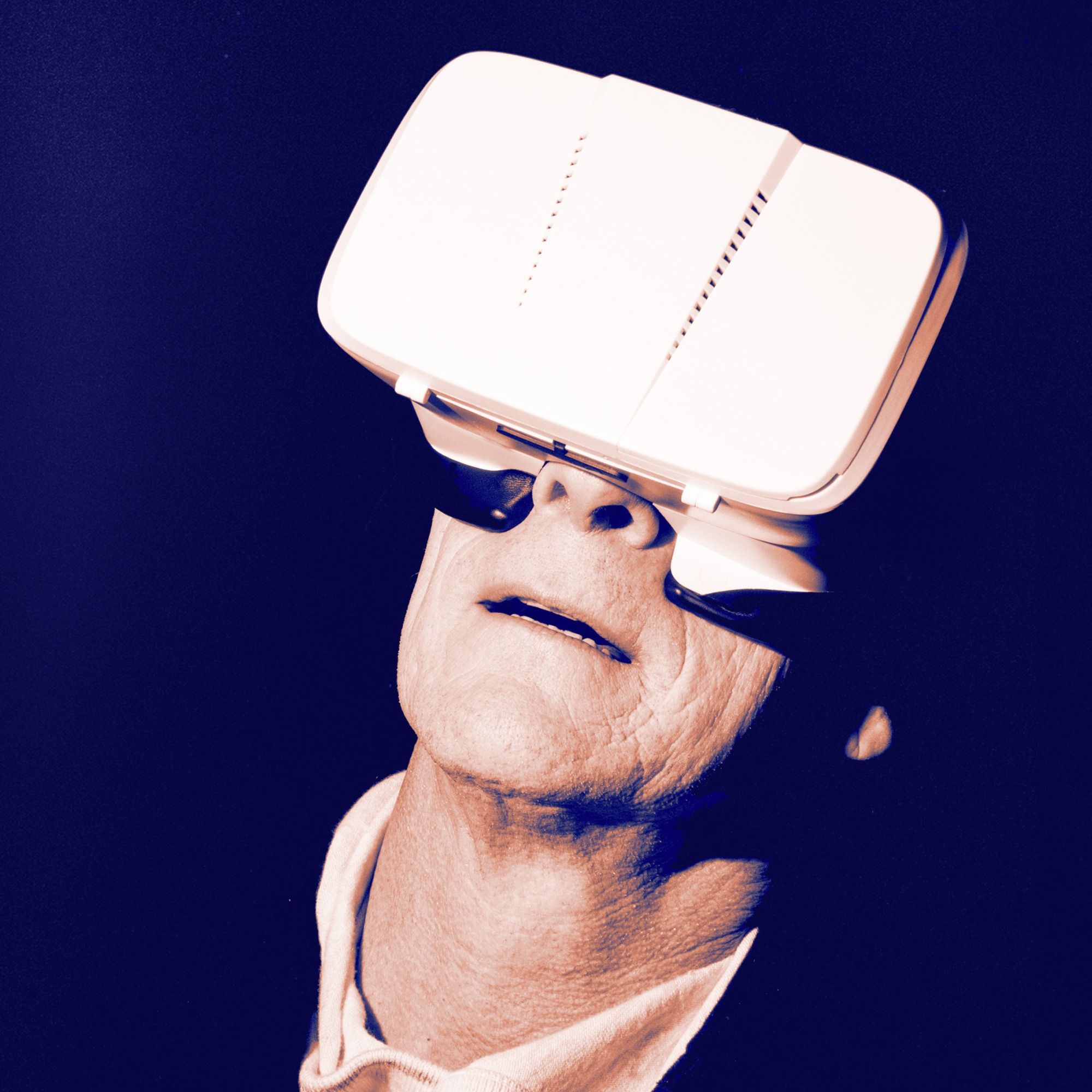
Interesting Times with Ross Douthat
The Machine Wants to Kill Us
00:49:46
“There’s something very spiritually dark about the internet,” the author Paul Kingsnorth tells Ross Douthat in this week’s episode of “Interesting Times.” Kingsnorth warns against the expanding presence of technology in our lives and declares it “the war against human nature.”
Loading summary
Transcript114 lines
- [00:00]
St. John's College Narrator
The big questions never change. What is virtue? What is justice? What makes a good life? At St. John's College, undergraduate and graduate students wrestle with profound questions through the great books, from Aristotle to Arendt, from Locke and Lincoln to Du Bois. Here, friendship and community are foregrounded as students from across perspectives work together to find truth, not victory. Join our community of learning at St. John's College, cultivating serious minds for serious times.sjc.edu from New York Times opinion.
- [00:35]
Ross Douthat
I'm Ross Douthit, and this is Interesting Times. A lot of people, myself included, are worried about where technology is taking the human race and especially how we can stay human in an age of artificial intelligence. But my guest this week thinks that we're not worried enough. That some kind of apocalypse is all but inevitable, if it isn't already upon us, and that what we need now are strategies of resistance, endurance, and escape. And he practices what he preaches, having retreated to the west of Ireland with his family, the better to keep them out of the clutches of what he calls the machine. But he's come back to us for a time, bearing a prophetic message. Paul Kingsnorth is a novelist and critic, an environmental activist, and a convert to Eastern Orthodoxy. And his new book is entitled against the Machine on the unmaking of humanity. Paul Kingsnorth, welcome to Interesting Times.
- [01:55]
Paul Kingsnorth
Thank you very much. I think that's a good thing. I'm not sure.
- [01:59]
Ross Douthat
Well, we'll find out. But we're gonna start with your life, because you don't just critique technological civilization. You have also at least somewhat withdrawn from it. You're here in New York City promoting this book, but once book promotion is done, you will return to Western Ireland, where you have lived for some time with your wife and children. Can you tell me about that?
- [02:26]
Paul Kingsnorth
Well, I live on a few acres of land in a little house in County Galway in Ireland. You can probably tell from my accent that I don't come from Ireland. I come from England. I grew up in urban England. I worked there for a long time. I lived there for a long time. But both my wife and I. Well, when you have children, it really focuses you on the shape of the world, the stories you want to tell them, the life you want to live. And we were quite clear for a long time that we wanted to try and escape the machine, escape the rat race if we could. And we wanted to homeschool our children. We wanted to teach them ourselves. We wanted to give them some time in nature. We wanted to take them away from the screens which are enveloping absolutely every aspect of education and life for children. So we kind of jumped ship. We left England and we moved to rural island as a kind of a life experiment. We wanted to grow food, we wanted to try to be semi self sufficient, try to be rooted in a place. So that's what we've been doing for about 12 years.
- [03:20]
Ross Douthat
Yeah.
- [03:20]
Paul Kingsnorth
And we're still at it. And it's been pretty glorious actually, considering that we kind of jumped in with both feet to see what would happen.
- [03:27]
Ross Douthat
How old are your kids now?
- [03:28]
Paul Kingsnorth
They're 14 and 17 now.
- [03:30]
Ross Douthat
So they were very young.
- [03:31]
Paul Kingsnorth
They were very young when we moved out there. Yeah, three and six, I think.
- [03:34]
Ross Douthat
And so you've been homeschooling them and farming. Tell me about the farming.
- [03:38]
Paul Kingsnorth
Well, it's smallholding. It's what you would call homesteading. I think rather than farming. We have a vegetable garden, we have some orchards, we grow our own firewood.
- [03:46]
Ross Douthat
Do you have electricity?
- [03:47]
Paul Kingsnorth
We do have electricity, yeah. I'd really like to go off grid, but we haven't managed to do that. But maybe in the future.
- [03:53]
Ross Douthat
And you mentioned getting away from screens, the tyranny, the omnipresence of screens. But you don't just write books from your rural retreat. You also have a substack. How do you navigate your own relationship to the Internet? Is there like an Internet hour?
- [04:09]
Paul Kingsnorth
It's like a constant battle. I mean, we move to. I mean, I actually have a little cabin out in our field that I have an Internet connection in. I can go out there and kind. Right. And leave my computer there and come back into the house and sort of force myself away from it. And I don't do social media, I don't have a smartphone. And that's not because I'm highly virtuous. It's because I know that if I did, I'd be on it all the time like everyone else. Because, you know, that's how it works.
- [04:31]
Ross Douthat
Yes.
- [04:31]
Paul Kingsnorth
When we do it with our children, they've never had phones and they have laptops now for school. But, you know, there are hours when they can use them and hours when they can't. And I think it's a good thing. You know, it's. It can sound like it's very puritanical and restrictive and, you know, you're forcing people not to do things. But it's liberating, actually, in a way. You know, very liberating for children. They have more freedom to actually be young people.
- [04:52]
Ross Douthat
Is there a shock to coming back to civilization? Like you're on book tour through the United States. You're here in Manhattan, near Times Square. You know, this is the belly of the beast. Do you feel assaulted by the tech and the world or is it more?
- [05:10]
Paul Kingsnorth
I kind of do. I feel more and more assaulted. I mean, like I said, I grew up. I lived in Greater London till I was 11. I grew up in cities. I lived in Oxford in England for a long time. It's not as big as New York, but, you know, I've been in plenty of cities. So it's not a shock to come to a city. It's a bit of an assault on the census when you live out in rural island, certainly. But it is interesting how much more technological and screen based everything is. I mean, I just drove through Times Square on the way here, and I have been there before, but just the sheer number of flashing lights, the sheer number of screens, you know, huge billboards of virtually naked women, technology everywhere, but.
- [05:45]
Ross Douthat
Also the reality that no one's looking at them. I mean, you have these huge flashing screens, but everyone's walking through Times Square staring down at their phone.
- [05:53]
Paul Kingsnorth
It's kind of. To me, it always seems like a revolutionary situation because this has only been going on for 10 or 15 years. I think the iPhone was first sold in 2007, not long ago at all. And we've very, very quickly got into this situation where everyone's staring down at the screen if they're not surrounded by screens. Takes a huge effort to stay out of it. Society makes it very difficult for you. Your work makes it very difficult for you. And this is really what I'm. That's what I'm talking about when I talk about the mach. What I'm trying to write about in this book. There is a system that is surrounding us that is almost closing around us like a net. If we actually step out of it for a minute and look at it from the outside. We have become utterly dependent on this web of technology that's around us. It's a radical situation and it's a very strange one. And it's been normalized because it's just happened so steadily. And yet at the same time, almost everyone has a level of discomfort about it.
- [06:43]
Ross Douthat
So let's go a little further with definitions here. The machine is the iPhone, but it's not just the iPhone. It is the Internet, but it's not just the Internet, you said it's a net that's been closing around us for a long time. Give me a history of the machine.
- [07:01]
Paul Kingsnorth
So this phrase, the machine is not my phrase. It's very deliberately lifted from greater writers of the past. It's a word that writers from Mary Shelley onwards, for 200 years, at least, since the dawn of the Industrial Revolution, poets, writers, artists, filmmakers have been using to try and get some kind of grip on this system that's been building around us since we first invented the steam engine. I think the technologies we're talking about here, the phones and the screens and whatever else we're using, are not so much the machine as a manifestation of it. The machine is a giant technological, economic, cultural system which actually stems from a particular way of seeing, a peculiarly modern way of seeing in which we move away from the relationship to culture that we had in the past, the relationship to nature and especially the relationship to religion, the relationship to God. And we take the scientific revolution, we take the enlightenment, we take the technological and the industrial revolutions, and they become almost a new theology. It's really ultimately a war against nature, including human nature, using technology. So we've got to the point now where this thing that's called, that we might call the machine, is closing around us to such a degree that we feel like cogs in it, but it's very difficult to take us out of it. And it's moving towards, very openly, a situation in which we are trying to conquer death, abolish disease, terraform new planets, recreate the whole of nature, create artificial food, replace our bodies with technology, and effectively behave as if we were gods using technology to build a new world.
- [08:35]
Ross Douthat
So I want to get in a minute to possible defenses, I suppose, of the machine, to offer arguments on behalf of the changes you've described. But first, I want to take up the idea that's sometimes implicit, sometimes explicit in your writing. Right. Which is that this is a path to destruction in the end. And it seems to me that there are sort of two intertwined visions of that destruction in your book and in your arguments. One is a vision essentially of kind of dehumanization and imprisonment of human beings sort of trapped permanently in the machine and losing something essential about their humanity. And the second is a vision of ecological destruction. And I want to try to take those, each in turn, those ideas. We can bring them together too, if you want. But you've been a writer your whole life, but early on you were also an environmental activist. Can you talk a little bit just about the relationship between the machine and nature?
- [09:34]
Paul Kingsnorth
Yeah, it was really a love of nature that took me into all of these inquiries in the first place. I used to go on long walks with my dad when I was young and moving out of the suburbs and up into the mountains really gave me a sense of something that I hadn't experienced before and that drove me into environmental activism and environmental writing for a long time. And I think there's something deeply unholy and sacrilegious and destructive about a culture that can ravage the natural world to the degree that we're ravaging it now. And I think that if you have managed to change the climate of an entire planet, if you've managed to destroy forests, if you've managed to poison its oceans with plastic, if you've managed to kick off the sixth mass extinction, and that's the situation we're in, and it's this thing we call the machine that is doing that, this global economic industrial system that's doing that, then you've got a major problem in your relationship with the natural world.
- [10:21]
Ross Douthat
What do you make of the argument that the only way to avoid actual destruction is itself technological? Right. In the sense that there's always been kind of a divide in the environmentalist movement between people offering the kind of thoroughgoing critique of modern civilization that you're offering. Right. And people who are saying, look, our technology has created problems and we need to find technological fixes. And that means electric cars, it means wind power, it means solar power, alternative forms of energy, all of these things. And that only out of that can you stave off the worst case climate scenarios.
- [11:04]
Paul Kingsnorth
Yeah, I've been writing and thinking about it for a long time. When the green movement began, it was very much focused on sort of back to the land solutions, living a simple life changing society, so that it became much more simple and much less materialistic. That didn't happen very clearly. The direction of travel is towards more machine all the time. And so the green movement has effectively now become a movement which promotes, at least in the mainstream, these technological solutions for perfectly rational reasons. I mean, we're not going to stop climate change by all living simple lives on farms, by turning off the industrial machine. That's clearly not happening. So it makes logical sense to say, great, okay, well we need wind farms and we need solar panels. And to some degree that's a good idea. I mean, it's a good idea to use wind farms and solar panels instead of burning coal. Very clearly, if we're going to have advanced technology, we need to make it as sustainable as possible. But we're also getting to the point where the green movement is embracing things which I would regard as quite dehumanizing and unnatural. For example, the replacement of farming with vat grown food, which is becoming fashionable in some sort of green tech quarters. And again you come back to the question of what are our limits here? Where do we actually stop? What do we mean by sustainability? Do we mean sustaining the progress of machine civilization just without producing carbon in a way that is not ecological? Or do we mean a society which actually is culturally and ecologically sustainable, where we can live human lives? Can we have a kind of green dehumanization? If you like, I think potentially you could.
- [12:33]
Ross Douthat
I mean, it seems to me, and you can tell me if this is wrong, that there's been a shift in your writing and emphasis over the years. You know, you were sort of a pantheist Zen Buddhist, you practiced Wicca for a while and then you converted to capital O, orthodox Christianity. And maybe tracking with that conversion, I feel like you still have the strong emphasis on the environment in ecology, but maybe there's more emphasis on what happens to the human mind and the human soul under technological conditions.
- [13:12]
Paul Kingsnorth
Yeah, I think that's probably true. I mean, as you say, I've been on a kind of long and very winding spiritual search for about 15 years, which ultimately ended up in me becoming an orthodox Christian, which is something I wouldn't have predicted a decade ago. But since arriving there, the pattern of everything makes a lot more sense. I think my concern for the kind of the destruction of the natural world, which was very profound for a long time, very intense. I think you're right. I think it hasn't disappeared, but somehow it subsided a little since I became a Christian. I think partly that's because if you become a Christian, it isn't possible to be a catastrophist in quite the same way. Because if you're a Christian, you don't believe everything ultimately is in the hands of humanity. There's an end point to history. There's something or someone who is bigger than us. Whereas if you have a more materialist worldview, if you have a more atheist or even agnostic worldview, and this is one of the things that drives the green movement, there's a great sense of fear because you think, oh no, look, look at all this destruction we're carrying out and it's all on us and we have to control it, we have to manage it, there's nothing bigger than us. There's no pattern to the history. If we don't stop the climate changing, we're all dead. If we don't stop the forests falling, we're all dead. There can't be Any outside intervention in that, if you like, there's no bigger pattern. And because I do now see what I regard as a bigger pattern, it's not that I don't care about those things, I do. But as you say, I'm more concerned, I suppose, now, just maybe in the last five to 10 years, with the dehumanization of us as people. And that's also partly because of the rapid acceleration of technology, and especially the rapid acceleration in the arrival of AI, which is another quantum leap in, in the kind of the direction of the machine, if you like. And if AI systems are able to do even half of what their boosters say they're going to be able to do in the next five years, then they're going to make smartphones look like, I don't know, bowl of cornflakes or something. It's going to be a radical, radical change. Even deeper alienation, not from, not just other people in the world around us, but from ourselves, from our understanding of what it even means to be a human. And I think that when we start to talk about creating artificial life, creating new intelligences, uploading our minds, all the stuff that comes out of the Silicon Valley theology, if you like, at the moment, that's where we are. This is the war against human nature, which is presented as the next stage in progress.
- [15:35]
Ross Douthat
So let me now try and make a case for modernity, just for a minute, because you mentioned the Christian idea of directionality in history from a Christian perspective, which is part of where the modern narrative of progress came from in the first place. We aren't just stuck in endless cycles, right? We're actually going somewhere, there's a destination. And one reading of the last 200 years, as a kind of counterpoint to your own would be to say, basically, of course, modern technology is incredibly dangerous and has all kinds of downsides. And the story of modernity is a story of invention followed by constant battles to tame the machine and make it serve human beings rather than the other way around. Out of this struggle, you get atomic bombs and poison gas in World War I, but you also get vaccines, airplanes, whatever miracle of modern science someone happens to appreciate and favor. And in that case, this moment with the smartphone, the digital life, it's another moment where, of course, the peril is great, but the point is to struggle to master the thing. Not to say the whole process was a mistake. What do you make of that kind of. Part King's north, part Pangloss.
- [17:00]
Paul Kingsnorth
No, no, I mean, this is the argument, and to some degree, it's possible to look back on this and, you know, you can look way back beyond the modern period in the west to the Roman Empire, or to the civilization of Pharaonic Egypt, and you can see these giant technological civilizations rising and falling. So in that way, this thing called the machine is not just something that's popped up in the last few hundred years here. It's part of our human psyche in some way, something that emerges in different places in history and rises and falls and disappears. So if you wanted to look at it from a Christian perspective, another way you could look at it is by opening the Bible and going to the first chapter of Genesis and seeing what happens in the garden when God tells us to exist, to tend and keep the creation he's given us. And we choose instead to eat this fruit, which gives us the knowledge of good and evil, because the serpent tells us that if we do, we can be as gods, and we choose to be as gods. And we then fall out of relationship with God and out of relationship with creation and into civilization. And the next thing you know, we're building the Tower of Babel, right? We're trying to build this great technological. Cain built the first city, Cain builds the first city, and before we know it, we've got the first global civilization building a tower to the stars, and God has to scatter us. Ended badly, and it doesn't end well. So, I mean, there are two ways of looking at it, if you want to look at it from that perspective.
- [18:16]
Ross Douthat
But. But in the same. Or in the same beginning of Genesis, God also tells people to be fruitful and multiply and fill the earth and depending on your translation, subdue it. Right? And so there's some tension there where, yes, we ate the fruit of the tree, and that means that our building, our stewardship, is not what it should be, but it certainly doesn't remove the impulse to build and create. Like, it's not clear that God just wanted us to live in the garden forever.
- [18:47]
Paul Kingsnorth
No. So what's the obligation? That's the question. So what's the obligation? Clearly, you know, if you step back into a kind of secular way of looking at it, there's no way of being human without technology or tools. As soon as we are human, we are building, we are making fires, we are even language, we are creating complex language, which is a tool. We're using sticks to dig holes in the ground. It's technology and our ability to create it which allows us to literally fill the Earth. There are humans on every continent, including Antarctica. And so in that sense, our relationship to technology is not something that you can retreat from or go back from or hide from. The question is, what does the technology serve? What are the tools doing? What should your relationship with nature and with God and with society and culture be? And the big question for me, is there a point at which you can stop and say, actually we're not going to go any further in that direction, we're not going to do that? Could we have stopped before the atom bomb was developed and said, actually we know where that knowledge will lead us, so we won't develop that thing? Could we stop now? I mean, this is a big crunch point. Huge numbers of people warning against the further development of AI systems, including most disturbingly, many of the people creating them. They're the ones who are warning most loudly about where the systems will take us. So Sir Geoffrey Hinton, the British so called godfather of AI, he thinks there's probably a 20% chance that the development of AI will lead to total human extinction. Right? So he's the guy who created it. It's not just we're weirdos like me on podcasts.
- [20:09]
Ross Douthat
No, that that perspective has been aired on this very podcast.
- [20:12]
Paul Kingsnorth
This is not unusual. So the people creating these things are saying, we have to stop doing it. So our question now as human beings is, are we foresighted enough to be able to say, no, we're not going to go that way, we're going to go this way instead? I don't know. Because so much of this is driven by profit and so much of it is just driven by the, the kind of telos of the people creating these things who seem to be taking us in a, in a inhuman direction.
- [20:36]
Ross Douthat
But it's also driven by some of the actual experiences of technological progress that people feel have been gifts for pretty obvious reasons, having to do with health, well being and survival before they get to the phase of welcoming the iPhone into their home. So what is, let me ask you this, what is the healthy stage of our society or any society's relationship to tool making, tech invention? Is there a period in time where you would say, okay, that society is getting it right, that then slips away as the machine takes over?
- [21:20]
Paul Kingsnorth
That's a very good question. I mean, the case I'm trying to make here is not that you point to a particular stage in the past and say, well, that was all wonderful, let's go back there, and you're right.
- [21:30]
Ross Douthat
Which can't be done.
- [21:31]
Paul Kingsnorth
Well, it can't be done anyway, it doesn't matter. But it's Also not the point. And there's no doubt at all that as you say, at the most basic level there have been obvious great improvements in people's lives, including in the house I live in, which would not have been the same place 100 years ago. So that is ultimately the question. Is there a point at which you can say things were working here and we shouldn't have gone any further?
- [21:54]
Ross Douthat
Not even that you shouldn't have gone any further, but that something. Can I look for a cultural mode where you say this society is inventing things and relating to them in a way that is good, where you can trust them with the power of invention. Like at one point you cite Oswald Spengler, the great doom ridden German philosopher of 1910s and 1920s, and he has sort of a vision of history, right? Where societies, you have healthy cultures that give way to decadent machine like civilizations and then fall and the cycle starts again. What was the healthy culture of the Western world?
- [22:33]
Paul Kingsnorth
Well, so here's the thing. Everything's an exchange, okay? So there is no, there is no point at which you have a healthy culture that does not have negatives to it. So the question maybe is what the exchange is. So today we have, if we're lucky enough to be middle class people in the Western world and not people in Africa digging up the cobalt for the phones we're having to use every day, which is always worth emphasizing. All of this stuff comes with a huge cost, not just an environmental cost. Much of the stuff we're actually buying in a city like this is literally manufactured by slaves in factories somewhere in the east or in Africa who we don't have to see. There's always an exchange. So we have a certain level of comfort which most of us don't want to give up. But there's a price to pay for that. The same thing would be true of, I don't know, living in a situation 100 years ago where people were living more simply, perhaps living a materially poorer existence. The exchange they would be making is, in some cases at least they would have a stronger community, they would have a closer relationship to nature, they would have a clearer religion, they would have a simpler life. But the exchange they would be making is they would be less materially rich. So I mean, I really am. If I were to answer the question, I would try to say, well, I mean, let me answer it. By the way I try to answer it in the book.
- [23:53]
Ross Douthat
It's okay to say the high Middle Ages got some things right. I know without saying, you don't want to go back to the 13th century and so on, but it's okay to.
- [24:02]
Paul Kingsnorth
Say it if we're talking about the West. Yeah, I mean, if I were to look at, say, England, I would be looking at pre modern England, and I would say, okay, in pre modern England, to a great degree, despite all the general problems that you have in people's everyday lives, you have a situation in which people have a strong religious organization, they have a source of meaning, they're a Christian society, they have a sense of direction, they have real communities.
- [24:28]
Ross Douthat
And.
- [24:29]
Paul Kingsnorth
They have a sense of who they are, and they have a relationship to nature. So again, as I say in the book, I try to define what actually makes a real culture. And I come up with this formulation that I call the four P's, which are people, place, prayer, and the past. And I think those are the four legs on which the stool of a real culture is built on. So you have people, that's your community, you have place. That's the place you live in, the place you come from, perhaps the relationship you have to the natural world. Then you have prayer, that's your relationship with God, and you have the past, which is where you come from and where your stories come from, which you want to pass on to your children. So I don't know, if I were to look at England, I would say even before the Industrial Revolution, all those things were virtually intact, despite all the various problems you might have in your everyday life. In the book, I try to identify where the. Where the machine begins. I look at the way the people's land was taken away from them, right? They were forced into the cities. Capitalism begins to develop.
- [25:21]
Ross Douthat
This is 1600s, and this is really.
- [25:23]
Paul Kingsnorth
From 1700s, 1500s, 1600s onwards. By the 1900s, it's. It's very well developed. And the English ruling class can then take that model out into the world, out into the colonies and impose it on everyone else. So you enclose people's land, you enclose their lives, you make them powerless. So anytime before that is a time which, despite all the problems you have, and we all know about them, you have a sense of living in a real culture, in a real place. I mean, it's interesting if I talk to my elderly neighbors in Ireland about what life used to be like there, right? They'll readily concede that it was poorer and they liked not being so poor. But also, almost instantly, they will talk about the complete collapse of community in the place that they live in, the fact that they knew all the neighbors, and now they don't know anybody. Nobody goes visiting anyone's houses anymore. The abundance of nature has been destroyed by mechanized farming. The traditions, the folk traditions have gone. Nobody goes to the church anymore. So you can on the one hand say, well, look, they're warmer and better off than they were before, and they've got a wider variety of food, but they've lost a huge number of the things that actually make being human meaningful. And I think it's very easy to look at that and say, well, that's just romanticizing the past, because the things that make human life meaningful are not as easily measured. You know, we can have statistics on poverty relief and we can have statistics on how much economic growth there's been and how much more GDP we have and how we, you know, we've all got a house full of televisions and iPhones and cars that we didn't have 50 years ago, and therefore we're wealthier. But culturally and spiritually, we're not wealthier. In most cases, there's been a huge decline. So that's the exchange.
- [27:19]
St. John's College Narrator
The big questions never change. What is virtue? What is justice? What makes a good life? At St. John's College, undergraduate and graduate students wrestle with profound questions through the great books, from Aristotle, Aristotle to Arendt, from Locke and Lincoln to Du Bois. Here, friendship and community are foregrounded as students from across perspectives work together to find truth, not victory. Join our community of learning at St. John's College, cultivating serious minds for serious times. Sjc.
- [27:50]
Betterment Advertiser
Edu don't just imagine a better future. Start investing in one with betterment, whether it's saving for today or building wealth for tomorrow. We help people in small businesses put their money to work. We automate to make savings simpler. We optimize to make investing smarter. We build innovative technology backed by financial experts. For anyone who's ever said, I think I can do better. So be invested in yourself. Be invested in your business. Be invested in better with betterment. Get started@betterment.com investing involves risk performance not guaranteed.
- [28:23]
Dan Barry
Dan I'm Dan Barry, and I'm a longtime reporter with the New York Times. I've been here for 30 years, and I've seen a lot of things change. I was here before there was a website. But one thing hasn't changed at all. And that's the mission of the New York Times. To follow the facts wherever they lead. And if that means publishing something a government or a leader or a celebrity doesn't want aired, that's not our concern. If you believe in the Importance of fact driven reporting. You can support it by becoming a New York Times subscriber.
- [29:05]
Ross Douthat
I guess I'm interested in within that idea of exchange, an idea of balance. Right. I mean, I think about this in terms of America because obviously America, we were born in the machine in some ways, right? Like the period you're describing is the period when America began. We've always been a technological republic, and so there's no medieval past for Americans to look back on. We have to live in a world where we're trying to find balance. Right.
- [29:37]
Paul Kingsnorth
Does America want balance, though? Does America always move forward? I think America always moves forward. It's a modern society. It's an enlightenment culture. I mean, to go back to Spengler, who you mentioned, or someone like the British historian Arnold Toynbee, who's writing at a similar period in time. Their models, both of them, they posit this cyclical nature of civilizations, right? There's always a rise and fall. I'm quite convinced by that model. I think that's whether or not it has a mathematical basis. That's what societies tend to do. So I'm not sure that humans are actually capable of getting to the point where they say, okay, we've got a good balance here. We've got this.
- [30:14]
Ross Douthat
I don't think.
- [30:15]
Paul Kingsnorth
Can you have a balance of a really rooted culture with a relationship to nature and God that also has iPhones in its pocket? That's the question.
- [30:22]
Ross Douthat
Well, that is the concrete question right now. The general question, though, is if you accept a cyclical story and you wake up and you realize not only am I in the middle of my life, but I'm in the middle of the phase in civilizational history when things are going bad. Is it just all over? Are you just sitting around waiting for the fall? Or can you. This is something I think about a lot. Can you just. In terms of religion, right? Like the United States of America. Yes, We're a, you know, sort of capitalist liberal society and so on. We're also a society that has its own internal arcs of religiosity. We have Great awakenings, we have revivals, we have fall off secularization, then we get another revival and so on, right? And like, can you look at 21st century America and say, okay, we seem to be in this decadent phase, but maybe we can have religious revival or if you're not religious, civic revival or something, can we avoid the collapse is what I'm asking?
- [31:24]
Paul Kingsnorth
Well, I actually think those two things are quite closely related. So I'm a member of the Orthodox Church. I know a lot of Orthodox people in America. I was just at a monastery in upstate New York two days ago. There's a huge revival and interest in Orthodox Christianity here, especially amongst young men. Interestingly, huge numbers of young men coming into the church. Same is true of parts of the Catholic Church. Same is true where I live in Ireland and in England. There's a very clear evidence of huge uptick, well, not huge, but very significant uptick in Christianity which would never have been predicted five or six years ago. I mean, Christianity in particular is a religion which actually flourishes best when things are collapsing, in my opinion. I think Christianity does worse when it is powerful and comfortable. It's a religion which grew out of a collapse. The first Christians had to live through the collapse of the Roman Empire. The Irish monks and the. The monks in other parts of places like England who kept the Christian faith going and kept the books hidden and took them out into the. To the culture. After the barbarian invasions, they built Christendom. Christendom actually works or comes from, or Christianity works and comes from and flourishes best at a time of collapse. A lot of people find the kind of stuff I talk about extremely, extremely depressing. I don't find it depressing. I find it in some ways quite exciting because we are where we are, and everyone might have a different analysis of where we are. Talk to, I don't know, talk to a guy in Silicon Valley. He'll say, everything's terrific. The singularity's coming. We're moving in the right direction. Talk to a doomer like me. I think we're dehumanizing ourselves and destroying the natural world. But to me, a realization of the fact that we're in a revolutionary moment gives us a chance to actually say, well, what's actually true? What's real? What do we actually want to do? How do we want to build societies? What do we want to do in our own lives? What relationship do we want to have with technology? Should I be going back to church? What do I want to teach my children? It's at times when things seem to be collapsing or crumbling, when all the new shoots come up. Which actually is also another story of America, I think, that happens repeatedly and things seem to be falling apart and then something grows again. And that's certainly the story of the Christian church over the last 2000 years.
- [33:22]
Ross Douthat
I completely agree with that. I do wonder, though, in the traditional cycles of civilization story, what brings things down in the end is barbarian invasion. Right? But in your storytelling about the Internet, it also Seems like you use the phrase Faustian to describe the bargain that our civilization has made. Right. Well, Faust, he gets everything he wants, and then he gives up his soul and goes to hell.
- [33:57]
St. John's College Narrator
Mm.
- [33:58]
Ross Douthat
So let's just be supernaturalist for a minute, right? Like, the Internet is not the Huns, it's not the Mongols, but is it the devil?
- [34:09]
Paul Kingsnorth
Sometimes I think the Internet is a giant Ouija board, and we use it to summon things, and things appear through it. So if you want to be supernaturalist about it, if you want to be Christian about it, the world is inhabited by powers and principalities and demonic forces which have it in for us and which want to turn us away from God. That's their purpose. I think if C.S. lewis was writing the Screwtape letters today, there would be a good few letters about how the demons can use the Internet, how they can use the phones, how they can use this to completely delude us and distract us and take us away from our true purpose. There's a couple of chapters in the book in which I speculate quite openly about this, and I've done it in other parts of my writing, especially in fiction as well, because I think there's something very spiritually dark about the Internet, actually. I mean, just on a practical level. You know, we see chatbots persuading teenagers to kill themselves. We have all sorts of dark, horrible stuff going on. But there's something about the very deliberate drive to, as Silicon Valley overlords say, to create God, to make God. I mean, the book is full of quotes from these people about what they're doing, and it's openly theological. We're creating God, we're building God, we're replacing God. We're creating machines that will have a spirituality to them. That's where we're going. So we have a sense that what we're doing with the Internet is not simply using a bunch of ones and zeros to give us a load of stuff we want, but actually creating a new religion, actually a new spiritual worldview in which we are going to upload our minds. We are going to live forever. And that in the process of trying to create an artificial intelligence, the question that haunts me is, are we creating these things, or are we summoning them? Okay, so is it possible that the machines we've made are actually being inhabited by something else? Is this just a mess we've made with our technology, or is there something that's actually working on our minds through it, which occasionally can keep you up at night?
- [36:06]
Ross Douthat
I had Peter Thiel on this podcast entrepreneur, technologist, religious believer of a distinctive kind. And we talked about the Antichrist. And Thiel's argument is that the Antichrist is likely to deliver peace and safety and promise to freeze everything in place and just protect people. That the Antichrist would be, in the end, an enemy of technological progress. I think it's safe to say that you have roughly the opposite perspective and that what you are describing is the Antichrist coming in the form of a technological solution to all of human nature.
- [36:51]
Paul Kingsnorth
I think Peter Thiel's trying to get us to look in the wrong direction, probably quite deliberately. I think Peter Thiel only came out a few days ago and said that he thought that regulating AI would lead to the rise of Antichrist precisely for that reason. Is Antichrist going to be a person, or is Antichrist going to be a machine? Is Antichrist going to be a being that we create or that comes through the things that we have created? That's the question. I think people like Peter Thiel are involved in building something which is becoming quite openly evil, I think becoming quite openly destructive of human flourishing, destructive of nature, destructive of our relationships, destructive in all the ways that we've talked about. So I think what's fascinating with these kind of billionaires who are involved in creating weapons systems and surveillance technology, who are also talking from a Christian perspective. I mean, I find that utterly bizarre. I think that the constant progress of the technological system at the moment, the direction it's going in, is going to lead to, and is already leading to the rise of a being or beings which are. Are very Antichrist like in their functioning. I mean, the promise of Antichrist in the Christian story is that he or it is a great prophet which imitates Christ. You know, every religious believer thinks this is the new prophet who's come to unite a world which is crumbling. That's the promise that technology is giving us at the moment. That's the promise that we're being openly given by the people who are creating these great superhuman intelligences, these great beyond human minds that they're trying to build. These things are going to bring us together. These things are going to solve our problem. These things will be rational. These things will overcome our human passions and our destruction. These things will unite us. It's almost as if the technological system is coalescing. And as I say, the Silicon Valley people talk openly about this. It's coalescing towards the creation of a being which is seen to be and is promised to be our salvation. And when they start to talk about uploading their minds into the silicon substrate. You've got effectively a kind of digital Christian heresy going on. You've got Christianity without Christ. We create heaven, we create a place in which we can live eternal lives, and we ultimately create beings which we regard as gods.
- [39:31]
St. John's College Narrator
The big questions never change. What is virtue? What is justice? What makes a good life? At St. John's College, undergraduate and graduate students wrestle with profound questions through the great books, from Aristotle to Arendt, from Locke and Lincoln to Du Bois. Here, friendship and community are foregrounded as students from across perspectives work together to find truth, not victory. Join our community of learning at St. John's College, cultivating serious minds for serious times. SJC EDU the new York Times app.
- [40:05]
Paul Kingsnorth
Has all this stuff that you may not have seen.
- [40:07]
Ross Douthat
I can immediately navigate to something that matches what I'm feeling. The way the tabs are at the top with all of the different sections, it's just easier to navigate that way. There is something for everyone. Those personalized page, the YouTube, that one's my favorite. I can also save my articles easily in this area right under the byline. It says click here if you like to listen to this article. I like that the cooking tab on top is really easily accessible.
- [40:32]
Betterment Advertiser
So if I'm on my way home.
- [40:33]
Ross Douthat
And I'm just thinking, oh, what am.
- [40:34]
Betterment Advertiser
I going to make for dinner?
- [40:35]
Ross Douthat
I'll just quickly go on to cooking.
- [40:37]
Betterment Advertiser
And say, oh, I've got this in my pantry.
- [40:40]
Ross Douthat
I'm going to try out some of these recipes I see in here.
- [40:42]
Betterment Advertiser
I go to games, always doing the.
- [40:44]
Ross Douthat
Mini, doing the wordle. I loved how much content it exposed me to things that I never would have thought to turn to a news app for this app is essential. The New York Times app, all of the times, all in one place. Download it now@nytimes.com apparently some of the people in Silicon Valley, Thiel included, have for a long time complained that technological progress has focused so exclusively on the digital, on the virtual, right? And they'll say things. Thiel's famous line was we were promised flying cars and we got Twitter and so on. And obviously Elon Musk wants to build rockets to get into space. Jeff Bezos wants to do the same thing. I see a distinction between technological impulses. I think that building rockets to go into space is okay. Not only is it okay, it might even be good. It might be the human destiny. Whereas I completely agree with everything you're saying about the ambition of uploading our minds to the cloud, I want to root for Certain kinds of technological progress and against others. But am I not allowed to do that? If I like Elon Musk's rockets, Am I hastening the uploading of my consciousness into some kind of hell? Effectively?
- [42:16]
Paul Kingsnorth
That's a good question, isn't it? I mean, I'm, you know, I'm not with you on the rockets. I think we should stay here.
- [42:22]
Ross Douthat
Yeah, you're very anti space.
- [42:23]
Paul Kingsnorth
We should stay here because there's something about boys with toys here, right? There's something about these guys. Guys, isn't it so cool? We can go into space. We're going to terraform Mars, we're going to mine the asteroids. But they haven't changed the mindset that's actually been so destructive here. So what are we going to do? We're going to go and terraform Mars. We're going to live there, create a new planet to live on, because we've wrecked this one. And I'm sure we're not going to end up doing exactly the same thing. Instead of actually, instead of going on an outer journey all the time, which is what our culture is so good at, maybe we should try and go on an inner journey. Because the thing that we have utterly destroyed in western culture and including much of Western Christianity, which is one of the reasons I'm an orthodox Christian, is the contemplative life is the inner search is the inner journey. And usually those two things balance out. And I was thinking only yesterday actually about this, that maybe a society which can balance its outer exploration with its inner exploration could be a more healthy one. We've effectively abolished inner exploration except in a very new agey, very individualistic way where we define our own reality. And I think that's the same impulse that leads someone like Elon Musk to want to put a chip in your brain. Okay, so he doesn't want to go to Mars, but he also wants to put a chip in your brain.
- [43:27]
Ross Douthat
Yes, he does.
- [43:28]
Paul Kingsnorth
And lead someone like Peter Thiel to create Palantir, which can survey all of human life from a very, very low level and then hand that information all over to the military? It's the same impulse. Are we trying to live a life that serves God and serves the creation of God and serves human flourishing on that basis? Or are we trying to serve ourselves and our own desire to explore and create and get rich and build ourselves?
- [43:56]
Ross Douthat
But part of our desire to explore and create is God given and good, right?
- [44:01]
Paul Kingsnorth
Is it? Yeah, maybe. What's God given and good? This is the question, right? I mean, everything's God given, but is it all good? No. So then you have to distinguish between the good God given things and the bad ones.
- [44:12]
Ross Douthat
Elon Musk converts to orthodox Christianity, disappears into a monastery for 10 years, reemerges.
- [44:19]
Paul Kingsnorth
I thought that was a new story for re emerges.
- [44:22]
Ross Douthat
I mean it may. At the moment I would say Musk is interested in affiliating himself with Christianity on Twitter, which on X, excuse me, on a political level, which is some degree short of actual conversion, but Musk does that. Is there a world. Put yourself in God's perspective for a moment. Hubristically. Right. Is there a world where human beings could be worthy of going to space? Maybe God won't let us succeed until we have a kind of cultural conversion.
- [44:57]
Paul Kingsnorth
Well, the question is what Musk wants to do when he comes out of the monastery. Yes. Right. He's not going to want to do the same thing.
- [45:02]
Ross Douthat
I don't. Well, I don't expect you'll trust it if he comes out of the monastery and says we're still going to Mars.
- [45:06]
Paul Kingsnorth
I think yeah, we're still. I was right about everything then probably he hasn't. Yeah. Look, I don't know the answer to that. Who knows what God's purpose is for us. But I see something intensely sacrilegious and self centered and anti nature and anti culture in the direction that we're going in at the moment. We're a society which believes all limits exist to be broken. Okay? Culturally, socially, ecologically, technologically. If we see a limit, we just break it. We don't have any sense that there is anything that holds us together. And if we don't rediscover that, then it's going to be boys with toys all the way down. And some of the toys the boys will build might be fun and useful and many of them will be massively destructive. And I think because we have the same rootless, limitless vision of progress, those two things go together. That's the way I see it at the moment.
- [45:56]
Ross Douthat
Right. But maybe you trust the culture of the high Middle Ages with vaccines and rocket ships or maybe just the vaccine.
- [46:03]
Paul Kingsnorth
Well, that's, that's kind of like a steampunk novel that maybe I need to write next.
- [46:06]
Ross Douthat
Maybe, maybe. Well, maybe it is. So let's, let's. I mean it's, let's end.
- [46:09]
Paul Kingsnorth
It's actually an interesting question because I.
- [46:11]
Ross Douthat
Well, let's, let's end with a novel that you have written called Alexandria, which came out in 2020. 2020, yes, yes.
- [46:21]
Paul Kingsnorth
Right in the middle of the pandemic.
- [46:22]
Ross Douthat
Right in the middle of the pandemic. So I've been sort of pushing you to sort of define the apocalypse, right? That's a novel about an apocalypse. It's set around the year 3000 AD, right, a thousand years in the future. And it's a world where basically both strands of your dark vision have sort of come to pass. There's been ecological catastrophe of some kind. And in part, I guess, to escape the ecological catastrophe, human beings have made a deal with a kind of AI mind that they think they've created, but maybe they've summoned and they've all uploaded, everybody's uploaded their minds to this virtual city called Alexandria that may or may not be paradise, except there's a really small number of people who have chosen not to and who live sort of deeply pre modern existence on the fringes of what used to be the British Isles. And the story is mostly about them. I found this book very depressing, but not only because I found that choice depressing. I want to stipulate for the record on camera, I will never upload my mind to the cloud. I will refuse Alexandria no matter what terms are offered, but I'm not going to live a pre modern life. The pre modern life depicted in the book is authentically pre modern and therefore, to my mind, deeply unattractive and indeed terrifying. There are billions and billions of people on planet Earth living in the machine. As you describe it. Eight billion people are not going to move to County Galway. And if they did, it would be terrible.
- [48:08]
Paul Kingsnorth
It's very awful. Don't do that.
- [48:09]
Ross Douthat
So what do they do?
- [48:11]
Paul Kingsnorth
I mean, one of the poems I start the book with is by Robinson Jefferson, great Californian poet.
- [48:16]
Ross Douthat
Very dark poet, I have to say.
- [48:18]
Paul Kingsnorth
Very dark poet. Very dark poet.
- [48:19]
Ross Douthat
Not an optimist, not an optimist.
- [48:21]
Paul Kingsnorth
But he has this poem about a purse seine fishing net closing around a group of fish that he's watching from a cliff in California. And he sees that as a kind of story for where we are in the culture. So interestingly, what I'm trying to do with Alexandria is exactly play out this debate and take it to its extremes and say what would actually happen if you had this choice? And what would be the upsides and the downsides, the dark sides and the light sides of both of those choices. So I'm trying to kind of play out a debate there. As you say, most people are. Most of the world is living in cities now. We're all in the technological system, even if we live out in County Galway. We're still on the Internet. That's how it works.
- [48:54]
Ross Douthat
Sometimes they even make you go on book tour.
- [48:56]
Paul Kingsnorth
Sometimes they even make you go on book tours, on planes. There's no way of escaping it, right? It's not. I mean, I know people who live in off grid cabins with no running water and no electricity. They still haven't escaped the machine. They still have to have a bank account. They still. So there's asking yourself if you can step outside the system is almost the wrong question. The question is what relationship you can have with it and where you can draw your lines. What you want to do with technology and what you want it to do with you. And if you don't define your relationship with the machine, it defines it for you. And that's true of all of us. And we can be different degrees inside and outside the system, maybe depending on where we are. There are levels of relationship, but it's a time when we're all caught up in this thing. It's been building up for a long time. I don't know where it's going. But I do know that if we're asking who our technology serves and what relationship we want to have with the system, then at least we've got some kind of chance of living a human life in a time which I think is going to be. There's going to be more pressure on the simple reality of actually being human than there's ever been before on that theme.
- [50:02]
Ross Douthat
The last question is similar to one I actually asked Teal. In the end, God will not abandon us to the machine. Right.
- [50:12]
Paul Kingsnorth
Which is without wanting to spoil the end of the book.
- [50:15]
Ross Douthat
Yes.
- [50:16]
Paul Kingsnorth
The end of the book is not depressing. Yes, not to me. The end of the book is actually. I mean, it's open, but it's actually, it's very much the opposite of depressing. Something quite transcendent happens. Yeah, I mean, look, if you're a Christian, you know what happens at the end anyway, right? Christ has already overcome the world, so we have to be of good cheer throughout the age of the machine. My favorite line in the whole Bible be of good cheer for I've overcome the world. So what we have to do, as we live in this world at this particular time of challenge and history has given Christians and others plenty of times of challenge and horror and difficulty is try to live our faith through it and try to remain human through it. The difference, one of the many differences I'm sure, between me and Peter Thiel is we probably have a very different idea of what it means to be human and what God actually means by that and what our relationship to nature and culture should be. We're living in a time in which our traditional notions of humanity have been challenged more than ever. That's very difficult. But it's also an opportunity to actually look at what we think is true, what we think is good, what we think is real, what we think it means to be human, what we think a good human society looks like. But in the meantime, I think that standing up against this progressive spiritual dehumanization, which is what technology is giving us at the moment, is quite imperative. You've got your lines. You're not going to upload your mind.
- [51:36]
Ross Douthat
You know, I'm pre committed.
- [51:39]
Paul Kingsnorth
I think. I think that's good. You know, we. This is the. This is the place we're going to be at in a few years if we're not there already asking ourselves what our lines are and what we are as human beings. And that gives us, as I say, an opportunity to ask ourselves what it actually means to be human, which is maybe a question we've never been asked before in this context, but it's the time we have to ask it now.
- [52:02]
Ross Douthat
Paul Kingsnorth, thanks for joining me.
- [52:05]
Paul Kingsnorth
Thank you.
- [52:30]
Ross Douthat
Interesting Times is produced by Sophia Alvarez Boyd, Andrea Batanzos, Raina Raskin and Victoria Chamberlain. It's edited by Jordana Hochman. Our fact check team is Kate Sinclair, Mary, Marge Locker and Michelle Harris. Original music by Isaac Jones, Sonia Herrero, Amen Sahota and Pat McCusker. Mixing by Sophia Landman and Pat McCusker. Audience strategy by Shannon Basta and Christina Samulewski. And our director of Opinion Audio is Annie Rose Strasser.
- [53:12]
Paul Kingsnorth
Sa.