← Interesting Times with Ross Douthat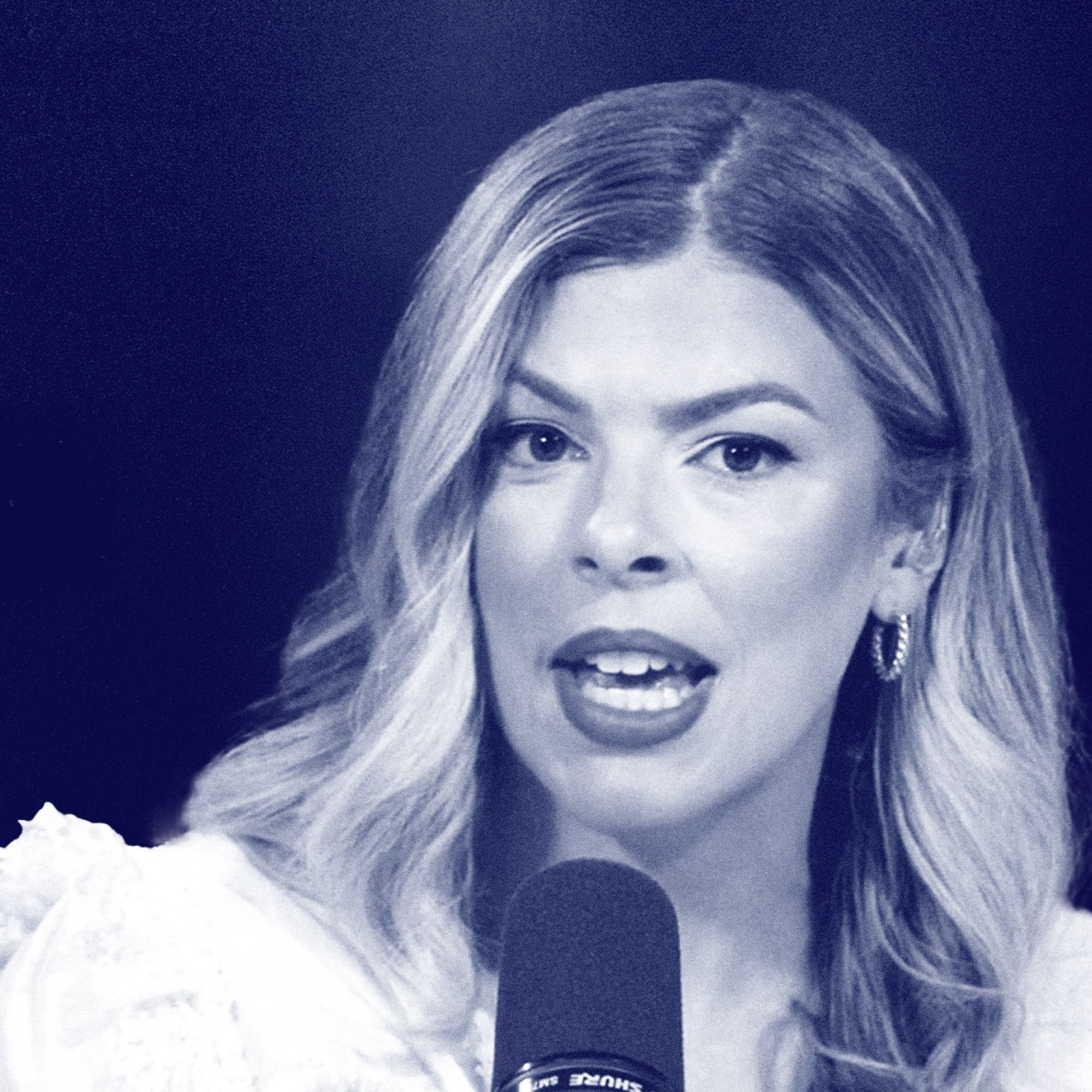
Interesting Times with Ross Douthat
The YouTube Host Defining Conservative Christianity
01:03:37
The conservative Christian podcaster Allie Beth Stuckey joins Ross on “Interesting Times” this week to explain why “toxic empathy” has a stranglehold on politics, whether evangelical Christians have a red line President Trump could cross and why her commentary has echoes of Phyllis Schlafly.
Loading summary
Transcript112 lines
- [00:00]
SoFi
High interest debt is one of the toughest opponents you'll face unless you power up with a SOFI personal loan. A SoFi personal loan could repackage your bad debt into one low fixed rate monthly payment. It's even got superspeed since you could get the funds as soon as the same day you sign. Visit sofi.compower to learn more. That's s o f I.com P-O-W-E r loans originated by SoFi bank and a member FDIC. Terms and conditions apply. NMLs 696891.
- [00:32]
Ross Douthat
From New York Times Opinion, I'm Ross Douthit, and this is Interesting Times. In the world of online influence, one evangelical Christian writer and podcaster stands out, offering her audience a blend of politics.
- [01:03]
Allie Beth Stuckey
Trump Round two is not here to make friends, and I love that theology. I can tell you unequivocally that this.
- [01:10]
Ross Douthat
Is unbiblical and lifestyle advice.
- [01:13]
Allie Beth Stuckey
Everything does not have to be perfect for you to be a happy, joyful and peaceful mom.
- [01:19]
Ross Douthat
Is Allie Beth Stuckey an example of what religious authority looks like in America today? What does she offer to her audience of younger religious women? And why does she think the biggest problem in American politics isn't too much cruelty but the wrong kind of empathy? Allie Beth Stuckey, welcome to Interesting Times.
- [01:41]
Allie Beth Stuckey
Thank you. I appreciate it.
- [01:46]
Ross Douthat
So we're going to try and have a conversation that covers evangelical Christianity, some of the divides within it, its relationship to Donald Trump. But first I want to talk about what it is that you do. So you make a podcast called Relatable, and the Atlantic wrote a profile of you a little while ago, and I think they called you something like the New Phyllis Schlafly, which is a reference, of course, to the famous female conservative activists from the 1970s and 1980s. So just to start out, what is it that you do? Are you a political commentator? A religious teacher, A lifestyle influencer?
- [02:27]
Allie Beth Stuckey
Yes, that's a great question. So I try to occupy that space where politics and theology intersects Christian theology specifically. And I describe myself as a Christian wife and mom who is trying to navigate the chaos of our culture with as much clarity and courage as God is willing to give me. And so that does mean talking about politics. There are seasons over the past few years that I have focused mostly on politics, especially in an election year. I really want especially the mostly suburban moms and women ages 25 to 45 that are listening to this show to understand what is at stake, what's the difference between the two candidates? And I don't Try to remain neutral in that everyone knows I'm a Christian conservative. Thus far, I have always voted Republican. But there are also a lot of times, and I would say right now is this kind of season where I, and I think my audience kind of feel exhausted by the news cycle. They're not as interested in politics as they were before, and they're more interested in talking about the deeper underlying theological issues or topics or trends. And I like to focus on that. And so I don't know if I could say that I am squarely a political commentator. I certainly wouldn't call myself a Bible study leader or religious teacher. I just try to occupy the space where those two things very clearly mix together and interest as much as I possibly can.
- [03:55]
Ross Douthat
There's also just a strong sort of parenting and motherhood and female life element, I feel like, to what you do and what you talk about. Right. So just looking at your recent podcasts, right, like, there's discussions about Christian evangelism in LA and abortion and politics and all those kind of issues. And then there's also discussions about sunscreen and parenting styles. Right. And the secret to fixing your period. So I almost feel like you're selling yourself almost a little bit short by sort of saying it's just about politics and theology. Right. Like, it's. It's a larger discussion about sort of how to be a Christian woman with an emphasis both on Christian and on woman.
- [04:42]
Allie Beth Stuckey
Yeah, I think that's a fair point. We certainly do talk about lifestyle things. And while I don't consider myself some sort of, like, mainstay in the Maha movement, there are a lot of principles in that that I really appreciate. We have been talking about health and wellness certainly since COVID Some of the deception that we see in the medical industry coming from official science and scientific institutions like the cdc. And I think that has kind of given way to a conversation consistently on my podcast about, okay, we're. What is actually true scientifically, what is true about our bodies, and how do we apply that to how we take care of ourselves and how we take care of our families? And so, yes, that definitely intersects with motherhood, but I also don't consider myself some kind of, like, family or motherhood influencer, if that makes sense.
- [05:33]
Ross Douthat
Yeah, no, it. It absolutely does. So who is your audience right now? Who is. Who is the Ali Beth Stuckey listener?
- [05:40]
Allie Beth Stuckey
Yes, I would say it is mostly Christian conservative women ages 25 to 45. There are obviously men who listen as well, but that is how many.
- [05:51]
Ross Douthat
How many men listen to the show I mean, you don't have to give me a specific number, but.
- [05:55]
Allie Beth Stuckey
Well, they have, they have their own name. They're even called the relate of bros. And I call my husband chief related bro. He is the head of the relate a bros. And I would say, at least from the YouTube demographic information that we have, I believe it's 85% female or maybe 80% female. And so there's a chunk, there's definitely a chunk of men who listen to and watch the show. And it's not like always, some episodes like how to fix your period probably not going to be for them, but other episodes they can enjoy just as much.
- [06:27]
Ross Douthat
So relate a Bros, women 25 to 45. What else would you say that people who are in sort of your sphere are listening to and reading and consuming? Do you feel like you're part of a larger millennial and maybe zoomer ecosystem for younger Christians?
- [06:47]
Allie Beth Stuckey
I would say if my audience wants day to day news, they are probably, a lot of them are probably watching Megyn Kelly, which I would say me too. I, I love Megan and I love her analysis of the news. And so I think a lot of them are probably going to her for that. For a big chunk, it seems, of my audience, I am the only, only connection to the news and politics that they have, which I take that role very seriously in their lives. And so they're not listening to a bunch of other, you know, political shows too.
- [07:21]
Ross Douthat
That's really interesting. Do you feel like you're the main religious sort of conversation partner for a lot? Not, not in terms of like the home or church, but in terms of the Internet?
- [07:30]
Allie Beth Stuckey
I, I don't think so. I think for Christian women, I think in the Christian world, I am seen as political. So in the larger evangelical world, if they think Ali Beth, they're thinking she talks politics. I think in the political worlds, like when I'm going to speak at Turning Point or speak at a, you know, conservative organization conference, they think of me as the Christian one, the one who is always talking about the Bible. So, yeah, I think for one group, I'm probably the plug in for religion and Christianity. For another group, they see me as their connection to politics.
- [08:06]
Ross Douthat
Interesting. And why do you think younger women are drawn to your particular style, your way of talking about the world?
- [08:16]
Allie Beth Stuckey
I think it is, number one, clarity, I think, from a lot of evangelical leaders and pastors who have, I would say, a tougher job than me in a lot of ways. So I'm not trying to throw all of them under the bus, but they're just not as clear about what does the Bible say about gender? What does the Bible say about marriage? Does the Bible have anything to say about immigration? I think the Bible biggest surge in followers listeners that I had at least at in a short period of time was in 2020 when everyone was posting the Black Square. Everyone was saying that George Floyd was killed because of racism. Everyone was saying that white people, and especially white evangelicals had a role to play in George Floyd's death. We all need to sit back and listen and learn. And even in churches we need to be reading white fragility. And I don't like to pat myself on the back at all because I certainly wasn't alone. But among white evangelical women, I, I have been one of the only ones to say no, that's not biblical and that's not how I'm talking about it. I'm not going to shame white women. I'm not going to say that they need to sit down and shut up and be lambasted for something that someone who might have looked like them in the same geographical region did 200 years ago or 50 years ago. That's not the biblical definition of justice. And so I think that there have been a lot of points like that over the past five years where it seems like evangelicals have gone soft, just moved to the left, especially on social justice and race issues, where I have been one of the only ones that these women are listening to, willing to say no. And not because I'm cruel, not because I'm harsh, but because I don't think that's what the Bible says. And I think God's justice and love and mercy and truth are much better than the secular social justice mongers would have you believe.
- [10:05]
Ross Douthat
So I want to go further on, on the argument that you just raised, sort of the critique of evangelical leaders drifting to the left. But before that, I, I just want to ask about. Can you talk a little bit about how you grew up and your religious upbringing?
- [10:22]
Allie Beth Stuckey
Yes. So I am very grateful that I was raised in a conservative Christian home. I don't remember talking about politics a whole lot, growing remember really caring about the Bush Gore election. Now, mind you, I was in second grade at this time and I remember we had this mock election in our classroom and only one girl said that she and her parents were going to vote for Al Gore. And it was this huge deal. And because I was raised in a very conservative suburb of Dallas and I went to a conservative Christian school, kindergarten through 12th grade. And so all of that I'm sure contributed to kind of like my natural conservatism, but certainly a Christian upbringing. Certainly that contributed to the values that I still hold today. Southern Baptist church growing up, Wednesday, Sunday morning, Sunday night, all of that good stuff. Parents really not only talked the talk, but walked the walk, which I think also has helped me.
- [11:23]
Ross Douthat
And are you still a Southern Baptist?
- [11:25]
Allie Beth Stuckey
Yes, I still go to a Southern Baptist church. I don't know if I align with every single doctrinal belief that I had in the churches growing up, but I do still consider myself a Southern Baptist.
- [11:39]
Ross Douthat
Well, talk a little bit about that. Was there any kind of pivot point in your own religious development?
- [11:46]
Allie Beth Stuckey
Yeah. So grew up going to Southern Baptist churches in high school. I started going to a non denominational church by myself I think when I was a junior. I do remember that church and a Bible teacher that I had in school in my junior year, really kind of opening my eyes to Reformed theology. And it was in college that I probably would have started identifying as Reformed.
- [12:12]
Ross Douthat
So go a little further because my suspicion is that at least part of our audience isn't intensely familiar with, for instance, Reformed or Calvinist views on the end times. So what, what does it mean to, in the context of American Protestantism, if somebody says I identify as Reformed?
- [12:32]
Allie Beth Stuckey
Yeah.
- [12:32]
Ross Douthat
What does that mean?
- [12:34]
Allie Beth Stuckey
Well, like a lot of things within Protestantism, in less than, you know.
- [12:38]
Ross Douthat
In less than.
- [12:39]
Allie Beth Stuckey
Yes, I know it's a long.
- [12:40]
Ross Douthat
There's a long answer. A short one.
- [12:42]
Allie Beth Stuckey
I'll. I'll give a short answer, but suffice it to say there are disagreements about what it means to be Reformed. I would consider myself a Reformed Baptist. What I mean by that is that, gosh, I don't know if there's a short way to explain all of this talking about predestination that is a centerpiece of Calvinism, whether you believe that people were predestined to be Christians or whether it is by human effort that we are saved. But I fall into the predestination camp. We also just have a really big emphasis on theological study and I would say biblical literalism in a lot of ways. And yeah, gosh, I don't know, it just depends on which direction you want me to go.
- [13:29]
Ross Douthat
Yeah, well, let's, we don't want to take up the whole conversation with this, but let's extend it in a couple ways. Right. So Reformed. Right. Means, let's say, a really strong emphasis on God's grace and God's will over and against sort of human effort alone. There's an incredibly strong Emphasis on the Bible not just as the word of God, but as sort of the defining test of Christian life in a way that again, is sort of distinct from Catholicism's emphasis on the authority of the Pope or the bishops. But let's do the beginning and the end of the world and then we'll move on.
- [14:05]
Allie Beth Stuckey
Sure.
- [14:05]
Ross Douthat
So we can do the end of the world first. So there's a lot of debates in Evangelical Protestantism about the end times and what Christians should expect, how to interpret the Book of Revelation, all these kinds of things. So where does your tradition fall on that?
- [14:22]
Allie Beth Stuckey
Yeah, I would call myself a classic or historic pre millennialist. And for those out there that are like, what are y' all even talking about? I'm sorry, you don't need to know this right now to become a Christian. But like classical premillennialist means that I, I don't believe that Christians are going to be raptured before the tribulation. I think that we are here for that, that we're not going to escape that by a rapture. And then there are differences in view as well on the role of Israel. What is Israel? Who is Israel? There's a lot of debate about that right now within Christianity too, especially in light of the end times.
- [15:06]
Ross Douthat
Right. And just to oversimplify, your camp is a little less likely to identify the current state of Israel with the biblical Israel in a way that other evangelicals might be likely to do.
- [15:22]
Allie Beth Stuckey
Yes. And that is where I would diverge from the vast majority of Southern Baptists who do believe that God has a special particular plan for Israel's salvation, that it is the current geographical state of Israel. Whereas I would point to several passages in scripture to say that that's not quite right. Even though, as I've said many times, I do support supporting Israel in a variety of ways for other reasons.
- [15:49]
Ross Douthat
Right. And so just since I promised the beginning as well. From your perspective, are you a six day creationist? Do you think that the world was literally, literally made in six days, Right. As in the beginning of Genesis?
- [16:03]
Allie Beth Stuckey
Yes, because it seems to me that that's what Jesus believes. And when he speaks about the Old Testament and the creation order, he seems to speak of it in a literal sense when he's speaking in the Gospels. And that's a good verification for me.
- [16:18]
Ross Douthat
Okay, so that's sort of where you've ended up. You belong to a tradition that does not have female pastors, that follows St. Paul's words about how women should not be leaders speaking in church and so on. And I think a lot of people outside your religious context would see that as a tension, that, you know, here's someone who belongs to a church that doesn't have female pastors and yet is presenting herself as an authority figure, filling the breach when actual pastors are failing. So do you think that's a tension?
- [16:55]
Allie Beth Stuckey
That's a great question. Yes, I do take literally Paul's admonition that women are not to teach in church. Now there is a debate, and we could even get get into this. This would probably be an interesting conversation, how I think, like, the Christian right has actually changed in the past five years when it comes to how they see the role of women. Five years ago, no one talked about that tension to me. No one had an issue with me saying, yeah, I don't think women should be pastors and preachers, but I don't take that to me that women shouldn't talk, that women can't be persuasive, that there aren't different ways for women to lead and influence and persuade outside of the context of the pulpit in the church on Sunday morning. It does get tricky when it seems like I am saying, which I try not to say explicitly, but like, hey, your male pastor is acting cowardly and he's not being clear on this. Don't listen to that because he's asking you to compromise. But I'm not trying to say, listen to me or follow me or you should listen to this podcast instead of going to church. I'm trying to say, whether you listen to me or not, read your Bible. And I want your reading of the Bible to determine what church you go to. And if you don't go to a church that is preaching the entire council of God, even when that is inconvenient for the culture, then you should go to a different church.
- [18:22]
Ross Douthat
What do you think is the key distinction here between church Sunday morning as a space of male authority and, you know, Tuesday morning podcasting as a space of, we'll just call it female communication. But look, let's be honest. You're not just communicating, right? You're making an argument, you're making a critique. And whether you vest yourself with a pastor's authority or not, there are people who regard you as authoritative. So what is the theological distinction, from your perspective, between that kind of Sunday morning space and your work outside of sort of the work of a pastor?
- [19:06]
Allie Beth Stuckey
Well, one is church and one is not. And the church has a distinct governing body, and the pastor has not only the role of persuasion, although I agree with you that's basically what a sermon is. But he's not just a preacher, he is also a pastor. He is also a shepherd. He has the ability to exercise church discipline. And I am not that I don't have the authority to exercise those things over someone's life. And yes, people do regard me as a leader in some sense, but I don't think that there is any command against that kind of influence and mode of persuasion in scripture when it comes to women. The church is the body of Christ or the church is the bride of Christ rather is what I meant to say. And it is distinct from a podcast studio, as you know, and I'm sure you agree with this as a Catholic. It's not just four walls. It is distinct from the rest of the world.
- [20:02]
Ross Douthat
I, I do agree. I, I think that in, if you look at the Catholic tradition, you see a lot of cases where prominent female leaders seem to emerge with a message that it seems intended to honestly to shame men in authority in the church. And I, I'm curious if you think that sort of the exercise of female authority in your church, in your religious landscape is itself a reflection of sort of male failure that like you're here and people are listening to you because men are failing.
- [20:39]
Allie Beth Stuckey
I do think that many pastors are failing. I don't know if I can say all men in the Southern Baptist or evangelical world failing. Not all men, but I think many. And now I think that there are a lot of clear and obedient and courageous pastors. And just because they're not going viral or they're not written about in the media, you know, that doesn't mean that they don't exist. But there are some very prominent leaders and prominent figures within evangelicalism who are straight up soft. They're soft when it comes to sexuality. They were soft when it came to the necessity of churches meeting together physically during COVID They were soft when it came to the difference between biblical justice and secular social justice. And they are unwilling to say simply what the, the Bible says about these things. I don't think that pastors should get up every Sunday and tell you what's going on in the news. I don't think that they are bound to the news cycle. But when the Bible says in the beginning God created them, male and female, in his image, he created them. They shouldn't avoid that. They shouldn't pretend like that doesn't mean what it means. We shouldn't pretend that the Bible doesn't speak so clearly to so many of the so called culture war issues of our day. And because they are saying scared of what they may lose by speaking up, because they like to be written about nicely in the New York Times or wherever, they're just not willing to say it. And I think that's a travesty because I think clarity is the most loving thing that we can give the people who listen to us.
- [22:34]
Ross Douthat
If you could hear love, what would it sound like?
- [22:44]
Allie Beth Stuckey
Sod kin.
- [22:46]
Ross Douthat
Can we talk about your drinking? Yeah, Dad, I think we should. Helping those closest to you think about their excessive drinking. Maybe that's what love sounds like. More@rethinkthedrink.com an OHA initiative. All right, so let's go a little deeper into this critique. So you wrote a book entitled Toxic Empathy, How Progressives Exploit Christian Compassion. And so you can see just from the subtitle that it is effectively both a critique of secular progressivism and also a critique of your fellow Christians. And I think a lot of people hear a word like empathy and think that it is just something that Christians are automatically called to and that a critique of empathy is effectively a critique of Christianity itself. So what is toxic empathy? What is wrong with some forms of empathy from your perspective?
- [23:58]
Allie Beth Stuckey
And that is correct. Some forms of empathy, I argue, and this is not my original argument, I heard Abigail Schreier first say this, and I think she might have even gotten this from Paul Bloom, which is a Yale psychologist who wrote a book called Against Empathy.
- [24:11]
Ross Douthat
An interesting side note is that in fact, my own mother once wrote an essay critiquing empathy for First Things magazine some years ago in which she drew on Paul Bloom, who is a secular psychologist, criticizing from a secular perspective a sort of over identification with other people's feelings. All of which is to say I am a somewhat sympathetic audience for this kind of argument.
- [24:38]
Allie Beth Stuckey
Yeah. So I, I just wanted to give proper credit to what for this first line that I'm to say is that empathy by itself is neutral. Empathy by itself, I believe, is neither good nor bad. And I that's probably not an exact quote from Paul Bloom, but that's kind of where I got that line of reasoning, is that it is not in itself a virtue. It is not in itself something that we should aspire to. And that alone kind of like knocks people off their skates. When I say that, I say that it can be positive in what it can lead you you to, or it can be negative in what it can lead you to. An example I give in my book, I was traveling with my 3 year old at the time. We were going to Atlanta. My hands were full. She was in her runaway era. I was trying to get down the jet bridge. There was no way that I could control her and get all the stuff that I needed down. So I just literally sat down and I didn't know what to do. And I was almost on the verge of tears, and this woman came up to me. I had all these people pass me by, and this woman came up to me and she just looked at me and she said, it's okay, I'm a mom. I get it. And she got one of my bags and we made it to our seat and it was great. And then just a couple weeks later, I was traveling by myself and I saw this mom with her toddler. She had her stroller, she had all of her stuff, and I could see it like she was on the verge of tears. She was trying to get to her seat, and she didn't know how she was gonna do it. Well, I had been there. I felt so deeply exactly how she felt. And because of that, because I just knew so personally the stress that she was feeling, I was able to meet her need. And I grabbed her bag, she made it to her seat, and she was good to go. And so having been there, being able to put yourself in someone's shoes can lead you to do the right thing. It can lead you to sacrifice, it can lead you to selflessness, it can lead you to acts of loving kindness. But putting yourself in someone's shoes, feeling what they feel, can also lead you, I say, to do three things that makes empathy toxic. And that is one, validate lies, that is two, affirm sin, and that is three, support destructive policies. Those are the three characteristics that I put on empathy that I think can make it toxic.
- [26:55]
Ross Douthat
And in your definition, just so listeners are clear, empathy means the act of feeling or trying to feel what others are feeling. And it's distinct, therefore, from compassion or sympathy, where you are trying to help someone, you might feel bad for them, but you aren't sort of trying to feel directly their set of emotions. So this is primarily then about empathizing with people who are either doing something that is wrong for understandable human reasons or who are. Are supporting policies that are themselves going to lead to bad outcomes, even if they have charitable motives.
- [27:43]
Allie Beth Stuckey
Well, it's not. It's. It's not against even feeling, trying to feel how they feel. It is allowing feeling how they feel to lead you to justify what they are doing, which happens in abortion, in the gender debate and the sexuality debate, and the justice debate and the immigration debate, because we feel so deeply for this one purported victim, we say, well, maybe deportation is wrong, or maybe I should affirm this person's state of gender even though it mismatches their biology. Or maybe I should affirm the right to have an abortion because I feel so deeply for this person's plight. That is when your empathy has led you in a bad direction and I think has turned toxic.
- [28:24]
Ross Douthat
But this is somewhat distinct then, from one of the arguments that Paul Bloom makes in his book. Right. Which is that one problem with empathy is that it can actually sort of lead in the other direction towards this kind of helplessness. Everything that happens in the world, you feel in some way because you're empathizing with other people so much. And this sort of paralyzes you. It's like, okay, the problems of the world are too large. I can't possibly solve them. Do you think that's a problem with empathy as well?
- [28:54]
Allie Beth Stuckey
Yes. That's not a theme that I explore in my book, although I think it's interesting. I also think it's interesting that actually the more you emphasize, especially with kids like in the classroom, the more you emphasize empathy, the meaner those kids can get to those in the out group. And I think that Abigail Shrier phrased it like this, full of empathy and mean as hell. And I see that with a lot of progressives, and I call it misplaced mothering. I think a lot of progressives, they take under their wing those that they see as victims. So say it is the man who identifies as a woman who wants to go into the women's bathroom, wants to play against women in sports. They see this person as marginalized, as vulnerable, as misunderstood. And they feel so deeply for them. They feel so deeply for their pain that anyone who comes against their. Their chosen victim, this person that they care for, they have a hostile reaction to in the same way that a mama bear would have a hostile reaction to someone who is trying to attack her cubs. That is how I think a lot of deeply feeling progressives feel about illegal aliens or whoever they see as a victim. Those of us who are on the other side of the issue, they actually see as oppressors, as enemies of their chosen victims. And I think that's why it causes just the absolute cruelty that often we see from progressives who simultaneously say that they are deeply empathetic and loving.
- [30:23]
Ross Douthat
So this is a critique of progressivism and how progressivism has ended up essentially taking particular sides in the immigration debate and the debates about transgenderism. Other Issues like that. Right, but then it's also a critique of your fellow Christians. Right. You think that this is a trap that people who have sort of theologically conservative commitments, in fact, in many cases have fallen into, especially over the last five or ten years.
- [30:55]
Allie Beth Stuckey
Yes, especially, I would say, in the summer of 2020. I mean, I saw this a lot with COVID but I also saw this a lot when it came to the conversation about race and police brutality. We'd have these claims that America is systemically racist, that the church has played a large part in that, that white people need to be apologetic and humble and listen and learn and all of this stuff. And I would point to certain statistics or I would question certain narratives. And what I got told over and over again is that sometimes the truth doesn't matter, sometimes it doesn't matter what the data says, that you just have to have empathy. And while I don't disagree that sometimes you shouldn't bring up data and facts in a conversation with a person, when you just need to have compassion for the truth actually does matter, especially when it's leading to certain policy decisions. And so I just don't buy that idea that sometimes we have to exchange the truth for empathy and let people believe a lie because it feels better for them. I think that that is actually really cruel and hateful and ultimately destructive.
- [31:55]
Ross Douthat
Okay, so now let's talk about how this argument looks from the other side of the debate for a minute. And I think what's interesting about how you're describing this is you're framing the divide in terms of what happened in the year 2020, and that from your point of view, it seems like the divide reflects the evangelical response to Covid, to the pandemic, to whether churches should accept long running restrictions and Trump. And Trump. So that's what I wanted to bring it around to because from the point of view of, I think a lot of people who, who you have criticized or and who have certainly criticized you, the divide just starts with Trump. And where you see toxic empathy, they see, I think, I'm not sure if there's sort of a single word for it, but sort of a, a systematic delight in other people's tears. I think that that is sort of cruel, actually. I mean, cruelty, I guess. Cruelty, I guess, right, is the one word phrase that Trump himself is cruel. He mocks people, he's savage to people, and so on. But that also attached to this, there's this sense of like, we love to hear the liberals cry if we're deporting people you know, you see this in, in the second Trump term, we're going to make a, you know, a YouTube video about deportation that's sort of reveling in rounding people up and these kind of things.
- [33:22]
Allie Beth Stuckey
Yeah.
- [33:22]
Ross Douthat
And I think clearly, if empathy can be toxic, cruelty can be even more toxic. Toxic. Do you think that that is a fair critique of Trump and Trumpism and its impact on American politics?
- [33:37]
Allie Beth Stuckey
Maybe, but it's not a fair critique of my argument. It's not a fair critique of my book. Because my argument is that toxic empathy is cruel, that it ignores the people on the other side of the moral equation. For example, if you take the abortion issue, I start out by telling the story of a woman named Samantha. Her story was first told by npr. She found out that her baby had a fatal fetal anomaly at the 20 week mark. But in Texas, she wasn't allowed to abort her child. NPR tells the story as if this was horrible for Samantha who had to go through the financial, physical, emotional burden of bearing this child only to have this child to die. By the end of the story, the reader feels exactly how it seems NPR wants them to feel, which is that this is a great injustice, this towards Samantha. How dare these draconian laws force her to do something so painful, so financially burdensome. We need to liberate women from these anti abortion laws that are making them go through so much. Okay, so you have so much empathy for Samantha that you support the pro abortion position by the end of this through the mode of storytelling. But then what I try to do is tell the story from the other perspective. The actual victim in this story. The would be victim in this story that NPR and most mainstream media outlets do not want you to know about. And that is the baby they don't want you to think about, the actual victim of abortion. So what would have been this baby whose name is Halo? What would have been her fate if Texas had not had this quote unquote draconian pro life law? She would have been poisoned, she would have been dismembered, she would have been discarded like toxic waste. But instead she was delivered and clothed and named and held and loved and buried like the full human being that she is. So my argument is that toxic empathy, because it only focuses on one purported victim and ignores the actual victims on the other side of the equation when it comes to any issue, not just abortion, it is actually cruel and destructive and deadly both for the individual and for society. So we can agree that some of the things that Trump has said that even Republicans, they're much more brazen. I would agree with you now about what some people would call cruelty, and we can get into that. But it's. I'm not saying that, oh, compassion is bad. Actually. Compassion and empathy aren't even the same things. I'm saying, no, what you progressive in many cases are calling empathetic are calling nice is actually really cruel. It's actually really bad. So, yeah, that's what I'm saying. I'm actually saying that the progressives use empathy as a vehicle to ultimate cruelty.
- [36:24]
Ross Douthat
But. So let's talk about a different issue for a minute though. Let's talk about immigration. So part of your argument is that, as I understand it, would be that you have a set of sort of conservative leaning evangelicals who are alienated from Donald Trump in some way alienated from the Republican Party and end up being pulled to the left, but that this happens not just on issues like abortion and transgender issues, but it also happens on an issue like immigration. And seems to me that immigration is just an issue where you have competing and entirely reasonable forms of. We don't even have to call it empathy. We can just say sort of sympathy instead. Right. Sort of a reflection that people have understandable desires to have a better life and people have understandable desires to, you know, have, have immigration proceed at a reasonable rate that doesn't overwhelm their communities. People have understandable fears about crime and disorder and violence. But these things need to be balanced in various ways. And it doesn't seem to me that there is sort of a single definitive Christian position on like what the absolutely best immigration rate should be or anything like that.
- [37:48]
Allie Beth Stuckey
Yeah, I would agree with that part.
- [37:50]
Ross Douthat
But where, where do you think your fellow Christians have gone wrong on immigration?
- [37:54]
Allie Beth Stuckey
Yes. So you are absolutely right. There are always going to be people on any issue, but especially immigration, who demand our empathy. And like, I'm okay with saying that, or you could say sympathy or just feeling deeply for their plight. I would say a lot of people on the progressive side don't even consider the plight of those who have been negatively impacted by illegal immigration on a large scale or on an individual level. I think that ultimately, and this is really kind of my argument in the book is that there are always going to be people on both sides of any story with real pain, with real stories that matter. And both people are made in the image of God. So at the end of the day, that's why you can't be led by empathy, because if you allow yourself, you can feel really deep empathy for People with competing needs and interests. And so at the end of the day, I think the Christian has to ask ourselves, but what is true? And then what does the Bible say? And you're right. On an issue like immigration, it's not as clear as where the Bible stands when it comes to the reality of the gender binary of male and female. The definition of marriage is between one man and one woman, or the value of life starting at the moment of conception as made in the imago day, immigration is not as clear. We can only look to Scripture to see the principles of nations, of governance, of laws, of borders, of security, of God's provision through walls, the book of Nehemiah, and say, okay, can we apply those principles to America today? Do they still have wisdom? Does it make sense why God wanted secure walls for Jerusalem? Does that still apply to America? We can just use logic to say, okay, if we don't have borders, we don't have sovereignty, then we don't have citizenship, then we don't have rights, and that's bad for everyone, especially the most vulnerable. And if we can't enforce immigration law, then we essentially have no borders or sovereignty. And of course there are going to be sad stories within that. But at the end of the day, sovereignty matters for every single country, not just for America. That's how I think through it. And I think that there are people in good faith who are, are sincere Christians who could agree, disagree with me on different forms of immigration policy. But for the people who simply use this issue to kind of what I would say, virtue signal, say, I can't believe ICE is doing this, or Trump is doing this, or this is so bad, or look at this one story, even though they'll never talk about Kate Steinle or Lake and Riley or the stories on the other side of it.
- [40:26]
Ross Douthat
So the stories on the other side are stories of Americans who have been murdered or assaulted by illegal immigrants?
- [40:32]
Allie Beth Stuckey
Yeah, I forget. The New York Times audience might not just know those stories automatically in those names, but I just want to know, like, what is their solution really? Any progressive, not just a Christian, but like, what is their solution? Like, I, I guess I don't know the answer either, but I don't hear from the other side, like, do we have an unconditional, unmitigated obligation to accept everyone into America no matter what, just because they want a better life life? Is there any limit? Is there any immigration law that we can enforce? Is there any kind of way to nicely deport and detain people who shouldn't be here? And so I'm not hearing a whole lot of solutions from the other side either. And maybe that's, I don't know, a place that we can try to come together and figure something out.
- [41:19]
Ross Douthat
Well, I. I guess what I'm interested in is in part just sort of how evangelicalism has ended up so polarized. And this does seem like a case, honestly, where it kind of makes a case for empathy. I feel like my evangelical friends, who are very, very anti Trump, often show a failure of understanding toward why so many conservative Christians would end up voting Republican, even under Trumpian conditions. And I feel like there's a pretty clear failure of just sort of understanding how the world looks from the perspective of somebody who decides to stay Republican and decides to stay a Trump voter. I feel like I see this all the time.
- [42:06]
Allie Beth Stuckey
Yeah.
- [42:06]
Ross Douthat
But I also feel like there's a failure of empathy from your side. But, like, you know, you're. You're an evangelical Christian in 2015, 2016. You watch your political party being taken over by a man whose personal life obviously defies all of the moral norms that evangelicals struggled so hard to uphold in the 1990s during all the Bill Clinton controversies and so on. A man whose policies break with places where sincere pro life, pro marriage conservatives were deeply involved in work like aid to Africa, aid to the developing world. And a president who, you know, on immigration, doesn't just say, we need to build the wall. He also clearly uses sort of the language of scapegoat and cruelty around the very large number of people who have understandable reasons to migrate to the United States, whether or not it's reasonable for the United States to welcome them. Sincere Christians recoil from this man, recoil from his takeover of the Republican Party, and in the process, yes, end up kind of inevitably pulled somewhat to their left on issues where previously they were further to the right. But isn't that understandable? Like, doesn't that seem understandable to you as someone who disagrees with these people?
- [43:33]
Allie Beth Stuckey
It's totally understandable. And I would say that I have given a lot of credit to that over the years, not only because I sincerely understand it, but because it's more persuasive when you try to steel man, someone's concerns rather than diminish them. And I've never voted for Donald Trump in a press primary because I've had plenty of issues with how Donald Trump talks or conducts himself. And honestly, my critiques have been from the right, though I. I have been troubled by some of the things that he said about abortion, have worried if he was really strong enough on the issues that I care about, or if the second term would only be about some kind of personal vendetta, I've actually been very, like, pleasantly surprised and pretty satisfied with a lot of things that he has actually done in the way of conservatism. And so what I would want the other side understand is that. I hear you. I absolutely hear you. However, from my perspective, the other side is worse. Was Donald Trump my pick in the primary? Obviously, he was the pick of a lot of people, but was he my pick in the primary? And there's a lot of Christians, substantial majority, yes. And for a lot of Christians, though, who are in my camp, there are plenty of things about Donald Trump that we don't love. But at the end of the day, when we look at the policies that affect our country, that affects our family, and yes, when we weigh them against scripture, especially when it comes to the gender debate, Donald Trump wins every time against Joe Biden, every time against Kamala Harris. And all of the things that they say that, well, at least the Democrats do this better or more compassionately or more biblically. I just don't think that's true. I judge policies by their outcomes, not by their stated intentions. Democrats have a lot of good stated intentions. I don't think that the outcomes are kind or good, beneficial for society. And so. So, yeah, understand that there's a lot of us over here who hear your concerns about Donald Trump who don't like his past adultery and different things that he has said who would even, you know, take issue with him saying the F word. There are a lot of us out there like that who still say, wow, but under Joe Biden, the USDA took funding away from public schools that didn't allow boys into girls bathrooms. That's evil. And the Trump administration is doing the opposite of that, and that's good. So, yeah, there are some really big things and a lot of big reasons that for, I mean, we would just never wouldn't vote for Donald Trump if it's against another Democrat like that.
- [46:02]
Ross Douthat
I want to go just further into your critique of Trump and his second term, but just, just to pause on that issue. On the question of sort of good and evil policies, is there something that Donald Trump could do on immigration policy that you would consider evil?
- [46:18]
Allie Beth Stuckey
I am most sympathetic when it comes to the taking in of Christian refugees from the Middle east and elsewhere. I want these people to be protected. I mean, my highest priority is the protection of the preservation of Christians and especially persecuted Christians. And so the stories that I've seen about that of Christian refugees from war torn areas having a difficult time coming to the United States, States that I would say is the most difficult for me, although even in that it's so difficult because I don't think that I can trust Christianity Today and other liberal outlets to tell the total truth because I know that they hate Donald Trump. And so it takes a lot of effort for those of us who are on the conservative side, who are open to arguments against some immigration policy, if it is truly cruel, if it is truly unwise, it's difficult for us to know where to go, go to get the accurate information. Because when you're only seeing that stuff from people who hate Donald Trump anyway and want Christians to hate him, it's a little hard to take that at face value.
- [47:30]
Ross Douthat
And do you, do you think that there are clear theological. Like what, what issues have clear theological answers? Meaning is there a distinction between culture issues or abortion or right to life issues? And we haven't talked about climate change, but that's another issue where there's a critique of evangelical elites or evangelical pastors drifting to the left. But it seems to me that there are certain issues that Christian tradition speaks to in a way that is distinct from how to think about like scientific debates about the rate of the, you know, the impact of like that's, that's just not a question where, you know, you open Nehemiah and say this is the thing to take out of the Bible.
- [48:14]
Allie Beth Stuckey
Right, right, right. Now I agree with you. I would distinguish between creation order issues and non creation order issues. I think that a lot of the so called culture war issues that we debate today are answered. I mean, I could say in the first 27 verses of the Bible, but you could say in the first three chapters of the Bible or the first 11 chapters of the Bible, we get a lot of questions answered. I don't think there's any wiggle room about the definition of gender or marriage or the value of life inside the womb when it comes down to the nitty gritt of policy, maybe. Although I think there's very little wiggle room when it comes to policy on those three issues. When it comes to climate change, I actually do think that goes back to the creation order, our stewardship of the earth, but also realizing that we do, as humans, have dominion over the earth, it's not the other way around, that human beings do matter more than plants or animals, any other part of creation. But when it comes to all of the different scientists, scientific discussions and policies surrounding that. You're right. I don't think that the Bible speaks clearly to that. I think we can look throughout scripture to see the principles for a lot of things like justice and immigration and all of that, but those are going to be open to more debate and discussion, which I am also very open to, than the big three, abortion, gender and sexuality, which I think there should be zero debate on within Christianity.
- [49:39]
Ross Douthat
But. So in theory, though, then, there isn't any reason why you couldn't share a church or a tradition with someone who was pro life, pro traditional marriage, and thought Christian refugees from the Middle east deserve better treatment than the Trump administration is giving them.
- [49:56]
Allie Beth Stuckey
Oh, yeah, totally.
- [49:58]
Ross Douthat
But in, in practice, though, it does seem like you think that conservative Christians who hold those views are, are, you know, too far inside the liberal bubble, in the grip of toxic empathy. Maybe in some cases, but. But mistakenly, it would really depend.
- [50:14]
Allie Beth Stuckey
I mean, sure, if they were posting out there, if. Here's the thing. This is what something that bothers me, and I see this among a lot of evangelicals. They will only post about the news when it is an opportunity to be critical of Trump, and they will claim they're not being political. Like they will post about if there is a case that seems like it is racism against a black person by the police, or that's how may the New York Times or another outlet is describing it, or whether it seems that the Trump administration is being cruel to refugees or to immigrants, they will post those stories, but they will never post stories that are critical of Joe Biden or the Democrats or on the other side of the equation. I think we can disagree as Christians on some of those things and the policy solutions to some of those things. But. But yes, if you are allowing your outrage and your compassion to be exclusively or primarily dictated by what the mainstream media says is right and wrong, then yes, I do think that you are probably being led by toxic empathy. Now, if you're truly outside of the political binary and you're like, I always care about the issues, no matter what human dignity like is. My I. That's what I'm following. And I care about whatever story is out there, no matter how it makes any politician look, I can respect that.
- [52:03]
Ross Douthat
Smokey the bear.
- [52:04]
Smokey Bear
After 80 years of learning his wildfire prevention tips, Smokey Bear lives within us all.
- [52:09]
Allie Beth Stuckey
Learn more@smokeybear.com and remember, only you can.
- [52:13]
SoFi
Prevent wildfires brought to you by the.
- [52:15]
Smokey Bear
USDA Forest Service, your state forester, and the Ad Council.
- [52:27]
Ross Douthat
All right, so let's finish with Trump himself and Trump's second term. Right. You mentioned earlier that you have critiques of Trump, you have critiques of his administration, but they're often critiques from a culturally conservative perspective. And these range from critiques of Trump sort of tap dancing or just striding away from some pro life positions during the campaigns. You've been pretty critical of the Trump administration's pro IVF stance, which is, I think, pretty clearly a, a violation of pro life principle from almost any reasonable definition of the term. Has Trump done anything, though, that isn't in some way functionally pro choice on abortion policy?
- [53:12]
Allie Beth Stuckey
Well, I know that he issued that executive order on ivf, which didn't have a whole lot of teeth to it. I think he was just trying to communicate, hey, I promised that I was going to do this when I was campaigning, and look here I'm doing it. Obviously, I think that that's a step in the wrong direction. You and I, I think, share that ethic on life, that a lot of people out there, including conservatives, including a ton of evangelicals, maybe even professing Catholics, do not understand what you just said, that it is a violation of the pro life ethic to be pro ivf. And I don't expect Trump to understand that. And I don't even know that I expect a lot of people around Trump to understand that, because what I've realized in conservative evangelicalism, at least, that is a very niche view.
- [53:57]
Ross Douthat
I just think it's clear, sort of from a rhetorical perspective, right, that Trump, in the aftermath of Roe, has positioned himself as someone who says the issue should be returned to the states. We're not going to have national policy on abortion. We're going to have some kind of support for, or at least rhetorical support for ivf, which I agree with you, sort of pro life opposition to embryo creation and destruction in IVF is a narrower, it's a more niche position even within the larger pro life movement. But I guess to me, right, like, it seems that religious conservatives got a lot out of the bargain with Donald Trump, more than a lot of anti Trump evangelicals and anti Trump religious conservatives expected. They did in fact get Roe v. Wade overturned. They got a lot of moves, including moves on issues related to gender identity, that would not necessarily have been predictable five to 10 years ago. So I would never argue that, you know, that sort of religious conservatives have just been taken for a ride by Trump. At the same time, when I look at Trump's second term, right, when I look at, like, the issues that he's is invested in the issues that people around him are most invested in. Very few of them seem to have anything to do with cultural conservatism, religious conservatism. Trump doesn't want to talk about abortion. You can defend his policy on immigration from a religious perspective, but I don't think anyone would argue that, like, you know, Stephen Miller is sitting in his office in the White House, carefully balancing the dictates of Christian charity and the biblical admonitions about the importance of building walls. Stephen Miller just wants to deport people. It just seems to me that at this moment, religious influence on the Trump administration and on conservatism is ebbing. And I'm curious if you think that's right or if you think I'm sort of overreading that from my position at the New York Times.
- [56:09]
Allie Beth Stuckey
Yeah, you know, maybe so. I mean, I'm for deporting people. I really like Stephen Miller. Evangelical support for deporting illegal immigrants is very high. And I just. I see a lot of effort from the left. It seems to go after that Christian demographic who is not so sure about Trump and is almost looking for an opportunity to not support any Trump anymore by highlighting these stories of supposed cruelty from, or the Trump administration so that more and more Christians will say, yeah, I voted for Trump, but this is just too far. And, you know, like, I was more sympathetic.
- [56:49]
Ross Douthat
But wait, but wait, isn't that. But isn't that a reasonable thing to say? Like, don't you want people in the position of the Christian supporter of Donald Trump to say, I support deportations, but the way we're deporting people to a prison in El Salvador seems like a violation of. Of natural law. Right?
- [57:08]
Allie Beth Stuckey
Yeah.
- [57:08]
Ross Douthat
I mean, like you just did. I support Trump's position generally on abortion, but I think what he's doing on IVF is wrong. You're worried about the progressives and toxic empathy leaking into conservative evangelicalism. But doesn't conservative evangelicalism have more credibility if it can critique Trump?
- [57:27]
Allie Beth Stuckey
I would say it might be reasonable. It might be reasonable. I'm not saying that it is always unreasonable to listen to those critiques of Trump or to see those highlights of supposed cruelty from the Trump administration and to say, wow, that does seem bad. What I'm saying is that if Christians are looking to have credibility with the left or credibility with progressives or credibility with the world, and they are looking for an escape route to no longer like Donald Trump or support Donald Trump, that they so easily, without thinking, latch on to the deeply feeling stories that we are Given and say, this is just too far for me without even digging in and asking the question, but is this true? Or what is the other side to the story? That's what I see as a form of toxic empathy. That's what leads to what I call the mushy middle. That's where I see a lot of evangelicals are going. That's the question that I always want people to ask, whether I'm talking or the New York Times is talking. But is this true? If it sounds too good or too bad to be true about either side, that's the question that we need to ask. But is this true? And what is on the other side of it? So, like I said, not always unreasonable, but it's unreasonable. If you're not using reason, what would.
- [58:42]
Ross Douthat
You say to someone watching or listening to this program who is in the mushy middle, who doesn't like Donald Trump, who is not, you know, maybe not a reformed Calvinist Protestant, but is religious, is Christian, is sympathetic to some of your views on abortion, some of your views on transgender issues, but feels like Trump is using Christianity.
- [59:10]
Allie Beth Stuckey
Yeah.
- [59:11]
Ross Douthat
Rather than Christianity operating through Trump. Like, what is your evangelical in the fullest sense of the word? Like, you're, you are a public representative of Christianity. Right. You're talking about what is truth. You, you are, you are an arbiter of truth in contemporary America. America. What is your message of outreach to someone who is, who is not sure, who is cross pressured?
- [59:36]
Allie Beth Stuckey
Yeah. What I would say is I really don't care how you feel about Donald Trump. You can loathe Donald Trump. You can be someone who never voted for Donald Trump, but maybe you're starting to see that progressive policies aren't in alignment with the Bible or that they are just destructive. And I am happy to have people like that in my community. There are people like that in my audience who have never voted for Donald Trump, but they really agree with me when it comes to the policies, what I would say to that person. Even if your mind never changes on Donald Trump, I don't care. Politicians come and go, but things are clearer than you think. Make sure that you are not using nuance as an excuse not to dig into the truth about something.
- [60:19]
Ross Douthat
And what would it take to alienate you from politics?
- [60:25]
Allie Beth Stuckey
Hmm.
- [60:26]
Ross Douthat
I know a lot of people in the camp of never Trump or anti Trump Evangelicals, never Trump, anti Trump Christians. Some of them have become vehement partisans of progressive politics. Some of them have become reluctant supporters of the Democrats. Some of them have just said, look, American politics doesn't present choices that, that Christians in good conscience should be deeply associated with. Like maybe, maybe you still vote and so on. Right. But you just sort of back out, opt out a little bit. Is there a line like that for you?
- [61:05]
Allie Beth Stuckey
Well, I already don't like politics very much and I feel like a lot of people do after the election is that I have backed away from talking a lot about politics because we were so in it before the election. And I think a lot of people are, are just tired of it. I'm not even saying that's the right thing, but I think that's the feeling that a lot of people have. I see my role as an anchor on the right as basically as conservative as you can get on virtually every issue, but especially the life issue, especially gender, especially marriage. I mean, we are few and far between those of us who actually believe that the law should have something to say about the reality of natural marriage between man and woman and that children have a right and should have legal right to their mom and dad. A mom and dad at the very least. I mean, there aren't very many of us over here, but we have a role to play in persuading people and pulling people as far as we can into our camp.
- [62:04]
Ross Douthat
But that would imply basically that there's never a moment when you leave because, like, functionally on, on same sex marriage, the Republican Party under Trump has basically abandoned that fight and that debate. Right. If you cast a vote for a Republican politician today outside of some very particular sit situations, you're just not casting a vote for the traditional definition of marriage. You're not.
- [62:26]
Allie Beth Stuckey
Yeah. And there was a time, it seems that Republicans probably felt like they had given up on the abortion fight too. And then of course, Roe v. Wade was overturned in 2022. And so things can change.
- [62:39]
Ross Douthat
And so your view is you stay in the, you stay in the fight, basically?
- [62:43]
Allie Beth Stuckey
Well, I guess it depends on what you mean by stay. I, I'm not really that involved in politics. I care about the underlying issues and making much as we possibly can that the Bible is informing our views on those issues. When it comes to election years, I'm going to speak up and say what I think Christians should do. So if your question is, will I ever stop doing that? Will I ever stop saying, hey, I do think Christians should vote for this person. It depends on if the left stays as bad as it is, and if the left stays as bad as it is, the unfortunate reality, and I truly don't like this reality. As long as the right is to the right of the that as long as the right is more sane than the left, then my position right now is that we have an obligation to vote for the more sane policy platform. I think that's a low bar right now. Maybe I could change my mind in a few years, but that's where I am right now.
- [63:37]
Ross Douthat
All right, on that note, Ali Beth Stuckey, thanks so much for joining me.
- [63:42]
Allie Beth Stuckey
Thank you.
- [64:07]
Ross Douthat
Interesting Times is produced by Katherine Sullivan, Sofia Alvarez Boy, Andrea Batanzos and Elisa Gutierrez. It's edited by Jordana Hochman. Our fact check team is Kate Sinclair, Mary Marge Locker and Michelle Harris. Original music by Isaac Jones, Amen Sahota and Pat McCusker. Mixing by Pat McCusker. Audience strategy by Shannon Busta and Christina Samulewski. And our director of Opinion Audio is Annie Rose Strasser.
- [64:55]
Smokey Bear
This is an ad by Regain Couples Therapy. Let's be honest. Loving your partner doesn't mean you always like them. And guess what? That's normal. Regain offers couples therapy that's flexible, flexible, affordable, and 100% online. Whether you're reconnecting or working through conflict, Regain is here to support you both. See why people wish they'd try couples therapy sooner? Visit regain.com couplespod to get 10% off your first month. That's regain.com couplespod.