← Interesting Times with Ross Douthat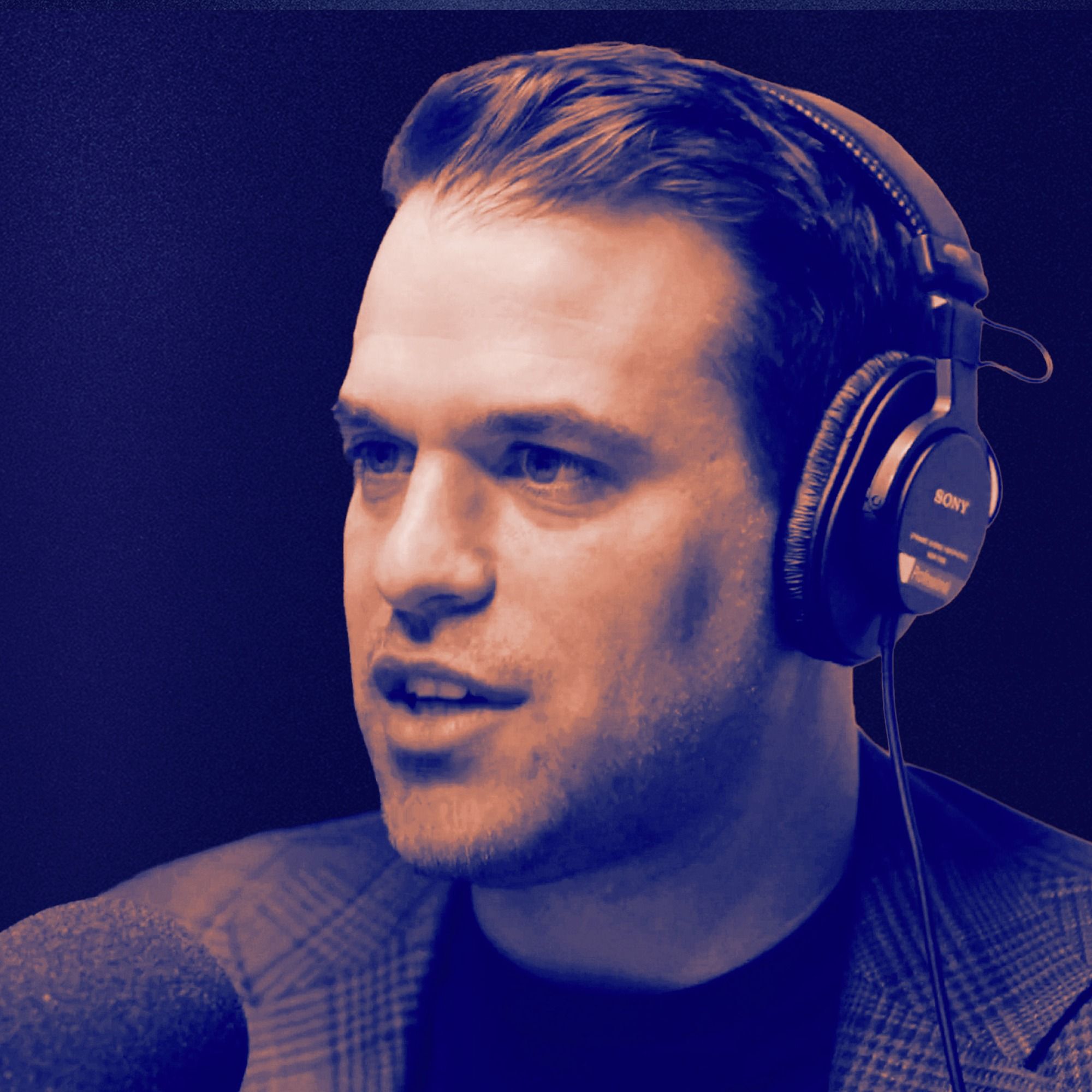
Interesting Times with Ross Douthat
Who Speaks for MAGA?
01:09:23
After Charlie Kirk’s assassination, conspiracy theories and divisions multiplied on the right. On this episode of “Interesting Times,” Ross talks to Andrew Kolvet, a Turning Point USA spokesperson and executive producer of “The Charlie Kirk Show,” about what happens to a movement when its charismatic leader is gone, what it’s like to be the target of conspiracy theories, and whether there are any issues unifying conservatism now.
Loading summary
Transcript543 lines
- [00:00]
A
Don't just imagine a better future. Start investing in one with betterment, whether it's saving for today or building wealth for tomorrow. We help people in small businesses put their money to work. We automate to make savings simpler. We optimize to make investing smarter. We build innovative technology backed by financial experts. For anyone who's ever said, I think I can do better, so be invested in yourself. Be invested in your business. Be invested in better with betterment. Get started@betterment.com investing involves risk performance not guaranteed.
- [00:34]
B
From New York Times opinion. I'm Ross Douthit, and this is Interesting Times.
- [00:57]
Since Charlie Kirk was assassinated, the conservative movement has fallen into infighting, with big personalities and institutions at war with each other, with extreme ideas in the mix, and with a lot of uncertainty about what the right actually stands for. So was Charlie Kirk himself actually holding conservatism together? What unites the movement he helped build now? And what does populist conservatism actually want as we enter the waning years of the age of Trump? My guest today is Andrew Colvitt, who was Charlie Kirk's close confidant. Since the assassination, he's taken on many of Kirk's responsibilities, including hosting his podcast, the Charlie Kirk show, that's placed him in the thick of an ongoing struggle to define Kirk's own legacy and the future of American conservatism.
- [02:00]
C
Andrew Colvitt, welcome to Interesting Times.
- [02:03]
D
Thank you. Honored to be here.
- [02:05]
C
So I want to start just by doing a kind of introduction and having you explain your current role as a steward of the organizations that Charlie Kirk built. You're part of the leadership of Turning Point usa, which is the conservative youth organization that Kirk founded. And you're also, well, you were the executive producer of the Charlie Kirk show, which Kirk hosted, and now you are hosting. So just tell me a little bit about how you came to be involved with Charlie Kirk in the first place.
- [02:35]
E
Yeah, and I would be remiss if I didn't say that the real reason I'm here is because we had originally scheduled Charlie to come sit down with you.
- [02:44]
D
But I think what you said is probably accurate. I don't even describe myself as the.
- [02:49]
E
Host of the Charlie Kirk Show. Charlie is the host of the Charlie Kirk show.
- [02:53]
D
And I see our job as being.
- [02:56]
E
Stewards of his mission, of his message.
- [03:00]
D
But, yeah, Charlie and I, we started.
- [03:01]
E
The show in 2019. May 2019 was our first episode, and.
- [03:05]
D
We just did one podcast a week.
- [03:09]
C
Which is, I should say, a lot. I can say now that I have a podcast of my Own. But you were working at Turning Point before then?
- [03:16]
E
Yeah, I'll go back a step.
- [03:17]
D
So I was actually living and working in Hollywood.
- [03:21]
E
I had a job working with Mark.
- [03:23]
D
Burnett of the Voice, Celebrity Apprentice, Survivor, Shark Tank. So he was doing those projects.
- [03:32]
E
And then at some point he got into faith based content. I was thrown into the deep end of one day we would be at Jimmy Kimmel or we'd be at one of the nightly shows, and then we would go to cnn and then we'd.
- [03:48]
D
Go to Fox, and then we'd be at a church. And Mark's chief of staff, guy named.
- [03:53]
E
Johnny Moore at the time, started a PR company, asked me to start it with him. I wanted to write screenplays.
- [04:01]
D
Actually doing the LA thing, my head.
- [04:04]
E
Was still very much in that space and I wanted. I wanted to make content.
- [04:08]
D
And so I kind of refused.
- [04:09]
E
Kind of refused. And then he said, you know, why.
- [04:12]
D
Don'T you just work a couple days.
- [04:13]
E
A week, help me get this thing off the ground, and then you can do your own thing. And along the way, we started bringing on conservative clients. So ended up Prageru was one of those clients. We ended up bringing on the Blaze as a client.
- [04:26]
D
And at one point, Charlie came across.
- [04:29]
E
The path of Johnny in Southern Florida at some event and said, hey, you should look into this guy. He's young, but, you know, I think.
- [04:36]
D
He'S got a lot of energy. You know, you should contact.
- [04:38]
E
Here's his email. So I reached out to him, said.
- [04:41]
D
Hey, you know, we'd love to talk.
- [04:42]
E
About maybe working with you.
- [04:44]
D
He basically ghosted for a while, and.
- [04:48]
E
Eventually he had some news story that.
- [04:51]
D
He tried to handle on his own.
- [04:52]
E
That didn't go so well and kind of blew up. And then he called me and got.
- [04:58]
D
To work with him via the agency.
- [05:01]
E
For about a year. And then he basically said, hey, I.
- [05:05]
D
Like you, I'll hire you.
- [05:06]
E
I'll be your first client. And I also want to start a podcast and I want you to help me do that.
- [05:12]
C
So working for Turning Point, I think that there are a lot of people, maybe especially a lot of people in the audience for the New York Times, for instance, who have just a very hazy idea of what Turning Point is or what Charlie built it into. Right. That it's. Well, it's a campus conservative group. Maybe it's an alternative to the Young Republicans. Can you just give a description of what, in its sort of full mid-2020s form, turning point is or became?
- [05:42]
E
Yeah, Turning Point, at its core is campus activism. Right.
- [05:46]
D
Because there is A felt need for conservatives on campus that are contending with.
- [05:52]
E
Whether that be professors or other student.
- [05:55]
D
Groups, they feel isolated, they feel alone. And so we have chapters on campuses all across the country, and these become.
- [06:05]
E
Convening points for conservative, like minded, curious libertarians, whatever, to come, meet, get together and discuss ideas.
- [06:13]
D
So there's programming that we push out.
- [06:15]
E
Throughout all of the campuses.
- [06:18]
D
There are speakers that they are then able to book. We help them become a registered student.
- [06:23]
E
Organization on campus so that they can access student body funds and security, get venues on campus.
- [06:31]
D
So that's the beating heart of what.
- [06:33]
E
Turning Point is now around that there is, you know, there's a productions team that's producing a lot of content, documentaries.
- [06:41]
D
We also have a social media team.
- [06:43]
E
Social media has obviously been huge part of Turning Point's growth.
- [06:48]
C
And so this was, again, I think, like, when I think about the beginning of Turning Point, you know, I was a conservative at a predominantly liberal campus. There have always been these, you know, various groups that are sort of doing outreach or providing community for conservatives. And my sense is that as much as that is the heart of what Turning Point does, it has become a much bigger thing than any sort of purely campus conservative, that it has a religious dimension, it has obviously a legally separate political organization dimension. And I think before Charlie was assassinated, a lot of people on the outside maybe didn't quite realize how big a part of conservatism and conservative Christianity in America your infrastructure had become.
- [07:36]
D
No, the infrastructure is huge.
- [07:38]
E
We're talking hundreds of thousands of students across the country at these campuses. Whole social media wing, a whole reporting wing, a whole political arm.
- [07:47]
D
Plus we had the Charlie Kirk show.
- [07:48]
E
That became this drumbeat every day.
- [07:51]
D
So, yeah, it was lots of tentacles. And that's not even to speak of.
- [07:56]
E
The work that Charlie was doing behind the scenes.
- [07:58]
D
I mean, the guy was an avid.
- [08:00]
E
Texter and emailer and phone caller.
- [08:02]
D
And so he was also working relationships.
- [08:05]
E
Behind the scenes constantly and ironing out differences or bridging divides.
- [08:10]
C
Yeah, no, and I want to get into that role because I think it's sort of important to understand what's happening in conservatism since his murder. But if you don't mind. So you were traveling with him a lot. You would go to campuses with him for his tours.
- [08:28]
D
Yeah, no, so I didn't go to all the campus stops. I wasn't there the day he was killed.
- [08:35]
E
And I'm truly grateful for that, actually, because I just, I'm so glad I didn't see it. I saw the video in the immediate aftermath, because I wanted to know if he could survive.
- [08:46]
C
Yeah, I saw the video and immediately regretted seeing it.
- [08:49]
E
Yeah, truly. And the whole team actively works very hard to make sure that anything we share with Erica because she has not seen the video and she never wants to see it. And I want to make sure that I do my part to make sure she doesn't.
- [09:05]
D
So, yeah, I mean, I was traveling with him a lot.
- [09:10]
C
Did it feel dangerous to you, the public's work? Do you feel like you had anticipations or premonitions of what happened?
- [09:18]
D
I mean, you know, everybody plays this.
- [09:20]
E
Mind game after the fact. Did we have premonitions about it?
- [09:23]
D
And, you know, you have these thoughts.
- [09:26]
E
That run through your head and you kind of try and put them down because you don't want to live in fear.
- [09:31]
D
And you're watching Charlie, who's absolutely refusing.
- [09:34]
E
To live in fear.
- [09:36]
D
And we had a full security detail.
- [09:38]
E
Around him all the time.
- [09:39]
D
By the time he was killed, I.
- [09:42]
E
Mean, the security system and mechanisms and.
- [09:45]
D
The team members that we had around.
- [09:47]
E
Him were very robust.
- [09:49]
D
And we spent a lot of money.
- [09:50]
E
On it as an organization. We took it very seriously.
- [09:53]
D
And so what I became aware of.
- [09:58]
E
After the fact was that a lot.
- [09:59]
D
Of what we had to do was.
- [10:01]
E
Rely on these campus stops, was rely on local pd, whether that's campus PD or local pd. And so much of the, I guess.
- [10:09]
D
Safety or lack thereof is contingent on.
- [10:12]
E
The precautions that they put in place and the plan that they have in place. And some of that is beyond the control of the cause. Charlie's security detail covers his immediate proximity. They have like a 30 yard jurisdiction, if you will. And then the perimeter and the ingress egress is all controlled by local campus pd.
- [10:31]
D
And that's if you want to do.
- [10:32]
E
An event on campus. Those are the rules.
- [10:35]
D
So was I scared?
- [10:36]
E
No, genuinely, I wasn't.
- [10:38]
D
Was I aware that Charlie was becoming increasingly, increasingly famous?
- [10:42]
E
Yes. I'll never forget, he came and visited me, I guess probably a month, month and a half before it happened.
- [10:50]
D
And he just got mobbed.
- [10:51]
E
Selfie, selfie, selfie, selfie. And it was kind of this moment where I was like, you're really famous now.
- [10:59]
C
If you don't mind, can you just say something about what the day itself was like for you?
- [11:05]
E
Yeah.
- [11:10]
So the day before, actually, I had booked an interview for him that he was not super pleased that I booked for him, but there was a good reason for doing it. But he was like, you know what, I'm tired now and I want to focus on the Tour tomorrow. So you're going to guest host the show tomorrow. So I guest hosted the show that morning. It was, you know, uneventful.
- [11:34]
D
And we had a pre record for.
- [11:37]
E
Hour two actually, so it's probably two in the weeds. But he's texting me on his way and he's going over talking points about polygamy because he's going to Utah and why is monogamy important? And we're just rapid fire. These are our thoughts on why monogamy is advanced societal tech. And it, you know, directs.
- [11:58]
C
It's a killer app to western civilization.
- [12:00]
D
Exactly. It directs male energies in the right direction, societal building, all these things.
- [12:06]
E
And that was about. I think I had it. It was like 33 minutes before he was killed. And I'm sitting there at my desk, I'm answering a couple calls, emails, and I got a call from a girl on our team.
- [12:24]
D
She was in this desperate.
- [12:27]
E
You could hear it in her voice. And she said, they shot Charlie. They shot Charlie. I was like, who shot Charlie?
- [12:32]
D
What?
- [12:32]
E
You know, what, Is he okay? Is he gonna live? You know, like, instantly, that's where I'm like, you know? And she just said, I don't know. I don't know. I don't know. I was like, how bad was it? And she was like, well, it looked pretty bad, but I don't know, it was quick. And immediately I just, you know, shell shocked. Completely shell shocked. And I. I kind of immediately thought, I have to do something. Like, people are going to look to me for direction and answers.
- [13:05]
D
And I just.
- [13:06]
E
I got nothing. I got nothing. And so I log on to X to see if anybody's talking about it yet. And then I see it that it's being just initially reported, no videos. And next thing I know, my phone. This is the part I'll never forget because my phone starts just text, text, text, text, phone call, phone call, phone call. My phone is literally, the next day, it stopped working. I had gotten so many phone calls and so many texts. And it was. I mean, I can't even tell you. It was thousands upon thousands of texts. Some people saying, I'm so sorry. Or like, tell me it's not true. Is he all right? And then just a lot, a lot of reporters going, can you confirm that Charlie Kirk has been shot? And I'm like, you know, just these heartless, you know, you know, this is from such and such outlet. Like we're trying to confirm if. And I'm just thinking, this is like one of my best friends in the world. Like my Best brother and my business partner and I. And I like, what. What are you supposed to do in this moment when they're. They want to know if they can confirm it? And you're like, I don't even know what the truth is. So how long.
- [14:23]
C
How long did it take before you knew he had died?
- [14:26]
E
I.
- [14:30]
There was a. I don't know. I want to say probably 30 or 40 minutes. Okay, so there was a report. There was a report, yeah.
- [14:40]
D
It was before I knew.
- [14:41]
E
Before Trump put the Truth Social out. And I remember feeling grateful that he put that out, because I remember having my computer up. Cause I'm supposed to message this. And I remember it was literally that one of those scenes in the movies where you have the first sentence and you don't. You don't know what to say next. I kept deleting it, Kept deleting it.
- [15:07]
D
And then.
- [15:08]
E
So I was extraordinarily grateful. It was funny because I got a call from some reporter and I think he was trying to take a swipe at the president for sending off that. He was like, did he coordinate that with you? And it's like, well, no, and I'm so glad he just ripped the band aid and said it.
- [15:24]
D
But, yeah, I had heard that he.
- [15:27]
E
Was pronounced dead in the hospital, and, you know, that Erica had gotten the call, basically. And then I flew straight to Provo just to, you know.
- [15:40]
I just felt like I needed to go and be there. And. Yeah, so I was there.
- [15:47]
C
And at what point, I guess, at what point did it become clear to you that you were going to, at least temporarily.
- [15:56]
Not fill Charlie's shoes, but take over part of his role? Cause obviously, since then, you have been not alone, but you have been running the Charlie Kirk Show. You are, for the moment, the voice of Charlie Kirk in the aftermath. When did that become clear that that was something you were gonna undertake?
- [16:15]
E
Yeah, and I just wanna be very clear that I don't see myself as that. I worked with Charlie just about every day for eight years, and I feel like I have a Charlie GPT or something in the back of my head.
- [16:26]
D
I mean, truly, I hear, as long.
- [16:29]
C
As you don't do the weird AI.
- [16:31]
E
We are not going to do the weird AI thing. We've been pitched on that multiple times. I'm just like, guys, no, no, not at. No, not at all.
- [16:38]
D
You know, it was in the immediate aftermath.
- [16:41]
E
It was the day or two after I remember Erica looked at me and said, you know, they will not silence my husband's voice. You have to keep the show going and JD Vance had flown to Utah to pick us up. So we were all in Phoenix. And by the way, J.D. vance, I can't say enough good things about him and Usha and the way they've comported themselves and the support they've been to us and to Erica in this time. And that transfer, I can't tell you how much that meant to us. It truly was just an amazing gesture to see Air Force Two fly down into Utah, pick up Charlie and take him back home. It was really amazing. So we're all in Phoenix that Friday and we decide to. We're gonna host the show. And I remember as the seconds tick down before we go live and just going, I have no idea what I'm gonna say.
- [17:40]
D
And I still don't really remember. I've never gone back and watched it, but.
- [17:43]
E
But, you know, we just knew we had to keep it going. And Erica, you know when Erica Kirk looks at you and says, they won't silence my husband's voice. You have to. You have to keep speaking. You do it.
- [18:17]
F
Welcome to Walgreens. What can I help you with today?
- [18:19]
G
Hi, I need a last minute gift for a secret Santa. Something thoughtful, impressive, not a fruitcake.
- [18:25]
F
We've got Ferrero chocolates, artisan coffees, even a spa kit. Any vibe you're going for?
- [18:30]
G
Whatever says, wow, this guy's great at giving gifts.
- [18:33]
F
How about this pretty premium skincare gift set? Just needs a bow. Will look like you planned it weeks ago.
- [18:39]
H
Well, happy holidays, gifts, holiday decor, and more. The holiday road is long. We're with you all the way, Walgreens.
- [18:46]
I
Is it just me or has watching TV gotten way too complicated? There's a million different services and just too many bills to keep track of. Thankfully, there's Philo. A better way to TV. For as low as 33 bucks a month, I get the channels I love. MTV, BET, Food Network, you name it. Plus everything that AMC has to offer. And guess what? They've added access to hbo, Max Basic with Ads plan and Discovery plus so I can enjoy all the best TV with one subscription. There are no contracts, no surprise fees, just one low price. And their DVR is awesome too. I can save everything I love on Philo for up to a year and skip the ads when I rewatch them. A total game changer. I signed up directly at Philo tv. That's P H I L O tv so I could lock in the best price around. Philo's the easiest decision I've ever made. Now the hard one is trying to decide what to binge next.
- [19:54]
C
Let's talk a little bit about, I guess, that mission and the role that he played that you already talked about having a front seat for, watching him play. When Charlie was scheduled to come on this show, one of the things I wanted to talk to him about was my own sense that he was maybe more important to conservative politics than people realized. And some of that had to do with the incredible infrastructure of Turning Point that we've already been talking about, but some of it had to do with this kind of relational dynamic that you were describing. Right. Not just the show, but texts, phone calls, friendships, and so on. There's a lot of talk with current divisions on the right about the idea of a William F. Buckley Jr. Figure, someone who's sort of figuring out what is and what isn't conservatism and who's in and who's out. And that's my understanding of Buckley's role as someone who came on the scene late in his career but had some exposure, was that it was much more relational than intellectual. Right. That he sort of sat at the center of a network of people who didn't always like each other, but all liked him. And I felt, as a distant observer, that some of that was there with Charlie. And I felt it much more strongly, honestly, since his death, because one of the things that has obviously happened is that there is just a lot of infighting in the kind of activist, podcaster, influencer space on the right. And so I'm curious generally, what you think about that, maybe specifically you could talk about the most intense version of this that I know you've had to deal with, which is just the incredible proliferation of conspiracy theories since his death. Almost sort of JFK level stuff.
- [21:45]
E
Do you want me to go conspiracy theories first or.
- [21:48]
C
Yeah, let's start with the conspiracy theories, actually, and then sort of get bigger from there.
- [21:53]
D
You know, I think that you're right, though, that they.
- [21:56]
E
I think they are connected.
- [21:58]
D
There's been.
- [22:00]
Obviously, people want to know what happened.
- [22:03]
E
And I don't begrudge them wanting to get to the bottom of it. I also don't begrudge them having a. A sort of distrust for authority and a distrust for institutional authority and governmental authority, because we have been lied to about things. And so I understand it on some level, like, genuinely don't begrudge people that.
- [22:31]
D
And I think it's in a weird.
- [22:33]
E
Way, a testament to Charlie's impact and his importance.
- [22:38]
D
And so I have trained myself to.
- [22:42]
E
See the conspiracy theories as a testament to the love for Charlie, just for.
- [22:47]
C
People who don't know all the conspiracy theories. Right. Like the theories you're referencing, the fact that some of the theories are basically like, obviously someone on Charlie's team must have set him up. Sure.
- [22:57]
D
Or that he was betrayed. Or, you know, and I do my.
- [23:01]
E
Best, and this is why I'm. I'm so grateful that I have faith, because I'm able to pray for people that are taking that energy and directing it at people. Charlie loved his closest friends. And that gives me a lot of, I think, an anchor in a pretty tumultuous storm otherwise.
- [23:25]
D
And I also watch Charlie deal with. With so many lies about him. And I watched him over the years learn when to stay silent, when to speak into things, when to correct, when.
- [23:39]
E
To be strategically absent on a conversation. And this is where the two subjects bleed a little bit together, where you.
- [23:49]
D
Have a lot of people that are.
- [23:51]
E
Now part of canonizing Charlie Kirk, but in life were either, you know, they were not particularly friendly or they were outright hostile.
- [24:01]
C
Yeah. And so, I mean, I think the most explicit one that. Where there has been sort of really clear attempts to sort of claim his mantle and his legacy for completely different perspectives is the issue of Israel. And obviously that is also entangled with the conspiracy theory stuff, because some of the most prominent conspiracy theories have involved Israel. And I have a general question about, again, like, I assume this was one of the issues that you guys were talking about before he was killed, but then there's also the specific reality that Candace Owens, who is, you know, one of the most popular podcasters in America, was Charlie's friend. She is the leading voice for many of these. Many of these theories. And so I'm curious what your view of her arc since his killing is.
- [24:52]
D
Yeah, I would say when it comes.
- [24:56]
E
To the issue of Israel, it was certainly something that we wrestled with a lot.
- [25:03]
D
I mean, Charlie would go to some.
- [25:05]
E
Campuses, and it was like 50, 60% of the questions were about Israel.
- [25:10]
D
And that was for two years.
- [25:13]
That was true. It wasn't true at all campuses.
- [25:15]
E
It sort of depended.
- [25:16]
D
But every campus there was questions about.
- [25:18]
E
Israel, and they were questioning the US Relationship with Israel funding. What about aipac? I mean, he got the gamut, right?
- [25:27]
D
And he got better and better at.
- [25:29]
E
Answering those questions and spent a lot of time trying to study the issue.
- [25:34]
D
Because I think when Charlie started, he.
- [25:36]
E
Was at a. I don't want to.
- [25:37]
D
Say he was Normie, but he kind of took it at his face level.
- [25:42]
E
Greatest ally in the Middle east, and.
- [25:44]
D
But he was Questioning some of the.
- [25:47]
E
Dynamics, because at the end of the.
- [25:49]
D
Day, Charlie was really against war. He hated war. He took a lot of flack for.
- [25:56]
E
Fighting against this march towards endless blank.
- [25:59]
D
Check funding of the Ukraine war.
- [26:01]
E
He was vehemently against it.
- [26:03]
D
He didn't want America to be involved in killing abroad.
- [26:06]
E
He wanted us to focus domestically.
- [26:09]
D
And we saw it as this, you know, a drag on the entire movement.
- [26:13]
E
And we wanted it to stop.
- [26:15]
D
And when you're trying to have a adult, mature conversation about what our relationship.
- [26:21]
E
Should be with a foreign ally, and it's met with an emotional response.
- [26:25]
D
On the one hand, you understand it.
- [26:27]
C
From the pro Israel side, from the.
- [26:28]
D
Pro Israel side, but from both sides, candidly, you know, you start kind of going like, well, how are we gonna.
- [26:34]
E
Get anywhere on this issue if we can't talk about it reasonably and we can't disagree about basic things? So those things were gnawing at Charlie, there's no doubt.
- [26:44]
D
And he was also, I think, frustrated.
- [26:47]
E
That he would go on campus and.
- [26:49]
D
He was defending Israel's right to defend itself, its right to exist. And he felt like he was doing more heavy lifting for a foreign country.
- [26:58]
E
Than the foreign country was doing for itself, at least from a PR standpoint. And selling this.
- [27:04]
D
And that frustrated him too. He didn't feel like it should be his role.
- [27:06]
C
How much of those questions do you feel like actually came explicitly out of the attempt by Nick Fuentes and the Groiper movement to sort of target Charlie and put him on the spot and attack him, as opposed to being a kind of organic. I mean, not that Fuentes support isn't organic in some sense. Right.
- [27:25]
D
But I actually.
- [27:26]
E
Yeah.
- [27:27]
D
So I think. You know what's interesting, and I don't.
- [27:30]
E
Know if this is contrarian take or.
- [27:32]
D
Not, but I think that it's hard to know what was, I guess, inspired by organic. I think the ideas of Fuentes when.
- [27:44]
E
It came to immigration and Israel, it's.
- [27:47]
D
Like there's nuggets of some pretty. I think there's truth in some of.
- [27:54]
E
Those immigration arguments, for example.
- [27:56]
D
And the conservative side of the aisle.
- [27:58]
E
Was not willing to address some of those questions.
- [28:01]
C
Just give me an example of the.
- [28:03]
D
Well, yeah, and I would like to.
- [28:05]
E
Separate that from some of the, like, vitriol towards Jewish people that Charlie rejected wholesale. So I want to make that very clear.
- [28:13]
D
But when it came to.
- [28:15]
E
This is actually a funny story. So one of the early. In the early days, I think Erica and Charlie were just dating at the time. We took a drive, all three of us, from. I Think it was Iowa City up to Chicago.
- [28:29]
D
And all we did the whole car.
- [28:30]
E
Ride was debate immigration. This must have been 2018, 2019.
- [28:35]
D
And I was.
- [28:38]
Living in California at the time. I saw some of the cultural cohesion issues really up close and personal.
- [28:49]
E
So I was the immigration hawk in the car.
- [28:51]
D
Erica was probably more in agreement with me. And Charlie was like, you know, he still had this kind of legacy Chicago boy experience where he's like, look at all this farmland. You know, Chicago's losing population. We need more immigrants. Charlie changed it abruptly on this issue. But I remember telling Charlie, like Charlie, you are wrong about this topic. Like this is a bigger issue than you are realizing.
- [29:16]
E
And Charlie just wasn't quite on that page. Cause he had gone to a high school in Wheeling, Illinois where it was.
- [29:22]
D
I think, white minority high school. He interacted, had a good experience at that high school and didn't see any issue with it. Charlie started out his political journey more libertarian.
- [29:33]
E
Anyways.
- [29:34]
D
He eventually became very convinced that immigration.
- [29:37]
E
Was, I think, if not the number one issue, darn near the number one issue that's animating the base, that is important to conservative voters. To feel like we are able to still have our country that we grew up in. Feeling like there is a sense of place, a sense of identity, a shared American identity.
- [29:56]
D
He became very convinced about that. And I think.
- [29:59]
C
Do you think he was responding there to the kind of questions that he was being asked and the interactions he was having?
- [30:06]
D
No, I think he was responding to experiences he was having outside of that.
- [30:11]
E
I think he was responding to political stories.
- [30:14]
D
I think he was watching this emergent.
- [30:18]
E
Dynamic play out on the national scene. And whether that's Ilhan Omar or Rashida Tlaib or something like this, which he.
- [30:26]
D
Was deeply upset at the lack of.
- [30:30]
E
Gratitude from personalities that you might see online. It felt like America had opened its.
- [30:35]
D
Arms and we were not getting the love in return. More of a grievance based politics and in a departure from conservative ideals further and further and further, was worried that.
- [30:50]
E
These cultures were bringing in socialist ideas or that they were going to scapegoat white America for some perceived ill or offense.
- [30:59]
D
Those types of concerns I think grew.
- [31:01]
E
Over time and he began to realize that the sheer volume was unsustainable.
- [31:06]
D
And then boom.
- [31:07]
E
The illegal immigration crisis of the Biden years put him well over the top.
- [31:12]
D
So I think it was a natural evolution. He just became more conserv and his faith became even. It was always important to him, but I think it became even more increasingly.
- [31:20]
E
So important to him. And that began animating a lot of his political views.
- [31:23]
B
Yeah, well, let's.
- [31:24]
C
So just to look ahead for a minute, let's take those three issues as useful for thinking about where the right is going and just try and take them one at a time. We'll say Israel, immigration and religion and Christianity. And I want to use them to stress test maybe how much cohesion there really is on the right going into the end of the Trump era. So start with Israel. And I notice you didn't answer my question about Candace Owens. I think Candace Owens is a clear example of just how much potential division there is on the right right now. Where, yes, as you were suggesting, you could see a kind of stable middle ground that reassesses the US Israel relationship in some ways. But in practice, you just have a lot of absolutism in the pro Israel camp. And then you have an anti Israel camp with Owens as a prime example that has just veered all the way very quickly into anti Semitism. So maybe start with her. What has happened to Candace Owens?
- [32:36]
E
I don't know is the truth.
- [32:39]
D
I know that. I mean, I've known Candace for, I guess I want to say probably 2019, I think, is when I first met Candace. And she was always very opinionated.
- [32:52]
E
She was always, I would say, a fiery personality.
- [32:56]
D
And for a while, she existed within.
- [33:00]
E
The Turning Point ecosystem, and she just.
- [33:02]
D
Simply grew to the point where it made more sense for her, I think, in her eyes, to sort of do her own thing outside of the Turning Point ecosystem. And, you know, she's obviously a tremendous just talent.
- [33:17]
E
Right.
- [33:17]
D
And from a pure oratory standpoint, you know, you've seen pictures of Charlie and.
- [33:24]
E
Candace in Israel for the embassy moving ceremony, and they moved it to Jerusalem.
- [33:31]
D
So when I was interacting with her.
- [33:33]
E
More frequently, there wasn't a question about Israel.
- [33:37]
C
Do you or your team have interactions with her nowadays?
- [33:41]
D
I interacted with her in the immediate.
- [33:42]
E
Aftermath of what happened with Charlie. I didn't realize that it was going to be this, that we were gonna.
- [33:52]
D
Be the subject of a daily streaming.
- [33:55]
E
Show where our own characters were impugned or that we were somehow implicated in a betrayal conspiracy or something.
- [34:02]
D
I just assumed that Charlie, she was his friend. Yeah. And she was obviously worried and she was traumatized, as we all were. And I had kept in contact with Candace intermittently over the years, so I thought I should call her and be.
- [34:18]
E
Her point of contact when everything happened.
- [34:20]
D
And she was obviously distraught. And I felt for her. I had no foresight that it was.
- [34:28]
E
Going to become what it's become.
- [34:31]
C
But and for those, again, for people who are watching or listening, who don't know exactly, like, there is constant programming on her very, very popular podcast that is. Yeah, it is a kind of conspiratorial drama about the betrayal and murder of Charlie Kirk, in which Israel features prominently people close to Charlie. Right. France. But you haven't called her up. Someone doesn't call her up and say, what the hell is going on?
- [35:00]
D
I believe there's been one contact in.
- [35:04]
E
Relatively recent days, but other than that, I mean, it became apparent that we were becoming a focus of her ire and that it was not exactly a.
- [35:14]
D
Safe.
- [35:16]
Relationship to proceed with. So. Yeah, I mean, do you think your.
- [35:21]
C
Audience and her audience overlap right now?
- [35:24]
D
I think, yeah. I mean, I think some. So I'm not sure how many people are really buying into some of the.
- [35:35]
French theories. I don't know what people are really buying. I do think that there is, you.
- [35:39]
E
Know, and you see this with Netflix. You see the true crime genre of things.
- [35:44]
D
It's a successful genre.
- [35:47]
E
Women seem to especially be drawn to it.
- [35:50]
D
So I kind of think there's a.
- [35:52]
E
Big group that tune in just to kind of see what's coming next in this unfolding narrative.
- [35:59]
D
But, yeah, I mean, and I will.
- [36:01]
E
Say I will never look at a conspiracy theory the same way again, because when you're close to something and you know what's true and what's not, one of the allegations is that Bibi Netanyahu is offering Charlie all this money.
- [36:15]
D
That's not true. There was never an offer. If there was, nobody on the team knows about it. So Charlie would have had to. Just privately, first of all, I don't think Charlie would have ever taken anything.
- [36:28]
E
From Israel, just as a matter of.
- [36:30]
D
Principle, or from Ukraine or from the uk. He just had a hard and fast.
- [36:35]
E
No foreign money rule.
- [36:36]
C
Has this changed how you think about Trump era conservatism then? Because there is, I mean, let's be honest, there's a lot of conspiracism on the right. And I am, by the standards of the New York Times, I am more sympathetic, I think, to many people about some conspiracy theories. I think there are weird things in the world that are not fully understood. I have interest in everything from Jeffrey Epstein to UFOs. Right. But same good, we'll do a show about those subjects. But it is also the case that there is a kind of. There's a wildness right. To conspiracizing on the right in the area of Trump in the era of COVID with the 2020 election and so on, that is just a distinctive part of conservative culture. Do you regard that more critically now, maybe, that you've been on the receiving end of sort of theories about yourself that you know not to be true?
- [37:34]
E
I've never been a hugely conspiratorial person.
- [37:39]
D
In general, but I'm very sympathetic to why people are. And when you think about the conservative.
- [37:46]
E
Mindset and the conservative wiring, you realize, I think, even more why this is happening.
- [37:52]
D
What we are living through is an era where conservatives have this bent to conserve our tradition, conserve our culture, conserve our heritage. But those institutions that are supposed to.
- [38:02]
E
Be doing the heavy lifting for us.
- [38:04]
D
Are not in alignment.
- [38:05]
E
They are. Institutional capture by the left in America is pretty dramatic.
- [38:10]
D
And so I understand that that's actually.
- [38:13]
E
Fueling a lot of this.
- [38:13]
D
And then you throw in JFK, you.
- [38:17]
E
Throw in 9, 11, you throw in Covid, all of these things that have.
- [38:22]
D
That people question, right? They question, are they getting the real narrative or not? Just having been on this side of a conspiracy theory. And you just know, you just realize.
- [38:34]
E
There'S a pattern to this where they.
- [38:36]
D
Will allege connections that might haven't a.
- [38:39]
E
Grain of truth, an ounce of truth.
- [38:42]
D
And then they will leap to a conclusion that is so wild.
- [38:46]
E
And you're like, how did you put.
- [38:49]
D
One and one together? And then allege this from these two things or throw in a third element that wasn't even true and then that spun it in a whole different direction and then all these people believe it and then just distrust you or. And now you have this, this pall of doubt cast upon your, your person. So it's, that's the part that I didn't fully appreciate being on that side.
- [39:12]
E
Of a conspiracy theory as opposed to being on this side of it. And you're just like, okay, the facts.
- [39:16]
D
Have to matter somewhere in this equation. And I think as a conservative movement, we do have to make sure we're fact based.
- [39:24]
E
We do need to be sure that we police ourselves of some of the.
- [39:27]
D
Zanier, crazier, I think, intellectually lazy conspiracy theories. But when it comes to UFOs, when it comes to Jeffrey Epstein, I think there's some conspiracy theories that we need to dive into.
- [39:40]
B
How do you do that policing?
- [39:41]
C
And is it on just the Israel question? Right? Like if there's no one who can call Candace Owens and say, what are you doing? You should stop, right? And she's only one example of people who have sort of gone all the way to conspiracy theories and to, you know, antisemitism on Israel. Can the right hold together on Israel when there's so much difference? Again, going all the way to conspiracy theories?
- [40:10]
D
Yeah, I would say that the answer is yes.
- [40:12]
E
I firmly believe that. Charlie believed that.
- [40:14]
D
And he was working, I think, the.
- [40:17]
E
Preliminary stages of that.
- [40:19]
D
I would say this is a generational moment where you have President Trump, who is almost 80, in the white House, who is obviously fully supportive of Israel.
- [40:31]
E
At least ostensibly so.
- [40:34]
D
He's friends with Benjamin Netanyahu, but the.
- [40:38]
C
Base is because a complicated friendship.
- [40:41]
D
A complicated friendship, complicated relationship.
- [40:44]
E
The President has been pretty stalwart in his defense of Israel.
- [40:48]
D
But I think what you're seeing is.
- [40:49]
E
This generational divide, you could call it under 40, under 50, which is becoming increasingly skeptical of the status quo.
- [40:57]
D
Now, I can tell you from our.
- [40:58]
E
Experience with Turning Point that we did.
- [41:01]
D
A. Charlie and I actually did a focus group with a bunch of our.
- [41:06]
E
Students when we were at the Student Action Summit, and that was just in July in Florida.
- [41:11]
D
And we had dozens of these kids.
- [41:13]
E
We kept rotating them in.
- [41:14]
D
We wanted to get a really broad.
- [41:16]
E
Section of their feelings about Israel.
- [41:19]
D
And it was remarkable because a lot of them were like, well, we like Israel, we like them more than Hamas, but that doesn't mean I don't have questions about should we be funding them, do we have to get dragged into wars?
- [41:31]
E
It feels like we're getting dog walked into this conflict.
- [41:34]
D
And I actually thought that was great because what I don't want to see, and I think this is the through line for Israel, is you do not have to support Israel to belong to the team, at least in a traditional historical sense. I don't want to see a conservative movement like that. I'm an American, you know, I'm born in this country.
- [41:54]
E
My kids are going to be raised in this country.
- [41:56]
D
I'm going to die here. They're probably going to die here. I care about America. I mean, God bless Israel. I want them to succeed, too. I just want to make sure we're taking care of home base first. And I totally personally get that impulse. And I said it's sort of the animal passions of the America first movement have been unleashed. President Trump perhaps didn't foresee or could not foresee all that that would entail, but this is a central pillar of this. And I think Israel has become a symbolic battle about what does America first really mean?
- [42:32]
C
Immigration seems like a different case. On Israel, you have these divisions within the right. You also have them within the left. Right? And both coalitions are sort of trying to find a stable center on immigration. It seems to me you have tremendous unity on the right right now. And that the arc you described earlier of Charlie going from being sort of moderately pro immigration to being very anti immigration is just a general arc for the conservative base. This is, if you ask me, you know, what is the populist right believe in? What does MAGA believe in? Right now? It'd be hard to do any better than immigration restriction as a unifying issue. At the same time, it's also a place where the larger country, including lots of people who voted for Donald Trump in 2024, are not all the way where you are or where Charlie is. And there's a lot of people who have the, you know, have the suburban high school experience that Charlie had, that you described, who have incredibly favorable experiences of immigrants and immigration. And there's a lot of people who were alienated by the Biden immigration wave. But also look at the right right now and look at deportations to an El Salvador prison and look at, you know, ICE agents wearing masks and are like, well, I want deportations, but I'm not sure that I want that. And you yourself just said, well, in being anti immigration, there are some things Nick Fuentes says that I think are true. Right. There's a lot of Americans, it seems like, who are sympathetic to the Republican Party, who could be turned off by a.
- [44:15]
Mass deportations for 20 years. Everyone has to go back kind of conservatism. What do you think about that?
- [44:21]
D
Yeah, well, and just to clarify what I was saying, what Fuentes tapped into, which I do believe that there is truth in, is that you have a whole generation of young men, and we saw this for years. There's a whole generation, especially of young.
- [44:38]
E
Men, but of young women, too, that.
- [44:40]
D
Felt betrayed, alienated, discarded, villainized by the establishment class and that they were told that they were the problem just for being born in America. Maybe they had white skin, maybe they had brown or black skin, but they were told that they were toxic.
- [44:56]
E
They were told that they were some.
- [44:58]
D
Sort of an issue. And when you do that, whether knowingly or unknowingly, you are going to create a whole class of people that are probably going to be reactionary for something that they were told they were supposed to get, but that got screwed out of by the incumbent financial system or by the incumbent political class. And that's an energy that once you unleash it, once you see the ground for the base elements of that, there will be a reckoning. And that is a truth. Regardless of who talks about it, that you have to, as an American, come to grips with. Now, what Charlie's mission was was to say, hey, before us are two roads. You can either go grievance, politics, socialism, free stuff, populism, mangioniism, mamdaniism, or you can go maga. Now, you might not like MAGA on its face. You might think it's mean or cruel or bad PR or whatever, but at least you can live with it. It's gonna be a tough pill to swallow and stuff. There's national populism. There's gonna be some medicine that we.
- [46:05]
E
All have to take here.
- [46:06]
D
But at least on this road, there's still going to be an American.
- [46:09]
C
What is the toughest are we talking about? But when you say those two roads, are you directing that to the alienated young man or to the squishy moderate?
- [46:21]
D
Probably both. Probably both. I think MAGA on its face is a tough pill for some to swallow. That would maybe be young people, Right? So I'm putting myself back into that 2022, 2023 mindset. You know, Joe Biden in 2020, that was a lot of ink spilled about how he did with the youth vote.
- [46:39]
E
And how he did so well.
- [46:41]
D
So we had a tough mission going into 2024, and Charlie had a tough mission. How do you sell this populist conservatism of Trump to a generation that seems to be repelled by either the energy or the branding or Trump himself? And so what we started seeing, though, was that they had been so disenchanted with the liberal establishment and the economic.
- [47:08]
E
Reality that they were facing, the malaise.
- [47:10]
D
Everybody could feel it, that when you would start forcefully presenting the conservative worldview on these campuses, they started flocking. But I think for a long time, it felt like this is gonna be a tough. How do you sell being accountable for your own actions? The fact that we have to deport people that are here illegally? And you're gonna confront all the nasty headlines and the sob stories from the news media. And so. But here's my one pushback to the premise of the question. I think that this has been going on for so long, and the transformation.
- [47:43]
E
Of the country in our cities and.
- [47:46]
D
Basic social services have been so dramatic that this is such a wildly popular position. And I think it goes beyond the base. And you saw how much immigration played into Trump regaining the White House. So I think people underestimate the issue of immigration. I understand that there is differences of opinions about the raids or who we should be deporting.
- [48:11]
C
Let me just speak for the squishes, right, for a second, because it seems to me that when you're talking about the hard sell of MAGA to different groups, there's the group of alienated. It's not all young men, but we'll just call them alienated young men who have the experience that you're describing. And those are the people who are getting pulled to more and more hardcore positions and potentially all the way to where Fuentes is. Right. So to those people, Charlie, a year ago, now you are in the position of saying, okay, how do we keep them from becoming white nationalists?
- [48:53]
B
But we have to be sufficiently hardcore.
- [48:56]
C
That they feel like they'll stay on our side. But then there's another group of people who were not super conservative but were totally alienated by the Biden economy and by the Biden immigration wave and who voted for Trump, maybe they voted Republican for the first time.
- [49:12]
B
That group included a lot of recent.
- [49:14]
C
Immigrants, second generation immigrants, a lot of Hispanic voters. Right. But those voters are never going to be hardcore anti immigration voters, I don't think. And it just seems, I feel like it's not just your dilemma, but it is your dilemma in part, right, is you're trying to simultaneously say, look, we're really hardcore in immigration. We're going to do all the things that the alienated young man who feels like he's lost the future of his country wants you to do. But in doing some of those things, you end up alienating the moderate conservative who you got in 2024.
- [49:55]
D
I don't know that that's true.
- [49:56]
E
I just don't know that I agree with that.
- [49:58]
C
I actually think I could be wrong.
- [50:00]
D
Yeah, it has happened. I think that is, you know, when we saw that dynamic play out in.
- [50:05]
E
2016 with Build the Wall and the Never Trump movement, and people consistently underestimate this issue.
- [50:13]
D
People have a memory of the way the world used to feel when they.
- [50:16]
E
Were a kid or when they were.
- [50:16]
D
Going to school, and they see how it's changed. Now, some of that change can be okay and some immigration certainly can be okay. As a country, we've historically scaled up or scaled down or changed the way we formulate it. I think that there has not been nearly enough reform in this area, whether it's especially with legal immigration, H1BS. This is still a wildly and dramatically animating issue. And I think even with moderates that maybe don't want to tell a pollster.
- [50:45]
E
That they don't like it, but they.
- [50:47]
D
Don'T like it, okay, People wanna feel familiar in their communities. They wanna live near people that they share values with. And there's nothing wrong with that, by the way. I think so many times we turn this into a, oh, you're a xenophobe or you're a racist, you're a bigot. No, this is as old as time. People like to be in a community that they feel safe in, that they feel like they know their neighbors. This is just the way people tend to congregate. So I would say I think you're underestimated. And then when it comes to new immigrants, you're not giving immigrant communities enough credit for understanding the downside of unfettered mass migration. And then I just.
- [51:22]
E
Again, I would say this is an.
- [51:24]
D
Issue that has been underestimated time and time again, and it will consistently deliver.
- [51:28]
E
For the conservative movement.
- [51:54]
J
With stays under $250 a night, VRBO makes it easy to celebrate sweater weather. You could book a cabin, stay with leaf views for days. Or a brownstone in a city where festivals are just a walk away. Or a lakeside home with a fire pit for cozy nights with friends. Or if you're not a sweater person, we can call it corduroy weather. More flexible. And with stays under $250 a night, you can book a home that suits your exact needs. Book now@vrbo.com.
- [52:24]
Welcome to Walgreens.
- [52:25]
F
Looking for a holiday gift?
- [52:27]
D
Sort of.
- [52:28]
G
My cousin Freddie showed up to surprise us.
- [52:31]
F
Oh, sounds like a real nice surprise.
- [52:33]
D
Exactly.
- [52:34]
G
So now I have to get him a gift, but I haven't gotten my bonus yet. So if we can make it something really nice but also not break the bank, that'd be perfect.
- [52:41]
F
How about a keurig for 50% off.
- [52:44]
H
Bingo savings all season? The holiday road is long. We're with you all the way. Walgreens offer valid November 26 through December 27. Exclusions apply.
- [53:02]
C
What else is conservatism? Maga? Conservatism. Turning point. Conservatism for right now. Because we've entered a phase of the Trump administration where there's no big legislative agenda in Congress. And I think there's clear unity on immigration on the right, clear divisions on Israel, and I'm just uncertain what the other animating issues are that will shape the contest to succeed Trump and everything after that. And you're closer than I am to those voters. What does the populist right want in 2026, 2028 and beyond besides immigration? Setting aside immigration and the Israel debate.
- [53:49]
D
Yeah, I mean, affordability is huge. And I think what we need to be for. And you've seen this at least the beginnings of this is a economic moonshot.
- [54:03]
E
If you will, to make housing more affordable.
- [54:07]
D
I think housing is the crux. I think people owning their own homes.
- [54:11]
E
Feeling like they have a stake in.
- [54:13]
D
This economy, in this country, if you want to have a nation of renters.
- [54:17]
E
Then those people are going to burn down the country real fast when things go south.
- [54:22]
D
And so a bulwark against radicalization revolution is letting people own the roof over their head. It's a place to build a family, to get married. So, I mean, I agree with Charlie.
- [54:35]
E
He and I worked these ideas out together before he died.
- [54:38]
D
And it's like, hey, we need 5, 10 million new homes. We need to make sure that those are not being bought by institutional money or by foreign buyers. We should be considering a lot of creative ideas.
- [54:49]
E
Now, I'm not a policy wonk, so.
- [54:52]
D
I'll let the experts work this out. But maybe they get to write off.
- [54:56]
E
The first $50,000 of their mortgage.
- [54:59]
D
Maybe they get special interest rates or whatever the idea is.
- [55:05]
B
Let's 50 year mortgage.
- [55:07]
D
No.
- [55:07]
E
Okay.
- [55:08]
D
The 50 year mortgage was potentially a bit of a mixed bag. You know what's funny?
- [55:12]
C
Okay, it's okay. You can just say it's a terrible idea.
- [55:14]
D
It's probably a very terrible idea.
- [55:16]
C
President Trump is not watching. Well, I shouldn't say that. Maybe he.
- [55:19]
D
No, no, no, I listen, I actually. So the reason I hesitate, my instinct.
- [55:23]
E
Was that it was a terrible idea.
- [55:24]
D
Then we put it out to the.
- [55:25]
E
Audience and asked them what they thought.
- [55:27]
D
And people are smart. I mean, listen, a lot of our audience was like, hey, listen, you don't want to be a debt slave to this. I mean, if you, the medium home buyer is 40 years old, 50 year mortgage, you're 90 by the time you pay that off. But a lot of people were saying, well, if that gets you in the door, you start, you know, your house appreciates in value. You could refinance. People. People are already getting, you know, creative, and they were seeing it as a potential tool that they could take advantage of. So I just want to say, on its face, it felt like lipstick on a pig. But our audience was sort of split on it.
- [55:58]
C
So you just said, I'm not a wonk. I want to encourage you to wonk out. Just take this issue as an example. And again, this connects to some of these larger dynamics on the right in the age of Trump. Right. You mentioned two ideas. We need to build a lot more homes and we need to make sure that they aren't bought up by.
- [56:25]
Goldman Sachs, BlackRock, foreign investors and so on. It seems to me that when I look around the right, there's a lot more enthusiasm for that. Second point, when I go on social media and someone's like, oh.
- [56:40]
Bad news, this hedge fund is buying up real estate or so on, that gets tons of engagement and there's less engagement if someone says, here's my legislative plan to remove regulatory impediments. But I feel like that's often the dynamic that the right gets trapped in, where you have all this energy around mistrust of institutions.
- [57:01]
B
But in the end, if you want.
- [57:03]
C
More homes in America, the most important thing is figuring out how you build more of them. Right? So this is, I'm not asking you for the 10 point plan, I'm just encouraging you to sell. Because so much of the, the problem.
- [57:18]
B
With the 50 year mortgage, like a.
- [57:19]
C
Lot of these ideas, is you're subsidizing demand.
- [57:23]
B
But the right and the left, everybody, we need supply.
- [57:27]
E
Yeah, right, we need supply.
- [57:28]
D
You need to address core affordability issues, structural problems. Yeah, no, a hundred percent. And I mean, I think, you know, I'm not trying to be coy or not answer the question. I genuinely believe that there are people that are steeped in this, in the.
- [57:45]
E
Regulatory side, what it takes to build a home, what it takes to clear the land, what it takes to approve the permits and all that stuff that.
- [57:52]
D
Are far more versatile.
- [57:52]
C
Some people from your home state of Nevada, I think, probably have some strong views on this.
- [57:58]
E
I mean, it's funny about this is I am a conservationist by heart. Being a Western boy and watching cities expand into beautiful virgin land has always been a struggle for me, actually.
- [58:10]
D
But I do think that we do need to. It's simply too important.
- [58:16]
C
All right, let's end with faith and religion and Christianity.
- [58:22]
Charlie Kirk was a political activist, a political brawler to some extent, somebody who liked, who liked to fight. He was also, increasingly, as he got older, a more serious Christian. I feel like, to the extent that there is a kind of inevitable curation and sort of like presentation of a life in the aftermath of an assassination, that the presentation of Charlie's life has leaned on the religious element.
- [58:58]
B
I'm curious if you think it's good.
- [59:00]
C
If Charlie Kirk is remembered more as a evangelist for Christianity, and not just Christianity, but someone who was sort of trying to be a model of fatherhood and religious commitment and family commitment to young men. Is that a more important part of his legacy than politics?
- [59:16]
D
Yeah, I think so, yeah.
- [59:18]
E
It's not even a question, actually. He was asked not long before he was killed, and you could say before he was martyred, which I do count him as an American martyr, as a.
- [59:27]
D
Christian martyr, that he wanted to be.
- [59:31]
E
Remembered for his courage, for his faith.
- [59:34]
D
And as the years went on, it was very clear to me just how much more pronounced that became, even as he would talk about politics.
- [59:47]
And, you know, Charlie believed that America was fundamentally.
- [59:53]
E
Founded as a Christian nation for Christians.
- [59:56]
D
Providentially guided by the hand of God.
- [59:59]
E
To become the greatest nation in the history of the world.
- [60:01]
D
And that if we lost our Christian heritage, we would lose our identity, we.
- [60:05]
E
Would lose the very thing that made us special, that made America so great.
- [60:10]
D
And Charlie and I bonded originally, you.
- [60:12]
E
Know, over our shared Christian faith. Like, that was really one of the things that brought us together. And it's one of those things that.
- [60:19]
D
I think will guard you from antisemitism.
- [60:22]
E
It will guard your heart against the radicalization and the excesses that you see in these corners of the Internet.
- [60:30]
D
And I think that's why when you.
- [60:31]
E
Asked me earlier in this conversation, were you afraid? And I said, well, no, because Charlie.
- [60:36]
D
Wasn'T afraid, and he wasn't afraid because of his faith. And I think he had made. But.
- [60:43]
I think he had realized that.
- [60:46]
E
His life was not his own, and he had come to terms with that, and he had come to terms with the fact that God was going to use him, however he was going to use him.
- [60:57]
C
One important element of Christian culture and Christian heritage is the idea of loving your enemies goes all the way back to the Gospels. And there was a now famous moment at Charlie's memorial where Erika, sorry, I have to ask you about it. And I think it's a good place to end.
- [61:19]
His wife, one of the leaders of the movement that he built, got up and talked about forgiveness and forgiving Charlie's killer. Forgiving your enemies, loving your enemies. And then the President of the United States, also a friend of Charlie's, a. A man on whose behalf Charlie did so much work, got up and said, and it was a joke, but it was not a joke, Right. As with many things Trump had, we.
- [61:46]
D
Brought it back up at the Metal.
- [61:48]
E
Freedom ceremony as well, Right.
- [61:50]
C
That Erica can talk to me and talk me into it, right? But he said, you know, I'm sorry, I can't help. You know, I hate him. I hate my enemies. Right. And I feel like that duality is very obviously on display in conservative politics, where you have a conservatism and a populism. That is informed by Christianity in a lot of ways. But at the same time, I think it's hard to deny that the Trumpian attitude is a huge part of right wing politics. The idea that you got to know what time it is, you got to fight your enemies, you can't give them an inch. Would you agree, and you could disagree, that conservative politics going forward through the end of Trump and after could use a little more of the Erica Kirk spirit? And if you agree, how do you do that?
- [62:42]
D
Well, if you're asking, do I endorse.
- [62:44]
E
A little bit more of Erica Kirk's spirit, of course I do. Oh, good.
- [62:47]
C
Okay. I thought that would be an easy lift. But what does that mean when you're not just preaching the gospel and talking about Jesus love, but when you are doing politics with your fellow citizens who you end up having really good reasons to or feel like you have really good reasons to treat as an enemy?
- [63:09]
D
Yeah. I mean, I don't even love using.
- [63:12]
E
The word enemy when it comes to any political setting.
- [63:16]
D
I believe some people certainly do. I find myself using words like my.
- [63:21]
E
Political foes or whatever more often.
- [63:25]
C
Because you're my misguided friends and neighbors.
- [63:29]
E
Yes. Except very sometimes extraordinarily.
- [63:31]
D
So I would say, I think there's a tendency in the modern media landscape.
- [63:39]
E
Especially when you're talking about legacy media.
- [63:42]
D
And immigration's a good example of this, where they'll major. They'll turn the volume all the way up for what I call a sob.
- [63:50]
E
Story of somebody that's in the country illegally getting deported.
- [63:54]
D
And they will turn the volume all the way down on the sob story, which is actually a real tragedy of.
- [64:02]
E
A family that lost somebody to fentanyl or that was trafficked or that was.
- [64:08]
D
Hit by a drunk driver that shouldn't.
- [64:10]
E
Have been in the country.
- [64:12]
D
Whatever the story was, you will see the volume turned all the way up in the legacy press on the one.
- [64:18]
E
And all the way down on the other.
- [64:20]
D
My counter to that is that loving my neighbor and loving my community means that I want to. Sometimes I'm going to be forced to do the hard thing on immigration, or I'm going to be forced to do.
- [64:34]
E
The hard thing on law and order issues.
- [64:36]
D
Because actually, that's what love looks like. Love does not look like simply being.
- [64:40]
E
Sympathetic and saying, it's no big deal, we're going to let this pass all the time.
- [64:44]
D
Love looks like can look hard sometimes. And it's basically saying, I love you enough that I'm not gonna let you drink the toilet water.
- [64:52]
C
America okay, but that's gonna give you.
- [64:55]
D
A glass of pure water.
- [64:56]
C
But that's not quite. I think that's not quite what I wanna press you on. So let's stipulate, for the sake of argument, that there are a lot of potentially harsh, seeming conservative policies that can be. That can be. Well, that, like deportation, that can be undertaken in a spirit of love for your country and do not necessarily conflict with Christianity. I think that's true. I don't think that Christianity forbids deportation. I don't think it forbids various forms of tough punishments for law breaking, any of those kind of things. But there's also a question of the spirit in which you were doing those things. And this is where I think the. The Erica, President Trump contrast is sharp. Right. That if you are deporting someone who is sympathetic, you can do so while saying, this is the law and we have to enforce our borders. But I understand that I'm doing something that is going to cause hardship and I want to be sympathetic to what people are going through. Or you can say every immigrant here is an invader and. Right. And if you read, like, the social media accounts of certain federal agencies in the age of Trump. Right.
- [66:13]
B
I don't get a sort of cascading.
- [66:14]
C
Spirit of Christian love coming from them. And I think that's all downstream of Trump himself, who is. I would say I think he believes in God in some way, but I don't think that he is animated by the truest spirit of Christianity. So I guess what I want to know is not, is it Christian to deport people?
- [66:34]
B
Can you have conservative policies that are.
- [66:37]
C
Offered with more love and fellow feeling than they're being offered right now?
- [66:42]
D
I mean, I think you said it.
- [66:44]
E
That a lot of this comes straight from the top.
- [66:47]
D
Right.
- [66:48]
E
A lot of this flows downhill from Trump, his Persona, his imprint on the.
- [66:53]
D
Conservative movement more broadly.
- [66:56]
E
And this all reminds me of, by the way, the conversation that people, especially in the faith community, were having in 2016, 2017, of what to do with President Trump, the evangelical coalition that was around him. Can we support this man that has.
- [67:10]
D
Lived a very worldly lifestyle? And I think that there was a recognition by most, certainly not all, but I would think more broadly.
- [67:19]
E
I mean, you look at the voting records of evangelicals and Catholics even. And you're Catholic, right?
- [67:26]
C
Yes, most days.
- [67:27]
E
Yeah.
- [67:28]
C
Most days on a good day. Yeah.
- [67:29]
E
For a second, there was like, Lutheran?
- [67:31]
D
No, Catholic, never.
- [67:34]
C
We welcome all Lutheran. All Lutheran listeners.
- [67:38]
D
So you sort of have to acknowledge that, you know, that old.
- [67:43]
E
It's Cliche now, but, you know, we're voting for a president, not a pastor kind of thing.
- [67:48]
D
And you also have to acknowledge that there are critiques, especially for like, Big.
- [67:54]
E
Eva, as we call it, Big evangelicalism, Big evangelicalism in the megachurches.
- [68:00]
D
And there is a very ample reason.
- [68:03]
E
To believe that the majority of the evangelical movement, at least within the organized.
- [68:09]
D
Church circles, became soft, became limp wristed, became weak, feminized. And Trump was this vehicle by which there was sort of a handshake deal where he was injecting a little swagger, a little masculine.
- [68:28]
Energy into church circles that had lost their backbone. Now the question then becomes, you were asking, could we do for a little.
- [68:37]
E
Bit more of the Erika Kirk spirit?
- [68:39]
D
And I would say, yeah, yeah, I.
- [68:41]
E
Would agree with that. I would concede that point to you.
- [68:42]
D
That sometimes even for me, when I.
- [68:45]
E
See some of the social media posts.
- [68:46]
D
I'm like, eh, you know, that's a little too much. And then sometimes I'm like, I love that we're just unapologetic about the fact that we're reinstituting law and order. So I see it from both sides.
- [68:57]
C
There's a lot of different social media posts out there.
- [68:59]
D
Yeah, there's a lot.
- [68:59]
E
Right. So I'm not gonna, you know, say.
- [69:02]
D
All of them are bad or all of them are good, but I would say that, you know, we need to.
- [69:08]
E
Find our backbone, I think, as a.
- [69:10]
D
Christian movement in this country and sort of reassert ourselves politically, which is why TPUSA Faith was founded anyway. It was founded in Covid because Charlie never believed that the church was just gonna roll over and take it.
- [69:24]
E
And they were gonna tell him they.
- [69:25]
D
Couldn'T meet and they couldn't worship together. He didn't think that that stood a.
- [69:29]
E
Chance of holding up.
- [69:30]
D
And then it kind of did. Because when you get into a pastoral role, there is all these forces that come upon you. To go halfway, to say it a little softer, to go, I would say a little more feminized. And Charlie didn't like that. He wanted everybody to be able to come together, get encouraged, get courage, and to go back out and take that abroad and say, hey, we're not gonna cede the public square anymore.
- [69:54]
C
But now, three years to go of Donald Trump, as whatever happens, a continuing, shaping influence on the right.
- [70:05]
You work with Erica Kirk, maybe a little more feminization, Christian wouldn't be the worst thing in the world.
- [70:16]
D
Well, I believe the church has become overly feminized.
- [70:19]
E
I think Erica would agree with me on that.
- [70:22]
D
And she's even said turning point is.
- [70:24]
E
Not gonna become feminized.
- [70:26]
D
Now, that being said.
- [70:28]
To the extent that Christian core, Christian spirit and doctrine and biblical principles are reflected in our government, I mean, I'm all for it. And certainly I could concede that I.
- [70:41]
E
Would have a more conciliatory tone at times than our president.
- [70:46]
D
And sometimes I'm glad he showed me.
- [70:48]
E
The way and said it like he said it.
- [70:50]
D
So I think, like all good Christian execution of policies, you've got to take prudence and it's case by case. But certainly, I think once the era.
- [71:01]
E
Of Trump is past us, the next.
- [71:04]
D
You'Re not going to Trump is singular. This moment will not last forever.
- [71:09]
C
All right, Andrew Colvitt, thank you so much for joining me.
- [71:12]
E
Thanks so much. It's been a pleasure.
- [71:37]
B
Interesting times is produced by sofia alvarez boyd, andrea batanzos, raina raskin, and victoria chamberlain.
- [71:46]
C
It's edited by jordana hochman.
- [71:48]
B
Our fact check team is kate sinclair, mary marge locker and michelle harris. Original music by isaac jones, amen sahota and pat mccusker. Mixing by pat mccusker. Audience strategy by shannon basta and christina samulewski. And our director of opinion audio is annie rose strasser.
- [72:26]
F
Welcome to Walgreens. Looking for a holiday gift?
- [72:29]
D
Sort of.
- [72:30]
G
My cousin Freddy showed up to surprise us.
- [72:33]
F
Oh, sounds like a real nice surprise.
- [72:35]
G
Exactly. So now I have to get him a gift, but I haven't gotten my bonus yet. So if we can make it something really nice but also not break the bank, that's be perfect.
- [72:43]
F
How about a keurig for 50% off.
- [72:46]
H
Bingo savings all season. The holiday road is long. We're with you all the way. Walgreens offer, valid November 26 through December 27. Exclusions apply.