
Podcast
Iodine Intelligence - Empowering Intelligent Care
Hosted by Iodine Software · EN
Iodine Software’s mission has been to change healthcare by applying our deep experience in healthcare along with the latest technologies like machine learning to improve patient care. The Iodine Intelligence podcast features leaders in the healthcare technology space to further the conversation in how technology and clinicians can work together to empower intelligent care.
10episodes
Episodes
Newest firstAll episodes
Raising the Bar: Strategies for Elevating CDI in Your Organization
Feb 27, 202400:23:16Tap to summarizeTake your CDI efforts to new heights. Discover how technology can serve as a catalyst for success, unlocking the next level of performance for your CDI program and elevating its impact. Uncover key metrics to monitor and track, enabling you to effectively demonstrate the value and success of your CDI initiatives within your healthcare organization and solidifying its position as a critical component of revenue integrity and achieving recognition for quality care delivery.
Transcribe →
Scaling Success: Implementing New Technology Across Your Organization
Dec 8, 202300:27:32Tap to summarizeExplore the complex landscape of implementing new healthcare technology. We’ll delve into the challenges and concerns healthcare providers face, from confusion surrounding AI/ML to complacency with existing solutions. Gain a deeper understanding of the crucial role leadership plays in fostering a culture of adaptability, remaining flexible in the face of challenges, and mitigating resistance to change. Learn how adherence to best practices and robust tracking and measurement strategies are essential to garnering staff buy-in.
Transcribe →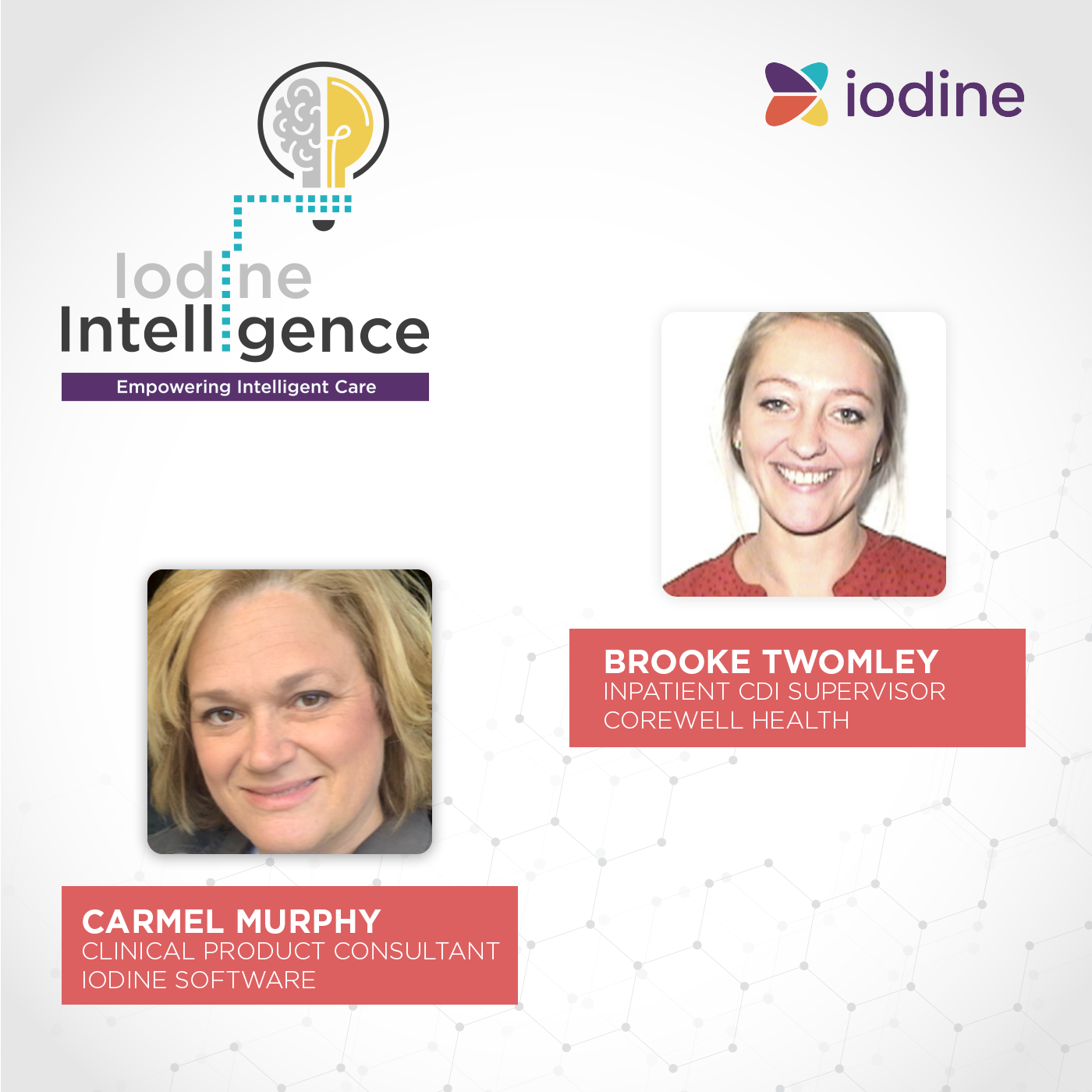
Unlocking Excellence and Navigating Quality Metrics
Nov 8, 202300:08:18Tap to summarizeIn an era where consumer awareness and freedom of choice regarding healthcare is on the rise, having the quality of care you deliver be reflected accurately across the variety of scoring and ranking systems is more important than ever. In this client featured presentation lead by Iodine’s Carmel Murphy, Clinical Product Consultant, we explore how accurate and complete documentation serves as the foundation for good quality metrics. Learn firsthand from our valued clients about their journey towards improving quality scores by prioritizing documentation integrity, and how technology has been instrumental in driving this shift.
Transcribe →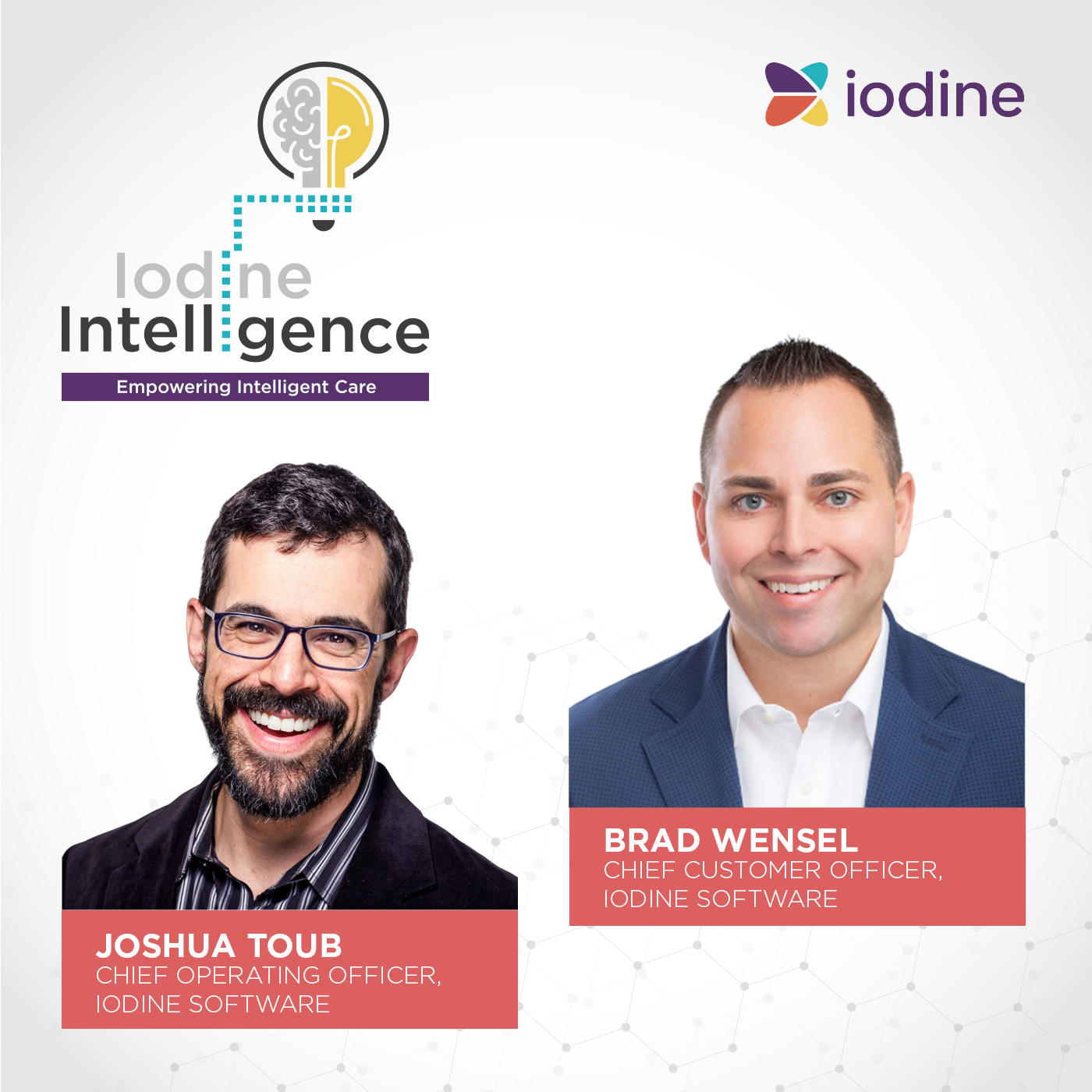
Impact Amplified: Exploring Success Stories from Iodine Cohort
Aug 21, 202300:34:10Tap to summarizeEvery year Iodine Software conducts a client wide cohort study measuring various key metrics in the clinical documentation integrity space and the impact that Iodine has had. In this month's episode we're joined by Iodine's Chief Customer Officer, Brad Wensel, and Chief Operating Officer, Joshua Toub, to review the most recent cohort study of 2022 data and explain the metrics, methodology and discuss the most recent findings.
Transcribe →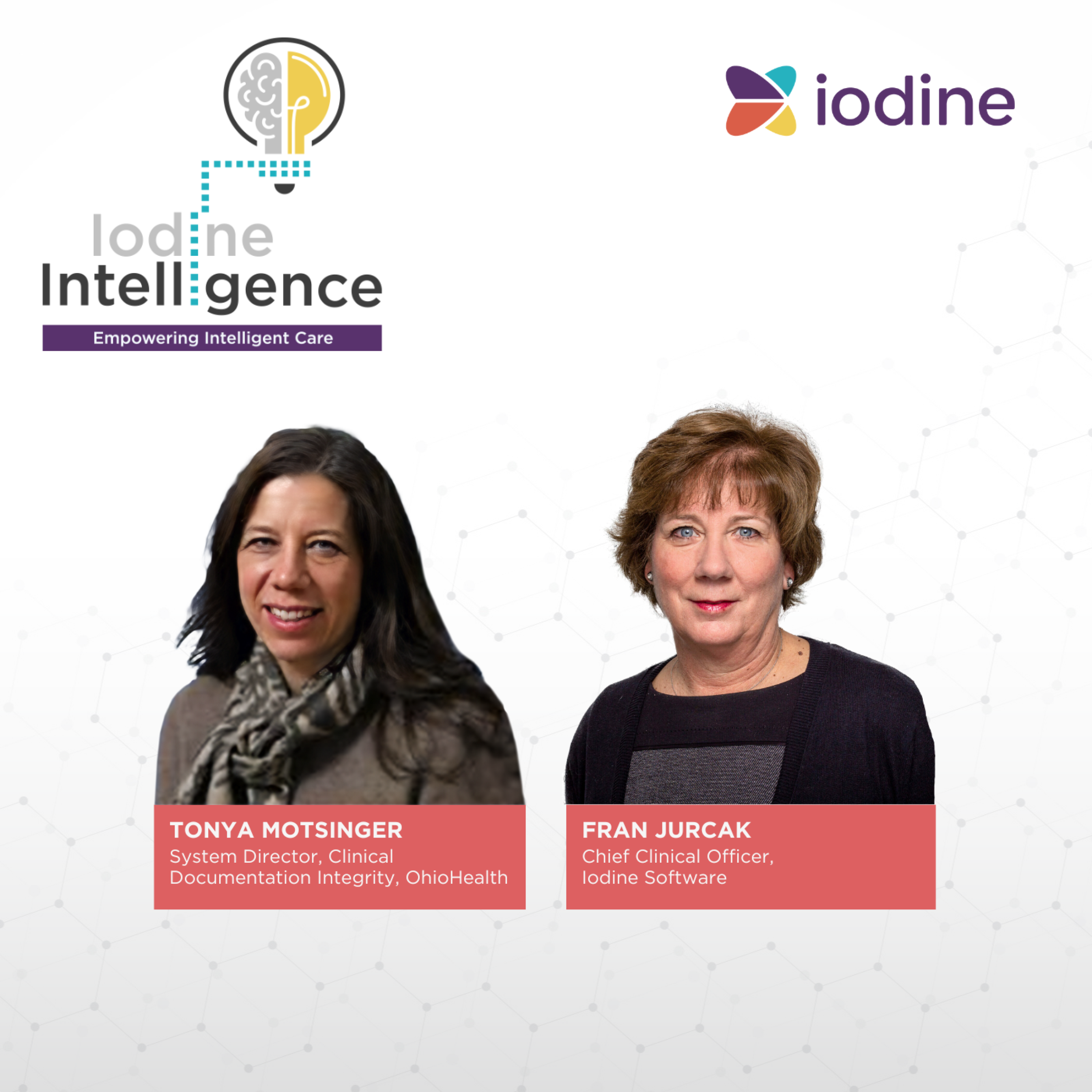
Triumphing with Tech - Empowering Staff and Maximizing Results
Jun 15, 202300:28:58Tap to summarizeClinical documentation integrity teams play a critical role in ensuring quality healthcare and impacting a hospital's quality ranking. In this podcast episode of Iodine Intelligence, Fran Jurcak, Iodine's Chief Clinical Officer, and Tanya Motsinger, the System Director of Clinical Documentation Integrity at OhioHealth, discuss the importance of CDI programs and how AI-powered prioritization tools can help improve efficiency and impact quality metrics. OhioHealth is a nationally recognized non-profit health system composed of 14 hospitals and over 200 outpatient and physician offices based out of central Ohio. Motsinger explains that their CDI program is focused on capturing severity of illness and risk of mortality while securing what's not being set in the chart very explicitly to help coders capture accurate diagnoses. Motsinger shares that by implementing additional workflows while still maintaining high query and review rates, Ohio Health has been able to take on more work from a quality standpoint, with their team putting DRGs in a special calculator to understand variables and track specific quality metrics. Being able to report back on how many queries are impacting quality metrics directly has resulted in significant improvements in Ohio Health's CDI program. In conclusion, prioritizing queries over review rates and finding ways to efficiently get the right case to the right CDI specialist at the right time can lead to significant improvements in healthcare quality metrics while freeing up bandwidth for second level reviews and other roles. The implementation of AI-powered prioritization tools can help achieve these goals without compromising established success or increasing staff FTEs.
Transcribe →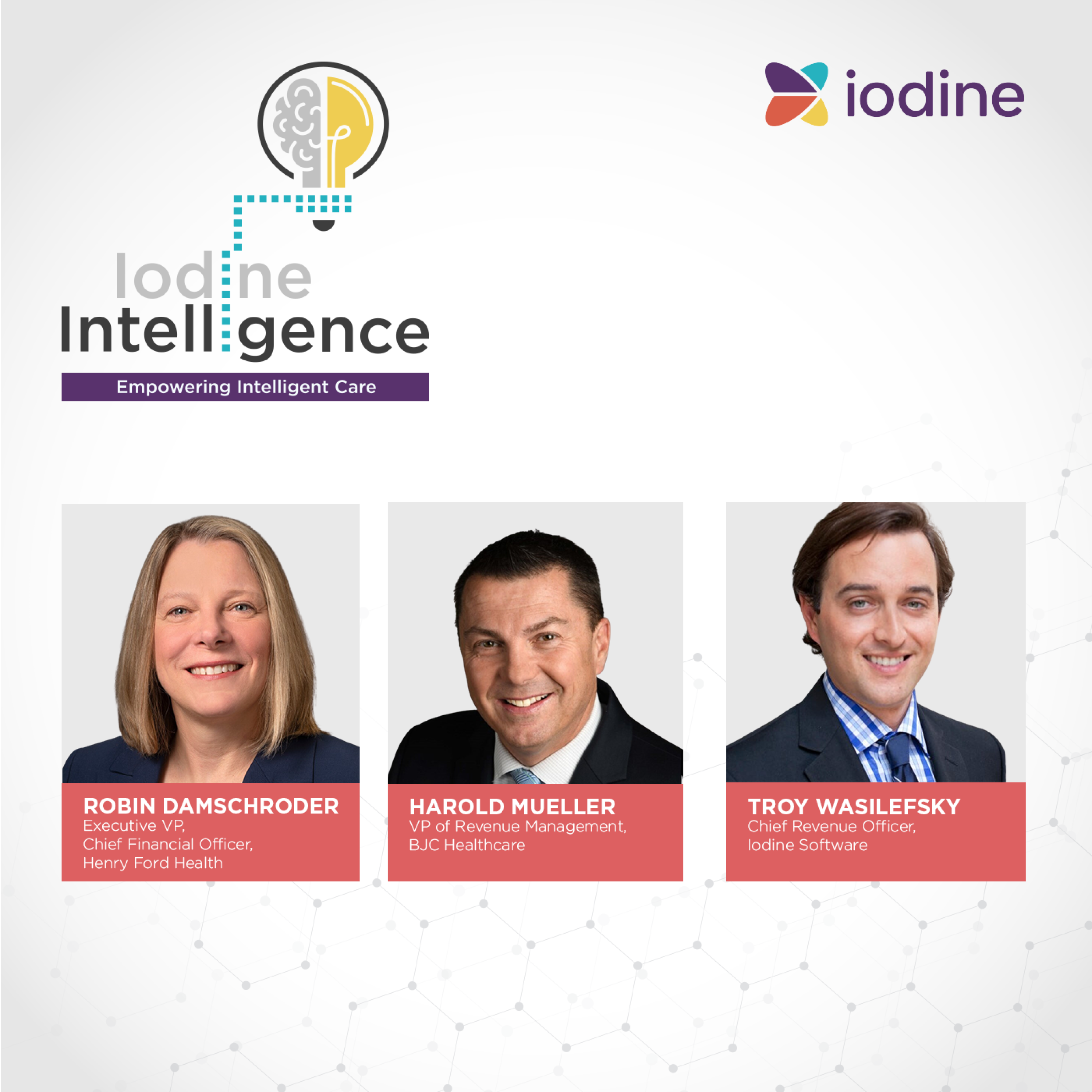
Opportunities and Obstacles: A CFO Conversation on Health System Financial Resiliency
May 24, 202301:00:22Tap to summarizeThe healthcare industry is facing significant challenges as it navigates economic uncertainties in 2021 and beyond. In a recent Iodine Intelligence podcast, Troy Wasilefsky of Iodine Software, Harold Mueller of BJC Healthcare, and Robin Damschroder of Henry Ford Health discussed strategies for building financial resilience and tackling the financial issues facing the industry.The pandemic has led to a decline in overall CMI due to both a decrease in medical CMI and surgery volumes that have not yet returned to pre-pandemic levels. Cost-cutting is one approach to stabilize health system economics, but experts have agreed that it cannot be solely relied upon to achieve financial performance targets. Therefore, it is essential for organizations to pursue other strategies such as generating new revenue streams, capturing revenue for existing work, and leveraging technology such as AI.Organizations can turn to management consultancies to help identify and stabilize their finances while also focusing on cost reduction efforts and growth strategies. Additionally, value-based care contracts incentivize better care coordination, higher-quality outcomes and cost reduction while improving documentation accuracy remains critical for reimbursement optimization and quality factors such as CMS payments. In conclusion, healthcare organizations face significant challenges as they navigate economic uncertainties require balancing efforts between cost reduction and creating new revenue streams or capturing revenue appropriately for existing work. While there is no one-size-fits-all solution, organizations can leverage their resources and implement strategies such as management consultancies, growth initiatives, and technology to improve their financial resilience and help them face the current economic crisis.
Transcribe →
The Spectrum of AI in Healthcare: Understanding the Levels of Intelligence in AI
Apr 13, 202300:26:41Tap to summarizeArtificial intelligence (AI) is not just for gamers or factory warehouse robots—it can, quite literally, save lives in the healthcare sector. AI in healthcare can be used to improve diagnostic detection speed for diseases, improve personalization of medical treatments, and automate drug discoveries. How should healthcare companies be approaching AI use, and what benefits and drawbacks can they expect to see when deploying AI? On today’s episode of Iodine Intelligence, Empowering Intelligent Care, host Lauren Hickey, Content Strategist at Iodine Healthcare, is joined by Priti Shah, Chief Product & Technology Officer at Iodine Software, to discuss applications for AI in healthcare and how healthcare companies can approach use cases for AI models. Hickey and Shah also discussed… Applications of AI in automation, improving efficiency of judgement, timeliness, and consistency of results A framework for guiding questions in approaching AI use Real-world examples of how a company might answer questions about their AI Shah knows AI in healthcare is not the end-all, be-all. “We have to understand that no model is perfect, and you have to choose one balance of false negatives and false positives you can live with.” She suggested, “One of the biggest things people should hone in on is how much data was this AI model trained on, and what is the quality and diversity of that data?” Priti Shah is Chief Product & Technology Officer at Iodine Software. She is an experienced General Management Executive with more than two decades of experience in revenue growth and market expansion. Before her current role, Shah was Chief Product Officer of Finvi, VP, Product & Solutions at Wolters Kluwer Health, and VP, Product Strategy & Corporate Development, amongst other positions. Shah attended Harvard Business School’s General Management Program and the Rochester Institute of Technology, where she earned an MBA in Marketing & Strategic Management.
Transcribe →
Beyond Buzzwords: Understanding the Real Potential of ChatGPT in CDI
Mar 8, 202300:21:02Tap to summarizeSince OpenAI debuted ChatGPT in November of 2022, there has been a ton of discussion on its potential, and the implications on everything from schoolwork to medicine, marketing to law school. Fran Jurack, Iodine's Chief Clinical Strategist discusses ChatGPT's potential in the clinical documentation space and it's limitations.
Transcribe →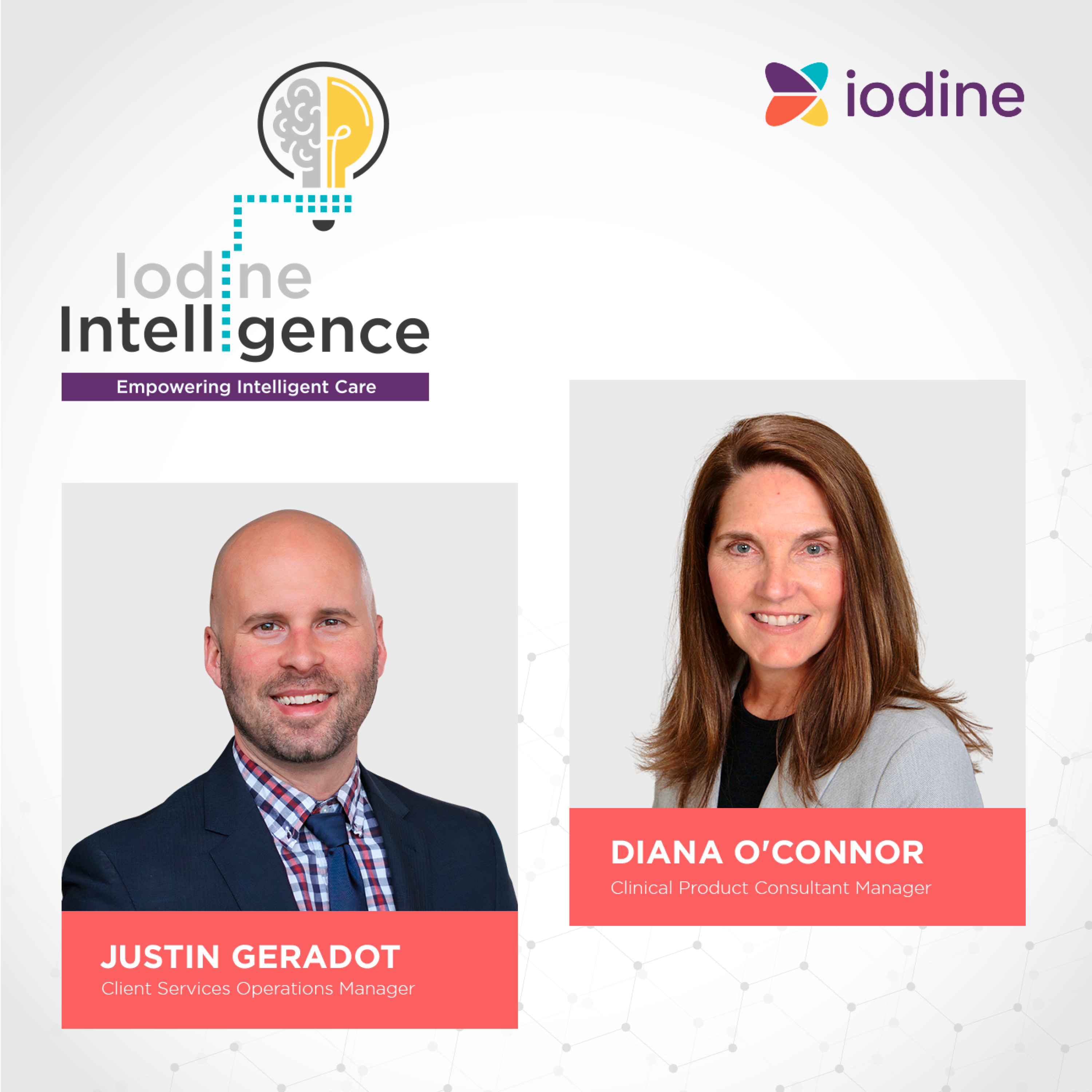
Unlocking the power of Concurrent
Jan 12, 202300:16:59Tap to summarizeArtificial intelligence (AI) and Natural Language Processing (NLP) are taking over the health industry and renovating healthcare technology. It has for some time now being a Lodestar into improving and delivering quality healthcare. A ton of information is being collected but isn’t being utilized simply because the existing technology doesn’t know what to do with the data. A recent report from RBC Capital Markets states 30% of the world's data is generated in the healthcare industry, and it is expected to surpass 36% in the next three years. Handling this sort of information is a challenge as most healthcare AI technology relies on simple technologies like rules and checklists.On this episode, Lauren Hickey, the content strategist at Iodine, chats with Diana O’Connor, the clinical product consultant manager at Iodine, and Justin Geradot, the client service operations manager at Iodine, about their new flagship technology, CONCURRENT. Hickey, Diana, and Justin chat about...1. What can prevent CDIs from fully adopting concurrent.2. How auto-assignment works3. Barriers and quiet periods. "CONCURRENT is our flagship software that utilizes artificial intelligence and machine learning to prioritize patients concurrently while in-house. It uses, at a high level, different amount of misalignment of information between clinical evidence that support a certain condition and the actual expectation documentation of those conditions and uses the difference to prioritize," said Justin."CDI is complex. There is a lot of different workflow strategies that people use. CONCURRENT is more than just a technical implementation, we are taking account of different philosophies and workflows," said Diana. Lauren then asked Justin about auto-assignment and quiet periods, and he went on to say:"Auto assignment is a way concurrent distributes cases to CDS’s for review. It is one of the oldest features for CONCURRENT specifically to address the problem that scope changes as a result of CONCURRENT. Before CONCURRENT, CDIs way to locate cases was through location or service line. When prioritization is added, balancing for caseloads gets more difficult. Auto assignment instead of using service line to distribute cases uses priority status, assigning cases with more priority first then working their way down.”“Quiet period is how much period a case must incubate before its considered for auto-assignment. This is a change for a lot of CDI departments. A lot of CDI teams want to see cases every two days at a minimum. With prioritization, we set a 24hr quiet period to get the necessary information. After a case has been reviewed, it goes into another quiet period for 12hrs to make sure it doesn’t immediately get reprioritized again,” Justin continued. Lauren then talks about query hesitancy and asks Diana about CDSs not querying as much even when Iodine AI says a query is needed. Diana’s reply:"One of the things we are looking for is a complete, intact medical record that tells the story of the patient and the sooner we get the documentation in, the better. And with denials coming up the way they are, you want continuity of them in the medical record. It’s a shift from getting querying away as a penalty into more as a prompt and querying sooner."At the end of the episode, Justin says Iodine and Concurrent are always changing, adding new functionalities, platforms, and configurations—Retrospect being an example.
Transcribe →
Should a CDI Specialist Query if There is No Impact?
Nov 2, 202200:16:28Tap to summarizeThe healthcare industry continues to become more and more tech savvy. Technologies like Machine Learning and Artificial Intelligence can help drive significant improvements in healthcare and with organizations like Leapfrog Group weighing in on hospital standards and ratings with a variety of scoring metrics, healthcare facilities continue to innovate. Perhaps one of the most important details, often overlooked in the face of shiny new tools, is the need for facilities to continue to improve upon their clinical documentation and improve patient outcome. But should specialists query if there is no direct impact?On this episode of Iodine Intelligence -Empowering Intelligent Care, host Lauren Hickey chats with Chief Clinical Strategist at Iodine, Fran Jurcak, about the importance of queries for improving patient outcomes and expectations. Hickey and Jurcak discuss... 1)Calculating impacts to queries 2)How to accurately represent every patient 3)Why it is important to identify risks and outcomes“I think the challenge is, as we figure out ways to better automate and create efficiency, it isn’t so much about the volume of queries or the actual number of queries but maybe more about the process by which they have to answer them, that maybe we could potentially address so that it is easier,” said Jurcak.Jurcak has been with Iodine for over six years, and has held numerous Director positions in the healthcare environment and was the Assistant Professor in the nursing program at Madonna University for more than 14 years. She holds her BSN in Nursing from the University of Michigan and her MSN in Nursing from Wayne State University. Jurcak also holds a post-master certificate from Madonna University in Health Education and the Certificate in Health Care Finance for Nurse Executives.
Transcribe →