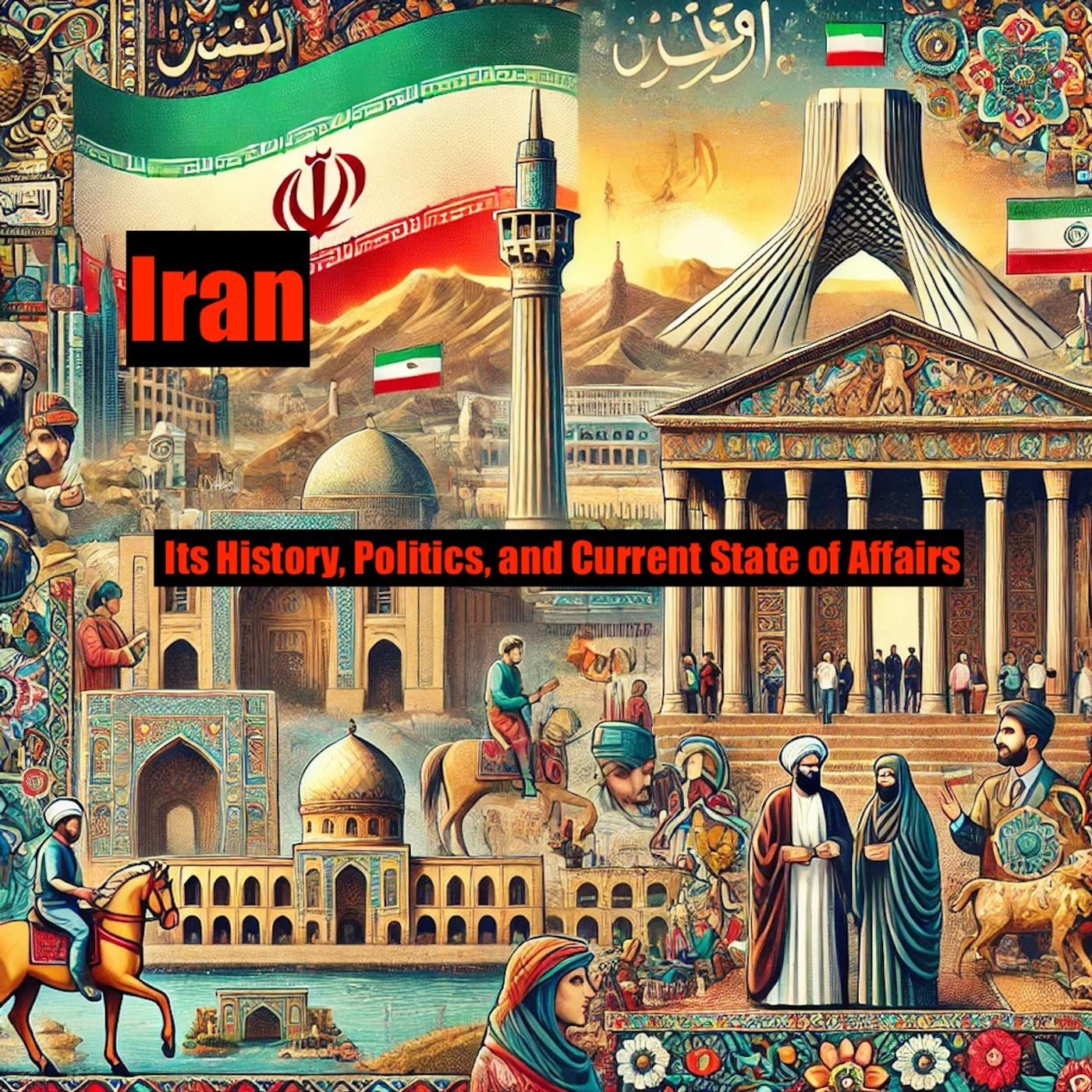
Iran- Its History, Politics, and Current State of Affairs
Jul 17, 2024·00:20:47·Tap to summarize
Iran, officially known as the Islamic Republic of Iran, is a country with a rich tapestry of history, culture, and geopolitical significance. Situated in Western Asia, Iran has been a major player on the global stage for centuries, influencing regional and international dynamics. This in-depth profile aims to provide a comprehensive overview of Iran's history, politics, and current state of affairs, offering insights into its complex and multifaceted nature. Historical Overview Ancient Persia Iran's history dates back to ancient Persia, one of the world's earliest civilizations. The Achaemenid Empire (550-330 BCE), founded by Cyrus the Great, was the first Persian Empire and one of the largest empires in history. The Achaemenids are renowned for their administrative innovations, cultural achievements, and the construction of monumental architecture, including the capital city of Persepolis. Cyrus the Great established a model of governance that emphasized tolerance and respect for the cultures and religions of the lands he conquered. This approach helped to maintain the stability and cohesion of the Achaemenid Empire, making it a beacon of civilization during its time. The Achaemenids also created an extensive network of roads and a postal system that facilitated communication and trade across the empire. Following the Achaemenids, the Parthian Empire (247 BCE-224 CE) and the Sassanian Empire (224-651 CE) continued the legacy of Persian dominance. The Parthians are noted for their skillful diplomacy and military prowess, which allowed them to maintain a balance of power with the Roman Empire. The Sassanians, in particular, were instrumental in shaping Persian culture, art, and Zoroastrianism, the pre-Islamic religion of Persia. The Sassanian Empire is often considered the pinnacle of ancient Persian civilization. It was a period marked by significant achievements in art, architecture, science, and literature. The Sassanians built magnificent palaces, introduced advanced irrigation techniques, and promoted the study of medicine, astronomy, and philosophy. Zoroastrianism flourished during this era, influencing the cultural and spiritual life of the empire. Islamic Conquest and the Rise of the Safavids The Arab-Muslim conquest of Persia in the 7th century CE marked a significant turning point in Iranian history. The spread of Islam led to the decline of Zoroastrianism and the incorporation of Persia into the Islamic caliphates. The fusion of Persian and Islamic cultures resulted in a flourishing of arts, sciences, and literature. Under the Abbasid Caliphate, Persia became a center of learning and culture, contributing to the Islamic Golden Age. Persian scholars, poets, and scientists made significant advancements in various fields, including mathematics, astronomy, medicine, and literature. The works of Persian poets such as Rumi, Hafez, and Ferdowsi continue to be celebrated for their literary and philosophical depth. The Safavid dynasty (1501-1736) established Shia Islam as the state religion, distinguishing Iran from its Sunni neighbors and shaping its unique religious identity. The Safavids are credited with revitalizing Persian culture and arts, as well as strengthening the central government. Shah Abbas the Great, one of the most prominent Safavid rulers, moved the capital to Isfahan, transforming it into a cultural and architectural marvel. The Safavid era witnessed the construction of stunning mosques, palaces, and bridges, many of which still stand today as testaments to the dynasty's grandeur. The Safavid rulers also promoted trade and diplomacy, establishing strong ties with European powers and fostering economic prosperity. The Qajar and Pahlavi Dynasties The Qajar dynasty (1794-1925) faced significant challenges, including internal strife and external pressures from European powers. Iran's strategic location and resources made it a target for British and Russian interests, leading to territorial losses and economic concessions. During the Qajar period, Iran's economy struggled under the weight of foreign debts and economic mismanagement. The Constitutional Revolution of 1905-1911 was a significant attempt to modernize the political system and reduce foreign influence. It led to the establishment of a parliament and a constitution, but the reforms were short-lived due to internal divisions and external interventions. Reza Shah Pahlavi (1925-1941) founded the Pahlavi dynasty, implementing modernizing reforms and centralizing power. He sought to reduce foreign influence, modernize the economy, and build a strong, centralized state. Reza Shah's policies included the expansion of infrastructure, such as railways and roads, and the promotion of secular education and legal reforms. His son, Mohammad Reza Shah Pahlavi (1941-1979), continued these efforts but faced increasing opposition due to authoritarianism, economic issues, and perceived Western influence. The Shah's White Revolution, a series of economic and social reforms, aimed to modernize the country but also exacerbated social inequalities and political discontent. The Islamic Revolution and the Iran-Iraq War The 1979 Islamic Revolution, led by Ayatollah Ruhollah Khomeini, overthrew the Pahlavi monarchy and established the Islamic Republic of Iran. The revolution marked the rise of political Islam and a shift in Iran's foreign and domestic policies. The new regime implemented a theocratic government based on Shia principles, drastically altering Iran's political landscape. The establishment of the Islamic Republic led to significant changes in Iranian society, including the implementation of Islamic laws, the suppression of political opposition, and the nationalization of key industries. The revolution also had a profound impact on Iran's foreign relations, leading to the severing of ties with the United States and increased tensions with neighboring countries. In 1980, Iraq, under Saddam Hussein, invaded Iran, leading to an eight-year-long conflict known as the Iran-Iraq War. The war resulted in significant loss of life and economic devastation but ultimately strengthened the resolve of the Iranian government and its revolutionary ideals. The conflict solidified the Iranian leadership's focus on self-reliance and resistance to foreign intervention. Political System and Governance The Theocratic Framework Iran's political system is a unique blend of theocratic and democratic elements. The Supreme Leader, currently Ayatollah Ali Khamenei, holds the highest authority, overseeing the executive, legislative, and judicial branches. The Supreme Leader is the commander-in-chief of the armed forces and has significant influence over foreign policy and national security. The Supreme Leader's role extends to appointing key officials, including the heads of the judiciary, the commanders of the military and security forces, and the members of the Guardian Council. This concentration of power ensures that the Supreme Leader's vision and policies are implemented throughout the government. Key Institutions and Roles The President: Elected by popular vote for a four-year term, the President is responsible for implementing domestic and foreign policies, managing the economy, and overseeing government ministries. The President has substantial executive powers but operates under the guidance of the Supreme Leader. The Majlis (Parliament): Iran's unicameral legislature, the Islamic Consultative Assembly, or Majlis, consists of 290 members elected for four-year terms. The Majlis drafts legislation, approves the budget, and ratifies international treaties. However, all laws must align with Islamic principles and are subject to approval by the Guardian Council. The Guardian Council: Composed of twelve members (six clerics appointed by the Supreme Leader and six jurists nominated by the judiciary and approved by the Majlis), the Guardian Council reviews legislation passed by the Majlis and ensures its compatibility with Islamic law. The council also vets candidates for presidential, parliamentary, and Assembly of Experts elections. The Assembly of Experts: An 88-member body of clerics elected for eight-year terms, the Assembly of Experts is responsible for selecting, supervising, and, if necessary, dismissing the Supreme Leader. Despite its theoretically significant role, the Assembly's power is limited in practice. The Expediency Discernment Council: Established to resolve conflicts between the Majlis and the Guardian Council, the Expediency Council advises the Supreme Leader on strategic issues and policymaking. The council includes senior government officials, military leaders, and clerics, providing a platform for balancing different interests and perspectives. Political Factions and Dynamics Iranian politics is characterized by a complex interplay of factions and ideologies. The two main factions are: Principlists (Conservatives): This faction advocates for the preservation of revolutionary values, strict adherence to Islamic principles, and resistance to Western influence. They emphasize the importance of maintaining the authority of the Supreme Leader and theocratic governance. Reformists (Moderates): Reformists seek to implement political, social, and economic reforms within the framework of the Islamic Republic. They advocate for greater political freedoms, improved relations with the West, and the rule of law. The Reformist faction often faces challenges in implementing its agenda due to opposition from conservative elements within the government and the judiciary. The balance of power between these factions shifts over time, influenced by elections, public sentiment, and external pressures. The interplay between these factions creates a dynamic political environment, with ongoing debates over the direction of the country and the role of religion in governance. Foreign Policy and Regional Influence Strategic Objectives Iran's foreign policy is driven by a co...