
Podcast
Israel from the Inside with Daniel Gordis
Hosted by Daniel Gordis · EN
Israel from the Inside is for people who want to understand Israel with nuance, who believe that Israel is neither hopelessly flawed and illegitimate, nor beyond critique. If thoughtful analysis of Israel and its people interests you, welcome!
danielgordis.substack.com
danielgordis.substack.com
103episodes
Episodes
Newest firstAll episodes
For many Israelis, this is going to be a one-issue election
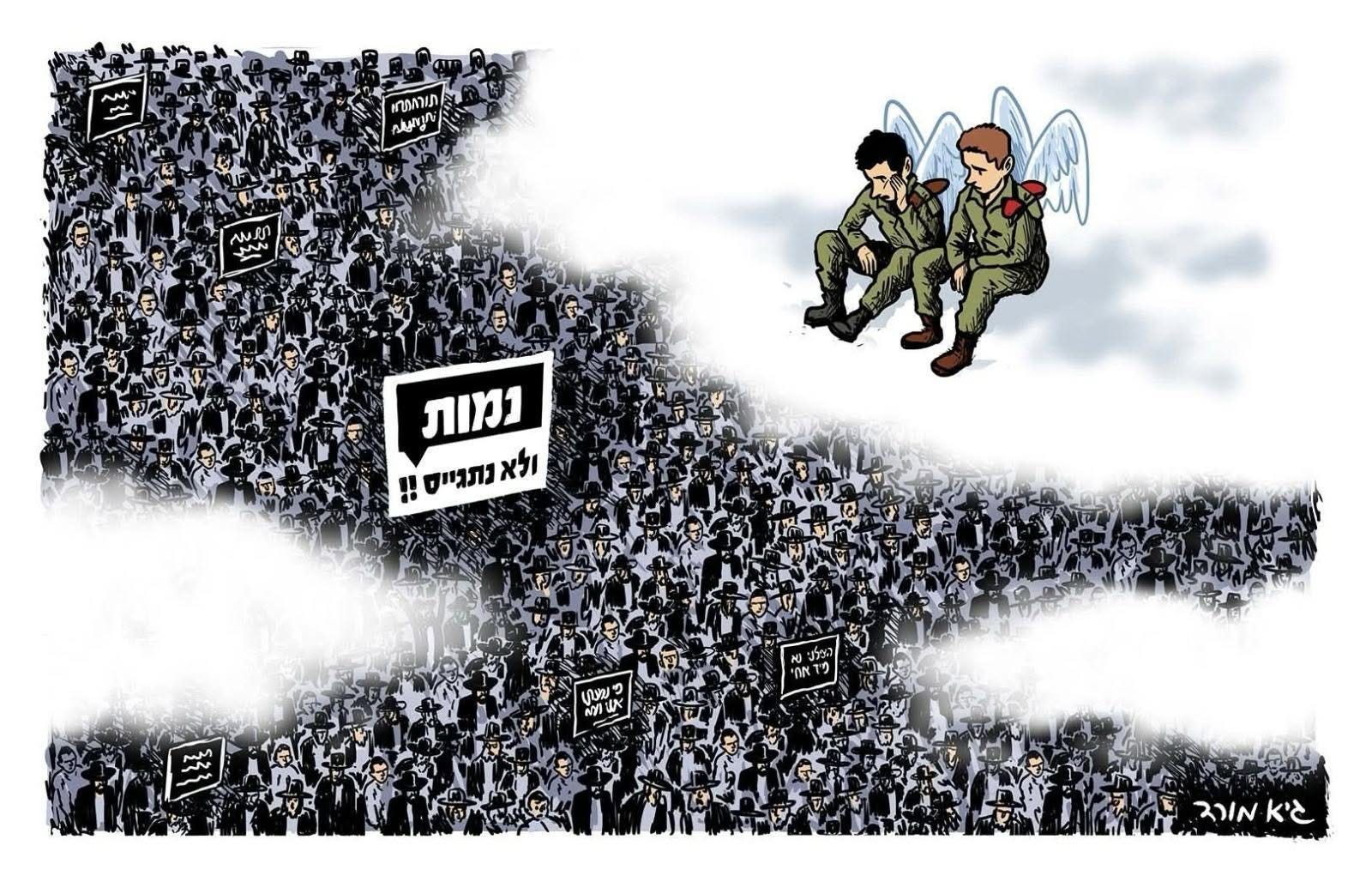
Jun 1400:00:11Tap to summarizeMany Israelis are holding their breath today, waiting to see whether a deal gets signed with Iran. No one knows with certainty whether it will happen, and no one who’s talking knows what’s in it. But Israelis have a bad feeling. Screenshots from earlier today: This isn’t good for Bibi’s re-election prospects, and very serious journalists like Hagai Segal raised the possibility this weekend that Netanyahu might not even run. There are many reasons for that, and certain likely preconditions, but who knows? What we do know is that for many Israelis, this is a one-issue election. Israel’s foreign policy, of course, isn’t going to change at all under a new government. Whatever Israel needs to do (after all, we have not defeated Hamas, Hezbollah, Iran or the Houthis) might be done with a bit more finesse, a bit less of a finger in the eye of Europe and American Jews, but policies won’t change. Few Israelis want them to. So what’s the issue? Of course, it’s the Haredim. To start off this week with a very, very brief post, two items from Israeli social media. First, above in the video, it’s pretty darn clear. Note that in the video showing on the iPad, the Haredi guy yells Allahu Akbar, which is Arabic for “God is Great.” And, of course, was what the Nukhba terrorists screamed as they slaughtered, raped, kidnapped and pillaged on October 7. And then the Haredi guy says, as they all do, “We will die rather than get drafted.” That’s THE slogan. “We will die rather than get drafted” is the core of this cartoon by Guy Morad, one of Israel’s most watched cartoonists (I got it from someone, but can’t find the original location online): The sign at the Haredi protest says the same thing: נמות ולא נתגייס. Namut ve-lo nitgayes. “We’ll die before we get drafted.” The two dead soldiers, now angels, looking down, make the entire point. What are the chances we get to elections without violence from or at the Haredim? I’m betting it’s pretty low.. That might just be what it’s going to take. We shall see. If you would like to share our conversation about what Israelis are feeling and expressing at this unprecedented moment in our history, we invite you to subscribe today.Many Israelis could not travel for months this past year, because the skies were closed, or if they were open because it was not clear that they would stay open so it felt risky to leave, or because we didn’t wish to leave our children and grandchildren when war could break out again.So with things quiet(er) for the moment, many Israelis are traveling more than usual this summer.We, too, will be away the weeks of June 14 and June 21. Podcasts will continue on schedule, as always, for our paid subscribers. But other posts will come at a slower rate during that period. This is a public episode. If you'd like to discuss this with other subscribers or get access to bonus episodes, visit danielgordis.substack.com/subscribe
Transcribe →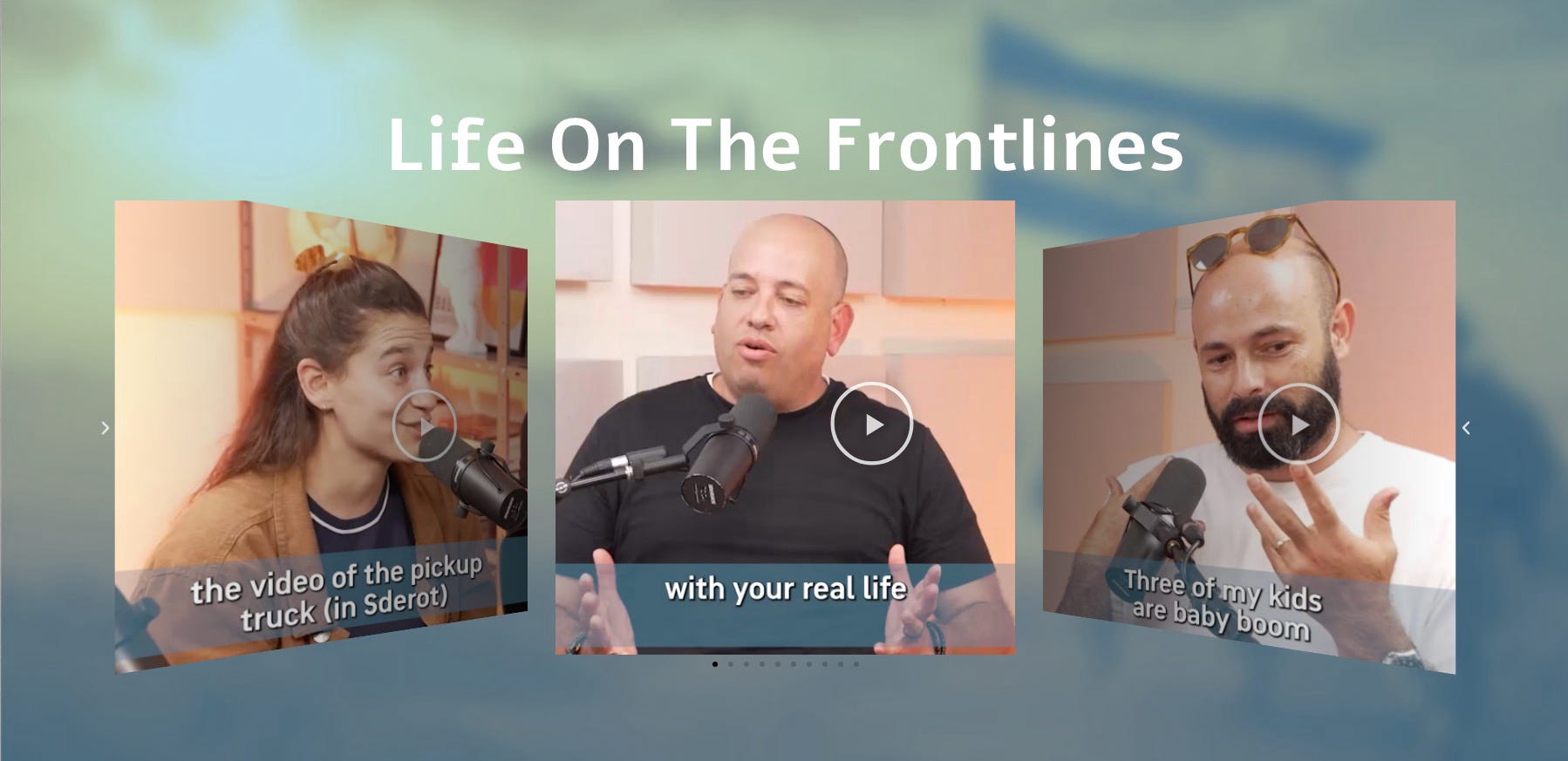
"Life on the Frontlines": Israelis who fought in this war tell their story—for themselves, their families, and for our collective future.
Jun 1000:16:43Tap to summarizeThis is a free preview of a paid episode. To hear more, visit danielgordis.substack.comOn October 7th, as the worst attacks on the country were still underway, 300,000 reservists answered the call and reported for duty.They asked no questions. They fought for their country. They lost friends. They made impossible choices. And then they came home — to work, to family, to school pickup. And then again, back to the front. Back and forth, neither here nor there.Life on the Frontlines has launched the first-of-its-kind global digital archive to record, preserve, and share the unfiltered testimonies of Israeli reservists, building bridges of understanding, healing, and remembrance across generations, communities, and humanity. Using long-form podcast-setting conversations with professional interviewers, the organization aims to to create the largest oral history archive of Israeli reservists at battle.Inspired by groundbreaking archives like the Shoah Foundation, 9/11 Memorials and others, “Life on the Frontlines” is recording these stories while they’re fresh — with honesty, emotion, and clarity. Today, we meet two of the people at the helm of this project, and emerge with a much more robust sense of the complexities of what soldiers faced when they were called up, when they were at war, and no less — when they tried to come home. If you would like to share our conversation about what Israelis are feeling and expressing at this unprecedented moment in our history, we invite you to subscribe today.If, after listening to the conversation, you are interested in learning more and hearing some of these stories (some of which are in English), here are some links that might be useful. * An article on the project in Israel Hayom: * “Life on the Frontlines” website* Short clips available on: Instagram* Full episodes: Spotify* Pilot: Netanel, Tzvi, Hila, and Ariel* Choice episodes: Lior, Yehuda and Itamar* Barak and Shai (Married couple)* Shaked, Shai and Liori - Tazpitaniot, Dedicated to Capt. Shir Eilat, ZL* Full episodes in English (Shaul/Barak in English, David, Ari, Franky, Josh in English)* PEF Link for donations to the project Yonit Golub Serkin is an Investor and Chief Business Officer at embARC Ventures investing in early-stage HealthTech companies. She has served at the nexus of tech and the public sector leading Israel’s largest tech accelerator, and founding two Venture Capital vehicles. As a frequent speaker and advocate, she has built initiatives bridging Israel and diaspora Jewry that have been featured at AIPAC, UJA, CJP, Brandeis University and others.Before immigrating to Israel in 2010, Yonit served as Deputy Chief of Staff for Economic Development in the Office of Mayor Michael Bloomberg and as spokeswoman for the NYC Economic Development Corporation. Yonit holds an MA in International Studies and Economics from Johns Hopkins School of Advanced International Studies and a BA from Johns Hopkins University. Named one of Israel’s “40 Under 40” by The Marker Magazine in 2014.Netanel Ben Shushan is a veteran Journalist, Program Editor and Content Director for leading Israeli television and radio networks. He was among the founders of Kan 11 and Channel 14 and was showrunner for some of the networks most watched shows. Today, Netanel serves as a content director and strategic advisor to non-profit organizations, government ministries and companies.Netanel began his military service as a paratrooper in 2005, and has served in the unit’s reserves since 2008. A native of Sderot, he has served nearly 500 days in reserves since the launch of the October 7th War, in Gaza, Lebanon and Syria. Netanel earned his MA in Public Policy from the Hebrew University of Jerusalem and a BA in Communications at Ariel University.The link at the top of this posting will take free subscribers to an excerpted portion of today’s conversation.For paid subscribers, the link at the top will take you to the full conversation; below, paid subscribers will also find a transcript for those who prefer to read, as always.
Transcribe →
Did the early DNA of American Judaism give rise to today's American Jewish anti-Zionism?
Jun 800:18:12Tap to summarizeThis is a free preview of a paid episode. To hear more, visit danielgordis.substack.comToday we continue in our series of explorations of the intellectual, religious and historical roots of American Jewish anti-Zionism, which is significant, I believe, for what it tells us about American Jewish life’s DNA writ large. As promised in the first, here a few links to the sources we mention: * EPISODE #1 in this series, “The Kaffiyeh on the Bimah…
Transcribe →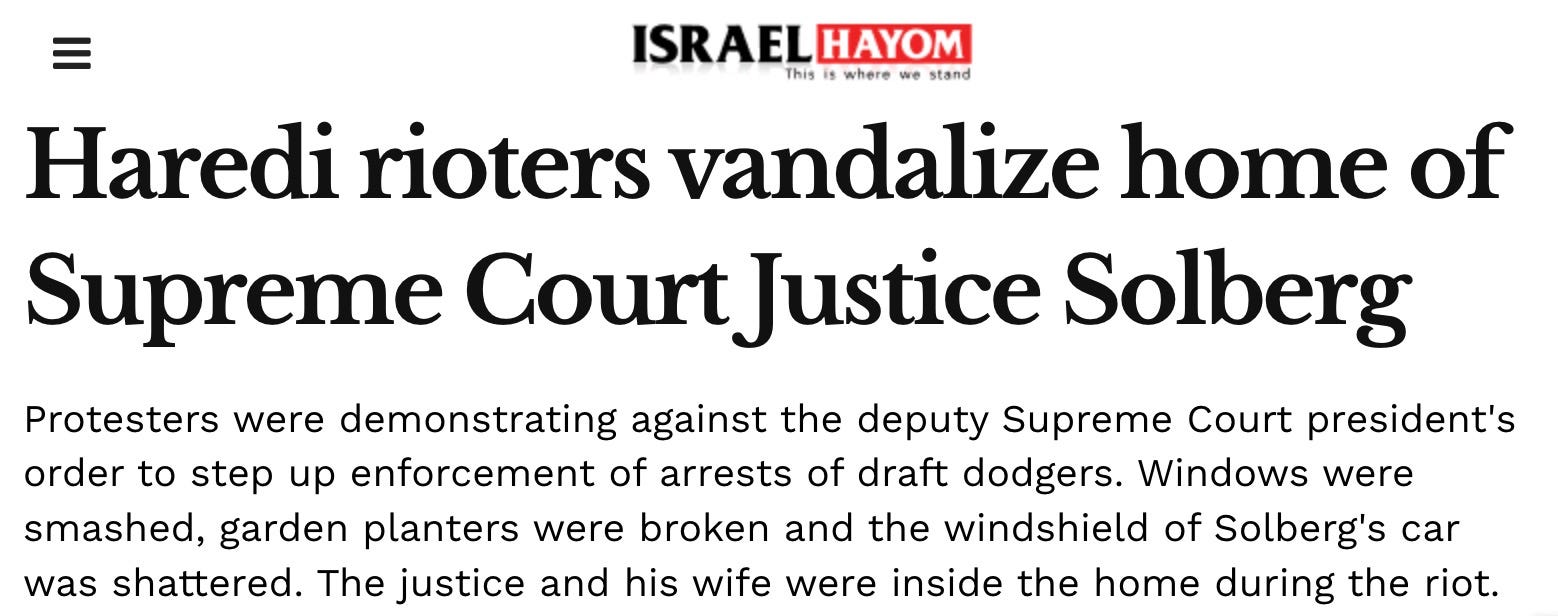
"We're going to have to start shooting them," people now say. And they may well be right.
Jun 500:00:46Tap to summarizeI was sitting down this morning to prepare this post, when I came across a post on X from Nadav Eyal, one of Israel’s most highly regarded and thoughtful journalists. “Break it,” he called the post. He’s right. His post is below. With elections a few months away, people are now beginning to speak about whom they’ll vote for. More and more, I hear people say there’s just one issue. Not foreign policy. Not the war. Not Bibi’s alleged corruption. Not even Smotrich or Ben Gvir, though they are, of course, utterly reprehensible. An Orthodox rabbi visiting Jerusalem this week told me that when Ben Gvir was in the Five Towns this past weekend, he spoke at five Orthodox synagogues and got standing ovations at all of them. Fortunately, I’d already finished my breakfast. No, the issue these people are planning to vote on is the Haredim. I’ve now heard countless people say to me, “I’ll vote for anyone, anyone at all, who’ll break this. This has to stop.” Indeed, it does. People are speaking about more than voting, actually. They’re speaking of shooting. I heard it said on more than a few occasions, even this week alone. Watch the video above, and see the terror — and the determination — in the eyes of the wife of Supreme Court Justice Solberg, after her home was attacked by Haredim who did not like the Supreme Court’s doubling down on arresting draft dodgers. She, too, is right. What, Kristallnacht in Israel? What kind of a self-respecting country puts up with this? There’s a code to what she’s saying, even in the midst of her fear and her rage (she didn’t prepare these remarks). “I have no other country” and “even if the land is burning” are all references to a song that every Israeli knows. It’s part of the canon — religious (like her) and secular alike, everyone knows it. Everyone.And yes, the land is aflame. Which is why some people — more and more people, in fact — are saying, “Shoot them. Just shoot them.” Not to kill, at least at the start. And not many. But shoot them. “They’ll get that we mean business.” This is simply out of control — and what Netanyahu is doing is trying to dance between the raindrops, stopping the Haredim from getting too out of control so he won’t lose votes from his Likud base, which increasingly detests the Haredim, while not coming down too hard on the Haredim so he doesn’t lose the ultra-Orthodox votes. It’s all about the election, for Bibi. It’s not about the country. For many others, it is all about the country. Which is why it’s also about the election. Will this be his undoing? In what kind of a country can Haredim attack a senior officer of the Israeli police, who happens to be a bereaved mother who lost her son in the Gaza war, and get away with it? In what kind of country are the protesters, who are clearly endangering her life, not shot on the spot? In this kind of country.If you would like to share our conversation about what Israelis are feeling and expressing at this unprecedented moment in our history, we invite you to subscribe today.Which is why Nadav Eyal posted what he did, shown here with a Google-generated translation: Jabotinsky was referring to breaking the Histadrut, the enormous and powerful workers’ union, by crossing picket lines. But that was a century ago. The danger isn’t the Histadrut anymore. Even then, by the way, they were at least Zionists. The danger is those who oppose the state, not from outside, but from within. I had to go to Tel Aviv on Tuesday for a meeting, so on Monday evening I went to the train website to decide which train to take. The website had a warning plastered over the home page: Because of Haredi protests, which had spread onto the tracks, trains were not running through Tel Aviv.To see if there were more protests planned for the next day, or if I’d perhaps be able to make it, I turned on the news. A reporter was interviewing a Haredi school principal who had brought his students to the protests. He asked the principal if that wasn’t a bit over the top, stopping school so students could break the law? “It’s a war,” the principal said. “It’s a war.” He, too, is right. It’s a war. We’ve shown over the past few years that we know very well how to fight back. It’s time. It’s been time for a very long time. In the end, the Haredim took a day off from tormenting this country, and I was able to go to Tel Aviv. A few moments along the way struck me as “Israel in a nutshell.” The Jerusalem train station (like some other train and bus stations throughout the country) has the occasional grand piano where passersby can stop to play. Some of the people playing are truly excellent.This was “a moment.” An Air Force soldier, in his Madei Aleph (dress uniform), playing the piano, which has been plastered with stickers of those who were killed on October 7 or the wars that have followed … In Tel Aviv, just outside the HaShalom station, there were two tables set up on the sidewalk. One was this guy, with a sign of the Rebbe that also says משיח, “The Messiah” hanging in the front, with numerous pairs of tefillin for those walking by who might want to put them on. Just a few meters from him (and watching him), a police officer at a police recruitment table. No picture of the Rebbe at this one. The sign behind her says, “Tel Avi District — Where Professionalism meets Service.” The smaller print speaks about recruiting the next young generation of police officers. There were, as you can see, no takers. The police force here is a total mess, and is having a bear of a time recruiting new officers. Under Ben Gvir, police resignations have become an issue. I couldn’t help but notice that she didn’t even have a laptop with her. I get that it can all be done on her phone, but still. Nothing? Nothing to hand out? Nothing to type into other than a phone? Professionalism … When I got out of the station, they were both sitting alone. Within a minute, though, he was swarmed with young kids who wanted to put on tefillin. The group actually grew even larger a minute later, but I’d already started walking to my meeting and didn’t stop again to take another shot. The policewoman, at least while I was there, didn’t get even a single person to go to her table. Between being a police officer and putting on tefillin, at least at that moment and at that spot, there was no competition. Which is precisely what the Haredim are banking on. This is a public episode. If you'd like to discuss this with other subscribers or get access to bonus episodes, visit danielgordis.substack.com/subscribe
Transcribe →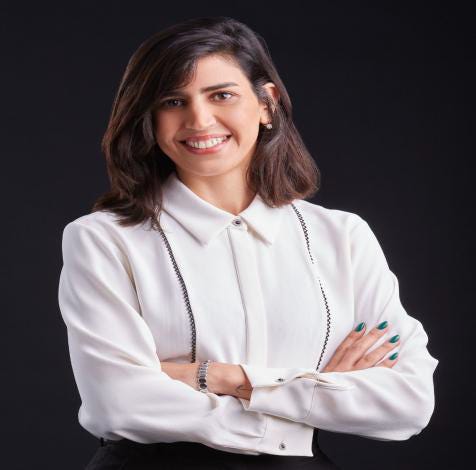
An Israeli Arab gets murdered almost every day in the Jewish State. Why?
Jun 300:12:50Tap to summarizeThis is a free preview of a paid episode. To hear more, visit danielgordis.substack.comHere are some basic numbers. The picture is not pretty. In fact, it’s horrifying. * As of early May 2026, Israel’s annual homicide toll stood at 111, with 96 of those victims being Arab citizens — roughly 86% of all murder victims, in a community that constitutes about 21% of the population. Haaretz* The NGO Abraham Initiatives noted that 2026 is the fastest pace at which the Arab community has reached 100 murder victims in over five years. The Jerusalem Post* The Arab community’s murder rate in 2025 was approximately 11 per 100,000 — a figure the Finance Ministry compared to countries like Sudan or Iraq. Haaretz* For context on the Jewish rate: in 2023, the homicide rate among Jews and other non-Arab Israelis was 0.85 per 100,000, meaning Arab Israelis’ violent death rate was more than 13 times higher than that of Jews. The gap has only widened since. In 2024, there were 220 homicides in the Arab population compared to 58 among Jews, whereas until 2015, the ratio was roughly 4:1. Taub Center* Israel Police have solved just 15% of homicides in Arab communities versus 65% among Jewish Israelis, according to Knesset data.What is happening here? How can Jewish Israel be a country in which there is, essentially, almost no murder at all, while in the Arab community, theoretically protected by the same police and same court system, the plague of killing is entirely out of control? What is the cause of all this? What are the police doing and not doing? Are there those in the government who are actually happy to see the murder rate rise? Why would that be? Who is killing whom and why? Is there anything that can be done? We hear today from an Israeli Arab woman, a lawyer and activist, Rawyah Handaqlu. What she has to say isn’t easy to hear—but we need to. If you would like to share our conversation about what Israelis are feeling and expressing at this unprecedented moment in our history, we invite you to subscribe today.Rawyah Handaqlu is a lawyer and social entrepreneur, and the Director of Eilaf –The Center for Advancing Security in Arab Society. She led the Emergency Headquarters for Combating Crime and Violence in Arab Society, operating under the National Committee of Heads of Arab Local Authorities. Rawyah brings extensive experience working with local government, civil society, and multi-sectoral frameworks. She holds a Master’s degree in Public Administration and Public Policy for Local Government from the University of Haifa. She writes policy papers and articles on social and public policy issues, lectures widely, and is a social activist working to advance equal opportunities and a shared society. She is a recipient of the Peres Center for Peace “Knight” Award, was selected to TheMarker’s“40 Under 40 –Most Promising Young Leaders” list, and received the Rising Star for Human Rights Award from the New Israel Fund UK.The link at the top of this posting will take free subscribers to an excerpted portion of today’s conversation.For paid subscribers, the link at the top will take you to the full conversation; below, paid subscribers will also find a transcript for those who prefer to read, as always.
Transcribe →
The kaffiyeh on the Bimah's table
Jun 200:10:17Tap to summarizeThis is a free preview of a paid episode. To hear more, visit danielgordis.substack.comAs we’ve noted for quite some time now, we’re going to look at American Jewish anti-Zionism over the course of several episodes, not necessarily because it is going to be a long-term feature of American Jewish life — I explain towards the end of today’s video why I believe that will not be the case — but because of what it has to teach us about the DNA …
Transcribe →
How the IDF completely failed to prepare for the drones Israel now faces, and why the "front" could soon be all of us
Jun 100:02:20Tap to summarizeThis is a free preview of a paid episode. To hear more, visit danielgordis.substack.comAs we noted yesterday, the issue of Hezbollah’s drones has become the newest headline in a war that has had more than its share of horrors. I asked Yaakov Katz, our “go to expert” on armaments, among many other things, to explain to us the following: * What are these drones, what can they do, and where do they come from?* How is it possible that Israel is so vulnerable to this new weapon and is so entirely unprepared?* What can the army do—and what is the army actually doing—to protect soldiers in the north, who are being killed by these drones at an alarming rate?* There are rumors that Hamas in Gaza and terrorists in Judea and Samariah (the West Bank) also have these drones. If that’s the case—and it is—how vulnerable are those of us who live in Jerusalem and Tel Aviv? The answer is not comforting. * What about Ukraine, which is a laboratory for drone warfare? What have they learned how to do and how is it that we’ve learned nothing from them? Or have we? Iran’s nuclear arsenal is obviously a long term threat that Israel cannot ignore, but Hezbollah’s drones, and presumably Hamas’ drones and those on the West Bank, are an immediate threat. There’s no one better to explain to us how we got here, how bad or not bad the situation is, plus what we might be able to do, than Yaakov Katz. The link at the top of this posting will take free subscribers to an excerpted portion of today’s conversation.For paid subscribers, the link at the top will take you to the full conversation; below, paid subscribers will also find a transcript for those who prefer to read, as always.If you would like to share our conversation about what Israelis are feeling and expressing at this unprecedented moment in our history, we invite you to subscribe today.Yaakov Katz is an Israeli-American author and journalist and a senior fellow at the Jewish People Policy Institute in Jerusalem. Between 2016 and 2023, Yaakov was editor-in-chief of The Jerusalem Post where he continues to write a popular weekly column. Yaakov also writes a regular column for Newsweek and the Jewish Chronicle, is the host of the JPPI weekly podcast and appears regularly on CNN and BBC as an analyst on Israel affairs.Yaakov is the author of four books: “Shadow Strike – Inside Israel’s Secret Mission to Eliminate Syrian Nuclear Power”, “Weapon Wizards - How Israel Became a High-Tech Military Superpower”, “Israel vs. Iran: The Shadow War” and “While Israel Slept- How Hamas Surprised the Most Powerful Military in the Middle East”.Prior to taking up the role of editor-in-chief, Yaakov served for two years as a senior policy adviser to Naftali Bennett during his tenure as Israel’s Minister of Economy and Minister of Diaspora Affairs.In 2013, Yaakov was one of 12 international fellows to spend a year at the Nieman Foundation for Journalism at Harvard University.Originally from Chicago, Yaakov has a law degree from Bar Ilan University. He lives in Jerusalem with his wife Chaya and their four children.
Transcribe →
They call themselves “Ansar Allah” — Defenders of God. Who are today's Houthis, and what should we expect?
May 2700:07:21Tap to summarizeThis is a free preview of a paid episode. To hear more, visit danielgordis.substack.comIn our previous conversation with Dr. Sarah Feuer last week, Yemen 101: Who are the Houthis, where did they come from, and what should we expect?, we looked at the history of Yemen, the religious and cultural background — as well as the conflicts — from which the Houthis emerged, and sought to understand their relationship to the rest of the region. Today, we take on the current conflict, why the Houthis participate in some wars and not others, and perhaps most importantly, what may still lie down the road when it comes to these “Defenders of God” and their plans vis-à-vis the Jewish state. If you would like to share our conversation about what Israelis are feeling and expressing at this unprecedented moment in our history, we invite you to subscribe today.Dr. Sarah J. Feuer was the Rosenbloom Family Fellow in the Washington Institute’s Geduld Program on Arab Politics.Her 2018 book, Regulating Islam: Religion and the State in Contemporary Morocco and Tunisia, was published by Cambridge University Press. An expert on politics and religion across North Africa, Feuer was previously a senior fellow and a Soref fellow at the Institute, where she authored numerous policy papers and monographs covering developments across the Maghreb and religion-state dynamics in the Arab world more generally.Her 2019 study, Course Correction: The Muslim World League, Saudi Arabia’s Export of Islam, and Implications for U.S. Policy, examined the shifting contours of Saudi religious export in recent years.The link at the top of this posting will take free subscribers to an excerpted portion of today’s conversation.For paid subscribers, the link at the top will take you to the full conversation; below, paid subscribers will also find a transcript for those who prefer to read, as always.
Transcribe →
How are young Israelis *really* doing? We hear from a wife, mother and professional about life in an exhausted state
May 2600:04:10Tap to summarizeThis is a free preview of a paid episode. To hear more, visit danielgordis.substack.com“Is it really over?” That’s what Israelis are asking themselves. They hope the answer is yes. They hope the answer is no. “No,” because Hamas is rebuilding, Iran is running Hezbollah, and Iran … well. Things simply cannot be left this way. But “yes,” because people here are just exhausted. We need to breathe. Everyone is emotionally spent. Reservists ha…
Transcribe →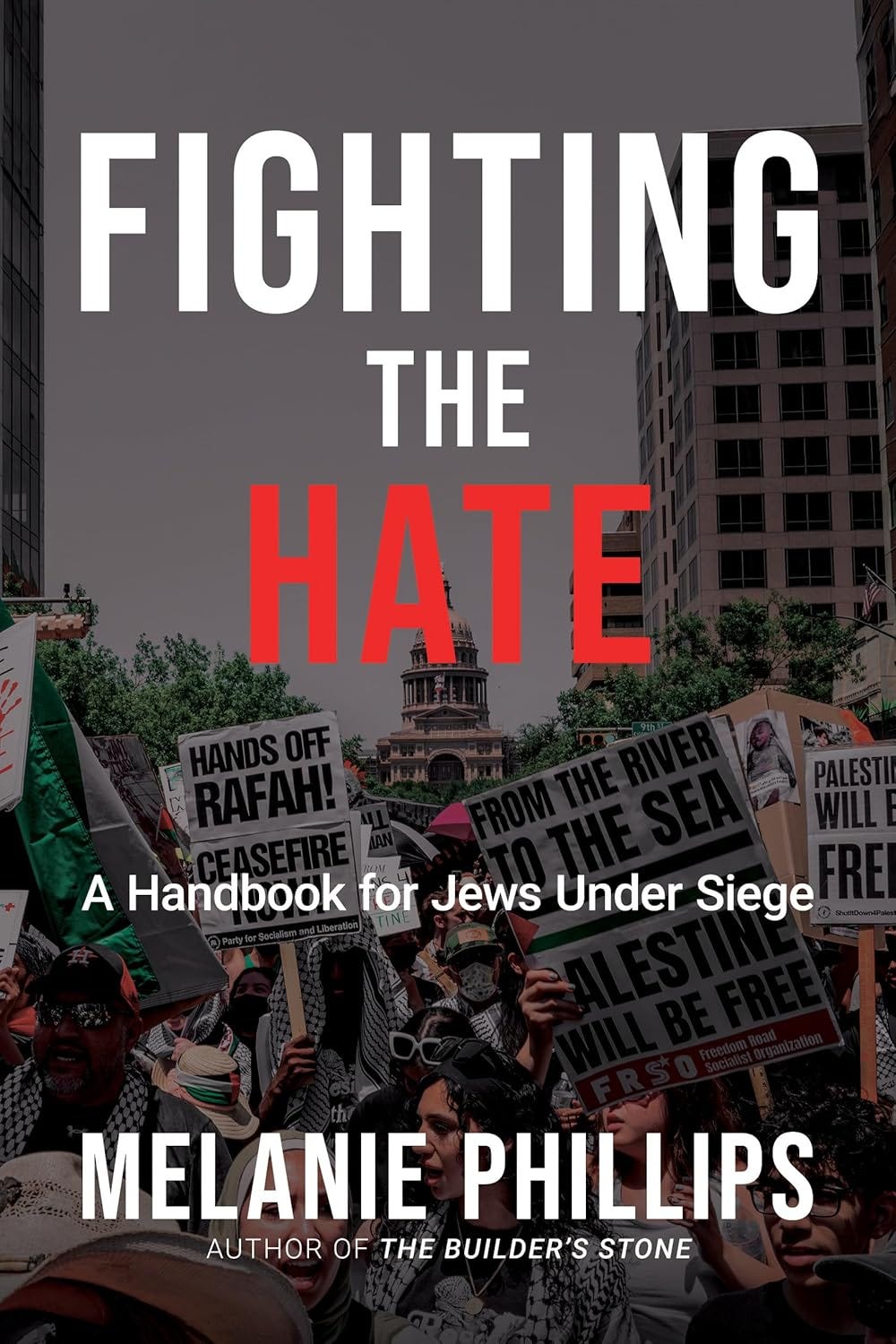
FIGHTING THE HATE: A HANDBOOK FOR JEWS UNDER SIEGE by Melanie Phillips
May 2500:13:43Tap to summarizeMelanie Phillips hardly needs an introduction to most readers of Israel from the Inside, though for those who would like a quick refresher on her extraordinary career, a brief bio can be found below. Melanie recently invited me to be in dialogue with her at the Menachem Begin Heritage Center in Jerusalem on the occasion of her launching her most recent book, and today, we’re delighted to share the recording of that conversation, which took place just last week. Fighting the Hate: A Handbook for Jews Under Siege, her new book, is in many ways a “bookend” to her previous book, ,The Builder’s Stone: How Jews and Christians built the West -- And Why Only They Can Save It, which was published by Wicked Son in January 2025, and which identifies the crisis of civilization revealed by the Hamas-led atrocities in Israel on October 7 2023 and suggests a rescue remedy for the west to prevent its collapse.As you will hear in our conversation, I struggle with Melanie’s confidence that anti-Semitism — a hate which she calls “deranged” in her book, an assessment with which I wholeheartedly agree — can be countered by the rational, cerebral responses that she suggests in her new book. But Melanie’s responses to my questions on that subject were illuminating, as were her comments on subjects as diverse as how best to deal with virulent demagogues such as Tucker Carlson and Candace Owens; how much rhetorical ground Israel’s defenders should concede to the enemies of the Jewish state; whether self-respecting Jews should even have the New York Times in the house; and how to deal with Jews who are enemies of the Jewish people — the last issue being one that we’ve devoted significant time to in our own posts. If you would like to share our conversation about what Israelis are feeling and expressing at this unprecedented moment in our history, we invite you to subscribe today.The full recording of our conversation can be watched below … Melanie Phillips is a British journalist, broadcaster and author.Her weekly opinion column, which currently appears in The Times of London, has been published over the years in the Guardian, Observer, Sunday Times and Daily Mail. She also writes for the Jewish News Syndicate, broadcasts on radio and TV and speaks on public platforms throughout the English-speaking world.My latest book is Fighting the Hate: A Handbook for Jews Under Siege which was published by Wicked Son on March 12 2026. It provides a strategy and a route map for individual Jews and their communal leaders to help fight back against the hatred unleashed against Israel and the Jews in the west.Phillips’ first novel, The Legacy, which deals with conflicted Jewish identity, antisemitism and the power of history, was published in 2018 along with her personal and political memoir, Guardian Angel.Her previous books include the 2006 best-seller Londonistan, about the British establishment’s capitulation to Islamist aggression, and The World Turned Upside Down: the Global Battle over God, Truth and Power, published in 2010. This is a public episode. If you'd like to discuss this with other subscribers or get access to bonus episodes, visit danielgordis.substack.com/subscribe
Transcribe →