
Podcast
Israel from the Inside with Daniel Gordis
Hosted by Daniel Gordis · EN
Israel from the Inside is for people who want to understand Israel with nuance, who believe that Israel is neither hopelessly flawed and illegitimate, nor beyond critique. If thoughtful analysis of Israel and its people interests you, welcome!
danielgordis.substack.com
danielgordis.substack.com
103episodes
Episodes
Newest firstAll episodes

Yemen 101: Who are the Houthis, where did they come from, and what should we expect?
May 2000:11:06Tap to summarizeThis is a free preview of a paid episode. To hear more, visit danielgordis.substack.comLook at the map of the Middle East, zoomed way, way out. Yemen (bottom in the green) seems like a place that should have no interest in dealing with Israel. In many ways, it’s in an entirely different part of the world. As we hear today from Dr. Sarah Feuer, that map can be misleading. Yemen, and the Houthis who now rule most of it, are religiously and culturally deeply embedded in the world we inhabit. But they are also, in many ways, the “enemy” about which we know the least. Today and next week, we’ll try to change that. Today, we’ll cover the background issues: * The basic geography and demographic makeup of the country* Key points along Yemen’s political history. What do we need to know to make sense of the current state of affairs “down there”?* The origin story of the Houthis. What does the name mean? Are they a party, a religious movement, an organization? * And, of course, the link between the Houthis and Iran – how close is this relationship? Does it make sense to think of the Houthis as an Iranian proxy?Next week, having focused today on Yemen writ large and the background of the Houthis, we will focus on their ideology, their military capabilities, and the threat they do and do not pose to Israel. If you would like to share our conversation about what Israelis are feeling and expressing at this unprecedented moment in our history, we invite you to subscribe today.Dr. Sarah J. Feuer was the Rosenbloom Family Fellow in the Washington Institute's Geduld Program on Arab Politics. Her 2018 book, Regulating Islam: Religion and the State in Contemporary Morocco and Tunisia, was published by Cambridge University Press. An expert on politics and religion across North Africa, Feuer was previously a senior fellow and a Soref fellow at the Institute, where she authored numerous policy papers and monographs covering developments across the Maghreb and religion-state dynamics in the Arab world more generally. Her 2019 study, Course Correction: The Muslim World League, Saudi Arabia's Export of Islam, and Implications for U.S. Policy, examined the shifting contours of Saudi religious export in recent years.The link at the top of this posting will take free subscribers to an excerpted portion of today’s conversation.For paid subscribers, the link at the top will take you to the full conversation; below, paid subscribers will also find a transcript for those who prefer to read, as always.
Transcribe →
"I prayed for a hug"
May 1900:02:18Tap to summarizeThe boos started almost immediately in Basel (the same city, ironically, where Herzl held the First Zionist Congress in 1897). As Yuval Raphael stepped onto the Eurovision stage last year, in May 2025, portions of the crowd made clear that she was not welcome. Flags waved. The room echoed with the jeers with which we’re all now familiar. The point of the protesters was clear — no one from Israel was welcome. It was ugly, just as it was this year when Noam Bettan sang and was booed and still came in second. Strangely, though, it was also, by any reasonable measure, not even close to the worst of what the still very young Yuval Raphael had endured.Israelis have long “known” about what happened to her on October 7, but now she’s discussed it in detail, in an extensive interview with Channel 11 (the interview is in Hebrew, but you can set your browser to provide English subtitles—more on all that below). Eighteen months earlier, on the morning of October 7, 2023, Raphael was doing what 24-year-olds do and what thousands of other Israelis were doing that dawn. She was dancing at a music festival — the Nova festival, in the fields near Re’im, not far from the Gaza border. Then, as we all know too well by now, the rockets started. She and a friend ran, found a roadside bomb shelter, squeezed in alongside dozens of others who had the same desperate idea. But the terrorists, of course, found them and opened fire. They threw grenades. Then they came back and opened fire again. Raphael survived, but in the sort of way that haunts survivors for the rest of their lives: she lay still, beneath the bodies of the dead, and did not move. For hours. When it was over, she and roughly ten others walked out. Dozens did not.It might seem obvious, but the survivors deserve that we remind ourselves: “Sh/e wasn’t injured and s/he wasn’t kidnapped” in no way means “S'/he’s OK.” This is a country of amputees, of broken bodies, of shattered families, of exhausted soldiers … and of resilience that’s simply impossible to describe. Hear Yuval Raphael’s interview, and then ask yourself if you think Israel has what it takes to survive. Yuval Raphael grew up in Ra’anana, north of Tel Aviv, the kind of Israeli kid who listened to Led Zeppelin and Beyoncé with equal passion, who loved theater and studied Arabic in school, who then — like most Israelis her age — served in the IDF. She was stationed at checkpoints around Jerusalem. Then she came home, and she was quiet about her singing, until she wasn’t.If you would like to share our conversation about what Israelis are feeling and expressing at this unprecedented moment in our history, we invite you to subscribe today.She entered Ha-Kokhav Ha-Ba — Israel’s version of “A Star is Born” — and won. She had never recorded professionally before. “New Day Will Rise” was her first song. It was written for her, lyrics in English and French and Hebrew, with a well known verse from the biblical book, The Song of Songs, woven in. Here’s the song, and her performance. If you listened to “New Day Will Rise” or watched her performance without knowing what she’s been through, you might think, “nice song.” Or you could think whatever you think. But if you do know about her past, then hearing her sing about hope is an entirely different experience. Kan 11 put a short clip of her interview on Hebrew social media. to which we’ve added subtitles (the clip is here on Instagram and here on Facebook, though the FB link doesn’t always work). The full interview is below. It’s in Hebrew, but if you use the settings on your browser correctly, it can auto-generate English subtitles. In Chrome, it looks like this: This is the link to the full interview: In Basel, when the hall dripped (at least partially) with Israel-hatred, Raphael did not flinch. It’s been said in the Israeli media (though I obviously can’t vouch for the veracity) that she had spent months rehearsing with recordings of booing crowds playing in the background, preparing herself for precisely what unfolded. If that’s true, it worked. Even if she didn’t “win,” she won. The judges gave her second place. The public — the ordinary people watching from their living rooms across Europe — voted her first.Some things, it turns out, are still recognizable across borders. Some things, it turns out, can still be heard through the chorus of hate. This is a public episode. If you'd like to discuss this with other subscribers or get access to bonus episodes, visit danielgordis.substack.com/subscribe
Transcribe →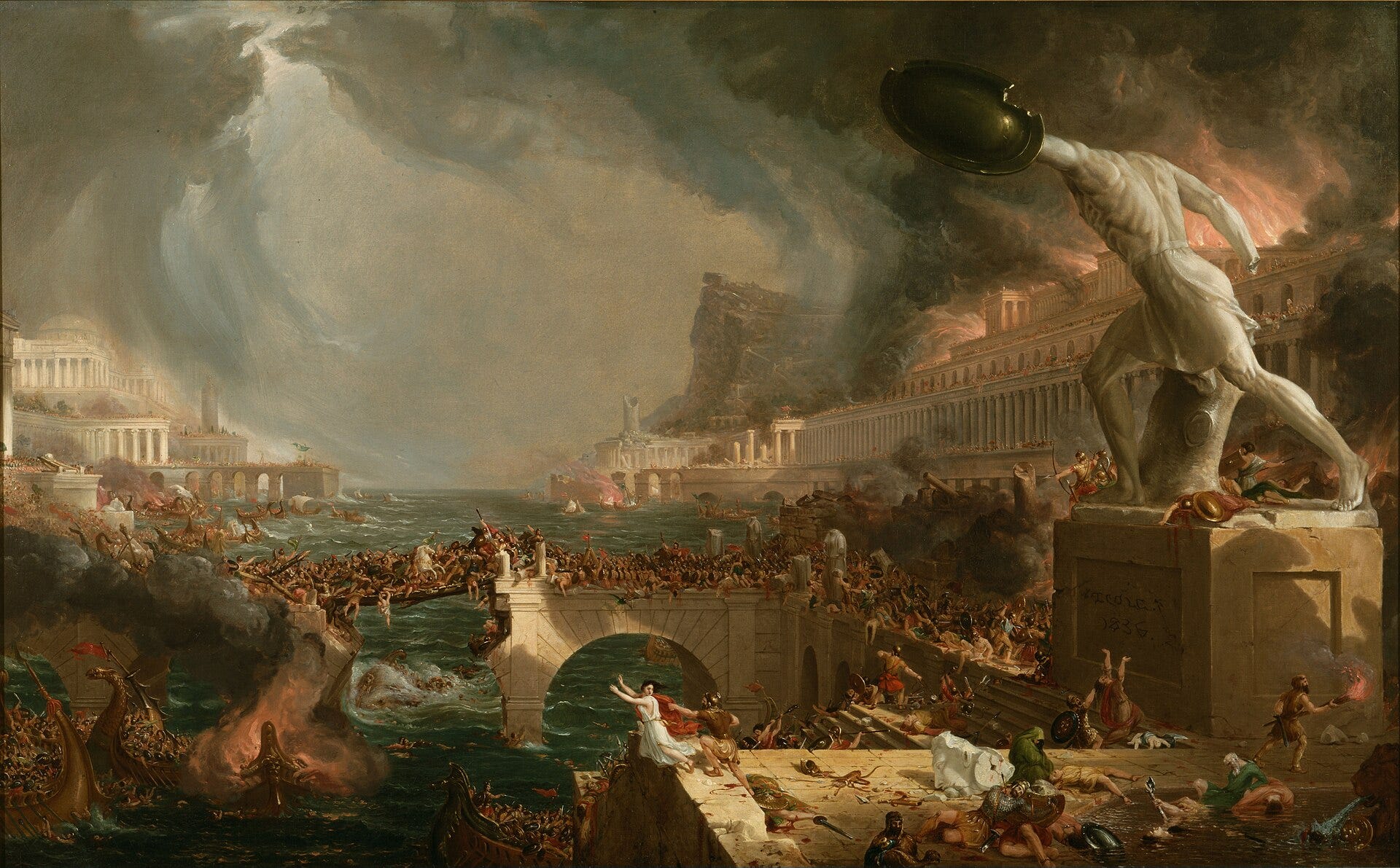
When the collapse of old dreams leads to the flowering of new ones
May 1800:14:10Tap to summarizeThis is a free preview of a paid episode. To hear more, visit danielgordis.substack.comI noticed this week, at the Shabbat table in two different homes, and in a series of conversations at work and around the neighborhood cafés, that I keep hearing people use the phrase “the collapse of civilization.” As in, “what we’re witnessing — in Europe, the United States, and even in Israel to a degree — is not this leader or that party, this issue or that inanity, but rather the (to us) depressing realization that, writ large, Western civilization as we knew it is collapsing. That’s certainly how I feel. I’ve been feeling it for a long time. I remember vividly, as if it was yesterday, the day that my wife and I were watching CNN in our family room when the story of the Billy Bush Bus Tape (“grab ‘em by …”) broke. I looked at my wife and said, “That’s it, it’s over. He’s done.” She said to me, “Are you sure?”To which I said, “Of course I’m sure. Come on, you can’t talk that way about women in the twenty-first century and win the nomination of your party, much less be elected President of the United States. He’s toast.” Ooops. That wasn’t quite right. When that comment didn’t make Donald Trump an “untouchable”, I began to sense that something deep was shifting about America, and that more than anything, or at least as much as anything, what was changing was the abandonment of norms. Norms are gone. They’re gone from the Trump Administration. The Netanyahu Administration. They’re gone from how the world used to use soft power. They’re gone from diplomacy. They’re just … gone. Norms are disappearing from Jewish life, too. Remember how honored Jewish students would have once been to have the President of the State of Israel speak at their graduation? Or how, even if they weren’t huge fans, they would have known how to comport themselves? Norms gone. I want to return for just one brief moment to the story of those JTS students who objected to President Isaac Herzog speaking at JTS Commencement. We’ve already covered what’s been said, and there’s no need to go back there. BUT, what has changed since we posted on that subject is that President Herzog notified JTS that his travel plans do not permit him to go to New York at the present time. One doesn’t have to be Einstein or Freud to figure out what may very well have been going through his mind, or the minds of his advisors. What, the President of the State of Israel is going to go to New York, to one of the world’s great Jewish institutions, and possibly get booed? Or have people hold up signs, however politely? Or walk out, however “respectfully”?It would have sullied the office of the President. Is that really why he didn’t go? I have no idea. But everyone has a pretty good guess. Not for naught did the Times of Israel phrase its headline above the way that it did. But, rather than focus once again on the Conservative Movement, or JTS, or the culture of young Jews, or whatever … it’s worth turning our attention, instead, to Jonathan Haidt. Jonathan Haidt is a social psychologist at NYU's Stern School of Business, best known for his research on moral psychology and how emotions — rather than reason — primarily drive human moral judgments. He developed Moral Foundations Theory, which identifies several innate moral intuitions (such as care, fairness, loyalty, authority, and sanctity) that vary across cultures and political ideologies, helping explain why liberals and conservatives tend to talk past each other. His popular books, including The Righteous Mind and The Anxious Generation, have brought these ideas to a broad audience, arguing that political polarization and the sharp rise in teen anxiety, depression, and social fragmentation linked to smartphone-based childhood are among the major societal challenges of our time. Why mention Jonathan Haidt here? Now? Because Haidt was chosen to deliver the commencement address at NYU’s graduation ceremony, held at Yankee Stadium, and guess what happened …. Immediately, NYU’s Student Government Assembly Executive Committee condemned his selection, criticizing his “disturbing rhetoric around antiracism, social justice and diversity, equity and inclusion,” and called it “a regression” from previous speakers. They contrasted him unfavorably with past speakers like Taylor Swift (YES, to these NYU students, a world class scholar is a regression from Taylor Swift!!) and Justice Sonia Sotomayor. More broadly, students objected to his labeling of their generation as “coddled,” his critiques of DEI programs, and argued that his platform did not represent their values. Who in the world would want to hear from someone who does not represent “their values”? What, we came to a university campus to engage with ideas that might be different from our own? NYU was quite right to stand its ground and to describe Haidt as one of the most consequential scholars of the 21st century. But the students didn’t care. Even before Haidt began speaking, he was met with boos from students as he was welcomed to the stage. About three dozen students walked out of the venue in protest.And here’s a delicious irony: Some students found it “hypocritical” that Haidt’s speech wasn’t required to be recorded in advance, given that the prior year NYU had required pre-recording of some speeches after complaints about a student speaker who spoke against Israel.It’s unfathomable but also undeniable — Western civilization is collapsing before our very eyes. JTS students, it turns out, are just students. They are just like NYU students. That may be a tragedy, a sign of the loss of the Jewish values of respect, honoring elders, etc. that used to pervade and shape Jewish life, but the problem isn’t them, or JTS, or the Conservative Movement. The problem is the world — or what’s left of it. Now, why begin with all this today? Because our guest today has what is to me a fascinating thesis. Jewish life and Israeli life are also going through dramatic shifts, but Rabbi Prof. Jeffrey R. Woolf argues that at least in the case of Jewish life, one can find in the cracks and failures or some of the collapsing of visions the blossoming of new visions, and often, a re-embrace of Jewish living. Jeffrey Woolf is a much-admired and lauded public intellectual, and I’m beyond grateful to him for taking the time to share with us his view of how three collapsed dreams in Jewish life have led to rebirth. It’s a very optimistic take on Jewish life, one that — especially with the collapse of so much around us — is particularly good for our souls. For us, in this forum, it’s also important as a window into what some people inside Israel think when they think about the future of Jewish life. If you would like to share our conversation about what Israelis are feeling and expressing at this unprecedented moment in our history, we invite you to subscribe today.Rabbi Prof. Jeffrey R. Woolf is an internationally known scholar, lecturer and public figure. For thirty years was Associate Professor in the Talmud Department at Bar-Ilan University, specializing in the History of Halakhah, Medieval and Renaissance Jewish History, the Philosophy of Rabbi Joseph B. Soloveitchik, and the inter-action between Judaism, Islam and Christianity.He received his PhD in Medieval Jewish History at Harvard University and spent two years at Yale University, as a Post-Doctoral Fellow. Rabbi Woolf studied for nine and a half years under Rabbi Joseph B. Soloveitchik זצ”ל, from whom he received semikhah in 1982.He is a leading advocate and spokesman for Modern Orthodoxy. In Israel, he is a member of the Executive Committee of Maaleh: The Center for Religious Zionism and Chairman of the Board of NGO Monitor. Executive Committee of Tzionut Mamlachtit. He has also written a great deal, including The Fabric of Religious Life in Medieval Ashkenaz (1000-1300): Creating Sacred Communities (2015). He and his wife They are blessed with five children and three grandchildren. They make their home in Efrat, Israel.The link at the top of this posting will take free subscribers to an excerpted portion of today’s conversation.For paid subscribers, the link at the top will take you to the full conversation; below, paid subscribers will also find a transcript for those who prefer to read, as always.
Transcribe →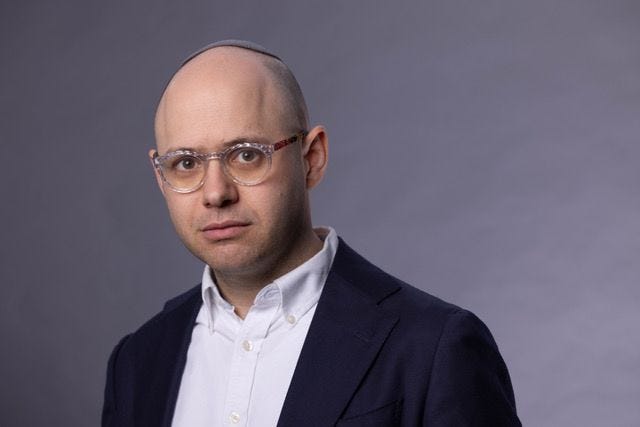
How badly has Israel lost the American public? Is there anything at all we can do?
May 1300:13:32Tap to summarizeThis is a free preview of a paid episode. To hear more, visit danielgordis.substack.comIt’s hard to quantify (though I suppose that there are ways that sophisticated researchers could manage), but it’s clear that Israel’s press is much more engaged than ever before with the attitudes of American Jews — but also the attitudes of American voters writ large — to Israel. There’s a reason that the Israeli press is suddenly paying much closer attention to Americans — Democrats and Republicans, young and older, the Evangelicals, the Jews and more. The reason, sadly, is that when it comes to how Israel is seen in the American electorate, things have simply never, ever been worse. The data is clear, but it needs explaining. Dr. Avishay Ben-Sasson-Gordis, a Senior Researcher at the Institute for National Security Studies (INSS), has been researching this issue for quite some time, and recently, has done a deep dive into the Pew Center data on the subject. He’s also been writing about it a great deal for the Israeli public. But Avishay is also (as you may have divined from his name) my son-in-law. Thus, as much as I really wanted to interview him here, I was hesitant … until he was interviewed on Echad be-Yom — Israel’s most widely listened to podcast, by far. When that appeared, I thought, “no reason they should get to hear him and we shouldn’t.” So I asked Avishay to share with us what he spoke about on Echad be-Yom, and am grateful that he agreed. If you would like to share our conversation about what Israelis are feeling and expressing at this unprecedented moment in our history, we invite you to subscribe today.Avishay Ben Sasson-Gordis is a Liberalism Rekindled postdoctoral fellow at the Hebrew University of Jerusalem, and a Ruderman Family Foundation Scholar in Residence and Senior Researcher at the Institute for National Security Studies at Tel Aviv University.His current work focuses on the democratic theory of coercive political institutions. His book project, “Not Just War”, based on his doctoral dissertation (Harvard 2023), offers a normative theory of democratic civil-military relations. In his empirical research he centered on Israeli security policy, governing institutions, and public opinion.His research has been published in Political Science Research and Methods and in Armed Forces & Society. He’s a frequent commentator on Israeli current affairs in international and Israeli media, and my commentary has appeared in Foreign Affairs, Ha’aretz, and World Politics Review.The link at the top of this posting will take free subscribers to an excerpted portion of today’s conversation.For paid subscribers, the link at the top will take you to the full conversation; below, paid subscribers will also find a transcript for those who prefer to read, as always.
Transcribe →
"Change" or "Tradition"? The JTS Graduates opposed to President Herzog speaking at Graduation have some history on their side.
May 1200:15:19Tap to summarizeThis is a free preview of a paid episode. To hear more, visit danielgordis.substack.comAs The Forward (and others) reported over the last couple of weeks, Israeli President Isaac Herzog has been invited to the Commencement Speaker at JTS, the academic center of Conservative Judaism. Not surprisingly, given the times in which we live, some students (albeit a very small number) have publicly objected, for reasons that you can see in their l…
Transcribe →
What if Bibi doesn't run?
May 1000:00:21Tap to summarizeThe little clip above, about “If the USA and Iran were people,” is cute. Not hilarious, but still cute. And what it reflects is a deep-seated frustration that after yet another war, this one a really long one in which our kids and grandchildren took much of the brunt, Israel may or may not have accomplished much. So the guy in the elevator is obviously Trump, with all his bravado. And the guy who enters the elevator is Iran. The US (Trump) threatens to kill him, to “break him into pieces” if he gets into the elevator, but he does it anyway. And what happens? Nothing. It is, in a nutshell, how Israelis feel about this war, and it is, in a nutshell, how increasing numbers of Israelis feel about Trump. A lot of bluster, without very much to show for it. General Tomer Bar, until recently the Commander of the IAF (Israel Air Force) recently retired at the age of 57, after almost forty years in the army. Bar raised some eyebrows when he personally flew several missions over Iran during the recent war—more than a few people wondered if that was very smart. What if he’d been killed? Or worse, captured? Did he really need to get into that cockpit? But that blew over, because Bar is so widely respected and admired. Yes, the Air Force failed miserably during the first hours (or days) on October 7 and thereafter, but it regrouped, and since then, Bar (who has entirely owned his failure on October 7) has had extraordinary accomplishments. So you might think that the headlines announcing Bar’s retirement would be about … well, Bar. But no. The headline below is very typical. In the headline, the part that is NOT highlighted reads:Tomer Bar takes off his uniformThat’s Israeli slang for retiring from the army. The part that IS highlighted reads,The IDF is making clear: without a solution to the uranium and the nuclear issue — this was one huge failure. It’s a comment not about Bar, but about the people he reports to. It’s a comment, in other words about Bibi. The Trump bromance, ostensibly one of Bibi’s unique assets, didn’t get us as much as we thought in the end. The mindset that gives birth to the video at the very top and to the headline above that can’t even focus on Bar without reminding Israelis that this war might have been a failure, isn’t good for Bibi. Bibi knows that. And the polls are reminding him of that. Ma’ariv publishes a poll every week about how Israelis would vote were the elections to be held right now, and though the numbers aren’t moving a lot, there’s a clear picture emerging.The RED is the opposition: all the Jewish parties that are not part of the coalition. They’re polling, according to Ma’ariv, at 61 seats, enough to form a government. The BLUE is all the parties that are part of the coalition — Bibi’s Likud, Ben Gvir’s party, Smotrich’s party and the Haredi parties. The GREY is the Arab parties. Why list the Arab parties separately? Because the Arab parties are not all Mansour Abbas. Even Abbas’ list, which had him at the top and a few other palatable people below him on the list, included radicals who are opposed to the existence of a Jewish state. The Arab parties include Balad, which describes its fundamental purpose as the “struggle to transform the state of Israel into a democracy for all its citizens, irrespective of national or ethnic identity". In other words, it seeks to end Israel as a Jewish state. One can certainly understand why Arab politicians would hold that view (though Abbas expressly does not — he is on record as stating that Israel will always be a Jewish state), but one can also understand why many Israeli Jews are unwilling to have Arab parties be part of the coalition. But it doesn’t really matter now. If the “left” (which is really the “center,” because there is essentially no “left” left) were trying to put together a coalition, the Arab parties could either vote to accept it, or just sit out the vote. Either way, with just 49 seats, Bibi cannot form a government. There are many reasons for Bibi’s poor showing. Deep dissatisfaction about the war is likely the main one, but the Haredi draft issue is yet another. For many people, continued Haredi exemptions are simply a pill they cannot swallow. The video (posted on Facebook, we’ve added subtitles) by Chaggai Luber, whose material we’ve posted on many occasions, shows once again the deep sadness / anger that has seeped into most of Jewish Israeli society about that exact issue. Add to that anger the deep, unending celebration of those who have made sacrifices, and Bibi’s continued flirtation with the Haredim has got him in trouble. Here’s the kind of video you see here all the time— when a badly wounded soldier gets out of the hospital or out of rehab, often after numerous surgeries and many months of hospitalization, it’s the custom that those who treated him line the halls as he gets ready to finally resume his life. The is a country of walking wounded and maimed — or worse. And many people simply have had it with the Haredim, and, because he’s their enabler, with Bibi, too. Bibi knows that. If you would like to share our conversation about what Israelis are feeling and expressing at this unprecedented moment in our history, we invite you to subscribe today.And that’s what led some very thoughtful people, like Aviad Stollman here on Facebook, to write the following. It’s way, way too early to count Bibi out — he is not simply the best campaigner in Israel, but is the best campaigner in Israel’s history. It ain’t over till it’s over, and it might not be over. But Stollman — and increasing numbers of others — think that the “end” might be getting close. Here’s his post, with an AI generated translation: For some time now, I’ve been making a claim that sounds completely far-fetched to my friends: Benjamin Netanyahu will not run for the Knesset in the next election. He will resign first. Most of them think I’m hallucinating—that Bibi is the last person who would take such a step voluntarily. But in recent days, what was until not long ago beneath the surface seems to be rising into view, mainly through the activity of the President’s Residence, which used to be quieter and is now far more out in the open.So why would he do it? From my read, there’s a not-implausible scenario in which, in the gifts case (Case 1000), Netanyahu is convicted of breach of trust. It’s not a charge that makes dramatic headlines, but it’s the kind of offense courts do convict on, and under certain circumstances it can also lead to a real sentence, including the risk of imprisonment. Incidentally, it is one of the offenses Ehud Olmert was convicted of as well. Netanyahu knows that precedent very well.I’m not getting into the question here of whether the cases against Netanyahu are justified or not. My personal sense is mixed: there are elements of obsessive, politically motivated pursuit, and at the same time conduct on his part that is highly problematic—even unethical. In my view, it’s not at all clear this whole story should ever have reached a courtroom, but that’s where things stand.And from here comes the truly important point. Netanyahu doesn’t need to be certain he’ll be convicted. It’s enough for him to assess that there’s a non-trivial risk it will happen. Once you’re in that position, you’re no longer running just a legal battle—you’re managing risk. The question stops being “how do I win the trial” and becomes “when am I in the best position to determine how it ends?” This isn’t unique to politicians; this is how a great many cases play out. In the end, you arrive at a settlement on the basis of a risk assessment.And the answer to that question, from his standpoint, is clear: now. As long as he is prime minister, he is operating from a position of strength. He has political influence, public legitimacy, and a real capacity to negotiate—both with the State Attorney’s Office and with Isaac Herzog. The moment he leaves that office, especially if it happens after an election loss or a political deadlock, that position weakens dramatically.There’s a plausible scenario in which Netanyahu does not win the next election. After all, he barely won the election before October 7. And therefore, if he wants to control the outcome, he has to do it beforehand. If he loses, he won’t be able to offer up his pound of flesh: his retirement.Within this, you also have to understand Herzog’s conduct. He understands that the continuation of Netanyahu’s trial is tearing the nation apart. Herzog has been working on this for a long time. Among other things, according to reports, he is enlisting figures like Aharon Barak for backing, while at the same time signaling to the State Attorney’s Office that he also has an extraordinary option in his arsenal: a pardon even before a verdict, similar to what his father, Chaim Herzog, did. It’s a complicated move and not legally clean, but as a bargaining chip it carries serious weight. The goal here, it seems, is not necessarily to use all these tools in practice, but to create conditions that will push all sides to the same table and toward an agreement.Netanyahu is broadcasting business as usual. He continues to govern, to appear, to act, as if there is no other horizon. But in my view, that doesn’t contradict the thesis—it’s part of it. Because anyone in that kind of negotiation cannot afford to look like someone searching for an exit. He has to look strong, steady, in control. Put it ...
Transcribe →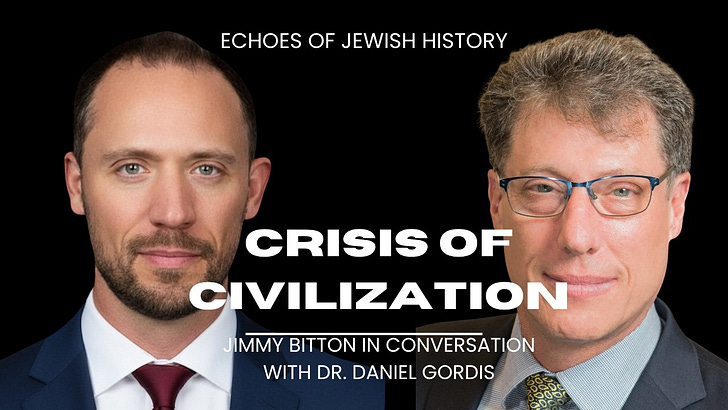
Does the West hate Israel because Israelis believe in themselves?
May 700:02:53Tap to summarizeJimmy Bitton, a Canadian professor whose podcast is called “Echoes of Jewish History”(available on Spotify here) invited me to join him on his podcast, and then graciously granted us permission to share the episode with the Israel from the Inside community. My basic claim, in response to his question about why the West so detests Israel, is that Israel has implicitly issued to the West a sharp warning: the West has forgotten its own moral backbone, risking civilizational decline. Bitton and I discuss how the erosion of memory, pride, and language threatens the future of Western civilization and why Israel’s example holds a mirror to all of us. Western nations have lost confidence in their historical greatness, I argued, from the fading use of native languages to the decline of shared moral vocabularies, and Israel’s counterexample is too powerful to ignore. We discuss how civilizations preserve identity through memory and ritual and what happens when these mechanisms weaken; why contemporary discourse distorts the language of morality and history; and how the decline of patriotic pride and clear moral distinctions risks a civilization’s collapse. In our conversation, I sought to underscore how Israel’s resilience—its deep-rooted traditions of self-critique and collective memory—offers a vital example for the West.If you would like to share our conversation about what Israelis are feeling and expressing at this unprecedented moment in our history, we invite you to subscribe today.You can watch the full episode via this link: This is a public episode. If you'd like to discuss this with other subscribers or get access to bonus episodes, visit danielgordis.substack.com/subscribe
Transcribe →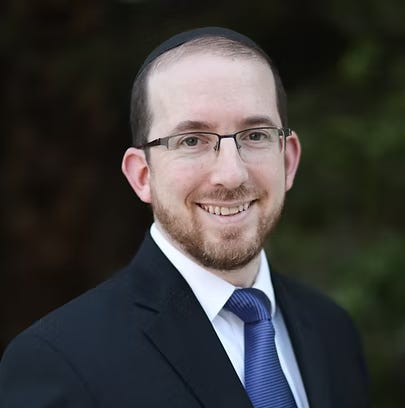
Rabbi Dr. Natan Slifkin has built a museum to teach about the past, but is worried about Israel's future
May 600:09:12Tap to summarizeThis is a free preview of a paid episode. To hear more, visit danielgordis.substack.comWhen I reached out to Rabbi Dr. Natan Slifkin, asking him if he might share with us some of the provocative ideas that he writes about in his fascinating Substack, “Rationalist Judaism,” he kindly agreed, but he also suggested that I come see The Biblical Museum of Natural History which he founded and directs.The Museum is a fascinating place, which I urge you to add to your list of places to see next time you’re in Israel, or — if you live here — your list of places to visit soon. Rabbi Slifkin shares with us the history of the Museum and his vision for it in our conversation. Then, because he is a man of many passions and pursuits, our conversation moved on to the issue of Haredim in Israel. What makes Rabbi Slifkin’s views of the Haredim fascinating is that he was once part of that community, but left for a variety of reasons, some of which he alludes to in today’s podcast. Having once been a member of that community — a community for which he still has great respect in many ways — he now argues that barring some major change in Israeli policy, the Haredi population will spell the economic demise of Israel. So, today’s podcast is about zoology and the Bible, museums and history, and Haredim and the future, and an opportunity to “meet” a truly fascinating individual. For the Biblical Museum of Natural History, click here.For more of Natan’s writing we invite you to visit his substack page in this link.If you would like to share our conversation about what Israelis are feeling and expressing at this unprecedented moment in our history, we invite you to subscribe today.Rabbi Dr. Natan Slifkin is the founder and director of The Biblical Museum of Natural History. He received his rabbinic ordination from Ohr Somayach Institutions, graduated from the Lander Institute in Jerusalem with an MA in Jewish Thought and Law, and received a PhD in Jewish history at Bar-Ilan University, with a dissertation on rabbinic encounters with zoology.Rabbi Dr. Slifkin has had a lifelong fascination with the animal kingdom and has kept many dozens of exotic creatures. He has published numerous books on different themes relating to Judaism and the natural sciences, including The Challenge of Creation and the Torah Encyclopedia of the Animal Kingdom.Over the last twenty years, Rabbi Dr. Slifkin has run a number of educational programs at zoos and natural history museums worldwide, and is a popular scholar-in-residence at synagogues. He also leads African safaris, and was featured on Animal Planet’s documentary “Beasts of the Bible.” His work has been featured in The New York Times, The Jerusalem Post, and numerous magazines, television and radio shows.The link at the top of this posting will take free subscribers to an excerpted portion of today’s conversation.For paid subscribers, the link at the top will take you to the full conversation; below, paid subscribers will also find a transcript for those who prefer to read, as always.
Transcribe →
Are American Jews Really Traitors?
May 400:08:13Tap to summarizeThis is a free preview of a paid episode. To hear more, visit danielgordis.substack.comJust before Yom Ha-Atzma’ut, Israel Independence Day, Hagai Segal, a leading Israeli journalist, author and former Editor-in-Chief of the Makor Rishon newspaper, wrote a column in which he expressly said that by virtue of their not having moved here, American Jews are traitors. It was an incendiary word to choose, and as one might have anticipated, it u…
Transcribe →
"Captivity was nothing. Without them, I am in hell now."
May 100:01:49Tap to summarizeThere were days, days that almost of all of us remember, when photos like these were ubiquitous. On hostage posters on the news, on the internet. Everywhere. Then the living hostages returned home. The signs disappeared, but a few of the returning hostages offered a window into the horrors that they had endured. Some, Eli Sharabi hardly the only one among them, became very public figures. They traveled the world giving speeches, or wrote (often bestselling) books, or gave extensive interviews. And then, gradually, most of them edged away from the spotlight. Yarden Bibas, the husband of Shiri, z’l, and father of Ariel and Kfir, z’l, realized upon leaving captivity that his family had become, quite literally, the poster family of the movement to free the hostages. But his world had been shattered, and though people knew more about his kids than about many of the others who were lost, he did not speak. He did not write. He did not travel. He took, and is taking, time to heal. Now, Yarden Bibas has broken that silence. Channel 13 in Israel recently posted a long interview with Bibas, his first with the Israeli press, on the heels of a podcast in which he was also interviewed. So now that Channel 13 has released the interview along with English subtitles and put it on YouTube, giving everyone access, we’re posting it here, because it wouldn’t be hard for people to miss it.I think you’ll agree after you watch it: it’s something that we all need to see. If you would like to share our conversation about what Israelis are feeling and expressing at this unprecedented moment in our history, we invite you to subscribe today. This is a public episode. If you'd like to discuss this with other subscribers or get access to bonus episodes, visit danielgordis.substack.com/subscribe
Transcribe →