
Podcast
Israel from the Inside with Daniel Gordis
Hosted by Daniel Gordis · EN
Israel from the Inside is for people who want to understand Israel with nuance, who believe that Israel is neither hopelessly flawed and illegitimate, nor beyond critique. If thoughtful analysis of Israel and its people interests you, welcome!
danielgordis.substack.com
danielgordis.substack.com
103episodes
Episodes
Newest firstAll episodes
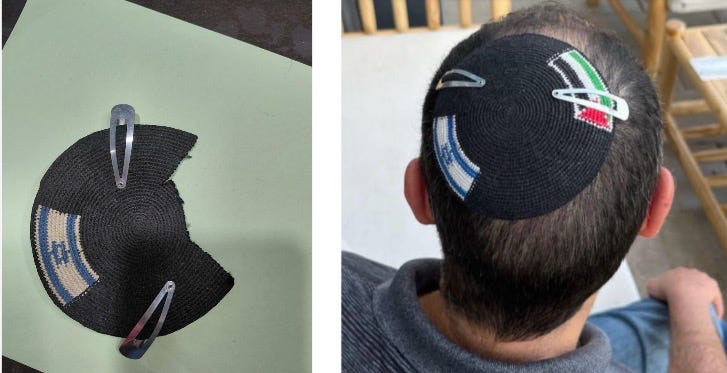
The kippah that roared (after it was assaulted)
Apr 2900:13:28Tap to summarizeThis is a free preview of a paid episode. To hear more, visit danielgordis.substack.comAlmost as soon as Alex Sinclair posted on LinkedIn the story of how the police detained him because they didn’t like his kippah, and then destroyed the kippah before giving it back to him, the incident went viral. Alex has appeared twice on our podcast before, once about his book Perfect Enemy (the posted interview is here) and once about his second nov…
Transcribe →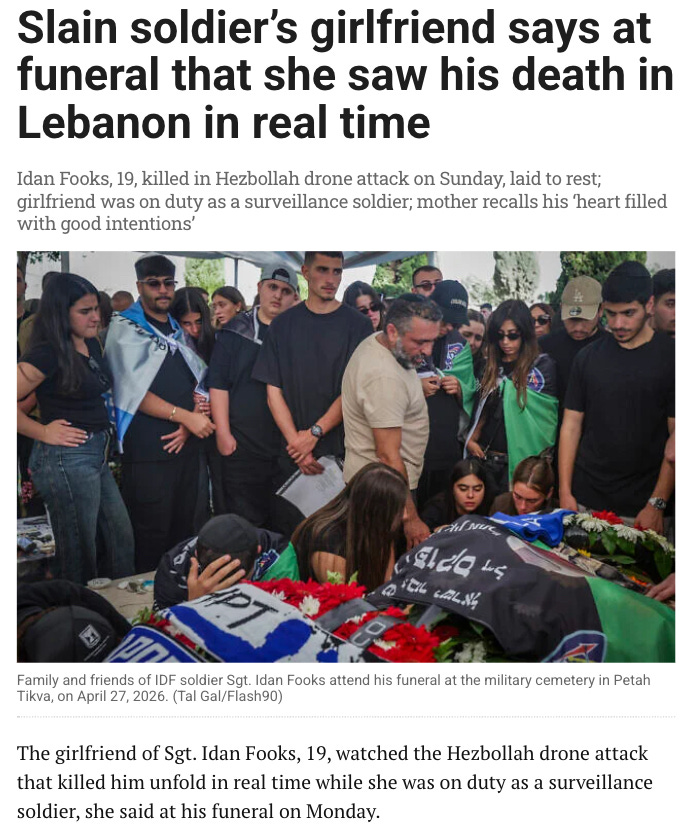
Far from the international headlines, Israel is mired in a frustrating war we don't know how to win.
Apr 2800:00:19Tap to summarizeImagine that someone asked you right now, “What would you guess are the main stories on the front pages of Israel’s papers?” What would you list? The elections and the merger of the Bennett and Lapid parties? The Strait of Hormuz? What else? As we’ll see below, while all the stories that appear on today’s front pages have made the international press, their place in the Israeli public’s mindset is quite different from what one might assume. So today, we’re taking a quick look at Israel’s papers to give a sense of what the country is thinking — and worrying — about. The (undated) video at the top, released by the IDF spokesperson’s unit (you can see their logo on the top left corner of the frame) is meant to communicate to Israelis that the army — in this case, the Golani brigade — is steadily destroying Hezbollah’s infrastructure. The people I’ve heard comment on the video have walked away with a different conclusion. What people are noticing is not how the IDF is blowing up Hezbollah’s tunnels, but rather, how vast the terrorist infrastructure is, and how now, there’s nothing to report, because the US is preventing the IDF from destroying it. If you lived in the north and you began to intuit that the threat just across the border is not going to be removed, would you stay there?As is often the case, it can take a personal interest story to get a country focused on an issue, and that’s precisely what happened this week. The role of Tatzpetaniyot (Field Intelligence Observers) has long been a part of the IDF, but became much better known after October 7, when many Tatzpetaniyot stationed near the Gaza border were among the first to see the invasion beginning and reported the suspicious activity leading up to it. Many were killed or taken hostage when their bases were overrun by Hamas; some of the highest profile female hostages — among them Liri Albag, Agam Berger, Daniela Gilboa and Karina Ariev — were Tatzpetaniyot. Tatzpetaniyot, in the aftermath of the disaster, is now a position people pay attention to. When Idan Fooks, z’l, was killed in Lebanon this week, he was tragically the latest in a series of IDF losses in Lebanon. What made the incident stand out, though, were two factors. First, Fooks was killed not by bullets, or a rocket, or an anti-tank shell or an IED, but by a Hezbollah drone, a threat the IDF has not yet figured out how to address. Second, Fook’s girlfriend, a Tatzpetanit, was coincidentally monitoring the very area in which he was operating, and on her screen, she watched him get killed in real time. It was that horror which brought the north back to the attention of the country—and the picture isn’t pretty. Today’s front pages give a sense of the frustration brewing in the country and the sense that we’re stuck on all fronts: Hamas is regrouping, Hezbollah is being protected by a cease fire that has citizens of the north enraged, Iran is jostling to keep its enriched uranium and its nuclear program intact, and the Prime Minister doesn’t have much say when it comes to Trump these days. The press can point that out in ways that Bibi cannot, which as we’ll see below, is precisely what it’s doing. We start with today’s Ma’ariv front page. In the large yellow rectangle, the main headline reads “The Declaration and the Retreat.” Ie, Bibi declared one thing, but reality is quite different. The smaller headline, black on white just below the yellow rectangle reads: “Despite the Prime Minister’s promises, several IDF units are scheduled to depart Lebanon for other missions ◼️ The decision to cut down on forces in Lebanon stems from the American cease-fire and American limitations on IDF activity which have yet to be lifted. ◼️ Head of Hezbollah rejects any option of negotiations: “Out of the question.” The story in the pink rectangle is about Idan Fooks, z’l, while the story in the green is about the murder of Yemanu Binyamin Zelka, a 21-year-old Ethiopian-Israeli who was killed in Petah Tikva on Israeli Independence Day. Zelka, who worked as a shift supervisor at the pizzeria, asked a group of teenagers to stop spraying party foam inside the restaurant and harassing customers. After he finished his shift around 1:00 AM, the group of teenagers waited for him outside. Security footage showed approximately 10 minors encircling, beating, and stabbing him. He was left critically wounded and died the following day at Beilinson Hospital.At least eight suspects, aged 12 to 17, have been arrested. Police reported that some of the suspects “acted like veteran criminals,” turning off their phones and hiding in an attempt to evade capture.Zelkah’s murder was not the only one in Israel this week, and not the only one committed by minors. What this is all about is not clear, but Israelis are worried about a deep social problem that has long been neglected.If you would like to share our conversation about what Israelis are feeling and expressing at this unprecedented moment in our history, we invite you to subscribe today.Yisrael Hayom shows a photo of an exploding drone (due to the Fooks story above), with the headline that says “A Race to Develop a Response to Hezbollah’s Drones.”In the purple at the bottom, "Residents of the North say: There is a war going on here. Don’t hide it.” And in the light blue: “Almost without school since Covid and all the wars: this is how violence among Israel’s youth has become a national plague.” Back to the murder of Zeklah, among others. Yedi’ot has a large white headline that says “We’re not moving from here”, which is a double entendre. Are we not moving the army out of Lebanon? Or are the residents of the north determined to stay? Or, given that the army is leaving Lebanon in dribs and drabs, are residents of the north going to head south, too? And then what happens to the county’s northern sector? Which is why the headline in the yellow rectangle says “This is how the cease fire in southern Lebanon has turned into a strategic problem.” In the red rectangle on the bottom right of the front page: AT THE FRONT: the IDF attacked the Beqaa Valley in Lebanon yesterday but the army is still being held back by the political echelons ⚫️ Dealing with the threat of IED’s and drones, the clash of interests between the USA and Israel, Hezbollah’s efforts to derail the negotiations, the close linkage between the various fronts and the deep frustration of the IDF’s senior commanders. In the purple rectangle at the bottom left: AND ON THE HOME FRONT: Mor Peretz received a photo in real time of her nine year old son lying on his classroom floor protecting his head ⚫️ Neta Senesh, eleven years old, and her friends lay down on the floor of the school bus while above them Hezbollah drones were flying: “I’m really afraid. Why do they send us to school when they’re shooting at us and we could be injured?” Ha’aretz looks at two major internal issues: In the red rectangle: “A crisis of trust between [David] Zini [head of the Shin Bet] and the heads of branches and units in the Shin Bet.” Zini’s appointment was controversial from the start and there are now widespread concerns that the intelligence community is suffering from deep internal divisions. In the yellow rectangle: “It’s essentially a revolt”: [IDF Chief of Staff] Zamir cannot ignore the enormity of the discipline problem throughout the IDF.Finally, Calcalist, one of Israel’s most important financial papers, ran this headline, in the green rectangle: Netanyahu put the security of the north in the hands of an unstable American President, and this is how things look. Not much comment needed there. When people around here see videos from the army such as the one at the top of this post (the IDF isn’t sending any out right now, because there are no real accomplishments to report), they tend to roll their eyes. “What we need,” they say, “is not videos of tunnels being destroyed. We need a plan. For the south. For the north. For Iran. For the handcuffs in which the Americans have placed us.” And implicitly, of course, they think, “We know who was at the helm when we got into all of this. Is there anyone who can extricate us?” This is a public episode. If you'd like to discuss this with other subscribers or get access to bonus episodes, visit danielgordis.substack.com/subscribe
Transcribe →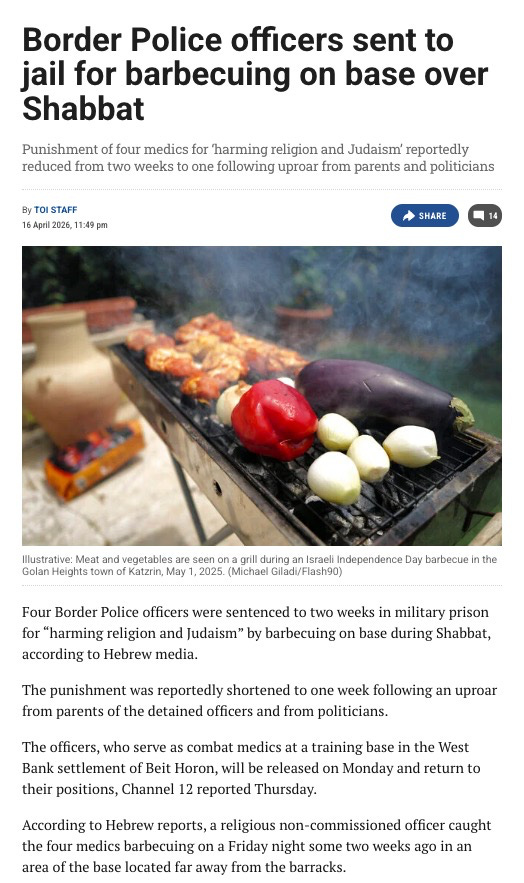
A Haredi public intellectual arguing that (some) Haredim should not be able to vote?
Apr 2400:00:25Tap to summarizeThe war will end, sooner or later, likely sooner. Israelis will limp out of the war — a war with many accomplishments, but also a war that is likely to fizzle out with Hamas, Hezbollah and the Iranian regime still intact. It’s not what most people here hoped for. When the war recedes into the rear-view mirror, election season will start to take over. A critical issue in these elections is going to be in the issue of the Haredim, who continue to extort billions of shekels from the government in exchange for their not toppling the coalition, and who continue to insist that their sons should not serve in the army, at a time when a manpower shortage is literally crippling the IDF. One fascinating Haredi rabbi has regularly staked out surprising positions on these questions; two of his recent social media posts afford us an opportunity to introduce him to our readers. Rabbi Dov Halbertal is an Israeli Orthodox (Haredi) rabbi, attorney, lecturer in Jewish law, and public intellectual. A former head of the Office of the Chief Rabbi of Israel, he is both a Haredi leader and an advocate for a complete separation of religion and state in Israel. He regularly argues against continued government subsidization of the Haredi community — a strikingly dissenting voice within his own community. Brilliant and fearless, Rabbi Halbertal is a voice that deserves to be heard beyond Israeli circles. The video above (originally posted here on Facebook) needs no explanation. But to understand Rabbi Halbertal’s recent Facebook post below, one needs background on two recent incidences in which the army imposed religious standards on soldiers. First, the story, as reported here in the Times of Israel, about the soldiers who were jailed for barbecuing on Shabbat. And second, the story, as reported here in the Times of Israel, about soldiers who were punished for wearing “indecent” clothing when they had no obligation to be in uniform.If you would like to share our conversation about what Israelis are feeling and expressing at this unprecedented moment in our history, we invite you to subscribe today.With those stories now clear as background, we can now proceed to Rabbi Halbertal’s recent post, based (as he notes) on a piece he wrote for Haaretz: The shocking incidents involving female squad commanders who were discharged and then prosecuted over a dress code, as well as Border Police soldiers tried for grilling on the Sabbath, demonstrate once again the ethos of religious coercion — an insatiable, impervious compulsion to interfere in the lives and values of others. And still they call it a “dress code,” when it deserves to be called precisely what it is: a code of religious coercion. The following is what I published at the time in Haaretz:As an Orthodox Jewish man, I am about to write some sharp words — but I cannot refrain from writing them, out of a conviction that the time for radical change has come. I regret that I must focus on failures and shortcomings rather than on achievements and strengths. Just as occupation corrupts — as even those who see a necessity in it will admit — so too does politics corrupt religion. The union of politics and religion is a recurring cycle of moral injury and fraternal hatred. The religious establishment corrupts the fabric of the state, and the state corrupts the fabric of religion, and so it goes, endlessly. The only viable solution, for the sake of religion and for the sake of the state alike, is to adopt the First Amendment principle of the American Constitution: the separation of church and state.I do not believe that anyone is obligated to fund my faith. It is not morally defensible for the secular public to finance yeshiva students, or the blessed fertility rates among the ultra-Orthodox. Nothing is more galling than the spectacle of receiving generous sums from the hand of secular society while spitting in its face. The ultra-Orthodox community rails against the values of secular society — Zionism, creative endeavor, military service, gender equality, and more — yet harbors no hesitation whatsoever when it comes to demanding and receiving funding that only encourages further defiance. Let us be honest: there is no justification for a secular public to subsidize those who hold its values in contempt.The solution I propose serves the interests of religion even more than those of the state. I do not wish to belong to a coercive society. I do not wish to belong to a society that harbors inciters of racism, nor do I wish to belong to a religious community that is ungrateful. Distorted modes of thought are not part of Jewish law — they stem from distorted interpretation, rooted primarily in the corrupting alliance between politics, the establishment, and religion. The Jewish community in the United States would never dare to block streets or assault police officers over the opening of a shopping mall on the Sabbath. There, certainly, no rabbinic petition would be issued calling on Jews not to sell or rent homes to non-Jews.The time has come to say: enough. Enough of religious political parties. Enough of the shameful preoccupation with budgets for self-serving purposes while ignoring the state and the wider world. Enough of the moral and aesthetic corruption of religion. Enough of imposing laws upon a public that does not believe in them.To paraphrase Martin Luther King’s famous address, I say: I have a dream. I have a dream of severing politics from religion. I have a dream that a secular child will study the sources of Judaism out of love, rather than out of well-founded fear of what is reflected in the shop window of the religious establishment. I have a dream of belonging to a moderate, broad-minded ultra-Orthodox community whose motto is: live and let live.It sometimes seems as though the consciousness of ultra-Orthodox society is shaped by a sense of persecution — as if that sense of victimhood furnishes it with its identity and its raison d’être, as though the President of the United States or the Supreme Court had no higher priority than the eradication of religious Judaism. Is it any wonder that, with such a communal consciousness, antisemitism and Jew-hatred flourish? What would we ourselves think of an arrogant, self-absorbed religious sect that fancied itself a light unto others while sowing division and separation?Every person — Jew or gentile — must be free to live according to his or her beliefs, on the basis of civic equality and genuine recognition of the human rights that belong to all people, created as they are in the image of God. One thing is clear: there is no worse option than the union of religion and politics.Imagine a world in which that was the prevailing Haredi outlook. Shabbat Shalom. This is a public episode. If you'd like to discuss this with other subscribers or get access to bonus episodes, visit danielgordis.substack.com/subscribe
Transcribe →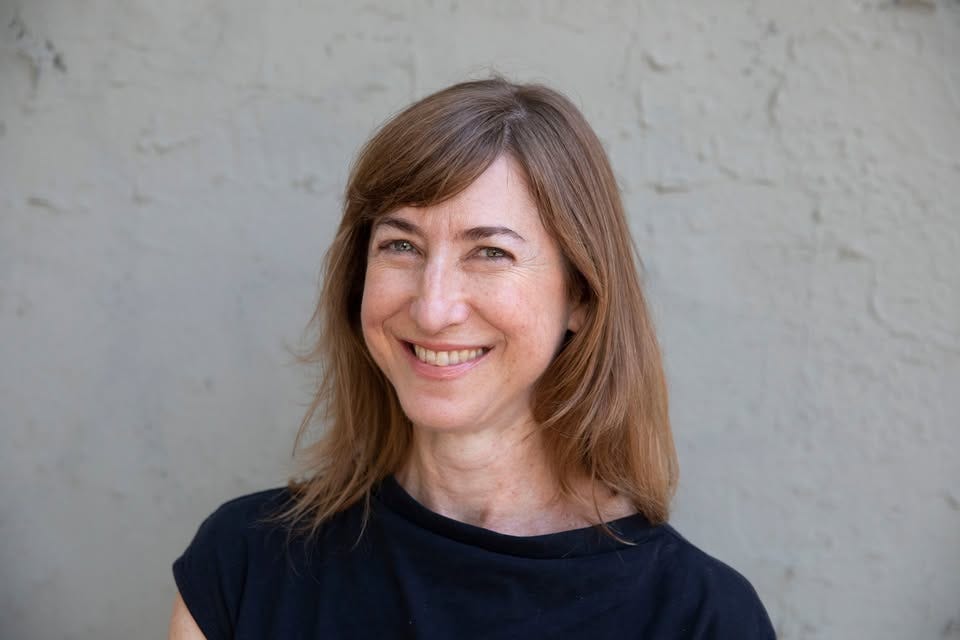
Why are Israel's police resorting to more violence against protesters? Is it about the protests, or something deeper?
Apr 2300:09:36Tap to summarizeThis is a free preview of a paid episode. To hear more, visit danielgordis.substack.comThe protests against Israel’s present war have not been nearly as enormous as the protests against Judicial Reform, because — among other reasons — the war is still widely supported. But there are, of course, people opposed to the war, as they have every right to be, and some of them are protesting against the war, which is also their right. But if you follow the daily press here closely, you can’t help but notice the reports of police force being used against protesters, often when it’s not entirely clear why. Is this a command from Itamar Ben-Gvir at the top, because he doesn’t like protesters, or is there something more insidious at play? That depends on who one asks. But as we hear in today’s conversation, some longtime observers of Israeli society believe that the problem is deeper — and more troubling — than “merely” Ben Gvir. Dahlia Scheindlin is among those people, and today, in light of the piece above that she wrote for Ha-Aretz, we hear her explain her thesis in greater detail. A few weeks ago, we posted a conversation with Yonatan Green, the author of Rogue Justice: The Rise of Judicial Supremacy in Israel, in which he shared his rather strong views of Israel’s “Basic Laws,” how they are created and the role that they play. If you listened to Green, think about how different is Dahlia Scheindlin’s view of those Basic Laws. Israel’s unresolved constitutional issues, as we can tease out from the two speakers, color much more about Israeli society and its divisions than we might think.If you would like to share our conversation about what Israelis are feeling and expressing at this unprecedented moment in our history, we invite you to subscribe today.Dr. Dahlia Scheindlin is a political strategist and a public opinion researcher who has advised on nine national campaigns in Israel and worked on elections, referendums, and public affairs campaigns in 15 other countries for over 25 years. In addition to Israel, she has regional expertise in the Balkans and Eastern Europe, the South Caucasus and Cyprus. Dahlia conducts extensive public opinion research for civil society organizations, including joint Israeli-Palestinian surveys. She holds a PhD in political science from Tel Aviv University and a master’s degree from Harvard Divinity School. Dahlia is a regular columnist for Haaretz (English) and a policy fellow at Century International. Her writing has appeared in the New York Times, The Guardian and The Observer, Foreign Affairs, Foreign Policy, Financial Times, The New York Review of Books, The New Statesman, The New York Post, among other publications. Her book, The Crooked Timber of Democracy in Israel: Promise Unfulfilled was listed on Foreign Affairs' Best Books of 2024. Dahlia is a board member of A Land for All, and has been an academic fellow in programs at Columbia University, Brandeis University, UCLA, and in the fall of 2025 was the Distinguished Middle East Fellow at University of Pennsylvania. Dahlia provides regular commentary for international and Israeli media, appearing regularly on CNN, BBC, NPR, CBC, and is quoted widely in leading print media.The link at the top of this posting will take free subscribers to an excerpted portion of today’s conversation.For paid subscribers, the link at the top will take you to the full conversation; below, paid subscribers will also find a transcript for those who prefer to read, as always.
Transcribe →
No, you can't ease our pain. But yes, you should care about us more than you care about them.
Apr 2100:03:25Tap to summarizeThis is a free preview of a paid episode. To hear more, visit danielgordis.substack.com
Transcribe →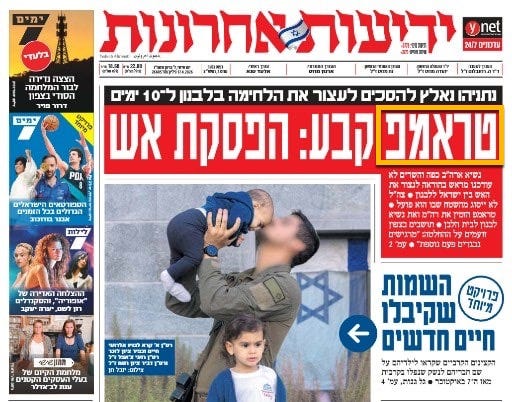
"If only we could be like Hungary"
Apr 1700:01:49Tap to summarizeAs we were cooking for Shabbat today, we were blaring one of those American music streaming services on all the speakers, playing the music we grew up with. Crosby, Still and Nash (and Young), Simon and Garfunkel, Cat Stevens (yes, I know…), the Eagles, Fleetwood Mac … if you know the genre, you know. Why in the world begin this post with that? Because the question of whether to stream an American music service became a uniquely Israeli question during this war. Since the service isn’t available in Israel, to get it, you have to use a VPN on your phone. But … if you use a VPN on your phone, does the Home Front Command know where you are? Will you still get warnings of sirens? No one I know knows the answer to that with any certainty, and no one I know had the presence of mind to test it during those weeks when we were running to safe rooms. So the war(s) have ended (for now) without us knowing. But as of midnight last night, Donald has promised us All Quiet on the Northern, North Eastern, distant Eastern and Southern Fronts, so voilà VPN. And back to music to cook by. “Donald has promised us?” Yes, indeed. And that has many Israelis very, very worried. Here are a few of today’s front pages: YEDI’OT ACHRONOTHEADLINE: Trump Decided: Cease Fire. That’s pretty clear. I put the Hebrew for “Trump” in yellow, so you can see it in the papers below, too. Below that story, the photo of the soldier and young children is in preparation for the agonizing day of Yom HaZikaron, Memorial Day for Fallen Soldiers, much more on which next week. HA’ARETZHEADLINE: Trump decreed a cease fire in Lebanon for ten days. MAKOR RISHONHEADLINE: Trump decrees: cease fire in Lebanon for ten days. When the hard-left Haaretz and the right-of-center, religious Makor Rishon post practically verbatim headlines, you know you’re seeing a national consensus. And what is that consensus? “This isn’t our doing. Bibi’s not running this. This is only Trump.” That this cease fire is bad for Israel (desperate though we all are for the quiet) is beyond question. The US brought the fighting in Gaza to an end, so Hamas, which never planned to disarm, and didn’t, is now rebuilding. The fighting in the north ended with Hezbollah showering us with rockets … they’re far from finished. (Trump is telling Hezbollah this is an opportunity for peace. He must have missed “Islamism 101” in his briefing papers. “Peace”?) And how about Iran? Now, DJT is saying (as of yesterday, at least) that they’re going to give up the enriched uranium. That’s almost funny. We have endured months of war with not terribly much to show for it. To be sure, we have some to show for it, but definitely not enough. What we have now is nothing at all like what Bibi has been promising for months: * Iranian regime change* Removal of the enriched uranium from Iran* Destruction of all the ballistic missiles* Utter destruction of Hezbollah’s fighting capacityHow many of those came to pass? Exactly zero, of course. Which is why all the papers are making the point that the person determining Israel’s foreign policy is not Netanyahu, but Donald Trump. Maariv is a bit different. THE ROAD TO PEACE it says in YELLOW, which is about as ironic as one can get. 25,644 soldiers, in the GREEN rectangle, have died defending the state. And in the PURPLE, the latest Maariv poll, which is also not good for Bibi. Here’s the Maariv poll in greater detail—we’ve just replaced the Hebrew bloc names with English (I got the image in a text message from the Bennett campaign): What does this show? * The opposition, which Maariv is calling the Bennett bloc (though Eisenkot is closing the gap, according to other polls), has 61 seats. That’s enough to make a coalition without the Arab parties. * Many people in Israel are OK with Arab parties being part of the coalition as long as the coalition isn’t DEPENDENT on them for the majority. The 61 opposition bloc seats would satisfy that, so the Arab parties with their ten seats could join, which would bring the coalition to 71 seats. * The “Bibi bloc” has 33 and the Haredim get 16. Together, they’re only 49 seats. Unless something dramatic changes, and that could very well happen, Bibi is in very big trouble. HOWEVER, HERE’S A LITTLE WARNING for all those people in the US whose sermons I listen to — because people send me links urging me to hear — who are dying for “regime change” (after almost twenty years, that’s not an entirely incorrect appellation) because they think that Israel’s foreign policy will shift directions with a new government. They are in for a very big disappointment. Bennett or Eisenkot or Lieberman (very unlikely) might (and absolutely should) curb the violence in the West Bank. They will almost certainly be less corrupt, more honest, and appoint more professional people to important positions. But … nothing will change with Gaza, Lebanon, Iran or the settlements. Nothing. This election is not about Gaza. The percentage of Israelis troubled by what happened there is not high. Most Israelis know that there was terrible suffering in Gaza. Very few believe that what happened was genocide. Most think that after October 7, any sane country would do what it had to in order to defend its citizens. And if the terrorists choose to base themselves in civilian centers and under hospitals and schools and in UNWRA offices, that’s tragic, but at the end of the day, not a reason to have our grandchildren live cowering in fear and danger. A reminder to the virtue signalers: Tragic and immoral are not the same thing. If you would like to share our conversation about what Israelis are feeling and expressing at this unprecedented moment in our history, we invite you to subscribe today.So, if the foreign policy isn’t going to change, why is Bibi slipping in the polls? If they’re not seeking a changed foreign policy, why do Israelis seem to want change at all? There are many factors, and we’ll look at them in coming weeks. But a litany of the reasons are in the video at the very top of this post, the work of a well known (and excellent—you should check her out) Israeli standup comic, Noga Dangeli. You can find the original post of her video (to which we added AI-generated subtitles) here. A lot of the references would take a bit of time to explain, so we won’t do that here. Many of them, though, are obvious, as she explains the “10 reasons to break up with your Prime Minister.” The relationship “reasons to break up” analogies, at least, are obvious. There’s tons of that sort of stuff online, but here’s another angle that we haven’t shown before. Here’s a Facebook group called PEOPLE ON THE RIGHT AGAINST THIS GOVERNMENT’S CONDUCT. There’s a lot posted on their FB page — the translation function of your browser should cover at least some of it … This video (originally here, we’ve added AI generated subtitles) is a cry from the right that the right can be replaced with … an “honest right.” And how do they know it’s possible? Hungary. Orban didn’t fall to the left; he fell to someone who was once firmly in his camp. That’s giving the anti-Bibi-right hope. There are many reasons that Bibi is not happy about Orban’s fate. They’re obvious. The audio on this video goes super fast, so the subtitles have trouble keeping up, but you’ll get the idea, and can watch twice if need be. Once we’re on the subject of this anti-Bibi Facebook group, and the way in which the right is feeling abandoned, check out this long but very articulate post from a well known right wing personality who’s decided to call the judicial business like she now sees it: Not Judicial Reform, but a Judicial Coup.The Judicial-Whatever is going to come back to the headlines with a vengeance soon. When it does, it seems, the lines between “right and left” may well look very different than they did in January - September 2023. A sincere and important text by Prof. Tovit Rosenzweig, resident of Kedumim, a Religious Zionist woman:“I ask you to join me on a brief journey back in time.January 2023, Yariv Levin announces the judicial reform, which quickly acquired a parallel nickname — the judicial revolution.For 10 months, tempers flared, streets filled with massive protests, and the people were divided between supporters of the reform and those who feared a revolution.The distinction between calling the move a ‘reform’ or a ‘constitutional coup’ became the litmus test for Israelis’ positions.In those murky days, I did not make an absolute choice in naming the event. I deliberately called it one thing sometimes and the other at other times, to remind myself of the complexity. Being deeply identified with the necessity of rebalancing power among the branches of government, held by years of frustration with the judicial system — with what I saw as an improper balance between civil rights and the rights of the state as the state of the Jewish people — I said: reform.And on the other hand — understanding that the move led by Levin and Rothman was forceful, ...
Transcribe →
Rogue Justice: The Rise of Judicial Supremacy in Israel
Apr 1500:08:49Tap to summarizeThis is a free preview of a paid episode. To hear more, visit danielgordis.substack.comWhen Hamas attacked Israel on October 7 2023, it brought to a sudden and calamitous end a national crisis that had threatened to split the country. Ever since Yariv Levin, the Minister of Justice, had introduced his plan for Judicial Reform in January 2023 (after Benjamin Netanyahu had explicitly said—in his campaign a few months earlier—that such reform was not on the agenda), Israel had been bitterly split. Enormous protests rocked the country week after week. Reservists threatened not to serve. There was serious talk about the possibility of civil war. The horrors of October 7 ended all of that—but not forever. With Israeli politics now heating up in anticipation of October’s elections, and with the possibility that war with Iran (and perhaps even Hezbollah) may be ending, judicial reform is certain to return to the headlines. In 2023, those who did not read Hebrew did not have access to any thorough examinations of the issue. Now, thankfully, that has changed. A new book by Yonatan Green, Rogue Justice: The Rise of Judicial Supremacy in Israel, affords English readers an opportunity to get to the heart of what rocked the Jewish state in 2023 — and that may soon do so again. As we hear in today’s conversation with Yonatan Green, he has a very clear take on why judicial reform was and remains necessary. Whether or not one agrees with him, though, his book affords us all an opportunity to become deeply informed observers of this critical issue. As one review noted:In easily comprehensible form, Israeli-American attorney Yonatan Green has produced a closely reasoned work on one of the most divisive domestic issues facing contemporary Israel: the appropriate balance of power between the Knesset and the Supreme Court.Green believes that for some 40 years, power in the State of Israel has been deliberately, consistently, and illegally usurped by the judiciary.In his detailed, rigorous, meticulous, and insightful work, Rogue Justice: The Rise of Judicial Supremacy in Israel, he scrutinizes how the Supreme Court has misled itself into unbalancing the proper relationship between the judiciary and the government.In today’s conversation, Yonatan Green discusses his book and introduces us to some of the key elements of his argument. If you would like to share our conversation about what Israelis are feeling and expressing at this unprecedented moment in our history, we invite you to subscribe today.Yonatan Green is an Israeli-American attorney, most recently a Fellow with the Georgetown University Center for the Constitution in Washington, D.C. Born and raised in Israel to parents from the United States and the United Kingdom, Yonatan obtained a degree in Law and Communications from the Hebrew University in Jerusalem before qualifying to practice law in Israel and in the State of New York. He has worked in private practice, at major tech firm Mobileye, and was co-founder and Executive Director of the Jerusalem-based Israel Law & Liberty Forum, inspired by the Federalist Society. His work in English and Hebrew has been published in a variety of academic, popular and media platforms, and has been cited by the Israeli Supreme Court.The link at the top of this posting will take free subscribers to a brief excerpted portion of today’s conversation.For paid subscribers, the link at the top will take you to the full conversation; below, paid subscribers will also find a transcript for those who prefer to read, as always.
Transcribe →
Yom Ha-Shoah feels different — because now, the Jewish story does, too.
Apr 1400:06:00Tap to summarizeThis is a free preview of a paid episode. To hear more, visit danielgordis.substack.comToday is Yom Ha-Shoah, the first of the three “National Days,” which continue next week with Yom Ha-Zikaron (“Memorial Day for Fallen Israeli Soldiers and Victims of Terror”) and Yom Ha-Atzma’ut (Independence Day). This is always a powerful, painful and inspiring time in Israel, but of late, Yom Ha-Shoah has begun to feel different. In today’s post, I t…
Transcribe →
"What a relief," and "what a disaster"
Apr 1000:05:35Tap to summarizeThis is a free preview of a paid episode. To hear more, visit danielgordis.substack.comIt’s the strangest thing, this mood in Israel now. On the one hand, immense relief that 40 hellish days are behind us. Kids are back in school. Small businesses can try to save what’s left. People can walk outside without worrying how far they’ve wandered from a shelter. We can turn off our phones at night, without concern that we might miss a warning o…
Transcribe →
"Hope you get to eat your meal while it's still hot"
Apr 100:13:13Tap to summarizeThis is a free preview of a paid episode. To hear more, visit danielgordis.substack.comWith the Seder just hours away, some thoughts about the mood in this country, the toll on the kids, what all this might mean for the future of the relationship between Diaspora Jews and Israelis, and what — when we assume that there will be missile fire during the Seder — Israelis are wishing each other. Wishes for a joyous and meaningful holiday. Chag …
Transcribe →