Podcast
It’s just AuDHD
Hosted by John Blanco-Slingerland, Tarah Peltz · EN
The channel that's 90% science, 10% banter, and 100% AuDHD. We break down research on ADHD and autism and fight misinformation so you can have a deeper and more accurate understanding of your own brain.
Disclaimer: Opinions and Views
All opinions and views expressed by John Blanco-Slingerland and Tarah Peltz through the It’s Just AuDHD podcast are their own. Opinions, views, and responses to questions provided through the podcast do not constitute coaching, professional advice, or any form of diagnosis, and do not create a coach-client relationship. Opinions and views expressed by John and Tarah here do not reflect or imply the opinions or views of any other person, organization, or entity with which they are or have been affiliated.
10episodes
Episodes
Newest firstAll episodes
ADHD Mythbusting with Neuroscience Expert Amy Arnsten
Jun 2901:14:54Tap to summarizeAmy Arnsten is a powerhouse in the world of neuroscience. She's a professor at Yale, she runs her own lab (aptly called the Arnsten Lab), and she's responsible for discovering guanfacine. This medication is an absolute gamechanger for rejection sensitivity and working memory for everyone with ADHD. We were lucky enough to chat with her and ask all our most burning brain related questions. In this episode, you can expect a lot of mythbusting as Amy corrects the record on common ADHD tropes that don't stand up to scrutiny when you're an internationally recognized expert on neuroscience.
Transcribe →
Is "Neuro-Radar" Real?
May 901:52:58Tap to summarizeIs it possible to know that someone has ADHD or autism just by looking at them? It turns out, people do seem to have a sixth sense that consistently detects ADHD and autism. In this episode, we explore the physical “tells” that might be giving us away and how this impacts the lives of ADHD and autistic people.Due to character limits, we couldn't paste all the source links, but you can find them in this doc: Sources doc (with all links)Below is a guide covering how local anesthesia is ineffective with hypermobility. Please use this and show it to your doctors. It's scary stuff, and you deserve to not feel pain during procedures.***IMPORTANT!!! Guide to local anesthesia and surgery for hypermobility***
Transcribe →
Is Francesca Bridgerton Autistic?
Feb 2601:28:31Tap to summarizeDearest Gentle Reader, rarely is society faced with such a vexing debate over a member of “The Ton”. Could it be that Miss Francesca Bridgerton is autistic? This author will humbly endeavor to set the record straight, not through gossip and speculation, but through science and fact. It is our greatest wish that in your journey to understand Miss Francesca, you discover yourself, for this, dear reader, would make the fruits of our labor worthwhile, indeed.Sources:Tony AttwoodFrancesca Autistic CompilationFrancesca CompilationAutistic adult brains name recognitionDifferent emotional facial expressionsDouble empathy problemEye contact triggers amygdalaGABA and GlutamateThe theory of monotropismMost common special interestsWhat causes special interests?Autistic women more vulnerableThalamus explains sensory issuesAutistic people have weaker autobiographical memoryFear of being perceivedDebunking the Empathy/Systemizing Quotient in autismAutistic adults enjoy being in the same space without direct interactionStudy on autistic special interestsCAT-Q Autism Assessment
Transcribe →
Is it love or limerence?
Feb 1301:26:57Tap to summarizeYou know that “new crush” feeling where your heart is pounding and you've got butterflies in your stomach? It can feel exhilarating! But imagine if you got stuck in a loop where you experience it every single day for years. Suddenly, it becomes a little less fun. This is the plight of people suffering from limerence, where you become addicted to your own fantasies of being in a relationship with someone who is unavailable in real life. So how do you know if it's love or limerence? In today's episode, we'll break down all the ways you can tell the difference. Curious what causes limerence? We dive into the neuroscience behind it in our previous episode “Why do ADHDers get addicted?”Sources:What causes limerence?Dr. Kirk Honda's limerence deep-diveDr. Tom Bellamy's limerence introductionDr. Tom Bellamy’s YouTube channel about limerence Limerence meta analysisDr. Kirk Honda's borderline personality disorder deep-diveDr. Kirk Honda's Baby Reindeer deep-diveOCD vs ADHD and Autism
Transcribe →
Why do ADHDers get addicted?
Jan 3101:40:24Tap to summarizeWe all know people with ADHD are more prone to addictions like gambling, alcoholism, and substance abuse. But what if you could be addicted to your own fantasies? And how do addictions form in the first place? In this two part episode, we’re examining limerence, a condition where you become addicted to compulsive, consuming fantasies about a romantic relationship with someone who does not express interest in you.In order to truly grasp limerence, you need to understand the neuroscience behind addiction, which is the topic of this episode. We take an in-depth look at the brain changes that occur when you become addicted to something, and we explore why ADHD brains are exceptionally vulnerable. This episode will help you understand ADHD struggles on a whole new level! Give us a listen, and be sure to come back for the second part of this special, where we tackle the precise symptoms of limerence and the conditions it's commonly mistaken for. Sources:Dr. Kirk Honda's deep dive on limerenceAddiction neuroscience research with Professor Kent BerridgeUnderstanding addiction and how it's treatedStatistics about ADHD and addiction The overlapping neurobiology of addiction in ADHDResearch on ADHD and low hedonic toneResearch on ADHD and attachment styles General information about attachment styleADHD and divorce rates
Transcribe →
Is it Dementia or ADHD? Understanding the overlap
Dec 2201:32:49Tap to summarizeDiagnosis rates are rising, and people everywhere are being prescribed medications with major side effects. But what if it's actually a misdiagnosis? We're talking, of course, about dementia.Although dementia can look similar to ADHD and autism in older populations, treatment options are wildly different, and very few clinics perform ample screening to distinguish between these conditions. In this episode, we'll break down the similarities and differences. We'll also talk about the pitfalls of aging gracefully with ADHD and autism, so you and your loved ones can navigate the complexities armed with knowledge.SourcesSurvey about menopause with ADHDStories about aging with autism Meta-analysis about aging well with autismVideo about aging with ADHD by Kathleen Nadeau, Ph.D. Clinics rarely screen for ADHD in older populationsStudy on ADHD and dementia riskCommon conditions that look like dementiaUp to 13% of diagnosed dementia cases are actually liver failureADHDers have poor autobiographical memoryADHD memories don't have context about time or location Dementia side effects reported by pharmacists and caretakersSevere side effects to dementia anti-psychotic drugsSevere side effects from anti-amyloid monoclonal antibody medications for dementia Only 31% of ADHDers would be eligible for a randomized controlled trial about ADHD meds
Transcribe →
Are video games safe for AuDHDers?
Nov 3001:40:19Tap to summarizeHave you ever been completely obsessed with a video game and you can't pull yourself away? Video games have a nuanced and important role in the lives of AuDHDers. In this episode, we'll dig into the good, the bad, and the ugly side of video games. In the right context, they serve as a powerful, therapeutic tool for self regulating and even improving challenges associated with ADHD and autism. Unfortunately, they can also be addictive and drain your time, money, and willpower.Sources:Basic stats about video gamesUsing Dungeons and Dragons as a therapeutic technique for autismMeta analysis on using games for ADHD treatmentCogCubed ADHD assessment gameResearch on EndeavorRX to treat ADHDEndeavorRX gameplay demoUsing Tetris to prevent PTSD after traumatic experiencesADHD and video game addictionAutism and video game addiction Autistic people are less likely to purchase loot boxesLoot boxes increase gambling addiction risk in adolescents by 3.7x to 6.0x32% of children regret their online purchases and 41% don't understand what they purchased Adolescents who purchase loot boxes are at 1.87x higher risk of severe psychological distressBlind boxes increase suicide risk in childrenAustralia automatically classifies games with loot boxes as Mature
Transcribe →
Why do you have special interests?
Nov 101:03:53Tap to summarizeWhat do computers, music, and nature have in common? They are some of the top special interests for autistic people! In today's episode, we look at the research behind special interests to separate the truth from the stereotypes. We also look at some of the possible reasons why so many autistic people have special interests. Join us for this very special episode where we get to talk about our favorite things!Chapters00:00 Welcome & why special interests matter02:54 Myth-busting: hyperfocus vs. special interests03:24 The research problem (ask adults, not just caregivers)05:16 Strengths, coping, and pride07:04 When treatment targets the wrong thing08:48 Special interest study11:20 “Current” interests vs. lifelong ones11:46 Disney special interests18:16 Burnout and the 80% finish line20:21 INCUP attention model (ADHD)22:32 Work friction & making novelty23:10 Top special interests by gender27:08 What makes an interest “special” 32:56 When intensity hurts well-being34:21 Monotropism 10140:36 Hyperfocus & mental health44:06 Systemizing vs. empathy—why that binary fails50:01 Temple Grandin’s thinking styles54:32 Special interest stigma59:15 Our special interests1:01:52 ConclusionReferences: Grove et al., 2018; SAGE 2024 hyperfocus study; Autism Understood (Monotropism); Temple Grandin on thinking styles.Special Interests Study (Grove et al., 2018)👉 https://research.vu.nl/ws/portalfiles/portal/72579810/Grove_et_al_2018_Autism_Research.pdfMonotropism Overview (Autism Understood)👉 https://autismunderstood.co.uk/autistic-differences/monotropism/Hyperfocus Study (SAGE Journals, 2024)👉 https://journals.sagepub.com/doi/10.1177/27546330241237883Systemizing Quotient – Revised (Embrace Autism)👉 https://embrace-autism.com/systemizing-quotient-revised/Thinking Styles in Autistic People – Temple Grandin Framework (Embrace Autism)👉 https://embrace-autism.com/thinking-styles-in-autistic-peopleKeywords: autism, ADHD, AuDHD, special interests, hyperfocus, monotropism, Temple Grandin, systemizing quotient, Simon Baron-Cohen, Disney Imagineering, Pixar, pattern thinking, executive function, INCUP, attention regulation
Transcribe →
How Religion Misunderstands Neurodiversity
Sep 3001:08:00Tap to summarizeThis conversation delves into the complex relationship between autism and religion, exploring how neurodivergent individuals experience spirituality and religious practices. The discussion highlights various cultural perspectives on autism, the role of empathy in spiritual relationships, and the unique understandings of religious concepts among autistic individuals. It also addresses the impact of new age beliefs and astrology on the perception of autism, emphasizing the need for better research and understanding in the field.Chapters00:00 Finding Faith and Overcoming Challenges00:48 Exploring Autism and Religion02:14 The Intersection of Autism and Spirituality07:56 Understanding Religious Experiences in Autistic Individuals11:52 The Role of Empathy in Spiritual Relationships14:32 Cultural Perspectives on Autism and Religion18:57 Unique Understandings of Religious Concepts21:46 The Capacity for Religion in Autistic Individuals22:34 Diverse Religious Interpretations of Autism29:49 New Age Beliefs and Autism45:18 The Role of Sensitivity in Spiritual Experiences52:07 Astrology, ADHD, and Autism Connections
Transcribe →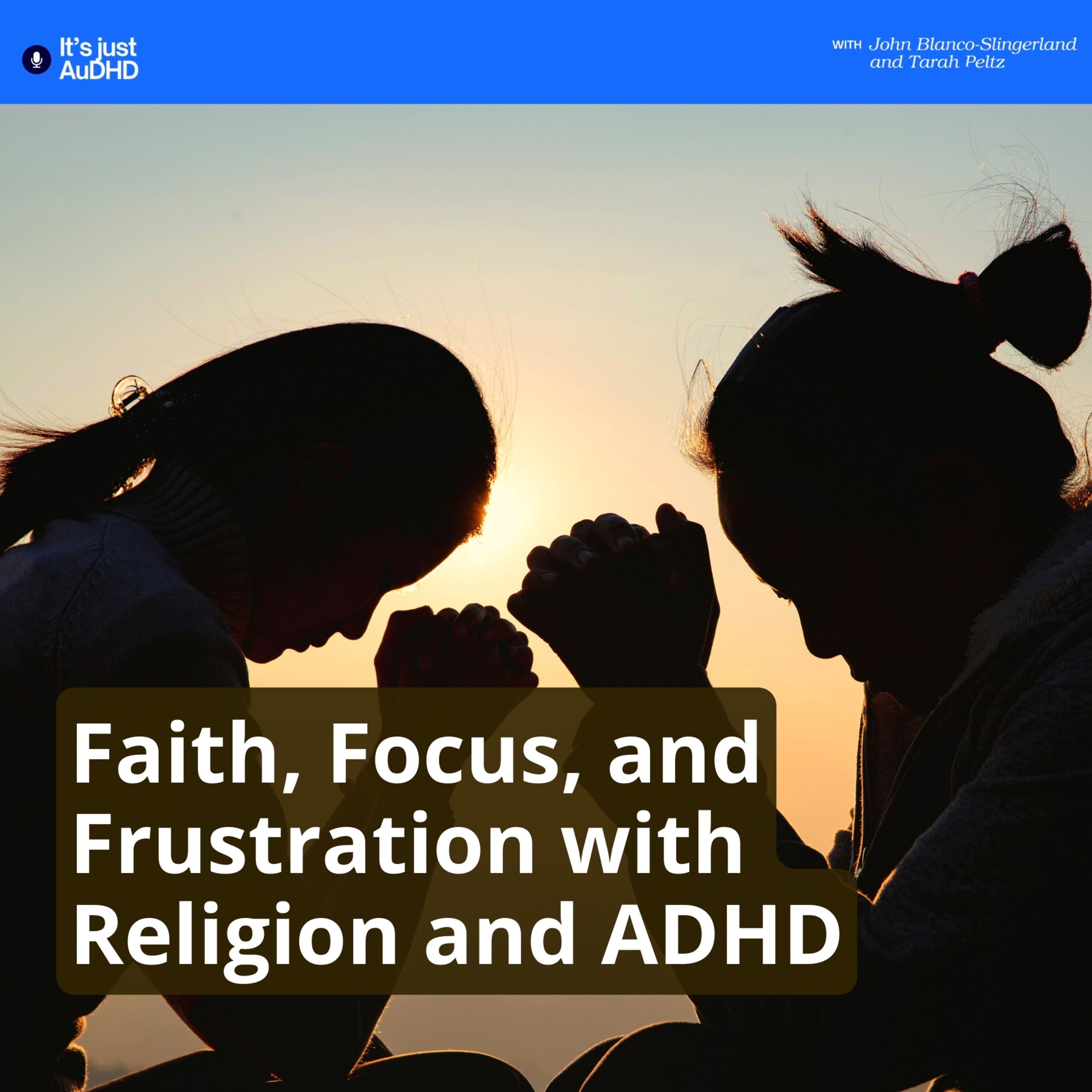
Is ADHD Compatible With Religion?
Aug 2701:09:38Tap to summarizeADHD obviously impacts a lot of aspects of your life, but did you know it can impact your religious status, too? It turns out, there are fascinating studies that explore the interplay between ADHD and religion (or lack thereof), so for this episode, we're giving you the lowdown on their findings. For our autistic listeners, don't worry! We have a follow up episode coming soon exploring autism and religion, too!References:Study looking at Judaism and ADHDAdditude article on ADHD and religionChurch of England rejects gluten free wafersStudy looking at Evangelical Christian attitudes towards ADHDInformation on Religious OCDChapters00:00 Exploring Faith and Neurodivergence03:58 The Intersection of Religion and ADHD06:26 Community, Belonging, and ADHD08:57 The Role of Religion in Mental Health11:59 Challenges of Neurodivergence in Religious Spaces15:13 Understanding ADHD and Religious Experiences17:54 The Impact of Community on Loneliness20:51 Navigating Religious Expectations and ADHD23:43 Finding Acceptance in Faith Communities26:34 Personal Journeys and Religious Beliefs34:26 Navigating Church with ADHD and Hypermobility37:27 Judgment in Religious Communities39:00 Neurodivergence and LGBTQIA+ Intersectionality39:11 Dietary Restrictions and Religious Practices41:32 Rigid Religious Accommodations43:55 Finding Comfort in Religious Rituals47:56 The Struggles of Neurodivergent Individuals in Church48:35 Hyperfixation on Religion as a Special Interest53:40 Religion as a Tool for Emotional Regulation01:00:25 Understanding Religious Scrupulosity OCD01:03:25 The Cycle of Shame in Religious Contexts01:07:52 Previewing Autism Studies and Religion
Transcribe →