Podcast
Jesus Alone is God
Hosted by Jesus Alone is God · EN
<ul>
<li> Email: hpaulsilas@hotmail.com</li>
<li> https://apostolicinternational.com/ </li>
<li> Statement of beliefs: https://apostolicinternational.com/statement-of-beliefs </li>
<li> Zoom meeting open for all - every Saturday at 19:00 CET </li>
<li> ID: 639 807 0890 </li>
<li> Password: OneGod </li>
<li> Link: https://us02web.zoom.us/j/6398070890?pwd=MlZxZWcwR3I0d3R1MmhDN0syaUx0Zz09 </li>
</ul>
31episodes
Episodes
Newest firstAll episodes

#154: Unwound: Why the Resurrected Still Need Hands to Set Them Free
4w ago00:58:53Tap to summarizeEmail: hpaulsilas@hotmail.com https://apostolicinternational.com/ Statement of beliefs: https://apostolicinternational.com/statement-of-beliefs The sermon: https://apostolicinternational.com/sermons/UNWOUND_WHY_THE_RESURRECTED_STILL_NEED_HANDS_TO_SET_THEM_FREE.pdf This sermon is based on John 11:44, exploring the moment Jesus raises Lazarus from the dead yet commands the community to "loose him, and let him go." The central message is that while resurrection is an instantaneous, sovereign act of Christ alone, freedom from the lingering "graveclothes" of our old life requires the communal ministry of the church.The sermon draws a vivid parallel between Lazarus's literal burial wrappings—tightly bound linen strips packed with spices—and the spiritual bondage believers carry even after being made alive in Christ: habits, wounds, shame, and sin that don't vanish automatically at conversion. Jesus deliberately chose not to unwrap Lazarus Himself, instead involving "trembling human hands," establishing a pattern for how the body of Christ ministers to one another (Galatians 6:1-2, 1 Corinthians 12:26-27).Special attention is given to the "napkin" covering Lazarus's face, symbolizing hidden identity and shame. The preacher argues that true intimacy and restoration require allowing trusted believers to see and remove this covering, connecting to James 5:16 on confessing faults to one another and 1 John 1:7 on walking in the light together. The unwrapping process is described as patient and messy, requiring meekness from those who help, remembering their own past bondage.The sermon concludes by emphasizing that personal freedom always serves a larger testimony—others are watching Lazarus, drawn to Christ's power through a fully liberated life. The call to action urges listeners to find an "unwrapping community," both to receive help removing their own graveclothes and to actively loose others still bound, until all are gathered into the eternal kingdom.
Transcribe →
#153: The Stranger who Saved the Savior
Jul 501:16:13Tap to summarizeEmail: hpaulsilas@hotmail.com https://apostolicinternational.com/ Statement of beliefs: https://apostolicinternational.com/statement-of-beliefs The sermon: https://apostolicinternational.com/sermons/THE_STRANGER_WHO_SAVED_THE_SAVIOR.pdf This sermon centers on the surprising story of Zipporah in Exodus 4:24–26, arguing that God often chooses the most unexpected people to accomplish His greatest acts of salvation. When God sought to kill Moses because he had neglected the covenant of circumcision, it was Zipporah—a Midianite, a foreigner, and an outsider to Israel's covenant line—who acted decisively. By circumcising her son with a sharp flint stone and shedding covenant blood, she restored Moses' standing before God and preserved the life of the very man chosen to deliver Israel.The sermon presents this event as a foreshadowing of Jesus Christ. Just as the sharp stone removed the barrier preventing Moses from fulfilling his calling, Christ's death accomplishes the "circumcision made without hands," removing humanity's sinful nature through His sacrifice. Zipporah's bloody act points forward to Christ, the Bridegroom who purchases His people through His own blood rather than the blood of another.A major theme is God's consistent pattern of using outsiders. The sermon highlights the Good Samaritan, Rahab, the Samaritan woman, and ultimately Jesus Himself—rejected by His own people—to demonstrate that God repeatedly brings salvation through those whom society overlooks or despises. This overturns human prejudice and reveals that God's wisdom often contradicts human expectations.The sermon concludes by challenging believers to reconsider whom they regard as outsiders or enemies. Just as Zipporah unexpectedly became the instrument that saved Moses, God may use unlikely people to accomplish His purposes today. Ultimately, every unexpected deliverer in Scripture points to Jesus Christ, whose rejection, sacrifice, and shed blood secured salvation for all who believe.
Transcribe →
#152: Shall He Find Faith?
Jul 500:45:53Tap to summarizeEmail: hpaulsilas@hotmail.com https://apostolicinternational.com/ Statement of beliefs: https://apostolicinternational.com/statement-of-beliefs The sermon: https://apostolicinternational.com/sermons/SHALL_HE_FIND_FAITH.pdf This sermon is built around Jesus' searching question in Luke 18:8: "When the Son of man cometh, shall he find faith on the earth?" Rather than treating this as merely a question about personal belief, the message asks whether Jesus would recognize modern Christianity as reflecting the faith He originally established.The sermon contrasts the simplicity of Christ's ministry with many modern expressions of Christianity. Jesus proclaimed repentance, the Kingdom of God, and salvation through His death and resurrection, yet churches today can become preoccupied with institutional growth, theological disputes, organizational loyalty, and religious structures rather than genuine devotion to Christ. The same searching question is extended to Christian families, where broken relationships, neglect of children, and hardened hearts often replace the love and compassion Jesus commanded.The message also examines the human heart, arguing that Jesus sees beyond outward religious activity to unbelief, materialism, anxiety, and moral compromise. Rather than leaving people in despair, Christ calls them to seek His Kingdom and trust His provision. A section of the sermon compares Trinitarian and One God interpretations of Scripture, presenting the latter as its theological framework while emphasizing Jesus as the full revelation of God.The sermon concludes with hope rather than condemnation. It argues that neither the church, the family, nor individual believers are ultimately saved by their own performance or even by the strength of their faith. Instead, salvation rests entirely on the grace of Jesus Christ, whose work surpasses the ruin brought by Adam. Even if Christ finds imperfect faith, His abundant grace remains sufficient for all who genuinely believe in Him and trust His finished work.
Transcribe →
#151: Washing Off Adam in Baptism in Jesus Name
Jul 501:12:12Tap to summarizeEmail: hpaulsilas@hotmail.com https://apostolicinternational.com/ Statement of beliefs: https://apostolicinternational.com/statement-of-beliefs The sermon: https://apostolicinternational.com/sermons/WASHING_OFF_ADAM_IN_BAPTISM_IN_JESUS_NAME.pdf This sermon presents the healing of the man born blind in John 9 as a prophetic picture of baptism in Jesus' name. The preacher argues that the blind man represents all humanity, born in the spiritual blindness inherited from Adam. Jesus' act of making clay from the dust and placing it on the man's eyes symbolizes Adam's fallen nature—the "dust" from which humanity was formed and the condition of sin and spiritual blindness passed down to every person.The central emphasis is that the clay itself is not the cure but the problem. The blind man remains in darkness until Jesus commands him to wash in the Pool of Siloam. Since John explains that "Siloam" means "Sent," the sermon identifies the pool as a symbol of Jesus Christ, the One sent into the world. Washing in Siloam therefore foreshadows baptism in the name of Jesus, where the old life inherited from Adam is washed away and replaced with new life in Christ.The sermon connects this theme with Galatians 3:27, which declares, “For as many of you as have been baptized into Christ have put on Christ.” The Greek word for “put on” is enduo—to clothe oneself, to sink into a garment as into a new skin. This is not a metaphor. It is a spiritual transplant. The flesh of Adam, which is the clay of the ground, is stripped off in the waters of Siloam. And the flesh of Jesus—the sinless, resurrected, glorifiable flesh of the Sent One - is pulled over those who are baptized in Jesus name like a robe of light. When God looks at the believer after baptism in Jesus’ name, He does not see a reformed Adam. He sees His Son.Finally, the message places the Pool of Siloam alongside other biblical water events—Noah's flood, the Red Sea, the Jordan River, Naaman's cleansing, Jonah, and others—as a continuing pattern of death, cleansing, and new life. The sermon concludes by urging listeners to obey Christ's command, leave behind the blindness of Adam, and experience the transforming work symbolized by washing in the Pool of Siloam through baptism in Jesus' name.
Transcribe →
#150: The River of One Name
Jul 401:15:00Tap to summarizeEmail: hpaulsilas@hotmail.com https://apostolicinternational.com/ Statement of beliefs: https://apostolicinternational.com/statement-of-beliefs The sermon: https://apostolicinternational.com/sermons/THE_RIVER_OF_ONE_NAME.pdf This sermon centers on the River of Life in Revelation 22 and argues that the river flowing from the throne of God and of the Lamb reveals that the God that sits in the throne is the same person as the Lamb that sits on the throne. The preacher begins with John's vision of a single throne from which a crystal-clear river proceeds, asking why there is only one throne if both "God" and "the Lamb" are mentioned. The sermon presents the theological claim that the Father and the Son are one and the same person, and that the Holy Spirit is the glorified Jesus, now poured out as a river.The message then traces the theme of living water throughout Scripture. Jesus' invitation in John 7 to drink of the living water is connected to the outpouring of the Holy Spirit at Pentecost, showing that the promised river is the Holy Spirit given through the glorified Christ. The river flowing from the throne in Revelation, the water from the rock in the wilderness, and Ezekiel's life-giving river from the temple are presented as one continuous biblical picture of God's life flowing to His people.The sermon emphasizes that the river is not merely a future hope but a present reality. Believers are described as God's temple, with His life dwelling within them. Rather than seeking fulfillment in worldly pursuits, people are invited to drink from the inexhaustible source of eternal life found in Christ. The closing appeal urges listeners to stop searching for satisfaction elsewhere and to come directly to Jesus, the source of living water, whose presence alone satisfies spiritual thirst and grants everlasting life.
Transcribe →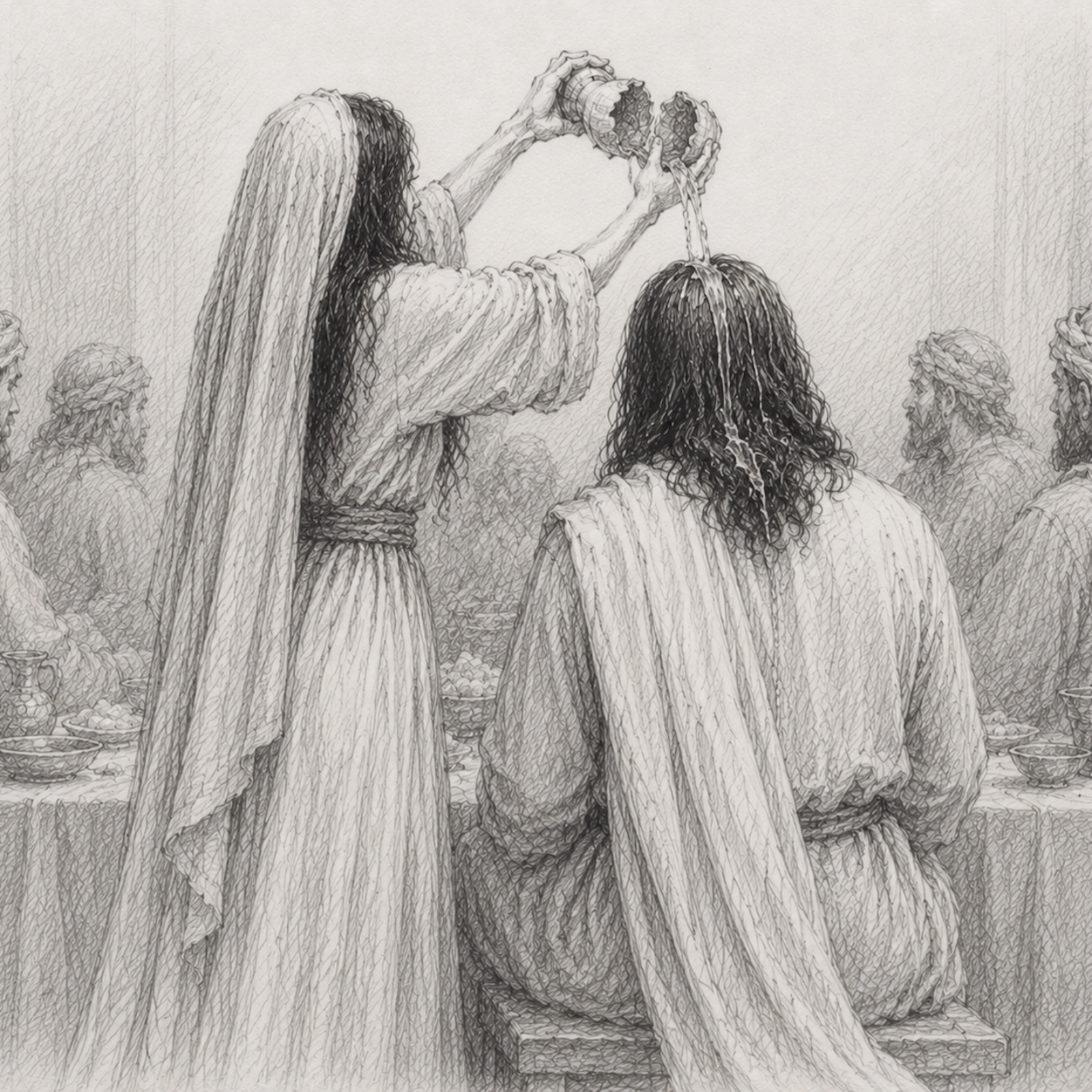
#149: The Sound of Shattered Extravagance
Jul 401:27:08Tap to summarizeEmail: hpaulsilas@hotmail.com https://apostolicinternational.com/ Statement of beliefs: https://apostolicinternational.com/statement-of-beliefs The sermon: https://apostolicinternational.com/sermons/THE_SOUND_OF_SHATTERED_EXTRAVAGANCE.pdf This sermon explores the account of the woman who broke her alabaster box and anointed Jesus, presenting it as one of Scripture’s clearest pictures of extravagant devotion. The central image is not merely the perfume but the irreversible breaking of the vessel. Unlike a container that could be opened gradually, the alabaster flask had to be shattered for its contents to be fully released. In the same way, genuine worship requires wholehearted surrender rather than measured, convenient devotion.The sermon traces this pattern throughout Scripture. Abraham placed Isaac on the altar, David sacrificed his royal dignity by dancing before the Lord, and Paul counted his achievements as loss for Christ. Each willingly surrendered something precious because they valued God above everything else. The woman’s perfume, worth an entire year’s wages, represented not simply wealth but security, future plans, and personal treasure. While the disciples called her act wasteful, Jesus declared it a beautiful work because she recognized the unique moment before His crucifixion and anointed Him for burial.The message further connects the broken alabaster box with Christ Himself. Just as the vessel had to be broken for its fragrance to fill the house, Christ’s body would be broken so that salvation could be poured out for the world. Those who receive His sacrifice are likewise called to become broken vessels, surrendering pride, reputation, possessions, and self-preservation in response to His love.The sermon concludes by challenging believers to identify their own "alabaster box"—whatever they still hold back from God. True worship is costly, often misunderstood by others, but its fragrance blesses everyone around it. What appears to the world as waste becomes, in Christ’s eyes, a lasting testimony of extravagant love and wholehearted devotion.
Transcribe →
#148: The Sons of Sceva
Jun 2601:35:41Tap to summarizeEmail: hpaulsilas@hotmail.com https://apostolicinternational.com/ Statement of beliefs: https://apostolicinternational.com/statement-of-beliefs The sermon: https://apostolicinternational.com/sermons/THE_SONS_OF_SCEVA.pdf The sermon uses the account of the seven sons of Sceva in Acts 19 to contrast counterfeit religion with genuine faith in Jesus Christ. These traveling Jewish exorcists attempted to cast out demons by invoking “Jesus whom Paul preaches,” treating the name of Jesus as a spiritual formula rather than the expression of a living relationship. Although they possessed religious heritage, knowledge, and outward activity, they lacked personal faith and submission to Christ. Their failure demonstrates that spiritual authority cannot be borrowed from another person's experience.The turning point comes when the evil spirit responds, “Jesus I know, and Paul I know; but who are ye?” The demon recognized Jesus as Lord and Paul as His authorized servant but did not recognize the sons of Sceva because they had no relationship with Christ. Their humiliating defeat—fleeing naked and wounded—becomes a powerful picture of what happens when people rely on religious appearances instead of genuine surrender to God.The sermon warns against secondhand Christianity. Church attendance, religious language, family heritage, or familiarity with Scripture cannot replace being born again and personally knowing Jesus. The name of Jesus is not a magical phrase or lucky charm; its authority belongs to those who live in obedience and faith. True spiritual power flows from union with Christ, not from technique or performance.The message concludes with both warning and hope. Rather than depending on borrowed faith or outward religion, every believer must come personally to Christ through repentance and surrender. Jesus did not die merely to give people a powerful name to repeat but to transform them into children of God. Those who belong to Him possess genuine authority because of their relationship with Him, not because of religious performance or inherited tradition.
Transcribe →
#147: The Only Freedom that Lasts
Jun 2601:37:58Tap to summarizeEmail: hpaulsilas@hotmail.com https://apostolicinternational.com/ Statement of beliefs: https://apostolicinternational.com/statement-of-beliefs The sermon: https://apostolicinternational.com/sermons/THE_ONLY_FREEDOM_THAT_LASTS.pdf This sermon contrasts political freedom with the deeper freedom that only Jesus Christ can provide. Using Norway’s Constitution Day as a starting point, it acknowledges humanity’s long struggle for national independence and self-government but argues that no constitution, revolution, or political system can solve humanity’s deepest problem: sin. While nations may gain freedom from foreign rulers, individuals remain bound by a condition that affects every person. This is illustrated by biblical figures such as Noah, Abraham, David, and Peter. Though greatly used by God, each fell into sin, demonstrating that human effort alone cannot overcome mankind’s fallen nature. Likewise, entire civilizations—from Sodom to Nineveh and the great empires of history—eventually collapsed because they could not conquer the corruption within. Sin is defined not merely as wrong actions but as falling short of God’s standard. According to Jesus’ teaching, sin enslaves people, making them servants who cannot free themselves. The central question becomes Paul’s cry: “Who shall deliver me?” The answer is found in Jesus Christ, who came specifically to save people from their sins. Jesus is the one true God manifested in flesh and true freedom comes through Him alone. The sermon argues that even the best human constitutions are flawed because they are written by fallen people, whereas the New Testament provides God’s perfect charter of liberty. The sermon concludes with a call to look beyond political freedoms and seek lasting freedom through repentance, faith in Jesus Christ, baptism in His name, and receiving His Spirit. Only this freedom can overcome guilt, sin, and the fear of death.
Transcribe →
#146: I Am Doing a Great Work: I Cannot Come Down
Jun 2201:09:17Tap to summarizeEmail: hpaulsilas@hotmail.com https://apostolicinternational.com/ Statement of beliefs: https://apostolicinternational.com/statement-of-beliefs The sermon: https://apostolicinternational.com/sermons/I_AM_DOING_A_GREAT_WORK_I_CANNOT_COME_DOWN.pdf This sermon centers on Nehemiah’s refusal to leave the wall of Jerusalem when his enemies invited him to meet in the plain of Ono. The message argues that the most dangerous distractions are not obviously sinful things, but good-looking opportunities that quietly pull people away from the specific work God has given them. Sanballat’s invitation sounded reasonable and diplomatic, yet Nehemiah discerned that it was a trap designed to remove him from his assignment. His famous response—“I am doing a great work, so that I cannot come down”—becomes the heartbeat of the sermon.The sermon explains that distraction is not mainly about poor time management, but about abandoning one’s God-given position. Nehemiah understood the greatness of his work because he saw it through God’s eyes. The wall was not glamorous, but it was his assignment. Because he valued the work correctly, he could say no to flattering invitations, unnecessary meetings, and seemingly noble alternatives.The message also connects Nehemiah’s focus to the broader Christian life. Like the apostles refusing to leave prayer and the Word to serve tables, believers must learn to distinguish between good opportunities and the right responsibility for a particular season. The sermon warns that many people lose their purpose not through rebellion, but through constant diversion.The sermon calls listeners to remain steady on their “wall”—whether family, ministry, work, or personal responsibility—and refuse invitations that pull them away from the path they were given to finish.
Transcribe →
#145: King Solomon and the Need to Rule the Spirit
May 1001:39:07Tap to summarizeEmail: hpaulsilas@hotmail.com https://apostolicinternational.com/ Statement of beliefs: https://apostolicinternational.com/statement-of-beliefs The sermon: https://apostolicinternational.com/sermons/KING_SOLOMON_AND_THE_NEED_TO_RULE_THE_SPIRIT.pdf This sermon uses the life of Solomon to warn that wisdom without self-control can quietly lead to ruin. Solomon received extraordinary wisdom directly from God after humbly asking for an understanding heart rather than riches or power. His wisdom blessed Israel, drew kings and queens from distant lands, and produced the Proverbs—timeless counsel about life, character, and righteousness. Yet the tragedy of Solomon’s life is that he eventually failed to live by the very wisdom he taught.The sermon emphasizes that knowledge alone is not enough. Solomon slowly allowed compromise into his life through unchecked desires and relationships God had warned against. Small acts of indulgence became cracks in the hull of a magnificent ship. Over time, those hidden compromises led him into idolatry and spiritual collapse. The message is clear: knowing what is right is not the same as doing what is right.At the center of the sermon is Proverbs 16:32: “He that ruleth his spirit [is better] than he that taketh a city.” True strength is not public success, but daily mastery over one’s appetites, temper, desires, and impulses. Solomon conquered nations and built cities, yet struggled to rule his own heart.The sermon ends with hope by pointing to Jesus Christ as the perfect example of self-control. Unlike Solomon, Christ resisted temptation completely. The call is not merely to admire wisdom, but to live it through steady obedience, repentance, and dependence on God before small compromises become destruction.
Transcribe →