← Jesus the Healer w/ Nancy Dufresne Audio Podcast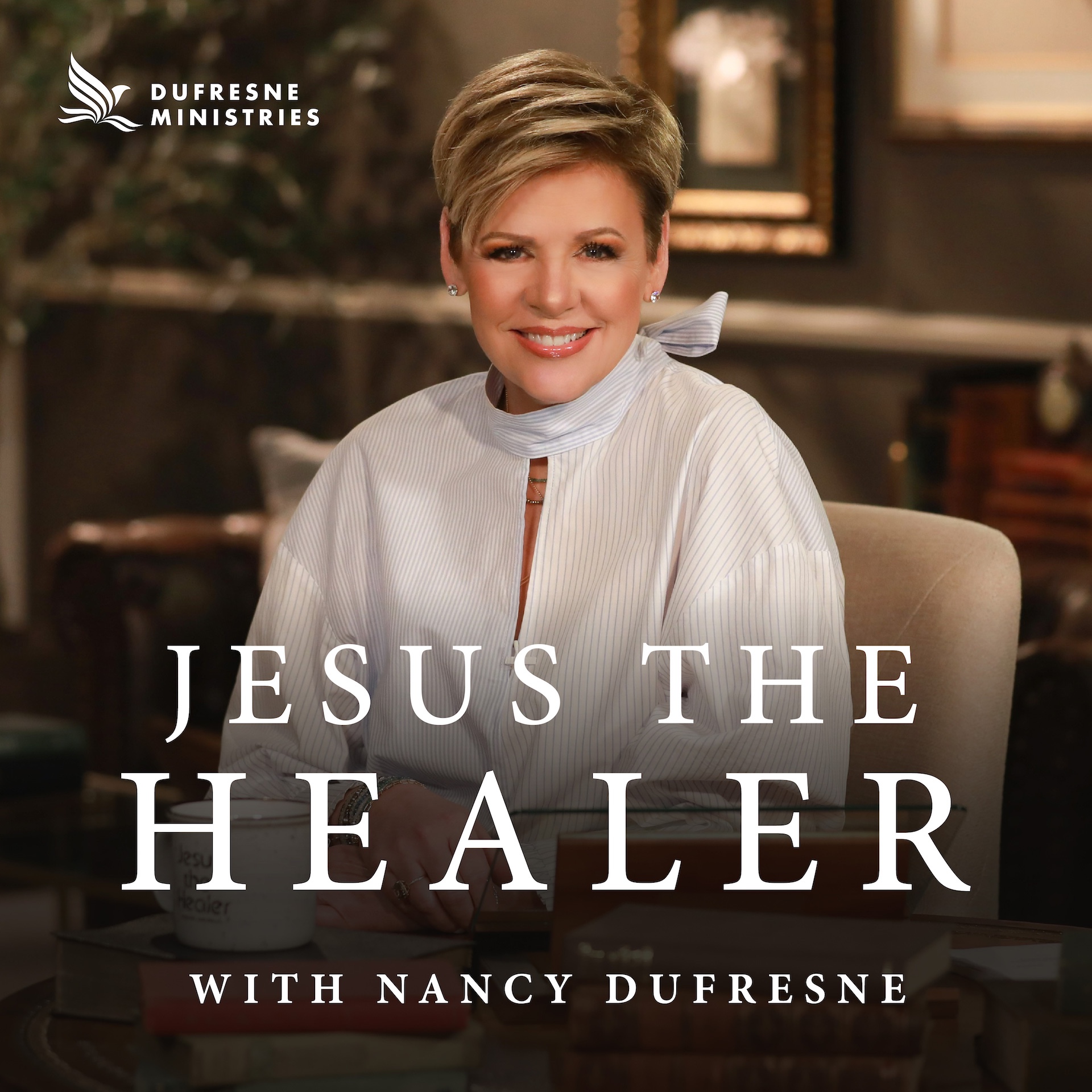
Loading summary
Transcript15 lines
- [00:01]
A
Thank you to Kenneth Copeland Ministries for sowing the airtime for this broadcast.
- [00:11]
B
There's enough power in every sick room and in every hospital room to raise up that sick one that may be describing you. You may be in a sick room, you may be in a hospital room. And I want to remind you, power is present. That power is there to do a work, believe in what's not. Try to get something, but notice that he's already made it yours. It's present right where you're at. Say, I receive that power. I receive that power. I receive it right now. I receive it right now. From the top of my head. From the top of my head. The soles of my feet. The soles of my feet. We are so glad to have you with us today for Jesus the Healer. Thank you for joining us. And I tell you, we started on a previous episode talking on a way that in a. In a direction we're going to continue. So you don't want to miss it today in upcoming episodes. And if you have not seen the previous episode, go and watch it because it will help you to understand. As we go further in this teaching, health, healing and long life belongs to us. But we won't arrive there. We won't just arrive there by accident. We have to on purpose, learn the Word and take our place in the Word. Amen. Apply the Word, be a doer of the Word. And we've been teaching on the healing ministry of Jesus, and I tell you that's such an important part, but we're going to even keep going a little further. What people might not recognize is connected to their health, but it is, and it's a primary application of the Word that we need to be skillful with if we're going to be healthy and live a long life. So turn with me if you would, and let's go to 1 Corinthians, chapter 11. We're going to start reading in verse 23, and every time we teach along this line, we'll need to read this entire passage because it'll help you to understand where we're headed with this. So First Corinthians 11:23, you'll recognize it as what we would call communion Scriptures, but we're going to teach on it some more. So verse 23, Paul is writing, and he says, for I have received of the Lord that which also I delivered unto you, that the Lord Jesus, the same night in which he was betrayed, took bread, and when he had given thanks, he brake it and said, take, eat. This is my body, which is broken for you. This do in remembrance of me. Notice this. He says, take it and eat it. And he doesn't tell you how often, as much as you want. Amen. Hallelujah. Verse 25. After the same manner also, he took the cup and went supped, saying, this cup is the New Testament in my blood. Or we could read it this way. The New Testament is activated by my blood. The blood purchased everything in this new covenant and activated it. So this cup is the New Testament in my blood. This do ye as oft as you drink it in remembrance of me. So now he's told us, remember something twice. Remember about the body, remember about the blood. He doesn't say, do this in memory of me, but in remembrance of what was purchased with his body and his blood. Amen. Verse 26 says, for as often as you eat this bread and drink this cup, you do show the Lord's death till he come. Look at these words. As often as you eat it. He doesn't tell you you only have to do it once a month, once a week. You can do it as often as you choose to remember. Amen. You don't even have to be in church. You can. Do. You know, I heard one minister, Satan, it's absolutely true. He said, I turn every breakfast into my communion time. Because he said at breakfast, I remember when I take the cup to drink, I remember his blood was shed. When I take my food to eat it, I remember his body was broken. And he says, I do it with reverence. And I remind myself, and it becomes an act of communion. Why do it reverently? Amen. It's not about where you do it, it's about how you do it reverently and Remembering. Amen. Verse 27 says, Wherefore, whosoever shall eat this bread and drink this cup of the Lord unworthily shall be guilty of the body and the blood of the Lord. Now, as we said in the previous episode, he doesn't say, whosoever shall eat the bread and drink this cup of the Lord. Unworthy, but unworthily. Jesus made you worthy. You didn't do anything to make you worthy. He made you worthy. So everyone that is a child of his is worthy to do this, but he's saying, the manner you do it in, don't do it unworthily. That's the word is unworthily, or it means irreverently. Don't do it irreverently. Actually, the Greek means irreverently, for this word unworthily. The Greek is irreverently. So wherefore, whosoever shall eat this bread and drink this cup of the Lord with irreverence shall be guilty of the body and the blood of the Lord. Verse 28. But let a man examine himself. What should he examine himself? Is he remembering that Jesus body was broken? That Jesus blood was shed, that it activated the covenant? Are we remembering this? We need to remember it so we don't lay down our authority when opposition comes, when sickness comes, remember his body's broken so that yours won't be. Amen. When sickness threatens or tempts you, remember that his blood gave you power over sin. Amen. Sin shall not lord it over you, shall not have dominion over you. Remember the blood did that for you. It cleansed you and made you whole. Amen. But let a man examine himself. In other words, remember these things. But also we could say this, Examine himself. Is he walking in obedience to the Word? Is he being a doer of the Word? Is he obeying what God is dealing with him about? Is he living in the way of the word? Verse 28. But let a man examine himself, and we could read this way, and then let him eat of that bread and drink of that cup. So he's saying, examine yourself before you do this holy, reverent act of communion. Because if you do it irreverently, you're now guilty of the body and the blood of the Lord. That's right. Now verse 29. For he that eats and drinks unworthily or irreverently, without even examining himself, is he in the faith? Is he using his faith for what Jesus purchased for him? For a man that eats and drinks unworthily, eats and drinks damnation to himself. See, now we're talking about you're guilty of the body, of the blood of the Lord. That's talking about in verse 27. So these verses are connecting to one another. He that eats, verse 29. He that eats and drinks unworthily or in an irreverent manner. He forgets the price paid, eats and drinks damnation to himself. Not discerning the Lord's body for this cause. For what cause? Not discerning the Lord's body. Many in the body of Christ are weak and sickly among you, and many sleep or die prematurely. This is a huge statement. Jesus revealed this to Paul. Remember what it says in verse 23. For I've received of the Lord. Jesus taught him these things. He's telling him why people, many in the body of Christ, are weak, why they're sickly and why? They're dying premature. Jesus revealed this to Paul. Now see the Gospels that where the act of communion at the Last Supper is recorded in three of the other Gospels. They don't record this because further revelation came to Paul about this. Jesus revealed this to him. Why? Because Jesus wants us to know. Stay away from doing this. Stay away from being irreverent. Don't forget what I purchased for you. Don't forget what my blood did for you. Because when people aren't discerning what price I paid in my body for them, that for this cause. Verse 30. For this cause. Many, many, not a few. Many are weak and sickly among you, and many sleep or die prematurely. This is serious.
- [09:06]
C
It is.
- [09:08]
B
We don't have any scriptures like this in the New Testament that point to this is the cause why many are sick. So Jesus is wanting us to know this. It's so important that we discern this. Verse 31. For if we would judge ourselves. What do you mean, judge ourselves? Are we remembering that his body was broken? Are we remembering that his blood cleansed us and gave us access to the family of God, brought us into the family cleansed by the blood? Are we judging ourselves on this? Are we remembering these things? For if we would judge ourselves, we should not be judged. Well, we don't want to be guilty of the body and the blood of the Lord. We want to judge ourselves. Verse 32. But when we are judged, we are chastened of the Lord, that we should not be condemned with the world. So we started, and I don't know how fast we're going to get to go in these episodes because these are so loaded and I find myself repeating myself. But it's so important that we get this. Amen again, verse 29 and verse 30, the last phrase of verse 29, not discerning the Lord's body. For this cause of not discerning the Lord's body. Many are weak and sickly among you, and many sleep or die prematurely. So we need to realize what does it mean to discern the body? Number one, There's a physical application to it. Jesus took physically. The stripes were laid on his back for our healing, they were laid on his body for our healing. But not only that, his spirit bore it all. All this sin, the sin of the world, the guilt of the world was laid upon him, and this was laid upon him. When people don't discern this in the face of sickness and disease, they're not discerning the Lord's body. When sickness and disease tries to come, we're to remember. Wait a minute. His body was broken so that mine could be whole. He took the stripes upon his body so that mine could be whole. And for this cause, not discerning that it was already laid on Jesus. People are, if I could say this, not taking their stand of faith against sickness and disease. And for this cause, many are weak. For this cause, many are sickly. For this cause, many are dying prematurely. They're not discerning. Jesus already took their place. And when they don't discern that Jesus took their place, they put up with what they shouldn't put up with. They permit what they should forbid. And we do this by faith. Amen. We believe this by faith, and we apply this by faith. When symptoms, sickness and disease tries to attach itself, you say, no, you don't. Jesus took mine. This isn't mine. I'm not taking it.
- [12:09]
A
That's right.
- [12:10]
B
Amen. Amen. Jesus took mine. Don't ever buy into the. Don't call my pain, my arthritis, my joints that are hurting, you know, my failing memory. Don't call it yours. Jesus took yours. So this that came is not yours.
- [12:32]
A
Amen.
- [12:33]
B
Forbid it. It doesn't belong to you. And when people don't discern that Jesus took. Took it, the enemy can put it on them. And for this cause, they're weak, sickly and dying prematurely. That's one application of what it means to discern the body of Christ. But I want us to focus on. Because we could focus on that for a good long time, couldn't we? But I want us to also focus on the other application, that those who are Christians, those who are saved, those who have received Jesus as their Lord, God is their Father, and He's the Father of a family. Jesus came to pay the price for our sin, to pay the price for sickness and disease, and also to make us one with the Father, to bring us into union with the Father. Because the Father wanted a family. Amen. And those who are born again are his family. Listen, God is the Creator of all man, but he's not the Father of all men. He's the Father of those who receive him as Father, who receive the cleansing blood of Jesus that brings them into the Father's family. Amen. My goodness. And it's so easy to become part of the family of God, say Jesus, I receive you. That's it. I receive you as my Lord, my Savior. Your blood cleanses me, washes me. Amen. It's just that simple. Amen. But on purpose, you have to receive Amen. So not discerning the Lord's spiritual body that's in the earth today. Who's that? That's the family of God. The body of Christ at large. Every Christian is a member of Christ's body that's in the earth. Amen. Think of this. God sowed one seed, his Son, and reaped many sons. Amen. You and I are his children. The sons of God. We're the family of God. God is our Father. Jesus is our big brother. We are co heirs. Everything that belongs to Jesus belongs to us. Because we're in the same family. Amen. We are children just like he's the Son of God. We are sons of God. And that was done by the blood of Jesus. Jesus. Amen. So the body of Christ is in the earth today. Because we're a part of the body of Christ, we have a place in the body. We have a role to fulfill in that body. Just like your own physical body has many parts. And each part is needed. Each part is needed. When God formed the body of man, every part was necessary, not optional. And what happens if a part of someone's body doesn't work? They're handicapped. Something, something of their body puts a handicap on them that they can't function as they ought. We as members of the body of Christ cannot become handicapped. We need to be functioning, operating. Not paralyzed through fear, paralyzed through through doubt, or paralyzed through lack of interest. Just not even it doesn't. Not even valuing that we are part of his body that needs to register. Not just here, but here. I am part of his body and we are, every single one of us are to be a functioning part so that we do not hinder his body from functioning as it ought. Amen.
- [16:19]
A
Amen.
- [16:20]
B
You could take just a toe on your foot and drop something on it and it not function right. The whole body feels that when we are functioning. The whole body feels that when something of our body is not functioning, the whole body feels that. It's the same thing with the body of Christ in his body. When every member of the body is functioning, we feel that when members aren't functioning, the body feels that. Amen. And for this cause, not discerning, that people are members of his body. Therefore they have a role to play, a responsibility to fulfill. Because people don't discern that and they aren't doing their part. This is why many are weak, sickly and dying premature. Because they're not bringing their part to the body of Christ that's in the earth today. Amen. People don't realize how they treat their position as a member of the body of Christ is directly connected to their health. So good. And that's the word. That's not Pastor Nancy. That's the word. Amen. This was revealed to Paul. Revelation that Jesus gave him. Why? Because Jesus wants us all doing our part. You know, if we're not careful, we see the body of Christ. There's so many members and there are, thank God. Thank God. But sometimes we think, well, what does my part matter? Because every part is necessary.
- [18:00]
A
That's right.
- [18:01]
B
What if one organ that was in your physical body that you don't see decided, well, since I'm not visible, I don't have to function. It causes other organs to begin not to function. Right. It causes the shutdown. That's true. Amen. Some parts of God's body are more visible than others. Of Jesus body, rather of the body of Christ. Some parts are more visible. You have parts that are visible, you have parts that are not as visible. Some are more public, some are not as public. Same thing with the organs of the body. Some are more visible, some are not visible. But they're all not only recommended, they're required. It's not just recommended that we function as we ought in the body. It's a requirement. Why? For the health of the body. Now when we get born again, it is imperative that we not just think about us. Now we're body minded. The whole body of Christ minded. Before we were born again, much of it, we just thought about us. Me, mine. Yes, but when you become part of God's family now it's a unified flow, a unity mentality. We're not trying to be the star of the body. I just want to be the functioning member. I'm to be. It's not about somebody being front and center, it's about the whole. Amen. Amen. Spiritual immaturity. Because we all have to grow from spiritual immaturity to spiritual development to full maturity. Right? Spiritual immaturity is when we only think about us. That's a sign of immaturity. Isn't that a sign in just a natural family, when you have children and they only think about them, you know when you say, honey, I want you clean, get the dishes off the table, and they pick up their cup and walk off because they're only thinking about me and mine. You handle you and yours right. And you're always blessed as a parent. When you see your children mature such a way that they not only pick up their dirty dishes, they pick up Their brother's dirty dishes or their sister's dirty dishes and they don't grot the whole time they're doing it. They don't complain I had to pick up your stuff. Well, because when they don't complain they start becoming family minded instead of me minded. We're a family in the body of Christ. It's about the family. It's not about just about me anymore. And thank God, becoming part of a body, we should fit in. It's not about standing out, it's about fitting in. I belong, you belong in the body of Christ. We all fit and we're all necessary and we're all valued in the place place that God has for us is so imperative. Amen. So it is imperative that we take on a mentality that is interested in the whole body of Christ, not just about us. It's dangerous to just stay me minded when it comes to spiritual things. You know, when you're just me minded, just in natural life you'll drive your car in a way that you don't care if it hurts somebody else. Right. When you see somebody being reckless on the road, when you see somebody doing dangerous things and doing what they ought not do, they're not thinking about the other people on the road, they're thinking about them and where they're headed. Right? Right. When you see law abiding citizens that are considered of other drivers on the road, right. They're thinking, wait a minute, there's other people's lives that are next to mine in this vehicle over here. And it matters to me that they're healthy. Matters to me. I don't run into them and they don't run into me. Right. Because you become mindful that you're not the only one in the world. That's called maturing. And it's a process. But we know we're maturing when we begin to take on a mentality that's interested in the whole body and not just me as one member of the body. It matters. I said it matters. And so I would say on purpose. Begin to become body minded, not physical body minded, but the body of Christ minded. Begin to on purpose think about your brothers and sisters in Christ. How is this going to affect them? What I'm doing, how I'm driving, my life, Is this going to bump into somebody and cause them to be damaged or am I going to be a blessing in the way I conduct my life to someone else? Amen. So we see when it tells us to discern that we're to discern the body of Christ, we're discerning the price he paid in his body. But we're also, on the larger scale, discerning that his body is in the earth and that we're a member of that body. Amen. And for this cause, people aren't discerning the body, they're just discerning themselves. They're not interested or thinking of or mindful of the other people in the body of Christ. They're not thinking of anyone else in the family. For this cause. Many are weak, sickly, and they die prematurely. Why? Because if we're only thinking about us, we won't safeguard others. That's true. That's true. We don't want to lightly. We don't want to damage somebody else in the body that Jesus paid for. We don't want to injure somebody else. We don't want to hurt somebody else. We might, as we're growing up, we might bump into each other a little bit. You know what I mean by that? But we're not on purpose trying to injure somebody. So our mentality, a maturing mentality, is, wait a minute. Before I do this, how's this going to affect my brothers and sisters in Christ? Before I do this, how's this going to affect my local church? Before I say this, what's this going to mean to my brother? You see, this is what we have to develop. And listen, we're not. We have to be taught this. Thank God for the opportunity to be taught that we think about. Wait a minute, How I treat my brother is going to boomerang back into my health. It's connected to my health. The Word tells us, pray one for another that you may be healed. Notice that. Pray one for another that you may be healed. The Word is showing us that how interested we are in someone else's health will reflect back in our own health. If we'll pray for them, it'll boomerang back and bless our life that we're not just me minded, we're body minded, body of Christ minded. We're thinking of all those that Jesus purchased, not just thinking of ourselves. Now notice what Paul said for this caused many, many don't have the mentality they should toward the whole body of Christ. But we're learning. I said we're learning and we're being taught. And we're going to be doers of what we're taught because our health is connected to it. Our long life is connected to it. Amen. As I said, we don't want to wait until we start getting sickly. If we start seeing that things are weak physically for us, it's going the wrong direction. Pay attention. Say, wait a minute, what am I neglecting? There's a cause. Amen is the cause. The cause could be that we're not just discerning that all that was already laid on Jesus. Or the cause could be, what am I not discerning about the whole body of Christ? How I treat the body is going to show up in how my body operates. My personal, my physical body. Amen. I tell you what, dad Hagin used to say this to us. One step out of love is a step into sin, right? When we don't walk in love with one another, it's a sin. And sin opens the door to the devil to attack us. So I'm going to walk in love with those I'm divinely connected to. Why? Because it keeps me on the blessing territory. Amen. Oh, there's so much to say about this you don't want to miss. In the upcoming episodes, we're going to talk more about it. But until the next time we see you, remember this Jesus is the healer. God bless you.
- [27:18]
A
To watch or listen to today's message and other messages by Nancy Dufresne, visit dufresneministries.org.
- [27:28]
C
In Romans 8:14, God gives His children the promise that he will lead them by his Spirit. In this important book by Nancy Dufresne, you will learn how to recognize and follow the leading of the Spirit. Order this book now@dufresneministries.org.
- [27:49]
A
Please join us for our annual Holy Ghost Meetings in Marietta, California, January 6th through the 11th, 2023, with Nancy Dufresne. We are also excited to welcome Kenneth Copeland and Richard Robertson as our special guests. For more information, please visit our website@DefrainMinistries.org we trust you've enjoyed this message. Visit us@DefrainMinistries.org to learn of our upcoming meetings, share your testimony, submit a prayer request, or visit our online store. Thank you to the friends and partners of Dufresne Ministries for making this production possible.