← Jesus the Healer w/ Nancy Dufresne Audio Podcast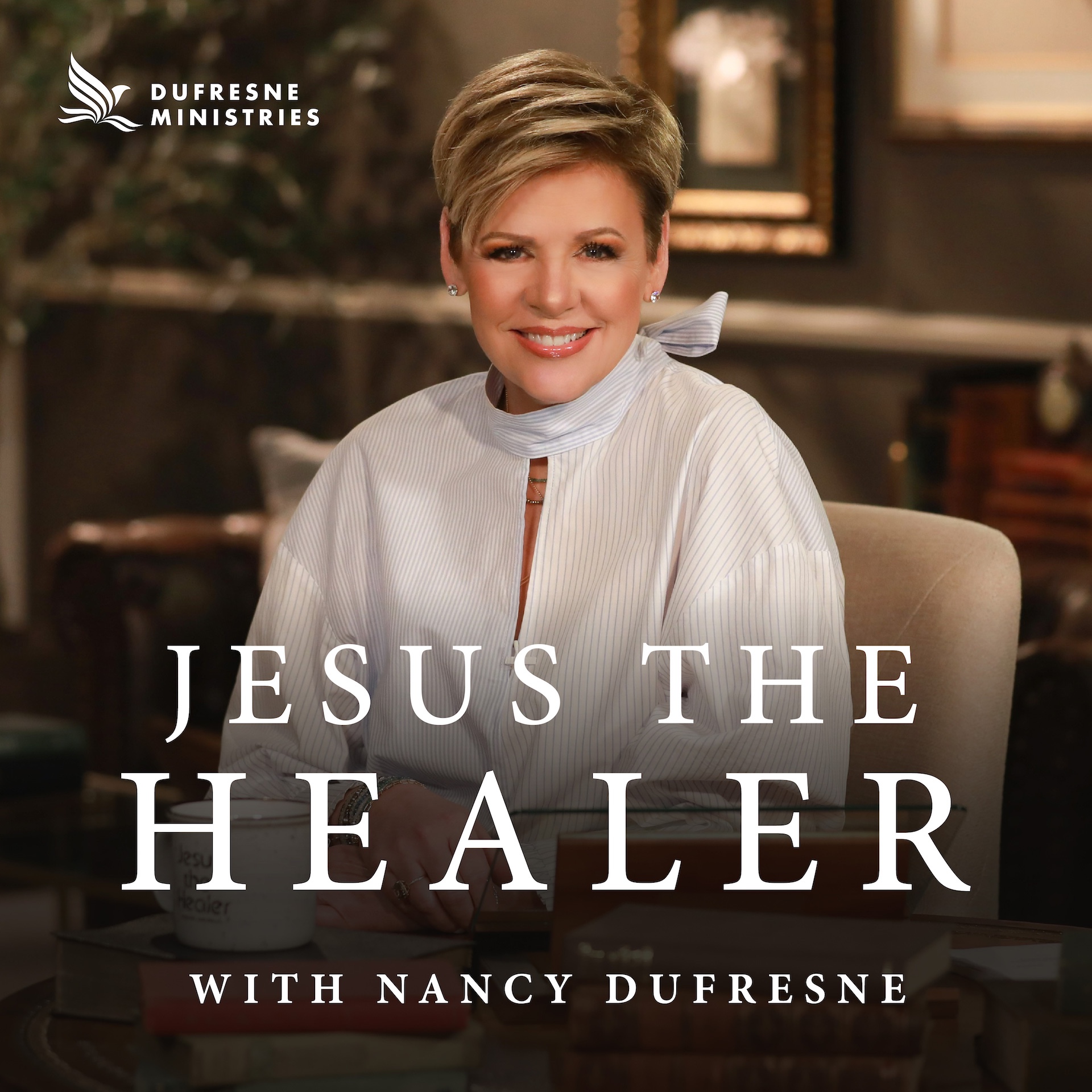
Loading summary
Transcript7 lines
- [00:01]
A
Thank you to Kenneth Copeland Ministries for sowing the airtime for this broadcast.
- [00:11]
B
There's enough power in every sick room and in every hospital room to raise up that sick one that may be describing you. You may be in a sick room, you may be in a hospital room. And I want to remind you, power is present. That power is there to do a work, believe in what's not. Try to get something, but notice that he's already made it yours. It's present right where you're at. Say, I receive that power. I receive that power. I receive it right now.
- [00:42]
A
I receive it right now.
- [00:43]
B
From the top of my head. From the top of my head. The soles of my feet. The soles of my feet. We are so glad to have you with us today for Jesus the healer. Welcome. And I ask you, get hold of your Bible, get hold of a notebook, a pen or pencil, free. Follow along with us. We're going to pick up today where we left off on the previous episode. So this, I believe, is gonna be like part six of this subject we've been on. We invite you go back and watch the previous ones because it will be a help to you. We have a studio audience here, and they're hungry. They're drawing. You're hungry. I'm hungry. No, not just for food. Well, we might. That might be true, but we're hungry for the Word. Amen. And it's so wonderful to feed on the Word together because as we do, we see how to be better doers of that Word. And it's the doer that's blessed. Thank God, that we get to hear the Word, because that's where it begins. But it doesn't end there. The hearing has to progress to the doing. And we're doers of the Word. And thank God for the opportunity to hear. Hear the Word so that we'll know what to do. Amen. We're believing, God, that you hear things that maybe don't even come out of my mouth, that God will speak to you and make things for your own life so clear to you. Amen. We're going to read out of First Corinthians, chapter 11 today. You'll recognize it as being the passage dealing with communion. But yes, it has something to do with divine healing. It has a lot to do with divine healing. Because really, healing, health and long life belongs to us in Christ. It belongs to us, but we have to cooperate with those flows, you know, the healing power of God flows. It belongs to us, but we have to make sure we're in the flow of where healing is, how many of you know there is no healing in the worry flow. Healing is not in the fear flow. Miracles are not in the doubt flow. So we have to make sure we're in the flow where we can receive of God's flow. That's right. Health, healing, long life are God's flow. So we have to know, what does that flow look like? What do we permit or what do we not permit in our lives so that we can stay in the flow of God. And this passage is going to help. Help us with that. We're gonna take some time and read a large section, but we need to to get you caught up with where we're headed. First Corinthians 11:23. Paul is writing and he says, for I have received of the Lord that which also I delivered unto you. Now look at this. Jesus taught him this personally. He said, he received this of the Lord. He didn't receive this from the disciples or the other apostles that were present at the Last Supper. He received this from Jesus himself. So we see no wonder. Paul's revelation is a little further than what's given in the gospels about this incident. And so he said, for I have received of the Lord that which also I delivered unto you, that the Lord Jesus, the same night in which he was betrayed, he took bread, and when he had given thanks, he brake it and said, take, eat. This is my body. Notice we have to take it and we have to eat it. You say, well, Pastor Nancy, how do we do that? Well, now we take His Word. We eat his words. Amen. Because His Jesus was the Word made flesh. So when we're eating His Word, we're taking of the same flow and the same substance that's going to bring about healing and life in our bodies. Amen. So he said, take, eat. This is my body which is broken for you. His body was broken, so ours could be whole. Amen. He says, my body which is broken for you. This do in remembrance of me. We have to remember this. When things come to try to break our body, we have to remember, no, his was broken, so ours could be whole. Verse 25. After the same manner also he took the cup, and when he had supped, saying, this cup is the New Testament in my blood. So we could say it this way. The new covenant, the New Testament, is activated by the blood. It's possible because of the blood. This cup is the new Testament in my blood. This do ye as oft as you drink it in remembrance of me. So we're to remember all that belongs to the new covenant is ours by virtue of the blood. Verse 26. For as often as you eat this bread and drink this cup, you do show the Lord's death till he come. Wherefore whosoever shall eat this bread and drink this cup of the Lord unworthily, or as the Greek says, irreverently, shall be guilty of the body and the blood of the Lord. But let a man examine himself. What's he to examine himself about? Is he remembering what was laid on Jesus body? Is he remembering that the blood activated the new covenant? Are you remembering that? Not only that, are we in examining ourselves, we say, are we obeying the Word? Are we obeying what God's telling us? Are we a doer of the Word? Let a man examine himself and we could read it this way. Then let him eat of the bread and drink of the cup. That's why. Because we don't want to do it irreverently. So we want to examine ourselves first. This act is not for the unsaved. You don't serve communion to someone unsaved because it's a very serious, reverent thing. It represents the great price he paid for us. Verse 29. For he that eateth and drinketh unworthily or irreverently, or could we say this not honorable toward what the price was not being honorable toward that. For he that eateth and drinketh irreverently eateth and drinketh damnation to himself. Not discerning the Lord's body. Look at the phrase not discerning the lord's body. Verse 30. For this cause. What cause? Not discerning the Lord's body. For this cause many are weak and sickly among you, among Christians, and many sleep or die prematurely. Amen. Many die prematurely. And this is the cause, not discerning the Lord's body. Now, we've looked at it in previous episodes, but we want to also touch on it again today. Verse 29. The last phrase of verse 29 says, not discerning the Lord's body. Verse 30. For this cause, many you're weak and sickly among you, and many sleep or die prematurely. So what does it mean to discern the Lord's body? If this is a cause, what does it mean to discern the Lord's body? Well, it's a twofold meaning. The first is the physical application of what Jesus took on himself, right? He took the sickness, disease, symptoms and pain upon himself of every human being. He paid the price for them to be free. From it. And then not only that, by his blood. His blood, we're cleansed by his blood from sin. The power of the blood washes away all sin, sickness, sin, disease, all of that was laid upon Jesus Christ. Poverty, all lack laid upon Jesus on his physical body, on his spirit. So this is one way of discerning the body. That if we don't discern the Lord's body, we're failing to discern that Jesus already paid the price. If we don't remember that Jesus already paid the price, we'll put up with what we shouldn't put up with. We'll permit sickness and disease, we'll permit symptoms when we shouldn't because he paid the total price. And when people don't discern that, he's already paid the price. This is why many are weak. This is why many are sickly. And this is why many are dying prematurely or before their time. Amen. Then we had the second application of what it means to discern the Lord's body. And that is, this is the body of Christ, the whole body of Christ. Every Christian, every believer is a member of the body of Christ. Jesus is the head of that body, and every person born again. Every child of God is a member in his body. And the body of Christ is here on the earth today. Part of the body is also in heaven. All those that have died in Christ, they're still part of the body of Christ and they're performing their function in heaven. And we're still performing our function as the body of Christ here on the earth. Amen. And if we don't discern, and this is what we've been focusing on in these episodes is this second side, this second application of discerning the Lord's body. Discern the body of Christ. If we don't discern our part in the body of Christ for this cause, many are weak, many are sickly, and many are dying premature because they're not recognizing the part that they play in the body of Christ. And Jesus showed this to Paul. Remember, Paul said in verse 23, I received this of the Lord. Why did Jesus show Paul these things? That he's letting them know, he's letting Paul know, so that we know that there's a cause why Christians are weak and sickly and dying premature. And when the Word spotlights it the way it does, we need to pay attention to this. This is not a light thing to pass over. It's something we need to emphasize. So what does it mean we need to emphasize? Are we playing our Proper role in the body of Christ, are we discerning our part. Amen. Because remember what Paul said. For this calls many, many, many, not a few. Many are weak, many are sickly, and many are dying premature or before the time that they should be dying. And this is listed as a primary cause, not the only cause, but a primary cause. So we need to pay attention to it. I want to again read what the Norley translation says about verse 30 when it says, for this cause many are weak and sickly and dying premature. I like the word that Norley says. He said, because of this end, indifference toward the body of Christ. Toward his body. Many of you are feeble and sickly and some have died. What is it? Being indifferent. It's dangerous to be indifferent about what is important to God. The body of Christ, it cost heaven everything. It cost the Father, his only son, to have a family. You know this. God wanted a family. And so the way to do that was to purchase us. And it cost Jesus everything for us to become part of the family. Now we can't be indifferent about that. What does it mean to be a member of the family? We can't treat that lightly. We cannot be indifferent about that. Then we go on. And in First Corinthians, chapter 12 and verse 18 says, but now God set the members of every, every one of them in the body as it had pleased him. So what's that mean? When you got born again, God set you in a place, a position in his body, in the body of Christ. God set us. Isn't that amazing? A place where we fit. A place that we're suited for, a place that we're equipped to occupy. So he sets us there. And it says this as it has pleased him. Amen. He's pleased for us to be in that position. If it pleases him to set us there, we need to be pleased to be there. Amen. That means we're not trying to vacate that place. He sets us in a place because we're to fulfill and perform a function in that place. We're not just to occupy. We are to be functional in that place. That means we're bringing a supply to the body of Christ. That means we're receiving a supply from the body. We're connected to many members, one body. Amen. So this is important to God. I said this is important to God. We cannot be indifferent about this or light hearted toward it. Amen. I want to read to you out of Ephesians 4:16, Ephesians 4:16. And I'm going to read it to you out of the new living translation. It says this. God makes the whole body fit together perfectly. Ah, what is that? Unity. Right? Yes. Everything fits. He makes the whole body fit together perfectly. How does that happen? Because he knows where we fit. He sets us in a place, and it's pleasing to him that we be there. If we decide I want to fulfill a different function than what he's dealing with me about, then we're going to affect the fit negatively. And we're not authorized to do that. We're not authorized to just pick up and do anything we want when he has set us in the body as it suits him and pleases him. So again, verse 16 says, he makes the whole body fit together perfectly. As each part does its own special work, it helps the other parts grow so that the whole body is healthy and growing and full of love. Now why does he set us there? Because we have a work to do. We have a part to bring. And if we decide that that part isn't important, or we diminish it, or we don't perform that part, then the body is hindered. And to know this, what you sow, you reap. That is a spiritual law that cannot be bypassed. And it's true in every arena. It's not just true financially, it's true in the body of Christ. What we sow to the body, we reap in our body. If we sow difficulty to the body of Christ, what do you think our life is going to reap? And it's not because it's not God punishing us. It's the law of sowing and reaping. And so God puts us in a place where we fit, so that we bring the right supply, we bring the right work, and therefore we're sowing the right thing so that we'll reap the right thing. When people are indifferent toward the body of Christ, they're not going to reap God's best in their life. It's not possible because you only reap what you sow. Amen. So it's important that we recognize, I don't care how gifted you think you are or how gifted you don't think you are. You have a supply to bring, and the body of Christ needs it. And it's not just the visible parts. It's not just the pastor who occupies a visible position. It's not just those in the fivefold preaching ministry. It's every member of the body has a part to bring. Whether it's more or less visible is not the issue. Every part should be working, regardless of how visible it is. You know, in your own human body there are parts that are not visible at all. The organization, the bones, all of it, not even visible, but how vital they are. So we cannot diminish and decide that because we're not very visible, we're not very vital. Every part is vital. Honor your place. Honor the place where God set you. Treat it as important. Amen. God doesn't do something that's not important. And he set us in a particular place in the body where we're to function and to fulfill a work. Bring a supply, but also receive a supply. Amen. I want to read First Corinthians, chapter 7 and verse 17, and this again is the Norley translation. Paul was writing to the church in Corinth and he writes this again, First Corinthians, chapter 7, verse 17. It reads, each one should feel the place that God has assigned to him. Listen to that. Each one should fill the place that God has assigned to him and to which the Lord has called him. That means this. Where God assigns you. You're called every single place person in the body of Christ, every single Christian, every single believer is called. You might not be called to a five fold ministry office, but you're called to fulfill a place in the body. And that is so important. Why? Because Jesus is the head and we are the body. And the head is limited and confined to the movement of the body. You know, if you were to say, I'm going to get up and leave the room, your head decides that, but without the body performing that, the head can't move. Right. The head does not disassociate itself from the body and get out the room. It depends on the body to carry the head where the head decides and leads. See, the body doesn't lead the head, the head leads the body. The head decides. The head gives the direction. That's where the brain, the mind and all of that is. And that directs the rest of the body. But without the cooperation of the body, what the head plans can't go anywhere. Jesus is the head. God has planned. Jesus has plans for the body to fulfill. But if the body won't cooperate, somebody's body may be hindered or handicapped just physically. Why? Because a part of the body's not working right and it hinders the body in some respect. When we as fitting in a certain place and certain part in the body of Christ, decide we're not going to bring our supply, decides we're not going to fulfill the work assigned to us fulfill the call assigned to us. The body is affected and the head is limited. The head is hindered. And we don't. We're not authorized to limit Jesus and to hinder him and his people plan. I tell you what, what an honor to think that we have a part. And I would dare to say, really, sometimes people don't understand this. They've not heard this, they've not been taught this. But thank God, the Word shows this. And it's important to Jesus. So what's important to him we make important to us. Amen. Amen. In the body, you don't want just one part of the body. Just take the human body. You don't just want one part of the body spotlighting itself and diminishing the other parts of the body. What if the hand were to say, I can be lifted higher than the elbow, therefore I'm more important. No, you're not. Because if it weren't for the elbow, the hand couldn't get up there. That's right. Right. Every part is dependent upon the other. So no one part can be the star, right? Even so, in the body of Christ, no one's the star. We're not trying to be the star and trying to be spotlighted. We are wanting to just fulfill our function. Now that spiritual material, when you're not trying to get the attention for yourself, but you're wanting the whole body added to, you're wanting the whole body strengthened, the whole body functioning as it ought. So it's not about who's visible and who's seen. It's am I doing my part? Am I bringing my supply? Now that's the important thing. Because God loves unity. You know, if you're not careful. The natural side of man likes attention, right? But in the body, we like unity. Unity. That's what we value. That's the mindset of spiritual maturity. Unity. I'm not trying to put myself above my brother. I'm not trying to push one down so that I can become more visible and feel better about myself. When others are elevated and I'm part of that, I'm blessed. Amen. When my brother excels, my sister excels. And I'm part of that encouragement to them. I'm blessed by that. That's what I want. And we have to become the renewed mind is unity minded. The renewed mind is body of Christ minded. It's not just about me and what's comfortable for me. Listen, my husband, precious man of God, powerful minister of God, and he used to say, and those who had been in his services would have remembered this. He would used to say, I didn't like getting up in front of people. He said, I did not. It scared me to get up in front of people. But here he preached for almost 50 years. He went against his own personal preference to be a blessing to the body. Amen. Naturally, in his own flesh, he would have rather just sat in the background and been a support and a help to his pastor. But God had a place for him to occupy, and he had to go against his own preferences to occupy that place. It's not about what you prefer. It's about what are we to bring to the body. When we realize not about us, but it's about the whole body, then we'll have a different mindset and mentality and approach to the supply we bring because we'll start making decisions based on the body of Christ and not just based on us. Amen. My mother taught us. I remember when I was in eighth grade, I started playing the organ for the church that we were raised in. So I was the organist from 8th grade until I went off to college. And I woke up one morning and I was sick and I'm talking about nauseated, and I was ill. And I told Mother, I said, I'm sick and, you know, you don't feel good. And I said, I'm sick. She said, so what? She said, you're the only organist. You're going to be there. She wasn't thinking of me, she was thinking of the body, that local church body. She realized I had a responsibility. I got up, I got dressed, I went and played the organ in between songs, I had to go to the restroom and I had, you know, I was nauseated and I had to go to the restroom. But Mother was. She taught us it's not just about you. You have a responsibility to this church family and you're going to be there. That's a renewed mind when you think not just about me, but about the whole body of Christ. So I'm so grateful for that training early on because that's a mature approach. It's not just about me, mine and ours, it's about the whole. And God set me in a place. And God set you in a place, and. And he not only set us there, we're called there. Amen. And when he calls, we need to be found in the place we're set. Amen. Amen. Well, there's so much to teach on this, and we can go so far in it, and you don't want to miss upcoming episodes. Amen. It's going to be a blessing to you. But until we're with you next time and you join us, remember this Jesus is the Healer. God bless you.
- [27:24]
A
To watch or listen to today's message and other messages by Nancy Dufresne, visit dufresneministries.org in this important book by Nancy.
- [27:34]
B
Dufresne, you will learn how to recognize and follow the leading of the Spirit and receive God's help in every arena of your life. Order this book now@dufresneministries.org.
- [27:49]
A
Please join us for our annual Holy Ghost Meetings in Marietta, California, January 6th through the 11th, 2023 with Nancy Dufresne. We are also excited to welcome Kenneth Copeland and Richard Roberts as our special guests. For more information, please visit our website@DefrainMinistries.org we trust you've enjoyed this message. Visit us@DefrainMinistries.org to learn of our upcoming meetings, share your testimony, submit a prayer request, or visit our online store. Thank you to the friends and partners of Dufresne Ministries for making this production possible.