Loading summary
Transcript180 lines
- [00:00]
Ian
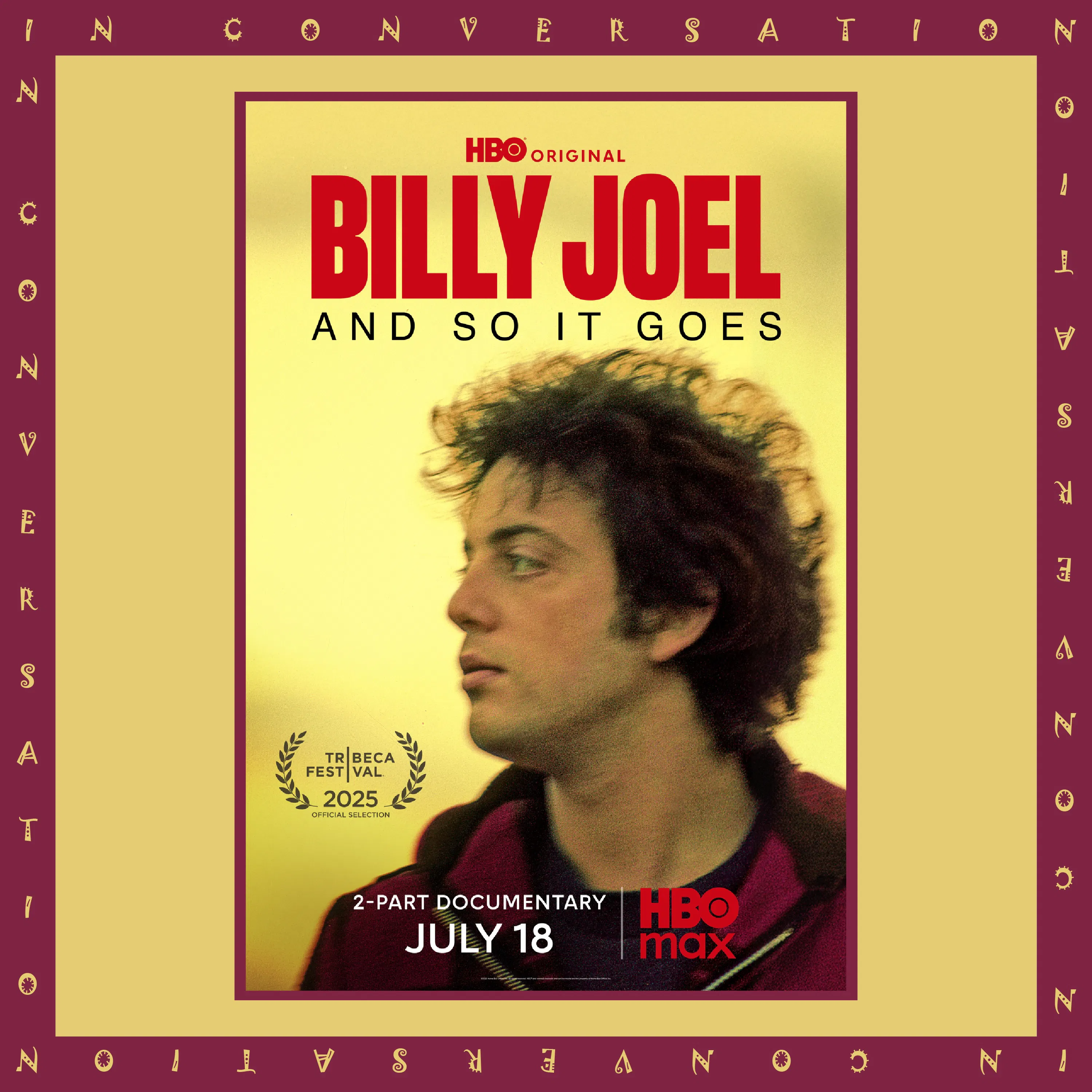
Welcome back to Jokerman in conversation. I'm Ian here today with a very special topically appropriate episode. A little bit of kismet here. Stars aligning during our Summer of Joel on Jokerman podcast. Subscribe to Patreon Catch all those episodes if you haven't already. There's also this fantastic, deeply comprehensive and just, you know, extraordinarily well done Billy Joel documentary. And so it goes, premiering tonight, July 18th on HBO. The Home Box office itself directed by Jessica Levin and Susan Lacey. Susan, of course, mastermind behind the American Masters PBS documentary series and one of the primary drivers behind little motion picture known as no Direction Home, the definitive documentary portrait of Columbia recording artist Bob Dylan, obviously directed by Martin Scorsese. We talk a little bit about her experience putting that film together, working with Jeff Rosen to make that masterpiece happen. But Susan and Jessica are here together to talk about the man, William Joel. Again, the subject of this fantastic two part documentary premiering tonight, second part, I think, coming next week, next Friday on HBO that really tells, you know, the whole story. Soup to nuts, tip to tail from Billy's upbringing in Long island, his, his pre fame ban, his pre, pre fame, not only Attila, but also the hassles and then obviously all of the records, the performances, just a deep, you know, kind of considered thoughtful portrait of the man. Fantastic talking head interviews with friends, family members, you know, band members. Our good pal Stephen Haydn shows up several times to provide some sage words right alongside Paul McCartney, Bruce Springsteen. It's a rock doc par excellence and again, could not be any better timed for us than to be premiering here in the midst of the Summer of Joel. I'll let Susan and Jessica take it from here. Susan Lacy, Jessica Levin, thank you so much for joining us here.
- [02:18]
Susan Lacy
We're delighted to be here.
- [02:20]
Jessica Levin
Thanks for having us.
- [02:21]
Ian
It's pleasures, pleasures all mine. As I was just explaining a few minutes ago off air, we're smack dab in the middle of our Billy Joel series on Jokerman. It's really the summer of Joel and I don't think we even realize that this splendid documentary that we're here to talk about a little bit today was even coming out this summer. So it's all the stars are aligning. A little bit of kismet here. I guess I gotta start here just with why Billy Joel as the subject of a nearly five hour documentary. And then beyond that, I guess, why now?
- [02:57]
Susan Lacy
Well, it's a long story, but I mean, obviously a definitive film about Billy Joel needed to be made. I mean it's a 50 year career. And that had not happened. And it's a conversation that went back starting with me and Steve Cohen probably five or six years ago. And they weren't quite ready at that time. Time I actually wanted to do it at American Masters and that wasn't happen and then that didn't happen then because they weren't ready yet for that to happen. And then I got a call from Sony asking about whether I wanted to do it. And I was like laughing and saying, yeah, if anybody could ever make it happen. And then I got a call from Tom Hanks and Gary Getzman's company Playtone, and they had been approached by Hazy Mills, which is Sean Hayes's company, and Todd Milner to ask them to get involved and co produce a film on Billy Joel. And they said, yeah, but you know, we really would like Susan Lacy to direct it. So somehow or another, for six years later, it was like it came back to me and, and we got started on it and you know, we had a deal at HBO and they had a deal at hbo, so HBO just jumped on it. And they've been a great, great supporter and partner on this film as well. So it's a long history, but it needed to be. I mean, it was time for this film about Billy Joel. You know, the residency was going to come to an end at some point. We didn't know that would happen during while we were making this film, but we knew it would happen. And that was going to be the time was there to make, to make this film. And when Billy agreed to do it, I don't think it was an easy decision because he really actually says he doesn't like to talk about himself. He was tired of talking about that Billy Joel guy, you know, but he got into it. After many, many interviews, he came to the table in a really deep and important way finally.
- [04:56]
Ian
Absolutely. Yeah. I think that is kind of what makes, I mean, it's a fantastic film, but I think Billy's participation, frankly, and willingness to go there as deep and as broad as he does in this film, that really is kind of what sells it. Did that sort of, I don't know, did that take some time for him to kind of warm up to the idea and really get into this aspect of things? Or was he ready to just kind of dive in and tell the tale from the beginning?
- [05:25]
Susan Lacy
No, I think it took time. And you know, we had some points of connection that were very helpful, I think, towards breaking the ice in terms of us communicating with each other. As biographer and interviewer and subject. And one was that my mother was a classical pianist, a concert pianist. And I grew up with the music that he loved, the German romantic. Me and my. My mother playing this all the time. I grew up with it, and I knew a lot about classical music. And the other is that our fathers emigrated from Nazi Germany in the very same year.
- [06:04]
Ian
Jewish.
- [06:04]
Susan Lacy
Jewish fathers, in 1937. And they both became American soldiers, went back to Germany as American soldiers. And that was. And we shared a Holocaust background there. So that was a. So I started. Actually, the first interview was all about that, because I thought, well, that's something that we share. And he had. He was. Knew a lot about it, but he had learned about it very late in his life. He didn't know that much about it, and he learned a lot of it from his brother. Anyway, so that was the very first interview. And the second interview was primarily about classical music. So we got to know each other for a couple of very lengthy interviews before. Before really starting on the trajectory of his life and his songs. And he just grew comfortable over time. You know, it's like any relationship. More time you spend together, sometimes it gets better, sometimes it doesn't, but you.
- [06:57]
Ian
Gotta feel each other out a little bit. But, boy, man talking about shared family lineage, immigrating from Nazi Germany. That's a hell of an icebreaker there at the beginning.
- [07:07]
Susan Lacy
Exactly, Exactly.
- [07:10]
Ian
Well, I gotta ask a couple questions just about, you know, the man himself here and, you know, points that come up in the documentary, which, again, extraordinarily comprehensive, you know, even to someone like me, who, at this point, you know, I'm relatively familiar with the major beats of the man's story. Just some unbelievable footage and discoveries and little anecdotes here and there. One thing that I've kind of had questions about or been. Been pondering throughout our whole kind of series on. On Billy, is his relationship to critics. You know, the man is universally beloved by audiences the world over and, you know, one of the most popular, you know, commercially successful artists in the history of rock music, pop music, however you want to classify it. But, you know, there's been. There have been some ups and downs, I think, in his. His. His relationship with critics. There are some Rolling Stone reviews, for instance, that are just like, Savage. And you all quote from those a little bit in the documentary to sort of set that concept up. I wonder. Jessica, maybe feel free to jump in here if you have any thoughts on Billy's relationship to. Not his audience necessarily, but the tastemakers out there, the critics.
- [08:28]
Jessica Levin
Well, look, I mean, we did our best to examine it in the film. And if you think about it now with perspective of today, it's sort of hard to imagine that anybody was that tough on Billy Joel back in the day. And remember. And in the film, in the part two of the film, we go quite deeply into the fact that he had pretty much left the business in the 2000s partially because of the critics, because he didn't enjoy or feel comfortable with his life being scrutinized beyond just the musical criticism. The fact that he was so much in the press and that, I mean, the press lived on his life for, you know, four decades, you know, that must. That's probably not. It wouldn't be easy for anyone, but especially for somebody who has had somewhat of a tale of woe in his life, to have. To have been exposed to the constant barrage and coverage, including the breakups of his marriages. I mean, these things were covered heavily. So when he had that sort of. I guess you would call it sort of a renaissance period after he came back when there was Hurricane Sandy happened and he had a real triumph there and people began to reevaluate his catalog and, you know, take a look at this incredible body of work which really does connect with people the world over and his fans, as you well point out. But along the way and earlier in his career, I think partially because he was so diverse and was so, you know, his influences were so diverse that the critics didn't really know how to categorize him and what to do with him. You know, he was this guy who had this Broadway influence and he had. He had ballads and he had these storytelling songs like Piano Man. He had Street Life Serenade, which practically no one heard and was very influenced by, you know, Broadway and deep melodic influences. And he had Turnstiles, which Of course, Miami 2017 came from, but. And New York State of Mind.
- [10:43]
Ian
Sure.
- [10:43]
Jessica Levin
So he was this guy who wrote these ballads and these, you know, rangy songs all over the place. And I think critics just sort of looked at him and they were like, you know, what. What do we do with this guy? He a traditional blues based rock and roller. Right. He is a balladeer, but he also has all these other influences. And then by the time he broke through with the Stranger, that just struck a chord with people. And, you know, his first biggest song was Just the Way youy Are, which was a ballad that kind of pigeonholed him as a balladeer, which he didn't like at all. He didn't think of himself as that.
- [11:16]
Ian
At all he wanted to leave it off the record.
- [11:18]
Jessica Levin
Yeah, he wanted it exactly. I mean, he didn't even write. It's like a wedding song, he says. Right. But so. And at that particular juncture, you know, as we talk about in the film, there were a lot of other influences coming into rock and roll. There was a lot of confrontation anti authoritative music. And Billy didn't really fit that mold. I mean, he was very commercially successful, and I think he was an easy target. It was sort of like, who's this guy waltzing in and thinking that he's the answer to the rock and roll? You know what I mean? Billy never had those great designs on being one thing or another. He just followed his heart musically. But I think it hurt him and hurt his feelings. And he talks about ripping the up on stage. He says, I didn't like it. I would say. And I.
- [12:07]
Susan Lacy
The review.
- [12:08]
Jessica Levin
Susan, you can add some to this.
- [12:10]
Susan Lacy
Well, I mean, I think it's. It's. It's so interesting that everything is context, you know, and the time that he was. You would think that his diversity of musical talent and his ability to work in any genre, in a different place in time, that would have been admired. But at his time, you know, you know, it was. Didn't fit the mold of the time. And Bruce Springsteen speaks to that. And I really was happy that he was able to do that because they've been compared so much, you know, New Jersey, Long island, working class boys. But Bruce has gotten the rock and roll chops that Billy didn't get. And so for Bruce to say, you know, the, the fact that he didn't have these rock and rolly, traditional rock and rolly elements meant that the critics just basically overlooked a lot of his best work. That meant a lot to have that in the film, I think, for. For coming from Bruce. But, you know, yeah, it did hurt his feelings, but he also was like this, you know, I don't want to. He didn't want to be thought of as a balladeer. He wanted to be thought of as a rock and roll guy that isn't. Billy does have a lot of rock and roll chops, but that's not totally who he is. In fact, I think a lot of his most beautiful music are his ballads, you know, and that's why they're heavily featured in this film, because they actually work great a score as well. So. But it's, it's. It's very sad to think that he. So much of his life was spent battling people who just weren't going to give him a break.
- [13:42]
Jessica Levin
Misunderstood.
- [13:43]
Susan Lacy
Misunderstood, yeah.
- [13:45]
Jessica Levin
Yeah.
- [13:47]
Susan Lacy
You know, as you pointed out, now, you know, Billy can do no wrong. I think there probably are still. There's still people who. I mean, there's still naysayers out there.
- [13:54]
Jessica Levin
Oh, yeah. Oh, they're there. They're there. And I don't think that they're going to change their minds, because I don't think they want to be wrong. They're like, I didn't like Billy. Told the beginning. I'm still not gonna like him.
- [14:06]
Susan Lacy
That's not entirely true. I mean, when we started this film, a lot of people would say to me, why are you doing Billy Joel? And a lot of those people who were at the Tribeca opening and they were like, I get it now. You know, I totally get why. Yes. And they. It was completely changed their minds about him because they. They found out things they didn't know when they saw Sides of Billy they didn't know were there. And they heard music they hadn't heard before.
- [14:29]
Ian
Sure.
- [14:29]
Susan Lacy
You know, I mean, the. The. The charts are, you know, what most people know, unless you're a big Billy Joel fan and you kind of go deep into the catalog.
- [14:36]
Jessica Levin
So can we talk a little bit about the. Since we're on the topic of the music, can we talk a little bit about the fact that we do use a lot of Billy's music and a lot of catalog in this film? Because I think it's something Susan and I are both really, really proud of.
- [14:54]
Ian
Yeah, it was fantastic. I mean, I guess feel free to just kind of talk a little bit about your philosophy there. But, yeah, I mean, anything from. I mean, there's even. I was going to say anything from Cold Spring harbor right through river of Dreams. There's even some Attila. There's even some Castles in.
- [15:10]
Jessica Levin
I know you enjoyed that part. Don't lie.
- [15:12]
Ian
No, absolutely. It was great. Wonder Woman is such a funny song.
- [15:17]
Susan Lacy
Wonder Woman.
- [15:18]
Ian
Yeah, exactly. There's that video of them riding around in the roller coaster, which I hadn't seen before. Anyways, it really is a comprehensive A to Z soup to nuts kind of musical biography of the man as much as anything. So tell us a little bit about that.
- [15:33]
Jessica Levin
Well, all I was gonna say. And Susan and I can both speak about this, but I think we both were very aligned about the fact that because of what we just talked about, the fact that he had so many diverse influences and that his music meandered in many different directions throughout his career, we were really able to mine the catalog to create the score of this film. Not just talking about, you know, this is the origin of this song, or, you know, him talking about, you know, stiletto or this is how this song came about or whatever. But it was more to underscore the sections of his life that were about his inner life and about his personal story. And because the music was so broadly influenced, it had that cinematic quality to it. And we were really able to mine his music to underscore his life, not just his pop music, but also his classical music. And I think Billy's catalog has 121 songs in it, and he used over 110 songs.
- [16:30]
Ian
Wow.
- [16:31]
Jessica Levin
In the film. So we're really proud of that. And Susan, tell him about what you were hoping to put at the end of the film.
- [16:39]
Susan Lacy
Well, first I want to say that. That in some cases, for example, with the ancestor Holocaust sequence, I had asked a couple of musicians who work with Billy to create variations on the tune of Vienna. Not spot on, you know, but they're in the air. One that would sound very Jewish, one that would sound very Viennese, and one that we could use as a father theme and that. And that works so well as score in editing that sequence. I mean, I don't. That sequence wouldn't be the same without that. But we didn't have the. The instrumentals. And I wanted it not to be totally spot on, but just kind of a hint of Vienna so that when you get to the performance of Vienna, it all would unfold. So we did that several times in the film where there was a song that emotionally met that moment, but we didn't want a lyric version of it. We just wanted to. An instrumental version. And they would create. But not again, totally recognizable. Not like taking the tune and just making an instrumental out of it, creating a variation on it. So. So 100% of the score of this film is Billy Joel music, including all that classical music. And I want a very. I hope you include it in the podcast because Very important to us for people to know that. But there's no needle drop in this. And. And I wanted to. The very first thing at the end of the film to say the original score of this film is Dr. Entirely from Billy Joel's compositions and allowed to do it because there were. Occasionally you would hear a little Led Zeppelin or a little Moonlight Sonata or whatever. We weren't allowed to do it, but it is 100% the score of the film is Billy, and. And we're really proud of that.
- [18:24]
Ian
It's fantastic. What do you guys got? I just. You Know, on the note of his. His music. I gotta ask. Favorite songs, favorite records, any deep cuts that you ride for that might not be quite as well known as.
- [18:37]
Jessica Levin
Oh, my God, it's such a hard question.
- [18:41]
Susan Lacy
Think about it.
- [18:41]
Jessica Levin
We've been steeping for three years. But, Susan, you go.
- [18:47]
Susan Lacy
Well, I mean, I have. I. Probably five top five songs would be. And so it goes.
- [18:53]
Ian
Sure.
- [18:54]
Susan Lacy
Vienna Down Easter. Alexa. I really like surprises. I think surprises are really interesting. Surprising and interesting song. And, you know, Lullaby. Lullaby, yes. One of my favorites. And I also really love his classical music. I mean, Immorato is one of the most beautiful melodies I've ever heard. And he was savaged by the critics on that one, too. But he. He was prepared for it. He knew that was going to happen.
- [19:24]
Ian
Yeah.
- [19:25]
Susan Lacy
Even though it reached number one, it was number one album. Did we actually. I think in the end we had to take that out.
- [19:30]
Jessica Levin
No, it's in.
- [19:31]
Susan Lacy
No, no, it's number one. And beating, being beating out. Yo Yo Ma.
- [19:35]
Jessica Levin
It knocked Yo Yo Ma out of the first spot.
- [19:38]
Susan Lacy
Yeah, first. But it was. For 18 weeks, it was number one on the classical charts, which doesn't really happen. No. Even though the critics didn't like it.
- [19:48]
Ian
Lullaby is a great one. My wife, you know, her dad used to sing that to her as a. You know, when she was, I don't know, five or something and going to sleep, he would sing that. So that's a very special song in our household as well. Jessica, you got any favorites?
- [20:01]
Jessica Levin
Yeah, oh, my gosh, I have so many. I mean, if you want to talk about. Well, okay, so for some popular songs, I would say She's Got Away is one of my faves, because it was really the first ballad he wrote that became a song that people know, and it was written for Elizabeth Weber. They were broken up at that time, and Billy was pining for her. And. And it's such a pure. A beautiful melody, a beautiful bridge. Very simple, but yet very moving. And I think really Billy's purest love song. And I. And I really love that. And that was on his very first Singer Songwriter album, um, Cold Spring Harbor. So it just kind of showed kind of a harbinger of what was to come in Billy's music. So I find that that song is really special. And then I would say, moving forward, I would say Street Life Serenade.
- [21:06]
Ian
Sure.
- [21:07]
Jessica Levin
Street Life Serenader.
- [21:08]
Ian
Serenader. Yes.
- [21:09]
Jessica Levin
Serenader. Where the album's called Street Life Serenade.
- [21:12]
Ian
That's always so weird to me. Like, I kept getting mixed when you were talking about I kept getting mixed up between Serenader and Serenade. I still can't figure out why. Did.
- [21:21]
Jessica Levin
I don't know. Yeah. And it. Well, that whole album, that was the first album I had, so I really strangely. But that was really something that I found really moving, that album. And I really love that song. It really show. And we use it in the film to talk about his Broadway influences. The fact that his melodies were so sophisticated. I mean, he had these sophisticated melodies and arrangements and, you know, that were sort of. You know, you listen to this, the album, if you listen. If Street Life Serenade was your introduction to Billy Joel, as it was to mine. You had a very particular point of view about who this. This guy was. You know, he was. It was satire, you know, and it was. And it was, you know, deeply melodic and, you know, these complicated arrangements and not at all what you would think of as, you know, from a rock and roll artist. And then I would say my other fave, that's kind of a deep cut is the song Baby grand, which we talk about in the film. It's in Part two, and Sting talks about it beautifully. It's the song that he wrote for Ray Charles. Billy had an opportunity to work with Ray Charles and he wanted to write a song about something that they would connect about. And so he wrote a song about his lifelong love affair with the piano. And people don't even really know what that song is about. They think it's about a woman, they think it's about an affair, but it's not. It's about the piano. And he and Ray, as Billy says, he was really nervous, you know, when Rhea showed up and they had a sing together. But he said Ray got into it, which I love, because it was like the two of them and their piano playing and they're just sort of. They both have had, you know, complicated lives. But, yeah, certainly it's always there. So really kind of a beautiful metaphor.
- [23:05]
Ian
Great way to bond with a fellow.
- [23:07]
Jessica Levin
Yes. With your hero.
- [23:12]
Susan Lacy
I want to mention about. And so it goes. Because that's the title of the film. And it's. I didn't know this at the time. It actually is my favorite Billy Joel song, but it's also his favorite Billy, his favorite song, which came as a surprise to me, but in a way, it doesn't entirely come as a surprise. It's a hymn, that song. It's a hymn to love and needing love. And, you know, wait, you know, finding that. That place in your, you know, the sanctuary, waiting for the next one to come. Along and it's just, it's just a beautiful, beautiful song.
- [23:47]
Jessica Levin
I mean, you could cry.
- [23:49]
Susan Lacy
Yeah, I do. I do. Vienna. Vienna has very deep meaning as you, as you've seen the film. So you know, that Vienna goes way beyond, you know, the lyrics, which are, you know, don't grow up too fast. And he used to say for a long, long time that the song was about how the people in Vienna treat their old people better.
- [24:12]
Ian
The woman sweeping, you know, that he sees.
- [24:14]
Susan Lacy
Yeah, and I, I didn't believe that for. And, and it took till the final 10th interview for him to acknowledge that that song was probably about his father.
- [24:25]
Ian
Yeah, it's. It soundtracks a very powerful segment of the film that I, you know, it's not like this is like a spoiler type thing or anything, but I'll just, you know, we'll just keep your eyes peeled for that, ears peeled for that listeners out there when it comes up, because that's one of the, the standout parts of the. The Motion Picture. Love the focus on the, the late era picks from both of you in general, as someone who, you know, is. Is focused on late era Bob Dylan and Lou Reed type stuff as well. You know, appreciation for the latter day, you know, the post peak, the less commercially successful stuff.
- [24:59]
Susan Lacy
That's totally.
- [25:00]
Jessica Levin
I mean, if you look at. I love that. Did we include that in the film? When Garth Brook says, people say, what's your favorite album? And I say, stormfront.
- [25:10]
Ian
Yes. Yeah, that's in there.
- [25:11]
Jessica Levin
I remember, you know, that was so late in his career.
- [25:14]
Susan Lacy
Oh, Garth. We haven't talked about Garth.
- [25:16]
Jessica Levin
And he's so. But Garth says, But it was so powerful.
- [25:21]
Susan Lacy
I mean, Garth is so dramatic that every single time we'd have him up there, we'd all just start laughing. I mean, he's great. He's a wonderful guy and very good in the film, but he has this very dramatic way of dramatic delivery.
- [25:34]
Ian
Great delivery, great storyteller that. Well, that's maybe a perfect segue to another question I had. You know, you have a diverse cast of, you know, family members and personal friends of Billy's, music critics as well, including my pal Steve Haydn. And then obviously many artists, you know, some of whom might be expected to appear in a documentary like this. Bruce Springsteen, Paul McCartney, John Mellencamp, but also some that may be a little more out of left field. Naz and Pink, for instance, show up and speak, you know, very in depth about their appreciation for Billy. I guess, I don't know what was the idea about the other artists that were Brought in to attest to.
- [26:16]
Jessica Levin
Wait before Susan starts talking. You're a palace. Steve Hydens.
- [26:19]
Ian
Yeah. We have a podcast together.
- [26:21]
Susan Lacy
He's so good in this film.
- [26:23]
Ian
He's fantastic. He's one of the last talking heads you have there at the very end. He's my man.
- [26:27]
Susan Lacy
He was so good.
- [26:28]
Jessica Levin
He's my man.
- [26:28]
Susan Lacy
Good. He didn't come. He didn't come to Tribeca, and I'm really kind of sorry he didn't. I don't know. Has he seen the. Has he.
- [26:34]
Ian
He hasn't actually, no. Because I. I remember asking him a couple weeks ago, like, did you actually make it into the movie? You know, how did it turn out? And he was like, yes. They told me I was in, but I haven't actually seen it.
- [26:44]
Jessica Levin
Oh, I hope he loves it.
- [26:47]
Ian
I'm sure he will.
- [26:48]
Susan Lacy
He adds tremendous amount to. To it. He's very well spoken. I really enjoyed that interview with him. You know, some of these are just very obvious choices. Paul McCartney was a huge influence on Billy Joel and their friends. And. And that moment when he says, if they're, you know, oh, they asked me if there's a song I wish I'd written. You know, I always say that one. I would say that one. I mean, that was big. You know, I don't think know. He's never said that before. Bruce is obvious for the reasons I just said. They're often compared, not always favorably compared. Bruce has gotten much bigger. You know, the critics have been much kinder to Bruce than they have been to Billy.
- [27:25]
Ian
Yeah.
- [27:26]
Susan Lacy
For. For Bruce to talk about, you know, what a great musician Billy is meant a lot and. And understanding why he had such a hard time with the critics and kind of putting it into context. And for the film. Sting is just. He's just a really smart guy and a great musician and we knew he would be very well spoken. We knew he admired Billy's music. So that was an obvious choice. Don Henley, because they're good friends. Garth, because Garth is the one who. I think when Billy got the Kennedy, the Kenny Center Honors Honors, he's the one who sang Good Night Saigon and presented Billy with the award. So they go back a long way. I thought he was also kind of surprising. I hadn't realized before that. That Garth was such a big Billy Joel person. And Jessica had the brilliant idea to bring in Nas.
- [28:21]
Jessica Levin
Yeah, Nas. I mean, Nas, you know, he was really a delight and a surprise. Right. We had no, we didn't really didn't know what he was going to say. What we really intended to do. The interview about was Billy is being sampled for rap songs. Husband said he's been. His music has been sampled because he has so many great hooks. Absolutely sampled a bunch of times over the years. And I had sort of became intrigued by that. And I thought, oh well, that's a way to sort of show how Billy's music has permeated into all different kinds of cultures. So we definitely spoke to him about that, but it was just hard to fit into the film. It was just a cul de sac. We couldn't go on to, you know, but it turned out bonus. He was wonderfully well spoken and poetic. Talking about Billy's music and the impact that it's had on, you know, his own life and his observations of Billy, which were really quite unique.
- [29:14]
Ian
Absolutely. Another signature, you know, New York artist, obviously in a different type of field from Billy. But I think that speaks to a little bit of what you've both been saying here is that Billy's influences come from many diverse, you know, backgrounds and then I think have kind of filtered out to other many diverse backgrounds.
- [29:30]
Jessica Levin
You know, that's a wonderful legacy. I think that probably Billy doesn't, you know, think about much, obviously the end of the film. You know, he talks about that. He, you know, the fact that it's at his music has had an impact on the world is important to him. But. But I don't think he realizes that it does. I think he does realize from the Madison Square Garden audience that it has a multi generational response, but I don't think he realizes how far and wide his reach is in the culture. And it is, I mean, Billy, there. People who. There's something we didn't include in the film, Susan. That other line from. I think it was from Steve Haydn who said Billy's Joel's music lives rent free in the mind of, you know, generations of people. Something along those lines. I think it was Steve Aiden, wasn't it?
- [30:19]
Susan Lacy
Yeah, I think it was Steve. I think he's the one who says he may not. May not know even think you're a Billy Joel fan, but everybody knows at least 10 Billy Joel songs.
- [30:28]
Jessica Levin
Right.
- [30:29]
Susan Lacy
You know.
- [30:29]
Jessica Levin
Right.
- [30:30]
Susan Lacy
I mean, he, he is so per. He is so embedded in the. That was another section that we at one time we're going to do, which is all these references to Billy Joel, including in. What's that, that fun sequence about the guy, the, the, the. The series that everybody's in love with.
- [30:46]
Jessica Levin
Oh, Ted Lasso.
- [30:47]
Susan Lacy
Ted Lasso, yeah.
- [30:48]
Jessica Levin
But it is in the opening Montage.
- [30:50]
Susan Lacy
Yeah, but not, you know, we're gonna have a whole section of all these references. I mean, I keep coming across them all the time. You know, these mentioned in movies all the time. And he's a cultural touch. The culturally, really. Culture. We ended up taking that whole sequence kind of out.
- [31:06]
Ian
So, yeah, there's the, you know, Olivia Rodrigo song from a year or two ago. You know, I forget exactly what it is, but like, you know, she tells her ex boyfriend, you know, that she introduced him to Billy Joel or. And now he's listening to her, listening to him with his new girlfriend or something. So even up until this generation's hottest pop stars, he's sort of a cultural totem, 100%. Well, on the note of the people that you had speak to the man in the documentary, beyond just the musicians, like I mentioned a minute ago, friends and family are another major component here, including, I think, all four of his wives, you know, which. Yep, lends. Lends an interesting, you know, kaleidoscopic view of the man over time there, as well as his daughter, half brother, Elizabeth Weber's son. And some of. I mean, it's pretty honest and forthright type of conversations that you're having with them. It's not all just a gloss like, oh, yeah, this was great, and so happy and everything. I guess. I don't know. Was there a concern or was Billy concerned about the portrait of him that would be painted by, you know, the other people in his life?
- [32:22]
Susan Lacy
No. When I first started this and I asked him if there were any sensitivities that I should be aware of, not that I necessarily would stay away from them, but I wanted to know what they were. And he said very simply, susan, tell the truth. Just tell the truth. And there was absolutely no attempt to interfere with this film at all.
- [32:42]
Jessica Levin
It was. He.
- [32:42]
Susan Lacy
I, you know, I told him that we were interviewing Elizabeth and Sean and, you know, he knew that what the people we were talking to, he knew we were going to be interviewing Christie and Alexa Ray and, you know, he knew all that. And we got Alex Joel, which is a wonderful sequence to me. But he had no control over it and didn't ask for any control. He didn't want any control. He said, your film, you know, just tell the truth. Tell the truth. And that's. That's what we did. But Elizabeth was a real catch, you know, I mean, she had spent 40 years not mentioning Billy Joel's name.
- [33:16]
Ian
Sure.
- [33:16]
Susan Lacy
Be aware of that. Right?
- [33:18]
Ian
Yeah, it's a little bit like. I mean, we'll maybe get into this in a minute when I have some no Direction Home conversation, but a little bit like Susie Rotolo.
- [33:25]
Susan Lacy
Yeah, yeah, exactly. So it was, it was, I had to really sell her on participating in the film. And, and I, I, as I'm, you know, woman to woman, I spoke to her. You know, this, you are a huge part of why Billy became Billy. Billy Joel.
- [33:44]
Ian
She kind of drives that whole first, I mean, she, besides Billy himself, she's probably the, you know, kind of main primary storyteller of that whole first half.
- [33:52]
Susan Lacy
Yeah. And I said, and your story has not been told and to the degree that people even know about you, they don't like you. You know, you've been, you know, you know, misrepresented in social media. And he wrote those songs for you, you know, you know, timeless, timeless romantic ballads. And I really think, yeah, it's a feminist story and I, I w. Want to tell that story. And so she was convinced to do it. And then we did four interviews and she's absolutely marvelous. She's smart, she prepared wonderfully for it. She, she didn't, she took it seriously and, and it was not, you know, drive bys by any means. She really prepared, really thought it through and had to go places that she hadn't gone in 40 years. It wasn't always easy to do, but she, she did it. And I, you know, I, I, I have, we have enormous gratitude to her for that because I, we would had, we would, had a really different film without that, it wouldn't have been, we wouldn't have been able to make that film.
- [34:57]
Jessica Levin
Absolutely. She got to the heart of a lot of what was happening with Billy. That era that I think is very un. Untold and unknown to this point. I mean, I think that early part of his career has been sort of a. Glossed over, you know, not told well. You know, once he had his breakthrough with The Stranger in 1977, he was covered ad nauseam.
- [35:24]
Ian
Sure.
- [35:24]
Jessica Levin
Up until that point, you know, there wasn't a whole lot of coverage of what was happening with Billy at that time. And, you know, Elizabeth was the key witness and Sean.
- [35:34]
Ian
Absolutely. Yeah. There's a little segment that this was, you know, totally new to me where they kind of settle in Malibu. At one point I knew Billy was obviously out in Los Angeles working at the executive room. And then, you know, when Turnstiles comes around, he leaves to, you know, head back to New York. But there's this brief moment where it sounds like it's just Billy, Elizabeth and Sean kind of settled in this Beautiful hilltop, not chalet, but secluded home. And for a very brief moment in time, kind of have just this beautiful, domestic, blissful life before things really kind of pop off. And the second chapter of his career.
- [36:14]
Jessica Levin
That'S where he wrote Piano man in.
- [36:17]
Ian
That house in Malibu.
- [36:18]
Susan Lacy
Yeah. Because he was working at the executive. I mean, she describes it as a golden time. And Billy says, I was just writing my head off, you know, just with this beautiful. In the mountains, Malibu, this gift that was given to them to have this house for a while. Yeah.
- [36:36]
Jessica Levin
On the note of Elizabeth, I actually have to leave, so I'm going to let Susan finish up and ask. You can talk with her with the questions about. I have an interview at the Los Angeles Times, and it's a little bit of a drive from here, so I have to get going. But sure. Just before I go, two things that I just wanted to make sure that we hit. One is a la Elizabeth. She trusted Susan because of Susan's incredible track record as a filmmaker, you know, and I think that's why the Billy team trusted us to make. The film was based on Susan's incredible prior films that she has. You know, she knows how to treat artists with seriousness and with grace. And I think that, you know, the Billy team and Billy felt he was in good hands. And I think it's really important to point that out.
- [37:28]
Susan Lacy
It didn't.
- [37:29]
Jessica Levin
This didn't just happen magically, you know, it was based on a. On a very long, you know, history and track record of making really sensitive films about artists. And then also the fact that Billy trusted two women to tell his story is without note. This is a guy who has had a lot of strong female figures in his life, starting with Elizabeth. Starting with Elizabeth. Starting with his mom.
- [38:01]
Susan Lacy
Was.
- [38:02]
Jessica Levin
Starting with his mom, Roz, who was. Was just his champion. A complex figure, as you learn in the film. Certainly not without complexity with Billy, but. But she was his champion and she insisted on those piano lessons. She knew he had something special and she was there, you know, at all the key moments. And then of course, Christy, you know, and of course his Alexa Ray, his daughter, who's a talent in her own right. And then of course, with his current wife, Alexis Roderick Joel, who's a very strong, dynamic, incredibly complex woman in her own right. So Billy does have a history of strong women in his life. So maybe it's not a tremendous surprise that he trusted two women to tell his story. But if you think about Billy's kind of rep as a kind of macho fighter.
- [38:51]
Ian
Sure.
- [38:52]
Jessica Levin
Anna and a Guy who ripped up the reviews and was. Took up boxing and all the other things. And, you know, but I. Maybe he. Maybe behind, somewhere in the back of his mind, he knew that having two women tell his story was going to be the way to get down to the real, you know, inner story of his inner life. The other thing is. Susan, I'm gonna go. But, Susan, don't forget to talk about the fact that we had complete editorial independence.
- [39:15]
Susan Lacy
Yeah. He didn't see the film till it was finished. He said, tell the truth. He didn't ask for single change in it. And he knew. And of course, I, you know, I did 10 interviews with him, so he knew that we were going to be talking. And he, you know, we talked about everything.
- [39:30]
Ian
Sure.
- [39:30]
Susan Lacy
About the dark side. We talked about the, you know, everything. Nothing was off limits. And I don't think it was always easy for him to talk about, but he. He came to the table prepared to do his job. I think it would say, you know, he saw that we were making a serious film, that we definitely were not doing a kind of Wikipedia version of Billy Joel's life, that it was a really deep dive into his music and understanding him as an artist, which is what these films need to be. You know, if they don't do that, then what's the point?
- [40:02]
Ian
Why.
- [40:03]
Susan Lacy
Yeah, why make the film? Why do it? You know, just. Just rip it from the headlines and gossip, you know, when we did Dylan. I don't know if you're ready to talk about that.
- [40:12]
Ian
Let's talk about it. Because I, you know, I cannot imagine any more dissimilar subjects in some ways, for music documents, you know, similar in maybe some unexpected ways, but just in terms of, you know, their willingness and ability to talk and tell their stories and inter, you know, Bob and Billy. That must have been a fascinating kind of dichotomy in two very different approaches.
- [40:38]
Susan Lacy
Well, they were very, very different in every way, because, I mean, have you had Jeff Rosen on your podcast?
- [40:45]
Ian
We haven't had Jeff, no.
- [40:47]
Susan Lacy
Because, you know, Jeff is the one who did all those interviews.
- [40:49]
Ian
Sure.
- [40:50]
Susan Lacy
And I knew that he was doing these interviews. I mean, I'd been trying to do Dylan forever and ever and ever and ever. I think I started the American Master series, and it was like, I want to make a film about Leonard Bernstein, and I want to make a film about Bob Dylan. Well, I film about Leonard Bernste, and I worked really hard to get Dylan, and I called Jeff Rosen, I think, once a month for 10 years or something like that, you know, to Say, are we ready to do. I know you're doing these interviews. And. And I don't think he knew that this film would ever happen because he. He. What he knew is he's a brilliant man, Jeff Rosen, and a real historic music historian and archivist and serious person.
- [41:26]
Ian
Sure.
- [41:26]
Susan Lacy
And he, you know, he knew it was really important to get interviews with Allen Ginsberg before Allen Ginsberg was gone, and with Ben Ronck, you know, all those credible people that he would. Would not be around. So in his mind, he probably was doing this hoping that it would result in the documentary, but he was also doing it to create the historical record.
- [41:45]
Ian
Sure.
- [41:46]
Susan Lacy
Archival record that would be lost if this wasn't done. So he did these interviews, and finally he called me one day and he said, can you come over? I dropped everything, went over and to their offices are. I don't know if they're still there, but they were on Irving Place, and he had finally gotten Dylan to do an interview. And, I mean. And I really, truly sat there with tears going down my face because I knew that this was historic, had never happened before, because it wasn't just. And he didn't mumble. He spoke clearly. You could understand everything he said.
- [42:23]
Ian
Imagine that.
- [42:24]
Susan Lacy
And I was. Oh, my God, my God, my God. So he was wonderful. I mean, I wasn't, believe me, the only person who was trying. Who knew he was doing these interviews. I wasn't the only person calling and trying to. To do this. But, you know, to his credit, he. Integrity. I was probably the most persistent. But also, it was also American Masters, and there wasn't really, before American Masters that much of a sense that there was a huge market in these things. And. And so he said, I don't think, you know, I think you need a partner on this because, you know, and because of the cost of. It would be more than he thought we could do alone. And. And he was right. So we partnered with Nigel Sinclair's company, Spitfire Pictures, and then we hired Martin Scorsese, and hell of a gift. One of the greatest decisions ever made and a thrill for me because I'm a huge Martin Scorsese fan. And, you know, he'd made. He's made some of the great, you know, music documentaries of all time, of course. And so he then made the film working with a wonderful editor, David Tedeschi. And. But he didn't do any of the interviews. He was handed an archive of interviews and an archive of material and made this brilliant, brilliant, brilliant, brilliant film, which is, you know, history is one of the Great music documentaries ever made. And I'm very, very proud of. To have been one of the producers on it.
- [43:54]
Ian
Absolutely. Yeah. I mean, still kind of an unprecedented document in the entire history. You know, Bob Dylan is maybe one of, you know, maybe the most talked about, you know, written about, you know, thought about artists of the 20th century. And like, you know, when it comes down to actual kind of, you know, obviously we have. Don't look back and eat the document and Ronaldo. But, you know, when it comes to actual. Just kind of documentary, real evidence of the man, his life, his work, the people around him, like no Direction Home is the defining document. And I think probably always will be the defining document.
- [44:31]
Susan Lacy
I think so too. And it only goes up to the motorcycle accident.
- [44:34]
Ian
Yeah, it's but a drop in the bucket of the Bob Dylan story.
- [44:40]
Susan Lacy
But you know what? To me, it's the best film. Portrait of an artist in the state of becoming. That's what that film is. Yes. And the. The discomfort really that. That he had with the world thinking that he was a prophet and had all the answers. And I think that was enormous pressure. And I don't think he always behaved well about that either. But, you know, but. But, you know, he's still. Oh, my God. I. When I saw Complete Unknown, which not everybody loved, but I did. I just. I was in tears from the moment that I heard the first song, you know.
- [45:20]
Ian
Song to Woody.
- [45:22]
Susan Lacy
Yeah, Song to Woody. Because I remember every moment that I. Of my life that I heard Bob Dylan. So I had a experience when I was probably 16, whatever, whenever Highway 61 Revisited came out and I had to have that album, I came to New York to visit my grandmother and my uncle. And it was blizzard. It was like right before Christmas, the biggest snowstorm in the history of New York City. And my uncle put his fur hat on and he walked record store to record store to record store with me till we found that.
- [45:56]
Ian
Wow.
- [45:57]
Susan Lacy
Because I was determined to have it.
- [45:59]
Ian
Now that's an uncle right there.
- [46:00]
Susan Lacy
That's an uncle. Right, Uncle Otto. But it was. I could. I mean, listen, we all knew the minute we heard. We heard Dylan that he was going to change his musical history. And he did. And he's still one of the most important musical artists of all time.
- [46:14]
Ian
Absolutely. You know, and always will be. I just saw him, you know, a month or two ago on the Outlaw Tour with Willie Nelson and stuff. He still puts on hell of a show, even in his. What is this? 84th? I think he just turned 84 this past May. Just unbelievable. Unprecedented I guess that's maybe a good segue in thinking about Billy and Bob, maybe in this comparison, you know, Bob just, you know, hasn't stopped, won't stop. He's on the Never Ending Tour. He just put out, you know, maybe one of his greatest records of all time, I guess, five years ago at this point. But, you know, Rough and Rowdy Way is a major, major record here. You know, deep, deep, deep into his career, as deep as you really can get. Billy obviously kind of walked away from the game after river of Dreams. I wonder, and you talk. He talks a little bit about this in the film, about that decision, about that point in time, but I wonder what your read is on. Why do you kind of take him at his word there? Do you have any other kind of competing or additional theories as to why 1993 was just. That's it?
- [47:18]
Susan Lacy
Well, I think there are two times he's walked away. One is he walked away from writing pop music at the end of Dreams. And he writes this song, Famous Last Words, which is. He says in the film, I'd written myself out. I wanted to write myself out of the narrative. And, and, and the song cycle had run its course, which I found very interesting, that he understood that. That his music was in a way, kind of a song cycle of his life and it had run its course. Things weren't good at the time in his marriage. You know, the river of Dreams was, you know, things weren't comfortable there in his marriage.
- [48:00]
Ian
Sure.
- [48:01]
Susan Lacy
And I think he just wanted to turn a corner. And as he says, I didn't give up writing music, I just gave up writing pop music. And then he turns his attention completely to, I think one of his greatest loves is classical music and eventually puts out that album, Fantasies and Delusions, which I. He's very self deprecating about. He said, what do I call. Call it what it is. I'm not a classical composer. Delusion, call it what it is, but it's a beautiful. It's actually a beautiful album, which I think he knew would be savage by the critics, and I don't think he cared. He wrote it for himself and. And it's very beautiful music. Imarato is one of the most beautiful melodies I've ever heard. And I wish the critics had been kinder to it, but. And then he walks away from performing. You know, when he writes the letter to the band saying, I'm done with public life, you know, I think he was tired of being in the public eye. I think he was tired of having his personal Life scrutinized all over the place. You know, he had gone through some dark periods, and they were, you know, catnip to the press, publicized, certainly, you know, and he. He was just tired of it and when. And depressed and didn't want to do it anymore. So he writes that letter, and he really does back away from performing for quite some time before he's called back in with 121212 concert, which he. He wasn't. He wasn't keen to do it again, but he. He wanted to do it because it was Long island and this was his home. And he. He was watching. He was watching the devastation. Sure, he had lived in, and he felt that he wanted to be a part of it. And as you see in the film, everybody was there. The Stones were there, the who was there. You know, everybody was there. And one artist that everybody on social media said, who just walked away with everybody's admiration was Billy Joel. And he realized that maybe, as he said, there was still some gas in the tank.
- [49:57]
Ian
Sure.
- [49:57]
Susan Lacy
He shouldn't throw this all away. And that's when the renaissance begins and he starts the Madison Square Garden residency.
- [50:04]
Ian
Absolutely. Is the. You know, the film ends, you know, poignantly with, I guess it sort of ends, you know, with some footage of Billy at MSG there towards the end. And it's kind of intercut with some archival footage, which, again, I'll kind of let viewers discover on their own. Was that literally the last msg? Wow, that's wild.
- [50:26]
Susan Lacy
Literally the last one. And. And then, you know, I wanted this film to be pretty cinematic and. And not just performances and interviews and so forth. And the opening and the close of this film I'm really very proud of.
- [50:45]
Ian
Absolutely.
- [50:46]
Susan Lacy
And I really love them. And it began with. With Billy. When I first met him. I don't think he was particularly anxious to have this meeting, but as you know, Steve, Colin was pushing him to meet me.
- [51:01]
Ian
It had to happen.
- [51:03]
Susan Lacy
You know, he had. He had to do it. And he walked into this restaurant, he had his basketball cap, he didn't look up. And. And just that morning, I had read, I mean, the gods were with me, that somehow or another I read that the. The story that begins this house that he ended up in Belong was the childhood home of a woman named Rosalind P. Walter. Now, Rosalind was the first person who gave me money to do American Masters. Wow, Good. What I was trying to do when nobody else understood it. Who cares about artists? Nobody's going to watch these. Blah, blah, blah. She understood how important it was. So I Told him that story, said, I've got a small world story for you. And I told him that. He said, oh, my God. Did you know that she was the model for Rosie the Riveter? I said, yeah, this very wealthy woman who went to work in a factory during World War II became the model for Rosie the Riveter, which you may not even know about. It was a very famous war post.
- [51:56]
Ian
I'm familiar with Rosie the Riveter. I don't think I knew that element of the story, but that's one of the defining images of the 20th century.
- [52:03]
Susan Lacy
I didn't know it till that morning, but it broke the ice, and then we could begin to talk. And I was given a copy of his unpublished memoir. And so the first thing you hear when he says the most original thing I've done in life is screw up. That's how he opens his memoir.
- [52:19]
Ian
Wow.
- [52:20]
Susan Lacy
Very last words you hear up to. I don't know why this important to me. It just is. It's the closing part of the memoir.
- [52:27]
Ian
Wow.
- [52:28]
Susan Lacy
And water. I wanted water to be a theme here because it's a very important element of his life. So, anyway, those. Those cinematic opens and closes were influenced by his memoir.
- [52:40]
Ian
Amazing. Yeah, it's, you know, very. Just. I'm endlessly impressed, I think, with the filmmaking itself, particularly at this moment in time, when the, you know, sort of the Wikipedia rock doc, like you mentioned a moment ago, has sort of become a. It's so funny to hear you say, you know, American Masters, like, who's gonna want to watch that? Because that's like one of the, like, keystone, you know, genres of films, of series that are being made, like, with all the streaming services today. But even. Even that being the case, you know, I feel like this. This stands head and shoulders above, you know, kind of the chaff that you get in many other cases. Movies about some of my other favorite artists, you know, which I don't need to go. Go into here necessarily. But, you know, films that don't necessarily do a justice, do a credit to their subject the way that I think this film does to Billy.
- [53:28]
Susan Lacy
Well, I really appreciate that. I mean, that was really important to us, and we have. We've established a certain standard and, you know, if we can't make, you know, I've turned down films, I turned down doing people where the subject wanted too much control or where we couldn't gain access to. That's what I wanted to say. When we did Dylan, it was, you know, another series not to be mentioned, had done Dylan with No music.
- [53:50]
Ian
I. What's. What's the point?
- [53:52]
Susan Lacy
It was all about headlines and gossip. I mean, who cares? But if we can't have the access to the material, which. Because it really is about the work, why do we care about these people? Because they did. They made something that's lasted and that's affected us and influenced our lives. So if you can't get at that work and whatever that connection is between the life and the work, there's actually no point in making the film. So that's been kind of our trademark. I think that we have that kind of access and we have deep. That can take deep dives into the material. We did Spielberg, you know, there was nothing that we could do. Couldn't that we, you know. I don't know if you saw the Spielberg film.
- [54:29]
Ian
I haven't. No.
- [54:30]
Susan Lacy
You can see it on hbo, Max.
- [54:32]
Ian
Oh, okay. Look at that.
- [54:34]
Susan Lacy
And that's another very deep dive into some, A different, different kind of artist work. But so that's kind of our trademark that we, we, we, you know, beyond biography, we want to get underneath the surface as fact. My company's name is Pentimento, and what that means in art historical terms is what's underneath a painting that's been painted over.
- [54:59]
Ian
Perfectly appropriate, you know, and poetic type of philosophy towards this stuff. I think we can leave it there. Susan, thank you so much.
- [55:08]
Susan Lacy
Thank you very much. Very good interview and you did a great job.
- [55:12]
Ian
Awesome. Really appreciate it. You did too, on the movie. You and Jessica both. Thanks again to Susan Lacey and Jessica Levin. The film is Billy Joel and so it goes again, two part documentary premiering tonight, July 18th. First part on HBO, second part to follow next week, July 25th. Give it a watch. And you know, if you're interested in more, you know where to find us. Over on Patreon here in the midst of our Billy Joel miniseries on Jokerman concert out in Brooklyn to watch the island bridges blow Turn our power down while Staten island drowned. But we went right on with the show. I see the lights go out on Broadway all the time. I fall second Street.