Loading summary
Transcript167 lines
- [00:00]
Dan Riggins
Foreign.
- [00:14]
Evan
Welcome back, everyone. Welcome to Jokerman Podcast. And I have as a special special guest with me today, it's Dan Riggins from Friendship. Welcome, Dan.
- [00:26]
Dan Riggins
Oh, thanks a lot, Evan. Thanks for having me.
- [00:29]
Evan
I'm really excited to have you on the program because you're also a poet. There's not that many songwriters that I feel like are doing what you're doing. There's one or two, but who are.
- [00:45]
Dan Riggins
The one or two?
- [00:45]
Evan
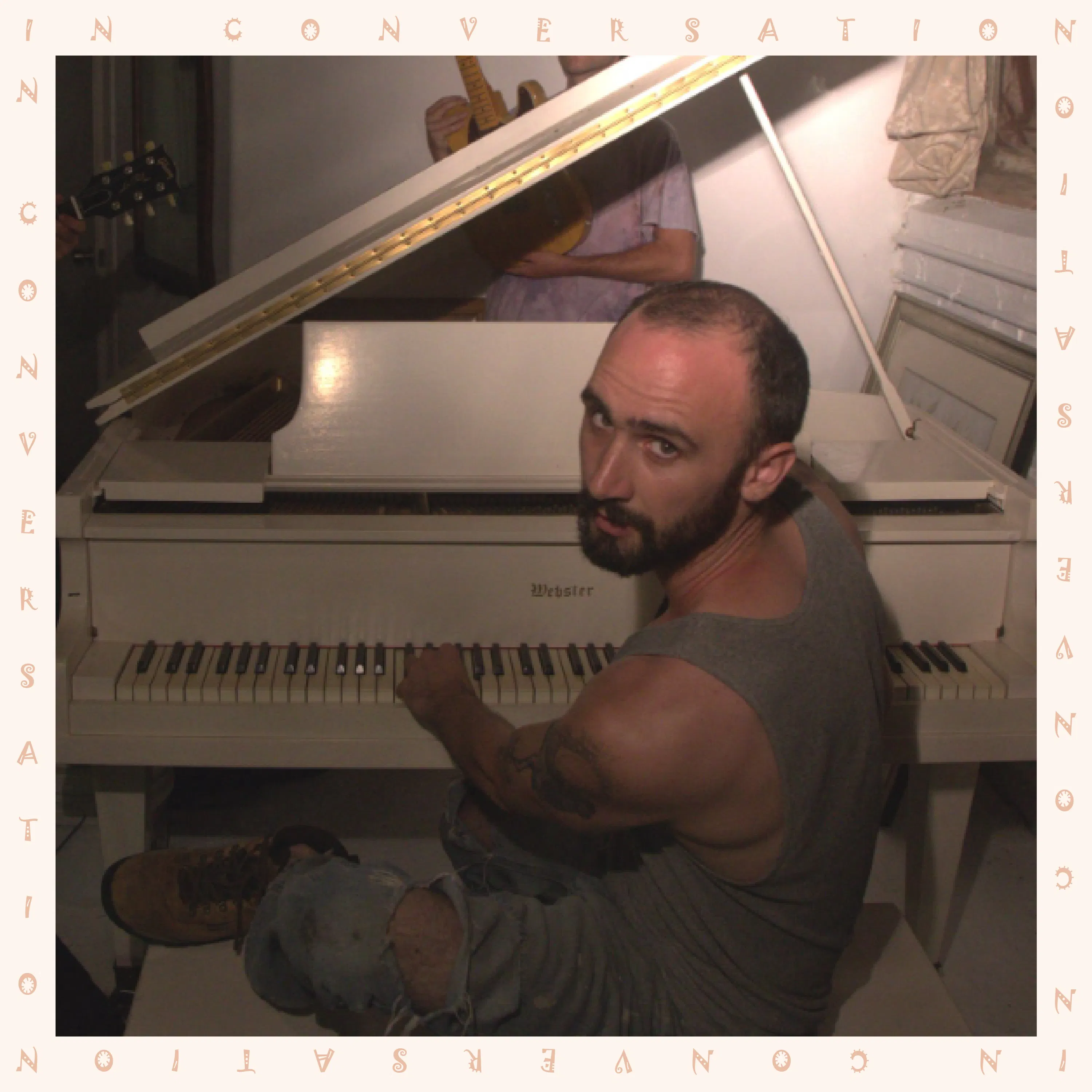
The first one that comes to mind anyway is MJ Lenderman, who I couldn't help but notice, you know, we had him on recently and he mentioned being really heavily inspired by the artwork of his collaborator Matt. He mentioned. And that that same Matt did the COVID for your new album.
- [01:08]
Dan Riggins
That's true. We. We were. Yeah, when, when we were trying to decide on the COVID we were debating a lot and we kept. And we had sort of figured, oh, we won't. We can't ask Matt for anything because, you know, then it'll look like we're just Jack and Jake Steve's. And then we were like, oh, wait, that's a dumb reason. It doesn't matter. And so we just went with it because, yeah, we really love his stuff.
- [01:35]
Evan
To be clear, I don't think that, like, you're both doing the same thing, but I mean, to put it like, bluntly, I guess in like the elevator pitch version is sort of writing from the everyday, writing from life in a more granular way.
- [01:50]
Dan Riggins
Yeah, I suppose. I mean that. I mean, you know, with, with Jake, I. I do think you're right that, like, for all the things that he does very well, you know, the lyrics are. Are incredible. And, and there is, there is something he does that. I, I remember when he started doing it, I was like, oh, yeah, I've been trying to do that. And he just went ahead and did it. And of course, I've got other things I'm strong at. You know, it's not the whole thing. Other stuff I can do, Jake can't do, but there are certain things he does that I'm like, oh, yeah, that's something I've been really hammering at. And he just nailed it. And it's really cool. I mean, we're. Bunch of. Jake John, our bassist, plays, is full time in the wind as well and see a lot of that guy.
- [02:46]
Evan
I think for the way we talk about bands and artists on Jokerman, typically it's kind of led to this thing of looking at artists as one would look at authors or poets. We're doing the Beach Boys now and it's like, in no world is Brian Wilson the same type of poet, if he were one, as Bob Dylan or Lou Reed. But it has, like, essential roots in common, especially when you're talking about Dylan. Curious how you feel about poetry versus lyrics for you?
- [03:24]
Dan Riggins
Sure. Yeah. I mean, they're like, certainly whenever anyone says, like, oh, do you. Do you. Do you ever use a poem as a song or vice versa? Not a weird question for them to ask, but to me, it's surprising. It's like, of course I couldn't. How. What are you talking about? Like, they're so different. In my brain, they're so different. I mean, very basically, the. Almost ironically, poetry nowadays, no one rhymes, you know, or writes in meter or some people do, but I don't and most don't. Whereas a song does rhyme and is in meter. You have to fit the syllables. Right. So it's. Yeah. I mean, certainly not a one to one thing. And of course, with music, you know, you could never untie the words from the musical accompaniment. And. And of course, you know, there's a lot of poems that, if sung, would sound very stupid. And there's a lot of. And even some of the best song lyrics don't totally work on the page because you need the. The juice. So.
- [04:49]
Evan
Yeah.
- [04:49]
Dan Riggins
Yeah, they're. You know, of course, there's so many similarities, but it. They're. What's almost more important is how different they are.
- [04:57]
Evan
To me, there's just not that many lyricists, I guess, that I can think of who are also working as poets. It's kind of rare for me to get to talk to poets on. On the show.
- [05:10]
Dan Riggins
Yeah.
- [05:11]
Evan
Adam Green is a poet. He definitely is a poet who rhymes pretty often. He's in that rare stream when it comes to, like, doing it all. But this is all to say, I really like your lyrics and I really like the text of the songs. And that's one of the things about listening to your group friendship I find really engaging on a deep level.
- [05:36]
Dan Riggins
Oh, yeah. Thanks.
- [05:37]
Evan
Can you tell me a little bit about this record versus the last record?
- [05:42]
Dan Riggins
Sure. Yeah. I think. I think, mean, maybe this happens with. Or ideally this happens with most bands. Is it. Last record is always your favorite? I think Love the Stranger we were psyched about. And it was fun and it felt like an accomplishment. But then. But I think we also all wanted maybe to get a little weirder or to experiment with certain things more and more and to kind of. Yeah. Fill out some darker colors maybe. And so this one caveman wakes up, felt like That I know the other guys especially felt like this is in a way more representative of the stuff we can do. And I guess that I'm talking mostly about recording and the production and the music in terms of the words, you know, I don't know. I think I am trying to. Weirdly, I'm trying both to be more direct and to be more impressionistic.
- [07:00]
Evan
My impression, listening to this record and the difference between this and the last was that you were really going, like, full on granular, like into tiny, tiny details to kind of like an outsized degree. I think it's like a very elegant example is that the first thing that you hear is an O, which is just like, oh, this is like, you know, classic song song bard guy. This is a troubadour telling us his. His tale. And then it's O2.
- [07:34]
Dan Riggins
O2 Corolla.
- [07:35]
Evan
It's an O2 Corolla.
- [07:36]
Dan Riggins
Yeah. And even O2 is, you know, I'm hoping that you'd think that it's gonna end with O to O to be ramble upon, you know.
- [07:46]
Evan
Yeah. And the record really kind of sticks to its guns on that level, but at the same time, it's very effectively dispersed. Or like those kinds of things, I think are used in a really deliberate way. They work as, like, hinge points. Like these super mundane things working as milking their symbolic heft. Like whatever those things symbolize is. Is really being taken into consideration. I feel like throughout these songs and on kind of through the arc of the record.
- [08:20]
Dan Riggins
Totally. I mean, you know, I. I'll say that. That. Well, I do, like. I do get confused and sometimes annoyed sometimes with, you know, not just this record, other records, whether it's. Yeah, I'll read reviews where. Where people are like, oh, and look, he's a poet of the quotidian and the mundane. And I A, think, well, all right, there's kind of more to it. And then B, I'm also like, am I. Is it really more? Am I say, am I including more details than Joni Mitchell does or than Bob does? Maybe, sometimes. And maybe there's different emphasis on it. That said, what you. I think what you are onto is. Is the like, emphasis, maybe. And. And I feel like I'm trying to, like, I guess maybe what. What I bristle at is when people seem to be like, oh, he just. He's just observing things around him when there is symbolic heft. Like, I'm not putting in little details just to add color. There's usually. Or there's almost always like a Reason why it's that thing instead of another thing. It's not. It's not just some autobiographical thing or it's not diaristic at all. It's. It's totally. It's. It's on purpose.
- [09:52]
Evan
Would you say that there's a kind of. To use another buzzword, like an auto. Fictional aspect to your songs if they're not diaristic, if they're not autobiography?
- [10:04]
Dan Riggins
Well, I mean, I. I barely. I feel like I. I have no clue what autofiction means.
- [10:13]
Evan
To me, it just means you can always say, but that part's fictional.
- [10:17]
Dan Riggins
Yeah, yeah, yeah, yeah, yeah. Right, right. Yeah, I like that. I like that. Yeah, I think that's. That's pretty much. I guess that's kind of the case. I mean, most of the songs I'm singing ostensibly could be me. And pretty much none of them are totally the way anything happened. So if there's a detail that really happened, it only made it in the song because I thought it also worked, you know, and. And if it didn't work, I changed it to something fake. So, yeah, not really writing like character songs or anything.
- [10:58]
Evan
Are you a Bob fan? Do you like Bob Dylan?
- [11:03]
Dan Riggins
Yes, yes, I do. Majorly. Quite majorly.
- [11:07]
Evan
Do you have like a particular era or what have you been into lately? Like, what's the most recent Bob you've been playing?
- [11:15]
Dan Riggins
Been bumping. I think the most recent album I just put on. I was trying to think of a song I just got up and sang with the Lenderman crew. And he had. He had been like, oh, you want to do a cover? I was like, great. And so I was trying to think of Bob songs to sing, but that doesn't. I didn't put on a full record. I mean, I think I do what you and. And everyone else does, which is the more you listen to Bob, the, the, like, the more the classically hated records become your favorites. And I think maybe my. Like, the one I come back to the most is probably Street Legal. Nothing but perfect songs on there. I think I only. I saw him three times and it was all high school. And so that was Modern times era, I guess. I think the shows were bad, but I didn't notice because I was in high school and I love the record.
- [12:18]
Evan
Okay, see, that's not what I was thinking. I was thinking that like high school age, modern times. Like, is that. Was that like a record that you have an attachment to because you remember buying it, like, you remember when it came out?
- [12:31]
Dan Riggins
I have an attachment to it because of high School. But, I mean, my dad bought it classic, you know, and he's the one who brought me, brought me to the shows. So, you know, and I remember, too, I think when he first showed me Dylan, I was listening to all the really early ones, and I was really swept up in that, in, like, free will and, and another side of Bob Dylan. And I thought it was really cool. I, I, yeah, no clue. What you guys take is, I've. I don't know if it's good or not, but I can't watch the movie because I vowed to not watch the movie.
- [13:07]
Evan
The movie? You mean a complete unknown?
- [13:10]
Dan Riggins
That's, that's, that's the very flick I'm talking about.
- [13:12]
Evan
That's the one. You know, I have friends who are similarly like, I just don't need or want to ever see this. We obviously had to see it whether we wanted to or not. We were obliged to see it. My take has been that it was like that. You're right. You don't need to see that movie. But it does have, like, a catalyst effect that I think was planned and successful basically of, like, how do we translate this into something that, like, Zoomers will understand? We don't need to listen to that. But I think there's a path through that to then listening to actual Bob Dylan for people who otherwise wouldn't have.
- [14:04]
Dan Riggins
Everyone I know, who I. People I respect who went and saw it, they say, oh, it's great. You should give it a shot. And the problem is I can't because I vowed to never see it.
- [14:13]
Evan
You made that vow.
- [14:16]
Dan Riggins
That's all right. I'll watch other movies.
- [14:19]
Evan
There's some other ones. He's also, if you just want to watch Timothy Chalamet other movies, no problem. Watch Dune.
- [14:26]
Dan Riggins
I loved those books in high school, too.
- [14:28]
Evan
The plot is pretty similar, actually.
- [14:30]
Dan Riggins
Right? The plot is pretty similar.
- [14:34]
Evan
Do you read a lot?
- [14:36]
Dan Riggins
Oh, man, yeah, I do. I. I guess I have been not reading a lot. Last. I just moved into a new place in Philly and have been kind of obsessing over making it my apartment. And so. And we also need bookshelves, so we gotta move all our shelves up. I just read this kind of cool book about Joanie, but it's. It's called Songs. It's called Song so Wild and Blue and It's just a guy. It just came out. It's like, it just. It's about his life and he's talking, but as a Joni Mitchell fan. And so, you know, it's sort of memoir, but it's also sort of analysis of hearing her music, but more like here are the. Like, here's all the period. All the things that Mitchell meant to me through my life. It was pretty neat.
- [15:40]
Evan
So you're like a hardcore Joni Mitchell fan, I take it?
- [15:44]
Dan Riggins
I don't know. I don't even know. Not really. I guess I mentioned her earlier, but.
- [15:48]
Evan
I thought, oh, man, this guy's in deep. He mentioned her twice.
- [15:52]
Dan Riggins
I love her, but I'd be scared to.
- [15:56]
Evan
I think loving her is all that. I mean by this. Do you love Joni Mitchell?
- [16:01]
Dan Riggins
Yeah, for sure.
- [16:03]
Evan
There's a couple times on the record, on Caveman Wakes up that I think. Exactly two times where lyrics are about someone hearing a song and telling you about it.
- [16:17]
Dan Riggins
Yeah. Right. Well, wait, what's the second one? I mean, there's the Jerry Garcia song.
- [16:24]
Evan
There's one there. Yeah, there's one. Like, John sent me a song I think is a lyric. And then there's. There is definitely.
- [16:34]
Dan Riggins
There's everything I know. Yeah, yeah. In the. In. In Betty Ford, John sends me Mission in the Rain by Jerry Garcia. So that's like kind of a main part of the song. In the song Hollow Skulls, the line is just like. It's like, I got a message from Avery. He said a song reminded him of me, which didn't actually happen. It. Or he. I remember I like it. I only used Avery because it rhymed with me, but it was Avery Sullivan who is the first drummer and is a friend. I think he probably. It's probably that he texted me once. He texted me saying, like, you know that a friendship song came on during house music at some show. Every. Musicians love to text their friends and be like, I'm at the Angel Olsen concert, and guess what? Your song came on the house music and you're like, hell, yeah.
- [17:36]
Evan
Yeah.
- [17:36]
Dan Riggins
But I mean, the point of the line is just to. Is just saying. The point of the line is. Is. Is people texting you and you not responding because you're. Because you. You don't have it in you, so it didn't matter.
- [17:51]
Evan
Hollow Skulls. That struck me as like a particularly. I don't know, maybe like a novel, at least for the record. Like a title being kind of purely just poetic evocation. Just sort of. Just sort of an image like that, not specifically about a person, place, or thing. I found it interesting that that's sort of where the. The title comes from, that song.
- [18:22]
Dan Riggins
Yeah.
- [18:23]
Evan
I was just wondering, I suppose, about titles. Do you kind of fuss over that?
- [18:29]
Dan Riggins
Yeah, I got. I got. I Definitely want a title to be really cool and good and memorable. And I'm often trying to make that work and sometimes it's really hard and I'm not sure if that one works the way it ought to, but I don't. I don't mind it. I like it. It's a weird song, man. For me, lyrically, for me. I mean, it's weird musically too, but lyrically it was a stretch. It was like I was like, ah, doing some risky stuff. Risky for me. I mean, the first verse is about a. Ostensibly like a extended joke about a caveman waking up in his cave and being like having an insomnia and he's got issues. But I'm. But I've been fed. It's not. It's not auto fiction. Right. It's, you know, I. I am trying to say, here, let me paint you a scene about a Neanderthal, which I don't usually do. So I was like, ah, it's not going to work. But we kept it. I like it. I think also the last verse, I. I almost sang it. The last verse starts with the line, I got married on a cloudy day. And certainly when I first wrote it down, it was. It was either going to be verbatim, I got married on the 5th day of May or whatever the ISIS line is. Like, that's what I was singing. And then. And then I was like, well, either going to change it or keep it. It has to be a thing. And then cloudy day seemed better even.
- [20:05]
Evan
So I do think that we can maybe just collectively, all people can embrace just stealing Bob Dylan lyrics with abandon because from the beginning of his career, he was just ripping off things.
- [20:22]
Dan Riggins
Yeah.
- [20:23]
Evan
And using them. And to that end, Resident Evil is like a great. It's just like a great loaded phrase that like used in the context of this song I found to be like, yeah, it's right there. Nobody's done that before.
- [20:41]
Dan Riggins
It's just the all caps. Resident Evil has been in a notebook of mine for years. I was like, I gotta make something out of that, man. Like, the evil is right there. It resides here.
- [20:56]
Evan
The game was originally called Biohazard, and I think Resident Evil is just like the name they gave it for US markets or UK or whatever. So ostensibly it was maybe like a Japanese marketing team or like some handoff between a Japanese and American video game marketing team in the early 1990s that decided that's the perfect title.
- [21:23]
Dan Riggins
Yeah, yeah.
- [21:24]
Evan
It kind of just comes from a mysterious process in the first place. It's like an odd Pairing of words.
- [21:29]
Dan Riggins
Totally. Yeah. And it seems so natural because we. Because we know the franchise, but then you're like, wait, what?
- [21:38]
Evan
Resident, Right?
- [21:42]
Dan Riggins
Yeah. Yeah. I don't know. I just came up with the line to shit in my living room. And then it's like, all right, great. This is going to work. Got to figure out a song around it.
- [21:55]
Evan
Do you write a lot in notebooks? Is that kind of your main vehicle for taking stuff down, or do you mix the phone in there?
- [22:03]
Dan Riggins
Certainly the phone's in the mix. The phone got the notes with lines on it. But, yeah, I mean, phone is for when I think of something and I'm not at home or something. And then it's a lot of these guys, you know, I got tons of these flying around.
- [22:25]
Evan
The classic. What do you call the composition notebook?
- [22:30]
Dan Riggins
Composition notebook. College ruled.
- [22:32]
Evan
What's it like living in Philadelphia, cultural.
- [22:35]
Dan Riggins
Capital of the world?
- [22:36]
Evan
I think in terms of just pure team spirit, it's definitely the center of the universe. And I don't even care about sports, but I am an Eagles fan. Just because I have a friend who is such an Eagles fan that, like, he sucked me into, like, the gravitational pull.
- [22:53]
Dan Riggins
Yeah.
- [22:54]
Evan
So now it's just like, go, Eagles. Yeah, Go Birds, as they say.
- [22:58]
Dan Riggins
It's unavoidable, as they say. Yeah. I don't know. I've loved it here. I mean, I'm not from here. I grew up in Maine, and. But I've lived here about 10 years with some stretches in other places, and, you know, I don't know, would I love it somewhere else if I had a community there? Of course. But I think. I mean, it. It remains certainly a lot cheaper than all the other east coast cities and is. Yeah. I don't know. I mean, I feel so indebted to the city, and I feel so much love for it. And, of course, my little intellectual brain says, well, you would feel those things if you spent a long time anywhere. But that doesn't. Doesn't matter.
- [23:55]
Evan
I spent it here growing older. I think I found it matters less where one is. It's, like, more about how things feel.
- [24:06]
Dan Riggins
I mean, there's plenty of preference differences based on how crowded you want stuff and how much. How big a backyard you want.
- [24:15]
Evan
Yeah, that's a big. That's the main difference. The trees. There's not a ton of trees in Philly, though.
- [24:23]
Dan Riggins
I'm in West Philly, and there are a lot of. But it's unique in that way. Most other Philly neighborhoods are pretty sparse for trees. I don't Know, I go up to Maine a lot. My family's up there.
- [24:39]
Evan
And tree city over there, basically.
- [24:43]
Dan Riggins
Yeah. All kinds of trees.
- [24:47]
Evan
Freaking tree city.
- [24:49]
Dan Riggins
Yeah.
- [24:50]
Evan
Well, you have a song called Tree of Heaven. I don't know context of this, but what I got from the song was kind of a landscape painting or like a still life. Imbuing that tree with a lot of significance is just like, the fact that this song is here, that it feels like the song sort of built around a single tree. I don't know. I mean, it's hard for me not to feel like an egghead, you know, when I'm, like, pointing out the drama of the quotidian in your lyricism. But it's very present in a song like this. Is this a specific image for you or.
- [25:28]
Dan Riggins
Yeah. Wow. I mean, what you do, you're. You're bringing. You're bringing me good stuff here. Well, all right. So, yeah, it. This does happen to be a kind of a specific tree. Tree Heaven is kind of a weed and it. And often. And it grows in cities because it doesn't need much. Any roots, really, and they kind of take over. And John, our bassist, he had a. He had a big, gross Tree of Heaven coming out of the. Whatever, masonry in front of his. In on his stoop in West Philly. And I mean, I've spent plenty of time hanging with him on that stoop, especially a lot of time in the pandemic. It was. It was really close to my block. So, you know, after a few months of the total isolation, you know, sometime we'd sit in. In front of his house and. But I. Well, I guess I like. I guess. Wow. Like, what you're saying about imbuing some little detail with a bunch of meaning feels like the same as, like, this thing we were talking about a second ago about, like. Well, it's Philly. It's where I live. Would I like it somewhere else? Sure, probably. But it doesn't matter. I live here. This is what's important. And it's not important for any reason other than it's there and I'm there and it happened and like. And so. And that song, it really is about Philly to me and the still life. I mean, it's. It's more than just the tree. You've got this, the second verse. I tried to make it about a lot of these. I mean, I suppose this is the case for churches in a lot of cities. But you. Every Sunday morning, tons of people are double parking near the church. There's no parking lot. So, you know, tons of traffic around the churches and. And people walking in and out and. And particularly the black Baptist churches in West Philly. You can. You can hear them singing if you walk by. You will hear it because it's loud. And you know what else? I mean, I guess that's. So then the last verse is sort of just some talking about music and then waiting for a bus. I mean, I try to fit in a joke about public transportation being late. Yeah. And so it. Did Philly change me or did I just. But yeah, I suppose maybe I now have to be okay with being the quotidian guy, because actually, the quotidian. Sick.
- [28:18]
Evan
Yeah. The quoted. I mean, what else is there? Oh, yeah, that's quote Bob Dylan. Beyond Here Lies Nothing.
- [28:28]
Dan Riggins
I mean, I guess that's why I get confused when. When someone is like, oh, yeah, he just writes about mundane stuff. I'm like, well, what do you. The fuck do other people write about me? You want me to. You want to be like Blake talking about heaven and hell? I guess, you know, sure, it's cool. Songwriters do that, too.
- [28:44]
Evan
But talking about Good Vibrations, how about writing a song about that?
- [28:48]
Dan Riggins
Yeah, that hadn't occurred to me yet, but now. Now. Give it a shot.
- [28:52]
Evan
I have some bad news. I'm reminded of Blake, though, just because when we were talking, like, know. Talking about, like, thinking of the artists as different authors or different types of poets, like, it was kind of on my mind when we started doing the Beach Boys, that if there's a poet that, like, Van Dyke park slash Brian Wilson represents most, it's probably Blake. More than. More than, like, what? I don't know what Lou Reed, John Cale or Bob Dylan represent is. Bob Dylan, obviously, is just Jack Kerouac, like, doing Mexico City Blues, at least for the first part. The Beach Boys, I think that, too, is a kind of poetry, like, writing about. Or like, maybe more like. Kind of like. Like Leaves of Grass. Like that. That kind of thing. Like Walt Whitman, that kind of, like triumphant, just celebrating everything.
- [29:50]
Dan Riggins
Yeah, yeah.
- [29:53]
Evan
You're like a. Like a. More like a quieter Walt Whitman. Like a Walt Whitman who's less like extroverted, right? Or something.
- [30:04]
Dan Riggins
Yes, sober Walt Whitman.
- [30:07]
Evan
Can you tell me anything about the life of Betty Ford? Because I don't know anything.
- [30:11]
Dan Riggins
Hell, yeah. Hell, yeah, I can. I watched a documentary on it.
- [30:15]
Evan
I know that.
- [30:17]
Dan Riggins
Yeah. Yeah. I mean, the. She. She's great. Pretty cool. I mean, she. So she was like, grew up. I don't know, Like, I think kind of wealthy, maybe. I'm gonna say some Stuff wrong. She was, like, trying to be a dancer. She was trained by Martha Graham a little bit, and then she married Gerald Ford, and it was like, all right, you got to give up on the dancing thing. And then she kind of very. I mean, she definitely. He. He even said, I don't want to be president. She was like, great, because I'm. There's no way I want to be first Lady. Like, that would suck. I don't want you to be president. That would suck. And then he became president, and she.
- [31:05]
Evan
Was like, okay, the last thing I wanted to happen.
- [31:10]
Dan Riggins
And then, I mean, to major things. Well, three kind of major things. She was famous. Famous for one. She was. She was publicly pro choice, and her husband was a Republican president. That was not. It was kind of unheard of. She had breast cancer and was public about it. She, you know, she. Yeah. Went public with the news. And that also wasn't. It was, I suppose, unprecedented. And then this third thing, which is more. What I'm messing around with in the song, is that she had. Was addicted to I. Camera. Which order. But. But alcohol and prescription drugs. Had big problems with both. Maybe not at the same time. You know, switch one or the other. Her family, I think, while they were in the White House, had a, like, intervention. And. And, I mean, she got sober. And she. And this also. She was public about it. She. She talked about it publicly, which was, you know, she was advised against.
- [32:31]
Evan
What year was that? That was.
- [32:35]
Dan Riggins
70S, I think. Late 70s. I don't know. I'm gonna. I'm gonna. I might. Might be wrong.
- [32:41]
Evan
I'm not quizzing you.
- [32:43]
Dan Riggins
Yeah, yeah, certainly in the 70s. And. And so her charitable cause was opening up rehab, a rehab clinic in la, the Betty Ford Clinic. And I. Maybe there are other locations. I'm not sure how it works. I believe it still exist. And so, yeah, it's almost like pe. Some people know her more because they've just heard of the Betty Ford Clinic, which is a. Which are rehab clinics. But, yeah, I mean, that's all. She was certainly a. A unique first lady. And I think the big. I mean, the. The. The big bad thing that for me was. Really got my brain working the most was this whole, like, being public about a pill addiction at a time when. But it was a big thing in America, too. I mean, yeah, it wasn't just booze. People knew about that, but Valium, I think, and maybe other stuff. And especially for women. And so. And then I kind of looped into this song and writing about. Because, I mean, I. I added The. The verse about Jerry Garcia sort of just because. Worked like the words work together. And then I was like, oh, okay. So this is. This song is kind of using these two public American figures where, like, they were. Their addictions were very public and, like. And two people who kind of represent opposite ends of the white cultural spectrum. And. Yeah, so what can I pull out of that? And it was fun to write this stuff and, you know, try to make it, you know, so weird balance where you're trying to make it relatable. You're also trying to make it not too hokey.
- [34:38]
Evan
I think it really works. And those things are kind of perfectly matched. And I find that's writing poetry sometimes. That is how it happens. It's like thinking of something weeks after you wrote something down in the first place, not realizing that it might connect to something else. This is like a mirroring that's happening lyrically with those two figures. But also, I feel like the kind of relationship between. I mean, it's more buried in there, but like the relationship between Betty Ford and her husband and this sort of like, tug of war or like, sort of like very private emotional distance between them. To me, just really interesting that that's also in there. Given that the rest of the record, especially toward the latter half, I mean, I think that the record really kind of feels to me and, you know, go into this as much or as little as you'd want, but it does have kind of like a post breakup thing. And this could be projection from having experienced that at times, but it feels like there's a kind of coming after a relationship feeling on. On some of these songs.
- [36:01]
Dan Riggins
Yeah. Yeah. It definitely, I guess, is a post breakup record, which. And I didn't even really realize it. One thing that's maybe funny is that the two most very obvious breakup songs didn't make it on the record. I mean, I got two that are like. That I think of as like, oh, yeah, those are the ones.
- [36:26]
Evan
You're Positively Fourth Street. Yeah.
- [36:30]
Dan Riggins
Yeah. So, yeah, I, you know, I know how. Yeah, surely it comes through.
- [36:38]
Evan
Idiot Wind is something that comes to mind when I think about Hollow Skulls a little bit. For obvious reasons. I guess I just feel like it comes across as like, a really specific and I think underrepresented, like, post breakup type of record or song cycle, because it's not in, like, the immediate blast radius of, like, pain and anger. It feels more like, like right before starting to actually get over something. It feels like a transition.
- [37:12]
Dan Riggins
Yeah, totally. I mean, man, I don't think I I have ever. I mean, of course I've been hurt and I've been mad, but I've never really, you know, blamed someone really hard. I've never. Like, even immediately after, I. I usually don't think, oh, my God, you did a horrible thing. Even if maybe they almost. Maybe. Whether it's warranted or not, you know, maybe once. But she really did do a horrible thing.
- [37:49]
Evan
It happens.
- [37:51]
Dan Riggins
But not with this one. They did that. Yeah. Caveman wakes up, certainly. Well, yeah, I don't know. I think I got nothing more on that topic.
- [38:03]
Evan
Love Vape. I just wonder about this.
- [38:10]
Dan Riggins
Yeah. Yeah. What the hell? I mean, there's a vape store in West Philly called Love Vape. Yeah.
- [38:18]
Evan
Okay.
- [38:19]
Dan Riggins
So, yeah, I. Originally, I. Actually, this is. Was one where I wrote a long poem that was trying to be songy style that was called the Ballad of Love Vape. And it was. It was really about. Again, it was about West Philly. It was about, you know, hanging out, walking around here and. And then I changed it a lot and made the words fit this thing and. And sort of try to jam a lot of stuff in. I kept thinking. I. I did not. I kept. It was an early demo, and I kept thinking, no, it needs a hook. It needs a chorus. Like, it needs to come back to something. Like, it's too kind of pretentious if it's just a long, rambling thing. And people I showed it to said, no, Dan, you're wrong. It's fine. It's good. It's good this way. It's better this way. And it also took us a while to figure out how to play it. I don't play anything on it. I think it's the only song I play nothing on. And that was great because my style of playing guitar just wouldn't have worked for this. And so we were like, oh, let's just have the other guys do this thing. And it really feels like a duet between my voice and Peter's guitar. I mean, Peter, we all were just kind of so blown away by what he played on this. You know, I don't know if you're listening for it, but the guitar, the lead guitar that just. It kind of goes through the whole thing is so cool.
- [39:59]
Evan
I want to talk a little bit about just musically, the group in general, but this. In the last record especially, I feel like there's a lot in common, and I think that there's a really special thing or sort of various things being explored musically. It's hard to describe, but I think that there's kind of like a onomatopoetic, if that's the word. Like, sometimes the music seems really suited for the sort of tenor emotionally in a pretty specific way. For example, I think about on Tree of Heaven, the music sounds to me like throwing a ball against a wall or something. It has a kind of really human rhythm to it. This is just me editorializing. But what is your. What kinds of stuff are you talking about amongst yourselves, about the sound?
- [41:03]
Dan Riggins
Oh, love that question. Yeah, all kinds of stuff, definitely. Like, I. I think often exactly what. What you're saying is like, is the ideal route. If we can talk about it metaphorically, it's usually. It's often better than talking about it, you know, literally in musical terms, which we can and will do too. But, like, I remember this is not on. On our. An ep, we had some song and we just couldn't figure out how to play it. It just kept sounding wrong. And we kept talking like, well, should the beat be like this? Should the guitar be more minor key? Should it be higher? Should be lower? All this stuff. And then. And then I think one of us was like. This was back when we were playing really quiet all the time. I think one of us was like, oh, well, the song just has to sound like a. Like a little butterfly waking up. And then we all were like, oh, yeah, okay. And so. And of course, there's no butterfly in the lyrics. It just. It was a thing someone said. It gave us all something. The pressure's off immediately. We got a good arrangement that was very gentle and beautiful. And so often we are trying to do that. And the Anabana piece stuff, I mean, I love. However, whether it's really annoyingly on the nose or not, I always kind of love it when, you know, we got a song, Ugly Little Victory, that talks about a headache. And so Mike is playing a drum beat that gives us a headache. I mean, it's just too much. And yeah, I think there's a lot of little things in there where we're certainly. We're. We're thinking about it. We're trying to make something that fits, whether that's really obvious or not. I mean, I do think. I think of, like. Well, to use a nice little Bob example, there's the first line or two of Joey where he says it opened up his eyes to the dune of an accordion, and then the accordion comes in. We definitely. I mean, we play a lot, but we talk a lot too. And sometimes it's not helpful. You know, we often get kind of like run around in circles But. But it surely can help on hollow skulls. There was. It was like we had those little musical interludes where. And we were. And I was like. I was like, it should sound foggy. It should sound like the. The like static and depressed. Dream of the caveman. It's the caveman's dream. And so we couldn't figure anything out. We kept trying to make a cool musical thing. It was Peter that came was like, oh, what if it's just one chord? What if it's a. In fact, it's a sustained chord, which is, you know, gives you. It's only one thing. It's very static, but it's also unresolved. And so we played. We tried playing that, and it worked. So it did. That was a musical idea that came from an abstract prompt.
- [44:24]
Evan
Do you kind of introduce the songs to the group? Like, how does that work for you? Like, just sort of when. When you come up with the lyrics for a track or the idea for a song.
- [44:35]
Dan Riggins
Yeah.
- [44:36]
Evan
Do you kind of present it little by little or all at once or.
- [44:41]
Dan Riggins
Some are kind of almost totally done when I bring them to them. With this album, I think. I think with every album, we get closer to it being more kind of. I don't know if collaborative is the right word, but, like, layered contribution. So, like. Because there were certainly were some on this record where I was like, okay, I'm gonna write some stuff, and I won't finish the song because I want to bring it to the guys, see how what I have sounds. And then I can add or subtract or change it based on what. What we play together. So there was a lot more of that on this album than there have been on others. And I. We. We plan to do it more and more in the future. It's kind of hard, historically.
- [45:32]
Evan
I don't know that there's anything harder than that.
- [45:37]
Dan Riggins
Yeah, well, not for us. We're. We're pros.
- [45:40]
Evan
Good.
- [45:43]
Dan Riggins
No, it truly is hard. But. But yeah, we. In moments when it's not hard, that's when the. The good ones come out and. Yeah.
- [45:54]
Evan
Yeah, I know. You wrote a book of poetry. When did that happen?
- [46:05]
Dan Riggins
Well, I did a poetry MFA, which was 20. 21 and 22. Or 22 and 20. Yeah, 21 through 23, I guess, if you count that. And so two years. And so I wrote it all then. Or almost all of it. Almost everything that's in the book I wrote, you know, doing a. Doing a program. And then. So. And then I got. I left. Came back to Philly. And it was. And I was like, well, I want to publish it now. I was impatient, and so I didn't want to mess with publishers. I just went with my buds, which is John and Mike in the band Run Dear Life Records. So we did it with record label.
- [46:58]
Evan
What was it like doing the MFA program? Did you feel like that was. I mean, clearly it was generative of a lot of poems.
- [47:07]
Dan Riggins
Yeah, I mean, it was great for that. I mean, it was. It was. I mean, they paid me, you know, to be there. I got to teach one class, but I got paid certainly enough to live. And so you. They give you a ton of time to write, so it beats other day jobs. I'll say that much.
- [47:28]
Evan
Sounds good.
- [47:30]
Dan Riggins
And yeah, I mean, my program, I loved all the other people. I've met a lot of real smart and good people and good writers. So that part's fun. The. And I did learn, I mean, you know, being in workshop and like, I mean, I certainly had professors who taught me how to read, how to read better, how to, like, read my own work, read other. Like, read a poem. Like, I thought I knew how to focus on every word. I thought I knew how to, like, really, you know, get. Get in there and make sure that every word is doing something. And then, like, halfway through this program, I was like, oh, I didn't know how to do that at all. Like, I. And. And got a lot better at that. So overall, good. It's. It was. I mean, I was far away from my band, so that kind of sucked. I would come, but, you know, I only applied to the program because of. It was Covid, and it was like, oh, you can't tour. So I go do this. This thing. And.
- [48:50]
Evan
Coveted some great side effects. I mean, I don't mean to do that, but it's. Jokerman podcast wouldn't exist without. Without.
- [49:00]
Dan Riggins
Right, right.
- [49:01]
Evan
Without the coronavirus.
- [49:02]
Dan Riggins
Dear Life Records. I mean, Mike. Mike lost his job, got on the dole, and then was able to pour so much more into every. All his arrangement, all his music, and then also making a record label work. And so, yeah, that label got. Yeah, was totally. Yeah. I mean, all of it really is just proof that, like, oh, gee, like, you want artists to flourish. Like, how could you do that? Maybe you could pay them to work.
- [49:35]
Evan
Give them. Yeah. Give you literally anything that's just, like, constitutes survival, and artists will make some art out of that. That's what Covid was like. I think for a lot of people who were even a tiny bit lucky to have gotten unemployment that was the case with me anyway. But just to have the gift of time to just come up with an idea to do something.
- [50:02]
Dan Riggins
I was still, I was, I was. I mean, the first year into it, I was. I was gardening for this family and I said I kept the job because it's like, well, I just go out there and I don't have to be around anybody and. And I felt like a real idiot because I. Because I was. I was, you know, I was going to work and none of my friends were and they were all getting paid more than me.
- [50:25]
Evan
Is that represented at all? Perhaps on the song all over the World? Perhaps comes to mind.
- [50:32]
Dan Riggins
Oh yeah, no. Hugely. Yeah. No, my. My. All my day jobs, most since I moved to Philly have been a groundskeeping, landscaping. I work for an arborist company. I'm working on a farm right now. So, you know, generally those are jobs you. You can often just kind of take off time whenever you want. There's always some other guy to fill in. I mean, it depends on the. I've only. I've only worked for folks that I can just take off as much as I want to tour and. Yeah, I mean, that song. Yeah, very pretty. I mean the joke I did the, the joke I do with banter with the song is before I play it, I'm like, yeah, so this is a song about a. A landscape. A guy in his 30s who does landscaping and he drinks too much and he kind of feels like he's wasting his life. And I made it up out of my imagination. Yeah, see, it works. It works. Crowds, little crowds. Love it. When I say that.
- [51:43]
Evan
I think it's a pretty profound song, honestly. I mean, I think that. I think that there's something that it, you know, definitely has like this sort of. There's like a self deprecating or like self focused, whatever. Whatever you want to call that, that's there, but that's really just like the, the ground for the, the bigger idea. I found the song very moving and also I think it low key and I don't believe this is intentional, but musically reminded me a tiny bit of Junior dad from Lulu by Metallica and Lou Reed.
- [52:21]
Dan Riggins
Damn non.
- [52:22]
Evan
Intentional coincidence.
- [52:23]
Dan Riggins
Yeah. I gotta go back and listen both of those.
- [52:27]
Evan
They're big songs.
- [52:29]
Dan Riggins
I. I certainly didn't want it to be too mopey, you know? I think you're right. I don't. It was. It did feel like it had to be. It in addition to being self deprecating, it had to have this beauty and a. And a ecstasy to it. And. And there's something. I mean, this is sort of related, sort of not. But there's something that is so funny to me about what is. I think feels like a fact that. That certainly in the suburbs of Philly, which are very wealthy, and probably the suburbs of other towns, if you counted up all the hours that the homeowners spend in their manicured gardens versus the amount of hours that these crews of landscapers, most of them Mexican visa guys, spend in those same gardens, it's like, hey, the landscapers might come out on top. And of course, they're not really enjoying it. Mostly they're busting their asses. But. But once in a while they might. And I did. I mean, once in a while. And it's. Yeah, a little nutso.
- [53:41]
Evan
Well, I think it's all of that. Literally all of that is coming through from that song. And I think all over the record, I'll say. I think that there's these confluences of things. Like there are layers that are definitely there. And I think it's a really rewarding record to listen to. And I think that's the case with all of the records, but increasingly so. Three stars out of three.
- [54:17]
Dan Riggins
Hell, yeah. Hell, yeah. I just saw this funny Italian review and it seemed. Everything was really nice in it that I could understand. And it seemed like the guy had sent it to me, being like, this is a really special album. And then it said like 7.3 or something. And I don't know, 7 point something. And I just kept. I guess the joke I had in my head was like, well, maybe in Italy the scale is out of 7.3.
- [54:51]
Evan
At Jokerman, it's the three equals 7.3.
- [54:54]
Dan Riggins
Yeah.
- [54:55]
Evan
Yeah, it's equivalent. Was there anything else you want to say? I won't even say plug. Just say. Talk about mention.
- [55:05]
Dan Riggins
Right. Well, now I feel like I can't plug anything because he said not plug.
- [55:12]
Evan
Well, no, I don't want to just shoehorn you into plugging. Plugging is included. Plugging is free.
- [55:18]
Dan Riggins
Yeah. I mean, the plugs are. That friendship's going on tour and end of June and July, not to the West Coast. Will we come to the west coast in the fall? Maybe. Maybe that'll get announced soon. It might not be headlining. It just might be supporting an act. But I promise you'll love the act. Go out. Go out and check it. We're gonna sound good.
- [55:44]
Evan
Flight ticket.
- [55:45]
Dan Riggins
I suppose that's about it. Thanks for having me.
- [55:49]
Evan
Thank you. I really appreciate you coming on.
- [55:51]
Dan Riggins
Love doing it. Reconnected the trailer Rerouted drainage ditch Reason your fellow man shotgun in a bush.
- [56:20]
Evan
Light.
- [56:34]
Dan Riggins
Got a job pulling weeds on other people's property sure enough, liquidity on other people's property hey, buddy, where are you at? All over the world I'm all over the world hey, buddy, where are you at? All over the world all over the world.