Loading summary
Transcript22 lines
- [00:00]
Speaker 1
This is his rock record. That's what people say about it. But I actually agree. I think he does pull it off, even though it is still couched in his bald insecurity. I mean, like, I think that that's, that's like the thing that occurs to me as like a guy in my 30s listening to Billy Joel is like, oh man, this is a. This is a deeply insecure person. Even though he is climbing the charts, selling out arenas and becoming a star, there is still so much like, why don't you guys like me? Floating around in his lyrics. And that is very. I don't know that that kind of rocks. That, that's very interesting to me. And Glass Houses has so many like, fun moments like that of like, why is. Why don't you like me? His whole. It's his first number one. It's still rock and roll to me is like his corny. It's. It's one of his most corny admissions and it's his biggest hit so far. That's so cool.
- [01:04]
Speaker 2
It is pretty crazy that like he, you know, no matter how big he gets and like how successful he gets, like, there is no point at which he can like kind of feel secure in himself at least. So it appears in the music that he ends up releasing. Like you would think, like, he's, he's a world misriding colossus at this point in 1980, one of the biggest stars on the charts and like, you know, just hit after hit after hit. 52nd street, you know, great record or, you know, half of a great record at least. And he still comes back with this record where he's like, you know, just like pissed off at the world around him and is. Has the biggest chip on his shoulder. I like, I'm. That was something I kind of found distasteful at the beginning of this or like not really knowing much about him going in, but like there's almost something kind of like endearing about that about him to me at this point.
- [01:53]
Speaker 1
I think it's very humanizing.
- [01:55]
Speaker 2
Yes, exactly.
- [01:56]
Speaker 1
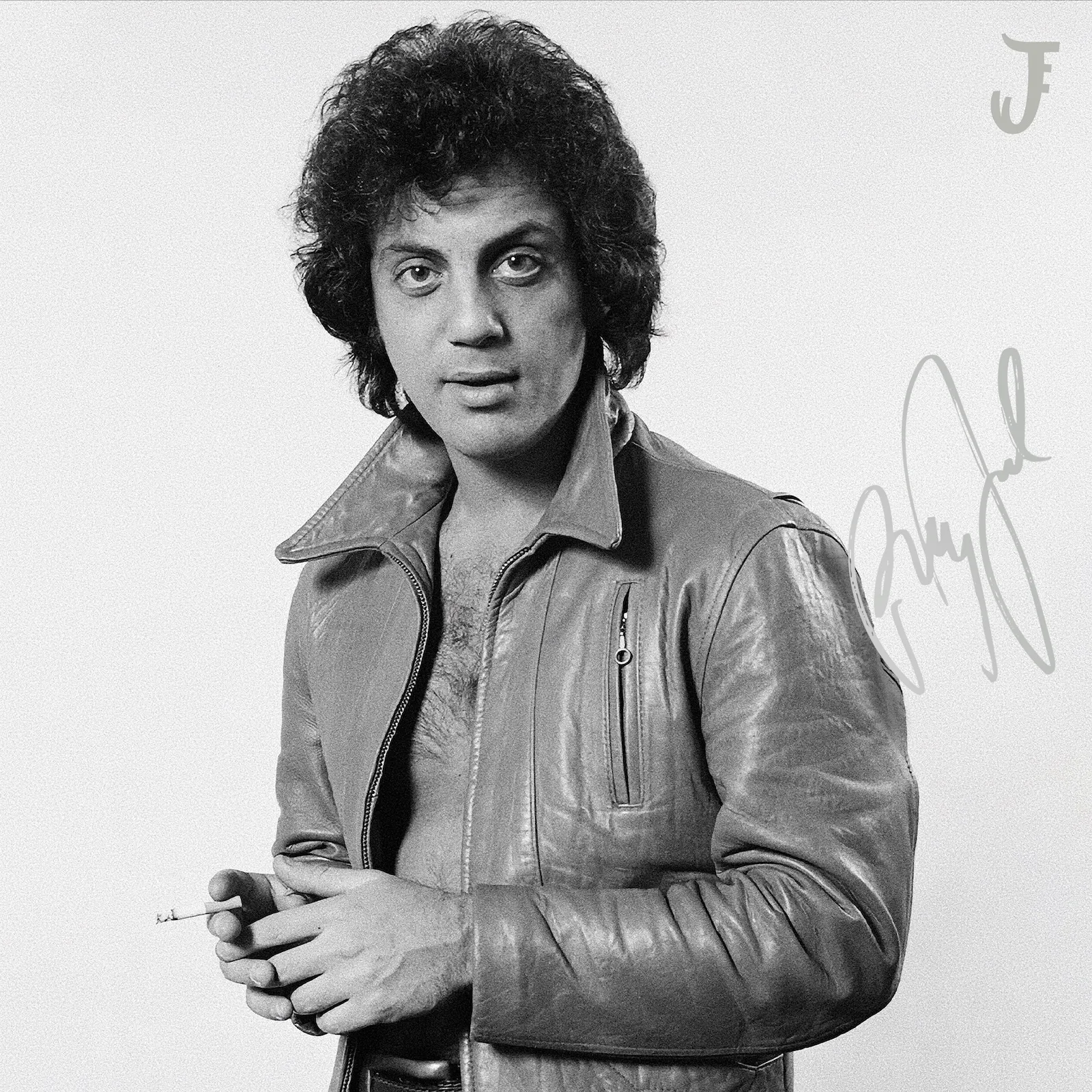
Endearing. He's not. There's not a whole lot of mystique with Billy Joel. He's dating models, he's. He's getting photographed and he's talking about his life. It's. It's much closer to Taylor Swift than it is. That's Bobby.
- [02:11]
Speaker 3
Yeah, that's true.
- [02:13]
Speaker 1
He's using his fame gets bundled into songs.
- [02:19]
Speaker 3
What if Taylor Swift was a sort of schlubby man with a Jew fro and a kind of like a Little bit of a repugnant attitude that, that, like, I mean, Taylor Swift, I find her. Personally, I find her terrifying. And I don't think that that's. That's. I feel like if she looked different, if she looked like Billy Joel, I would probably just not like her. I would, I would. It wouldn't be terror. I wouldn't be like, kind of like, whoa, she's a little bit freaky. I would maybe just be like, shut up. But the thing is, I'm not alone. And many people did say that. And I actually read earlier the Rolling Stone review. Brutal Hatchet JOB ROLLING STONE REVIEW Massacree this is like a.
- [03:14]
Speaker 1
Of what? Of glass houses.
- [03:15]
Speaker 2
Of Glass house.
- [03:16]
Speaker 3
Yeah. They disembowel him. He wakes up in the glass house with his arms and legs strapped to the floor, and they come in and they start cutting him with the glass.
- [03:31]
Speaker 1
What did they like that year?
- [03:33]
Speaker 3
That, like, that's in 1980, I don't know. But not Billy Joel. And one of the things about the review, I think that, like, reading a review like that is interesting because I agree with most of it. But it's like when you watch someone else get beaten up, even if you're kind of like on one side of the fight or the other, there's a point where you're like, hey, hey, hey. You're gonna kill the guy.
- [04:02]
Speaker 1
Stop. Yeah, you got.
- [04:03]
Speaker 3
You're gonna kill him. But, you know, Billy Joel was gonna be okay. And I guess the. The way that he is, it's just fuel to the fire. The fire, so to speak. Like, these, those kinds of reviews are just perpetuating this cycle of Billy Joel songs.
- [04:24]
Speaker 1
Yeah, that he. That he. That he's kind of too famous and too well liked. And that means he sucks. And I. I don't know, is it. Is it because he was shooting for a positive Rolling Stone review with this record that starts no piano. Like, you don't. You don't hear any keys for eight or nine minutes.
- [04:46]
Speaker 3
Well, something he said, like watching a little video of Billy in, I guess, recent times, saying, well, when I made this record, I was playing all these stadiums and arenas and realized I needed to make a bigger. I need to do music with a bigger sound. Because you can't really do ballads. They don't go over so well in an arena. So I started writing more of these guitar forward songs, playing with the really punchy electronic electric pianos. And that's that there's something about the way that he approaches that, which is kind of just like the way he talks about Music. Sometimes I. I don't know, I'm not. I'm starting to feel bad about. I'm not liking Billy Joel right now, actually in our process.
- [05:35]
Speaker 2
Oh, wow.
- [05:37]
Speaker 3
I'm coming to a. I'm coming to a point of sort of being like, I don't know how I feel. It's complex. It's a complex situation. But I feel like the way he talks about music, this is the thing that irks me the most, is just when he's like, well, you know, we're playing these bigger venues, so I needed a bigger sound. It's just like a guy talking about like, you know, I got this three car garage so I had to buy two more cars.
- [06:04]
Speaker 2
See, I like that. I like that about him. That's something that I find admirable, which is. It's so different from, I think every other one of the artists that we typically, you know, tend to talk about here. But like this, you know, this workman, like, pedestrian approach towards, you know, the manufacture of art and celebrity and like, I don't know that like, it's such a weird kind of alien way to do all this shit and think about it, you know. To me, you know, coming from the Bob Dylan, Lou Reed, Brian Wilson, you know, universe, but I mean, he's absolutely true to know. I wouldn't want him to be. Not like if that is how he feels and it clearly is, I wouldn't want him to be pretending otherwise.
- [06:56]
Speaker 1
This is his truth and his truth happens to be he's valid.
- [07:00]
Speaker 2
Billy Joel is valid.