Loading summary
Transcript308 lines
- [00:03]
A
This could be considered a track. Not really, though.
- [00:05]
B
We don't want to do that.
- [00:07]
A
This is a little intro, you know.
- [00:10]
B
All right, here we go.
- [00:10]
A
Countdown time. One, two, three, go.
- [00:25]
B
Okay, boys, do it.
- [00:27]
A
Welcome back. Welcome back to the Root Beer Report.
- [00:35]
B
Welcome back.
- [00:38]
A
So I'm not using my usual glass today because I actually bought a couple glasses for beer. Glasses.
- [00:49]
B
Look at that.
- [00:50]
A
And I figured, you know, I was just kind of like, randomly, really randomly in the last week, just kind of like, watching some videos on YouTube about beer. I'm not, like, intent on brewing beer, but I was just kind of like, got. Got curious about, like, I was just curious. I was interested to hear.
- [01:11]
B
Sounds like a recipe for disaster.
- [01:13]
A
Interested to hear beer people talk about, like, beer trends. Like, I was just kind of like, you know, because I'm in the field now, you know. You know, we're in the field now.
- [01:22]
B
Yeah.
- [01:23]
A
And there's not that many root beer type of shows. So the next best thing is beer, I guess, beer and beer. And so I was kind of interested in maybe taking some of that. Taking some of that knowledge, that expertise, those. Those notes on how to taste for things and applying it to our project here. And so that's why I have this kind of glass, which is a bit more bulbous at the bottom and more narrow, narrower at the top, which is, I think, supposed to be better for sort of giving you a more direct sense of the bouquet or the nose.
- [02:03]
B
I could imagine drinking like a, you know, like a Belgian, you know, ale out of that, like a Duval or something.
- [02:09]
A
Anyway, we're not doing any of that today. We're instead actually kind of going back to the. To the. Well, back to the roots. To the roots. Get it to the roots.
- [02:25]
B
Yeah. Well, we're back to the Beach Boys, but it's the Beach Boys minus one essential ingredient on today's episode. So I figured why not do root beer minus one essential ingredient as in any sort of legitimate sugar or sweetener? It's A&W Zero sugar. Root beer, not diet root beer. Zero sugar. Root beer.
- [02:50]
A
Yeah, it was there. I assume there was a diet.
- [02:53]
B
Not that I saw. I would imagine. I think the diet. I feel like. I think the term diet is just kind of being phased out at this point. I feel like that's got sort of a bad connotation for whatever reason. And so, like, you got the Coke zero sugar. You got Pepsi zero barks, zero sugar. A and W zero sugar. That seems to be the en vogue trend for packaging a diet beverage.
- [03:17]
A
Which company is responsible for NW that's the Pepsi company, right?
- [03:21]
B
No, no, no. Mug is Pepsi A. And W is 7 up. Dr. Pepper.
- [03:29]
A
Oh, that. That's a random one.
- [03:33]
B
No, I respect the Dr. Pepper 7up corporation. Like if you're talking like RC or Faygo, okay, that's something else.
- [03:41]
A
But I'm really more thinking about, like. I just don't consider like. Oh, yes. The natural combination of the allyship of Dr. Pepper and 7Up. Like if you told me 7Up belonged to any other corporation, I probably would be able to be convinced.
- [03:56]
B
But that's just what it's. You can see it right on the bottle. Dr. Pepper slash Seven Up Incorporated.
- [04:01]
A
All right, that's my ignorance. That's just my. I'm just like an idiot, I guess.
- [04:07]
B
You gotta learn. Come. You were just saying you're in the field now and you don't even know the existence of the Dr. Pepper Seven Up Incorporated company.
- [04:14]
A
Well, I'm. I'm not afraid to say that. I'm actively learning. I'm seeking knowledge. I am here doing my best. And maybe my best isn't your best.
- [04:25]
B
What do we. I guess. Should we. Let's crack this open. I got a bottle. You have a bottle too, right?
- [04:30]
A
Yeah.
- [04:30]
B
I kind of like the shape of this bottle. I like that it's a little bit kind of stout and kind of chode.
- [04:34]
A
Shaped, you know, chode shaped. I don't like.
- [04:36]
B
I like that now.
- [04:37]
A
I like it. I will say that I like the. The idea of like a. More it. You know, it even has a pebbled texture as if it's glass. What I don't love is just playing it. It's playing up that it's a plastic bottle. Even more like.
- [04:53]
B
Right.
- [04:53]
A
It's. If it were just regular, flat plastic, I would just kind of pass it by. I don't like plastic bottles for sodas or other drinks in the first place. But it's kind of like. All right, don't. Don't pretend like you're something you're not. It's kind of lands in the uncanny valley. It's.
- [05:14]
B
It's not the worst bottle I've ever beheld. I would prefer, you know, a can, but my local bodegal only had Bodangle. Yeah. Only had cans of the full sugar, full fat and 5%. So I had to go for the plastic bottle.
- [05:30]
A
Here, look at this. Look at this pour.
- [05:33]
B
Wow, that's nice. Nice work. Look at that.
- [05:34]
A
There's kind of a head on it, but the head is kind of. It's rapidly thinning and thinning. Yeah, that's kind of a wide, large bubbles. You know, they're not like super fine.
- [05:47]
B
Looks brown in my, in my glass I see sort of a red, you know, kind of under note if you hold it up to the light. Yeah, at least.
- [05:54]
A
No, there's a reddish, it's a reddish brown leading that direction.
- [05:59]
B
It's got a. Smells like root beer.
- [06:03]
A
Yeah. There's a slight like kids paint like you know, watercolors set thing which I've kind of come to expect from like mass market or as they'd say in the beer world, macro brew root beer.
- [06:20]
B
Lame stream root beer.
- [06:21]
A
There's kind of. And you know that's, that's not to say that like you can't make quality macro beer or root beer, but I feel like there's kind of an offness to that sometimes. We definitely got, I think mug is the most, the worst example and maybe you know, one thing I learned from watching this beer stuff is like I never knew this before but apparently, you know, something could be in a can and that is still like going to affect time, is still going to affect the freshness of it and also temperature can really affect it. Like if it was just left out and it wasn't refrigerated, chances are it's, it is not going to be the best example of that particular.
- [07:14]
B
Well, that's why I mean, you know, like wine for instance, that just literally like the, the temperature control and the storage of wine is a massive, you know, multibillion dollar industry. You know, people with these big wine collections have lockers in temperature controlled spaces behind keypads and stuff where they pay tens of thousand dollars a year just to store their wine. Not even for the wine itself. So you know, you're not going to do that to a can of PBR necessarily. But the same process I would imagine is at work. Should we, should we chug a lug?
- [07:46]
A
Yeah. I feel like there's something that happens in the current market. 0 sugar drinks as differentiated from diet specifically. I think of Coke Zero as like the leader in this. But I have to imagine that the other companies and houses within the soda world are following suit or even doing everything they can to directly copy Coca Cola. But it's like, if I could explain it, like it's just a smoother landing than you get with the Diet Coke. Diet, a diet soda, like you can detect that there's like something different about it, but there is a certain fullness and sort of general body that like is way more palatable than, than say like you Know, I think mostly in terms of like Diet Coke vs Coke Zero, like Coke Zero just has a much broader, sort of sturdier sense of the Coke flavor. And Diet Coke feels kind of like tinny and metallic and just kind of rattles, rattles out as it leaves the palate.
- [09:11]
B
Well, that's why, like I was saying a moment ago, I think that's why the move has been to direct away from the diet branding towards the zero branding. Because I think Diet Coke has this just notorious kind of reputation to it. Some people, of course, love the Diet Coke. You know, they'll drink a 12 pack a day. I believe Diet Coke in America is based on new Coke. And so that's why Coke Zero ended up being introduced because it was this actual, you know, kind of updated diet formulation or zero sugar formulation of Coke Coke, regular cloak, cloak, classic Coke. What they call Diet Coke, I think in Europe is what we have as zero sugar Coke. But Diet Coke in America is its own weird kind of, you know, mutation of the Coca Cola legacy.
- [10:10]
A
Yeah, I think this is pretty good.
- [10:13]
B
As far as a diet root beer goes. No sugar. I think longtime listeners will know my natural disinclination towards the zero sugar products. But this one, it's still zero sugar, but it tastes a hell of a lot better than what I anticipated it to taste like. It's a little bit flat, a little bit thin, but it definitely has something closer to an approximation of a real sugar flavor. Not so much that stevia yuck, kind of, you know, back your tongue type thing going on.
- [10:43]
A
Well, what's it sweetened with? It's just, it's aspartame. Got. It's aspartame.
- [10:47]
B
Really classic aspartame.
- [10:49]
A
All right, well, you know, I like it better than A and W regular nw.
- [10:54]
B
Wow. Well, I'm quite fond of regular A and W at this point, but that's mostly because I, you know, have more experience drinking actual A and W from the A and W restaurant, which is a different formulation than the A and W that's sold in the bottles and the cans. So that's, that's, that's a three star root beer. But what you can get on the shelves is, you know, hit or miss, two stars, A and W, zero sugar root beer.
- [11:18]
A
No caffeine. Still caffeine.
- [11:21]
B
Zero sugar, Zero caffeine, zero calories.
- [11:24]
A
Yeah, it's, I'll drink this whole thing because it's guilt free.
- [11:30]
B
I like on the bound, the back of the bottle, it's got, you got a phone number, 1-8-6629, 76-6821. I would love to just call the root beer phone number and see what that does. See what that says rootbeer.com. exactly.
- [11:44]
A
So what is rootbeer.com though before we go, I mean, what, what happens?
- [11:49]
B
Search rootbeer.com verifying you are human. Okay. It's just the A and W website. They just own rootbeer.com.
- [11:57]
A
That'S crazy.
- [11:58]
B
That's a good domain to have.
- [12:01]
A
That's not. That doesn't seem fair. I feel like there should be antitrust laws that prevent that. Rootbeer.com I mean a W is kind.
- [12:11]
B
Of synonymous with, with, with Rooter. I do feel like it's. It's more frequently found as the go to root beer as opposed to unless you're in like a chain type thing where it's pre stocked with the Coca Cola products.
- [12:22]
A
I'm starting to think that's because of sinister designs by the great. The heads of root beer state like A and W. Having rootbeer.com feels like a symptom of something sinister rather than, you know, a condition of their dominion naturally. Like shouldn't rootbeer.com just be a website where you can learn more about and and try new to you root beers and you can just see the great wide world of root beer. I. I really don't like that A W has funneled seemingly everybody who's curious about root beer just straight to their. Their product. It. That doesn't seem fair.
- [13:11]
B
The early bird gets the worm, as they say. Maybe we should register rootbeerreport.com and then we can kind of have our own nonpartisan root beer compendium resource available for all the people out there.
- [13:23]
A
Yeah, I will just add one like post credit sequence here. I have acquired another A and W product which is chilling in my fridge.
- [13:34]
B
Oh yes, we'll make sure to do that next time.
- [13:37]
A
A brand new. Not even. Not I'm not even a root beer product. I'm gonna say a W product, which again, like they have that for sale on rootbeer.com ostensibly.
- [13:52]
B
I actually don't see that on rootbeer.com for what it's worth.
- [13:55]
A
Okay. Yeah, you're right. It's just flavors float how to's.
- [14:00]
B
That's right.
- [14:01]
A
And then float recipes.
- [14:03]
B
Then the flavors are root beer, zero sugar root beer, cream soda, and zero sugar cream soda.
- [14:08]
A
Well, it's still weird that there's half of what's on rootbeer.com is not root beer. It's cream soda.
- [14:14]
B
I'LL take it up with you. Should call that phone number 1 866-297-6682 and deliver some strongly worded complaints to the Root Beer Corporation. All right, this has been quite enough of Root beer.
- [14:28]
A
Yeah, that's enough. That's enough. Here am I mug. Everybody chug a mug.
- [14:37]
B
Well, I hope you're this excited to talk about this record today.
- [14:41]
A
It'll be interesting, I think, to talk about this record. I think that it's an interesting thing, this record. Don't you agree?
- [14:48]
B
I do agree. It's the Beach Boys by the Beach Boys.
- [14:52]
A
This is so this is the definitive Beach Boys album.
- [14:57]
B
I love thinking about. That's right. I love thinking about the, you know, the self titled records of. So I guess pretty much everyone we've talked about. Well, maybe not pretty much everyone. Some Bob, there's a self titled Dylan, you know, Bob Dylan, 62, self titled Lou Reed. It's the first Lou record. There's two self titled Velvet Underground records. There is. So I guess there's basically a self titled Randy Newman record.
- [15:20]
A
What are the two self titled Velvet records?
- [15:23]
B
The Velvet Underground and Nico.
- [15:25]
A
That's not quite self titled.
- [15:27]
B
Well, it was self titled when Nico was in the band and then when Nico was out of the band they did another one just called the Velvet Underground.
- [15:33]
A
Sure.
- [15:34]
B
But I guess there's no self titled. I guess what I'm saying is all of the self titled records we typically tend to talk about Bob, Lou, Velvets, Randy, so on, tend to happen towards the beginning of an artist's career. But the Beach Boys took their sweet time putting out 23 years worth of music before they could arrive at their self titled definitive statement. The Beach Boys 1985.
- [16:04]
A
Well, it's all led up to this.
- [16:06]
B
That's probably not a good sign. If that's the. If that's the best you can do in terms of titles for your record. 20 something years into into the career.
- [16:18]
A
On the other hand, that's the time when they could do it. Because if they had done it any sooner, it wouldn't be as great.
- [16:24]
B
That's true. They have maybe finally distilled the essence of the Beach Boys to its cleanest, clearest, most concentrated substance.
- [16:34]
A
That's Jokerman mindset. That's how we think, right? That the longer you go, the better you get.
- [16:38]
B
That's right. Let's, let's, let's resume our story here a little bit, you know, rolling into this album because obviously, you know, our most recent Beach Boys episode was a pretty dramatic, you know, Work. Dennis Wilson exits the band exits reality for good in 1983. But the beach Boys themselves are gonna continue rolling on. For those of you who remember where we left things off in the Brian episode cocaine and hamburgers, Dr. Eugene Landy has returned to the fold. David Leaf tells us Landy's discipline at this moment in time had Brian working. And while the first songs Brian was writing were simpler than much of his previous work, the return to roots doo wop vibe, some of these songs showed that Brian was tuned into his hit making station. Nothing astonishing yet, but in his work, Brian was again exposing the raw nerve of the lonely life that he leads. 1984 saw the beach Boys return to the studio in earnest. An earlier attempt to make a record with a collection of outside producers had fallen through. When it appeared that Brian wasn't going to step up as producer, the Beach Boys and CBS knew they had to find somebody to fill his shoes. In the late 1970s, Bruce Johnston and Kurt Bottcher had co produced an album by the British group Sailor. Never heard of them. The engineer on that project was Steve Levine, a young englishman who by 1984 was the producer of the multi platinum records of Boy George's Culture Club. Bruce suggested to CBS that Levine might be the right producer for the Beach Boys and Levine eventually agreed, signing on to become the first non Beach Boy since Nick Vinay to produce the group.
- [18:23]
A
Interesting that that was a Bruce call on some level, you know.
- [18:27]
B
Remember Bruce had kind of been brought back in in 1979, right on light album I think, to sort of, you know, right the ship, to kind of direct, direct the focus of the band first as producer and then he kind of comes back into the band proper at I think in 1980. So he's kind of, you know, he's a bit of a mastermind behind the scenes at this point in time. Mr. Bruce. Throughout 1984, Levine worked extensively with Carl and Brian too in his London studio, laying down instrumental tracks to create state of the art digitally recorded sounds. This is state of the art. Computerized Beach Boys AI Beach Boys. By the fall, Levine had recorded enough basic tracks that the Beach Boys could begin vocal sessions in la. So that's kind of our, that's kind of our background for this album. What do you think of the COVID of this record?
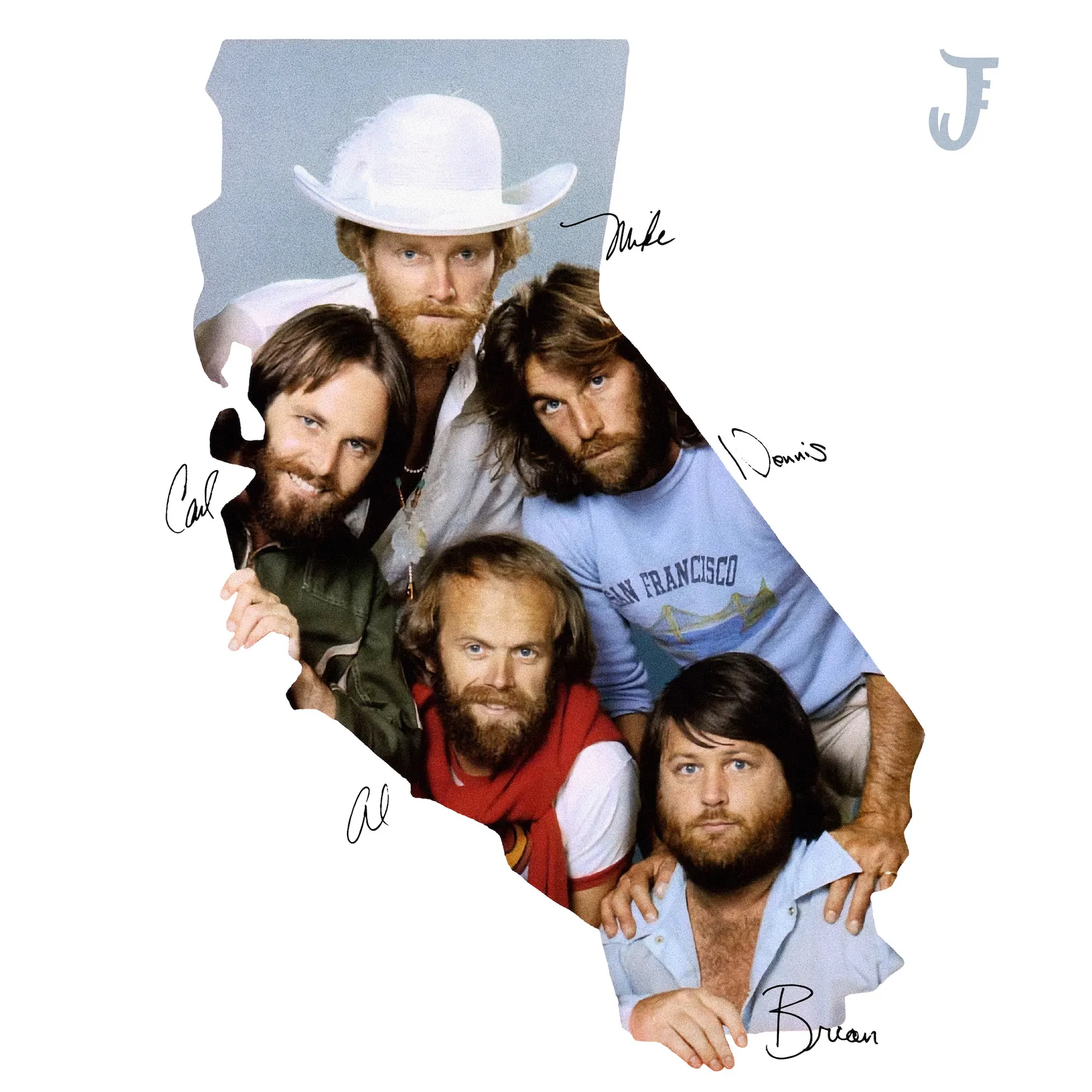
- [19:25]
A
I love it. I think it's one of my favorites of theirs.
- [19:28]
B
Wow. What do you love so much about it? It's the Aloha print.
- [19:33]
A
Well, I don't really see it as that so much. I guess that's what it is, but it's clearly what it is. I mean, sort of. It's very detailed. Like to the degree that it. It. I don't think there's that many shirts that are. It's. It's slightly.
- [19:48]
B
You should see some rain Spooner shirts out there. They'd be rocking this print all over, I guess.
- [19:54]
A
I mean, in any case, it looks like a. An illustration, very colorful of a beach scene, but it's sort of, you know, through these, these large, huge letters taking up the entire cover. It says Beach Bell, Beach Boys with the. The in the. In the B actually in white. I just think it's very effective and graphic, graphically potent. I just. I like it and I. I do like that it looks kind of like minimal in a. In a sort of intentional way. Like, I don't know, it's just cool looking. I. I think it could have come out kind of anytime. Like it could have come out today. It just sort of has like a timeless. Almost like an indie rock band could also do something that looks like this or, or, or like a straight, like more. More conventional pop group. Like. I don't know. It's. It's good.
- [20:57]
B
Yeah.
- [20:58]
A
Who made it?
- [20:58]
B
It's. It's handsome. I have no idea. Presumably, you know, someone at the label. I don'. Person was the mastermind there. Yeah, I think it's well packaged and I think it looks good and it sort of suits the band attempting to re fire their creative engines a little bit and kind of pick up the pieces because obviously Brian has really kind of started to come back from the edge of reality. Dennis is no longer with them. It's been five years since they put out a record at this time. Longest gap and eternity, exactly. In Beach Boys years. And, and I mean, remember the, the hot streak they were on up until that point. MIU into la, into keeping the summer alive. You know, things when last we saw them had not ended on such a high note. So, you know, I think it makes sense that it took some time to get back to the point where they could put a record out, especially given all the drama that was going on. But it does seem like, I think from the COVID and from the Steve Levine aspect, cooler heads were prevailing at this point. There was actually some kind of thought and consideration put into what does it mean if we're going to keep this Beach Boys ship sailing at this point instead of this just random kind of jalopy that's jerry rigged overnight like you get with an MIU or a light album type of Thing. Great work on the COVID there from the Boys.
- [22:28]
A
I like to point out that it's also just one of the only examples, maybe the only one that I can think of that's just a beach. There's no people, there's no surfers. There's not them. It's just an image that involves just the natural landscape of a beach, which does not reflect this album very much.
- [22:56]
B
No, not necessarily at all.
- [22:58]
A
But I wish that. That's, like, something I would love to see. I. I felt like I. I want to see more of that. There's some of that throughout their discography, but not enough that they didn't lean enough into just the landscape, in my opinion.
- [23:15]
B
Well, it's almost as if they're inviting you to go near the water with the COVID of this album.
- [23:22]
A
Yeah, well, to go to California, at least.
- [23:26]
B
Oh, geez. Yeah.
- [23:27]
A
How about that?
- [23:28]
B
Here we go. All right, let's talk about it. Get you back. Hot single from the Beach Boys. Highest charting release from them in some number of years. I think it made it up to 26 on the charts. People were. People were digging this one. I think it's a great song.
- [23:53]
A
Yeah. Yeah, it's good. Yeah, it's good. It's fine.
- [23:59]
B
It's fine. It's good. It's fine.
- [24:00]
A
Well, it doesn't have anything to it that is like. I mean. Yeah, it feels like the beach voice, I think, believable as the beach voice.
- [24:09]
B
Yeah, it's believable as the beach voice, exactly. And I think what it does have to. It is, you know, not necessarily any sort of lyrical mastery or even particularly exciting production, but it's got the Beach Boys sound. Listen to those voices. Listen to Brian's falsetto in the back of this song. And that is actually Brian. That's such a signature element of so many of those early songs. Think about Brian's falsetto on Don't Worry Baby, for instance, and think then about how torched and degraded his voice was for, you know, many years in the 70s, which we love, obviously, but sounds like something else entirely here. It sounds. It sounds like a reasonable facsimile of what everyone loved about the Beach Boys initially, you know, And I think that the. You know, the rest of the music only has to do so much if you've got this, like, fundamental. The fundamental secret sauce of what everyone fucking loved about the beach boys back in 1962. If you've got that there, the rest of it only has to kind of not fall apart on itself. And I think that. Get you Back is, like, totally a great example of how to do that.
- [25:23]
A
It's also just a good way to start this record for this time and the moment that it is in because it's like, what's. The lyric is like, can I ever get you back? So it's kind of like, thematically it works, like, even though that doesn't seem like it's not in the top of one's mind listening to this, that, like, they're making a statement about them, themselves and their band and their place in music at large. But it's, you know, if you want to give any kind of credit toward, like, the thoughtful record being here at all, it's. It's a good way to start rather than, like, what they've done. I think, for the last. Who knows how many records where it kind of begins with, like, something that feels a little bit more like forced cheerfulness. This one, you know, has, like, a little bit of a wistful quality. At least. That is nice. Nicer than just sort of like, we're ready to boogie woogie again, right?
- [26:32]
B
Yeah, exactly. There is, like, it seems to be coming from someone who has, like, I don't know, five points. I don't want to use IQ because that's a, you know, hokey concept in. To begin with, but, you know, it's someone with some degree of perspective as opposed to, like a Do It Again, which, you know, I've softened on. Do It Again, I think over time, I can admire the song at this point for what it is, even if I do, you know, still finding a little hinky at the beginning of. Beginning of 2020, but, like, this is basically Do It Again Again, but, you know, with some degree of, you know, reality and maturation I think, bolted onto it. And I think that totally, you know, totally works. Frankly. I love Mike's vocal on this song too. You know, I know we've been pretty down on Mr. Mike recently, but I have at least. But I think that this is once again, like, an example of, like, when the music suits the voice and when he can kind of just do what he needs to do, he can do it, and it totally works.
- [27:35]
A
Yeah. Yeah. I don't think that there's, you know, there seems to be an intentional moving away from certain iconic Beach Boys sonic signatures, but at the same time, I kind of respect with just this song so far on this record, it's, like, modern, like, just letting. Letting there be a little bit more of a room for like, a more spare, clean, electronic production. It works on this One song, I'll tell you that.
- [28:08]
B
Yeah, I think it sounds pretty. Frankly, I think all throughout the record, it sounds pretty good from a production point. And, you know, it sounds contemporary, you know, like it was made in 1985. Also sounds like, you know, it sounds like a Beach Boys record. And that's a difficult needle to thread. I think, as we've seen on previous albums and frankly, as I think we're gonna see on the first Brian Wilson album, which I don't want to edge into that conversation too much necessarily, but the production on that record is all over the place. You know, I think that this is a. It's a well conceived and well executed approach to how should the beach boys sound in 1985. The songs might not be there, they certainly aren't there, you know, always. But I think this Steve Levine character, you know, totally had a job to do and he did it. And, you know, get your back, I think, is one of the best testaments to that.
- [29:02]
A
How about the next song?
- [29:04]
B
It's Getting Late, It's Getting late. How about that?
- [29:08]
A
This song sounds a lot like it could have been on the. Maybe especially the second choral record.
- [29:16]
B
Yes. Well, that's.
- [29:17]
A
Which.
- [29:19]
B
That's why I was thinking you weren't gonna like this album very much, because a lot of it does sound like a Carl Wilson album.
- [29:27]
A
Yeah, I mean, this one has the benefit of also having some group vocals and harmonizing, but otherwise. Yeah, I. I just think I genuinely don't like Carl's sensibility for writing songs most like. Except for, you know, like the obvious great ones, like, from the 70s. Like, this is. I just don't like his. The stuff he must have thought, I guess, was like, kind of fresh and exciting. Seems to me to be like the stuff that I find the most ponderous from, like, the era in which he was doing a lot of this stuff. Like, it's getting late. Yeah, like this kind of like it's shooting to be, like, soulful, but it just feels kind of like the opposite somehow.
- [30:22]
B
Yeah, I wouldn't say it's the opposite of soulful necessarily, but it doesn't do much, frankly. And I mean, it is a Carl Wilson, Myrna Smith co write on this album. We remember our conversation about Myrna on the Youngblood episode. So it basically is just Carl Wilson solo shit on this record again, which, like you said, I think that this maybe excels a little bit more than some of the stuff on those two albums, but it very much just fits right into that pattern of what were some of those Song titles from that first record, like the Passing Lane or the Right Lane. Right. Hold me, Bright Lights, Hurry Love. I remember.
- [31:13]
A
Okay. Listening back to stupid shit. The song kind of avoids being totally, like, obvious.
- [31:21]
B
I think the best part of this song is the. Ooh, Ooh.
- [31:26]
A
Yeah, that's what I mean.
- [31:27]
B
Just Beach Boy shit. And the rest of it, you know, you can kind of take or leave. At least he's not calling anyone A in this song. Yeah, he's settled down a little bit here. I've been praying for this moment since the second I laid eyes on you Minutes seem like hours when you're gone Girl, I'm getting tired of waiting so stop your hesitating Then it seemed like.
- [31:47]
A
Hours when you're gone yeah, that's kind of like. There's some stirring musical ideas in here, but it's like it's sort of couched in something a little. Bored. Boring. It's fine. It's better. I'd rather listen to this again than pretty much anything on either of those other two Carl albums.
- [32:07]
B
Yeah, it's perfectly. You know, compared to where we were at on MIU on Keeping the summer alive on the Carl albums. You know, this. We have to count this as an improvement of some. Of some sort. Crack at your love Crack at your.
- [32:24]
A
Love Crack at your love this is. This is a Al song now.
- [32:30]
B
I love. That's. And that's part of what I like about this record. We're getting some Al on this album. This is an Al Forward album.
- [32:38]
A
An album.
- [32:39]
B
An album. That's right.
- [32:42]
A
This song is better than. Than its title. I do like Crack at your love.
- [32:49]
B
Crack at your love Crack of your love Ass crack of your love.
- [32:53]
A
Yeah. Is that what's going on here? I crack at your love it's just kind of like, I'd like to get.
- [33:00]
B
A crack at your love, you know, I'd like to get a crack, you know, like, let me take a crack at it.
- [33:06]
A
Yeah, it's just like the two associations for that are like hitting something with a baseball bat or an ass.
- [33:14]
B
Yeah. A plumber bending over beneath your sink.
- [33:17]
A
So, like, neither of those are particularly sexy. Or it's either kind of, like violent or just sort of crass. And it doesn't seem to be committing to either. Either. It's just kind of like the other option is just you're thinking about the type of person who'd be like, let me take a crack at it. Yeah, well, that's the thing the plumber would say and then.
- [33:44]
B
And then bend over and there it is the crack of his love. I guess it's worth noting that the co write credits on this song. And we're going to see this a couple times on this album and we're going to see it a hell of a lot. On the first Brian Wilson solo album, writers are Alan Jardine, Brian Wilson, and Eugene Landy.
- [34:03]
A
Huge.
- [34:04]
B
So there's. There's some debate. There's some debate as to, you know, what extent Eugene Landy actually played in the songwriting process at this point in time, you know, of any of these songs, we know that he was trying to write lyrics for songs, whether or not they always ended up coming through. Unfortunately, I think his name has been stricken from the credits on a lot of these albums over time. But, you know, I guess if we want to have a little bit of perspective on this song, we might chalk some of the less than poetic turns of phrase up to this fucking J' mok who's injecting himself into the writing process of the Beach Boys.
- [34:48]
A
Yeah, how about that? If we don't like something and he says he's involved, then that's why that's his fault. Yeah, it's. It's all on huge. It would have been called Shot at your love, which is, you know, not much better, but it's better. And then Eugene is probably like, how about crack?
- [35:06]
B
How about crack at your love, boy? Shot of. How about crack shot? Crack at your love? Shot of love. Crack of love.
- [35:16]
A
Crack shot.
- [35:16]
B
Crack of love. That would have been worse.
- [35:19]
A
Yeah, maybe. I don't know. Maybe. Is that a Eugene Landy lyric?
- [35:26]
B
You know, I wouldn't be surprised. What do we think about this?
- [35:33]
A
Maybe. I don't know. That's how I feel about it.
- [35:37]
B
I like this. I think this is good. I dig this. This has got that kind of like these big kind of. You're laughing. Yeah, exactly. These big epic guitars that are just roaring and then these also kind of bouncy round sounding synthesizers as well. I mean, this is one of the most 1985 productions on this 1985 album. But to me, I like that.
- [36:07]
A
Yeah, it sounds kind of like the American Gigolo soundtrack or something. Like Giorgio Moroder.
- [36:14]
B
Yeah, it sounds like that.
- [36:18]
A
That just totally self serious.
- [36:20]
B
Yeah. I mean, I compare this album again, I think like we talked about on the bridge.
- [36:25]
A
This is a bridge. You're saying this song is kind of a bridge to the next. To the next thing that was happening in music at the time.
- [36:36]
B
That's right where I said on that episode, talking about that album. It sounds good. Compared to an Empire burlesque, perhaps, which was also 1985 release. I know the bridge was 86, but it sounds expensive and well done and, you know, kind of thoughtfully considered, even if the music itself wasn't there. I kind of feel similarly about this album in many cases. Like, I dig a lot of the sound. I dig a lot of the instrumentation. Allowing for the fact that, of course, like, it is kind of cheesy, schlocky 80s bullshit. I find that to be a flavor that I appreciate occasionally. I think. Once again, though, I just. I don't know that the material is there necessarily. This is. It's another call. We got another. We got another Myrna and Carl bop here.
- [37:29]
A
When did Toto hold the. Or what's the actual. It's called hold the Line.
- [37:34]
B
Hold the Line. Toto hold the Line.
- [37:36]
A
You know, that probably around this time.
- [37:38]
B
I don't know.
- [37:39]
A
That was actually 78, so. Yeah, that's. That is kind of the. The arena that we're in with this song. It's Kind of Love isn't Always on time. Yeah, this episode has me doing a lot of falsetto. Sorry about that, everyone.
- [37:56]
B
You know, it's. You're. You're leaning into your inner Brian. I'm sure the listeners appreciate that my.
- [38:01]
A
Inner Carl, for better or worse, is coming out.
- [38:05]
B
I just, you know, I think the music sounds nice. I think the production sounds nice. I dig even the backing vocals, you know, which are just. It's the Beach Boys doing backing vocals. You can only ever get so mad at that. But musically, it's just. It's another one of these trudging Carl songs where he just repeats the same. Like, three meaningless phrases maybe, I don't know, like, 17 times.
- [38:30]
A
Yeah. It's a song that kind of dares you to accept that it exists. It's like, really, we're doing. We're doing that guitar work for a song called maybe, I Don't Know, or that's what he's mostly saying. I mean, it's funny if. If there was any kind of. It would be funny, maybe. But it. I guess it is funny. I just don't know if Carl is capable of laughing well at anything like that.
- [39:01]
B
Sense of humor is not necessarily one of Carl's strengths, at least in the. You know, the recorded music that we have from it. It's worth noting. And this was another point that I wanted to, you know, bring up from. From David Leaf. So we've got. What do we got? We've gotten four songs into this record, you know, get yout Back is a. Is a Wilson love classic. And then Crack at yout Love is some combination of Brian and Al and Gene. But we have two just Carl Wilson, Myrna Smith joints in these first four. And we're gonna get a couple more before the end of this record. It's sort of a, you know, grab bag of songwriting material here. And I think that's part of the dynamic that was going on in the band. I found this kind of interesting in David Leaf again, because he was writing this around this time, actually, in 1985, 86, he said, when Brian Wilson and the Beach Boys sing as they know how it is, as Brian once called it, the Sound of Heaven. Unfortunately, if Brian doesn't write great songs, it doesn't really matter how well they're singing. It all starts with Brian's chord changes and those he wrote for this album. As in, you know, this album that we're talking about here. The Beach Boys, as he admitted himself, were very simple. In a recent interview, Brian said He had written 70 songs in the past two years. So this would have been 1983, 84. The ones he's performed in concert and on the new album aren't of the complexity we expect from Brian. Having had his more adventurous material rejected in the past, he may see no point in expressing his ambitious artistic vision. If, as I claim, Brian still has his incredible gift, why isn't it evidencing itself publicly? The convoluted excuse for his recent mediocrity? Brian's recent mediocrity is that because Brian resents Eugene Landy's control. Eugene Landy. According to the LA Times, Brian playfully called Napoleon at this time. Playfully. I don't know how playful that was. Brian may be hiding his creativity so as not to let Dr. Landy get credit for returning him. Returning Brian to the state of, quote, musical genius. Brian's passivity generally means that he won't initiate a direct confrontation. But this bizarre theory can't really account for Brian's unimpressive compositions. More likely, Brian has been stockpiling his best new songs for a solo album, which may be recorded and released within the year. In the fall of 84, Brian recorded demos for eight new songs. According to an informed source, these tunes were not offered to the group for inclusion on this album, the Beach Boys.
- [41:37]
A
What do you think? What do you make of all that? Well, I mean, theories.
- [41:40]
B
I think that probably knowing what we know now, which is that Brian Wilson, the solo album is coming down the pike, you know, took a long time for that record to come together. I think it was in production for, you know, a couple of years. But I think that that is probably, you know, is probably what was happening at this point. That, you know, the gears were in motion to kind of finally extract Brian from this toxic soup of the Beach Boys. And it would still take a couple years to actually get to that point. But, you know, because, I mean, you listen to some of the songs on that first Brian Wilson record. Again, setting aside the production and the way they ended up, you know, kind of coming across on the record, the songwriting is just. Is immaculate on some of those songs. And, you know, miles away, miles beyond anything we get on this record. And so it seems quite clear to me that I think this album's failings. Tend to be the material that's on it. And the material that's on it is because Brian was keeping most of his best shit to himself. So even as we listen to this album. And kind of don't dig a whole lot of it or as much of it as we might like, Ultimately, I think it's good that this album isn't quite as good as it could have been. Because that means that Brian got to be Brian on his own.
- [42:57]
A
I think that those two theories are really just one in a way. Like, they don't contradict each other. Like, those are the same situation that. Yeah, Brian didn't want to give the impression that Landy had brought him into a state that was finally artistically fruitful for the Beach Boys. I mean, there's, you know, also the idea that he was holding back songs for his solo thing. But I think that probably both. Those are both true. And I think specifically, there's something more rotten and nefarious about this ulterior motive to create a genius Brian Wilson for the Beach Boys. Whereas, like, if Brian were to put out songs he believed in as Brian Wilson. Even if you had Eugene Landy saying, I did that, it would not have the same effect. It would be like, sure you did. It's Brian Wilson on Brian Wilson album. Like, you can't take credit for that. But if there's great Brian Wilson songs on a Beach Boys album, that is like the golden goose someone like Landy was transparently slobbering over. Like, the worst thing about Landy, to me, is this thing of him wanting to take credit for Brian's gifts of creativity.
- [44:24]
B
Yes, yes, absolutely. I mean, that is one of the worst things. Also, the kind of years of physical and mental abuse that he subjected Brian to. That's. That's high up there too.
- [44:34]
A
That's obvious. That's like. For sure. But in terms of like, you know, things unique to maybe his character. Like, sure feel like that's what's particularly that that's fair.
- [44:45]
B
What I will say to his credit, to Landy's credit. And I don't want to give him too much credit, but I do. I do think that he by this point at least recognized to some degree that Brian in the Beach Boys, like that was. That was a. The root of the problem, you know, is this just non functional relationship between him and the band. You know, Brian as the goose that's supposed to lay these golden eggs. And all these other people are just hanging on, just saying, you know, come on, Brian, when are we gonna get another one? Like, I get around. And that being the case, you know, who knows, you know, to what extent Brian had, you know, if he had melt away and love and mercy and stuff already written and ready to go by the time this record was being put together. And some combination of Brian and Landy decided, no, let's not give these songs to the Beach Boys, who knows if that's the case. But I do think that there is sort of a silver lining to the whole fucked up psychological drama of the Brian Landy relationship, which is. And David Leaf makes this point himself, you know, that like only through the kind of meddling of Eugene Landy. Was Brian able to actually get extricated from the Beach Boys in the first place. Cause he wouldn't have been able to do that on his own. At least at this moment in time. Obviously, once Brian, you know, it's sort of been out of the frying pan into the fryer situation. Cause once Brian's out of Mike and Al in Carl's clutches, he's in Eugene landing clutches. But that's another problem for another day. You know, I think if there's anything positive to take away from that association at this point in time, you know, I think that that's. That's it. Anyways, she believes in love again. Here's little Bruce. Yeah, here's one of those wimpy pussy Bruce songs that we love.
- [46:46]
A
It's. This is like the tendency of Bruce to be anonymous coming into the four. I feel like this song is like effective in terms of blending in with probably every other song around it at the time.
- [47:08]
B
It is. I mean, yes, Bruce, obviously, as we've chronicled on this program, does have a degree of, you know, anonymity to him as a singer and songwriter. But like within the Beach Boys. Like, he does have his own kind of unique little niche, you know, like that voice and these kind of mewling songs that he seems to all the time whinge. Yeah, I don't want to hear the whole thing or I don't want to hear a whole record of all that shit. We, you know, we heard that on Going Public, you know, unfortunately. But I think just a little bit, you know, little bit of Bruce the Secret Sauce, you know, I think that, that, you know, a little bit of celery salt on the entree, that's totally fine for me.
- [47:57]
A
Yeah, I'm looking back, just looking back with Love at Going Public, speaking about those Carl records. It's just like I would way rather listen to Going Public.
- [48:09]
B
Oh, yeah, no, I think Going Public is probably the second best Beach Boys solo record up until.
- [48:16]
A
That we've talked about so far.
- [48:17]
B
That we've talked about so far. Exactly. Up until. You know, every Brian Wilson solo record is, you know, better than, you know, any other Beach Boys solo record except for maybe Pacific Ocean Blue. But I mean, Bruce definitely. And this is not to say much about Going Public being a great record. But compared to Looking Back With Love and the Carl records, you know, at least you got Disco Deirdre and that weird fucked up version of Pipeline and stuff on the. On the Bruce record.
- [48:43]
A
And Doug.
- [48:45]
B
Doug.
- [48:46]
A
All right, so if you were at this point, like me maybe thinking, okay, well, this record's starting to feel like it's drifted very far from the promise of the first song. It doesn't really sound. But these songs are increasingly after track 1, 2, 3, 4, 5 are like further and further away from sounding like the Beach Boys. And then Mikey's paw curls when you wish that they would. They would do it again and. And bring back some of that Beach Boys feeling because they do it in. In the most. Like, you hated Hawaii when we for first were there for the reason that it felt like they were.
- [49:32]
B
No, no, no, I've always loved Hawaii.
- [49:34]
A
Hawaii, okay, the other coast, that's the one, right?
- [49:38]
B
Diet Hawaii.
- [49:39]
A
You hated the one that was. Yeah, Diet Hawaii. This is like that phenomenon, but kind of on. On like another level. California Calling.
- [49:50]
B
Yeah, it's like California Girls but, you know.
- [49:54]
A
Surfing, usa.
- [49:55]
B
Surfing. Yeah, exactly. Just some combination. Catch a wave, all of it just surfing safari. Put it all into the blender, you know, hit the blitz button and then just, you know, chug it down. You get California Calling, which is fine. You know, there's something charming about this, I think, when it's. When it's delivered just sparingly. If this whole record was full of these California Calling bullshit songs, you know, don't miss me with that. But I think one of these songs on this album that is 20 something years into their career and that is just called the Beach Boys, like, it does. It does make sense. And I think it's, you know, it's catchy enough. There's a little bit of fluff to it. I like when they say, now I've joined the surfing nation and so I'll take a permanent vacation and go to the golden shores of Frisco Bay. I'll ride them all the way to Malibu.
- [50:51]
A
Frisco mentioned. I do feel like it's not. Yeah, I don't hate it. I. I just feel like it kind of comes. It doesn't land very well. Like, I feel like after those. Honestly, those last four songs are just kind of. I just don't. I don't really love this. This thing. It's a little mushy for themselves.
- [51:17]
B
The first side of this record is, you know, after. Get you back. The rest of, you know, those songs I think that we've talked about up until this point, they kind of all just blend into a, you know, bit of a mush.
- [51:29]
A
Yeah.
- [51:30]
B
And then California Calling to its credit, even if it isn't the best song on this album, at least, you know.
- [51:35]
A
Kind of brings it back to some. Yeah, there's like, recognizable Beach Boys qualities.
- [51:43]
B
If nothing else, you know, Car radio, Daddy O waves, rad beautiful women, beat shit, you know, all the bullshit.
- [51:55]
A
Passing friends See, this is fine, I guess. You know. Passing friend I feel like at least this is something that has, like, a little bit of a. Of a something to it, but. Whereas I gotta say, like, it's getting late Crack at your love I'll leave Crack at yout love alone Maybe it's getting late maybe. I don't know. And she believes in love Again, like, those just don't work so well for me, but. Passing friend California Calling, Crack at yout Love and get yout Back. Those feel like they're on the same album.
- [52:29]
B
Yeah, I think that makes sense. This is, you know, this is another Carl. We got. We got a call. Although, you know, I'm looking at the writers for this. Boy is the writer.
- [52:42]
A
Oh, boy. George wrote that.
- [52:44]
B
Well, maybe that's why this is a good song because it was not written by one of the Beach Boys at this time. Interesting. I didn't. I totally did not even catch that up until this point. I think this is good I dig this sound. It's got a little bit of that, you know, Christopher Cross doobie's, you know, yacht rocky sound. That kind of groovy guitar almost sounds like chic or Nile Rogers at a certain point. Yeah, I think this, I think this works. It's what I was saying about some of the mic stuff on Looking Back With Love, whatever that last song is on that record, Paradise Found, I think that's like a. That's a successful template that can work with the Beach Boys and that is going to work for the Beach Boys. To extraordinary returns in a couple years on Kokomo. This isn't quite as, you know, kind of stupidly catchy as Kokomo, but I think it's in that register. It's an effective way to have these 40 something doughy burnouts singing about beach bullshit and still have it not come across as a complete, you know, farce on its face.
- [53:54]
A
And it's a song that has like a little bit of a concept, you know, Friendship, fake friends.
- [54:02]
B
Yeah. You know, when I was listening to this song, initially believing that it had been written by, you know, presumably Carl, since he's the singer, I was wondering to myself, you know, is this a. Is this a shot at Mike? You know, the fake friends. There's nothing worse than a passing friend who will dine on you to the bitter end there's nothing worse than a burning heart Or a blast that tears the world apart. You know, how many times have we talked about all of the Beach Boys dining on Brian Wilson's, you know, genius? I guess we know now that the song wasn't written about that. But I still can't help but wonder, maybe, maybe, maybe Carl saw a little something in this song, in reality, that spoke to him.
- [54:44]
A
Well, we finally have reached first Brian song.
- [54:49]
B
Yeah.
- [54:50]
A
And of course it's called so Lonely, so Lonely, I'm so Lonely.
- [54:56]
B
You can, you could just, you can look at this, you know, this, this track list just on the back of the LP and just, you know, check off who wrote all of these songs just based on the title. It's getting late. That's a Carl. Maybe. I don't know. That's a Carl. She believes in love again. Yep. That's a Bruce. I'm so Lonely could only ever come for Brian.
- [55:20]
A
Yeah. Good song, Good song. And it, you know, it feels like it could have come. This has like an. As much as anything on this record, you know, that with this and the last song that's technically on it, not, you know, that there's A certain level of. Of Beach Boys love you sort of.
- [55:41]
B
Yeah, absolutely.
- [55:42]
A
Like. Like an updated sort of like cleaned up, like made more boring version of that. Production wise. I think that, I mean, I'm just happy to hear Brian's voice even though he's. He's sort of keening for his. His sorrowful state.
- [56:03]
B
Yeah, I mean I think this, this predicts a lot of what we're gonna get on on the Brian solo record a couple years after this. Most of those songs, you know, to their credit are much catchier than this song. This is sort of a mid tempo number. It's kind of in the same register as what was the one love you song that you really loved. I'll bet he's nice.
- [56:27]
A
Yeah, kind of.
- [56:28]
B
It's in that kind of realm to me.
- [56:33]
A
Yeah. I like the changes in this and I like there's some quintessential Brian melodic feeling, but it doesn't, you know, it's not like him at his most dramatic or most dynamic, but it. It's definitely there.
- [56:51]
B
It's minor Brian, but Minor Brian is better than, you know, just about anything.
- [56:58]
A
I just wish they'd let him do like just write this album.
- [57:03]
B
Well, that. But that's what, you know, I. We were just talking about a moment ago, like Brian, I think he had. Had written an album. He'd written several albums at this time. And it wasn't, you know, wasn't brought to the band, you know, perhaps wisely.
- [57:19]
A
Yeah, yeah.
- [57:20]
B
So yeah, it's. You got to throw him a bone, I guess. And this is a perfectly nice little song to do. I just love the idea that it's this stupid album full of all these, you know, just meaningless nonsense from Carl and these idiot California songs and stuff. And then Brian just. I'm so lonely. It's like. It's like the moment at a Pet Sounds, you know, sometimes I get really sad. Exactly.
- [57:46]
A
Or it's like the end of. Of 15 big ones, like where the main contribution is just like a sorrowful one.
- [57:55]
B
Exactly. Yeah. You know, Brian is. He's a man that wears his heart on his sleeve.
- [58:01]
A
You know, we never dripping blood everywhere.
- [58:05]
B
Truly blood and ketchup.
- [58:10]
A
Where I belong.
- [58:11]
B
Where I belong.
- [58:13]
A
Who wrote this one?
- [58:14]
B
It's Carl. It's more Carl bullshit. Come on. You can listen to literally the first like five seconds of this song and just know. Yeah, that's a. That's a Carl to his credit, I guess. Myrna Smith is not on this. It's Robert Johnson is the other Robert Johnson. I mean Robert White Johnson.
- [58:34]
A
If Carl Wilson went. Went to the crossroads, you know, made a deal with the devil to become a better songwriter, he would come back as like a pretty good songwriter.
- [58:45]
B
Yeah, I think the devil would know better than to. To even make a handshake deal with Carl Wilson. He's not. The devil's not getting much out of that.
- [58:53]
A
Carl wouldn't make it. He wouldn't make a deal with the devil. First of all, that's one thing I'll say for him. I don't see him doing that.
- [58:59]
B
He's too good of a guy.
- [59:00]
A
And he didn't. He clearly didn't make a deal with the devil.
- [59:05]
B
Wrote a song for Celine Dion. Leonard, he wrote first Lynyrd Skynyrd.
- [59:11]
A
So you're gonna say he wrote for Leonard Cohen.
- [59:14]
B
Yeah, exactly. Robert Johnson, he wrote New Skin for the Old Ceremony.
- [59:20]
A
I do love you. So this is. This is a Stevie Wonder song, is that right? Yes, it sounds exactly like a Stevie Wonder song. Yeah, he's on it, right, Stevie?
- [59:33]
B
Oh, we didn't. We didn't mention. I meant to mention earlier on. Shit. What song was it? One of these songs is Ringo. It's California Calling Is Ringo.
- [59:42]
A
Yeah. Playing the drums.
- [59:43]
B
Yeah. That's nice.
- [59:45]
A
Yes, it's great.
- [59:47]
B
It's Ringo. Yeah. I do love you. Sounds like a Stevie Wonder song. It is a Stevie Wonder song. Perfectly fine.
- [59:55]
A
Is that. Is Stevie playing on it, though? That's the question.
- [59:58]
B
Let's see. Drums. He's credited with drums, Harmonica.
- [60:07]
A
Yeah.
- [60:08]
B
And bass. Interesting. I didn't realize he did so much on this.
- [60:12]
A
That's fine.
- [60:12]
B
That's nice. It's kind of the same thing, you know, that they did on, on, on Wild Honey, you know, covering Stevie Wonder all the way back then. Going. Going back to that. Well, here. I don't know that I need this song to be here. But like, I'm not mad at it necessarily.
- [60:32]
A
It's.
- [60:33]
B
That bass is pretty tasty. I dig that. That's. That's probably the coolest thing that. In the harmonica.
- [60:38]
A
The Steve Wonder stuff does not sound like the Beach Boys at all. But neither does most of the Carl stuff. And at least this one has like, you know, this is. It's Stevie Wonder instead of Carl writing a song like this. So take from that what you will.
- [60:56]
B
Carl is doing. You know, we've seen now on. On the Carl records. And then on this record, Carl has a penchant for this kind of blue eyed soul.
- [61:05]
A
This is just soul. Like the, the changes. It shows. The difference is like one is just so forced and then like this feels just so effortless like you are my love.
- [61:14]
B
Yeah.
- [61:14]
A
It's just like actually feels like you.
- [61:17]
B
Can tell it was written by soulful someone with actual soul. Yeah it's fine. It's good. More Al. I like the Al on this next one is.
- [61:29]
A
Is. That's definitely. This is a Brian involved song right.
- [61:34]
B
It's just a matter of time.
- [61:35]
A
Brian was involved anyway, right?
- [61:37]
B
Yes. Yeah he's the writer on this. You know it's a Brian Eugene Landy co write you know for whatever that counts for this I believe was a holdover from previous sessions. I think it might have honestly even had its genesis in like the cocaine sessions era with. With Dennis and stuff. It's not on any of those tapes. At least the tapes that have been made public. There's apparently hours and hours of those tapes. It should be noted that you know just haven't ever seen the light of day release. I don't know that we want to hear that to be honest.
- [62:11]
A
Probably not.
- [62:12]
B
I think we've heard just about enough the exact right amount of those sessions. But yes, this is a pulled over from some number of years earlier and yeah is relatively Brian centric. It's a good way to end the record. It's the last song in the lp. If you're listening to the streaming version there's one more song tacked on to the end which was the think the.
- [62:37]
A
CD to have that.
- [62:38]
B
Yeah, the CD re release. Exactly. Which we'll get to in a moment because that's one of my favorite songs from this record. But yeah, it's just a matter of time is it is a nice. Is a nice note to end this record on. You know kind of in that I'm so lonely register but it's maybe not quite so desperate.
- [62:57]
A
What's the one that Brian has that's like Going home. I'm going to.
- [63:03]
B
Or back home.
- [63:04]
A
Back home. This reminds me of that I'll spend my summer.
- [63:10]
B
Oh that's way catcher than this.
- [63:11]
A
Yeah but it's like in the same type of. Type of mode like. Yeah, this is more a little bit. You know definitely mellower and not as exciting I guess for a big Brian head but I just like hearing him. Sure.
- [63:28]
B
Listen, me too. You're not going to find me complaining about that. And it is kind of like. It is kind of like just once in my life at the end of 15 big ones. You know it's not as doom laden and you know heart rending as that but you know you save one of the Few instances of actually personal songwriting on this album for the very end. Darlin, I'm lost without you Sad with nothing to do it's just a matter of time.
- [63:56]
A
That's kind of an ominous lyric, actually. Could be read that way.
- [64:02]
B
Yeah, exactly. Fortunately, didn't have to read it that way. Ended up being a happy story. But yes, we finally get a hint of pathos on this album here at the end, courtesy of the one man with a beating heart in this band, Brian Wilson. And I like how short and. And slight it is. It's got this almost kind of like doo woppy quality to it.
- [64:27]
A
Well, it's very. A lot of this record has just straight doo wop stuff.
- [64:34]
B
I think it's. It's a graceful note on which to conclude a, you know, an uneven kind of up and down record. But we've got one more song here at the end, which, honestly, besides get yout Back is probably my favorite song on this whole thing. Because it's just. I mean, if you're gonna do stupid Beach Boys, you know, let's go for the tasty ladies type bullshit. Like lean all the way into it. And they finally actually do on Male Ego.
- [65:12]
A
Is this just a Brian credit?
- [65:14]
B
I think it. I think it might be a Brian Mike.
- [65:18]
A
Yeah.
- [65:19]
B
Which would make plenty of sense.
- [65:21]
A
Makes a lot of sense.
- [65:22]
B
Yeah. It's Brian Mike and Eugene. Boy, that's quite a pound.
- [65:25]
A
Yeah, that combo actually is like. I was kind of like, why doesn't this. That's why. It's because there's an extra ingredient. Eugene. That explains it, like, because it is as weird as like anything on Love you, basically. Yes. It's like love is a woman level. Kind of just disconcerting. But it's like probably sort of a landy idea. I feel like I can picture him being like, you guys need to write a song about the mind and. And the. The way that it is. Because you have a lot of songs about just chasing these girls going around on in your hot rods. But you need to go deeper and I know you can do it. And then Mike, you know, probably being like, okay to. To land like Brian being like, okay.
- [66:14]
B
Well, and they pulled it off. To be honest. I think this is like. It is just absolute lizard brain Beach Boys bullshit. Don't know why we love to chase those tasty ladies. Betcha boys will be doing it in our 80s. Great couplet there. But yes, it does have something actually kind of more interesting to string it along. And like this. Of anything on this record, this sounds like love. Like this basically just sounds like love.
- [66:44]
A
It does.
- [66:44]
B
It does sound cleaned up, but it's got those big, you know, kind of honking synthesizers and, you know, staccato pig like, like plodding kind of melody punky. It's great. I think this is fantastic. And, you know, hearing Mike and Brian, you know, kind of sing it together, I think is. Is, you know, you can't help but be sort of moved by hearing those two voices working together, even on sort of a stupid song like this, because those are, you know, two ingredients on some of the most magical recordings ever made.
- [67:18]
A
It's a shame that it's not on the actual official track list because. Yeah, well, it's the most interesting thing here. Even though it barely says anything about this idea of male ego. Like, the song is just like, how about those ladies? It's like.
- [67:36]
B
I guess it's kind of the flip side, a reverse to when girls get together.
- [67:42]
A
It's the opposite of smart girls.
- [67:44]
B
Remember that one? Oh, boy.
- [67:45]
A
Which we'll get to.
- [67:46]
B
I mean, I can't wait to get there.
- [67:48]
A
When do we get there? I mean, when does that happen? That's very soon.
- [67:51]
B
90. That's, you know, we'll be hitting that next. Probably not month, but two months, something like that.
- [67:57]
A
Yeah. This is kind of like giving me a foretaste of. Of smart girls. And, you know, that is what it takes to get of anything.
- [68:08]
B
I cannot wait to get there. But, you know, in the meantime, we've got. We've got this, which is perfectly, perfectly fine. I. I am confident in saying this is probably the best Beach Boys record that we've listened to since. Since Love you and Adult Child, which, you know, Adult Child didn't even come out. That's not a high bar to clear, but I think it is effective, competent, you know, Feels like some time and effort actually went into it. There's a couple really nice Brian Wilson compositions on here. Get yout Back is a great first single. Like, you don't need. You don't need to make Pet Sounds every single time. Sometimes you just need to make, you know, whatever a Carl and the passions or a 2020. And I think that's what they did on this record.
- [68:58]
A
Yeah. Two out of three stars for the Beach Boys.
- [69:01]
B
Frankly, it's probably a one. But, you know, given all of the, you know, shit that's gone on in Beach Boys world, I'm happy to round it up to a two star for him.
- [69:11]
A
Yeah. And I've been listening to it without much friction, like just putting it on, just feels kind of like not unpleasant. It's not an unpleasant record just to go through. And I think that first side is.
- [69:26]
B
A little mushy, you know, like we talked about between. Between get you back and California Calling.
- [69:32]
A
I'm being really generous. I mean, I don't like most of the songs on this record, but I kind of like Carl being that way within the context of the Beach Boys a whole lot more than Carl having the. The floor boy.
- [69:53]
B
Well, and I know. I'm glad that you're. You're enjoying this record, you know, to the extent that you are right now. Because I know you've spoken about this phenomenon where you hate an album and then you listen to the next one, you hate that even more.
- [70:06]
A
Then I just kind of think back.
- [70:08]
B
Yeah, look back with love the next couple Beach Boys records. I've been. I've been, you know, kind of wading into those cautiously. We're in for some tough sledding, I gotta say.
- [70:20]
A
But you don't like that's why God made the radio.
- [70:22]
B
Well, no, that's a totally different thing. That's years down the line, but still. Cruisin' and Summer in Paradise and Stars and Stripes, Volume one, those are the only Beach Boys records we got left. And Brian Wilson is basically, you know, fully absent from all of them. So it's gets pretty gruesome pretty quickly. But until then, Jokerman.